

A bedroom should be the one place where you can close the door, relax, and forget about the clutter waiting elsewhere in the house. But when your nightstand is crowded, your dresser is overflowing, and your bed is buried under decorative pillows, even a beautiful bedroom can start to feel overwhelming.
That’s why I love minimalist bedroom decluttering ideas that focus on simplifying what you already have rather than buying more storage furniture or decorations. These approaches are cost-effective, making use of what you already own, so you can enjoy a neat bedroom without spending extra money or investing in new items.
You don’t need to empty your bedroom or give up everything that makes it feel personal. A few thoughtful changes to your bed, walls, bedside area, and clothing storage can make the entire room feel calmer and more spacious.
Here are four practical ways to create a bedroom that feels comfortable, organized, and easier to maintain.
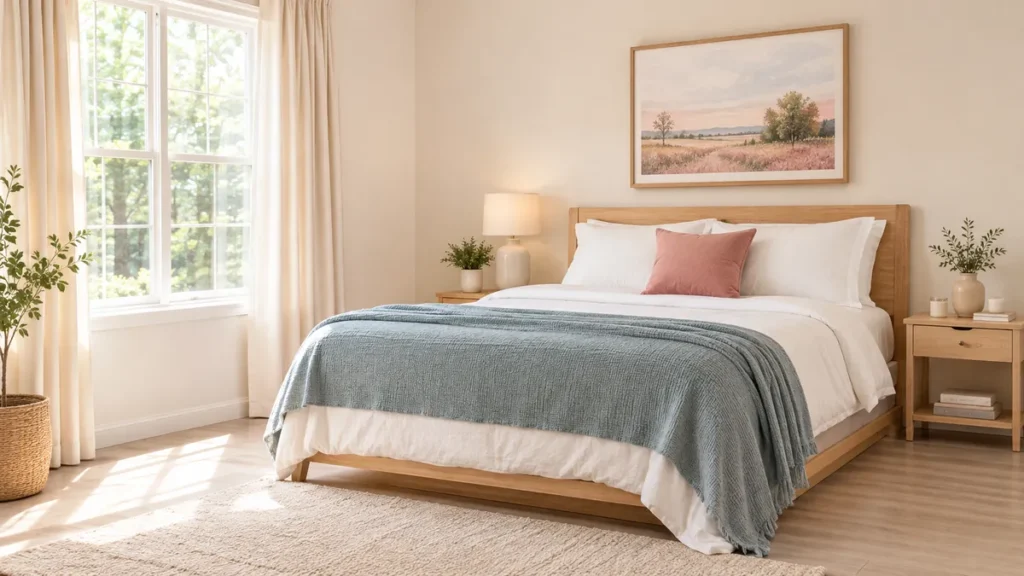
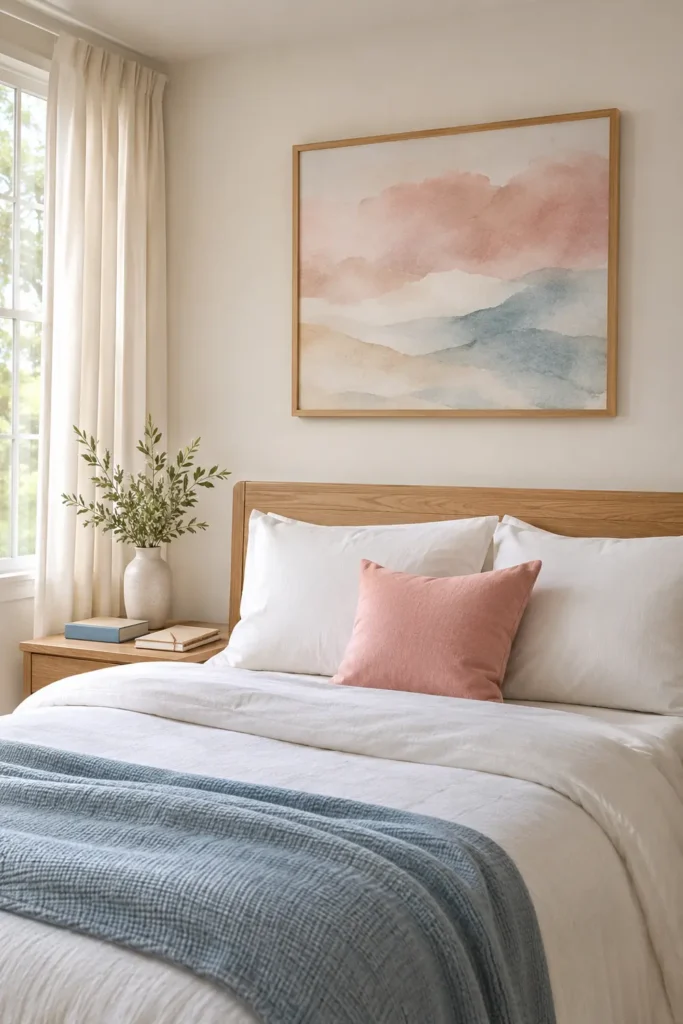
Minimalist Bed Styling With Fewer Pillows and Simple Blankets
The bed is usually the largest piece of furniture in a bedroom, so the way you style it has a big influence on how the entire space feels.
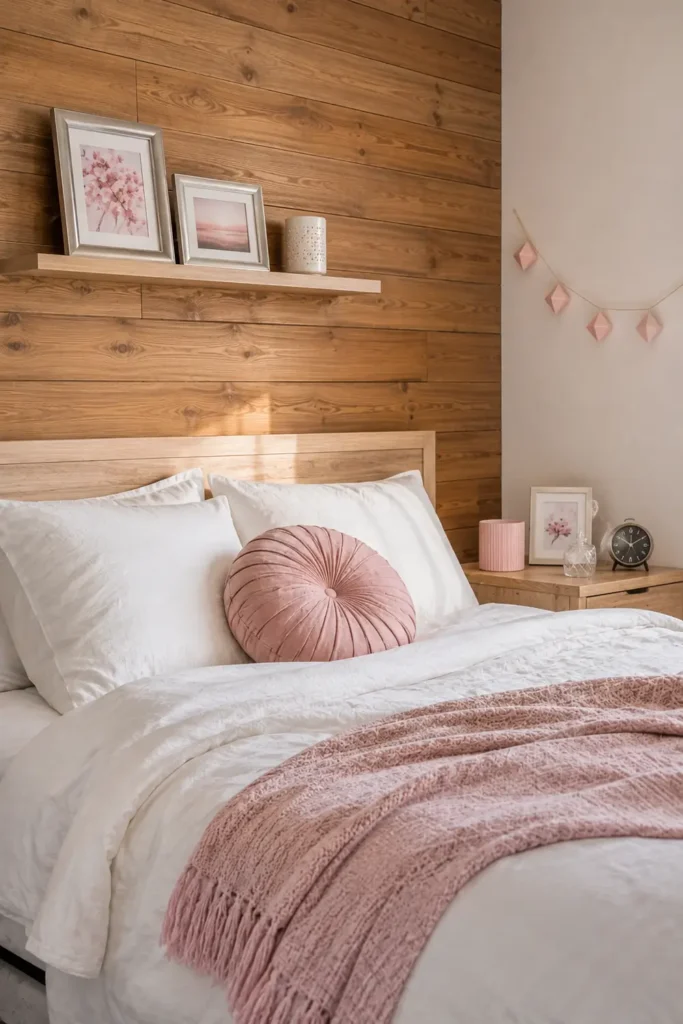
One of the easiest changes is reducing the number of decorative pillows. If you’ve ever had to move a mountain of pillows before getting into bed, you know how quickly decorative bedding can become another chore.
I prefer keeping just one accent pillow for a little personality. If you enjoy a more layered look, two or three decorative pillows can still feel balanced without crowding the bed.
Blankets are another area where less often works better. Instead of layering several throws across the mattress, choose one or two blankets that add a little color or texture.
A softly textured blanket folded near the foot of the bed can make the room feel inviting without creating visual clutter.
The goal isn’t to make your bed look empty or excessively perfect. It’s to create a comfortable arrangement that takes only a couple of minutes to straighten each morning.
When the bed looks simple and organized, the rest of the bedroom commonly feels more peaceful, even before you tackle anything else.
A Screen-Free Bedroom Focal Wall With Meaningful Artwork
A wall-mounted television can easily become the main focal point of a bedroom, even when the screen is turned off.
If you’re trying to make your bedroom feel more restful, consider removing the television and giving that wall a different purpose.
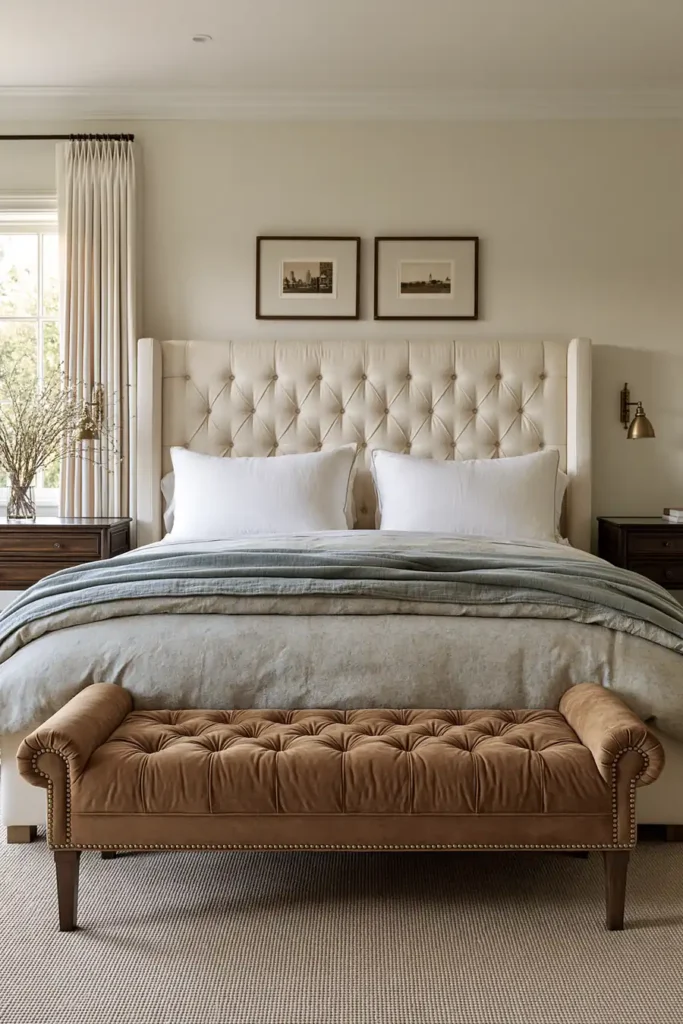
A single framed artwork, a favorite picture, or a meaningful printed quote can create a softer visual focus without making the wall look busy.
You don’t need an elaborate gallery wall to make the room feel personal. Sometimes one carefully chosen piece says more than a collection of decorations competing for attention.
I especially like the idea of choosing artwork that has personal meaning rather than selecting something simply because it fits the furniture.
A screen-free bedroom also creates an opportunity to change your evening routine.
Instead of automatically turning on the television, you might keep a book or paper journal nearby. Reading a few pages or writing down your thoughts can become a simple way to unwind before bed.
Of course, removing a bedroom television isn’t practical for everyone. If you enjoy having a TV in your room, there are still ways to keep the space peaceful. Consider mounting the TV on the wall and using a frame or cabinet to hide it when not in use, or choosing a screen that blends in with your decor. Limiting time spent on screens before bed, or setting up a small shelf to store remote controls and accessories out of sight, can also help keep your bedroom calm and tidy. But if you rarely watch it, or you feel it makes the room less relaxing, it’s worth considering whether you really need it.
The result is a bedroom wall that seems intentional, personal, and visually quieter.
Floating Bedside Tables and Wall-Mounted Lighting to Reduce Clutter
Nightstands are surprisingly easy places for clutter to collect.
A glass of water, charging cables, books, receipts, and random little objects can quickly take over the area beside your bed. And when you have a large nightstand with multiple drawers, it’s tempting to keep filling them.
One of my favorite minimalist bedroom decluttering ideas is replacing bulky bedside furniture with a small floating table that has a single drawer. If you are looking for something simple or on a budget, a small stool, a wall-mounted shelf, or even a repurposed table can also work well as a minimalist bedside solution. These DIY or creative alternatives make it easy for anyone to reduce clutter, no matter your budget or skill level.
A floating bedside table gives you enough room for your everyday essentials without taking up valuable floor space.
It also leaves the area underneath open, which can make a smaller bedroom feel less crowded.
The drawer is useful for storing items you want nearby but don’t need to see all the time. Think of the small necessities you reach for before bed rather than everything that happens to accumulate in your bedroom.
Lighting makes a difference here, too.
Instead of placing a traditional table lamp on the nightstand, install a wall-mounted lamp beside the bed. This keeps the tabletop available for the few things you actually use.
A wall-mounted reading light is especially helpful when the bedside table is narrow and every inch of surface space matters.
Try limiting the visible items on your bedside table to the essentials you use nightly. The fewer things you leave out, the easier it becomes to keep the surface tidy.
This simple furniture change can make the bedside area feel lighter without sacrificing everyday convenience.
A Dresser-Free Bedroom Layout With Organized Closet Storage
Dressers are practical, but they can also take up a significant amount of floor space.
In a small bedroom, a large dresser can make the furniture layout feel cramped. Its top surface can also become a convenient place to drop clothes, accessories, and things that don’t have a proper home.
If your closet has enough room, moving dresser storage inside it can completely change the way your bedroom feels.
One practical approach is using double hanging racks to create more vertical clothing storage.
For clothing that doesn’t need to hang, closet shelves and storage baskets can help keep everything organized without requiring another piece of bedroom furniture.
Baskets are especially useful for smaller items that can become messy when left loose on a shelf.
The important part is giving everything a designated place, so your closet doesn’t simply become the new cluttered area.
Before removing your dresser, take a careful look at your closet capacity. Measure the available space and consider how much of your clothing can realistically fit on racks and shelves. If your closet is on the smaller side, you might combine closet organizing alongside other smart storage options, such as using beneath-bed storage bins for off-season items or keeping a small dresser for essentials. The goal is to work with your space so your clothes remain organized without making the bedroom feel crowded.
If the closet can comfortably accommodate everything, removing the dresser may open up more floor space and make moving around the bedroom easier.
You’ll also have one less horizontal surface collecting miscellaneous objects.
I love how much difference this can make in a bedroom where the bed and dresser seem to compete for space.
The room doesn’t necessarily need to be larger. It just needs fewer pieces of furniture occupying the available floor area.

Make Your Bedroom Feel Lighter, One Change at a Time
Creating a minimalist bedroom doesn’t mean removing everything you love. It means paying attention to the items and furniture that make your space feel unnecessarily crowded.
You might begin by reducing the pillows on your bed, choosing one meaningful piece of wall art, or clearing everything off your nightstand except what you genuinely need.
If you’re ready for a bigger change, reorganizing your closet and removing an unnecessary dresser could make a noticeable difference in your bedroom layout.
I suggest beginning with whichever area bothers you most. Make that space easier to use, and spend a moment to appreciate the improvement, no matter how small. Celebrating each forward step helps you see your progress and gives you motivation to keep going. Once you notice the difference, move on to the next area.
The best minimalist bedroom decluttering ideas aren’t about achieving a perfectly styled room. They’re about creating a comfortable bedroom where there’s less to manage and more room to relax.