
White tile will always have a place in bathroom design, but it is far from the only option. Tiles in sage green, blush pink, terrazzo, and subtle earth tones are just a few creative alternatives that can set a completely different mood. Some of the most inviting bathrooms use color, pattern, texture, and natural materials to create a space that feels much more personal.
These non-white bathroom tile ideas show how softer greens, dark charcoal, blush pink, peach, terrazzo, and warm neutrals can completely change the mood of a bathroom. What I like most is that none of these spaces rely on color alone—the tile works together with wood, metal finishes, lighting, and simple decorative details.
The key is choosing one strong surface and then letting the rest of the room support it rather than compete with it. A ‘strong surface’ could be a tile choice that stands out because of its bold color, distinct pattern, or rich texture—something that draws the eye as the main feature. By focusing on a single standout element, you create a clear focal point and allow the rest of the design to play a supporting role. Here are nine practical ways to make that approach work.
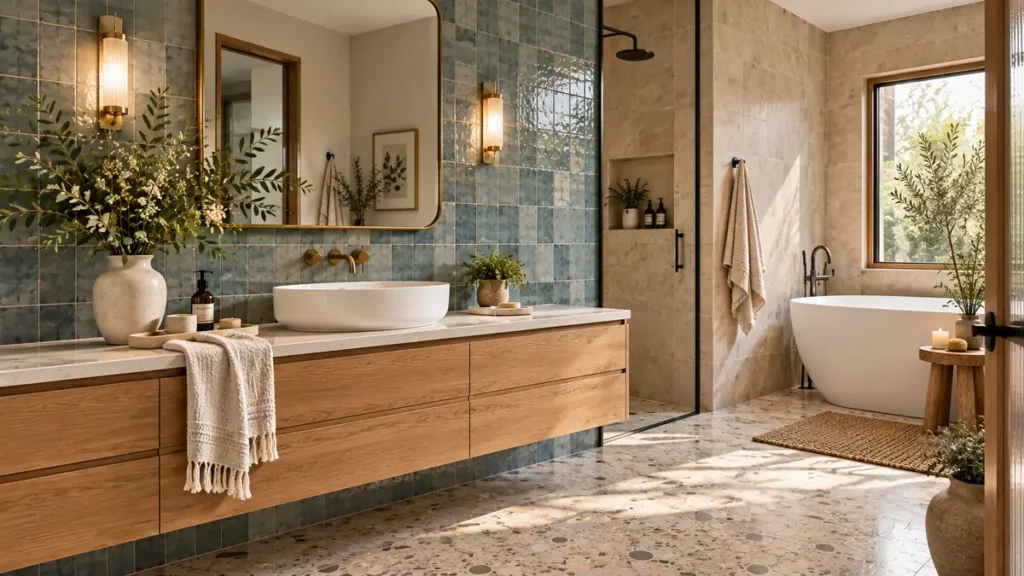
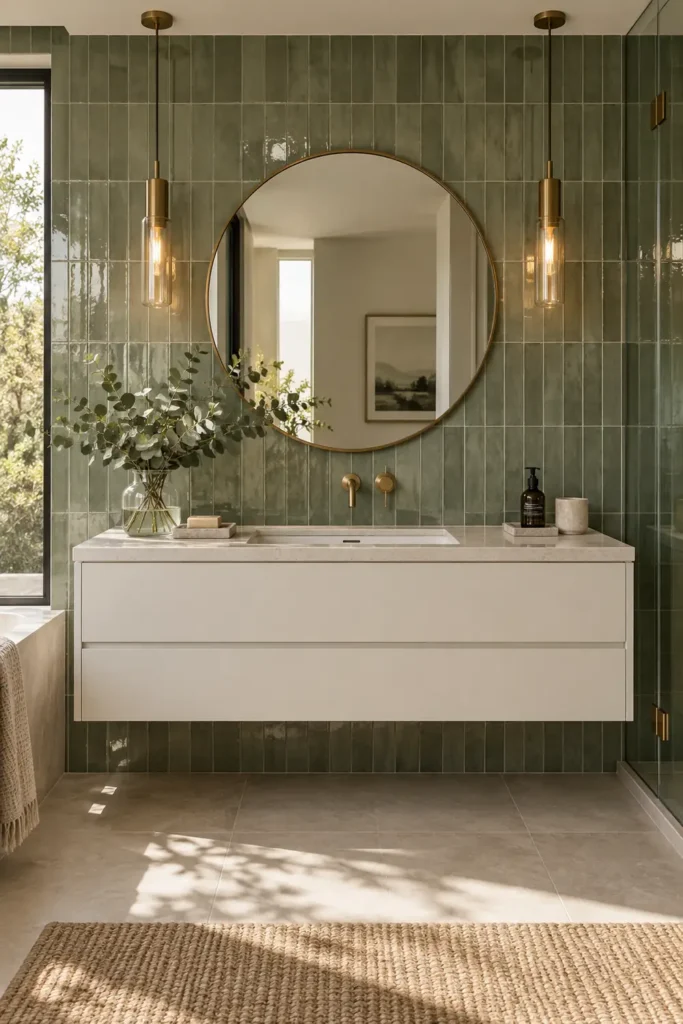
Sage Green Bathroom Tiles with Warm Brass Accents
Sage green is one of my favorite alternatives to white because it brings color into a bathroom without making the room feel overly bold. Glossy vertical tiles behind a vanity give the wall a soft handmade character, while their narrow format naturally draws the look upward. That makes the vanity area feel taller and more finished.
A floating white vanity keeps the lower part of the room visually light, while brass wall-mounted taps and slim pendant lights add warmth against the cooler green. I especially like the combination of a simple round mirror with these finishes because it keeps the composition clean instead of introducing another complicated shape.
For a similar look, I would keep most of the surrounding surfaces quiet and let the sage tile become the main feature. A few eucalyptus-style branches in a clear vase are enough to add another natural green without turning the vanity into a heavily styled display.
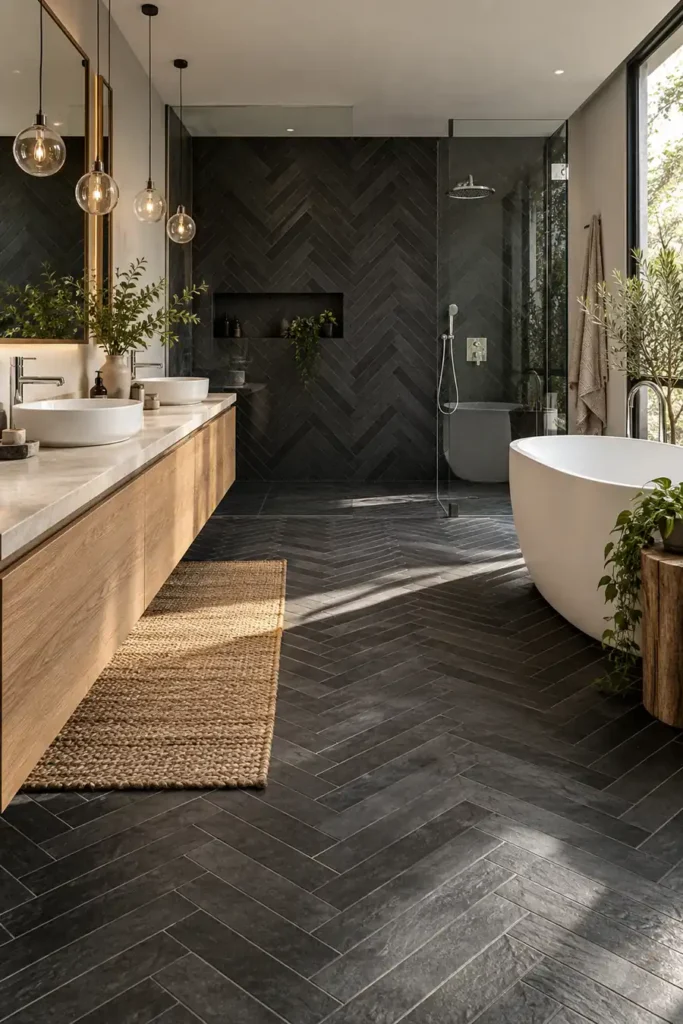
Charcoal Herringbone Tiles with a Natural Timber Vanity
Dark bathroom tile does not automatically make a room feel small or heavy. Used in a herringbone pattern, charcoal tile gains movement and texture, which keeps a large dark surface from reading as one flat block. Continuing the tile across the floor and onto a feature wall can also make the room feel more connected.
Natural timber is what keeps this combination balanced. A floating double vanity introduces warmth against the charcoal background, while pale stone countertops and white vessel basins create enough contrast to keep the vanity easy to see. A white freestanding bathtub serves the same purpose on the opposite side of the room.
I would use this look where there is good natural light, especially if the tile covers several surfaces. However, if you are working with a bathroom that has less natural light or a smaller footprint, there are still ways to make charcoal herringbone tile feel inviting.
Consider using the dark tile as a feature on just one wall or as a floor treatment paired with lighter wall colors to keep the room from feeling too enclosed. Adding a large mirror can help reflect available light, and choosing glass or light-reflective finishes elsewhere will also boost brightness. A frameless shower screen helps preserve that openness, while small plants and simple suspended bulbs soften the harder materials without distracting from the herringbone pattern.
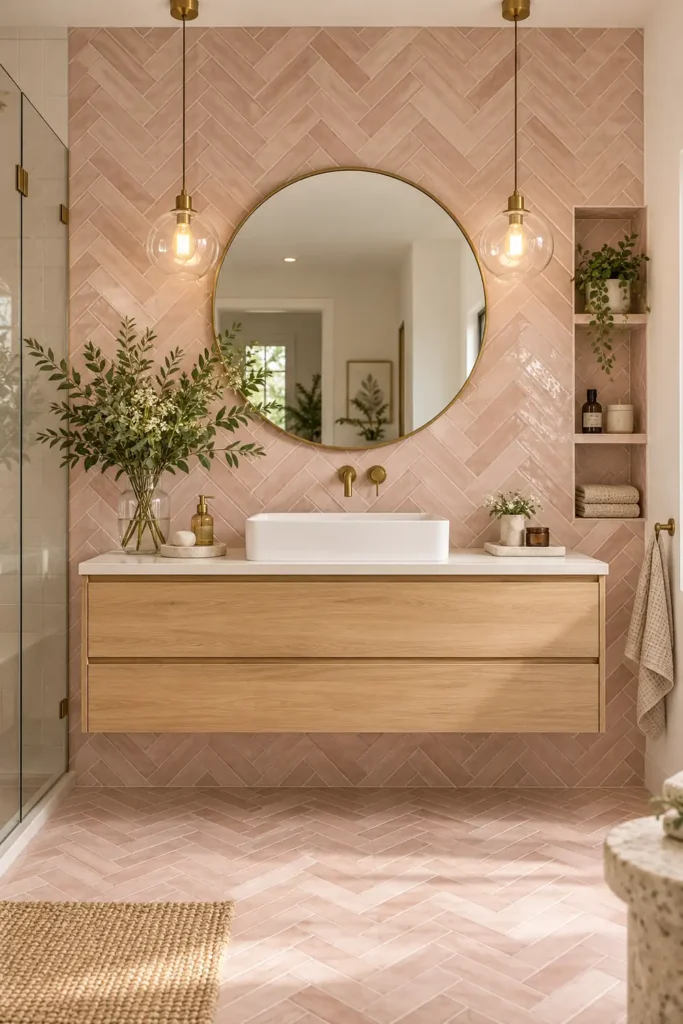
Blush Pink Herringbone Tiles for a Soft Vanity Feature Wall
Blush pink can work beautifully in a bathroom when the shade is muted, and the surrounding finishes stay restrained. Herringbone tile gives the color more depth because the changing direction of the pieces creates subtle shadows and variation across the wall. It feels decorative without needing additional wall art.
A pale timber floating vanity pairs naturally with blush tile and prevents the room from becoming overly sweet. I like adding a white countertop and vessel basin because those simple surfaces break up the pink and give the eye somewhere to rest. Brass also works especially well here, whether it appears on the faucet or around a round mirror.
Two glass globe pendants can frame the vanity without covering much of the tile. If storage is needed, shallow open wall niches are a practical addition because they can blend into the feature wall rather than interrupt it with bulky cabinetry. A small vase of leafy branches is enough to finish the space.
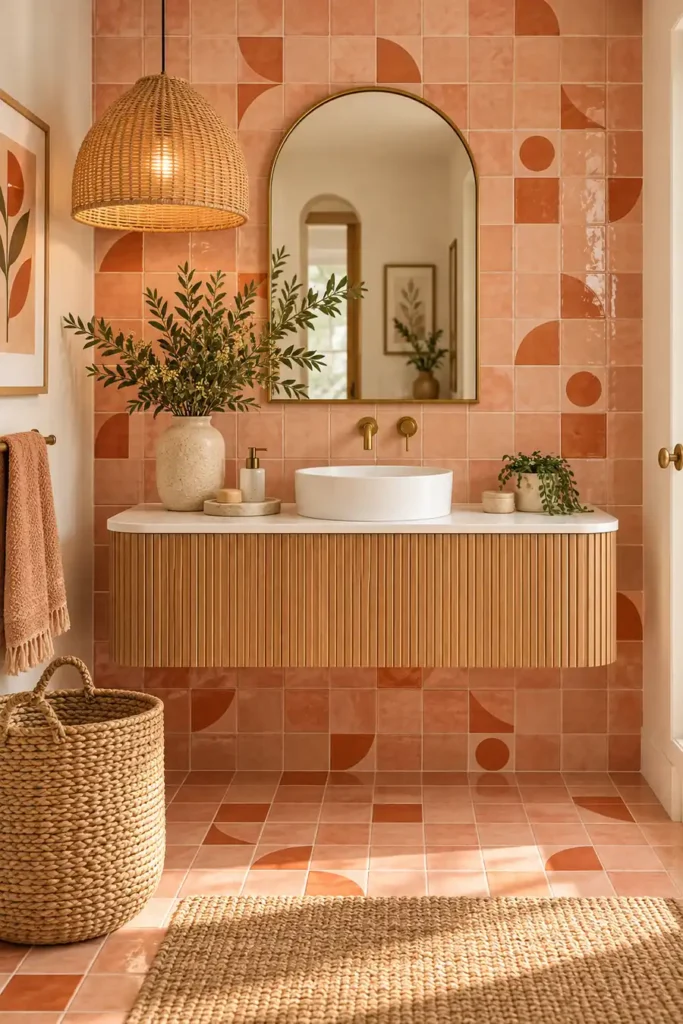
Peach Geometric Bathroom Tiles with Warm Wood Details
Peach tile is a good choice when you want warmth but do not want to rely on beige or cream. A graphic pattern made from peach and coral square tiles gives a powder room much more personality, especially when the pattern becomes the strongest decorative element rather than competing with several other finishes.
Warm timber works well beside these colors because it reinforces the earthy side of the palette. A timber vanity with a simple white countertop and vessel basin keeps the main fixtures visually calm. I would also use brass sparingly, such as on a wall-mounted faucet, so the metal feels connected to the warm colors rather than becoming an additional focal point.
An arched mirror is a useful way to soften the geometry of the tile. Woven details, such as a basket, rug, or oversized pendant, can add texture without introducing another strong color. Keeping the remaining accessories simple allows the patterned tile to do most of the decorative work.
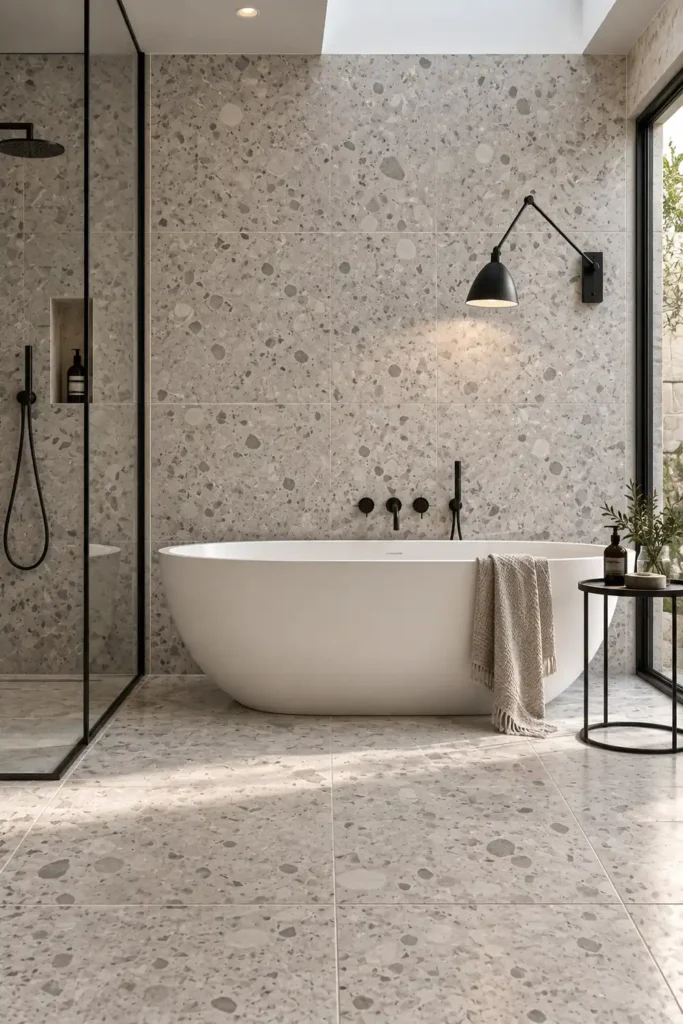
Grey Terrazzo Tiles for a Modern Tub and Shower Space
Grey terrazzo is a strong alternative to plain white tile when you want a bathroom to feel modern without relying on a dramatic color. The scattered stone-like pattern adds visual interest across large surfaces while still functioning almost like a neutral.
Using large-format terrazzo-look tiles around both the bathtub and shower can make the room feel more continuous because there are fewer grout lines breaking up the surfaces. A white freestanding tub provides clean contrast, while a black-framed shower screen gives the pale grey finish more definition.
Matte-black faucets, shower fittings, and an adjustable wall lamp repeat that darker accent throughout the room. I would keep extra decoration minimal here because the terrazzo already provides texture. A small black side table beside the tub can add function while strengthening the simple black-and-grey palette.
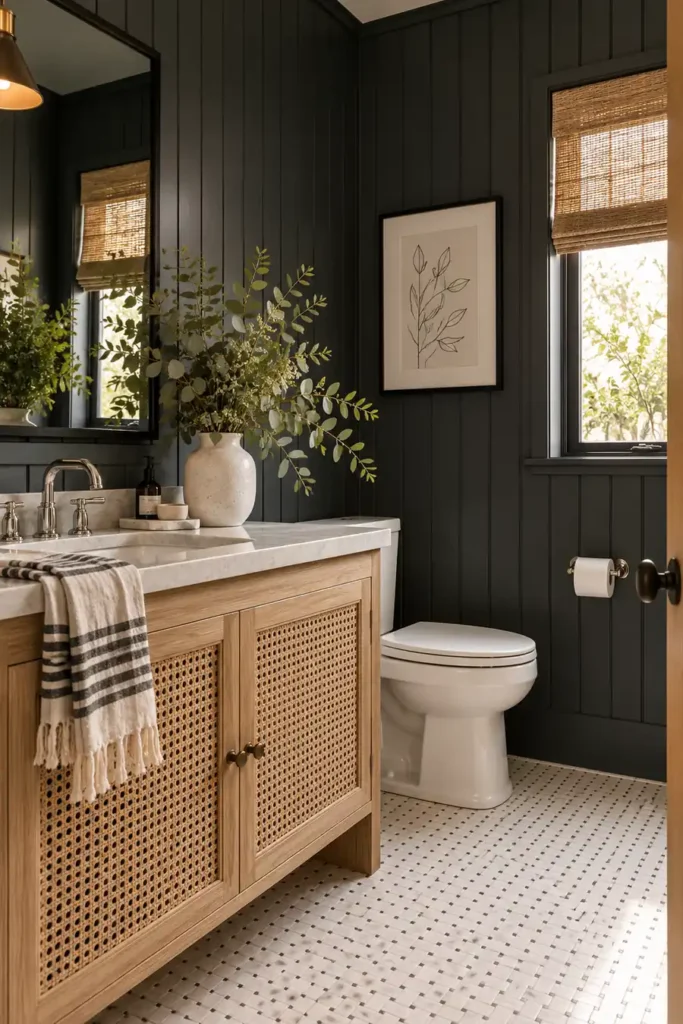
Dark Paneled Powder Room with a Cane-Front Vanity
Not every non-white bathroom needs colorful tile covering the walls. A darker room can combine charcoal vertical paneling with a lighter tiled floor to create contrast while still moving away from an all-white scheme.
A natural timber vanity with cane-front doors is especially effective against a deep charcoal backdrop. The woven cane adds texture and keeps the cabinetry from looking too solid, while a marble countertop features a lighter surface around the sink.
Small white mosaic floor tiles can brighten the lower portion of the room without dominating the design. A large black-framed mirror, simple artwork, and a striped hand towel are enough to bring character.
I also like using eucalyptus or loose leafy stems here because fresh greenery stands out beautifully against dark walls.
This type of palette works particularly well in a powder room, where a darker and more dramatic finish can feel intentional rather than overwhelming.
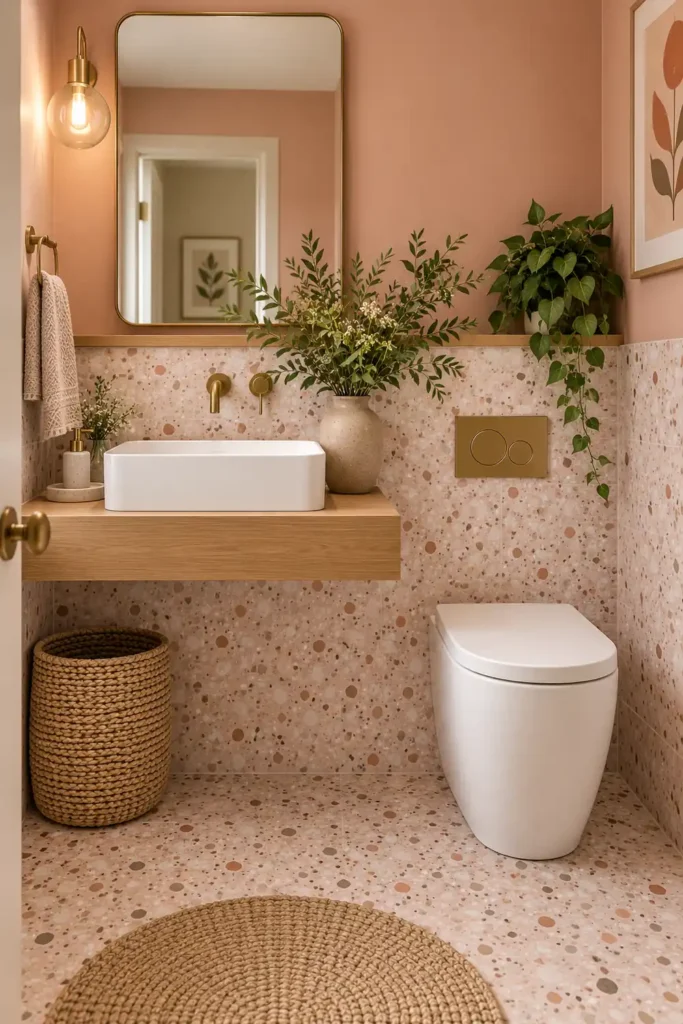
Blush Terrazzo Tiles for a Compact Powder Room
Blush terrazzo gives a small bathroom color and pattern at the same time. Instead of using a plain pink wall, terrazzo introduces small variations that make the surface feel more layered and forgiving.
Pairing the tile with soft blush-painted walls creates a tonal look rather than a sharp contrast. A simple floating timber shelf can serve as the vanity, keeping more of the floor visible and helping a compact room feel less crowded.
A rectangular white vessel basin gives the vanity a crisp focal point, while a brass wall-mounted faucet and flush plate bring warmth to the pink palette. A rounded rectangular mirror repeats the room’s softer shapes without making the space overly decorative.
Green foliage placed along the timber ledge is especially effective in this type of bathroom. The natural green breaks up the pink tones while bringing life to a room that otherwise relies heavily on hard surfaces.
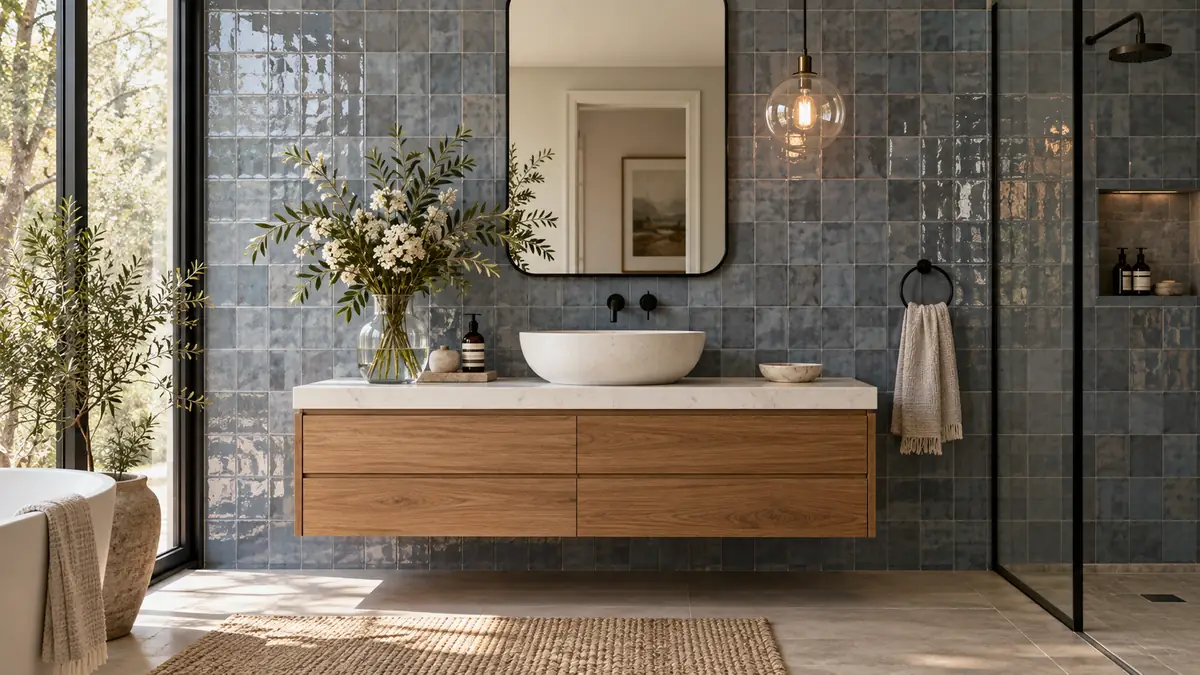
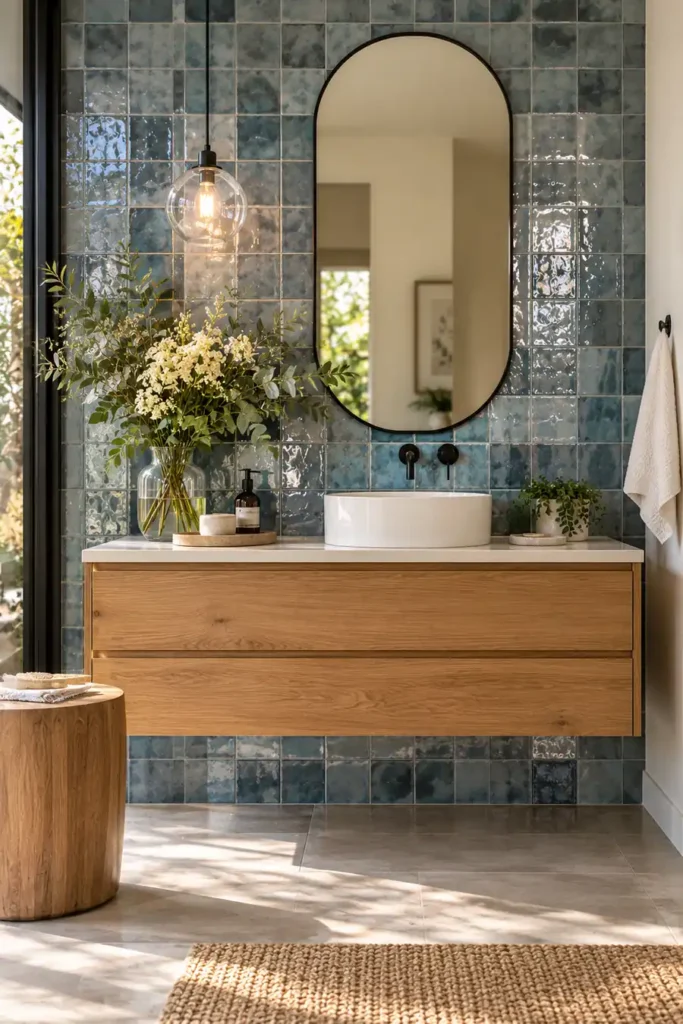
Blue-Grey Glazed Tiles with a Warm Floating Wood Vanity
Blue-grey tile is an easy option if you want color that still feels calm and versatile. Glazed square tiles bring subtle variation because light reflects in varying ways across each surface, preventing the wall from appearing completely uniform.
A warm timber floating vanity creates a natural contrast against the cooler blue-grey background. Keeping the countertop and vessel basin white helps separate the vanity from the tile while continuing a clean overall look.
Matte-black details can then provide definition. A black-framed round mirror, wall-mounted faucet, and towel ring create a consistent accent without requiring much decoration. A clear-glass pendant is another good choice because it adds lighting without visually covering the tiled wall.
Fresh leafy stems or flowers on the vanity can help connect the cool tile and warm wood. The result feels balanced rather than heavily themed around one specific color.
Warm Beige Herringbone Tiles for a Comfortable Bathtub Nook
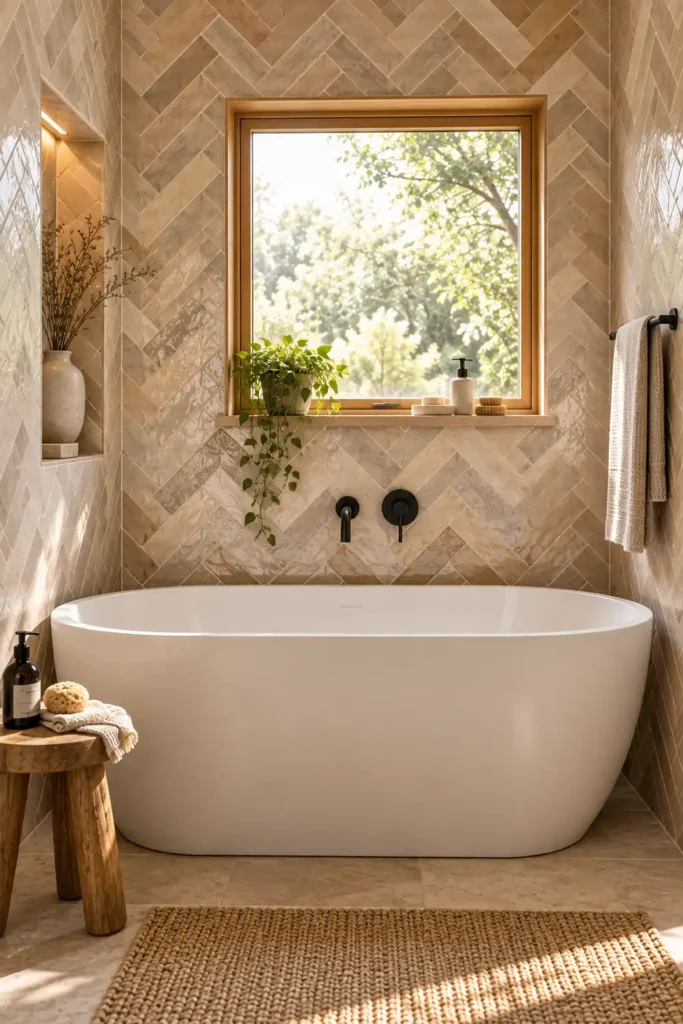
Moving away from white does not necessarily mean choosing a strong color. Warm beige tile can completely change the atmosphere of a bathroom while still keeping the palette soft and flexible.
Handmade-look rectangular tiles arranged in a herringbone pattern work especially well around a bathtub because the pattern adds movement to what could otherwise become a large plain wall. Small variations in the tile surface can make the beige feel richer when natural light moves across it.
A white freestanding bathtub is a useful contrast, while black wall-mounted bath and shower fixtures give the softer tile a sharper edge. Natural timber trim around a window can bring another layer of heat into the space.
A deep recessed niche is practical for bath products, but it can also become a small styling area. I would keep it simple with a few essentials and perhaps a dried arrangement. A small plant on the window ledge can introduce fresh green without interrupting the calm palette.
Choosing the Right Non-White Bathroom Tile
The most successful non-white bathroom tile ideas usually begin with the mood you want the room to have. Sage and blue-grey can feel calm and natural, blush and peach add warmth and spirit, while charcoal creates a stronger architectural look.
Terrazzo is useful when you want pattern without committing to a complicated layout. It’s also important to think about your own personal style or the present decor in your home when selecting tile—this helps ensure the new tile feels like a natural extension of the space.
If you prefer a look that is more classic, contemporary, or bold, choosing a tile that expresses your taste will make your bathroom feel even more inviting and individual.
Think about the other finishes at the same time as the tile. Timber can warm cool colors, brass works beautifully with greens and pinks, and matte black can give pale or textured tile more definition.
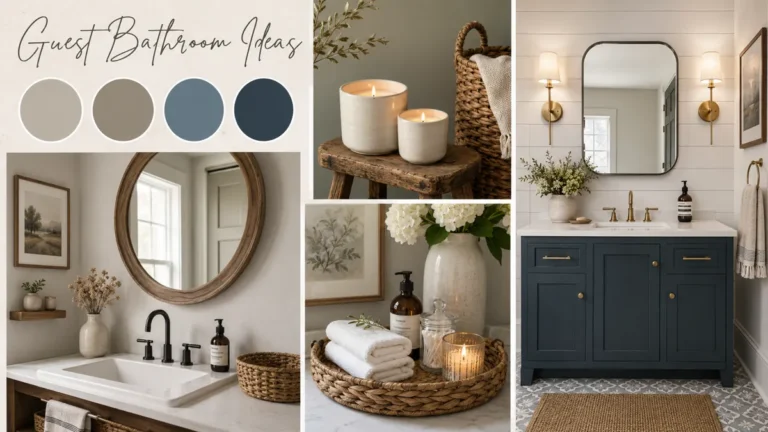
If you’re unsure about how different finishes will work together, try making a simple mood board—gather tile samples, paint swatches, and small pieces of wood or metal for a quick visual check.
Laying these materials side by side will help you see how colors and textures interact and make it easier to feel confident in your selections.
You also do not have to cover every wall. A vanity backsplash, bathtub nook, shower wall, or single feature surface can introduce enough color to transform the bathroom while keeping the rest of the design simple.
Ultimately, moving beyond white tile gives you more opportunities to create a bathroom that feels individual. Whether you prefer soft color, darker contrast, or subtle earthy neutrals, the right combination of tile, texture, and fixtures can make even a practical bathroom feel carefully designed.
If you’re feeling inspired, commence by gathering images or samples of tiles and finishes that catch your eye. Laying out your favorites side by side is a simple first step that can help you visualize your perfect bathroom and bring your ideas closer to reality.