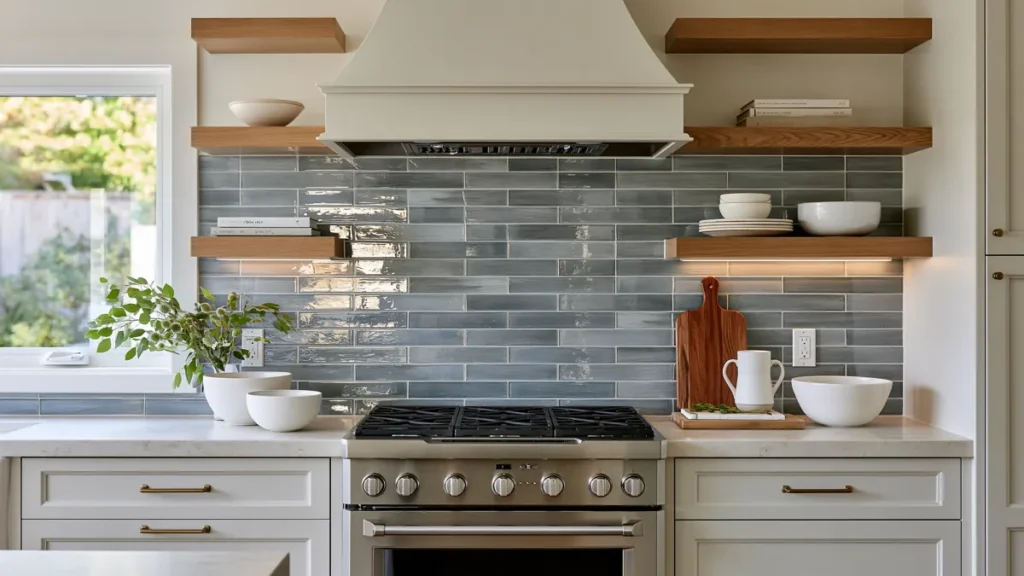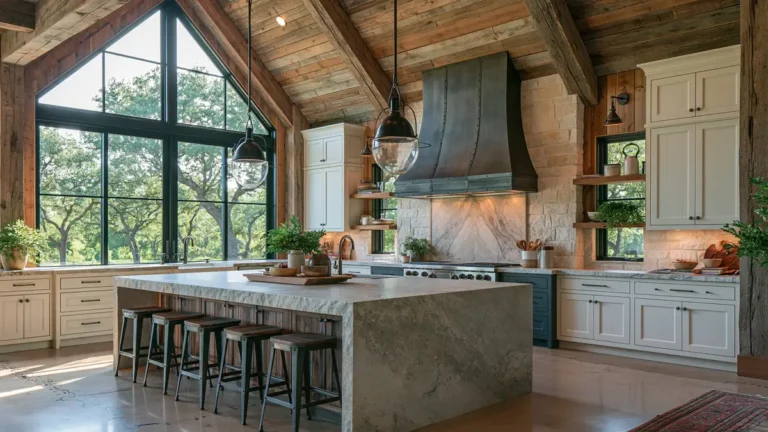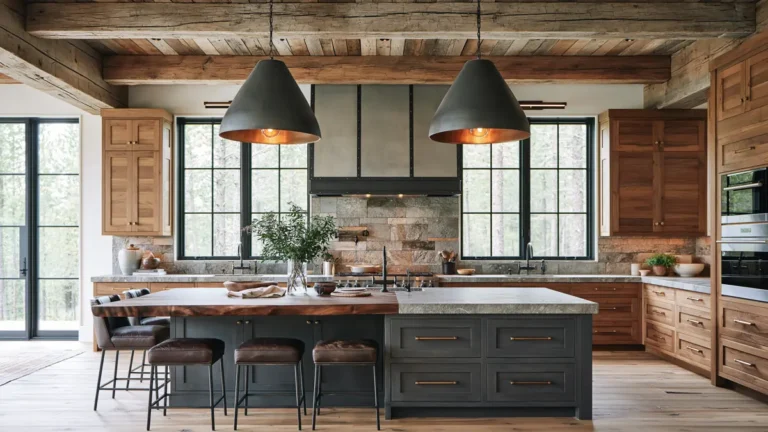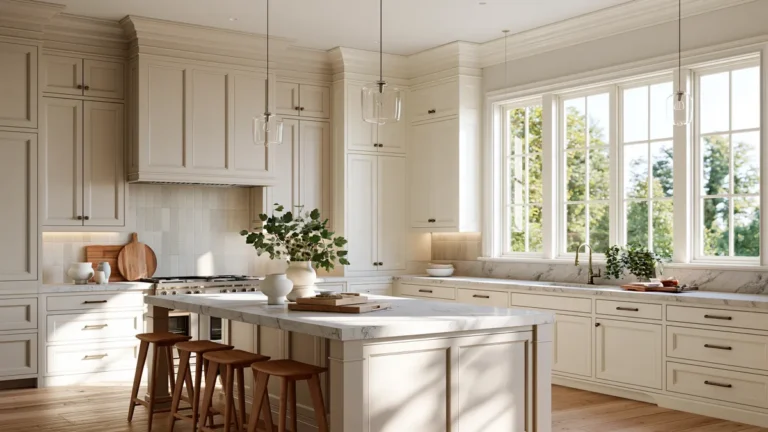

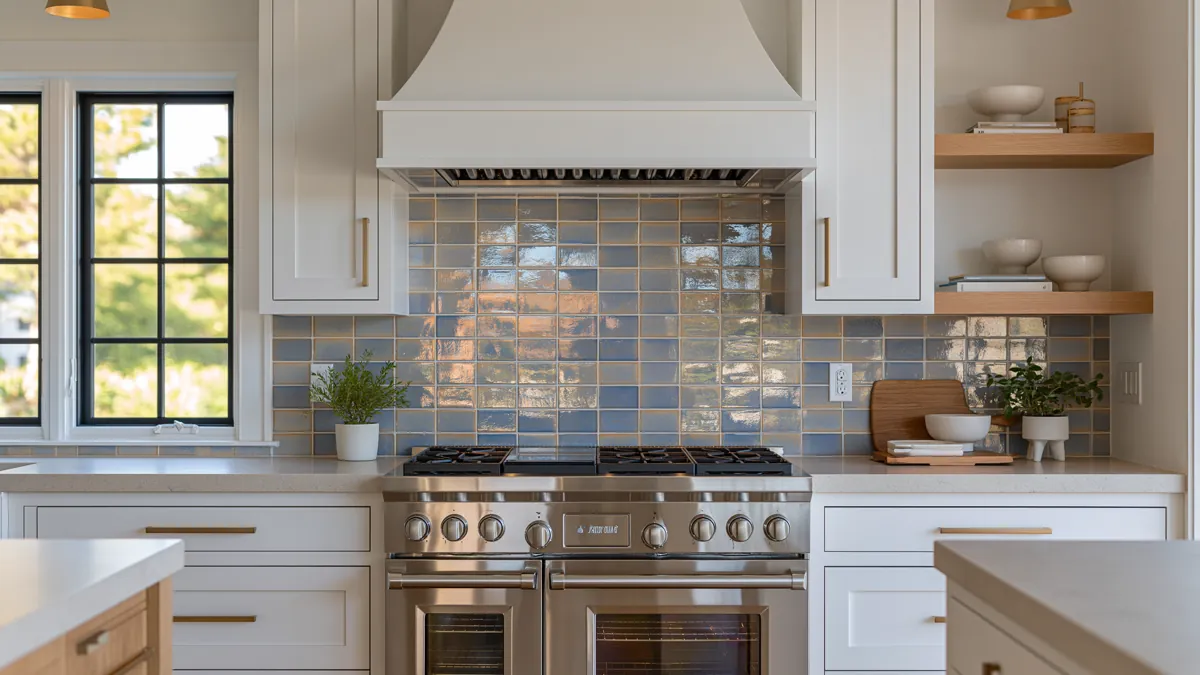
A glass tile backsplash can change the whole feel of a kitchen without demanding a complete remodel. The reflective finish brings in extra light, while the range of colors, textures, and layouts makes it easy to create anything from a crisp modern look to something warmer and more dramatic. For example, a pale blue glass tile can brighten a small kitchen, making the space seem more open and inviting.
These glass tile backsplash kitchen ideas show just how different the material can feel depending on the surrounding cabinets, countertops, hardware, and lighting. Some combinations lean bold and polished, while others feel soft, coastal, or understated.
The key is choosing a backsplash that works with the rest of the kitchen rather than trying to make every surface compete for attention. To help narrow down your options, start by looking at the undertones in your existing cabinetry and countertops.
Choosing a tile with similar or complementary undertones creates a more consistent look. Also, take into account the amount and type of lighting in your kitchen, since natural and artificial light can change how glass tile colors and finishes appear throughout the day.
Burgundy Glass Subway Tile with Matte Black Accents
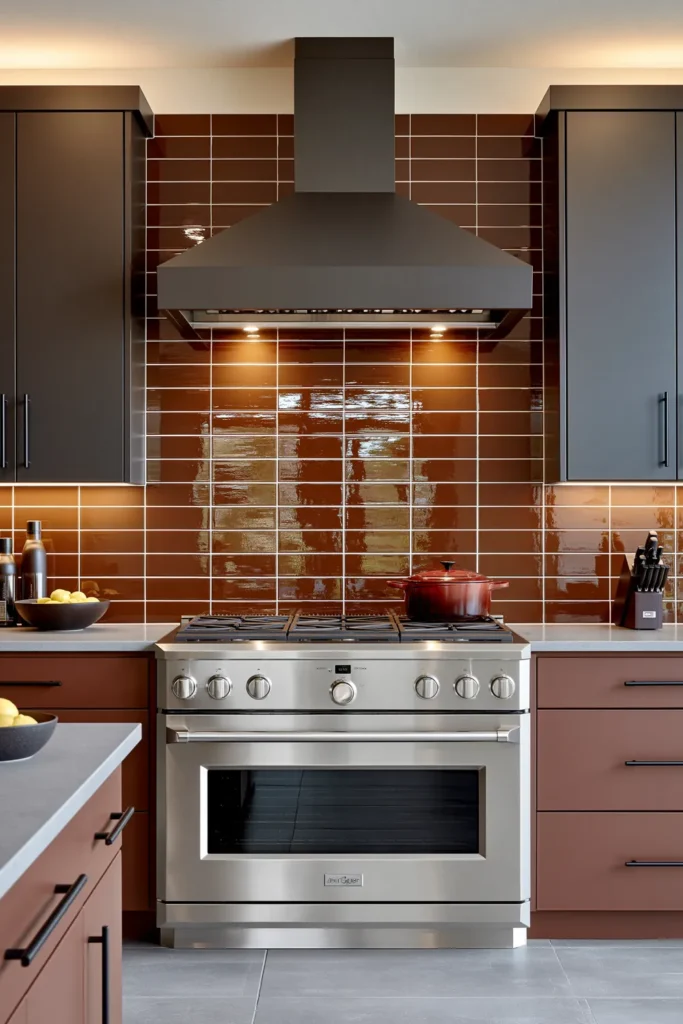
Glossy burgundy glass subway tile can give a minimalist kitchen a much richer personality. The deep red tone feels bold, but the simple subway shape keeps the wall from becoming overly busy.
Pairing the backsplash with streamlined cabinetry helps the color remain the main visual feature. Matte black cabinet bar pulls work especially well here because they add contrast without introducing another shiny finish. They also tie naturally into other black details around the kitchen.
A professional stainless steel gas range brings in a cooler metallic element that evens out the heat of the burgundy glass. Because glass reflects nearby finishes, the stainless steel subtly shows up across the backsplash and keeps the darker color from feeling heavy.
Under-cabinet LED lighting is particularly useful with this kind of tile. Positioning the light near the front edge of the cabinets helps illuminate the glossy surface evenly and brings out the depth of the burgundy tone.
Small countertop details can soften the sleek look. Something as simple as a bowl or grouping of fresh lemons adds a natural pop of yellow and makes the kitchen feel more lived-in without cluttering the workspace.
Seafoam Herringbone Glass Tile for a Coastal Kitchen
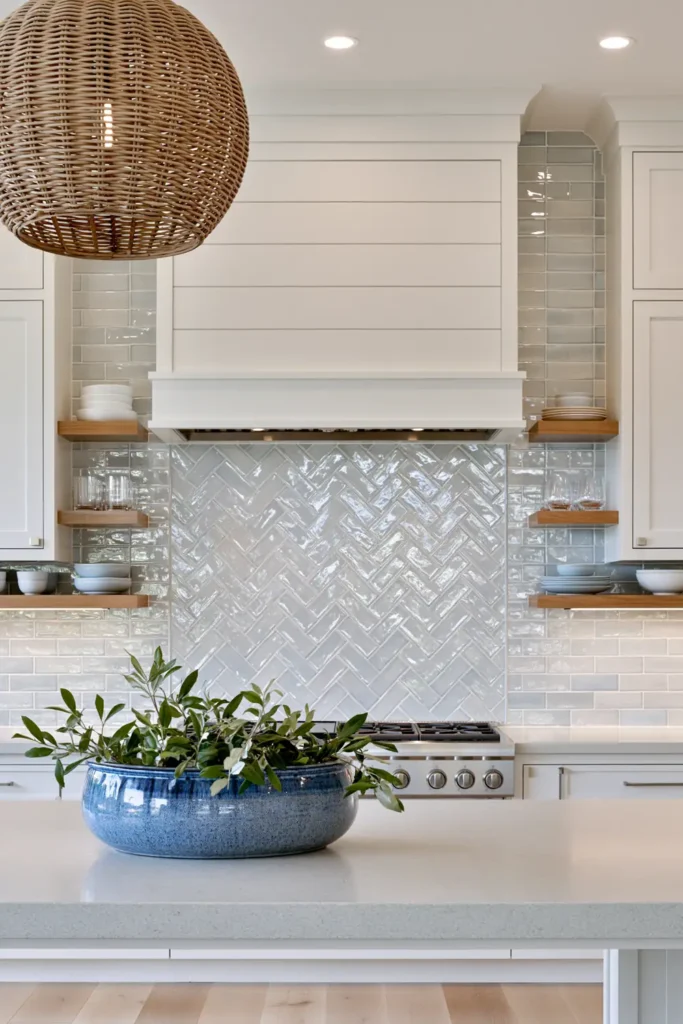
Seafoam green glass tile is a natural fit for a light coastal-style kitchen, especially when it is arranged in an elongated herringbone pattern. The soft blue-green color already feels fresh, while the angled layout gives the wall more movement than a traditional horizontal subway pattern.
Extending the tile all the way to the ceiling can make the backsplash feel like part of the architecture rather than a small strip of decoration. This works especially well around a range hood or beside open shelving, where more of the tile remains visible.
White cabinetry keeps the room bright and gives the seafoam tile plenty of space to stand out. A blue-green marble or quartzite countertop can connect with the backsplash without matching it exactly. Subtle variation between the two surfaces makes the kitchen feel layered rather than overly coordinated.
Open shelves are another good match for this look because they allow the backsplash to remain visible behind everyday pieces. Driftwood-style accents and woven rattan can introduce warmer natural textures that keep the glass and stone from feeling too cool.
A woven rattan pendant light is especially effective because it adds softness above the kitchen while boosting the coastal character. In daylight, the combination of seafoam glass, pale cabinetry, and natural woven texture can make the whole room feel open and relaxed.
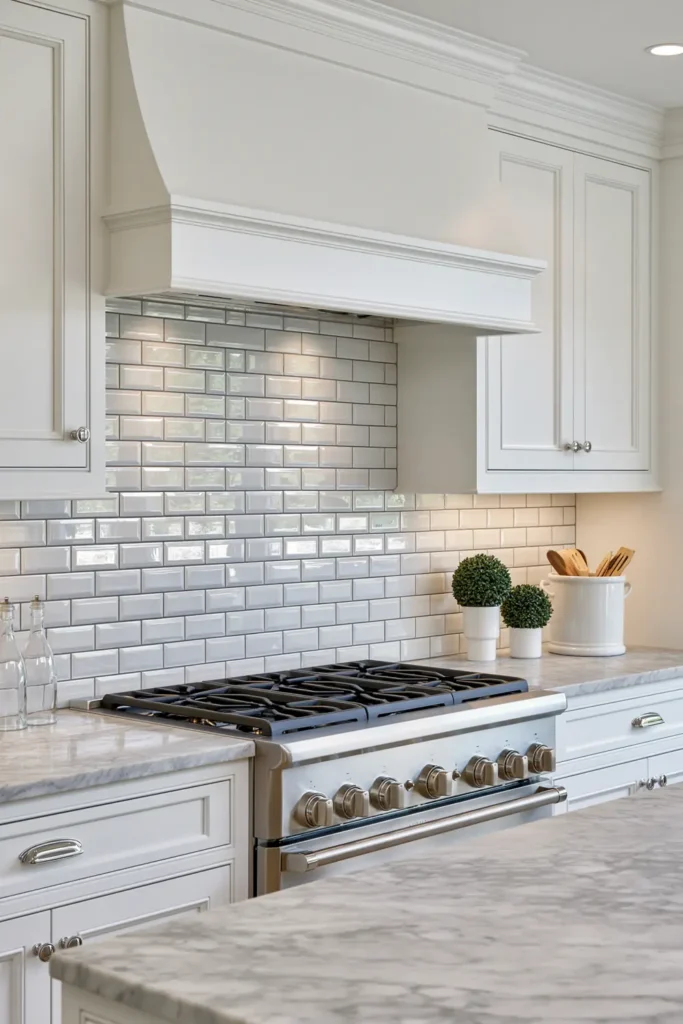
High-Gloss White Glass Tile with Marble Countertops
White glass subway tile is a useful option when you want a bright backsplash without introducing another strong color. Its high-gloss finish reflects more light than a flat white surface, which can make a kitchen feel cleaner and more open.
The look works especially well with white cabinetry because the similar tones create a continuous backdrop. Instead of relying on color contrast, the interest comes from differences in surface and texture. Glossy glass, painted cabinetry, as well as veined marble each reflect light differently, so the room still has depth.
Marble countertops add a gentle pattern against the smooth white backsplash. The natural veining prevents the palette from looking too plain while keeping everything light and elegant.
Brushed nickel and chrome finishes fit naturally into this combination. Their cool metallic tone works with the reflective quality of the tile without becoming too dominant. A professional gas range can also add just enough stainless steel to break up the white surfaces.
Small white ceramic pieces, such as a utensil holder, can blend quietly into the countertop area. A little potted greenery in a white ceramic vessel gives the eye a softer natural element and keeps the space from feeling overly polished.
Natural light is one of the biggest advantages of this glass tile backsplash kitchen idea. When daylight hits the glossy surface, it bounces across the backsplash and helps even a simple white palette feel more dimensional.
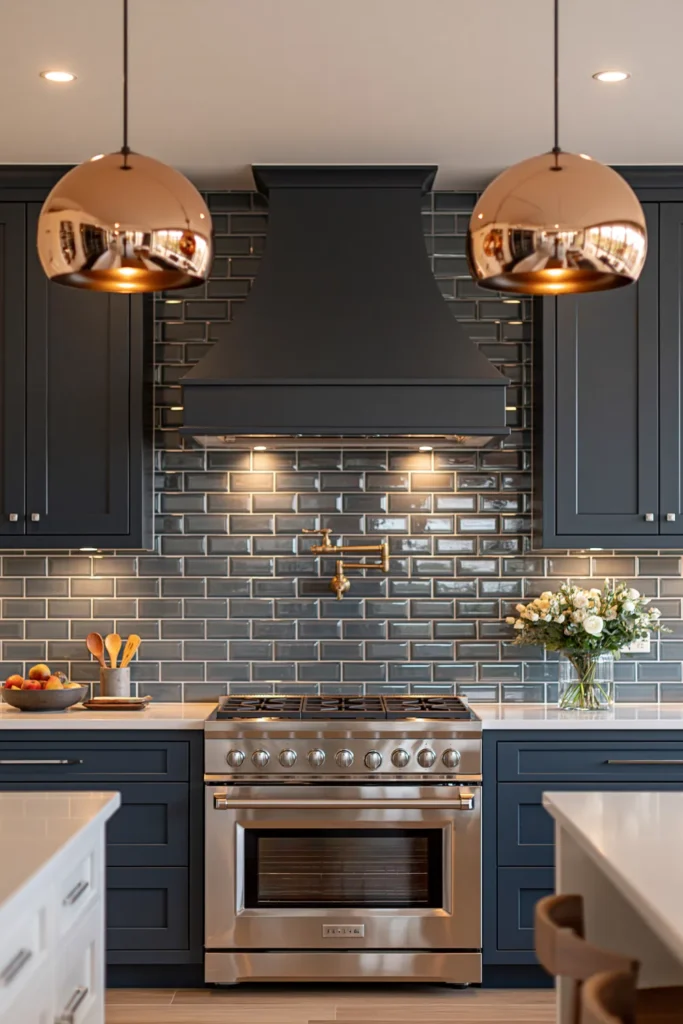
Navy Glass Subway Tile with Warm Copper and Brass
Glossy navy blue glass tile creates a strong background that feels dramatic without becoming as severe as black. The rich color works especially well in kitchens that mix dark and light cabinetry because it can visually connect both sides of the palette.
One of the easiest ways to warm up navy is with brass. A brass wall-mount pot filler faucet immediately stands out against the blue tile, and the contrast between the warm metal and cool backsplash gives the cooking area a more layered look.
Copper brings another level of heat. A vintage-style copper dome pendant light can echo the golden undertones of the brass while giving the kitchen a softer glow from above. Because both metals reflect light differently, they add interest without requiring extra decorative objects.
Under-cabinet lighting helps keep the navy backsplash from appearing too dark, especially in the evening. The glossy glass catches the light and creates subtle highlights across the surface, making the color feel deeper rather than flat.
This combination works best when the surrounding finishes stay relatively controlled. Let the navy glass, brass pot filler, and copper lighting provide the main contrast. With those three elements already doing a lot visually, the rest of the kitchen can stay simple and balanced.
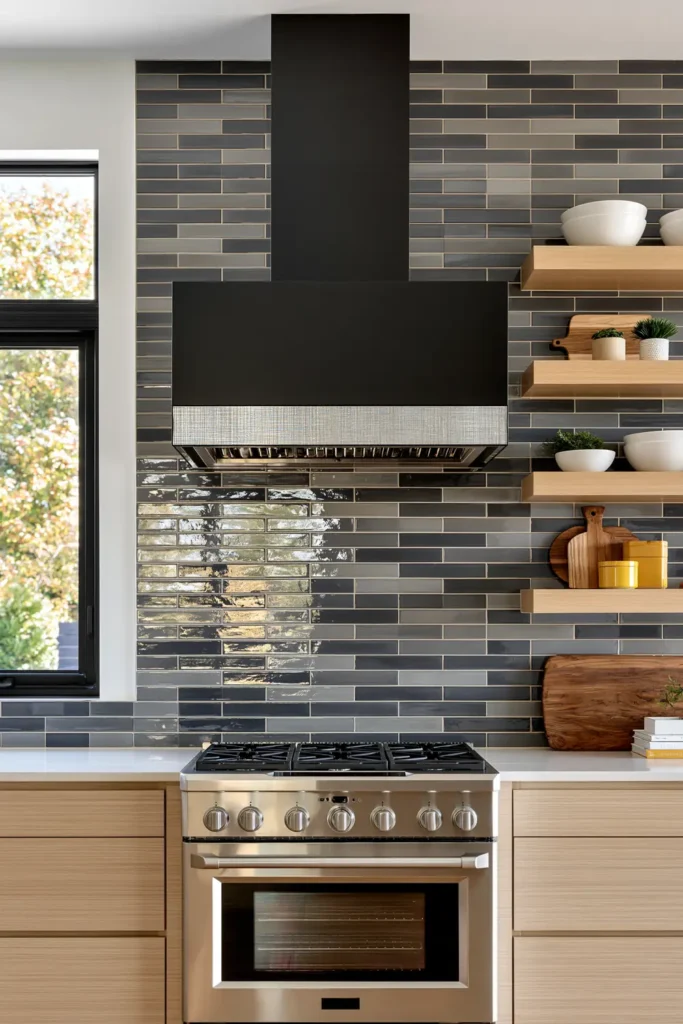
Charcoal Gray Glass Tile with Blonde Oak Shelving
Charcoal gray glass tile gives a kitchen a grounded, modern look without the intensity of pure black. The glazed finish keeps the surface reflective, so the darker color still picks up light rather than making the backsplash feel flat.
A running bond layout is a good fit for this kind of tile because it keeps the pattern familiar and lets the color do most of the work. The staggered lines add just enough movement while staying easy on the eye.
Blonde oak is what really softens the charcoal backdrop. A floating shelf in a neutral-to-cool oak tone brings warmth into the space without opposing the cooler gray tile. The contrast also makes both materials more noticeable: the glass looks sleeker next to the grain of the wood, while the oak feels warmer against the darker wall.
Matte black cabinet pulls can tie the backsplash into the rest of the kitchen. Since the hardware does not reflect as much light as the glass, it adds a quieter layer of contrast.
This is one of those glass tile backsplash kitchen ideas that works especially well when the room already receives good natural light. Daylight catches the glazed surface and helps reveal the subtle tonal variation in the gray while keeping the overall look balanced.
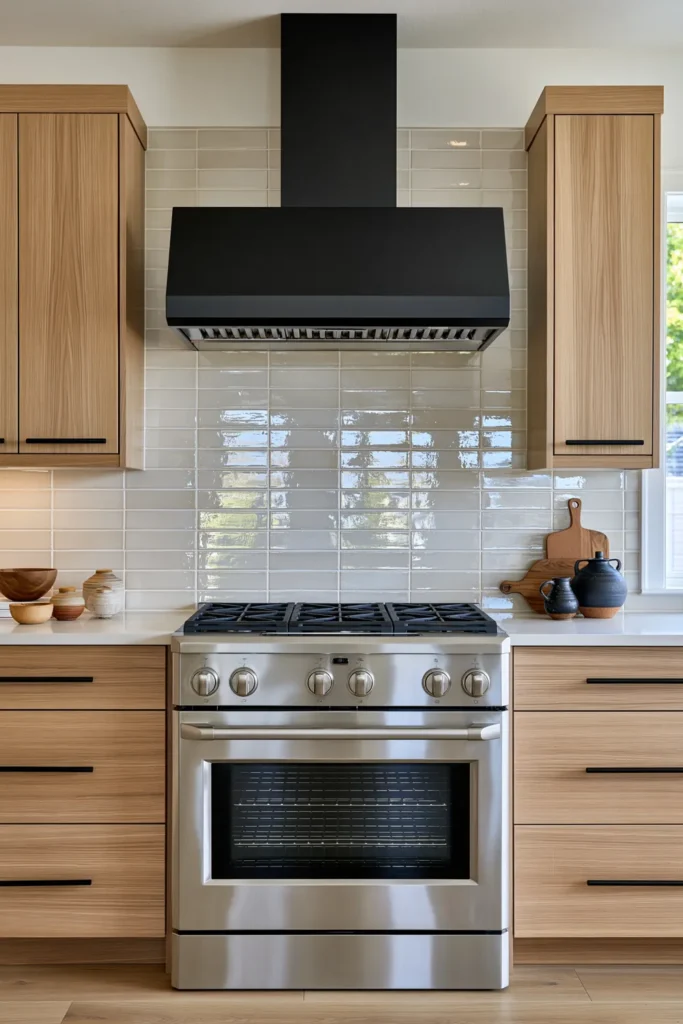
Iridescent Glass Tile with Rift-Cut White Oak Cabinets
Iridescent glass subway tile can add a soft changing sheen to a kitchen without relying on a strong color. As light moves across the backsplash, the surface can appear slightly different from one angle to another, which gives a simple tile shape more visual depth.
Rift-cut white oak cabinetry makes a strong partner for this finish. The straight, controlled grain of the wood keeps the kitchen feeling clean and modern, while its soft tone prevents the iridescent glass from looking too cool or clinical.
Tone-on-tone warm white grout helps keep the backsplash visually calm. Instead of outlining every tile heavily, the grout allows the reflective surface to read as one larger field.
Matte black cabinet bar pulls introduce a sharper contrast against the light oak. Brushed stainless steel can then bring in a second metallic finish that appears practical rather than decorative.
Morning natural light is especially flattering in this combination. It accentuates the grain of the oak and brings out the shifting finish of the glass at the same time. The result feels minimal, but not bare.
The key here is restraint. The iridescent tile already has enough movement on its own, so keeping the cabinetry, grout, and hardware simple allows the materials to feel intentional rather than busy.
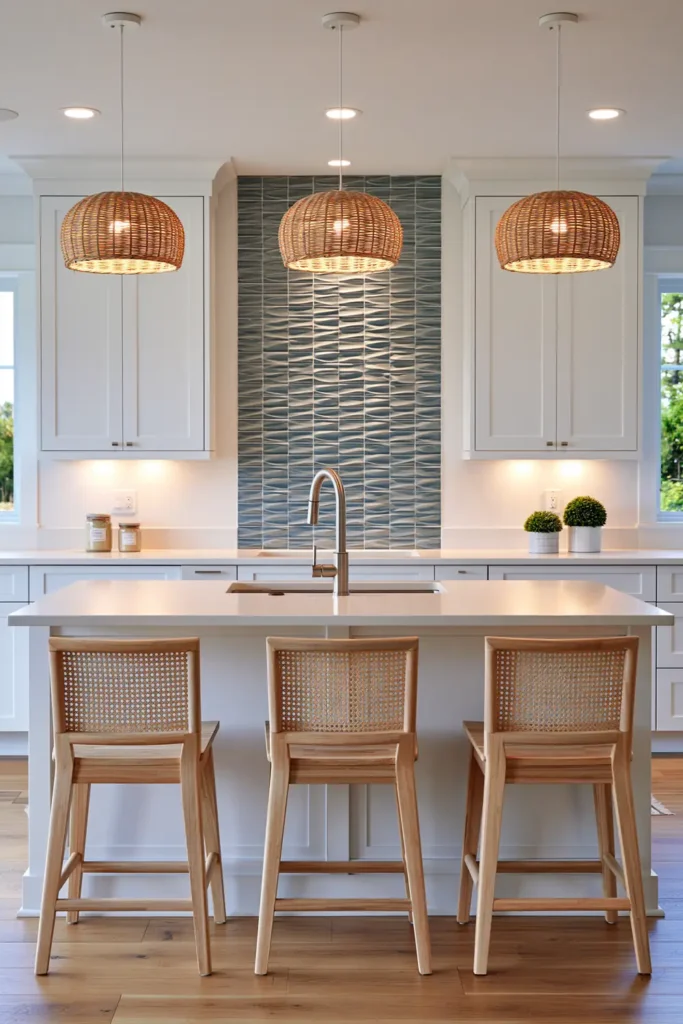
Aqua 3D Wave Glass Tile with Rattan Details
Aqua glass tile with a three-dimensional wave texture can turn a backsplash into one of the most tactile features in the kitchen. Instead of depending only on color, the raised surface creates shades and lights that change throughout the day.
The blue-green tone feels especially fresh when paired with light wood or white cabinetry. Those lighter finishes leave plenty of visual space around the backsplash and help the aqua color stay the focal point.
Woven rattan and cane details are useful for balancing the smooth, reflective quality of the glass. Cane-back counter-height stools introduce a softer, handmade texture, while a woven rattan globe pendant adds warmth above the kitchen.
Brushed stainless steel hardware and a matching faucet keep the practical elements clean and understated. Their cooler metallic finish also connects naturally with the blue-green backsplash.
Warm under-cabinet LED lighting can make the wave texture even more noticeable in the evening. A warm white light around 2700K creates gentle highlights across the raised surface and keeps the aqua glass from feeling too cold.
This combination works because the textures are different without fighting each other. The glass is glossy and sculptural, the rattan is dry and woven, and the light wood feels smooth and natural. Together, they create a kitchen that feels relaxed but still visually interesting.
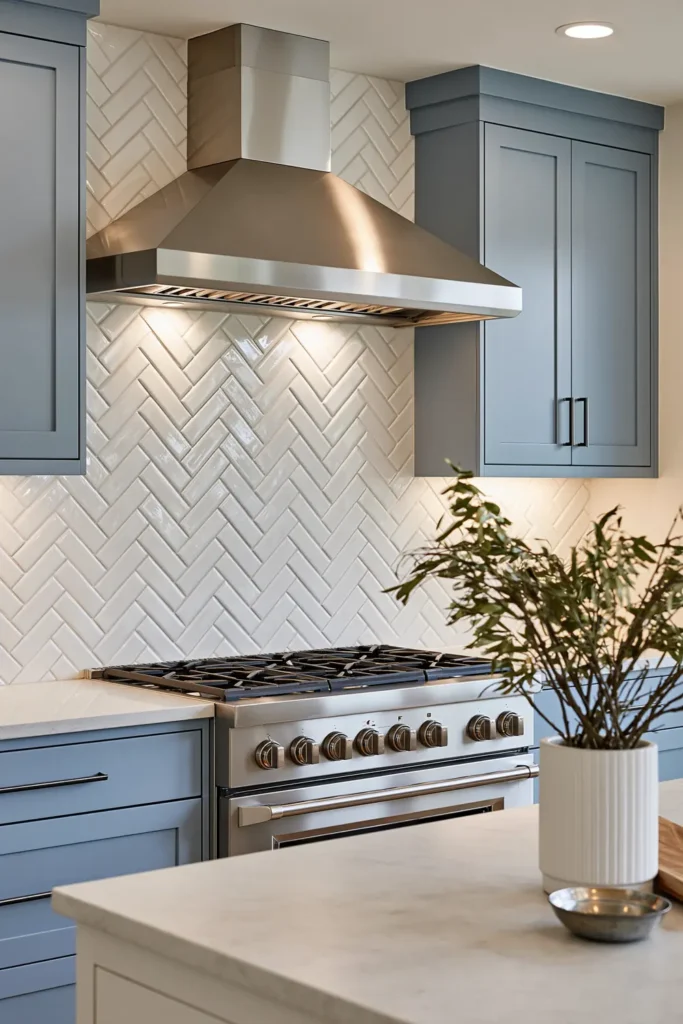
White Herringbone Glass Mosaic Tile for a Modern Kitchen
White glass mosaic tile arranged in a herringbone pattern is a good way to add movement while keeping the overall color palette simple. From a distance, the backsplash still reads as bright and neutral, but the angled lines give it more personality than a standard straight layout.
Because the pattern already creates plenty of visual detail, modern cabinetry is a natural match. Clean cabinet fronts give the eye somewhere to rest and prevent the wall from feeling overly decorative.
Brushed nickel cup pulls work well with the white glass because they add a subtle metallic accent without creating a dramatic contrast. A stainless steel range hood can maintain that cooler finish and help frame the cooking area.
Under-cabinet lighting is important with herringbone tile because it helps reveal the pattern. Light grazing across the surface creates small highlights along the edges of the mosaic pieces, which makes the layout easier to see without introducing extra color.
This is a useful choice if you like the brightness of a white backsplash but want something a little more distinctive. The herringbone layout provides the character, while the white glass keeps the kitchen feeling fresh and adaptable.
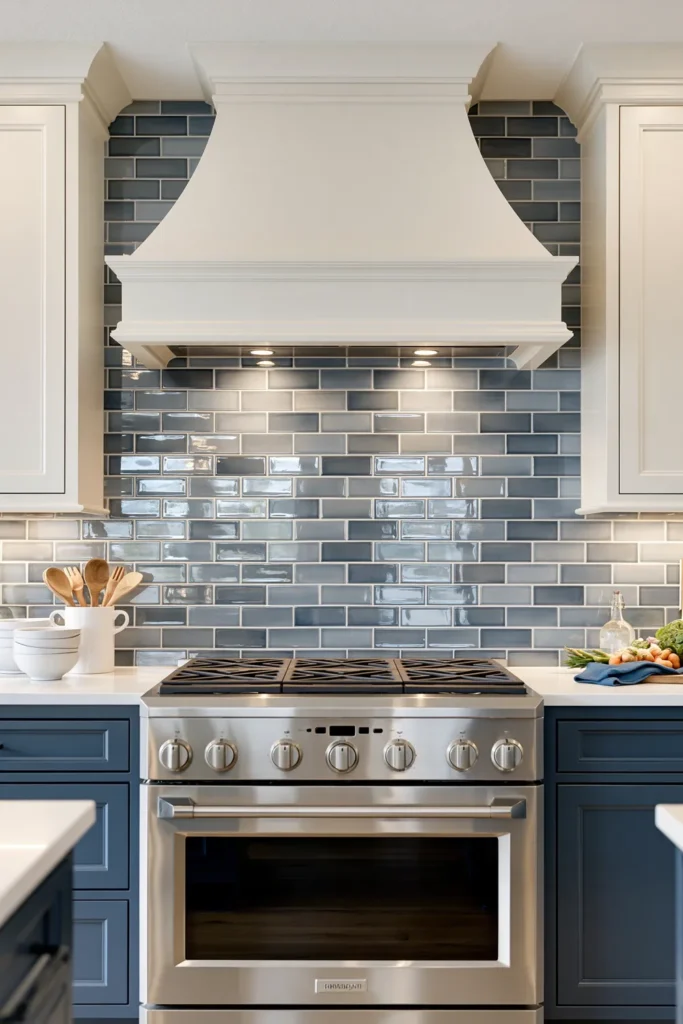
Navy Glass Tile with Two-Tone White and Blue Cabinetry
Navy glass subway tile can become the visual bridge between two-tone cabinetry, especially when the kitchen uses navy base cabinets with white uppers. The backsplash connects the darker lower half of the room with the brighter upper half, creating a more intentional transition between the two colors.
A white range hood works especially well in this setup because it breaks up the navy backsplash and gives the cooking area a strong focal point. The contrast feels distinct without becoming overly graphic.
White marble adds another light surface to the mix. A marble cutting board or countertop detail can echo the white cabinetry while bringing in subtle veining, which keeps the palette from feeling too flat.
Brushed nickel cabinet pulls are a sensible choice here because they sit comfortably between the cool blue and clean white finishes. Their softer sheen also works well with the reflective quality of the glass tile.
Natural and ambient light bring out the depth of the navy surface at different parts of the day. In brighter light, the tile can look more vivid, whereas evening illumination gives it a deeper and moodier appearance.
This is a strong option for homeowners who want contrast without using black. The navy provides richness, while the white cabinetry keeps the kitchen feeling open and balanced.
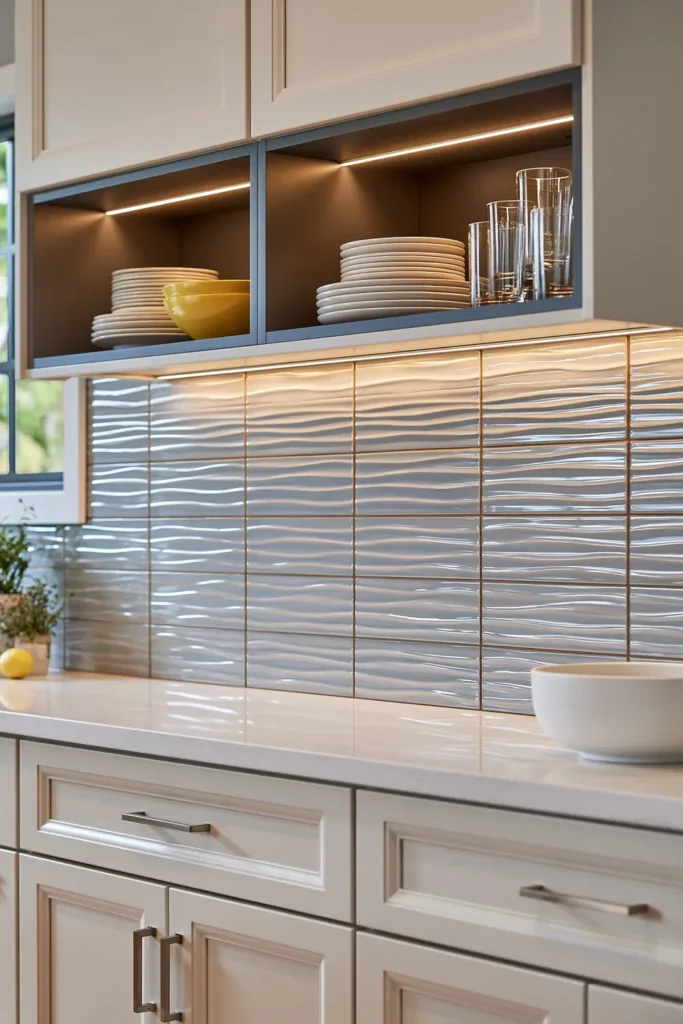
Textured Wave Glass Tile with Warm Hidden Lighting
A three-dimensional wave tile can make even a neutral backsplash feel much more interesting. The undulating surface creates its own pattern through light and shade, so the wall has movement even when the color remains understated.
This type of texture works especially well beneath upper cabinets with visible face frames. Installing warm LED strip lighting behind those frames can highlight the raised sections of the tile without exposing the light source directly.
Keeping the color temperature under 3000K gives the backsplash a softer appearance. The warm glow settles into the curves of the tile and makes the surface feel more dimensional, especially in the evening.
Marble veining nearby adds a further layer of movement, but in a much subtler way. The natural lines in the stone contrast with the repeating wave pattern without competing with it.
Modern brushed nickel drawer and cabinet pulls help keep the kitchen looking current. Their smooth finish is a useful contrast against the textured backsplash.
This idea works best when the lighting is treated as part of the design rather than an afterthought. The wave pattern becomes much more noticeable when light grazes across it from above.
Metallic Iridescent Glass Mosaic Tile for a High-Shine Finish
Metallic glass mosaic tile can give a kitchen a much more glamorous appearance, especially when the pieces have an iridescent finish. The surface catches light from several directions, creating small shifts in tone across the backsplash.
Because the mosaic already has plenty of visual activity, the surrounding countertops can stay relatively simple. Polished marble, quartz, or even smooth wood surfaces all work because they provide a larger, calmer plane beside the smaller tile pieces.
Polished stainless steel is another natural partner. A professional range hood can reflect some of the same highlights found in the backsplash, helping the cooking zone feel unified.
Warm white under-cabinet LED lighting brings out the metallic effect after dark. The light reflects from tile to tile and creates more depth across the wall without needing extra decorative elements.
The best way to keep this look from seeming overwhelming is to let the backsplash do most of the decorative work. Simple cabinetry and controlled accessories help the shine feel deliberate rather than excessive.
This is one of the more dramatic glass tile backsplash kitchen ideas, but it can still feel polished and practical when the rest of the room remains restrained.
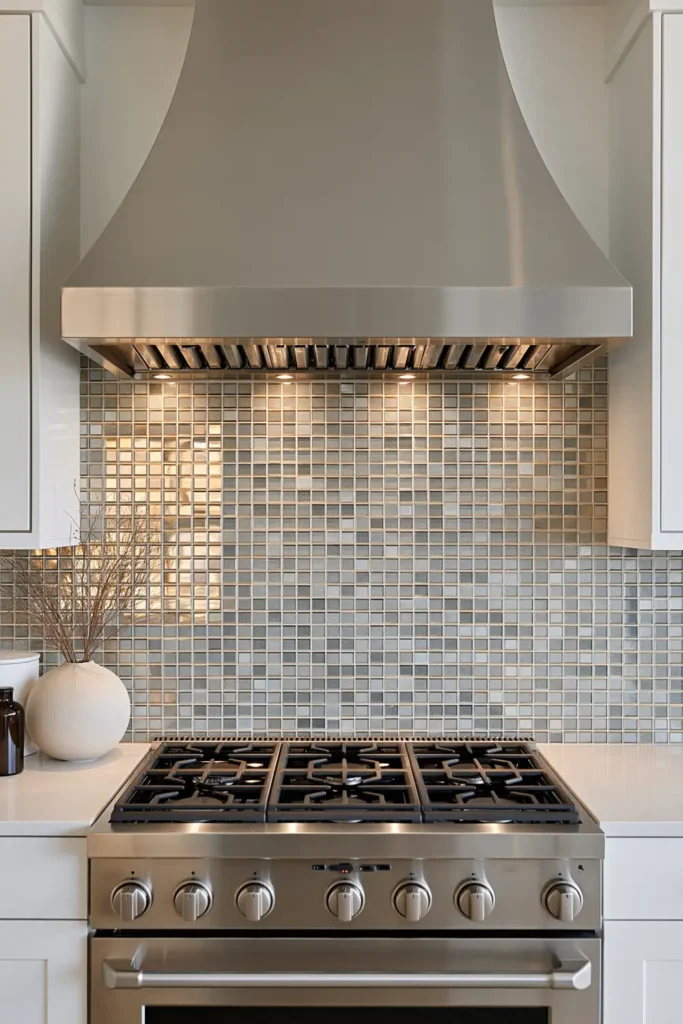
Sage Green Glass Tile with Unlacquered Brass Hardware
Sage green glass subway tile brings a softer kind of color into the kitchen. It has enough personality to stand out, but the muted green tone is easy to live with and works especially well in a neutral space.
Unlacquered brass drawer pulls bring warmth and character beside the green tile. Because the brass develops a natural patina over time, the finish can make the kitchen feel less polished and more collected.
Neutral cabinetry allows both materials to show distinctly without crowding the room. The glass provides a smooth shine, while the brass brings a warmer, more aged surface.
A rustic white ceramic planter or vase adds another useful contrast. Its matte texture feels softer against the glass backsplash, and a little greenery can connect naturally with the sage tone.
Ambient light is enough to give this combination depth. The glass emits a subtle glow rather than creating a strong sparkle, which helps the kitchen feel calm and comfortable.
The overall effect is understated but layered. If you want to add color without making the backsplash feel bold or trendy, sage glass tile with warm brass is an easy combination to work into a range of kitchen styles.
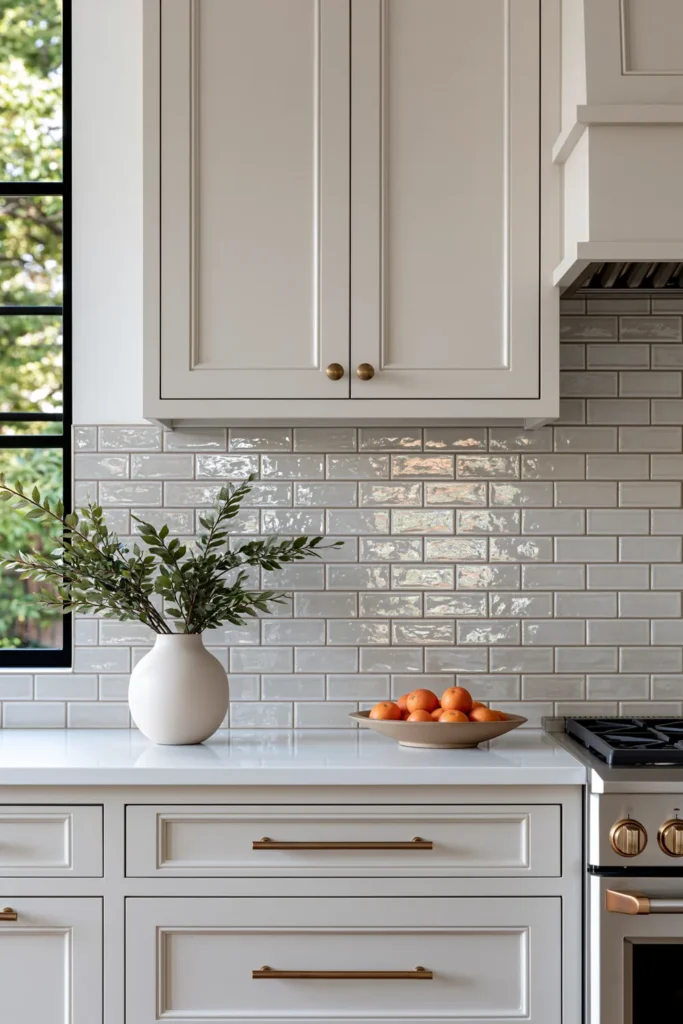
Bright White Glass Tile with Natural Oak Shelving
Bright white glass tile can make a kitchen feel lighter without looking plain. Its reflective surface catches natural light and gives the backsplash a cleaner, more open appearance than a flat white finish.
Natural oak shelving adds just enough warmth to keep the space from feeling too stark. A floating shelf also leaves more of the backsplash visible, which is helpful when the glass tile is one of the main design features.
Brushed nickel bar pulls fit comfortably into this palette because they add a cool metallic detail without creating too much contrast. A simple range hood can preserve the clean look around the cooking zone.
Light grout keeps the backsplash visually continuous. Rather than creating a strong grid, it lets the white tile read as a bright backdrop across the wall.
This idea works particularly well in kitchens with generous window light. The combination of white glass and natural oak feels fresh, balanced, and easy to adapt as the rest of the decor changes.
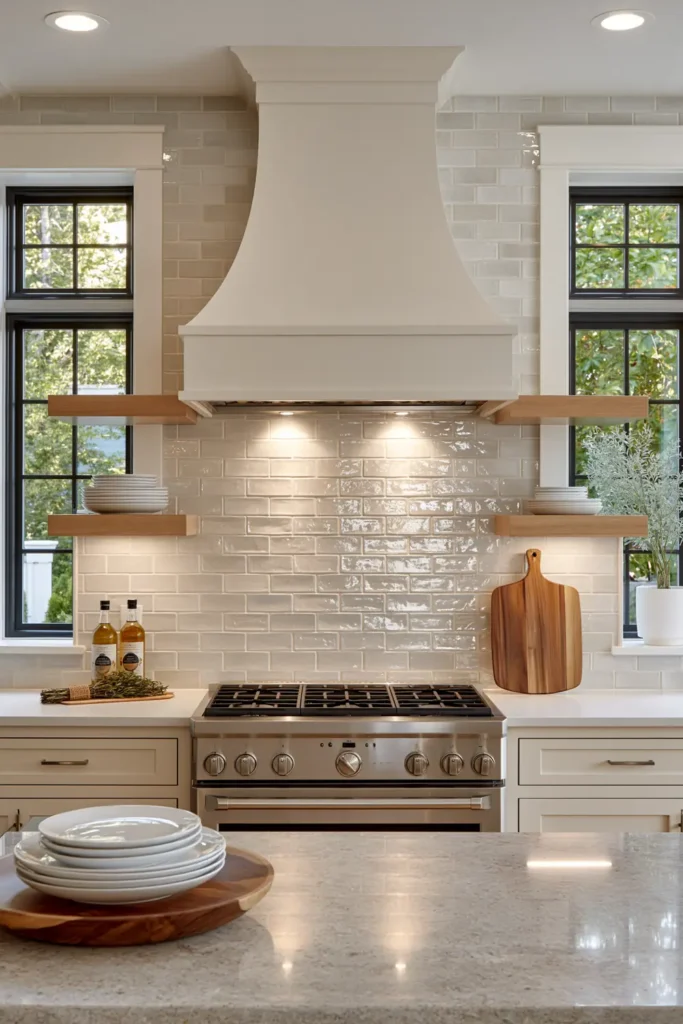
Matte Black Glass Tile with Rich Walnut Cabinetry
Matte or satin black glass tile offers a different kind of drama than a glossy black backsplash. The softer finish absorbs more light, which gives the wall a quieter and more sophisticated appearance.
Rich walnut cabinetry is a strong partner because the heat of the wood prevents the black tile from feeling too severe. Walnut shelving is able to reinforce that contrast and bring more natural texture into the room.
A vertical stacked tile layout makes the backsplash feel taller and more architectural. The straight lines also suit the clean character of matte black finishes.
Matte black hardware keeps the details streamlined. A black gooseneck kitchen faucet can blend into the overall palette instead of becoming a separate focal point.
Natural morning illumination is especially useful here because it reveals the differences between the soft glass surface and the wood grain. The result feels dark and grounded, but the walnut keeps it warm enough for an everyday kitchen.
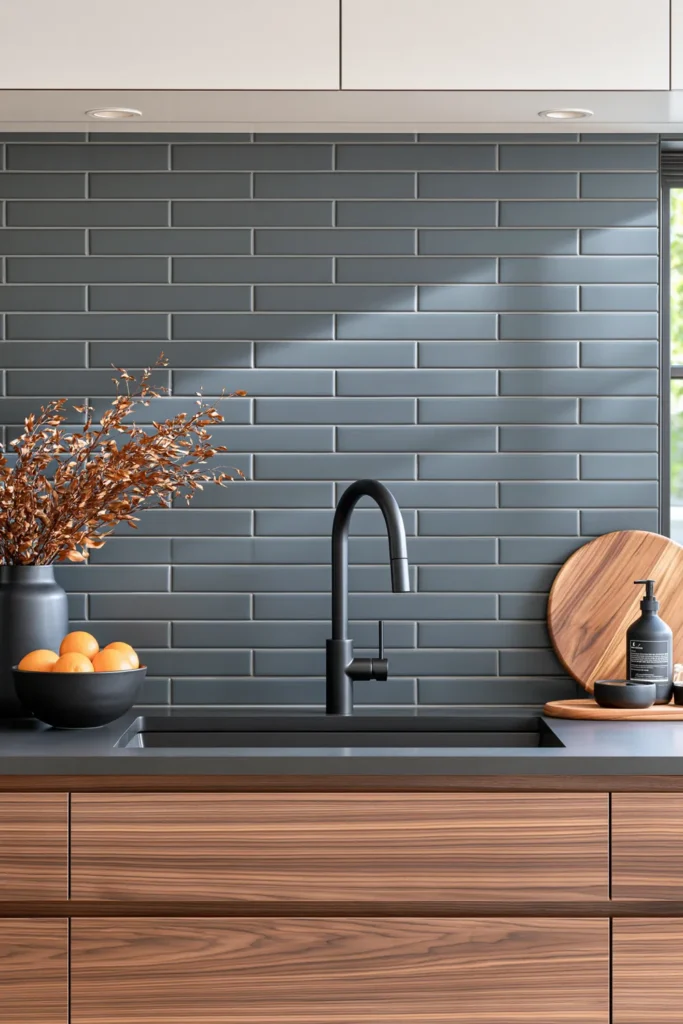
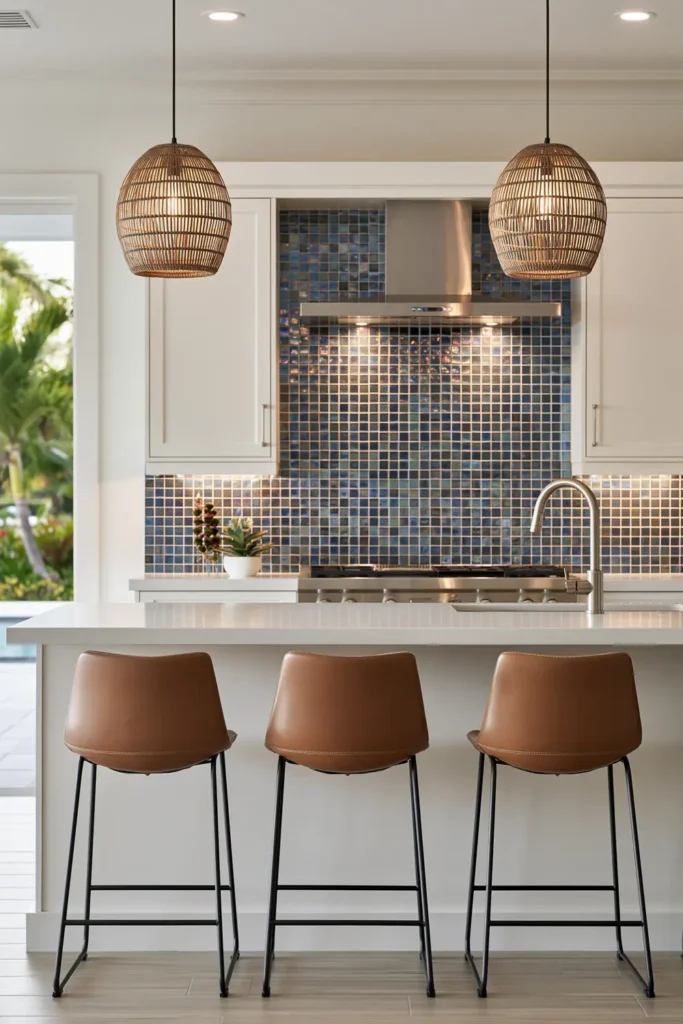
Iridescent Blue Glass Mosaic Tile with Cognac Leather
Iridescent blue glass mosaic tile can bring a strong dash of color to a kitchen while still feeling refined. The small reflective pieces create movement across the backsplash as light changes throughout the day.
Cognac leather bar stools are an effective counterpoint to the cool blue tile. Their warm brown tone gives depth and keeps the kitchen from leaning too heavily into cool colors.
Black stool legs help connect the seating to other darker details in the room, while neutral white walls give the stronger colors space to breathe.
Woven rattan pendant lights bring another warm material above the island. When the pendants cast a saffron glow, they can make the blue mosaic look richer and more dimensional.
This combination works because the finishes balance each other. The glass feels polished and luminous, the leather feels soft and warm, and the woven lighting brings in an informal natural texture.
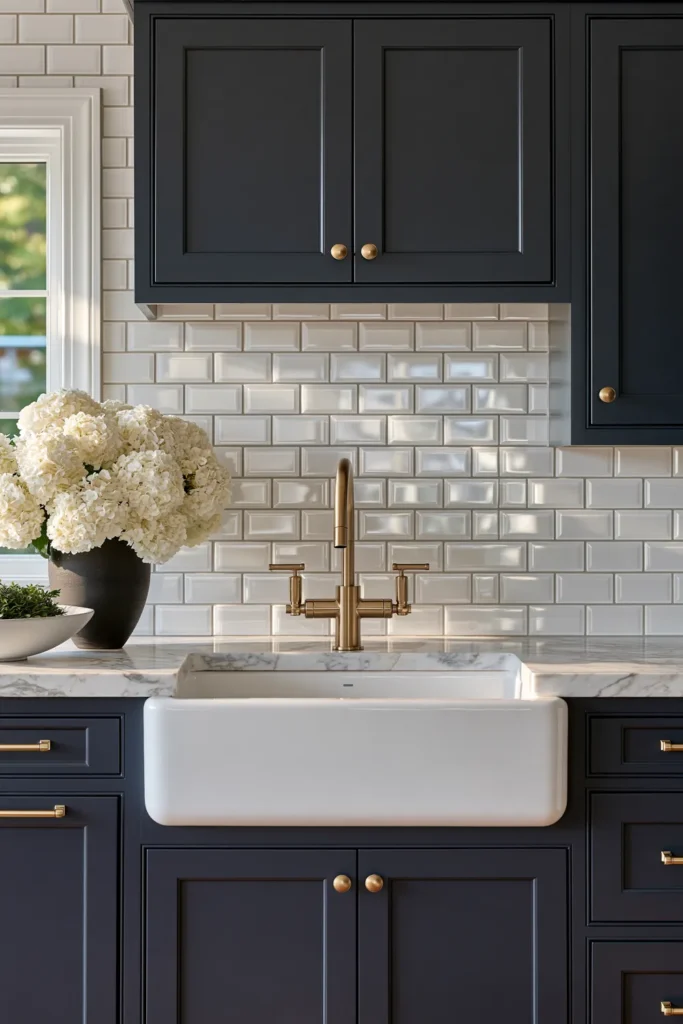
Classic Glass Subway Tile with Navy Cabinets and a Farmhouse Sink
Glass subway tile can still feel timeless when it is paired with traditional kitchen elements. Navy cabinetry gives the room a strong foundation, while a white marble countertop keeps the darker color from taking over the space.
A white ceramic farmhouse apron sink fits naturally into this look. Its substantial shape imparts character, while the bright finish creates a clean break against the navy cabinets.
A brass bridge faucet brings warmth to the sink area and adds a classic detail that stands out clearly against the cooler palette.
Simple accessories can help the kitchen feel more relaxed. A matte black vase adds contrast, while white hydrangeas introduce a softer decorative note without competing with the backsplash.
Natural daylight is especially flattering with this combination. It reflects from the glass tile and marble while keeping the navy cabinetry from feeling too heavy.
For a kitchen that mixes traditional forms with a cleaner surface finish, this is one of the easiest glass tile backsplash kitchen ideas to make feel both recognizable and updated.
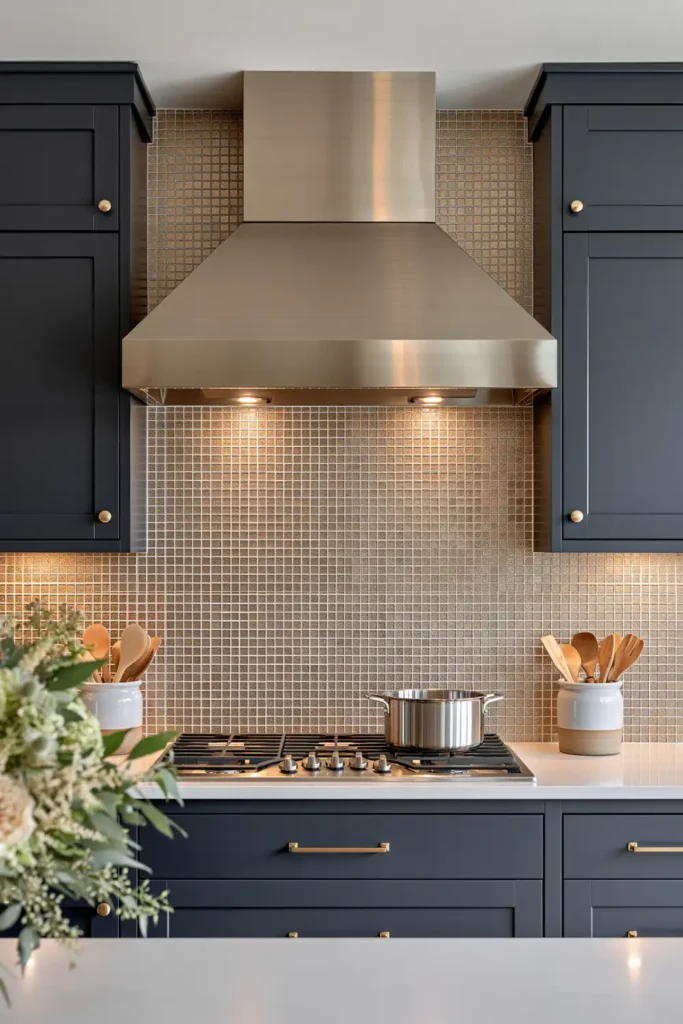
Gold-Flecked Glass Mosaic Tile with Brass Accents
Gold-flecked glass mosaic tile can bring a more luxurious feel to the backsplash without needing a complicated layout. The metallic detail already creates plenty of movement, especially when light catches the surface from different angles.
Deep navy, emerald, or crisp white cabinetry can all work with this kind of tile. Darker cabinets make the gold feel richer and more dramatic, while white cabinetry creates a more vivid contrast that lets the metallic flecks stand out more clearly.
Brass mushroom knobs are a natural match because they repeat the warm metallic tone but without trying to compete with the backsplash. Keeping the hardware simple helps the overall look stay polished.
White marble is useful for balancing the shine. Its cooler veining and smooth surface give the eye a quieter place to rest between the reflective tile and brass details.
A white marble utensil holder can carry that same material onto the countertop and keep everyday accessories visually connected to the rest of the kitchen.
This idea works best when the gold tile is treated as the main decorative feature. Too many additional metallic accents can make the space feel busy, so a restrained approach keeps the backsplash looking intentional.
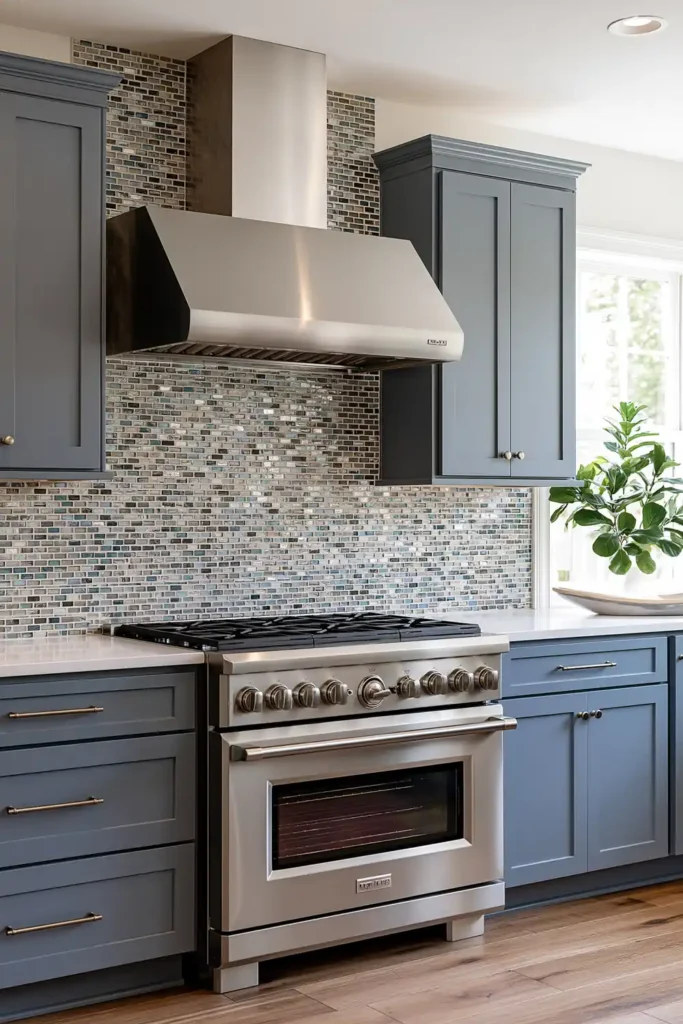
Turquoise Glass Mosaic Tile Accent Wall with Sage Cabinets
An iridescent blue and turquoise glass mosaic backsplash can create a vivid accent wall without making the kitchen feel overly dark. The mix of blue-green tones gives the surface depth, while the small mosaic pieces create shifting reflections throughout the day.
Sage cabinetry softens the stronger color and keeps the room feeling calm. Because both the tile and cabinets sit within a green-blue family, the combination feels connected without looking too closely matched.
Brushed nickel cabinet handles work well here because their cooler finish supports the palette without introducing another bold color. Stainless steel is able to continue that same direction around the cooking area.
A professional stainless steel island range hood insert adds a clean industrial element that contrasts with the softer sage and turquoise tones.
Natural light makes the iridescent mosaic especially effective. As the light changes, different pieces can appear brighter or deeper, giving the backsplash more visual movement.
This is a useful choice if you want a colorful kitchen but prefer something more layered than a single solid shade. The sage cabinetry keeps the room grounded while the glass mosaic provides the energy.
Linear Gray and White Glass Mosaic Tile in a Vertical Layout
A linear gray and white glass mosaic backsplash can make a kitchen feel more architectural, especially when the pieces are arranged vertically. The upward lines naturally draw the eye higher and can make the wall appear taller.
The mix of gray and white keeps the palette neutral while still offering more variation than a plain subway tile. The narrow pieces create a repeating rhythm, which works well with streamlined cabinetry.
Polished chrome cabinet bar pulls fit naturally into this look because they echo the reflective quality of the glass. Their clean finish reinforces the more contemporary character of the tile layout.
Warm under-cabinet lighting can help soften the cooler gray tones. A dimmable LED system below 4000K allows the backsplash to remain bright enough for task lighting without making the kitchen feel overly cool.
The vertical layout is the main feature here, so the surrounding details can stay simple. When the cabinet hardware and lighting are kept understated, the directional pattern remains easy to appreciate.
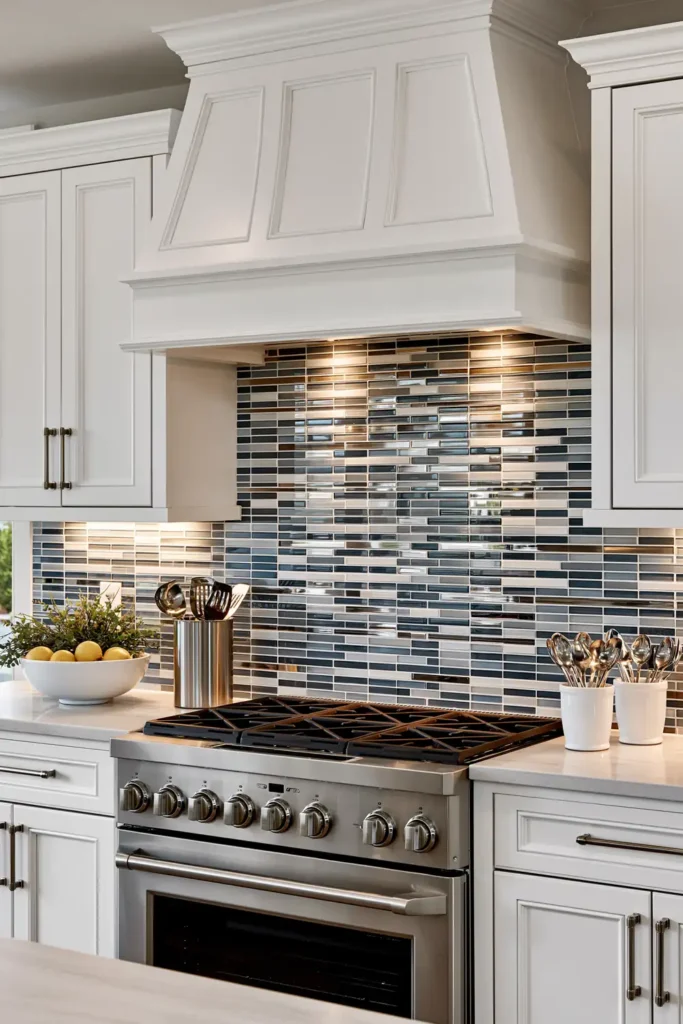
Marble-Look Glass Tile with Oak Shelving and Brass Details
Marble-look glass subway tile offers a way to bring subtle veining into the backsplash while keeping the reflective quality of glass. It can feel more decorative than a plain white tile but still remain neutral enough to work with a range of cabinet finishes.
A thick solid oak floating shelf introduces warmth and texture against the cooler marble-inspired surface. The contrast between the natural wood grain and smooth glass helps both materials stand out.
Brass works especially well in this combination. A bridge kitchen faucet adds a warm focal point and gives the space a more collected, traditional detail, yet without making the overall kitchen feel old-fashioned.
Stacked white ceramic bowls keep open shelving simple and useful. Vintage cookbooks can add a little variation in color and texture without engulfing the backsplash.
Ambient and natural light help reveal the veining in the tile while additionally highlighting the depth of the oak shelf. The result feels layered, warm, and practical rather than excessively formal.
This combination is a good fit if you like the look of marble but want the backsplash to have a lighter, more reflective finish.
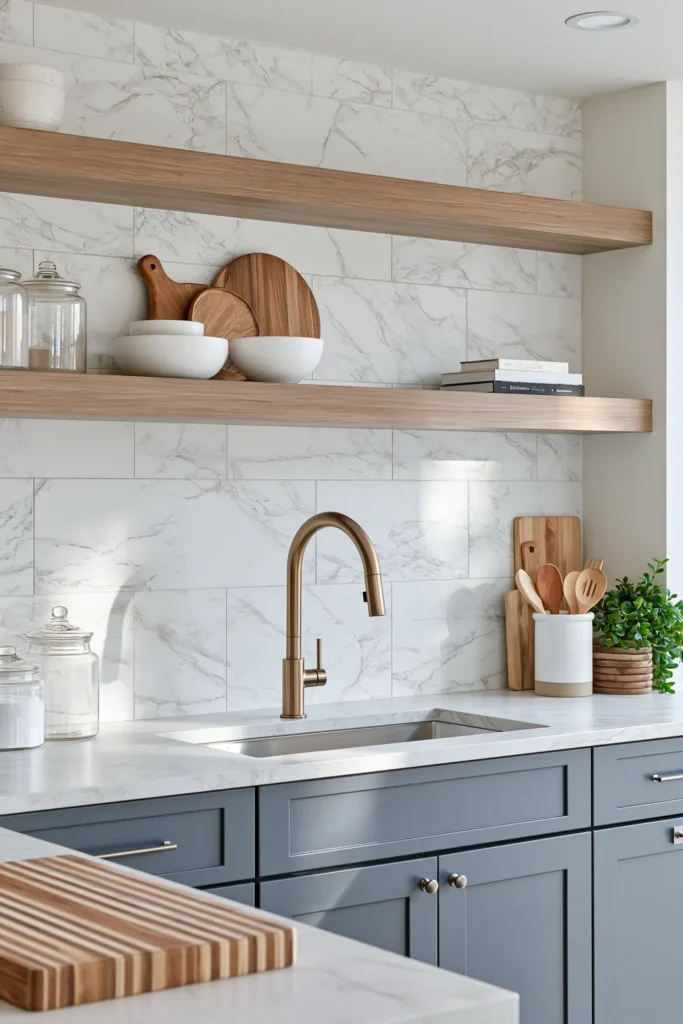
Green-Blue 3D Glass Tile for a Spa-Themed Kitchen
A green-blue glass backsplash with a three-dimensional wave texture can give a kitchen a calm, almost spa-like feel. The combination of hue and motion makes the wall visually interesting without needing a busy pattern.
Open shelving works well with this look because it leaves more of the backsplash exposed. Instead of hiding the tile behind solid upper cabinets, the open areas allow the changing surface and color to become part of the room.
White ceramic canisters with wood lids add a softer everyday detail against the reflective glass. The ceramic keeps the palette light, while the wood brings in a natural element that helps the kitchen feel warmer.
A brass bridge faucet delivers a gentle metallic contrast. Its warmer tone stands out against the cooler blue-green tile without feeling too sharp.
Stacked white towels have the potential to reinforce the clean, relaxed character of the space, especially when styled neatly on open shelving.
Natural light is important with this kind of backsplash because it brings out the iridescent quality of the tile and accentuates the raised wave texture. The overall effect feels fresh, calm, and well suited to a kitchen that aims for a softer atmosphere.
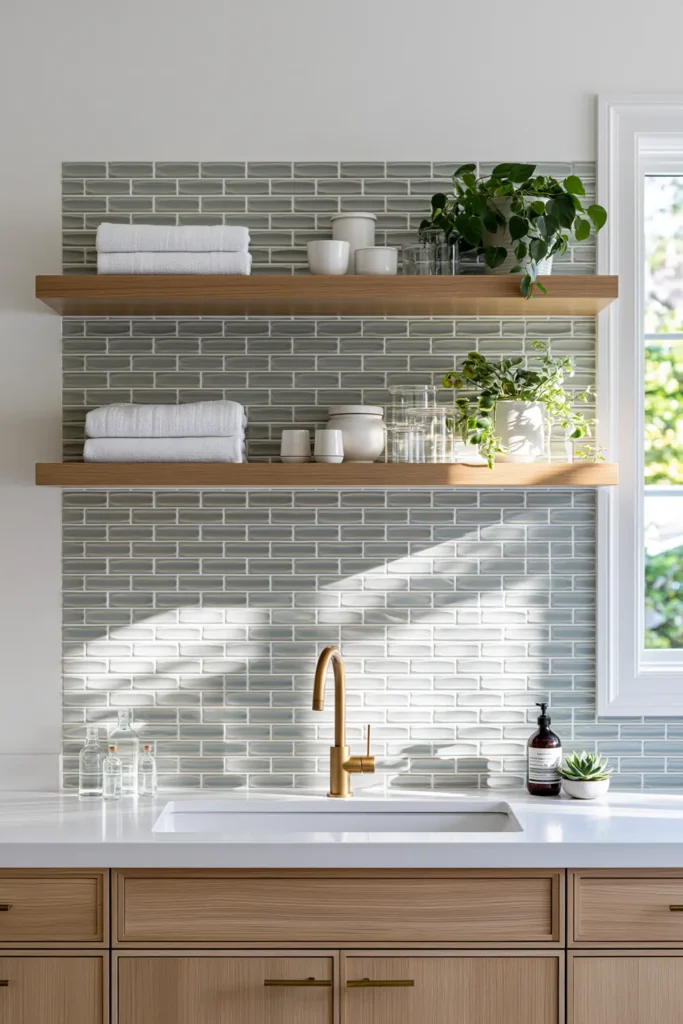
Geometric Glass Mosaic Tile with Brass and Natural Wood
Arabesque or geometric glass mosaic tile can bring a decorative pattern into the kitchen without relying on a strong color. The shape itself creates the interest, which makes it easier to keep the rest of the palette simple.
Brass cup pulls are a good match because their curved profile works naturally with a more ornamental tile pattern. The warm finish also helps soften the reflective surface of the glass.
Wooden spoons in a stoneware crock add practical texture to the countertop. Their natural grain contrasts with the smooth backsplash, while the stoneware gives the arrangement a more grounded feel.
Layered cutting boards can preserve the wood detail and make the kitchen feel lived-in without needing a lot of decorative accessories. A few potted herbs on the countertop bring in another natural element and add a little fresh green.
Under-cabinet LED lighting helps define the tile pattern by creating small highlights across the glass. This is especially useful with geometric shapes, where the pattern becomes more noticeable when the surface is evenly lit.
The combination works best when the styling stays functional. Brass, wood, stoneware, and herbs all bring warmth to the backsplash while still feeling appropriate for an everyday kitchen.
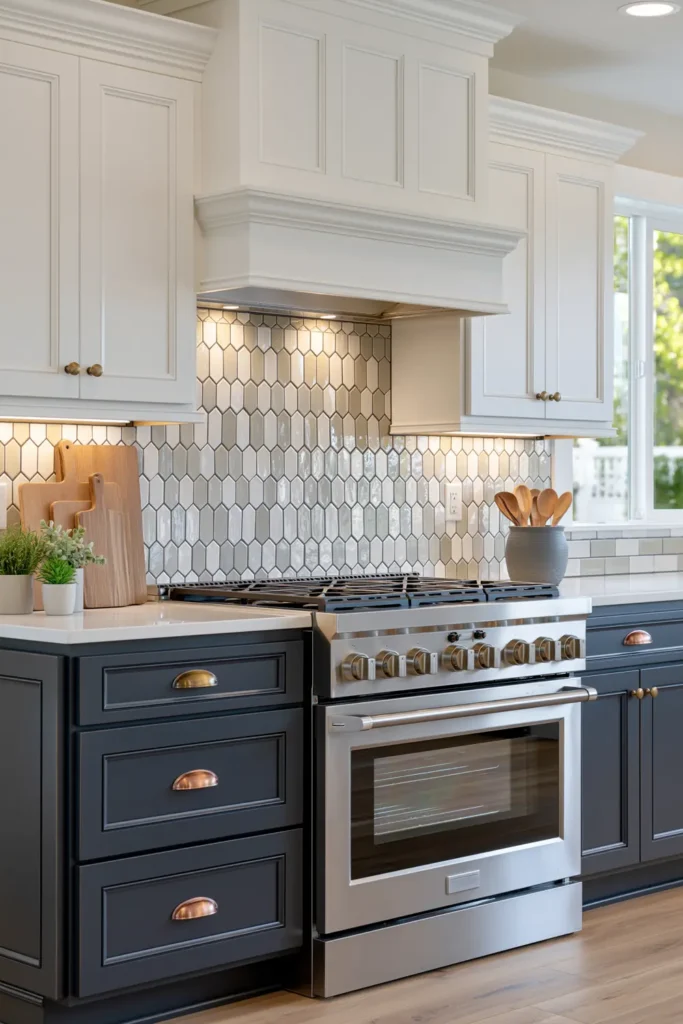
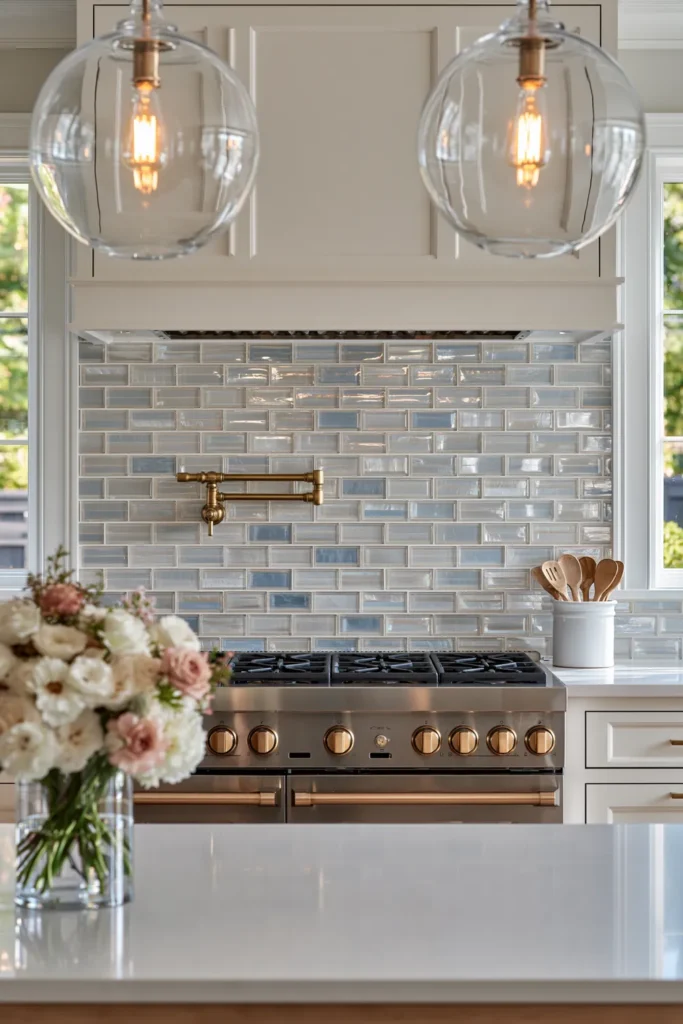
Champagne Glass Subway Tile with Clear Globe Pendants
Champagne glass subway tile offers a softer alternative to bright gold or silver finishes. The color has a warm shimmer that can make the backsplash feel elegant without becoming overly flashy.
White or taupe cabinetry gives the champagne tone a calm backdrop. Both options keep the room light and allow the delicate warmth of the glass to show more clearly.
A brass wall-mount pot filler is able to reinforce the warm metallic direction near the range. Because the backsplash already has a reflective finish, the brass detail feels connected without needing to match it exactly.
Clear glass globe pendant lights are especially effective above a kitchen island. Their clear shades keep sightlines open, while brass hardware and visible warm bulbs add another layer of glow.
The combination becomes especially appealing in the evening, when the warm pendant bulbs reflect gently across the champagne glass.
This is one of the more understated glass tile backsplash kitchen ideas for homeowners who want a little sparkle without creating a strongly metallic kitchen.
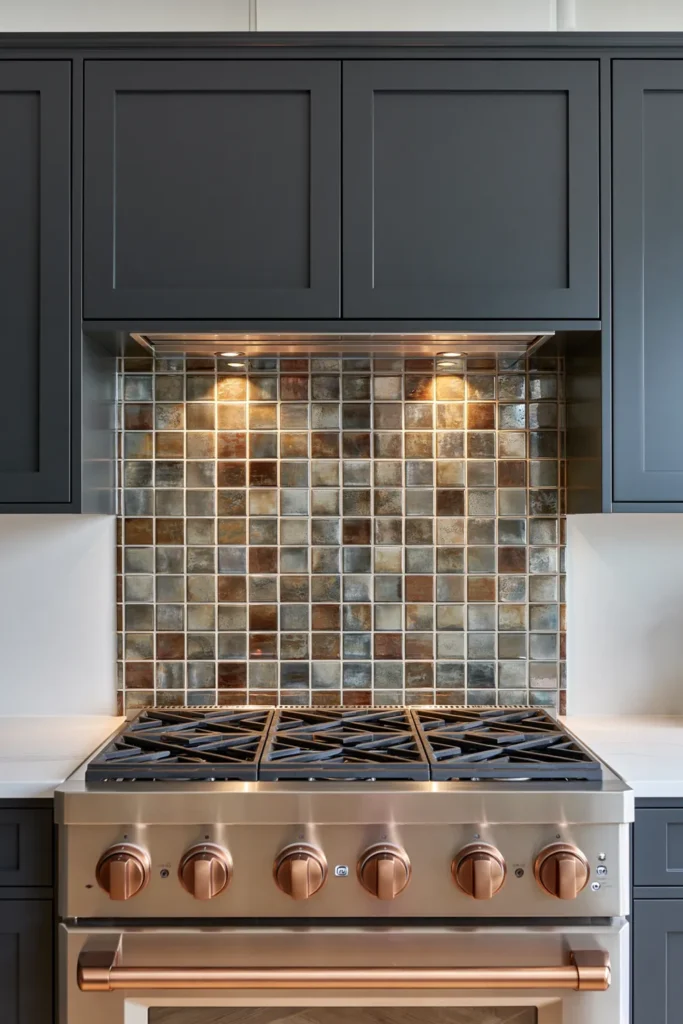
Bronze Glass Subway Tile with Copper and Brass Accents
Iridescent bronze glass subway tile is able to create a rich, warm backdrop with more depth than a standard brown or neutral backsplash. The reflective surface allows different bronze tones to appear as the lighting changes.
Copper and brass are natural companions for this finish. A copper utensil crock can bring a softer reddish metallic tone to the countertop, while brass bar pulls add a more vivid golden note to the cabinetry.
Bronze range accents help connect the backsplash with the cooking area and keep the metallic palette feeling deliberate.
Pendant lights and recessed fixtures can strengthen the overall effect by emitting a warm radiate across the tile. Because the glass reflects that light, the backsplash can appear deeper and more dimensional in the evening.
The important part is keeping the metallic finishes related but not identical. Bronze, copper, and brass each bring a slightly different warmth, which gives the kitchen more depth than using one finish everywhere.
With simple cabinetry around it, this combination can feel dramatic while still remaining inviting.
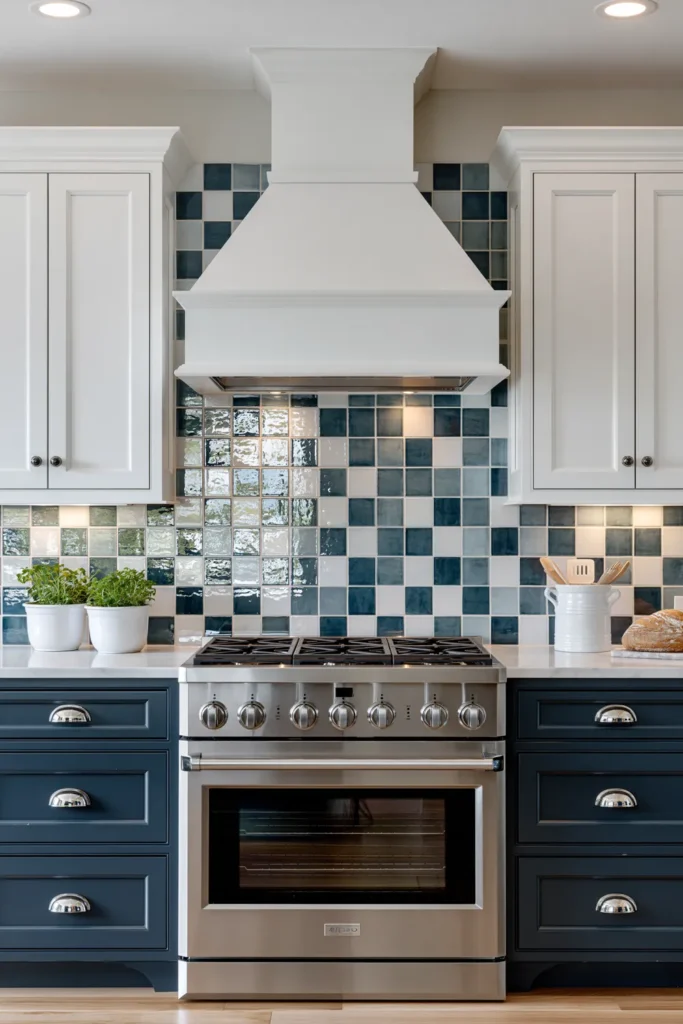
Navy and White Glass Tile for a Crisp High-Contrast Kitchen
Glossy navy blue glass subway tile can create a strong contrast against white cabinetry without making the kitchen feel overly dark. The reflective finish keeps the blue lively, while the white cabinets provide a clean frame around it.
A straight grid tile layout gives the backsplash a more structured appearance than a staggered subway pattern. The aligned grout lines make the wall feel neat and contemporary, which works especially well with simple cabinet fronts.
Polished nickel cup pulls add a bright metallic detail that sits comfortably between the cool navy tile and white cabinetry. Stainless steel appliances may continue that cooler finish without distracting from the backsplash.
A white ceramic utensil crock is a simple way to repeat the cabinet color at countertop level. Keeping accessories light and minimal allows the navy glass to remain the main visual feature.
Natural light brings out the glossy surface and prevents the darker blue from feeling heavy. This combination is especially useful if you want strong contrast while still keeping the kitchen bright and polished.
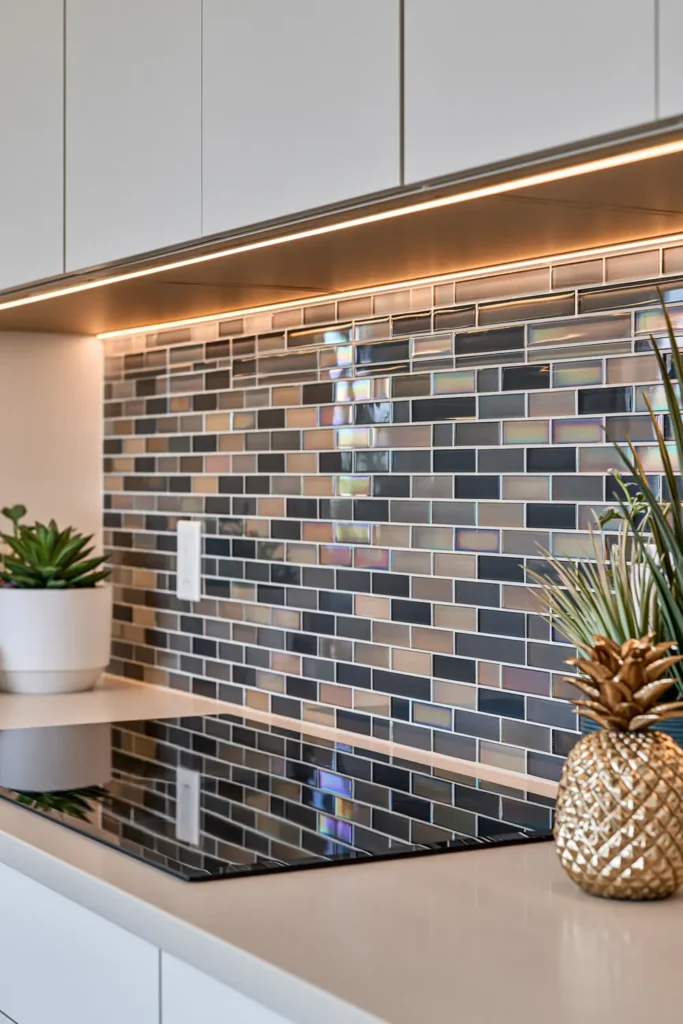
Iridescent Glass Tile Backsplash Kitchen Ideas with a Pleasant Glow
Iridescent glass subway tile can look completely different depending on the light around it. Instead of reading as one flat color, the surface shifts subtly as reflections move across the backsplash.
Warm white under-cabinet lighting is especially effective with this finish. Installing the LED strip a few inches back from the cabinet face can spread the light onto the tile and create a subtle glow rather than a harsh line.
The iridescent surface does most of the decorative work, so surrounding cabinetry can remain simple. This helps the changing reflections feel intentional rather than busy.
A small gold accent is able to reinforce the warmer side of the palette. Something as simple as a gold pineapple decorative piece gives a playful metallic note without requiring a full set of matching gold fixtures.
This idea works best when the lighting is considered from the beginning. The tile may look restrained during the day and noticeably more luminous in the evening, giving the kitchen a different character depending on the time.
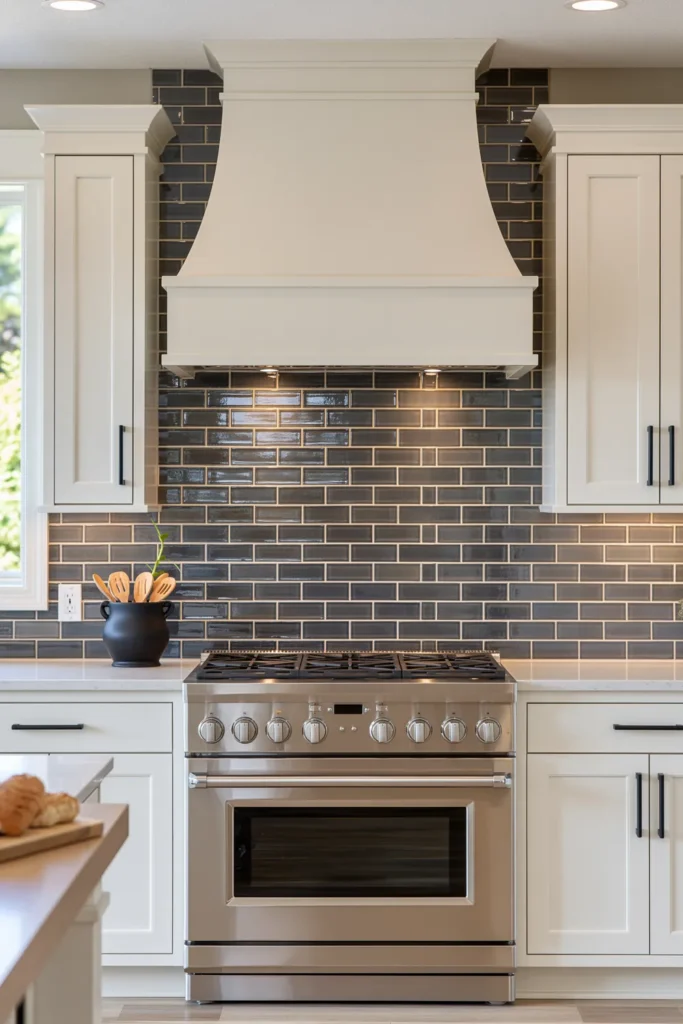
Glossy Black Glass Tile with Bright White Grout
Glossy black subway tile creates a bold backsplash, but bright white grout changes the effect completely. Instead of allowing the dark tiles to blend into one surface, the grout outlines each piece and turns the layout into a strong graphic pattern.
This colorblock approach works particularly well with clean kitchen cabinetry. The backsplash already carries a lot of contrast, so simple cabinet forms help keep the room from looking too busy.
Matte black drawer pulls are a natural fit because they repeat the darker color without adding more shine. Their subdued finish also creates a subtle contrast against the glossy glass.
A stainless steel range hood insert and six-burner gas range bring a cooler metallic surface into the cooking zone. Stainless steel breaks up the black-and-white palette just enough while still keeping the kitchen modern.
Task lighting and reflections from the range help prevent the dark backsplash from feeling flat. The glossy finish catches those highlights and gives the black tile more depth.
If you like strong lines and high contrast, this is one of the most graphic options in the article. The white grout is what defines the look, so keeping the grout lines clean and consistent is especially important.
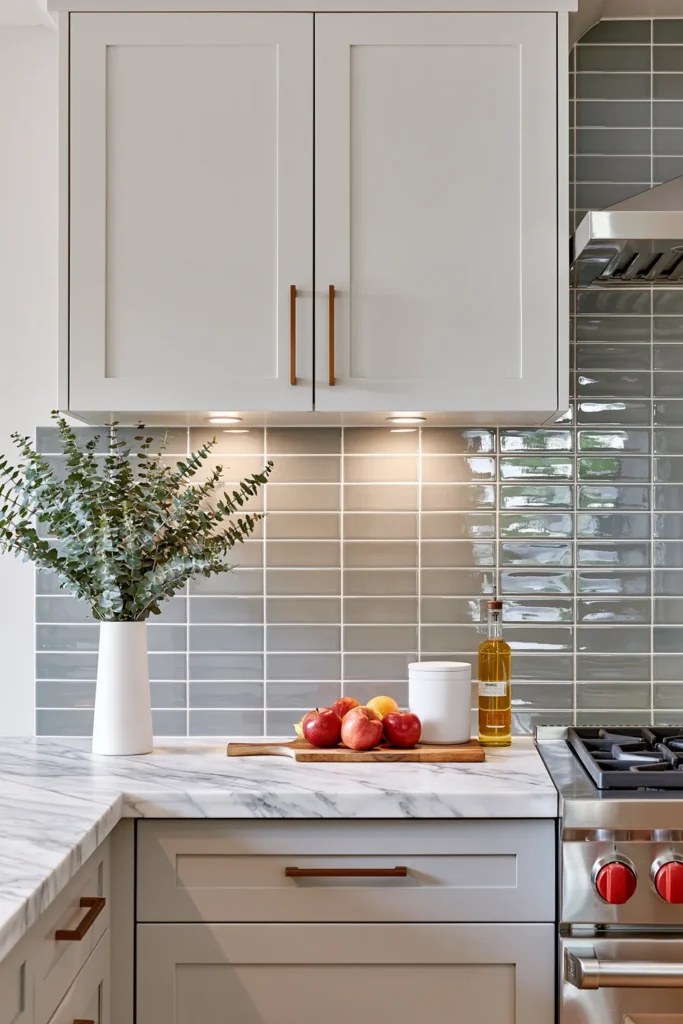
Frosted Glass Subway Tile with Carrara Marble and Natural Wood
Frosted glass subway tile has a softer appearance than highly polished glass, making it a good choice when you want the lightness of glass without a strong shine. The matte surface diffuses reflections and gives the backsplash a calmer look.
Natural wood cabinetry adds warmth and helps the frosted finish feel more inviting. The grain of the wood introduces texture that contrasts gently with the smooth glass.
Carrara marble countertops fit naturally into this palette. Their soft gray veining adds movement while staying light enough to maintain the quiet overall look.
Brushed brass cabinet handles can bring in a warmer metallic feature without overpowering the softer surfaces. The muted sheen of brushed brass works especially well with frosted tile because neither finish feels overly reflective.
Diffused ambient lighting reinforces the understated mood. Rather than creating sharp highlights, the light spreads softly across the tile and marble.
This combination is a good option for a kitchen where you want glass tile to feel elegant but not glossy. The frosted backsplash, natural wood, marble, and brushed brass all contribute different textures while staying visually balanced.
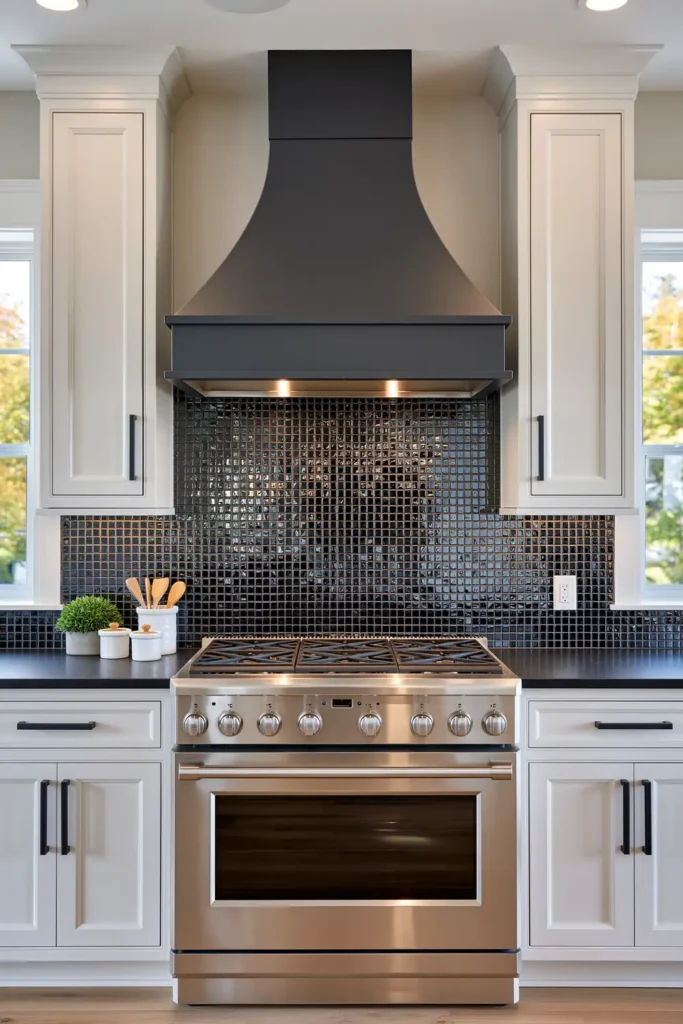
Black Glass Mosaic Tile with Solid White Cabinetry
Black glass mosaic tile creates a bold backsplash that can look especially striking against solid white cabinetry. The contrast is immediate, but the reflective surface of the glass keeps the darker wall from feeling completely flat.
The smaller mosaic format adds texture across the backsplash, making the black surface feel more detailed than a single large dark panel. Light can catch different pieces at slightly different angles, which gives the wall more depth.
Matte black cabinet handles help connect the backsplash to the cabinetry without adding another competing finish. Because the handles are less reflective than the glass, they create a subtle material contrast even though the color remains the same.
A stainless steel gas range delivers a brighter metallic surface into the cooking area. It breaks up the black-and-white palette and helps the backsplash feel integrated with the appliances instead of isolated as a decorative feature.
Natural light is particularly useful with black glass mosaic tile. When light reaches the backsplash from different directions, the individual pieces can reflect it differently and reveal more of the tile pattern.
This combination works well when you want a kitchen that seems crisp and high contrast. Keeping the cabinetry solid white and the hardware simple allows the black glass backsplash to remain the strongest visual element.
Choosing the Glass Tile Look That Fits Your Kitchen
The best glass tile backsplash is not always the boldest or most reflective option. It is the one that works naturally with the cabinetry, countertop, hardware, lighting, and materials already in the room.
To help you decide, use this simple checklist before choosing your backsplash:
– Cabinet color and finish: Does the tile coordinate or contrast in a way that feels balanced?
– Countertop material and undertone: Will the tile complement or compete with the counters?
– Lighting: How does natural and artificial light affect the color and finish throughout the day?
– Hardware and fixtures: Are metals (like brass, chrome, or black) in harmony with the tile you are considering?
– Room style and mood: Does the tile contribute to the overall atmosphere you want—warm and cozy, modern and crisp, or something else?
– Maintenance: Are you comfortable with the level of upkeep required for glossy, textured, or matte tile?
Taking a moment with these factors could help you quickly reduce the choices and focus on what will actually make your kitchen feel complete.
If your kitchen has plenty of warm wood, a cooler glass tile in white, gray, blue, or green can provide balance. Dark cabinetry can benefit from reflective or lighter tile, while white cabinets give you more freedom to experiment with navy, black, burgundy, bronze, or colorful mosaics.
Finish matters just as much as color. High-gloss and iridescent glass create stronger reflections, while frosted and matte finishes feel quieter. Textured wave tiles and geometric mosaics introduce movement even when the palette is simple.
Lighting can also completely change the result. Under-cabinet LEDs emphasize glass surfaces and texture after dark, while natural daylight brings out changing colors and reflections during the day. For the best effect, consider installing warm white LED strips (around 2700K to 3000K) to add a comfortable light that highlights texture. Cool white LEDs (4000K and above) create a more vivid, cleaner look and bring out crisp reflections, especially in kitchens with modern finishes. Place strip lighting near the front edge of upper cabinets for even illumination, or use puck lights for accent highlights on specific areas. If your backsplash features three-dimensional or iridescent tile, dimmable lighting gives you more flexibility to control the mood throughout the day.
When deciding among these glass tile backsplash kitchen ideas, start with the mood you want the kitchen to have. A soft sage or seafoam backsplash can feel relaxed, navy and black create stronger contrast, and metallic or iridescent finishes bring more drama.
You do not need every finish in the kitchen to match perfectly. For example, pairing glass tile with natural wood shelves and brass hardware creates layers of texture and warmth, while still feeling unified and intentional. A thoughtful mix of glass, wood, stone, metal, and ceramic commonly feels more natural than a room where everything is coordinated too closely. Choose the combination that suits the way your kitchen already looks and feels, and let the backsplash add the color, texture, or shine that has been missing.