
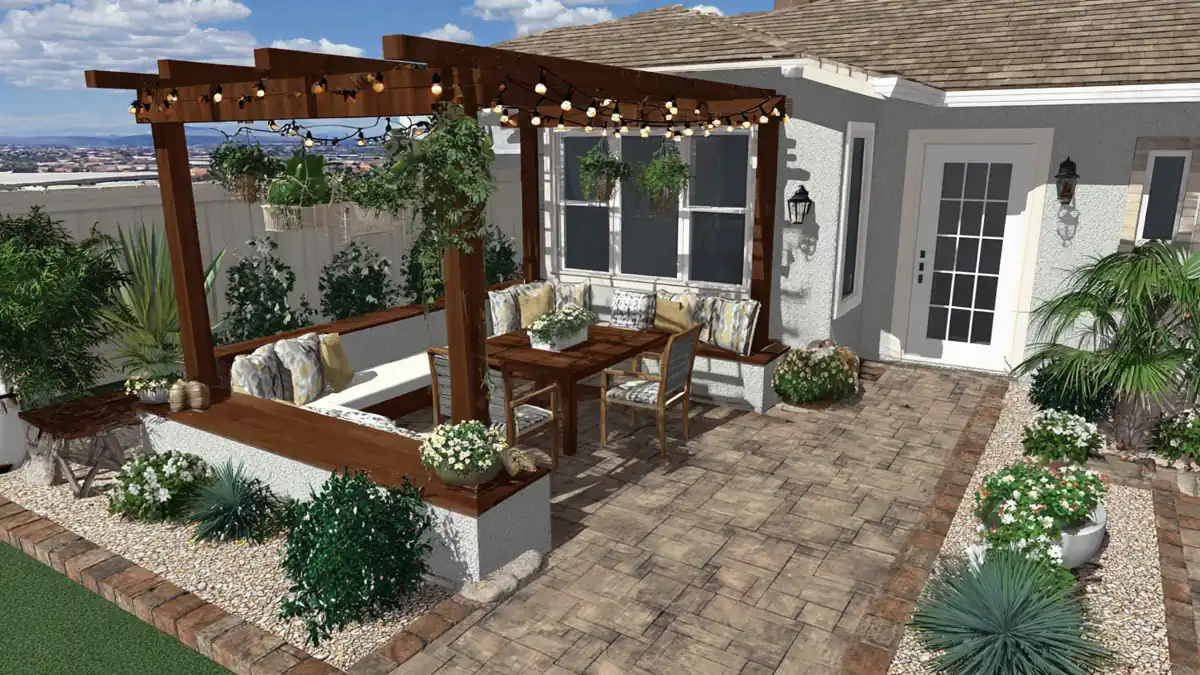
When you’re working with a smaller outdoor area, every decision matters. I’ve found that small patio designs aren’t really about size—they’re about how well you use what you have. A few smart layout choices can turn even a tight space into somewhere you actually want to sit, eat, and unwind.
In this article, I’m sharing a mix of practical patio setups I’ve come across and used as inspiration in my personal projects. These ideas focus on real layouts, built-in features, and simple upgrades that make a noticeable difference without making it complicated.
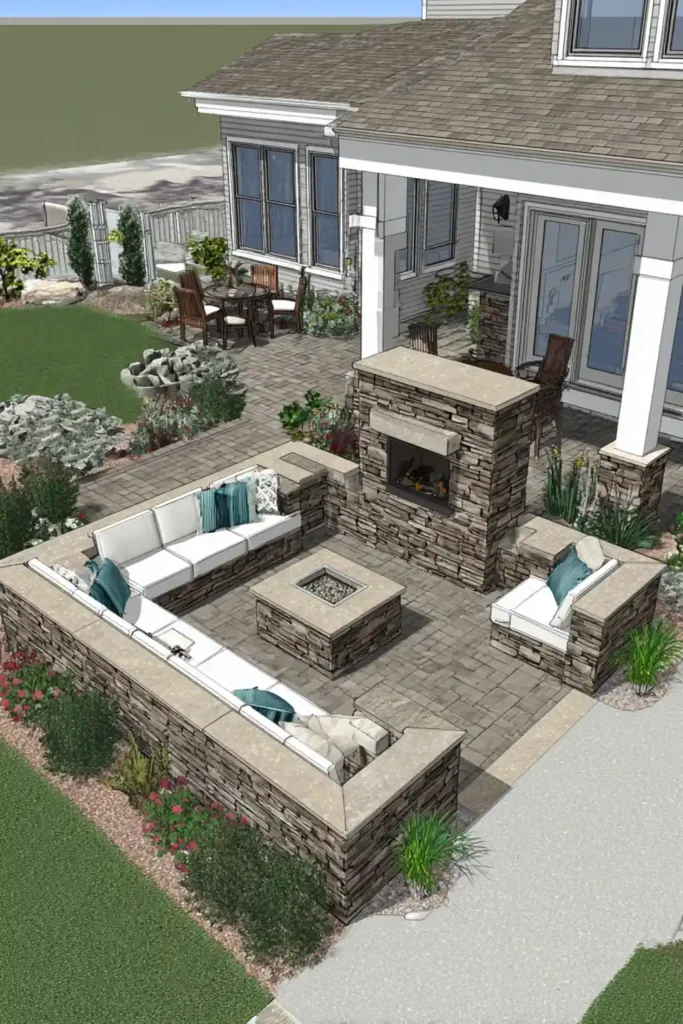
Square Patio Layout with Built-In Seat Walls and Fireplace
A square patio is one of the easiest shapes to work with because everything feels balanced right away. What makes it really effective is adding built-in seat walls along the edges. Instead of filling the space with bulky furniture, the seating becomes part of the structure, which keeps the center open and usable.
In this setup, the paved surface acts as a clean base, while a fireplace or fire feature anchors one side. For the paving, materials like porcelain pavers or natural stone such as bluestone or flagstone offer both toughness and a stylish look. I’ve noticed that combining a grill surround with a seat wall works especially well; using poured concrete or stone veneer for seat walls creates a solid, built-in feel that stands up well to weather. Everything feels connected instead of scattered. Wooden planter boxes or extensions along the wall, ideally in weather-resistant woods like cedar or redwood, soften the edges and keep things from looking too rigid.
If you’re trying this at home, start by defining your corners. Even a simple L-shaped seat wall can give you enough structure to arrange the rest of the space without overthinking it. It’s a straightforward way to make a small patio feel intentional.
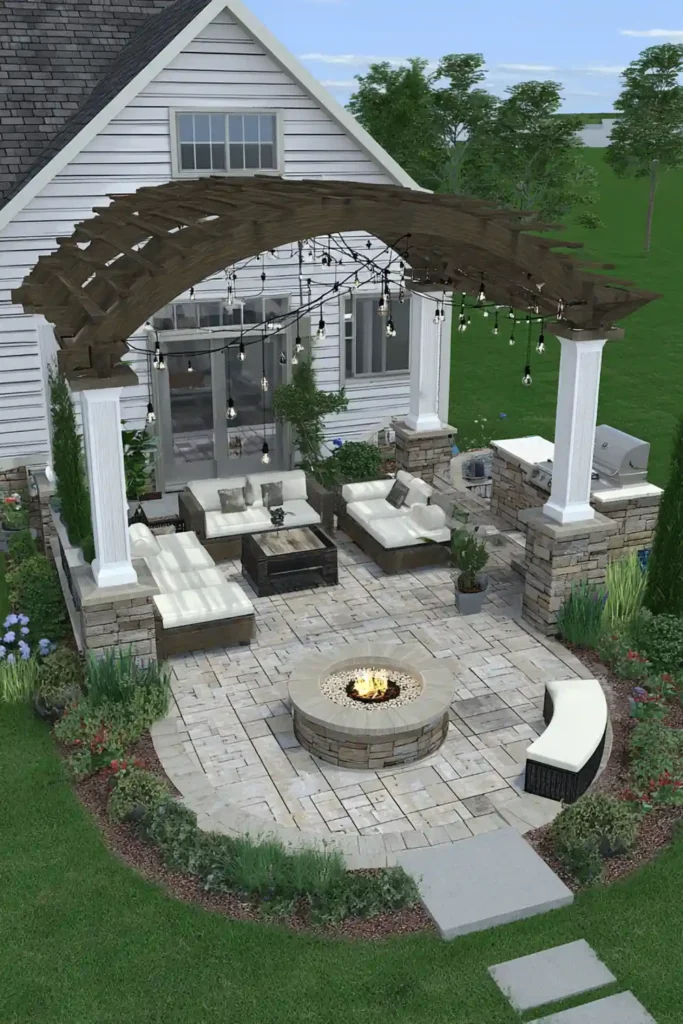
Open Floorplan Patio with Pergola Arch and Fire Pit Gathering Area
An open patio layout works best when you want flexibility. Instead of dividing the space too much, this approach keeps things flowing, which is helpful in smaller yards where every square meter counts.
In this design, the grill island, seat walls, and columns create natural zones without closing anything off. The pergola arch adds just enough structure overhead, and when you run lights from the house to the pergola, it gives the space a warm evening feel without needing complicated fixtures.
What I like most here is the fire pit gathering area—often called a “party pad.” It becomes the natural spot people drift toward. If you’re setting this up yourself, try placing your seating so it looks toward both the fire pit and the grill area. That way, whoever is cooking is still part of the conversation.
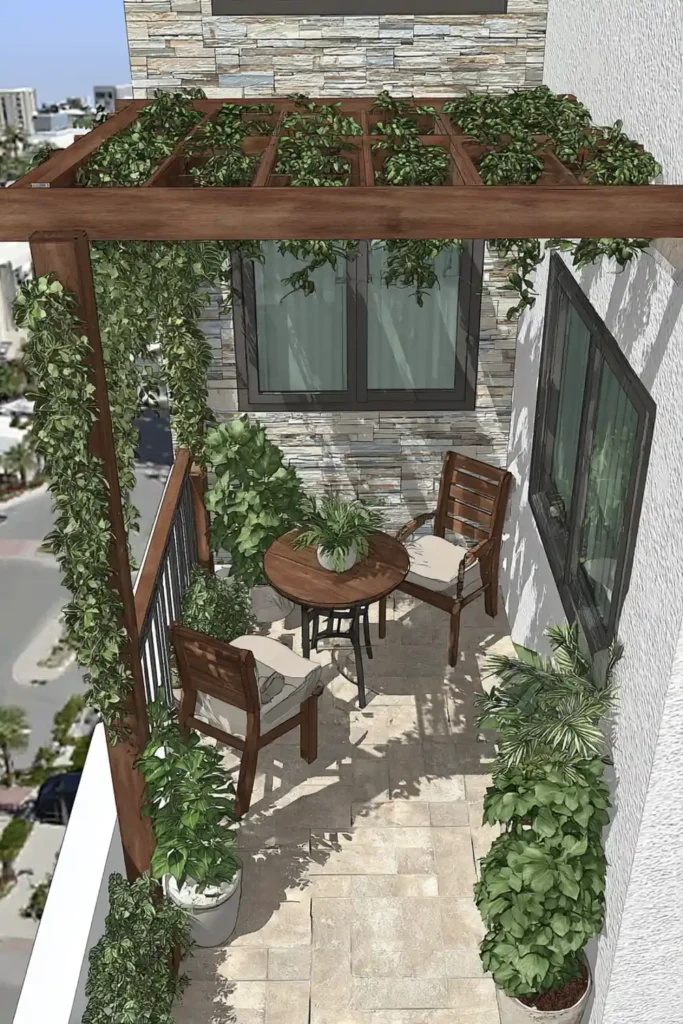
Narrow Patio Designs with Warm Coffee Nooks and Vertical Greenery
Narrow patios can feel limiting at first, but they actually push you toward smarter choices. Instead of trying to fit everything, it helps to focus on smaller, more intimate setups like a breakfast nook or a compact dining corner.
In tighter spaces like condo patios or urban lots, vertical elements make a big difference. Hanging baskets, climbing vines, and even a simple pergola draw the look upward and free up floor space. For easy-care climbing plants, try options like star jasmine, clematis, or climbing roses, which do well in containers and add color. If you want greenery with minimal maintenance, English ivy or Boston fern can prosper in baskets or planters. These plants help soften hard lines and bring more life to your patio. High-end finishes like smooth stone or clean wood also help the area feel more refined without adding clutter.
One thing I’ve found useful is keeping furniture lightweight and movable. A small café-style table with two chairs can easily shift from morning coffee to evening dinner. Adding something like a birdbath or a small fire feature gives the space character without overcrowding it.
Rectangular Concrete Patio Upgrades with Pergola and Outdoor Living Room
A plain concrete slab is something many homes already have, but it regularly feels unfinished. With a few upgrades, it can turn into a comfortable outdoor living area without starting from scratch.
Upgrading a basic concrete patio is easiest when you follow a simple order: start by sweeping and deep cleaning to remove any dirt, stains, or old debris. Next, stain the surface to give it fresh color, or consider covering it with outdoor tiles for a more finished look. Once your new surface is in place, you can add a pergola on top to define the area. The pergola gives you shade and a place to hang string lights, which I’ve found to be one of the simplest ways to make a patio usable in the evening.
From there, it’s about creating zones. An outdoor sofa setup on one side and a dining table on the other keep things organized. Raised beds or small fruit trees around the edges bring in some shade and soften the hard surfaces. Even one or two trees can make a noticeable difference in comfort during the day.
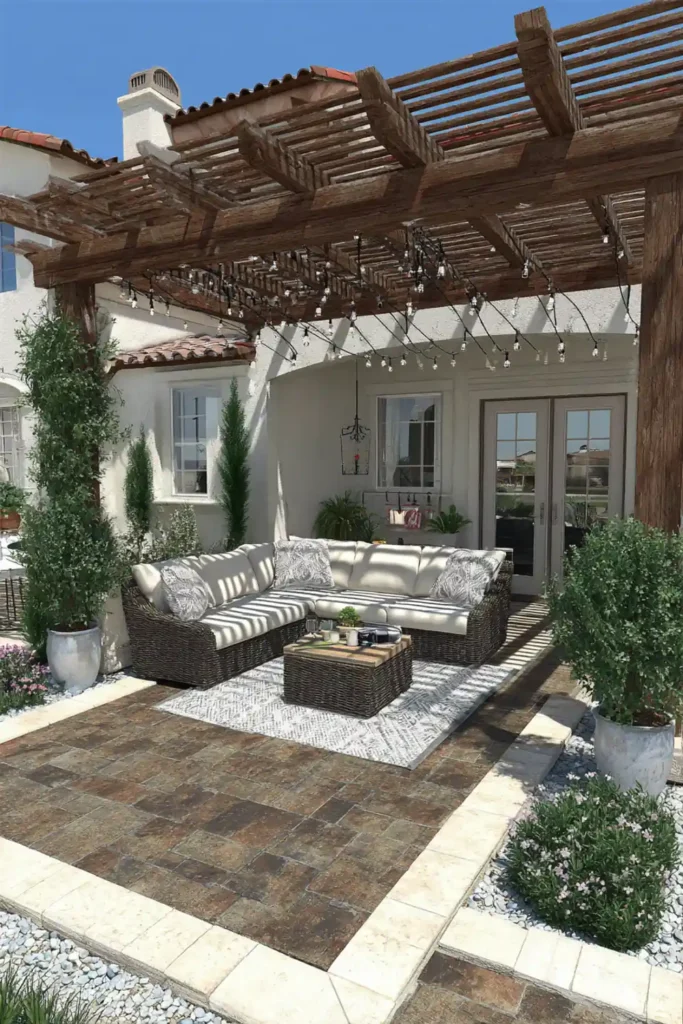
Split-Level Patio Design with Sunken Fire Pit Lounge
A patio with a slight elevation change can be one of the most interesting layouts to work with. Instead of fighting the slope, this design uses it to create a recessed seating area that feels naturally separated from the rest of the space.
In this setup, a long central step divides the patio into two levels. The lower section becomes a dedicated fire pit zone, often surrounded by a seat wall that wraps around the space. Piers or columns along the edges help define the structure without closing it off, and the paved surface keeps everything visually consistent.
If you’re working with a similar setup, keep the height difference subtle—just enough to create separation without making movement awkward. I’ve found that placing the fire pit slightly below eye level makes the seating feel more relaxed and grounded, especially in the evening.
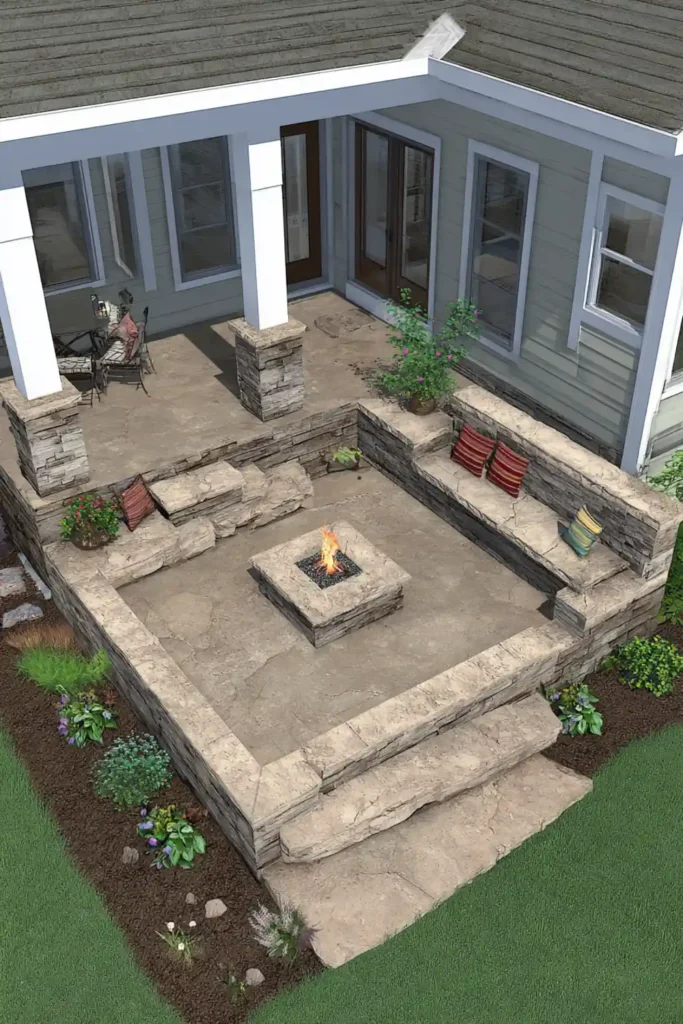
Family-Friendly Patio Layout with Dining Zones and Pergola Lighting
When a patio needs to work for both adults and kids, the layout becomes more important than the furniture itself. This kind of setup focuses on creating clear zones so everyone has their own space without feeling disconnected.
Here, a wide patio includes both a casual picnic-style table and a more formal dining area. A seat wall adds extra seating without taking up too much room, and the grill stays close to the dining zone for convenience. The pergola arch ties everything together and gives you a structure for lighting.
Running lights from the pergola to the soffit is a simple trick that makes the space usable after sunset. If you’re setting this up at home, try placing the kid-friendly seating slightly off to one side. That way, it’s part of the space but doesn’t interfere with the main dining flow.
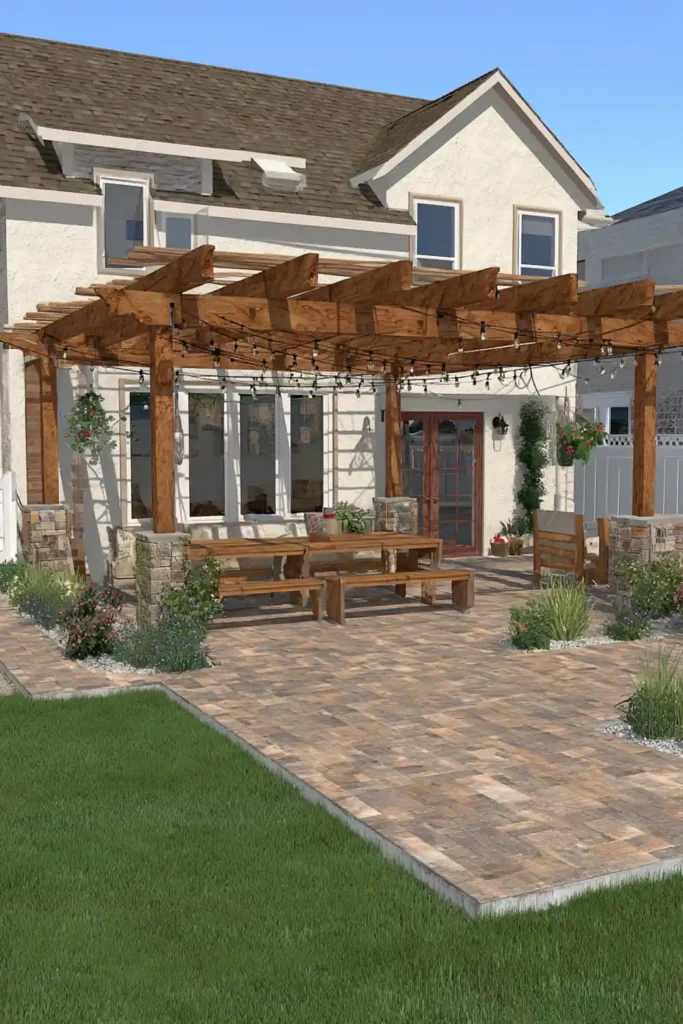
Multi-Zone Patio Design with Circular Fire Feature and Seating Areas
Some patios don’t fit into a single shape, and that’s actually an advantage. A layout that mixes rectangles, curves, and cut-away corners can create distinct zones without needing walls or dividers.
In this design, a circular fire feature becomes the focal point, while smaller seating areas—like a coffee nook or garden seating—are arranged around it. The paved surface ties everything together, but the different shapes keep the space from feeling flat or repetitive.
One thing I like about this approach is how flexible it is. You can use one area for quiet seating and another for group meetings. If you’re planning something similar, start by placing your main feature—the fire area—first, then build the smaller zones around it. It makes the layout feel intentional rather than pieced together.
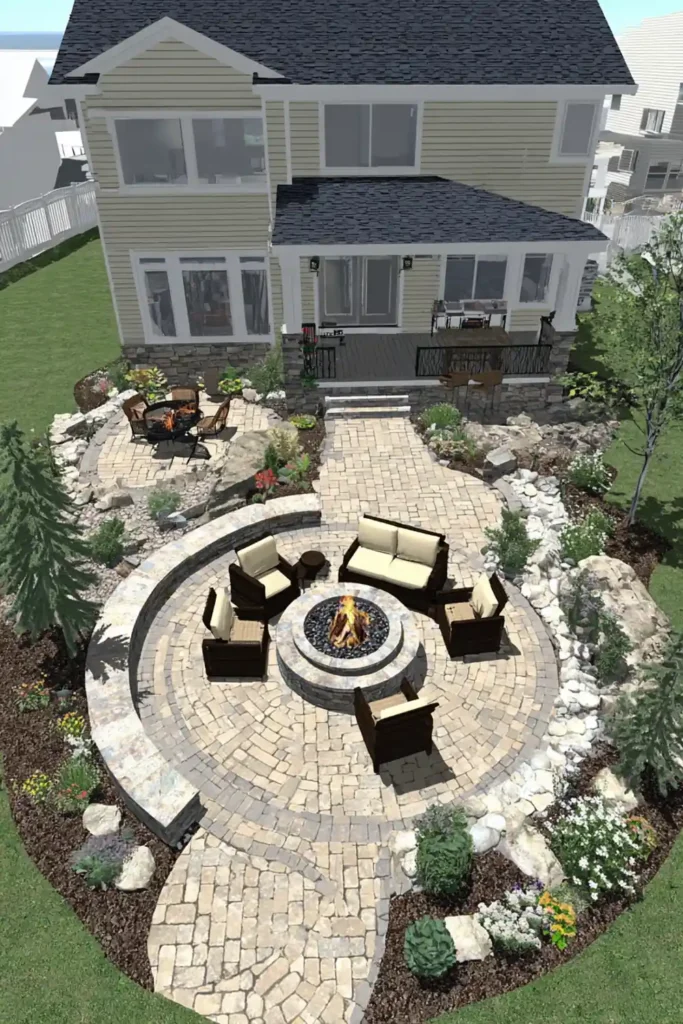
Circular Patio Layout with Water Feature and Elegant Dining Space
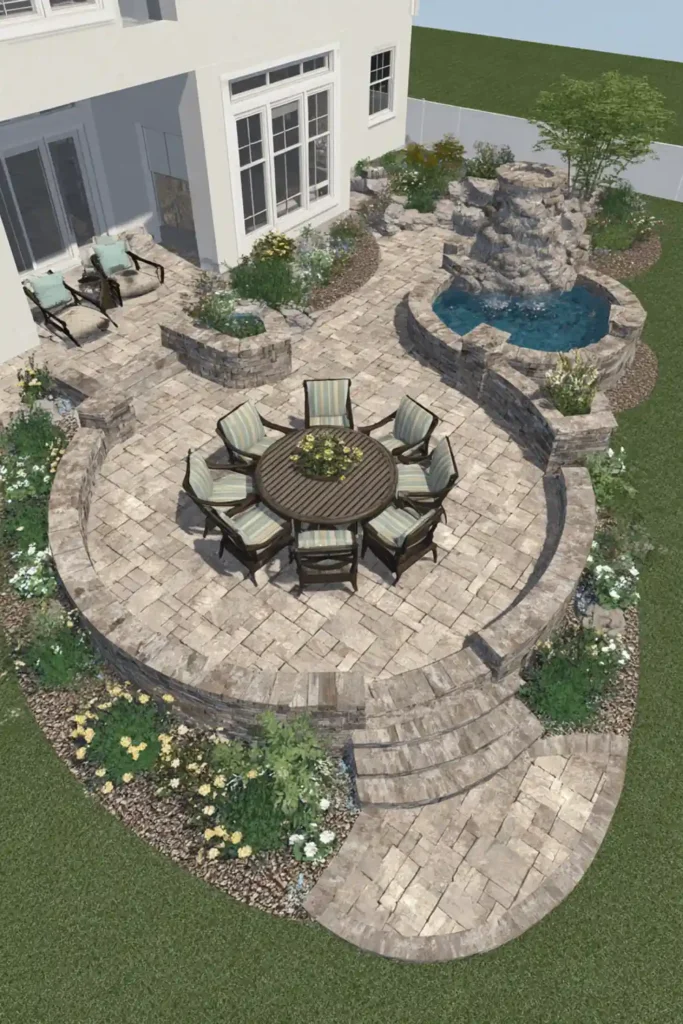
A circular patio layout naturally feels more relaxed because there are no sharp edges. It encourages movement and conversation, especially when you combine dining and lounging in one continuous flow.
In this setup, a half-circle dining area sits alongside a comfortable seating space, often anchored by a small fire pit. Adding a water feature or waterfall nearby brings a calming background sound, which I’ve found can completely change how the space feels without adding visual clutter.
Surrounding the patio with greenery or small trees helps frame the circular design and makes it feel tucked into the landscape. If you’re trying this idea, keep the furniture slightly curved or arranged in arcs to match the layout. It keeps everything cohesive without forcing it.
Backyard Bar and Grill Patio with Curved Seating and Fire Pit
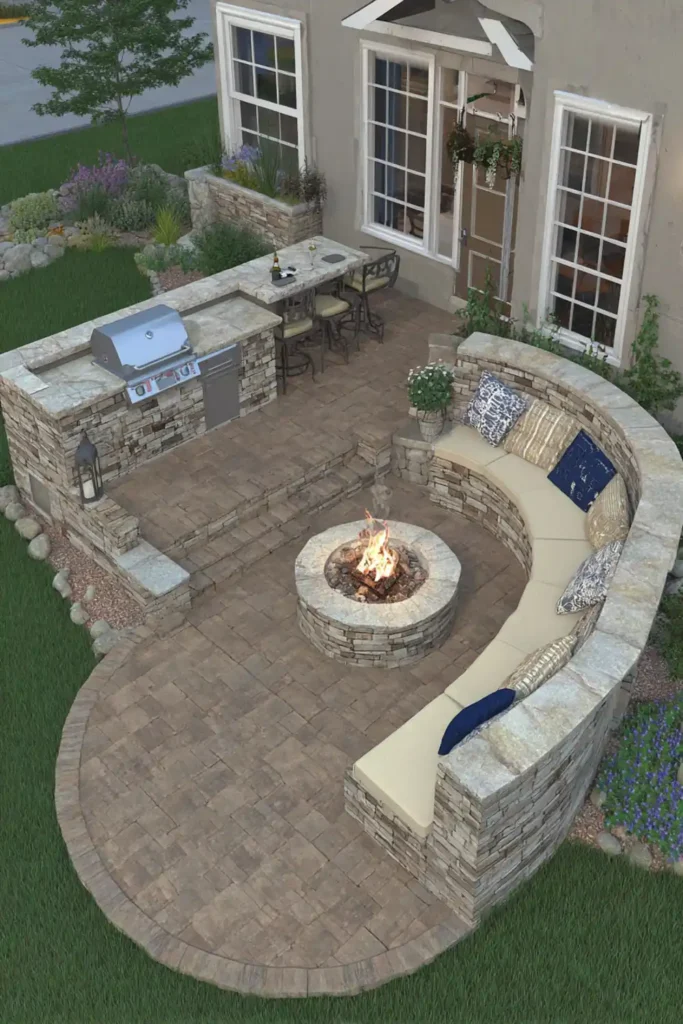
If you enjoy hosting, even a small patio can handle it with the right setup. A bar-and-grill layout works well because everything is centered around one main activity—cooking and gathering—so the space doesn’t feel overloaded with different functions.
In this design, the grill surround and service bar are combined into one continuous unit. That keeps prep space, serving, and cooking all in one place. A large curved seat wall wraps around the area, which naturally pulls people in and keeps the layout compact. The segmented walkway helps guide movement without needing extra features.
One thing I’ve discovered useful is placing the seating close enough to the grill so conversations flow easily, but not so close that it feels crowded. Even a small countertop extension can double as both prep space and a casual eating spot, which is perfect when you don’t have room for a full dining setup.
Opt for compact, stackable stools or benches that can be tucked under counters or along a wall when not in use. Consider a folding bistro table or a convertible coffee-to-dining table to provide extra surface area only when needed. Storage benches or footstools can hold utensils, pillows, or grilling supplies while doubling as extra seats. Multi-purpose planters with built-in side tables help keep surfaces clear. Using these creative, compact furniture pieces lets you boost functionality while keeping the patio open and inviting.
Creating Small Patio Designs You’ll Actually Use
At the end of the day, small patio designs work best when they match how you actually spend your time outside. Whether it’s a quiet coffee in the morning or having friends over in the evening, the layout should support those moments without feeling forced.
What I’ve learned over time is that you don’t need to include everything. A well-placed seat wall, a simple fire feature, or even just good lighting can make more of a difference than filling the space with extra furniture. Start with one strong idea and build around it.
If you take anything from these examples, let it be this: focus on comfort, keep the layout clear, and use features that serve more than one purpose. That’s usually what turns a small patio into a space you keep coming back to.
You can follow The Decor Nest on Pinterest and Facebook for new ideas, room inspiration, and styling tips shared regularly. Have a patio design you’re proud of or want to ask a question? Share your own photos or join the conversation in the comments or on our social channels. Your ideas and questions might inspire others in the community, so don’t hesitate to get involved!