
When I started working on my outdoor space, I realized how much the ground itself affects the overall look. Not just plants or furniture, but what sits under your feet. That’s where white stone landscaping ideas really changed things for me. They bring a clean, bright base that makes everything else stand out without feeling complicated.
What I like most about using white stone is how flexible it is. You can go calm and minimal, or a bit more decorative, depending on how you arrange it. In this article, I’ll walk you through a mix of simple and more styled ideas I’ve seen work well in real homes, not just in photos.
These are all ideas you can actually try, even if you’re working with a small garden, a narrow walkway, or just a corner that needs a little more structure.
Zen-Inspired White Stone Walkways for a Calm Entrance
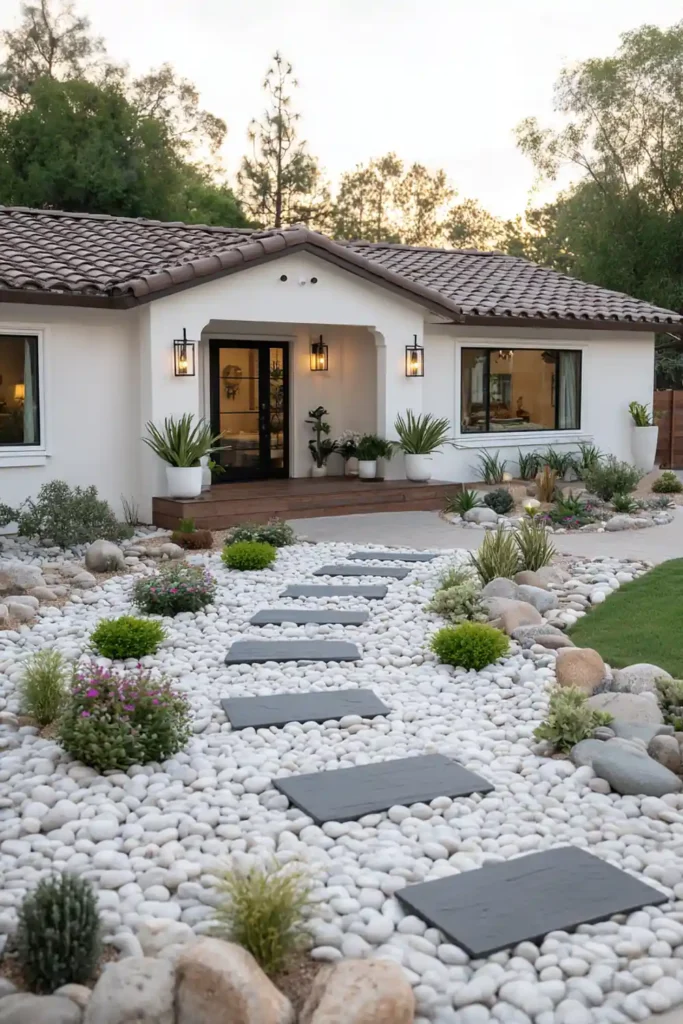
A simple white stone pathway can completely change how your outdoor space feels when you walk through it. I’ve always liked the calm look of smooth white pebbles paired with darker stepping stones. It slows you down a bit, which is something most entry areas actually need.
The key here is contrast. The white stones act as a soft base, while something like dark slate or rectangular stepping stones gives direction. You don’t need a complicated pattern. Evenly spaced stones over a bed of pebbles can look intentional and clean.
If you’re trying this at home, keep the edges tidy. Use metal or plastic edging to stop the stones from spreading into the lawn. It makes a big difference over time, especially after rain or regular use.
Curved Garden Pathways with White Gravel and Flowers
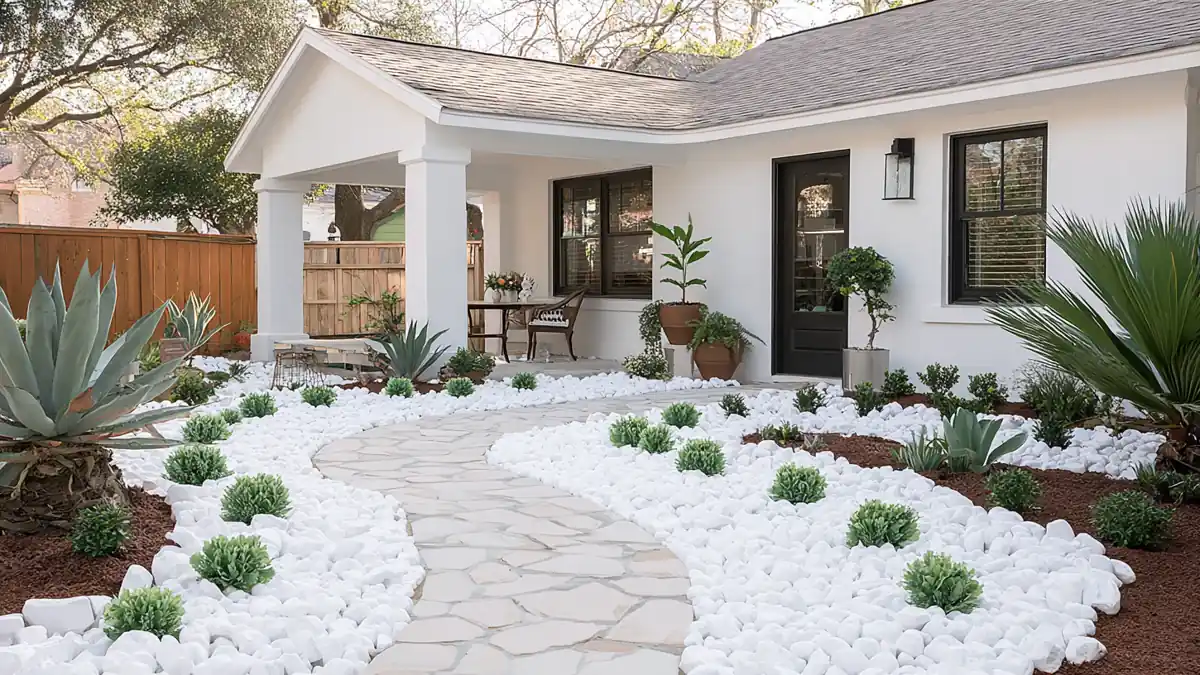
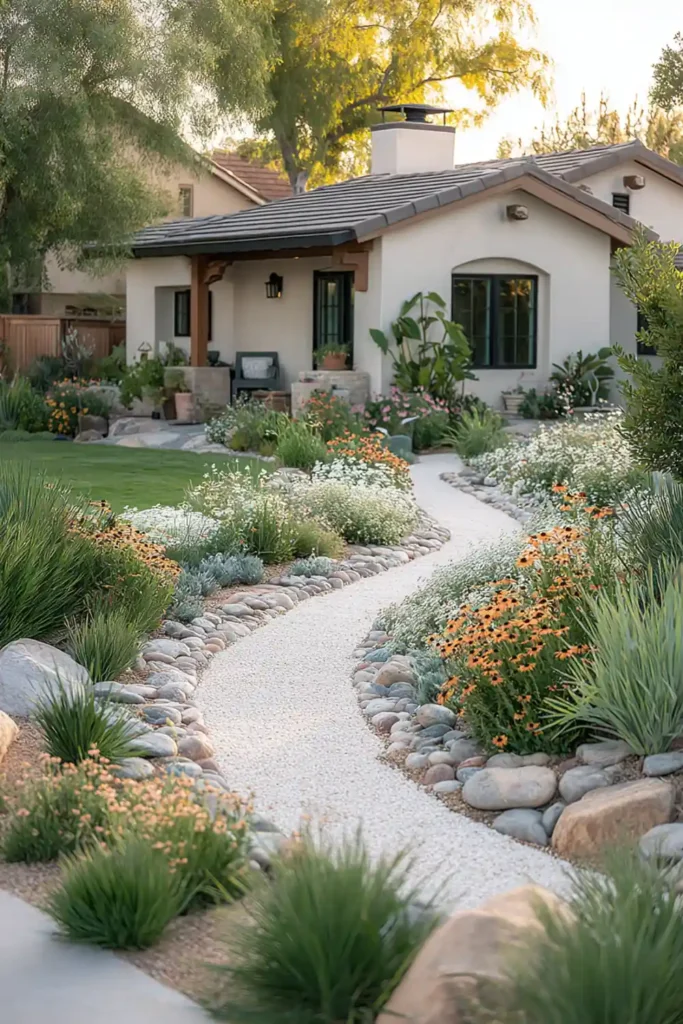
Straight paths are practical, but curved ones feel more relaxed and natural. When you combine white gravel with soft curves, the whole garden starts to feel more inviting instead of rigid.
I’ve seen this work really well when the route gently winds through flower beds. The white gravel reflects light, so even simple plants look brighter next to it. You don’t need a lot of flowers either. A few clusters of colorful blooms along the edges are enough to break up the white and add interest.
One thing I learned is to keep the path width consistent. Even if it curves, a steady width makes it easier to walk on and keeps it from looking messy. A compacted base underneath also helps the gravel stay in place and feel more solid underfoot.
Geometric White Stone Walkways for a Structured Look
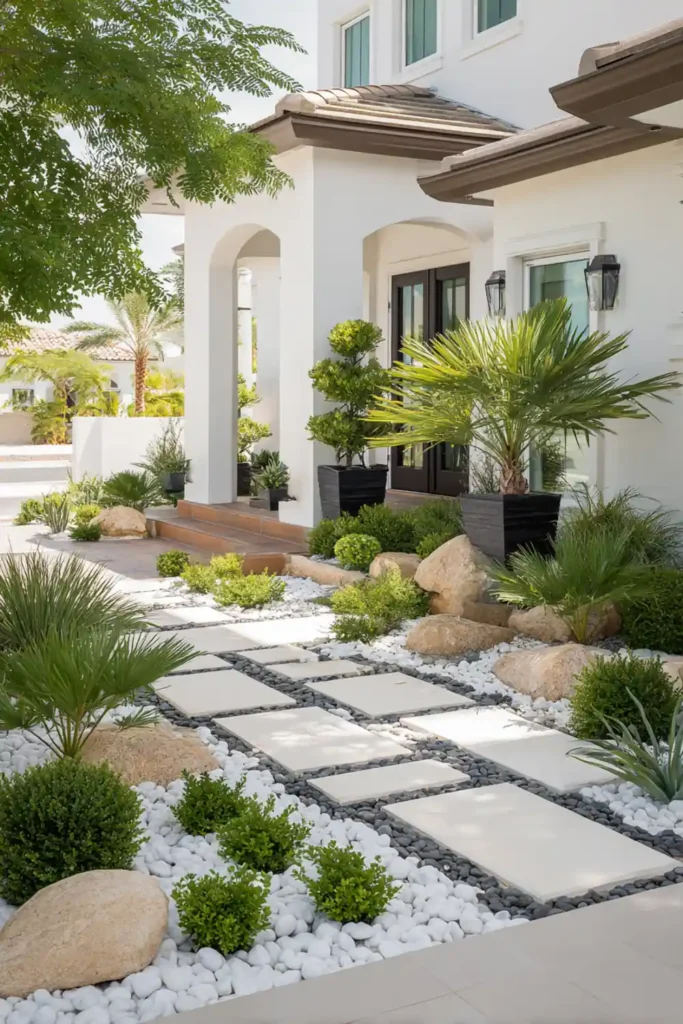
If you prefer something more organized, geometric layouts are a great option. Instead of flowing curves, this approach uses straight lines and repeating shapes, which gives a more modern feel.
This usually involves placing stepping stones in a grid or linear pattern, with white pebbles filling the gaps. The white stone helps highlight the pattern, making the layout stand out without needing extra decoration.
In my experience, spacing is everything here. Try to keep the distance between stones comfortable for walking, not merely visually even. Test it by actually walking the path before fixing everything in place. It’s a small step, but it saves you from ending up with something that looks good but feels awkward to use.
Layered White Stone Rock Gardens with Succulents and Grasses
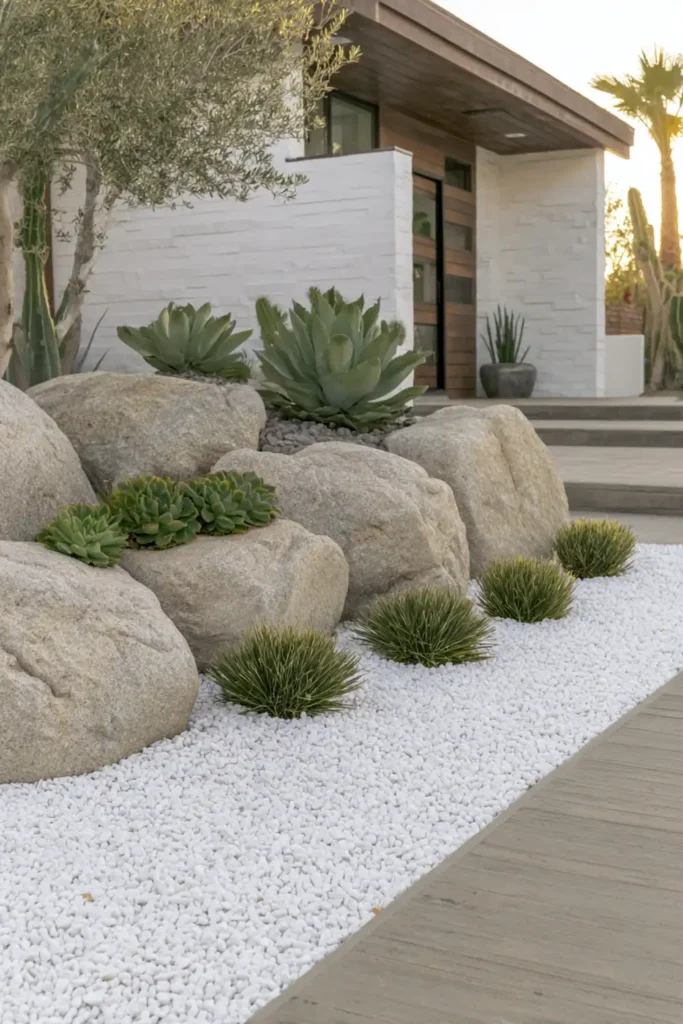
Rock gardens are one of the easiest ways to use white stone without needing a large area. What makes them interesting is the layering. Instead of a flat surface, you build small levels using larger rocks and fill the gaps with white gravel.
I like combining this with easy-care plants, including succulents or ornamental grasses. The white stones help highlight their shapes, especially the soft movement of grasses or the structured look of succulents.
If you’re setting one up, start with the larger rocks first. Place them slightly buried so they feel stable and natural. Then add the white stones around them. It’s tempting to pour everything at once, but taking your time with placement makes the final result feel much more intentional.
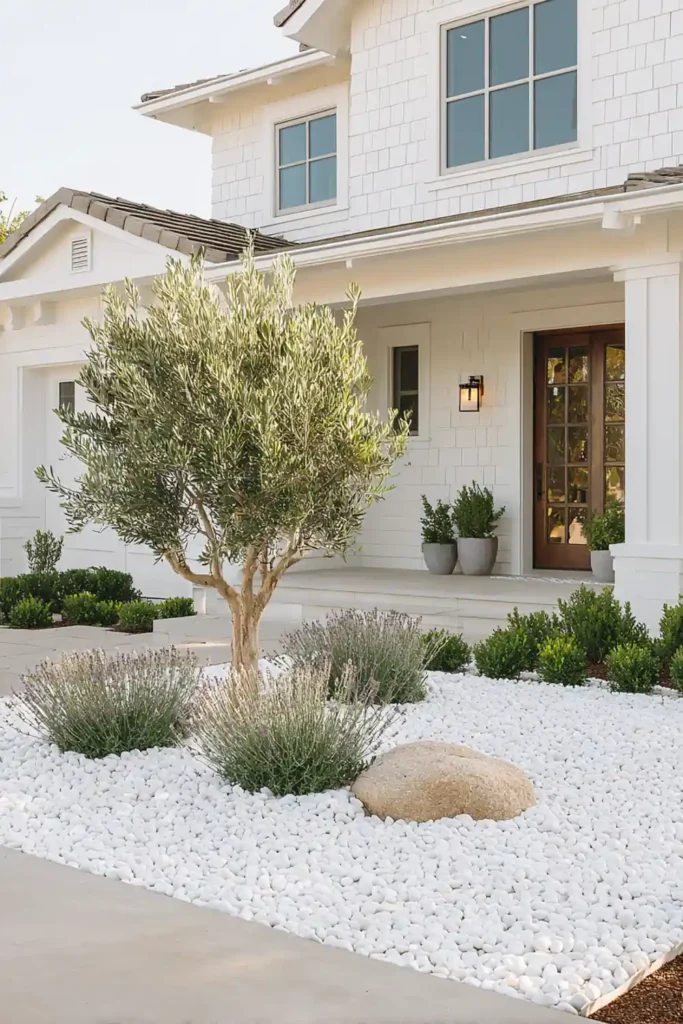
Mediterranean White Stone Rockscape with Olive Trees and Lavender
There’s something about a Mediterranean-style setup that feels relaxed without being messy. Using white gravel as a base, then adding a few well-chosen plants like olive trees or lavender, creates that dry, sun-soaked look that doesn’t need much upkeep.
The white stones reflect light and keep the space looking bright, while the muted green of olive foliage and the soft purple of lavender add just enough color. You don’t need a large garden for this either. Even a small corner can carry this style, provided you keep the layout simple and uncluttered.
If you’re trying this at home, avoid overplanting. One or two larger plants with space around them work better than filling every gap. The empty areas are part of the look, and the white stone helps define that spacing clearly.
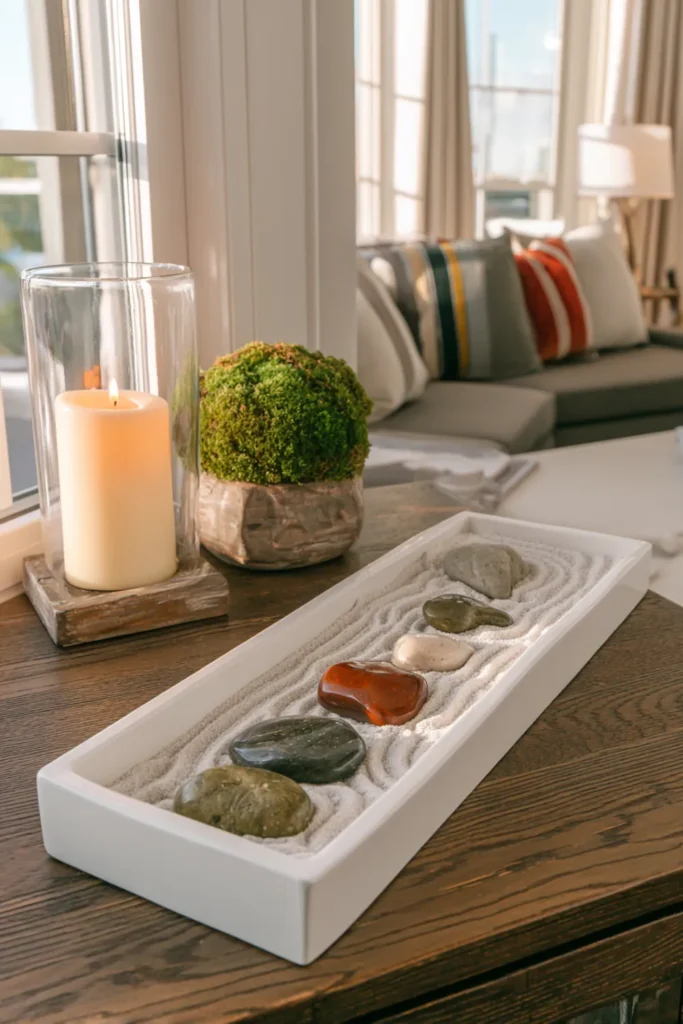
Miniature Zen Gardens with White Sand and Decorative Stones
Not every idea needs a full yard. A small Zen-style setup in a shallow container can bring the same calm feeling on a much smaller scale. I’ve seen people place these near seating areas or even on patios where you can actually interact with them.
White sand is usually used here instead of gravel, with a few carefully placed stones. The surface can be raked into simple patterns, which adds a quiet, hands-on element to the space. It’s less about decoration and more about slowing things down.
If you want to try this, keep it simple. A small tray, clean white sand, and two or three stones are enough. You don’t need to overdesign it. In fact, the less you add, the more peaceful it feels.
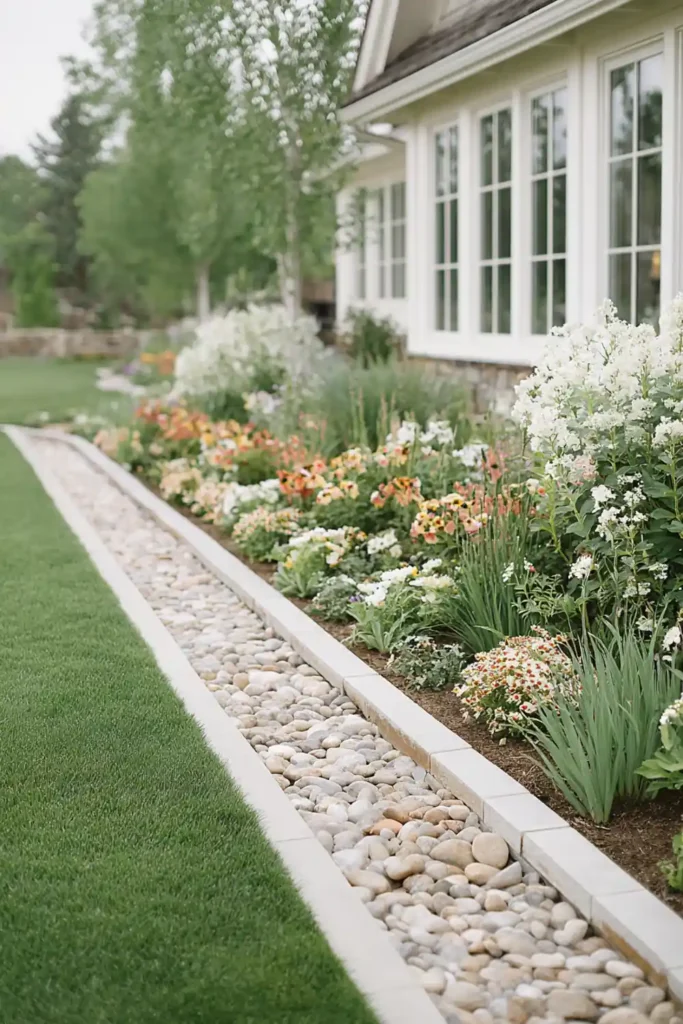
White Stone Borders to Highlight Colorful Flowerbeds
One of the easiest ways to use white stone landscaping ideas is along the edges of flowerbeds. It’s a simple detail, but it makes a big difference in how organized the garden looks.
The contrast is what clearly stands out. Bright flowers against a clean white border immediately look more defined. It also helps separate planting areas from the lawn or walkway, which keeps everything looking intentional instead of blended together.
A useful tip here is to use edging underneath the stones. Without it, the gravel will slowly mix into the soil or grass. Even a basic plastic border can keep things in place and save you from constant cleanup later.
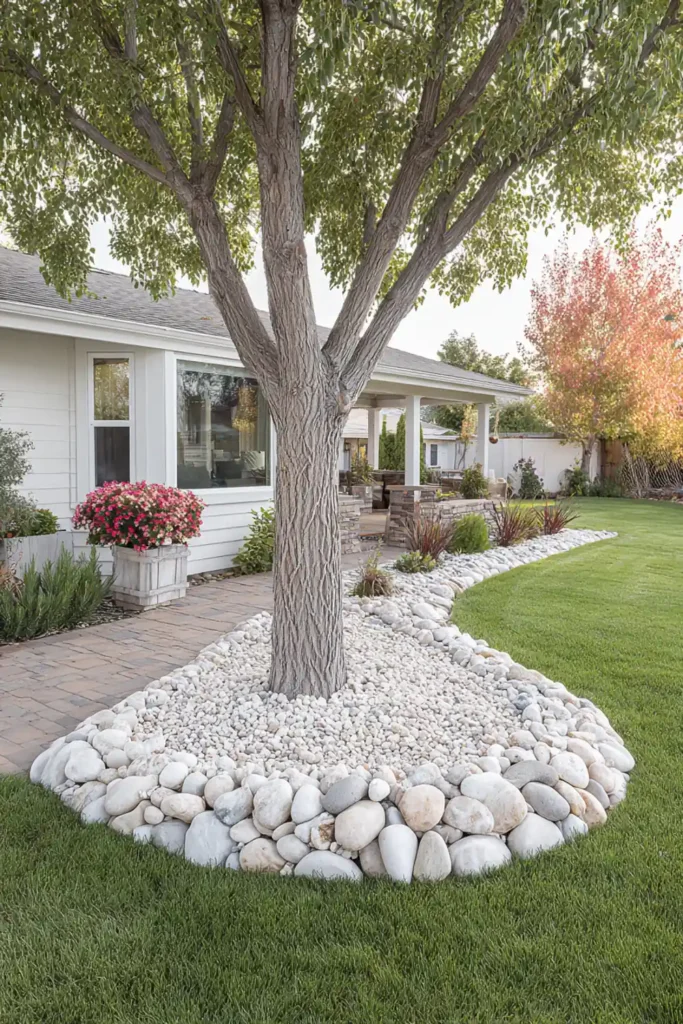
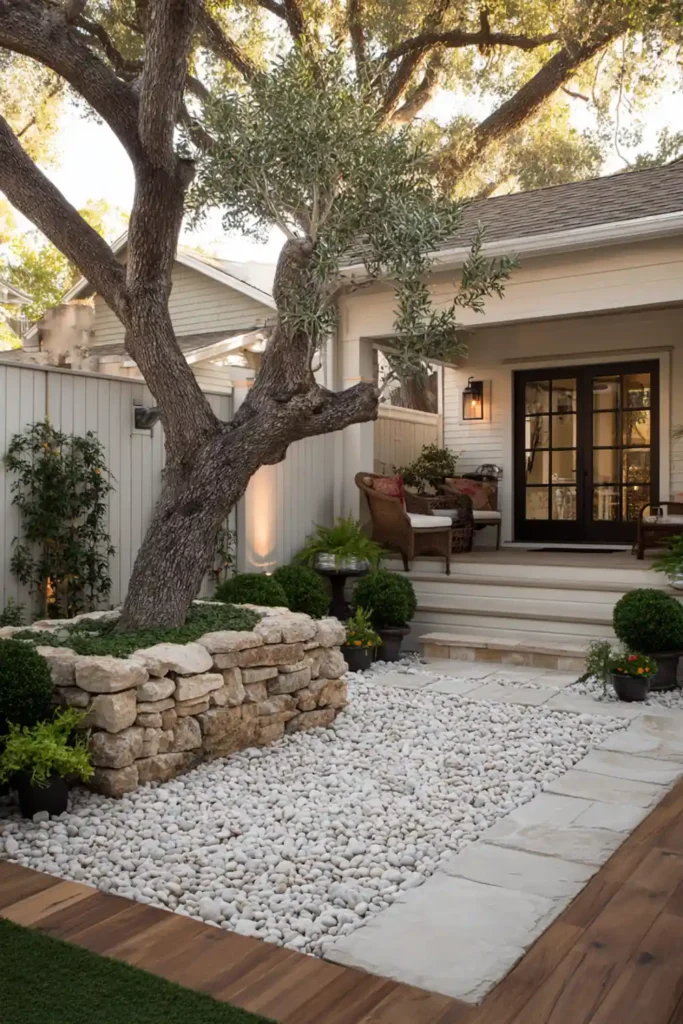
Circular White Stone Edging Around Trees for a Polished Finish
Trees often get overlooked when it comes to landscaping details, but adding a circular white stone border around the base can really tidy things up. It creates a clear boundary and makes the tree feel like part of the design, not just something growing in the yard.
The circular shape works well because it feels natural around the trunk. Filling that space with white stones instead of grass also reduces maintenance, especially in areas where mowing is difficult.
When setting this up, clear the grass properly before adding the stones. Using landscape fabric beneath your landscaping is a popular way to prevent weeds from growing through, helping the area stay tidy for a longer period.
White Stone and Timber Edging for Defined Garden Lines
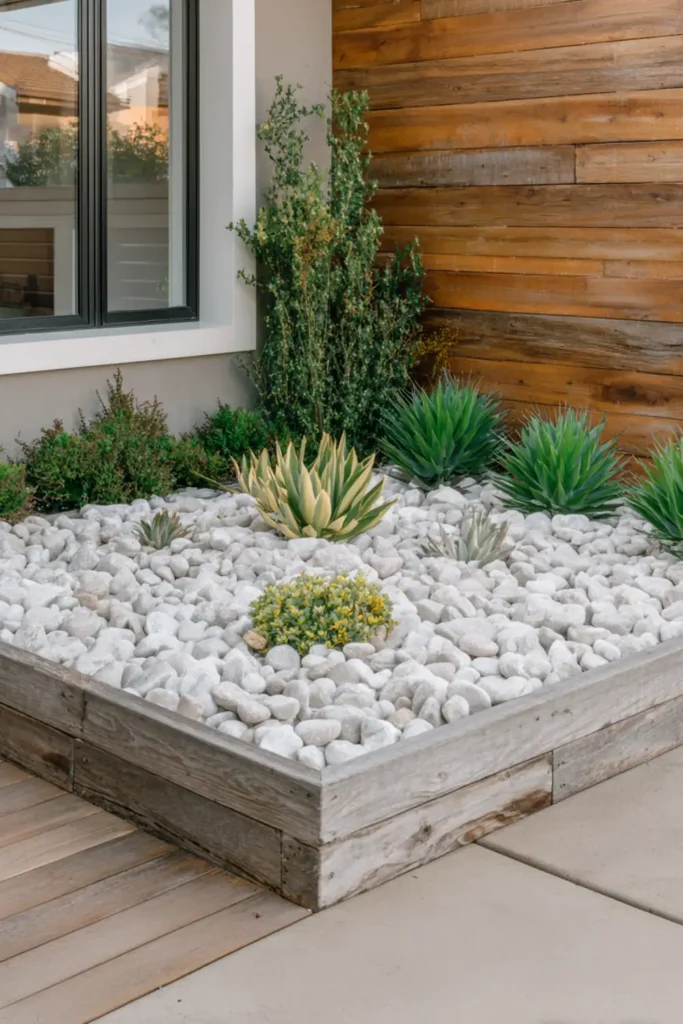
Sometimes the clean look of white stones needs a bit of structure to really stand out. That’s where timber edging comes in. When you combine white gravel with wooden planks, you get a clear boundary that feels both neat and a little warmer than stone alone.
I’ve found this works especially well along garden beds or between different zones in the yard. The wood frames the stones, keeping everything contained while offering a natural texture that softens the brightness of the white.
If you’re installing this, make sure the timber is slightly raised above the stone level. It helps keep the gravel from spilling over and makes the lines more visible. Treated wood also lasts longer outdoors, especially in areas that get frequent watering.
Dry Stream Beds with White Stones for Natural Flow Design
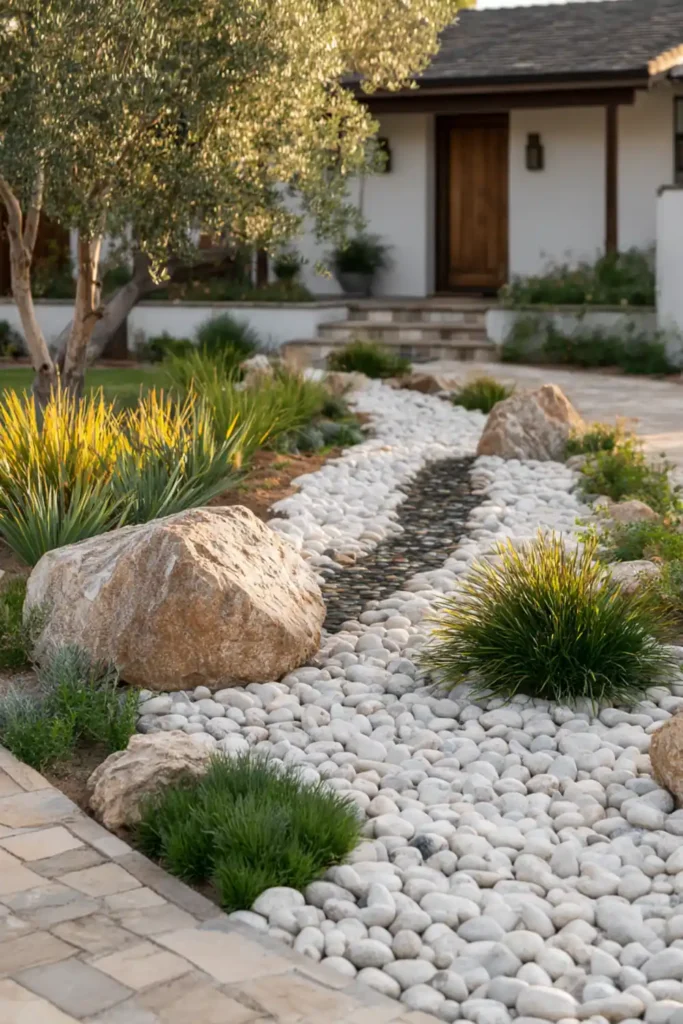
A dry stream bed is one of those features that looks decorative but also solves practical problems like drainage. Using white stones instead of darker gravel gives it a lighter, more defined look that stands out against soil or grass.
The idea is to mimic the shape of a natural stream, with gentle curves and slightly wider sections in some areas. Adding a few larger stones or even a piece of driftwood can make it feel more realistic without making it too complicated.
If you’re dealing with water runoff, this can actually help guide it away from certain areas. Just make sure the base is slightly lower than the surrounding ground so water naturally flows into it instead of around it.
White Stone Fountain Accents for Layered Water Features
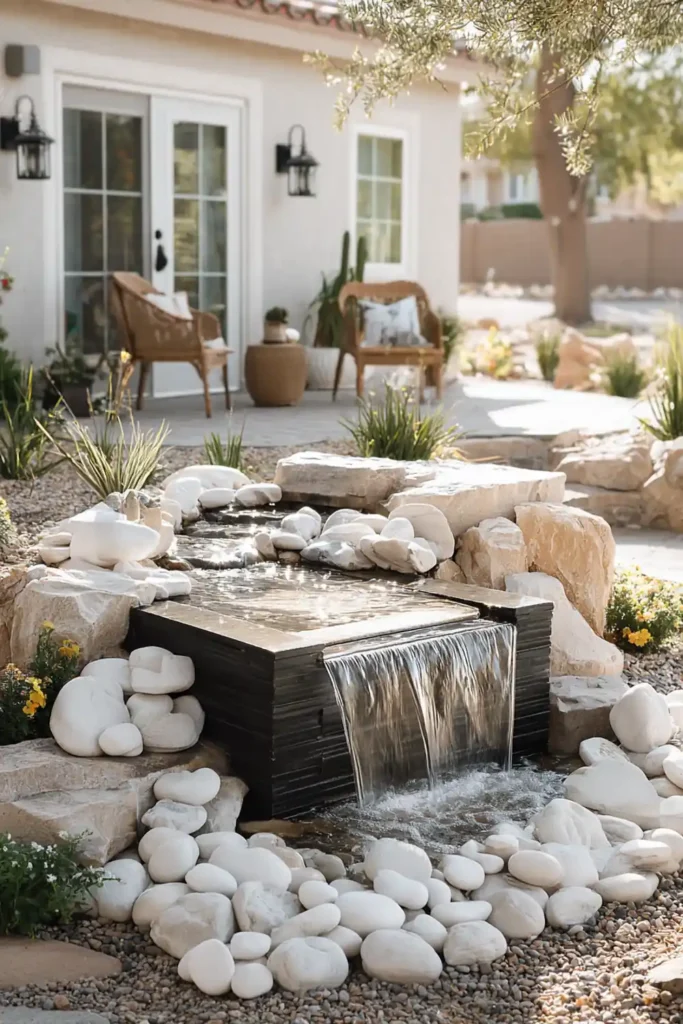
Water features don’t need to be large to make an impact. Even a small fountain can feel more complete when surrounded by white stones. They help define the base and create a clean transition between the water and the rest of the garden.
I like using a mix of larger white stones near the fountain itself, then smaller gravel around the edges. This layering adds dimension without needing extra decoration. The sound of the water combined with the bright stone surface creates a simple but noticeable focal point.
If you’re setting this up, think about maintenance. Leave enough space around the fountain so you can easily clean or adjust it. Packing stones too tightly might look good at first, but it makes upkeep harder later.
Pond Edging with White Stones for a Clean, Finished Look
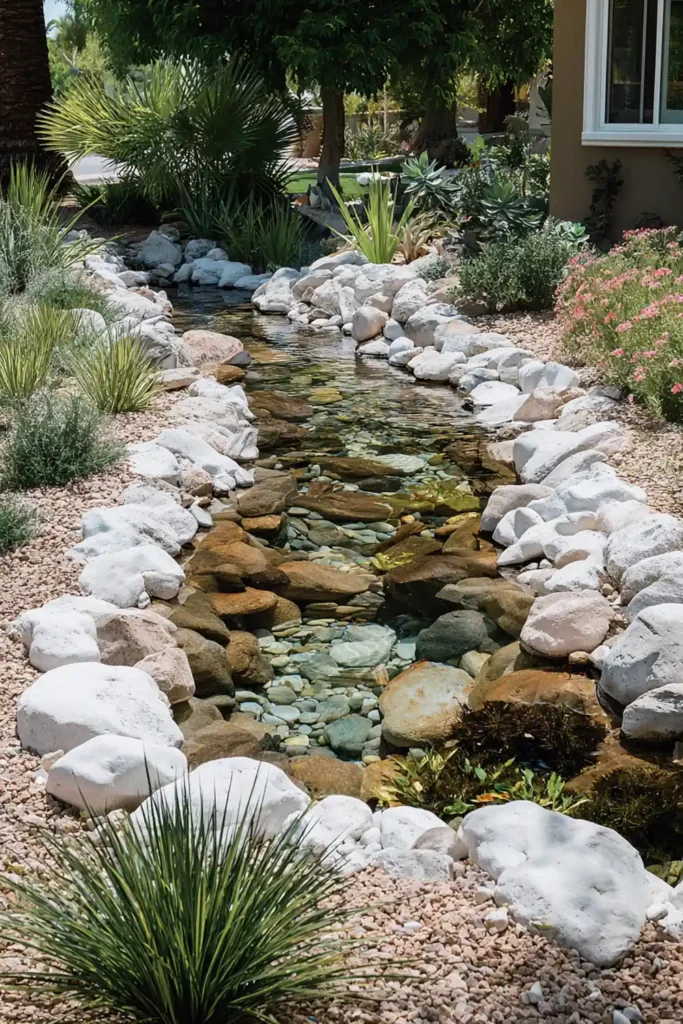
A pond can sometimes look unfinished if the edges aren’t clearly defined. Adding white stones around the perimeter helps frame it and gives a more smooth appearance.
The stones also help hide liners or uneven edges, which is something many ponds struggle with. When you layer them slightly, with larger stones near the water and smaller ones further out, the transition looks more natural.
If you have aquatic plants, the white stones can actually highlight them nicely. Green leaves and floating flowers stand out more against a bright base, making the whole pond feel more intentional rather than just a water feature placed in the yard.
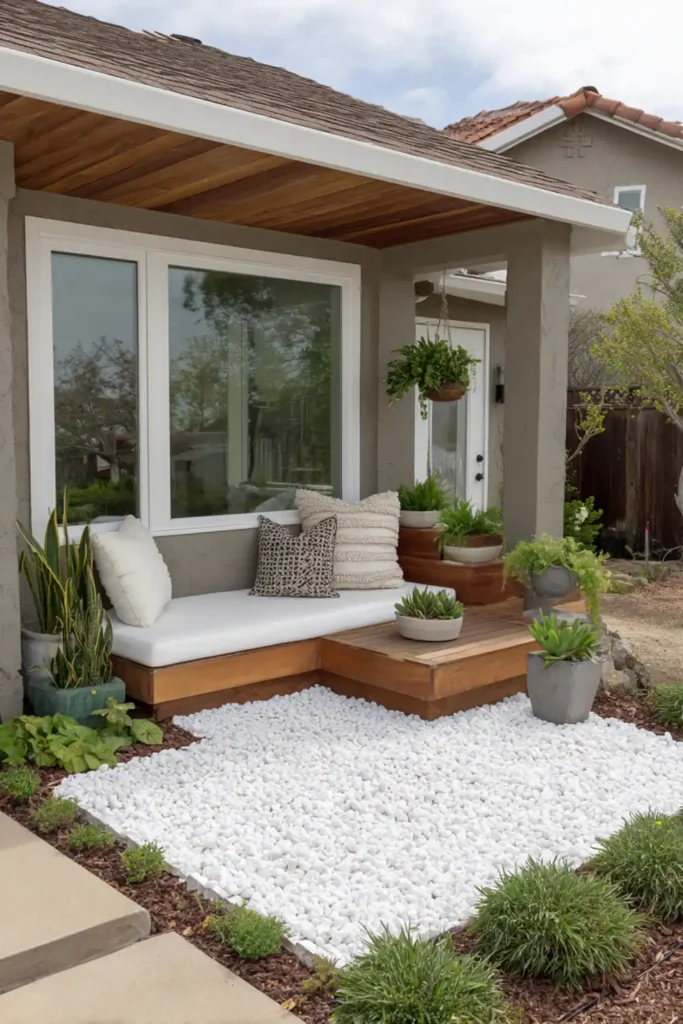
Minimalist Patio Bases Using White Gravel
If you’ve ever struggled with a patio that feels heavy or cluttered, switching the base to white gravel can completely change the mood. It creates a lighter, more open feel without needing to redo the entire structure.
I’ve seen this work especially well with simple furniture like a wooden bench or a small outdoor table. The white gravel acts almost like a blank background, letting the furniture stand out without competing for attention.
When setting this up, make sure the ground is properly leveled and compacted first. Adding a weed barrier underneath saves a lot of maintenance later. Also, try to define the patio edges clearly, either with metal edging or stone borders, so the gravel stays where it should.
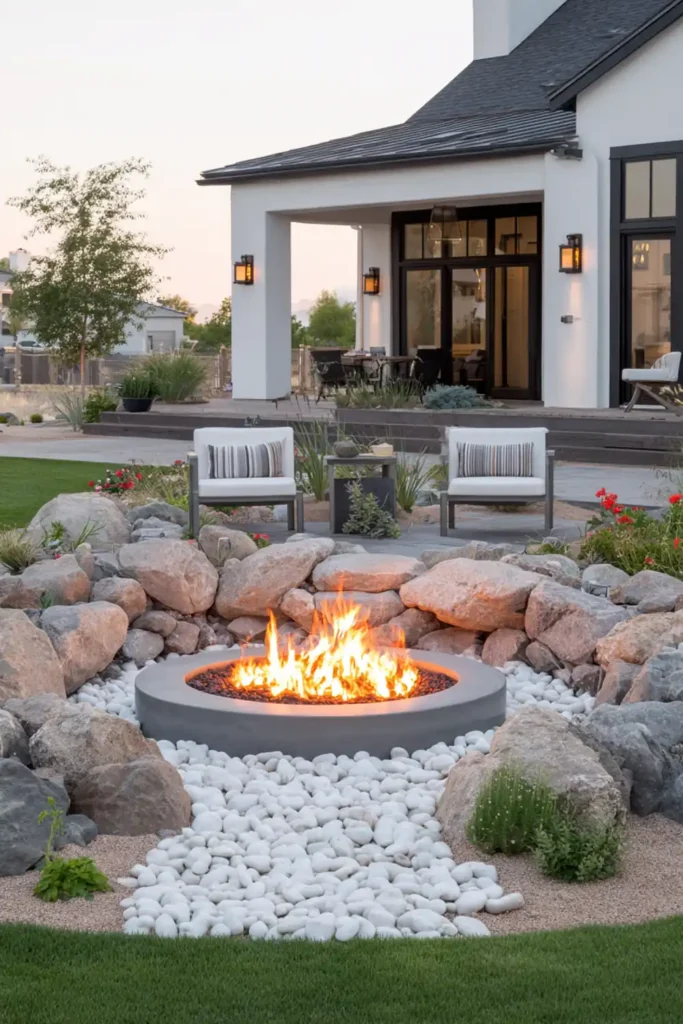
White Stone Fire Pit Surrounds for Cozy Outdoor Events
A fire pit area is one of those spots people naturally gather around, and the ground surface plays a bigger role than you might think. Using white stones around the fire pit gives a clean base that contrasts nicely with the darker tones of the fire and seating.
The circular layout works best here. White gravel spread evenly around the pit, with simple seating like wooden benches or outdoor chairs, creates a balanced setup that feels easy to use.
From a practical side, always include a fire-resistant layer beneath the stones. It adds safety and helps protect the ground. Also, leave enough space between the seating and the fire pit so people can move around comfortably without feeling cramped.
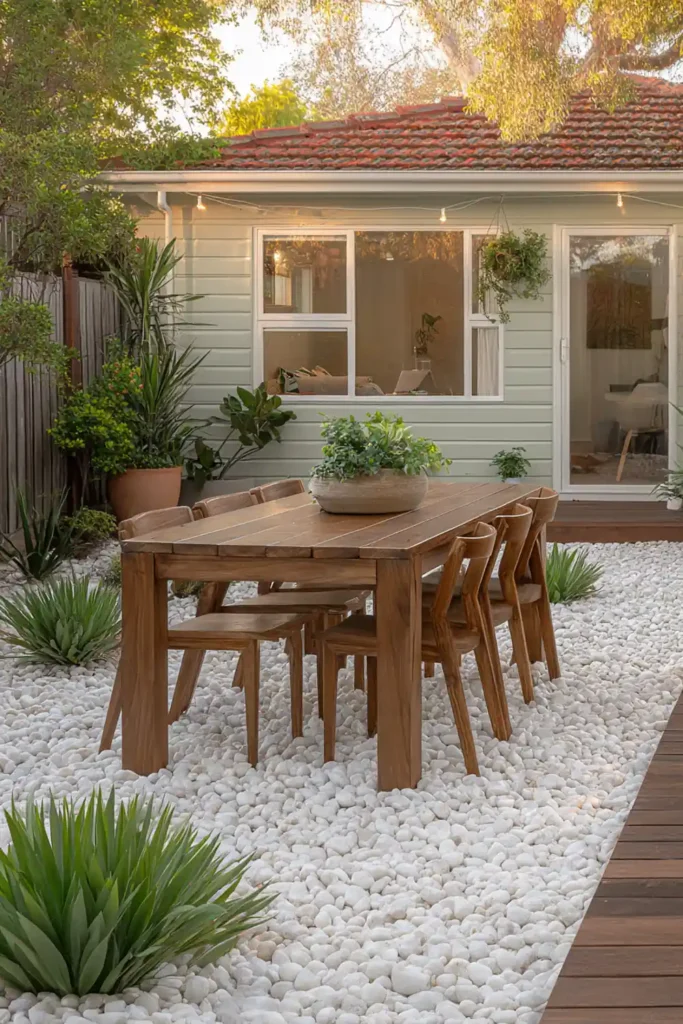
Outdoor Dining Areas with White Stone Ground Cover
Outdoor dining spaces don’t always need decking or tiles. A white stone base can create a relaxed setting that still seems intentional, especially if you keep the furniture simple.
I like pairing white gravel with a sturdy wooden or metal dining table. The contrast between the textures keeps the space from feeling flat. You can add a few planters around the edges to soften the look without overcrowding the area.
One thing that helps is choosing stable chairs. Lightweight chairs can sink slightly into loose gravel, so wider legs or heavier pieces tend to work better. It’s a small detail, but it makes the space much more comfortable for everyday use.
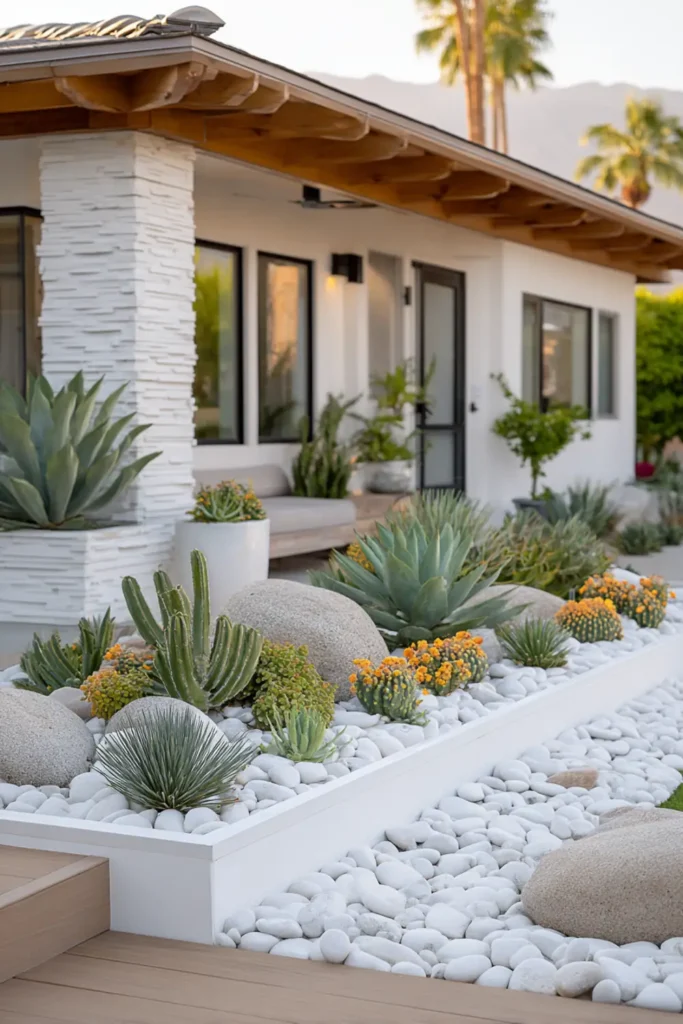
Cactus and Succulent Displays with White Stone Grounding
White stone works really well with drought-tolerant plants like cacti and succulents. The bright surface highlights their shapes and keeps the overall look clean without needing much maintenance.
Instead of mixing too many plant types, I’ve found it works better to group a few similar ones together. The white stones give enough contrast, so you don’t need a lot of variety to make it interesting.
If you’re planting directly in the ground, make sure the soil drains well. These plants don’t like sitting in water. The stones on top help reduce evaporation and keep the space neat, but good drainage underneath is what really keeps everything healthy.
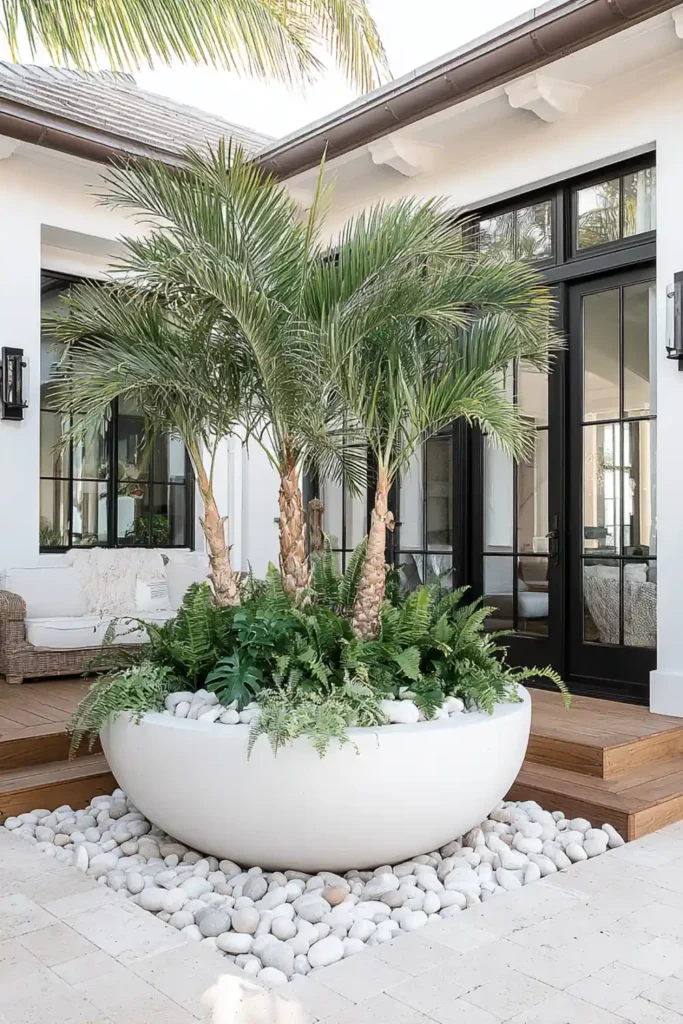
Tropical Planters Styled with White Stone Accents
If you like a greener, more relaxed look, white stones can still fit in nicely with tropical plants. I’ve seen this done around large pots with palms or ferns, where a layer of white stones sits on top of the soil or around the base.
The contrast between deep green leaves and bright stones makes everything remain fresh without needing extra decoration. It also helps keep the planters looking neat, especially after watering, when soil can splash around.
A simple tip is to use the stones as a finishing layer inside the pot as well. It locks moisture in and gives a cleaner surface. Just don’t make the layer too thick, so water can still reach the soil properly.
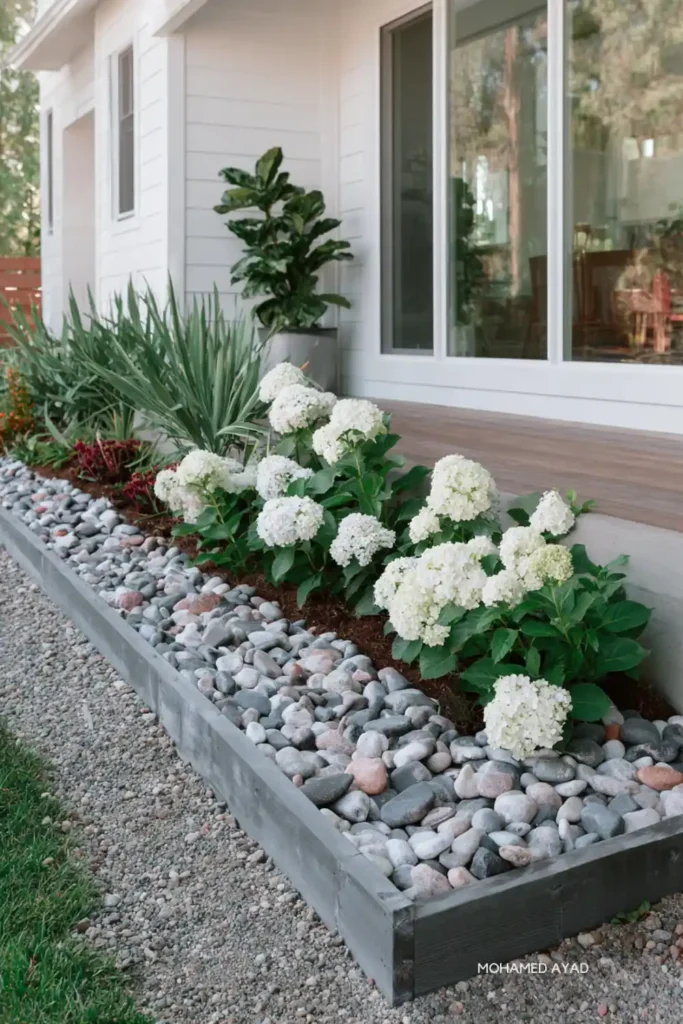
Monochrome Gardens with White Stones and White Blooms
This is one of the quieter ideas, but it works surprisingly well. Instead of adding color, you stay within a white and soft green palette. White stones on the ground, paired with white flowers like hydrangeas or lilies, create a very calm atmosphere.
What makes it work is the variation in texture rather than color. The softness of the flowers, the roughness of the stones, and the greenery in between keep it from feeling flat.
If you’re trying this, focus on plant placement. Group flowers in small clusters rather than spreading them evenly. It creates depth and makes the white tones feel layered instead of washed out.
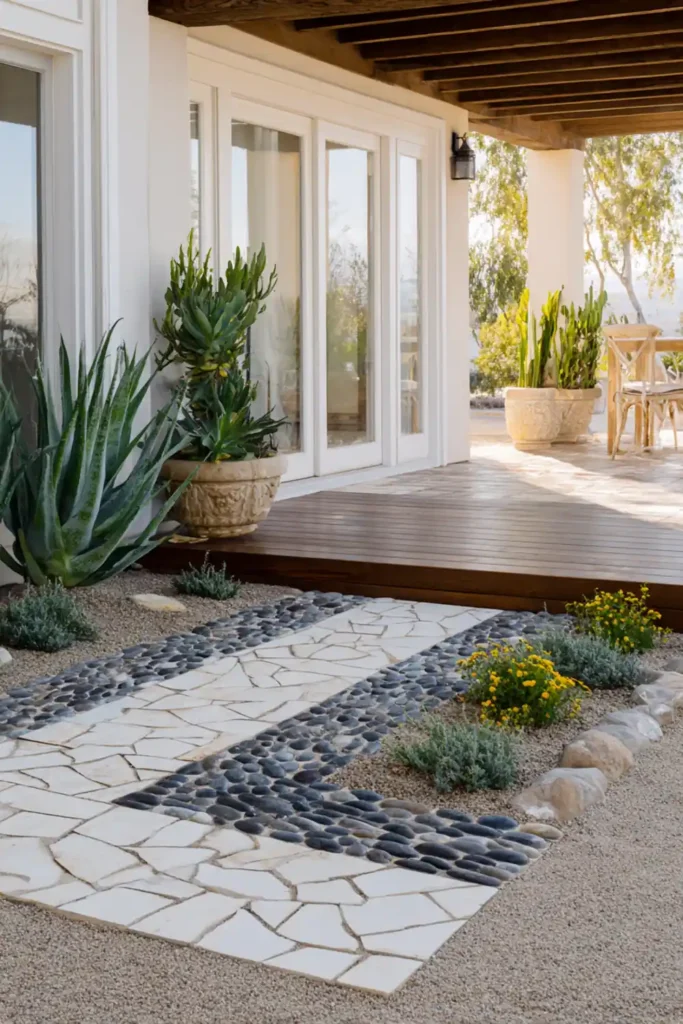
White Stone Mosaic Designs for Artistic Garden Details
For something a bit more detailed, white stones can be used to create patterns directly on the ground. Simple shapes like spirals or circular designs can add character without needing extra features.
I’ve noticed this works best in smaller areas where the pattern can actually be seen clearly, like near an entry point or in a corner of the garden. In larger spaces, the detail can get lost.
If you’re doing this yourself, sketch the design first before placing any stones. It helps avoid uneven patterns. You can also mix in a few darker stones to outline the design and make it more visible.
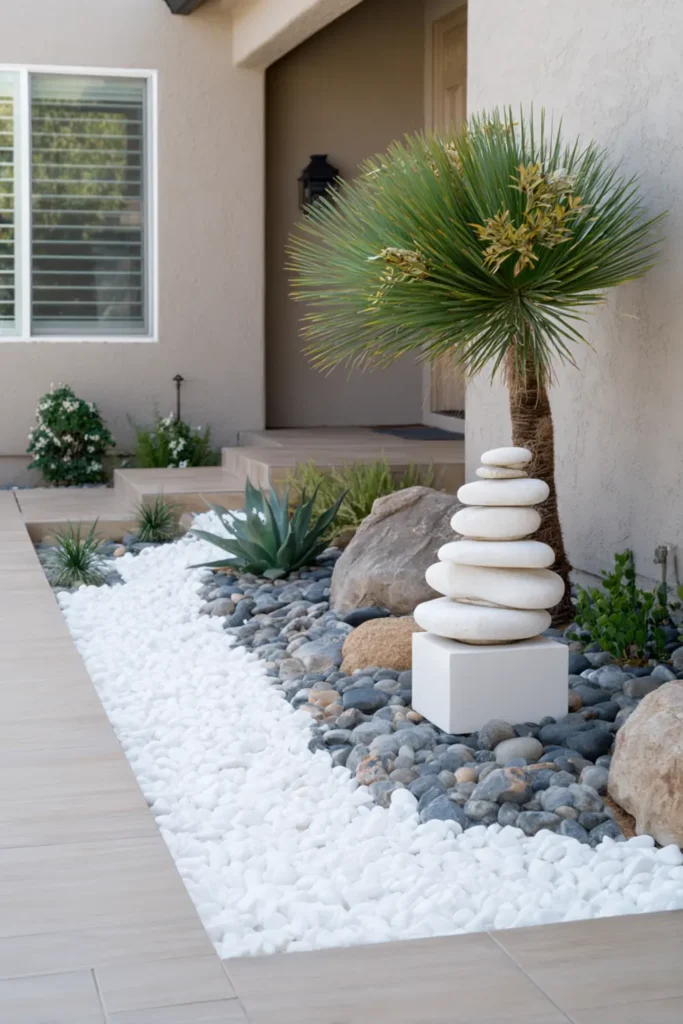
Sculptural White Stone Installations for Modern Landscapes
Sometimes a single focal point is all you need. Stacking white stones or arranging them into simple sculptural forms can create that focal point without adding clutter.
These installations don’t need to be complicated. Even a few carefully stacked stones can draw attention, especially when placed on a clean white gravel base.
The key is placement. Give the piece some space around it so it stands out. If it’s surrounded by too many other elements, it loses its effect. Keeping the area simple helps the sculpture feel intentional rather than random.
Low-Maintenance White Stone Mulching for Garden Beds
One of the most practical uses of white stone landscaping ideas is replacing traditional mulch in garden beds. I switched to this in a few areas, and it immediately cut down on how often I needed to refresh things.
White gravel doesn’t break down like organic mulch, so once it’s in place, it stays there. It also reflects light, which can brighten shaded corners of the garden. That makes plants look a bit more lively without changing anything else.
If you go this route, always lay landscape fabric underneath first. It helps prevent weeds and keeps the stones from sinking into the soil over time. It’s a small step, but it saves you a lot of effort later.
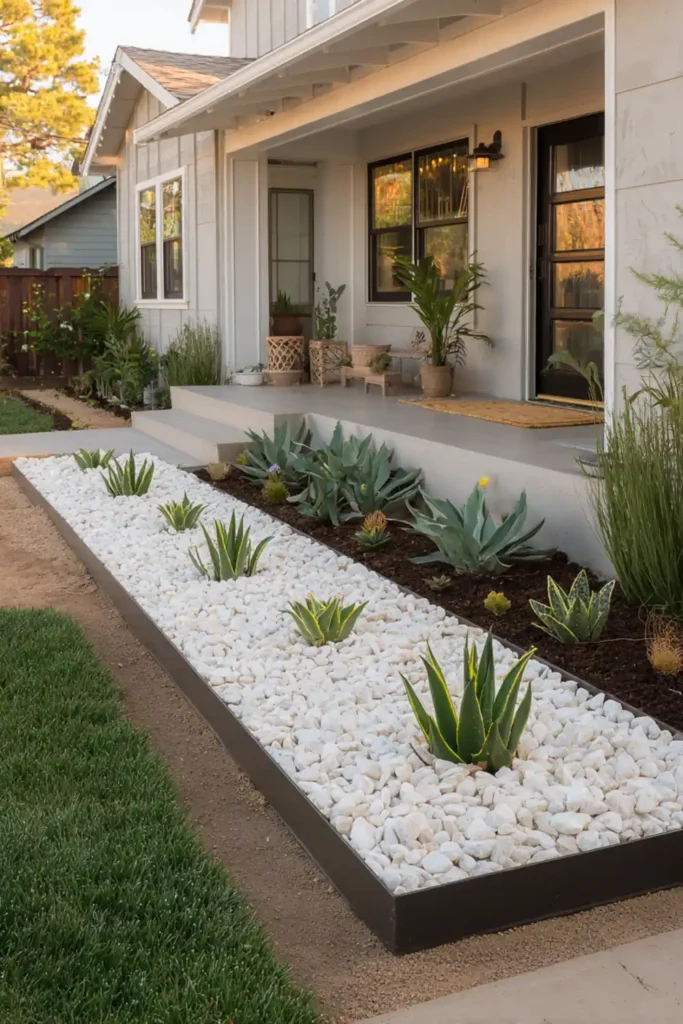
Creative White Stone Islands to Break Up Lawn Space
Large lawns may occasionally feel empty, especially if everything is just flat green. Adding small “islands” of white stone gives the space some structure without needing major changes.
These islands can be simple shapes, like circles or soft ovals, edged cleanly and filled with white gravel. You can leave them minimal or add a plant, a small tree, or even a decorative rock in the center.
What I like about this idea is how flexible it is. You can start with one island and add more over time. Just make sure the shapes feel balanced in relation to each other so the yard doesn’t end up looking scattered.
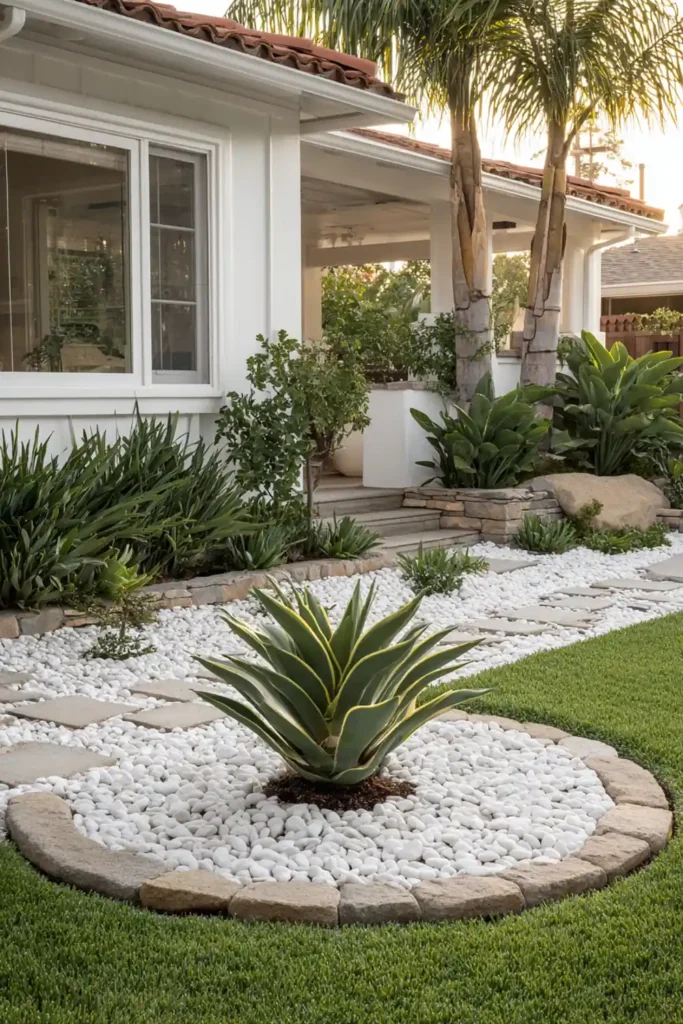
Negative Space Landscaping with White Stone Shapes
This idea is a bit more design-focused, but still very doable. Instead of filling areas, you use white stone to define shapes within the lawn, leaving the surrounding grass as part of the design.
For example, a rectangular or geometric section filled with white stones can create a clear visual break. It works especially well in modern-style gardens where clean lines matter.
If you’re trying this, keep the shapes simple. Too many angles or patterns can feel busy. Straight lines or large basic shapes tend to look more intentional and are easier to maintain over time.
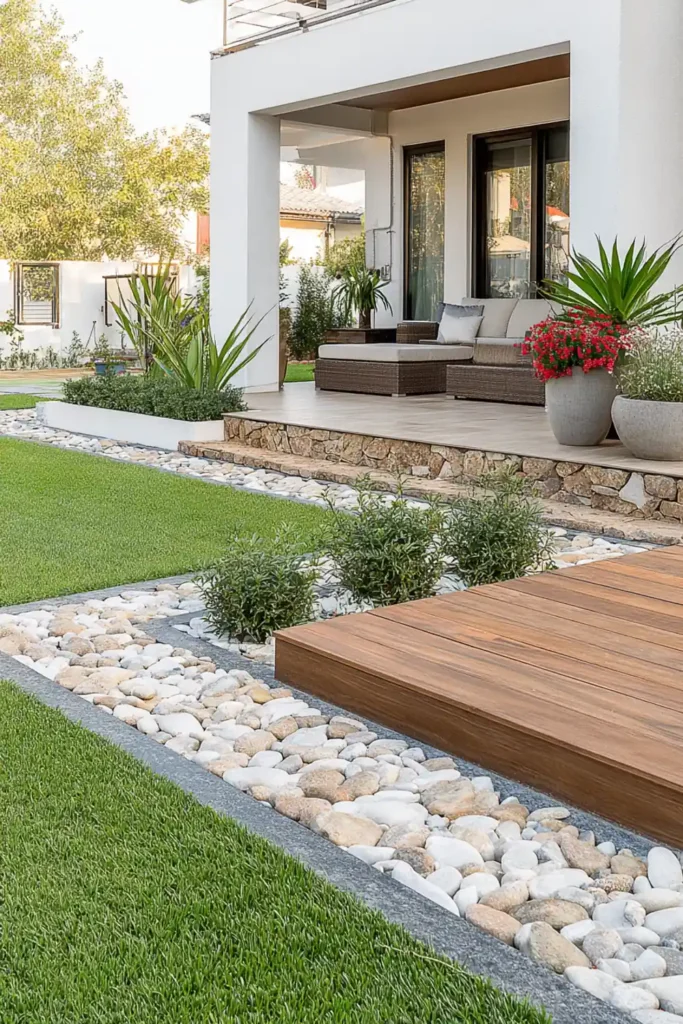
Modern Monochromatic Designs Using White and Dark Stones
Combining white stones with darker ones adds contrast without needing plants or extra features. It’s a clean, modern approach that works well in both small and large spaces.
You can create stripes, sections, or even gradual transitions between white and dark gravel. The difference in color is enough to make the design stand out while still keeping everything simple.
One thing I’ve learned is to keep the separation between colors clear. Using edging or a slight level difference helps prevent the stones from mixing. Without that, the pattern can lose its definition fairly quickly.
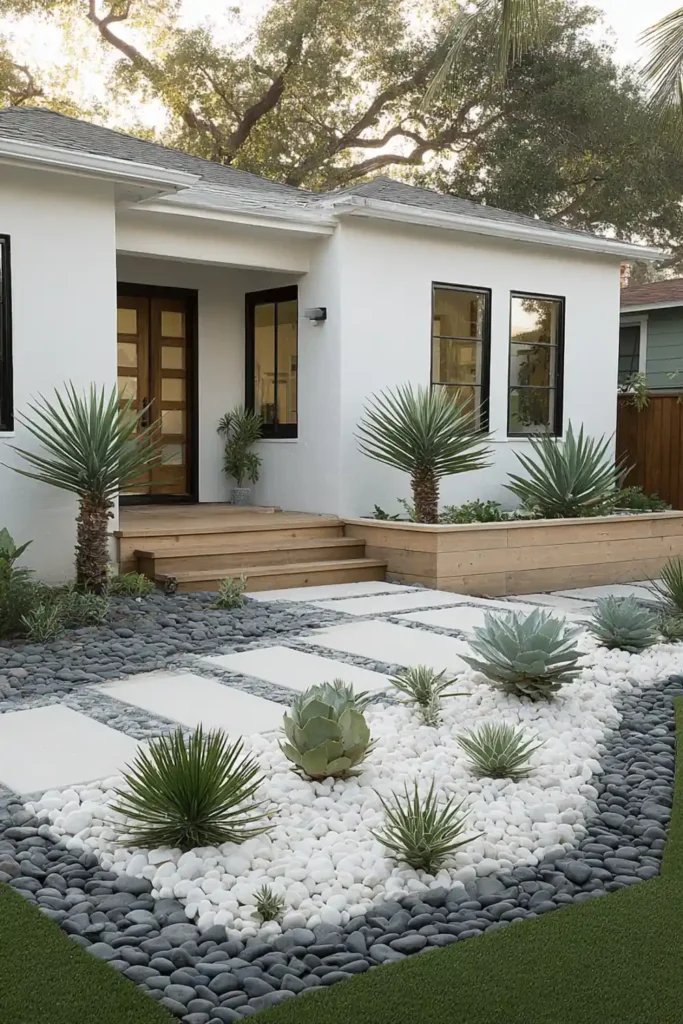
Driveway Edging with White Stones for Strong Visual Contrast
Driveways are often overlooked, but adding white stone along the edges can really sharpen the whole entrance of your home. It creates a clear boundary that makes the driveway feel more finished instead of just flowing into the surrounding ground.
I’ve seen this work especially well with darker surfaces like asphalt or concrete. The white stones highlight the edges and make the space look more defined, even without adding anything else.
If you’re setting this up, keep the strip width consistent on both sides. It doesn’t need to be wide—just enough to create a visible line. Using edging underneath helps keep the stones from spreading into the driveway over time, especially with regular use.
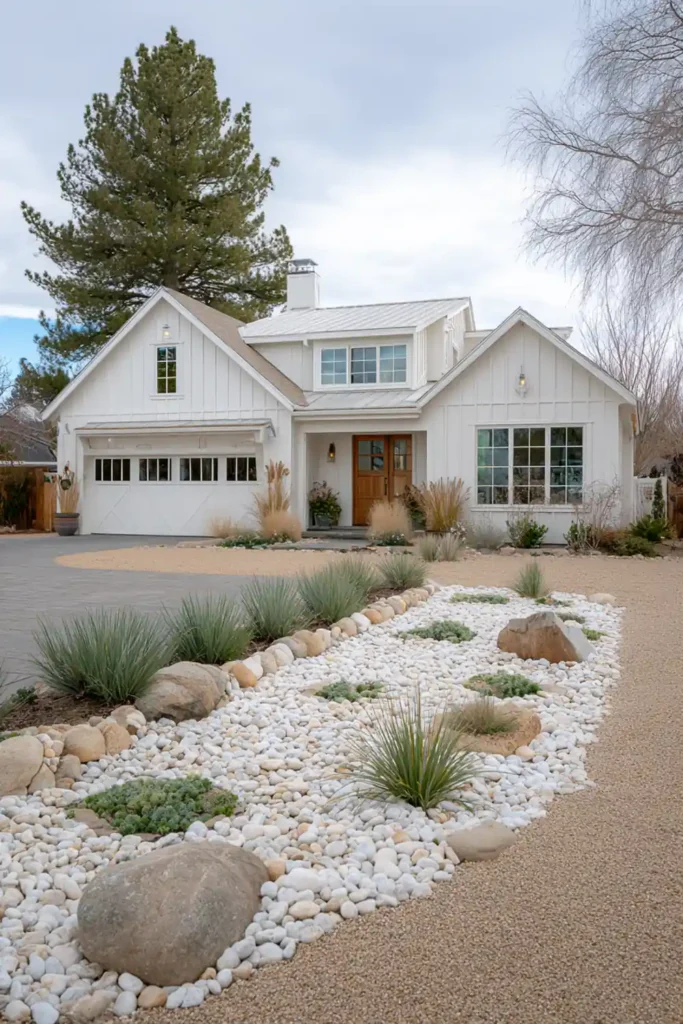
Outdoor Yoga Nooks with White Stone Serenity Bases
Creating a calm corner for relaxing or stretching doesn’t require much space. A simple base of white gravel can turn a small area into a calm spot that feels separate from the rest of the yard.
I like this idea paired with a bit of privacy, like bamboo screens or a few tall plants. The white stones keep the ground clean and even, making it comfortable for placing a mat or low seating.
If you’re planning this, try to choose a spot that’s naturally a bit quieter, away from busy walkways. Even a small corner can feel more peaceful when it’s slightly tucked away and visually separated.
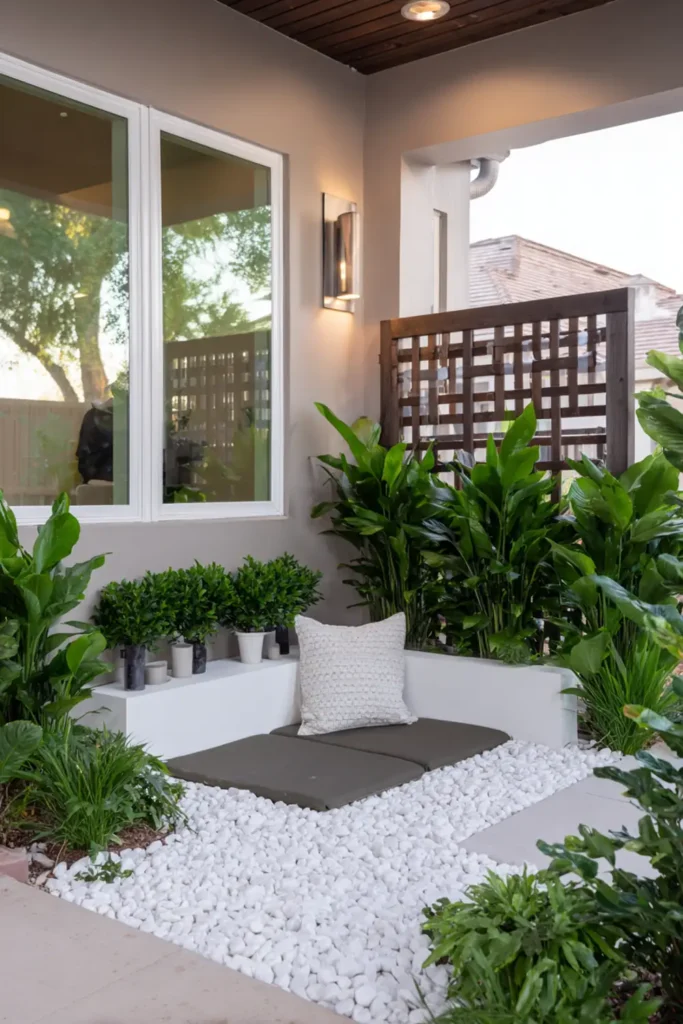
Glow-in-the-Dark White Stones for Subtle Nighttime Effects
Lighting doesn’t always have to come from fixtures. Glow-in-the-dark stones are a simple way to add a soft nighttime effect without wiring or installation.
These stones can be mixed into regular white gravel along pathways or around garden features. During the day, they blend in, but at night, they give off a mild glow that helps guide movement through the space.
If you use them, don’t overdo it. A light scatter works better than covering the whole area. It keeps the effect subtle and avoids causing the space to feel artificial.
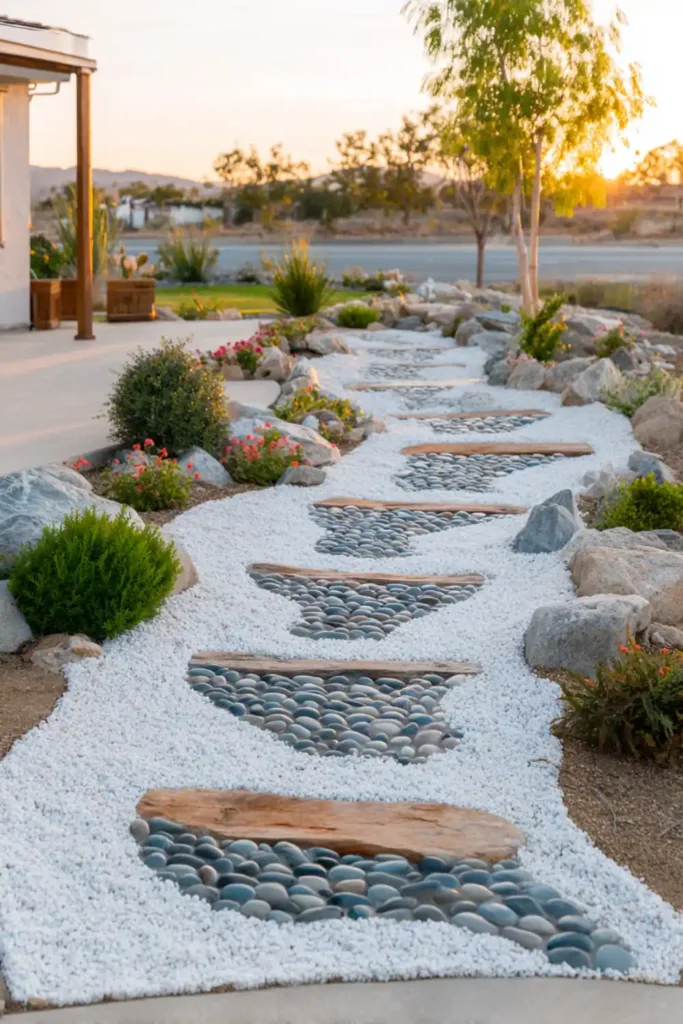
Solar Pathway Lighting Paired with White Stone Walkways
For a more practical lighting setup, solar pathway lights work really well with white stone. The stones reflect the light, making even low-powered lights feel brighter than they actually are.
I’ve noticed that spacing the lights evenly along a white gravel path creates a clear and safe walking route at night without needing strong lighting. It also adds a bit of rhythm to the space.
When installing, push the lights deep enough so they stay stable, especially if the ground underneath is loose. Combining them with a compacted base helps keep everything in line and looking neat.
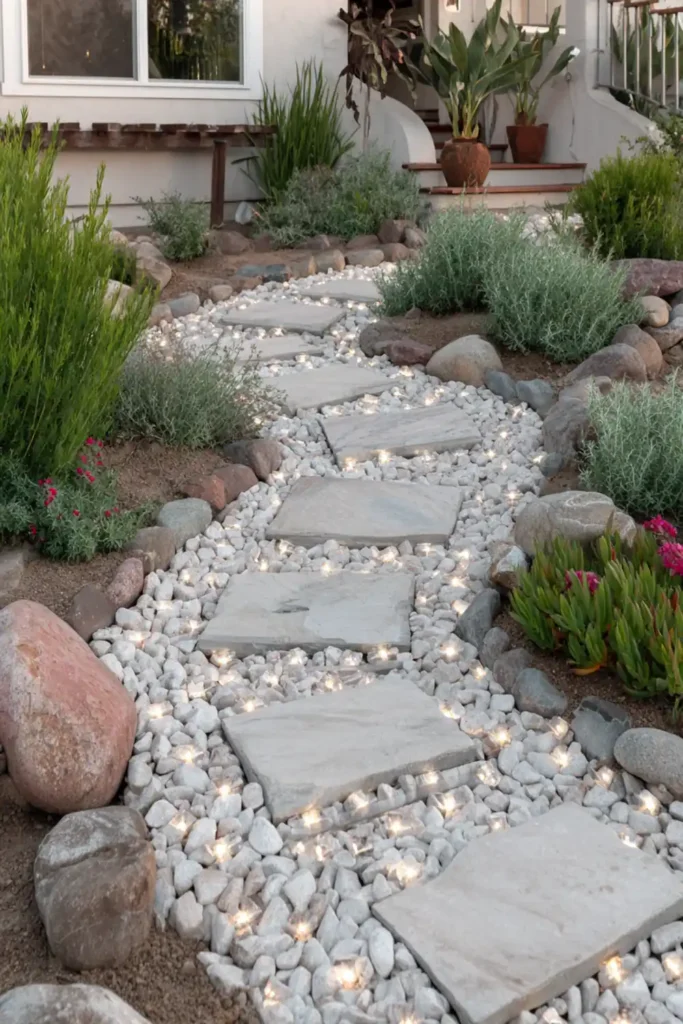
Illuminated Garden Features with White Stones and Uplighting
If you want to highlight a specific feature, like a tree or a sculpture, white stones can help amplify the effect of uplighting. The light reflects off the stones, spreading a mild glow around the area.
This works particularly well around vertical elements. A small cluster of white stones at the base of a tree, combined with a low spotlight, can create a strong visual focus without adding extra decor.
If you try this, keep the lighting angle simple. One well-placed light is usually enough. Too many lights can make the space feel busy instead of calm.
Seasonal Styling with White Stones for Year-Round Appeal
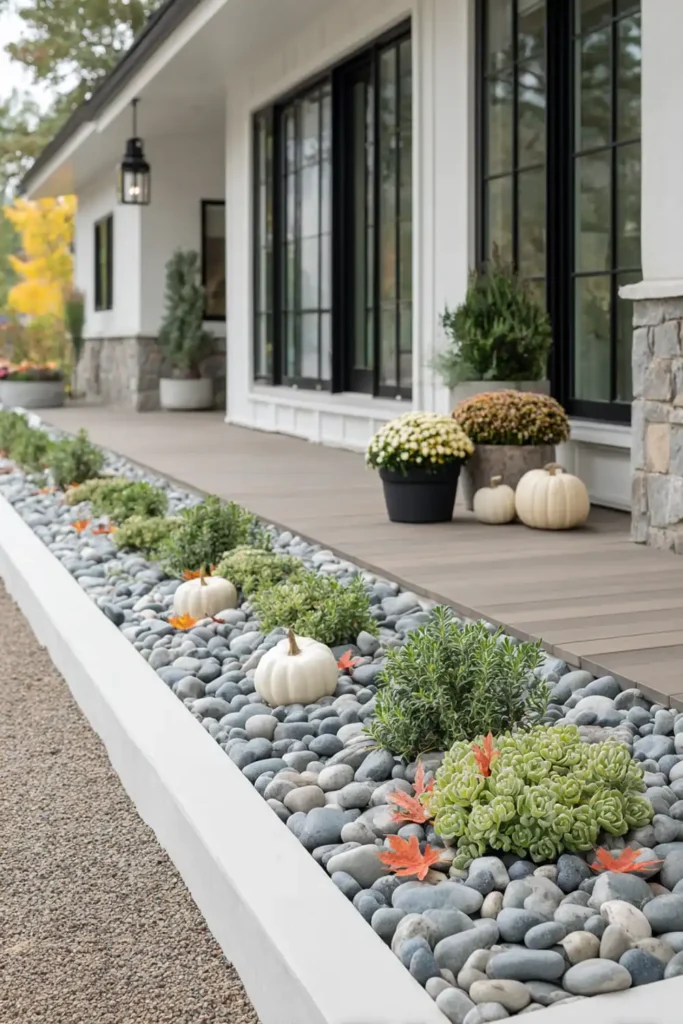
One thing I’ve come to appreciate about white stones is how easily they adjust through the seasons. You don’t need to change the base—just what you place around it.
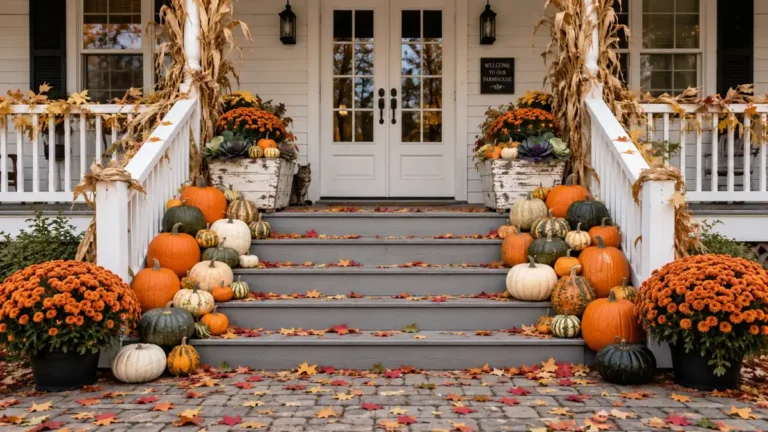
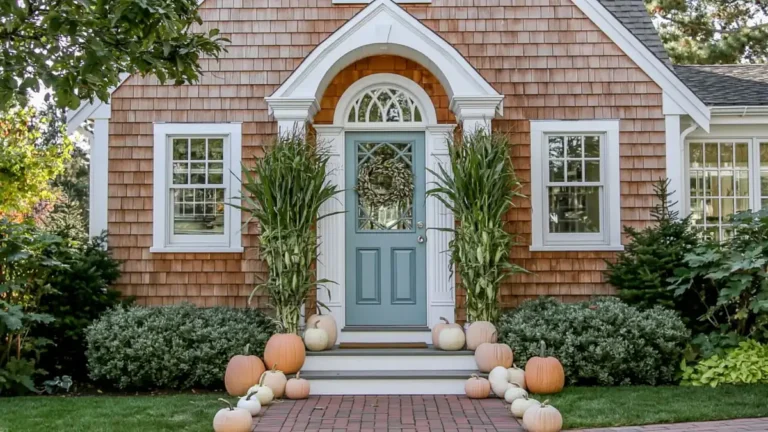
In spring, colorful flowers stand out more against the white. In autumn, pumpkins or fallen leaves create a natural contrast. Even in winter, the stones blend nicely with frost or light snow, keeping the space looking consistent.
If you want flexibility, keep the layout simple and let the seasonal elements do the work. It’s a practical way to refresh your outdoor space without starting from scratch each time.
Bringing These White Stone Landscaping Ideas Together
What I like about working with white stone is that it gives you a clean starting point, no matter the size of your space. Whether it’s a small planter, a pathway, or a larger garden layout, it helps tie everything together without making things complicated.
You don’t have to apply all these ideas at once. Even adding a simple border or a small gravel section can make a noticeable difference. Over time, you can build on it and modify it based on how you actually use your outdoor space.
The main thing is to keep it practical. Choose ideas that fit your routine and the way you move through your space. That’s what makes it feel natural and comfortable, not just something that looks good for a moment.