
There is something pleasing about giving old things a second life in the garden. A worn chair, a rusty bicycle, or even an old kitchen piece can add character in a way that brand-new decor often cannot. These pieces bring history, texture, and a more personal feel to an outdoor space.
What I like about upcycled vintage garden decor ideas is that they do not need to feel polished to work. Chipped paint, faded wood, and weathered metal are often what make them fit so naturally among flowers, herbs, and climbing vines.
In this article, I’m sharing practical ideas that use repurposed pieces to add color, structure, and charm. Some work well in a large backyard, while others are simple enough for a small patio, balcony, or quiet garden corner.
Painted Chair Planters for Colorful Garden Corners
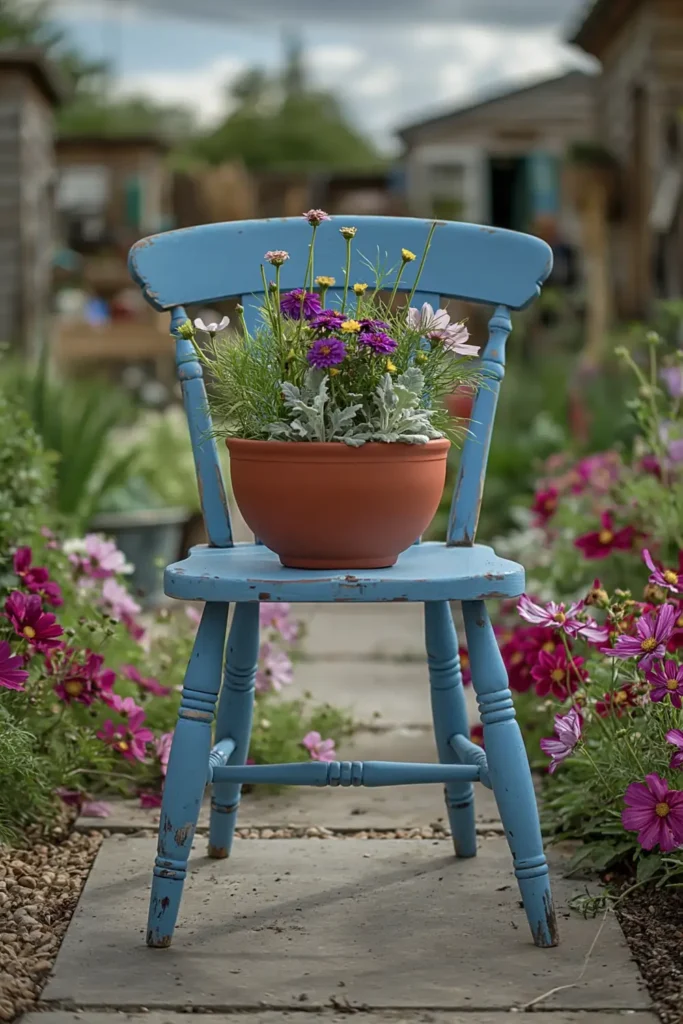
An old chair can become one of the most eye-catching features in a garden, especially when it has a little age and character already built in. A painted chair planter works well because it gives height to a flower display while also giving a sense of personality to the space. In a garden corner along a stone path, it can make an ordinary planting area into something that feels carefully arranged rather than accidental.
The charm comes from the contrast of materials. A wooden chair with peeling paint has a softness that works beautifully beside weathered terracotta pots. In this case, a bright blue finish makes the chair stand out against the natural tones of stone and soil. Filling the planter with blooming petunias and cheerful pansies keeps the look lively and relaxed instead of overly styled. The worn surface of the chair is part of the appeal, so there is no need to sand away every mark or imperfection.
If you want to try this idea, place the chair where it can be seen from a walkway or from a seating area. Set one generous pot on the seat rather than crowding the whole chair with containers. That gives the flowers room to spill naturally and keeps the shape of the chair visible, which is what makes the piece feel special in the first place.
Hanging Colander Planters for a Fun Outdoor Nook
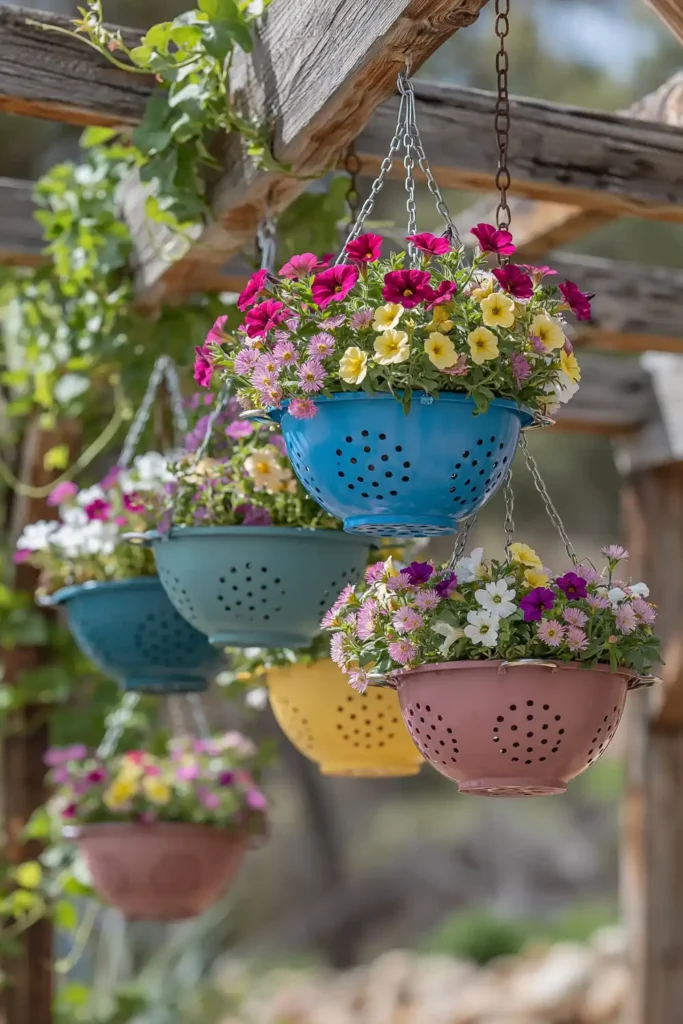
Vintage kitchen pieces can work surprisingly well outdoors, and hanging colander planters are a good example of that. Because colanders already have drainage holes, they suit flowering plants better than many other repurposed containers. Placed in a pergola or tucked into a rustic outdoor nook, they bring color upward and help fill empty vertical space that could otherwise go unnoticed.
The look works best when the colanders feel cheerful rather than overly coordinated. Bright teal, mustard, and fuchsia add a fun touch, especially when paired with petunias in a mix of bold shades. The metal gives the arrangement a bit of shine, while the hanging chains add movement and help the display feel light instead of heavy. When several pieces are grouped together at slightly different heights, the result feels collected over time, which suits vintage garden decorating much more than a perfectly matched set.
A practical way to use this idea is to hang the planters near a bench, side table, or entrance to the garden, where the color can be appreciated up close. Keep the plant choices soft and slightly trailing so they spill over the edges. That helps balance the harder look of painted metal and keeps the whole display feeling garden-friendly.
Pallet Garden Paths That Add Cottage Charm
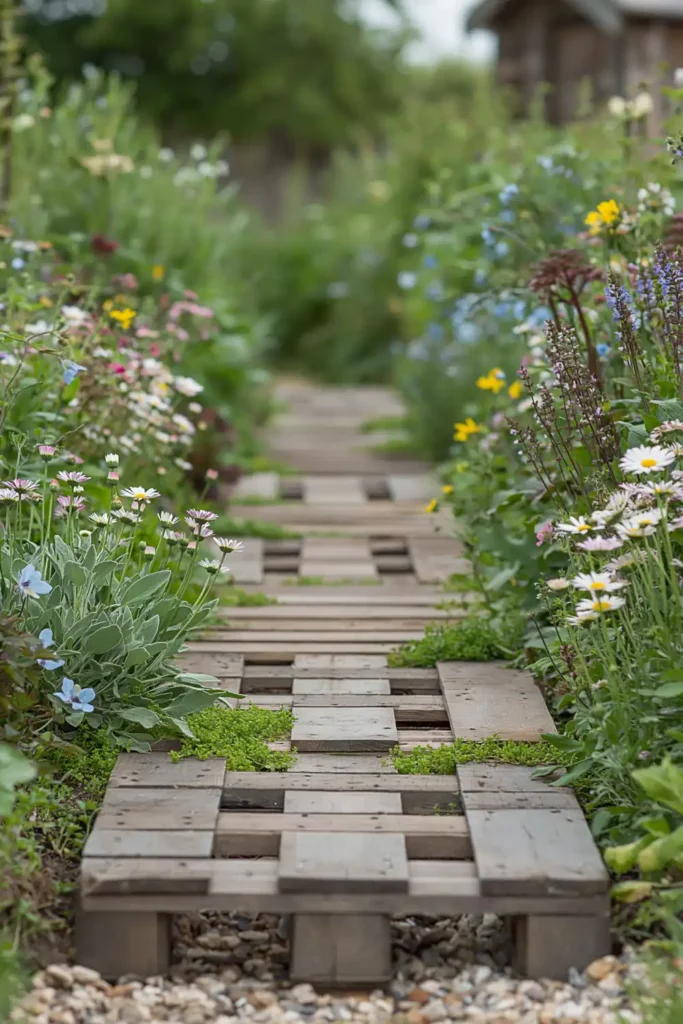
A pallet garden path is one of those ideas that changes how a garden feels without requiring expensive materials. In a cottage garden, veggie plot, or whimsical entryway, wooden pallet slats laid directly on the ground can create a simple walkway that looks relaxed and useful at the same time. It gives structure to the space while still feeling informal, which is often what makes a garden inviting.
What makes this idea work is the mix of rough wood with soft planting around it. The straight lines of the pallet slats create a geometric pattern, but moss, tiny groundcovers, and wildflowers keep the setting from looking stiff. Daisies and lavender planted alongside the path soften the edges and help the wood settle into the landscape. Over time, the materials weather even more, and that usually improves the look rather than hurting it.
If you use this in your own yard, place the path where people naturally walk, such as between raised beds, from a gate to a porch, or through a flower-filled side yard. Make sure the boards sit evenly so the walkway feels steady underfoot. It also helps to let plants spill slightly toward the edges instead of trimming everything back too neatly. That little bit of softness is what gives the path its cottage character.
Bicycle Wheel Trellises for Weathered Fence Decor
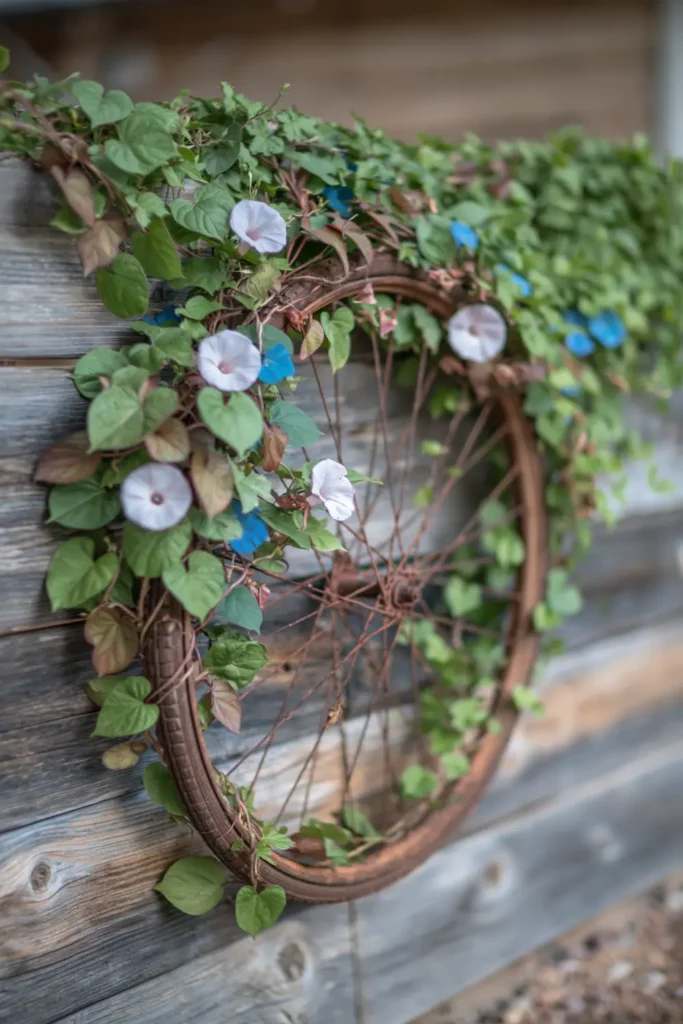
A single old bicycle wheel can do a lot for a plain fence. Mounted against weathered wood, it adds shape, texture, and a bit of vintage character without taking up much space. This kind of upcycled vintage garden decor idea works especially well when a fence feels flat or empty and needs one feature to break things up.
The wheel itself brings in a nice metal patina, especially if it has a rusty, aged finish. The thin spokes create an organic framework for climbing plants, so it functions as both decoration and support. Morning glories are a strong match here because their vines can twist through the wheel and their purple blooms stand out beautifully against worn wood and rust-toned metal. The mix of circular form, rough fence boards, and soft flowering vines gives the whole area more visual interest.
To make this idea work, mount the wheel firmly at a height where the flowers will be easy to see once they start climbing. Give the plant enough room at the base and guide a few early vines through the spokes to help it get started. It is a simple project, but it can make a disregarded part of the yard look intentional and full of charm.
Old Ladder Displays for a Vertical Upcycled Vintage Garden
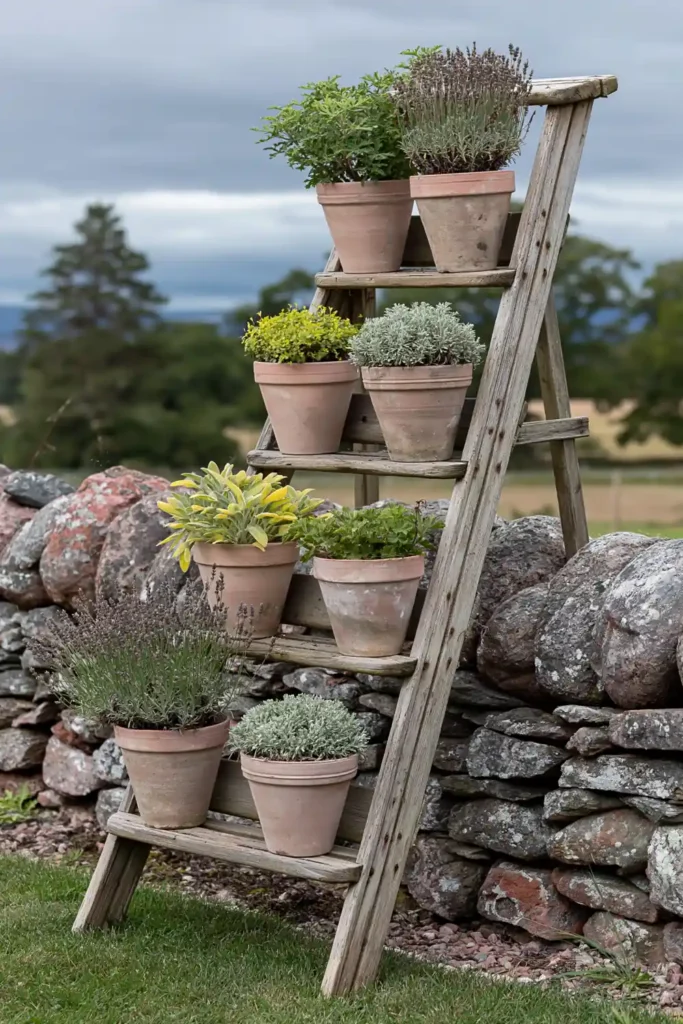
An old ladder is one of the easiest pieces to repurpose in a garden because it already has the shape of a tiered display. In a small patio, against a blank wall, or in a quiet garden nook, it gives you a way to add height without building anything complicated. This is especially useful when floor space is limited, but you still want the area to feel full and layered.
The look depends a lot on the condition of the ladder. Dusty painted wood or aged metal both work well because they bring that worn, collected feel that suits a vintage garden. The rungs create natural shelves for small pots, and the open frame keeps the display from feeling bulky. A mix of herbs, trailing vines, and flowering plants gives the arrangement more life than using one type of plant all the way through. You get texture from the leaves, movement from the trailing stems, and color from the blooms.
A good way to style this is to keep the heaviest pots near the bottom and lighter ones near the top so the display feels balanced. Leave a little empty space between pots, too. When every rung is packed too tightly, the ladder loses its shape. Let the frame show through so it still reads as an old garden find rather than just another plant shelf.
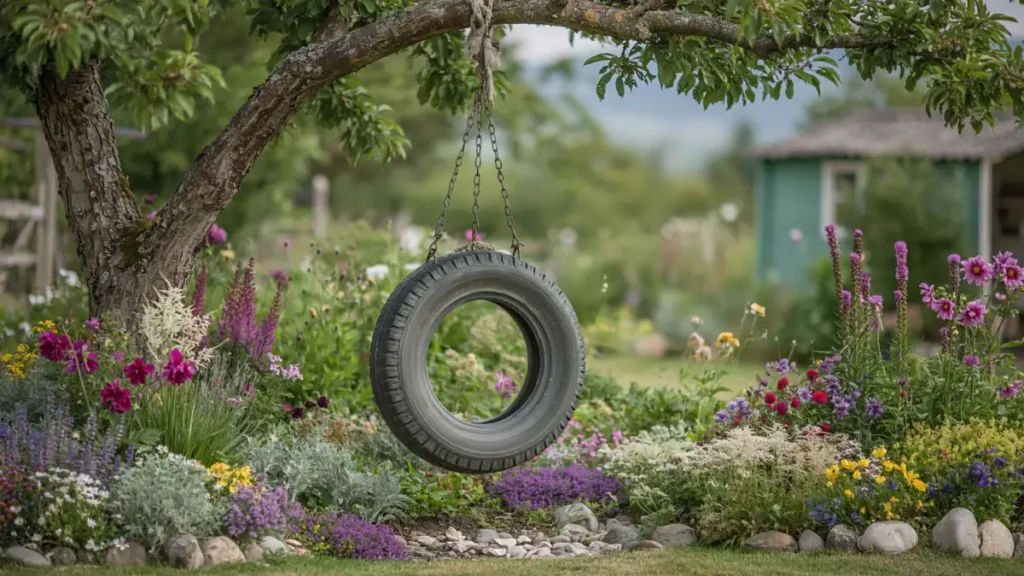
Recycled Tire Planters for Bold Backyard Color
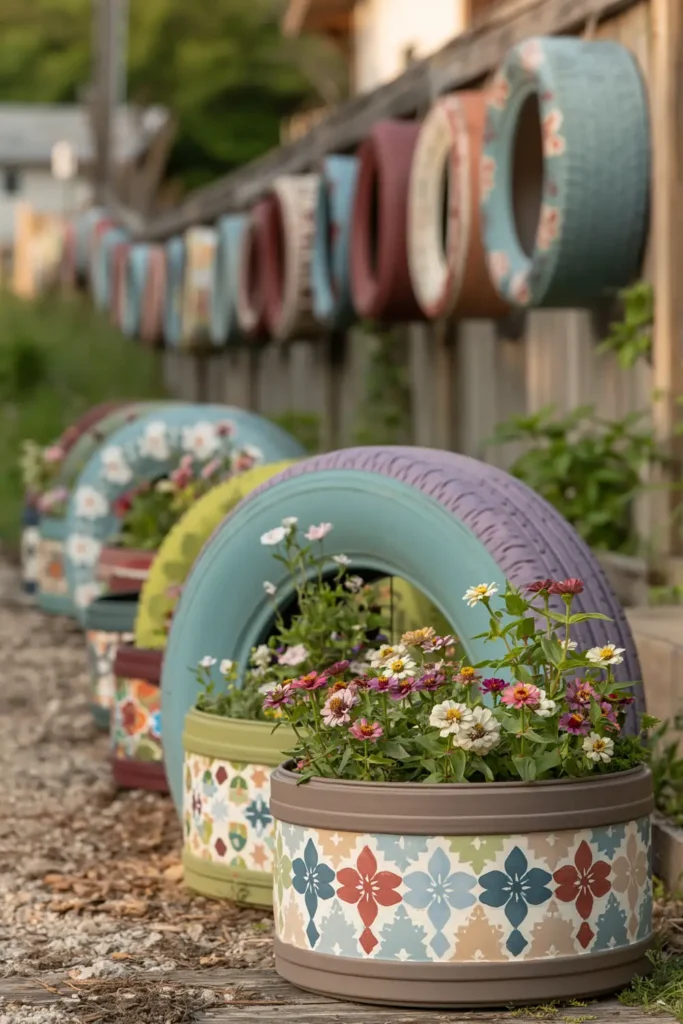
Tire planters are a sensible choice when you want garden decor to feel playful and noticeable. They work especially well in backyards that need a bit more color or in spaces where you want to create a casual, creative look without spending much. Because tires are sturdy and easy to move around, they can be stacked, hung, or set directly on the ground depending on how much height and structure you want.
The success of this idea usually comes down to color and arrangement. Bold paint and lively patterns can turn old rubber tires into something cheerful instead of heavy-looking. Once planted with flowers, greenery, or cascading vines, the contrast becomes even stronger. Soft plant growth spilling over the edges helps balance the solid shape of the tires and keeps them from feeling too harsh in the garden. Grouping a few together can also help them read as a design choice rather than leftover materials.
For a more polished result, repeat one or two paint colors rather than using every bright shade at once. That keeps the display fun but not chaotic. These planters work well near fences, in kids’ play areas, or in parts of the yard that could use a more relaxed and colorful touch. They are also a good option for gardeners who like projects that feel creative without becoming too delicate.
Vintage Bicycle Planters with Wicker Baskets
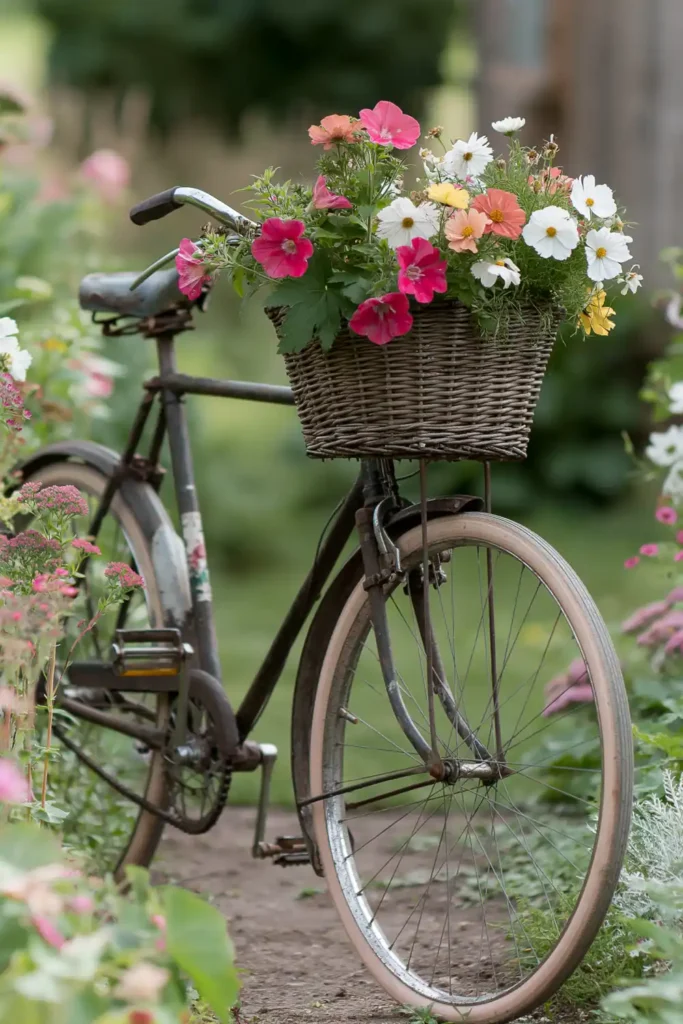
A vintage bicycle planter adds charm in a very natural way because the shape of the bike already feels decorative before flowers are added. Reclined against a wooden fence or placed in an open outdoor spot, it becomes a focal point with very little effort. This idea works well when you want something noticeable but still soft and garden-friendly.
The details matter here. A rusty metal frame brings age and texture, while a wicker basket adds warmth and a more relaxed, handmade feel. Filled with pansies, petunias, marigolds, and leafy greenery, the basket turns the bicycle into more than just an object on display. The flowers give it color and softness, while the bicycle frame adds structure and a sense of history. The wood fence behind it is also a helpful backdrop because it makes the shape of the bike stand out more clearly.
To keep this looking natural, avoid overcrowding the basket with too many plant varieties. A simple mix usually feels more believable and easier to maintain. It also helps to place the bicycle where it looks as though it belongs, such as beside a gate, along a fence line, or near a path. When it is tucked into the garden rather than placed too formally, the whole display feels more charming and less staged.
Toolbox Herb Gardens for Small Patios and Balconies
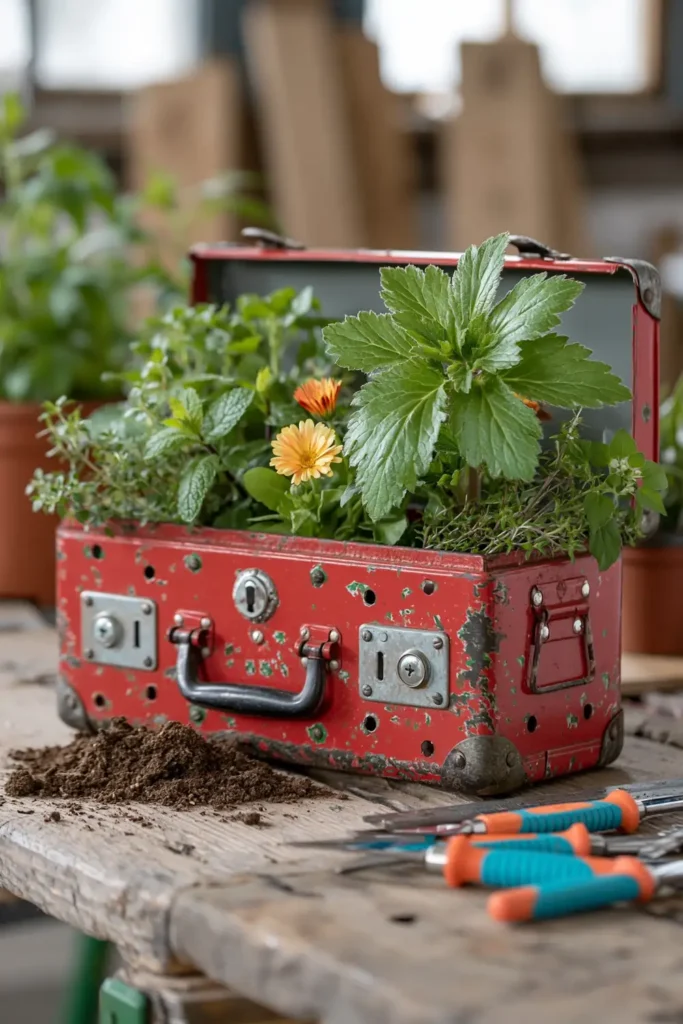
An old metal toolbox can make a surprisingly good planter, especially in a small outdoor space in which every item needs to earn its place. On a balcony or compact patio, it brings in color, texture, and a bit of vintage character without taking up much room. It also suits herb gardening well because the size feels manageable, and the whole arrangement can stay close to the kitchen door or seating area.
The worn finish is what gives this idea its charm. A toolbox with rust-kissed metal and faded red paint already has enough personality before anything is planted in it. With the lid left open, it can even act like a small signboard or decorative backdrop behind the herbs. Rosemary and oregano work well here because their structure gives the planter a useful, kitchen-garden feel, while marigolds add color and soften the harder metal edges. The mix appears practical, but still decorative.
To make this idea work, make sure the toolbox has drainage or use a liner that will keep the roots healthy. It looks best when the plants are allowed to fill out naturally rather than being packed too tightly. Set it on a small table, stool, or ledge so it feels part of the space instead of something dropped on the floor as an afterthought.
Teacup Bird Feeders That Bring Antique Charm to the Garden
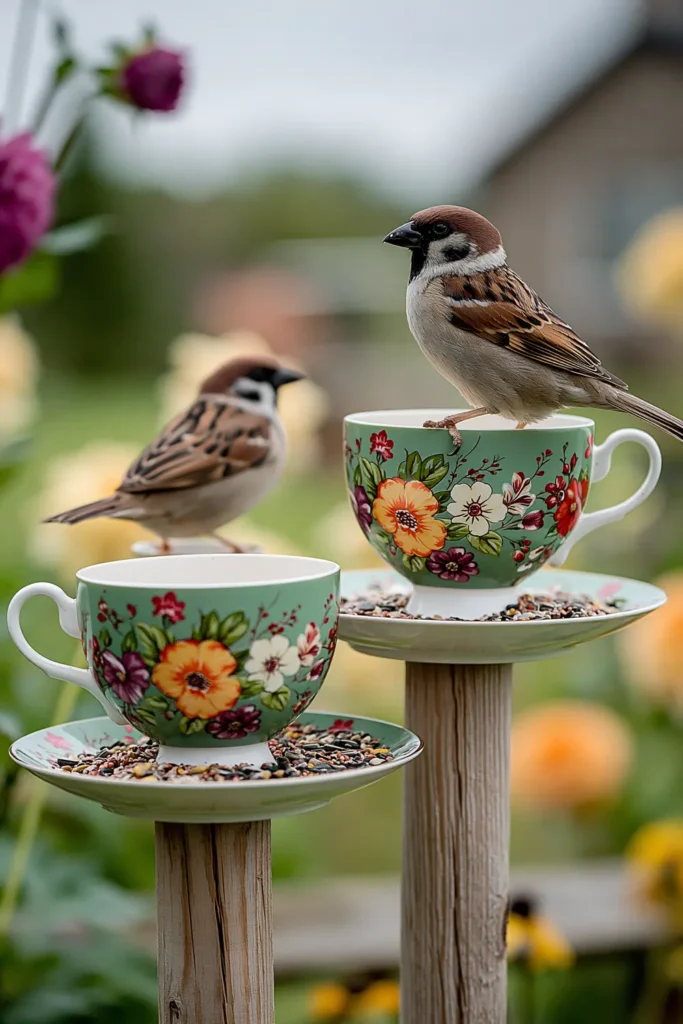
Teacup bird feeders are one of those small details that can make a garden feel more personal. Hung from posts or fences, they bring in a gentle vintage touch while also attracting birds, which adds movement and life to the space. This kind of decor works especially well in cottage-style gardens where a slightly mismatched, collected look feels right at home.
The appeal comes from the porcelain itself. Delicate patterned teacups and saucers have a softness that stands out nicely against wood, greenery, and flowering plants. Because the pieces do not match perfectly, the display feels relaxed and charming rather than decorative in a forced way. When filled with birdseed and placed among blooms, the feeders become part of the garden scene rather than just ornaments hanging in the background.
A practical way to use this idea is to hang a few feeders at different heights where they can be seen from a window, bench, or patio chair. Choose spots that feel sheltered enough for birds to visit comfortably. It also helps to keep the surrounding planting loose and natural. When flowers frame the feeders instead of hiding them, the whole area feels softer and more inviting.
Old Window Frame Trellises Against Brick Walls
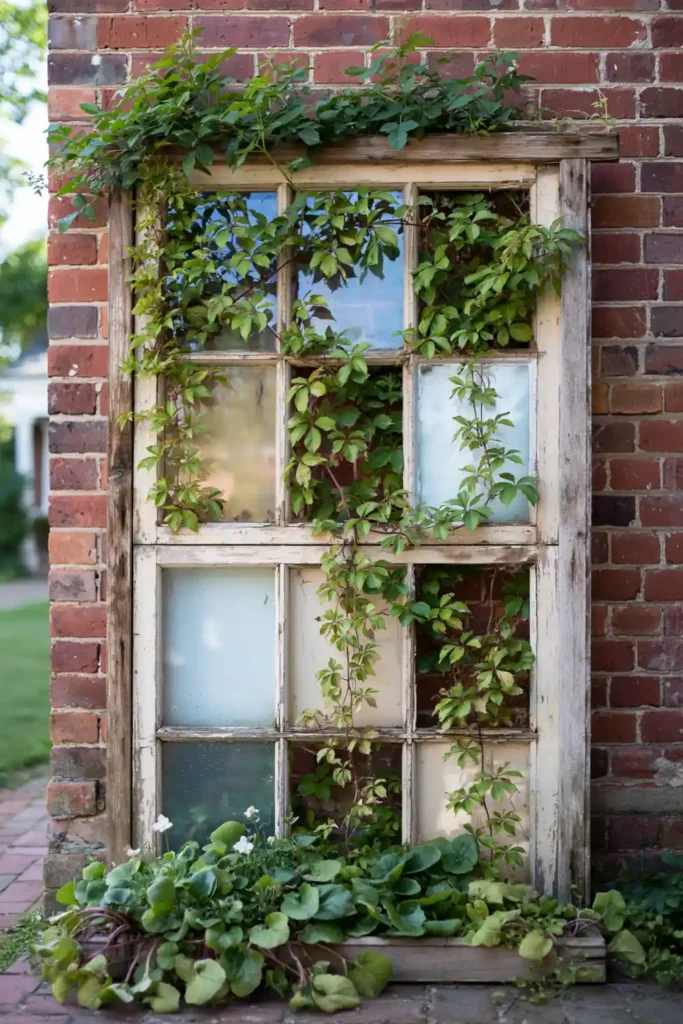
An old window frame can add structure to a garden in a method that feels decorative without being excessively polished. Reclined against a brick wall in a cottage-style planting area, it creates a vertical feature that helps climbing plants stand out while also giving the space a more layered look. This works well in spots where the wall already has some character but needs one more element to tie the planting together.
The combination of materials is what makes this idea so appealing. Aged wood, old glass panes, and rough brick all bring different textures, and that contrast helps the arrangement feel rich even before the plants fill in. Once climbing vines start winding around the frame, the whole piece seems softer and more settled into the garden. The lines of the window give the plants direction, while the worn materials keep the display from looking too neat or modern.
If you try this at home, place the frame where the vines will have space to climb without completely swallowing it too quickly. Part of the charm is still being able to see the old shape of the window. Let the brick wall remain visible around the edges as well, since that rough background helps the frame and greenery stand out more clearly.
Rusty Tool Planters for Flower Bed Borders
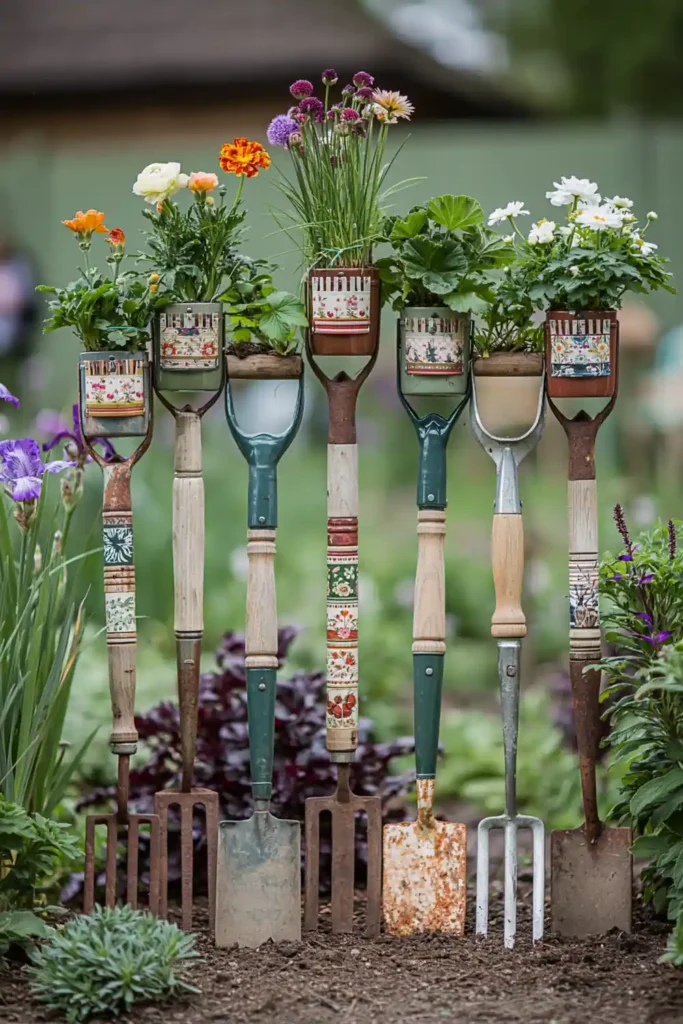
Old garden tools can become decorative planters in a way that still feels connected to the purpose they once had. Along a flower bed border, rusty shovels, forks, and hand tools can be used to hold small pots and add height where the planting might otherwise look flat. This idea works best in gardens that already have a relaxed, slightly weathered look, because the aged metal blends in naturally.
The rust is an advantage here, not a flaw. It gives the tools warmth and helps them sit comfortably among soil, mulch, and planting. Small pots filled with colorful flowers, leafy greens, or bright perennials create a nice contrast against the coarse metal. Since the tools are narrow and upright, they can add vertical detail but without taking up much ground space. That makes them especially useful near borders that need a little interest but do not have room for larger decor pieces.
To keep the display from looking cluttered, repeat the idea in a few small groupings rather than lining up too many tools in one long row. Tucking them between existing plants usually looks better than spacing them out evenly. The result feels more natural, as though the pieces have simply found a second life in the garden over time.
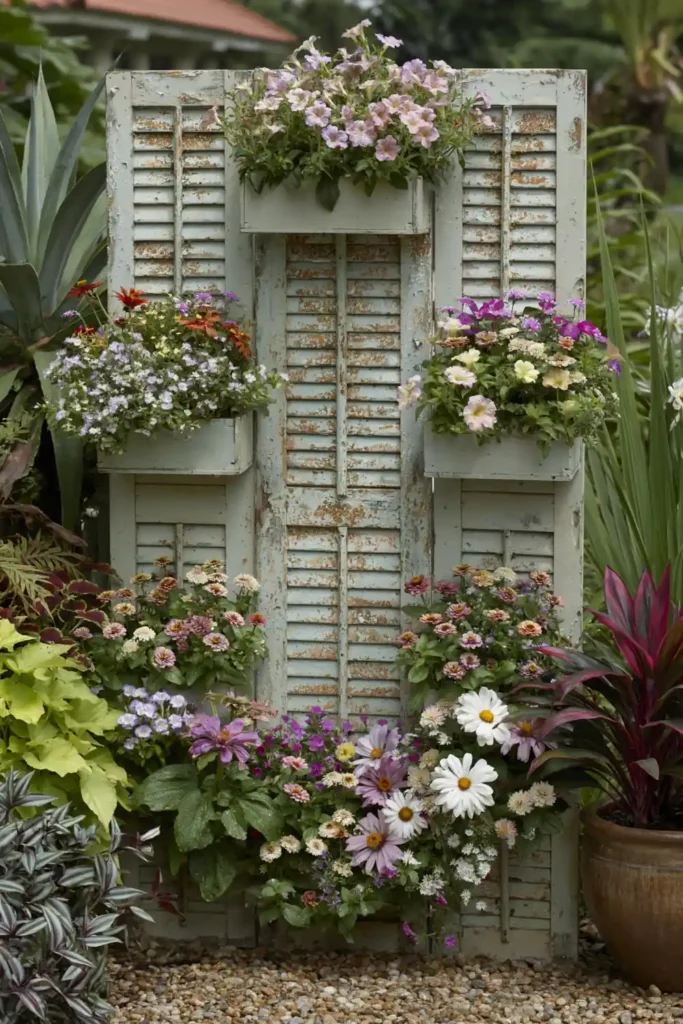
Shutter Flower Boxes for a Pop of Garden Color
Old shutters can do more than lean against a wall or sit in storage. Repurposed as flower boxes, they bring color plus structure to an outdoor space while still keeping that vintage, slightly imperfect look that works so well in a garden. This idea is especially useful in a yard that needs a vertical accent or a bright feature near a fence, shed wall, or patio edge.
What makes shutter flower boxes appealing is the mix of straight architectural lines with soft blooms. Painted shutters already have enough visual interest because of their slats and worn finish, and once they are used to support planted boxes, they start to feel more like garden decor than leftover house parts. Bright or faded paint can both work here, depending on the mood you want. Favorite garden blooms spilling over the edges help soften the structure and keep the piece from feeling too rigid.
A practical way to use this idea is to mount or prop the shutters where they will be visible from a path or seating area. Choose flowers with enough fullness to drape slightly, but not so much that the shutter disappears completely. Keeping part of the painted surface visible is important because that aged finish is what gives the display its charm and makes it feel truly upcycled.
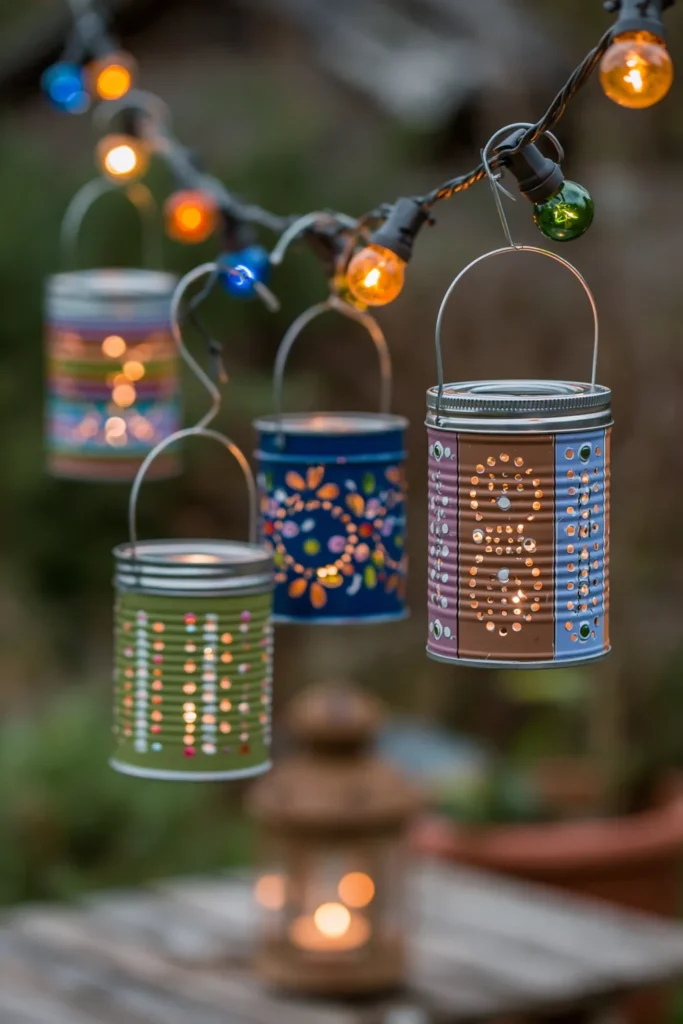
Tin Can Lanterns for Mild Evening Light
Tin can lanterns are one of the simplest ways to add evening atmosphere to a garden without spending much. Placed in an outdoor seating area or placed where the light can flicker through nearby planting, they bring a comforting glow that makes the space feel more settled at the end of the day. This kind of decor works especially well in gardens that are used in the evening for quiet sitting, casual dinners, or slow summer nights outside.
The appeal comes from the contrast between the plain material and the effect it creates. Tin cans are ordinary on their own, but once they are turned into lanterns, they cast a softer and more decorative light than you might expect. The metal surface keeps the look simple and a little rustic, which suits vintage garden styling better than anything too polished. When several lanterns are grouped together, the light feels layered and inviting instead of harsh.
If you want to use this idea, hang the lanterns at slightly different heights or place them along the edge of a patio where they can light the area gently. They look best when they are part of the atmosphere rather than the main feature. Let the glow mix with the natural darkness of the garden, so the whole space feels calm and welcoming.
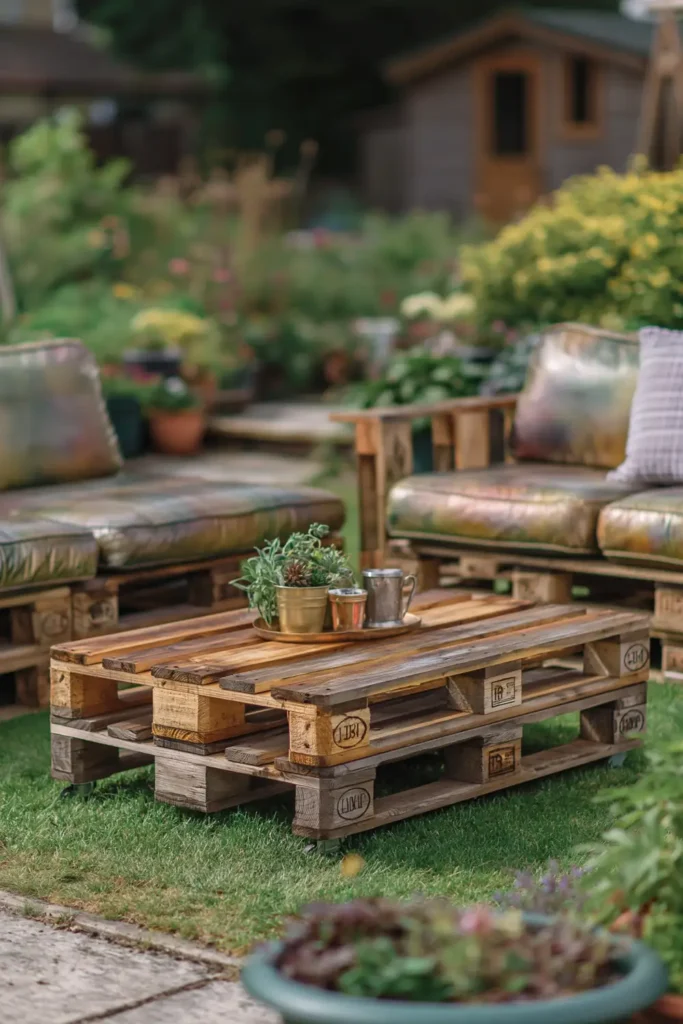
Pallet Benches and Tables for Relaxed Garden Seating
Pallet furniture works well in the garden because it feels casual and useful at the same time. Benches and tables made from simple wooden pallets can turn an empty patch of yard into a place for sitting, chatting, or having a calm cup of coffee. This kind of setup fits naturally in relaxed outdoor spaces where coziness matters more than a polished, formal look.
The beauty of pallet furniture is in its simplicity. The wood brings texture and a handmade feel, and the straight lines make it easy to build a seating area that feels sturdy without looking heavy. In a garden, that matters because you want furniture to feel like part of the setting, not something that competes with it. A pallet bench paired with a low table can create a snug corner for entertaining or just resting after garden work. Cushions or a folded throw can soften the structure, but even on its own, the wood has enough character to hold its place.
To make pallet furniture feel intentional, place it where people would naturally want to sit, such as under a tree, beside a flower bed, or near a quiet fence line. Leave enough room around it so the area does not feel cramped. A simple arrangement usually works better than trying to fill every corner with extra pieces.
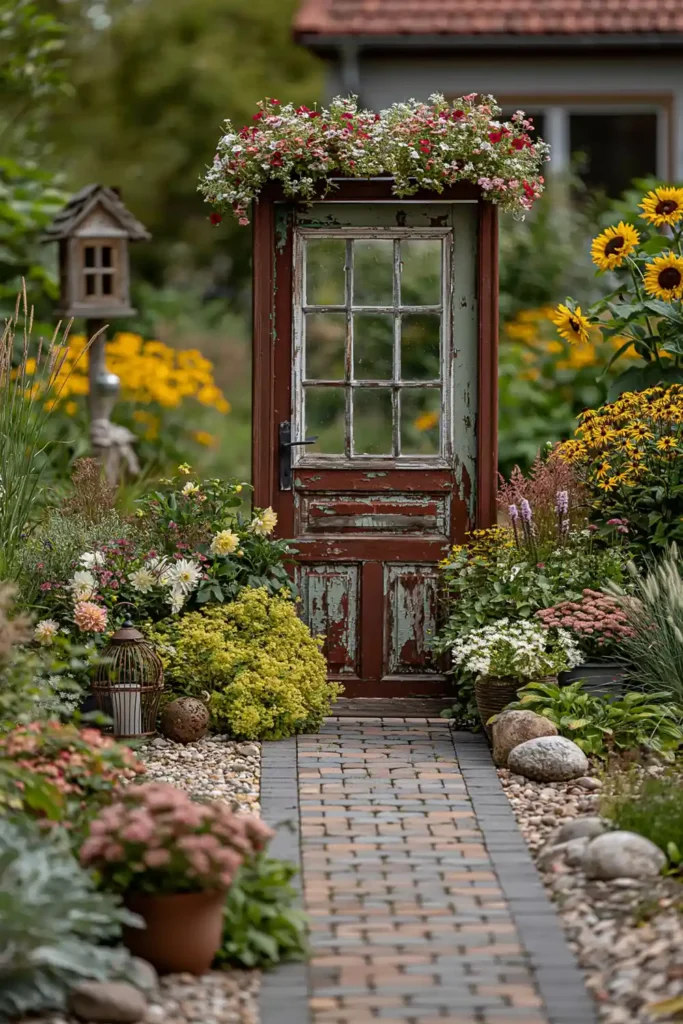
Old Door Frames as Whimsical Flower Bed Backdrops
An old door frame can bring a sense of structure and charm to a flower bed without doing much more than standing in the right place. Used as a backdrop in the garden, it frames the planting behind it and creates a point of interest that feels a little unexpected. This idea suits gardens that lean toward cottage-style or eclectic, especially when you want one feature that gives the space more personality.
The frame itself is what makes the display work. Even without a door attached, the shape suggests an entrance and adds height to the planting. Set behind a burst of colorful blooms, it helps the flowers look more intentional, almost like a garden scene being presented rather than just planted. A nearby chair can strengthen that feeling and make the area look like a place someone might pause and enjoy. The wood does not need to be restored perfectly either. A worn finish often looks better outdoors because it blends more harmoniously with the surrounding plants.
If you try this, place the frame where it can be viewed from the front, ideally at the end of a path or behind a fuller flower bed. Let flowers soften the base and edges instead of keeping the area too tidy. That slightly overgrown look is often what gives the whole arrangement its charm.
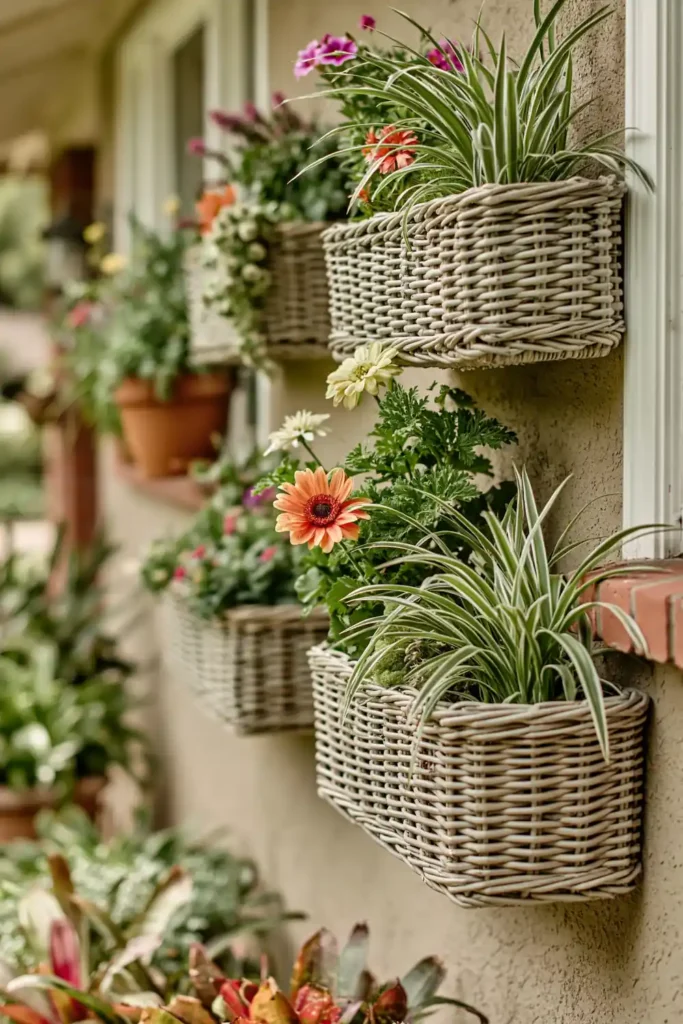
Basket Wall Planters for Herbs and Seasonal Blooms
Basket wall planters are a useful way to make an empty vertical space feel warmer and more alive. Mounted on a wall or fence, they bring texture first and greenery second, which is part of what makes them feel more natural than many store-bought planters. In a small garden, patio, or side yard, they can help you add planting without taking up valuable floor space.
The woven texture is what gives this idea so much charm. Baskets already have a soft, handmade look, and once they are filled with herbs or flowers, they settle into the garden easily. Fresh herbs give the display a practical side, while seasonal blooms add softness and color. Because the baskets are mounted vertically, the arrangement feels layered instead of flat. That can make a plain wall feel much more connected to the rest of the garden.
To style this well, avoid making every basket identical. A slight mix in sizes or planting can help the display feel collected over time. It also helps to mount them where they can be reached easily for watering and trimming. When they are placed at a comfortable height and allowed to fill out naturally, the whole wall feels useful as well as decorative.
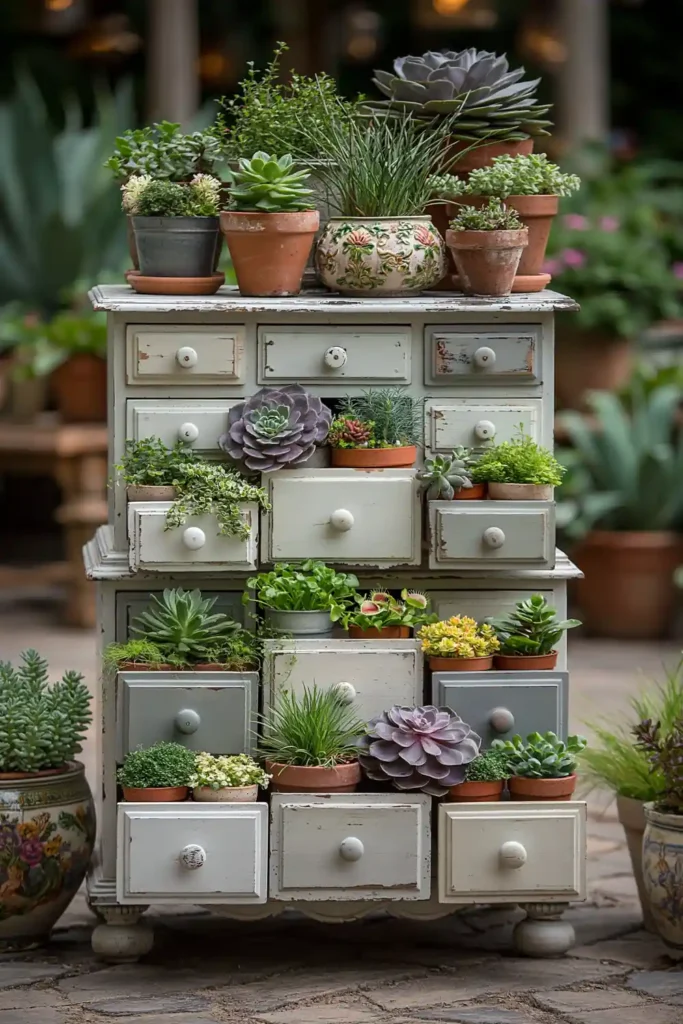
Chest of Drawers Displays for Layered Plant Styling
An old chest of drawers can become a strong garden focal point because it already brings height, structure, and multiple planting levels in one piece. With the drawers pulled open at different depths, it turns into a display that feels playful but still organized. This works especially well in an outdoor spot that needs one large feature to anchor the surrounding plants.
The layered look is what makes this idea effective. Wooden drawers, worn hardware, and mismatched pots all add character before the plants even start to fill in. Once you add vibrant potted flowers and greenery, each drawer becomes its own little planting area. The different levels help show off a variety of sizes, colors, and textures without everything fusing into one mass. It feels decorative, but it also has enough structure to keep the arrangement from looking messy.
A good approach is to place larger pots in the lower drawers and smaller ones higher up so the piece appears balanced. Leave some wood visible between the plants, too. The chest itself should still be part of the display. When the furniture and planting are both easy to see, the result feels much more charming and true to the upcycled vintage garden look.
Making an Upcycled Garden Feel Personal
The best part of using upcycled vintage garden decor ideas is that the space starts to feel more personal over time. Old furniture, worn tools, chipped paint, and weathered metal all bring a kind of character that new pieces commonly lack. They do not need to match perfectly. In fact, a garden usually feels more inviting when it looks like it has grown gradually, with each piece finding its place naturally.
What matters most is choosing ideas that fit the way you actually use your outdoor space. A small balcony might benefit from a toolbox herb garden or basket planters, while a larger yard might have room for pallet seating, a wine barrel fountain, or a painted bicycle filled with flowers. Start with one or two pieces, see how they sit in the garden, and build from there.
A garden decorated this way never feels too finished, and that is part of its charm. You can keep adjusting it with the seasons, swap in new plants, or repurpose a different neglected item when inspiration strikes. That slow, collected look is often what makes an outdoor space feel the most welcoming.