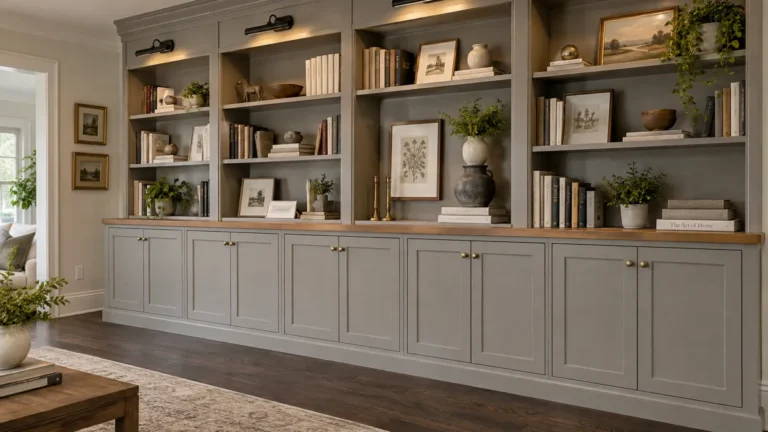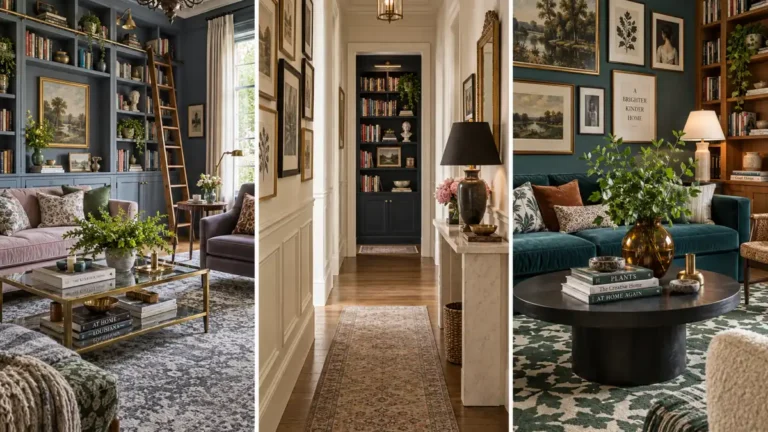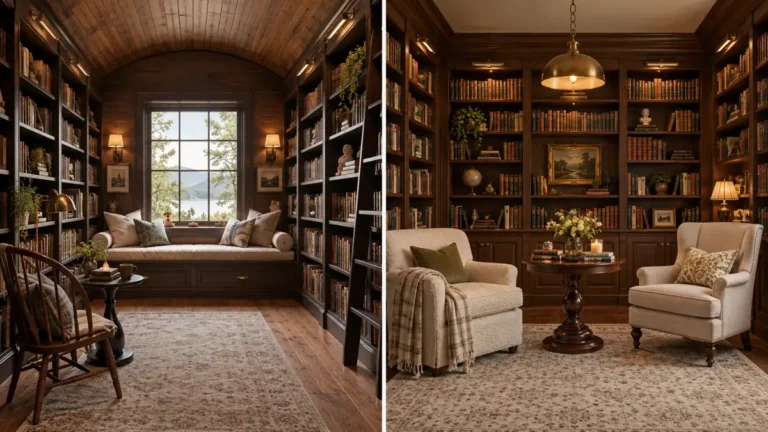

Blank walls can be harder to decorate than they seem. A single frame often looks lost, but a large gallery wall can feel intimidating when you are not sure where to start. That is why it helps to think in layouts instead of random frame placement.
These gallery wall layout ideas are useful because each one gives you a clear way to build around the shape of your wall, the furniture below it, and the kind of art or photos you want to show. Some feel neat and structured, while others leave more room for collected pieces and a looser look.
In this article, I’m sharing a mix of arrangements that work in living rooms, hallways, stairwells, bedrooms, and entryways. Some are better for family photos, some suit bold artwork, and some are ideal when you want the wall to feel more relaxed and personal.
Baseline Gallery Wall Layout Ideas for Sofas and Hallways
The baseline layout is one of the easiest ways to make a gallery wall feel organized without making it look too rigid. The basic idea is to create one straight horizontal line and let your frames hang both above and below it. This gives the whole arrangement a quiet sense of order, even when the art itself is varied. Over a sofa or along a hallway wall, that line helps everything feel anchored.
This approach works especially well with discordant art and frames because the structure comes from placement rather than matching pieces. You can combine landscapes, sketches, abstract prints, and personal photos as long as the spacing stays fairly consistent. A taped line on the wall before hanging makes a big difference here. It keeps the eye moving across the arrangement instead of getting caught on pieces that drift too high or low.
If you are styling this above a sofa, start by centering the full composition over the seating area rather than the whole wall. In a hallway, keep the baseline at a height that feels comfortable as you walk by. That way, the display feels connected to the room instead of floating in empty space.
Box Gallery Wall Layout Ideas with Black and White Photos
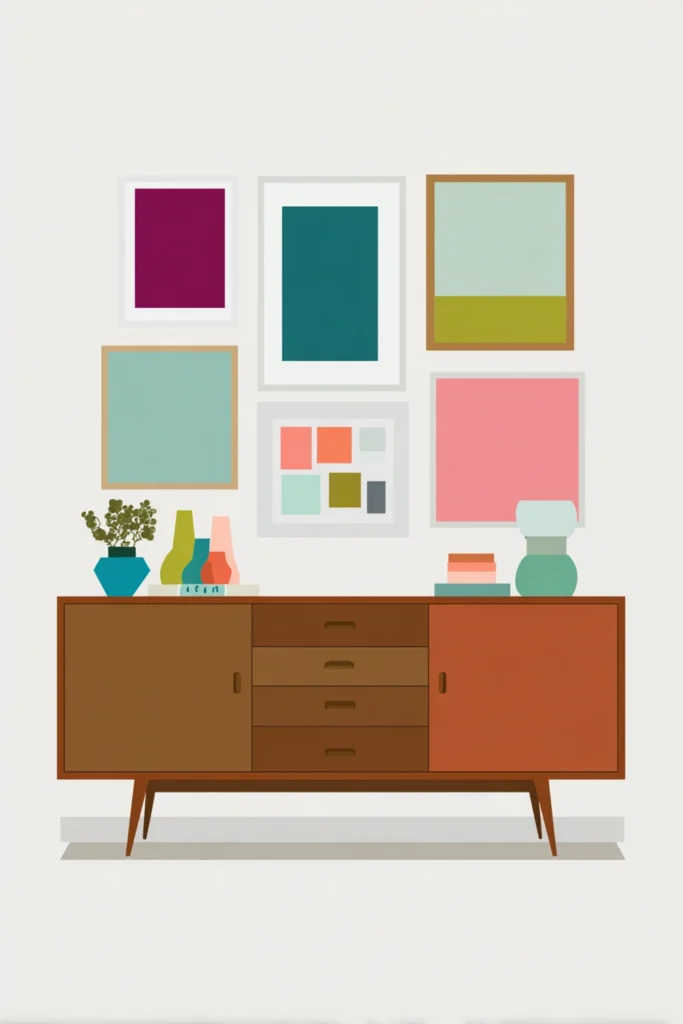
The box layout is a good choice when you want a gallery wall to feel clean, classic, and easy to read at a glance. It usually works around one larger piece, with the rest of the frames arranged to create a square or box shape. In an entryway, foyer, dining room, or hallway, this kind of structure can make the space feel settled and intentional right away.
Black and white family photos suit this arrangement especially well because they give the wall a uniform tone, even if the images come from different years or occasions. Using a single frame color keeps the display from feeling busy, and the square outline gives it a formal quality that works nicely in spaces where you want a polished first impression. The larger central piece helps stop the layout from feeling flat.
One practical way to use this layout is in a foyer where you want something personal but not excessively casual. Try placing the arrangement where it is visible as soon as you walk in, with enough breathing room around it so the square shape is easy to notice. This is also a smart option if you like family photos but want them to look a little more refined than a scattered wall of frames.
Climbing a Stairwell with a Staggered Gallery Wall
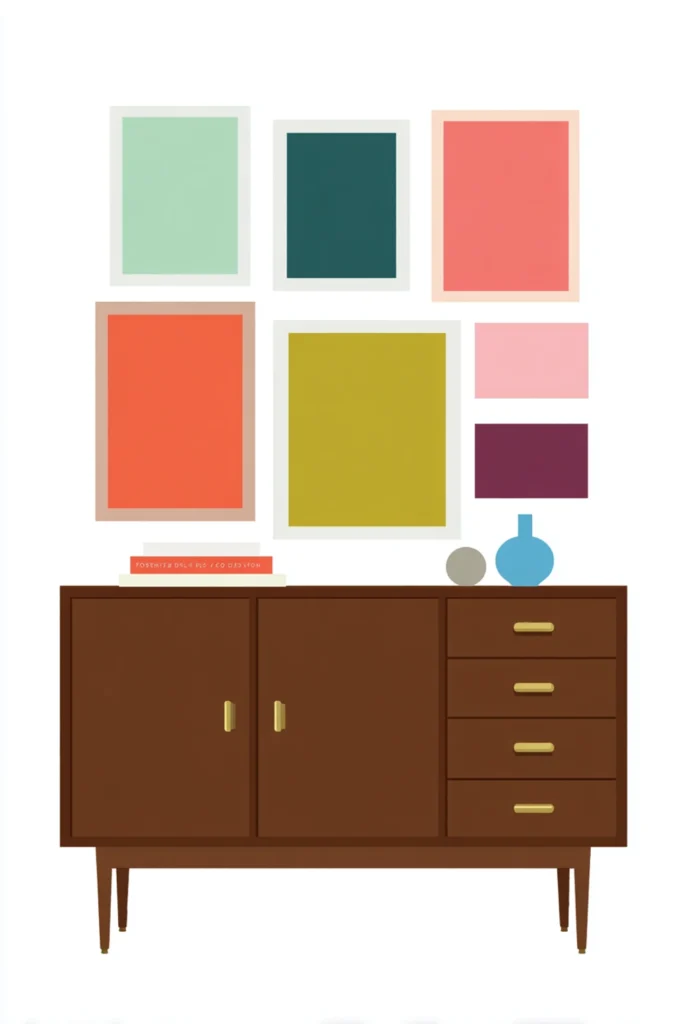
A stairwell wall can be awkward to decorate, which is why the climb layout makes so much sense there. Instead of fighting the slope of the stairs, this arrangement follows it with art placed in a rising, stepped pattern. The result feels natural because it echoes the architecture of the space. It also turns a transitional area into something that feels considered instead of neglected.
This layout works best with a variety of frame sizes and artwork that can handle a slightly more relaxed arrangement. The staggered placement keeps the eye moving upward, which suits staircases well. A credenza or another piece of furniture at the bottom can help the display feel grounded, and a lamp nearby adds warmth if the stairwell tends to feel dim. A plant can soften the harder lines of the frames and staircase, especially if the area feels narrow.
When hanging a stairwell gallery wall, it helps to step back often and check the rhythm of the frames as they rise. You want the arrangement to feel like it is climbing the stairs, not drifting randomly upward. This is one of those gallery wall layout ideas that looks best when it feels balanced but not too perfect.
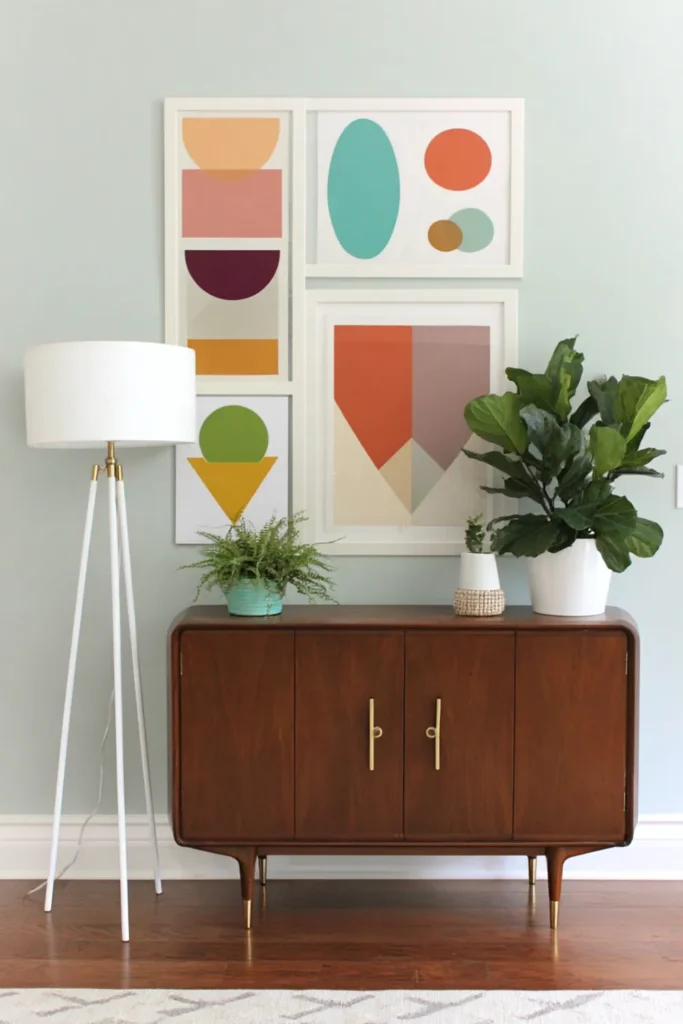
Crown-Style Gallery Wall Layout Ideas Around a Large Anchor Piece
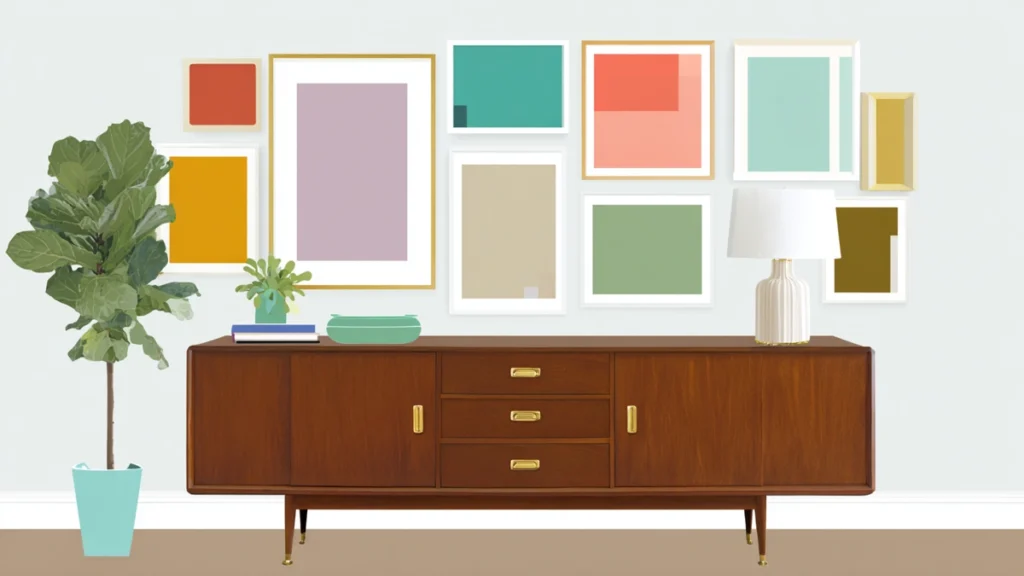
The crown layout starts with one extra-large piece of art and places a handful of smaller pieces above it, almost like decorative accents. It has a more playful shape than a standard row or grid, but it still feels centered because everything relates back to that main anchor piece. In living rooms, bedrooms, children’s rooms, or foyers, it can give the wall a strong focal point without needing a full wall of frames.
Gold frames work especially well here because they add definition and make the smaller pieces feel special instead of lost. The layout has a slightly dressed-up look, but it can still feel warm if the artwork itself is seasonal, whimsical, or personal. The large bottom piece does most of the visual heavy lifting, while the smaller diamond-like pieces above it add movement and character.
This is a good layout to try when you have one painting you really love, but the wall still feels unfinished. Instead of searching for several medium-size pieces, build upward with three to five smaller works. In a bedroom, this can look especially nice above a dresser or bench. In a child’s room, it gives you a way to mix one substantial print with lighter, more playful art.
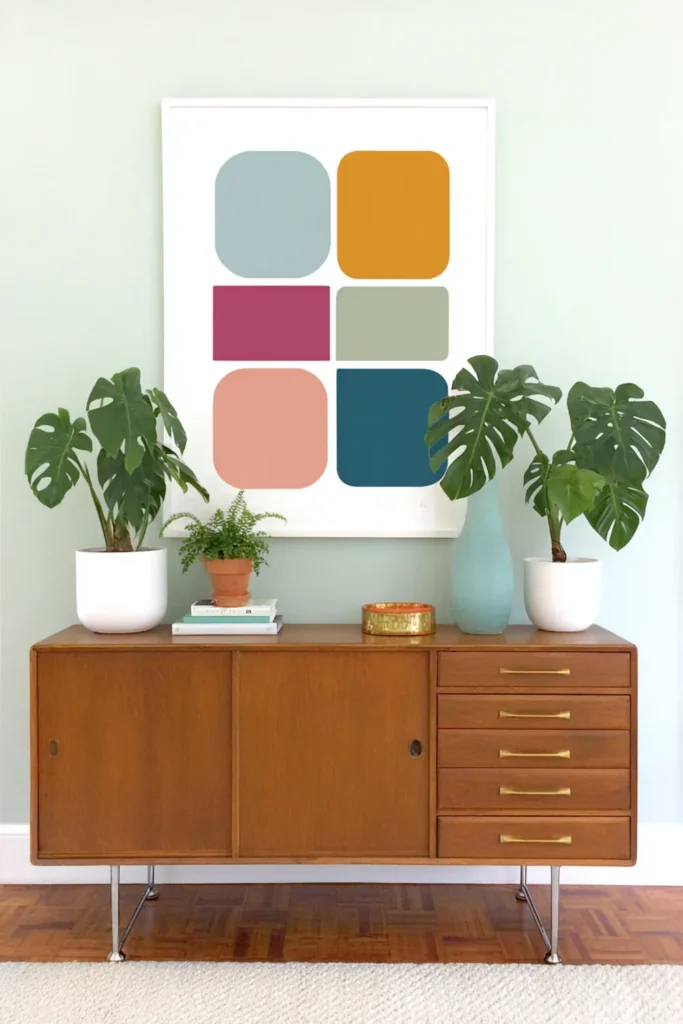
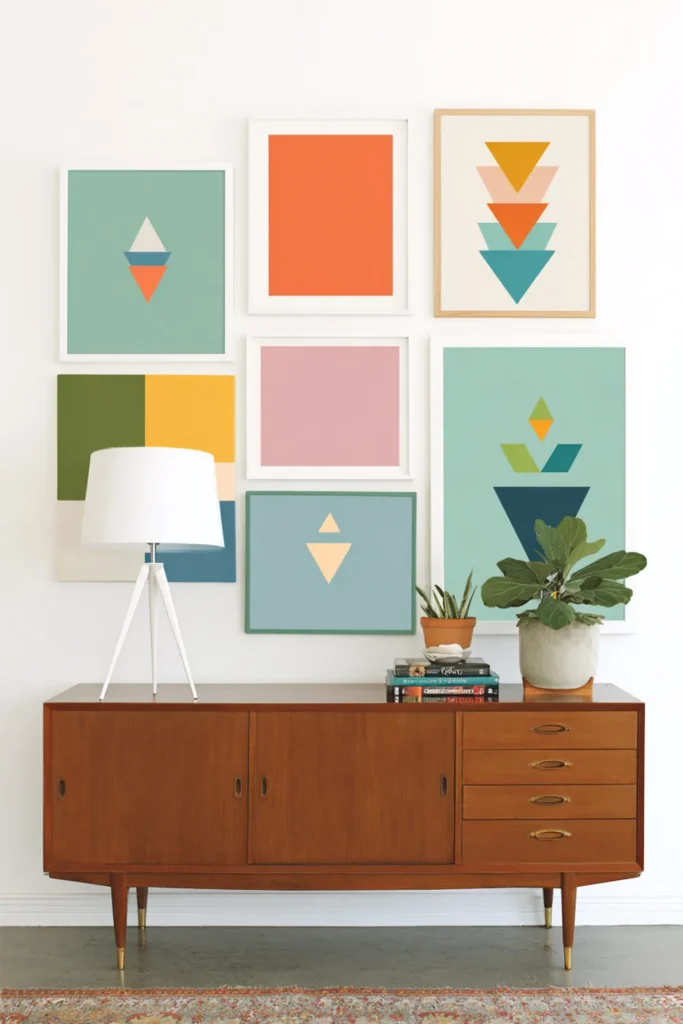
Floor-to-Ceiling Eclectic Gallery Wall Layout Ideas
The eclectic layout is for people who want the wall to feel collected over time rather than carefully matched from the start. It usually stretches from low on the wall all the way up toward the ceiling, using different frame shapes, sizes, and artwork styles. Even though the pieces are varied, the arrangement works because there is still space between frames. That breathing room keeps the wall from feeling crowded.
This layout can suit a living room, hallway, or any large feature wall that feels too bare for a small arrangement. It is especially useful when you have a mix of art that does not belong to one set. Older thrifted frames, modern prints, personal sketches, and found pieces can all be placed together as long as you pay attention to spacing. The empty wall around each piece matters just as much as the art itself because it helps each frame stand out.
A good way to use this layout is to begin with a few larger anchor pieces and then fill around them gradually. You do not need to finish it all in one weekend. In fact, this is one of those gallery wall layout ideas that often looks better when it grows over time and reflects what you actually enjoy collecting.
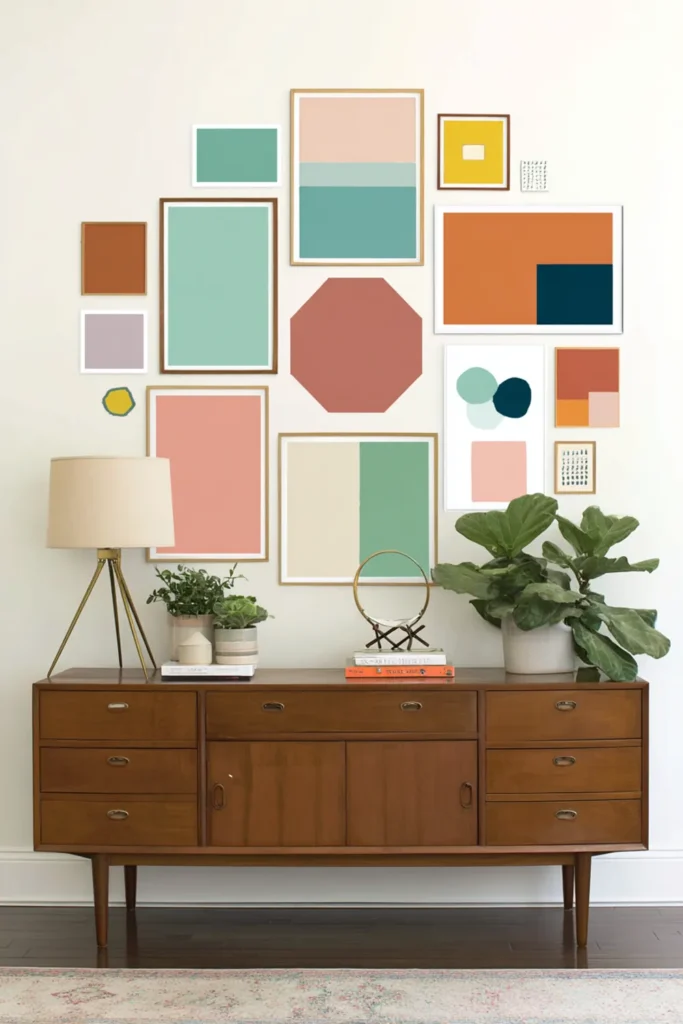
Grid Gallery Wall Layout Ideas for Photos, Posters, and Album Covers
The grid layout is one of the most straightforward options when you want a wall to feel neat and intentional. It relies on evenly spaced rows and columns, which gives the display a calm, ordered look. This works especially well in living rooms, dens, and hallways where too much visual movement can make the space feel unsettled. A grid brings structure right away.
Because the layout is so regular, it helps to use pieces that have a common thread. Family photos, concert posters, album covers, or a mix of vintage and newer images can all work well when they are tied together by one frame color. That consistency gives the eye something to rest on, even if the content inside the frames changes from piece to piece. The finished result feels more like a collection than a random assortment.
This is a smart layout for anyone who likes symmetry or wants a display that is easy to plan before making holes in the wall. You can map the whole thing out on the floor first and check that the spacing feels even. If your room already has a lot of texture through rugs, pillows, or furniture, a clean grid can balance that and keep the wall from feeling too busy.
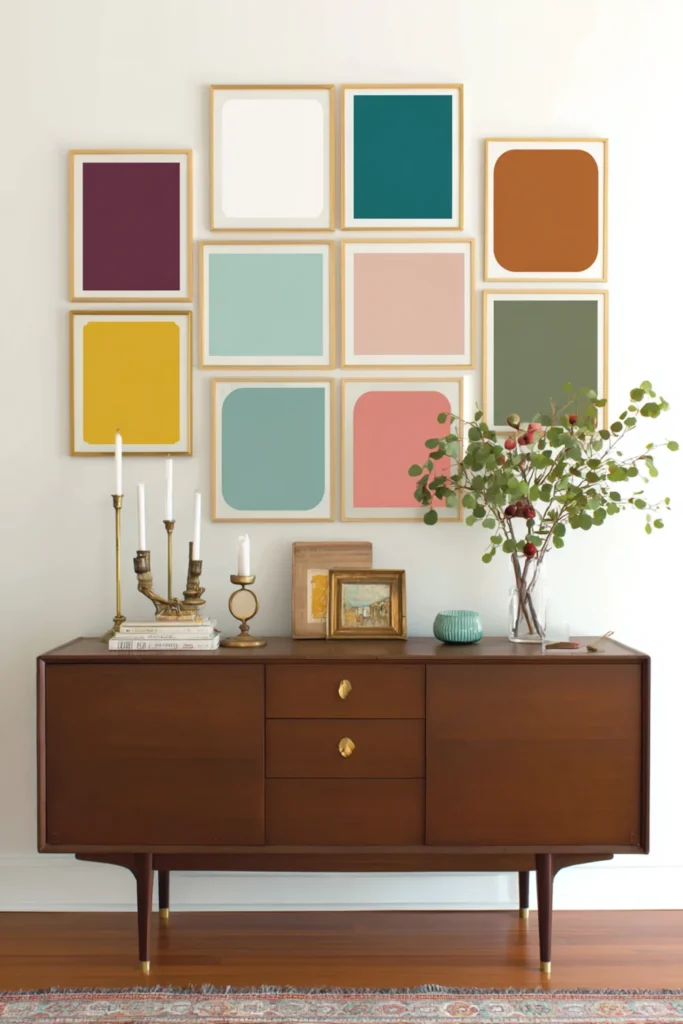
Leaning Gallery Wall Displays for Credenzas and Shelves
Not every gallery wall needs nails and exact measurements. The lean layout is a relaxed option that lets framed art rest against the wall on a credenza or a shelf instead of hanging it. It works well in living rooms, hallways, and children’s rooms because it feels flexible and easy to change with the season or your mood. It also takes some pressure off if you are not ready to commit to a permanent arrangement.
This look works best with a combination of frame sizes so the layers feel natural. Larger frames can sit in the back, with smaller pieces overlapping slightly in front. Because the art is not fixed in place, texture becomes even more noticeable. Wood frames, painted finishes, and different mat sizes help keep the arrangement from falling flat. On a credenza, the top surface can hold a few objects without competing with the art, as long as you do not overcrowd it.
One of the biggest advantages here is how easy it is to swap pieces in and out. Seasonal prints, children’s artwork, or temporary favorites can rotate through without patching walls every time. If you like to refresh a room often, this approach gives you that collected gallery feel with much less effort.
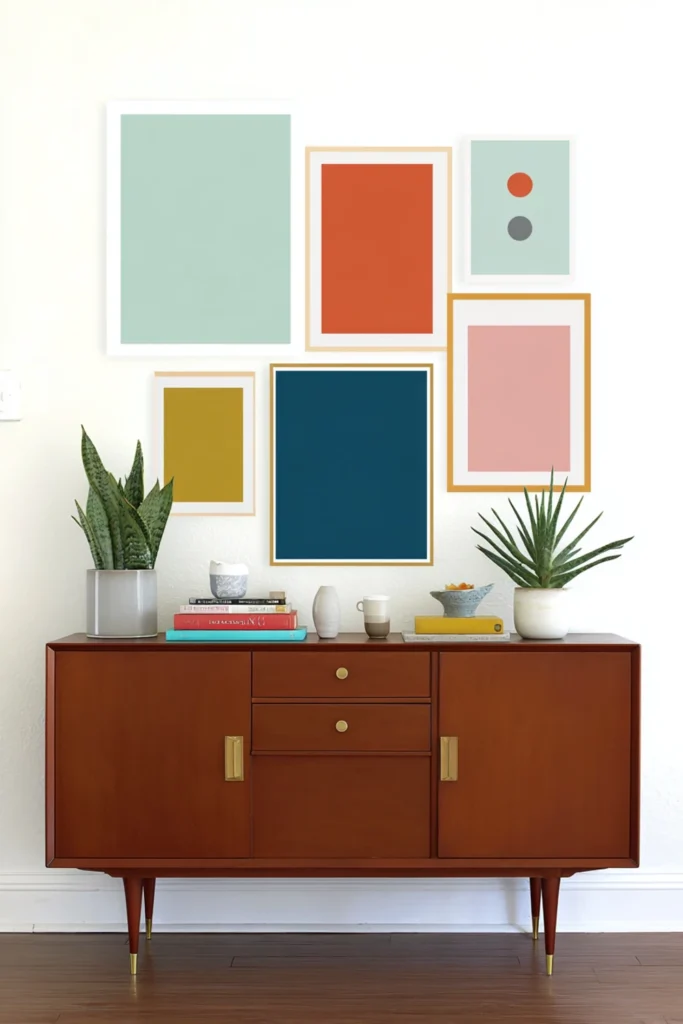
Mirror-Style Gallery Wall Layout Ideas with Balanced Shapes
The mirror layout has a formal feel, but it still leaves room for personality. Instead of making the wall perfectly symmetrical from edge to edge, it is constructed around a center vertical line and uses smaller pieces on either side, which mirror each other in shape or placement. The result feels balanced without becoming stiff. In dining rooms, bedrooms, and more formal living spaces, that kind of quiet structure can work really well.
Using one frame color helps this layout stay cohesive, especially since the arrangement depends on balance more than variety. The frames do not need to match exactly in size, but they should relate clearly enough that the wall seems deliberate. Smaller paintings often suit this layout because they let you build those mirrored shapes more easily. Over a bedroom dresser, the arrangement can bring height to the wall without needing one oversized piece.
This is a useful option when you want something more polished than an organic cluster but softer than a strict grid. Before hanging, it helps to mark the center line first and build outward from there. That simple step makes it much easier to keep both sides visually balanced, even if the exact pieces are not identical.
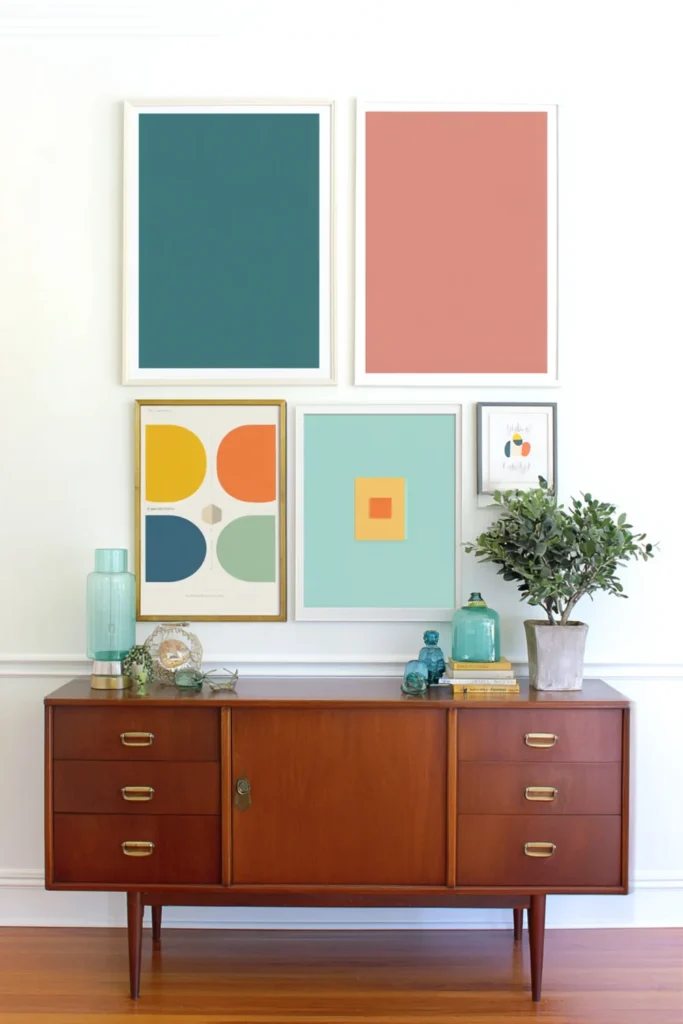
Organic Gallery Wall Layout Ideas Built Around One Main Piece
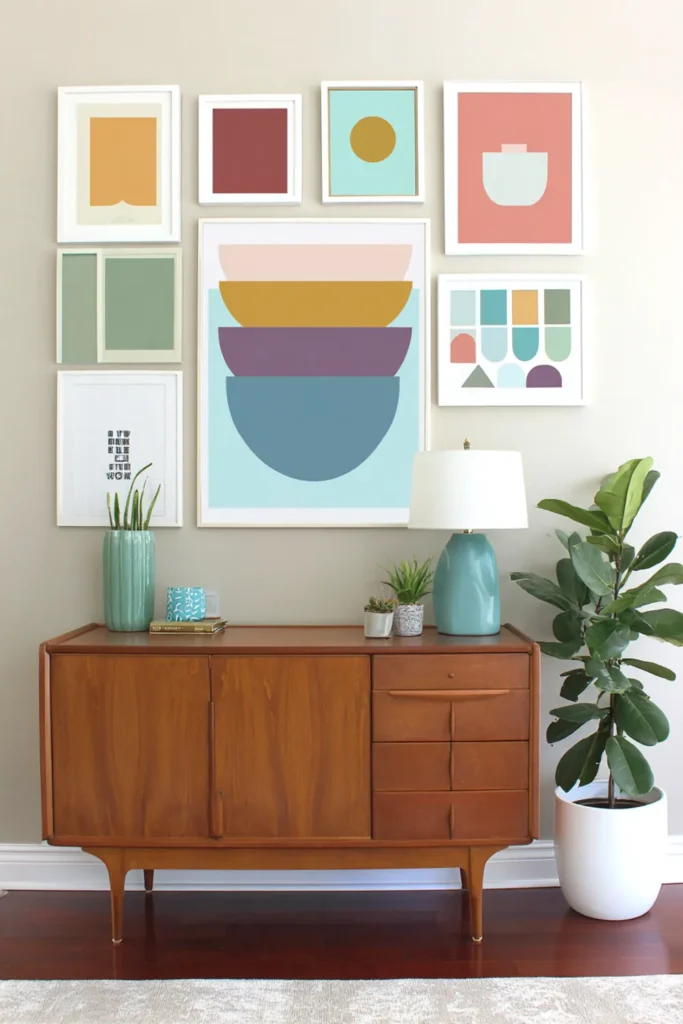
The organic layout is one of the most forgiving ways to build a gallery wall because it gives you structure without making the arrangement feel stiff. It starts with one dominant piece and then uses smaller frames around it, almost like the rest of the wall is growing outward from that center point. In living rooms, hallways, dens, dining rooms, bedrooms, and even bathrooms, this layout can adapt to a lot of spaces because it does not depend on strict symmetry.
What makes it work is the contrast between variety and consistency. The frame sizes can be different, and the art can feel collected rather than matched, but the spacing between pieces should stay fairly uniform. That even spacing helps the arrangement feel intentional. Above a sofa or credenza, the larger piece gives the wall weight, while the smaller surrounding frames soften the edges and make the display feel more personal.
This layout is useful when you already own one piece you want to build around, but do not want the final wall to look excessively formal. Start with the main artwork first, then add the smaller frames one at a time. It often looks better when the outer pieces feel lightly balanced rather than exactly mirrored.
Pyramid Gallery Wall Layout Ideas for Small Groupings
The pyramid layout is a good choice when you do not have a large collection to work with but still want the wall to feel finished. Instead of spreading a few pieces too far apart, this arrangement groups them into a compact triangular shape. That smaller footprint works well in bedrooms, foyers, formal living rooms, and dining rooms where a little cluster of art can feel more appropriate than a full wall display.
This layout usually looks best with a connected set of photos or artwork and one frame color throughout. Because the grouping is small, consistency matters more here. The pyramid shape gives the eye a clear outline, which helps even a tiny collection feel deliberate. It can sit nicely above a narrow table, beside a doorway, or on a section of wall that is too small for wider arrangements.
A practical benefit of this layout is that it helps you make use of pieces that might otherwise sit in storage because there are only two or three of them. If you have a few related prints or family photos that belong together, placing them in a pyramid can give them more presence than hanging them in a straight line. It is simple, tidy, and easy to scale to smaller rooms.
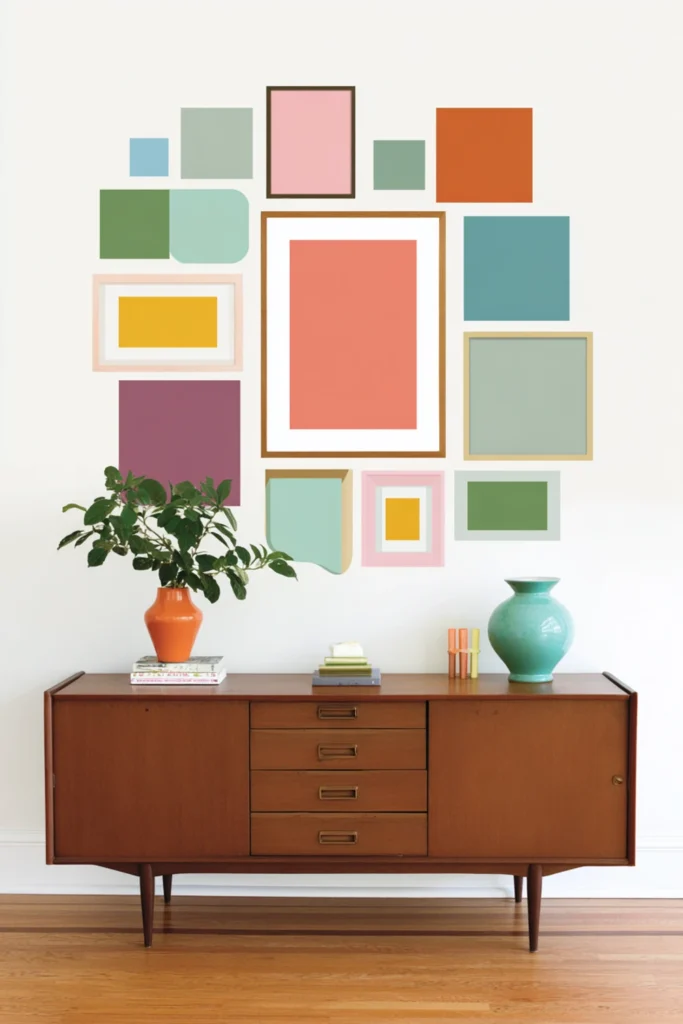
Spiral Gallery Wall Layout Ideas for Playful Open Walls
The spiral layout has a lighter, more playful feel than many other gallery wall arrangements. It wraps artwork in a loose circular motion around one focal piece, which creates movement across the wall without feeling messy. This works especially well in kids’ bedrooms, hallways, living rooms, or any large open wall where you want the display to feel energetic and a little unexpected.
To keep the spiral from looking chaotic, it helps to limit the number of frame sizes and stick with one frame color. Using two or three frame sizes is usually enough to create variation while still keeping the overall shape readable. The focal piece in the center gives the arrangement a place to land, and the surrounding pieces guide the eye around it. That circular flow can make the wall feel lively without needing bright colors or excessively bold art.
This is a nice option for areas that feel too plain with a regular grid or row of frames. Before hanging, try laying the pieces on the floor and checking whether the circle reads clearly from a distance. You want the shape to feel natural, not forced. In a child’s room, especially, this kind of layout can bring a sense of fun while still looking put together.
Stacked Gallery Wall Layout Ideas with Vertical Columns
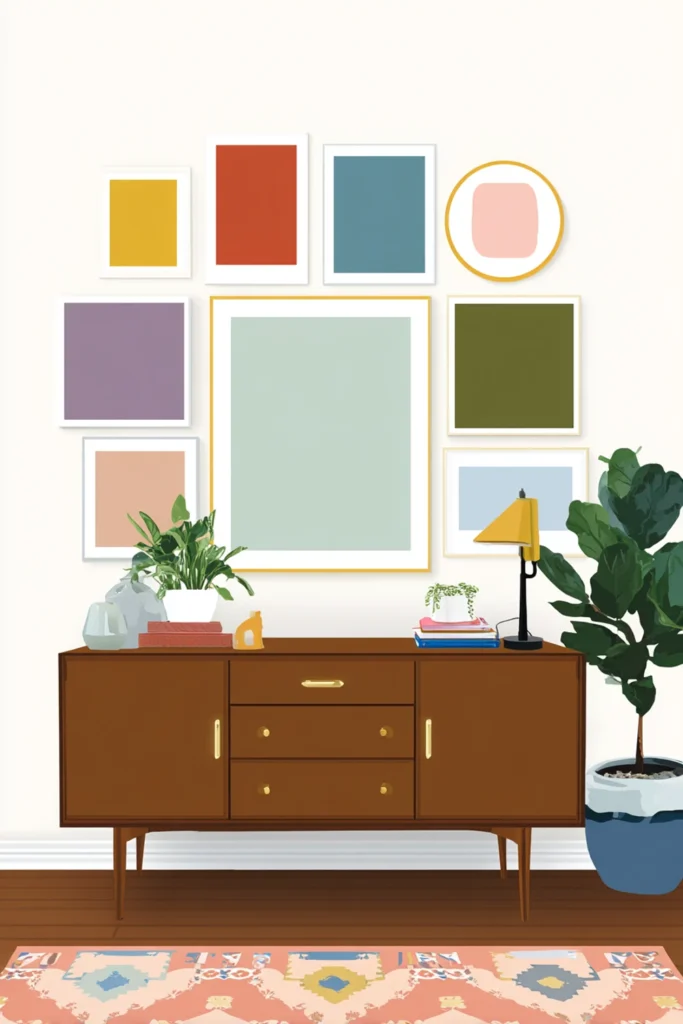
The stack’s layout is built from uneven vertical columns, which makes it a helpful option for taller walls or spaces where you want more height than width. It often uses three columns of art, with each stack made from frames of identical sizes. That repetition gives the wall structure, while the uneven column lengths keep it from feeling too strict. In entryways, foyers, living rooms, and dining rooms, it can create a strong visual statement without covering the entire wall.
Because the frames inside each column are the same size, the layout looks especially clean from a distance. Using one or two frame colors helps preserve that order while still giving you a little flexibility. Above a sofa, the vertical pull can make the room feel taller. In an entryway, the columns draw the look upward and help fill awkward wall space that might feel too narrow for a wide arrangement.
This is one of the more practical gallery wall layout ideas if you like a structured look but want something less expected than a grid. The columns do not need to match each other exactly in height, and that slight variation is what gives the wall some life. It is a nice middle ground between formal and relaxed.
Triptych Gallery Wall Layout Ideas for Beds and Formal Rooms
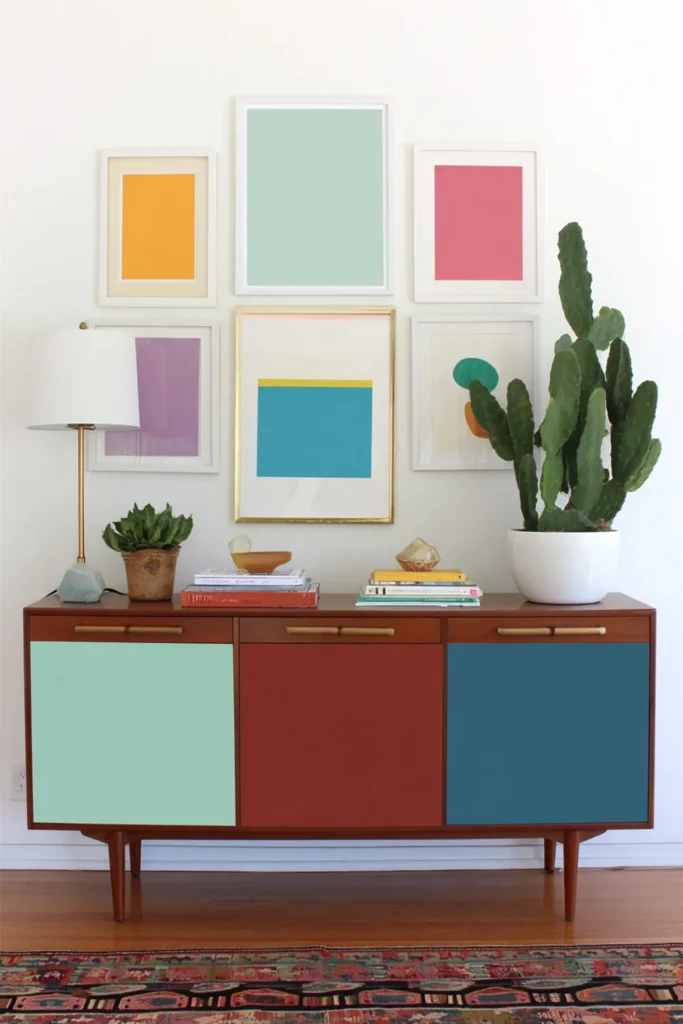
The triptych layout is one of the simplest ways to make a wall feel finished without making it complicated. It uses three related pieces hung side by side, which gives the room a clear focal point and a calm sense of balance. In bedrooms, foyers, formal living rooms, and dining rooms, that straightforward arrangement can feel especially effective because it adds presence without making the wall too busy.
This layout works best when the three pieces clearly belong together. They might be a set of beach aerial photographs, three abstract works with a shared palette, or a sequence of landscapes that feel connected. Using one frame color keeps the whole arrangement clean and unified. Above a bed, the horizontal line of three frames can visually widen the room and make the wall feel more settled. In a dining room or foyer, it gives you a polished look without needing a larger gallery cluster.
A useful tip here is to pay close attention to spacing. The gap between each piece should be consistent so the set reads as one arrangement rather than three separate frames. If you want a look that feels orderly, quiet, and easy to live with, the triptych is hard to beat.

Waterfall Gallery Wall Layout Ideas for Off-Center Spaces
The waterfall layout is a smart option for walls that do not suit a centered arrangement. Instead of trying to force the display into the middle, this style starts off-center and lets the artwork trail downward along one side. That gives it a more casual, slightly quirky look that works well in informal spaces. It can also help make use of odd walls where a standard grid or row would feel awkward.
Because the shape is intentionally asymmetrical, mismatched art and a variety of frame styles often look right at home here. The arrangement feels looser by nature, so it can handle more visual variety without seeming disorganized. Hanging it beside a piece of furniture makes the off-center composition feel more grounded, especially if the furniture itself already shifts the balance of the wall.
This layout is helpful when you have a corner, partial wall, or unusual stretch of space that seems hard to decorate. Rather than fighting the wall, the display works with its shape. The key is to let the arrangement flow downward in a way that still feels connected. It should look intentional, just not too planned.
Finding a Gallery Wall Style That Feels Right at Home
The best gallery wall layout ideas are the ones that make your space seem more personal and easier to enjoy every day. Some rooms look better with a tidy grid or triptych, while others benefit from something looser like an organic cluster or a leaning display. A lot depends on the wall itself, the furniture below it, and whether you want the arrangement to feel structured or collected over time.
It also helps to remember that you do not need to get everything perfect on the first try. Sometimes the right layout becomes clear only after you move a few frames around and see what feels balanced in the room. Start with the shape that suits your wall, then let the art and photos bring the rest of the character.