
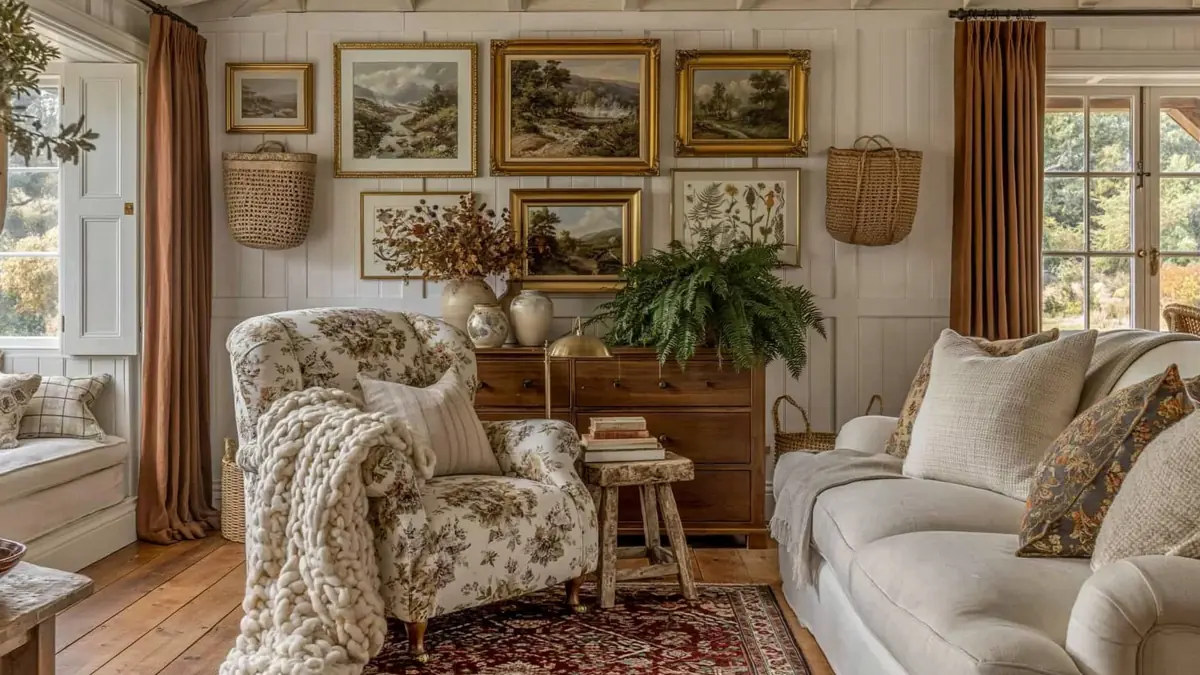
A cottagecore living room works best when it feels lived in, calm, and gently collected over time. It is not about filling the room with every floral print or vintage piece you can find. The real charm comes from soft textures, warm lighting, natural materials, and small details that feel personal. An easy place to start is to add a textured throw over your sofa or bring in a small plant for a windowsill or side table. One small change can begin to make your space feel more welcoming and cottage-like without a big commitment.
When I think about useful Cottagecore Living Room Design Rules, I always come back to comfort first. The room should make you want to sit down with tea, a book, or a quiet evening by the fire. Nothing should feel too polished or untouchable.
These ideas focus on fireplaces, soft seating, muted colors, bookshelves, florals, rustic wood, and vintage details. Each one can help a living room feel cozy without becoming cluttered or excessively themed.
A Fireplace That Anchors a Cottagecore Living Room
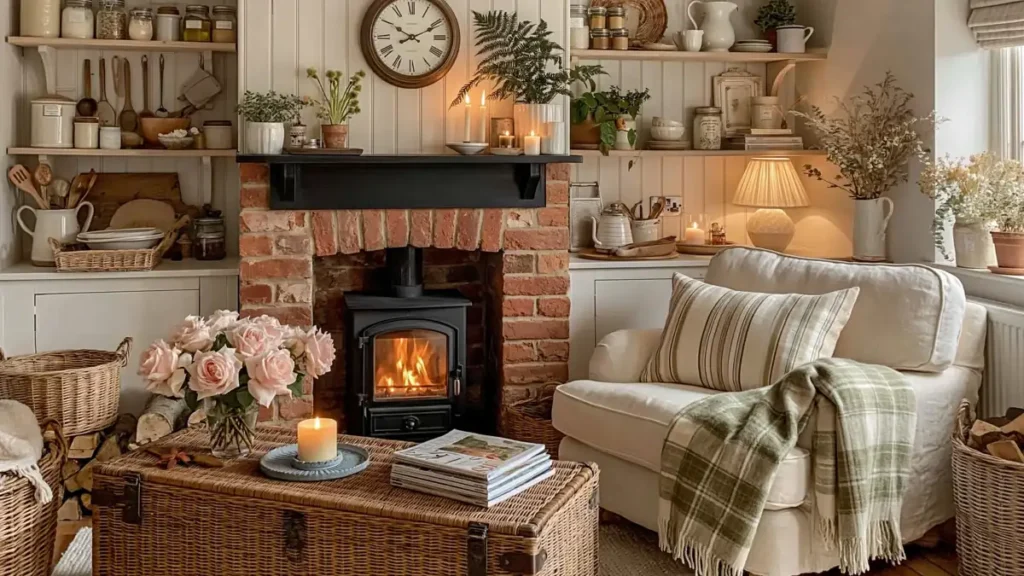
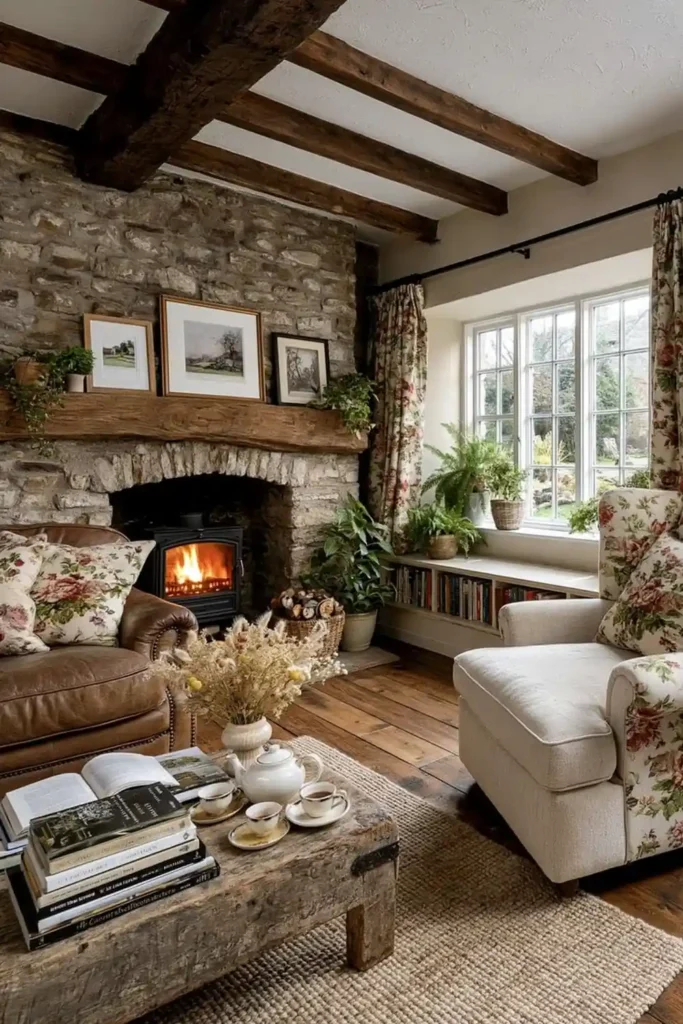
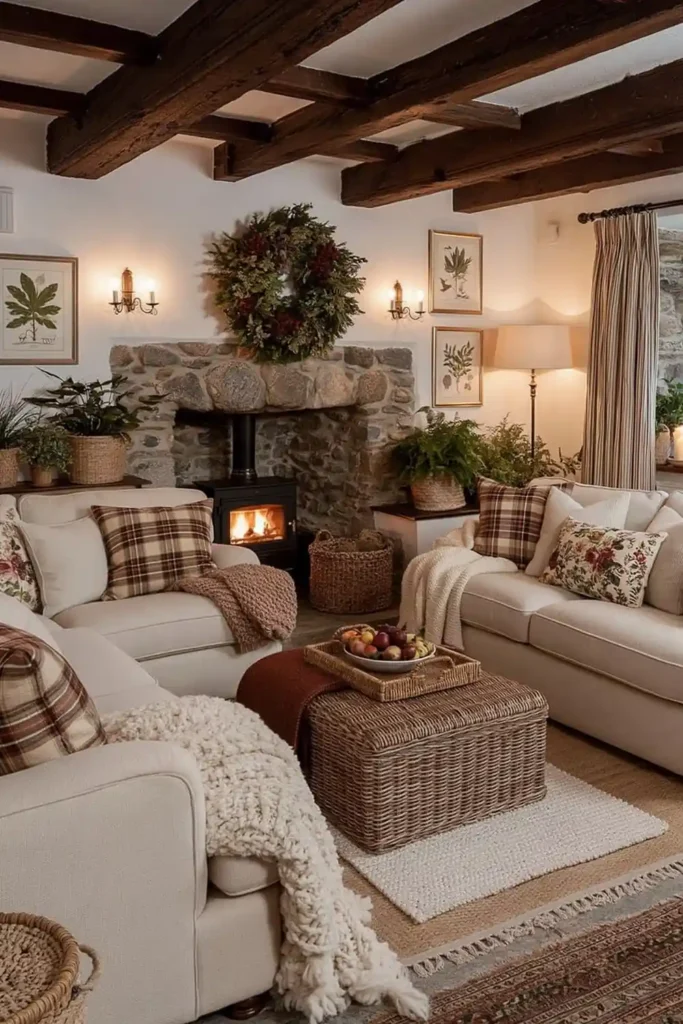
A fireplace gives a cottagecore living room a natural center. Even when it is not lit, it creates a clear place for the furniture to gather around. Stone works especially well because it brings in that old-home texture that feels sturdy, quiet, and a little rustic.
Low furniture helps keep the room feeling relaxed instead of formal. A sofa or chairs placed near the fireplace can make the whole space feel more grounded, especially when paired with warm wood floors and exposed ceiling beams. Floral pillows or soft, patterned textiles can add a cottage feeling without making the room look too busy.
For lighting, I would avoid relying on a bright overhead fixture. A warm floor lamp in one corner and a small table lamp near the seating can make the flame light feel even softer. The goal is a room that glows mildly in the evening rather than feeling evenly lit from above.
Soft Seating With Storybook Charm
Soft seating is one of the easiest ways to bring storybook charm into a cottagecore living room. A floral armchair, especially one with a slightly traditional shape, can feel like the kind of seat you would find beside a bookshelf in an old cottage. It does not need to match everything perfectly; in fact, a little contrast usually makes the space feel more natural.
Vertical bookshelves help give the room structure. They draw the look upward and make the seating area feel more settled. A simple, sturdy coffee table keeps the room practical, especially if you actually use the space for reading, tea, board games, or everyday family life.
Plants can soften the shelving and seating area when they are placed at different heights. One small plant on a shelf, another on a side table, and maybe one taller plant near the chair can make one feel more relaxed than placing everything in a neat row. That slight asymmetry is what keeps the room from feeling staged.
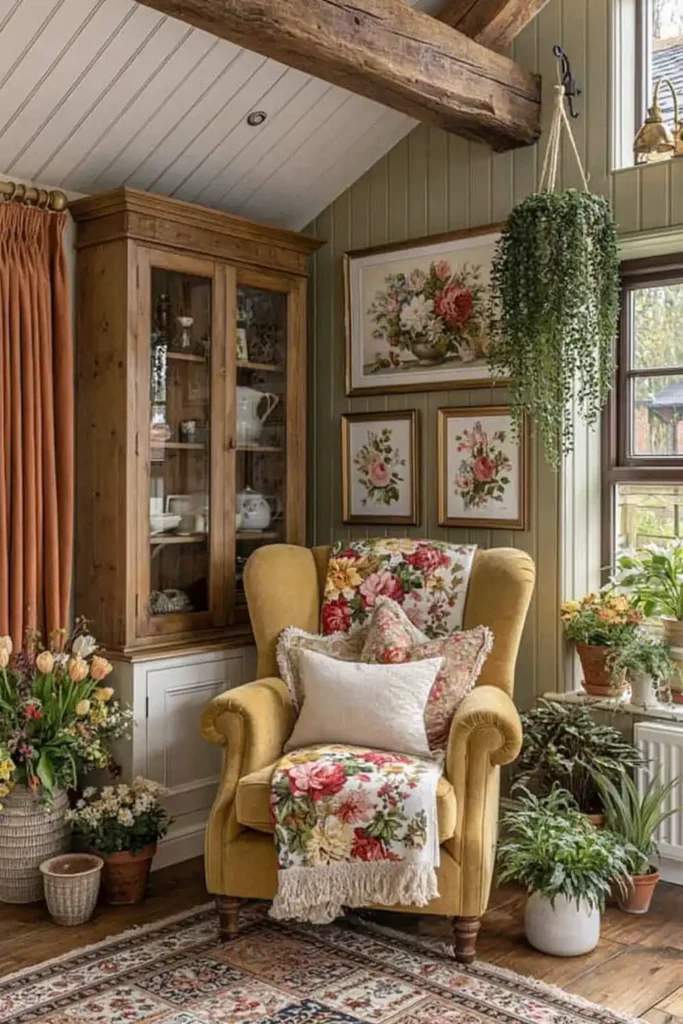
Muted Sage Green Walls With Vintage Cottage Details
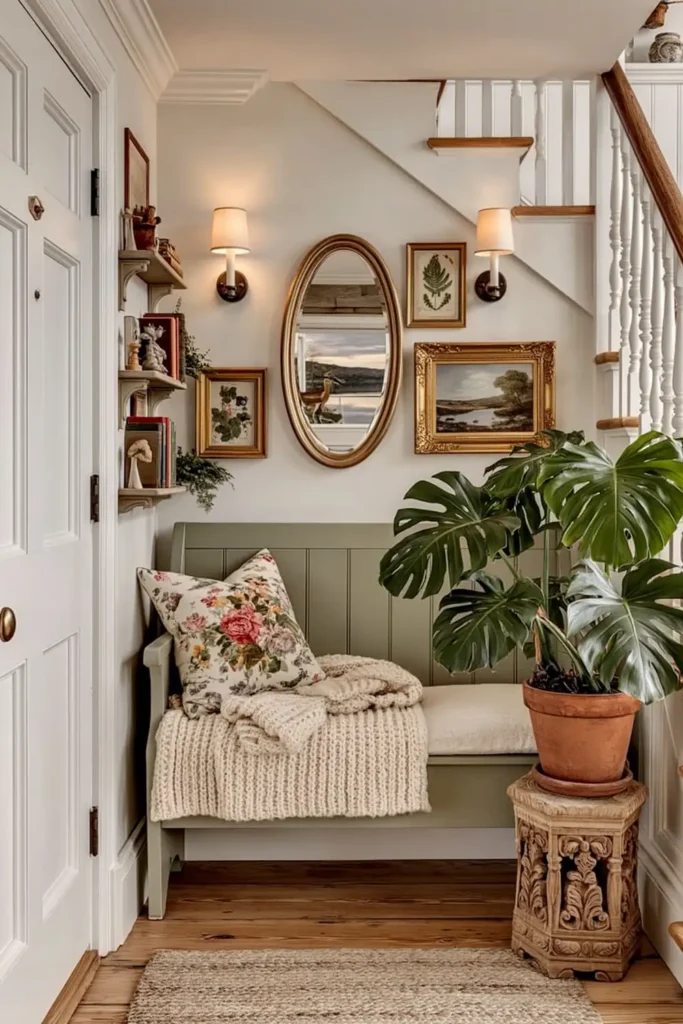
Muted sage green walls can work beautifully in a cottagecore living room because the color feels calm without being plain. It gives the room a soft garden feeling, especially when paired with warm wood furniture and vintage-style frames. The key is choosing a shade that feels dusty or muted rather than bright. If you want a place to start, paint colors like “Sage Green” by Benjamin Moore, “Clary Sage” by Sherwin-Williams, or “Green Smoke” by Farrow & Ball are all popular options for a gentle, muted look.
A mustard accent chair can offer warmth against the green walls. It keeps the room from feeling too cool, especially if the fabrics have texture. Floral textiles, such as pillows or curtains, can tie the palette together when they include soft greens, creams, faded yellows, or gentle pinks.
A hanging plant is a useful detail in this kind of space because it brings the look upward. This helps the room feel layered instead of having all the decor sitting at table height. I would keep the wall art simple and collected, like vintage frames or floral prints, so the room feels cozy rather than overly decorated.
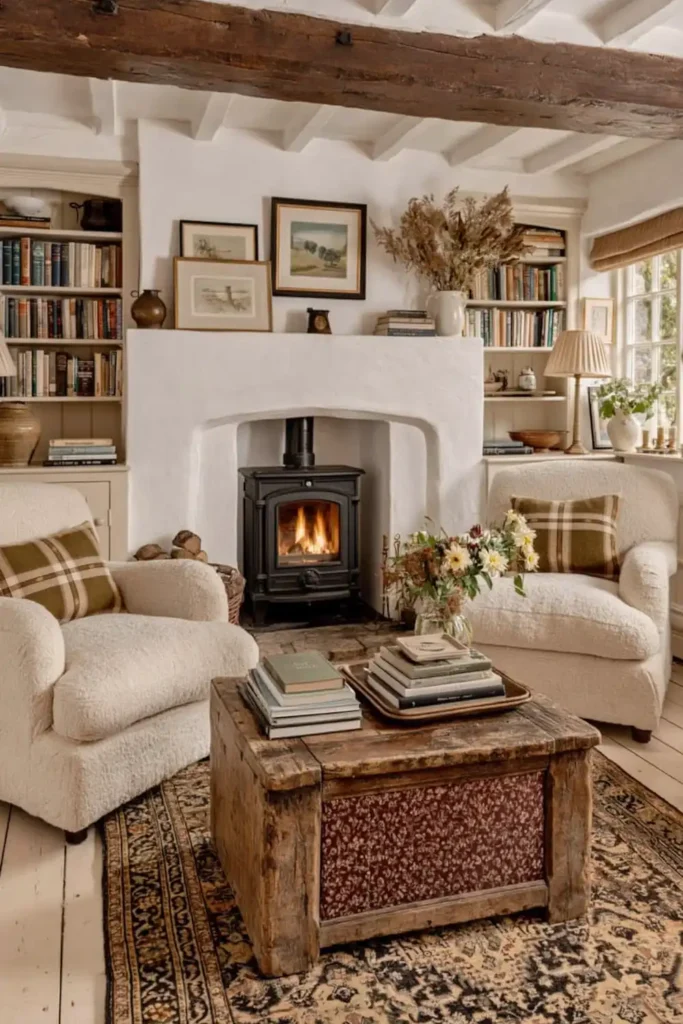
Symmetrical Seating Around a Comfortable Fireplace
Symmetry can make a comfortable room feel calmer. In a cottagecore living room, matching armchairs placed on either side of a fireplace create an easy sense of balance. This works especially well when the fireplace is centered and framed by built-in shelves, because the whole wall starts to feel intentional.
Plaid and floral fabrics are a good mix here. The plaid adds structure, while the floral pattern keeps the space soft. A chunky coffee table in the middle gives the seating area weight and makes the room feel useful, not just pretty. It also gives you a place for books, a tray, or a simple vase.
Lighting matters a lot in a symmetrical room. Warm lamps on both sides can create balance without looking harsh. I would avoid sharp contrast, like one bright corner and one dark corner. A softer, even glow helps the fireplace area feel peaceful, especially in the evening.
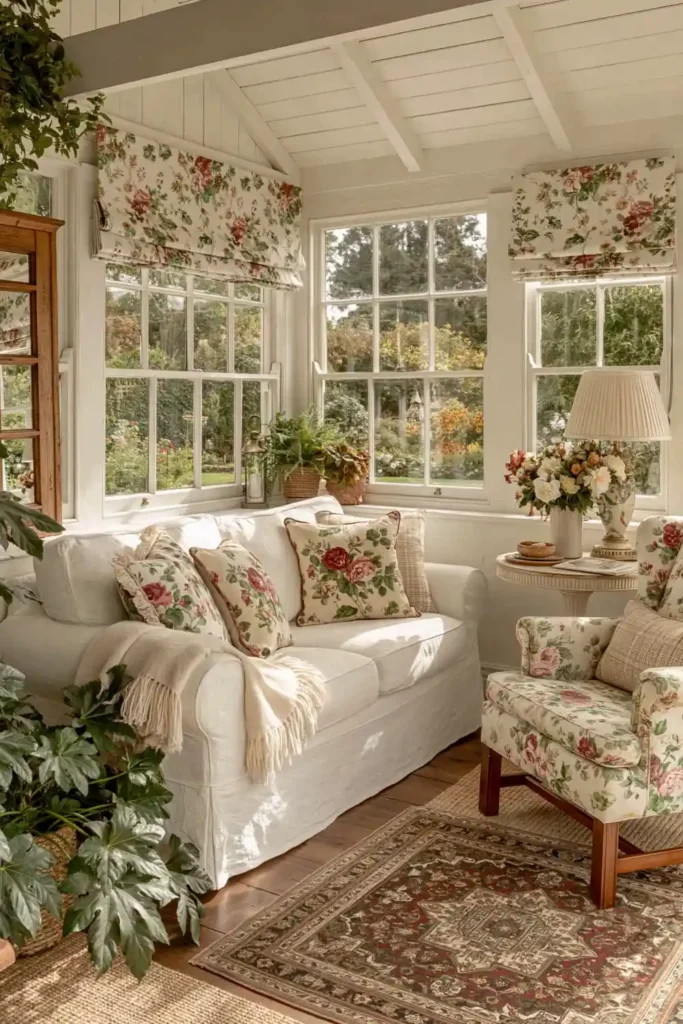
Sunlit Florals for an Airy Cottagecore Living Room
Florals do not always have to make a room feel heavy or old-fashioned. In a bright cottagecore living room, they can feel fresh when the rest of the space stays light. A white slipcovered sofa is a good starting point because it gives the room a soft, washable, relaxed base.
Natural fibers help the room feel easygoing. A woven rug, linen pillows, or a simple cotton throw can add texture without blocking the daylight. I would keep heavier textures away from the windows so the natural light can move through the room. Rounded furniture edges also help the space feel softer and less rigid.
For the windows, simple treatments work best. Sheer curtains or minimal romantic panels can frame a small garden view without hiding it. Patterned pillows are enough to bring in the floral detail, especially if the colors echo what you can see outdoors.
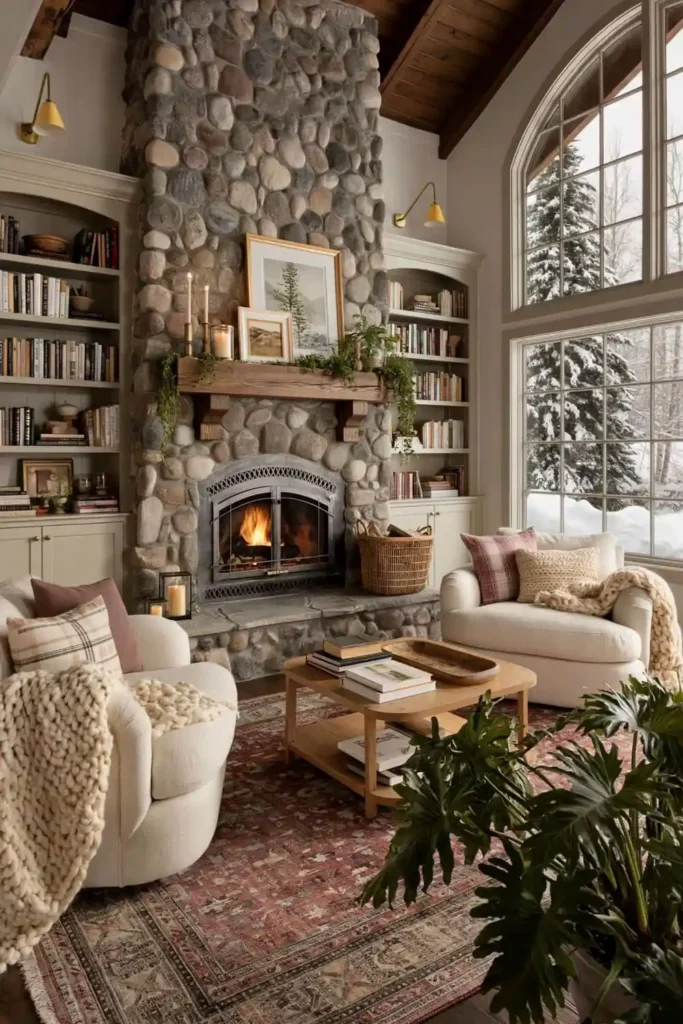
Winter Cabin Textures With Cottagecore Warmth
Winter cabin style fits naturally with cottagecore when it focuses on warmth instead of heavy decoration. A stone fireplace, wood details, and neutral upholstered seating can make the room feel comfortable during colder months without turning it into a themed cabin.
Built-in shelves are useful here because they give the room structure and storage. A low, simple coffee table keeps the seating area casual, while chunky knit throws add the kind of texture that makes people actually want to use the room. A subtly patterned rug can bring softness underfoot without competing with the stone and wood.
I like mostly uncovered windows in this kind of space, especially if the room gets decent natural light. The daylight keeps the heavier materials from feeling dark. If you want to make it feel warmer in the evening, add soft lamps near the seating instead of filling the room with too many small decor pieces.
Warm Layers Instead of Trendy Decor
One of the most useful Cottagecore Living Room Design Rules is to choose warm layers over trendy pieces. Cottagecore should feel like it grew slowly, not like everything was bought in one afternoon. Rough walls, woven baskets, wood, stone, linen, plaids, and checks all help create that collected feeling.
To find these kinds of materials without spending a lot, try browsing local thrift stores or flea markets for vintage items and natural textures. You can also look for second-hand furniture online or try simple DIY updates, like re-covering pillows with linen or making your own woven baskets. These cost-effective options make it easy for anyone to bring the cottagecore look home, no matter your budget.
Inward-facing sofas make the room feel more conversational. If your living room is on the smaller side, try a compact loveseat or a pair of cozy armchairs instead. Modular seating is another space-saving option, since you can rearrange the individual pieces to fit your room and your needs.
These choices also work well around a symmetrical fireplace because the layout naturally encourages people to sit and stay awhile. Woven accents can be practical too, especially baskets for throws, books, or everyday clutter that you want nearby but not scattered everywhere.
Lighting should feel gentle and local. A few lamps placed around the room can create a much nicer atmosphere than one strong overhead light. I would use overhead lighting only when needed, then rely on lamps for evenings. That small change alone can make the room feel warmer and more settled.
Collected Bookshelves With Plants and Ceramics
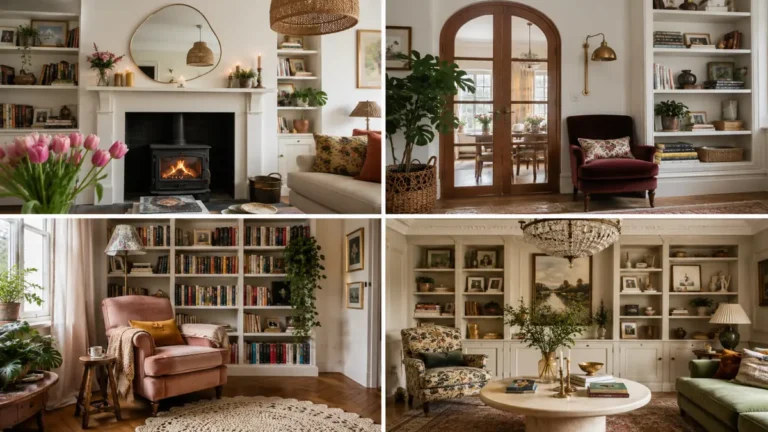
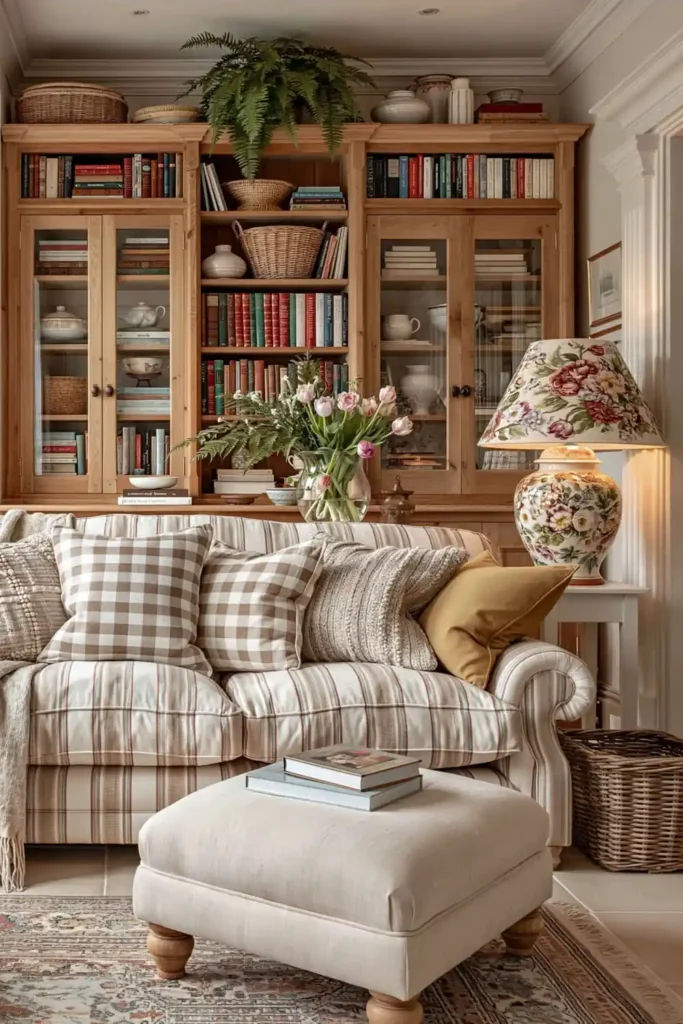
Bookshelves are a big part of the cottagecore look, but they should not feel like a display from a shop. Tall shelves filled with books, ceramics, baskets, and a few plants can make a living room feel personal and useful. The best shelves usually have a mix of heights, shapes, and open space.
A striped sofa works nicely with collected shelves because it adds pattern without competing too much. An ottoman can soften the room and make the seating area feel more relaxed than a formal coffee table would. Glass cabinet doors are another lovely detail because they let you show ceramics or books while keeping the room feeling tidy.
When styling shelves, I would avoid making both sides identical. Place a plant on one shelf, a small ceramic piece on another, and baskets lower down where they are easy to reach. Warm localized lighting, like a lamp nearby, can make the shelves feel cozy in the evening.
Light Neutrals Balanced With Rustic Wood
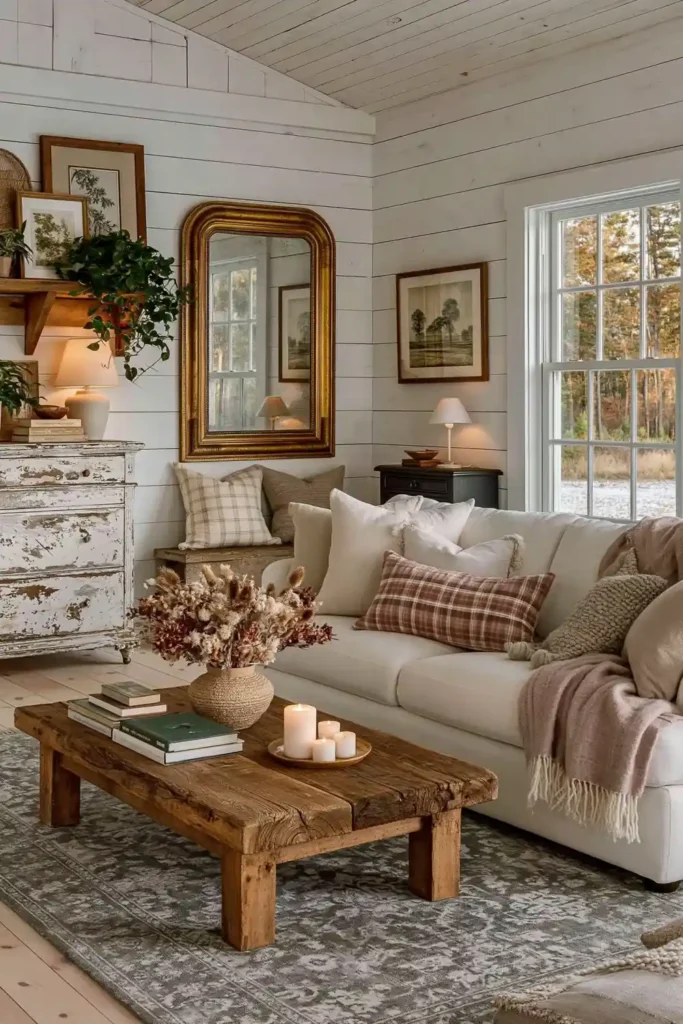
Light neutrals can make a cottagecore living room feel calm, but they need a little rustic texture so the space does not feel flat. Light walls, simple upholstery, and linen fabrics create a gentle base. Then, rough wood brings in the heat that makes the room feel more lived in.
A simple sofa works well here because it lets the textures do most of the work. A rough coffee table, especially one with visible grain or an imperfect surface, can keep the room from feeling too polished. Shiplap walls can also add a quiet texture without needing much extra decoration.
For wall decor, I would keep it minimal and meaningful. A handmade piece, a small framed print, or something inherited can feel more fitting than a large, trendy artwork. Pillows in linen or soft neutral fabric can finish the room without making it feel overly styled.
Vintage Details That Make a Living Room Feel Timeless
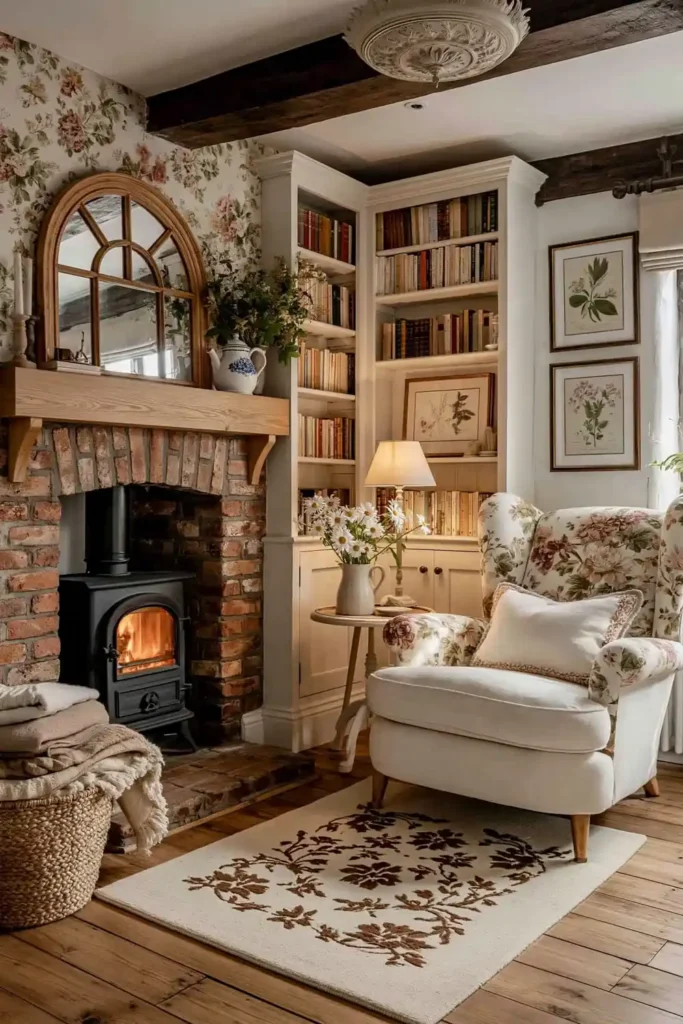
Vintage details give a cottagecore living room its sense of history. A brick fireplace, floral wallpaper, wood floors, and built-in shelves all help the room feel as if it has been loved for years. These details do not need to look perfect. Small signs of age often make the space feel warmer.
An armchair with curved lines is a lovely piece for this kind of room because it softens the harder materials, like brick and wood. Vintage art can bring character above a fireplace or between shelves. I would pick pieces that feel functional or inherited rather than overly decorative, because that keeps the room grounded.
Warm, diffused lighting helps vintage elements look their best. A shaded lamp, soft wall light, or subtle glow near the shelves can make floral wallpaper and brick feel cozy instead of busy. The goal is a room that feels timeless, not frozen in the past.
Bringing the Cottagecore Living Room Together
The best cottagecore living rooms usually feel calm because the details work together quietly. A fireplace, soft seating, warm lighting, rustic wood, floral patterns, and collected shelves all add something different, but none of them need to shout for attention.
Start with the parts of your room that already have character. Maybe it is a window with good light, an old chair, a brick wall, a wooden table, or a shelf full of books. Build around those pieces slowly with textures and colors that feel natural in your home.
To make your space feel even more personal, add a few meaningful items. For example, you could display family heirlooms, a handcrafted quilt or pottery, or a stack of your favorite books on a side table. A framed family photo, a crafted candle, or a vase filled with blooms from your own garden can bring coziness and charm without adding clutter. Pick pieces that tell your story and remind you of special memories, so every detail in your living room feels unique to you.
Cottagecore living room design is really about comfort, memory, and softness. When the room feels useful, warm, and personal, it will have that storybook feeling without needing to look overly decorated.