
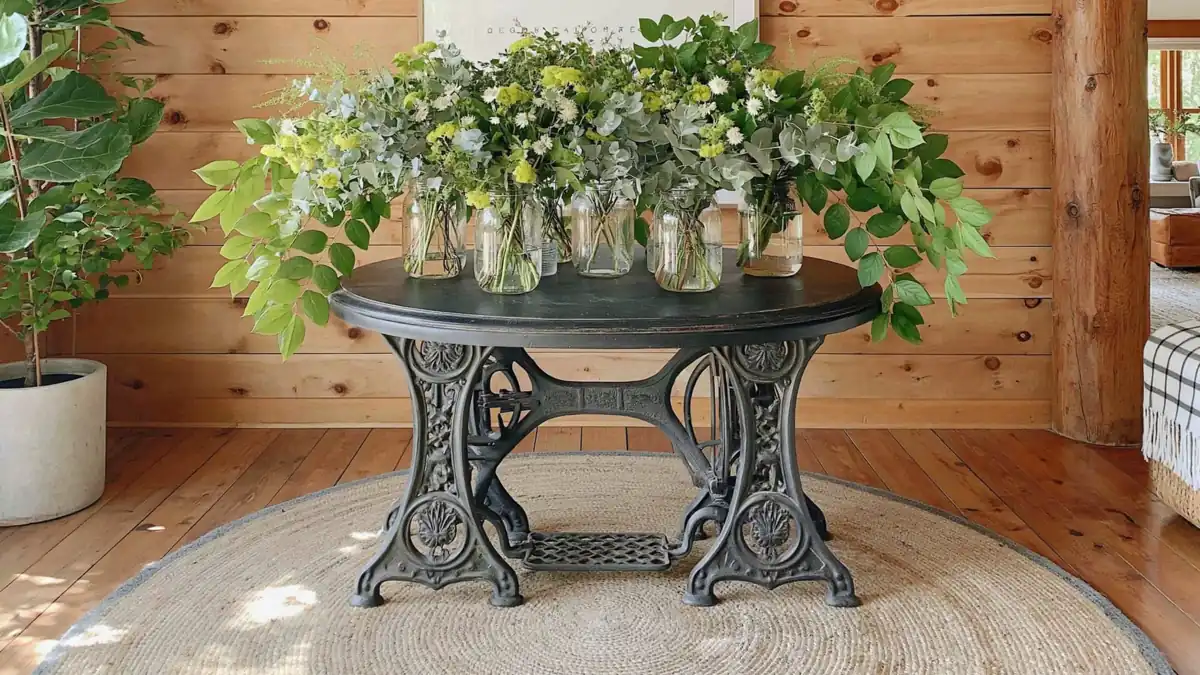
I have always liked how houseplants can cause a room to feel more lived-in without needing a full decorating project. A good plant centerpiece adds shape, color, and texture, but it also brings a softer feeling to tables, shelves, cabinets, and corners that might otherwise look a little plain.
These houseplant centerpiece decor ideas are useful because they do not rely on complicated styling. Most of them come down to choosing the right plant, pairing it with a container that suits the room, and placing it where the greenery can actually be enjoyed.
In this article, I’ll walk through different ways to use orchids, lilies, ferns, succulents, and larger foliage plants as decorative focal points. Some ideas are small enough for a table, while others work better near a couch, window, or dining area.
Orchids in a Glossy Metal Planter
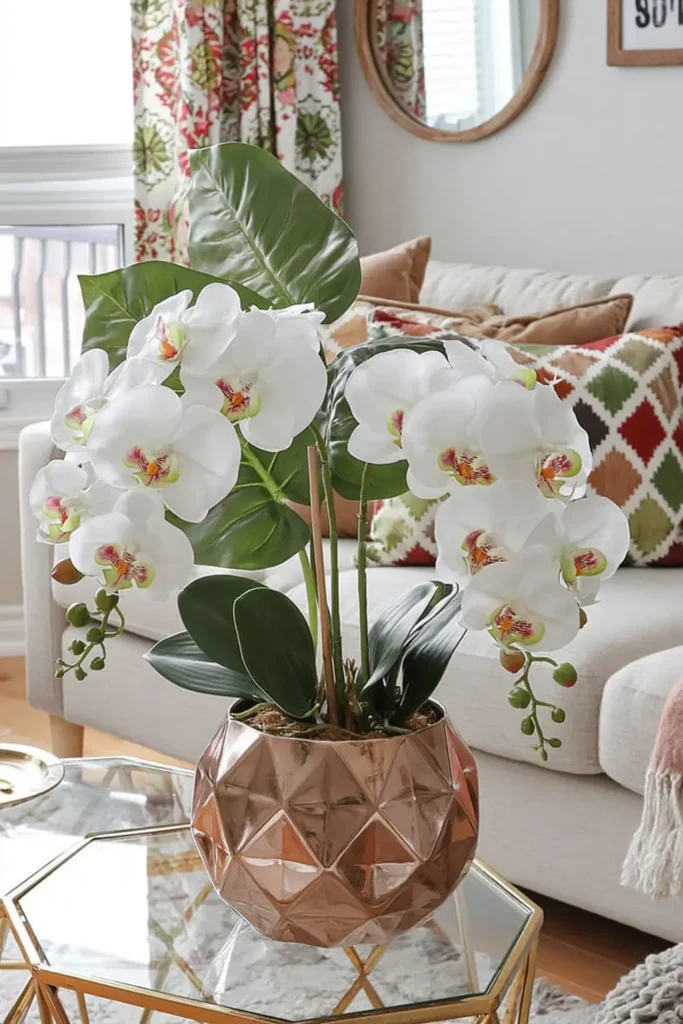
Orchids already have a clean, graceful shape, so placing them in a glossy metal planter gives them a more polished look without making the arrangement feel crowded. This kind of centerpiece works especially well on a dining table, console table, or sideboard, where the slim stems can add height without blocking too much of the room.
The shine of the metal planter contrasts nicely with the soft orchid petals. I would keep the rest of the styling around it simple, because orchids can look messy if surrounded by too many small objects. A smooth tabletop, a neutral runner, or a single tray underneath the planter would be enough.
For a practical touch, place the orchid where it gets bright but indirect light. If the planter does not have drainage, keep the orchid in its nursery pot inside the metal container so watering stays easier, and the roots do not sit in water.
Peace Lilies Styled in a Copper Tub
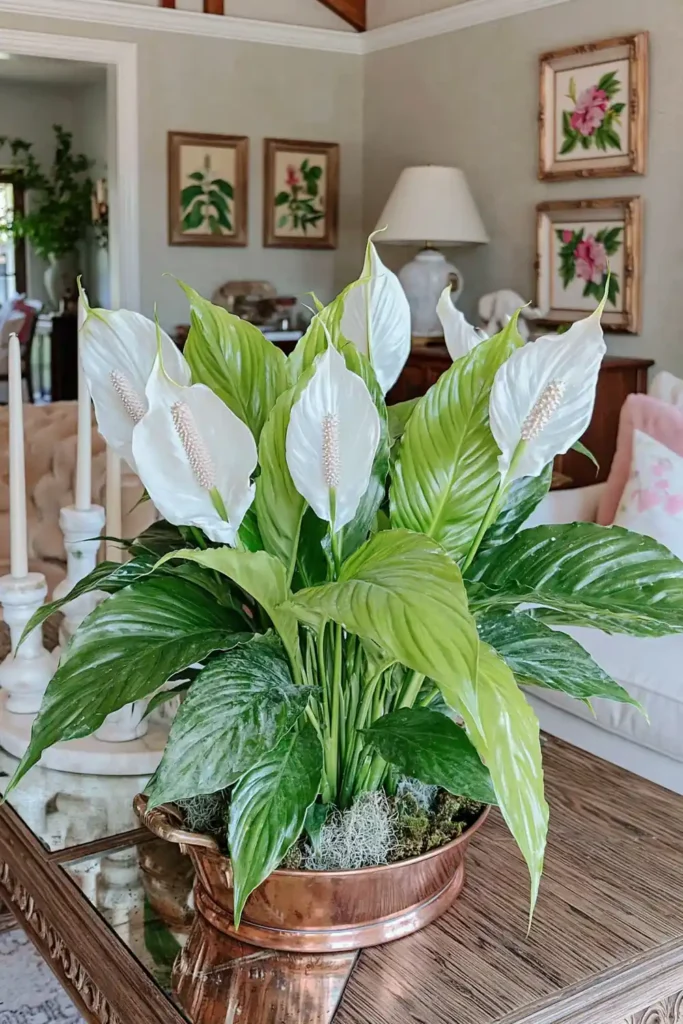
Peace lilies have broad green leaves and simple white blooms, which makes them a good choice when you want a display that feels calm but still noticeable. A copper tub adds warmth, especially in rooms with wood furniture, cream walls, or earthy textiles.
The copper finish gives the arrangement a slightly aged, collected feeling. It is a nice contrast to the fresh green leaves and white flowers. I would use this idea on a coffee table, entry table, or wide dining table where the tub has enough space to sit comfortably.
Because peace lilies like steady moisture, the container choice matters. If the copper tub is decorative, place the plants in separate inner pots and use a liner or saucer inside. It keeps the look tidy while making plant care much easier. To finish the display, you could add nothing more than a folded linen cloth or a stack of books nearby.
Fern in a Rustic Urn Planter
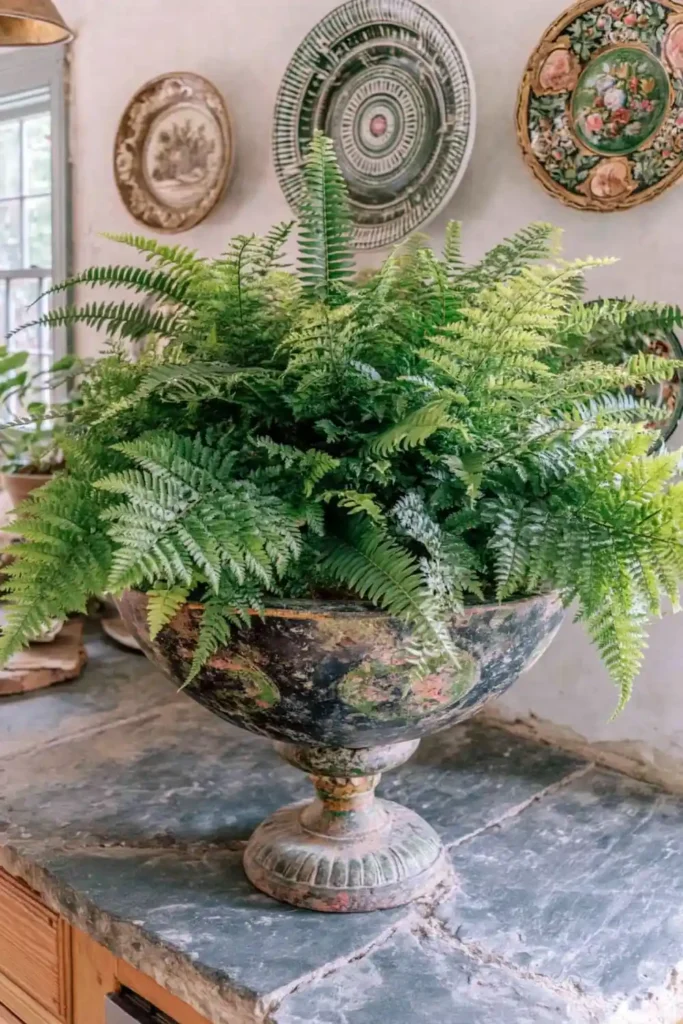
A fern in a rustic urn planter has a relaxed, old-garden feeling that works well indoors. The soft fronds spill outward, while the urn gives the plant a bit of structure and height. I like this idea for an entryway table, mantel, or round dining table where the fern can spread gently without looking excessively formal.
The rustic texture of the urn is what makes this centerpiece feel grounded. An aged finish, stone-like surface, or aged ceramic look can balance the delicate leaves. It also works well with natural wood, woven baskets, and simple neutral fabrics.
Ferns usually need humidity and do not love harsh direct sun, so I would avoid placing this centerpiece right in a hot window. A spot with filtered light is better. If the fern starts looking uneven, turn the planter every few days so the growth stays balanced from all sides.
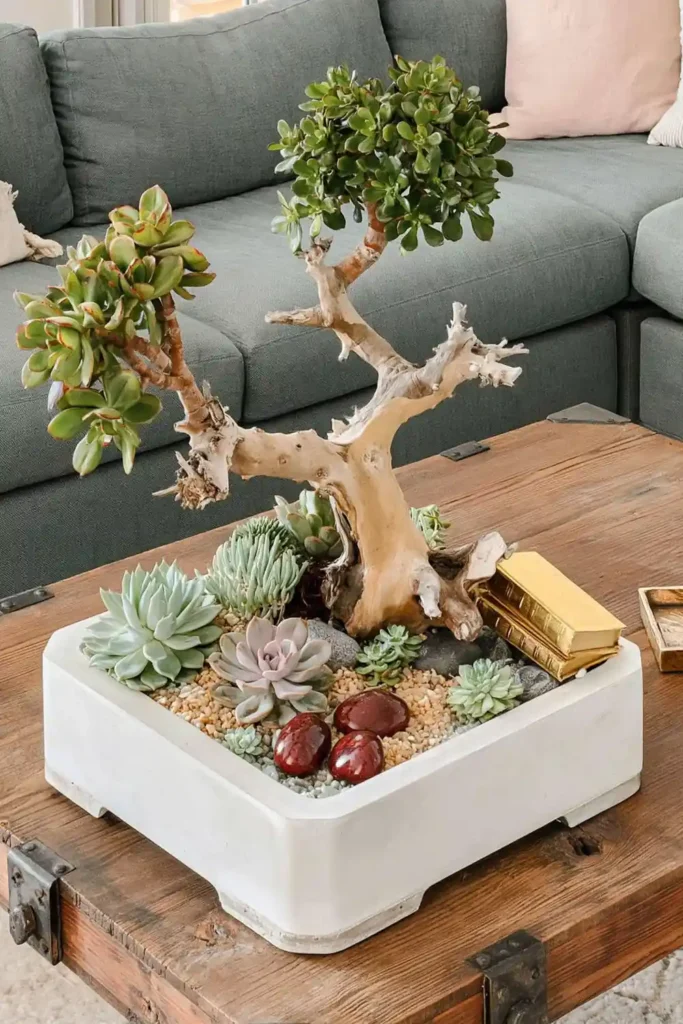
Bonsai and Succulents in a Concrete Mold
Bonsai and succulents look interesting together because they bring two different shapes into one low arrangement. The bonsai adds a sculptural form, while the succulents fill the base with compact texture. A concrete mold gives the whole centerpiece a simple, modern edge.
This idea works nicely on a coffee table, desk, or open shelf. The concrete material keeps the arrangement from feeling too delicate, and it pairs well with black accents, light wood, stone surfaces, or modern decor. Since the plants are not tall and leafy, the centerpiece feels neat rather than busy.
For a realistic setup, make sure the container has proper drainage or use a removable inner tray. Succulents do not like sitting in wet soil, and bonsai care can vary depending on the type. I would also leave some open space around this display so the shape of the bonsai can stand out.
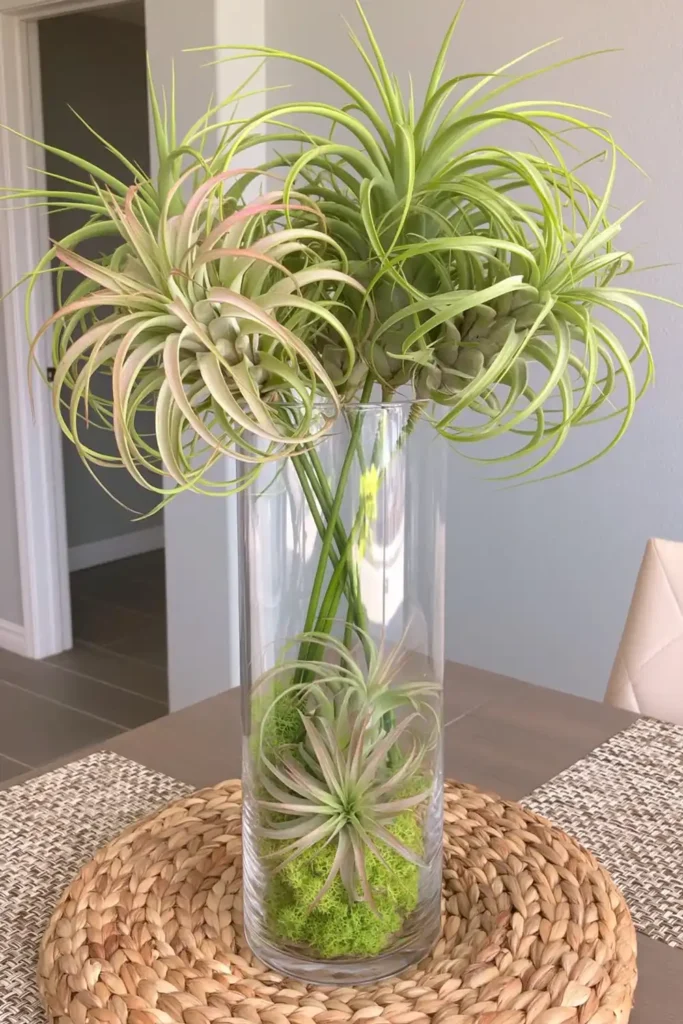
Tall Air Plant Terrarium for a Light Table Display
A tall air plant terrarium is a good choice when you want greenery without the bulk of a large planter. Because air plants do not need soil, the whole display feels cleaner and lighter than a traditional potted centerpiece. It can work well on a dining table, bathroom counter, console, or small side table.
The glass terrarium is the main part of the look. Its transparent surface keeps the arrangement from feeling bulky, while the air plant adds shape inside. I would keep the base simple with small stones, sand, or a minimal layer of natural texture so the plant remains the focus.
This kind of centerpiece is especially helpful in smaller rooms because it adds height without taking up much visual space. Just be careful not to tuck it into a dark corner. Air plants still need bright, indirect light, and they also need to be removed for watering or misting, depending on the variety.
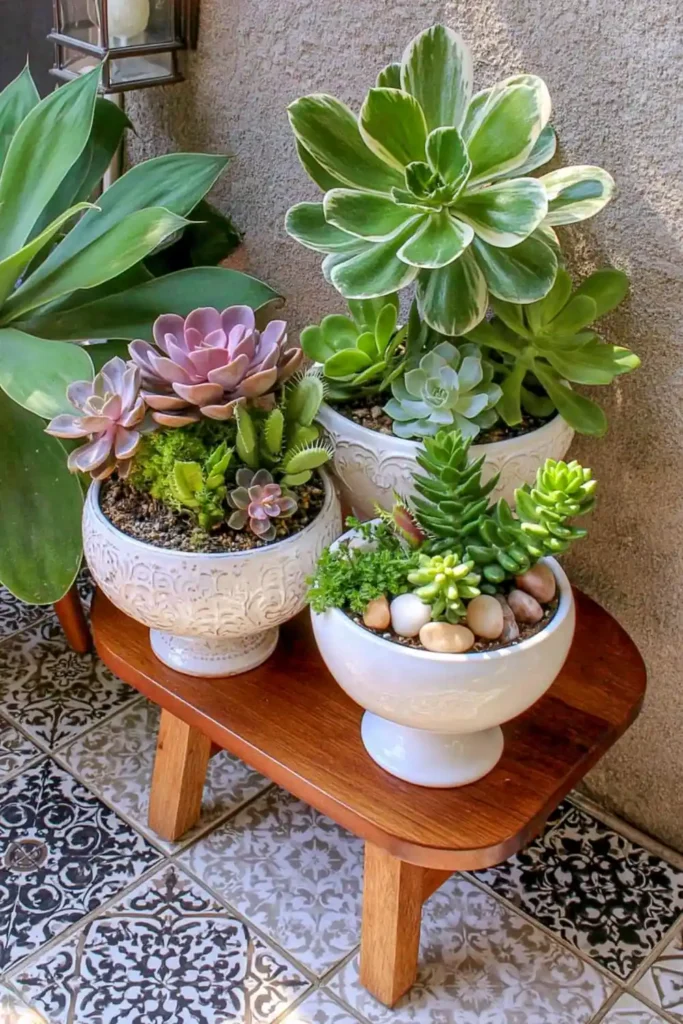
Succulent Jungle in Porcelain Antiques
Succulents placed in porcelain antiques can make a small centerpiece feel collected and personal. The smooth porcelain adds a delicate, vintage touch, while the succulents bring compact greenery and interesting shapes. This works nicely if you like decor that feels layered but not cluttered.
The charm of this idea comes from mixing old and fresh materials. A porcelain dish, teacup, or small antique bowl can become a planter as long as the scale feels right. Succulents with rosette shapes, rounded leaves, or soft green tones look especially good against pale porcelain.
For everyday use, I would choose one larger porcelain piece or a small grouped set rather than scattering too many containers across the table. Drainage is the main thing to watch. If the antique piece cannot be drilled, add a layer of grit and water very carefully, or use a hidden nursery pot inside the porcelain.
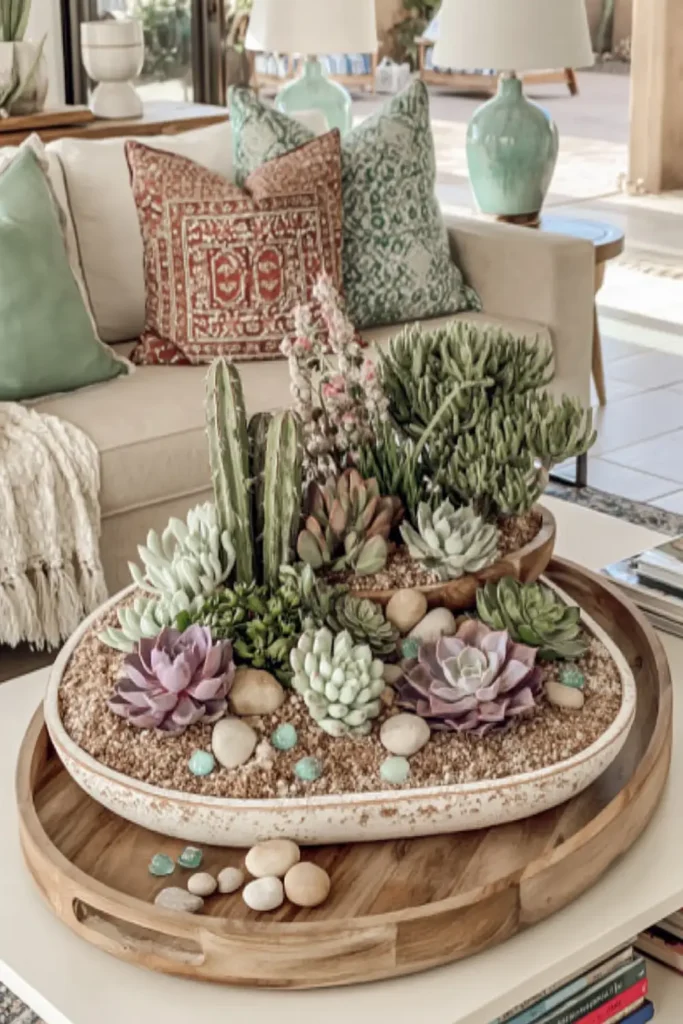
Succulent Tray Centerpiece
A succulent tray centerpiece is one of the easiest houseplant centerpiece decor ideas to manage because everything sits together in one clear arrangement. The tray keeps the plants organized and makes the display easy to move when you need the table for meals, cleaning, or extra space.
This idea works well with a collection of small succulents in similar pots. You can use a wooden tray for warmth, a metal tray for a cleaner look, or a ceramic tray if the room already has soft neutral details. The plants should vary a little in height and shape so the display does not look flat.
I like this setup for coffee tables because it feels decorative but still practical. Leave a little empty space on the tray so it does not become crowded. A small candle, a low bowl, or a single decorative stone can be added, but the succulents should remain the main feature.
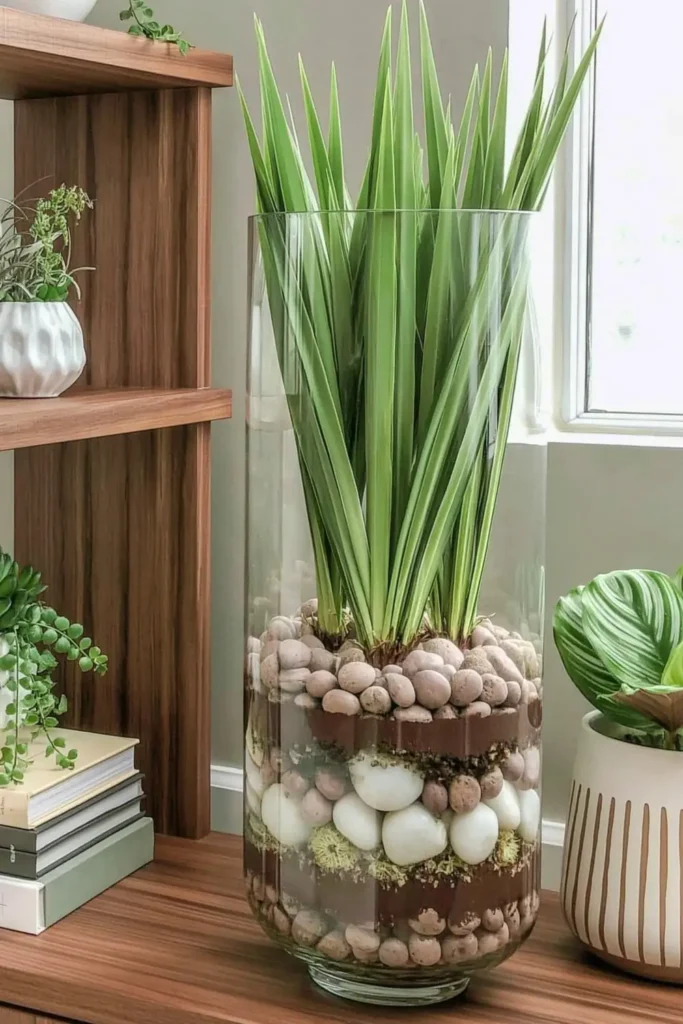
Tall Glass Vase with Lush Lemon Grass
Lemon grass in a tall glass vase gives a room a fresh, vertical accent. The long blades create movement, and the transparent vase keeps the base looking clean. This is a good option for a dining table, kitchen island, or sunny console where the plant can add height without feeling heavy.
The glass vase is important because it keeps the arrangement simple. You can see the stems and water line, which gives the display a natural, unfussy look. The green blades also pair well with white walls, pale wood, stone counters, or woven textures.
For styling, I would avoid placing too many objects around the vase. The tall shape needs breathing room. If the vase is on a dining table, keep it slightly off-center or choose a narrow shape so people can still see across the table. Fresh water and trimmed stems will keep it looking neat.
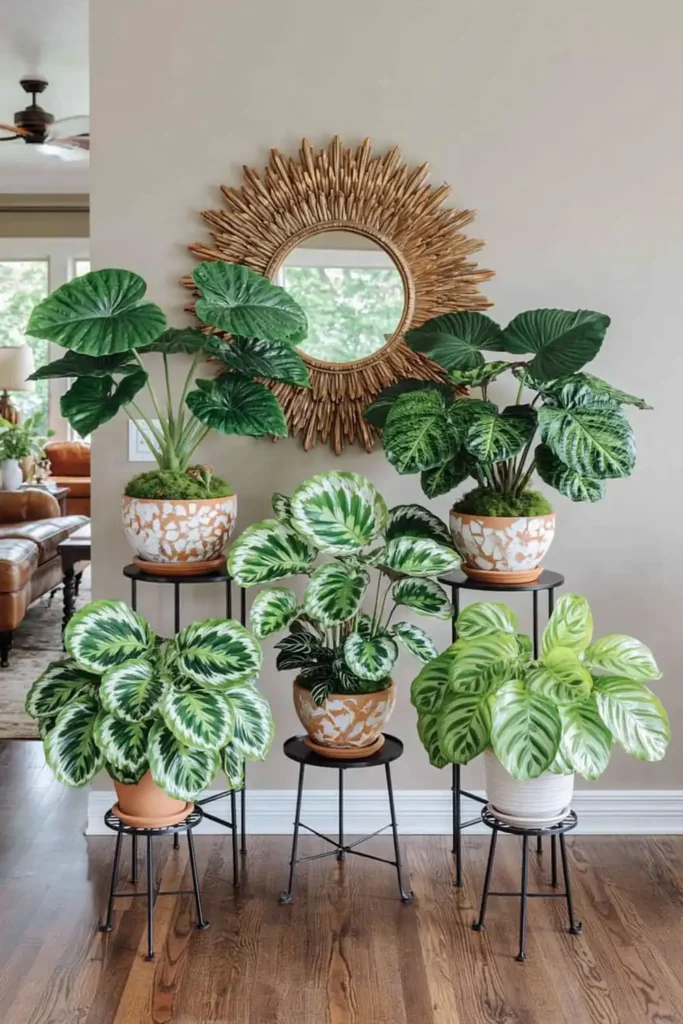
Calatheas Displayed on Metal Stands in the Living Room
Calatheas are a lovely choice when you want patterned leaves to become part of the room’s decor. Displaying them on metal stands lifts the plants off the floor, which makes the leaf shapes easier to notice and gives the living room more height and rhythm.
The metal stands keep the look tidy and structured. I would place them near a sofa, reading chair, or empty wall where the plants can soften the furniture lines. Since calatheas often have striped, painted-looking leaves, simple stands are better than overly decorative ones.
This idea works best when the plants are grouped at slightly different heights. It keeps the display from looking stiff. Calatheas also prefer indirect light, so avoid a harsh sunny window. A bright living room corner with filtered light can help the leaves stay rich and healthy-looking.
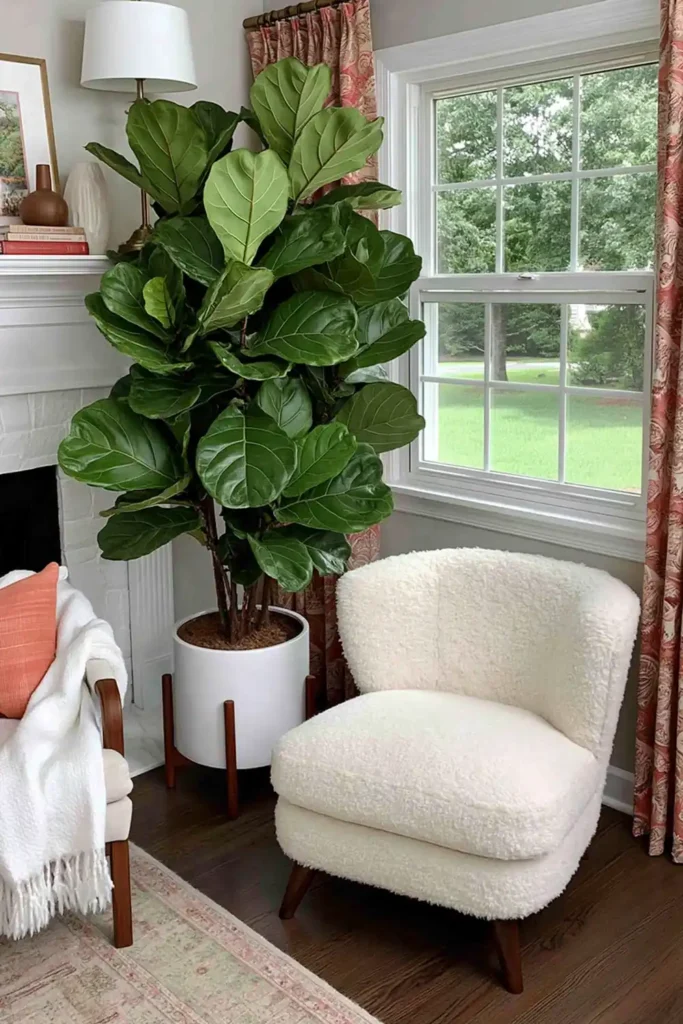
Large Foliage Plant by the Window
A large foliage plant by the window can help a room feel fresher without needing many extra decorations. The window gives the plant a natural backdrop, and the leaves help soften the hard lines of glass, trim, and curtains.
This look works well with broad-leaf plants in simple pots. A plain ceramic planter, woven basket, or low stand can be enough, depending on the room. The goal is to let the leaves bring the shape and texture. I especially like this idea in rooms where the window area feels bare or too bright.
Before placing a large plant by the window, check how much direct sunlight comes through during the day. Some foliage plants can scorch in strong light, while others need more brightness to grow well. If the sun is intense, sheer curtains can help protect the leaves while still keeping the space bright.
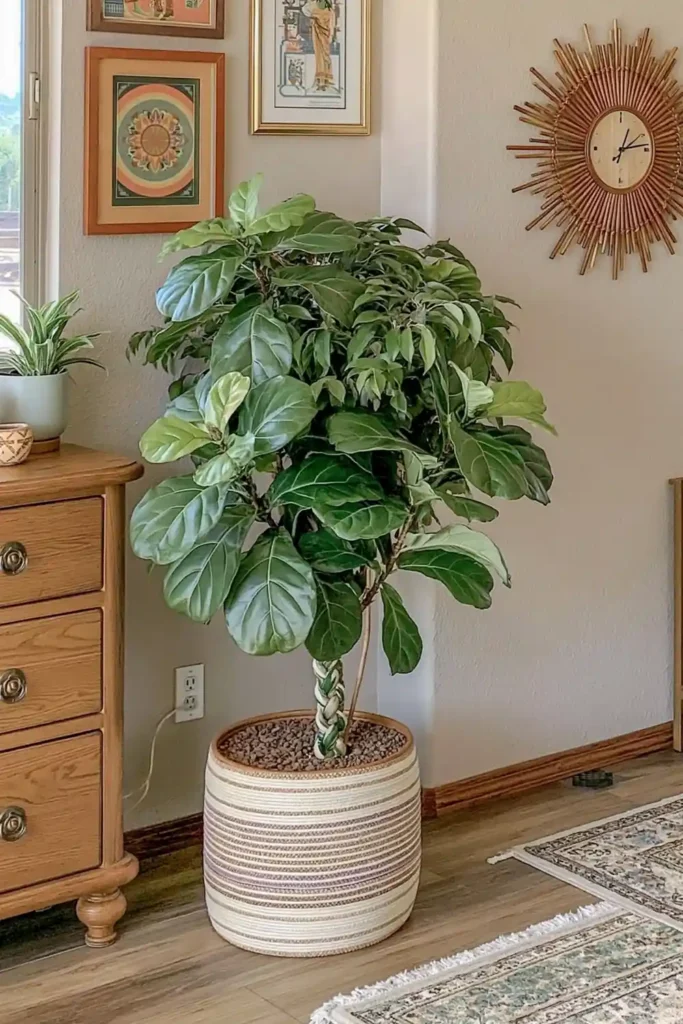
Braided Pachira in a Rattan Pot with Artwork Above
A braided Pachira has a tidy trunk and a soft canopy of leaves, which makes it easy to style as a decorative focal point. Placing it in a rattan pot adds warmth and texture, especially if the room has neutral furniture or natural materials.
The artwork above the plant gives the arrangement a finished look. Instead of placing the Pachira alone against a blank wall, the painting helps create a small vertical composition. The rattan pot grounds the plant, while the artwork draws the view upward.
For this setup, scale matters. The pot should feel wide enough to balance the braided trunk, and the artwork should not be so large that it overwhelms the plant. I would use this idea beside a console, in a reading corner, or near a hallway wall that needs something calm but noticeable.
Giant Chinese Money Plant for the Living Room
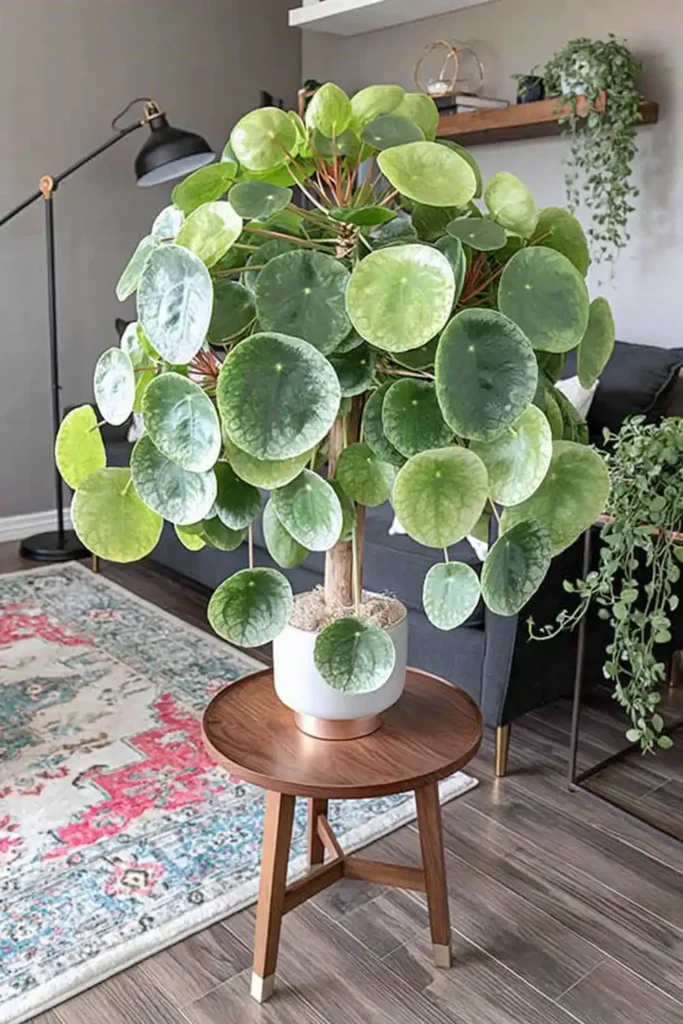
A giant Chinese money plant brings a cheerful shape to the living room because of its round leaves. It feels softer and more playful than many upright plants, and it can work well as a centerpiece on a plant stand, low cabinet, or side table.
The simple leaf shape is what makes this plant easy to decorate with. It pairs nicely with clean-lined furniture, woven textures, and light ceramic pots. I would avoid placing too many patterned items nearby, because the round leaves already create a strong visual tempo.
This idea is especially useful in a living room that needs a fresh accent but not a huge floor plant. Give the plant bright, indirect light and rotate it often so it grows evenly. A plain planter lets the leaves do most of the work, which usually looks better than over-styling the area.
Cascading Pothos on a Floating Shelf
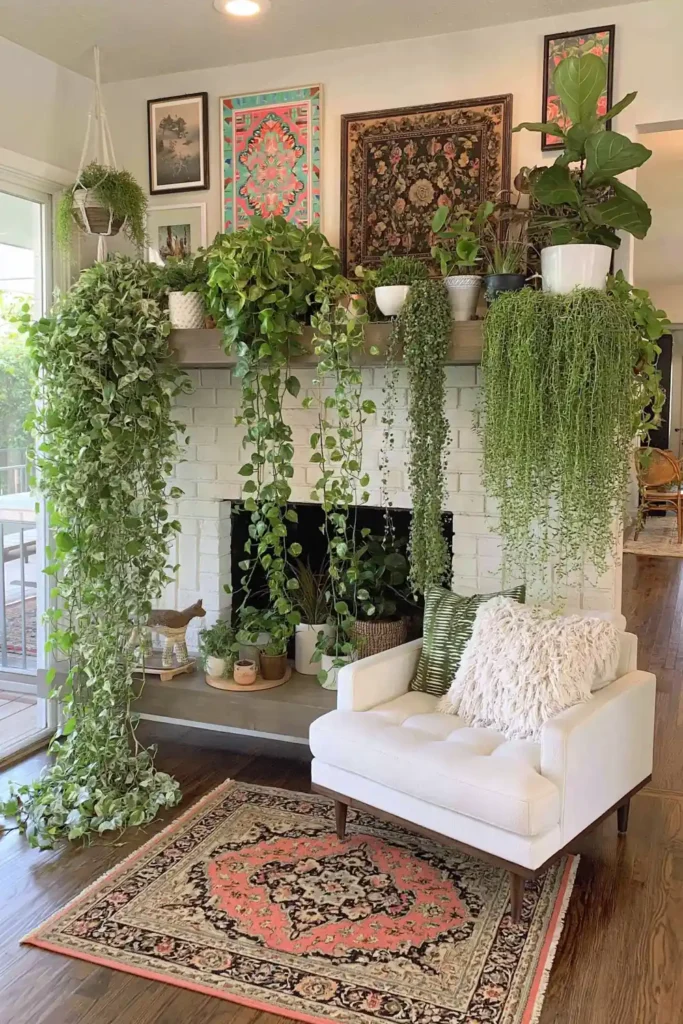
Cascading pothos is a simple way to make a floating shelf feel less flat. The trailing vines soften the straight shelf line and bring movement to a wall without needing extra artwork or heavy styling. It is especially useful in rooms where the walls feel a little empty, but floor space is limited.
The shelf itself should be sturdy and not overcrowded. A pothos in a simple pot can sit near one end so the vines fall naturally over the edge. I would pair it with only one or two small objects, such as a book stack or a ceramic piece, so the plant has room to spread.
As the vines grow, you can guide them gently along the shelf or let them hang downward. Regular trimming keeps the plant full at the top instead of becoming long and thin. Bright, indirect light will usually help the leaves keep their color.
Silver Alocasia in a Golden Planter
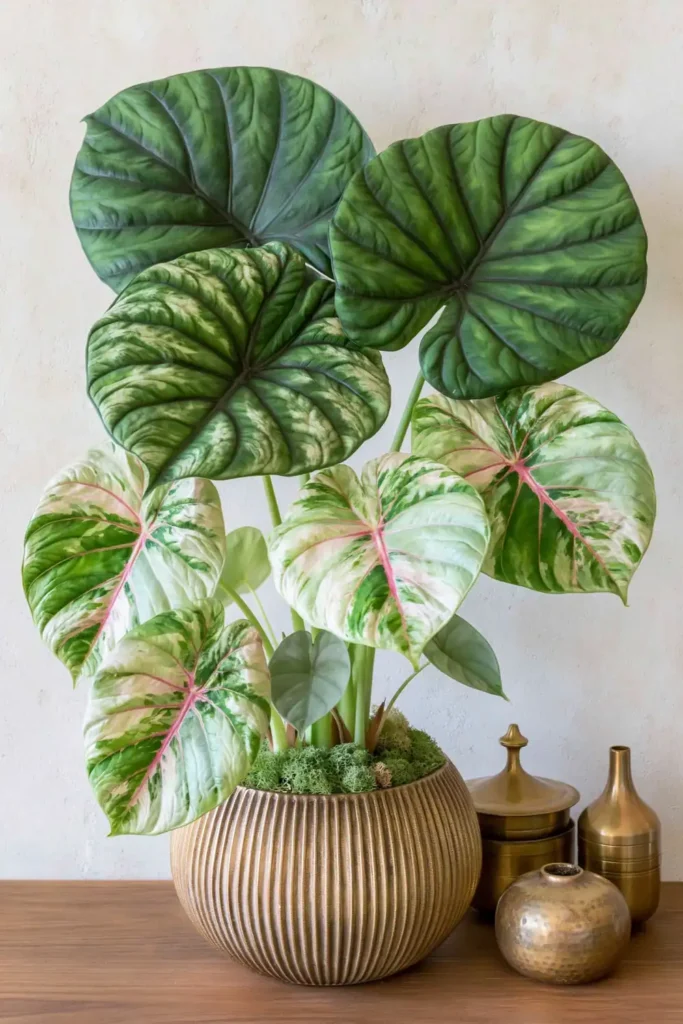
Silver Alocasia has a bold leaf shape, and placing it in a golden planter makes the whole display feel more intentional. The cool silver-green leaves contrast nicely with the rich gold finish, which gives the plant a decorative presence even when the surrounding room is simple.
This is a good idea for a side table, console, or open corner where the plant can be seen clearly. Because Alocasia leaves are sculptural, I would avoid surrounding the planter with too many small accessories. A clean surface lets the leaf shape and planter finish stand out.
The golden planter does not need to be shiny to work well. A brushed or muted gold finish can feel softer and easier to use in everyday rooms. Since Alocasias like bright, indirect light and steady care, choose a spot where the plant is visible but not exposed to harsh direct sun.
Lush Maidenhair Fern Centerpiece
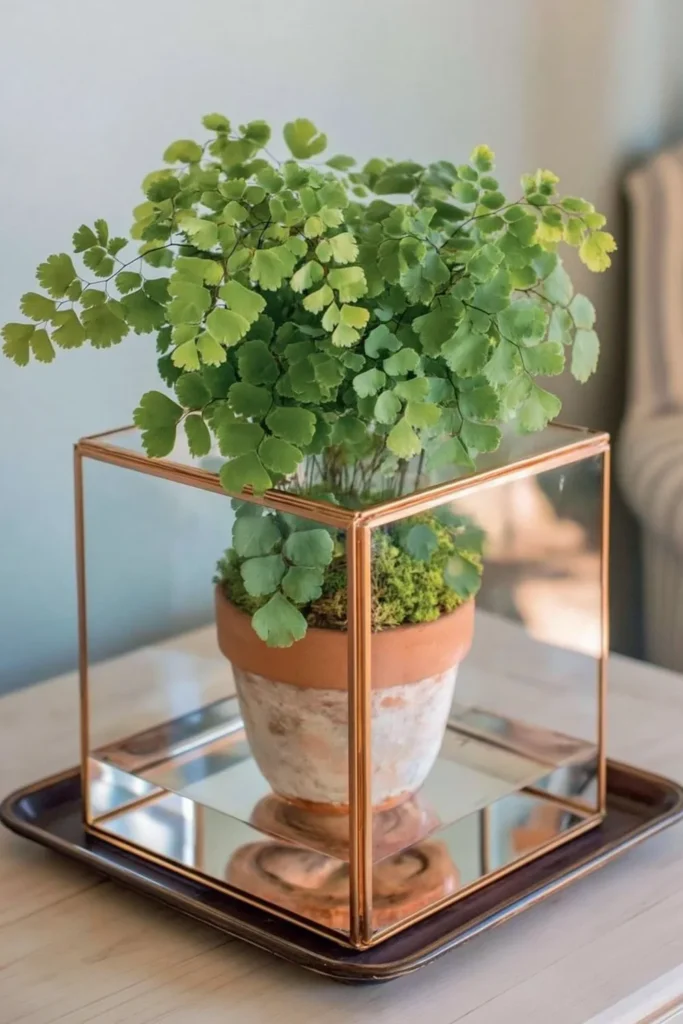
A maidenhair fern has a soft, delicate look that makes it lovely as a tabletop centerpiece. Its fine leaves create a gentle texture, so it works well when you want greenery that feels airy instead of heavy. I like it on a small dining table, bedside table, or bathroom counter with good light.
The planter should support the fern without competing with it. A plain ceramic pot, small urn, or low bowl can work nicely. Because the foliage is detailed, a simple container helps the tiny leaflets remain the focus. It also pairs well with linen, wood, and soft neutral colors.
This plant does need more attention than some other houseplants. It prefers steady moisture and does not like drying out completely. If you use it as a centerpiece, place it somewhere you will notice it often, so watering does not get forgotten.
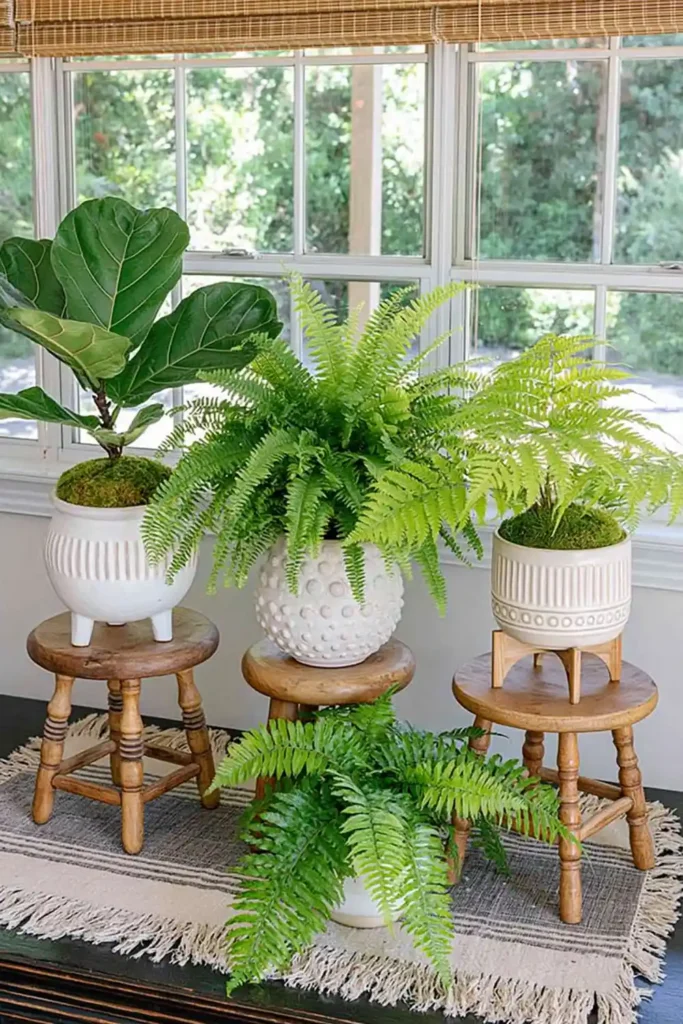
Fern Family on Mini Plant Stands
A small group of ferns on mini plant stands can turn a plain corner, shelf area, or side table into a layered green display. Using more than one fern gives the arrangement fullness, while the stands help separate the plants so they do not look like one heavy mass.
The key is using stands with different heights. This lets each fern show its shape, whether the leaves are upright, arching, or softly trailing. Simple wood or metal stands work best because ferns already have plenty of texture. Too many decorative details can make the grouping feel busy.
For a practical setup, place the fern family where the light is gentle and the air is not too dry. I would also keep the pots similar in color or material so the display feels connected. Even if the ferns are different varieties, matching containers can make the whole arrangement look calm and planned.
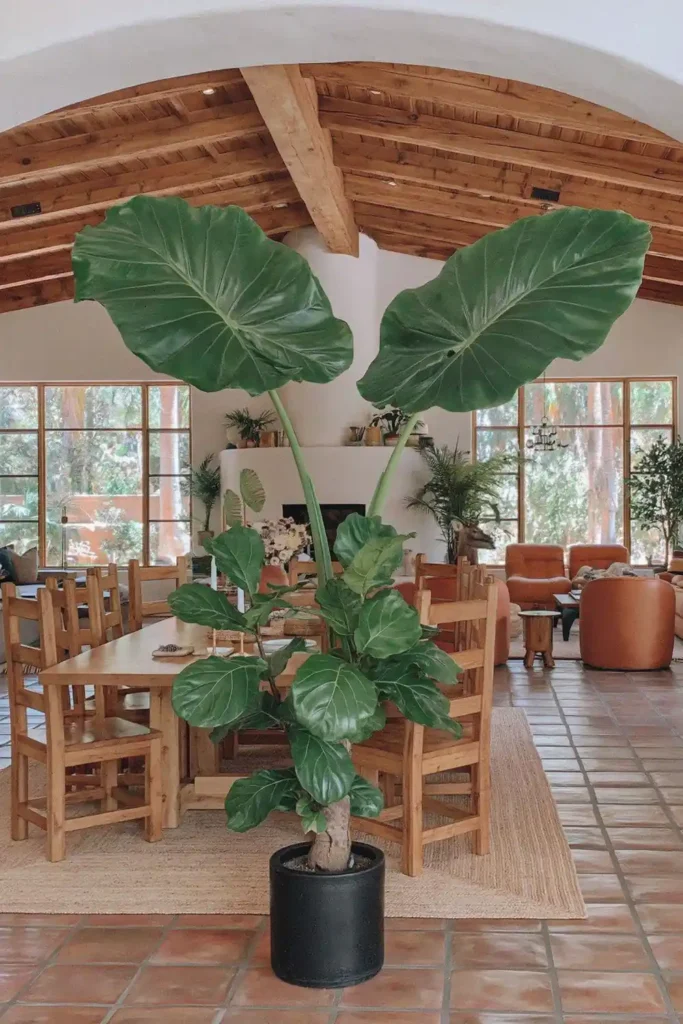
Large Indoor Specimen Plant for the Living Room
A large indoor specimen plant can anchor a living room in a way that smaller plants cannot. It gives the space one strong green feature, which is useful when the room feels a little empty or too furniture-heavy. Instead of adding several small decorations, one well-placed plant can do a lot of the visual work.
This idea works best near a sofa, armchair, cabinet, or open corner where the plant has enough room to grow upward and outward. A simple planter is usually the safest choice because the leaves already bring plenty of shape. If the room has warm wood tones, a woven basket or muted ceramic pot can help the plant feel connected to the rest of the space.
Before choosing a large plant, think about scale. The plant should feel generous, but not so oversized that it blocks walking paths or natural light. Turning the pot regularly also helps keep the growth even.
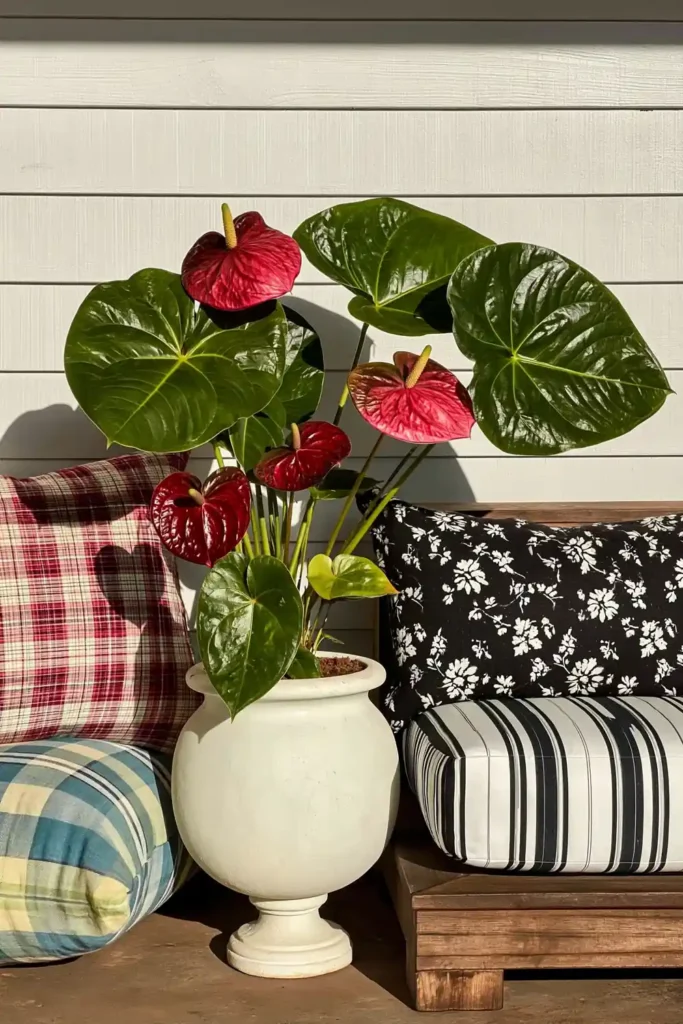
Painter’s Palette in a White Urn Planter with Matching Cushions
Painter’s Palette has colorful, heart-shaped leaves that can easily become part of the room’s color story. Placing it in a white urn planter keeps the arrangement fresh and clean, while coordinating cushions nearby can help the plant feel connected to the seating area.
The white planter is useful because it does not compete with the leaf color. It gives the plant a bright base and allows the foliage to stand out. If the cushions pick up a comparable tone from the leaves, the whole corner feels planned without looking too staged.
I would use this idea on a side table, plant stand, or low cabinet beside a sofa. Keep the surrounding decor simple, so the plant and cushions can do the talking. This is especially nice in a neutral room where one colorful plant can bring life to the space without needing new artwork or larger decor changes.
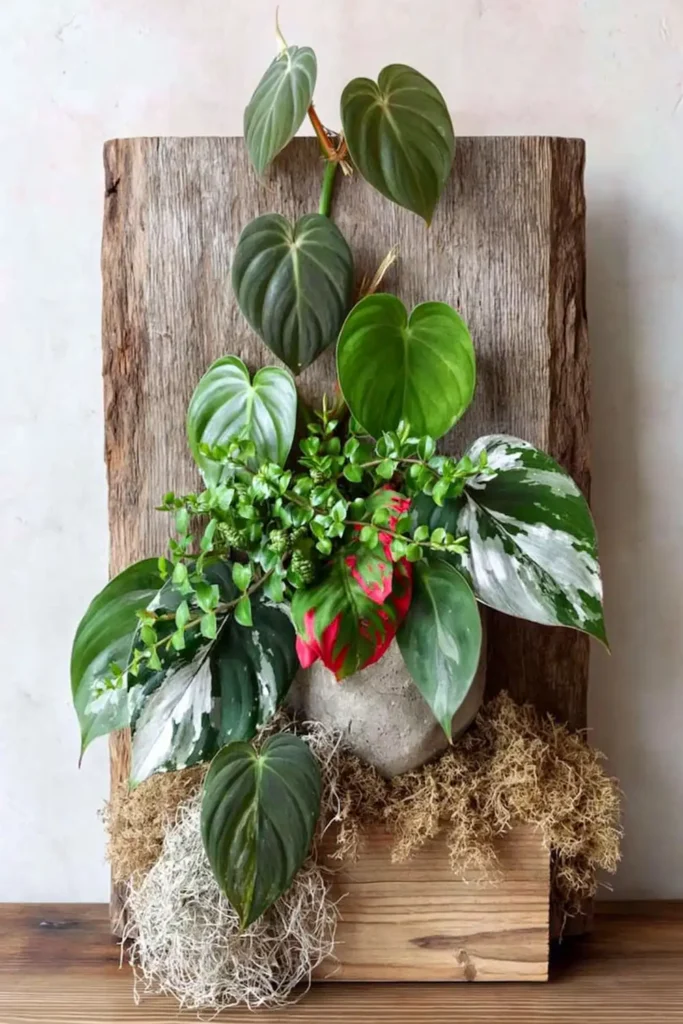
Rhaphidophora Displayed on a Wooden Slate
Rhaphidophora has interesting split leaves and a climbing habit, so displaying it on a wooden slate gives it a more natural, structured look. The wood adds warmth, while the plant brings a fresh vertical shape that works well in casual living spaces.
This idea feels best when the wooden slate looks simple and sturdy. A warm wood tone can make the green leaves stand out, especially against a plain wall. I would place it where the plant has enough height to climb without looking cramped, such as on a console, shelf, or plant stand.
For practical styling, guide the stems gently instead of forcing them into a strict shape. Rhaphidophora looks better when it feels slightly relaxed. Keep the pot and surrounding objects minimal so the wooden support and leaves remain the main focus.
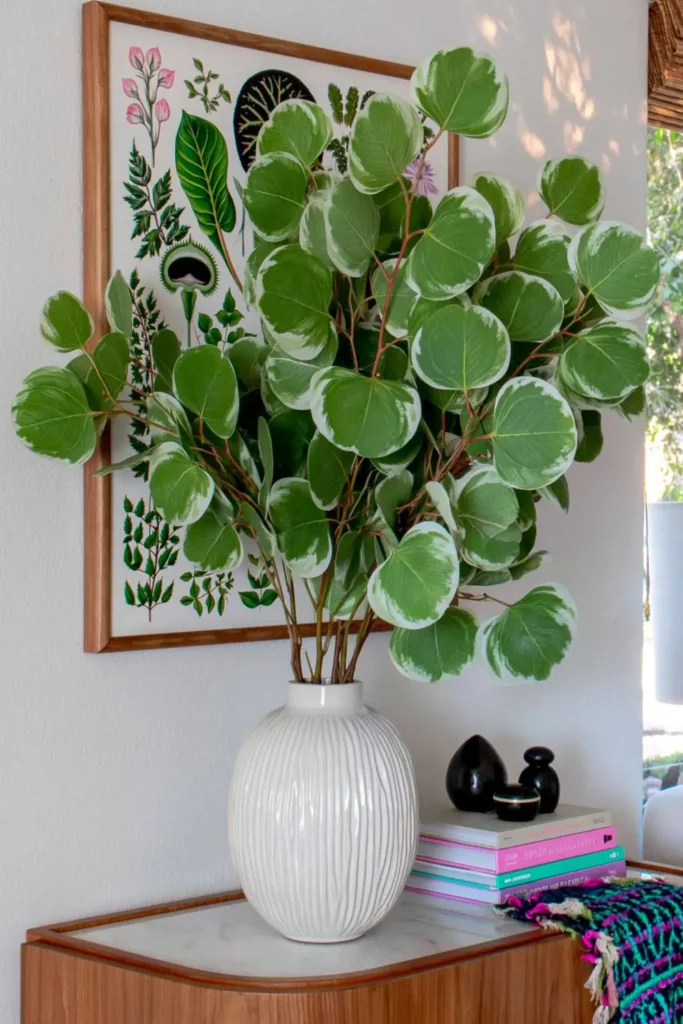
Eucalyptus in a White Beaker Beside Framed Artwork
Eucalyptus in a white beaker is a simple way to add greenery without using a heavy planter. The soft leaves and pale stems give a calm, airy feeling, while the framed artwork beside it makes the display feel more complete.
The white beaker keeps the arrangement understated. It works well on a console table, mantel, desk, or open shelf where a small decorative moment is needed. The framed artwork adds a flat shape behind or beside the eucalyptus, which helps balance the loose, natural stems.
This is a good idea for anyone who wants greenery but does not want a demanding houseplant centerpiece. Fresh eucalyptus can be replaced when it dries, and dried eucalyptus can still look attractive for a while. Keep the arrangement loose rather than packed tightly so the stems have room to lean naturally.
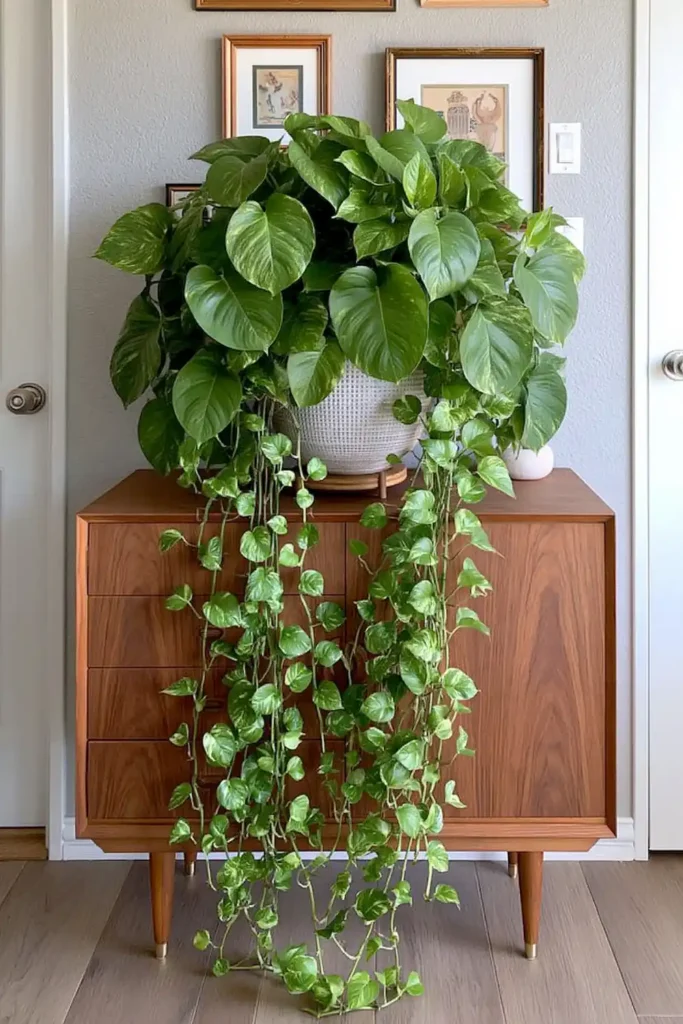
Variegated Pothos Flowing Over a Wooden Cabinet
Variegated pothos looks especially good when it has room to trail. Placing it on top of a wooden cabinet lets the vines soften the straight edges of the furniture, while the lighter markings in the leaves add a little brightness.
The wood cabinet gives the plant a warm, grounded base. This idea works well in a living room, dining room, hallway, or bedroom where a cabinet might otherwise look too flat on top. I would keep the planter simple, either ceramic, clay, or a neutral basket, so the leaf pattern stays noticeable.
For styling, let the vines fall over one side rather than spreading them evenly across the whole cabinet. That looks more natural and keeps the surface from feeling messy. If the cabinet is used often, keep the plant toward the back or one corner so the trailing stems do not get pulled or bumped.
Peace Lilies in Aesthetic Urn Planters
Peace lilies in urn planters can bring a more classic feeling to a room without looking excessively formal. The upright white blooms and glossy green leaves already have a clean shape, and the urn planters make the arrangement feel more finished.
This idea works well as a pair on a console table, on either side of a fireplace, or beside a bright entryway. The urn shape gives the plant height and presence, while the peace lily keeps the look fresh rather than heavy. I would choose planters with soft curves, matte finishes, or subtle texture instead of anything too shiny or ornate.
Peace lilies are useful in rooms that need a calm green accent. They prefer indirect light, so they can work in spots where some other flowering plants may struggle. Just keep the soil lightly moist and wipe the leaves occasionally, because dusty leaves can make the whole display look tired.
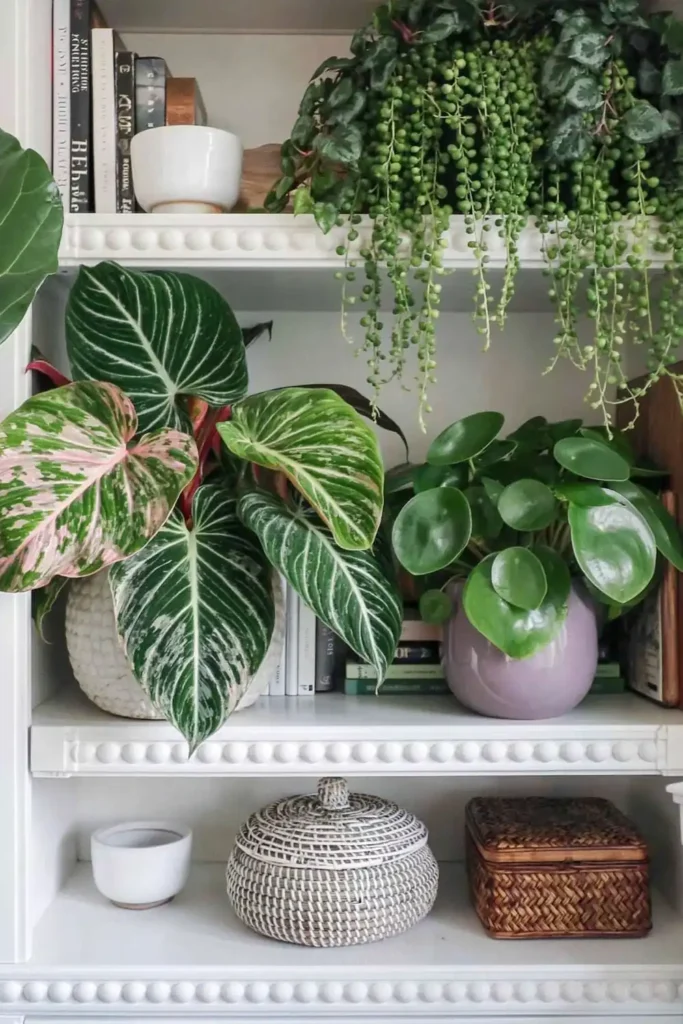
Pink Princess Philodendron with Chinese Money Plant and String of Pearls
A Pink Princess Philodendron, Chinese Money Plant, and String of Pearls can make a layered plant centerpiece with several different leaf shapes. The Philodendron brings color, the Chinese Money Plant adds round leaves, and the String of Pearls creates a trailing detail.
This grouping works best when the plants are arranged at different heights. A small riser or tray can help keep everything connected while still giving each plant space. I would use simple pots in similar tones so the different foliage does not feel too busy.
This is a good setup for a bright shelf, sideboard, or wide tabletop. Place the trailing String of Pearls near the edge so it can hang naturally, and keep the round-leaf plant slightly forward where its shape can be seen. The Pink Princess should have enough light to keep its color strong, but not harsh direct sun that could damage the leaves.
Mini Snake Plant Centerpiece
A mini snake plant centerpiece is a good choice when you want something neat, upright, and low-maintenance. The leaves have a strong vertical shape, but the small size keeps the display from overwhelming a table or shelf.
This idea works well in a small pot, shallow bowl, or grouped tray. Mini snake plants look especially tidy in ceramic, concrete, or simple matte planters. Because the leaves are structured, the centerpiece can suit modern rooms, small apartments, desks, and bedside tables.
For practical styling, keep the surface around it clean. A mini snake plant can look sharp with just a book, small candle, or simple coaster nearby. It also handles lower light better than many houseplants, though it will still grow best with some brightness. Since it does not need frequent watering, it is a nice option for anyone who wants greenery without daily attention.
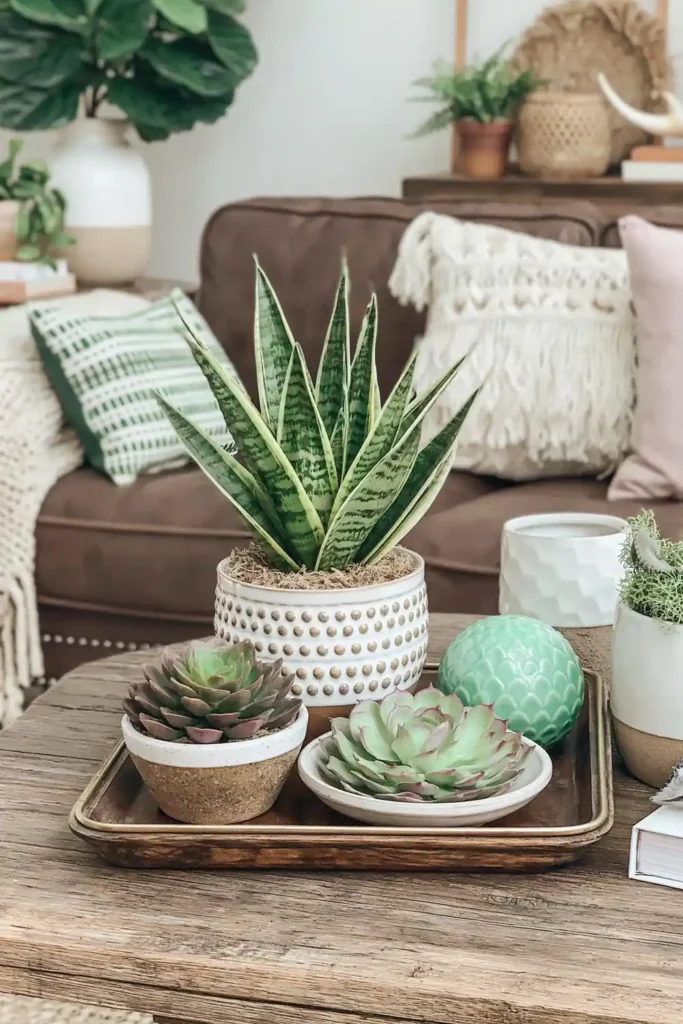
Pink Aglaonema Duo in Beautiful Ceramics
A pink Aglaonema duo can bring soft color into a room without needing flowers or bright accessories. The leaves usually have a mix of green and pink tones, so the plant itself becomes the decorative accent. When placed in beautiful ceramic planters, the display feels calm but still noticeable.
This idea works best when the two plants are treated as a pair. You could place them side by side on a console table, use them at each end of a cabinet, or set them together on a wide tabletop. Ceramic planters help the look feel more finished, especially if they share a similar color, glaze, or shape.
For a practical setup, avoid making the surrounding area too busy. Let the pink tones show by keeping nearby decor simple. Aglaonemas can handle moderate indoor light, which makes them useful for rooms that are bright but not directly sunny.
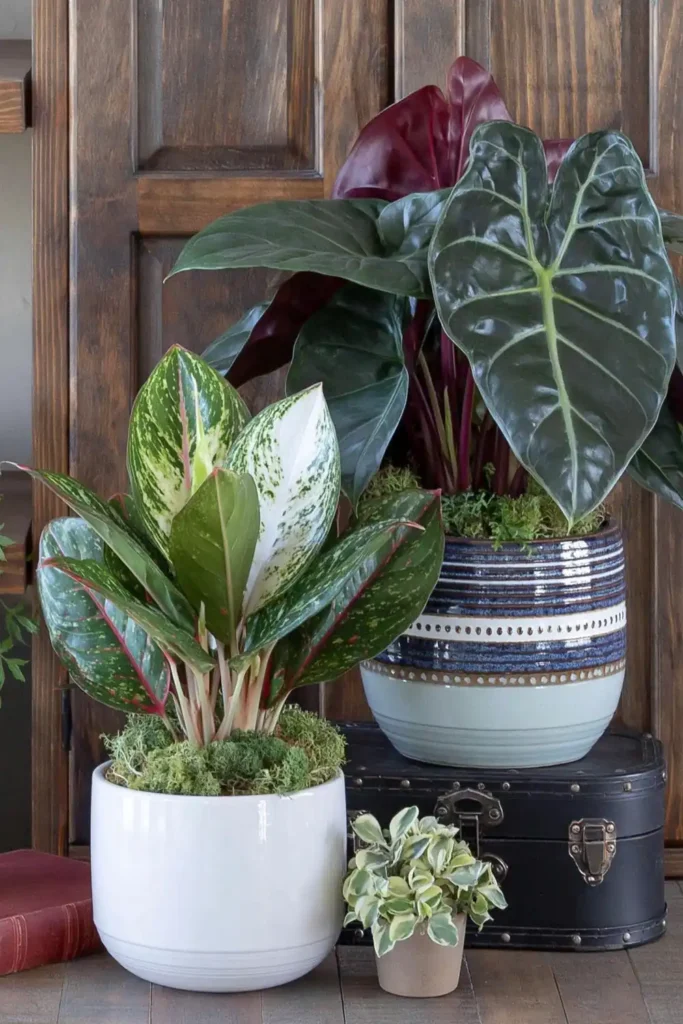
Regal Shield Plant as a Bold Centerpiece
A Regal Shield plant has large, dark, dramatic leaves that can make a simple room feel more grounded. It works well as a bold centerpiece because the foliage has strong shape and color without needing extra decoration around it.
This plant looks best when it has space around the leaves. A plain planter, low plant stand, or simple basket can keep the display balanced. I would use it near a sofa, in a corner, or beside a console where its size can be appreciated without crowding the walkway.
Because the leaves are already the main feature, the rest of the styling should stay quiet. A neutral wall, simple furniture, and gentle textiles will help the plant stand out. Give it bright, indirect light and enough room to spread, and it can become one of the strongest green accents in the room.
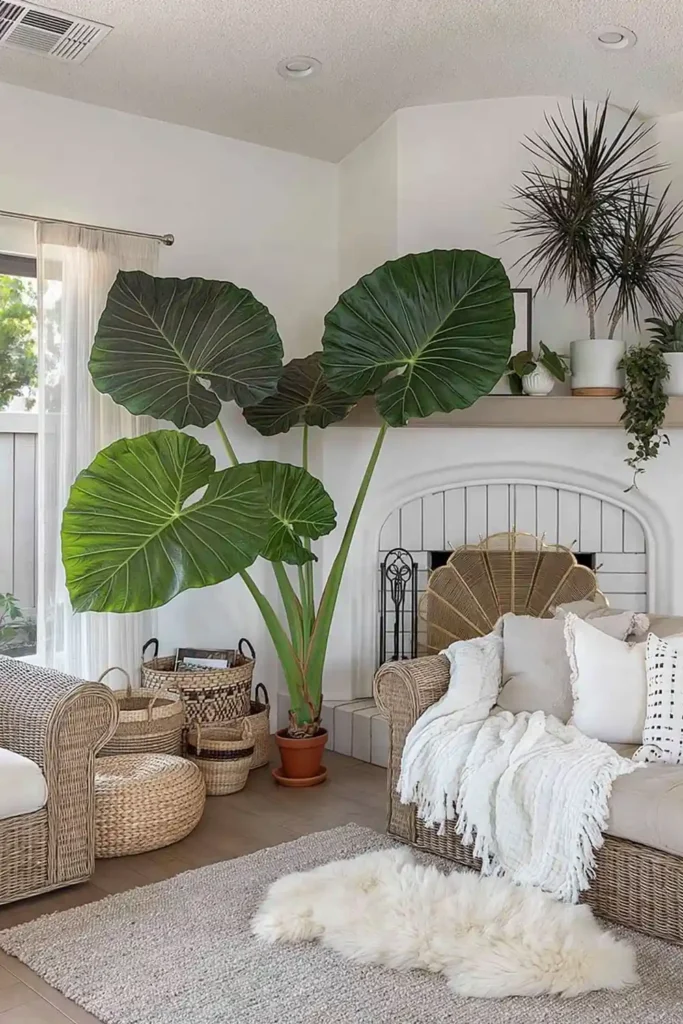
White Queen Plant in a Rattan Basket
A White Queen plant in a rattan basket has a fresh, tropical feeling without feeling too bold. The light variegated leaves bring brightness, while the rattan basket adds natural texture. This pairing works especially well in relaxed living rooms, bedrooms, or sunrooms.
The rattan basket softens the look of the planter and makes the plant feel warmer. It also pairs nicely with woven rugs, linen cushions, wood furniture, and other natural materials. I would use this idea where the plant can be seen clearly, such as beside a chair or on a low plant stand.
To keep the display looking tidy, place the actual nursery pot inside the basket with a saucer underneath. This protects the basket from moisture and makes watering simpler. The light leaves will look ideal in bright, indirect light, away from harsh sun that may scorch the pale areas.
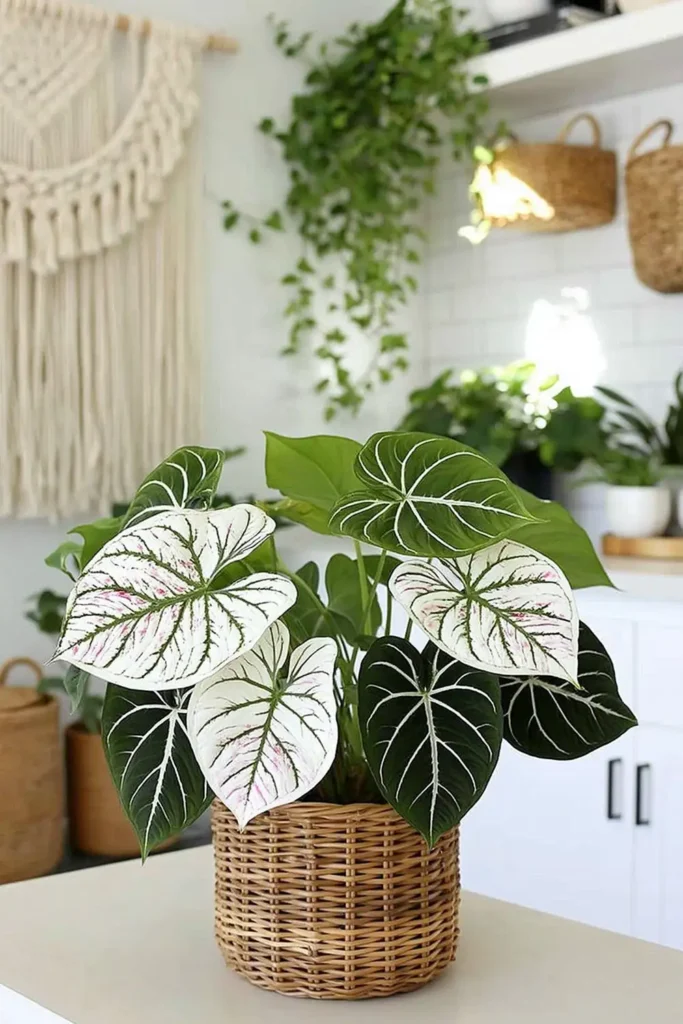
Lush Foliage Centerpiece for a Royal Look
A lush foliage centerpiece can make a table or corner feel full and generous. This idea works when the plant has rich leaves, a rounded shape, or enough volume to create a sense of abundance. It is a good choice when a room feels a little too plain and needs one strong green feature.
The container plays a big part in the overall mood. A classic urn, deep ceramic pot, or slightly decorative planter can make the foliage feel more formal, while still keeping the room natural. I would place this kind of centerpiece where it has room to breathe, rather than squeezing it between small objects.
For styling, think about balance. A very full plant needs a stable base and a clear surface around it. On a dining table, keep it low enough for conversation. On a console or sideboard, let it stand taller and pair it with only one or two simple accents.
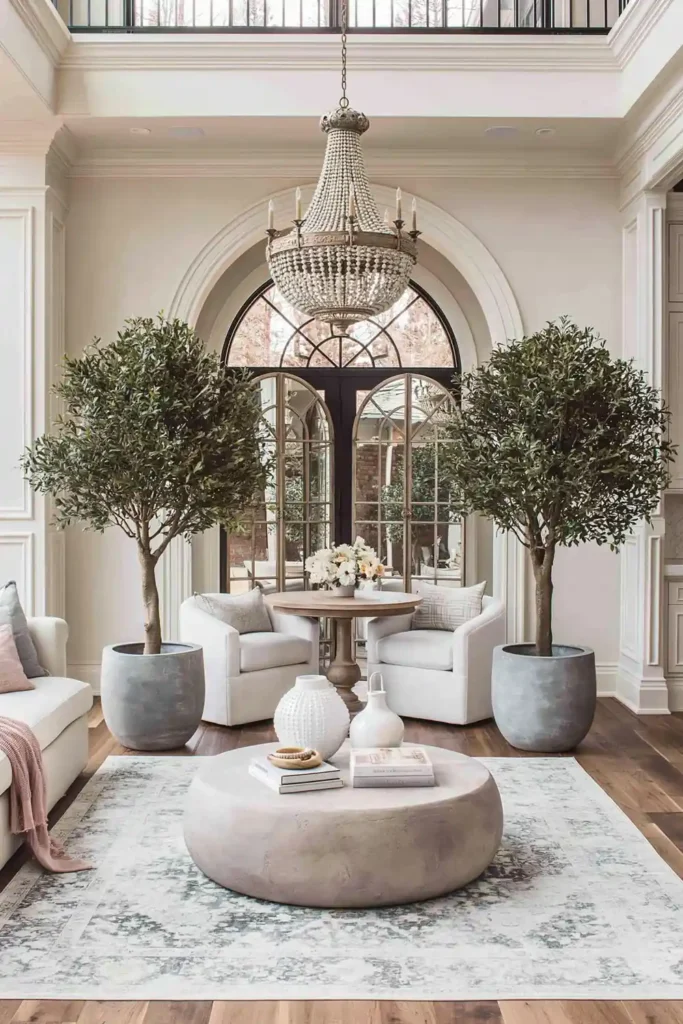
Glossy Alocasia on the Tabletop
A glossy Alocasia on a tabletop can act almost as if a living sculpture. The leaves have a strong shape and a reflective surface, so the plant naturally draws attention even when the rest of the table is simple.
This idea works best on a side table, console, or wide coffee table where the leaves have space to spread. I would choose a planter with a quiet finish, such as matte ceramic, stone, or a simple neutral pot. Since the leaves already have shine, adding a glossy planter may occasionally seem like too much.
For everyday styling, keep the tabletop uncluttered. A glossy Alocasia looks best when it is not fighting with candles, books, trays, and other small pieces. Give it bright, indirect light and turn the pot occasionally so the plant does not lean too strongly in one direction.
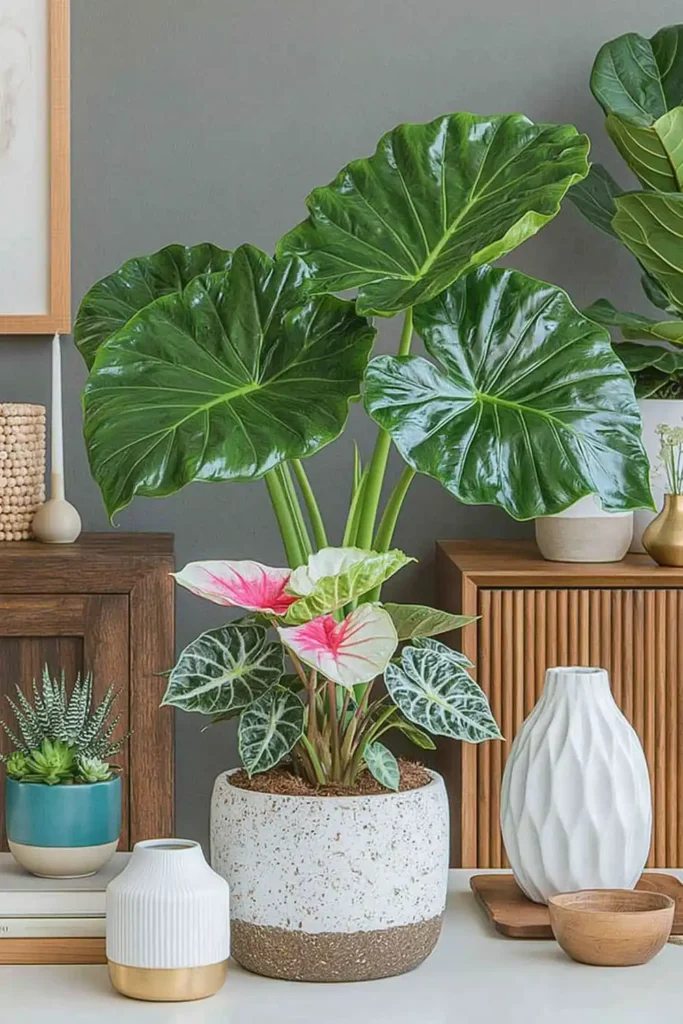
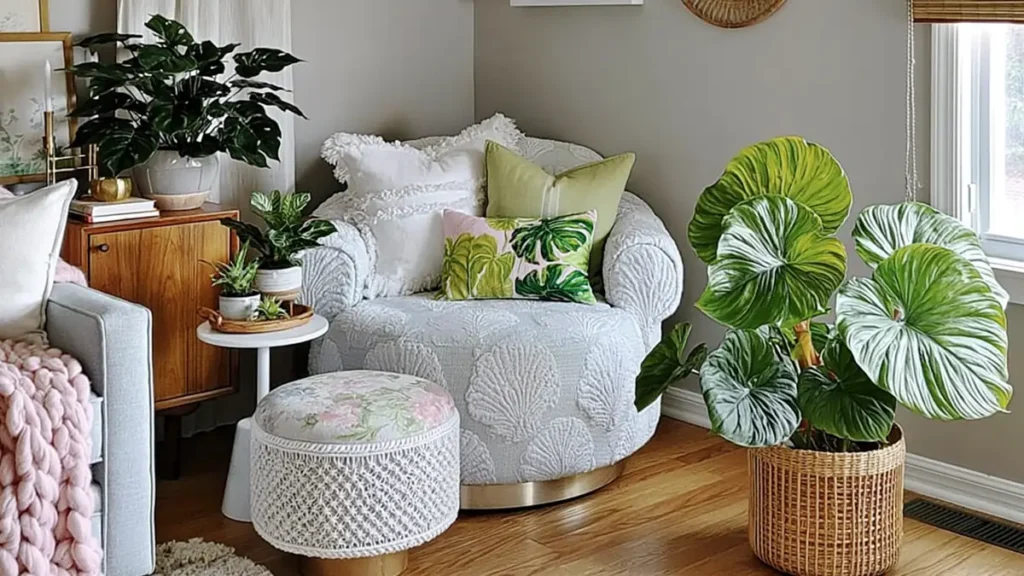
Giant Philodendrons Beside the Couch
Giant philodendrons beside the couch can make a seating area feel softer and more complete. Their large leaves help break up the solid shape of the sofa, especially if the couch sits against a plain wall or in a corner that feels unfinished.
This idea works well with a floor planter or a strong basket that suits the size of the plant. A larger philodendron needs visual weight at the base, so I would avoid tiny pots or thin stands that make it look unbalanced. The leaves should have enough room to spread without touching people sitting nearby.
For placement, set the plant near one end of the couch rather than directly behind it. That keeps the seating comfortable and lets the plant frame the area naturally. It can also help connect the sofa to nearby windows, lamps, or side tables.
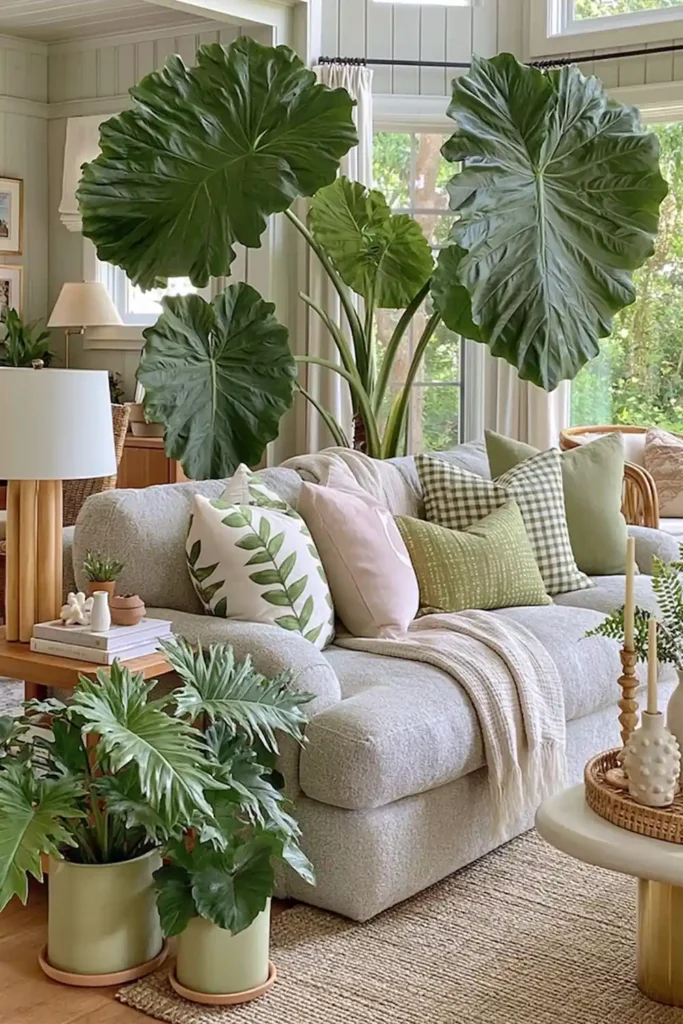
Variegated Caladium Trio in Fabric Planters
A variegated Caladium trio in fabric planters brings color and softness at the same time. Caladium leaves often have beautiful patterns, and grouping three plants together makes the display feel fuller without needing one oversized plant.
The fabric planters are what give this idea a relaxed feel. They soften the edges of the pots and work well in casual rooms with woven rugs, linen pillows, or warm wood furniture. I would keep the planters similar so the leaf patterns stay as the main point of interest.
This trio could work on a bench, low cabinet, wide shelf, or bright corner. Arrange the plants in a slight stagger rather than a straight line so the grouping feels more natural. Since Caladiums enjoy warmth and filtered light, avoid placing them in cold drafts or harsh direct sun.
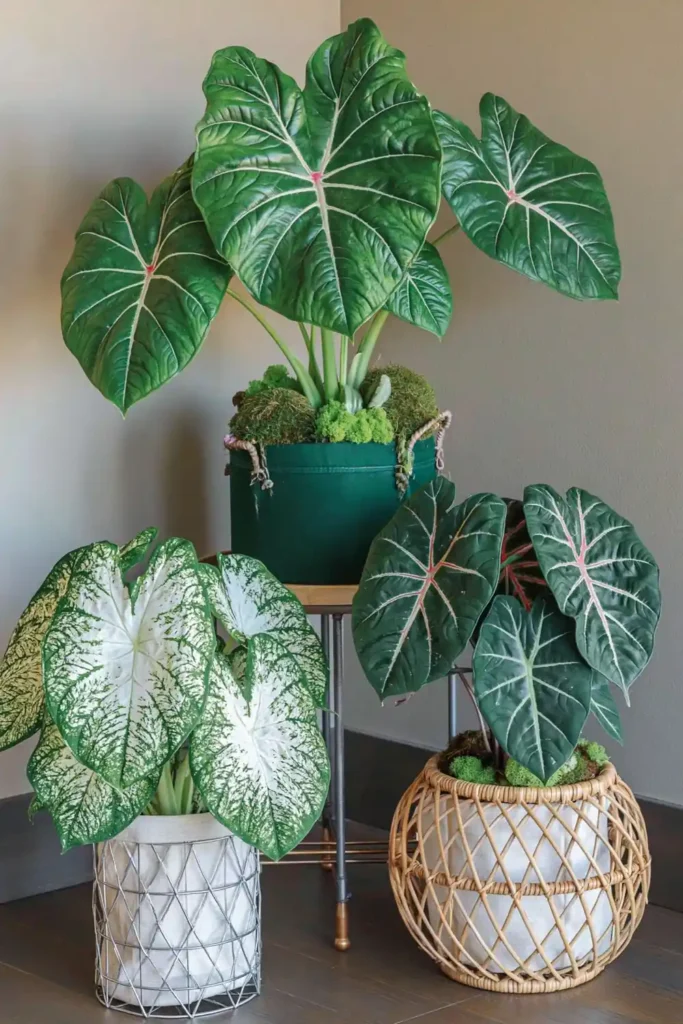
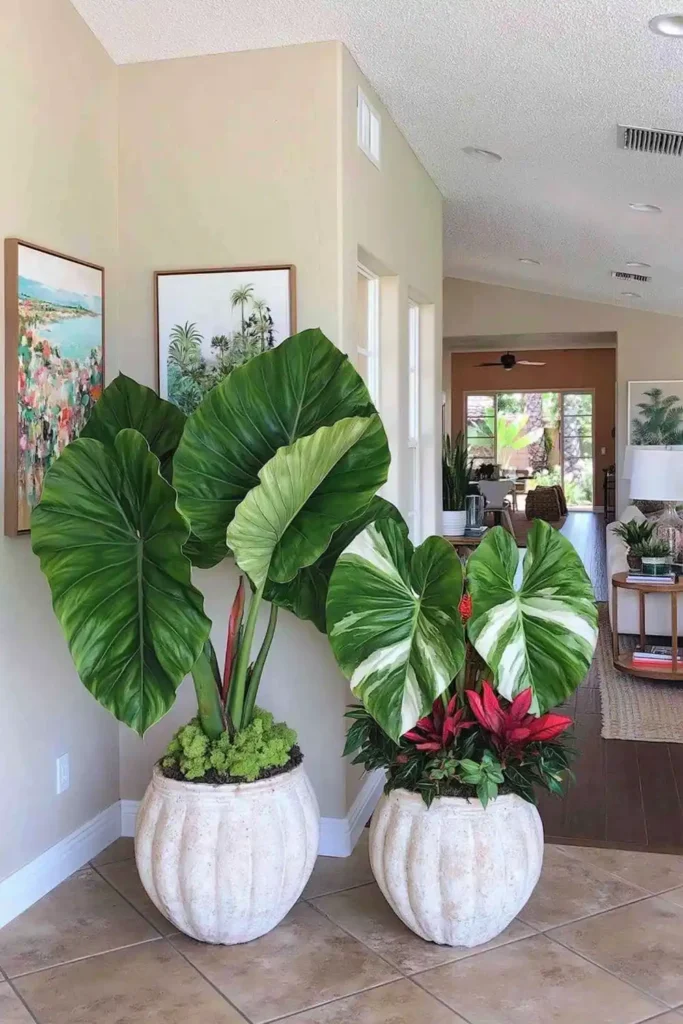
Giant Alocasia as the Main Room Feature
A giant Alocasia can easily become the main feature in a room because of its oversized leaves and strong upright shape. It is the kind of plant that does not need much help from extra decor. One healthy plant in the right place can make a plain corner feel intentional.
The best container is usually simple and sturdy. A large ceramic pot, woven basket, or clean-lined planter can hold the visual weight of the plant without competing with the leaves. I would place it where there is enough floor space, such as near a window, beside a console, or in an open living room corner.
Because giant Alocasia leaves can dominate a small area, keep nearby furniture and accessories fairly quiet. The plant should feel like part of the room, not an obstacle. Bright, indirect light and steady care will help it stay full and dramatic.
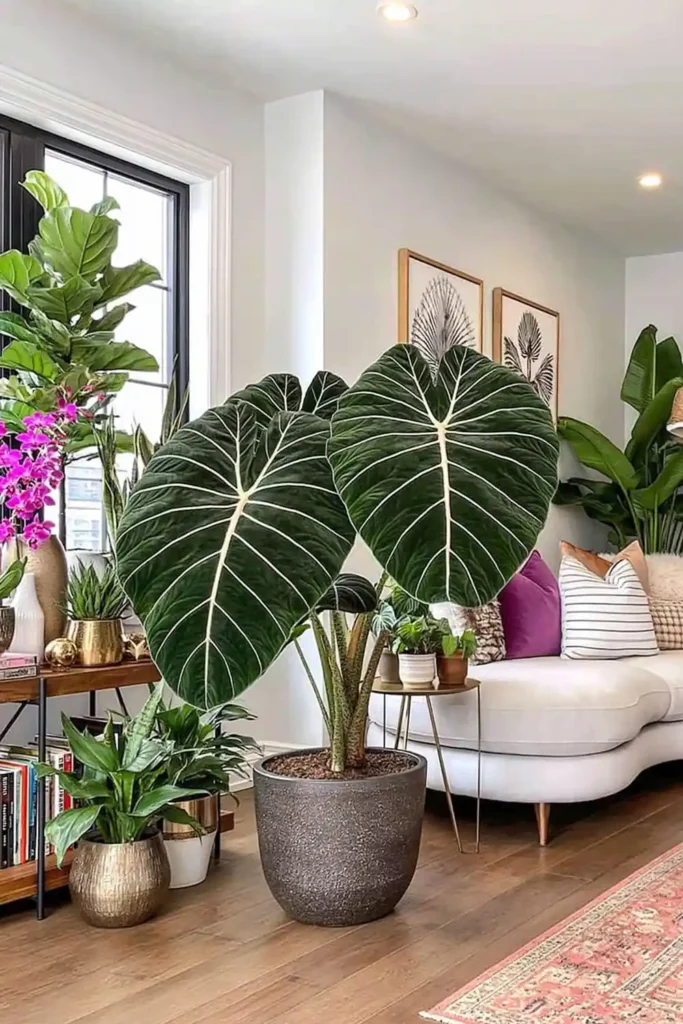
Swiss Cheese Plant Trailing Up a Ladder Stake
A Swiss Cheese plant trailing up a ladder stake gives the plant a clear shape while still letting it look relaxed. The split leaves bring texture, and the ladder stake helps guide the stems upward instead of allowing them to sprawl across a surface.
This idea is useful when you want height but do not have space for a very wide plant. The ladder stake can sit inside the planter and become part of the display. I would choose a simple pot, so the leaves and support stay visually connected instead of looking busy.
For placement, use this idea near a wall, beside a cabinet, or in a bright corner where the plant can climb without getting in the way. Tie the stems loosely as they grow, and avoid pulling them too tight. The finished look ought to feel natural, not forced.
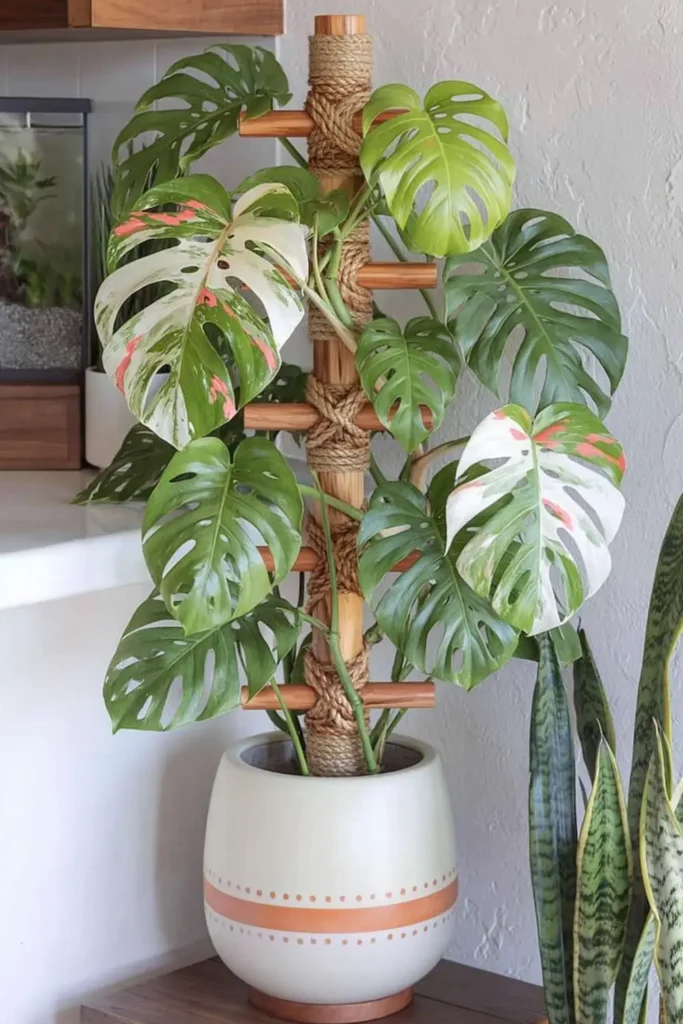
Lush Calatheas on a Silver Tray
Lush Calatheas on a silver tray can make a tabletop display feel neat and intentional. The tray gathers the plants into one centerpiece, while the patterned leaves bring movement and detail. It is a nice option for a coffee table, dining table, or wide console.
The silver tray adds a light reflective touch, but it should not overpower the plants. I would use simple pots inside the tray so the Calathea leaves remain the main feature. If the tray is large enough, a little spacing between the pots will help each plant show its shape.
This setup is practical because the tray makes the arrangement easier to move when needed. Calatheas prefer indirect light and steady moisture, so keep them away from harsh sun or dry heat. Wiping the leaves gently now and then also helps the patterns stay clear.
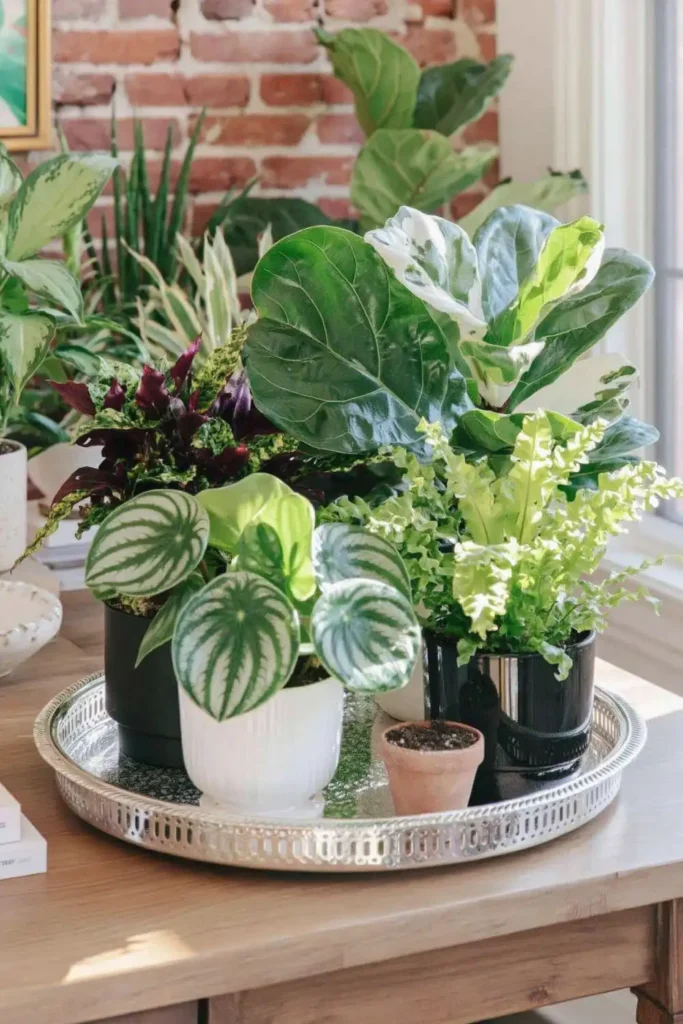
Little Green Bowl Centerpiece
A little green bowl centerpiece is a simple way to bring plants into a small space. It works well when you want something low, compact, and easy to place on a table, desk, or shelf. The bowl shape keeps the greenery gathered and soft.
This idea can be made with small leafy plants, mossy texture, or compact greenery that fills the bowl without growing too tall. A ceramic, stone, or glass bowl can change the mood depending on the room. I like this kind of centerpiece on a coffee table because it does not block views or take over the surface.
For a tidy look, keep the planting full but not overcrowded. If you use several small plants, choose varieties with similar care needs so watering is easier. A small bowl display looks best when the surrounding decor is simple, and the greenery has room to stand out.
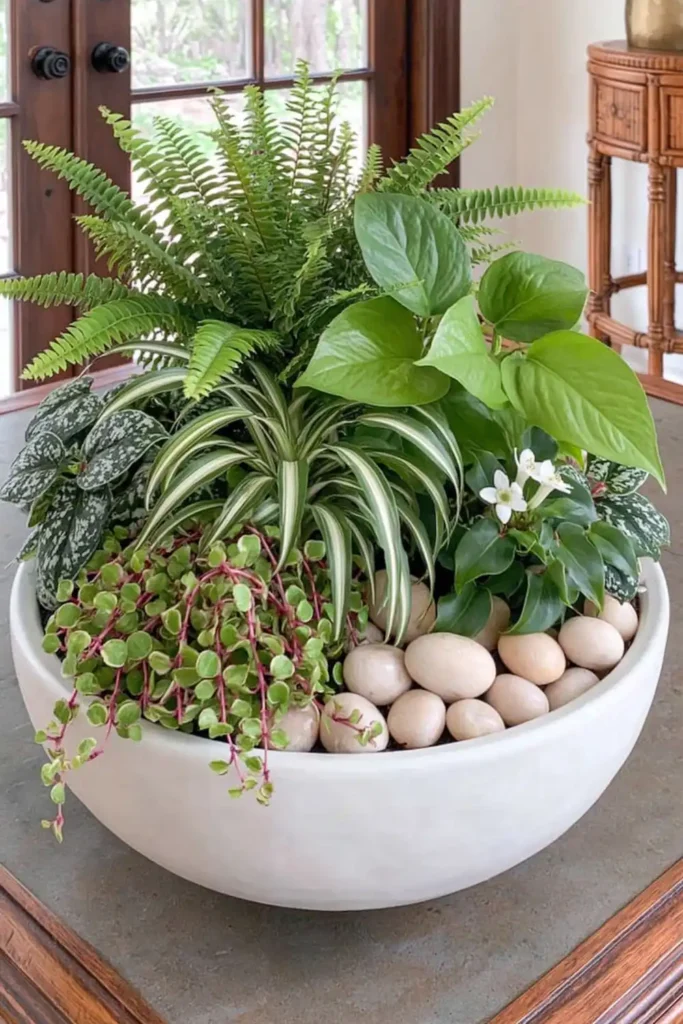
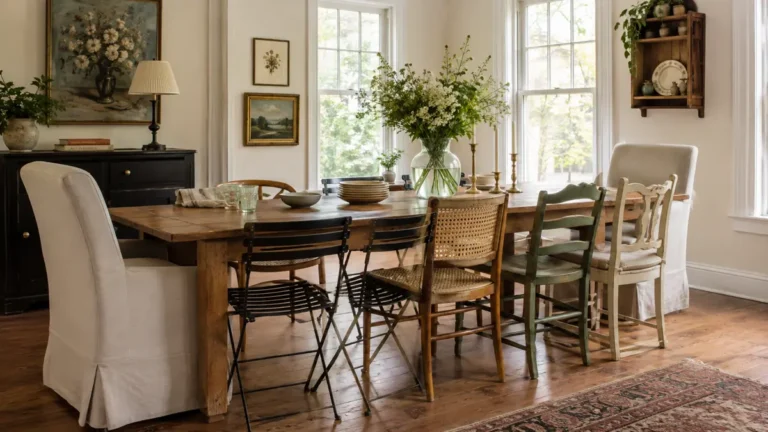
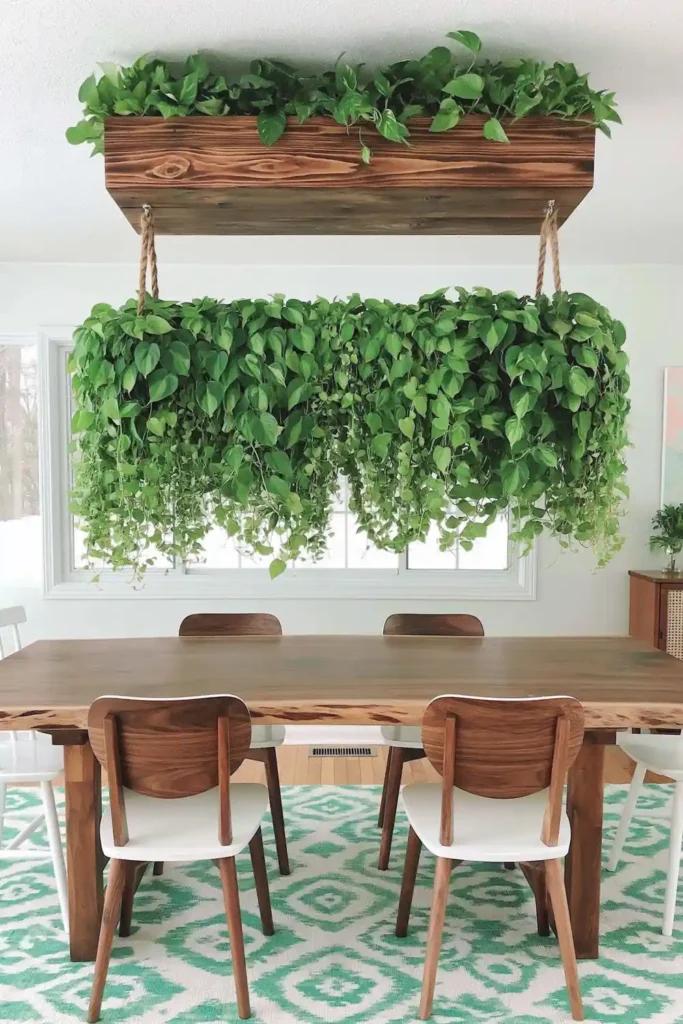
Hanging Green Centerpiece Above a Dining Table
A hanging green centerpiece above a dining table can make the whole dining area feel more special without taking up any table space. It draws the look upward and leaves the surface free for dishes, candles, or everyday use.
The key is keeping the hanging greenery balanced with the size of the table. It should feel full enough to be noticed, but not so low or wide that it gets in the way. A simple hanging fixture with trailing plants or gathered greenery can soften the room and add a fresh layer above the table.
For practical use, check the height carefully. People should be able to sit, talk, and pass dishes without the greenery feeling intrusive. This idea works especially well in dining rooms with plain ceilings or simple tables that need a little more character.
Bringing Greenery Into Everyday Rooms
Houseplant centerpieces do not need to be complicated to make a room feel fresher. A single orchid in a metal planter, a fern in an urn, or a trailing pothos on a cabinet can change the feeling of a space without replacing furniture or repainting walls.
What I like most about these ideas is that they can be adjusted to fit real homes. You can use a small snake plant on a desk, a large Alocasia in a corner, or a hanging green display above a dining table, depending on the space you have and the amount of care you want to give.
Start with one spot that feels empty or unfinished, then choose a plant and container that suit the room. Once the greenery feels natural there, it becomes easier to include more without making the home feel crowded.