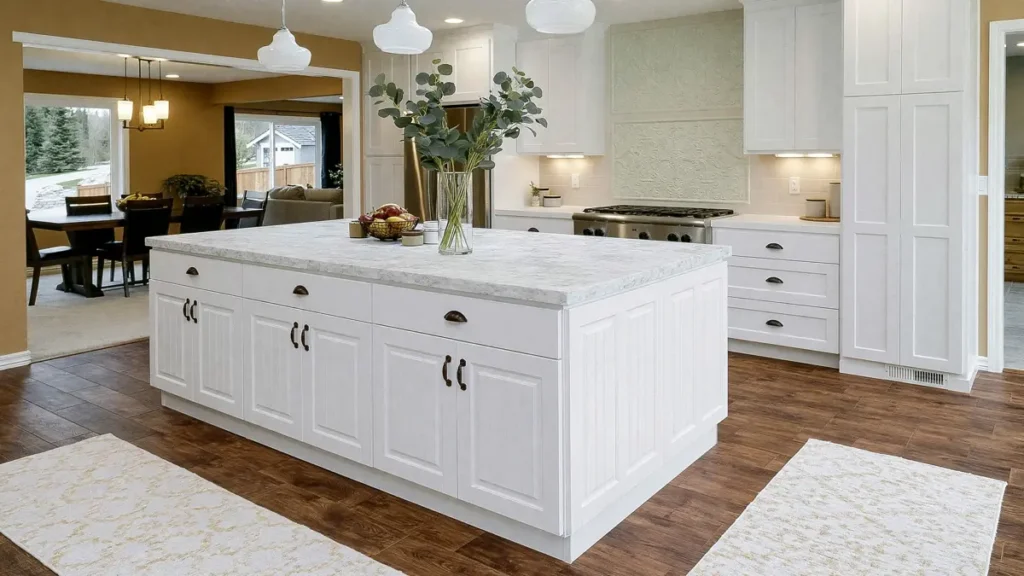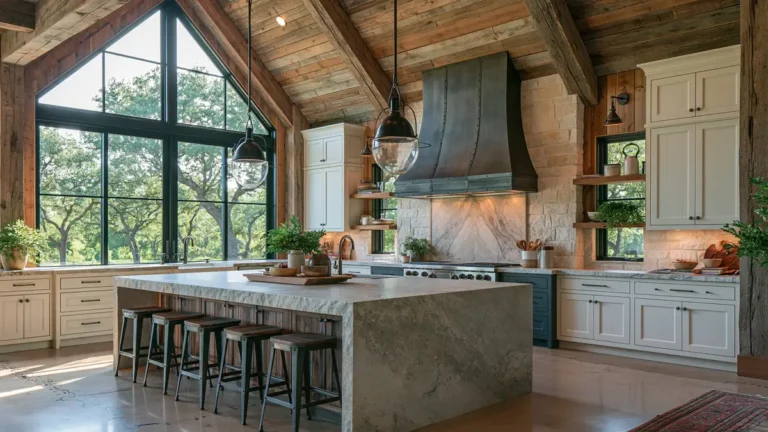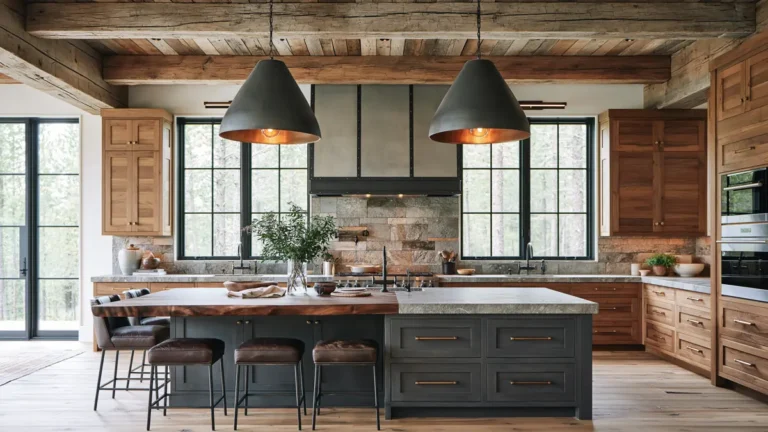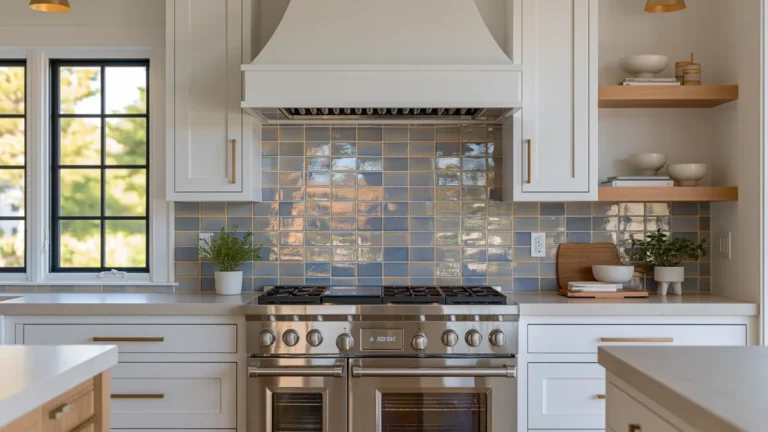

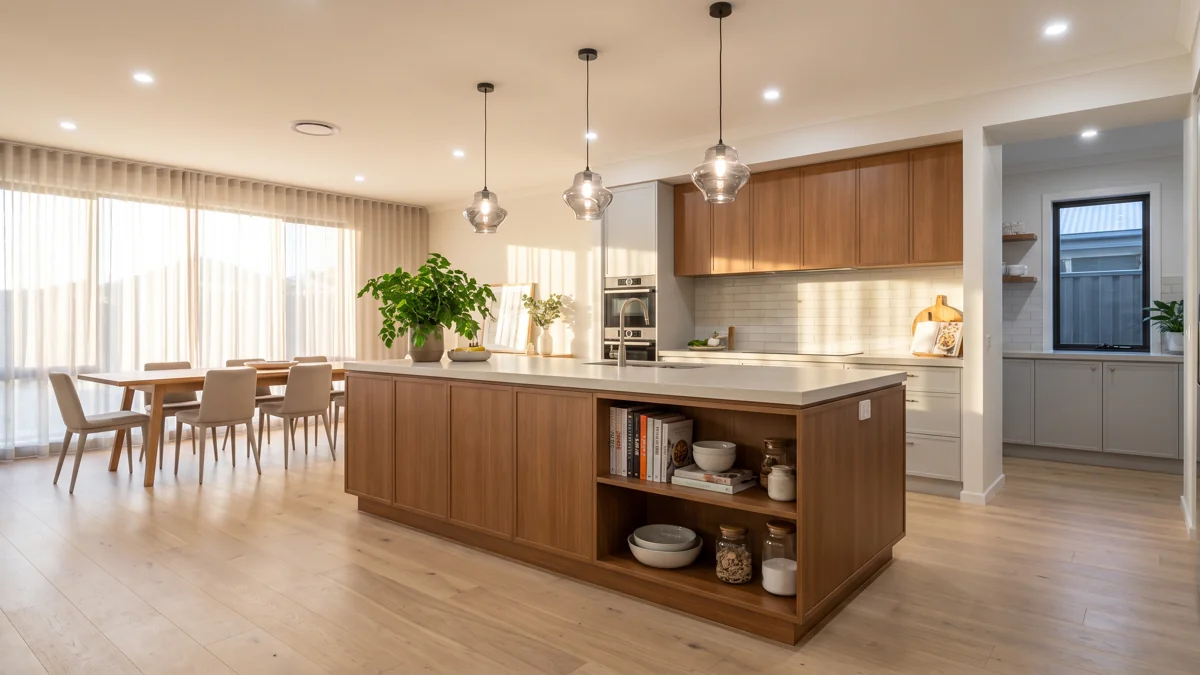
A kitchen island can do much more than fill empty floor space. The right design can create extra storage, provide a comfortable place to sit, and make everyday cooking seem more organized.
These kitchen island decor ideas for every layout include compact carts, built-in appliances, rustic finishes, and flexible seating options. Whether your kitchen is narrow, open-plan, or large enough for a substantial island, the goal is to choose a design that works with the way you actually use the room.
Compact Foldable Kitchen Islands for Tight Layouts
A compact foldable island is a sensible choice when floor space is limited, but extra work surface is still needed. The drop-leaf design allows the island to stay narrow during everyday use, then expand when you need room for meal prep, baking, or serving. Lockable wheels also make it easier to move the island aside when the kitchen feels crowded.
A solid oak top adds warmth and gives the small piece a more substantial look. Storage can be built into the base through a cabinet, shelf, and drawer, while a rolling microwave cart creates another useful surface nearby. Keeping the storage mostly concealed helps the kitchen feel tidier.
Place the island near a clear wall or at the end of a cabinet run rather than directly in the main walkway. Open the folding leaf only when needed, and use the drawer for tools you reach for regularly. This makes the island useful without allowing it to dominate the room.
Multi-Functional Kitchen Carts with Open Storage
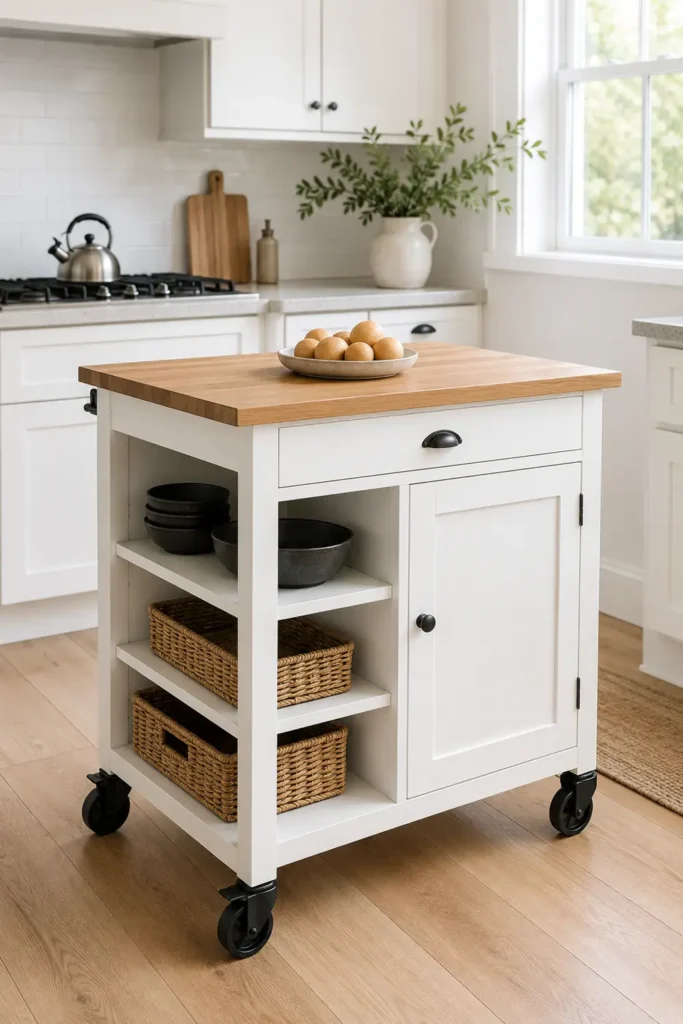
A rolling multi-functional cart works well in kitchens where storage needs change throughout the day. It can serve as a prep station while cooking, then move closer to the dining area when it is time to serve. Open storage keeps frequently used items visible and easy to reach.
A plastic cutting board on top creates a practical work surface that is simple to clean. Metal diamond-mesh baskets add ventilation and texture, while tilt-out baskets make it easier to reach produce, towels, or packaged ingredients. Hooks along the side can hold utensils without taking up shelf space.
Try assigning each storage level a specific purpose. Keep prep tools and cutting boards near the top, pantry items in the baskets, and bulkier cookware on the lower shelf. Position the cart close to the refrigerator or stove during meal preparation, then roll it against a wall once you are finished to open the walkway again.
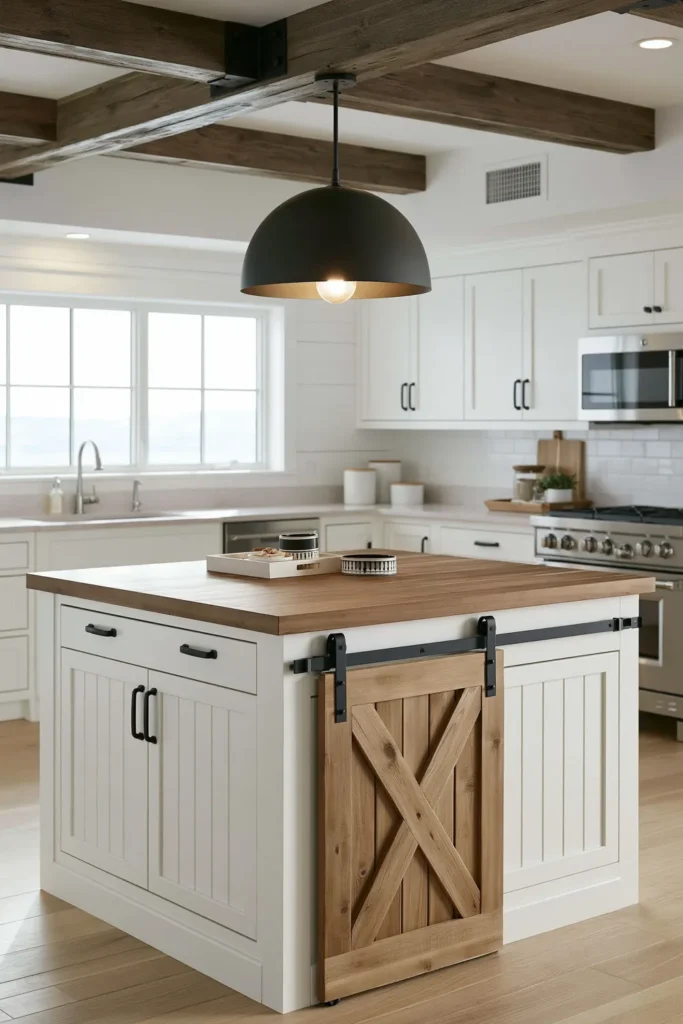
Sliding Barn Door Islands with Rustic Storage
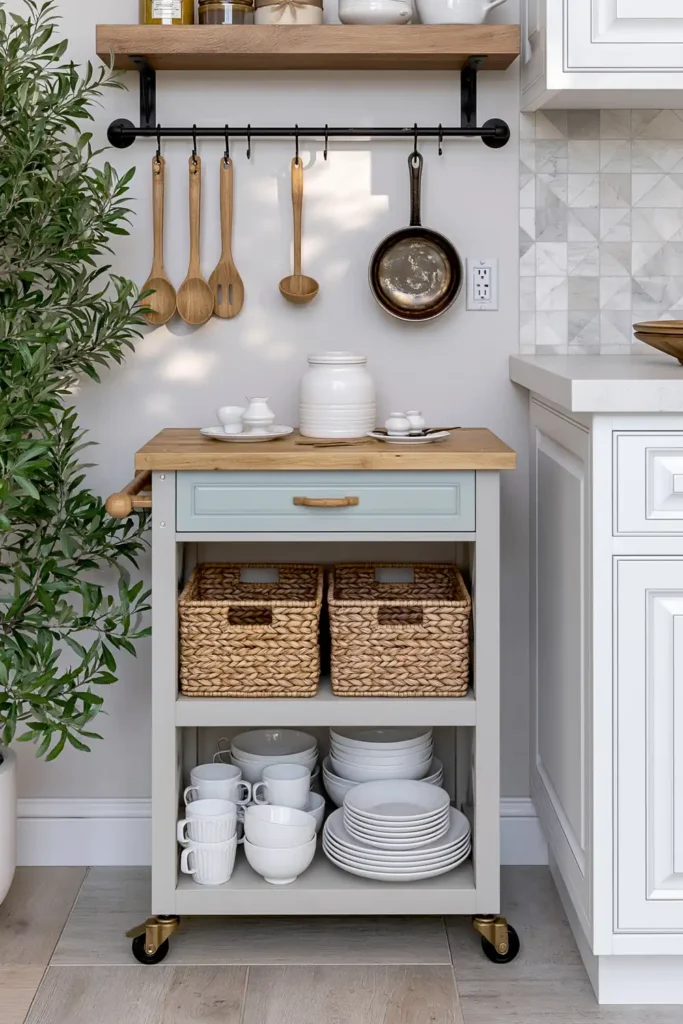
A kitchen island with sliding barn doors brings character to the room while keeping storage practical. The doors can cover less attractive items, while open shelves display baskets, glassware, or frequently used dishes. This mix of hidden and visible storage makes the island feel useful without looking too heavy.
Distressed white and brown wood grain finishes create a relaxed farmhouse look. Metal tracks, mesh panels, and burnished hardware add contrast and help the piece feel sturdy. Small storage bins can organize loose items, while built-in glass holders and a spice rack make good use of narrow spaces.
Keep the open shelves simple so the island does not appear cluttered. Two matching baskets, a small stack of dishes, and a few glass containers are usually enough. Use the barn-door cabinet for appliances or supplies that are better kept out of sight, and place the spice rack on the side closest to the main prep area.
Culinary Islands with Built-In Appliances
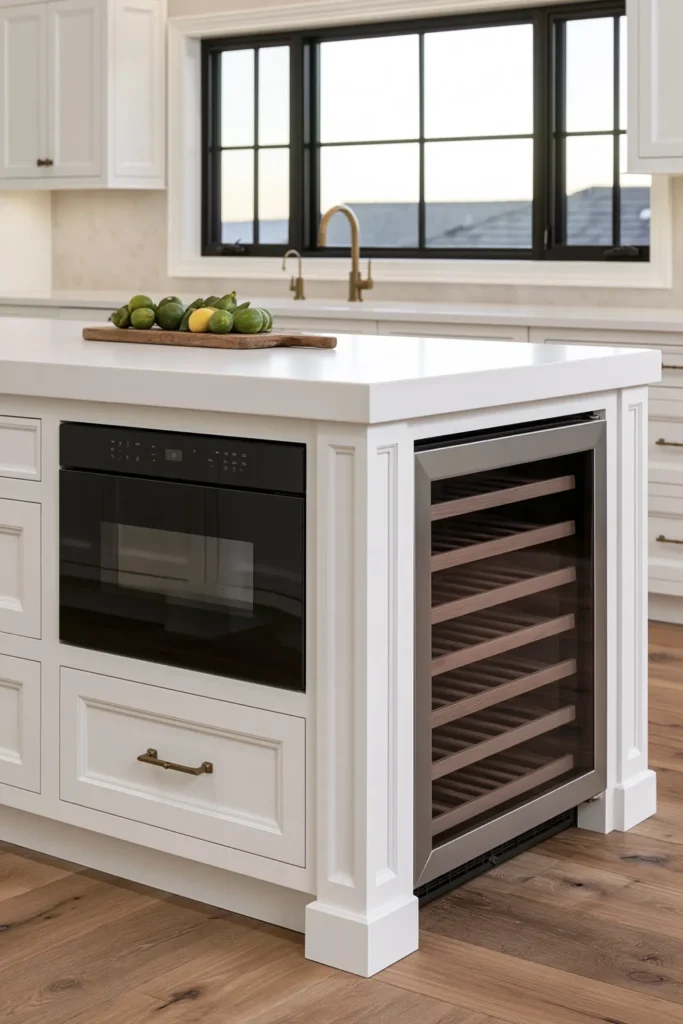
A cooking island with built-in appliances can become the working center of a busy kitchen. Instead of spreading cooking tasks across several areas, the island brings preparation, cooking, storage, and cleanup into one convenient zone. This layout works especially well in larger kitchens with enough room for people to move around on all sides.
A rubberwood top features a warm, natural surface above the more technical features. Microwave drawers, bottle coolers, and an integrated stovetop can sit neatly within the cabinetry. A hidden dishwasher and concealed trash storage keep practical functions close by without interrupting the clean appearance of the island.
Plan each appliance around your normal cooking routine. A microwave drawer works best near the food-prep area, while the dishwasher should sit close to the sink and dish storage. Leave a clear section of countertop between appliances so there is always room to set down ingredients, trays, or hot cookware safely.
Minimalist Kitchen Islands with Simple Lines
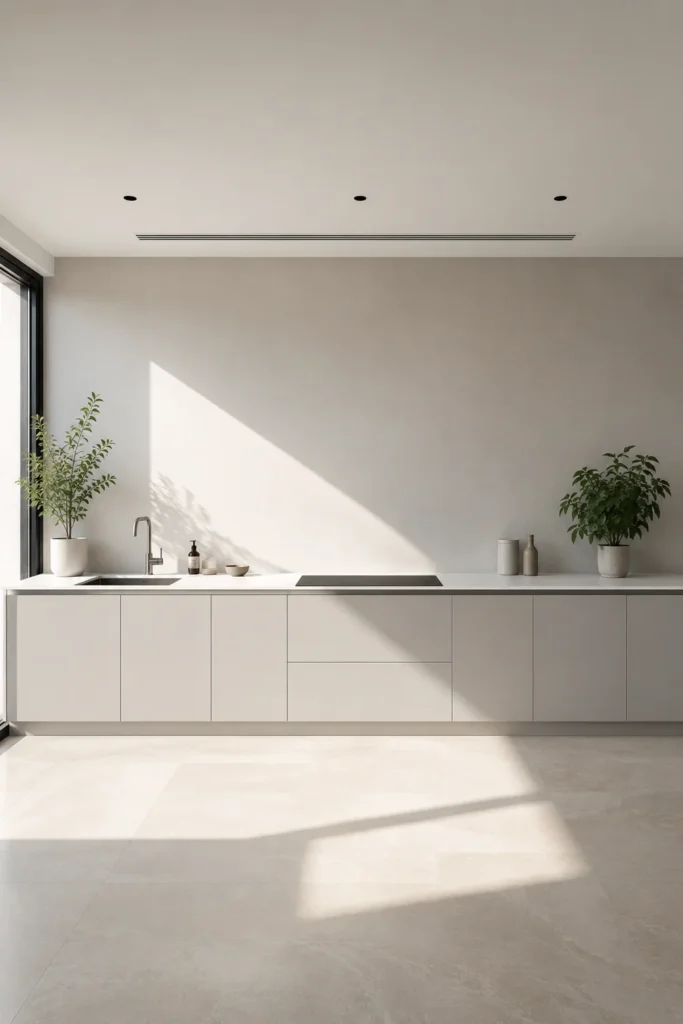
A minimalist island works best when the kitchen already has plenty of visual activity. Simple lines and a smooth countertop give the room a calmer focal point, especially when surrounding cabinets, appliances, or open shelving add enough detail on their own. The design feels clean without becoming cold when natural materials are included.
A solid wood butcher block or bamboo surface can soften the look, while a sintered stone top gives a more streamlined finish. Stainless steel details work well for hardware or built-in features, and flat-front cabinetry keeps the base uncluttered. A narrow built-in spice rack can add useful storage without interrupting the island’s simple profile.
Keep the styling restrained. A wooden bowl, one cutting board, or a small tray is usually enough on the countertop. Store everyday tools inside the cabinetry rather than leaving them out, and leave a generous section of the surface completely clear. That open space is what gives a minimalist island its practical, relaxed appeal.
L-Shaped Kitchen Islands for Open Layouts
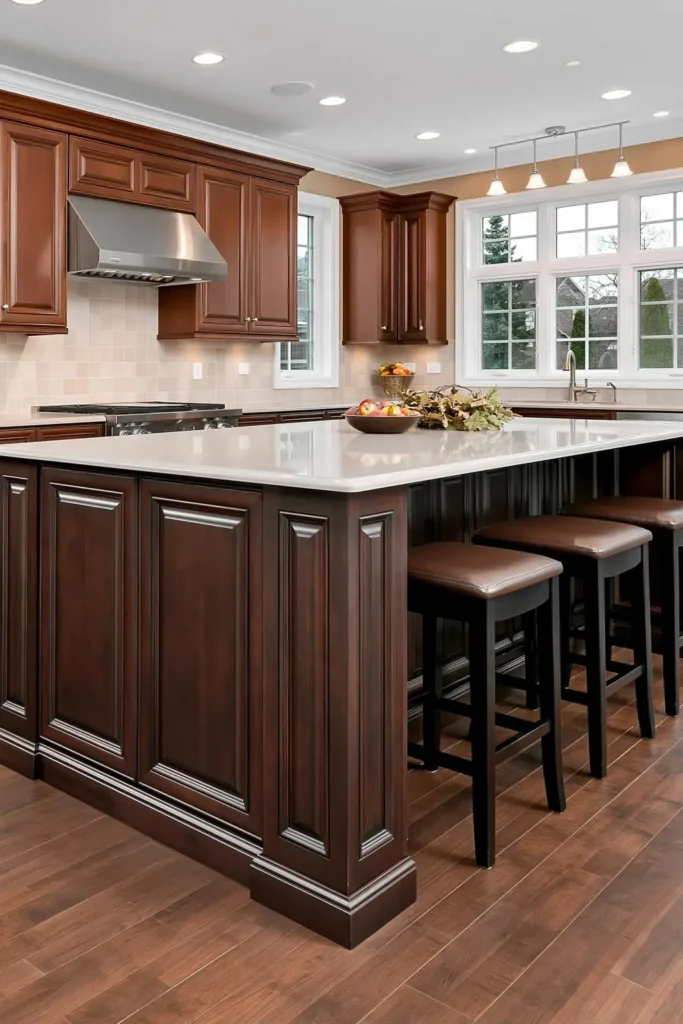
An L-shaped island can help define an open kitchen without closing it off from the surrounding living or dining area. One side can handle food preparation while the other creates a natural place for seating. This layout gives the island a clear purpose from both the kitchen and the adjoining room.
A solid oak top brings warmth across the long counter, while a base made from solid American hardwood adds visual weight. Adjustable bar stools can line the outer side, and heavy-duty metal utility racks can provide storage for cookware, baskets, or serving pieces. The corner of the L also creates a useful transition between the prep and seating zones.
Keep the working side closest to the stove and sink, then place the stools on the side facing the rest of the room. Leave enough clearance around the corner so no one feels boxed in. Using one finish across both sections will help the island feel like a single piece rather than two counters pushed together.
Rustic Wood Block Islands with Open Shelving
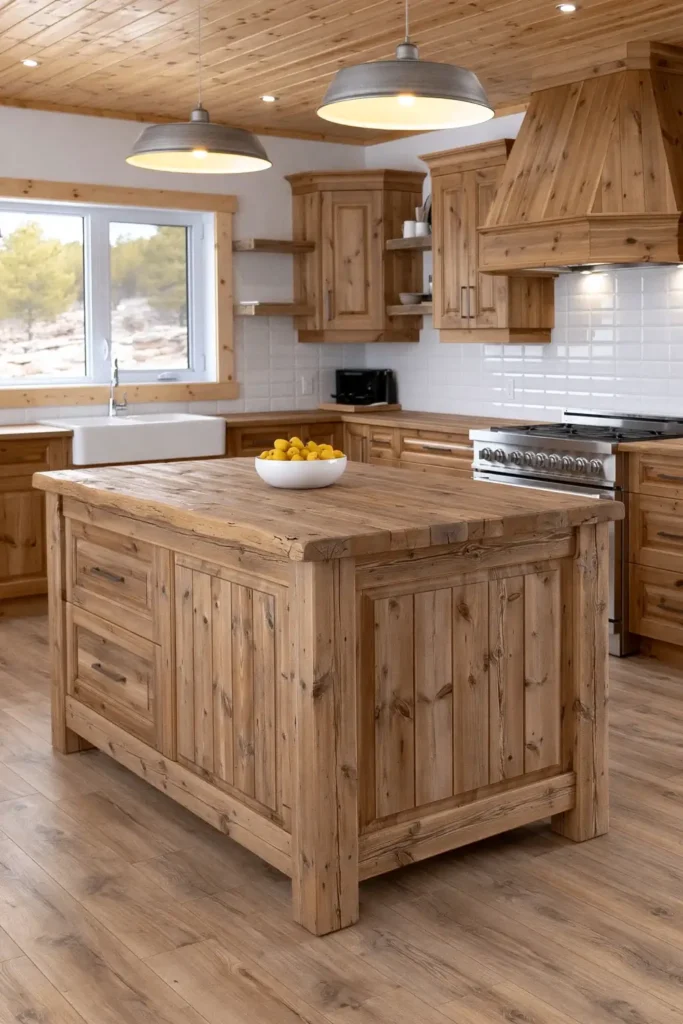
A rustic wood block island adds warmth and texture to a kitchen that feels too polished or plain. The visible grain and distressed finish make the piece feel established, while open storage keeps the design casual and useful. It works especially well in kitchens with farmhouse, cottage or industrial details.
Natural wood grain, rustic brown finishes, and wire accents create the main character of the island. Open shelves can hold mixing bowls, baskets, or folded linens, while hooks offer a convenient place for utensils. Barn doors can hide larger supplies, and a pull-out wire basket drawer offers an extra layer of practical storage.
Balance the rougher materials with a few simple, tidy elements. Use matching baskets on the lower shelves and avoid filling every open space. A rolling coffee cart in a similar wood tone can sit nearby, creating a small drink station without competing with the main island. Repeating one metal finish across the hooks and wire storage will keep the look cohesive.
Color-Pop Kitchen Islands with Pendant Lighting
A painted island can bring personality into a kitchen without changing every cabinet. Bold colors such as teal, yellow, or red create a strong focal point, especially when the rest of the room uses quieter finishes. This approach works well when the kitchen needs more energy but a full renovation is not practical.
A wood-grain tabletop can ground the color and prevent the island from feeling too bright. Distressed white cabinets and a white subway tile backsplash create contrast, while peel-and-stick tile can bring another small decorative detail. Sliding barn doors add texture and make the painted base feel more substantial.
Pendant lighting helps the island color feel intentional. Three gold globe crystal fixtures can draw attention upward and connect the island to the rest of the room. Choose one main color for the base, then repeat it only once or twice in smaller accents, such as a towel or bowl. This retains the lively color without making the kitchen feel busy.
Small Kitchen Islands with Tuck-Under Bar Seating
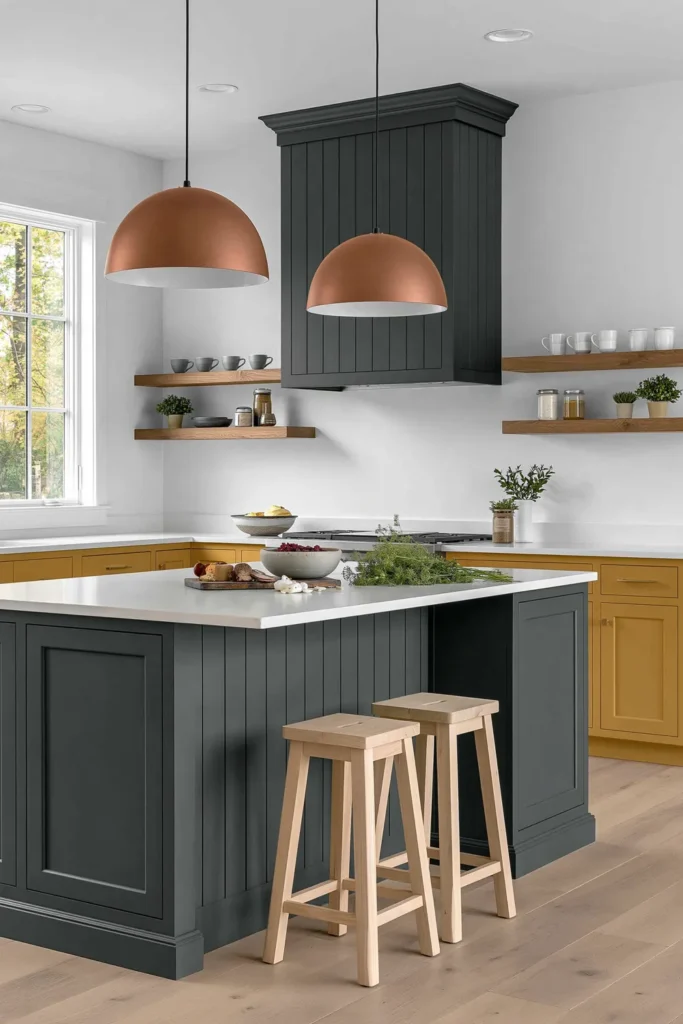
A small island with bar seating can add a useful gathering spot without taking over the room. The key is choosing a slim design that provides enough counter depth for informal meals while keeping the walkway open. Stools that tuck fully beneath the top help the island feel compact when no one is sitting there.
A wood top brings warmth and gives the island a comfortable, furniture-like look. The base can include a narrow spice rack, a door cabinet, or both, so storage is built into the footprint. Bar chairs with simple frames work best because bulky backs or wide seats can make a small kitchen feel crowded.
Place the seating on the side facing away from the main work zone. This keeps people out of the cooking path while still allowing conversation. Measure the stool height carefully so knees fit comfortably under the counter, and leave enough space behind each chair for someone to pull it out without blocking a doorway or appliance.
Kitchen Islands with Decorative Statement Legs
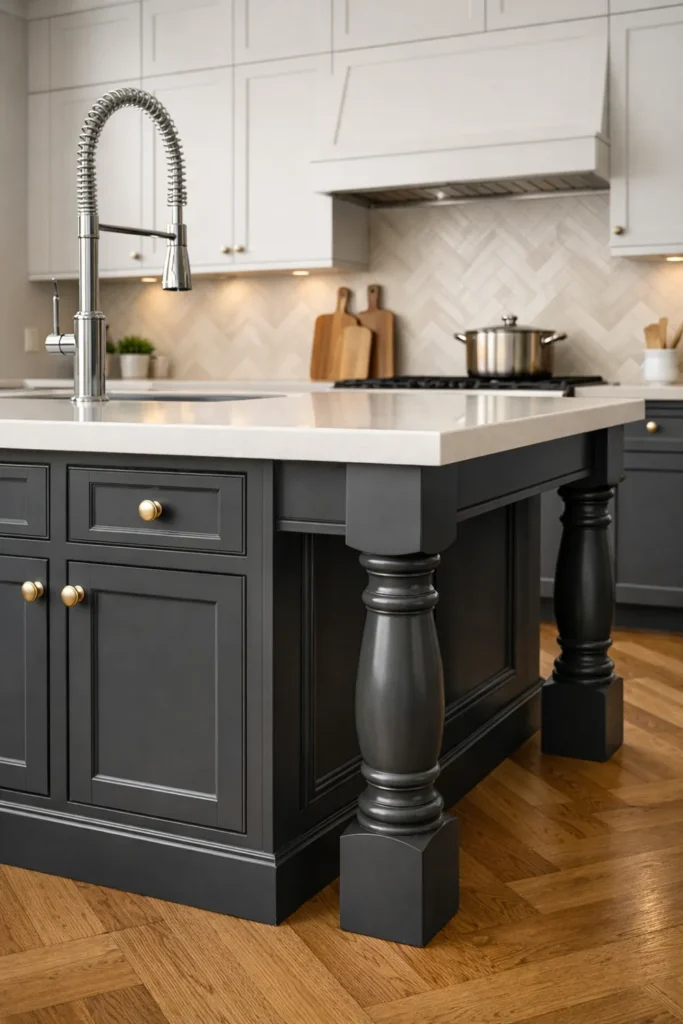
Decorative legs can make a kitchen island feel more like a custom piece of furniture. They are especially useful when the island has an overhang for seating, because the supports become a visible part of the design rather than something to hide. The design of the legs can also connect the island to the rest of the room.
Curved or ornate legs suit a farmhouse or traditional kitchen, while industrial metal supports create a more rugged look. Reclaimed wood adds texture and age, clear acrylic keeps the base visually light, and deep-carbonized bamboo brings a darker natural finish. Wrought iron can add strength without requiring a bulky profile.
Choose one leg style and repeat its finish elsewhere in the kitchen. Metal legs can coordinate with cabinet hardware, while reclaimed wood can relate to shelves or stools. Keep the countertop and cabinetry relatively simple so the legs remain the main detail. Too many competing finishes can make the island look pieced together rather than intentional.
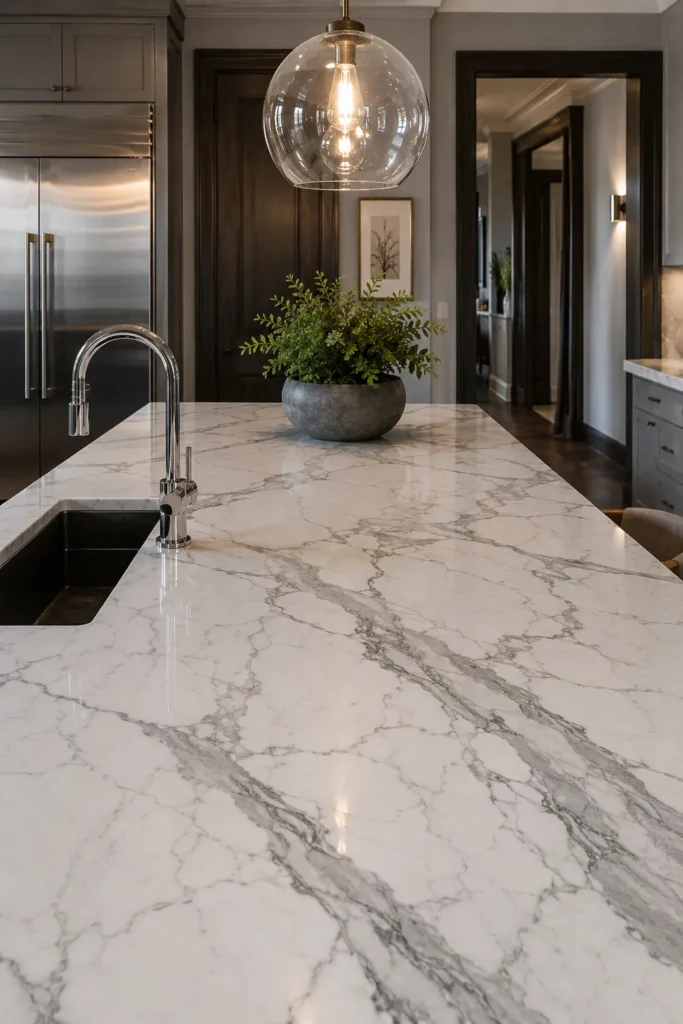
Marble Countertop Islands with Natural Veining
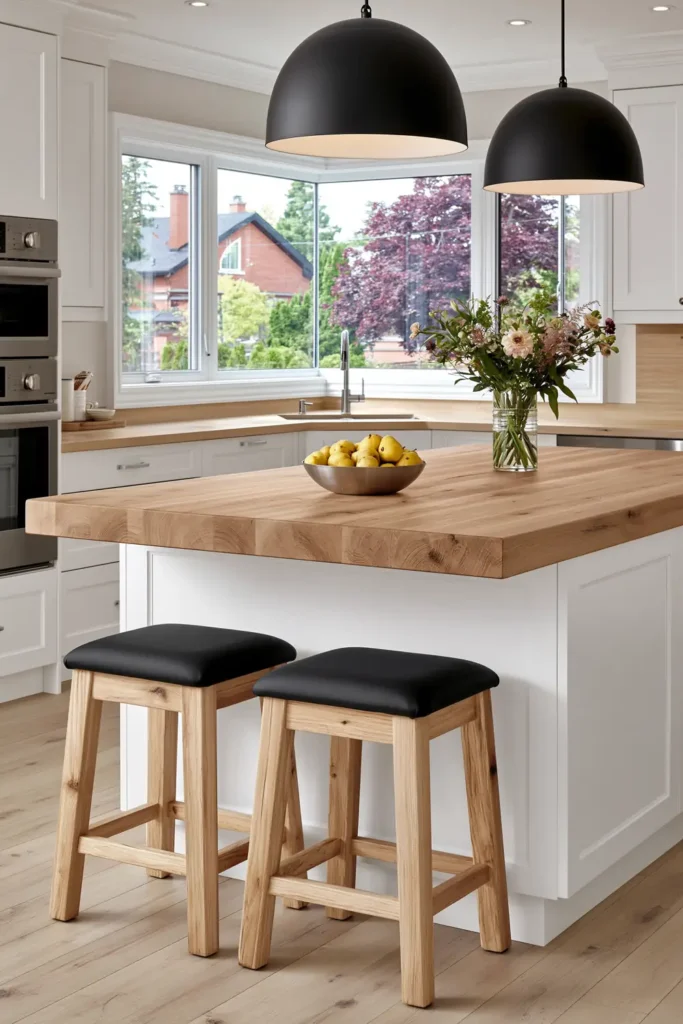
A marble countertop gives a kitchen island a refined surface while still feeling natural. Every slab has different veining, so the island becomes visually distinct without needing extra decoration. Marble is especially effective on a central island because the pattern can be viewed from several directions.
The smooth stone contrasts well with rugged wood cabinetry or a reclaimed base. This proportion keeps the island from feeling excessively formal. A marble cutting board or pastry tray can repeat the material in a smaller way, and non-slip feet help protect the main surface while keeping the board stable during use.
Keep countertop styling minimal so the veining remains visible. A plain bowl or one wooden board is often enough. Wipe spills promptly, especially acidic liquids, and use a separate work board for messy preparation. Pairing the marble with warm wood nearby can make the kitchen feel inviting rather than overly polished.
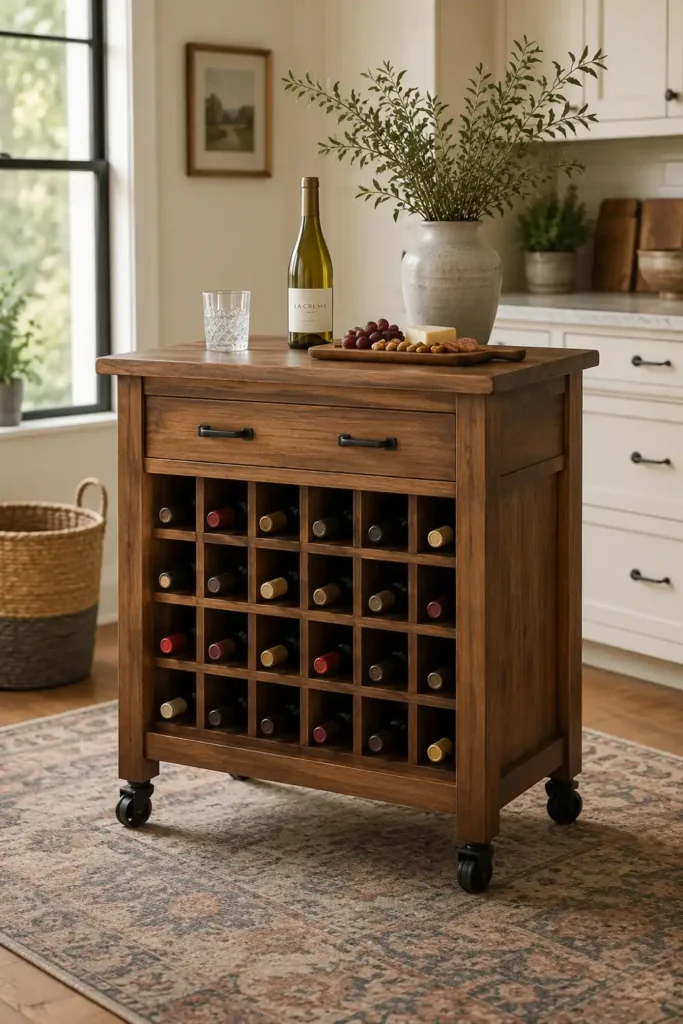
Rolling Kitchen Island Carts with bottles Storage
A rolling island cart with bottles storage works well when the kitchen also serves as an entertaining space. It creates a dedicated place for bottles and glassware while leaving the top available for serving. Because the cart can move, it can stay near the kitchen during preparation and roll closer to the dining area when guests arrive.
Built-in bottle racks keep bottles stored horizontally, while hanging glass holders use the space beneath the top. The serving surface can hold a tray, glasses, or small plates without requiring another table. A freestanding bottles rack nearby can expand the setup if the cart itself has limited capacity.
Avoid overcrowding the cart with decorative objects. Keep only the bottles and glasses used regularly, then leave part of the top open. Locking wheels are helpful when pouring drinks, especially on hard flooring. Position the cart away from direct sunlight and heat so the storage stays practical as well as attractive.
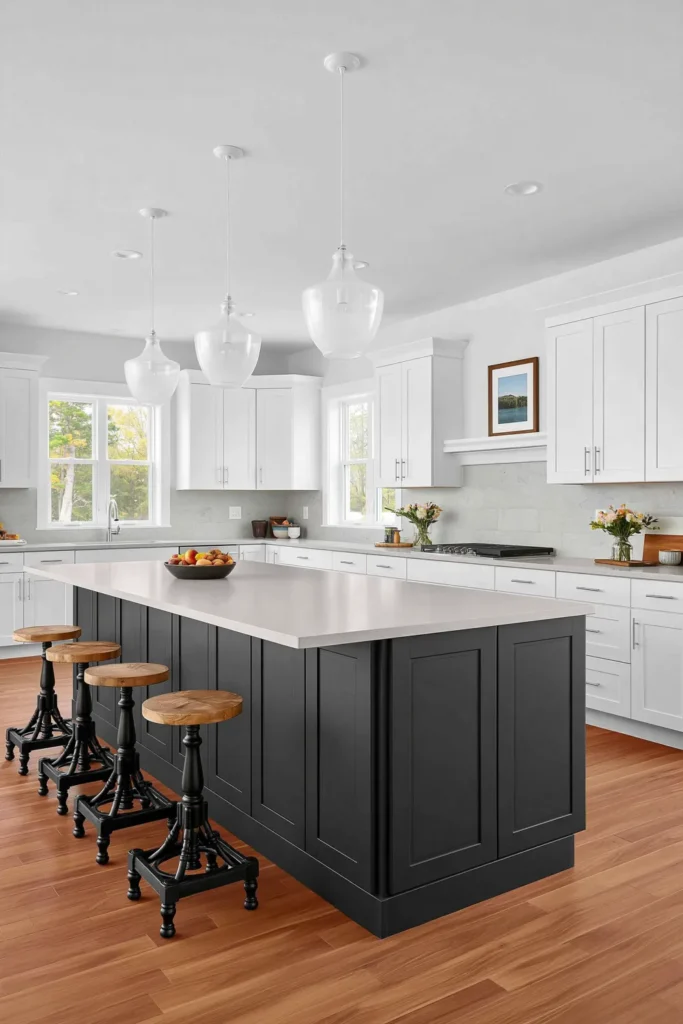
U-Shaped Kitchen Islands for Large Layouts
A U-shaped island creates a substantial work zone in a large kitchen. The open center keeps the layout accessible, while the three connected sides provide generous room for meal preparation, serving, and casual seating. It can also help a spacious kitchen seem more organized by bringing several functions into one defined area.
Stainless steel gives the island a durable, professional appearance and works especially well in kitchens designed for frequent cooking. One side can hold bar stools, while the remaining counters stay open for chopping, mixing, and plating. The broad surface also makes it easier for more than one person to work without competing for the same space.
Keep the opening of the U facing the main cooking area so movement between the island, sink, and appliances feels natural. Place stools along the outer edge, away from hot pans and sharp tools. Because the island is large, leave a few sections of countertop empty rather than decorating every corner.
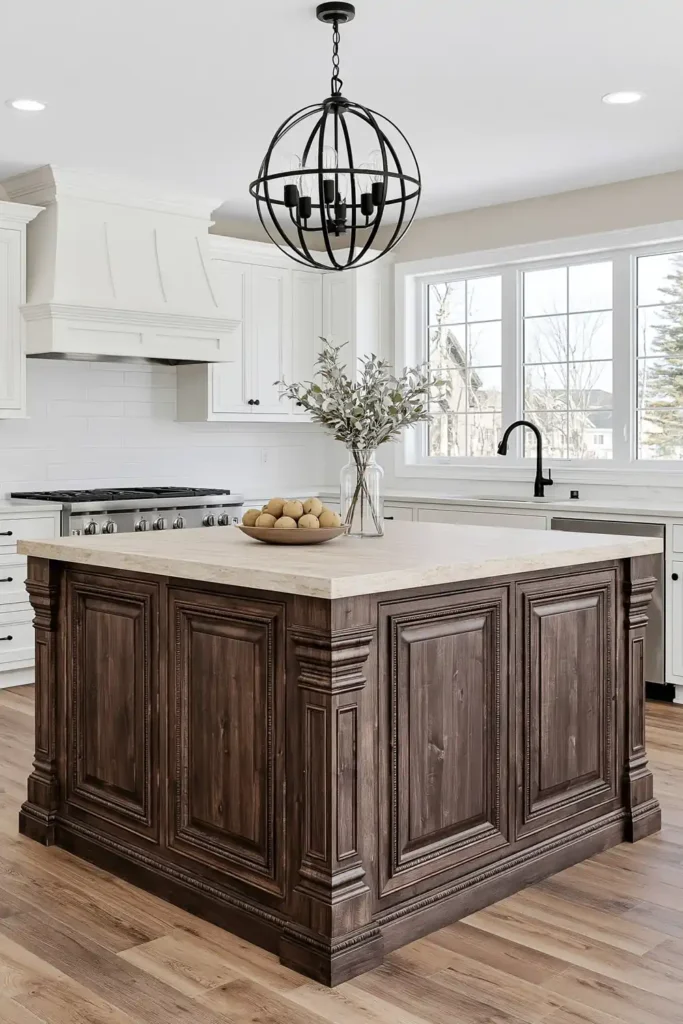
Custom-Built Islands with Personalized Storage
A custom-built island is useful when standard designs do not match the kitchen’s dimensions or storage needs. It allows every part of the piece to support a specific routine, whether that means storing baking equipment, organizing produce, or creating a dedicated preparation area.
Customized bins can keep frequently used ingredients and tools easy to reach. An integrated pull-out cutting board adds work space without irrevocably extending the countertop, while modifiable decorative legs allow the island’s height and appearance to suit the room. These details make the island feel carefully planned rather than added as an afterthought.
Before deciding on storage, list the items that currently create clutter on the counters or inside cabinets. Use that list to determine drawer depth, bin size, and shelf placement. Keep everyday items near the top and heavier pieces lower down. A custom island works best when the design responds to real habits instead of simply including as many features as possible.
Convertible Kitchen Islands with Fold-Away Seating
A convertible island is a practical option for a kitchen that occasionally needs more dining or preparation space. Its expandable surface can stay folded during normal use, then open when family or guests need extra seating. A rolling base offers another layer of flexibility by allowing the island to move as the room’s needs change.
Hidden compartments, two drawers, and adjustable shelves provide storage without making the piece look crowded. Stackable bar stools can be stored nearby and brought out only when the dining surface is extended. When closed, the island can function as a compact cart with a clear top for everyday prep.
Make sure the fold-away surface has enough support when fully opened. Store lightweight items on adjustable shelves and keep heavier cookware in the lowest compartment to make the cart more stable. Leave a clear area beside the island so the extension can open without blocking cabinet doors or the main walkway.
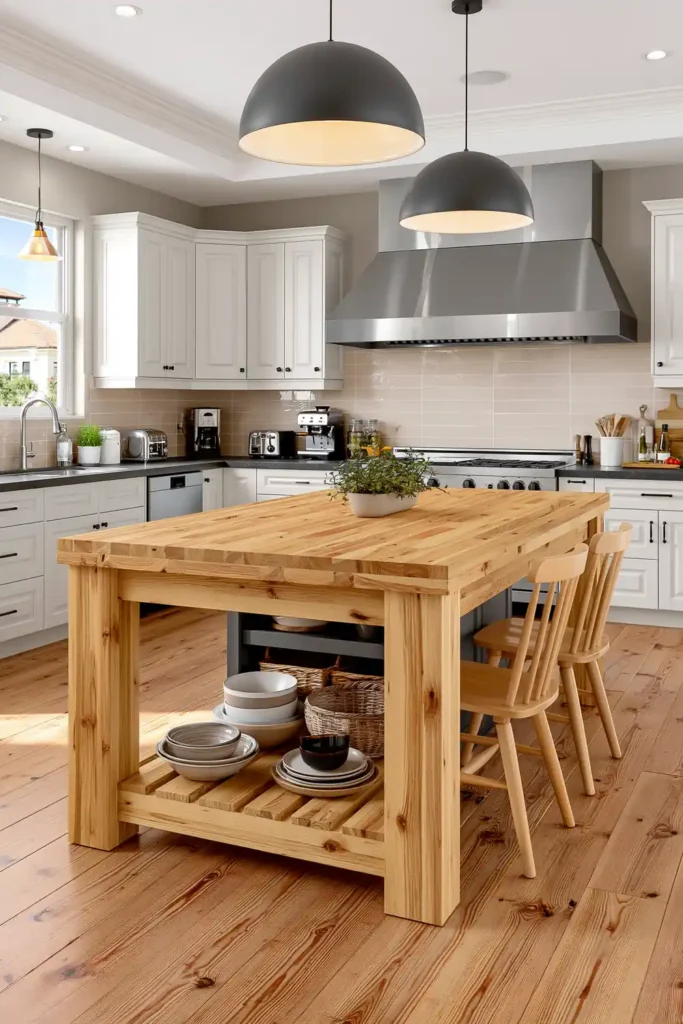
Kitchen Islands with Built-In Spice Racks
A built-in spice rack keeps small jars organized without using valuable countertop space. Placing the rack on the end or side of an island makes spices easy to reach during meal preparation while keeping them separate from larger pantry items.
Tiered shelves allow labels to remain visible, and clear acrylic organizers keep the arrangement light and tidy. Non-skid inserts help prevent jars from shifting when drawers or doors open. Magnetic hexagon glass jars can create a compact display, especially when they are arranged on a metal panel built into the island.
Group spices by how you use them rather than by color alone. Keep everyday seasonings at eye level and less frequently used jars on lower tiers. Avoid placing the rack beside a stove or sink, where heat and moisture can affect the contents. A simple, consistent set of containers will also keep the storage from looking visually cluttered.
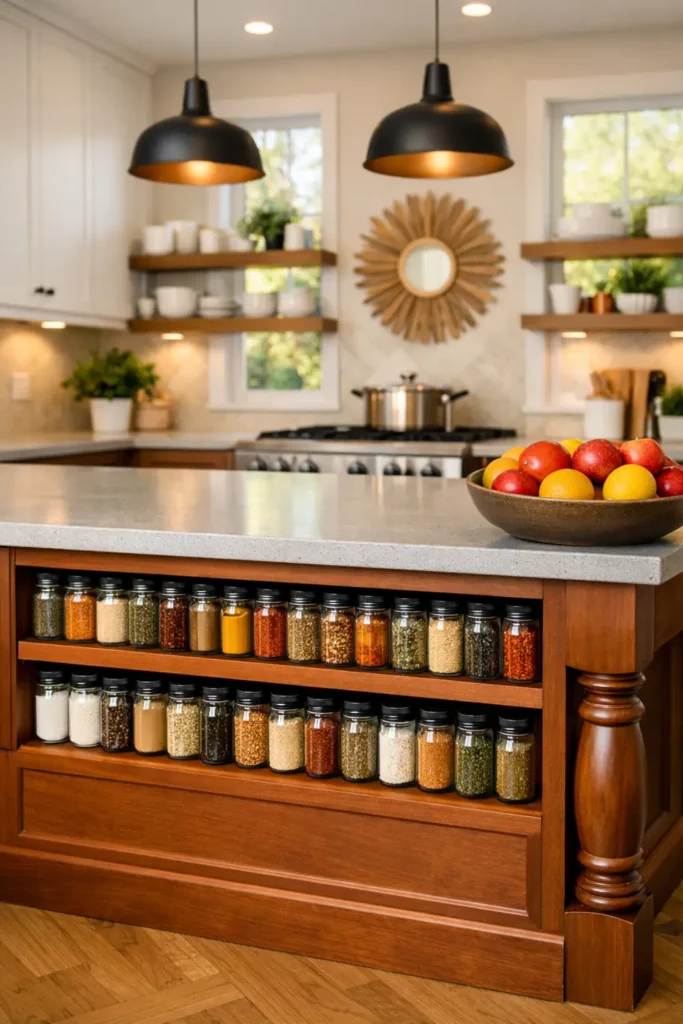
Floating Kitchen Island Designs for Airy Layouts
A floating island can add workspace without giving the kitchen a heavy or crowded appearance. Mounting the surface to a wall or supporting it with slim legs leaves more of the floor visible, which helps a narrow or open kitchen feel lighter. The design is especially useful when a full cabinet-style island would interrupt movement.
Floating shelves can provide simple storage above or below the work surface, while sleek, minimalist legs preserve the structure, visually unobtrusive. Lightweight nesting bins are practical for organizing linens, pantry items, or small tools without adding bulky cabinetry. Keeping the materials and finishes simple supports the clean appearance.
Use the island as a prep counter, breakfast ledge, or compact serving station rather than loading it with heavy appliances. Leave enough open space beneath the top to preserve the floating effect. Coordinating the island surface with nearby countertops can make it feel integrated, while a contrasting wood finish can help it read as a deliberate feature.
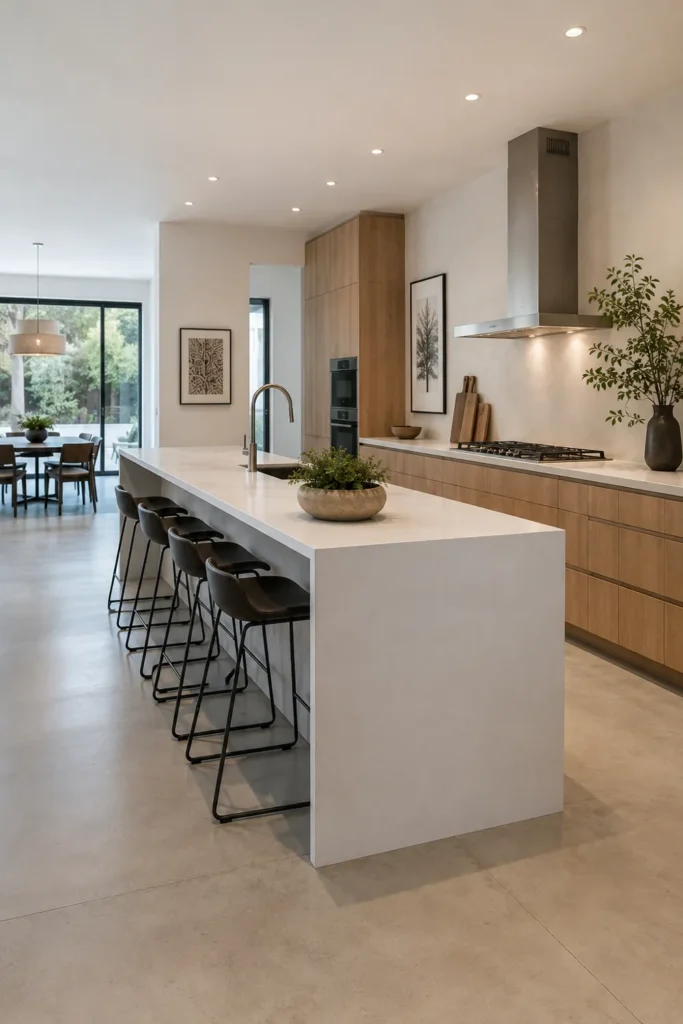
Vintage Repurposed Furniture as a Kitchen Island
An old dresser or table can become a distinctive kitchen island when its proportions suit the room. Repurposed furniture imparts character through details that newer cabinetry often lacks, including aged wood, original drawer fronts, and homespun hardware. It also gives a practical way to reuse a solid piece that could otherwise go unused.
Natural wood finishes can be refreshed with beeswax polish, while all-in-one paint can give a mismatched piece a more consistent appearance. Original marks and worn edges do not always need to be hidden, since they contribute to the island’s vintage character. Connector hardware can strengthen the piece or support an added worktop.
Before placing vintage furniture in the kitchen, check that it is stable and at a comfortable working height. Drawers can hold linens, utensils, and small tools, while the lower space may suit baskets or cookware. Add locking wheels only when the frame can support them securely, and protect the top with a durable food-prep surface.
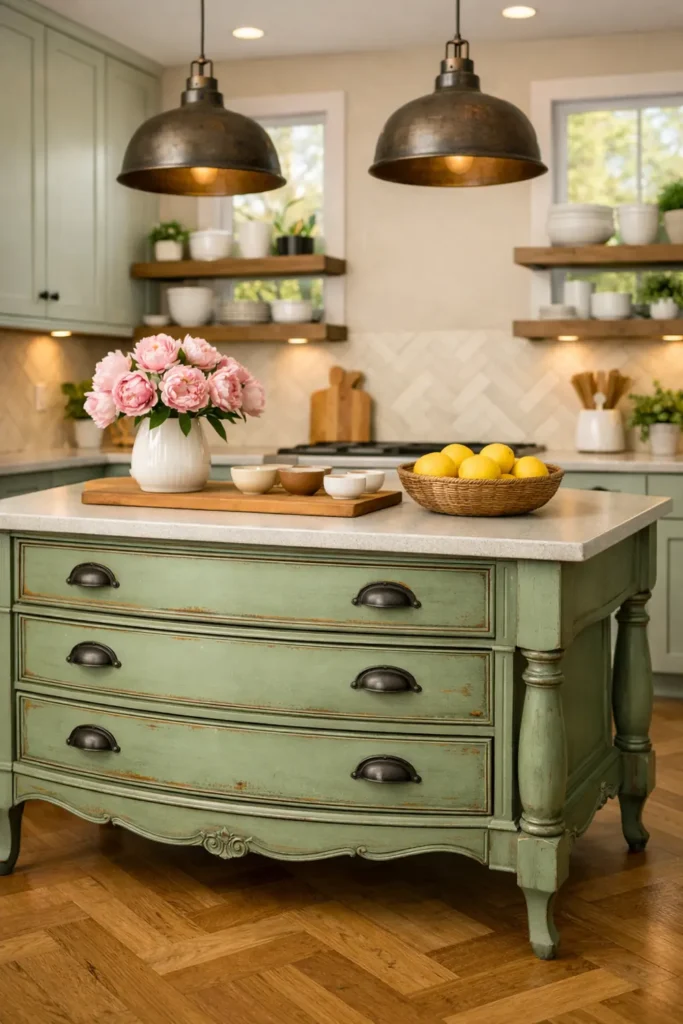
Choosing an Island That Fits the Way You Cook
The most useful kitchen island is not always the largest or most decorative one. A compact cart may be enough for a narrow room, while an L-shaped or U-shaped island can organize a more generous layout. Materials, storage, seating, and appliance placement should all support the way the kitchen is used each day.
These kitchen island decor ideas for every layout show how flexible the design can be. Foldable leaves, open shelving, built-in spice racks, bottles storage, and custom compartments can each solve a different problem without making the room feel overdesigned.
Start with the feature you need most, then build the rest of the island around it. A careful layout and a few useful details can make the kitchen feel easier to use while still showing your personal style.