
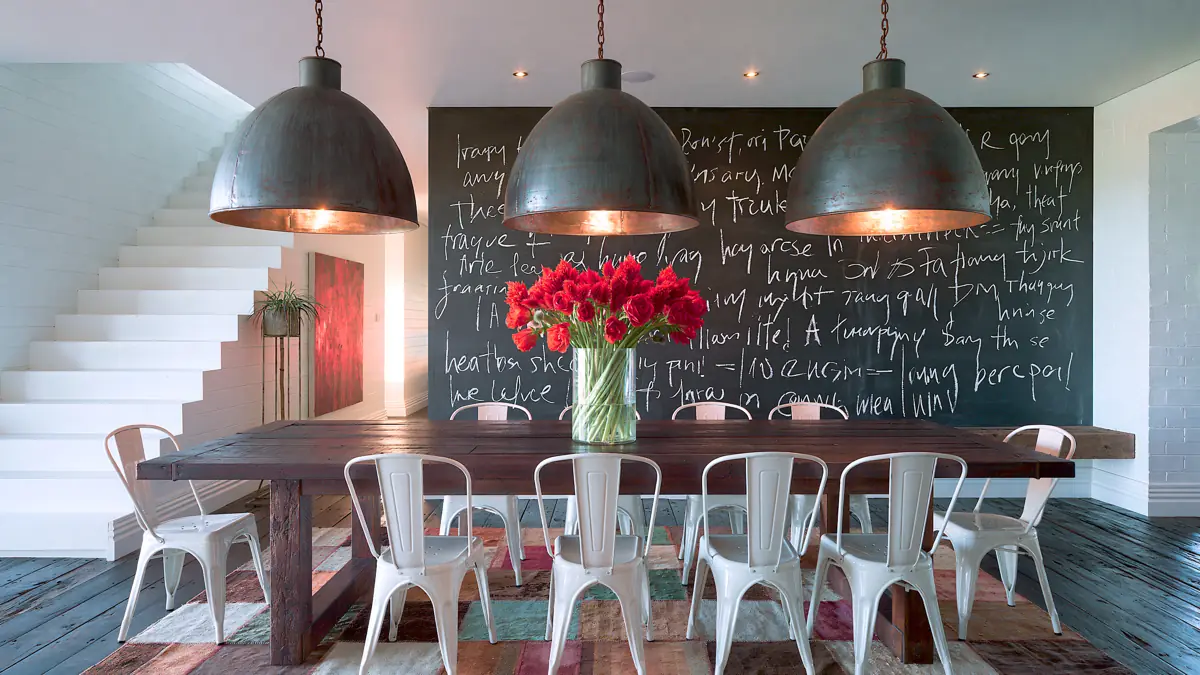
Dining Room Lighting Ideas to Set the Perfect Mood begin with understanding how light changes a room long before anyone notices the furniture. A bright overhead fixture can make the space practical for weekday meals, while a softer glow makes dinner feel slower and more relaxed.
The best results usually rely on more than one source. Pendants, lamps, dimmable downlights, and reflected light can work together to make the room comfortable without leaving the table too dark.
The ideas below explore different ways to create that balance, starting with cozy open-concept layouts, sculptural pendants, and softly lit dining corners.
Layered Illumination for a Comfortable Open-Plan Dining Area
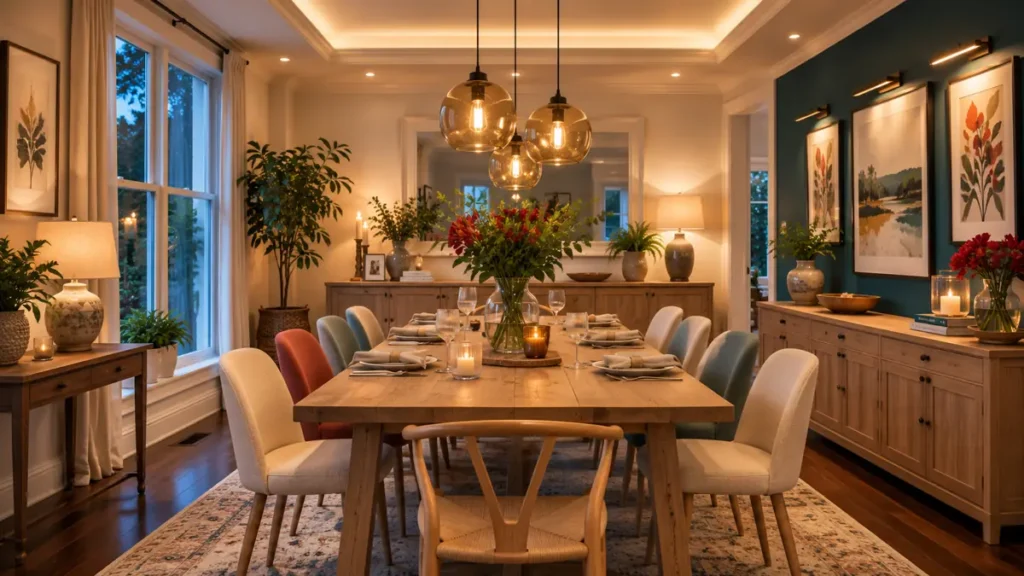
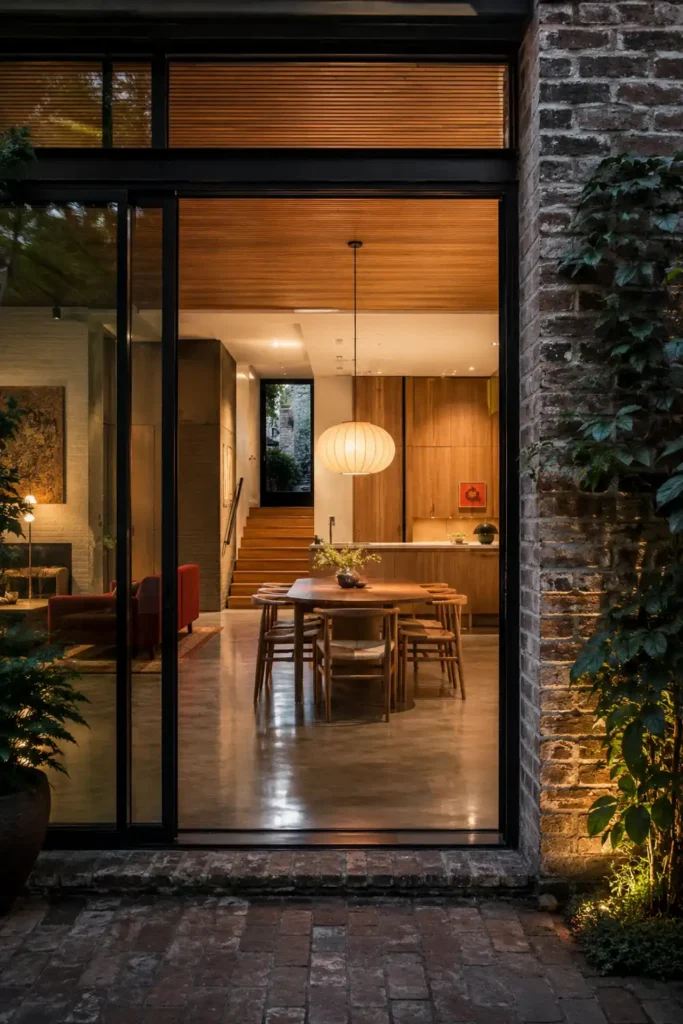
An open-plan room often needs lighting to define the dining area without separating it from the kitchen or living space. A low-hanging fixture above the table creates a visual center, while dimmable downlights provide enough general illumination for the rest of the room. Lamps placed on nearby sideboards or side tables soften the edges and stop the space from feeling flat.
The key is to let each light source do a different job. The pendant should focus attention on the dining table, the downlights should support movement through the room, and the lamps should add warmth at eye level. Warm-toned bulbs help these separate fixtures feel connected rather than mismatched.
For everyday use, keep the downlights slightly brighter while preparing food, then lower them once everyone sits down. Leaving the nearby lamps on creates a comfortable background glow and helps the dining area feel tucked in, even within a larger open layout.
Star-Shaped String Lights for a Magical Dining Corner
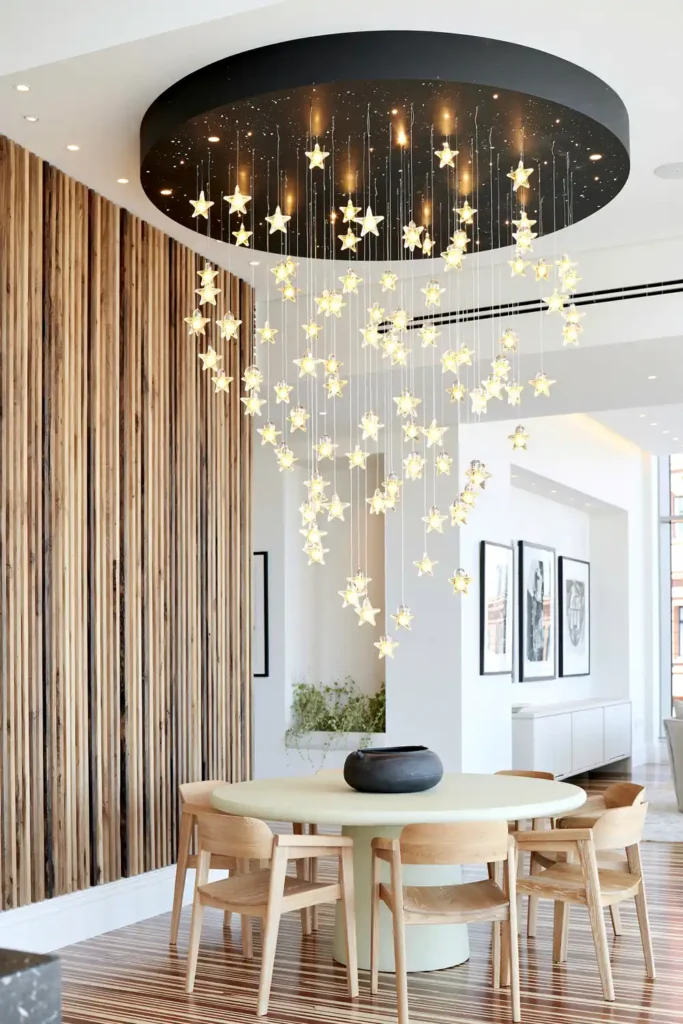
A separate dining corner can feel especially inviting when the lighting is decorative as well as practical. Star-shaped string lights bring a playful glow to a tucked-away area and work well when the room already has a comfortable, informal character. They add interest without requiring a large ceiling fixture or major electrical work.
These lights look best when arranged with some intention. They can follow the outline of a wall, hang loosely above the dining area, or frame the corner around the table. A warm white glow usually feels calmer and more suitable for evening meals than bright, cool-toned bulbs.
Because string lights are mainly atmospheric, it helps to pair them with a small lamp or another subtle light source nearby. This retains the table usable while preserving the soft mood. They are also a practical option for renters or anyone who wants to change the feel of a dining corner without making a permanent update.
Glass Globe Pendants Hung at Varying Heights
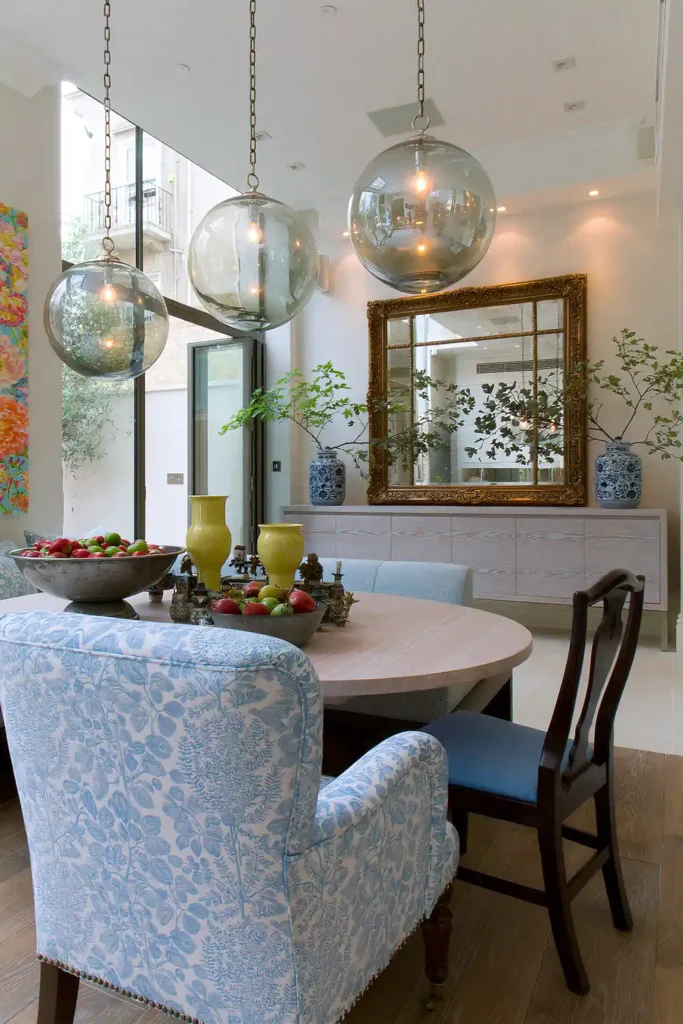
Glass globe pendants can give a quiet dining corner more energy without making it feel crowded. Hanging several globes at different heights creates movement above the table and turns the lighting into a sculptural feature. The clear or lightly tinted glass keeps the arrangement visually open, which is useful in smaller spaces.
Spacing matters with this style. The globes should feel connected, but not so close that they merge into one heavy cluster. Varying both the hanging height and the distance between each light gives the arrangement a more natural rhythm. Simple cords and restrained hardware allow the glass shapes to remain the main focus.
This approach works especially well over a round table or a compact dining setting where one oversized pendant might feel too bulky. Before installation, it is worth marking the planned drop lengths with a string. That makes it easier to check the composition from across the room and confirm that the lowest globe will not block anyone’s view.
Warm Dome-Shade Lighting for an Inviting Dining Nook
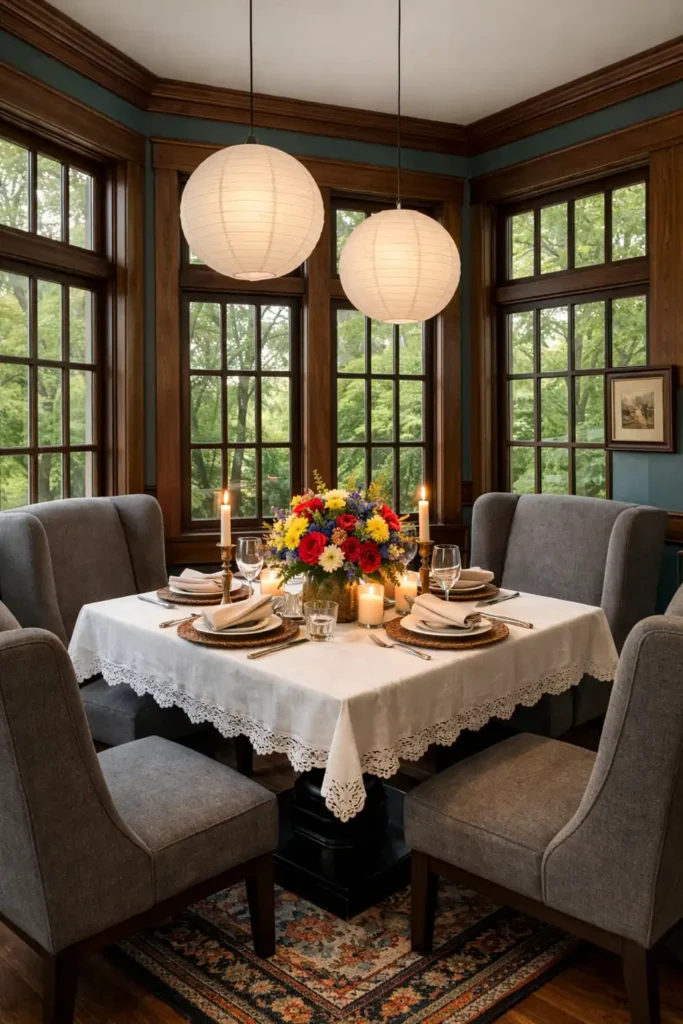
A dining nook benefits from lighting that feels close, warm, and focused. Dome shades direct light downward onto the table, while low-watt bulbs create a softer light that suits relaxed meals. This combination helps the nook feel distinct without making it excessively formal.
The shade material affects the result. A matte metal dome gives a clean, focused pool of light, while a lighter or slightly reflective interior can spread the glow more uniformly across the tabletop. Candles can add another layer, especially when placed in small groups rather than lined up in a rigid row.
To keep the nook comfortable, the pendant should hang low enough to feel intimate but high enough to leave clear sightlines across the table. A dimmer is useful because the same nook may need brighter light for breakfast or homework and a gentler setting in the evening. Layering the pendant with candles makes the space feel warm without relying on harsh overhead brightness.
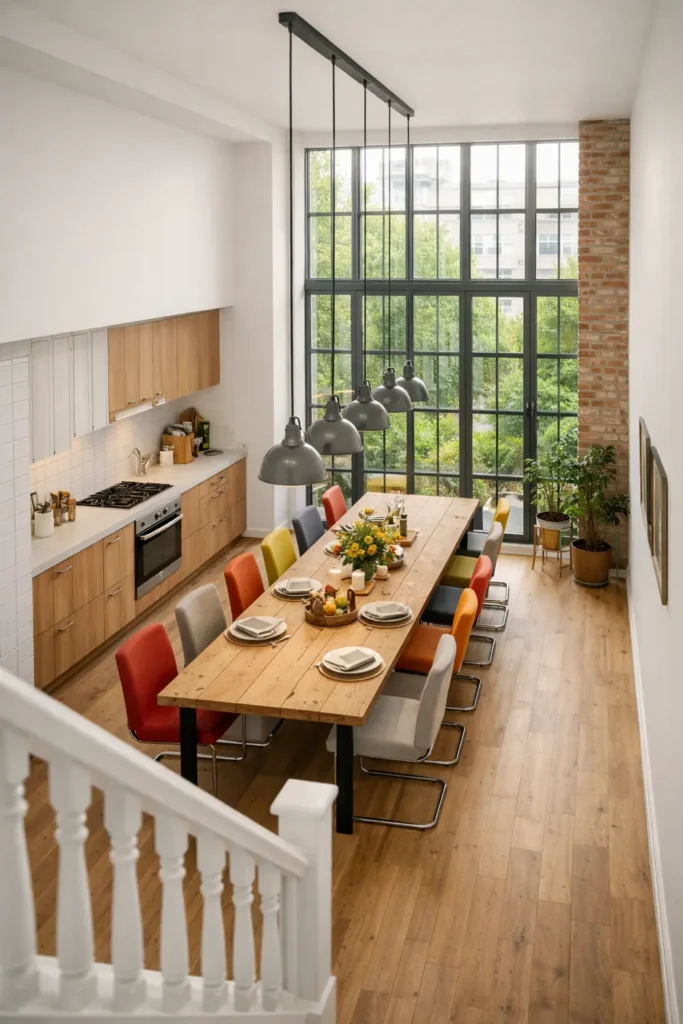
Oversized Industrial Pendants for High-Ceiling Dining Rooms
High ceilings can make a dining area feel impressive, but they can also leave the table looking disconnected from the room. Oversized industrial pendants solve that problem by bringing visual weight down toward the dining surface. Deep shades or metallic finishes help the fixtures hold their own in a large space.
The pendant size should relate to both the ceiling height and the table below it. A wide fixture works well over a long table, while two or three large pendants can create better balance across an extended dining area. Solid materials and strong shapes suit rooms with exposed beams, concrete, brick, or simple modern finishes.
Do not hang the lights too close to the ceiling simply because the room is tall. Lowering them creates a more comfortable zone around the table and directs light where it is actually needed. Checking the fixture from the doorway and from seated height helps confirm that it feels substantial without blocking the room’s open character.
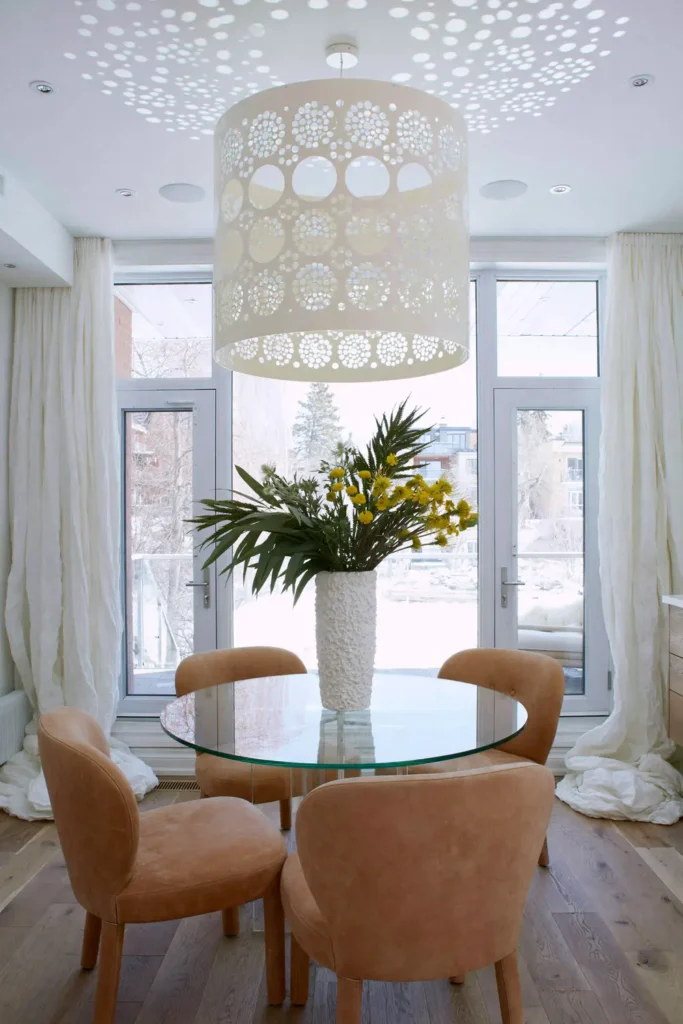
Pattern-Casting Pendants for Atmospheric Dining Room Lighting
A pendant that casts patterns onto the ceiling can make a dining room feel more layered after dark. Cutout, woven, or perforated shades allow light to escape in decorative shapes, creating movement beyond the table itself. The effect is especially noticeable in rooms with plain ceilings or simple walls.
Curtains can also become part of the lighting scheme. When they are closed in the evening, textured or softly colored fabric catches the reflected light and creates depth around the edges of the room. This creates a more enclosed, relaxed atmosphere without relying on strong wall colors or extra decoration.
The bulb choice should support the pattern rather than overpower it. A very bright bulb may create harsh shadows, while a warm, moderate glow keeps the shapes softer. Before choosing the fixture, check how the shade looks when illuminated, not only when switched off. The pattern it creates may be more important than the shade’s appearance during the day.
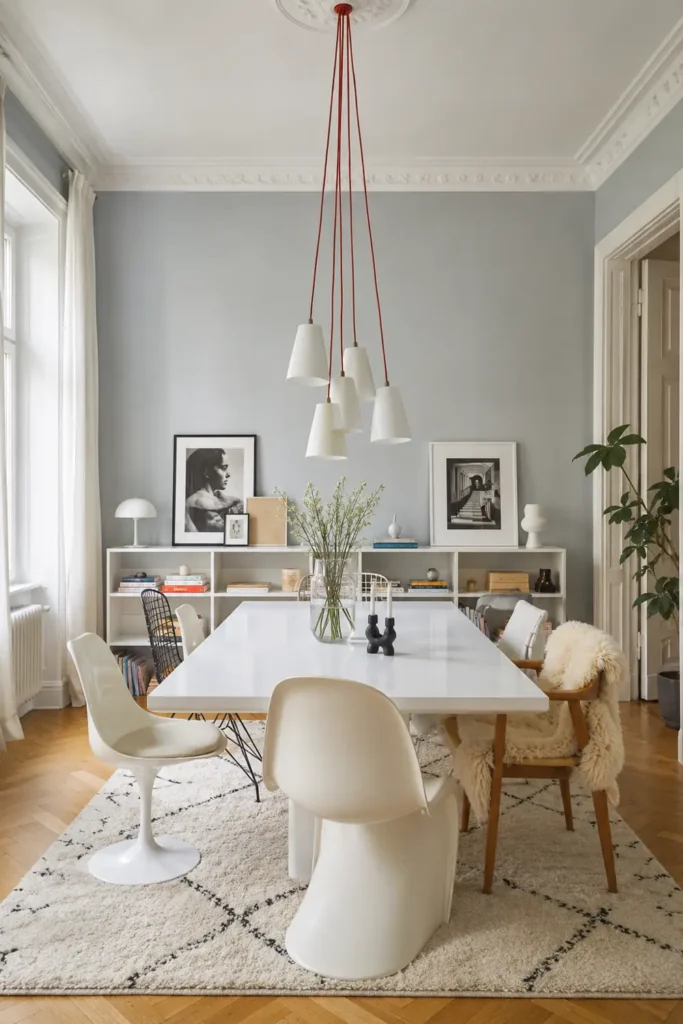
Eclectic Statement Pendants Suspended from Red Wires
A group of statement pendants can give an eclectic dining area a strong focal point. Six fixtures hung above a table with six chairs create a clear rhythm, while red wires add color and connect the separate lights visually. The arrangement feels expressive without requiring many decorative accessories elsewhere in the room.
Wire pendants preserve the structure open, so even a larger group does not necessarily feel heavy. Varying the shapes slightly can add character, but keeping the wire color consistent prevents the display from becoming chaotic. The red cords work best when they are repeated delicately in another small detail, such as artwork or tableware.
Measure the spacing carefully so every seat receives useful light. The pendants can hang at the same height for a more orderly look, or at slightly different levels for a casual arrangement. In either case, keeping the lowest shades above eye level helps preserve conversation across the table while still making the ceiling display feel dramatic.
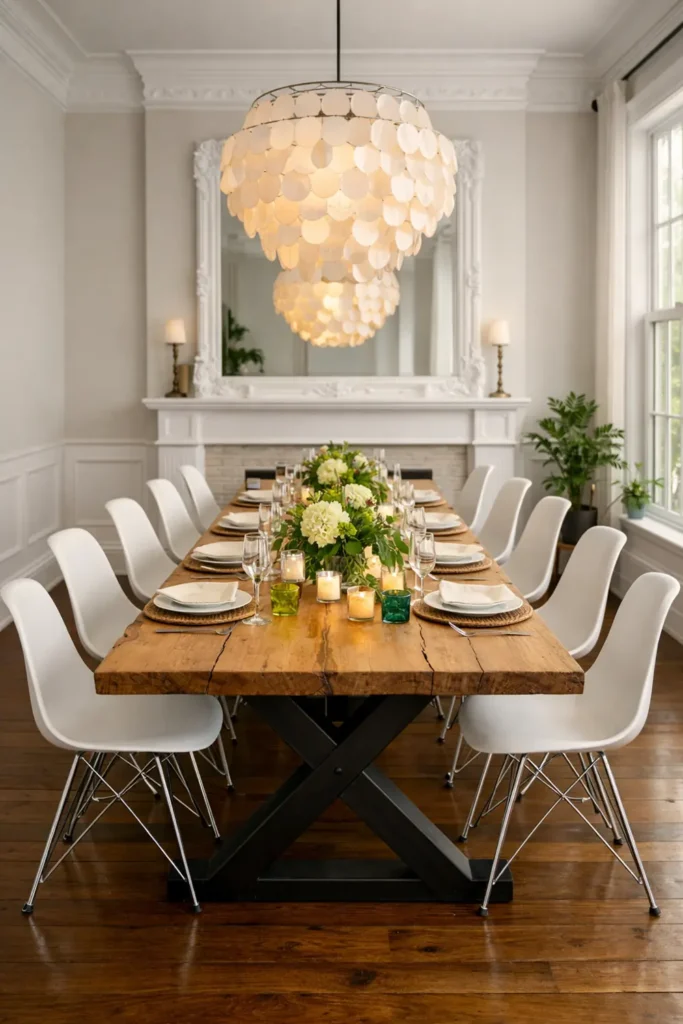
Mirror-Reflected Pendant Lighting for a Soft Dining Room Glow
A large mirror can make a softly lit dining room feel brighter without introducing another fixture. When positioned high enough to reflect the pendant above the table, it spreads the light through the room and creates the impression of greater depth. This works particularly well in compact or narrow dining spaces.
The reflection becomes more effective when the pendant has a warm, diffused light rather than an exposed, glaring bulb. Mirror glass, a carefully arranged table setting, and a small vase of blooms can all catch the light in different ways. These surfaces add gentle highlights without making the room feel overly polished.
Positioning matters more than size alone. Before fixing the mirror to the wall, check the reflection from both the doorway and the seated area. The goal is to capture the pendant and part of the table rather than an empty ceiling or distracting corner. A simple mirror frame keeps attention on the reflected light and the dining setup.
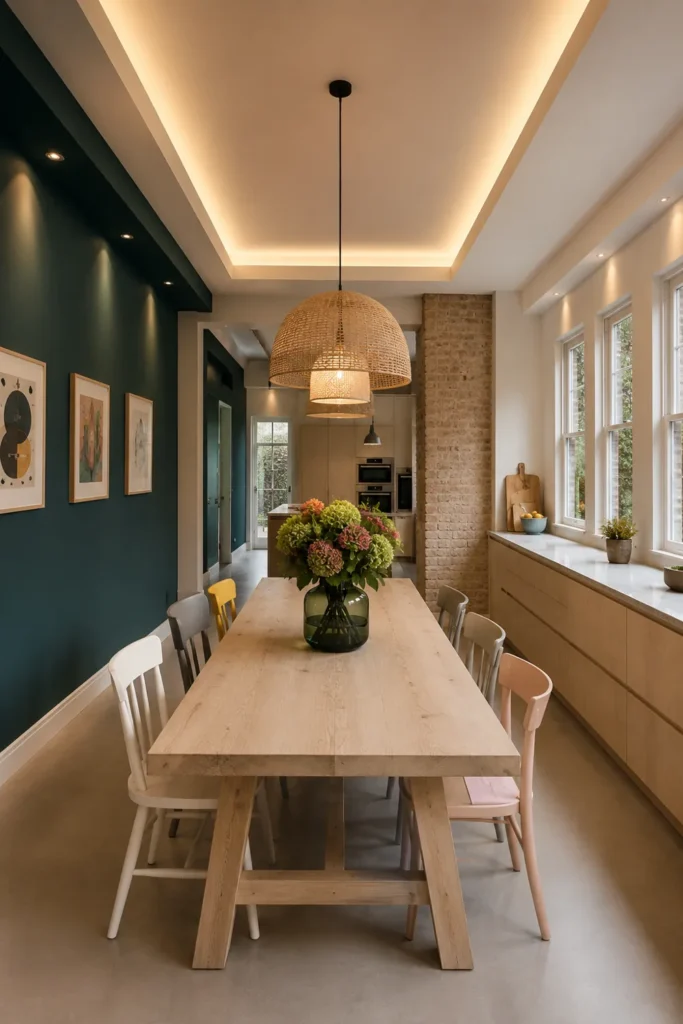
Mixed Uplights and Downlights for Kitchen-Adjacent Dining
A dining area beside the kitchen often needs to feel connected to the cooking space without looking like an extension of it. Combining uplights, downlights, and a focused over-table fixture creates that separation naturally. The kitchen can stay bright and practical, while the dining area feels softer and more settled.
Downlights are useful for general visibility, especially along the walkway between the kitchen and the table. Uplights add indirect brightness to walls or ceilings, which prevents the room from feeling harsh. A pendant or compact group of lights above the table then gives the dining area its own visual identity.
Try using the same warm bulb temperature across all three sources so the transition between spaces feels smooth. Keep the kitchen lighting brighter during food preparation, then lower the surrounding lights once the meal begins. This simple change helps the dining area feel calmer without leaving the nearby kitchen completely dark.
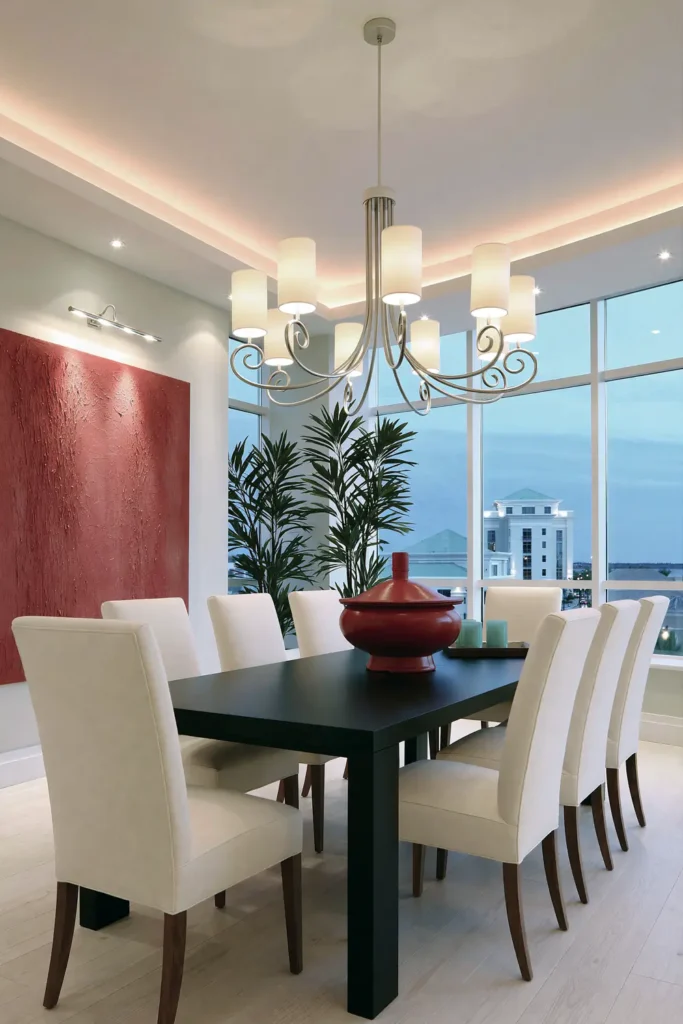
Accent Lighting for Dramatic Red-Toned Dining Room Artwork
Artwork can become part of the dining room lighting plan when it is illuminated with care. In a room with red-toned paintings or prints, a directed light brings out the color and gives the wall more presence after dark. It also creates a second focal point beyond the dining table.
A slim picture light or an adjustable spotlight works well for this purpose. The beam should spread evenly across the artwork rather than creating one bright patch in the center. Warm light usually complements red, rust, and burgundy tones better than a cool white bulb, which can make the colors feel flat.
Keep the artwork lighting slightly softer than the main light above the table. It should add depth in the background rather than compete for attention. Testing the angle in the evening is important because glare may appear on painted canvas or framed glass. A small adjustment could make the artwork feel richly lit without visible reflections.
Dining Room Lighting Ideas to Set the Perfect Mood at Every Hour
The most comfortable dining rooms are rarely lit by one fixture alone. A pendant may define the table, but lamps, downlights, reflected light, candles, and decorative lighting all help shape the atmosphere around it. Together, these layers make the room useful during the day and more relaxed in the evening.
Start with the idea that best suits your space, then build around it gradually. A dimmer, a warmer bulb, or a carefully placed mirror can make a noticeable difference without requiring a full renovation. The goal is not to make the room brighter everywhere, but to place light where it helps the dining area feel welcoming, practical, and easy to enjoy.