
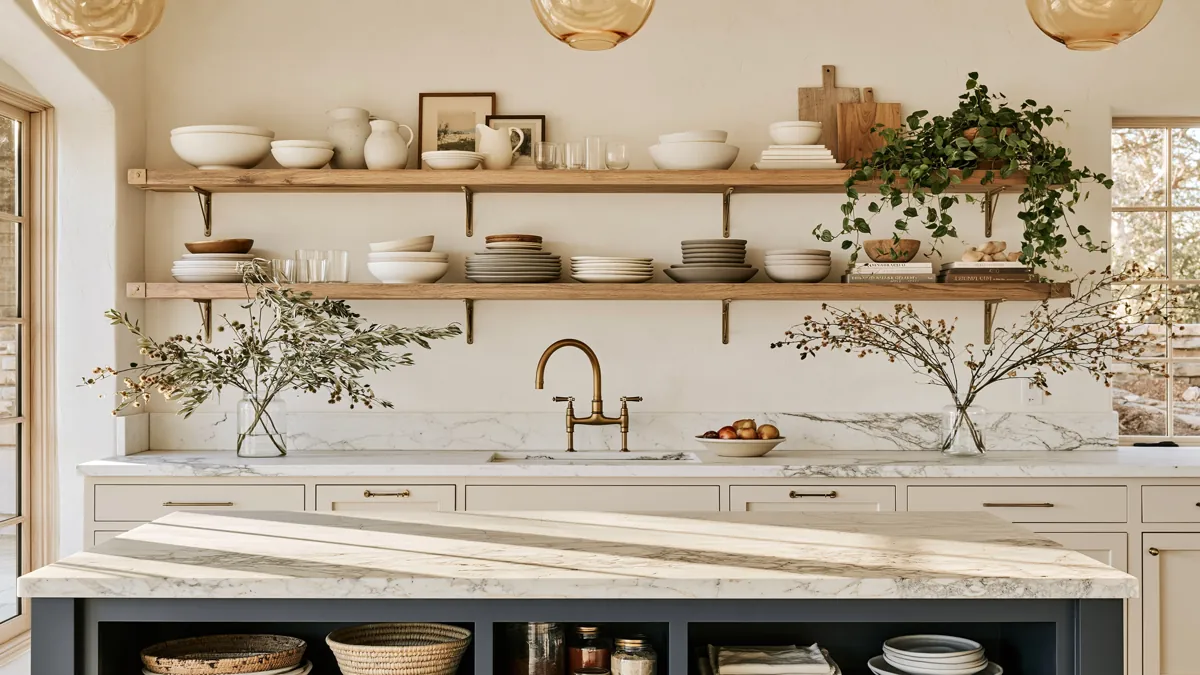
Open shelves can make a kitchen feel lighter, more personal, and easier to use. They put everyday dishes within reach while giving you space to display materials, colors, and objects that would otherwise stay hidden behind cabinet doors.
These open kitchen shelving ideas range from polished gold details to rustic wood, concrete niches, and practical corner storage. Some work best as decorative focal points, while others are designed to keep cookware, mugs, and cutting boards organized.
Golden Open Shelving with a Mirrored Kitchen Wall
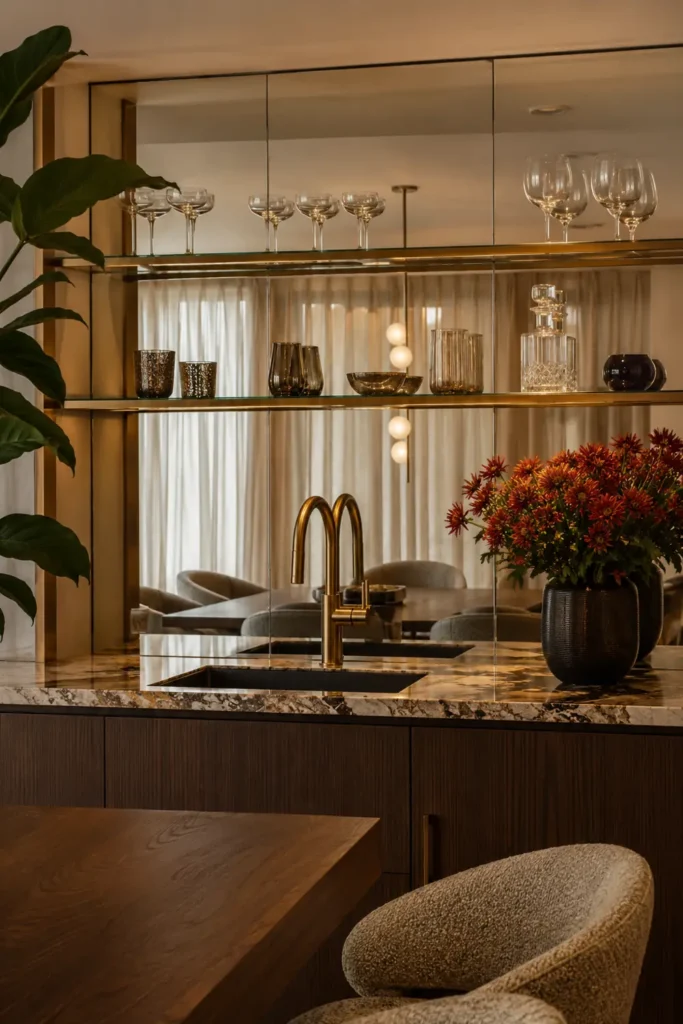
Golden shelving can become a strong focal point when it is placed against a mirrored wall. The reflective surface makes the kitchen feel brighter and gives the displayed objects more visual presence without requiring a large amount of decor. This combination works especially well above an island, where the shelves can be seen from several parts of the room.
Keep the shelves visually balanced by mixing warm wood pieces with clear glassware, simple ceramics, and a few metallic accents. The natural wood prevents the gold and mirror from feeling excessively formal, while the reflective background helps lighter objects stand out.
A large potted plant nearby can soften the hard surfaces and introduce a relaxed contrast. Leave some open space between displayed pieces so the mirror remains visible. This prevents the shelving from looking crowded and allows the sink fixture, island, and decorative objects to feel like part of one coordinated arrangement.
White Open Kitchen Shelving with Ceramics and Framed Art
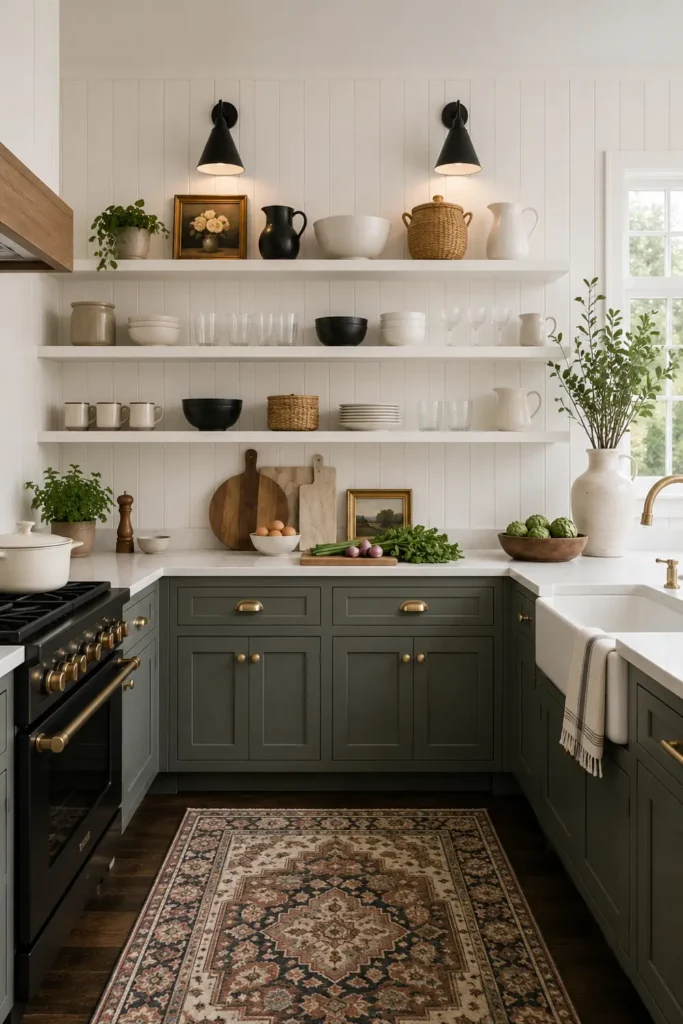
White shelves are a sensible choice when you want open storage to blend into the kitchen rather than dominate it. When the shelving coordinates with the wall and lower cabinetry, the entire area feels calm and connected. White ceramics preserve that clean look, while natural wooden cutting boards bring in enough warmth to keep the arrangement from feeling flat.
Framed artwork gives the shelves a more personal character. Instead of placing every frame upright in a perfect row, lean one or two pieces behind smaller dishes or bowls. This creates depth and makes the display feel collected over time rather than carefully staged.
Black wall sconces above the top shelf provide useful contrast and help define the shelving area. Small plants can be placed between ceramics, but they should not block items you use regularly. Keep everyday cups and bowls on the lower tiers, with artwork and decorative pieces placed higher where they are less likely to be disturbed.
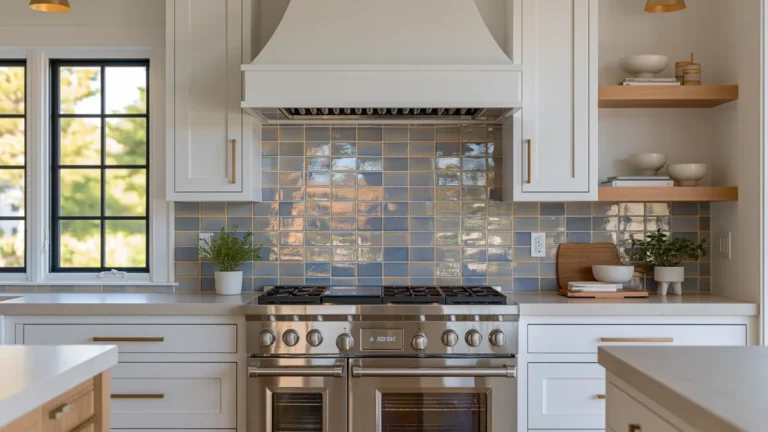
White Shelves with Gold Guard Railings
Gold guard railings add both detail and function to built-in white shelves. The slim metal bars keep plates, jars, and smaller kitchen items from slipping forward while introducing a polished accent that connects easily with gold stove hardware or cabinet fittings.
Because the railings already provide a decorative element, the shelves do not need to be heavily styled. White dishes, wooden cutting boards, and a few glass containers are enough to create a layered display. Repeating wood in several places helps balance the bright white shelving and shiny metal.
Use the lower shelves for objects that need to be reached often, and reserve the upper levels for lighter decorative pieces. A small trailing plant can be placed near one end, allowing the leaves to fall gently around the railing without hiding the objects behind it. The result feels organized and refined, but the shelving still functions as practical storage beside the stove.
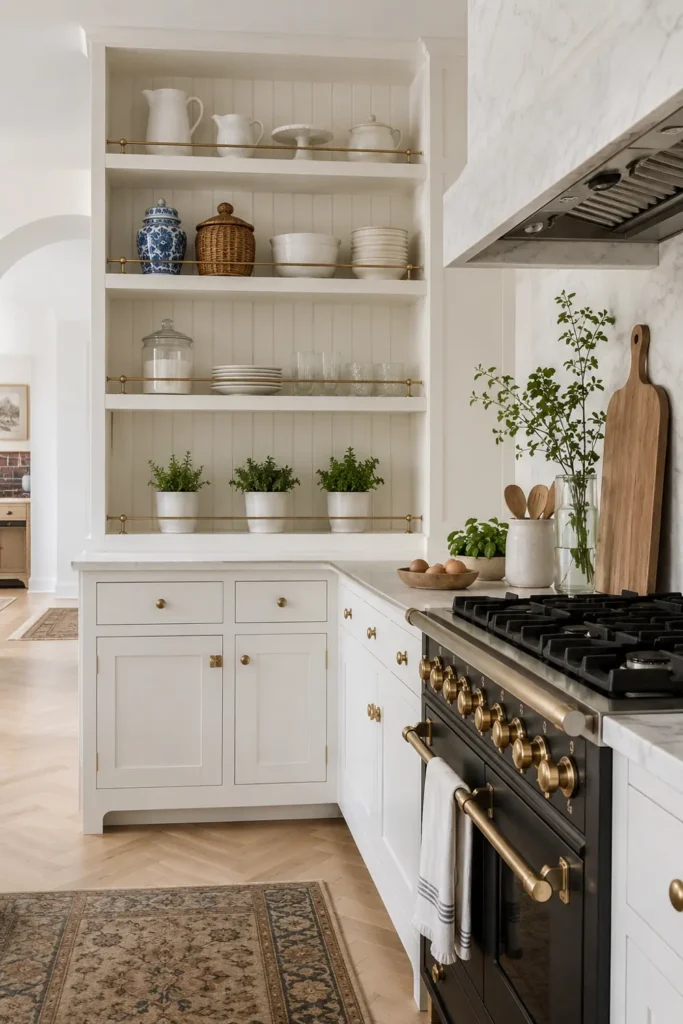
Wood Open Shelves Against a Bold Black Kitchen Wall
Natural wood shelves stand out clearly against a black wall, creating a strong contrast that appears both modern and grounded. The dark background makes the grain and warm shades of the wood more noticeable, while the open shelves prevent the wall from feeling too heavy.
Wooden cabinetry and an island can carry the same material through the room, giving the shelving a clear connection to the rest of the kitchen. Keep the displayed objects simple and varied in shape, using a mix of rustic pieces and cleaner contemporary items. This proportion suits the contrast between the organic wood and the bold black surface.
A large pendant light above the island can help anchor the room, especially when the wall and cabinetry create strong visual lines. Place leafy branches in a simple vase to soften the darker backdrop. Their height adds movement without filling the shelves, and the natural shape works well with the wood grain and other organic textures.
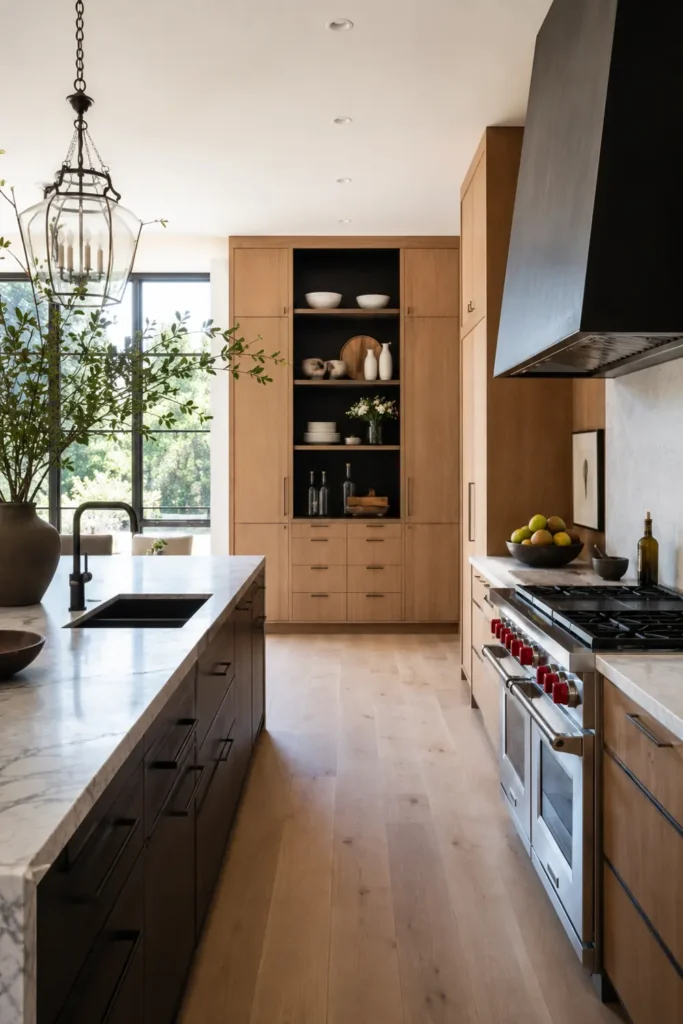
Open Shelves with Decorative Carved Wood Brackets
Carved wood brackets give open shelving a crafted, traditional character that plain floating shelves do not have. The brackets become part of the display, so they work especially well in a kitchen with a farmhouse sink, warm cabinetry, or other handmade details.
Choose shelves and brackets with similar wood tones so the structure seems deliberate. The carved shapes already add plenty of visual detail, which means the objects above them can stay simple. Everyday bowls, jars, and cooking essentials look natural alongside a few artisanal pieces. Gold sink fixtures can introduce a subtle polished contrast without competing with the woodwork.
A small wall-mounted sconce above the shelves provides focused light and draws attention to the carved details. Keep frequently used items near the center and lighter decorative objects toward the ends. A small amount of greenery can soften the arrangement, but avoid covering the brackets since their shape is what makes this shelving idea distinctive.
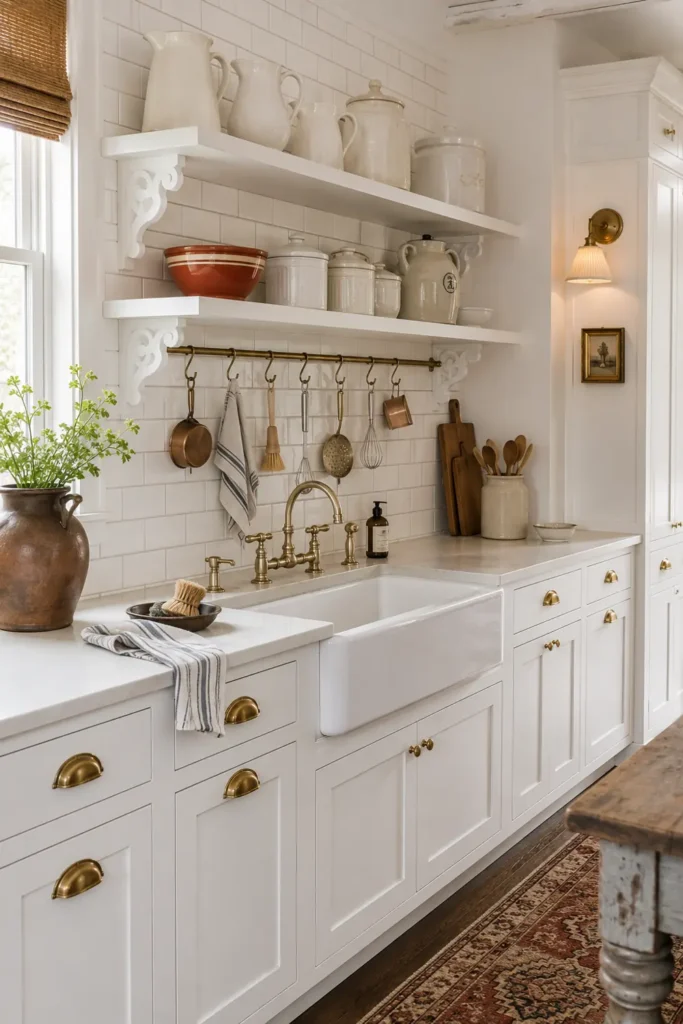
Side-by-Side Shelving Above Dark Kitchen Cabinets
Two shelving sections placed side by side can create more order than one long shelf, especially above dark cabinetry. The break between the sections gives each display a clear boundary and makes it easier to group kitchen essentials without creating a crowded horizontal line.
Employ similar materials and spacing on both sides to keep the arrangement cohesive. One shelf group might hold dishes and practical items, while the other displays framed art, a small plant, and a few decorative objects. Repeating one or two colors across both sections helps them feel connected even when the contents are different.
Undercabinet lighting can brighten the darker finishes and make the shelves easier to use in the evening. Keep the lower surfaces relatively clear so the light can spread across the worktop. When styling the shelves, balance the visual weight rather than matching every object exactly. A tall frame on one side can be balanced by stacked bowls or a plant on the other.
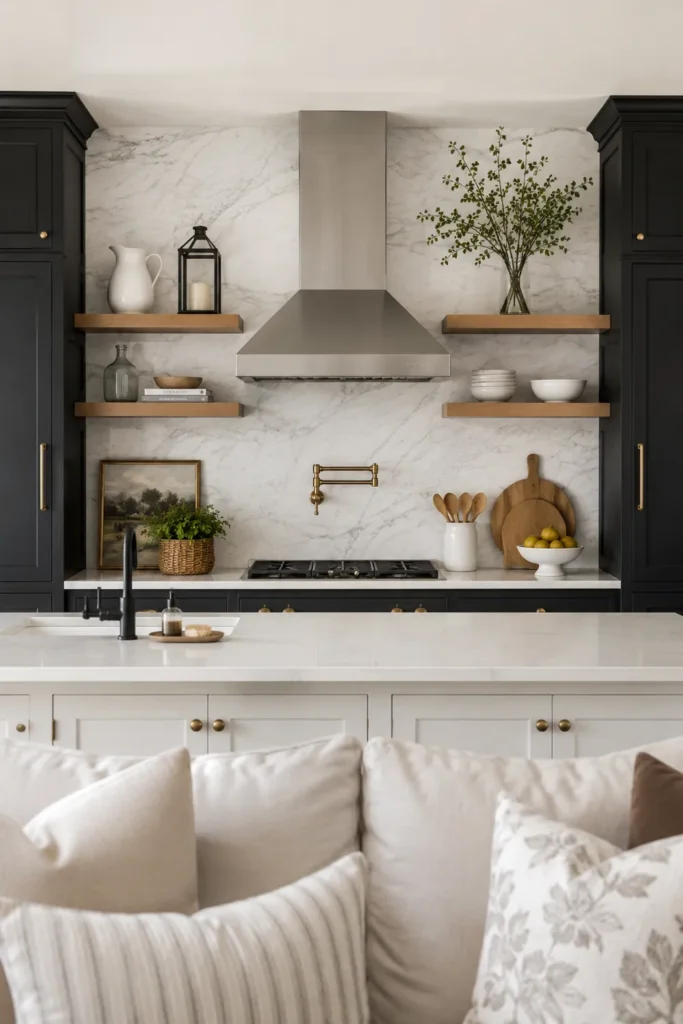
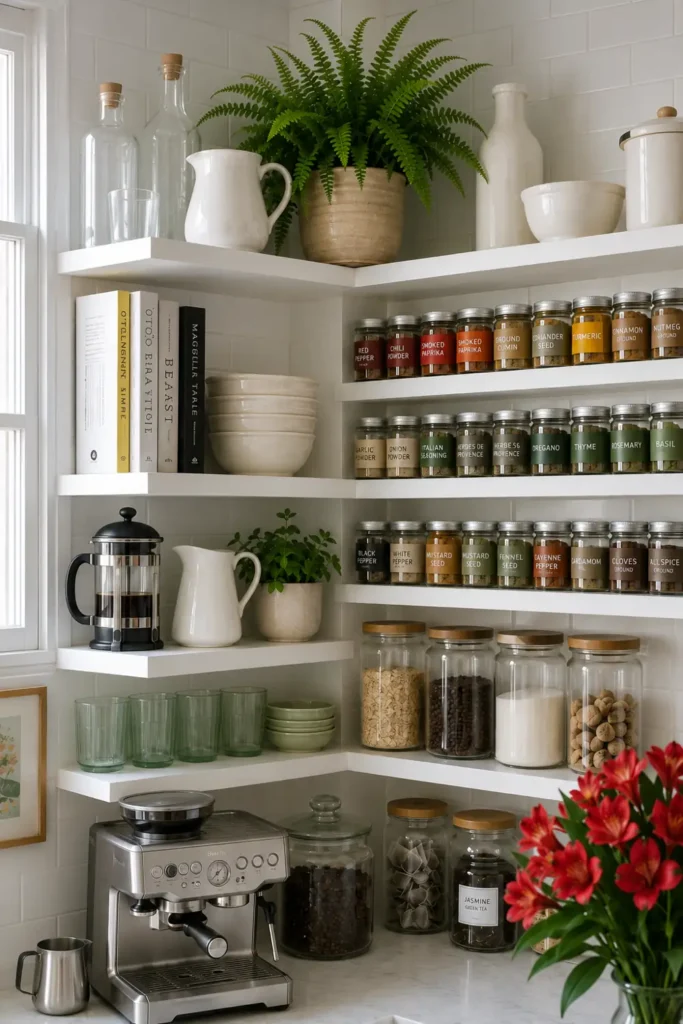
Corner Open Shelving for a Coffee Station
Corner shelves make good use of an area that standard cabinets can leave awkward or difficult to reach. Turning that corner into a coffee station gives the shelving a clear purpose while keeping the espresso brewer, mugs, jars, and teapots together.
White shelves help the corner feel open and prevent a collection of coffee equipment from looking too heavy. Arrange taller glass jars and less frequently used pieces on the upper levels, then keep cups and daily supplies closer to the countertop. Grouping like glassware together creates a calmer display and makes items easier to find.
A green fern on the top shelf can add color without taking up useful preparation space. Make sure the leaves do not hang over the espresso brewer or block access to the shelves below. Since corners can appear darker than the rest of the room, bright ambient lighting is useful. Clear containers and pale surfaces will also help reflect that light throughout the small area.
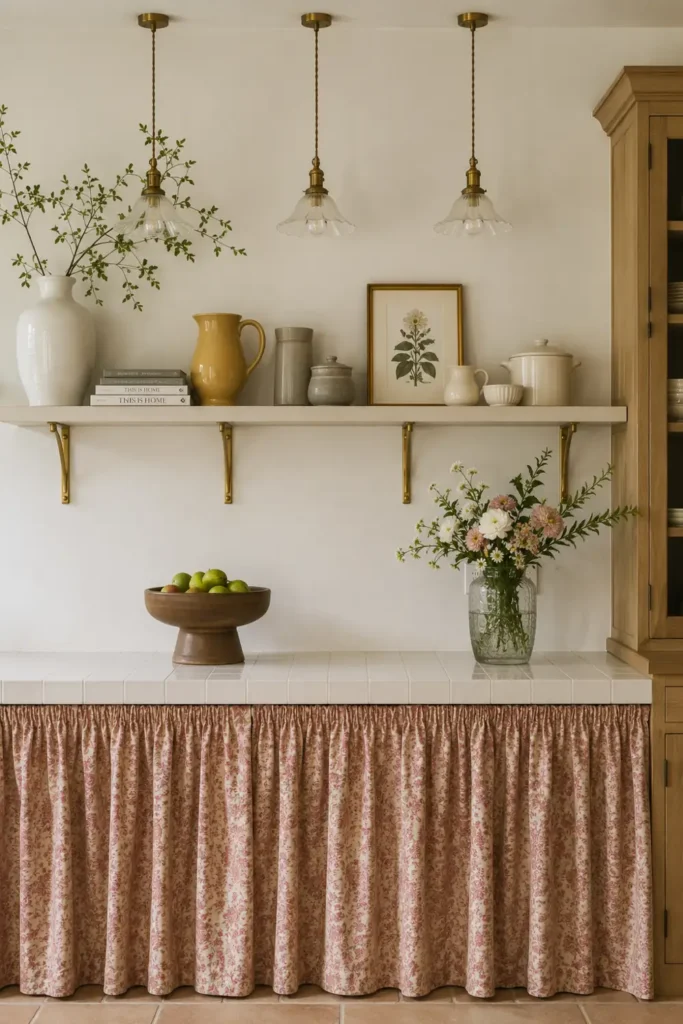
Floating Kitchen Shelves with Gold Brackets
Floating shelves with gold brackets offer a simple way to introduce a warm metallic feature without making the kitchen feel excessively formal. The brackets give the shelves definition, while the open design keeps the wall light and accessible.
Keep the display streamlined so the hardware remains visible. A few well-spaced dishes, a decorative vase, and practical kitchen pieces can create enough interest without hiding the shelf structure. Natural materials and soft ceramic finishes help balance the polished gold. Fresh fruit in a bowl also adds color that can change naturally with the season.
Place the shelves where they can receive natural light, since daylight brings out the heat of both the metal and the displayed objects. A vase of flowers can sit near one end to create height, while lower items fill the center. Leave some empty space between groups so each piece is easy to see and the shelves remain practical for everyday use.
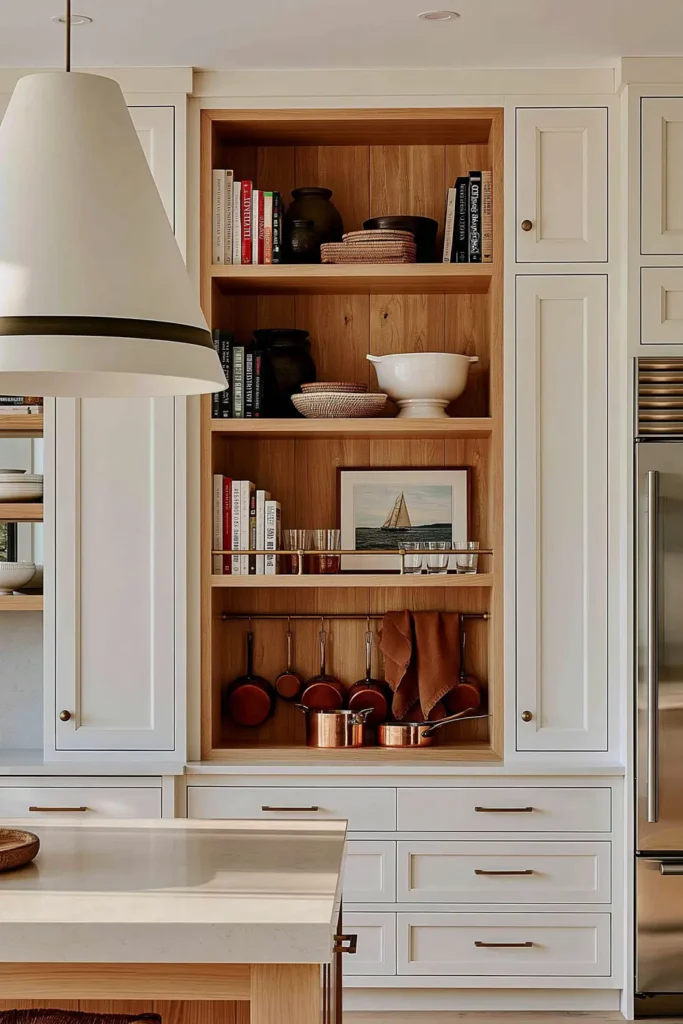
Rustic Mediterranean Kitchen Hutch with Open Storage
A large kitchen hutch can bring a rustic Mediterranean feeling to the room while supplying generous open storage. Distressed finishes and ornate details give the piece an aged, collected character that works especially well in kitchens with warm materials and traditional features.
Use the open shelves to display favorite dishware rather than filling every space. Stacked plates, bowls, and serving pieces can sit alongside smaller decorative objects, while hanging copper pots add warmth and a useful cooking element. The mix of open shelving and detailed woodwork makes the hutch feel like a practical piece of furniture rather than a standard cabinet.
A large white pendant light nearby can keep the area feeling bright and prevent the darker, weathered finishes from becoming too heavy. Try grouping dishware by color or material so the display stays calm. Leaving a little empty space around ornate trim also helps the craftsmanship remain visible.
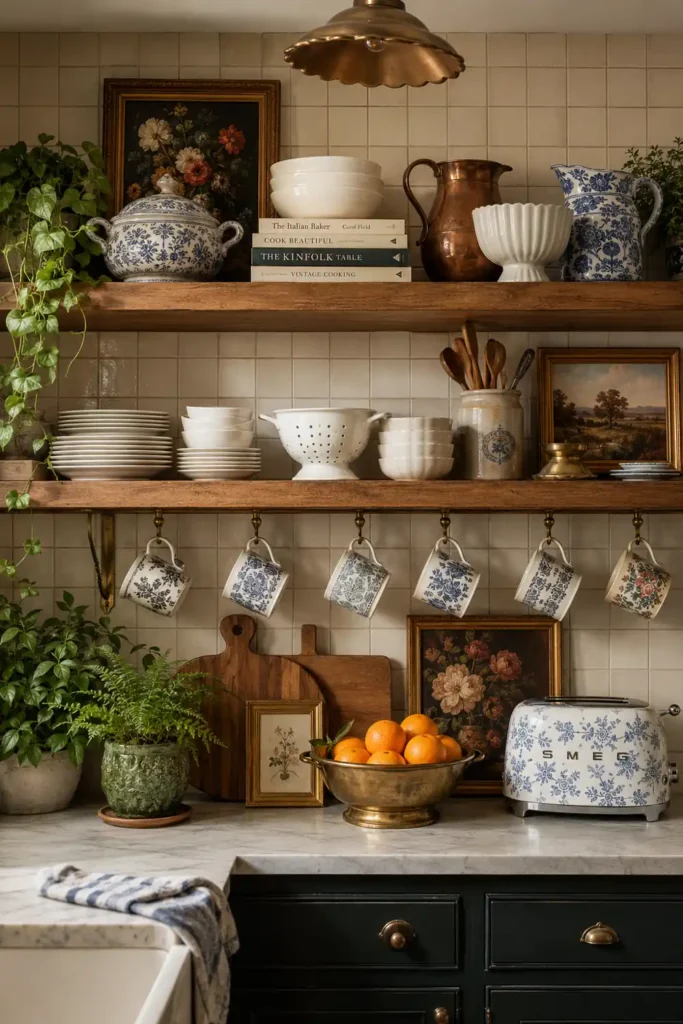
Natural Wood Wall Shelves with Hanging Mugs and Greenery
A wall-mounted natural wood shelf offers a simple way to introduce warmth and display storage without covering the entire wall. The wood grain becomes part of the decor, especially when it is paired with white ceramic pitchers, curated dishware, and softly colored artwork.
Hanging mugs beneath the shelf makes good use of the vertical space and keeps everyday pieces within easy reach. Put heavier items toward the center of the shelf and lighter decor near the ends. A small metallic lamp can add a focused pool of light, making the shelf feel especially welcoming in the evening.
Fresh oranges introduce a practical dash of color, while trailing vines soften the straight shelf edge. Keep the greenery positioned away from the mugs so nothing becomes tangled or difficult to reach. This arrangement works best when the display feels useful first, with the framed art and plants adding personality around the pieces used each day.
Open Shelving with Built-In Plate and Chopping Board Racks
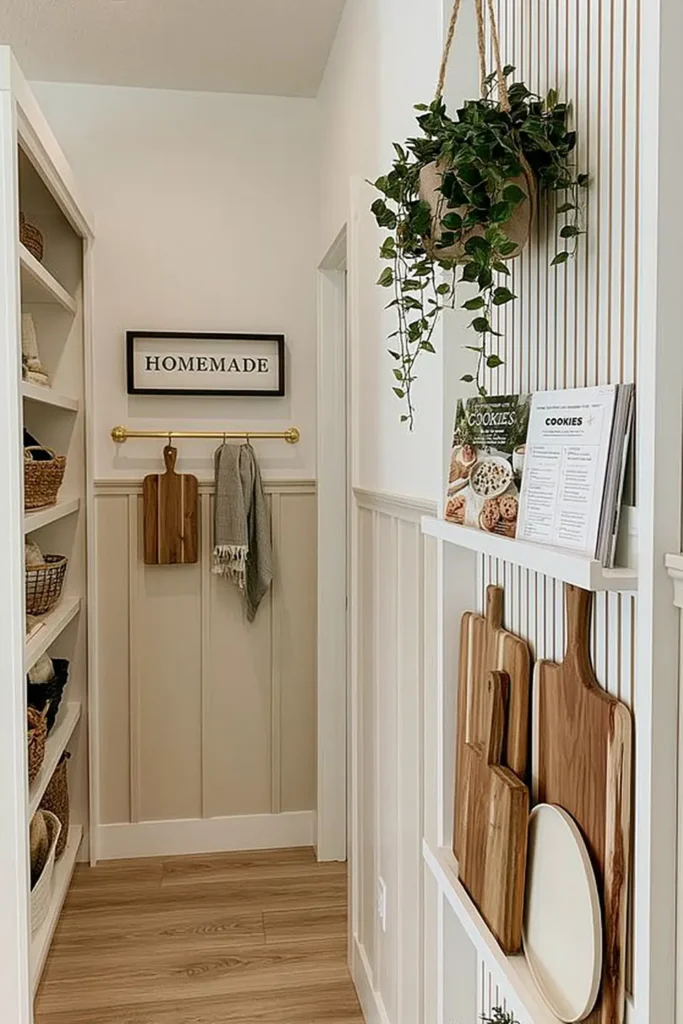
Open shelving becomes more useful when it contains dedicated racks for plates and chopping boards. Vertical storage keeps these larger items separated and easier to reach, while also turning their shapes and materials into part of the kitchen display.
Wooden chopping boards bring warmth and texture, especially when arranged beside lighter plates. Varying the heights and tones of the boards creates interest without requiring extra decorative objects. The industrial-style framework can give the shelving a practical, hardworking look that suits kitchens with visible hardware or straightforward materials.
Place the most frequently used boards and plates in the easiest slots to reach. Leave a little space between pieces so they can dry properly and be removed without knocking into one another. This setup is especially helpful in a compact kitchen, where using the wall for upright storage can free valuable cabinet and countertop space.
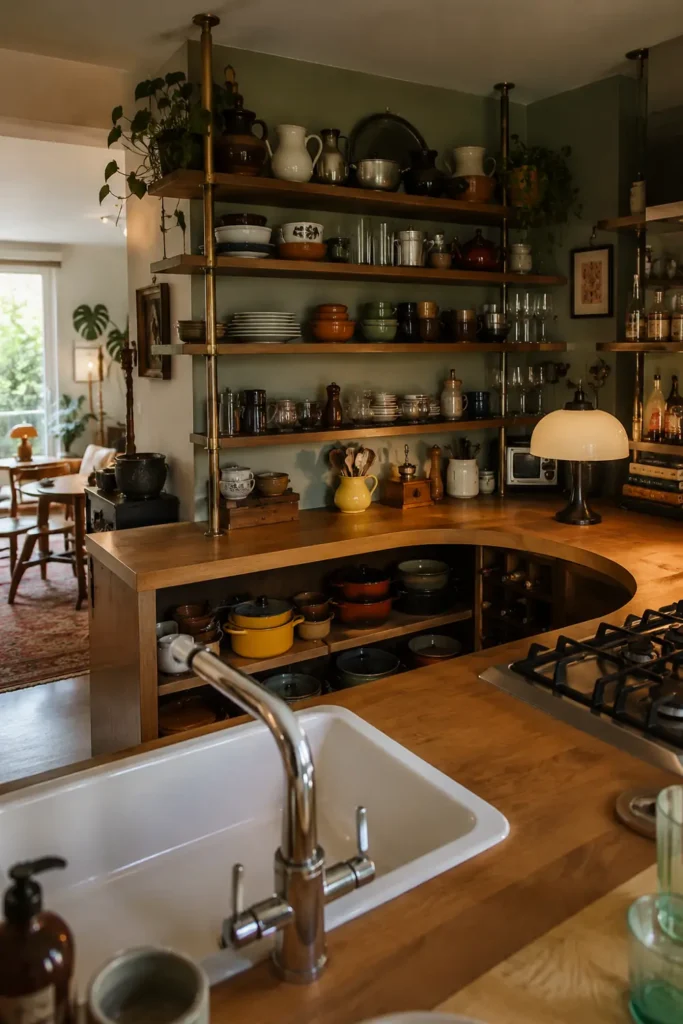
Tension Pole Shelves Above a Curved Kitchen Counter
Tension pole shelving creates open storage without the visual weight of built-in cabinetry. Slim metal poles support the wood shelves while allowing the green wall behind them to remain visible, which helps the kitchen feel layered rather than enclosed.
The combination of metal, warm wood, and painted walls has a relaxed mid-century character. Cookware, dishes, and hanging mugs can be arranged in small groups, with enough space between them to keep the shelves from appearing crowded. The curved wooden countertop below repeats the warm material and softens the straight lines of the poles.
A mid-century pendant lamp is able to reinforce the style as well as provide useful light over the counter. Put heavier cookware on lower shelves and reserve the top level for lighter dishes or a small plant. Keep hanging mugs high enough that they do not interfere with the work surface, especially near the curved edge, where preparation space may be limited.
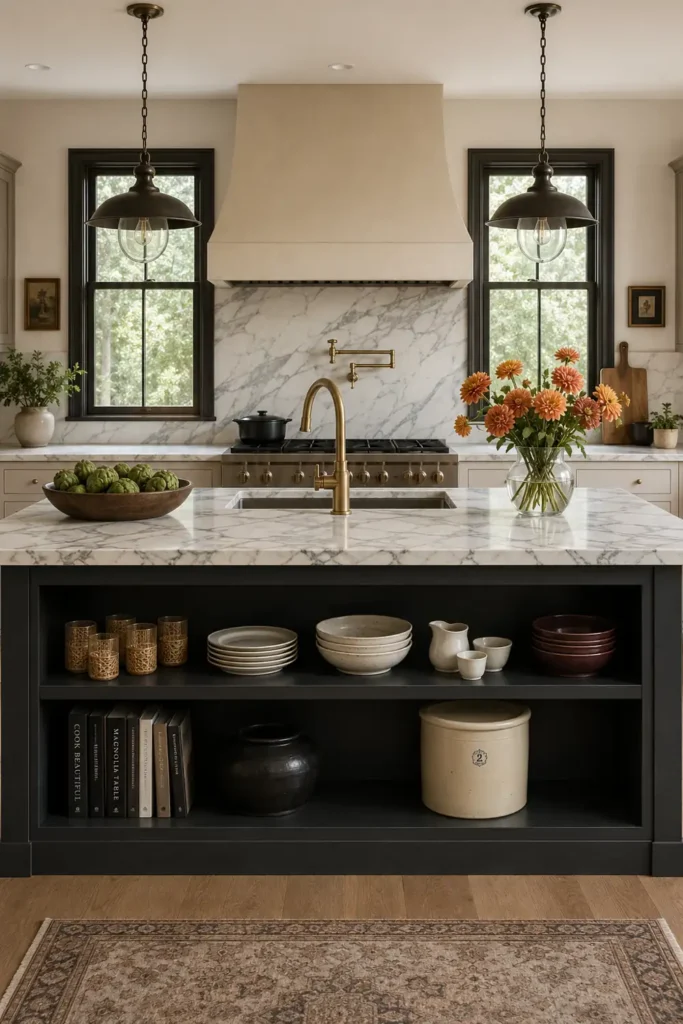
Kitchen Island Open Shelving Beneath a Marble Countertop
Open shelving built into a kitchen island adds useful storage without making the island feel bulky. It works especially well beneath a marble countertop, where the glossy surface can be balanced by a darker painted base and practical objects stored below.
Baskets can hold linens, packaged goods, or smaller tools that would otherwise look untidy. Clear jars and neatly grouped culinary essentials can fill the remaining shelves while keeping frequently used items easy to reach. Repeating similar containers helps the open storage feel organized rather than improvised.
Twin pendant lights above the island draw attention to the marble surface and create a visual center for the kitchen. A vase of fresh flowers can add softness without interfering with the work area. Keep the heaviest items on the lowest shelf and leave enough space near the island corners for comfortable movement. This arrangement is most successful when the storage stays useful, and the countertop remains mostly clear.
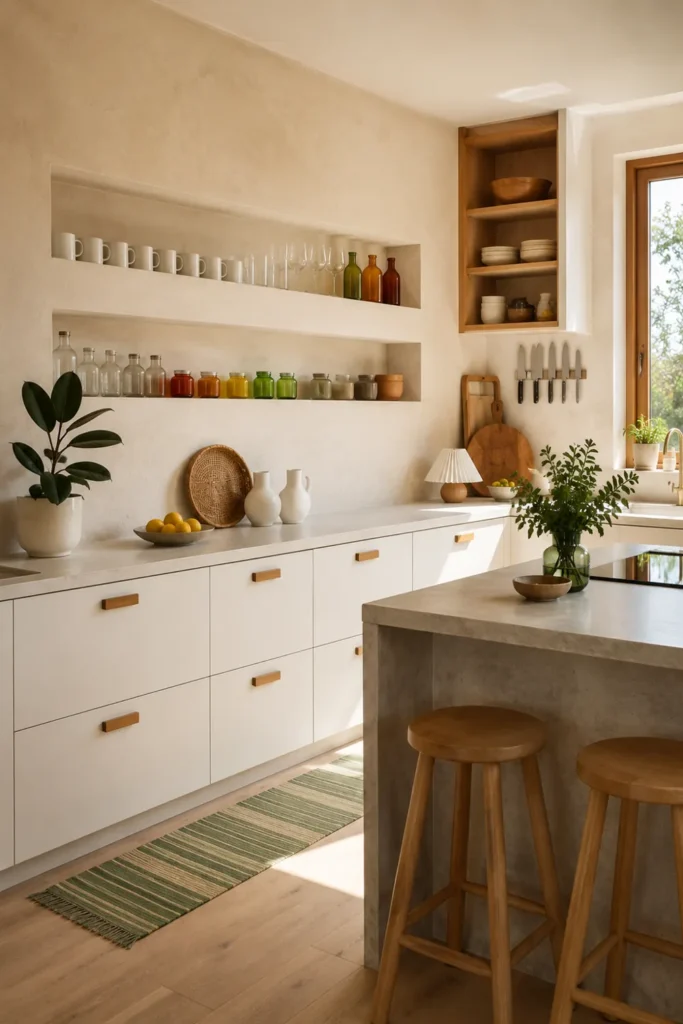
Built-In Concrete Shelves for a Minimalist Kitchen
Recessed concrete shelves create a quiet, architectural form of open storage. Because they sit within the wall rather than projecting outward, they keep the kitchen looking streamlined while still providing space for jars, bottles, and a few decorative objects.
Concrete brings a cool, industrial texture that pairs naturally with light wood cabinetry. The wood softens the harder surface, while simple containers and restrained styling allow the material itself to remain visible. Avoid filling every niche, since the empty areas are part of what gives this shelving idea its calm appearance.
A small round wall sconce can provide subtle light and highlight the depth of the recessed shelves. Keep everyday items on the lower levels and place lighter decorative pieces higher up. Choosing objects in a limited range of neutral tones will help the display feel connected to the concrete and cabinetry rather than visually separate from them.
Creating Open Shelving That Works in Everyday Kitchens
The best open kitchen shelving ideas combine useful storage with materials and details that suit the rest of the room. Gold brackets can add polish, carved wood supports can bring traditional character, and concrete niches can give a more minimal look. The shelves feel most natural when their style connects with nearby cabinetry, lighting, and work surfaces.
Start with the items you use most often, then add only a few decorative pieces around them. Leaving open space between objects makes everything easier to reach and keeps the kitchen from feeling cluttered.
There is no single arrangement that works for every home. A small corner coffee station may be enough in one kitchen, while another may benefit from a full hutch or shelving built into an island. Choose the version that supports your daily routine, then adjust the display until it appears both practical and personal.