
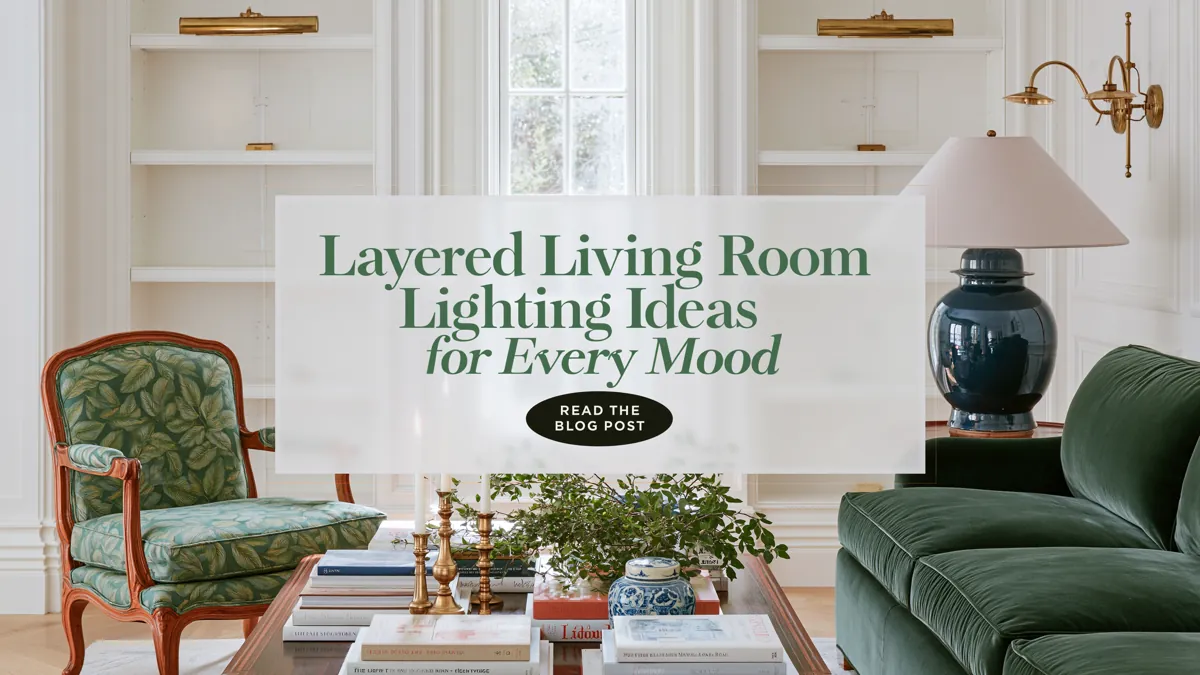
A living room feels much more comfortable when the lighting can change with the way you use the space. Bright overhead light might be useful when you’re tidying up or entertaining, while a softer lamp beside a chair can make the same room feel completely different in the evening.
These layered living room lighting ideas for every mood focus on combining overhead, wall, floor, and table lighting so each part of the room has a purpose. You do not need to switch everything on at once. The goal is to give yourself options and create a room that can move easily from practical daytime use to a warmer, more relaxed atmosphere at night.
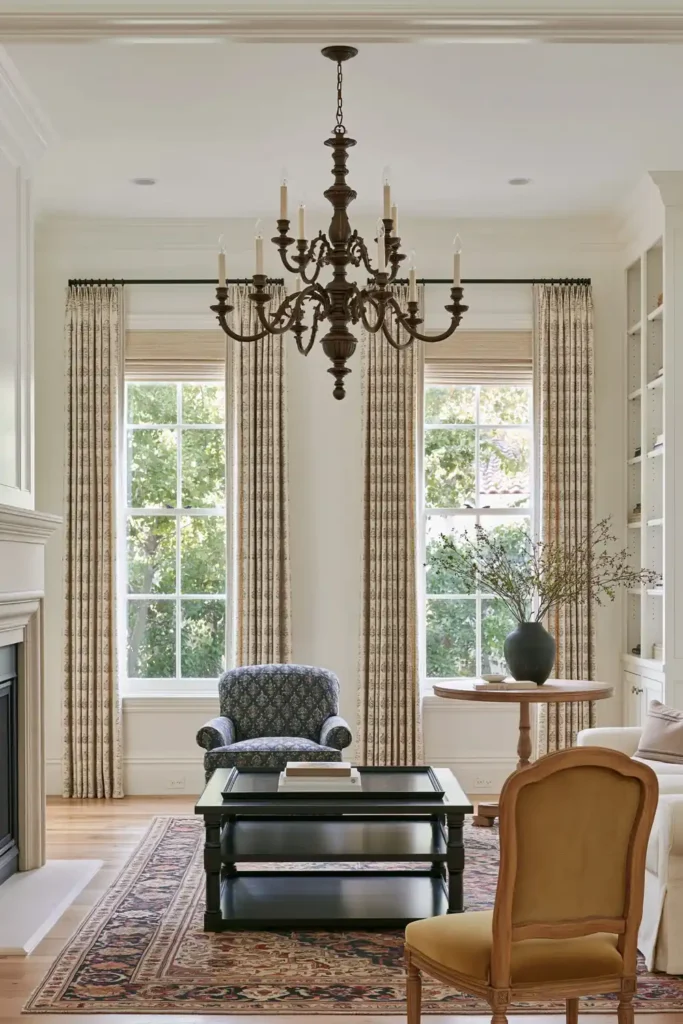
Statement Overhead Lighting to Anchor the Seating Area
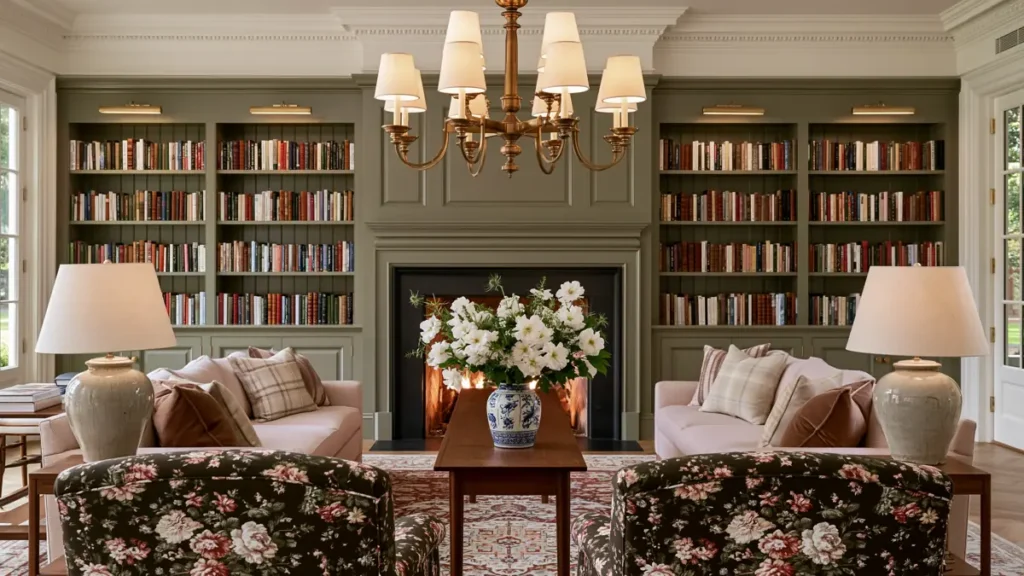
A statement ceiling light works especially well when it is centered over the main seating area. It gives the room a clear visual anchor and helps the sofa and chairs feel connected rather than scattered around the space.
Scale matters here. A fixture that is too small can disappear above a substantial seating arrangement, while one that suits the proportions of the room seems deliberate. The shape itself can become part of the decorating scheme, even when the rest of the furniture is fairly simple.
For everyday comfort, I would lean toward a warm soft white or honey light rather than anything harsh or excessively cool. Choosing bulbs labeled as LED or incandescent with a color temperature between 2700K and 3000K will help achieve this cozy effect. That warmth can make upholstery, wood finishes, and nearby decor feel softer once daylight fades.
The overhead fixture does not need to provide every bit of light in the room. I think it works best as the broadest layer, with smaller lamps taking over when you want a calmer mood.
Wall-Mounted Accent Lighting for Artwork and Mirrors
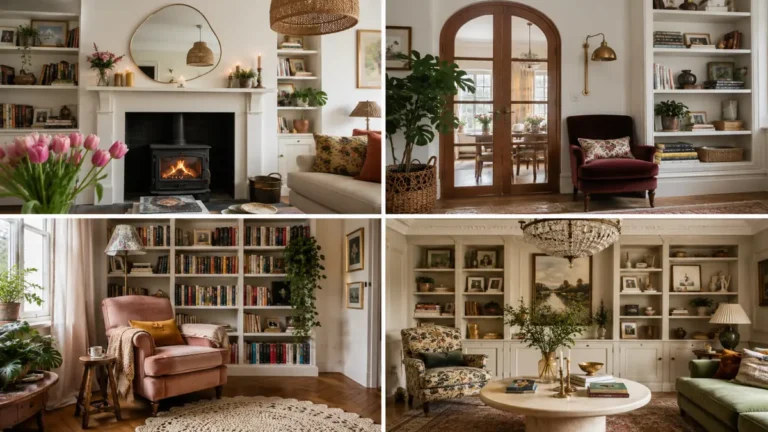
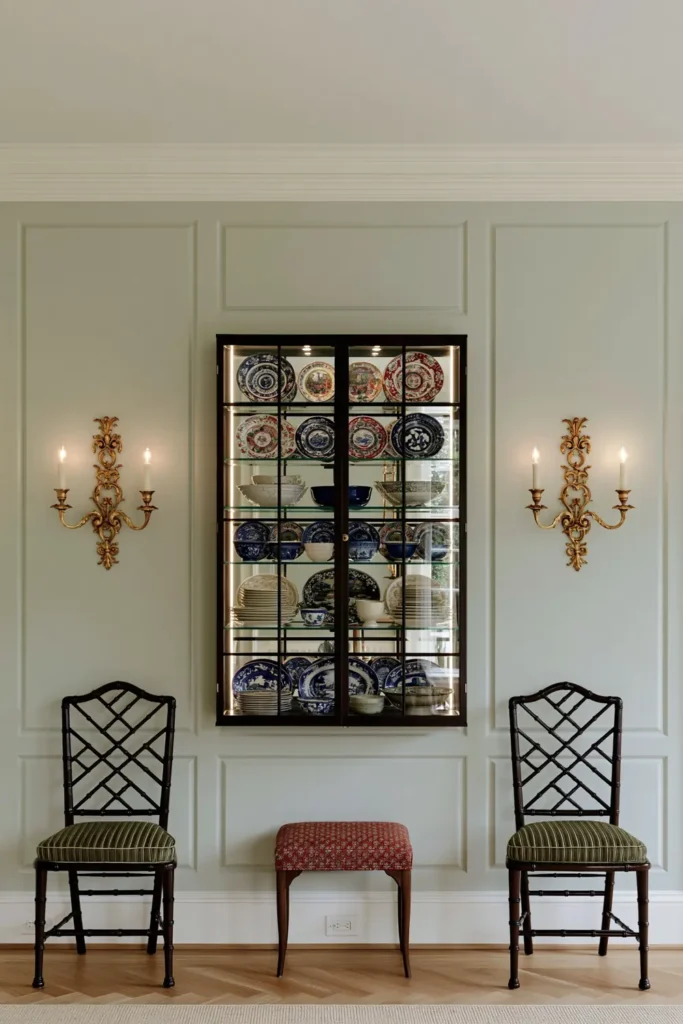
Wall-mounted lighting offers another layer without taking up floor or tabletop space. A pair of sconces placed on either side of artwork, a large mirror, or a strong architectural feature can make that area feel much more deliberate.
Symmetry is especially effective above a sideboard because it creates a symmetrical layout. The lighting becomes part of the display rather than simply serving a practical purpose.
Picture lights can create a similar effect when the focus is specifically on artwork. Their more directed glow helps draw attention to one section of the wall while the rest of the room stays softly lit.
Hardwired fixtures give the cleanest built-in appearance, but cordless options with rechargeable batteries can be useful when running new wiring is not practical. Installing hardwired sconces usually involves turning off the power, mounting the backplate, and connecting the wires, which may require an electrician. Cordless sconces, on the other hand, can be attached to the wall with simple screws or adhesive strips and do not need any electrical work. That makes this kind of accent lighting easier to introduce into an existing living room without a major project.
Floor Lamp Lighting for a Comfortable Reading Nook
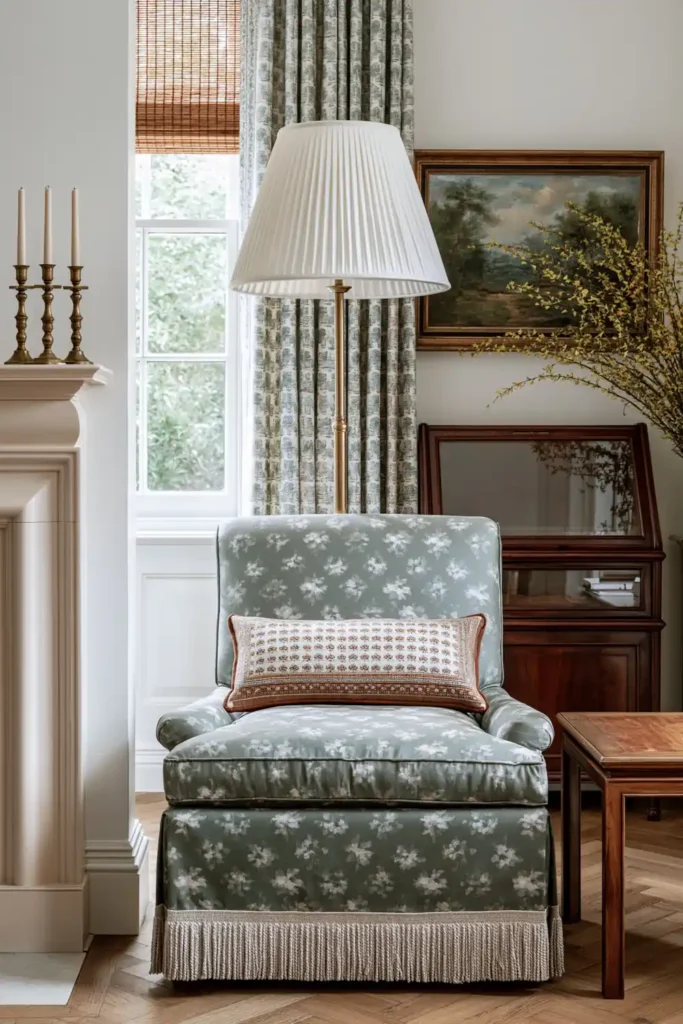
A tall floor lamp can turn an armchair or banquette into a clearly defined reading nook. It gives that small area its own identity, even when it sits within a larger open living room.
I like this approach because the lamp does more than brighten the chair. Its height visually anchors the corner and fills some of the space above the seating without adding another piece of furniture.
A shade made from a light-diffusing fabric keeps the glow softer around eye level. Instead of creating a sharp pool of light, it spreads illumination gently around the chair and makes the nook feel more inviting.
Placement should still feel practical. Position the lamp close enough to the armchair or banquette to be useful for reading, while leaving enough room to sit down comfortably and move around it without rubbing against the base or shade.
Symmetrical Table Lamps for Layered Living Room Lighting
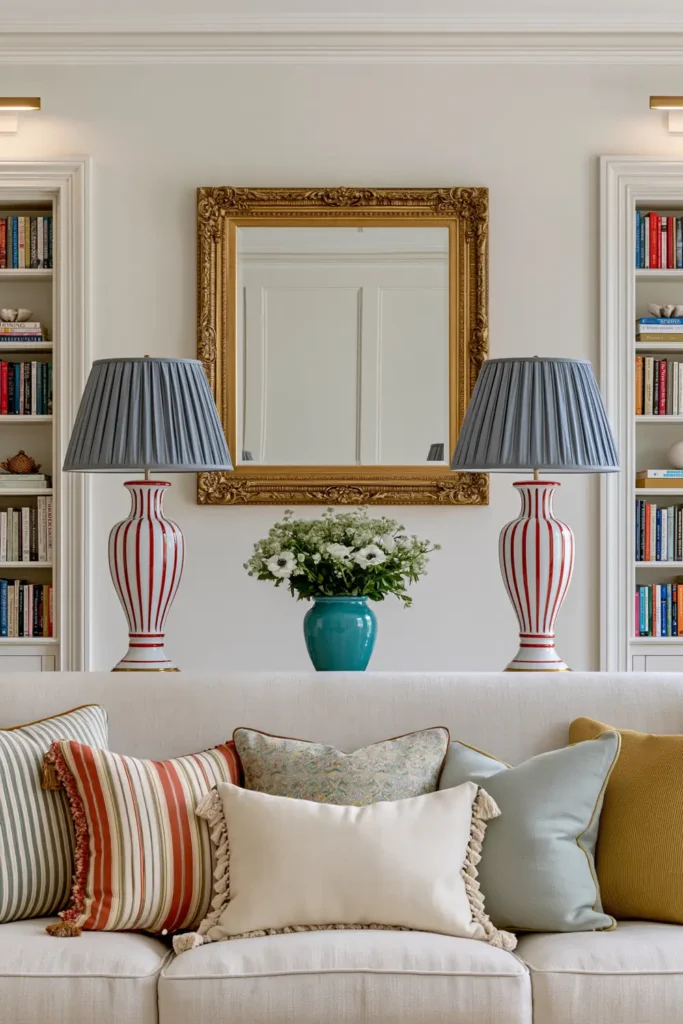
A pair of table lamps can bring balance to a sofa wall while creating one of the most useful lower lighting layers in the room. They work especially well on matching side tables or on a console positioned behind the sofa.
Using two lamps does not mean the arrangement has to feel plain. Ceramic or brass bases can add texture and character, while custom pleated fabric shades bring softness to the light and another decorative detail to the room.
Small features such as the silhouette of the base or an unusual finial can make each lamp feel carefully chosen instead of purely functional. Because the lamps sit closer to eye level than an overhead fixture, those details are much easier to notice.
At night, this layer can often do most of the work on its own. Turning off the central fixture and leaving the table lamps on creates a quieter atmosphere while still giving the seating area enough light to feel comfortable.
Bringing the Layers Together
The best living room lighting usually comes from having several options rather than relying on one bright fixture. An overhead light can handle general illumination, sconces can highlight artwork or a mirror, a floor lamp can define a reading corner, and table lamps can bring a softer glow closer to the seating area.
You also do not need every layer switched on at the same time. During the day, natural light and a single lamp may be enough. In the evening, you might use the sconces and table lamps instead of the main ceiling fixture to create a calmer atmosphere.
What I like most about multi-layered lighting is how easily it adapts to real life. The same room can feel bright and practical when you need it to, then warm and relaxed a few hours later without moving any furniture.
Start with the areas you use most and add lighting where it solves a real need. Layered illumination does not have to be expensive—budget-friendly plug-in lamps, thrifted finds, or even simple DIY solutions like string lights or battery-operated puck lights can be very effective. The key is to look for affordable options that serve a practical purpose and help give the room personality. Once those layers begin working together, your living room can feel more comfortable, balanced, and suited to whatever mood you want to create.