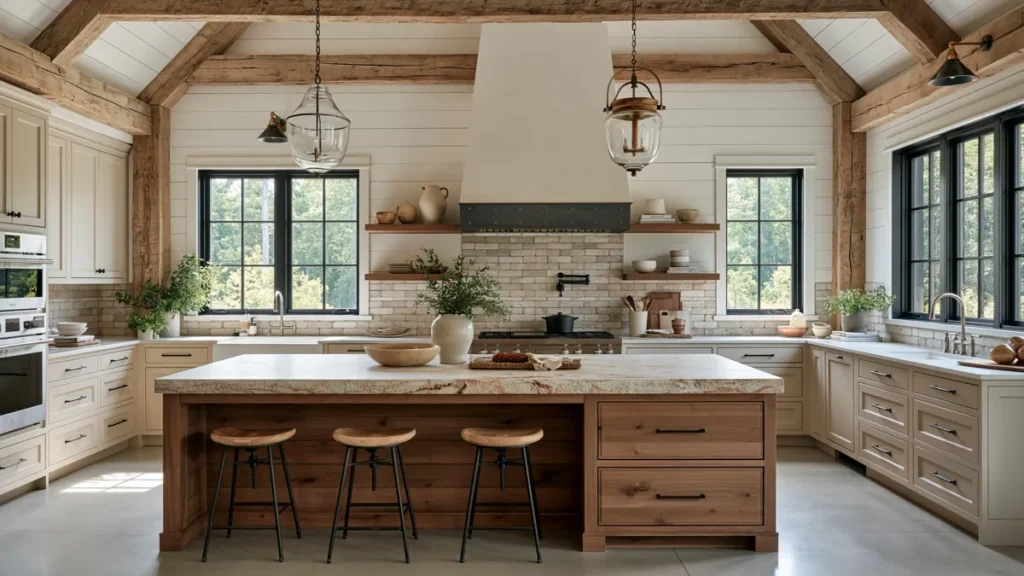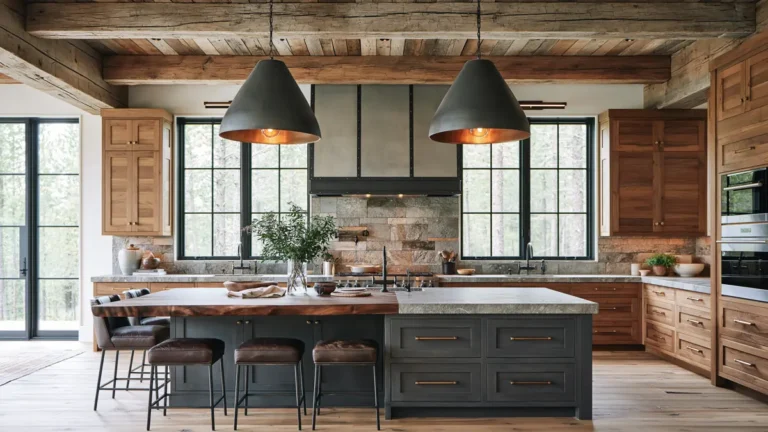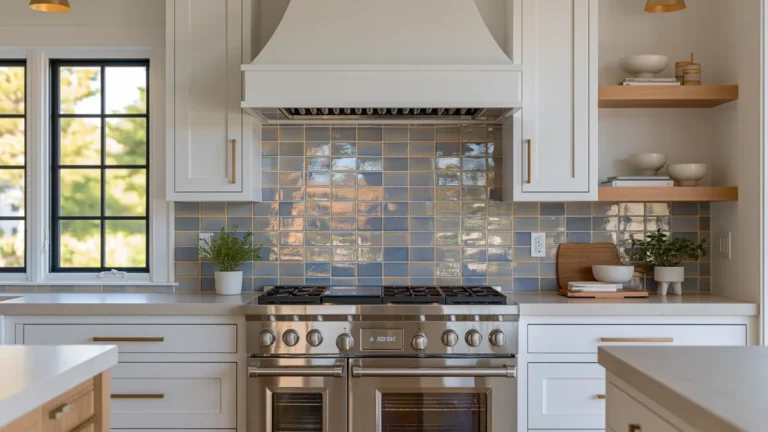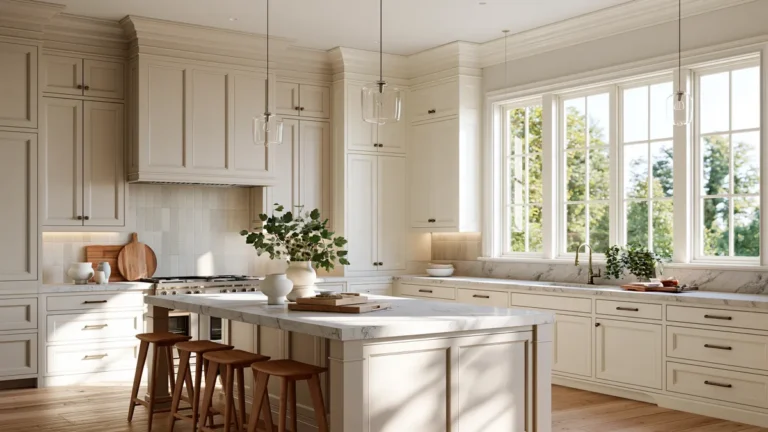

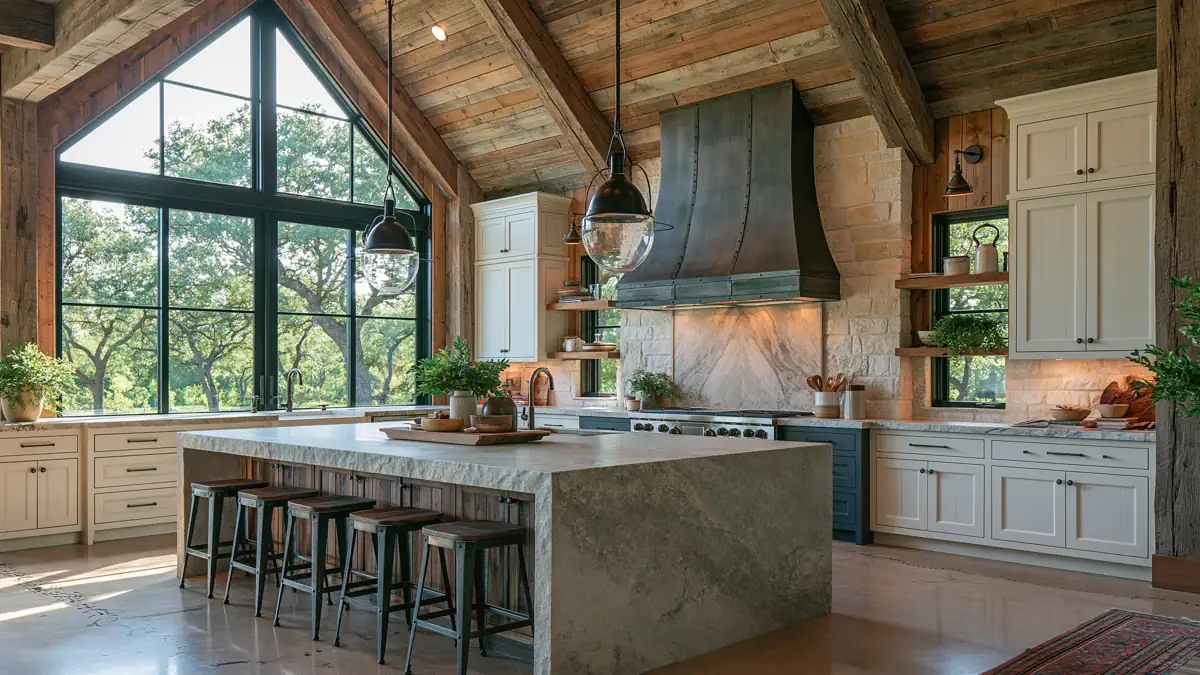
Barndominium kitchens have a way of blending practical country character with the cleaner finishes many homeowners want today. The best spaces don’t rely on one formula. Some lean heavily into reclaimed wood and exposed beams, while others use concrete, marble, black cabinetry, or polished finishes to create a more modern look. When deciding which style fits best, homeowners can examine factors like their lifestyle, how much maintenance they want to take on, and the architectural features their home already has. Connecting inspiration to the way you use your kitchen every day leads to a space that appears both beautiful and practical.
These barndominium kitchen designs show just how flexible this style can be. If you prefer a warm farmhouse kitchen, something dim and contemporary, or a bright space with simple materials, there are plenty of ways to make the room feel connected to the larger barndominium without sacrificing everyday function. You can even combine features from different styles to create a kitchen that is truly personal. Mixing rustic wood with modern cabinetry, or blending industrial lighting with classic tiling, can aid in tailoring the space to fit both your taste and your lifestyle. Feel free to take inspiration from several of these designs and make them your own.
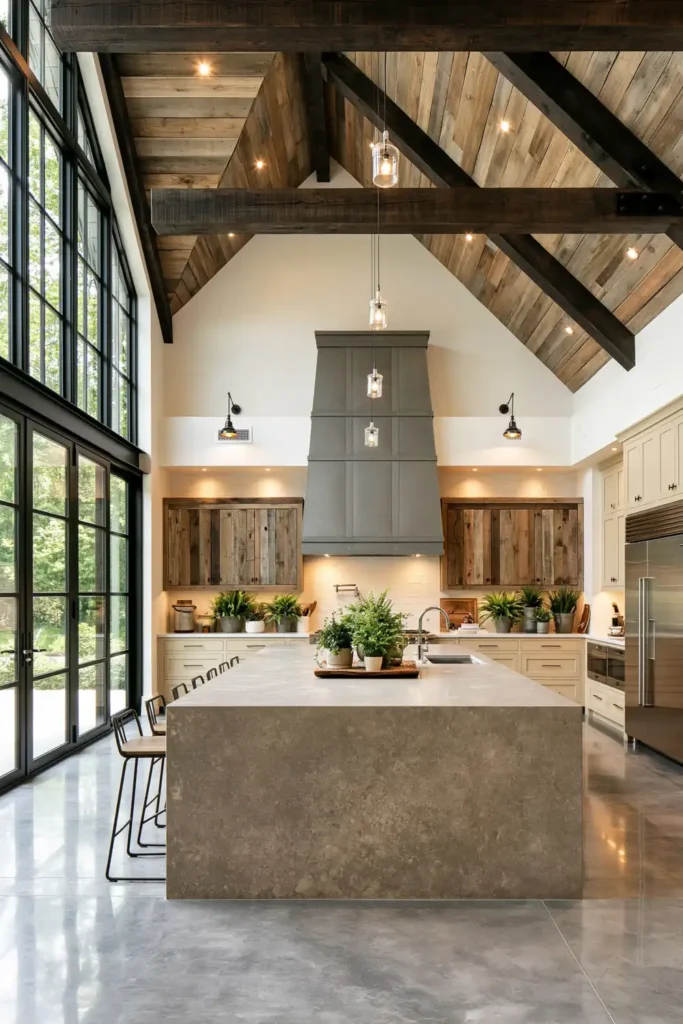
Modern Minimalist Barndominium Kitchen with Concrete Waterfall Island
A concrete waterfall island gives a barndominium kitchen a strong architectural centerpiece without making the room feel overly decorated. The clean edges work especially well with flat-front cabinetry, where the lack of heavy trim keeps the overall look simple and contemporary.
Black metal bar stools can add just enough contrast around the island. Against polished concrete floors and quartz countertops, they reinforce the modern feel while still fitting naturally with the industrial side of barndominium design.
Reclaimed wood ceiling beams are what keep this kind of kitchen from feeling too cold. Their visible grain and warmer tone soften all the concrete, smooth cabinetry, and crisp surfaces below.
A monochrome palette can make the room feel calm and intentional. A soft beige such as Sherwin-Williams Accessible Beige is useful when you want warmth on the walls without competing with the concrete and wood.
For lighting, recessed fixtures keep the ceiling visually quiet, while glass pendants over the island provide a more decorative focal point. Because the shades are transparent, they add presence without blocking the view across the kitchen.
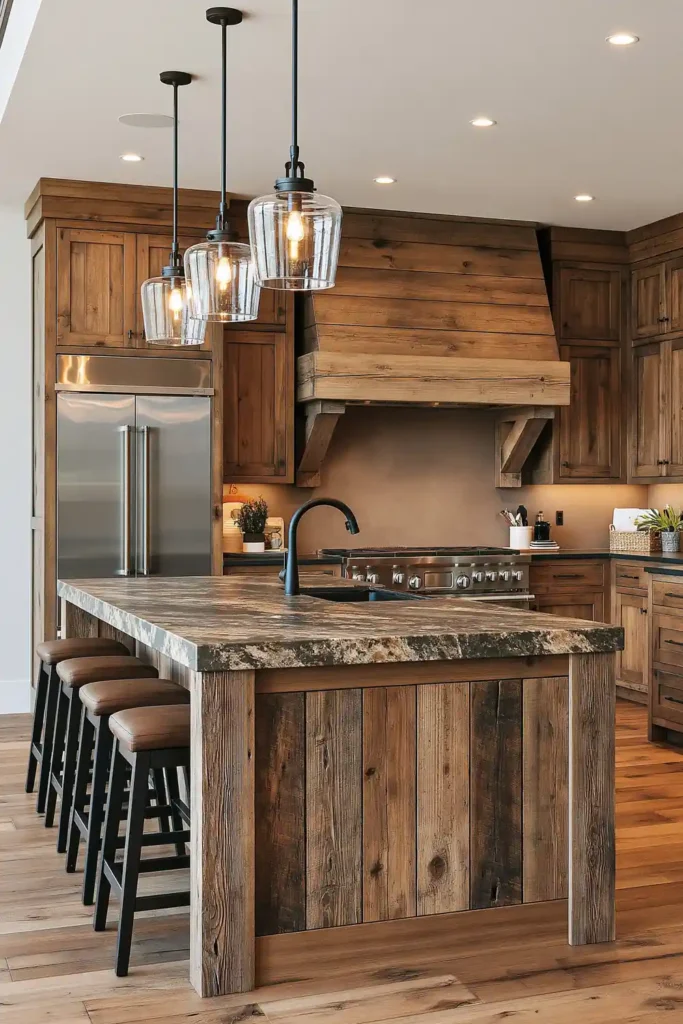
Rustic Chic Barndominium Kitchen with Reclaimed Wood and Black Metal
Reclaimed wood is one of the easiest materials to use when you want the kitchen to feel connected to a barn-inspired structure. A reclaimed wood island becomes the natural center of the room, especially when paired with distressed cabinetry and visible oak ceiling beams.
Black metal stools with rush seats work well here because they combine two very different textures. The metal brings in a slightly industrial edge, while the woven seating keeps the space relaxed and rustic.
Granite countertops are a practical counterpoint to all the aged wood. Their smooth surface creates a useful visual break, and stainless steel appliances introduce a cleaner finish without making the kitchen feel too polished.
Granite countertops are a practical counterpoint to all the aged wood. Their smooth surface creates a useful visual break, and stainless steel appliances introduce a cleaner finish without making the kitchen feel too polished.
White walls can help balance a room with this much wood. Benjamin Moore White Dove is soft enough to avoid a severe look, which makes it a natural backdrop for dark metal accents, warm oak beams, and distressed cabinet finishes.
Clear glass pendant lights with black cone-shaped frames suit the style especially well above the island. They repeat the black metal used elsewhere in the room while allowing the reclaimed wood to remain the main visual feature.
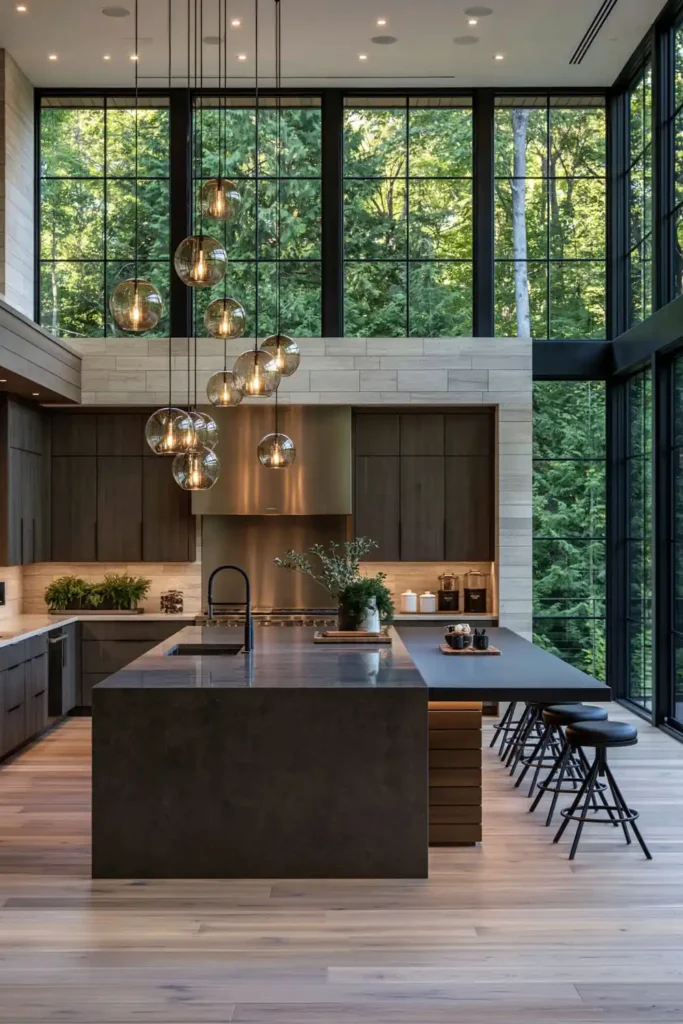
Sleek Contemporary Kitchen with Dark Marble and Matte Black Cabinetry
A darker barndominium kitchen can feel especially dramatic when the materials are kept refined. Matte black cabinetry creates a strong backdrop, while a waterfall-edge marble island brings movement and contrast through natural veining.
Dark oak flooring helps link the black cabinetry to the warmer architectural character of a barndominium. Rather than using light flooring to brighten the room, the deeper wood tone creates a more enveloping, sophisticated atmosphere.
Contemporary black leather swivel stools can keep the island seating visually streamlined. Their simple shape allows the marble to take center stage without introducing another competing material.
Floor-to-ceiling black window frames are another strong detail in this style of kitchen. They echo the cabinetry while framing outdoor views almost like large pieces of artwork.
Lighting is where the room can pick up some warmth. A cluster of amber glass globe pendants delivers a softer glow above the island, which helps prevent the black surfaces from feeling flat or too severe.
A deep shade such as Farrow & Ball Railings can support the moody palette when used thoughtfully. The key is pairing darker surfaces with reflective marble, glass lighting, and stainless steel so the room still has enough visual variation.
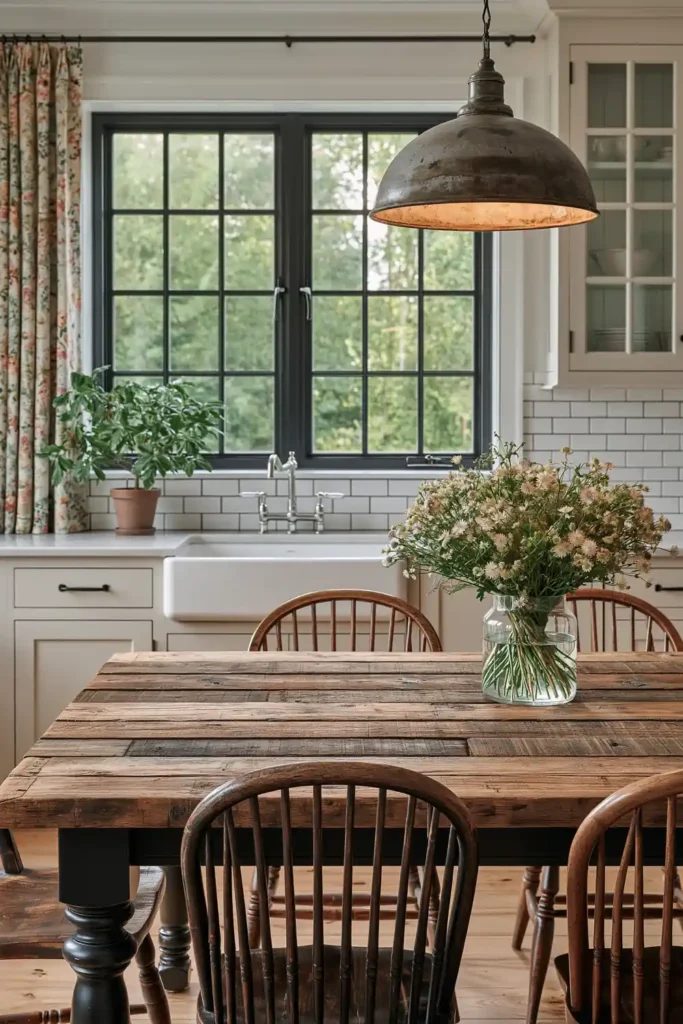
Farmhouse Barndominium Kitchen with Reclaimed Wood Dining Table and Apron Sink
Cream shaker cabinets are a natural fit because they have enough detail to feel traditional without becoming ornate. Marble countertops can add a lighter, more refined surface, while butcher block introduces warmth in areas where you want a softer, more casual finish.
Cream shaker cabinets are a natural fit because they have enough detail to feel traditional without becoming ornate. Marble countertops can add a lighter, more polished surface, while butcher block introduces warmth in areas where you want a softer, more casual finish.
A white subway tile backsplash keeps the background simple and familiar. It also works well with an apron-front sink, which can become one of the strongest farmhouse details in the room without needing much additional decoration.
Small elements help give the kitchen personality. Pottery displayed on open surfaces, floral curtains near a window, and cup pulls on shaker doors can all reinforce the farmhouse character without dominating the space.
A freestanding hutch or pie safe is another useful addition if there is enough room. It can hold dishes, serving pieces, or pantry items while making the kitchen feel more collected and less like every storage solution came from one matching cabinet line.
An aged brass dome pendant suspended from an industrial-style chain works well over a dining table or island. The warm metal complements reclaimed wood and butcher block, while a soft wall color such as Behr Aged Beige can help tie the different materials together.
Classic White Barndominium Kitchen with Marble Counters and Lantern Pendants
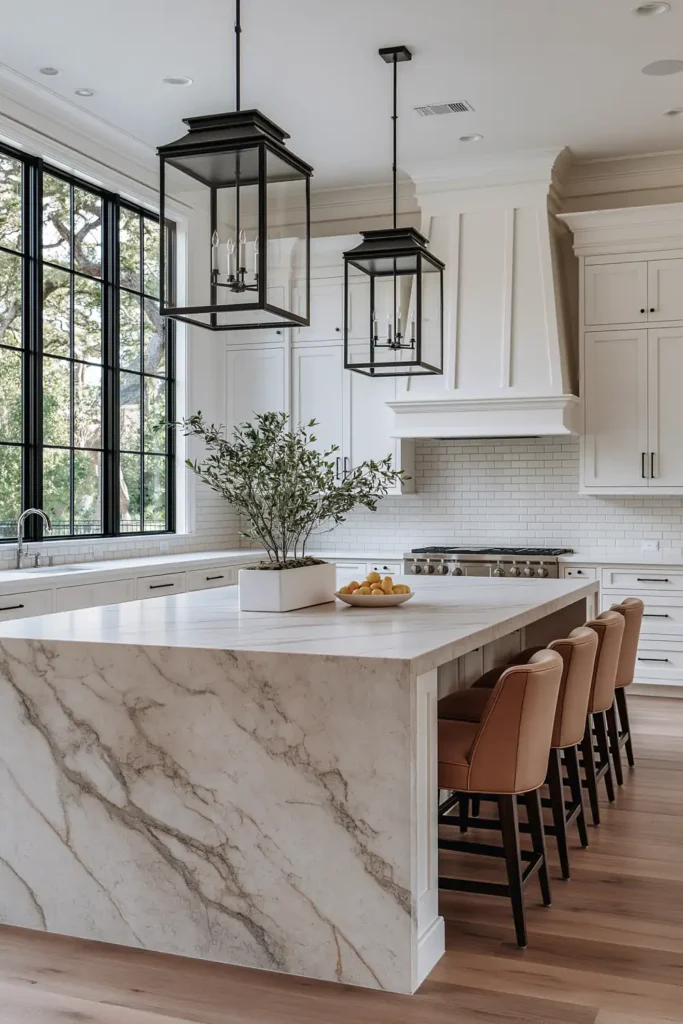
A classic white kitchen is a good choice when you want the barndominium to feel bright without losing its rustic character. White shaker cabinets give the room a familiar, timeless foundation, while a matching island keeps the cabinetry visually consistent.
White marble countertops with soft gray veining add just enough movement to keep the room from looking flat. Paired with a white subway tile backsplash, the surfaces reflect plenty of light and make the kitchen feel clean and open.
Leather-upholstered counter stools are an effective way to bring warmth back into an all-white palette. The leather features a softer texture and can help connect the kitchen to nearby wood finishes or furnishings in an open floor plan.
Black window frames create a sharper contrast around the perimeter of the room. They also work naturally with black metal lantern pendants over the island, giving the kitchen a slightly industrial edge that feels appropriate in a barndominium.
Small timber accents can prevent the white finishes from feeling overly polished. Even when used sparingly, warm wood tones help create a better balance between the crisp cabinetry, marble, and dark metal details.
A warm off-white wall color such as Valspar Swiss Coffee can soften the transitions between all these surfaces. It keeps the kitchen bright while giving the white cabinets enough contrast to remain visually distinct.
High-Gloss Barndominium Kitchen with White Lacquer Cabinets and Concrete Floors
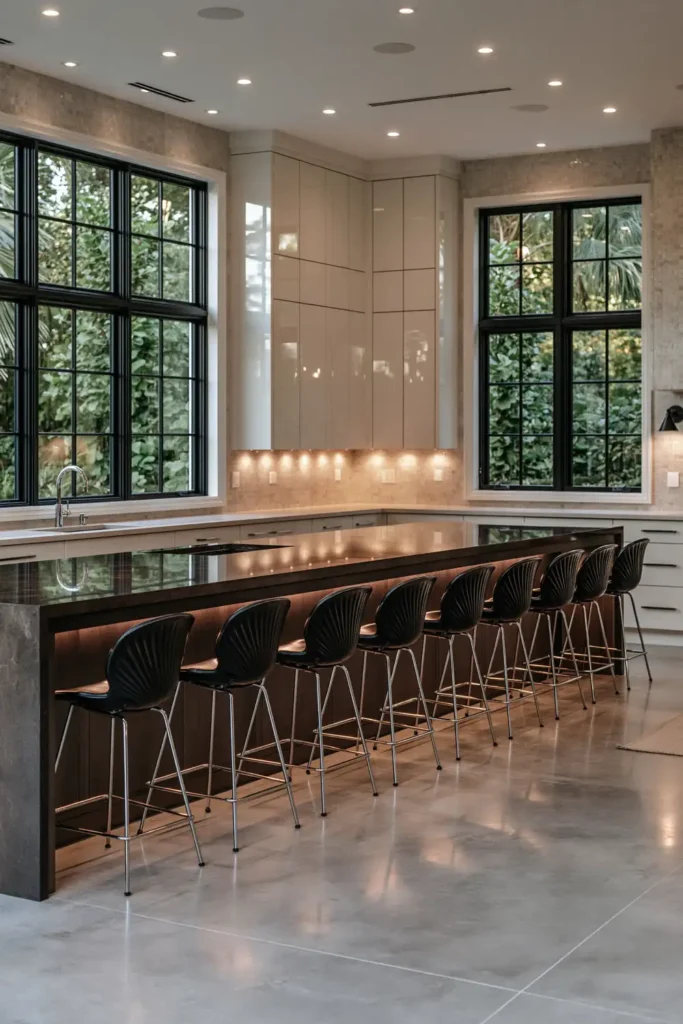
High-gloss white lacquer cabinets create a very different interpretation of barndominium kitchen design. Instead of emphasizing traditional farmhouse details, this look uses smooth reflective surfaces and simple lines to make the space feel modern.
A kitchen island with a dark wood base provides an important layer of heat. Against glossy cabinetry and polished concrete floors, the natural-looking wood finish provides contrast without interrupting the streamlined appearance.
Modern black leather stools with chrome legs reinforce the contemporary direction. Chrome can also tie in with stainless steel appliances, creating consistency among the kitchen’s cooler metallic surfaces.
A geometric backsplash is a useful place to introduce pattern because the rest of the room is intentionally simple. Keeping the cabinet hardware minimal allows that pattern to stand out without making the kitchen feel visually busy.
Lighting can remain understated in this type of space. Recessed LED fixtures provide general illumination without disrupting the clean ceiling line, while warm under-cabinet lighting gives the work surfaces a softer glow in the evening.
Black window frames add definition around the room and prevent the white lacquer from overpowering the entire palette. A gentle neutral such as PPG Winds Breath on nearby walls can further soften the contrast between high-gloss cabinetry and concrete flooring.
Wood Beam Barndominium Kitchen with Knotty Cabinets and Stone Backsplash
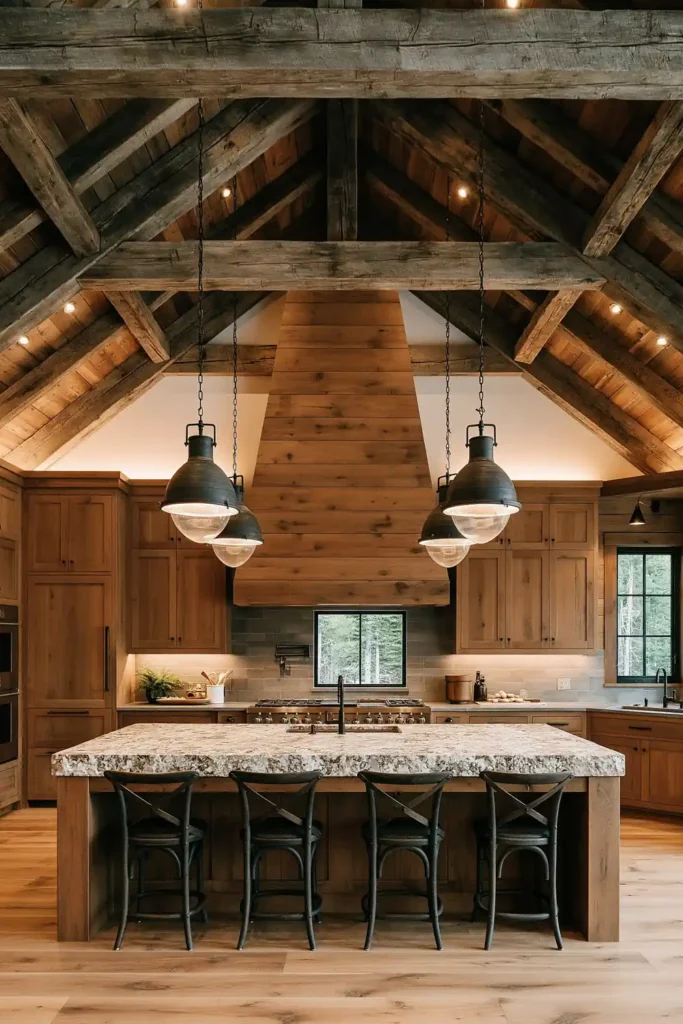
Exposed reclaimed beams can become one of the strongest features in a barndominium kitchen, especially when they are paired with cabinetry that shows visible knots and natural grain.
A reclaimed wood island continues that material story at eye level. Rather than treating the ceiling beams as a separate architectural feature, repeating wood below helps the whole kitchen feel more connected.
X-back counter stools with leather seats suit this setting because their traditional shape complements the rustic cabinetry, while the leather brings in another warm, durable texture.
Granite countertops provide a smoother surface between all the wood elements. A stone backsplash can maintain that natural material palette while introducing variation in color and texture behind the work areas.
Industrial pendants with clear glass shades and dark metal frames are especially effective above the island. They add structure without blocking the view of the beams or making an already textured room feel crowded.
A soft neutral wall shade such as Dunn-Edwards Navajo White can give the wood and stone some breathing room. In a kitchen with several naturally varied materials, keeping the wall color quiet helps the craftsmanship remain the focus.
Black and White Kitchen with Geometric Tile and Floating Wood Shelves
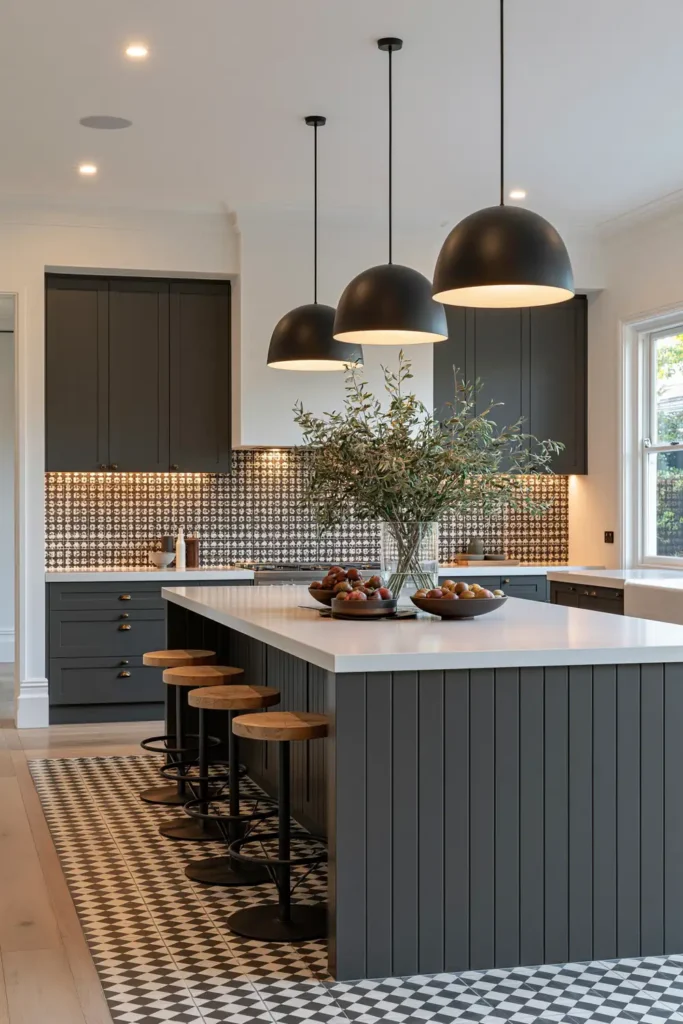
A black-and-white palette can give barndominium kitchen designs a more graphic look while still leaving room for rustic materials. Black cabinetry creates the strongest visual weight, especially when topped with clean white quartz counters.
Geometric cement tile flooring makes the contrast even more noticeable. Because the floor already carries a strong pattern, keeping the major cabinet surfaces simple helps the room remain balanced.
Floating wood shelves bring warmth into the upper portion of the kitchen and provide a useful break from the black cabinetry. Their natural grain also relates well to industrial stools with reclaimed wood seats and black metal frames.
Brushed nickel hardware features a lighter metallic finish which stands apart from the black surfaces without becoming overly decorative. It works especially well when the overall design relies on crisp lines and strong contrast.
Black dome pendant lights suspended from chains reinforce the darker half of the palette. Hanging them above an island or seating area creates a clear focal point without introducing another color.
The combination works best when each material has a clear role: black creates depth, white quartz adds brightness, patterned cement tile supplies movement, and reclaimed wood keeps the room from feeling too stark.
Coastal Barndominium Kitchen with Sage Green Island and Rattan Lighting
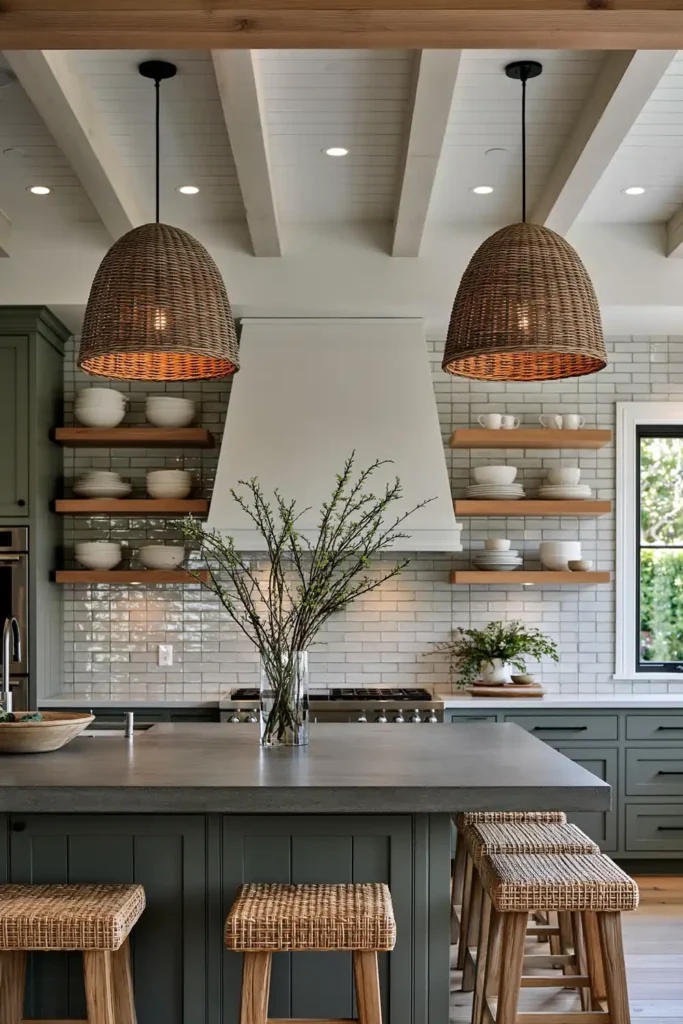
A softer coastal approach can work surprisingly well in a barndominium kitchen, especially when the room already has plenty of natural wood. A sage green shaker-style island adds gentle color without eclipsing the architecture.
White marble countertops keep the palette light, while a pale sage subway tile backsplash extends the color in a subtler way. Using green in more than one place helps the kitchen feel coordinated rather than dependent on a single painted feature.
Natural wood counter stools are a simple choice around the island. They connect easily with light oak ceiling beams and white oak floating shelves, creating a layered mix of pale wood tones throughout the room.
Open shelving can make the space feel relaxed and accessible. Coastal-themed dinnerware displayed on the shelves introduces personality while keeping everyday pieces within easy reach.
Woven rattan cone pendants are especially useful here because their texture adds coziness without making the room feel heavy. The natural finish works with the stools, beams, and shelving while softening the harder surfaces of marble and tile.
A muted shade such as Fine Paints of Europe Pale Jade can support the coastal character without turning the kitchen into a themed space. The overall effect stays light, natural, and comfortable.
Bright and Airy Barndominium Kitchen with Light Oak and Sage Cabinetry
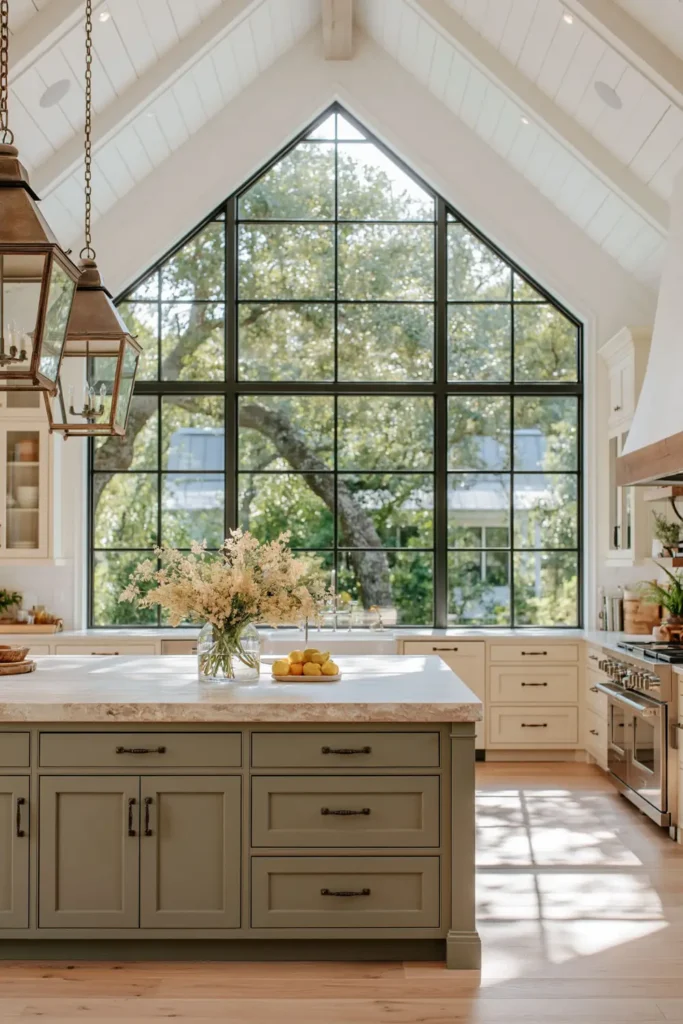
A bright kitchen does not have to rely entirely on white. Merging light oak perimeter cabinets with a sage green island creates enough contrast to make the cabinetry interesting while keeping the overall room gentle and cozy.
White marble countertops and a white subway tile backsplash help reflect natural light throughout the space. These lighter surfaces are especially effective when paired with a wall of large windows or skylights.
Wide-plank light oak flooring continues the heat of the cabinetry below, while natural wood ceiling beams add another layer above. Repeating similar wood tones at different heights makes the room feel cohesive.
The sage island gives the center of the kitchen a clear identity without interrupting the airy feeling. A pairing such as Backdrop Whisper White and Eucalyptus can create this kind of gentle two-tone effect.
Black lantern pendants with clear glass panels provide a useful contrast over the island. The dark metal gives the eye somewhere to land without taking away from the natural light or pale finishes.
This combination works particularly well in open barndominium interiors because the restrained palette can transition easily into nearby dining or living areas.
Mediterranean Kitchen with Terracotta Floors and Natural Stone Archways
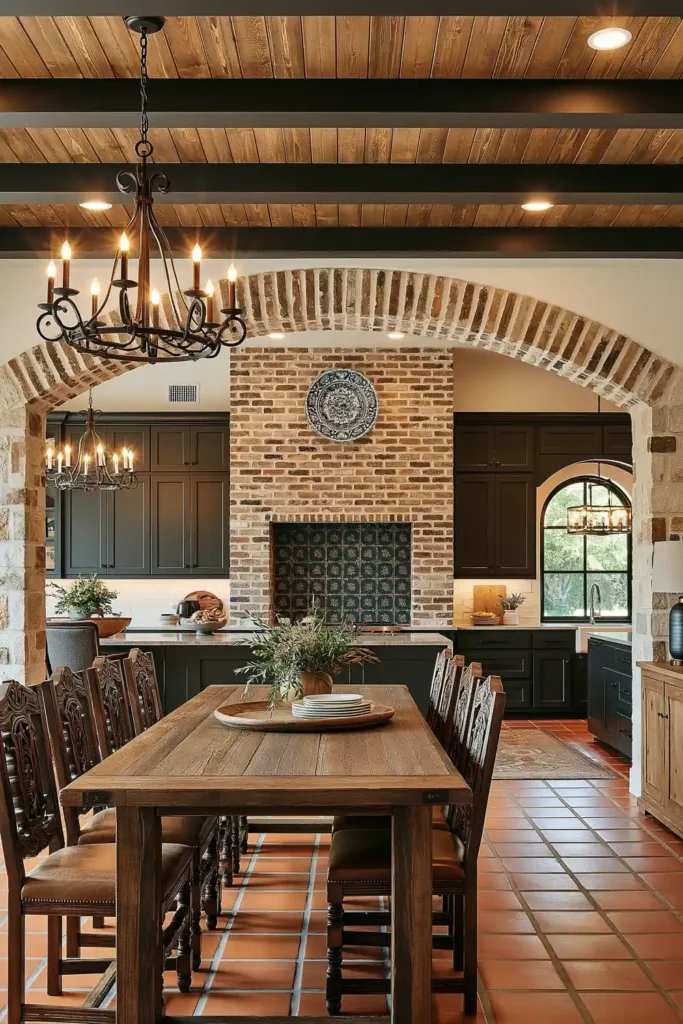
A Mediterranean-inspired kitchen brings richer texture and warmer color into a barndominium. Terracotta tile flooring immediately conveys that character, especially when paired with exposed ceiling beams and dark walnut cabinetry.
Raised-panel cabinet doors feel appropriate in a room with this much architectural detail. Their traditional profile complements natural stone archways and prevents the kitchen from feeling too modern against the rustic materials.
A reclaimed wood dining table with simple rustic chairs can create an informal eating area nearby. The weathered wood fits naturally with the ceiling beams and adds another warm surface against the darker cabinets.
Brick backsplashes and colorful tile details can introduce variation without requiring a large amount of decoration. Because these materials already have visible texture and pattern, the rest of the room can remain fairly restrained.
Wrought iron is another useful material in this style. A chandelier with candle-style bulbs can become a strong focal point over the dining area, while recessed lighting provides more practical lighting throughout the kitchen.
A warm neutral such as Sherwin-Williams Accessible Beige can assist in bridging the deeper walnut, orange-toned terracotta, brick, and natural stone. The result feels layered and established rather than overly coordinated.
Scandinavian Barndominium Kitchen with Pale Oak and White Quartz
Scandinavian simplicity works well in a barndominium when you want to highlight wood without causing the space to feel heavily rustic. Flat-panel light oak cabinets give the kitchen warmth while keeping a clean, uncluttered appearance.
A white waterfall quartz island creates a crisp focal point in the middle of the room. Natural oak stools keep the seating visually light and repeat the cabinet tones without introducing another dominant material.
White subway tile is a practical backsplash choice because it retains the simple palette. Against pale wood and white quartz, it provides subtle texture without drawing attention away from the architectural features.
Natural pine ceiling planks are especially effective overhead. Their warmer grain can give a minimalist kitchen character while still fitting the restrained Scandinavian approach.
Clear glass globe pendants with brass hardware add a small amount of polish above the island. Because the shades remain visually open, they do not compete with the ceiling planks or make the space feel crowded.
Small greenery accents can soften the combination of white and pale wood. Used sparingly, they introduce natural color while preserving the calm, uncluttered feeling of the room.
A soft white such as Benjamin Moore Cloud White can finish the palette without creating harsh contrast. Together, pale oak, white quartz, pine, glass, and understated brass produce a kitchen that feels warm but still very clean.
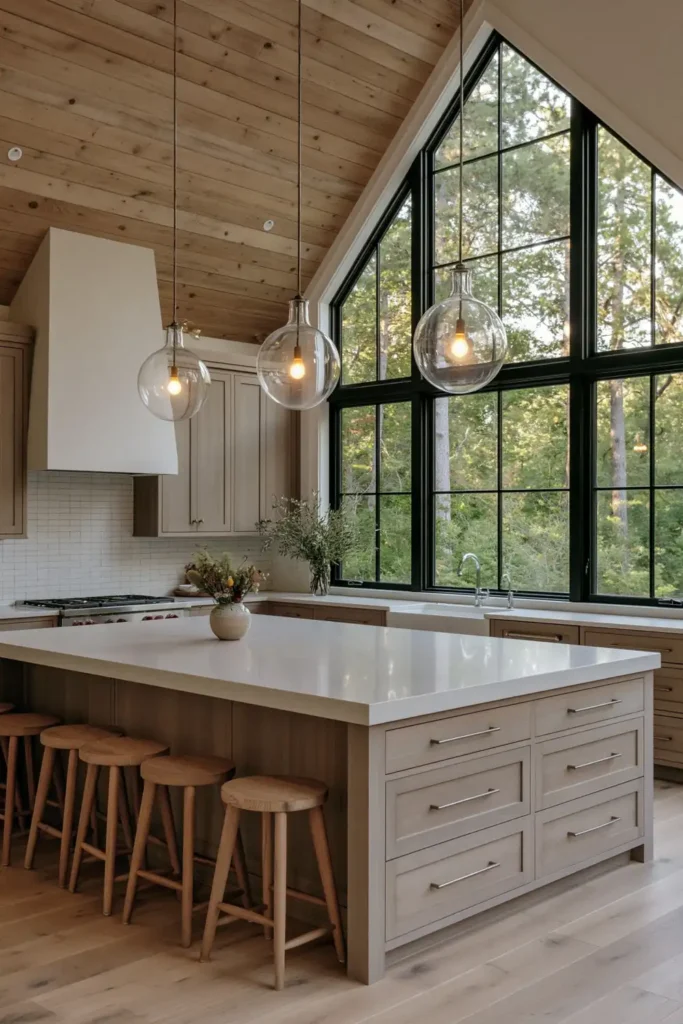
Eclectic Modern Kitchen with Rattan Stools and Mosaic Tile Backsplash
An eclectic modern kitchen works best when the mix of materials seems deliberate rather than random. Dark cabinetry can create a strong foundation, while a reclaimed wood range hood introduces warmth and a more rustic barndominium character.
A geometric mosaic tile backsplash brings pattern into the room without requiring additional decorative pieces. Against darker cabinets, the tile can become one of the main visual features while quartz countertops provide a calmer surface below.
Woven rattan counter stools add another layer of texture around the island or breakfast bar. Black metal legs keep them connected to the darker cabinetry, while the woven seats soften the harder finishes used throughout the kitchen.
Clear glass globe pendants with visible Edison bulbs suit this combination because they feel both modern and slightly industrial. Their clear shades allow the mosaic tile, wood hood, and cabinetry to remain visible from across the room.
A deep cabinet shade such as Farrow & Ball Railings can make the natural textures stand out more clearly. The balance comes from pairing bold dark surfaces with lighter quartz, warm reclaimed wood, and woven fibers.
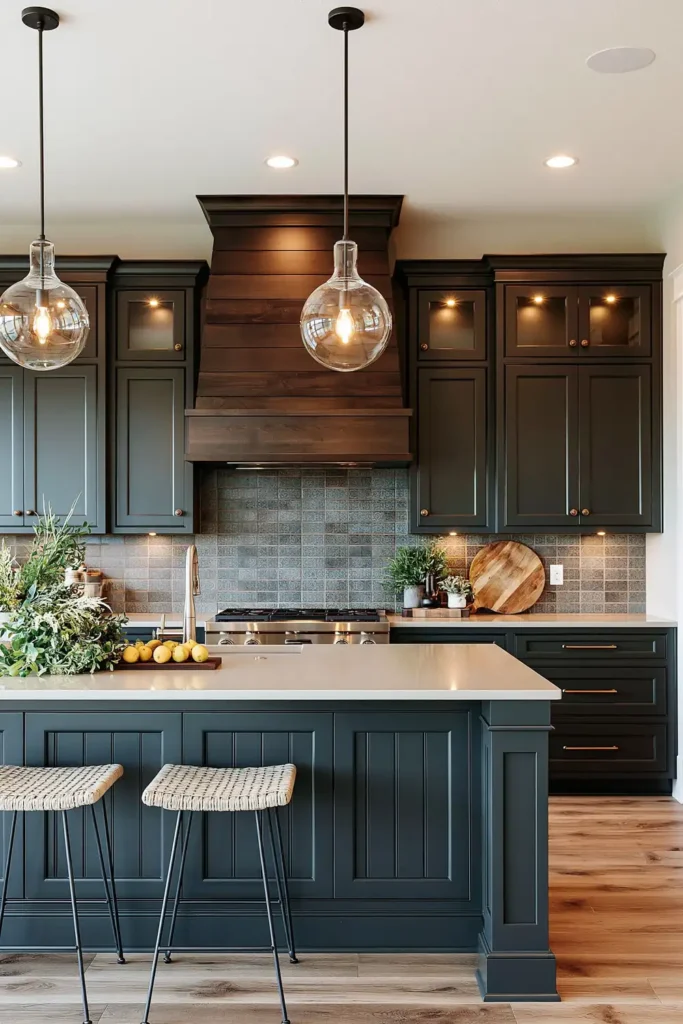
Luxe Marble Barndominium Kitchen with Calacatta Stone and Brass Accents
Marble can give a barndominium kitchen a more refined look without removing all of its warmth. A large waterfall island covered in Calacatta marble creates a dramatic centerpiece, especially when the veining continues down the sides.
Light gray shaker cabinets provide a quieter background for the stone. Their traditional profile keeps the kitchen from feeling overly sleek, while the pale finish allows the marble pattern to remain the main attraction.
A herringbone marble backsplash can carry the same material onto the walls while introducing a different pattern. Keeping the stone family consistent helps the room feel polished rather than overly busy.
Brass or gold cabinet pulls add warmth against the muted gray cabinetry and white marble. Light beige upholstered counter stools with metal frames can soften the island area further and make the seating feel more comfortable.
Crystal-beaded globe pendants with brass finishes bring a decorative element above the island. Under-cabinet lighting can then provide a quieter layer of illumination along the work surfaces.
A light gray wall color such as Behr Classic Silver can support the cabinetry without competing with the Calacatta marble. Used together, marble, soft gray, beige upholstery, and warm brass create a more elegant interpretation of barndominium style.
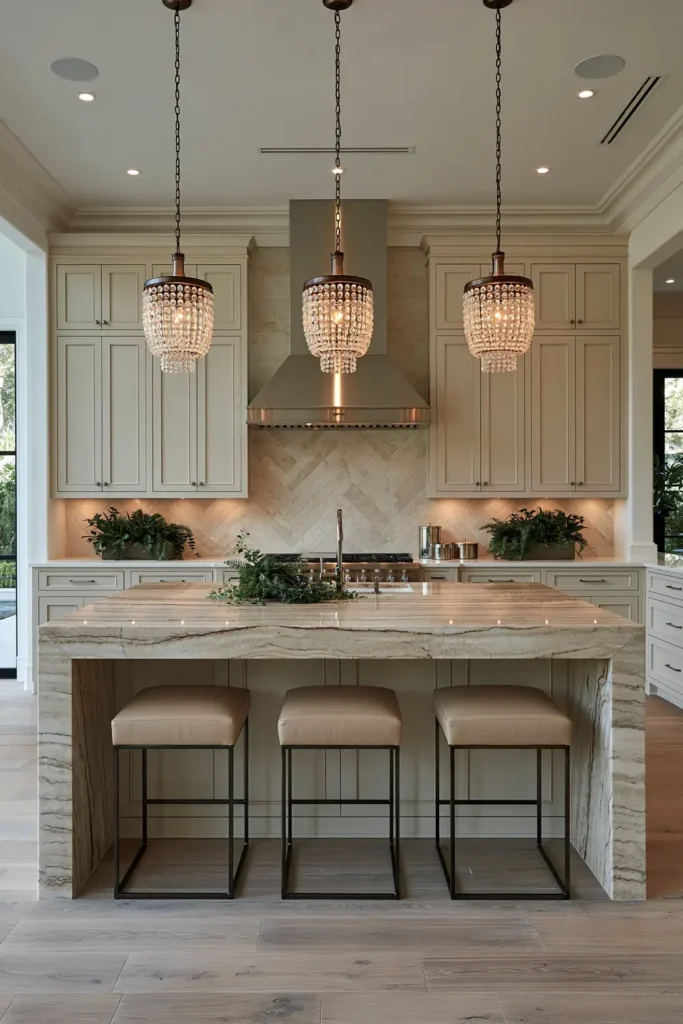
Sleek Steel Kitchen with Stainless Waterfall Island and Wood Plank Ceiling
Stainless steel can create a striking industrial kitchen when it is balanced with enough natural wood. A stainless waterfall-edge island immediately becomes the centerpiece, especially when the sink is integrated directly into its even surface.
Wire-grid bar stools reinforce the utilitarian character without adding visual bulk. Their open frames keep the island area feeling spacious and allow the steel surface to stay prominent.
Brushed stainless finishes can continue through cabinet pulls and appliances, giving the kitchen a consistent metallic language. Instead of mixing several metals, repeating the same finish creates a cleaner overall appearance.
Natural wood ceiling planks are what prevent the room from feeling too commercial. Their grain and warmer color soften the cool steel below, while wide-plank hardwood flooring carries that warmth through the rest of the space.
Recessed LED lights set directly into the wood-planked ceiling preserve the simple lines of the design. Without hanging fixtures interrupting the view, the ceiling itself becomes a stronger architectural feature.
A neutral shade such as Valspar Natural Linen can assist in bridging the cool stainless surfaces and warmer wood tones. This combination is especially effective for homeowners who like industrial materials but still want the kitchen to feel comfortable and connected to the barndominium structure.
Warm-Toned Barndominium Kitchen with Walnut Cabinets and Bronze Accents
Warm wood cabinetry can make a large barndominium kitchen feel more grounded and inviting. Walnut or cherry shaker cabinets bring rich color and visible grain, giving the room dimension without relying on painted finishes.
A natural stone backsplash works especially well with these wood tones. Adding a mosaic tile accent can introduce subtle pattern while still keeping the overall palette earthy and cohesive.
Wide-plank hardwood floors preserve the warmth underfoot. When the cabinetry and flooring both have strong wood tones, choosing slightly different shades can create more dimension than trying to match them perfectly.
Copper and bronze accents are natural companions to walnut and cherry. Oil-rubbed bronze cup pulls can add definition to shaker doors without creating the sharp contrast that black hardware might introduce.
A warm gray stone accent wall can provide a cooler counterpoint to all the wood. A shade such as PPG Spalding Gray can serve a similar purpose on painted surfaces, helping the richer brown tones feel balanced rather than overwhelming.
Warm recessed lighting and under-cabinet LED strips are especially useful in this palette. The softer light improves the natural color of the wood and stone, making the kitchen feel comfortable in the evening as well as during the day.
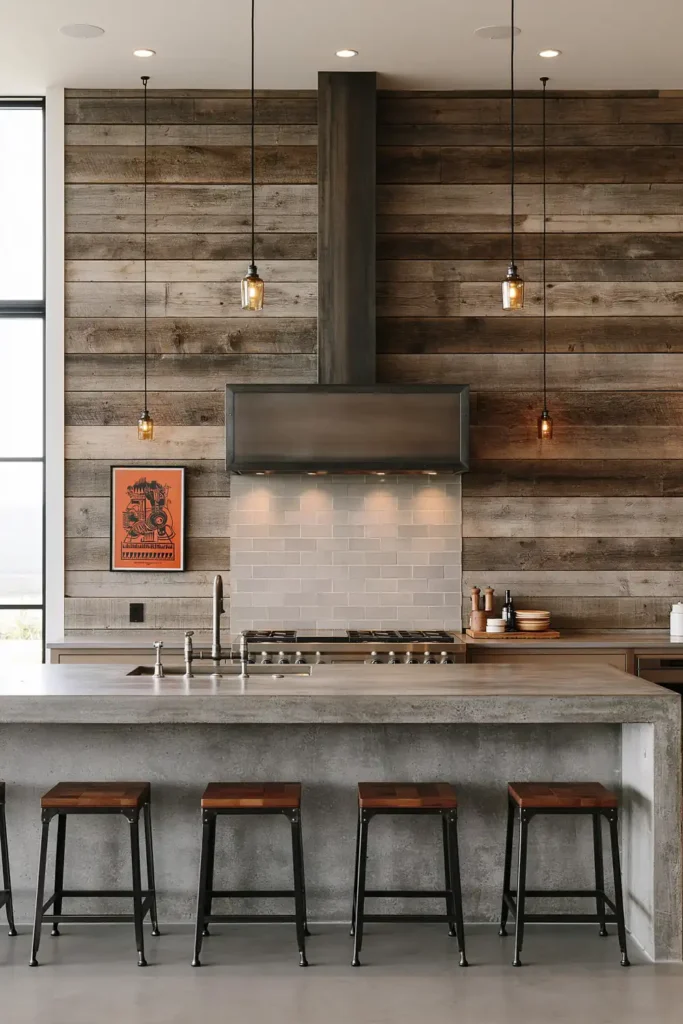
Cool Concrete Kitchen with Barnwood Backsplash and Industrial Stools
Concrete is a natural fit for a barndominium kitchen when you want the space to feel durable, straightforward, and slightly industrial. A concrete waterfall island with an integrated breakfast bar creates a substantial centerpiece without needing much decorative treatment.
Polished concrete countertops and flooring can make the room feel visually unified. Because the material has subtle tonal variation, it still has enough texture to keep a large surface from appearing completely flat.
Reclaimed barnwood on an accent wall or backsplash introduces warmth where the concrete needs it most. The contrast between weathered wood and smooth cement gives the kitchen more character while keeping the palette grounded in natural materials.
Industrial black metal stools with reclaimed wood seats preserve that balance around the island. The metal relates to the harder surfaces, while the wood seating prevents the breakfast area from feeling too cold.
Amber glass globe pendants can soften the look overhead. Their warmer tone works especially well against gray concrete and reclaimed wood, adding a more comfortable glow in the evening.
A light neutral such as Dunn-Edwards Swiss Coffee can keep surrounding walls from adding another competing material. It also gives the darker steel, barnwood, and concrete elements a lighter background.
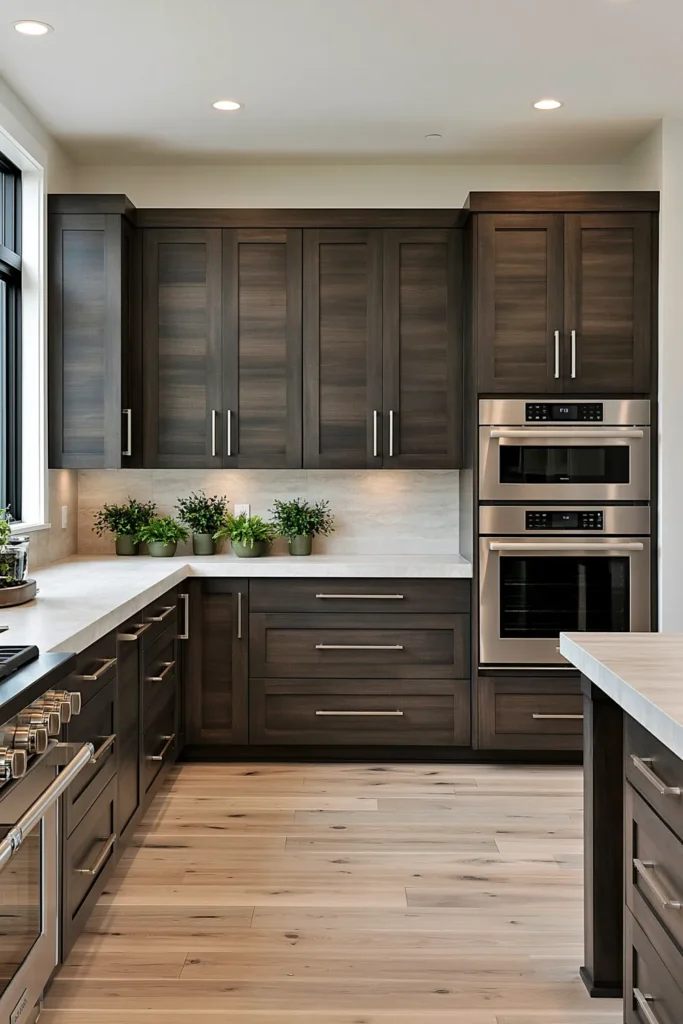
Minimalist Gray Kitchen with Charcoal Cabinets and Patterned Quartz
A gray kitchen can feel calm and sophisticated when the finishes have enough contrast. Charcoal matte cabinetry creates depth, while light gray quartz countertops with subtle veining keep the work surfaces from disappearing into the darker palette.
Hidden handles are especially effective on these cabinets because they preserve a clean front. The fewer visible breaks there are across the cabinetry, the more streamlined the kitchen feels.
A white subway tile backsplash creates a lighter surface without changing the overall neutral direction. Its simple pattern provides enough texture to separate the countertops from the upper walls.
Counter stools with brushed nickel legs and neutral upholstery add a softer element near the island. Brushed nickel hardware elsewhere in the room can repeat that finish without drawing too much attention.
Warm-white recessed LED lights are important in a gray kitchen. Cooler lighting can make charcoal and pale gray surfaces feel harsh, whereas warmer illumination gives the room a more comfortable appearance.
A deep shade such as Clare Paint Current Mood is able to reinforce the moody character when used selectively. The strongest version of this design comes from variation within the neutral palette rather than introducing several additional colors.
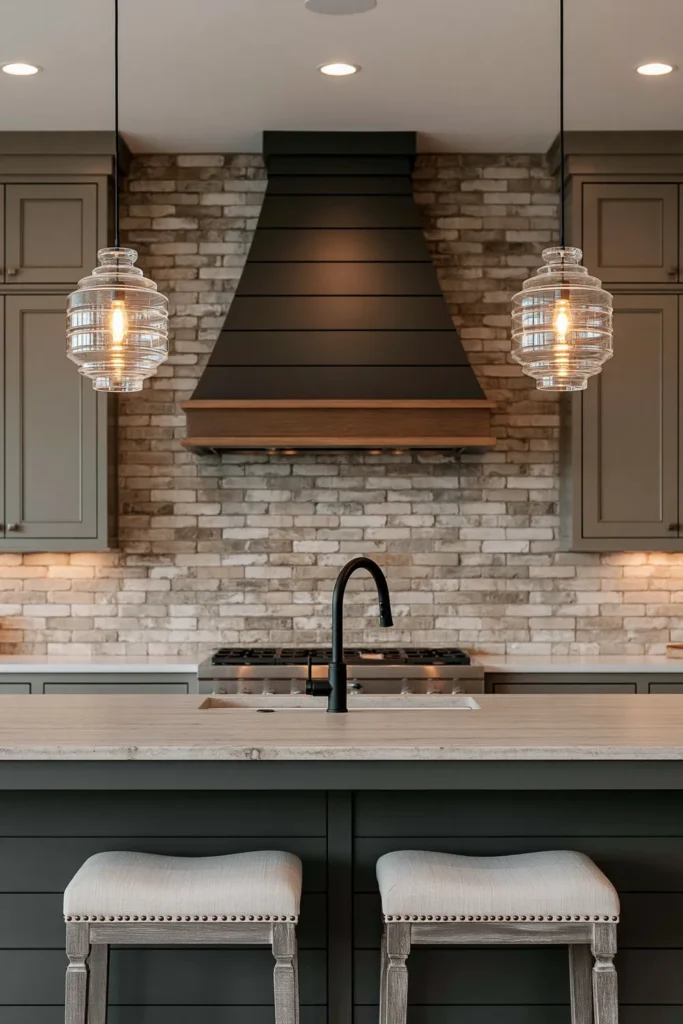
Transitional Barndominium Kitchen with Brick Backsplash and Reclaimed Wood Hood
A transitional kitchen is useful when you like traditional details but do not want the room to feel fully farmhouse. Gray cabinetry creates a adaptable base that can sit comfortably beside rustic materials and more polished finishes.
White marble countertops immediately brighten the cabinets and give the work surfaces a more refined appearance. Behind them, a rustic brick backsplash brings texture and a sense of age that feels at home in a barndominium.
A reclaimed wood range hood can become the visual bridge between those two directions. The wood adds rustic warmth, while its strong architectural placement above the range makes it feel intentional rather than decorative.
Counter-height padded stools with nailhead trim and weathered wood legs bring a more traditional furniture detail to the island. Because the upholstery is softer than metal seating, it also helps the kitchen feel comfortable enough for everyday gathering.
Crown molding and a farmhouse sink can support the classic side of the room without pushing the design too far into country style. Matte black hardware provides a cleaner counterpoint to those details.
Clear glass pendants with exposed Edison bulbs and black chain hardware suit the combination well. A gray shade such as Fine Paints of Europe Storm Cloud can finish the palette while allowing the brick, marble, and reclaimed wood to carry most of the visual interest.
Country-Style Kitchen with Walnut Cabinetry and Galvanized Metal Stools
A country-style barndominium kitchen can feel relaxed without looking overly rustic. Natural walnut cabinets provide a rich foundation, while a reclaimed wood island adds a slightly more weathered surface at the center of the room.
Polished white quartz countertops create a useful contrast against the darker wood. A white subway tile backsplash extends that brightness over the walls and keeps the room from feeling too heavy.
Galvanized metal stools bring an informal, practical character to the island. Their cooler finish stands apart from the walnut and reclaimed wood, which helps the seating area feel more visually distinct.
Weathered hardwood flooring supports the country feel without requiring every wood surface to match. Allowing the floor, island, and cabinetry to show different tones makes the room feel more collected.
Stone accents can bring in another natural texture, while small tufted seating details add a softer note where appropriate. A pale gray such as Backdrop Dove Grey can work well on surrounding walls because it allows the warmer materials to remain dominant.
Industrial brushed nickel dome pendants provide a simple finishing touch above the island. They suit the galvanized stools while supplying enough structure to balance the softer wood grain and lighter countertops.
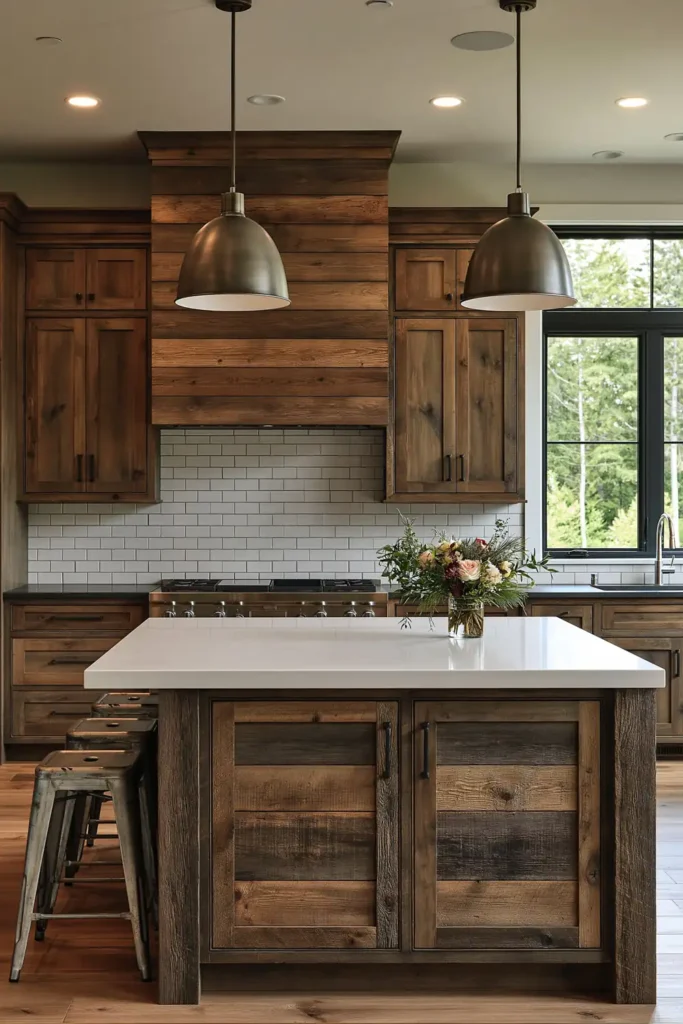
High-Ceiling Barndominium Kitchen with Oversized Lantern Pendants and Exposed Beams
A high ceiling can make a barndominium kitchen feel especially open, but it also needs enough visual structure to keep the room from feeling empty. Exposed weathered wood beams are a strong way to bring the ceiling down visually and give the architecture more warmth.
Tall cabinets that extend toward the ceiling make good use of the vertical space. White shaker-style cabinetry keeps that height from feeling too heavy, while a matching kitchen island gives the lower half of the room a clear focal point.
White marble countertops help reflect light through the space, which is useful in a large kitchen with dark hardwood floors. Leather counter stools around the island can then add a warmer, more grounded texture near eye level.
Oversized black lantern pendants are especially effective in a high-ceiling room. Their larger scale prevents them from getting lost overhead and gives the island a stronger connection to the architecture above.
High-wall windows can bring daylight deeper into the room and make the upper portion of the kitchen feel purposeful rather than empty. Recessed ceiling fixtures can handle practical lighting while the lantern pendants provide the decorative layer.
A warm neutral such as Sherwin-Williams Accessible Beige can soften the contrast between white cabinetry, dark flooring, black fixtures, and aged wood beams.
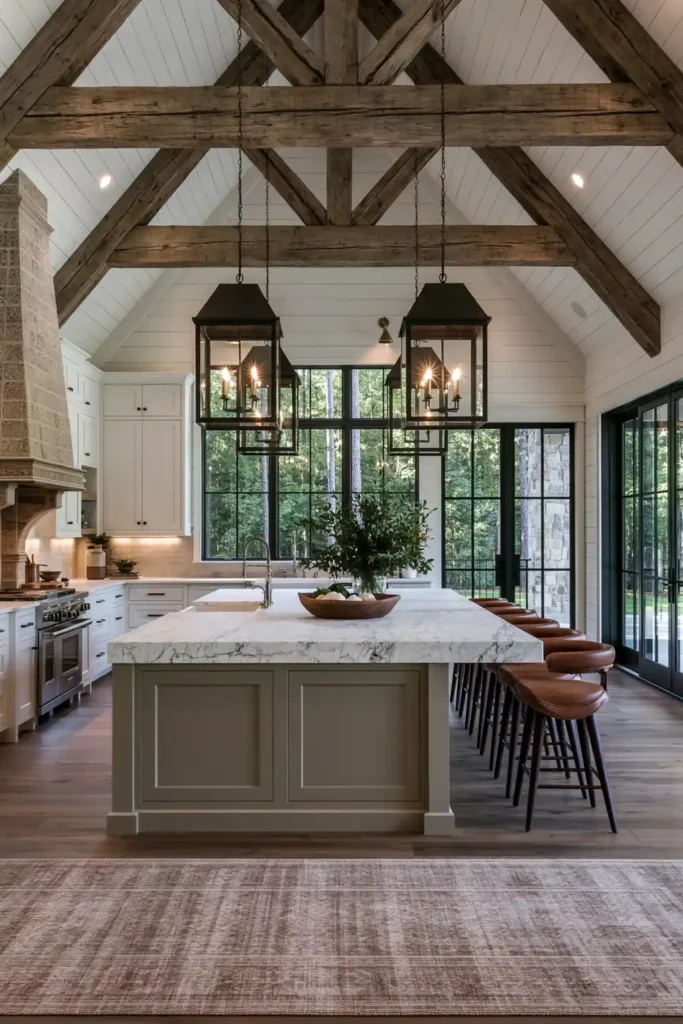
Open-Concept Barndominium Kitchen with Concrete Floors and Natural Wood Beams
Open-plan layouts suit barndominiums because they allow the kitchen, dining, and living spaces to share the same architectural character. A dark gray island can define the kitchen without requiring walls or other visual barriers.
Matching upper cabinets give the kitchen a clear identity within the larger room. Granite countertops add a durable work surface, while polished concrete flooring can continue beyond the kitchen and help unify the entire open plan.
Natural wood ceiling beams are especially useful in a layout like this. They provide warmth overhead and can visually connect the kitchen with the surrounding living areas even when each zone uses different furniture.
Bar seating at the island creates an informal transition between cooking and gathering spaces. Because the island sits in the middle of the sightline, keeping its shape simple helps preserve the openness of the room.
Wire-cage pendants introduce an industrial feature without blocking views. Recessed lighting can deliver broader illumination while keeping the ceiling from becoming crowded with fixtures.
A medium gray such as Benjamin Moore Stonington Gray can support the cabinetry while still allowing the natural beams and concrete floor to stand out. The result feels connected and functional rather than separated into separate rooms.
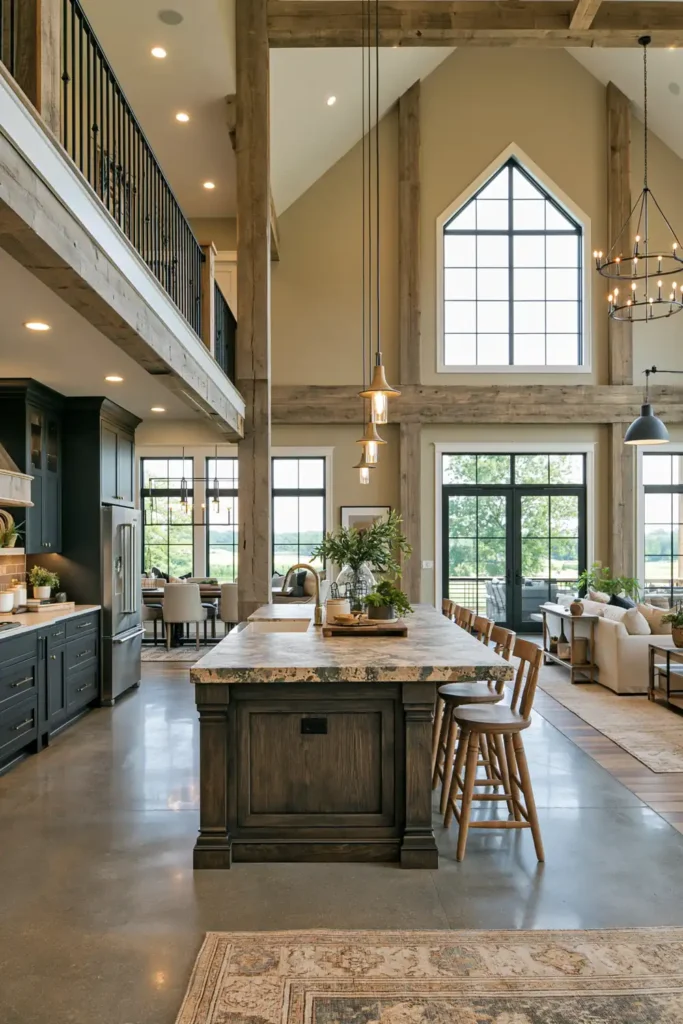
Monochrome Kitchen with Black Quartz and Glossy Herringbone Tile
A monochrome kitchen does not have to feel plain. The key is creating contrast through texture and finish rather than relying on several different colors.
White shaker-style cabinets provide a clean foundation, while black quartz countertops establish a strong horizontal line across the room. That combination alone creates a crisp black-and-white palette.
A dark glossy herringbone backsplash adds movement behind the counters. The reflective tile contrasts with the more matte cabinet finish, making the wall feel layered even though the color scheme remains restrained.
Brushed nickel hardware is a useful middle ground between the black and white surfaces. Its softer metallic finish delivers definition without introducing the warm feeling of brass or the heavier look of black hardware.
Black industrial pendants suspended from chains are able to reinforce the deeper elements above an island or work area. Repeating black at countertop and ceiling level makes the palette feel balanced.
A deep shade such as Farrow & Ball Railings can be used selectively when you want to push the monochrome effect further. The strongest version of this design relies on the contrast between matte paint, glossy tile, polished quartz, and metal details.
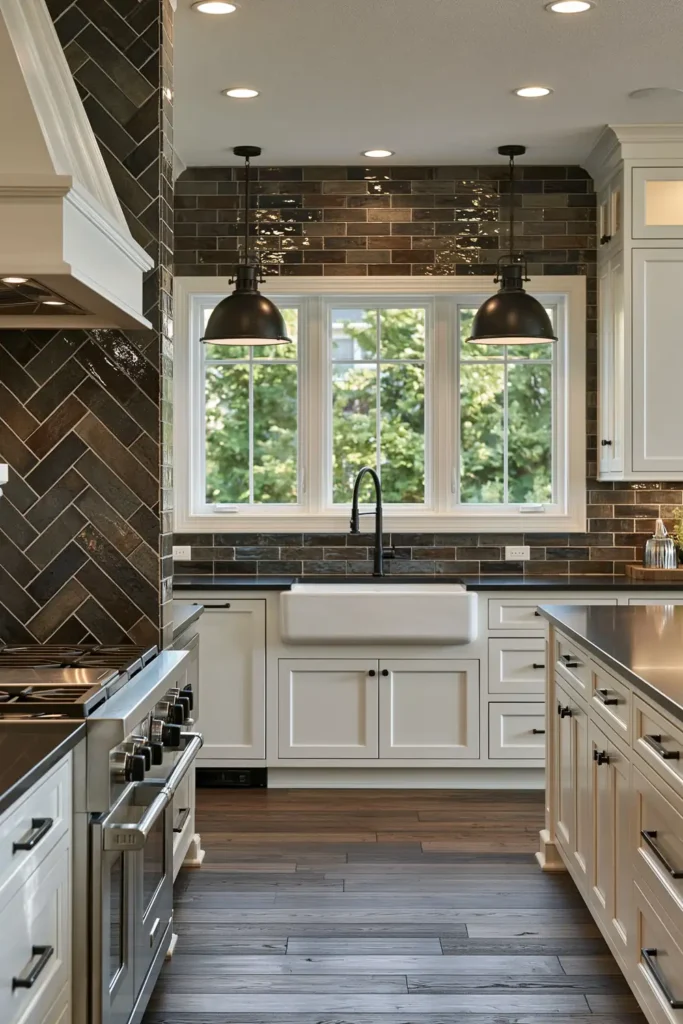
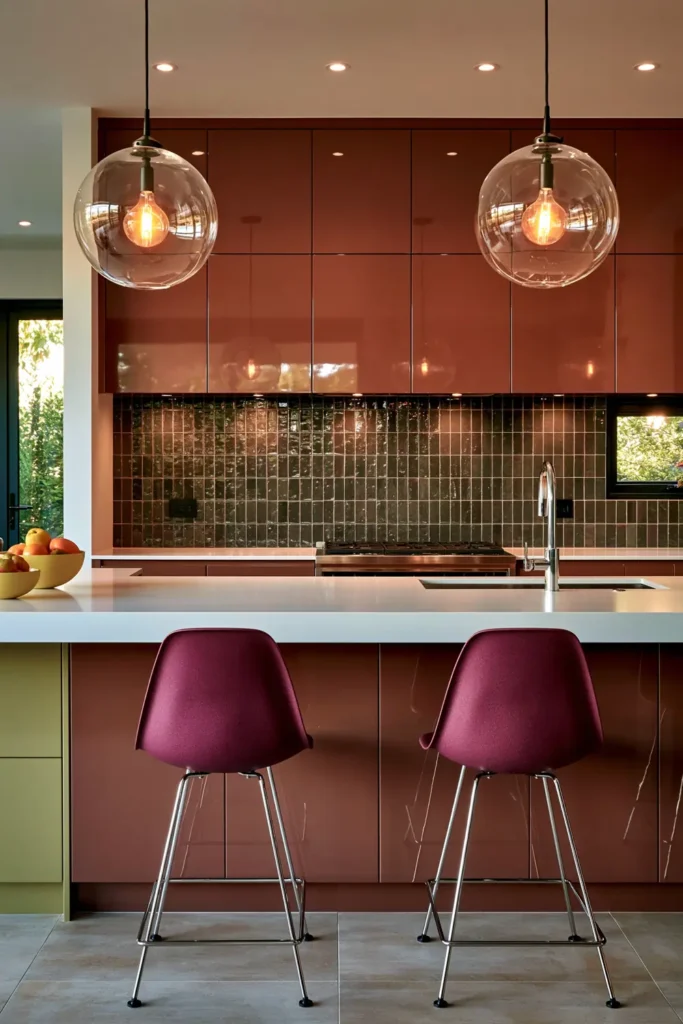
Bold Color-Pop Kitchen with Orange Cabinetry and Purple Tile
A bold color scheme can turn a barndominium kitchen into a much more playful space. Bright orange cabinetry immediately changes the mood, especially when the color is repeated on a large island.
A white quartz waterfall countertop is an important balancing element. Its clean surface gives the eye a break from the saturated cabinetry and keeps the island from becoming visually overwhelming.
Purple molded-plastic stools create a second strong color around the island. Rather than trying to soften the orange, this approach intentionally builds contrast through another equally saturated shade.
A glossy purple subway tile backsplash extends that contrast onto the walls. Because the finish is reflective, it can make the color feel more energetic as the lighting changes throughout the day.
Polished chrome hardware adds another crisp, modern surface without competing with the red and violet palette. Clear glass globe pendants with visible Edison-style filaments work for the same reason: they add shape and light without introducing another dominant color.
A shade such as Behr Tangerine Dream can support the orange cabinetry where a strong, energetic finish is the goal. This kind of kitchen works best when the bold color choices are deliberate and the surrounding materials stay simple enough to support them.
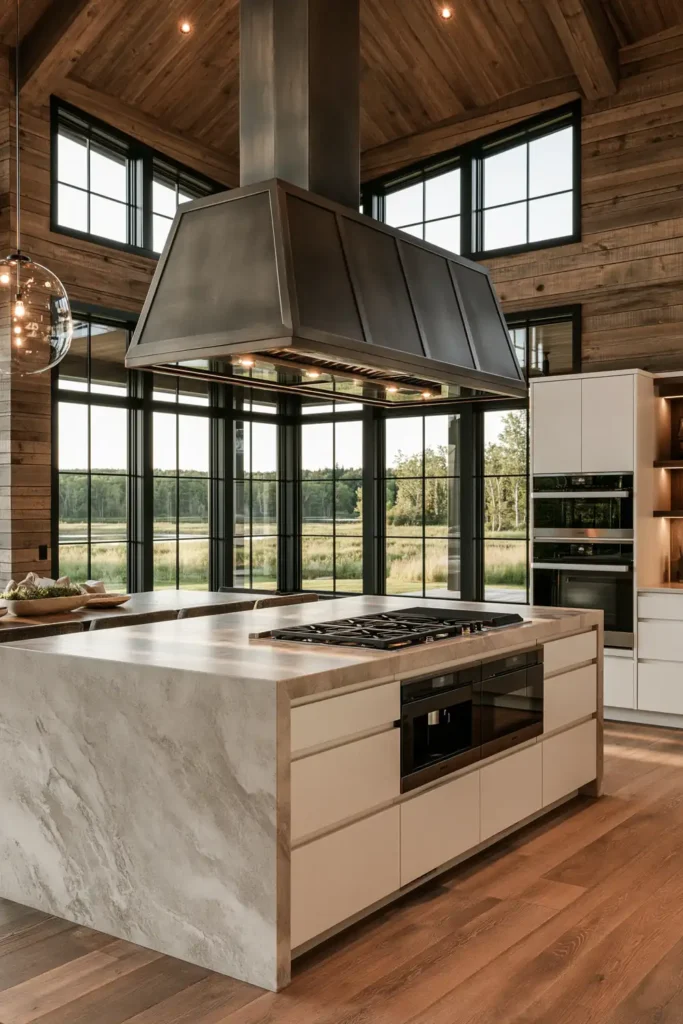
Clean-Line Barndominium Kitchen with Handleless Cabinets and Waterfall Quartz
A clean-line kitchen is a good option for homeowners who like the spacious architecture of a barndominium but prefer a more minimal interior. Push-to-open white cabinetry creates an uninterrupted backdrop, especially when the doors have no visible handles or decorative trim.
A white quartz waterfall island continues that streamlined look through the center of the room. An integrated gas cooktop keeps the main work surface practical without adding extra visual clutter.
Natural wood ceiling planks are an important counterbalance to all the white. They introduce warmth overhead and keep the kitchen connected to the barn-inspired character of the home.
Black-framed windows provide another useful contrast. Their strong outlines give the lighter cabinetry more definition while strengthening the industrial side of the architecture.
A stainless steel range hood with a glass canopy can sit above the island without feeling overly bulky. Integrated LED lighting keeps the cooktop well illuminated while preserving the sleek appearance.
A bright shade such as Valspar Ultra White works naturally with this approach. The goal is not to eliminate character, but to let the wood ceiling, black windows, quartz surfaces, and simple cabinetry carry the design.
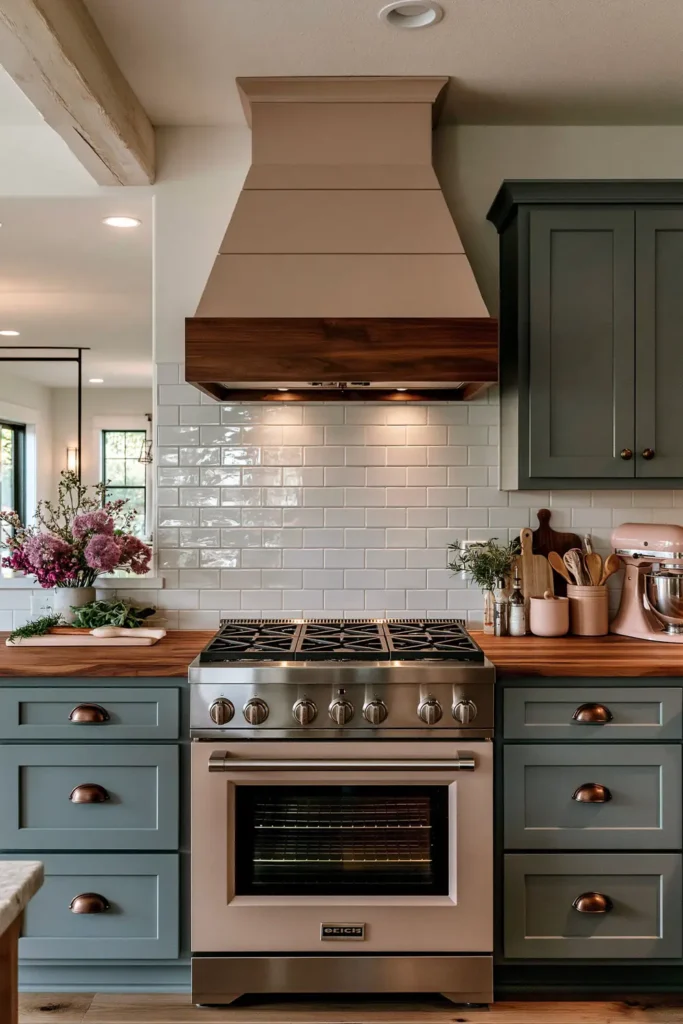
Soft Pastel Kitchen with Mint Cabinets and Vintage Pink Range
Pastel color can give a barndominium kitchen a completely different personality. Mint green shaker cabinets feel light and cheerful while still retaining the traditional cabinet profile that works well in a farmhouse-inspired setting.
A vintage-style pink cooking range creates an obvious focal point. Repeating the pink in the range hood can make the feature feel intentional rather than like a single unexpected splash of color.
Natural butcher block countertops help ground the pastel palette. The warm wood gives the mint and pink surfaces a more relaxed backdrop and connects naturally with exposed ceiling beams.
White subway tile is a simple choice for the backsplash because it keeps the room from becoming too colorful. It also provides a familiar neutral surface between the painted cabinets and wood countertops.
Cup pulls add another vintage detail yet lacking making the cabinetry overly ornate. Paint shades such as PPG Seafoam and Ballet Slipper can create the soft green-and-pink combination while keeping the room playful rather than harsh.
Natural light is especially important in this palette. Daylight helps the pastel finishes feel fresh and allows the grain of the butcher block and exposed beams to remain visible alongside the painted surfaces.
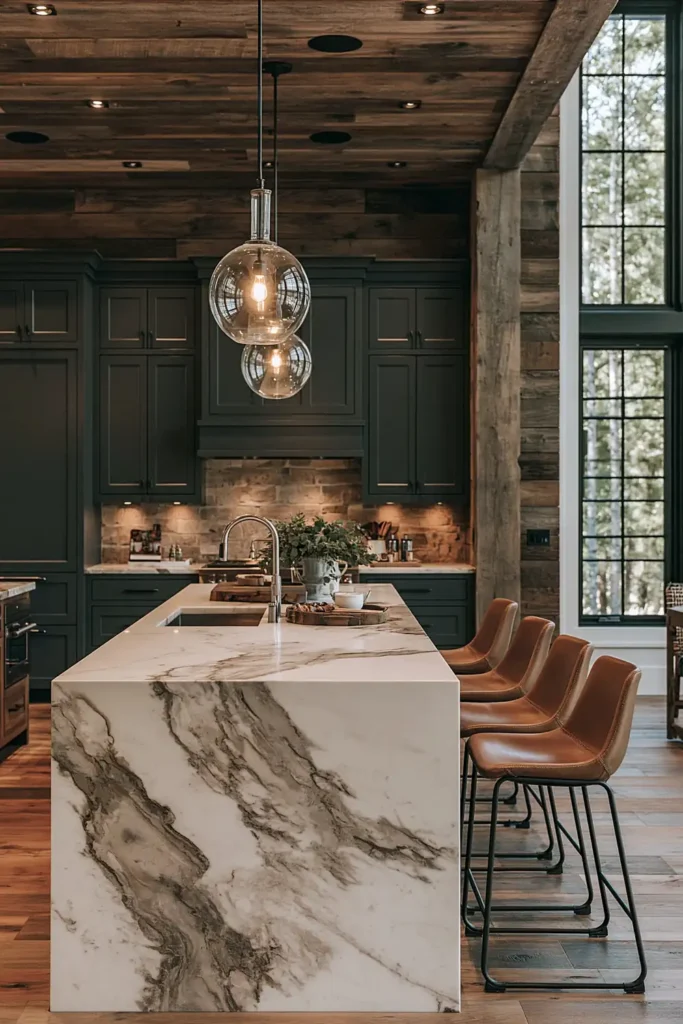
Ultra-Modern Barndominium Kitchen with Charcoal Cabinets and Reclaimed Wood
An ultra-modern barndominium kitchen can still include rustic materials as long as they are used selectively. Charcoal cabinetry creates a dark, clean-lined foundation, while reclaimed wood planking adds warmth and visible texture.
A quartz waterfall island with marble-like veining makes a strong centerpiece against the darker cabinets. The lighter stone surface provides enough contrast to keep the kitchen from feeling overly heavy.
Leather stools with industrial metal frames fit naturally around the island. Their combination of upholstery and metal reinforces both the refined and utilitarian sides of the design.
Matte black cabinet hardware can keep the cabinetry visually consistent, while touch-activated faucets introduce a more contemporary functional detail free of adding decorative clutter.
Clear glass globe pendants with brass accents provide a lighter finishing element overhead. The glass keeps the view open, while the brass delivers a small amount of heat beside the reclaimed wood.
A shade such as Dunn-Edwards City Loft can support the charcoal palette where a deeper neutral is needed. The room feels most balanced when the dark cabinetry, pale veined quartz, reclaimed wood, leather, and metal each remain visually distinct.
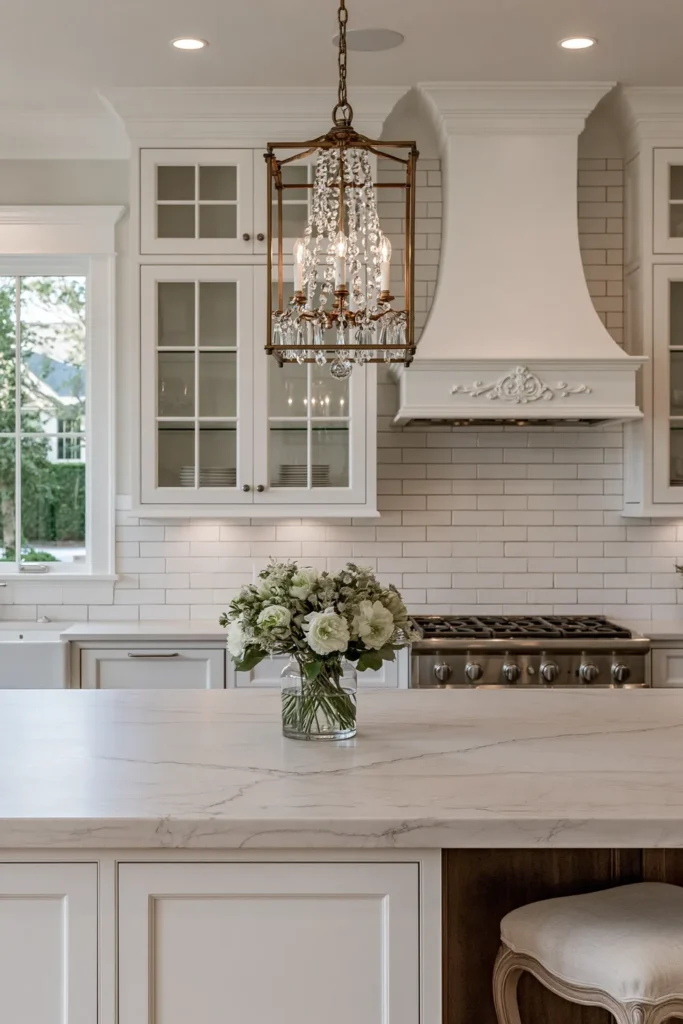
Classic Elegant Kitchen with Glass-Front Cabinets and Brass Fixtures
Traditional refinement in a barndominium kitchen often comes from familiar materials used with slightly more polished details. White shaker cabinets create a timeless foundation, while glass-front upper cabinets give the room a lighter, more decorative appearance.
A white marble-look quartz island keeps the center of the kitchen bright. The soft veining adds movement without the maintenance concerns that can come with natural marble.
Rounded bar stools soften the straight lines of the cabinetry and island. Their shape can make the seating area feel more comfortable and less formal, even when the surrounding finishes are refined.
A white subway tile backsplash keeps the walls simple, allowing brass cabinet knobs, pulls, and fixtures to stand out. The warm metal gives the mostly white palette more dimension without making it feel busy.
A crystal chandelier with brass accents can become the main decorative feature above the island or nearby dining area. Recessed ceiling lights then provide the practical illumination needed for everyday use.
A deeper paint color such as Clare Paint Current Mood can create contrast when used selectively around the white cabinetry. Combined with polished quartz, glass-front doors, brass hardware, and crystal lighting, the result feels classic without losing the open character of a barndominium.
Bold Emerald Green Kitchen with Wood Shiplap and Butcher Block Counters
Emerald green cabinetry can give a barndominium kitchen a strong identity without losing the comfort that makes this style appealing. Shaker-style doors keep the color grounded in a familiar cabinet profile, so the deeper green seems deliberate rather than trendy.
Natural wood shiplap walls add texture around the cabinetry and soften the richness of the green. Wide-plank hardwood floors continue that coziness underfoot, creating a palette that feels earthy even with such a bold cabinet color.
Butcher block countertops are a natural fit here because they connect directly with the shiplap and flooring. Their visible grain keeps the work surfaces relaxed and practical while preventing the darker cabinetry from overtaking the room.
Brass cabinet pulls create a warm contrast against emerald green and help the cabinet details stand out. Stainless steel appliances introduce a cooler finish, which keeps the room from becoming too heavily focused on wood and warm metals.
Recessed can lights and professional range hood lighting keep the illumination practical and unobtrusive. With so much visual interest already coming from the cabinetry and natural materials, simple lighting allows those features to remain the focus.
A rich shade such as Fine Paints of Europe Hunter Green can create the saturated cabinet color which defines this look. Paired with butcher block, wood shiplap, brass, and hardwood flooring, it offers a bold version of barndominium style that still feels rooted in natural materials.
Finding the Barndominium Kitchen Style That Feels Like Home
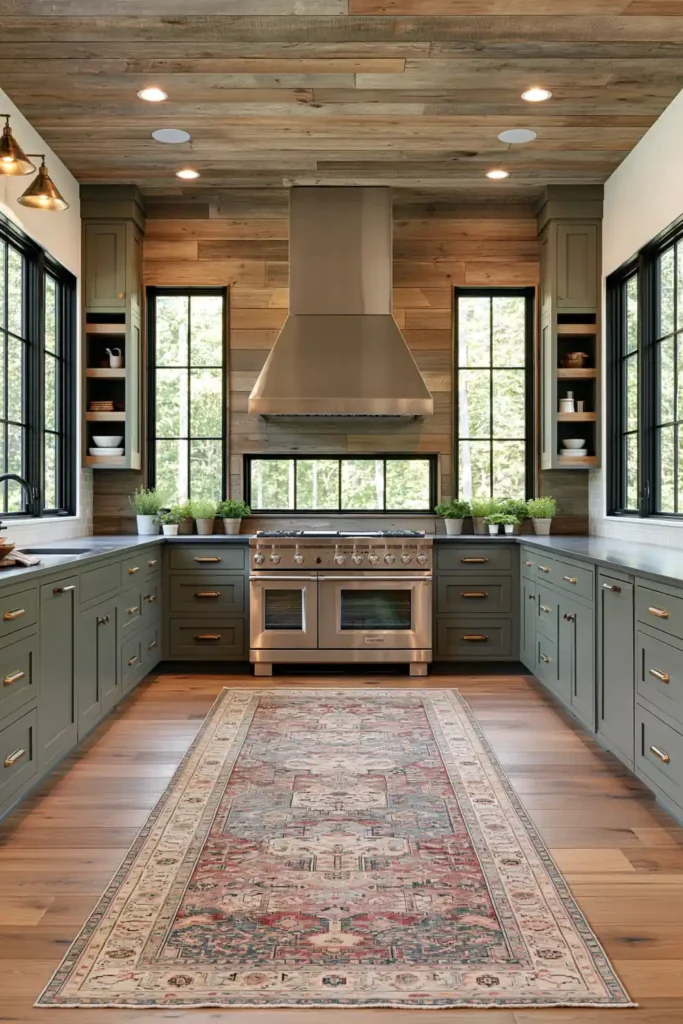
The best barndominium kitchen designs are not defined by one specific finish or decorating formula. Some feel most natural with reclaimed wood, exposed beams, and farmhouse details, while others come stimulated by concrete, marble, steel, dramatic color, or clean modern cabinetry. No matter which direction you are drawn to, it is worth taking time to plan your renovation carefully. Creating a defined budget, mapping out your priorities, and seeking advice from professionals or contractors can help you turn inspiration into a kitchen that truly works for your home and lifestyle.
When choosing a direction for your own kitchen, start with the materials you know you want to live with every day. Consider how each surface, finish, or fixture will hold up to daily use and cleaning—maintenance and durability are just as important as appearance. A large island, warm wood ceiling, bold cabinet color, stone backsplash, or distinctive light fixture can become the anchor, and the rest of the room can grow naturally around it.
It also helps to pay attention to the architecture of the barndominium itself. High ceilings, open sightlines, large windows, and exposed structural details already bring plenty of personality, so the kitchen does not need to compete with them. The most comfortable rooms usually balance those larger features with practical surfaces, useful seating, and finishes that suit the way the home is actually used.
Whether you prefer bright white cabinetry, dark contemporary finishes, soft pastels, or a rustic mix of wood and stone, there is plenty of room to make the design your own. To avoid feeling overwhelmed by all the options, start by selecting one element as a focal point—like a distinctive kitchen island, show-stopping backsplash, or statement light fixture. Let this feature guide your other choices, so the rest of the design can naturally grow around it. Choose the ideas that fit your space and daily routine, then build from there rather than trying to reproduce every detail at once.