
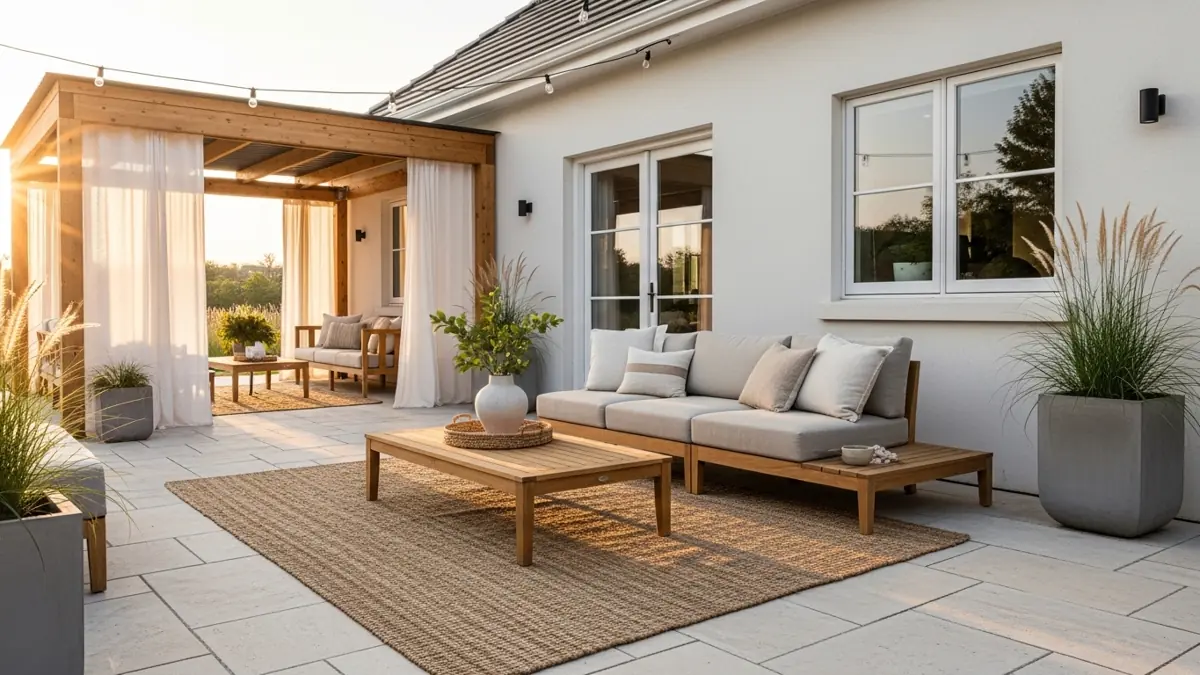
Outdoor design trends this season are less about expensive renovations and more about atmosphere. The best outdoor design trends for Spring and Summer focus on layering, comfort, and thoughtful styling that makes even a small patio feel intentional.
If you’re renting, working with a tight budget, or staring at a blank concrete slab wondering where to start, you’re not alone. Most outdoor spaces feel unfinished because they lack structure and texture. The good news? You don’t need to rebuild your deck or install a pool.
A few smart layout decisions, the right materials, and strategic styling can completely shift the mood. Let’s start with the looks that create instant impact.
The Resort-Inspired Lounge Setup
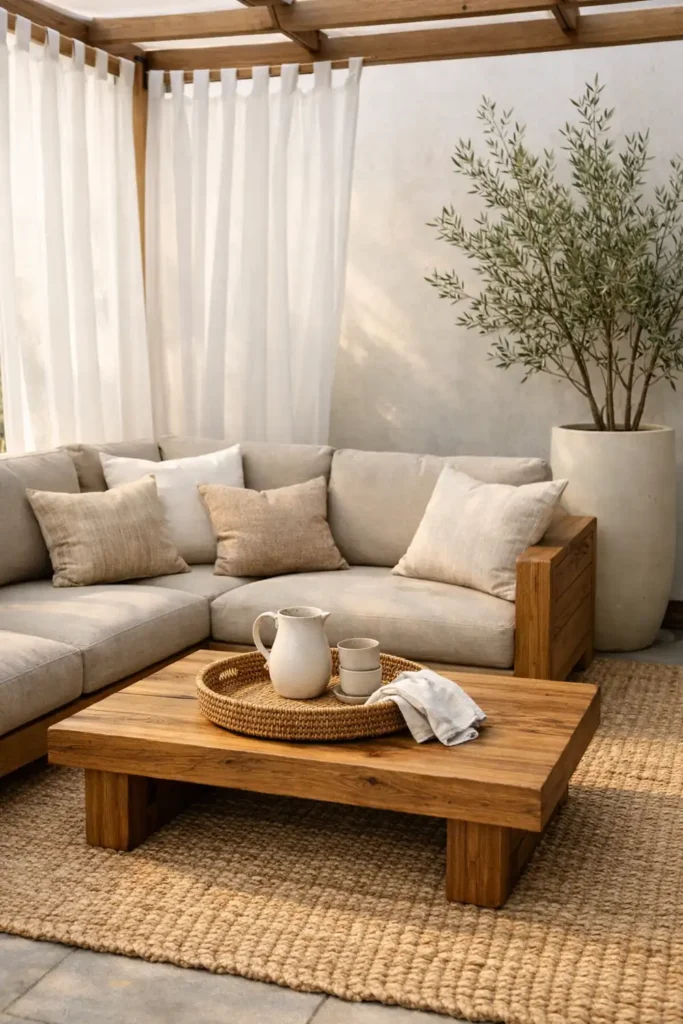
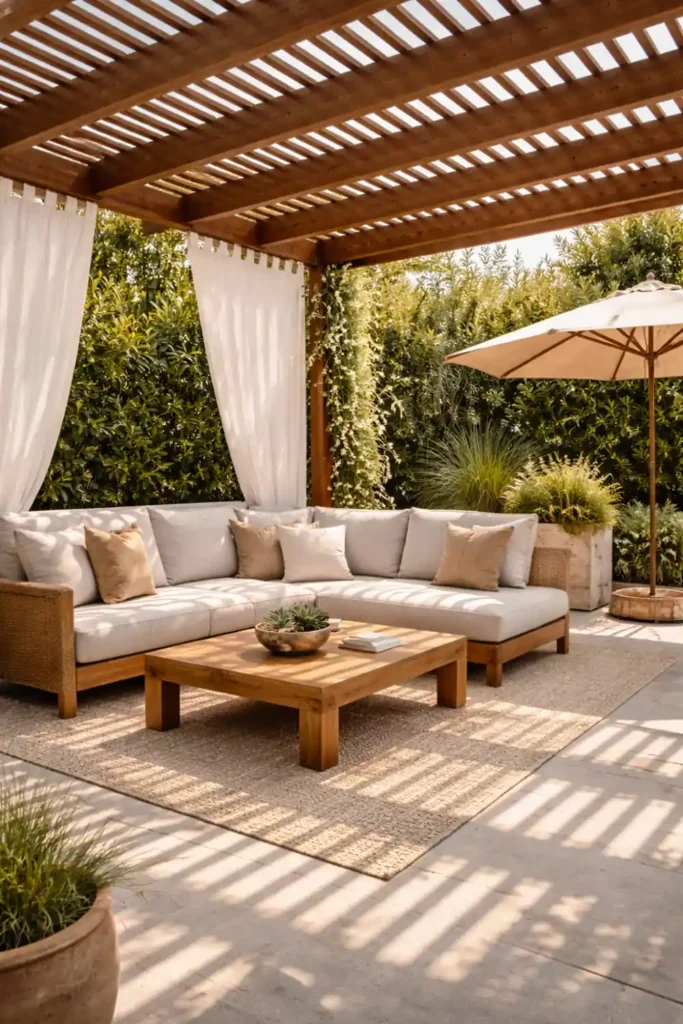
Think low-profile seating, oversized cushions, and a layout that invites you to sink in and stay awhile. A deep outdoor sectional in a soft oatmeal fabric immediately sets the tone.
Add a teak or acacia wood coffee table with a wide surface. It grounds the space and gives you room for a woven tray, chilled drinks, or stacked design books.
Layer in texture through neutral linen pillows and a lightweight outdoor throw. The soft folds and slightly rumpled fabric make the space feel relaxed rather than staged.
If you can, frame the seating area with sheer outdoor curtains or a simple pergola. Even tension-mounted white panels can create that cabana feeling without permanent construction.
Finish with a large jute or flatweave outdoor rug under the entire seating zone. The rug visually anchors everything, turning scattered furniture into a defined lounge.
Mediterranean Earthy Escape
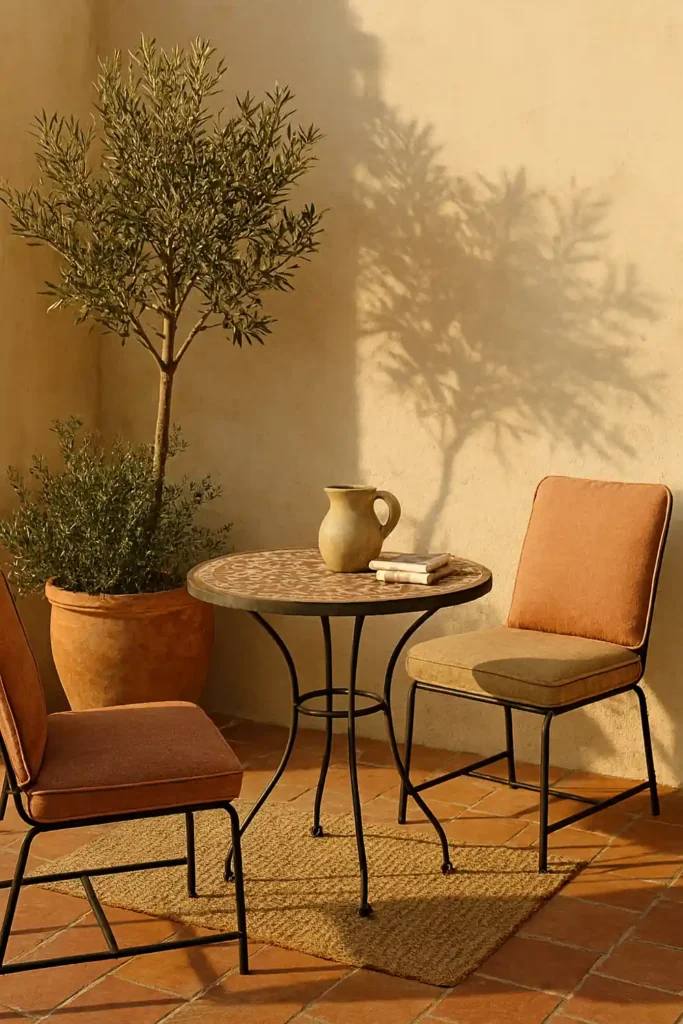
This look leans warm and sun-washed. Picture terracotta planters, textured stucco walls, and cushions in shades of rust, sand, and faded clay.
Start with large clay or ceramic pots. Fill them with olive trees, rosemary, or even tall grasses for that relaxed European courtyard vibe.
Swap bright white cushions for linen covers in warm neutrals. A soft tobacco or muted terracotta instantly shifts the mood from suburban patio to coastal villa.
Add a small mosaic side table or wrought iron accent chair. The subtle curves and aged finishes add character without overwhelming the space.
For flooring, try layering a natural fiber rug or leaving warm-toned pavers exposed. The goal is warmth underfoot and softness in the color palette.
This trend works especially well on balconies and small patios because the earthy tones make compact spaces feel cozy instead of cramped.
Desert Minimalism with Sculptural Lines
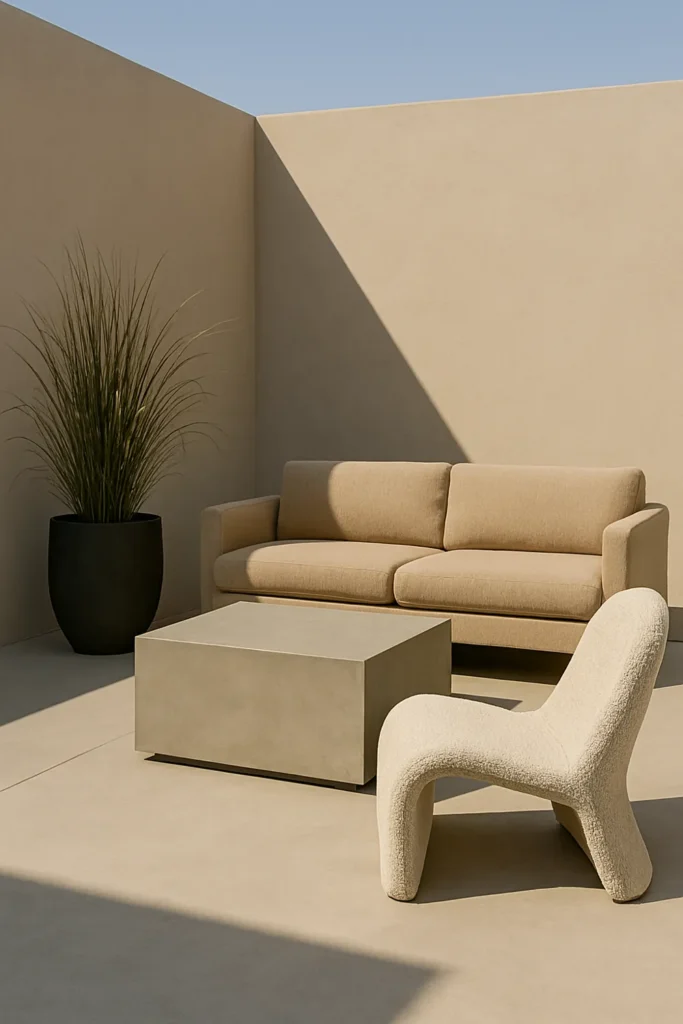
If you prefer clean lines, this trend is all about restraint. Pale concrete, smooth surfaces, and sculptural furniture take center stage.
Choose a streamlined sofa with straight arms in a light beige or soft taupe. Avoid busy patterns. Let shape and proportion do the work.
Incorporate one or two statement chairs with curved backs or architectural silhouettes. A rounded boucle-style outdoor chair adds softness against angular surroundings.
Keep the color palette tight. Beige, muted sage, dusty olive, and warm gray create harmony without visual noise.
Use a large rectangular concrete or stone coffee table to add weight. Its solid presence contrasts beautifully with lighter upholstery.
Add greenery sparingly. A single oversized planter with tall ornamental grass makes a stronger statement than multiple small pots scattered around.
This approach feels calm, airy, and modern — especially in smaller urban outdoor spaces.
Bold Color Pops Against Neutrals
If your outdoor base is neutral — and most are — color becomes your secret weapon. You don’t need to repaint or replace furniture.
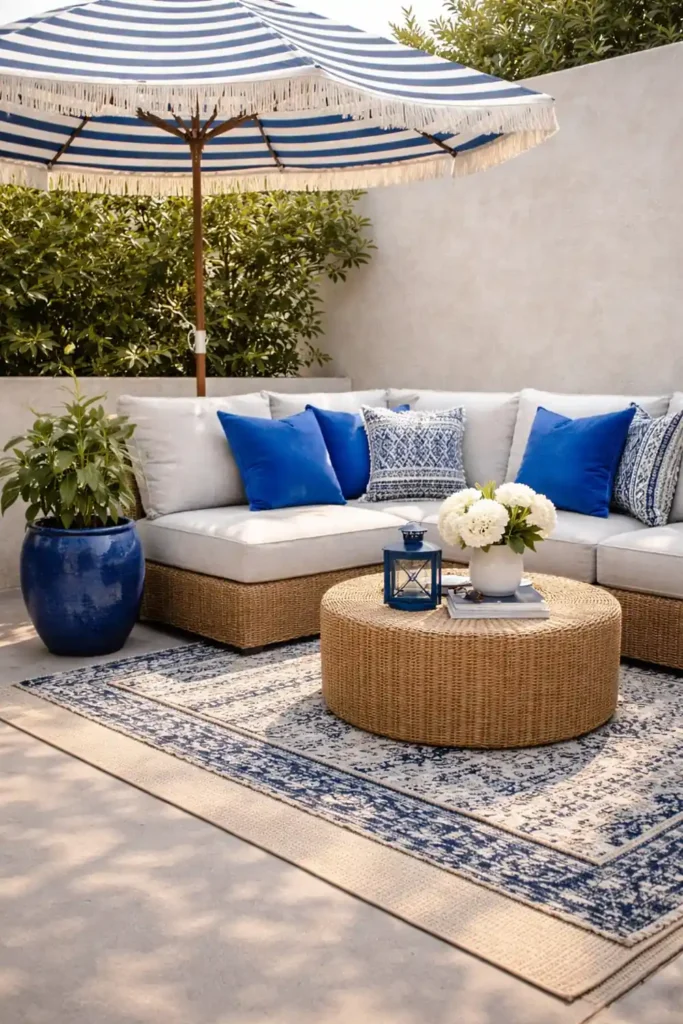
Start with a beige or gray sofa and add pillows in one high-impact shade. Cobalt blue, citrus yellow, or coral instantly energize the space.
Choose one dominant color and repeat it three times. For example, a cobalt pillow, a patterned outdoor rug with blue accents, and a matching ceramic planter.
An outdoor striped rug can tie everything together. Look for durable polypropylene options in graphic patterns that feel playful but polished.
Add a coordinating outdoor umbrella for vertical color impact. The canopy draws the eye upward and makes the whole area feel styled, not random.
This trend is perfect if you want a seasonal refresh without a full redesign. Swap pillow covers and rugs, and your patio feels brand new.
Outdoor Dining as a Statement Moment
An outdoor dining area shouldn’t feel like an afterthought. It should feel like an extension of your kitchen — just with better light and fresh air.
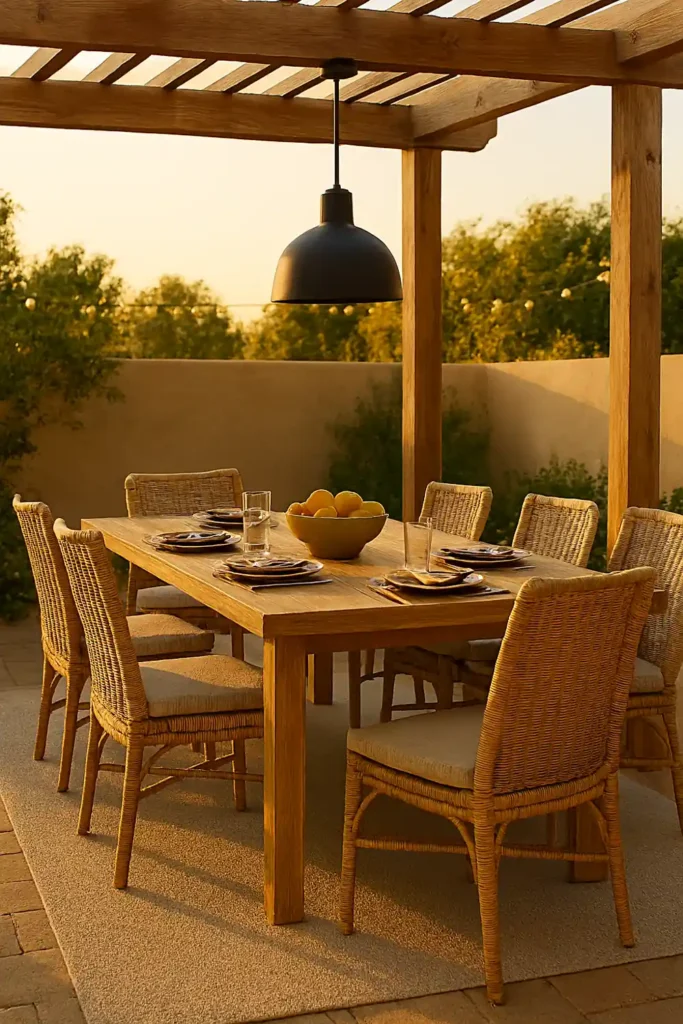
Start with a substantial table. A solid oak or acacia wood table with visible grain instantly adds warmth and presence.
Skip flimsy folding chairs. Try woven rattan dining chairs or black powder-coated metal frames with neutral seat cushions. The contrast of materials keeps it interesting.
Layer the table like you would indoors. Think stoneware plates, linen napkins, and a low ceramic bowl filled with lemons or fresh herbs.
Lighting changes everything. Hang a large outdoor-rated pendant in matte black or aged brass above the table if you have a pergola. If not, drape café string lights directly overhead to define the zone.
A flatweave rug under the table makes the area feel anchored and intentional.
Mixed Material Moments
Flat spaces feel unfinished. Mixing materials adds depth and makes your patio look thoughtfully designed.
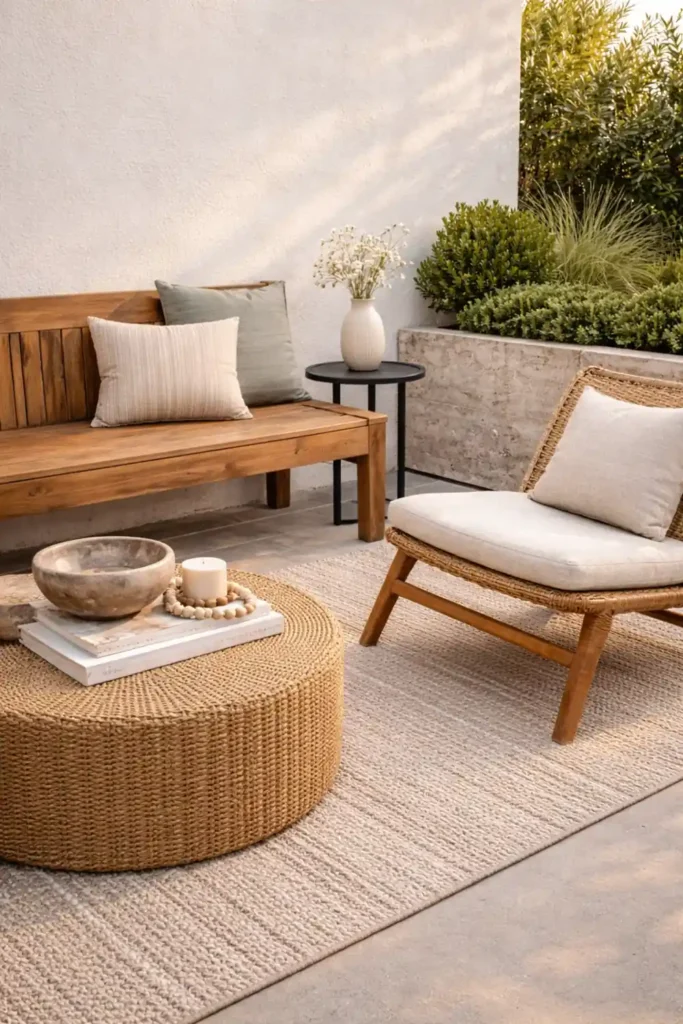
Pair a warm teak bench with a black metal side table. Add a woven rattan lounge chair nearby. The contrast between wood, metal, and woven texture creates visual tension.
Introduce stone through a travertine or concrete planter. The cool, solid surface balances softer textiles.
For smaller patios, try a marble-top bistro table with slim iron legs. Even one mixed-material piece can elevate the entire space.
Repeat each material at least once. If you use black metal in a side table, echo it in a lantern or plant stand.
The goal isn’t chaos. It’s layering materials in a way that feels collected, not matched.
Layered Outdoor Rugs for Depth
Most patios stop at one rug — if any. Layering rugs instantly makes the space feel styled and dimensional.
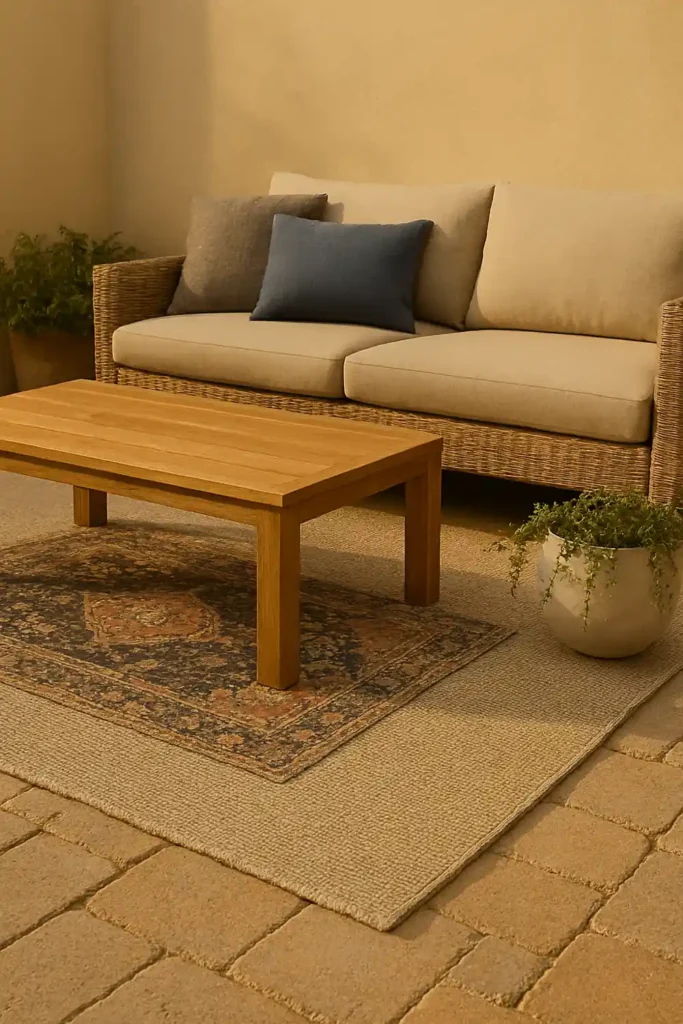
Start with a large neutral base rug in polypropylene or jute. Make sure it’s big enough to sit under all major furniture legs.
Then add a smaller patterned rug on top. Try a vintage-inspired print in muted blues or earthy reds for contrast.
The layered effect breaks up hard surfaces like concrete or tile. It also visually separates zones in open layouts.
For example, layer rugs under a seating area while leaving the dining space bare. That subtle shift defines function without adding walls.
Stick to complementary tones. If your base rug is beige, choose a top layer with hints of tan, navy, or olive to tie everything together.
Shade Structures That Feel Architectural
Shade is practical, but it can also be beautiful. Instead of a basic umbrella, think structure.
A wooden pergola with clean beams adds height and makes the space feel permanent. Let climbing jasmine or bougainvillea soften the lines over time.
If you’re renting, try a sail shade in a crisp white or sand tone. The angled fabric adds movement and casts interesting shadows throughout the day.
For smaller setups, a large canvas umbrella in a bold stripe can act as a focal point. Choose sturdy wood or powder-coated steel poles for a more elevated look.
Adding vertical elements draws the eye upward. Suddenly, your patio doesn’t feel flat — it feels designed.
Statement Planters and Oversized Greenery
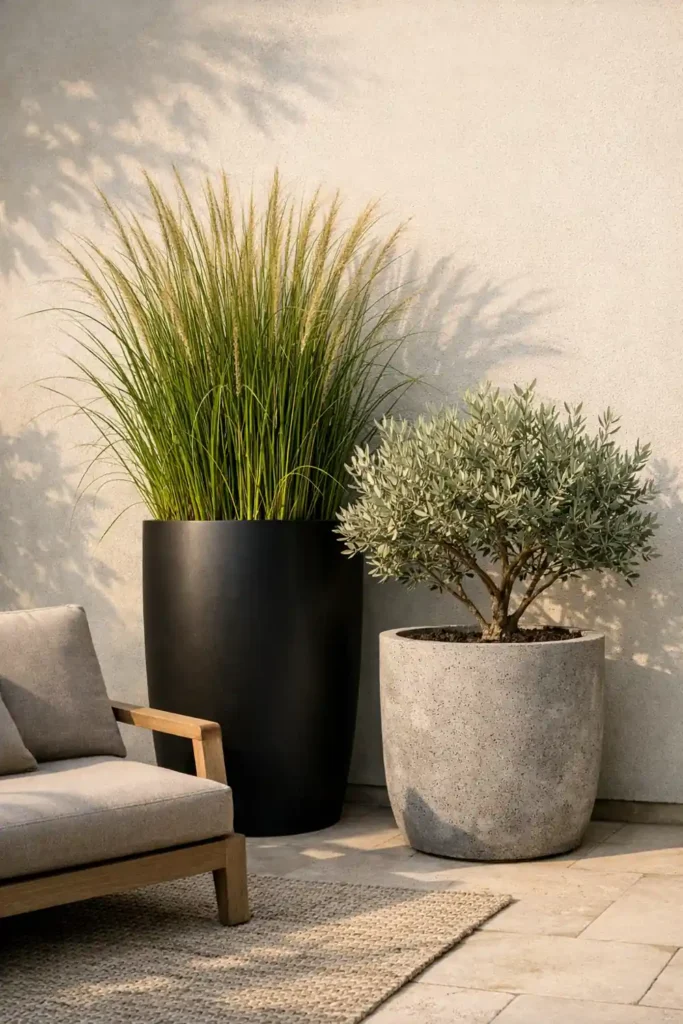
Small pots scattered around a patio can feel cluttered. Oversized planters, on the other hand, make a confident statement.
Choose one or two large-scale planters in materials like matte black fiberstone, natural concrete, or textured ceramic. The weight and scale instantly elevate the space.
Fill them with tall ornamental grasses, a fiddle leaf fig (in covered patios), or even a dwarf olive tree. Height creates drama and frames seating areas beautifully.
If your space is compact, place one large planter in a corner instead of several tiny ones. It draws the eye upward and makes the patio feel taller.
Group plants intentionally. Pair a tall statement piece with a lower snake plant or trailing ivy to create layered greenery without chaos.
The key is restraint. Bigger, fewer, better.
Cozy Fire Feature Styling
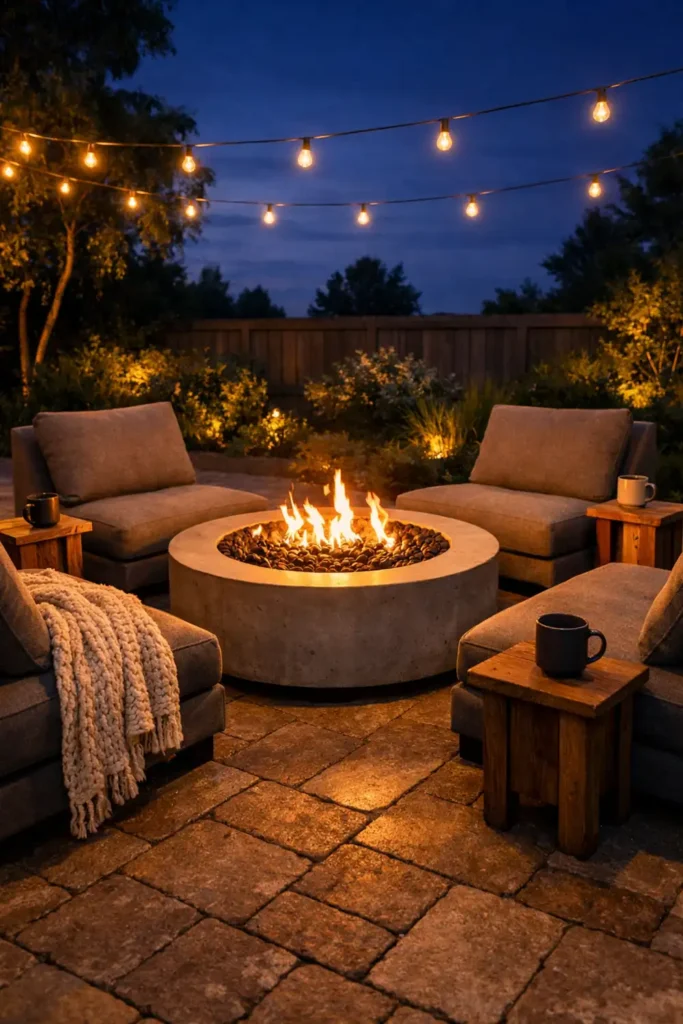
A fire feature turns an outdoor space into an evening destination. Even a small gas fire pit can completely change the mood.
Arrange seating in a loose circle rather than a straight line. Conversation flows more naturally when everyone faces the warmth.
Choose low lounge chairs in weather-resistant fabric or woven resin frames. Add a neutral outdoor throw for softness.
Place a small oak or stone side table between chairs for drinks. The mix of hard and soft textures keeps it visually balanced.
As the sun sets, the glow of the fire adds depth and shadow. The flicker against textured cushions and wood surfaces makes the entire space feel layered and intimate.
It’s less about heat and more about atmosphere.
Ambient Lighting Layers
Lighting is what makes a space feel finished. Without it, even the best styling falls flat after dark.
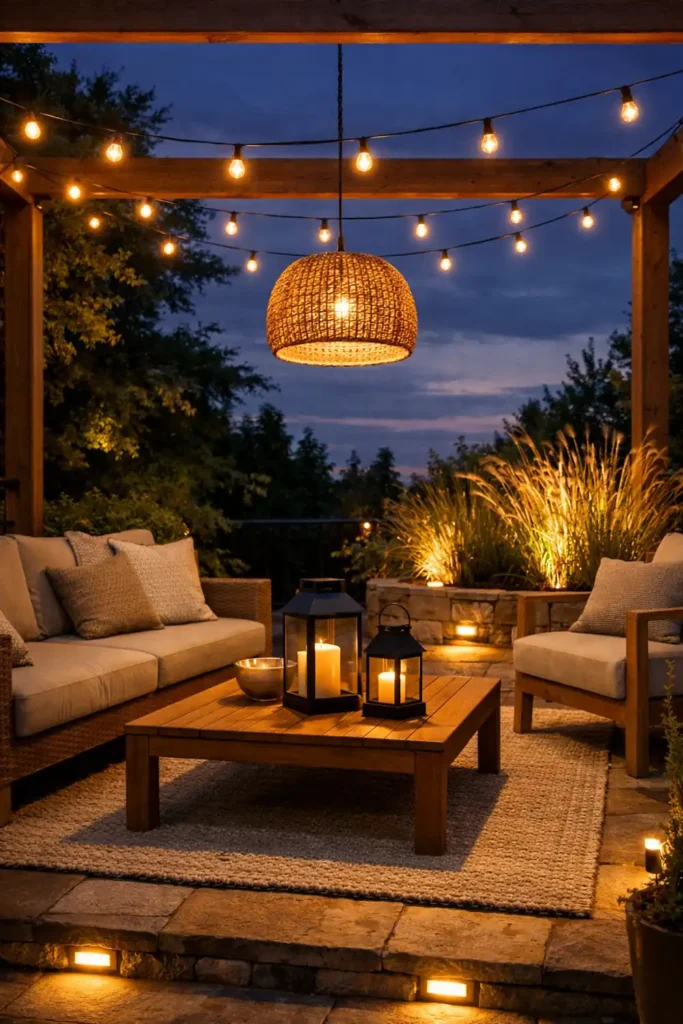
Start overhead with café string lights or a woven pendant under a pergola. The gentle glow defines the main zone.
Then add table-level light. Try brass or black metal lanterns with LED candles on side tables or dining surfaces.
Finally, incorporate ground-level lighting. Solar path lights, subtle uplights beneath planters, or even low-profile LED strips along steps create depth.
Layering these three heights prevents harsh shadows and makes the patio feel warm rather than stark.
Test your setup at night. Walk around. Notice where the light feels flat and adjust.
Texture-First Styling Details
The smallest details often make the biggest difference. Texture transforms a basic setup into something memorable.
Add linen or performance-fabric pillows in varied weaves. A subtle stripe next to a nubby neutral cushion adds dimension without noise.
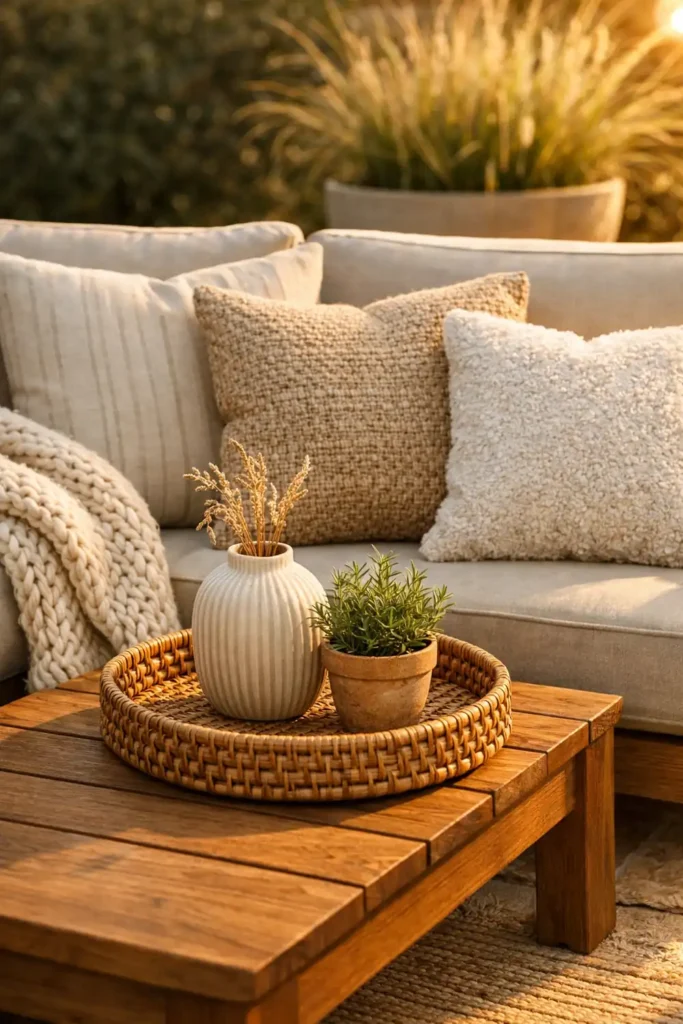
Place a woven tray on your coffee table. Top it with a ceramic vase, a stack of hardcover books, or a small potted herb.
Introduce tactile elements like a chunky knit outdoor throw or a ribbed ceramic planter. Even outdoors, touch matters.
Keep surfaces partially styled, not crowded. Leave breathing room so each piece stands out.
When texture leads the design, the space feels layered and intentional — not overdecorated.
Pro Tips for Outdoor Design Trends
- Choose one dominant style and commit. Mixing too many trends weakens impact.
- Repeat your main color at least three times for cohesion.
- Upgrade basic cushions with tailored covers for an instant refresh.
- Swap plastic planters for concrete or ceramic versions.
- Use an outdoor rug large enough to fit under all front furniture legs.
- Add dimmable or warm-toned bulbs to avoid harsh white light.
- Remove one item after styling. Negative space makes everything look intentional.
Final Thoughts
The best outdoor design trends this season aren’t about perfection. They’re about creating a space that feels layered, comfortable, and personal.
Whether you lean toward Mediterranean warmth, sculptural minimalism, or bold seasonal color, the goal is the same — a backyard or patio that invites you to stay a little longer.
With thoughtful layout, texture, and lighting, even a simple outdoor setup can feel like a private retreat.
Ready to start? Pin this for later!
Frequently Asked Questions
How can I update my outdoor space without buying all new furniture?
Start with textiles and lighting. Swap pillow covers, add a large outdoor rug, and introduce layered lighting like lanterns or string lights. These small updates change the mood instantly without replacing core furniture pieces.
What’s the easiest outdoor design trend to try in a rental?
Layered rugs and oversized planters are renter-friendly wins. They require no drilling or permanent changes, yet dramatically improve structure and scale. Stick to removable elements like sail shades or freestanding pergolas if you want added height.
How do I make a small patio look more high-end?
Use fewer, larger pieces instead of many small ones. A substantial planter, a full-size rug, and tailored cushions create a curated look. Keep your color palette tight and repeat materials for cohesion.
What colors are trending for outdoor spaces this season?
Warm earthy tones like terracotta, sand, olive, and muted rust are leading the way. Bold accents like cobalt or citrus are also popular when paired with neutral bases. The key is balance — one strong color against soft neutrals.
How important is lighting in outdoor design?
Lighting is essential. Layer overhead string lights, table lanterns, and ground-level path lights to create depth. Warm-toned bulbs prevent harsh shadows and make the space feel inviting after sunset.