
Fairy gardens are one of those little projects that make outdoor spaces feel more personal without needing a big budget or a full garden makeover. I like them because they work in so many places: a flower bed corner, a patio planter, a balcony bowl, or even a bright indoor table if that is what you have.
The best DIY fairy garden ideas are not about adding random tiny pieces everywhere. They work best when the scene appears like a small world, with paths, plants, textures and a few details that make sense together.
In this guide, I share fairy garden ideas that use simple materials such as stones, bark, gravel, shells, moss, crates, bowls and seasonal accents. Some feel woodland and natural, some are coastal or fantasy inspired, and others are made for spring, autumn or winter decorating.
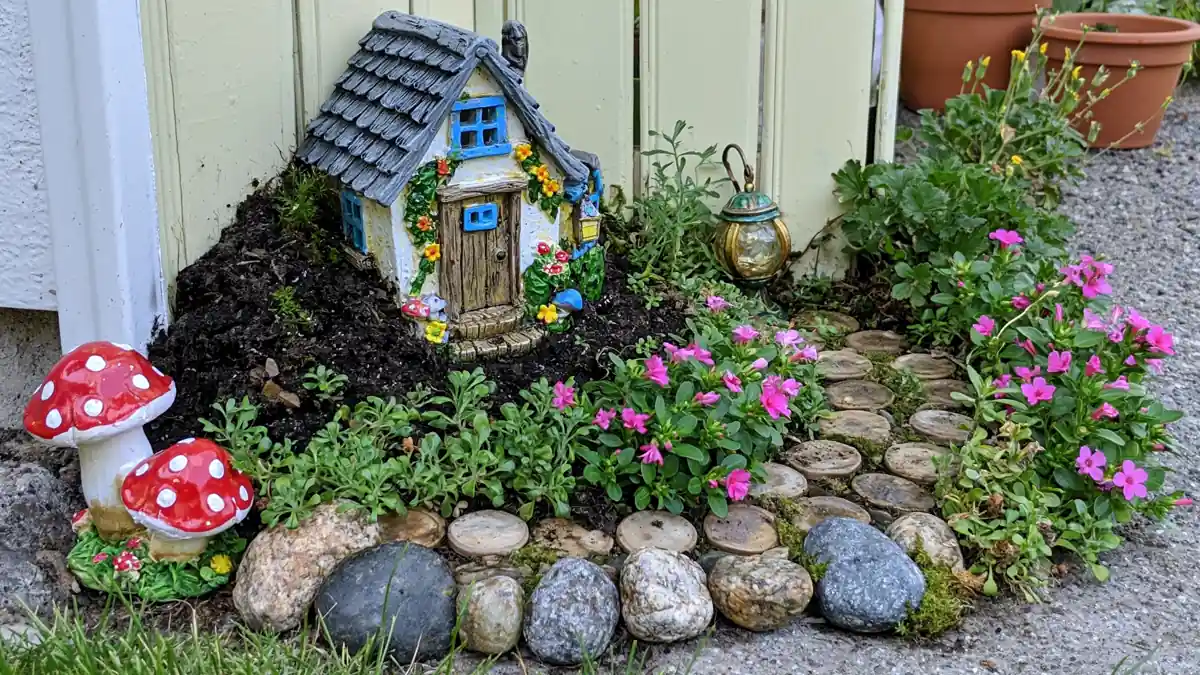
Backyard Fairy Garden Beds With Pebble Paths and Tiny Houses
A backyard flower bed is one of the easiest places to start a fairy garden because the plants already do some of the work for you. A slightly larger fairy house can sit near the front of the bed or tucked in a corner where it feels partly hidden. That small sense of discovery is what makes the scene seem charming rather than overly staged.
Pebbles, gravel, bark, stones, and broken shells are useful for building little paths and borders. A curved path looks more natural than a straight one, especially when it winds around groundcover or leads toward a tiny front figure. Creeping thyme works nicely because it stays low and can soften the edges around the house.
For a simple setup, place the fairy house first, then build the path around it. Add dwarf shrubs, small conifers, or low plant borders behind it so the house feels settled into the garden instead of just placed on top of the soil.
Patio and Balcony Fairy Garden Displays in Bowls and Crates
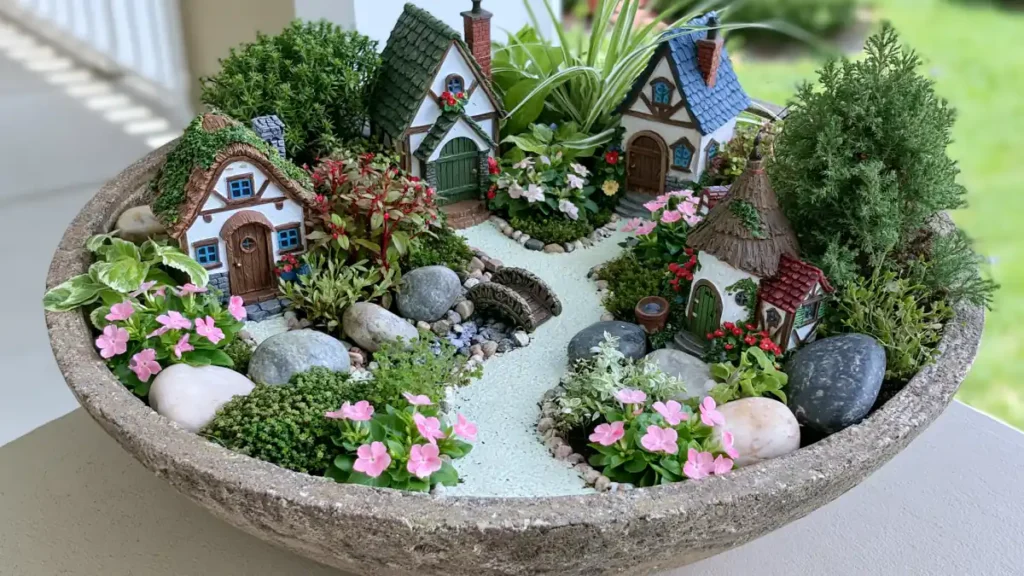
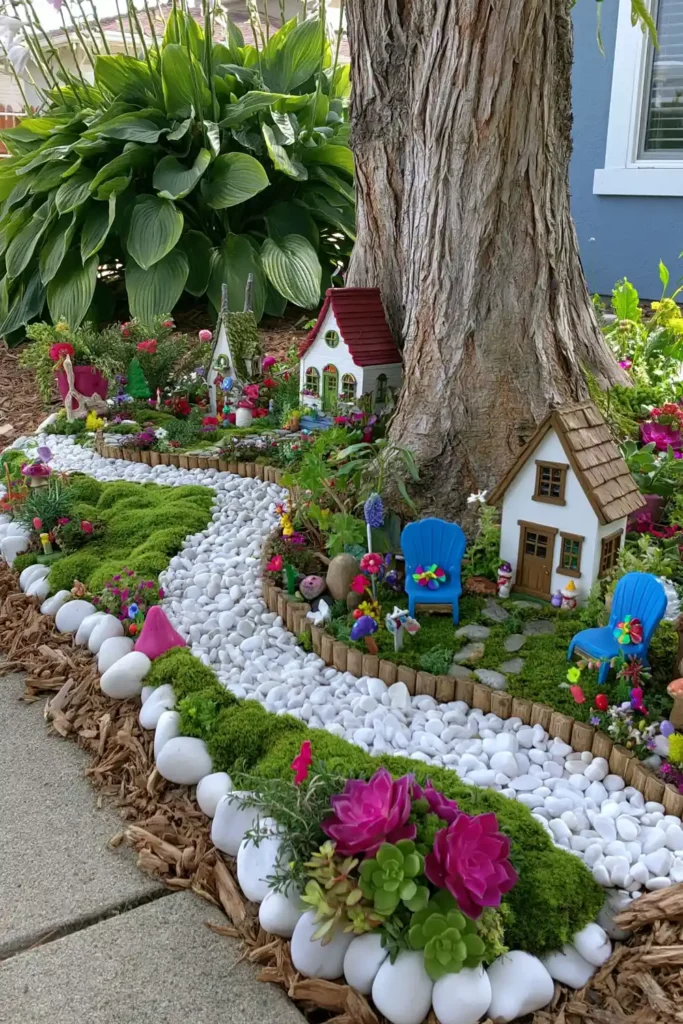
A patio or balcony fairy garden works well when you treat it like a small display rather than a traditional garden bed. Wide bowls, trough planters, wooden crates, and even stacked bricks can give the scene enough structure without taking up much floor space. This is helpful if you only have a small balcony or a narrow patio corner.
Fairy houses, benches, stools, and little plant stands can be arranged like a tiny outdoor sitting area. I like the idea of adding a small outdoor rug or cushions because it makes the miniature space feel more lived-in. Lanterns can also help the display feel cozy in the evening, especially if the garden sits near a seating area.
To keep it practical, choose a container that is wide enough for a path, a house, and a few “forest” plants. A tiny pond or miniature market can work as a focal point, but leave some open space so the garden does not feel crowded.
Indoor Fairy Gardens for Windowsills and Coffee Tables
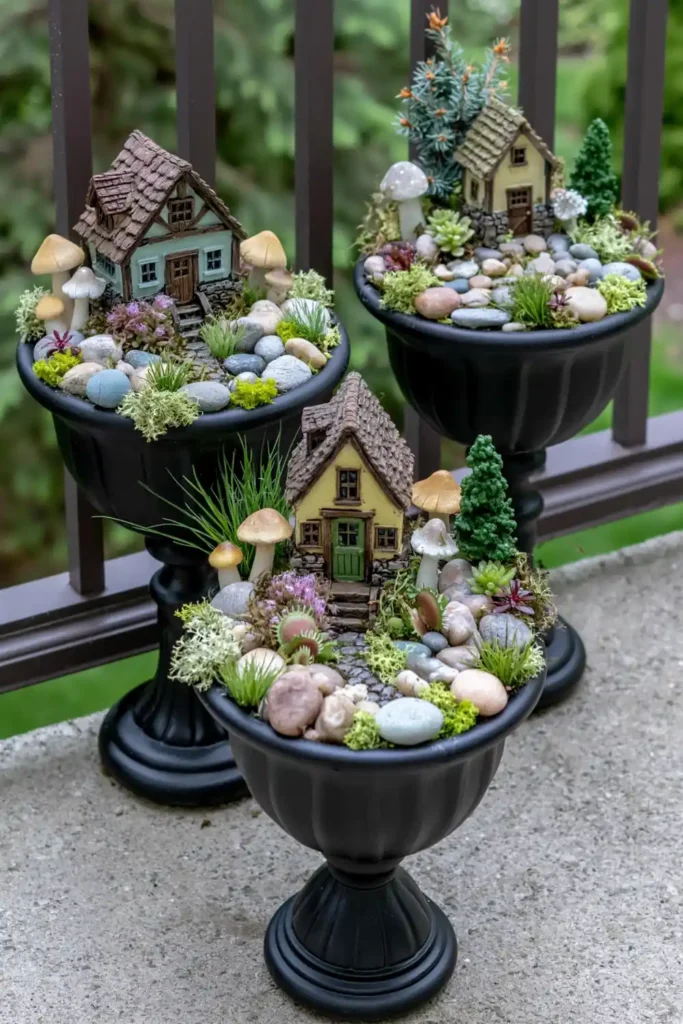
Indoor fairy gardens are a good option when outdoor space is limited or when you want something small enough to enjoy year-round. Bright windowsills, sideboards, and coffee tables can all hold a miniature garden as long as the container is shallow and stable. Trays, low terrariums, glass bowls, and shallow dishes all work for this kind of display.
The base matters indoors because you need to protect the surface underneath. Gravel, sand, felt pads, and liners can help keep the garden neat and easier to move. Moss adds softness, while realistic faux plants can be useful if the spot does not get enough natural light for living plants.
A simple indoor version could be made in a low tray with a layer of gravel, a patch of moss and a few indoor plants. Keep the decorations small and balanced so that the piece looks like decor, not clutter, especially if it sits on a coffee table.
Woodland Fairy Garden With Moss, Twig Benches, and Pine Cones
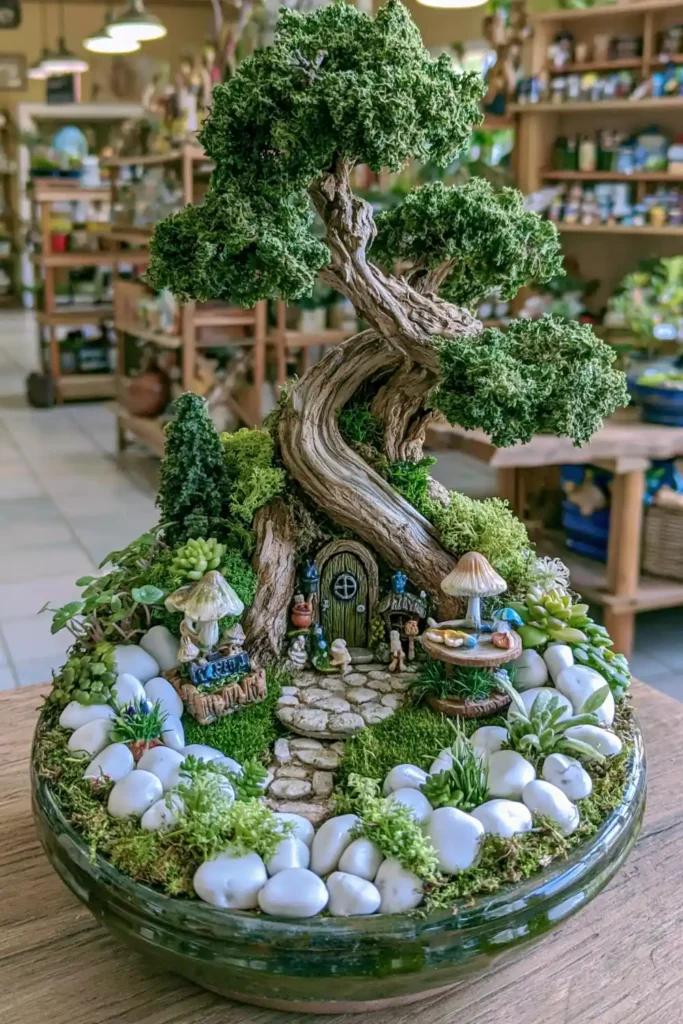
A woodland fairy garden feels best when it looks like it belongs under a shady tree or in a quiet corner of the yard. Moss, small ferns, and tiny hostas create the feeling of a miniature forest floor. A tiny house and twig bench can sit naturally among the plants without needing bright colors or shiny decorations.
The textures are what make this idea work. Bark pieces can become rough paths or little walls, twigs can look like logs, and smooth stones can mark a doorway or seating spot. Pine cones and acorns add that collected-from-the-yard feeling, which keeps the scene relaxed and earthy.
For a practical touch, start with a small shaded area and group the larger pieces first: the house, the bench and the stones. Then, tuck moss around the base and use pine cones or acorns sparingly. A tiny campfire or rope swing can bring character, without taking away from the woodland mood.
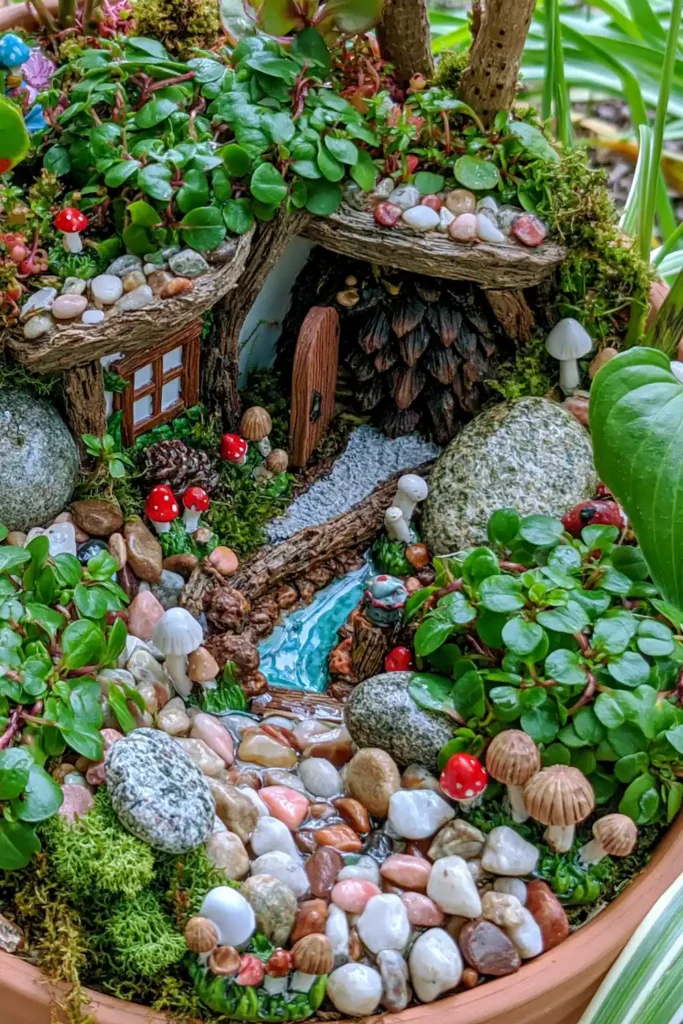
Cottage Village Fairy Garden With Gravel Lanes and Tiny Market Stalls
A cottage village fairy garden works well when you want the scene to feel friendly and full of small everyday details. One or two cottages can create the main setting, while a gravel lane helps connect the pieces so it feels like a tiny neighborhood rather than separate decorations placed in soil.
Market stalls, fences, a tiny mailbox, a washing line, and a little town square can add character without making the garden feel too busy. Low flowering borders are especially useful here because they make the cottages look settled into the landscape. Lobelia, alyssum, creeping thyme, and mini daisies all bring that soft cottage feeling at a small scale.
To keep the layout clear, place the cottages slightly apart and run the gravel lane between them. Add the market stall or town square near the center, then use flowers along the edges like borders around a real village path.
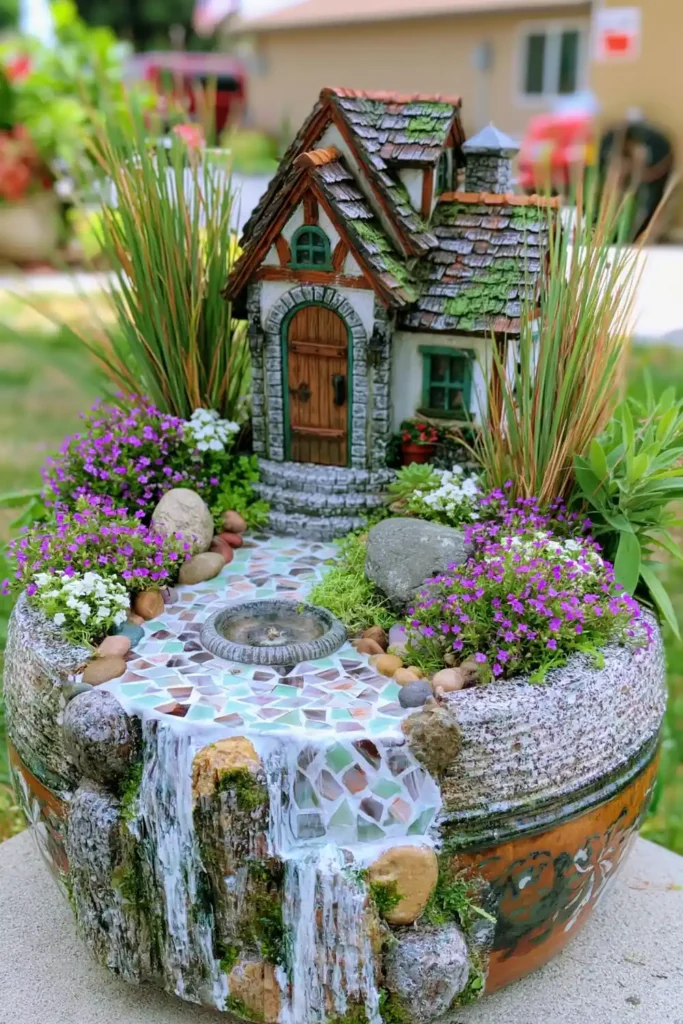
Coastal Fairy Garden With Sand, Shells, and Blue Glass Water
A coastal fairy garden is a fun way to make a tiny seaside scene, especially in a sunny spot. Sand or fine pale gravel can create the base, while blue glass pebbles or tiles can suggest water without needing an actual pond. Smooth white stones, shells, and driftwood help the whole garden feel beachy and natural.
Beach chairs, tiny boats, and umbrellas bring the seaside story together. Small succulents, sedum, dune grasses, and fine ornamental grasses work well because they suit the dry, sunny look of the setting. Their shapes also help the miniature beach feel planted rather than flat.
For a simple version, use a shallow container and divide it into two areas: sand on one side and blue glass water on the other. Add a tiny boat near the “shore,” tuck shells into the sand, and use one or two small plants to keep the scene from looking like a craft tray.
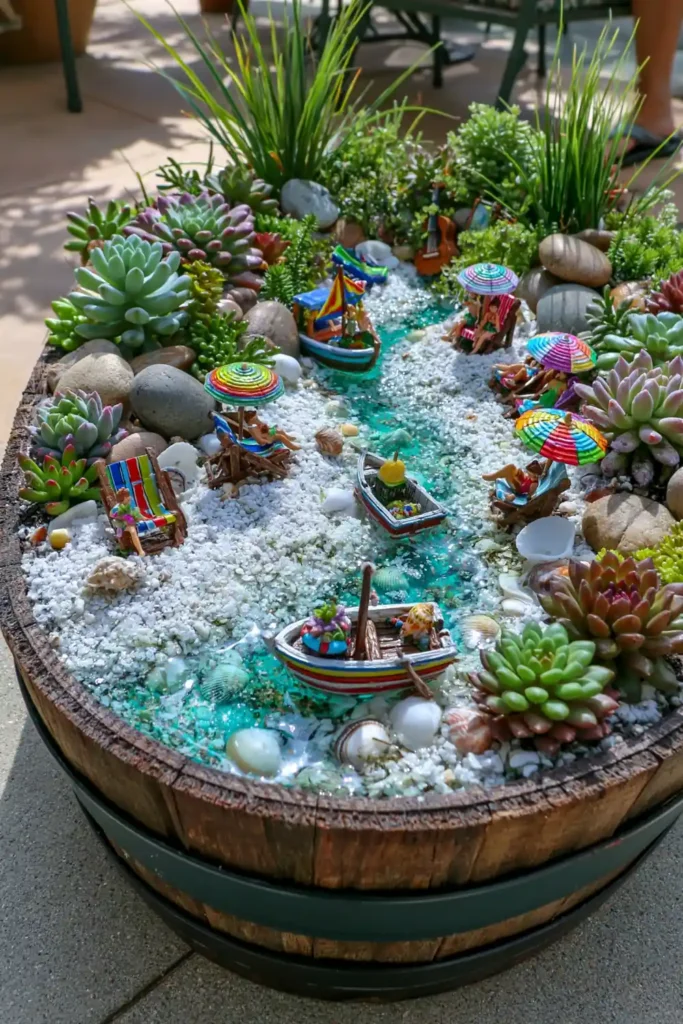
Fantasy Fairy Garden With Glow Stones, Mushrooms, and Tiny Dragons
A fantasy fairy garden can be a little more playful than the natural woodland or cottage styles. This is the place for winding paths, tiny mushrooms, unicorns, dragons, glass gems, and crystal chips. The key is to make it feel magical without filling every inch with decorations.
Deep green plants, purple foliage, and silvery accents help create that enchanted forest mood. Small solar lights and glow-in-the-dark stones can make the path more interesting after sunset, especially if the garden sits where it can catch enough daylight during the afternoon.
I would start with the path first because it gives the whole scene direction. Curve it through the plants, then add the mushrooms and glass gems in small clusters instead of scattering them everywhere. A tiny dragon or unicorn works best as one clear focal point, so the garden still feels designed and not overcrowded.
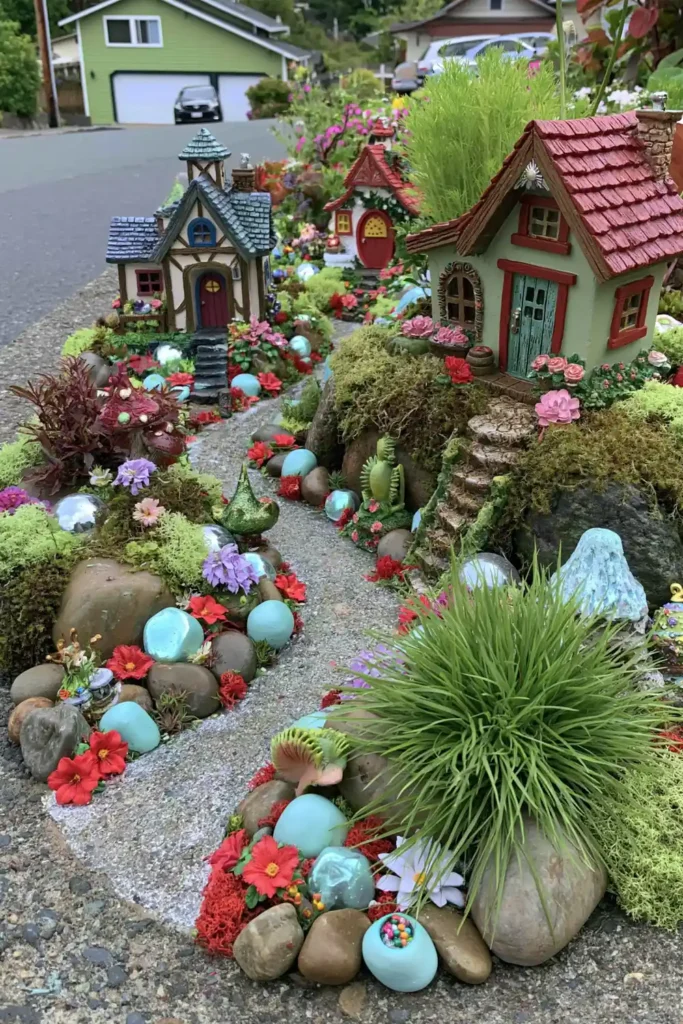
Spring Fairy Garden With Mini Nests, Bunnies, and Pastel Details
A spring fairy garden should feel fresh and light, like the first warm days after winter. Moss makes a soft base, while small bulbs, primroses, and violas bring in the color. This is a nice style for a porch planter, a patio bowl, or a flower bed edge where the spring flowers can be enjoyed up close.
Pastel bunting, faux eggs, tiny nests, watering cans, little umbrellas, miniature bunnies and rainboots all fit the season. The trick is to choose a few details that tell the spring story clearly, instead of using every decoration at once. Too many small items can make the garden difficult to read.
For an even look, place the flowers toward the back or the sides, then keep the tiny nest or bunny near the front where it can be seen. A small watering can beside the path adds a sweet detail that feels connected to the theme of the garden.
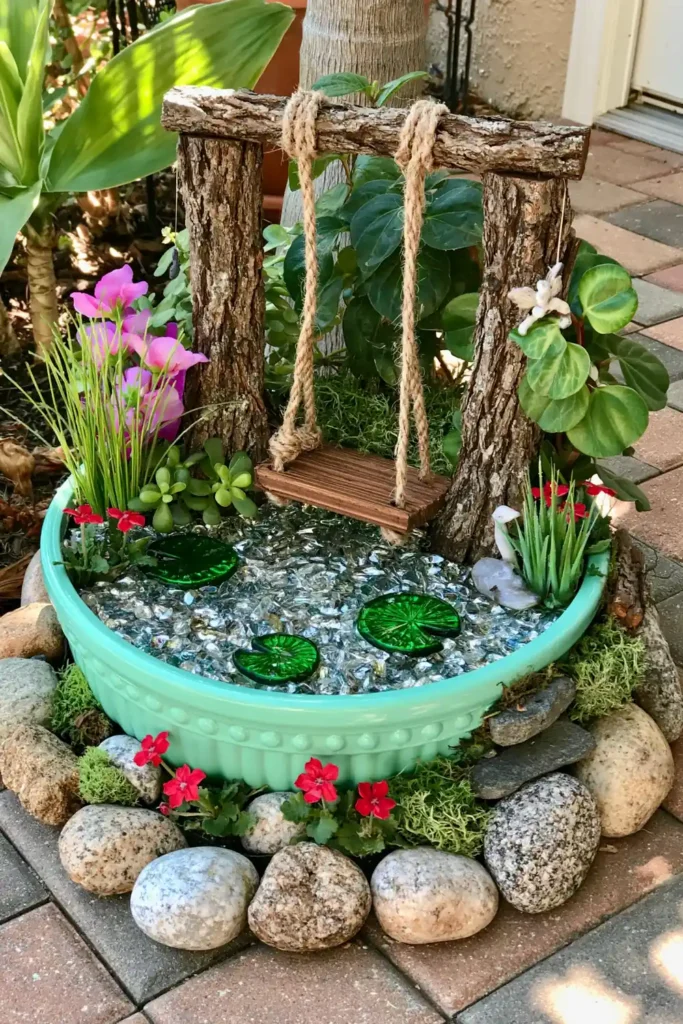
Summer Picnic Fairy Garden With Loungers, Boats, and Bright Flowers
A summer picnic fairy garden feels cheerful and relaxed, especially when it has a mix of shade, greenery, and tiny holiday details. This idea works nicely in a planter or a bright garden corner where the scene can feel like a little afternoon getaway. Tiny boats and loungers help set the summer mood right away.
A checked fabric scrap can become a miniature picnic blanket, while tiny plates, drinks, fruit, umbrellas, shells, sand, and blue glass water add the feeling of a warm day outdoors. Lush greenery and bright flowers make the scene feel full and seasonal, especially if the garden is placed near plants that already have a soft, leafy shape.
For a realistic layout, put the picnic blanket in an open spot and arrange the plates and fruit on top. Keep the loungers nearby, then use the blue glass water or shells as a small beach detail rather than spreading them through the whole garden.
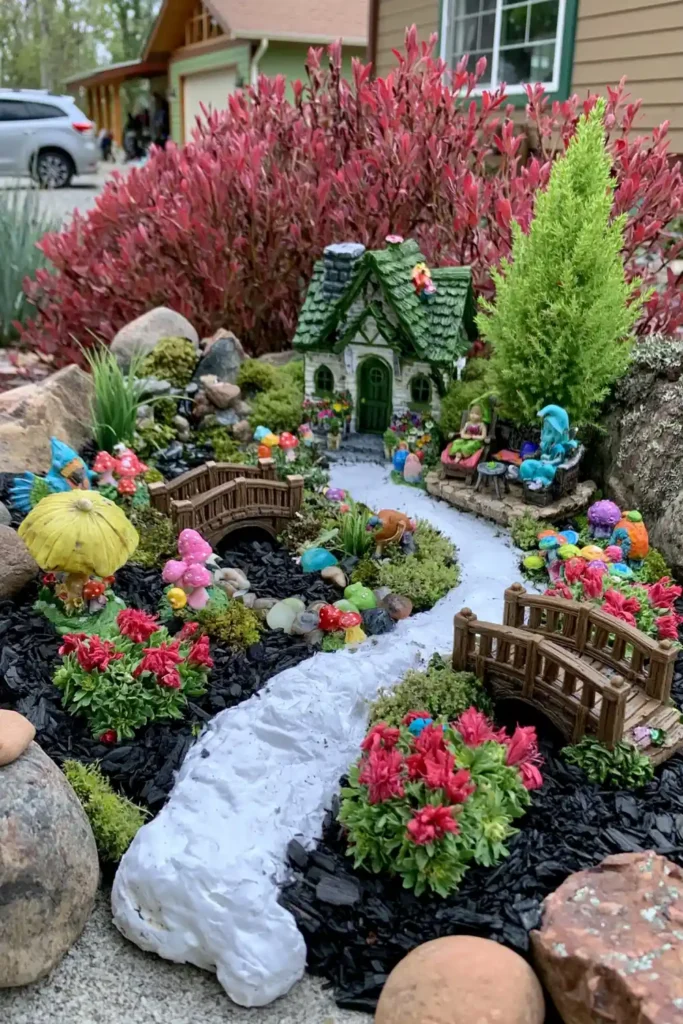
Autumn Halloween Fairy Garden With Pumpkins, Lanterns, and Warm Foliage
An autumn fairy garden can feel cozy without becoming too dark or spooky. Pine cones, acorns, miniature hay bales, tiny pumpkins, and warm foliage in burgundy, orange, and deep green create that harvest feeling. Friendly ghosts and black cats can bring in Halloween detail while still keeping the scene playful.
Tiny lanterns are especially useful in this style because they make the garden feel warmer in the evening. Seed heads can also add a natural autumn texture, and they work well around the edges of the scene where they look like dried garden growth.
To keep it from feeling cluttered, choose one main path or gathering area and build around it. A hay bale near the tiny pumpkins gives the scene a clear focal point. Then add pine cones and acorns around the plants, using the ghosts or black cats as small surprises rather than the main focus.
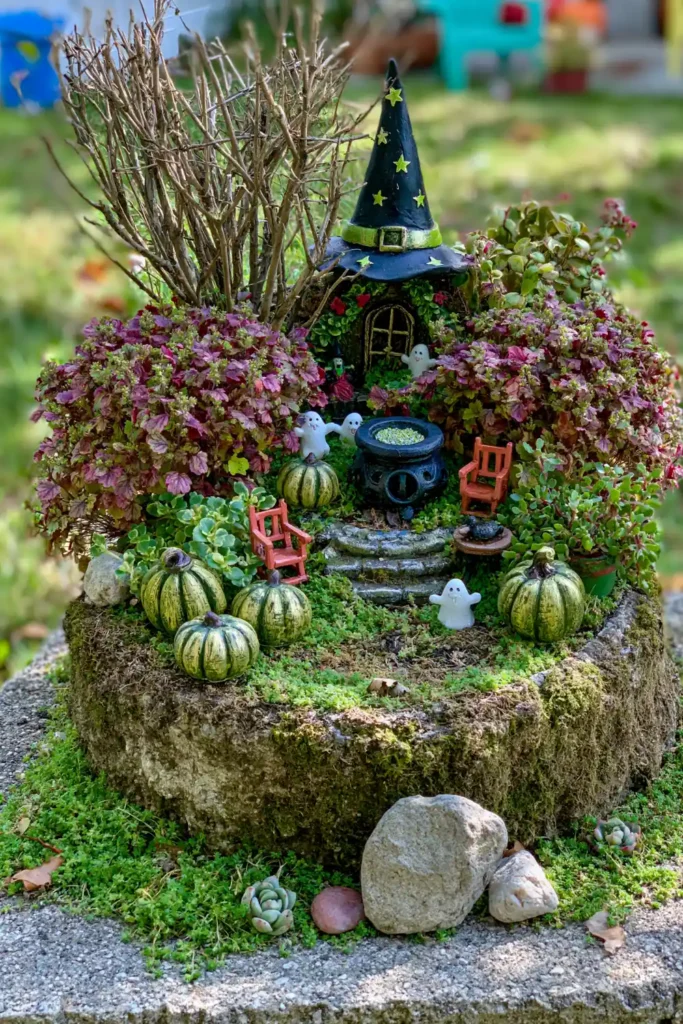
Winter Holiday Fairy Garden With Mini Evergreens and Warm Fairy Lights
A winter holiday fairy garden is all about softness, sparkle, and a little warmth. Mini evergreens give the scene structure, while cotton, white gravel, or baking soda “snow” can create the look of a snowy ground. Strings of tiny beads can be used like garland, especially around a small house, path, or evergreen branches.
Warm white fairy lights and small battery candles help the winter scene feel cozy instead of cold. Wreaths and little wrapped gifts add the holiday feeling, but they work best when they are placed carefully, almost like details you notice after looking for a moment.
For a simple setup, start with the mini evergreens and then add the snow material around their bases. Place the lights where they can shine through branches or along the path. A few wrapped gifts near the doorway can complete the scene without making it feel overdecorated.
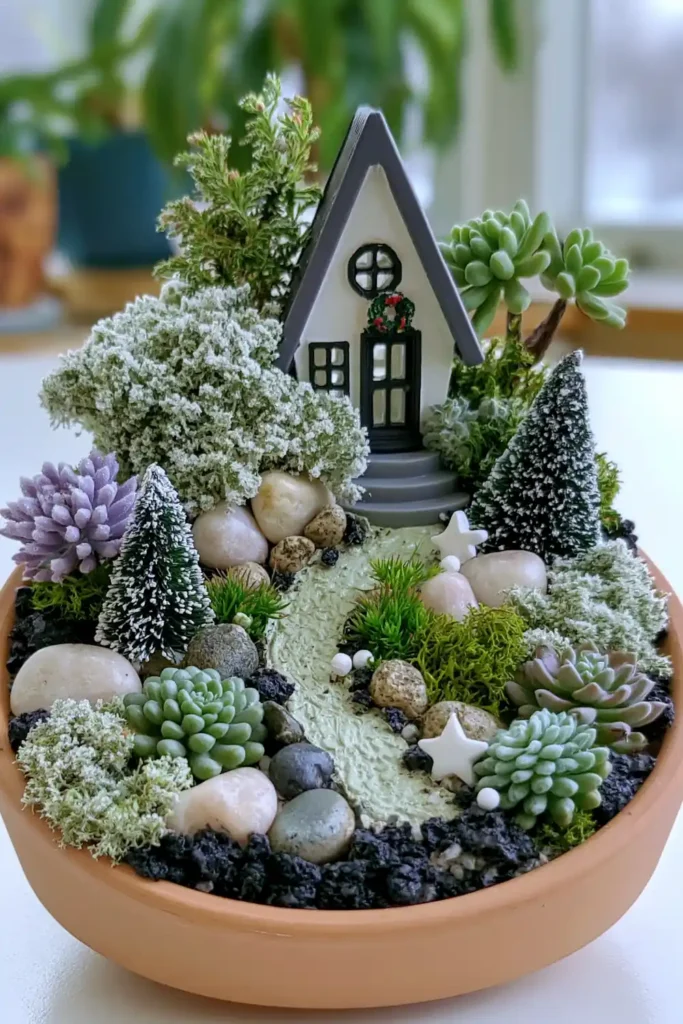
Creating a Tiny Garden That Feels Personal
The nicest part of fairy gardens is how flexible they are. A small flower bed can become a backyard village, a balcony bowl can turn into a woodland scene, and a simple tray can hold an indoor garden that changes with the seasons. You do not need many pieces; you just need the details to feel connected.
I always think these gardens look better when they have a clear little story. That might be a cottage lane, a seaside shore, a picnic corner, or a snowy holiday path. Once the theme is clear, materials like stones, moss, shells, bark, gravel, and tiny lights become easier to place.
Start with a small scene and let it grow slowly. Add a path, a few plants and a focal piece first, then build around it as you find more details that fit. That is what makes DIY fairy garden ideas seem less like a craft project and more like a tiny corner of the garden with a unique character.