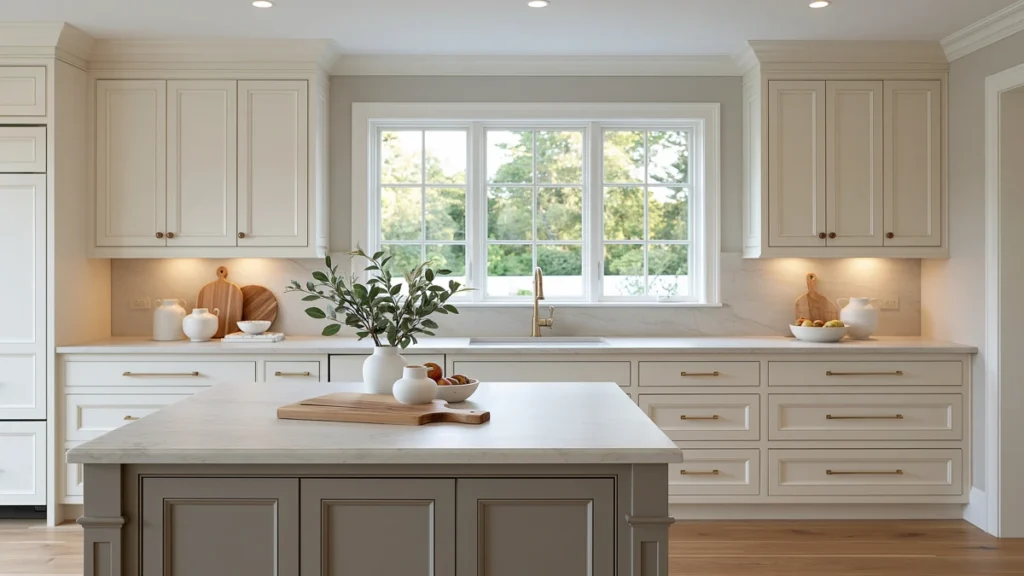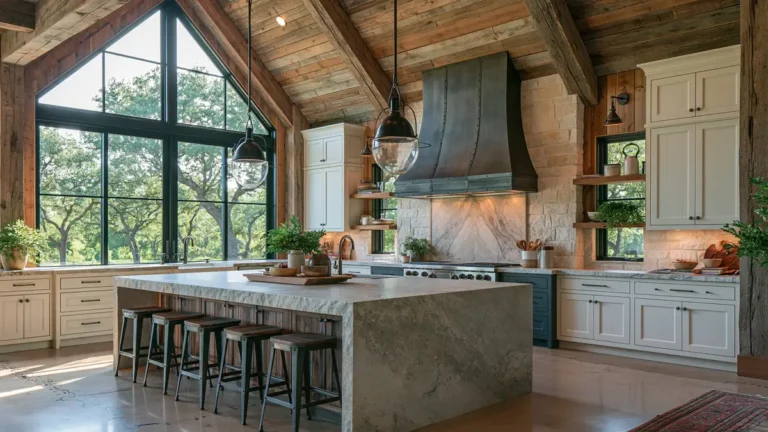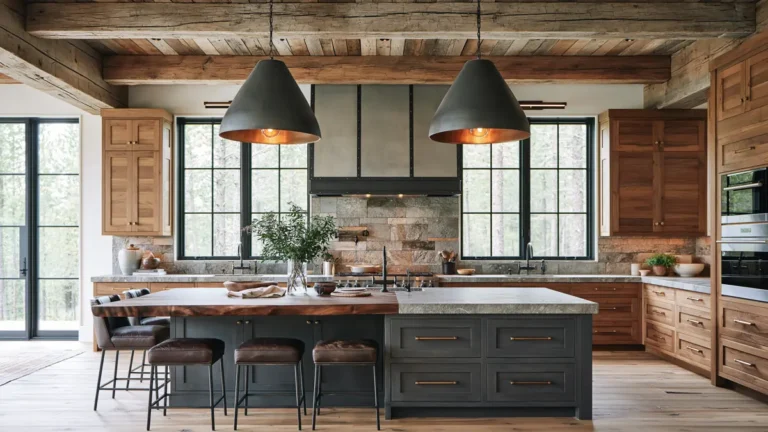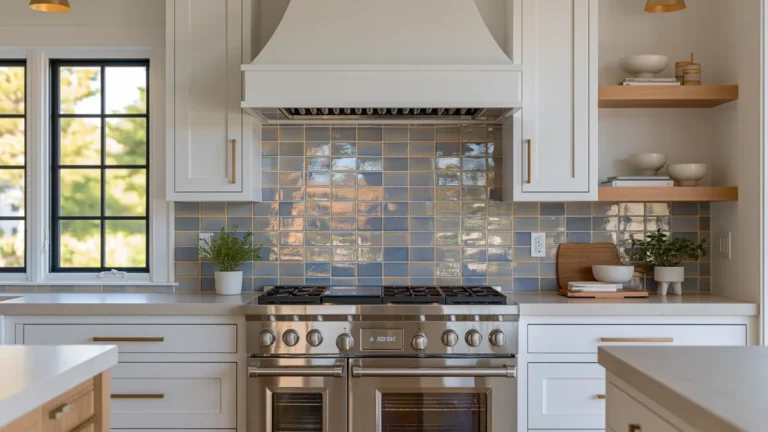

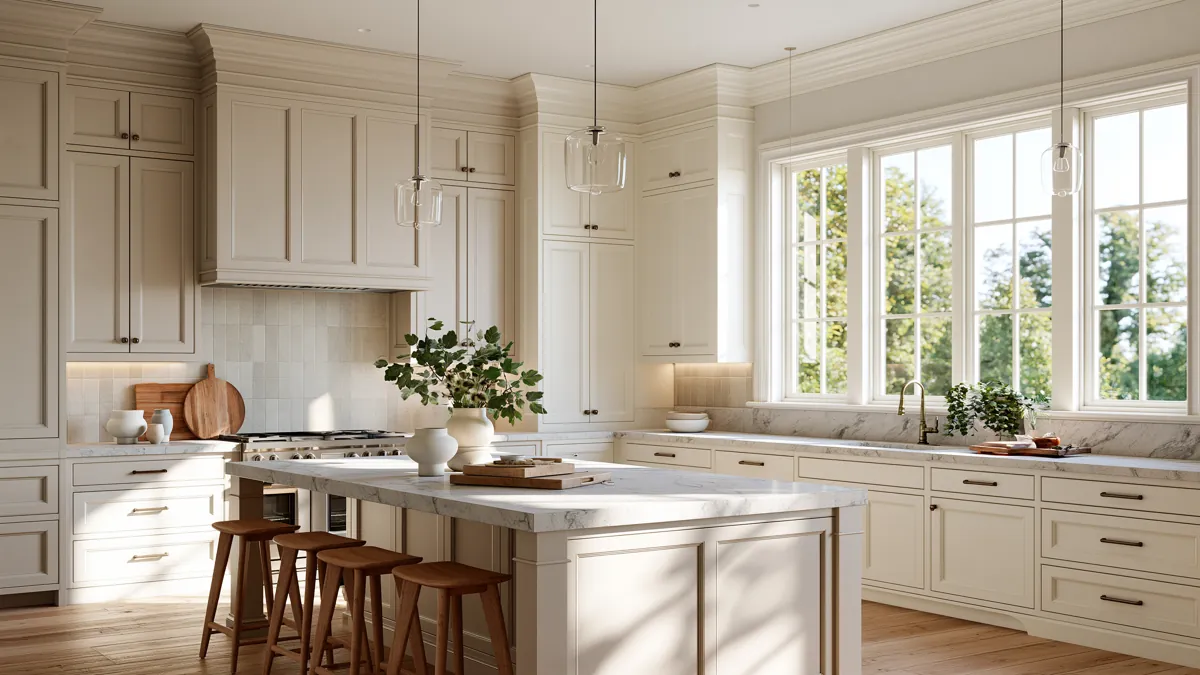
Neutral kitchen cabinets can completely change the feeling of a kitchen without making the space look plain or predictable. Soft beige, creamy white, taupe, gray, and natural wood tones all give you a calm foundation while leaving plenty of room to bring in personality through countertops, hardware, lighting, and texture.
When choosing a subtle tone, consider how much natural light your kitchen gets and the overall size of the space. Lighter tones like creamy white or pale beige can help small or low-light kitchens feel more open, whereas deeper neutrals like taupe or natural wood work well in larger or well-lit rooms for added coziness and charm.
The style of your home can also guide your choice—cooler grays fit modern spaces, while warm woods and soft off-whites often suit traditional or cozy designs. Starting with these factors may help you reduce the choices and feel confident as you plan your neutral kitchen.
What I like most about neutral kitchen cabinets is how flexible they are. Some combinations feel traditional and cozy, while others look clean and modern. It is easy to personalize your kitchen by mixing and matching different materials, finishes, and hardware to find the look that fits you best. Do not be afraid to experiment—small changes can give any neutral kitchen its own unique character.
Soft Beige Neutral Kitchen Cabinets with Bronze Details
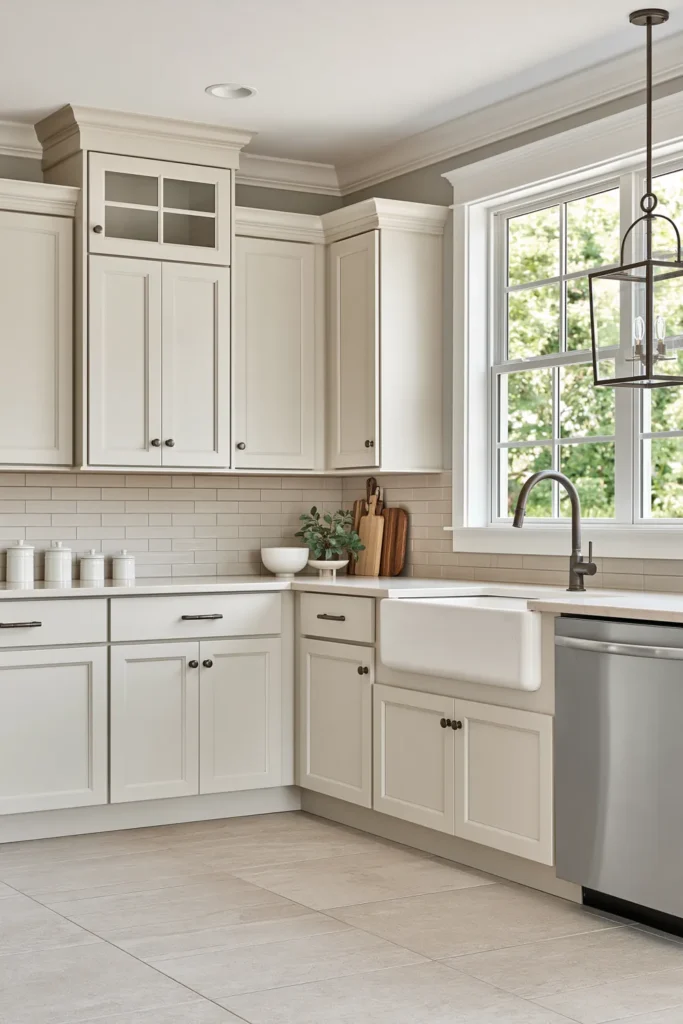
Soft beige cabinets are a great middle ground when bright white feels a little too stark, but you still want the kitchen to feel light. Raised-panel doors and traditional crown molding give this look a classic feel, while the warm beige color keeps everything softer and more relaxed.
A light gray subway tile backsplash adds enough contrast to define the cabinets without competing with them. Beige travertine flooring preserves the warm neutral palette and gives the room a natural stone texture underfoot.
Oil-rubbed bronze pulls are especially effective here because they stand out clearly against the beige cabinetry. The darker finish gives the cabinet fronts more definition and ties in naturally with a bronze lantern pendant with clear glass.
This combination works well if you want a traditional kitchen that still feels airy. Keeping the cabinet color, flooring, and backsplash close in warmth creates an easy flow, while the bronze details prevent the space from looking washed out.
Creamy Neutral Cabinets with Marble and Warm Brass Hardware
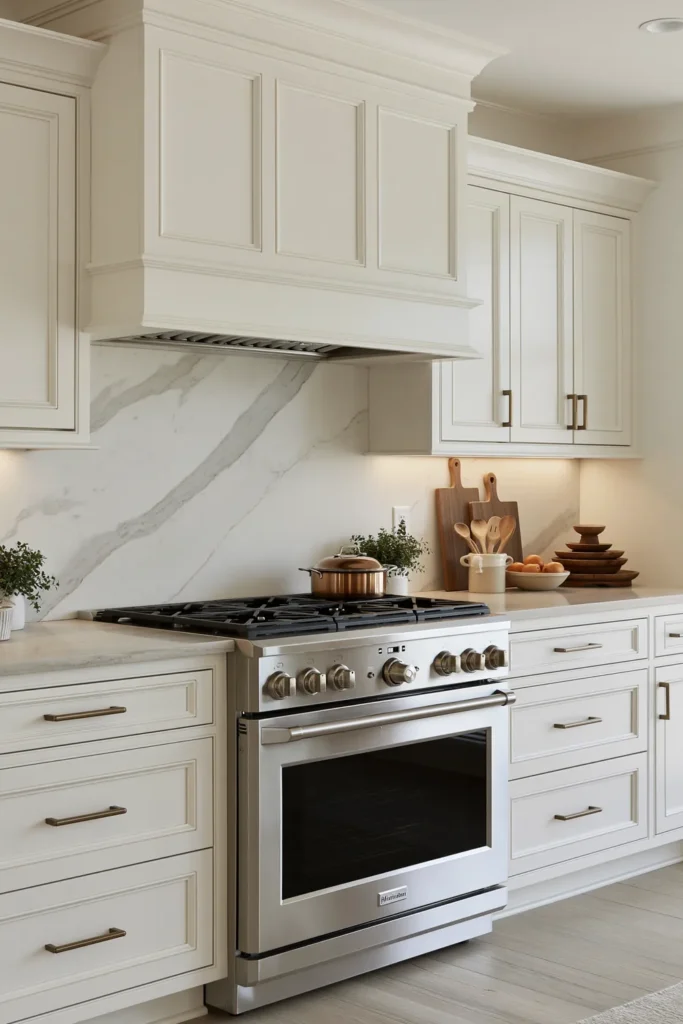
Creamy cabinets have a softer appearance than crisp white and pair beautifully with elegant stone surfaces. When they sit beside Calacatta marble with visible gray veining, the kitchen feels polished without becoming excessively formal.
Using natural stone countertops alongside the marble backsplash creates a layered neutral look. The subtle movement in the stone gives the kitchen visual interest even though the overall palette stays quiet.
Brushed brass or soft gold hardware brings another layer of heat to the cabinetry. Against cream paint, brass feels gentle rather than flashy, especially when it is repeated in simple cabinet pulls.
Natural wood cutting boards and serving bowls are useful additions because they introduce an organic texture into all the smooth stone and painted surfaces. Instead of hiding every everyday item, a few well-chosen wooden pieces can make the kitchen feel more lived in.
Warm under-cabinet LED lighting finishes the look by highlighting the marble backsplash and keeping the cream tones from feeling cold in the evening.
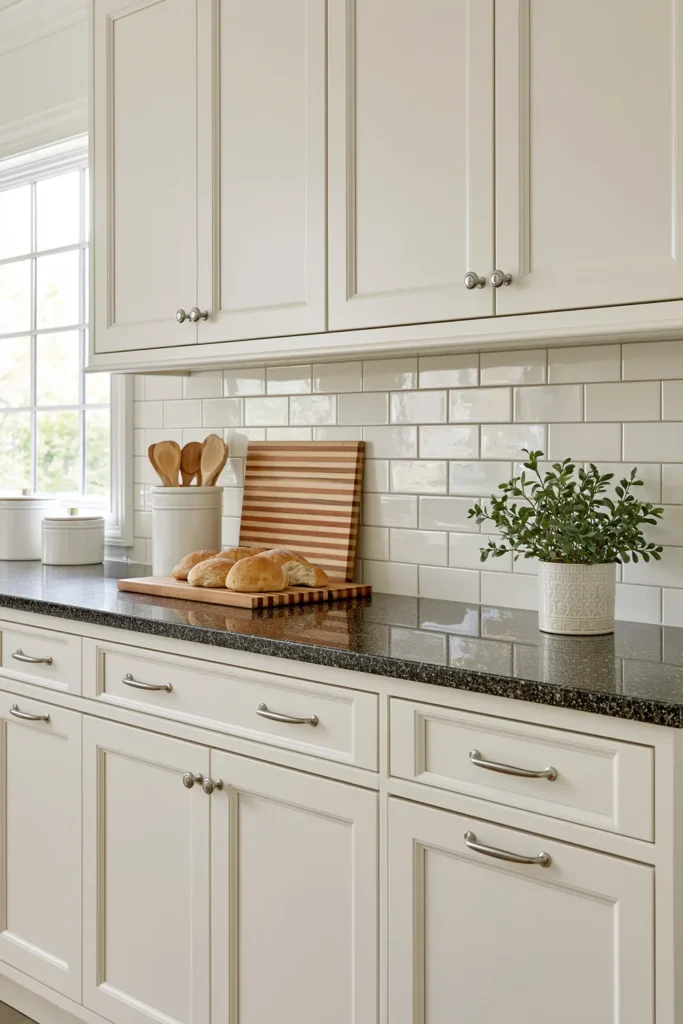
Crisp White Shaker Cabinets with Dark Speckled Granite
White shaker cabinets are one of the simplest ways to create a clean neutral kitchen, but pairing them with dark speckled granite gives the space much stronger contrast.
The straightforward shaker-style doors keep the cabinetry from looking overly decorative. Their coated white finish reflects natural window light, which helps the kitchen stay bright even with darker countertops.
Polished granite gives depth and a more substantial visual weight. The dark surface also makes practical sense in a busy kitchen because it gives the white cabinets a clear boundary instead of letting every surface blend.
A white ceramic subway tile backsplash keeps the wall treatment simple and familiar. Brushed nickel hardware works naturally with the cool white cabinetry and polished granite without becoming the main focal point.
This is a useful approach when you like white kitchens but want something more grounded than an all-white scheme. The contrast between light cabinetry and dark stone creates definition while still keeping the overall kitchen neutral.
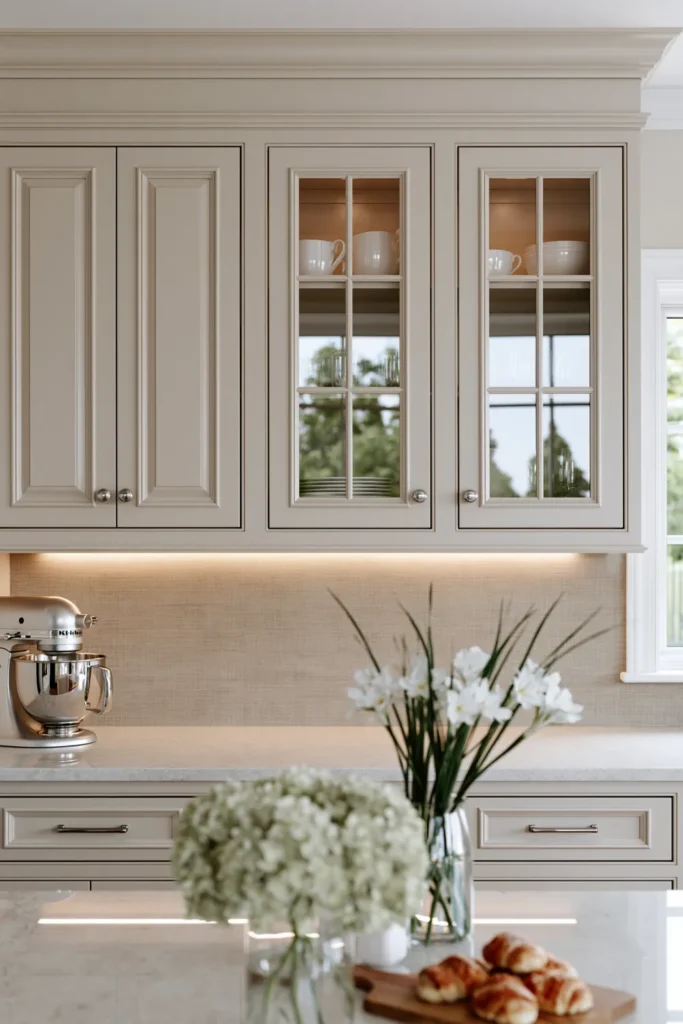
Classic Chiffon Cabinets with a Veined Granite Island
A softly toned chiffon cabinet color can make a traditional kitchen feel warmer than pure white while still keeping the room bright. Raised-panel cabinet doors on the island add architectural detail and give the center of the kitchen more presence.
White granite countertops with gray veining are a natural match for this palette. The light surface keeps the island from feeling visually heavy, while the veining creates subtle movement that breaks up large areas of white and cream.
Brushed nickel bar pulls give the cabinetry a cleaner finish and add a gentle metallic contrast. They work especially well when you want the kitchen to stay refined without introducing a warmer metal such as brass or bronze.
A display of crystal glassware can add a small reflective feature without changing the neutral palette. Under warm white cabinet lighting, the glass catches the light while the veined granite and cabinetry remain the main visual features.
The key with this combination is restraint. The raised panels, veined stone, glassware, and metallic hardware already provide enough detail, so the room does not need additional strong colors to feel finished.
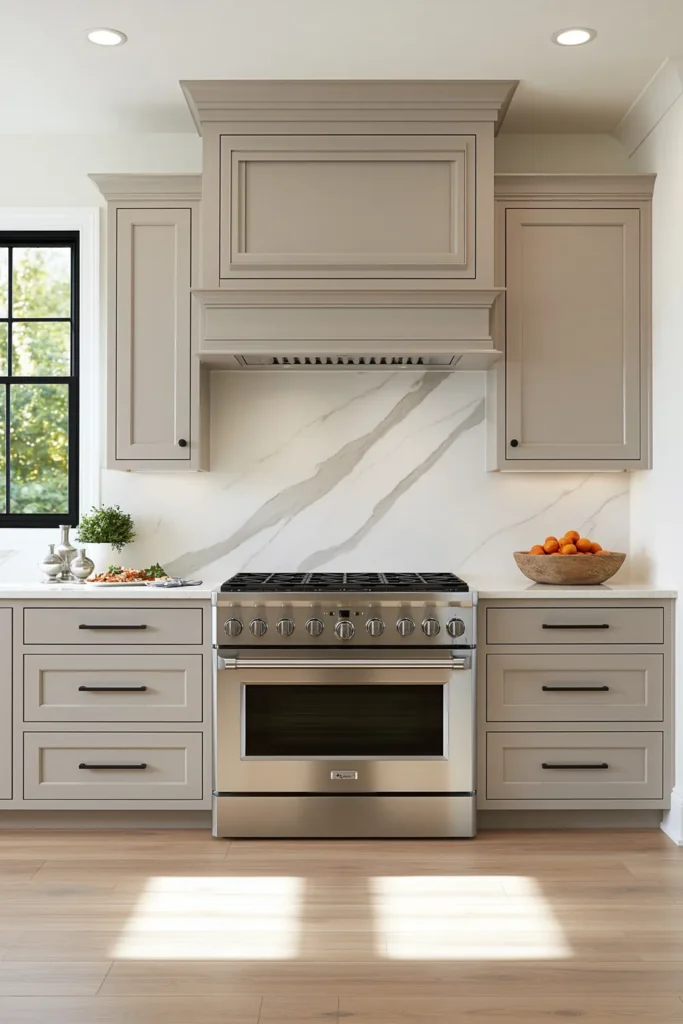
Tranquil Taupe Cabinets with Calacatta Marble and Light Oak Floors
Taupe cabinets are a good choice when you want something softer than gray but a little more grounded than cream. Shaker-style doors with raised panels and crown molding give this kitchen a traditional foundation, while the muted taupe finish keeps it calm and current.
Calacatta marble on both the countertops and backsplash creates a continuous stone look. The gray veining adds movement without introducing a strong color, so the cabinetry still feels like the main feature.
Light oak hardwood flooring warms up the room and prevents the marble from causing the space to feel too cool. That mix of painted cabinetry, natural wood, and stone gives the kitchen a balanced, layered look.
Brushed stainless steel hardware keeps the finish clean and practical. Black-framed windows add stronger contrast around the edges of the room, especially when natural daylight comes through and accentuates the lighter surfaces.
This combination works particularly well if you want a neutral kitchen with noticeable texture rather than noticeable color.
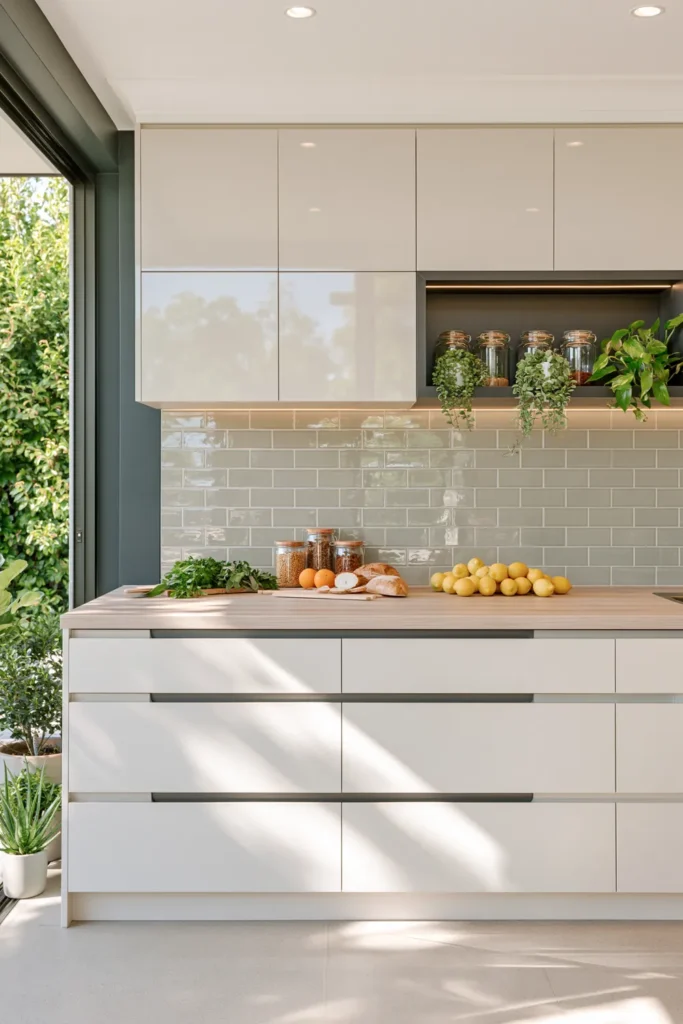
Sleek White Flat-Panel Cabinets with Butcher Block Counters
Flat-panel white cabinets give a kitchen a much cleaner and more streamlined appearance than traditional raised-panel styles. Keeping the lower cabinetry simple makes the space feel uncluttered, especially when the cabinet fronts are paired with practical pull-out shelving.
Butcher block countertops introduce warmth immediately. The natural wood grain softens the crisp white cabinetry and gives the kitchen a more relaxed, usable feeling.
A glossy white subway tile backsplash keeps the wall bright while supplying a slightly reflective surface. Stainless steel bar pulls fit the minimal cabinet style and bring in a subtle industrial touch without distracting from the wood counters.
Deep forest green walls create a strong backdrop for the white cabinetry. Because the cabinets and backsplash remain light, the darker wall color can feel rich rather than overwhelming.
Natural light from a large window helps balance the deeper wall tone, while under-cabinet LED strips brighten the work surfaces. Natural plants can echo the green walls and add another organic layer alongside the butcher block.
Sandy Beige Shaker Cabinets with Warm Bronze Hardware
Warm beige shaker cabinets are an easy way to make a kitchen feel comfortable without relying on stronger colors. Raised-panel doors and crown molding give the cabinetry traditional character, while the sandy beige finish keeps the overall effect soft.
A light beige subway tile backsplash continues the neutral palette rather than creating contrast. This works especially well when you want the kitchen to feel visually quiet and cohesive.
Speckled granite countertops introduce pattern and texture without eclipsing the cabinets. Since the stone already has natural variation, the surrounding surfaces can stay simple.
Oil-rubbed bronze hardware adds just enough darkness to outline the cabinet doors and drawers. Against warm beige, bronze seems natural and slightly rustic rather than overly dramatic.
Recessed LED can lights with a warm white temperature help preserve the heat of the cabinet color in the evening. Cooler lighting could make beige look dull, so a warmer light source is especially useful with this palette.
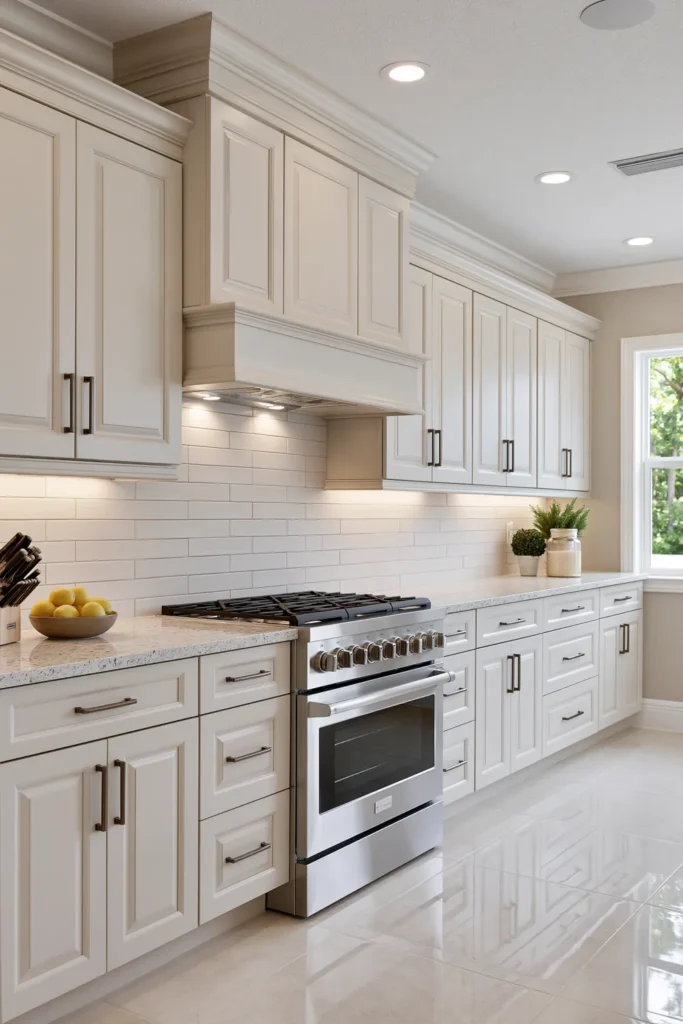
Weathered Gray Cabinets with Stone Backsplash and Walnut Shelves
Weathered gray shaker cabinets bring more visible texture into a neutral kitchen. Their softened gray finish creates a relaxed base that pairs naturally with stone, wood, and metal.
A mixed gray stacked-stone backsplash gives the walls a much more tactile look than smooth subway tile. Because the backsplash includes several gray tones, it connects easily with the cabinetry without looking flat or repetitive.
Walnut butcher block countertops and floating shelves bring warmth into the cooler palette. The richer brown wood grain stands out beautifully against gray cabinets while still staying within a natural, neutral scheme.
A white marble waterfall island brightens the center of the kitchen and features a smoother surface beside the rougher stone backsplash. Stainless steel appliances add another cool-toned material, while brass or bronze hardware brings back a bit of warmth.
Warm recessed ceiling lights with brass accent fixtures help tie those materials together. This is a strong option if you like neutral kitchen cabinets but want the room to feel layered, textural, and visually substantial.
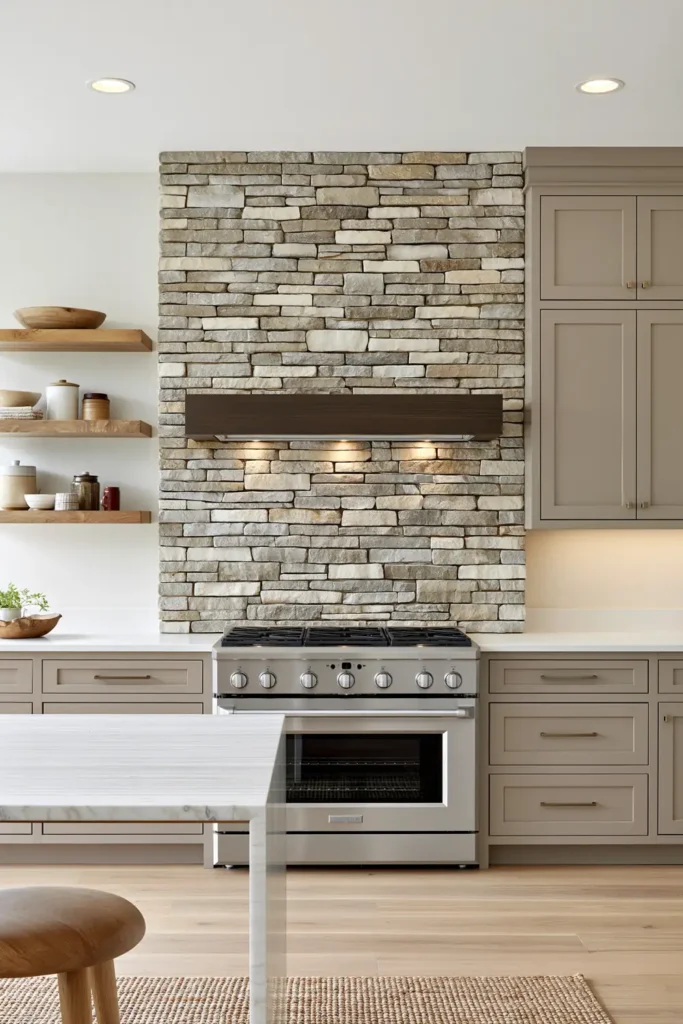
Whisper White Cabinets with a Quartz Waterfall Island
Whisper white cabinets are a little softer than stark white, which makes them easier to live with in a kitchen that already has plenty of bright surfaces. They still keep the room feeling open, but the slightly muted tone gives the space a gentler look.
A white quartz waterfall island continues that clean feeling through the center of the room. Because the countertop drops down the sides, the island feels more substantial without introducing another color.
Warm wood bar stools with upholstered seats are especially useful here. They break up the white surfaces and bring in a natural texture that makes the kitchen feel more comfortable and less showroom-like.
Natural wood grain flooring continues that inviting warmth across the room, while greige walls create a subtle transition between the cabinetry and floor. Brushed gold pulls add a subtle warm accent without eclipsing the neutral palette.
Clear glass cylinder pendants with dark bronze hardware help frame the island while keeping sightlines open. The combination of white, wood, greige, gold, and bronze gives this kitchen a layered neutral look that still feels bright.
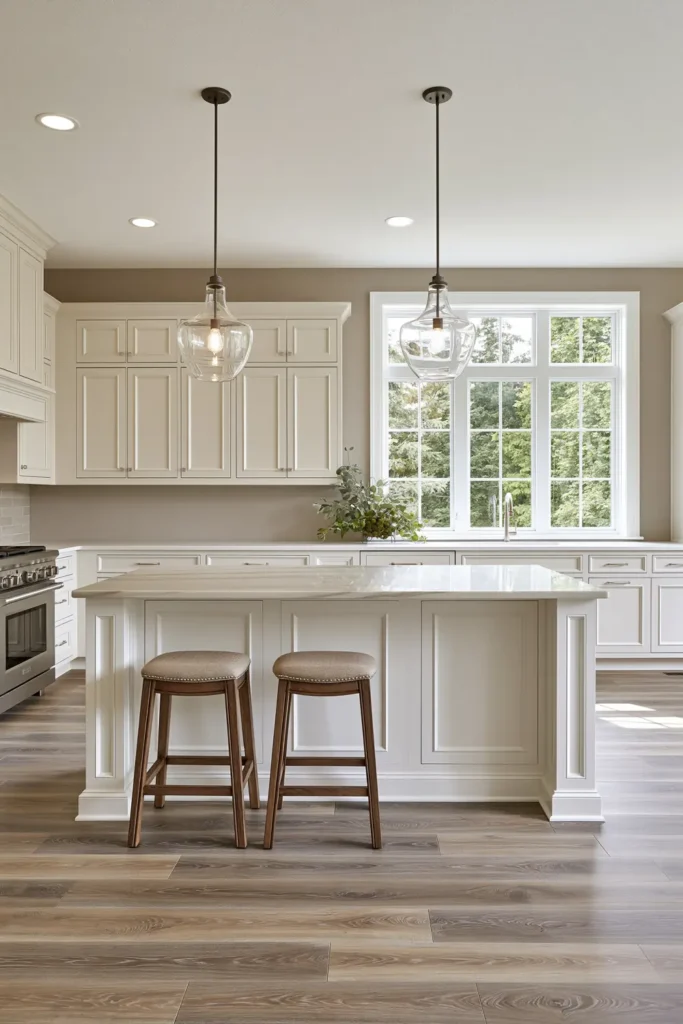
Gentle Gray Cabinets with a Farmhouse Sink and Floating Shelves
Gray shaker-style cabinets can give a kitchen a calm, grounded appearance without making it feel dark. A gentle gray works especially well when paired with crisp white surfaces that keep the room light.
A white farmhouse sink becomes a natural focal point against gray cabinetry. Its apron front adds traditional character and gives the sink area more visual presence than a standard undermount design.
White quartz countertops and a white subway tile backsplash create a clean backdrop around the cabinetry. Chrome cup pulls add a slightly brighter metallic finish and work well with the straightforward shaker doors.
Gray wood floating shelves bring another layer of texture while staying close to the cabinet color. They can make the wall feel lighter than a full run of upper cabinetry and give the kitchen a more open appearance.
Recessed ceiling lights and under-cabinet strip lighting keep work areas bright. This mix is a nice option when you want gray neutral kitchen cabinets to feel fresh rather than heavy.
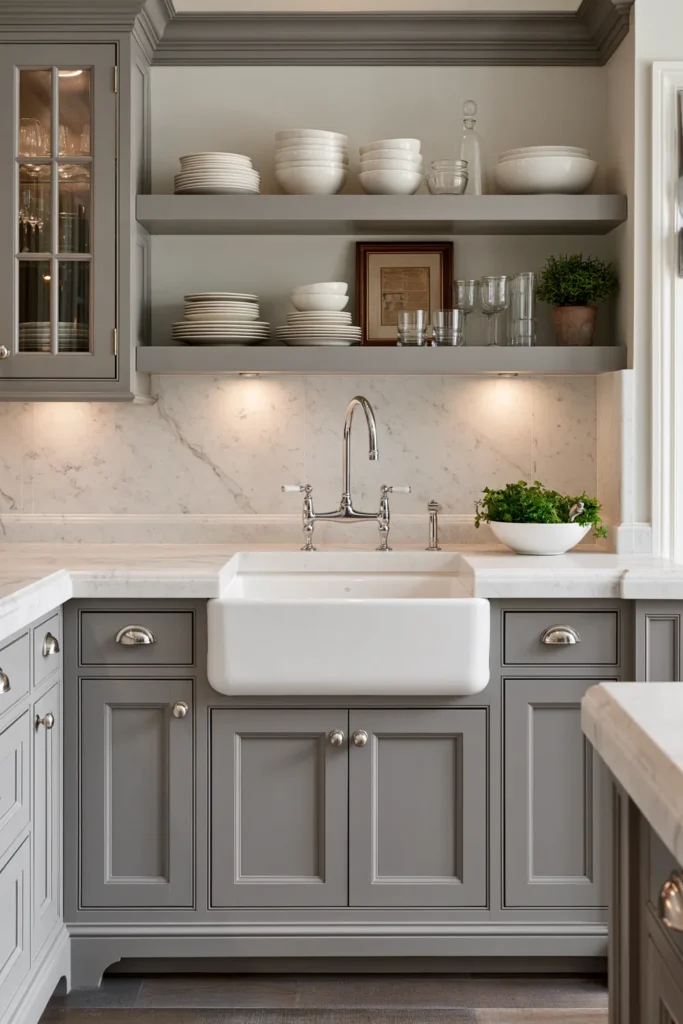
Muted Milk Cabinets with a Warm Walnut Kitchen Island
Muted milk cabinets create a soft off-white foundation that works beautifully with richer natural wood. Instead of making every cabinet the same color, a warm walnut island gives the kitchen a clear center and introduces much-needed depth.
White quartz countertops keep the surfaces bright, while a textured white subway tile backsplash adds subtle variation behind the cabinetry. The texture matters because it gives an otherwise light wall a little more dimension.
Natural woven baskets reinforce the warmer side of the palette and help connect the pale cabinetry with the walnut wood. Bronze or brass pulls add another warm accent without making the kitchen feel overly polished.
Black metal bar stools give the island a stronger outline and add contrast against the walnut. A clear glass lantern pendant with dark bronze hardware continues that darker accent above the seating area.
This combination works particularly well if you like light cabinets but want the kitchen to feel warmer and more grounded. The walnut, woven textures, dark metal, and warm hardware do that without changing the overall neutral direction.
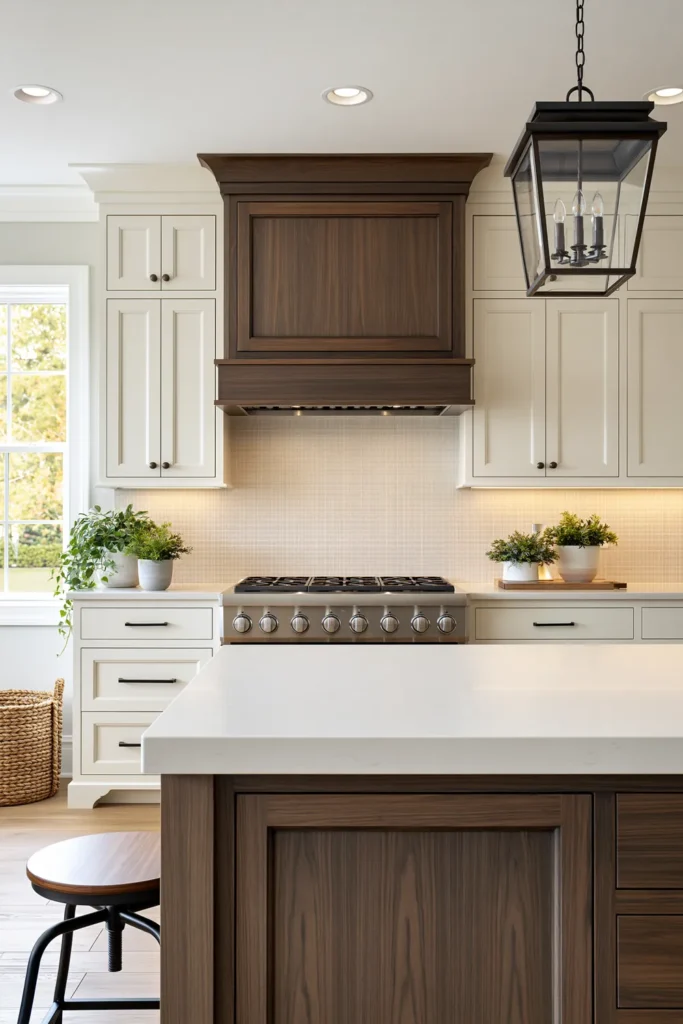
Toasted Almond Cabinets with a Mixed Beige Tile Backsplash
Toasted almond cabinets bring a warm, earthy feel to the kitchen while still staying comfortably neutral. The color sits somewhere between beige and light tan, making it easy to pair with both stone and wood.
A mixed beige and cream subway tile backsplash supports the cabinet color without matching it exactly. Those small tonal differences create depth and stop the walls and cabinetry from running into one flat surface.
Speckled granite countertops add another natural pattern, while oil-rubbed bronze hardware gives the cabinet doors a darker edge. The bronze finish works especially well with almond tones because both have a warm undertone.
A white farmhouse sink adds brightness and creates a useful contrast against the surrounding cabinetry. Natural wood cutting boards bring in another practical material, while white ceramic planters keep decorative details simple and fresh.
Black window hardware adds a small amount of sharper contrast around the natural window light. With the almond cabinets, beige tile, granite, wood, bronze, and white ceramics working together, the kitchen feels warm without becoming overly brown.
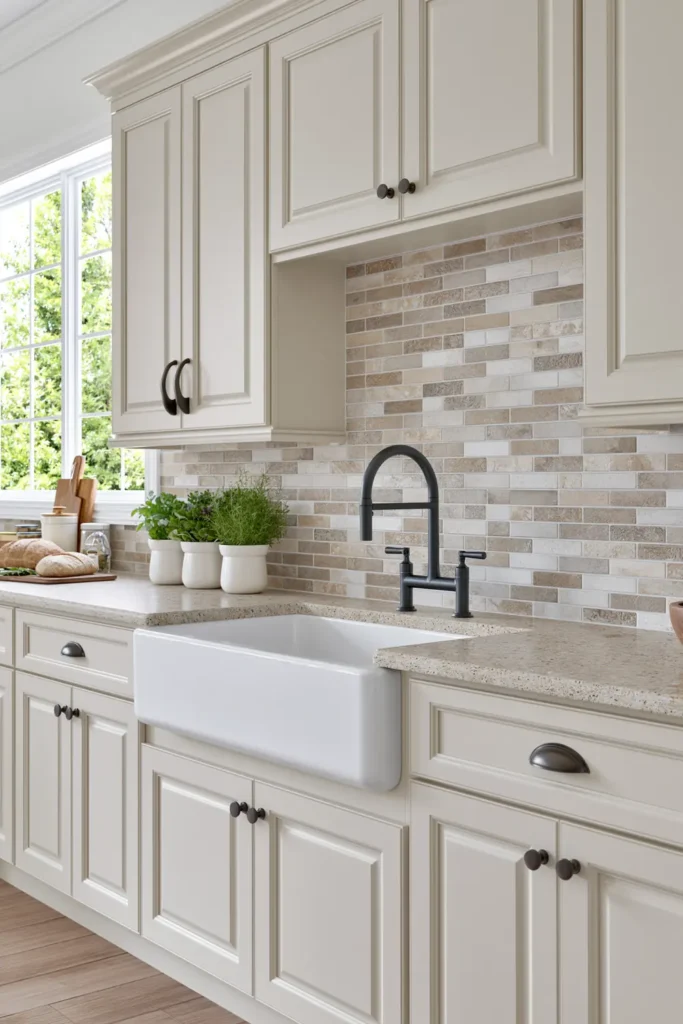
Warm Beige Cabinets with a Paneled Range Hood
Warm beige shaker-style cabinets can make a kitchen feel settled and welcoming without pushing the palette too far into yellow or brown. The soft color works especially well with traditional details such as crown molding and a paneled range hood.
Speckled granite countertops add texture while keeping the surfaces practical and understated. A white subway tile backsplash brightens the wall and creates a clean break between the cabinets and counters.
Matte black cabinet hardware gives the beige cabinetry more definition. The darker finish also helps the paneled range hood stand out as a feature without introducing another material or color.
Natural wood cutting boards bring in a warmer organic texture and fit naturally with the soft beige cabinetry. Recessed ceiling lights and under-cabinet LED strips keep the work surfaces bright while preserving a warm overall feel.
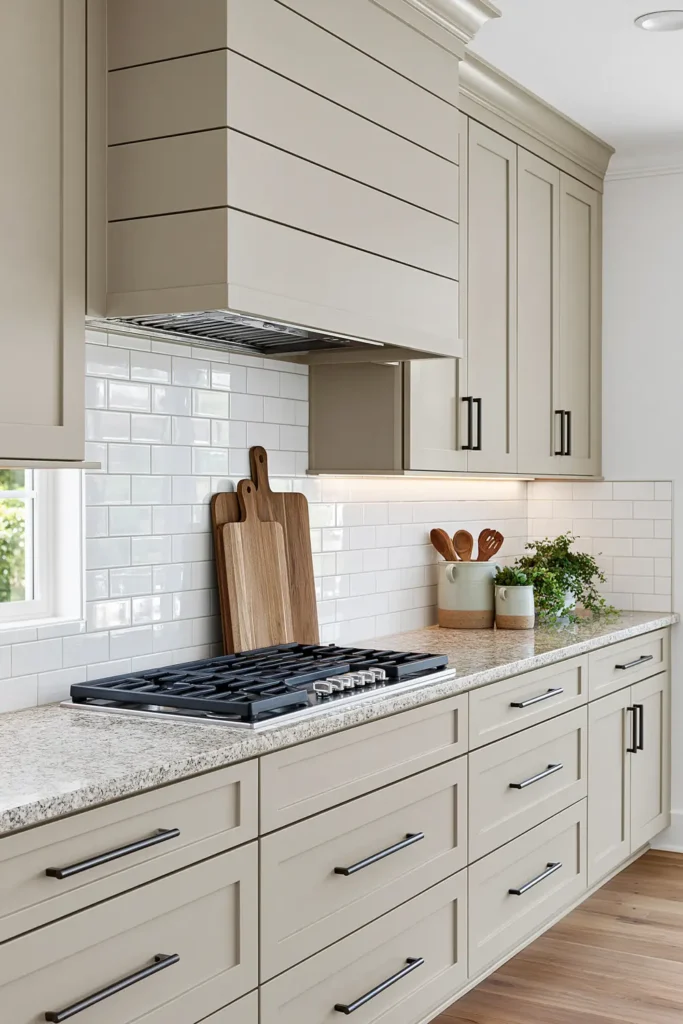
Pale Parchment Cabinets with Quartz Counters and Bronze Pulls
Pale parchment cabinets have the softness of cream with just enough warmth to avoid feeling stark. Shaker-style doors with raised panels give the cabinetry a familiar, traditional shape that feels easy to live with.
White quartz countertops and a white subway tile backsplash keep the surrounding surfaces light and simple. Because both are visually quiet, the cabinet color has room to show its delicate warmth.
Oil-rubbed bronze hardware adds contrast and gives the doors a more defined outline. The darker finish works especially well with parchment tones because it brings in heat without competing with the cabinetry.
Natural wood cutting boards add a practical decorative detail, while large grid-pattern windows bring in plenty of natural light. The result feels calm and classic, with just enough contrast to keep the kitchen from looking flat.
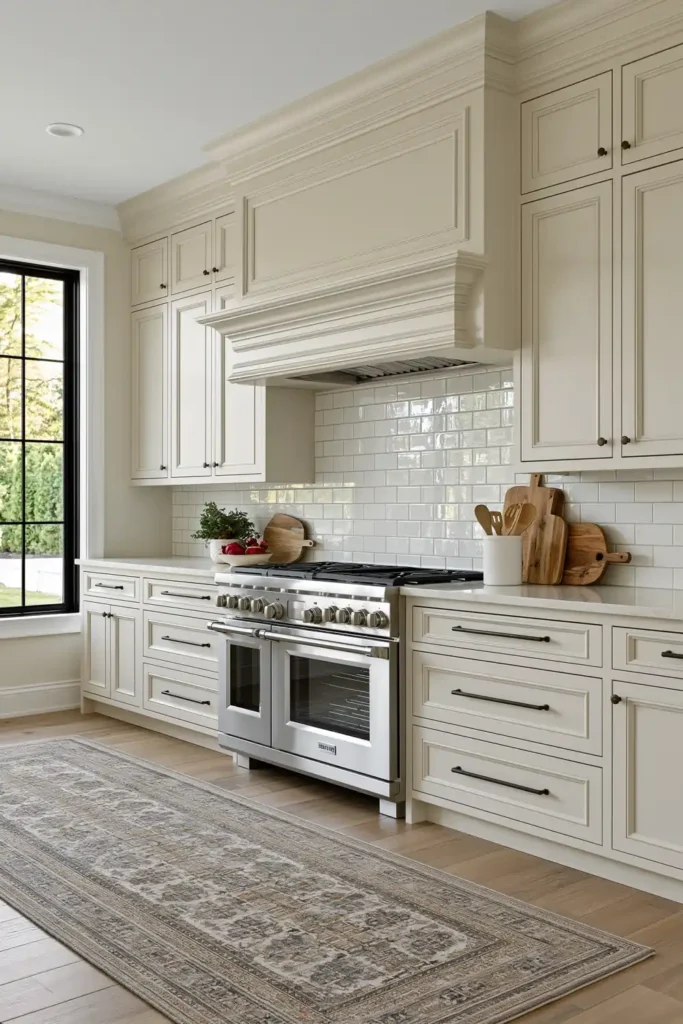
White Flat-Panel Cabinets with a Bold Blue Island
White flat-panel cabinets create a simple background that makes stronger accent colors feel intentional rather than overwhelming. These clean lines also help the kitchen maintain a modern, uncluttered appearance.
A bright blue island becomes the clear focal point of the space. Because the surrounding cabinetry stays white, the stronger color feels contained and gives the room character without taking over every surface.
A glossy lime green subway tile backsplash adds another energetic layer. Pairing two bold colors can easily become busy, but the white quartz countertops and simple cabinet fronts help balance the look.
Dark wood flooring grounds the brighter finishes and adds warmth underneath them. A cobalt blue teardrop pendant echoes the island color, while recessed ceiling spotlights provide more even task lighting around the room.
This is one of the less subdued approaches to neutral kitchen cabinets, but the neutral white cabinetry still gives the brighter blue and green accents a stable base.
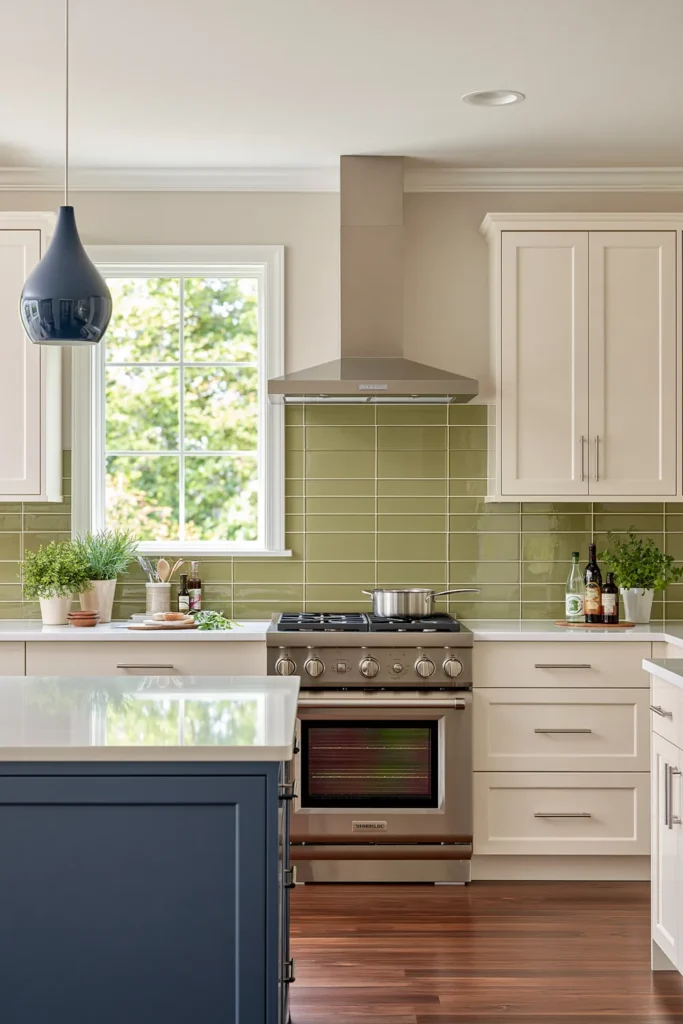
Cream Raised-Panel Cabinets with Stone Tile and Corbel Details
Cream-colored raised-panel cabinets are a natural fit for a more traditional kitchen. Decorative crown molding and corbel details give the cabinetry extra depth and make the room feel more architectural.
A natural stone subway tile backsplash brings in subtle variation through color and texture. Granite countertops preserve that layered stone look without making the kitchen feel overly polished.
Oil-rubbed bronze hardware adds a darker, aged finish that suits the traditional cabinet style. Dark hardwood flooring creates an even stronger contrast and gives the cream cabinetry a warm foundation.
Industrial-style glass pendant lights with dark metal chains add a slightly different note overhead. Their clear glass keeps the fixtures from feeling visually heavy, while the dark chains connect naturally with the bronze hardware and flooring.
Recessed ceiling lights provide additional illumination, helping the cream cabinetry and stone surfaces stay bright even with the darker wood floor.
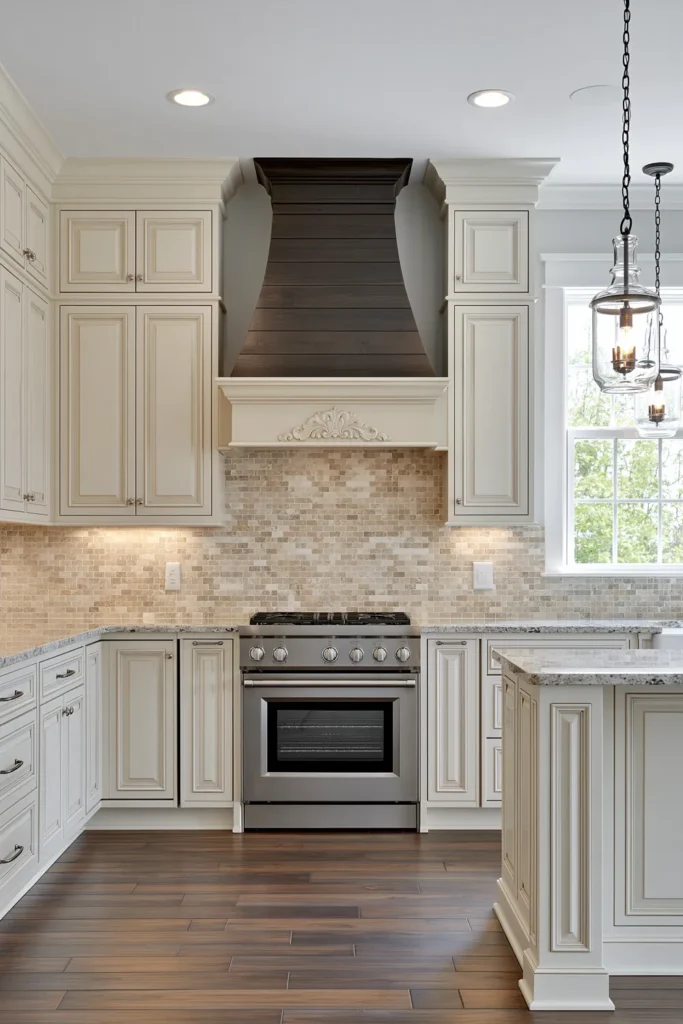
Warm Oak Neutral Kitchen Cabinets with Woven Natural Accents
Warm oak cabinets are a good indication that neutral does not have to mean painted white, beige, or gray. Natural wood grain can feel just as calm, especially when the finish is kept soft, and the surrounding materials are light.
Light stone countertops give the oak cabinetry a lighter surface to sit against, while a textured stone backsplash adds subtle variation behind it. The combination feels natural without becoming rustic.
A warm wood island with integrated seating keeps the look cohesive, and clean-lined bar stools help stop all the wood from feeling too heavy. Brass hardware adds a gentle metallic accent that works naturally with the golden undertones of oak.
Woven natural baskets bring in another texture without introducing a new color family. Recessed LED ceiling fixtures and warm under-cabinet strip lighting keep the wood tones feeling rich and inviting throughout the day.
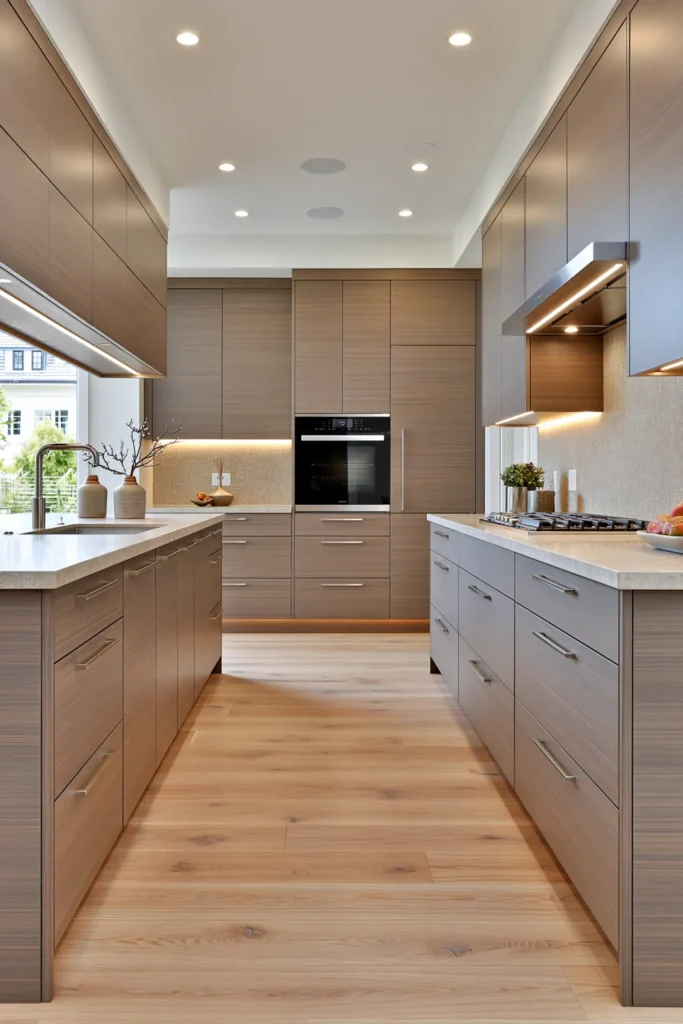
Silken Sepia Cabinets with Dark Granite and Bronze Pulls
Sepia-toned cabinetry creates a deeper neutral look that feels especially suited to traditional kitchens. Raised-panel doors and detailed trim give the cabinets a more classic appearance, while the soft painted finish keeps the look refined.
Dark granite countertops add strong contrast and give the kitchen a grounded feel. A glossy subway tile backsplash lightens the wall above the counter and reflects some of the warm under-cabinet lighting.
Oil-rubbed bronze pulls work naturally with the deeper cabinet tone. Rather than disappearing into the cabinetry, they add a subtle darker detail that accentuates the traditional door shape.
The combination of smooth painted wood, dark stone, glossy tile, and bronze hardware gives this kitchen plenty of texture even though the color palette remains restrained.
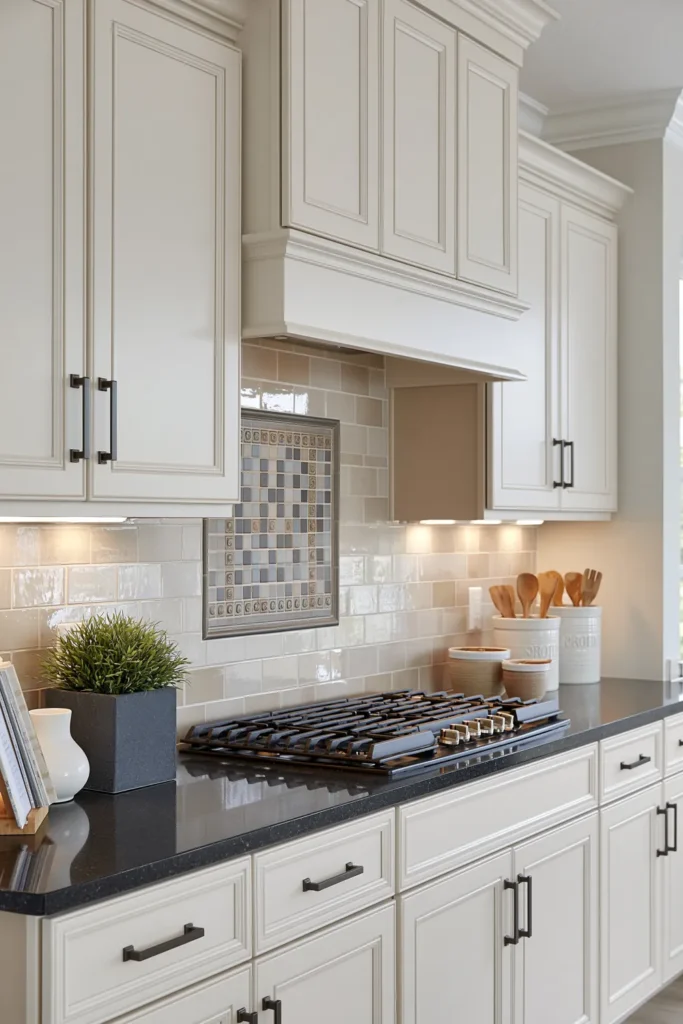
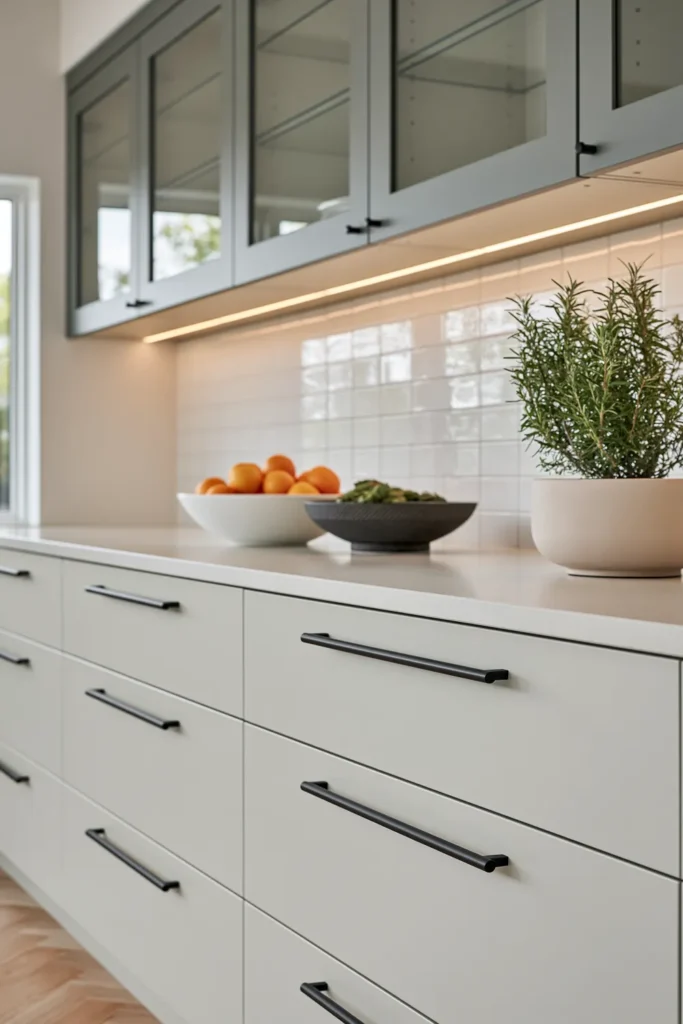
Frosted Flax Cabinets with Glass Doors and Light Wood Stools
Frosted flax is a soft, pale neutral that sits comfortably between cream and beige. It works well when you want cabinetry that feels warm but still keeps the kitchen visually light.
Glass cabinet doors help break up a long run of solid cabinetry. They provide dimension and allow the upper cabinets to feel less heavy, especially when paired with lighter finishes elsewhere in the room.
Marble countertops give the kitchen a shiny surface, while sleek black cabinet pulls provide a clean, sharp contrast. The darker hardware makes the cabinet lines easier to read without changing the overall neutral character.
Light wood bar stools bring a natural tone into the room and soften the combination of marble, glass, and painted cabinetry. Linear under-cabinet LED strips keep the worktops evenly lit and help the pale cabinet finish stay bright.
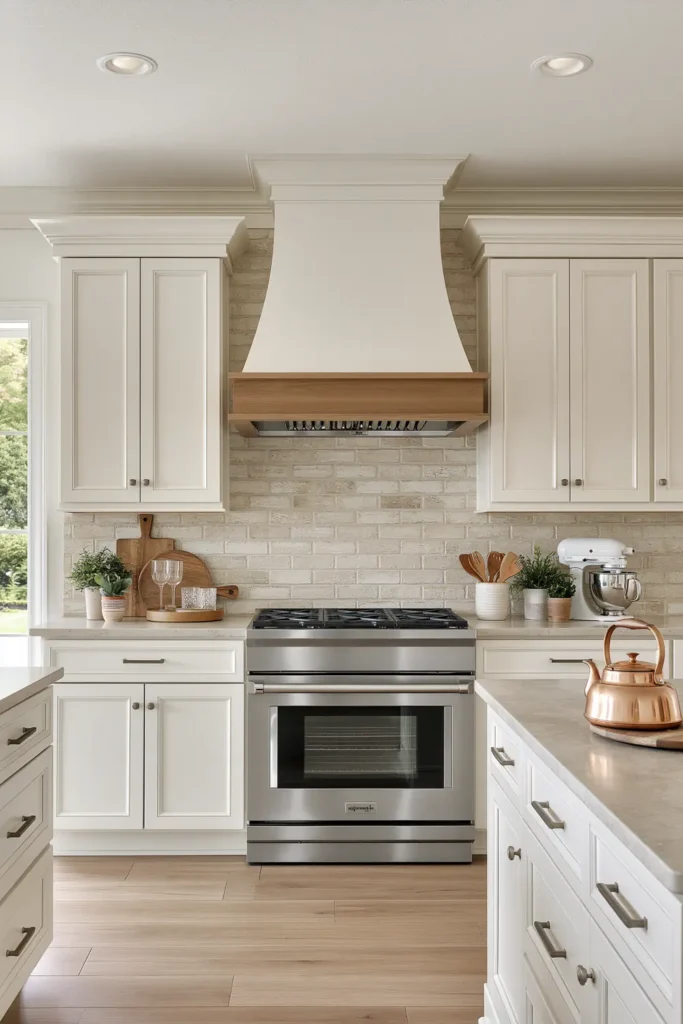
Oatmeal Cabinets with a Natural Wood Range Hood and Cream Brick
Oatmeal-toned shaker cabinets create a warm foundation that feels relaxed rather than formal. Their raised-panel doors give the kitchen some traditional detail but without making the room feel overly decorative.
A cream brick backsplash adds texture and a slightly more casual character than smooth tile. Because the brick stays within the same warm neutral family, it adds interest without creating a busy contrast.
White marble countertops brighten the work surfaces and give the room a cooler counterpoint to the oatmeal cabinets. A natural wood range hood becomes a strong focal point and connects easily with the warmer cabinet color.
Copper cookware accents add another earthy material, while brushed nickel pulls keep the cabinetry from leaning too heavily into warm metallic finishes. Under-cabinet lighting with a warm white temperature helps bring out the texture in the cream brick and natural wood.
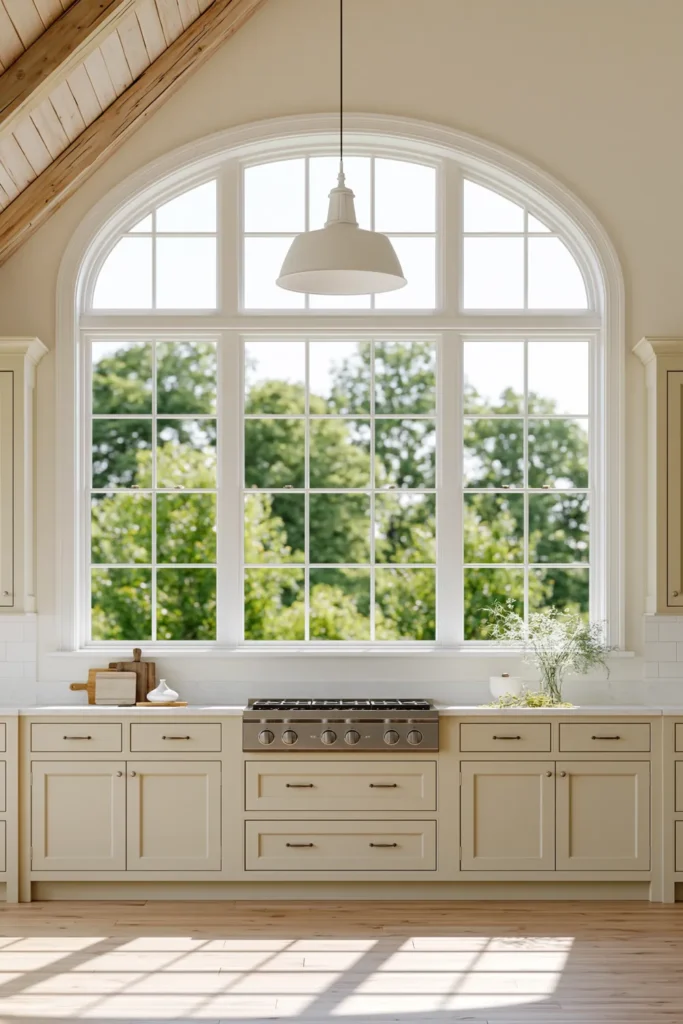
Light Linen Shaker Cabinets with Exposed Wood Ceiling Beams
Warm beige shaker cabinets with inset doors create a soft, tailored look that feels a little more detailed than standard overlay cabinetry. The color is light enough to keep the kitchen open, and warm enough to avoid the starkness of bright white.
White subway tile keeps the backsplash simple, while light marble countertops add a subtle pattern without competing with the cabinetry. Natural wood flooring gives the room warmth from below and helps connect the cabinets with the exposed ceiling beams overhead.
Those wood beams bring a stronger architectural element into the space. Because they repeat the natural tones in the floor, they feel integrated rather than decorative for decoration’s sake.
A white industrial pendant with a metal shade adds a practical focal point, while arched windows bring in natural light. Cup pull hardware finishes the cabinetry with a classic detail that works well with the shaker style.
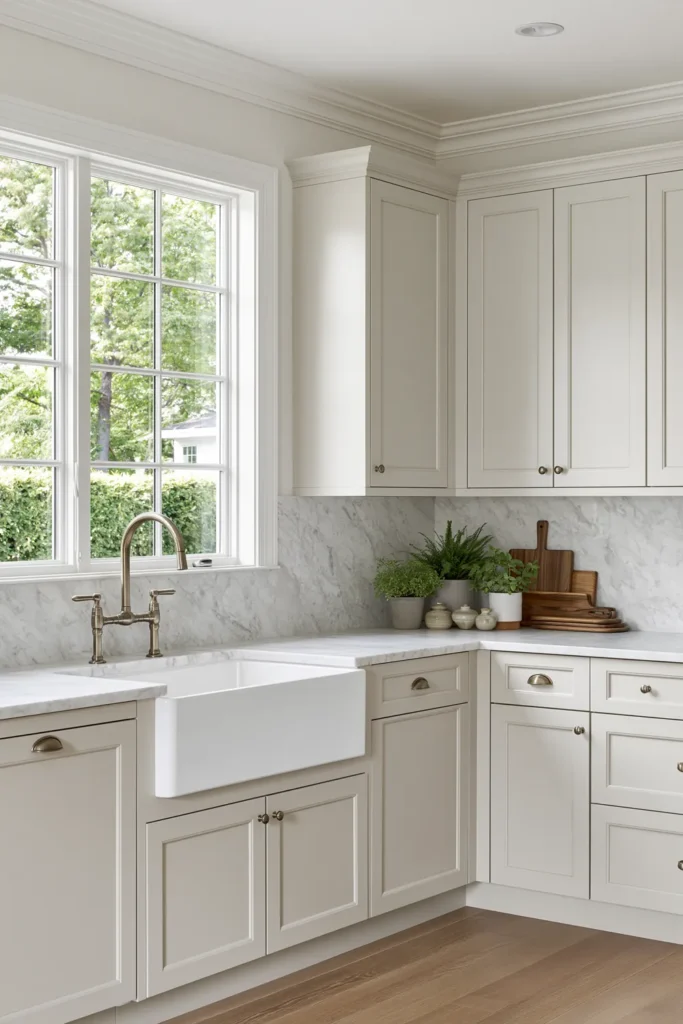
Calm Cashmere Cabinets with Carrara Marble and Brass Hardware
Cashmere-toned cabinets are a quiet way to add warmth to a kitchen without making the palette feel beige-heavy. Shaker-style base cabinets give the room a simple foundation that works especially well with traditional details like a farmhouse sink.
Carrara marble on both the countertops and backsplash gives the kitchen a more unified appearance. The fine gray veining adds movement while keeping the overall palette light.
Brass hardware introduces warmth and stands out clearly against the soft cabinet color. Because the rest of the kitchen stays restrained, the brass seems deliberate rather than flashy.
Large multi-pane windows bring in natural light, which helps the marble and cabinetry show their subtle differences in tone. This combination feels especially balanced if you want an elegant kitchen without looking excessively formal.
Matte Black Cabinets with Dark Marble and Amber Glass Pendants
Matte black cabinets create a much moodier interpretation of neutral kitchen design. Rather than relying on pale tones, this look uses depth, contrast, and warm metallic accents to keep the space from feeling flat.
A sleek black kitchen island with integrated storage continues the dark cabinetry through the center of the room. Minimalist bar seating keeps the island visually clean and prevents the darker finishes from becoming too heavy.
Polished stone countertops with dark marble veining add subtle movement against the black cabinet fronts. Brushed brass or warm bronze hardware brings in a softer metallic contrast that stands out well against the matte finish.
Amber glass globe pendants add warmth overhead. Their colored glass softens the darker palette and creates a visual connection with the brass or bronze details below.
This is a strong option if you prefer neutral kitchen cabinets with a more dramatic, contemporary feel rather than a light and airy one.
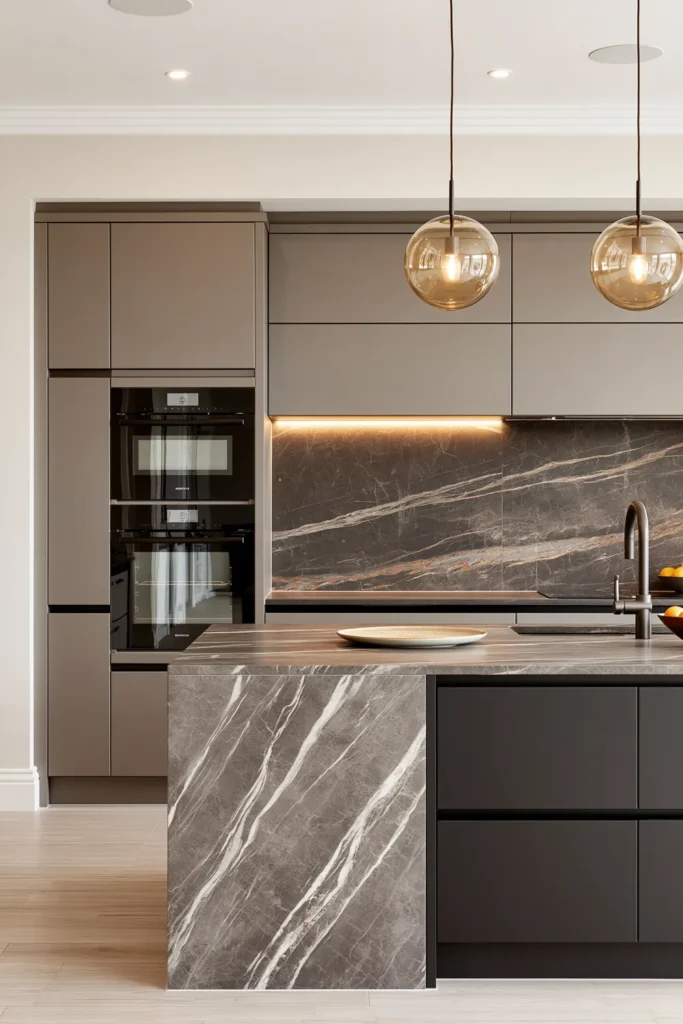
Buff-Toned Raised-Panel Cabinets with a Soft Glazed Finish
Buff-toned cabinetry works well in a traditional kitchen because it has enough warmth to feel inviting without looking too dark. Raised-panel doors add depth, while a glazed finish helps emphasize the cabinet detailing.
White granite countertops with gray veining brighten the space and create contrast against the warmer cabinetry. A white subway tile backsplash continues that lighter surface along the wall.
Brushed stainless steel hardware gives the cabinets a cleaner, cooler accent and works naturally with a professional-grade stainless steel gas range. Repeating that metal finish helps the appliances feel like part of the overall design rather than separate functional pieces.
Warm white recessed lighting keeps the cabinetry from looking dull in the evening and helps bring out the subtle shading in the glazed finish.
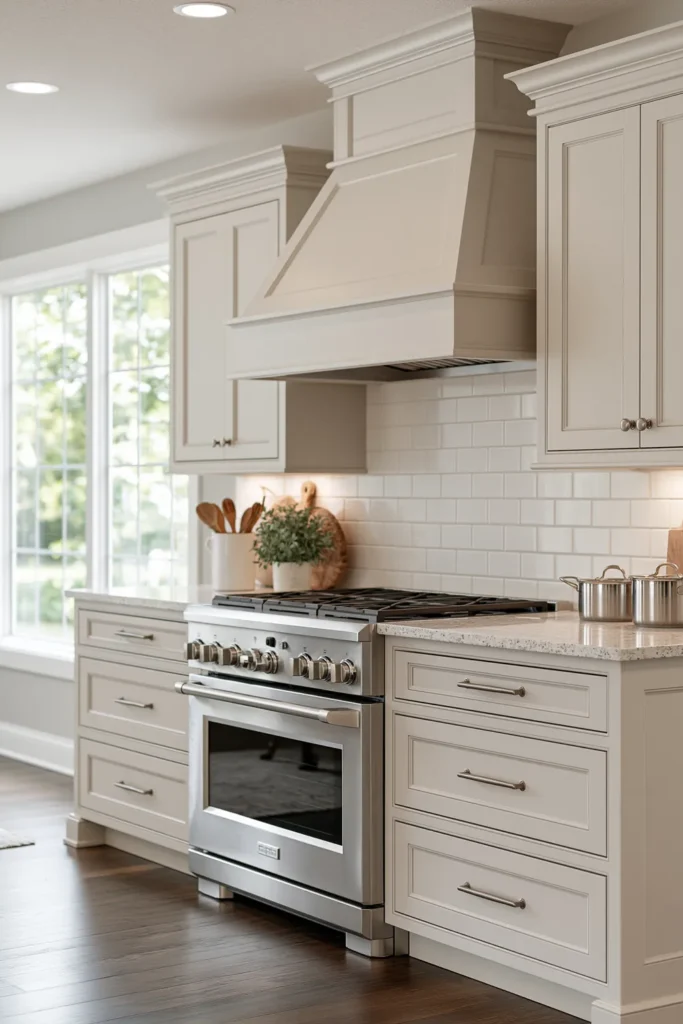
Neutral Kitchen Cabinets Paired with a Brass Range and Marble Island
Neutral cabinetry can provide a quiet backdrop for a statement feature, and a warm brass range is a good example. Instead of competing with the surrounding cabinets, the metal finish becomes a focal point while the rest of the kitchen stays balanced.
A white marble waterfall island adds a bright, substantial surface in the center of the room. The continuous stone down the sides gives the island a clean, finished appearance, while bar seating keeps it practical for everyday use.
A herringbone marble backsplash introduces more pattern without adding another color. Since the backsplash and island share similar stone tones, the kitchen feels coordinated even with the stronger brass element.
Natural hardwood flooring adds warmth underneath the marble surfaces, while brass hardware repeats the range finish in smaller doses. Recessed ceiling lighting with a warm white temperature helps the metal and wood tones feel richer in the evening.
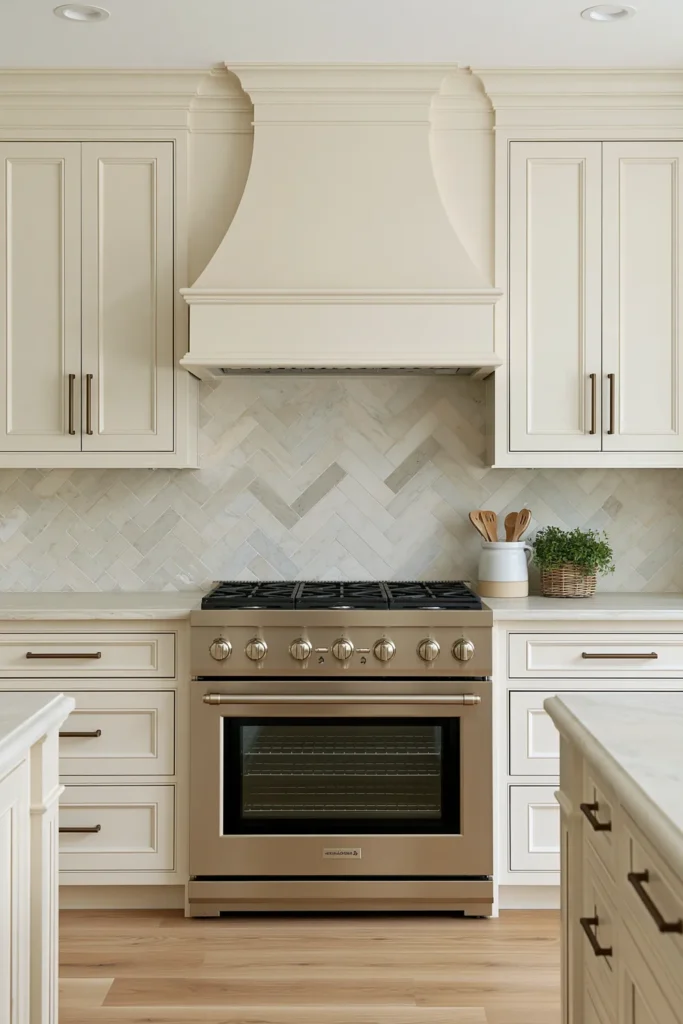
Eggshell Raised-Panel Cabinets with Granite and Bronze Hardware
Eggshell cabinets offer a softer alternative to bright white. Their creamy undertone gives the kitchen a warmer feel while still keeping the room light and neutral.
Traditional shaker-style raised-panel doors add depth to the cabinetry without making it overly ornate. A white subway tile backsplash keeps the wall treatment simple and familiar.
Speckled granite countertops bring natural variation into the room and add a more textured surface beside the smooth painted cabinets. Oil-rubbed bronze hardware gives the cabinet doors a darker accent that works especially well with the warmer eggshell tone.
Warm white recessed downlights help preserve that softness after natural daylight fades. This combination is simple, but that simplicity is part of its appeal if you want a kitchen that feels classic and easy to live with.
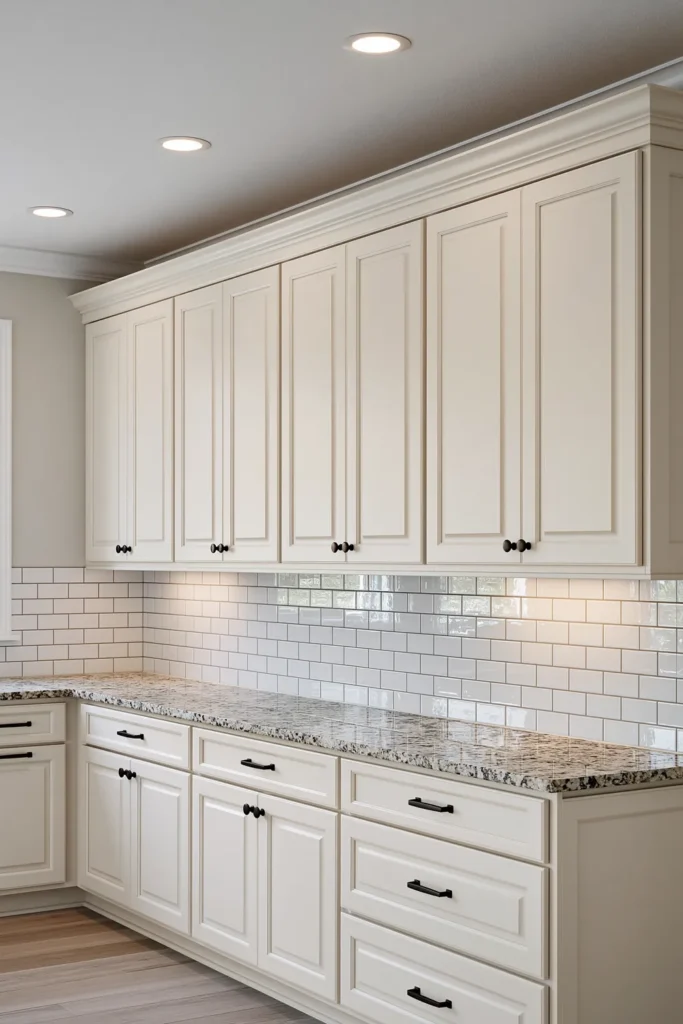
Natural Oak Cabinets with Carrara Marble and Woven Baskets
Natural oak cabinetry brings warmth and visible grain into a neutral kitchen without relying on painted finishes. The wood becomes part of the color palette, giving the room a more organic and relaxed feel.
White Carrara marble countertops provide a crisp contrast against the oak. The soft gray veining keeps the stone from looking too plain while still allowing the natural wood to remain the strongest visual element.
Brass bar pulls suit the warm undertones of the oak and add a polished accent without overpowering the grain. A white marble island continues the lighter stone surface through the center of the kitchen.
Woven natural baskets add another layer of texture and reinforce the earthy feel of the cabinetry. With recessed ceiling lighting, the mix of warm wood, pale marble, brass, and woven fibers feels calm and grounded.
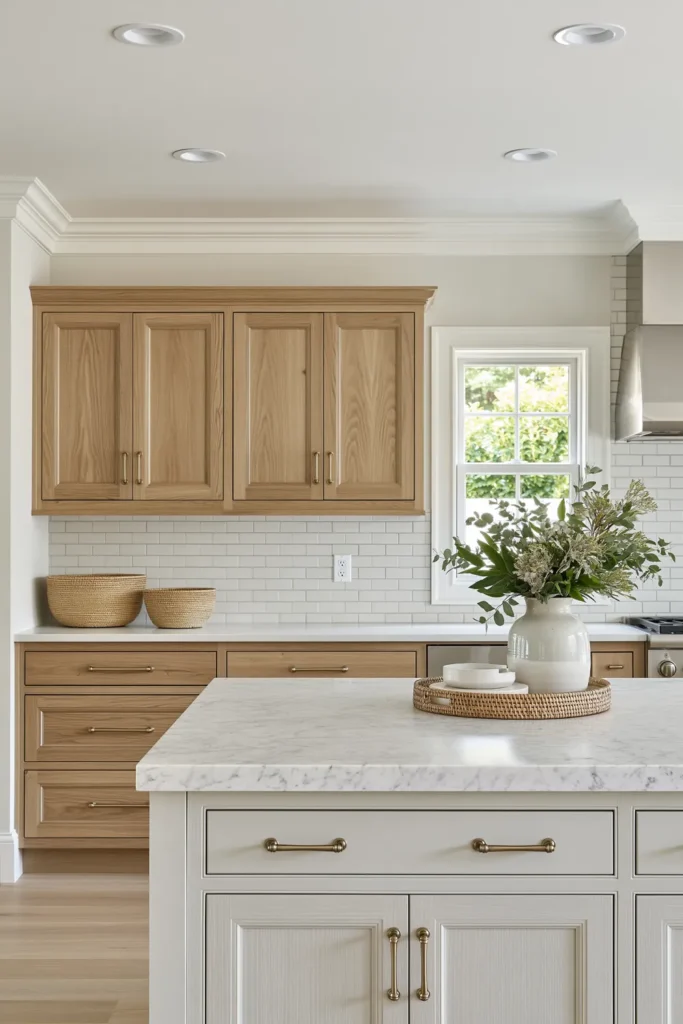
Ecru Raised-Panel Cabinets with Marble and Natural Wood Accents
Ecru cabinets are a useful choice when you want something warmer than white but still very light. Classic raised-panel doors give the cabinetry traditional character and work naturally with polished stone surfaces.
Marble countertops with gray veining add gentle movement across the worktops, while a white subway tile backsplash keeps the surrounding wall simple.
Brushed nickel hardware delivers a cooler metallic note that offsets the heat of the ecru cabinetry. Because the finish is subtle, it supports the design without becoming a focal point.
Classic white ceramic bowls and natural wood cutting boards add everyday texture to the counters. The contrast between smooth ceramic, polished marble, painted cabinetry, and warm wood keeps the neutral palette from feeling one-dimensional.
Natural window light helps all of these pale surfaces feel fresh and distinct, while under-cabinet lighting can further brighten the work areas when needed.
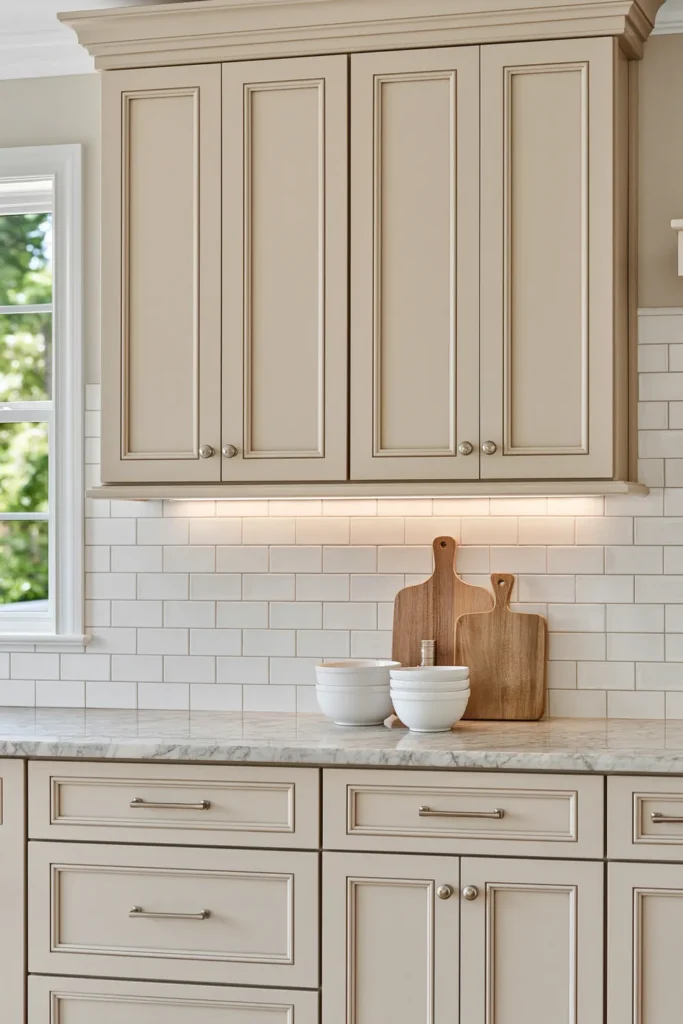
Two-Tone White and Charcoal Cabinets with a Copper Backsplash
Two-tone cabinetry is a practical way to bring more contrast into a neutral kitchen without relying on a completely dark palette. White flat-panel lower cabinets keep the room feeling bright at countertop level, while dark charcoal upper cabinets add depth above.
White quartz countertops create a clean dividing line between the two cabinet colors. Their simple surface also gives the warmer backsplash room to stand out.
A copper backsplash adds warmth and a subtle metallic glow to the kitchen. Against white and charcoal, the copper becomes the most noticeable material without making the room feel overly colorful.
Matte black cabinet hardware connects naturally with the charcoal uppers and keeps the overall look streamlined. Amber glass globe pendant lights with black cords and canopies bring another warm accent into the space and echo the richness of the copper.
This mix is especially useful if you want neutral kitchen cabinets with more contrast and personality. The combination of white, charcoal, copper, black, and amber creates a layered look while still keeping grounded in neutral tones.
Bringing Your Neutral Kitchen Together
The best neutral kitchen cabinets are not necessarily the palest or simplest ones. To get started on your own kitchen, start by identifying your favorite cabinet tone or looking at the materials you already have and love, such as countertops, flooring, or hardware. Using these existing preferences as a starting point can help you confidently narrow down your choices and shape the rest of your design. What makes these kitchens work is the way the cabinet color connects with the surrounding stone, wood, metal, tile, and lighting.
If you prefer a lighter kitchen, off-white shades, parchment tones, soft beige, and light gray can give you a flexible base. For something warmer, oak, oatmeal, almond, and taupe bring in more natural depth. Darker charcoal and matte black cabinetry can work just as well when balanced with lighter countertops and warm lighting.
It also helps to think beyond the cabinet paint itself. Bronze pulls can warm up beige cabinetry, brass can bring life to cream or oak, and natural wood can soften white or gray. Marble, granite, brick, and subway tile each change the mood in a different way, even when the overall palette continues neutral.
Start with the cabinet tone that feels most comfortable in your home, then build around it with materials you already enjoy living with. For a budget-friendly refresh, consider painting your cabinets, swapping in new hardware, or trying peel-and-stick backsplash tiles. These simple updates can change your kitchen’s style without a major investment, making it possible to create a fresh and customized look on any budget. A neutral kitchen does not have to be plain. With the right combination of texture, contrast, and warmth, it can feel calm, personal, and easy to enjoy every day.