
A modest front yard doesn’t have to feel plain or unfinished. In fact, some of the most inviting homes I’ve seen are the ones that keep things simple but carefully arranged. When everything has a purpose—whether it’s a small pathway, a few well-placed plants, or a neat border—the space naturally feels calm and welcoming.
What I like about modest front yard ideas is that they don’t rely on size or budget. It’s more regarding balance, repetition, and a few details that make the space feel cared for. Even small changes—like adding structure to your lawn or framing your entry—can completely change how your home feels from the street.
In this article, I’ll walk you through practical ideas you can actually use, whether you’re working with a small yard or just want something easier to maintain without losing charm.
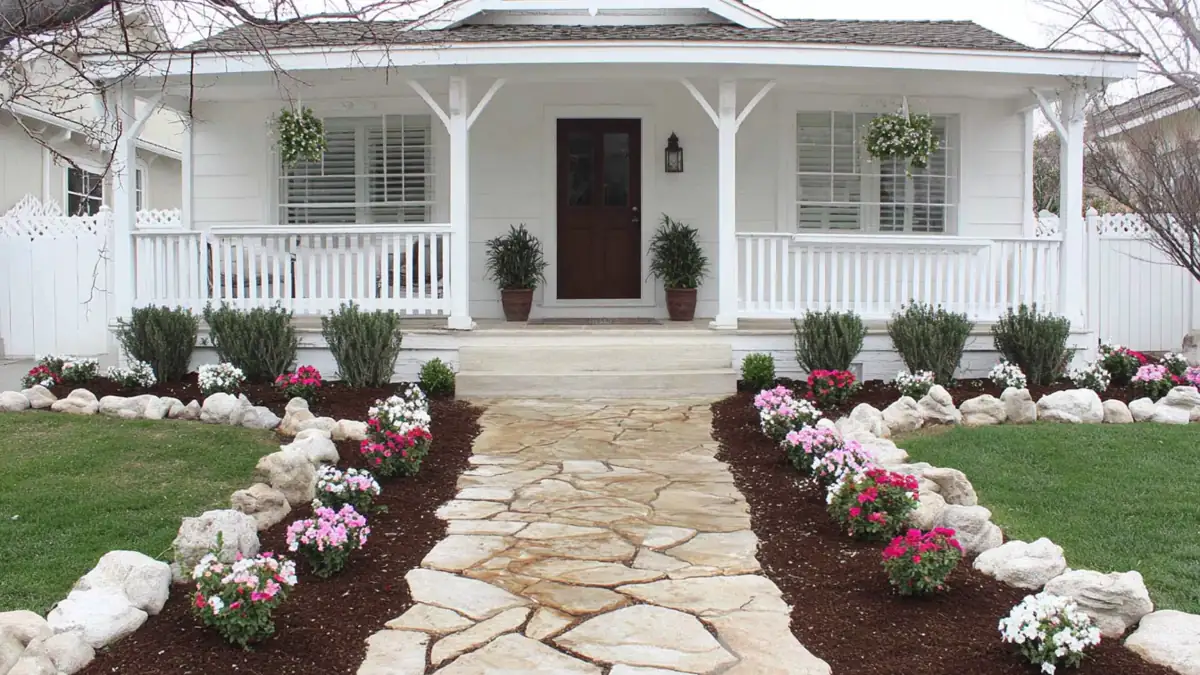
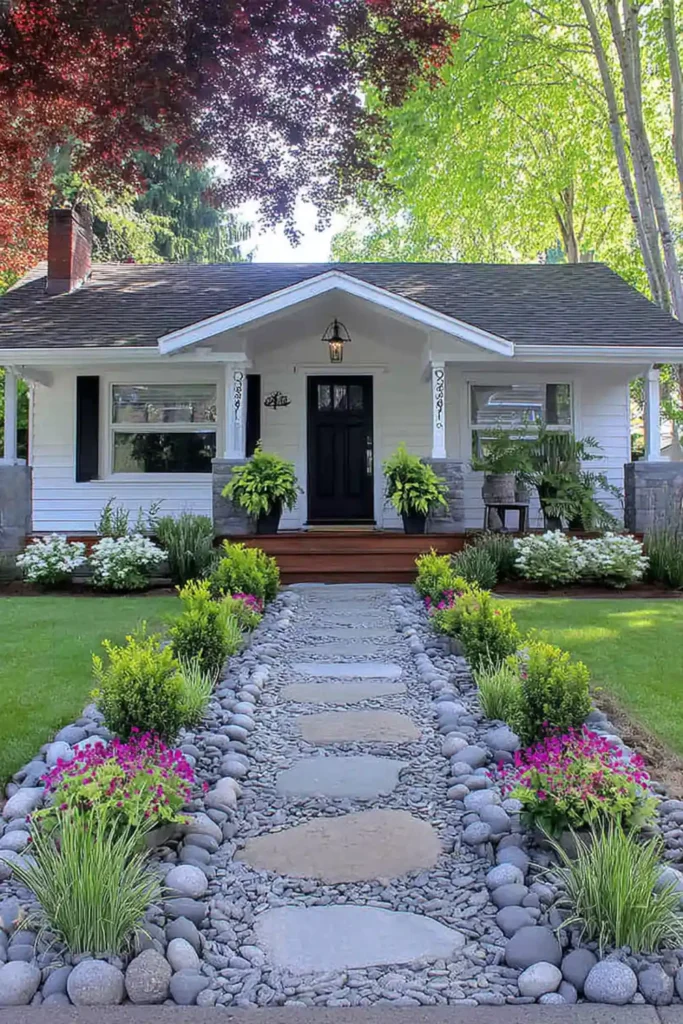
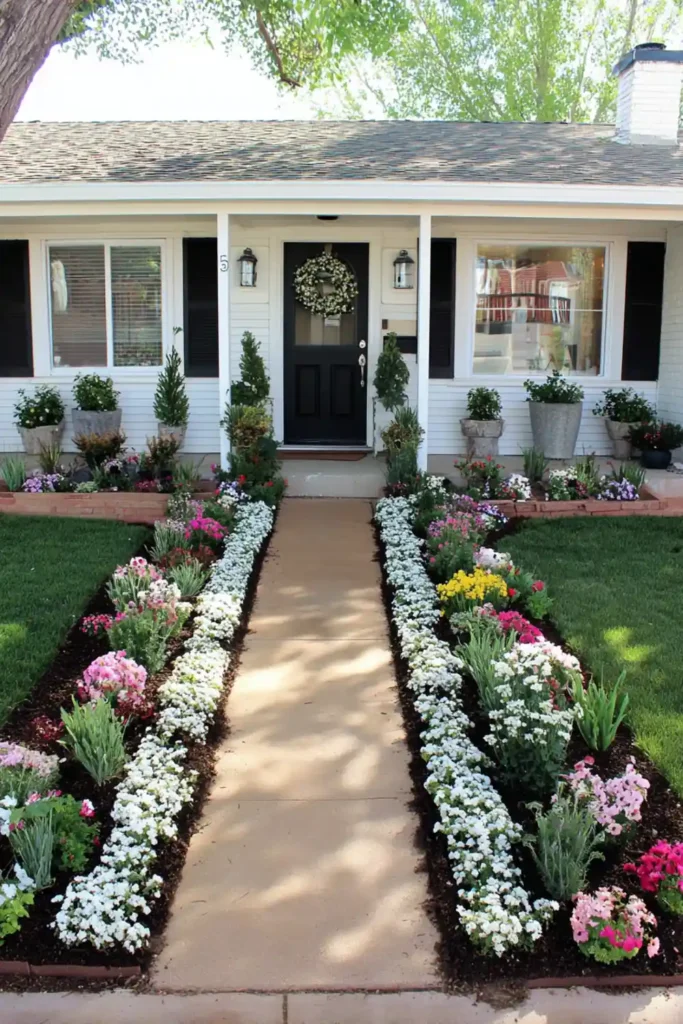
Symmetrical Evergreen Landscaping for a Well-Proportioned Front Yard
There’s something about symmetry that immediately makes a front yard feel organized. Even if your space is small, placing matching evergreen shrubs on both sides of a walkway or entry creates a sense of structure that seems deliberate without being complicated.
Evergreens are especially useful because they keep their shape and color year-round. I’ve seen simple layouts where two rows of low boxy shrubs guide the eye toward the front door, and it instantly makes the yard feel more complete. You don’t need a lot—just a few well-spaced plants can do the job.
If you’re starting from scratch, try placing one larger shrub near each corner of the house and then repeating smaller ones along the path. Keeping the spacing consistent is what makes it work. It’s a simple setup, but it gives your front yard a steady, put-together look that doesn’t require constant upkeep.
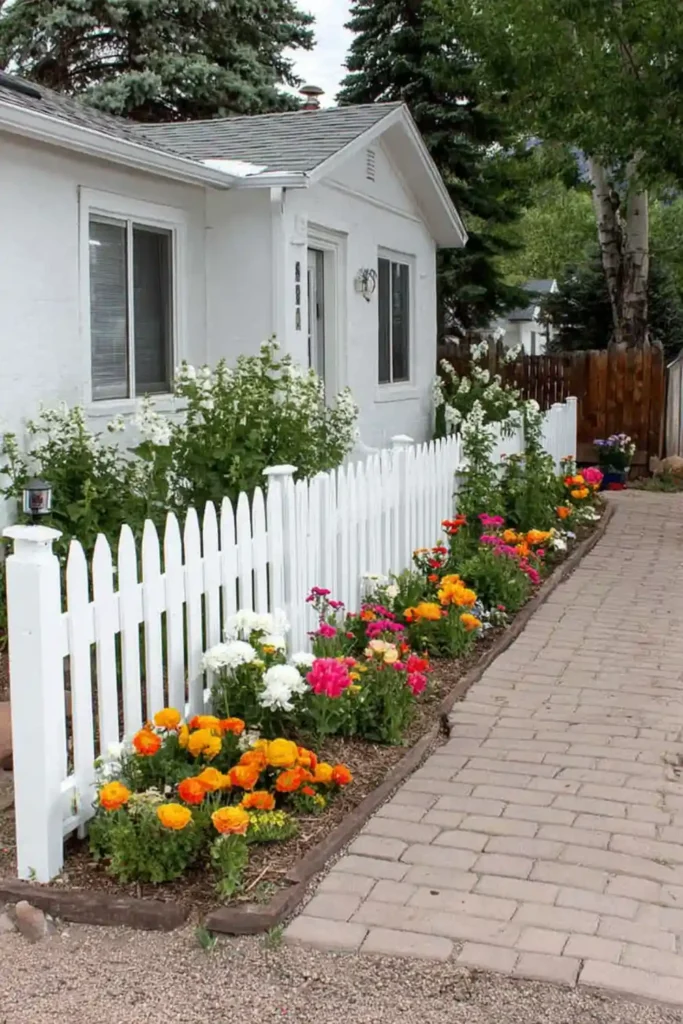
Classic White Picket Fence with a Flower-Filled Border
A white picket fence is one of those features that quietly defines a front yard without burdening it. It creates a clear boundary while still keeping the space open and friendly, especially when paired with a soft flower bed along the base.
What makes this setup work is the contrast between the clean white fence and the natural textures around it. Red brick edging or a simple walkway nearby adds warmth, while the flowers bring movement and color. Even a narrow strip of soil is enough to plant a mix of seasonal blooms.
If you’re trying this at home, don’t worry about filling every inch with plants. A few clusters of flowers spaced out along the fence often look better than a crowded bed. It keeps the yard feeling light and manageable, while still adding that classic, welcoming detail.
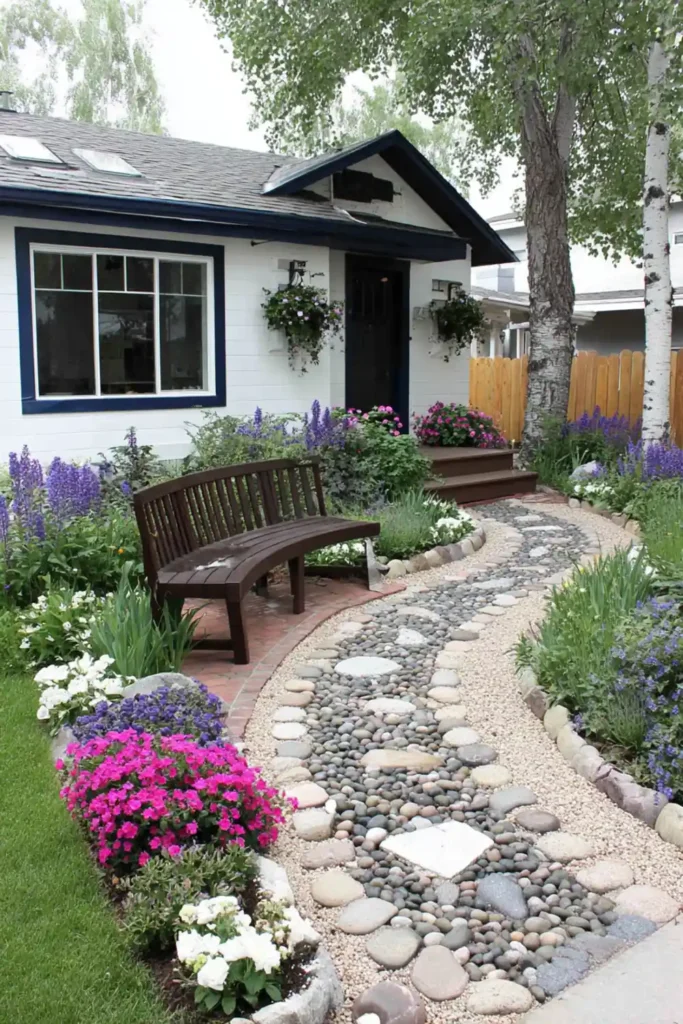
Cottage Garden Landscaping with Natural Pathways and Seating
A cottage-style front yard feels relaxed and lived-in, which makes it perfect if you don’t want everything to look excessively structured. Instead of straight lines, this approach uses soft curves, mixed plantings, and natural materials like rock pathways and mulch.
One detail I really like is adding a small seating area, even if it’s just a simple chair or bench tucked into a corner. It gives the yard a purpose beyond just being decorative. When surrounded by perennials that bloom at different times, the space changes throughout the seasons without much effort.
To keep it from feeling messy, use a few larger rocks or defined paths to guide movement through the yard. That way, even with all the greenery, there’s still a sense of direction. It’s a great option if you want something modest but full of character.
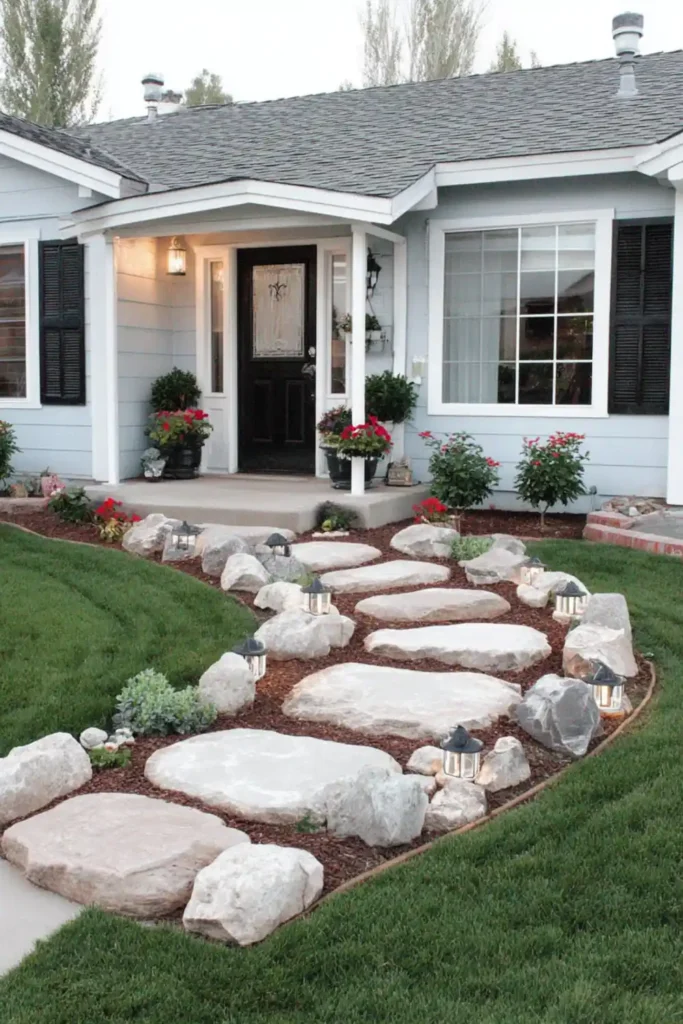
Stone Footpaths with Subtle Lighting for a Welcoming Entry
A stone footpath does more than connect your gate to the front door—it sets the mood for the entire yard. Natural stone or simple pavers create a grounded, textured look that works with almost any home style.
Adding small, low-profile lights along the path makes a big difference, especially in the evening. The goal isn’t bright lighting, but a subtle glow that accentuates the walkway and makes it easier to navigate. It also adds a sense of care that people notice right away.
If you’re planning your own path, try spacing the stones slightly apart with grass or gravel in between. It keeps the look relaxed instead of excessively formal. Pair it with a few bright flowers along the edges, and you end up with a simple entry that appears both practical and inviting.
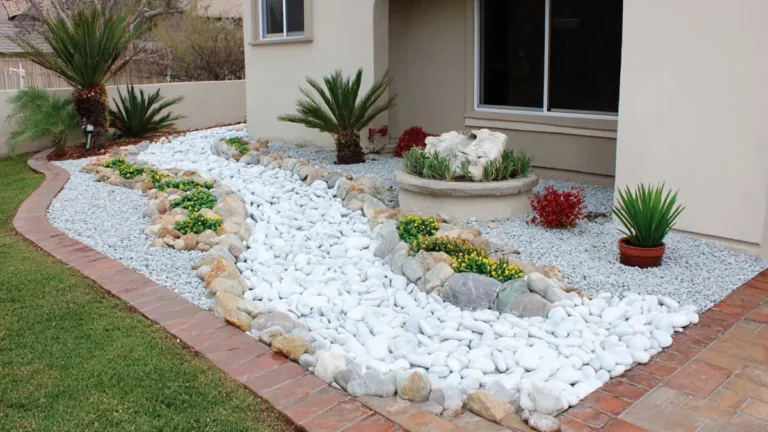
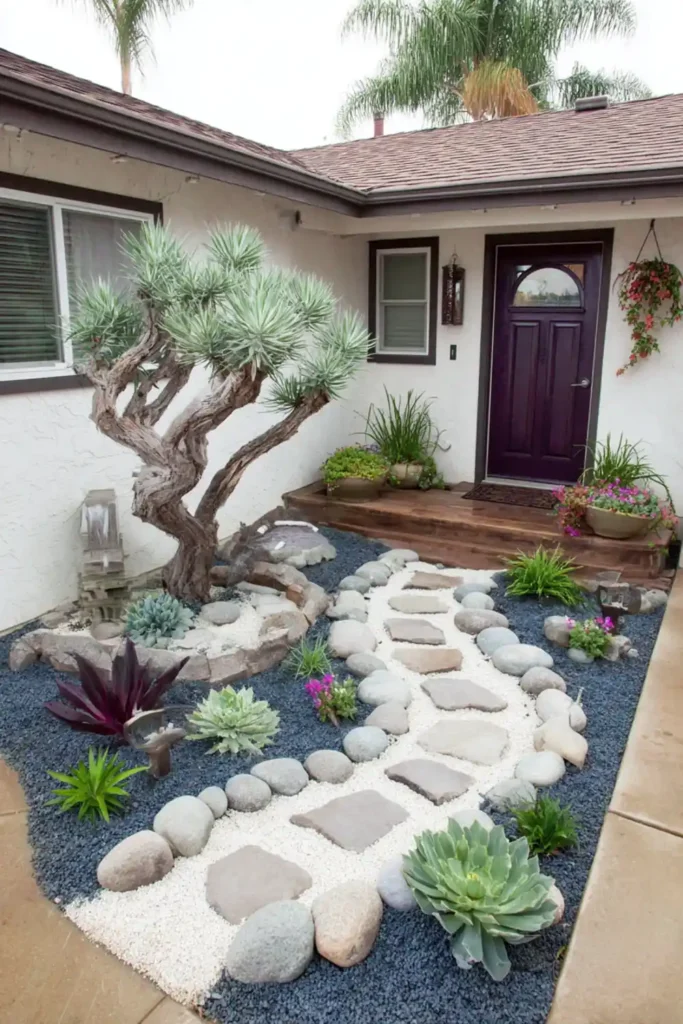
Natural Riverbed Landscaping with Native Plants and Soft Texture
If you’re looking for something low effort but still visually interesting, a riverbed-style layout works really well. Instead of a traditional lawn, this approach uses a mix of stones, gravel, and native plants to create a more natural flow across the yard.
What makes it stand out is the variation in texture. Smooth stones, small pebbles, and patches of greenery break up the space without making it feel busy. I’ve also seen tiny potted water features added near the entry, which bring a subtle sound and movement without needing a full pond.
If you try this, stick with plants that already do well in your climate. It reduces watering and maintenance. Start by making a gentle “dry stream” with stones, then add plants along the edges. It gives the yard a relaxed look while still feeling carefully designed.
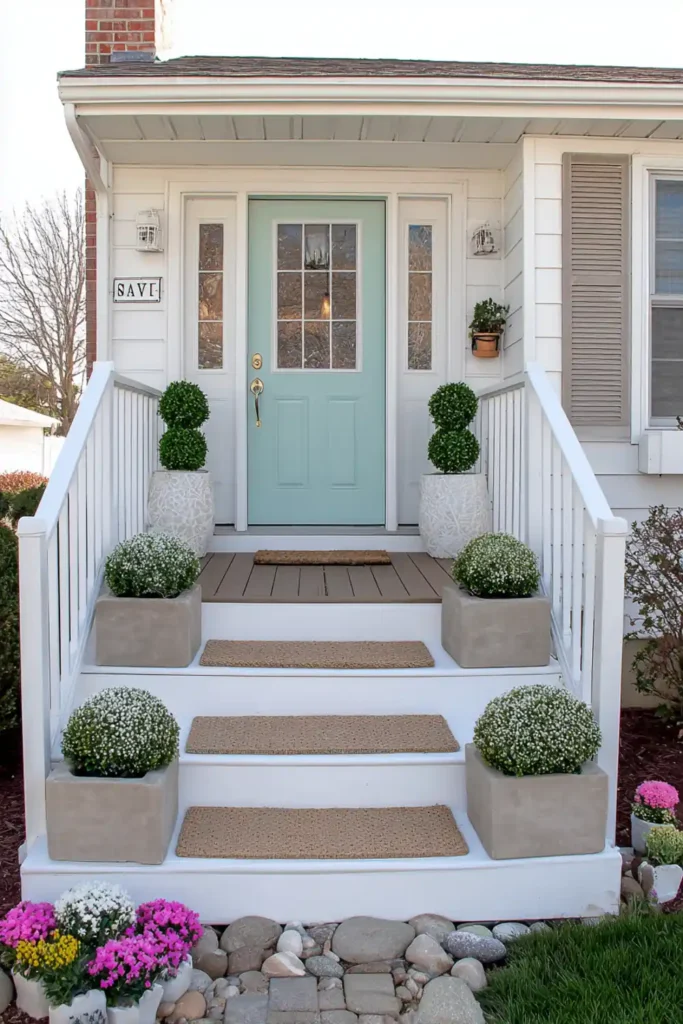
Potted Topiaries Framing the Front Door Entrance
Sometimes the simplest way to improve a front yard is to focus right at the entrance. A pair of potted topiaries on either side of the front door can instantly make the space feel more defined and welcoming.
Topiaries bring structure because of their shape, whether you go for classic round forms or something slightly taller. When placed in matching pots, they create a harmonious appearance that works with almost any home style. You can also layer in smaller flowers around the base for a bit of color.
If you don’t want to deal with trimming, you can choose slower-growing plants or even pre-shaped ones from a nursery. The secret is consistency—matching pots, equal spacing, and a clear frame around the door. It’s a small change, but it gives your entry a finished feel.
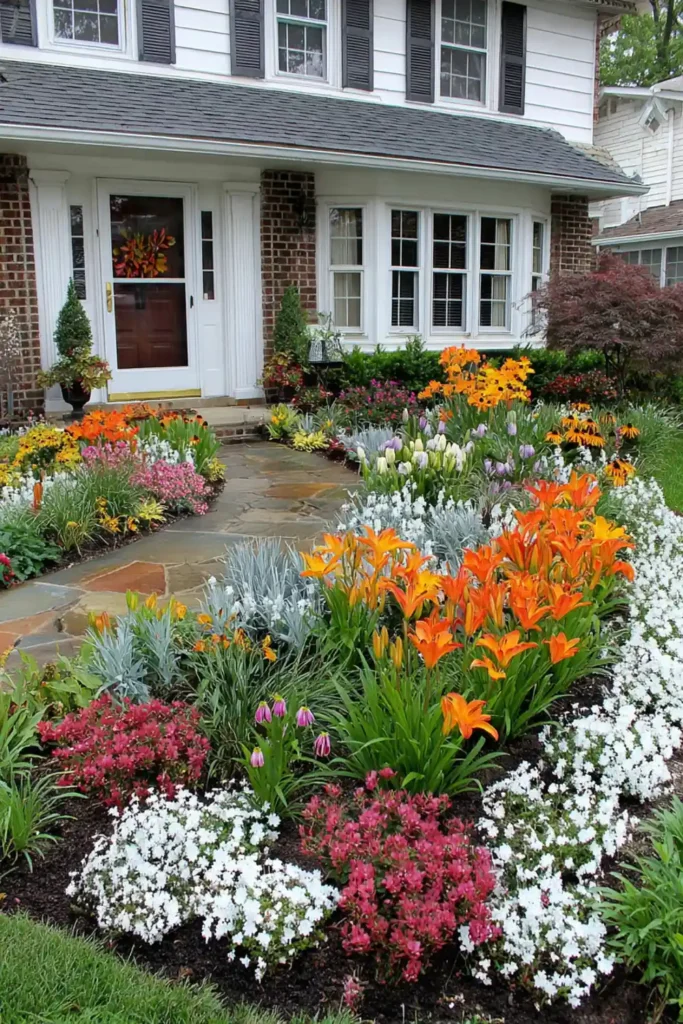
Wildflower Perennial Gardens for a Relaxed, Natural Look
A wildflower-style front yard is perfect if you prefer something less controlled and more natural. Instead of neat rows, this idea focuses on letting flowers grow in loose clusters, creating a soft, meadow-like effect.
The beauty here is in the mix—different heights, colors, and bloom times all working together. Over time, the space starts to feel full without needing constant replanting. It’s also a great way to attract pollinators, which adds even more life to the yard.
To keep it from looking overgrown, you can define the edges with a simple border or keep the wildflowers contained to one section of the yard. Even a small patch can make a big difference, especially when everything else around it stays clean and simple.
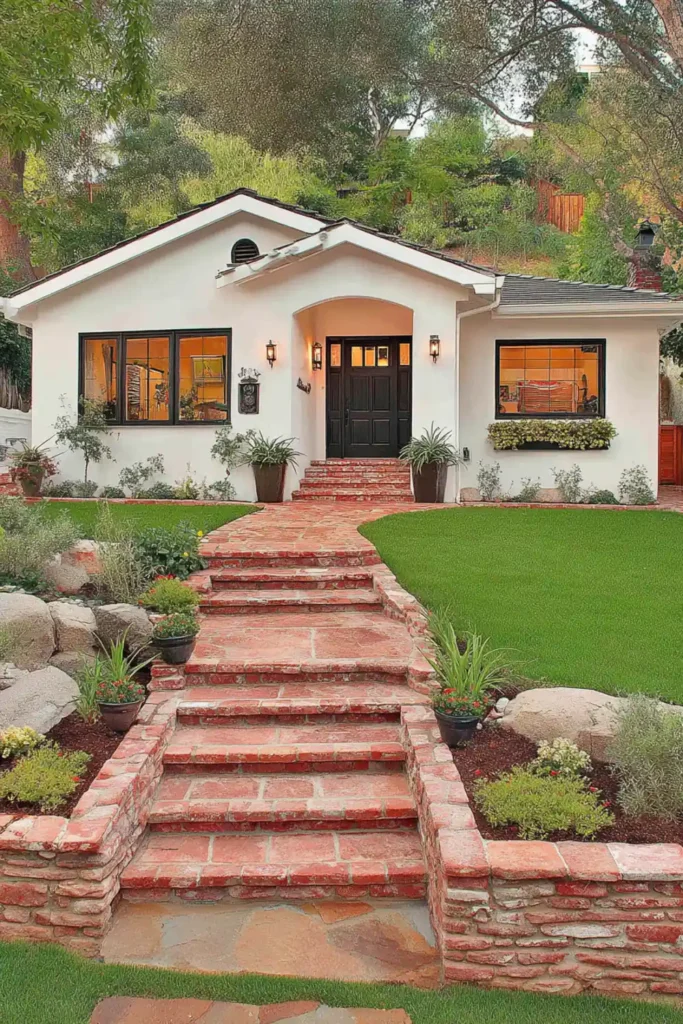
Brick Retaining Walls and Steps for Layered Yard Transitions
If your front yard isn’t completely flat, using that change in level can actually work in your favor. Brick retaining walls and a few simple steps can assist in breaking the space into layers, helping it feel more structured and easier to navigate.
Brick adds warmth and a bit of texture without feeling too bold. When combined with stone steps as well as wooden planters, it creates a nice balance between hard surfaces and greenery. Each level can then be used for different plants or small decorative features.
If you’re working with a slight slope, even a low retaining wall can make a difference. It helps keep soil in place and gives you a defined area for planting. Over time, this kind of layout makes the yard feel more intentional, rather than something you’re constantly trying to manage.
Colorful Plant Accents with Painted Pots and Ground Cover
If your front yard feels a bit flat, adding color in small, controlled ways can make a noticeable difference. Painted plant pots are an easy place to start. You can choose a single bold color or a small palette that complements your home, then repeat it in a few spots around the yard.
What helps this idea feel intentional is pairing those pops of color with softer elements like ground cover plants. Something like fuchsia or other low-growing greenery spreads gently across the soil and ties everything together without needing much maintenance.
A good approach is to keep the base of the yard neutral—gravel, mulch, or simple lawn—and then let the pots stand out. Place them near the entry, along a walkway, or around a seating spot. It’s a simple upgrade that adds character without causing the space to feel crowded.
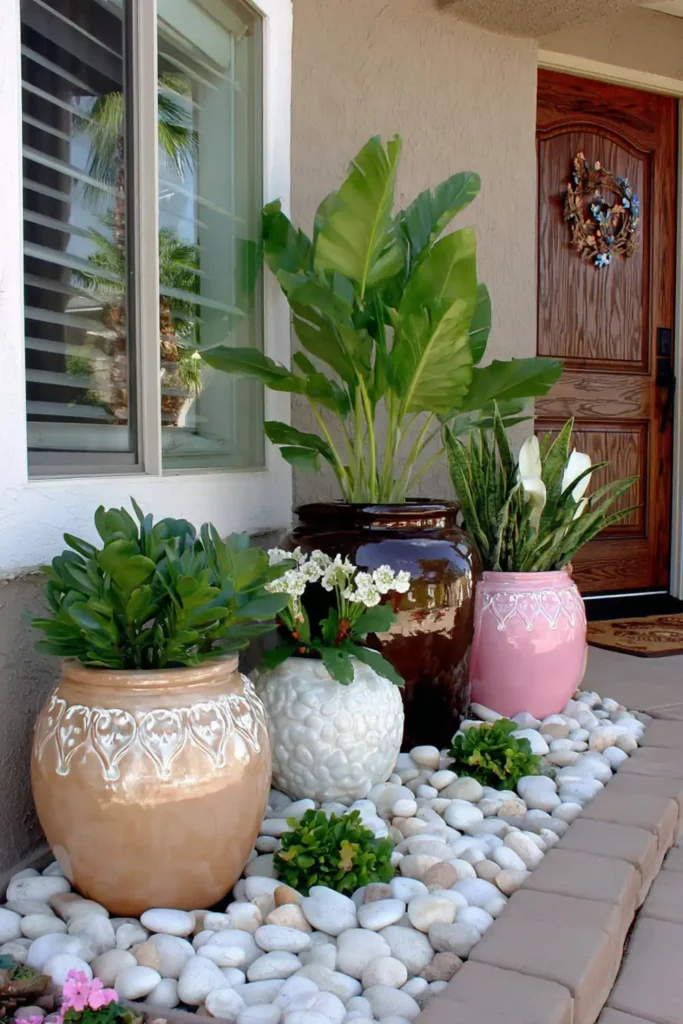
Sectioned Lawn Layouts for Small and Organized Front Yards
When a front yard is small, breaking it into sections can actually make it feel more usable and visually clear. Instead of one open area, you can divide the space into smaller zones for planting, walking, or simply an open lawn.
This can be done with subtle changes—like edging, low borders, or even just different ground materials. A small patch of grass next to a planted bed and a walkway gives the yard a sense of structure without adding clutter.
If you’re planning this layout, think about how you move through the space. Keep pathways clear and use planting areas to guide the eye rather than block it. Even a few defined sections can make a modest front yard seem more organized and easier to maintain.
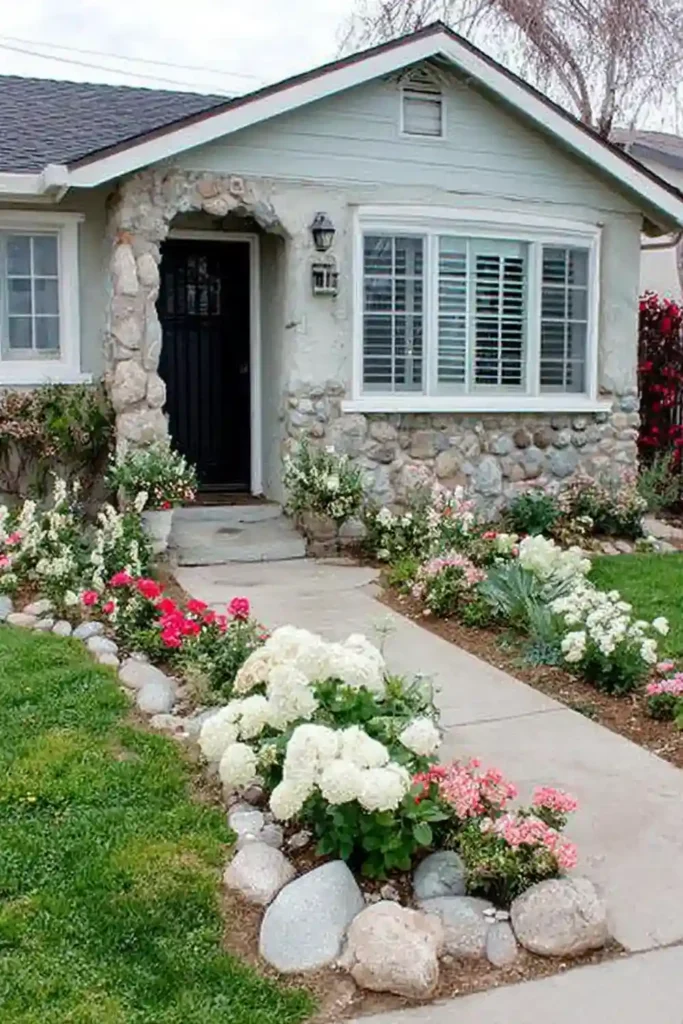
Simple Grand Entrance with Large Potted Plants
You don’t need a large yard to create a strong first impression. Focusing on the entrance itself can be enough. A couple of large plant pots placed near the front steps, as well as the doorway, can make the entry feel more prominent.
The key here is scale. Bigger pots anchor the space and draw attention without needing extra decoration. Seasonal plants like mums or small shrubs work well because they add fullness and can be swapped out throughout the year.
Try placing the pots slightly away from the door rather than right against it, so there’s still room to move comfortably. When paired with a clean walkway and a tidy porch, this setup makes your home feel welcoming from the moment someone walks up.
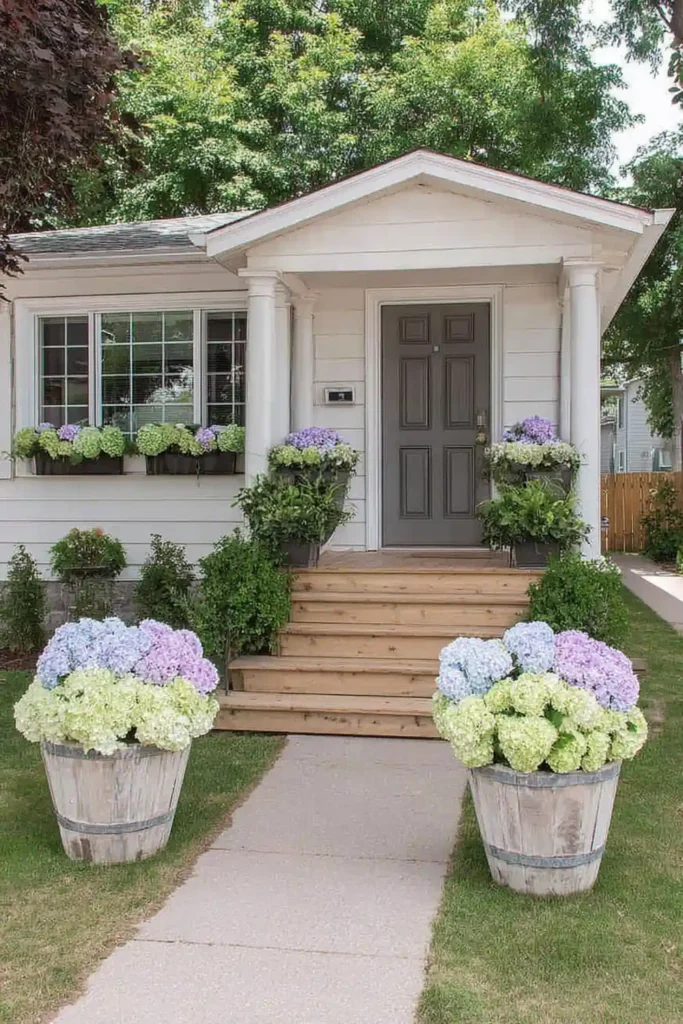
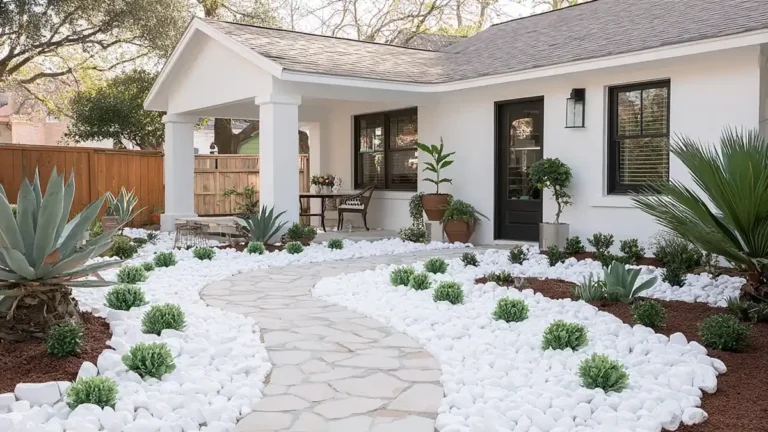
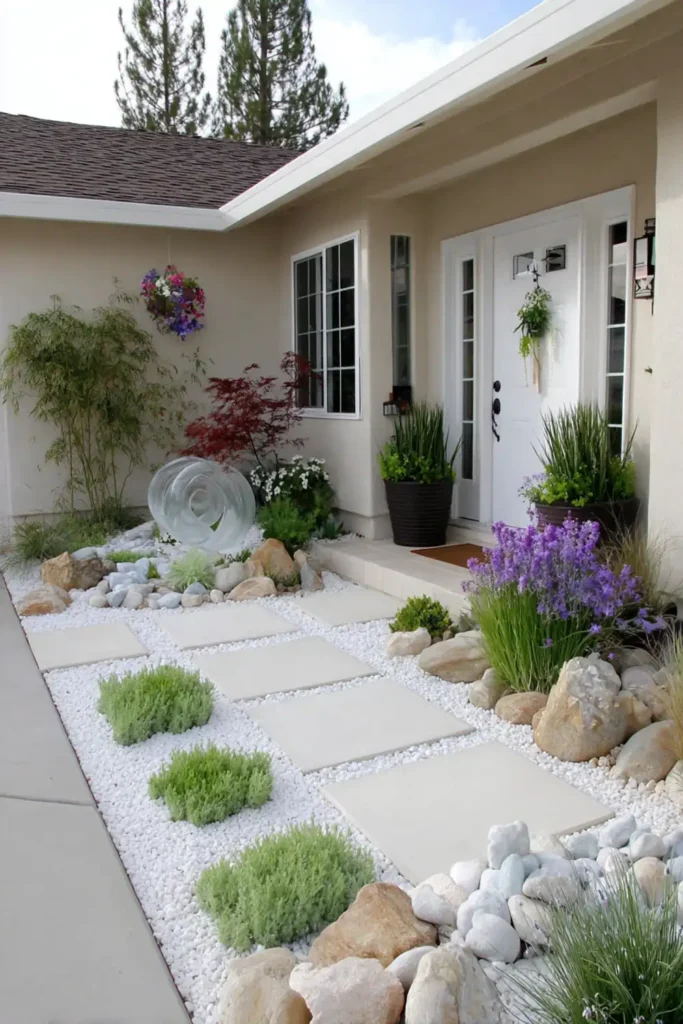
Clean Xeriscape Landscaping for Low-Water Front Yards
If you’re looking to cut down on watering and maintenance, a simple xeriscape layout is worth considering. This style focuses on using gravel, stone, and drought-tolerant plants to create a clean, modern look.
What I like about this approach is how structured it feels. Straight lines or clearly defined planting zones keep everything neat, even with minimal greenery. The contrast between hard surfaces and a few carefully placed plants gives the yard a calm, uncluttered appearance.
To make it work at home, start with a base layer such as gravel or small stones, then add a few hardy plants spaced out across the area. Do not overfill the space—leaving some open ground is what makes this style feel balanced and easy to manage.
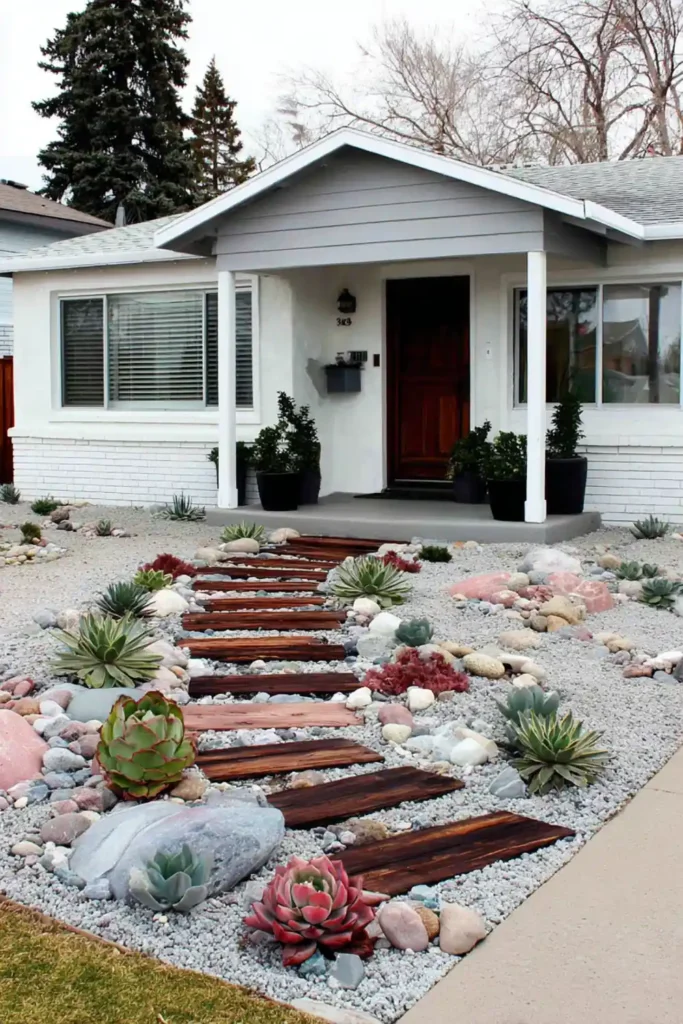
Creative Xeriscape Designs with Modern Layouts
Once you get comfortable with basic xeriscaping, you can take it a step further by playing with shapes and layout. Instead of straight sections, try using angled lines or geometric patterns to divide gravel, stone, and planting areas.
This works especially well with modern homes, where clean lines already exist in the architecture. A few carefully placed plants—like sculptural shrubs or low clusters—can act as centerpieces without crowding the design. The empty space around them is just as important as the plants themselves.
If you’re trying this, sketch out a simple plan before starting. Even small changes in angles can affect how the yard feels. Keeping the design intentional helps the space look organized rather than random.
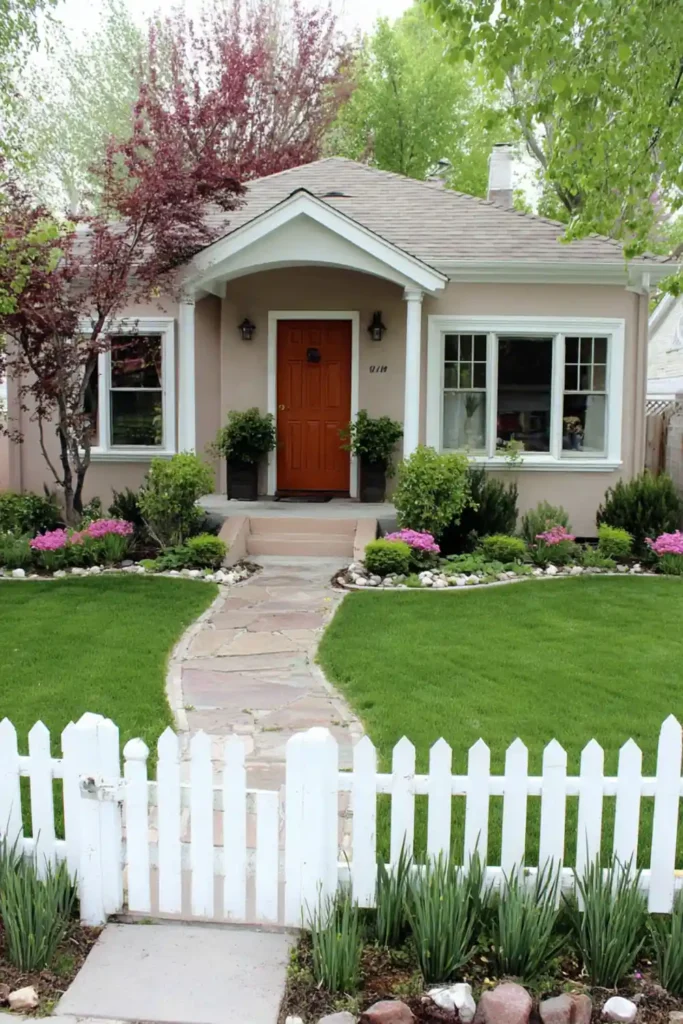
White Picket Fence with a Bold Red Door Focal Point
Pairing a white picket fence with a vivid front door color creates a strong visual anchor for your yard. The fence sets a clean, classic tone, while something like a red door adds character without needing extra decoration.
The contrast between white wood and a bright door works best when the surrounding landscaping is kept simple. A few well-groomed shrubs or low plants are enough to frame the space without competing for attention.
If your home already has neutral siding, this is an easy upgrade. Repainting the door can be done in a weekend, and it instantly gives the front yard a clear center that ties everything together.
Clean Edging Landscaping for a Polished Front Yard Finish
Edging might not seem like a great detail, but it’s one of the easiest ways to make a front yard look neat. Defined borders between grass, flower beds, and pathways give everything a clear place.
Materials like stone, brick, or even metal edging can be used depending on the design of your home. What matters most is keeping the lines consistent and tidy. Even simple straight edges can make the yard feel more maintained.
If you’re updating your yard, start by outlining one area—like a flower bed—and build from there. Once you see the difference, it becomes easier to extend the same clean lines across the rest of the space.
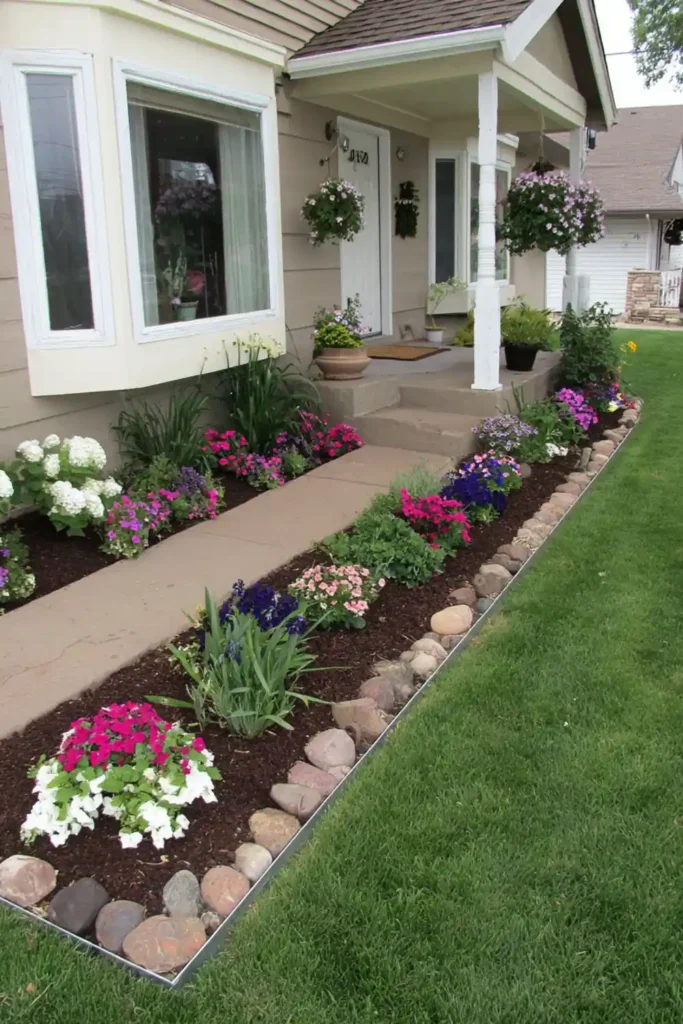
Bright Flower Borders Along Walkways and Sidewalks
Adding flowers along a walkway is one of the simplest ways to bring life into a front yard. A narrow border filled with colorful plants can completely change how the path appears without taking up much space.
The key is choosing a mix of flowers that bloom at different times, so there’s always something showing. Pair them with a few shrubs or small trees for height, and use rocks or edging to keep everything contained.
If you’re working with a modest yard, keep the border slightly raised or defined so it doesn’t blend into the lawn. This helps the flowers stand out and keeps the overall layout feeling organized rather than scattered.
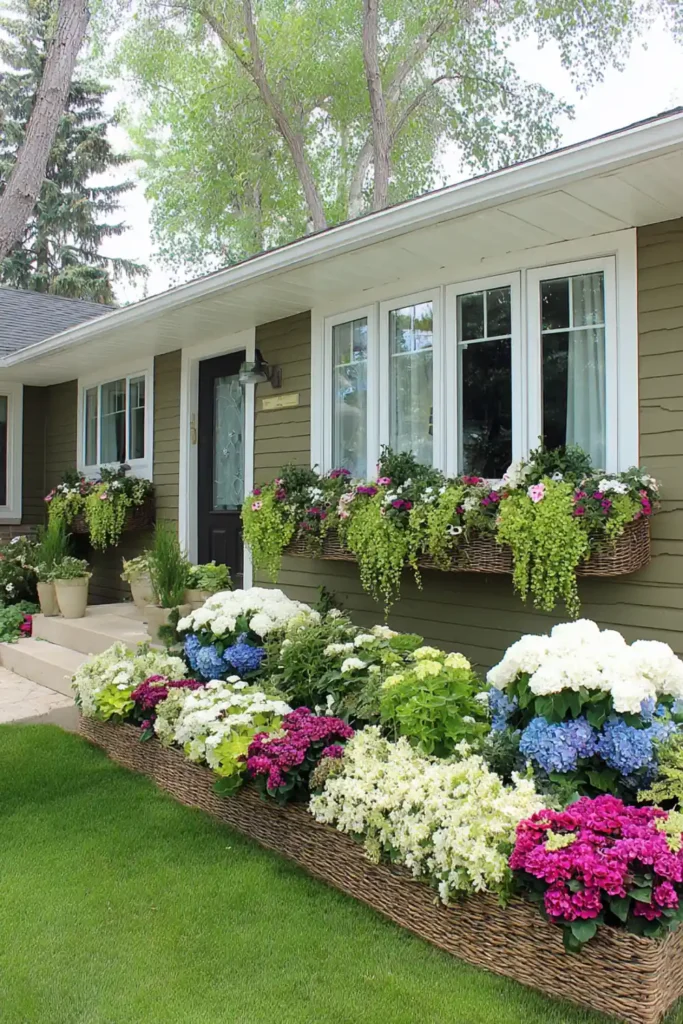
Window Boxes Filled with Cascading Seasonal Blooms
Window boxes are one of those small details that make a house feel more lived-in. Even a simple box under each window, filled with flowers that spill over the edges, adds softness to the front of the home.
What works well here is layering. Taller plants in the back, fuller ones in the middle, and trailing blooms in the front create dimension without needing a lot of space. It also lets you switch things out seasonally without changing the structure.
If you’re installing window boxes, make sure they’re securely mounted and sized to match your windows. Keeping them consistent across the house makes everything more put together, even if the plant choices change throughout the year.
Vertical Landscaping with Trees and Climbing Flowers
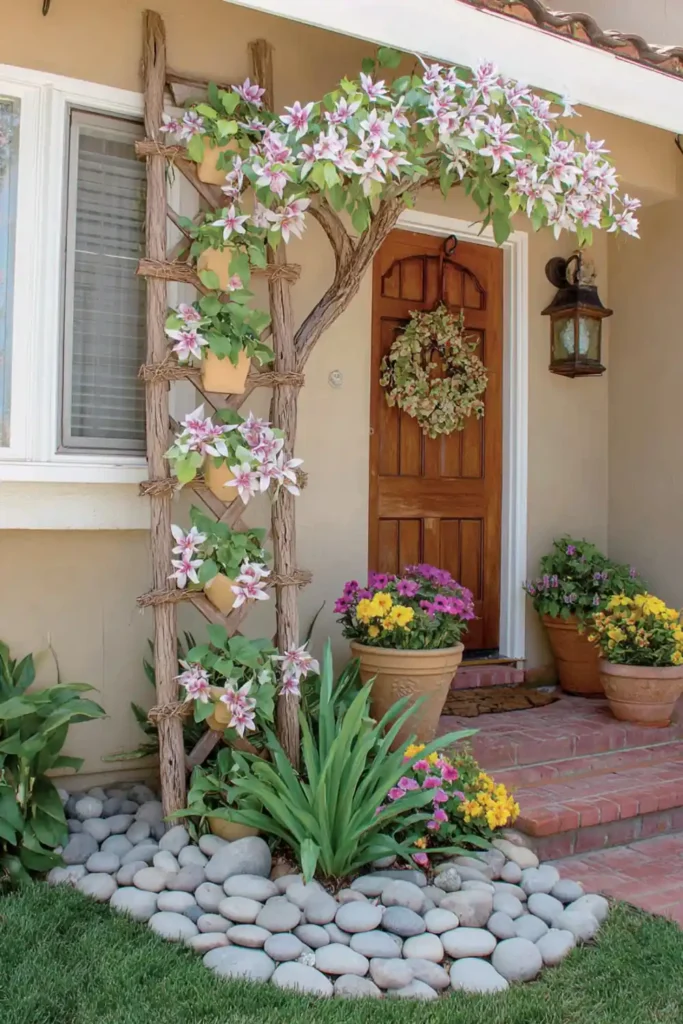
When space is limited, using height instead of width can make a big difference. A small flowering tree or climbing plants along a wall or trellis draws the eye upward and adds interest without crowding the ground.
This kind of vertical detail works well near the entry or along the sides of the house. It breaks up flat surfaces and adds a natural layer that seems more dynamic than just low planting.
If you’re adding climbing flowers, give them proper support from the start. A simple trellis or wall-mounted structure holds everything organized as the plants grow. Over time, it creates a fuller look without needing to expand your garden beds.
Asian-Inspired Front Yard with Stone and Minimal Planting
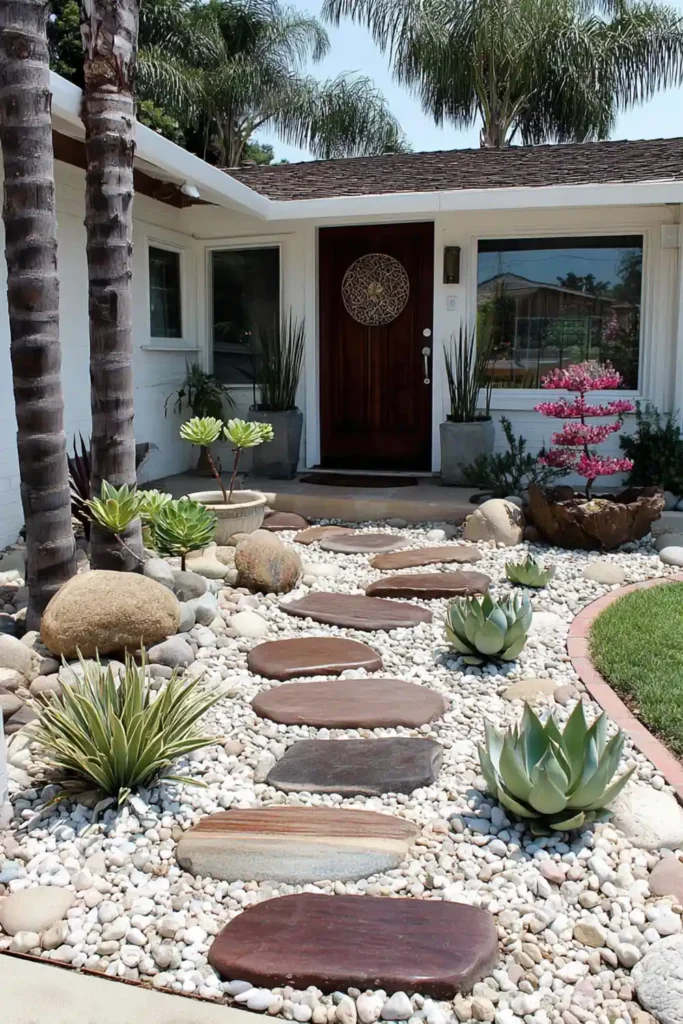
An Asian-inspired layout focuses on simplicity and balance. Instead of filling every space, it uses a few carefully placed elements—like stone, gravel, and select plants—to create a calm, uncluttered feel.
The materials are usually natural and understated. Smooth stones, simple pathways, and a limited number of plants keep the design grounded. The goal isn’t to impress with quantity, but to create a quiet, thoughtful space.
If you want to try this style, start by reducing rather than adding. Choose one or two focal points and build around them. Keeping the layout simple helps the yard feel peaceful and easy to maintain.
Hanging Flower Baskets Under Eaves for Soft Color Layers
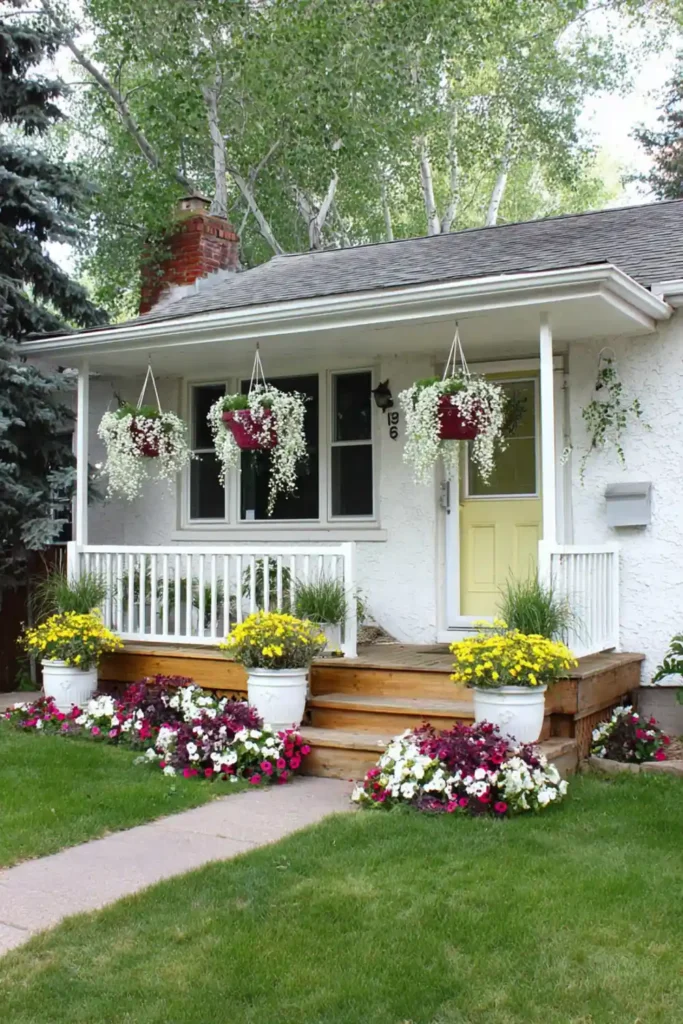
Hanging baskets are an easy way to add color without taking up ground space. Placed under eaves or along a porch, they bring life to areas that might otherwise feel empty.
The movement of the plants—especially when they hang and sway slightly—adds a softer touch compared to more structured planting. It also lets you add seasonal flowers without changing your main landscaping.
To keep things looking balanced, space the baskets evenly and choose similar styles. You don’t need many—just a few placed in the right spots can make the front of your home feel more inviting.
Low-Maintenance Boxwood Shrubs for a Neat Look
If you want your front yard to stay tidy without constant work, boxwood shrubs are a trustworthy selection. They naturally hold their shape and can be trimmed into clean forms that give the yard a structured look.
What I like about using boxwoods is how flexible they are. You can line them along a walkway, frame a flower bed, or use them as small focal points near the entrance. Their deep green color also pairs well with almost any other plant.
For a modest yard, keeping the shapes simple works best. Light trimming once or twice a season is usually enough. Over time, they help preserve that clean, organized feel without needing much attention.
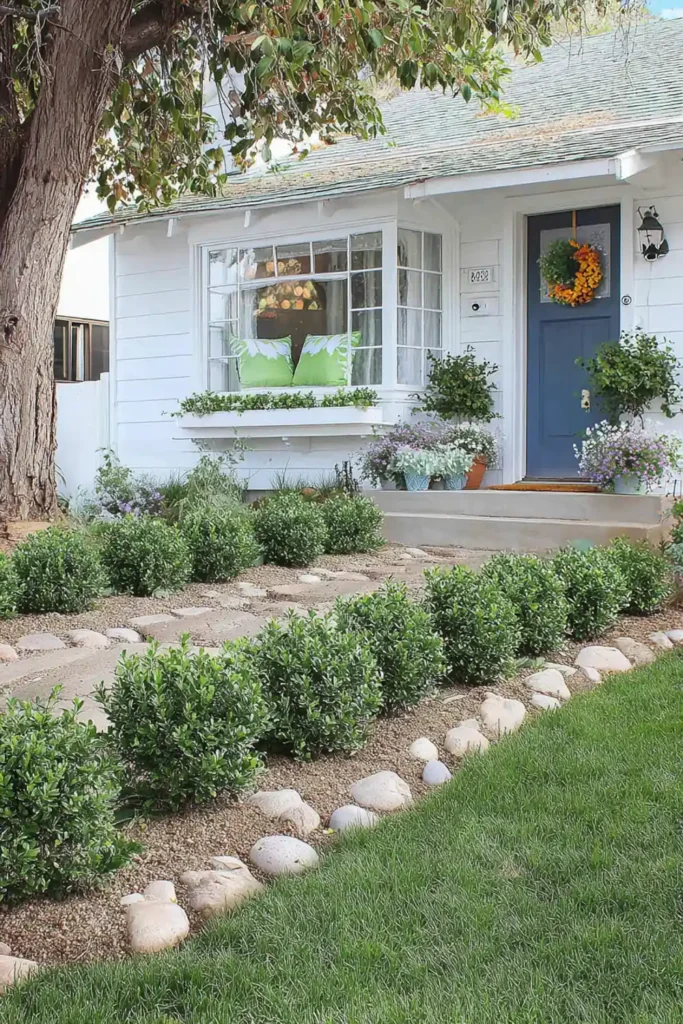
Front Yard Rose Garden Along Walkways and Windows
A rose garden can feel surprisingly approachable when it’s kept simple. Placing rose bushes along a walkway or beneath front windows creates a natural path of color and scent without dominating the space.
Roses add a bit of height and fullness, which helps break up flat areas of lawn. When spaced properly, they allow airflow and keep maintenance manageable. You don’t need dozens—just a few well-placed plants can make a strong impression.
If you’re adding roses, choose varieties that suit your climate and don’t require too much care. Keeping them in a defined line or cluster helps the yard feel intentional instead of crowded.
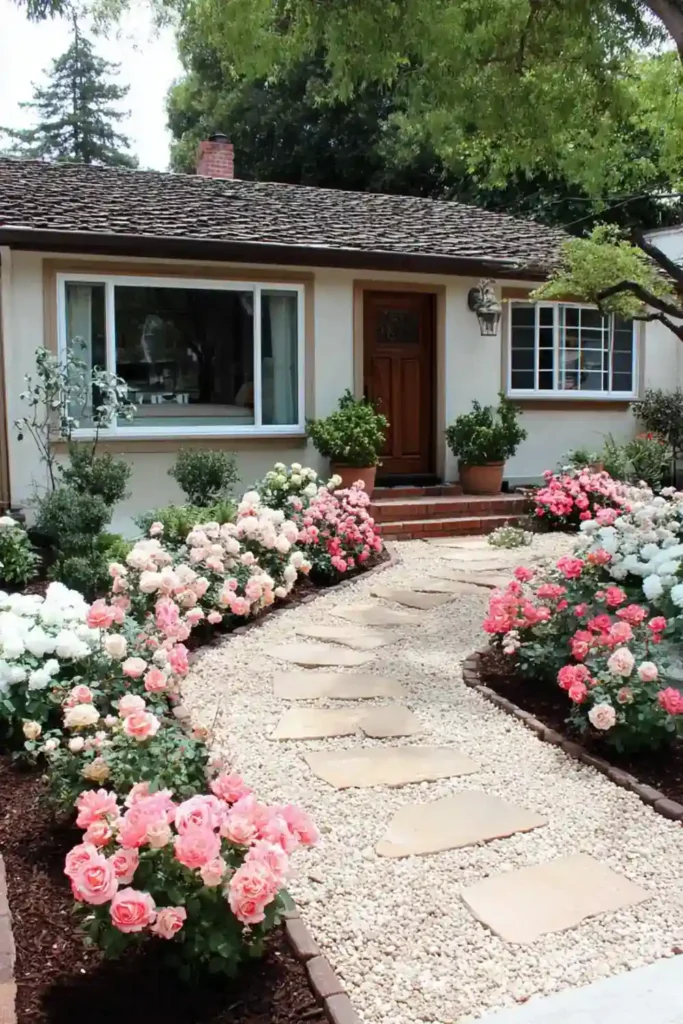
Subtle Window Boxes with Herbs and Small Blooms
If you prefer something more subdued than bold flowers, subtle window boxes can still add attraction without drawing too much attention. Using smaller plants like herbs, pansies, or petunias keeps the look soft and practical.
These boxes work especially well if your home already has other strong features, like a bright door or detailed siding. They support the overall look without competing with it.
A simple tip is to use rot-resistant materials for the boxes so they last longer outdoors. Keeping the plants trimmed and refreshed assists in maintaining a neat appearance throughout the season.
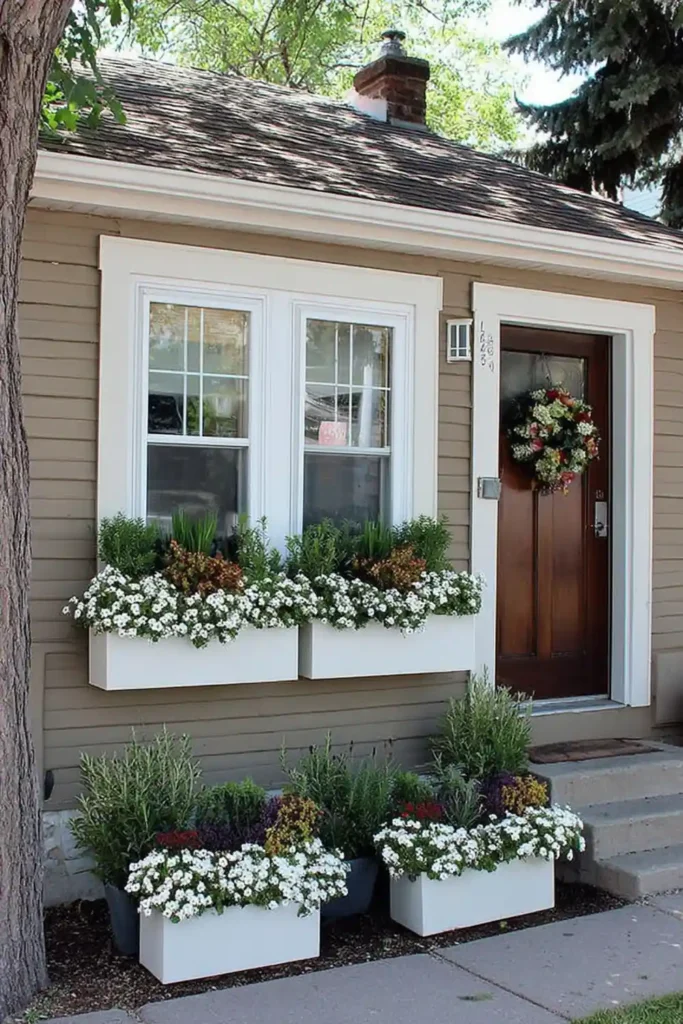
Raised Flower Beds for Structured Planting Areas
Raised flower beds are a great way to bring order to your front yard, especially if the ground is uneven or hard to work with. They clearly define where plants belong and make everything easier to maintain.
You can build them from wood, stone, or other sturdy materials, depending on the design of your home. Once in place, they give you control over soil quality and layout, which helps plants grow more consistently.
For a modest setup, even one or two raised beds can make a difference. Place them near the entry or along a walkway to create a focal point, and keep the planting simple so the structure itself stands out.
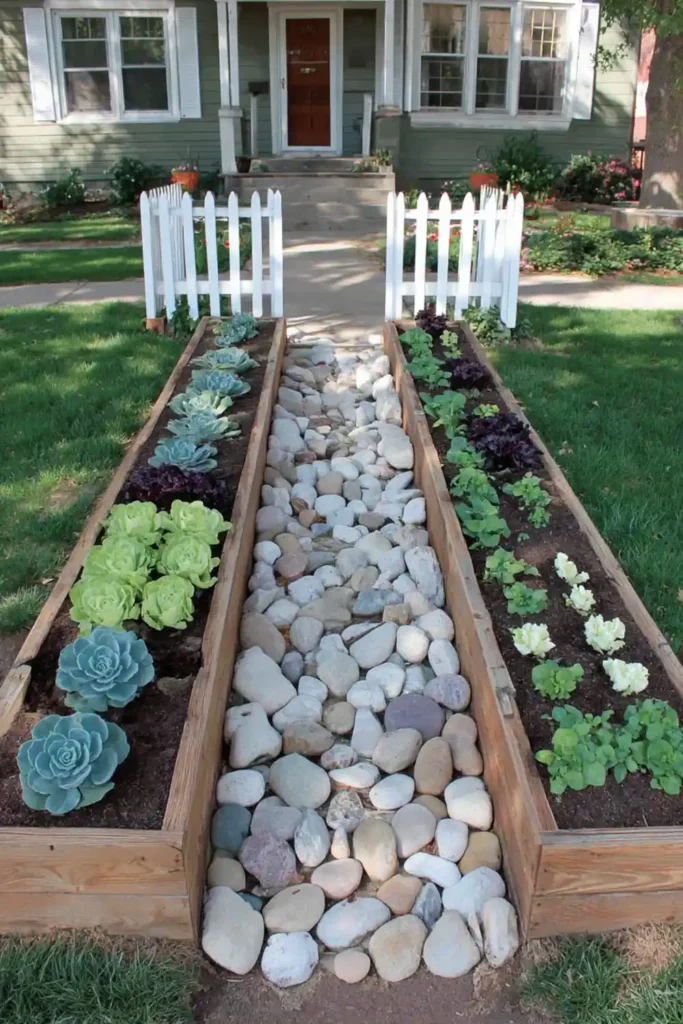
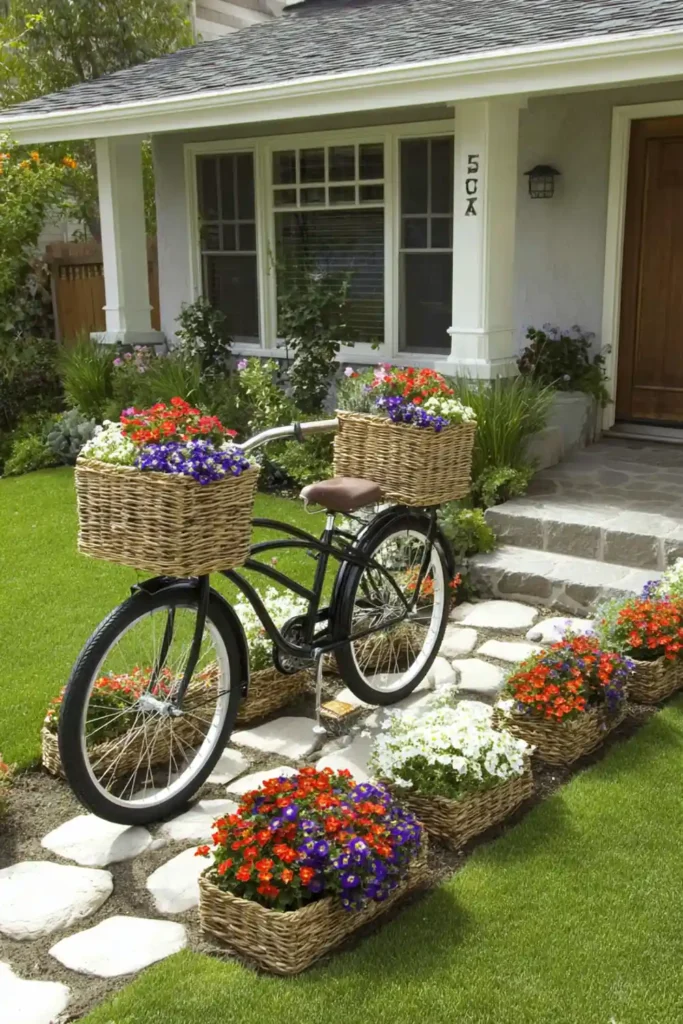
DIY Bicycle Planter for a Charming Vintage Touch
Using an old bicycle as a planter is one of those ideas that instantly adds character without much cost. It works especially well in a modest front yard because it becomes a focal point without taking up too much space.
The setup is simple—attach baskets to the front and back, then fill them with potted flowers or moss for a softer base. The metal frame adds a bit of structure, while the plants bring in hue and vitality.
If you’re trying this, place the bicycle where it’s visible but not in the way, like near a walkway or along the edge of the yard. Keeping the surrounding area simple helps the piece stand out without causing the space to feel cluttered.
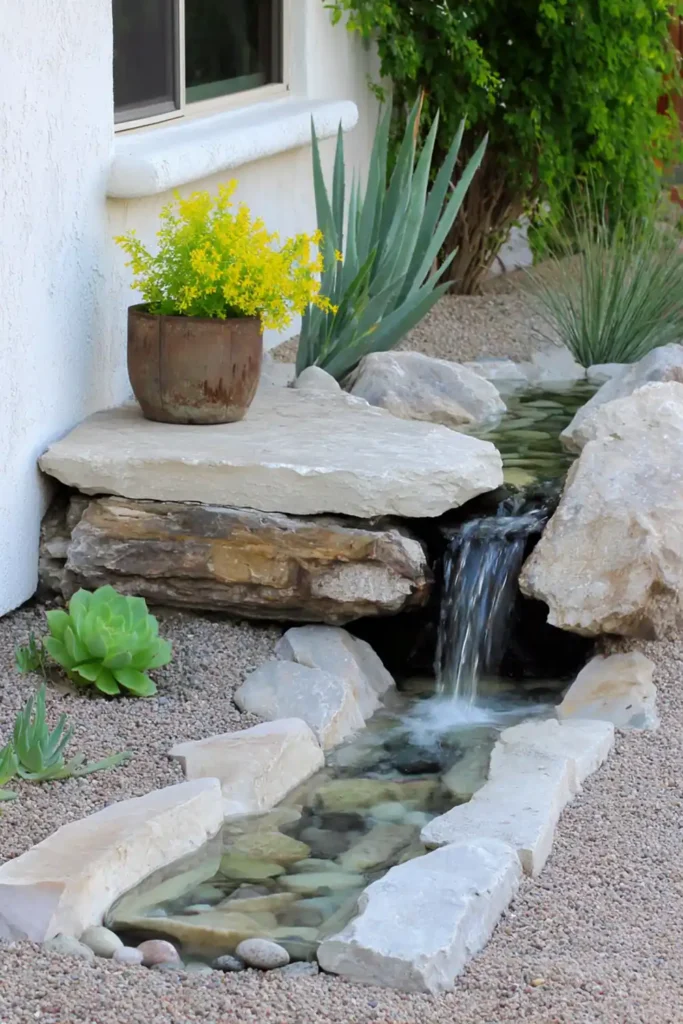
Pondless Water Feature for Gentle Movement Clutter-Free
A water feature can make a yard feel more alive, but not everyone wants the upkeep of a pond. A pondless design gives you the sound and movement of water without the extra maintenance.
These features usually have a hidden basin below the surface, so all you see is water flowing over stones or a small decorative element. It blends easily into natural landscaping and doesn’t take up much room.
If you’re adding one, keep it close to the entry or seating area where the sound can be enjoyed. Even a small feature can change the atmosphere, making the front yard feel more relaxed without adding complexity.
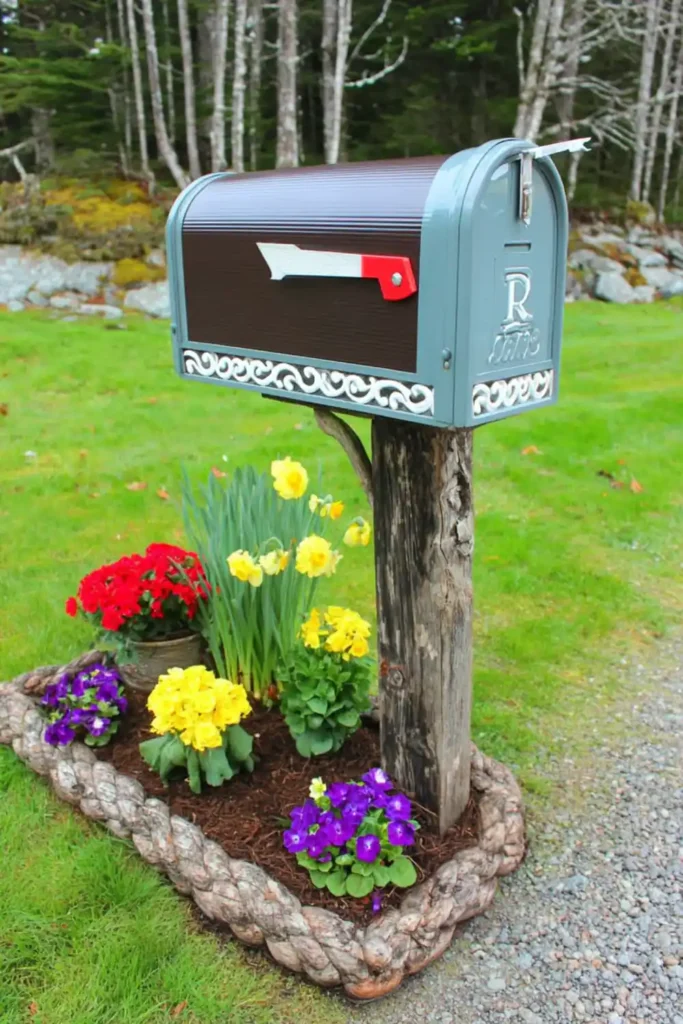
Decorated Mailbox with Simple Plant Accents
The mailbox is often overlooked, but it’s one of the first things people see from the street. Adding a bit of decoration around it can make the front yard feel more complete.
This can be as simple as planting a few flowers at the base or adding a small border to define the area. You don’t want anything elaborate—just enough to connect it visually to the rest of the yard.
Keeping the design consistent with your other plants and materials helps everything sound tied together. It’s a small detail, but it adds a finished touch that’s easy to maintain.
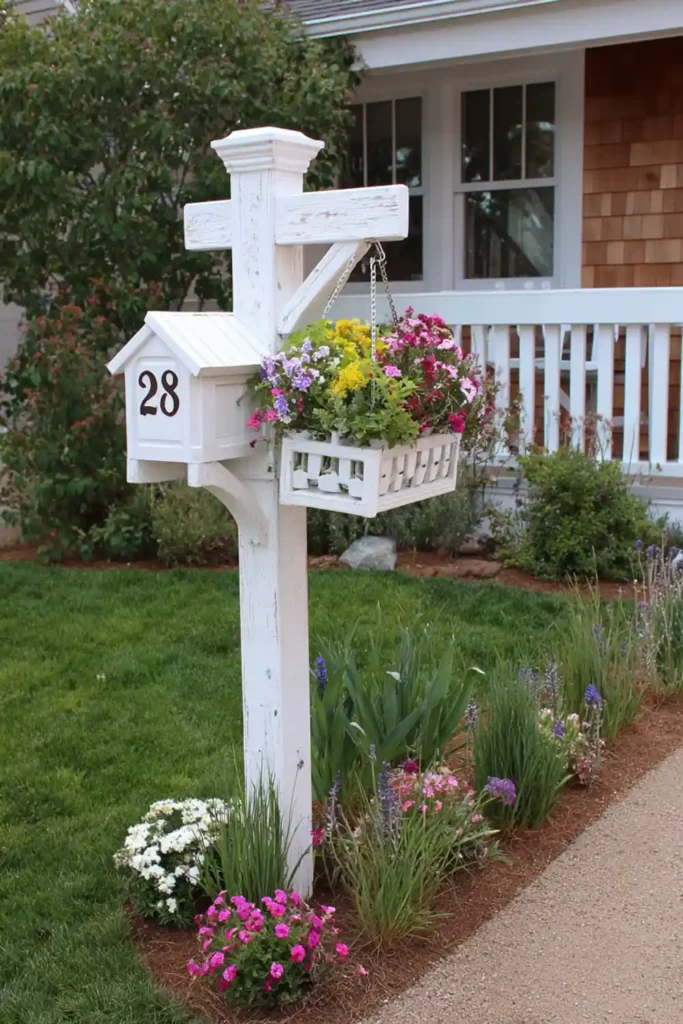
Address Post with Hanging Planter for a Personalized Entry
An address post doesn’t have to be purely functional. With a hanging planter or a few decorative touches, it can become part of the overall design.
A simple post with clearly visible numbers, paired with a small planter, adds both usefulness and charm. It also helps visitors find your home more easily while giving the yard a bit of personality.
Place it near the front of the property where it’s easy to see, and keep the surrounding area clean so it stands out. It’s a small addition, but it makes the front yard feel more thoughtful and complete.
Lattice Trellis with Climbing Vines for Vertical Interest
A lattice trellis is one of the easiest ways to add height without taking up extra ground space. It works especially well along a wall, near the entry, or even as a divider between sections of the yard.
Once climbing plants start to grow, the trellis becomes a living feature. Flowers or vines fill in the gaps over time, creating a soft layer that breaks up flat surfaces like siding or fences. It adds dimension without needing more planting beds.
If you’re installing one, make sure it’s secure and placed where plants can get enough sunlight. Choose climbers that suit your climate and won’t grow too aggressively. With a little patience, this becomes one of those details that improve the yard year after year.
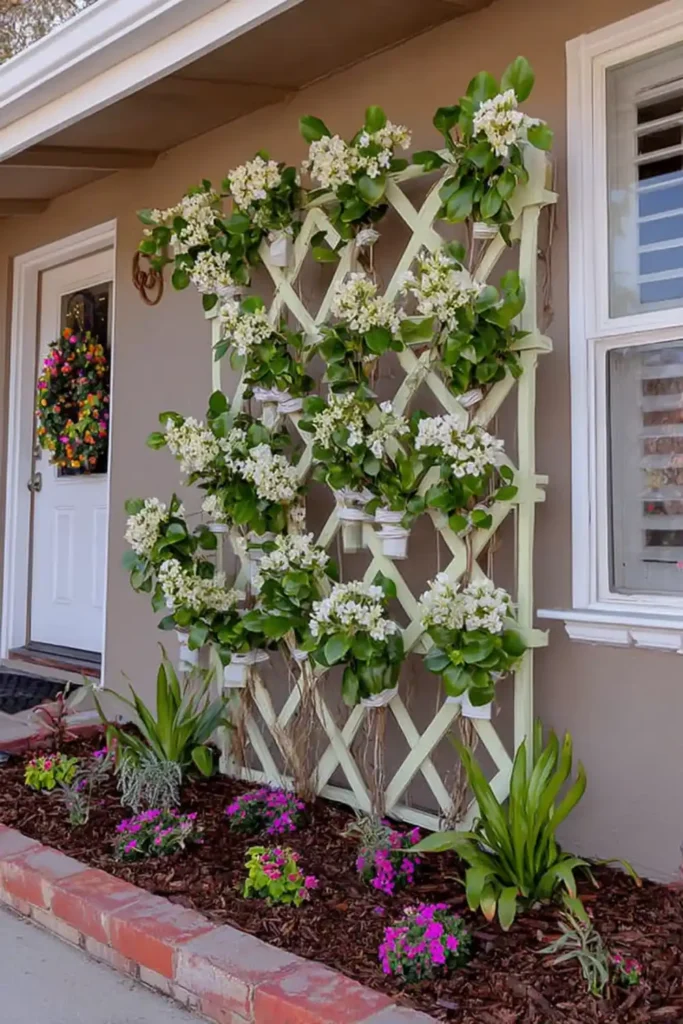
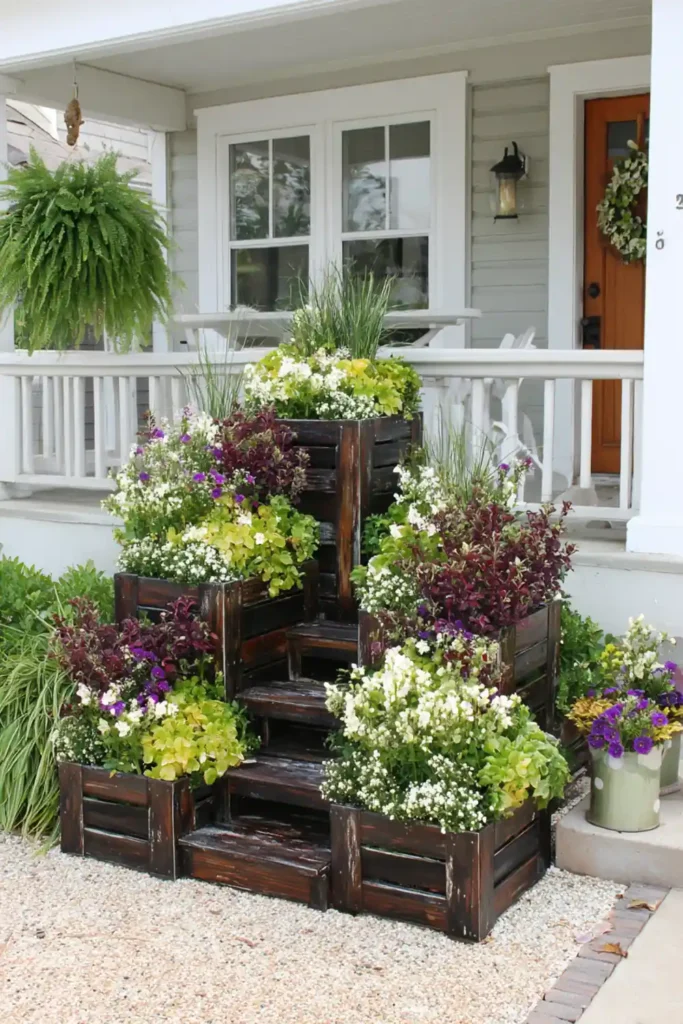
Tiered Planters for Compact and Layered Greenery
Tiered planters are perfect when you want more greenery but don’t have much space to spread out. By stacking plants vertically, you can create a fuller look without expanding your planting area.
This setup works well near the front door, along a walkway, or even in a corner that feels empty. Each level can hold different types of plants—flowers, herbs, or small shrubs—giving the arrangement a bit of variety.
If you’re using multiple tiers, try to keep the colors and pot styles consistent so it doesn’t feel busy. Even a small stack of planters can make a noticeable difference, especially in a modest front yard.
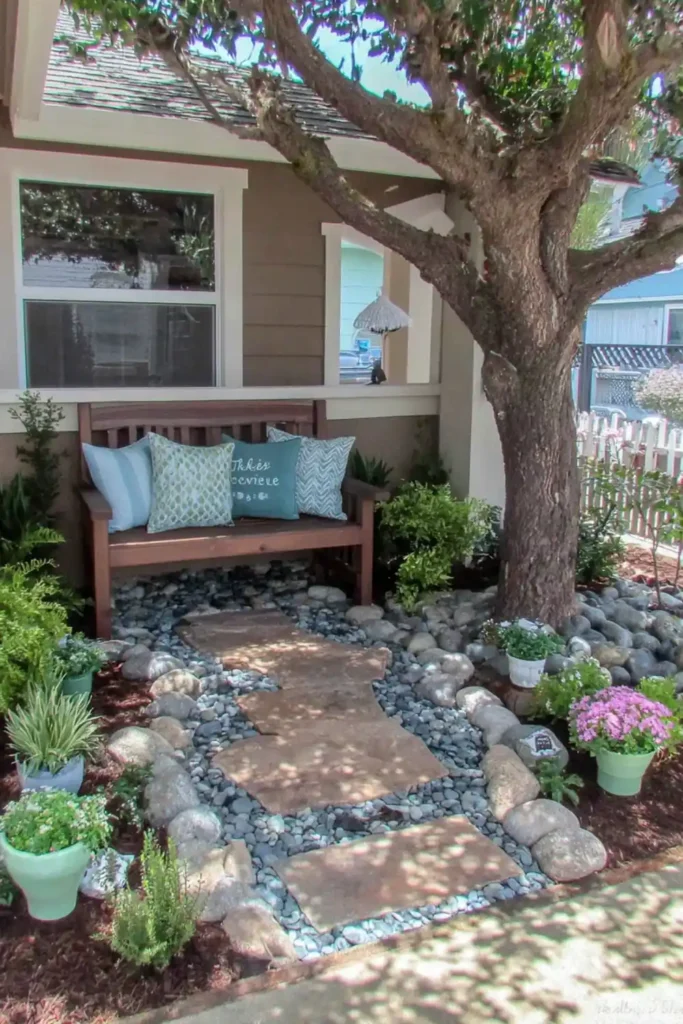
Repurposed Barrel Planter with Mixed Flowers and Texture
An old barrel can be turned into a sturdy planter that adds both texture and character to the yard. The natural wood brings warmth, while the round shape softens the look of straight lines around it.
You can divide the barrel into sections or simply fill it with a combination of flowers and greenery. Combining different plant types—some taller, some trailing—creates a layered effect that feels full without being overcrowded.
Place it near the entrance or along a pathway where it can be easily seen. It’s a simple way to reuse materials by adding something that has a bit more personal than a standard planter.
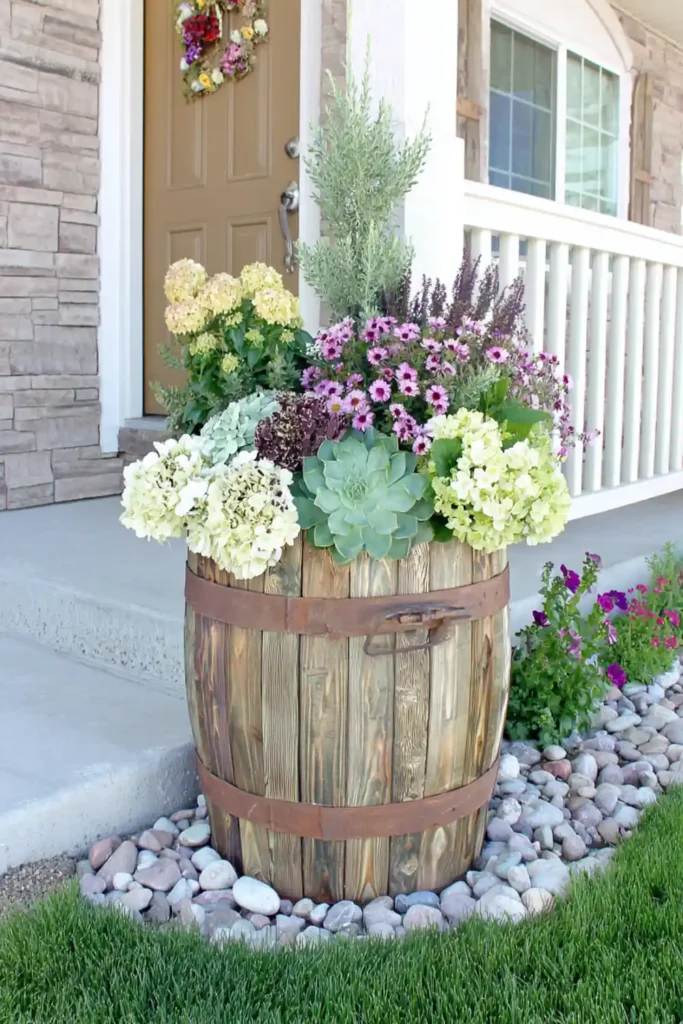
Stylish Paver Walkway That Defines the Front Yard Layout
A well-defined walkway helps organize the entire front yard. Using pavers instead of plain concrete adds texture and makes the path feel more connected to the surrounding landscape.
The layout can be straight for a clean look or slightly curved to soften the space. Either way, the walkway becomes a guide that leads visitors naturally to the front door.
If you’re installing one, pay attention to positioning and alignment. Even gaps between pavers or a consistent pattern make a big difference in how finished the path looks. Paired with simple planting along the edges, it helps tie the whole yard together.
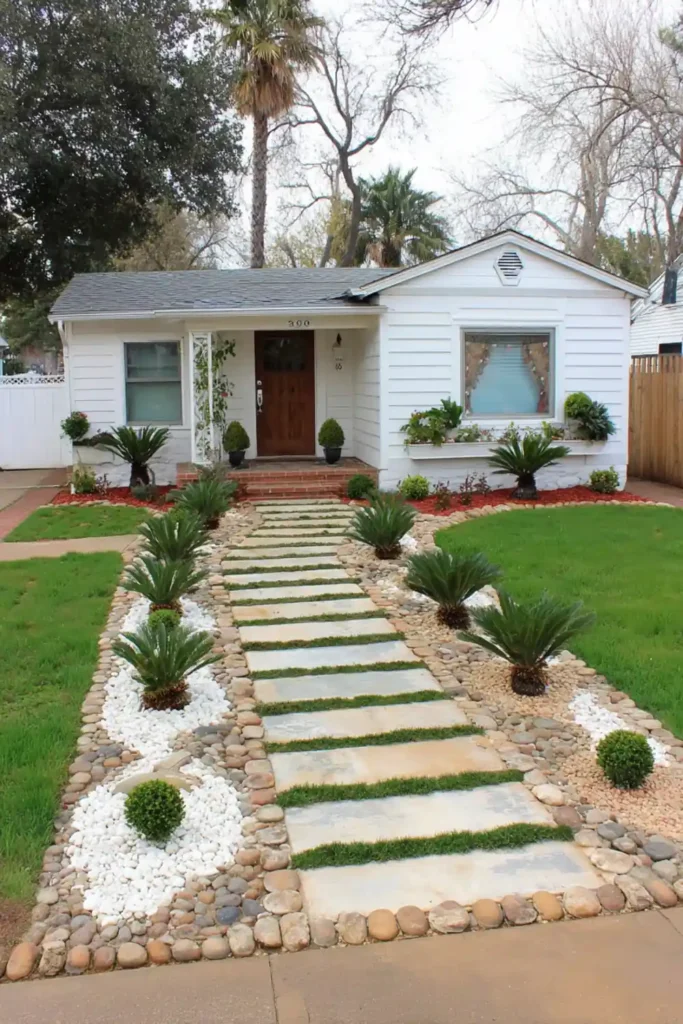
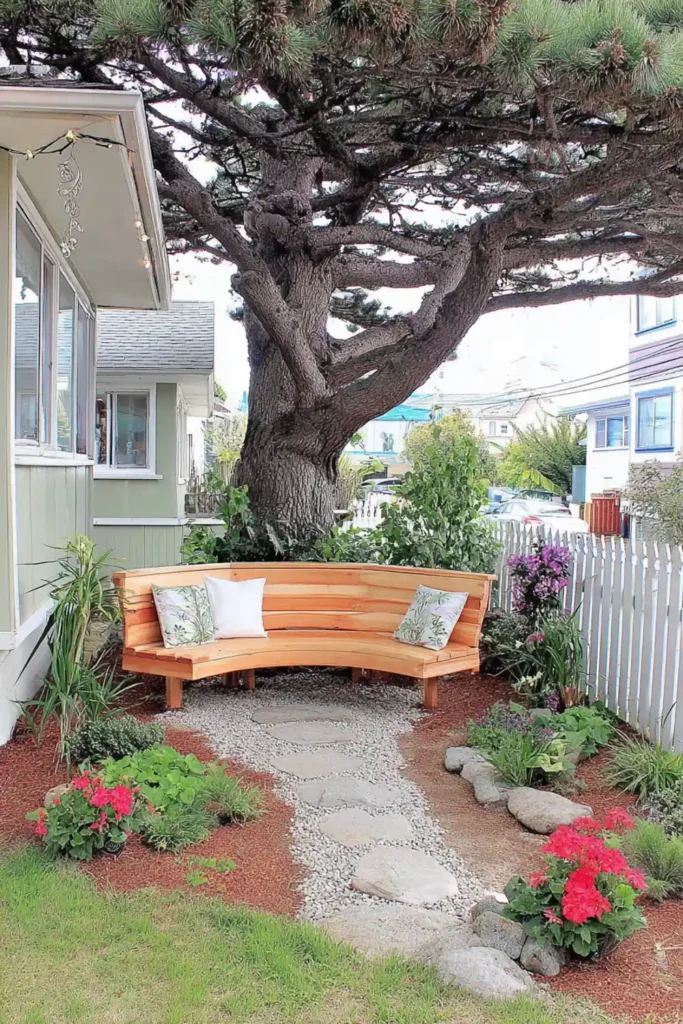
Cozy Front Yard Sitting Area with a Simple Bench
A small sitting area can completely change how your front yard is used. Even a single handmade bench tucked into a corner gives the space a purpose beyond just looking nice.
I’ve found that placing it near a tree or along the edge of the yard works best. A bit of shade and a few nearby plants make it feel more comfortable and connected to the surroundings. It doesn’t need much—just a solid bench and a clear spot to sit.
If you’re adding one, keep the area around it simple so it doesn’t feel crowded. A small patch of gravel or a few stepping stones can define the space. It turns the yard into somewhere you might actually spend time, not just walk through.
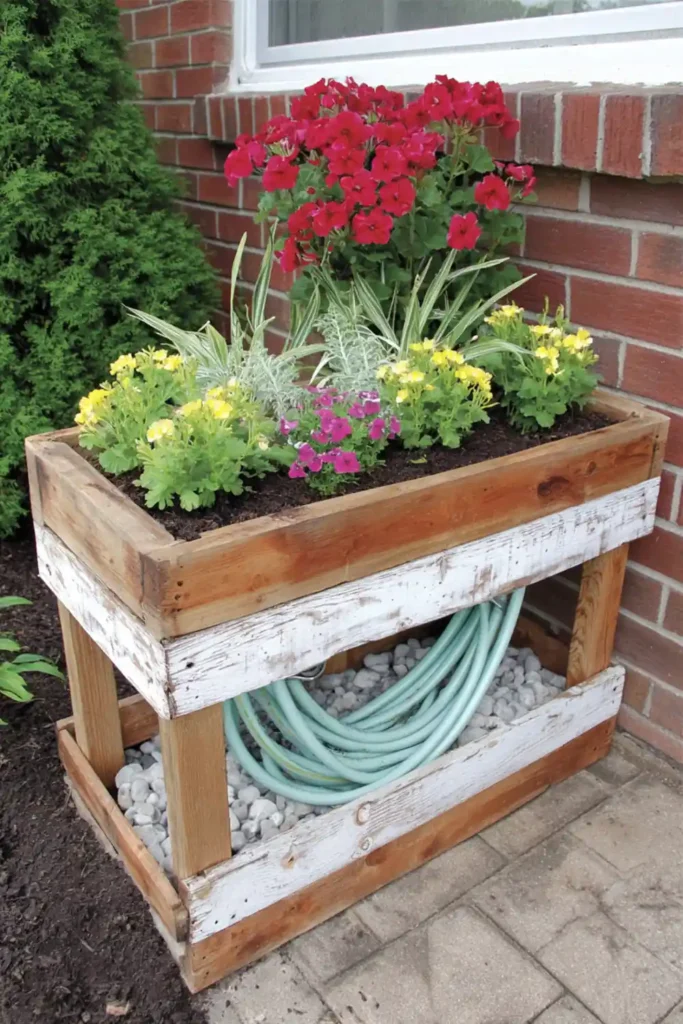
Garden Hose Planter That Blends Storage with Decor
Storage is something we often try to hide, but it can actually become part of the design. A wooden planter that also holds a garden hose is a practical way to keep things tidy without adding clutter.
Using pallet wood or simple boards, you can build a box that blends in with the rest of the yard. The top or sides can hold small plants, so it doesn’t feel like a utility item sitting out in the open.
Place it near the side of the house or close to where you usually water plants. Keeping it easy to access while still visually neat makes everyday tasks easier without affecting the look of your front yard.
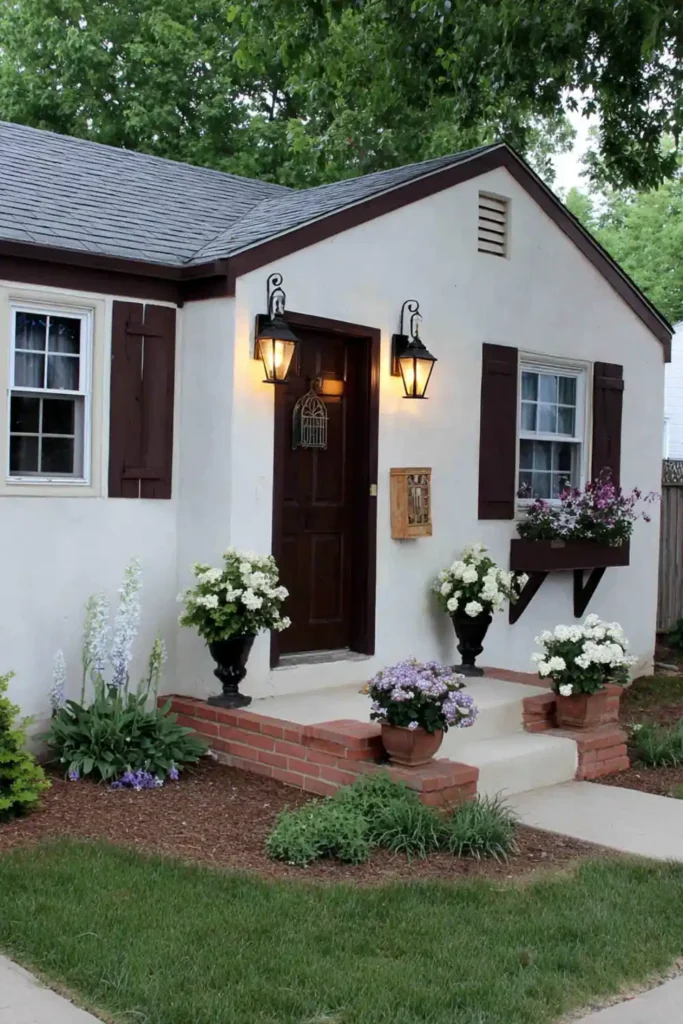
Refreshed Outdoor Sconce Lighting for a Mild Evening Glow
Lighting often gets overlooked, but updating your outdoor sconces can make a noticeable difference, especially in the evening. Even refinishing current fixtures can give the front of your home a cleaner, more updated look.
The goal isn’t bright light, but a subtle glow that accentuates the entry and makes the space feel more welcoming after sunset. Warm-toned bulbs tend to work best for this kind of atmosphere.
If your current fixtures seem old-fashioned, consider repainting or replacing them with something simple. Keeping the style coherent with your home helps everything feel more consistent without needing a full redesign.
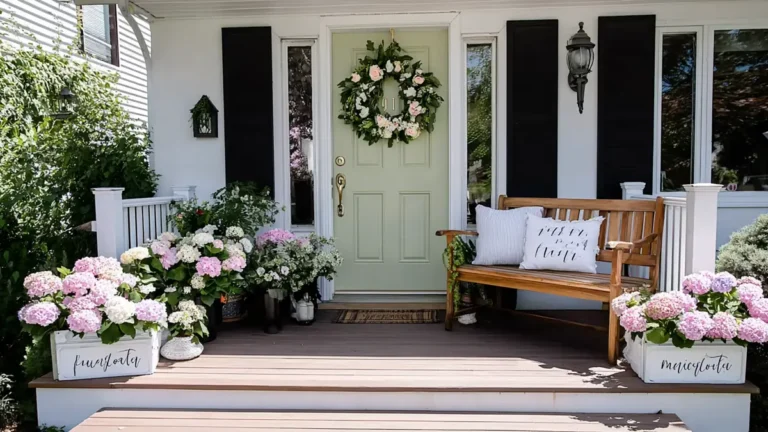
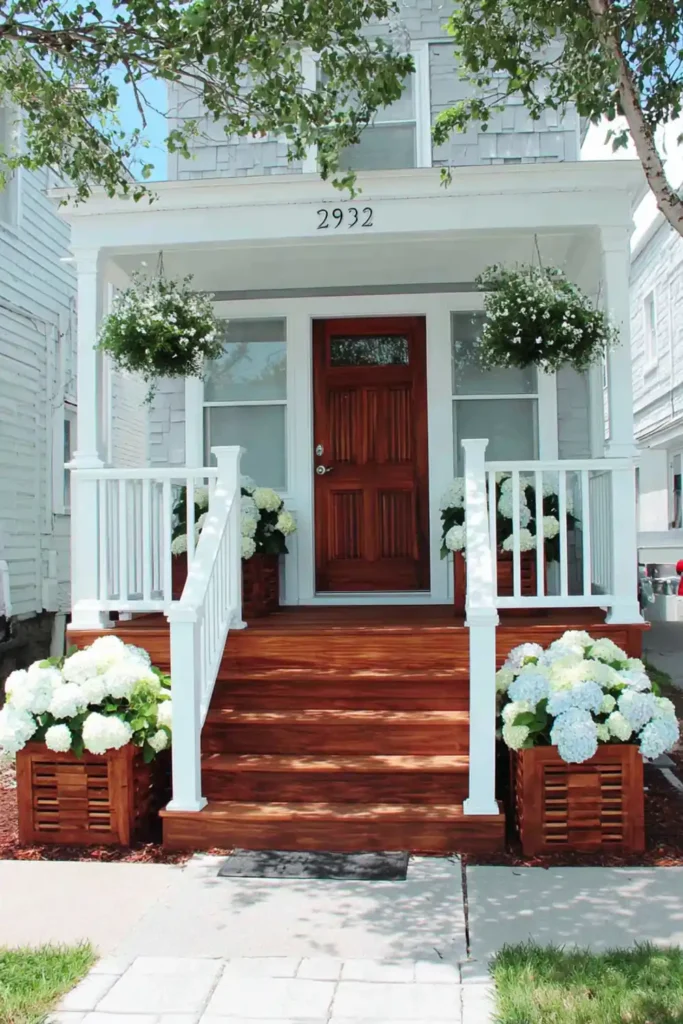
Simple Front Door Styling with Paint and Coordinated Planters
The front door is one of the easiest places to make an impact. A fresh coat of paint, combined with a couple of well-chosen planters, can give the entire front yard a more finished look.
Choosing a color that contrasts slightly with your exterior helps the door stand out without feeling too bold. Pairing it with matching or complementary planters on either side creates a balanced frame.
If you’re updating your entry, keep the surrounding area clean and uncluttered. A simple setup commonly feels more inviting than trying to add too many decorative elements at once.
Tree Bench Seating for Shade and Functional Charm
If you already have a tree in your front yard, building a bench around it is a smart way to make use of that space. It turns a shaded spot into something functional while keeping the yard open and uncluttered.
The circular or hexagonal shape naturally wraps around the tree without blocking the area. It also creates a place where you can sit without having to add extra furniture elsewhere in the yard. Paired with simple ground cover or mulch underneath, it keeps the base of the tree neat.
If you’re planning one, use durable wood that can handle outdoor conditions and leave enough space for the tree to grow. Over time, this becomes a quiet, comfortable spot that blends right into the landscape.
Bringing These Modest Front Yard Ideas Together
What I’ve noticed over time is that a front yard doesn’t need to be complicated to feel complete. A few thoughtful choices—like defining your walkway, adding some structure with plants, or creating a small focal point—can make everything come together naturally.
The key is not trying to do everything at once. Start with one or two ideas that fit your space and build from there. As you add pieces slowly, the yard begins to feel more balanced and easier to maintain.
In the end, the goal is simple: a front yard that feels welcoming when you come home and pleasant for anyone passing by. Even minor changes can make that happen, especially when they’re done with thoughtfulness and purpose.