
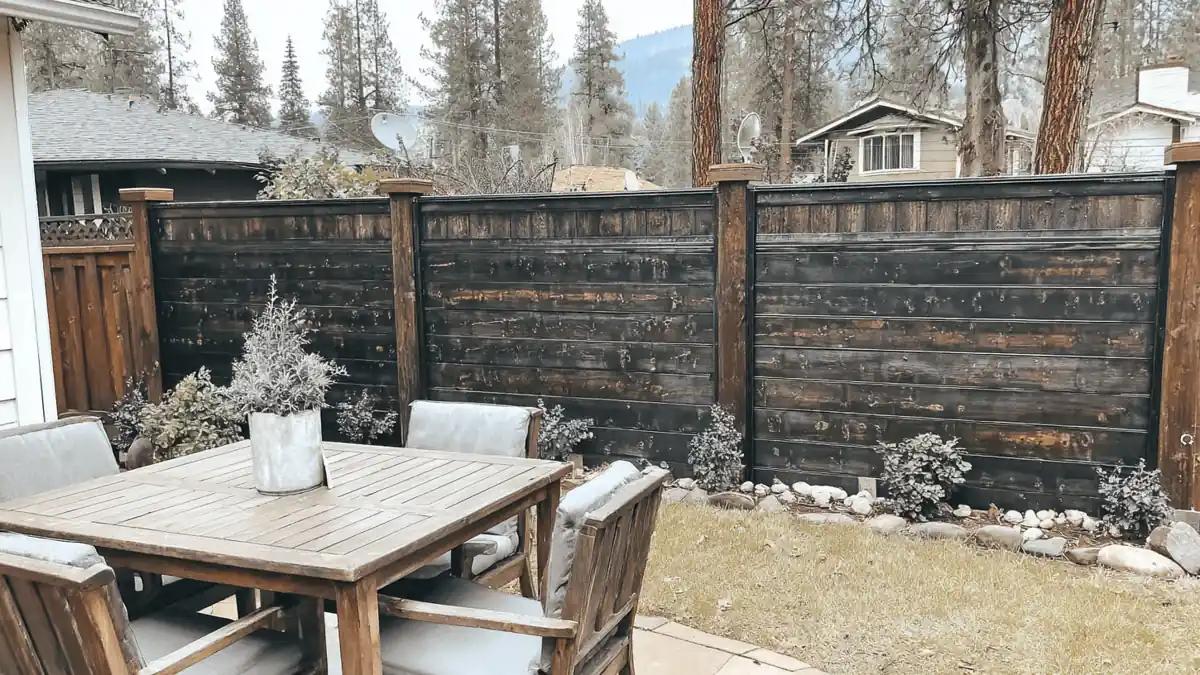
When you spend time in your yard, privacy makes a big difference. Whether you’re having dinner outside, relaxing with a book, or letting the kids play, a good fence helps create a space that feels calm and personal. Over the years of working on my own yard, I’ve learned that the right privacy fence doesn’t just block views—it can also shape the entire look of the space.
What I like about exploring different privacy fence ideas is how many directions you can go. Some fences lean rustic and natural, while others look modern and clean. Some rely on wood and stone, while others use plants or metal for a completely different feel.
In this article, I’m sharing a collection of privacy fence ideas that homeowners can actually use. Some are simple upgrades, others take a bit more planning, but all of them can help turn an ordinary yard into a space that feels comfortable and protected.
Table of Contents
Corrugated Metal Fence Panels for a Modern Industrial Backyard
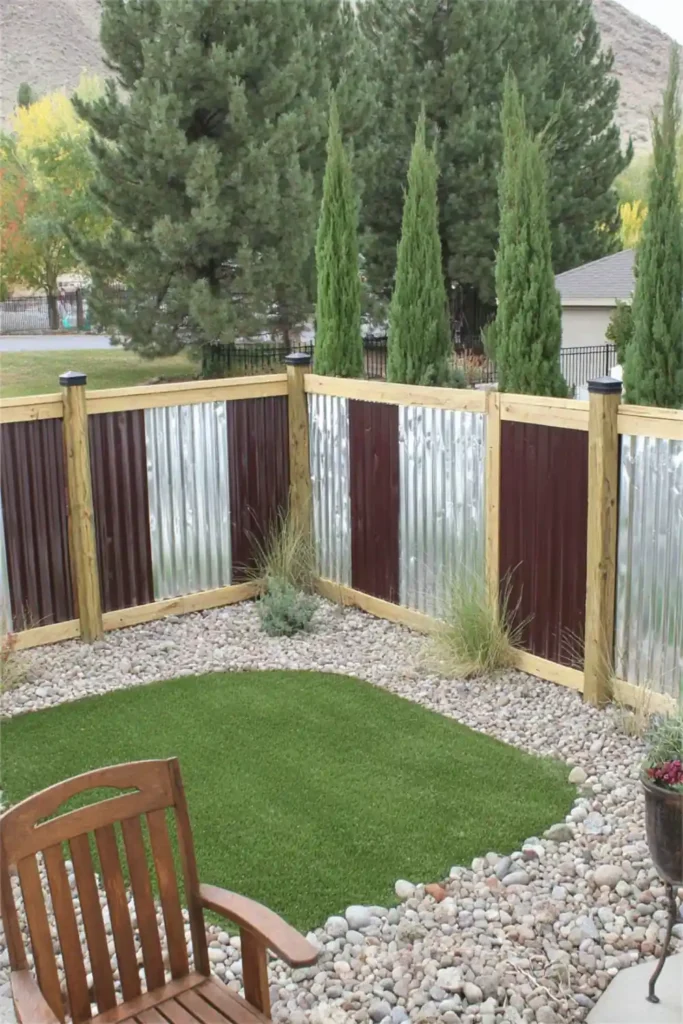
Corrugated metal panels make a surprisingly attractive privacy fence, especially if you like a slightly modern or industrial look. I’ve seen these used in backyards where homeowners wanted something durable that still seemed a little different from the usual wood fence.
The metal panels are usually framed with wood and supported by metal or wooden posts. The contrast between the rough texture of corrugated steel and the warmth of stained wood works really well visually. Some homeowners paint the posts black and add simple post caps, which gives the fence a clean and finished appearance. Tall cedar trees planted along the fence can soften the industrial look and add some greenery.
If you’re considering this style, keeping the design simple is key. Wide wood frames around the panels help the metal look intentional rather than temporary. I’ve found that using darker stains on the wood gives the fence a harmonious appearance that blends well with most backyard landscaping.
Classic Tongue-and-Groove Wood Panel Privacy Fence
Tongue-and-groove wood fences are one of the most reliable privacy fence ideas because they create a completely solid barrier. The boards interlock, which means there are no gaps, so the fence blocks both views and wind more effectively than many traditional fences.
This style usually uses vertical wood boards attached to horizontal rails behind them. Cedar and pine are common choices, and both can be stained to match the color of the house or left natural to age gradually over time. The smooth surface created by the interlocking boards gives the fence a clean and uniform appearance.
One useful tip I’ve learned is to use a semi-transparent stain instead of paint. Stain allows the natural wood grain to show through and tends to hold up better outdoors. Pairing this fence with simple landscaping—like shrubs or a narrow flower bed along the base—can help break up the long wooden surface and make the yard feel more welcoming.
Stained Wood Fence Panels with Bold Black Posts
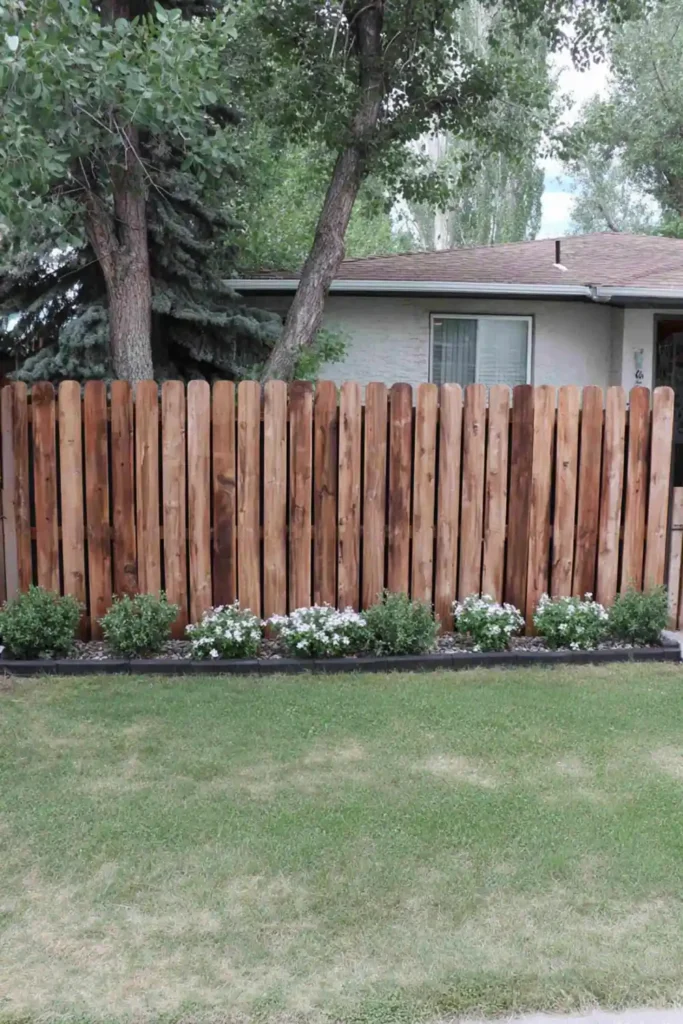
A simple color change can completely update a standard wood fence. One approach I’ve always liked is combining warm stained wood panels with black-painted fence posts. The contrast creates a more modern look without changing the basic structure of the fence.
In this design, the wood panels usually remain natural or lightly stained to highlight the grain. The posts and sometimes the top rails are painted matte black, which visually frames each section of the fence. The darker vertical lines break up the fence panels and add structure to the design.
This style works especially well in backyards with patios or decks that use black metal furniture or outdoor lighting. If you’re installing this type of fence, try keeping the stain color warm—something like cedar or honey tones. The combination of warm wood and black accents creates a well-balanced look that appears both modern and natural.
Vertical Wood Board Privacy Fence with Dog-Eared Tops
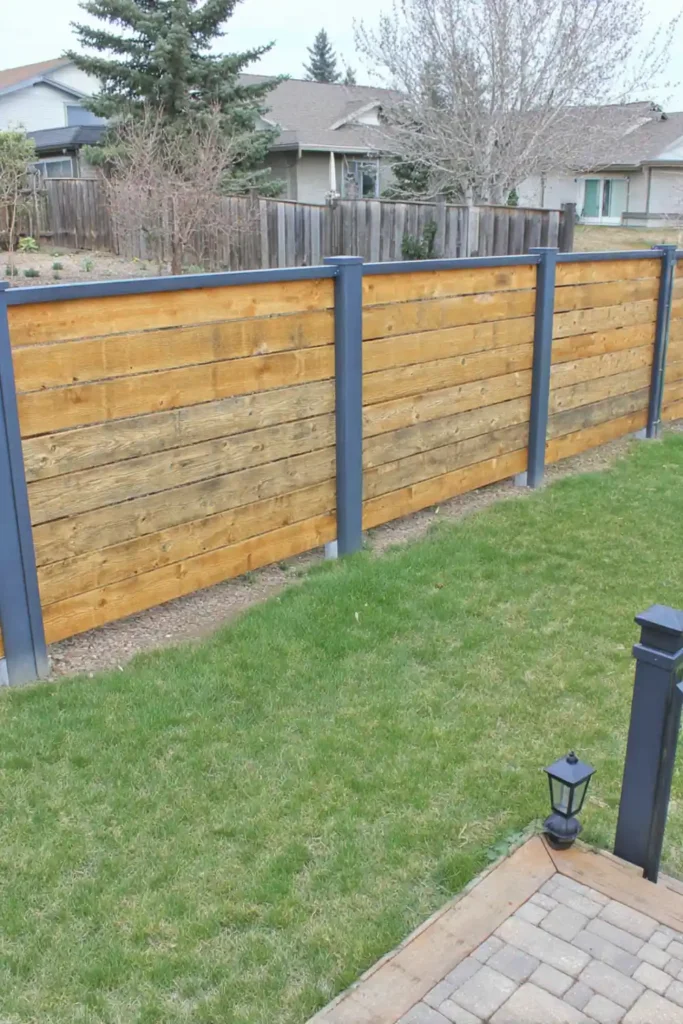
The traditional vertical board fence with dog-eared tops is one of the most familiar privacy fence ideas, and for good reason—it works in almost any yard. The angled corners on the top of each board soften the look slightly and add a small decorative detail.
This fence style usually uses evenly spaced vertical boards attached to horizontal rails. Small gaps between the boards allow a little airflow while still providing solid privacy. It’s often used along backyard property lines or in narrow alleyways where a simple, dependable fence is needed.
If you want to make this classic fence feel a bit more interesting, consider using a darker stain or painting the rails and posts a contrasting color. I’ve also seen homeowners add a narrow planting strip along the fence line with grasses or climbing plants. Even a simple fence can feel much more inviting when it’s paired with a little greenery.
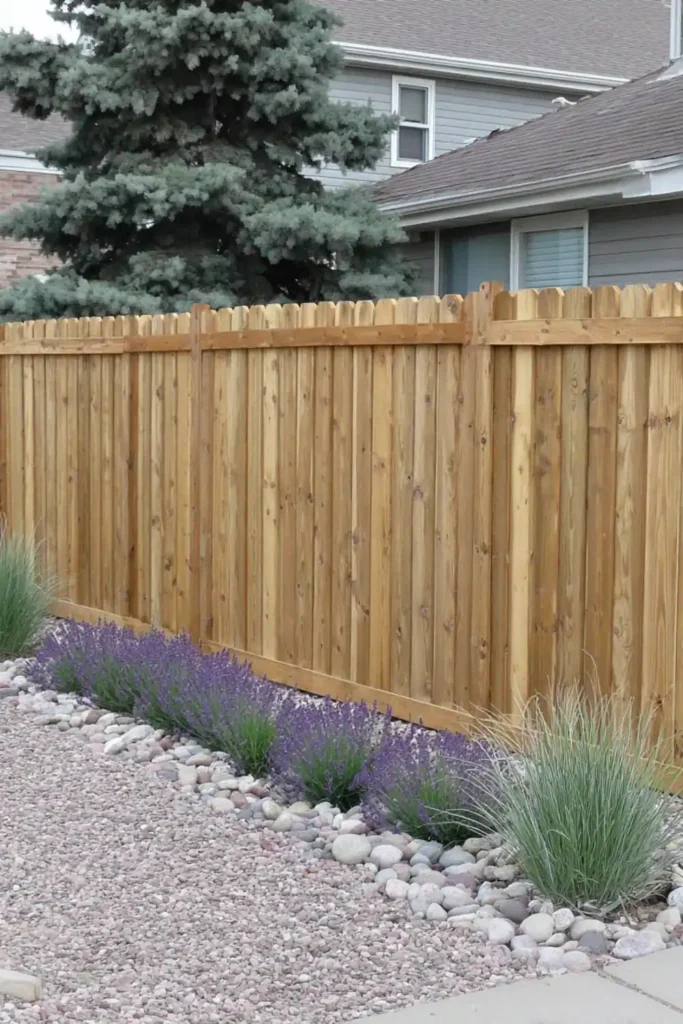
Board-on-Board Wood Privacy Fence for Complete Backyard Coverage
A board-on-board fence is one of the most dependable ways to create strong privacy in a backyard. Unlike a standard fence, where small gaps may appear between boards over time, this design overlaps the boards so there’s always full coverage, even as the wood naturally shifts with the weather.
The construction usually involves a layer of vertical boards attached to the rails, followed by a second set placed over the seams. From the front, it looks like a solid wall of wood, while the back shows a neat, evenly spaced pattern. Many homeowners paint the posts black and add a flat top board to create a clean horizontal line across the entire fence. Sometimes a lattice topper is added above the panels, which helps the fence feel lighter and a little more decorative.
If you’re installing this type of fence, think about what will sit around it. Flower beds, shrubs, or even a row of small cedar trees can soften the strong lines of the boards. The fence becomes less of a barrier and more of a backdrop for the garden.
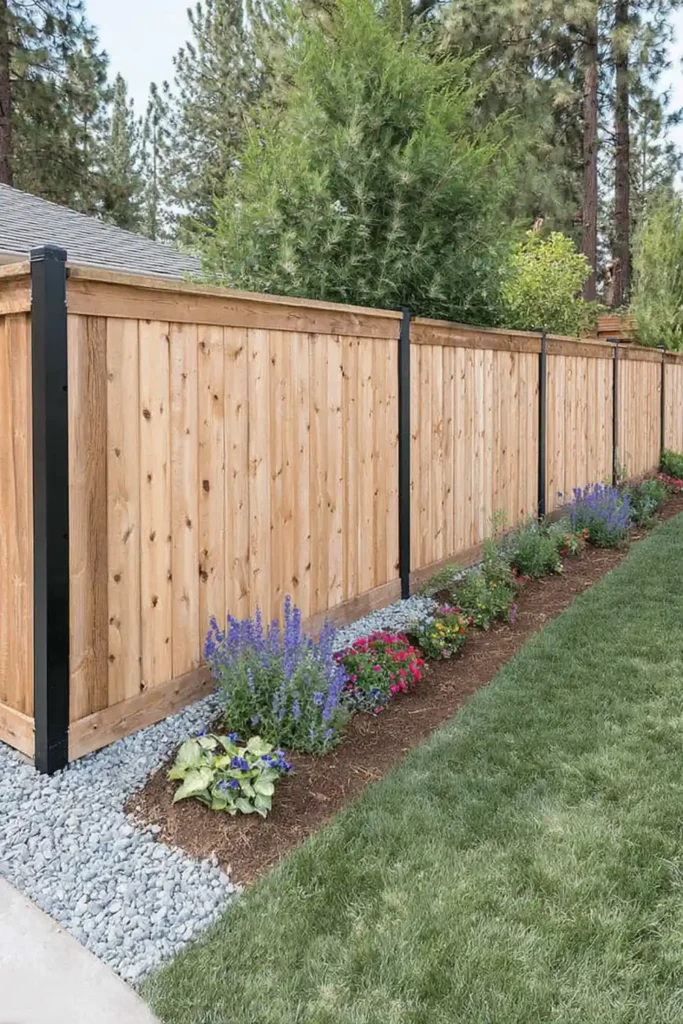
Living Privacy Fence Made from Dense Garden Hedges
Not every privacy fence has to be built from wood or stone. One approach I’ve always liked is using thick hedges to create a natural wall around the yard. A well-grown hedge can block views just as effectively as a fence while bringing a lot of greenery into the space.
Dense shrubs such as cedar, arborvitae, or boxwood are commonly planted in a straight line along the property edge. Over time, they grow together and form a continuous living barrier. The texture of the foliage adds softness in comparison to traditional fences, and the greenery changes slightly through the seasons.
Planting distance matters with this idea. If shrubs are spaced too far apart, it can take years before the hedge fills in properly. I’ve found that planting them closer together from the start helps create a full privacy screen much faster. Regular trimming also keeps the hedge thick and prevents the plants from growing thin at the base.
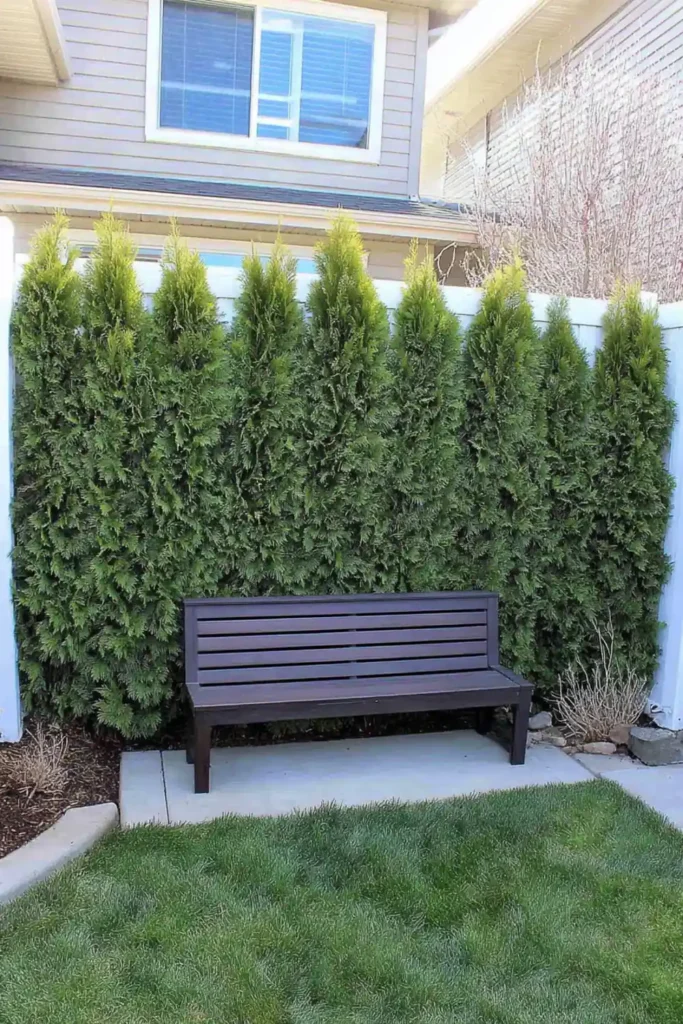
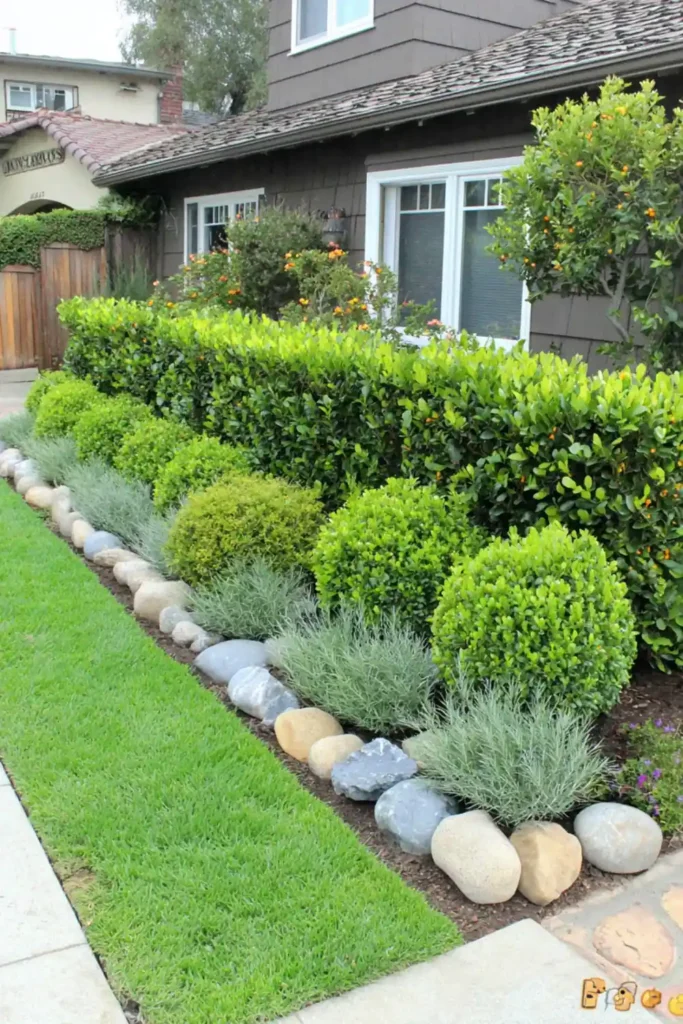
Formal Manicured Hedge Privacy Fence for Elegant Landscapes
A more structured version of a living fence is the formal hedge. Instead of letting plants grow naturally, the shrubs are trimmed carefully to create clean lines and smooth surfaces. The result looks organized and almost architectural in the landscape.
Formal hedges are often used in front yards or garden areas where the landscaping already feels structured. Boxwood and privet are popular choices because they respond well to trimming. When shaped regularly, the hedge can form a crisp green wall that defines walkways or separates outdoor spaces.
Maintaining this style requires a bit more attention, but the results are worth it if you enjoy tidy garden spaces. Trimming once or twice a season usually keeps the shape intact. A gravel border or stone edging along the base of the hedge can also help highlight the clean lines and make mowing easier.
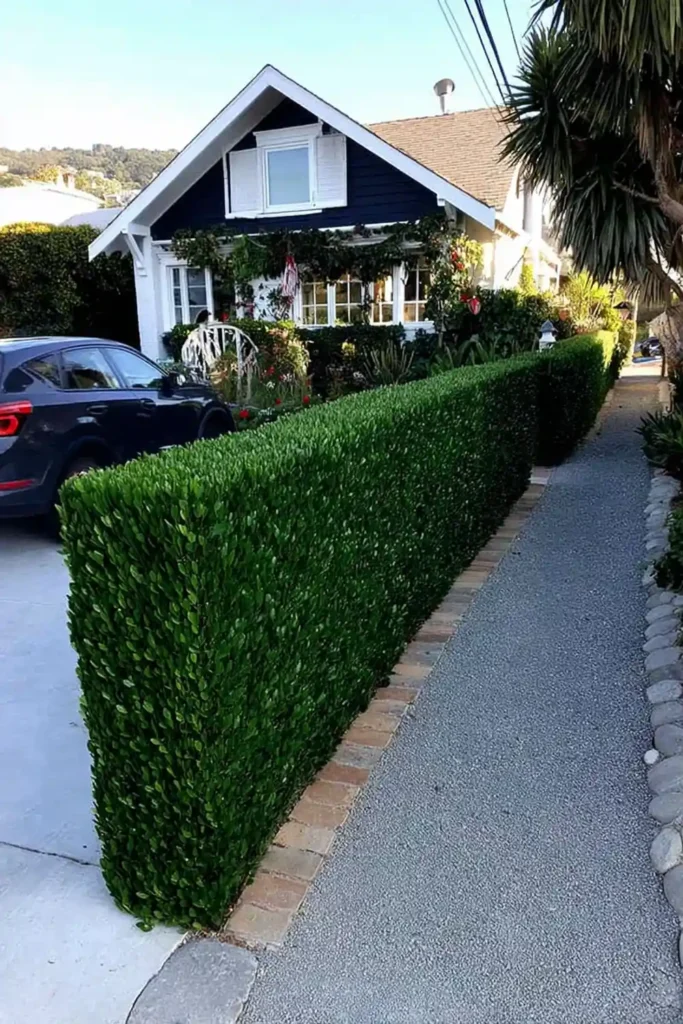
Informal Hedge Borders for Natural Privacy Screening
If you like the idea of plants for privacy but prefer a more relaxed yard, informal hedges are a great option. Instead of forming the plants into precise forms, they’re allowed to grow naturally and create a soft, layered barrier.
This approach works well with a combination of shrubs or thorny bushes that naturally grow thick and wide. The result feels more like a small woodland edge than a designed fence. The texture of the branches and leaves changes throughout the year, which keeps the yard visually interesting.
When planning an informal hedge, it helps to choose plants that grow densely without constant pruning. Thorny varieties can also discourage animals or people from pushing through the plants. Over time, the hedge becomes a natural boundary that blends perfectly into the landscape.
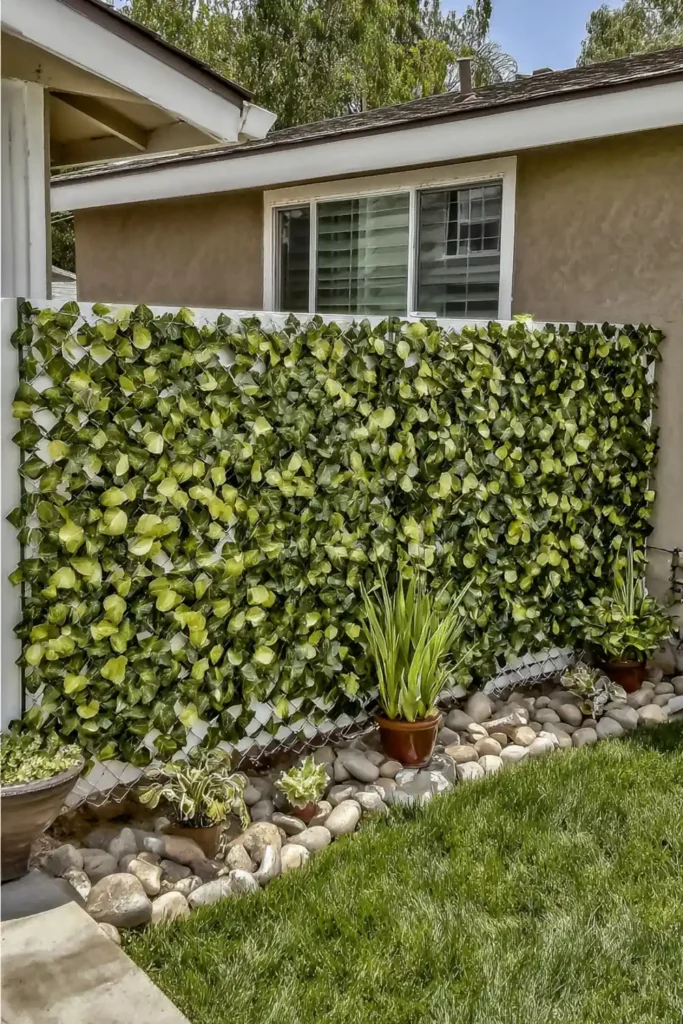
Artificial Hedge Fence Panels to Cover Existing Structures
Sometimes the quickest way to gain privacy is simply improving a fence that’s already there. Artificial hedge panels or rolls are often attached to chain link or split-rail fences to create the look of a thick green wall without waiting years for plants to grow.
These panels are typically made from faux ivy or dense plastic foliage and are secured with zip ties or clips along the fence frame. Once installed, the existing fence almost disappears behind the greenery. From a distance, the result looks surprisingly natural and adds a softer appearance to an otherwise plain metal fence.
This option works well in smaller yards or rental homes where building a new fence isn’t possible. I’ve seen homeowners combine these panels with container plants or tall grasses along the base of the fence, which helps the artificial greenery blend better with real landscaping.
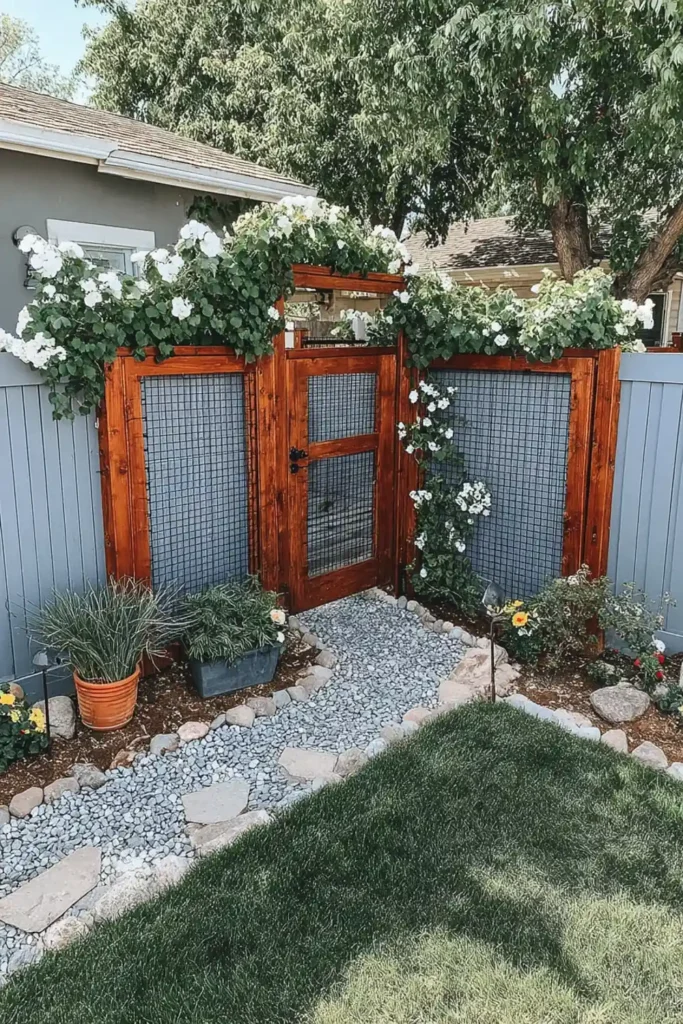
Climbing Vines on Trellis Frameworks for a Lush Privacy Fence
Another natural approach to privacy is letting climbing plants grow along a structure such as a trellis or wire framework. Over time, the vines thread through the structure and form a thick curtain of greenery that blocks views while still permitting airflow.
Climbing hydrangea, Boston ivy, wisteria, and Virginia creeper are commonly used for this type of living fence. During the summer months, the foliage becomes dense enough to create real privacy, and in some cases, the plants even produce flowers that add extra color to the yard.
If you try this idea, it’s worth installing a strong framework from the beginning. Wooden posts with metal wire between them work well and give the vines plenty of places to attach. Planting a few vines rather than just one helps the coverage fill in faster and creates a more balanced wall of greenery.
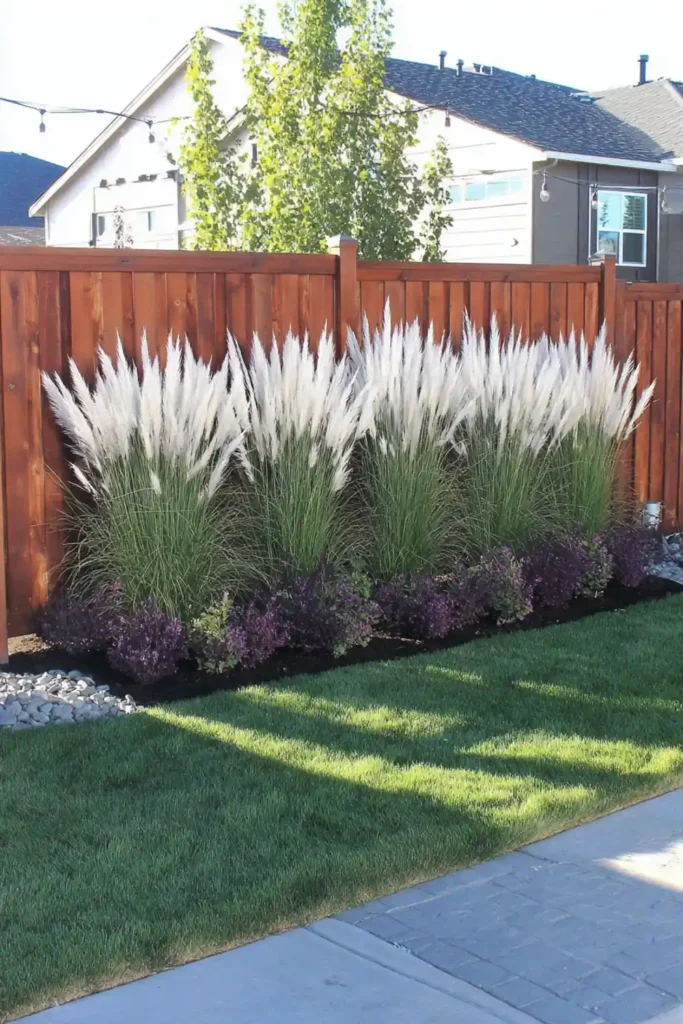
Tall Ornamental Grasses and Flowers as a Natural Privacy Border
In rural areas or larger gardens, tall grasses and flowering plants can act as a softer type of privacy barrier. Instead of a solid fence, the plants create a thick border that visually separates one area from another.
Grasses like miscanthus or pampas grow tall enough to block views while still moving naturally in the wind. When mixed with colorful flowers, the border feels welcoming rather than restrictive. I’ve seen this idea used along red wooden fences where the plants soften the strong color and add depth to the landscape.
A useful tip with this approach is planting in layers. Taller grasses can form the back row, while shorter flowers fill the space closer to the yard. This layered look creates a thicker visual screen and makes the border feel fuller throughout the growing season.
Woven Plastic Slats in Chain Link Fences for Instant Privacy
Chain link fences are common in many neighborhoods, but they don’t offer much privacy on their own. One simple solution is to weave plastic slats or flexible tape through the metal grid to block the open spaces.
The slats are usually inserted vertically or woven in a basket pattern through the chain links. Once installed, they create a much more solid barrier while still using the existing fence structure. Many homeowners choose neutral colors like black, brown, or green so the fence blends into the yard more naturally.
This method is one of the easiest upgrades you can make if you already have a chain link fence. It doesn’t require major construction, and the materials are relatively affordable. Adding shrubs or climbing plants around the base of the fence can also help soften the look and make it feel more like a traditional privacy fence.
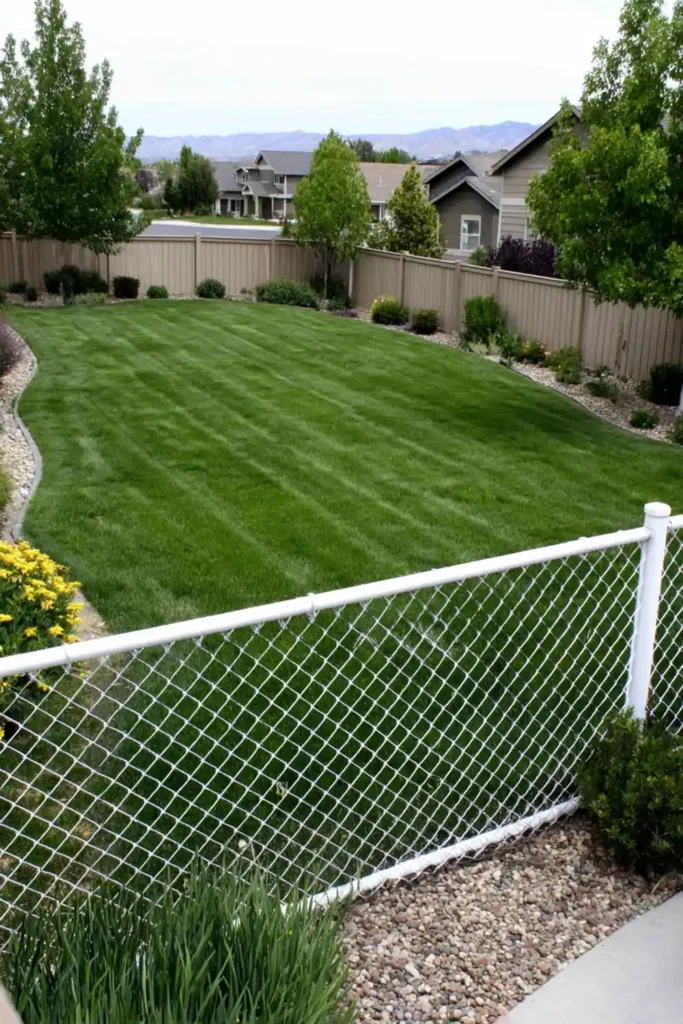
Gabion Stone Walls for a Modern Architectural Privacy Fence
Gabion walls have a very distinctive look. Instead of traditional masonry, they use metal cages filled with stones to create thick, solid walls. I’ve always liked how these fences combine raw natural materials with a slightly industrial structure.
The cages are usually made from heavy steel mesh and are filled with rocks of different sizes. Once the stones are packed tightly inside, the result is a strong and visually textured wall. From a distance, it almost looks like stacked stone, but when you get closer, you can see the metal grid holding everything together.
Gabion fences work especially well in larger yards where you want something durable and low-maintenance. One tip is to choose stones with similar colors so the wall looks more intentional. Pairing the stone with gravel walkways or simple wood furniture nearby can help the fence feel like part of the landscape rather than merely a barrier.
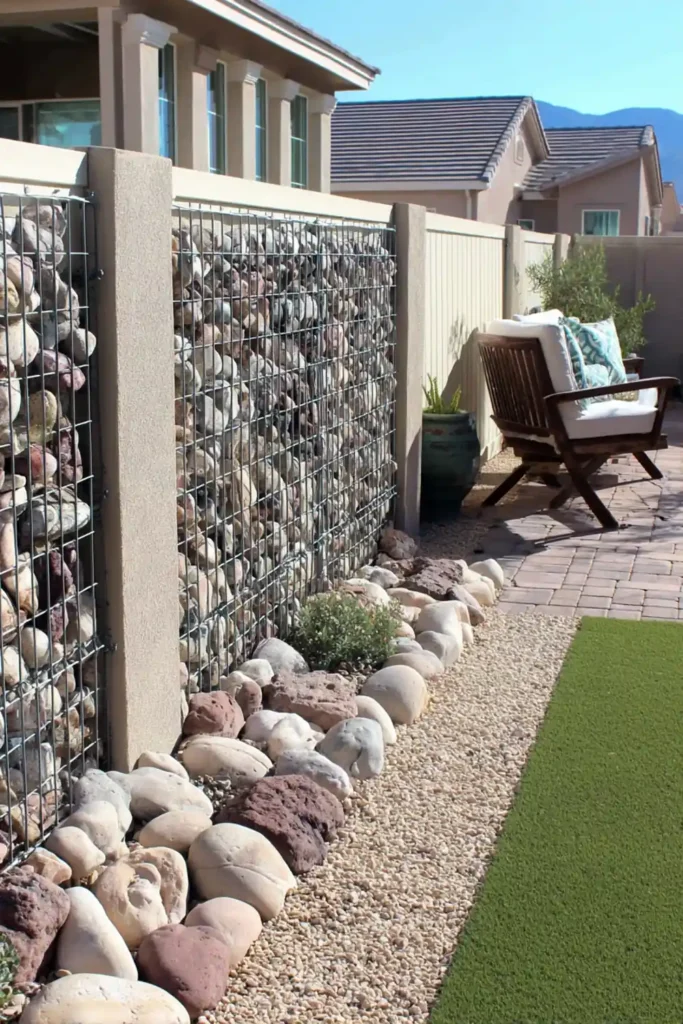
Rustic Dry-Stacked Rock Walls for Natural Yard Privacy
Dry-stacked rock walls are one of the oldest forms of fencing, and they still look beautiful today. Instead of using mortar, stones are carefully placed and balanced on top of one another to form a stable wall.
What I like most about this type of fence is the natural texture it adds to a yard. Each stone has its own shape and color, so the finished wall feels organic and handcrafted. In gardens or rustic landscapes, a rock wall blends into the environment much more naturally than many modern fencing materials.
If you’re building one, try mixing larger foundation stones with smaller ones above them. This creates a stable base and helps the wall look more natural. Planting small creeping plants or moss between some of the stones can also soften the structure and make it feel like it has always belonged in the yard.
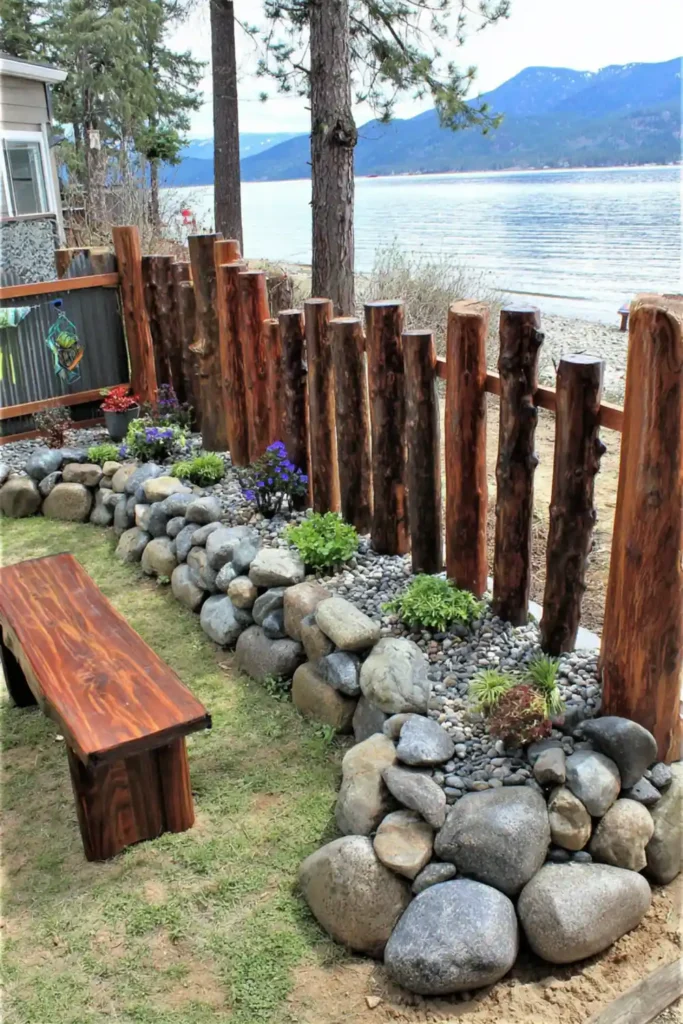
Brick and Allan Block Walls for a Fortress-Style Privacy Fence
For homeowners who want something solid and permanent, brick or Allan block walls create a very strong sense of privacy. These fences feel substantial and provide both visual and sound separation from nearby properties.
Brick walls are often built in repeating patterns that give them a classic appearance. Allan block systems use larger interlocking concrete blocks that stack together to form thick walls. Both materials create a very sturdy structure that stands up well to weather over time.
Because these walls are visually heavy, I’ve found that adding landscaping nearby helps balance them out. A row of shrubs, climbing plants, or even small trees along the base of the wall can soften the solid structure. This prevents the fence from feeling too harsh while still retaining the privacy it provides.
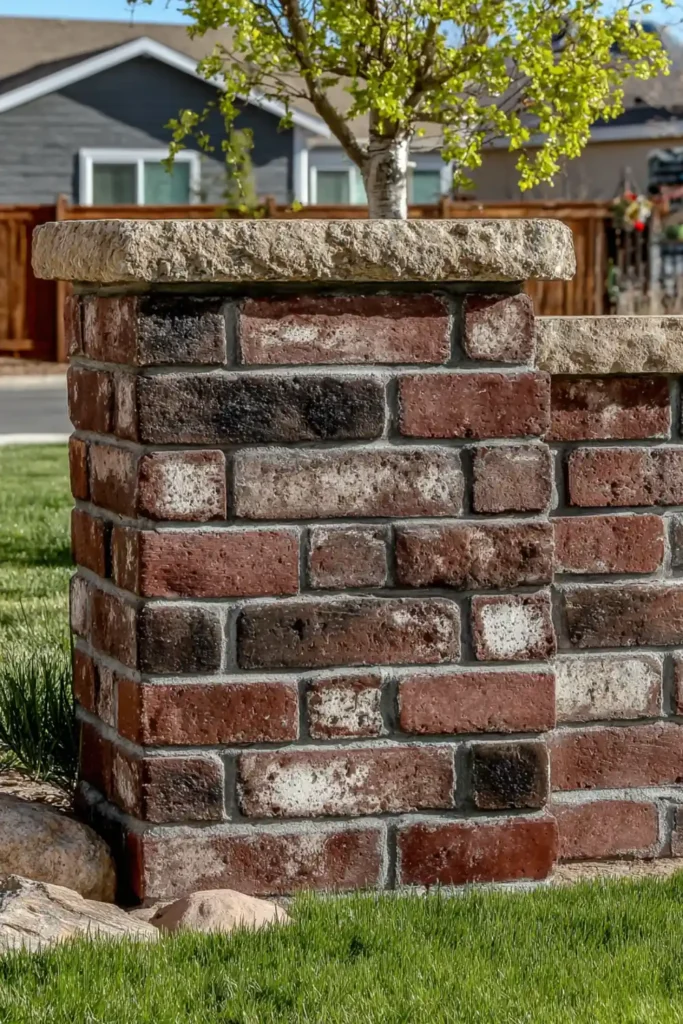
Pre-Built Grey Fence Panels with Decorative Lattice Toppers
Pre-built fence panels are a practical option when you want privacy but prefer a faster installation process. Many of these panels come ready-made from cedar or pine and can be installed between posts without building every section from scratch.
Grey-painted panels have become popular because the color feels unbiased and modern without drawing too much attention. Adding a lattice topper above the panels helps break up the solid wood surface and allows a bit of light and air to pass through the upper portion of the fence.
This style works nicely in yards where you want privacy but still want the space to feel open. One trick I’ve seen work well is planting climbing plants near the lattice. As the vines grow through the openings, the fence gradually becomes a mix of wood and greenery, which imparts character to the yard.
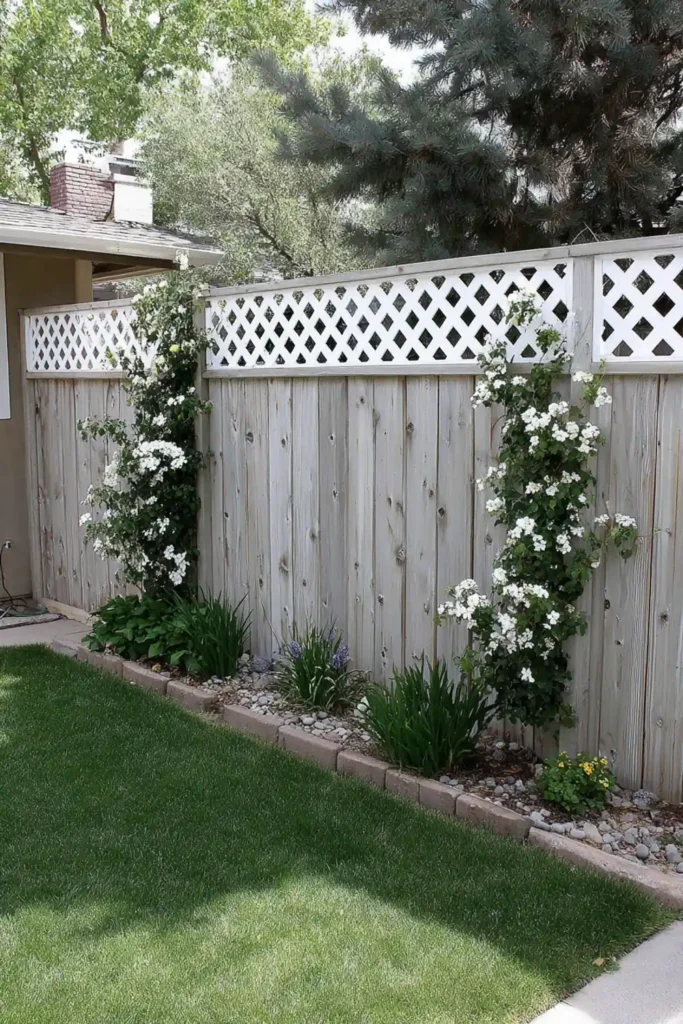
White Shadow Box Privacy Fence with Alternating Boards
A shadow box fence is a good option if you want privacy without creating a completely solid wall. This design uses vertical boards attached to alternating sides of the fence rails. From either side of the fence, the boards overlap enough to block direct views while still allowing a bit of airflow.
Many homeowners paint this style white, which gives the fence a clean and classic appearance. The alternating boards also create a subtle layered texture that looks more interesting than a flat wall of wood. It works well in yards where both neighbors will see the fence, since the design looks finished from either side.
If you’re planning this type of fence, spacing is important. Keeping the gaps narrow ensures the fence still provides privacy. I’ve also seen this style look great when paired with simple landscaping—like a row of hydrangeas or small shrubs running along the base of the fence.
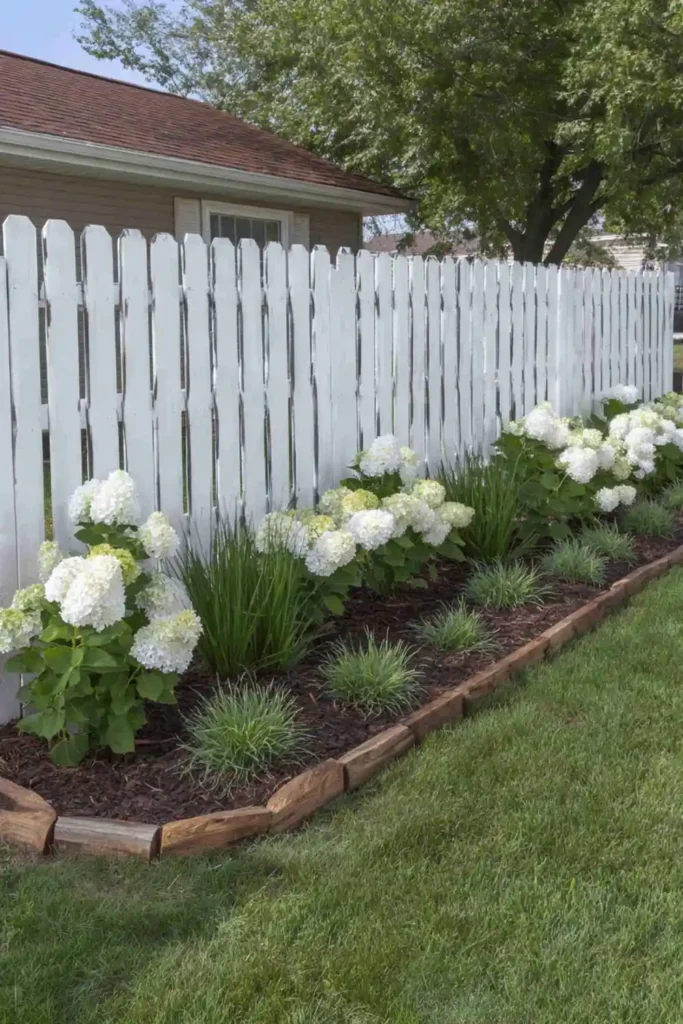
Tall White Picket Privacy Fence for Side and Backyard Areas
Picket fences are usually associated with front yards, but a taller version can actually provide a surprising amount of privacy. When the pickets are placed closer together and built higher than traditional styles, they form a barrier that still feels light and welcoming.
The classic white finish gives this fence a bright and tidy appearance. Instead of the open look of short pickets, taller boards create a stronger visual boundary while still allowing small glimpses of light through the gaps. This can make narrow side yards feel less boxed in compared to a solid fence.
If you like this idea, try planting flowering shrubs or climbing roses along the fence line. The whiteboards provide a nice backdrop for colorful plants. Over time, the flowers and greenery soften the structure and make the fence feel like part of the garden.
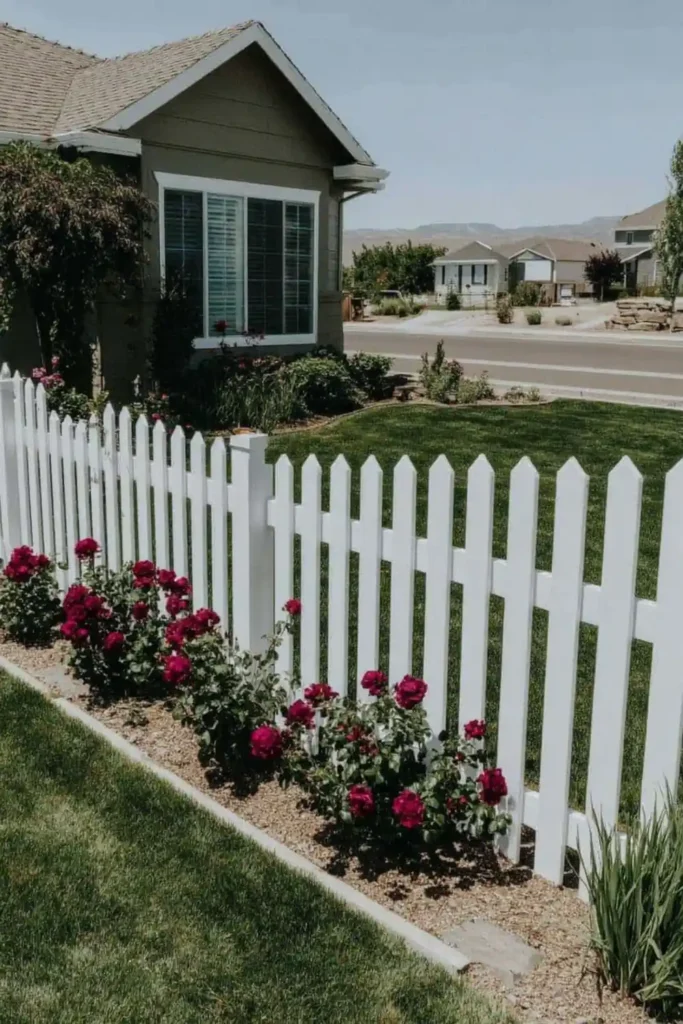
Horizontal Wood Board Fence for Contemporary Privacy
Horizontal board fences have become very popular in modern landscaping. Instead of vertical boards, long wooden planks run horizontally between posts, creating clean lines that feel more contemporary.
These fences are often painted grey or stained in warm wood tones. The boards can all be the same width or alternate between wider and narrower planks for extra visual interest. Because the lines run sideways, the fence can make a yard appear wider than it actually is.
If you’re installing a horizontal fence, using sturdy posts is important since the boards span longer distances. Keeping the spacing between boards consistent also helps the design feel balanced. Pairing the fence with gravel paths, simple patios, or minimalist garden beds usually complements the modern look nicely.
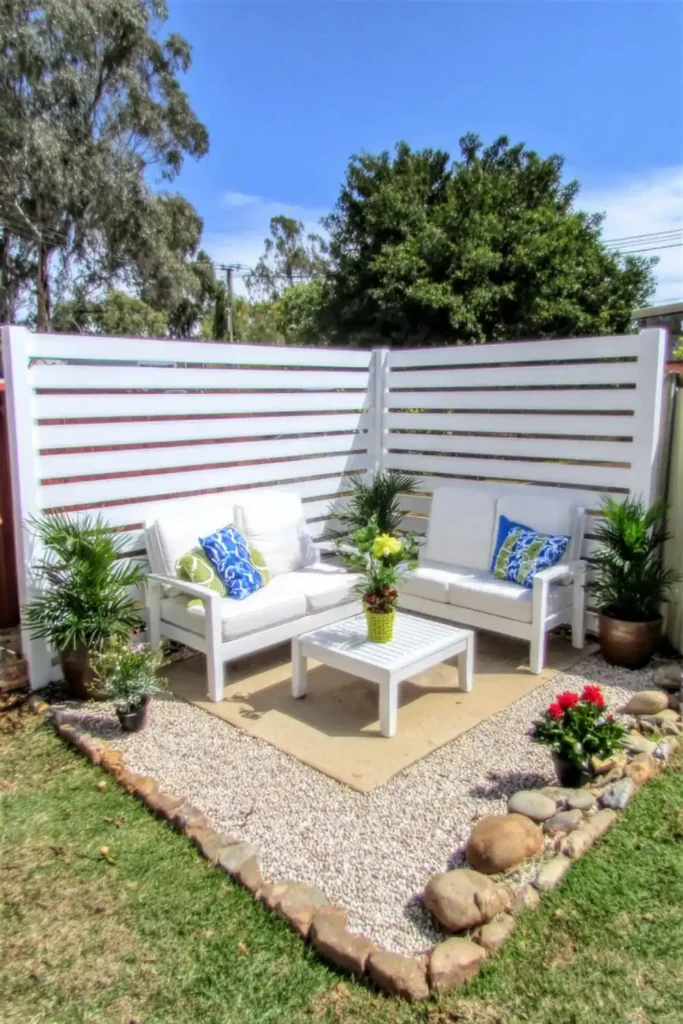
Horizontal Staggered Board Fence with Shadow Box Effect
A horizontal staggered fence takes the idea of the shadow box design and flips it sideways. Instead of vertical boards on alternating sides, horizontal boards are attached to both sides of the structure, creating overlapping layers.
From the front and back, the boards partially cover the gaps, so the fence offers good privacy while still allowing air to move through. The layered boards also create a subtle pattern that looks more interesting than a flat horizontal wall.
This type of fence works well in yards where wind flow matters or where a completely solid fence might feel too heavy. Choosing boards with a consistent stain color helps highlight the pattern. I’ve also seen this design paired with modern outdoor lighting along the posts, which adds a mild glow to the fence in the evening.
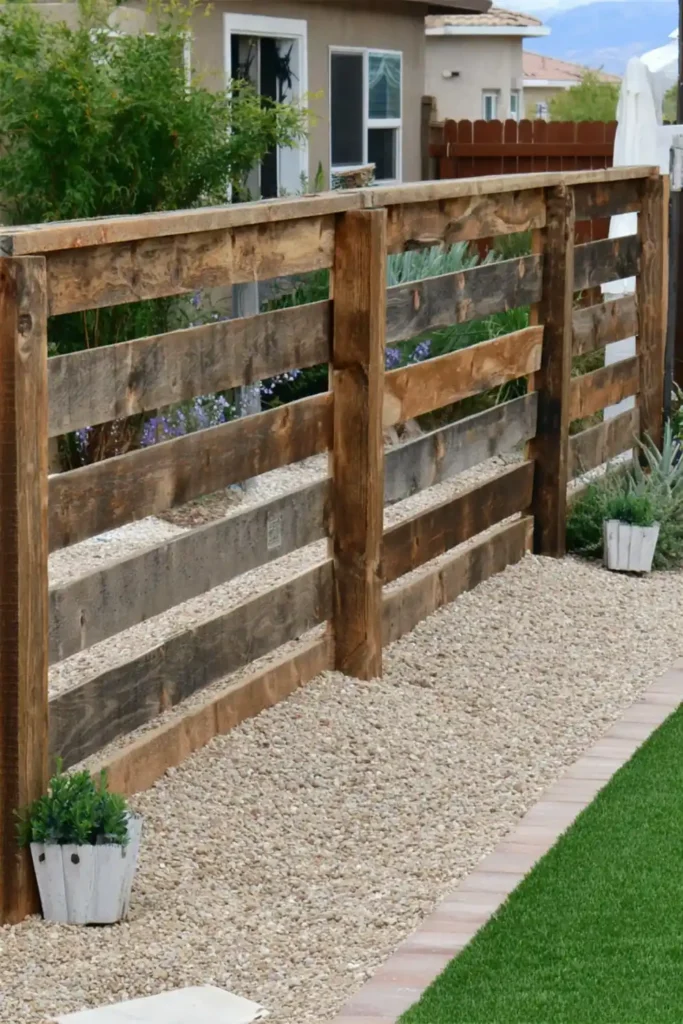
Uniform Horizontal Wood Fence with Warm Honey Stain
A uniform horizontal wood fence has a calm, even look that works well in many backyards. Instead of mixing board sizes or creating patterns, this style keeps everything uniform. Each plank runs straight across the posts at the same width, giving the fence a very orderly appearance.
What really makes this style stand out is the wood finish. A warm honey-colored stain brings out the grain of the boards and adds a natural glow when sunlight hits the fence. The horizontal lines also help the yard feel wider, which is useful in narrow side yards or smaller spaces.
If you’re considering this type of fence, think about whether you want small gaps between the boards or a tighter installation. Small openings allow a little airflow and reduce wind pressure on the fence. I’ve also noticed that planting low shrubs or ornamental grasses along the base helps soften the straight lines and makes the fence feel more integrated with the landscape.
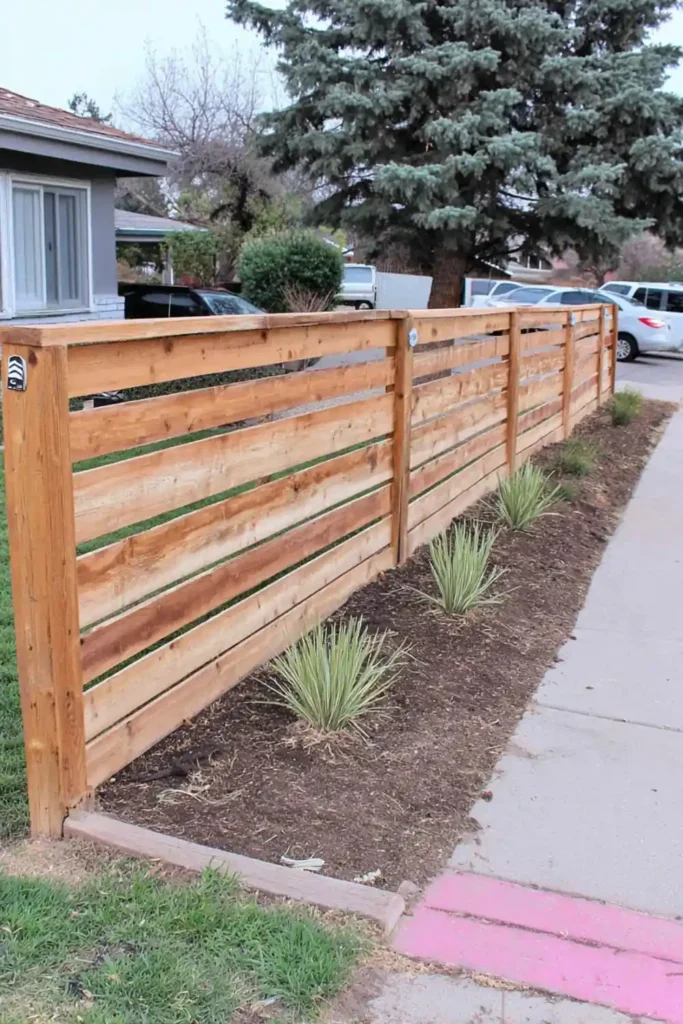
Horizontal Wood Weave Fence with Basket Pattern Design
A wood weave fence is a creative twist on traditional fencing. Instead of attaching boards flat against the rails, the boards are woven in and out of the vertical posts, creating a basket-like pattern.
This design uses sturdy posts, often 4x4s, with smaller supports in the middle to help guide the boards. The horizontal boards alternate from the front to the back of the posts, forming a repeating pattern that provides depth and texture to the fence. It’s a style that catches your eye without feeling overly decorative.
When building a fence like this, flexible wood boards tend to work best because they bend slightly during installation. A natural wood stain usually accentuates the woven effect nicely. This fence style works particularly well in garden areas where you want privacy but still want the fence to feel like part of the landscaping.
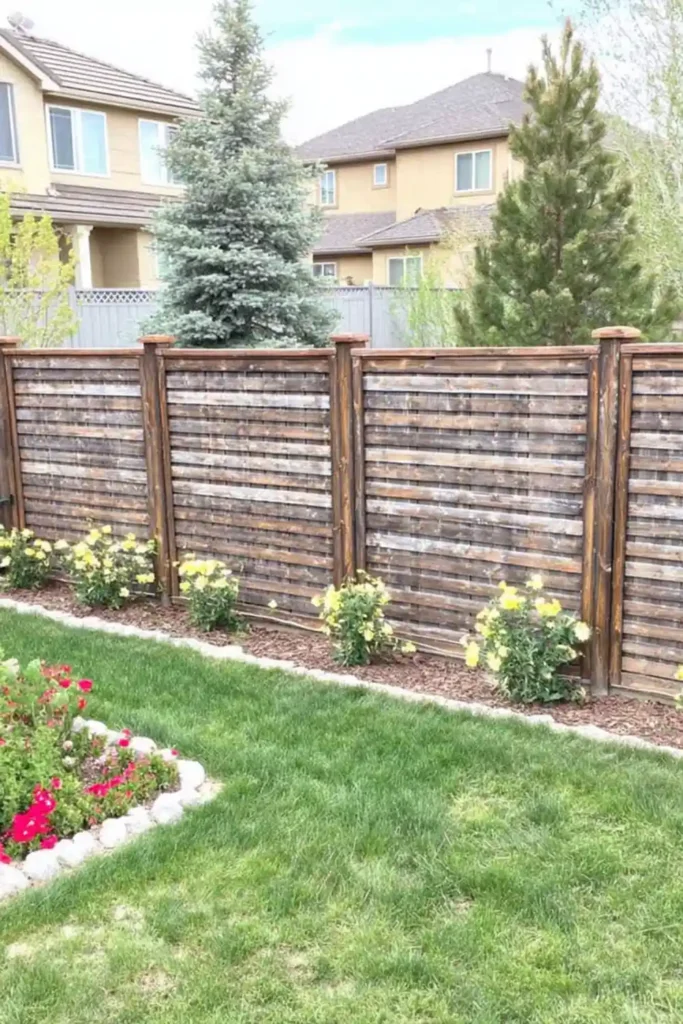
Horizontal Wood Privacy Fence Anchored by Stone Columns
Combining wood and stone in a fence can create a strong and balanced design. In this style, horizontal wood boards stretch between large stone columns that act as the main supports.
The stone columns add weight and permanence to the structure, while the wood panels between them keep the fence from feeling too heavy. The contrast between the smooth wood planks and rough stone textures creates visual interest without requiring complicated details.
Spacing the stone columns every few fence panels supports maintaining the rhythm of the design. I’ve also seen homeowners install outdoor lighting on top of the columns, which softly illuminates the fence at night. The result is a privacy fence that feels solid and well-built while still fitting comfortably into a landscaped yard.
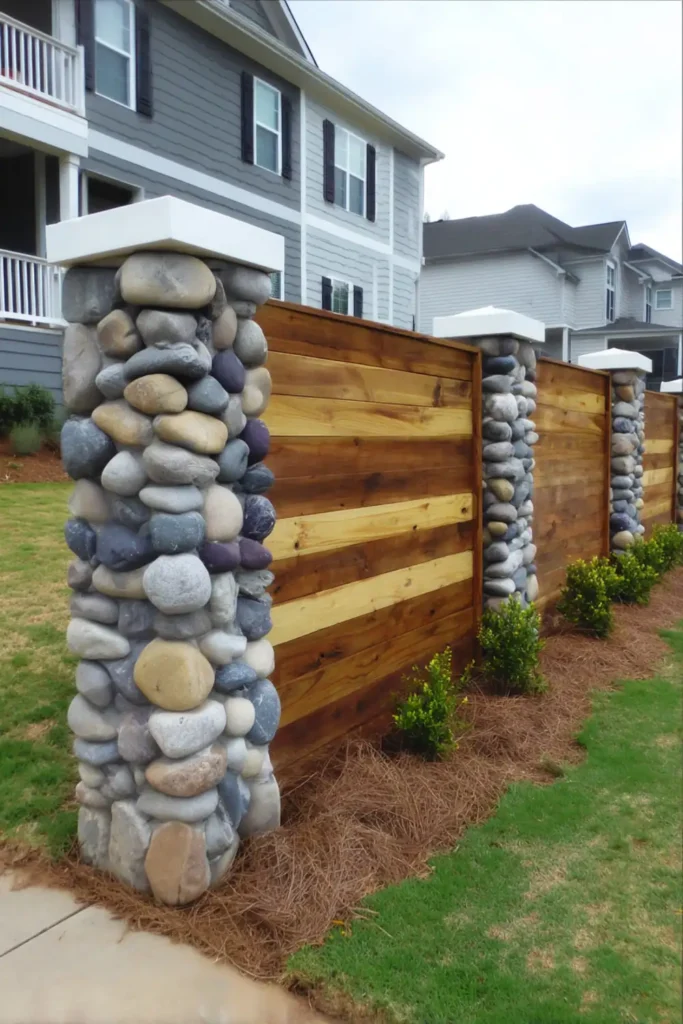
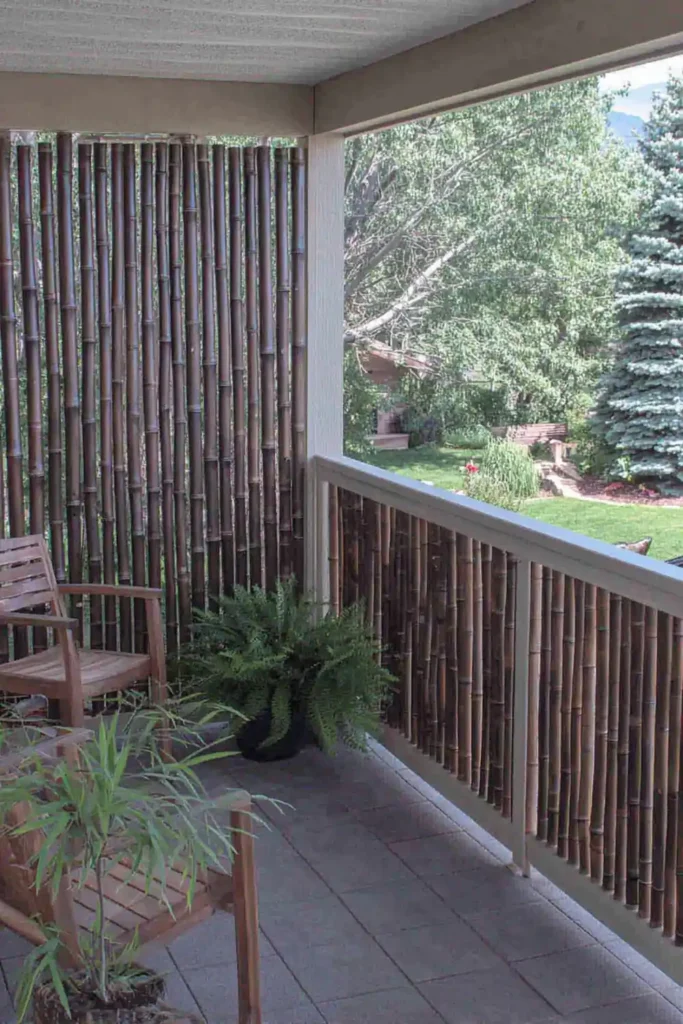
Natural Bamboo Privacy Fencing for Patios and Seating Areas
Bamboo fencing is a simple way to create privacy around patios, decks, or outdoor seating areas. Instead of building a full fence structure, bamboo poles or reed rolls are attached to an existing frame, wooden railing, or even a chain link fence.
The natural texture of bamboo gives the space a relaxed and slightly tropical feel. Because the poles sit closely together, they block views effectively while still allowing a bit of light to pass through. This makes bamboo fencing especially useful for smaller patios where you want seclusion without causing the space to feel closed in.
If you try this idea, securing the bamboo firmly to the frame is important. Metal ties or screws can keep the panels from shifting in the wind. Adding potted plants, lanterns, or outdoor cushions nearby can help complete the cozy atmosphere around the seating area.
DIY Privacy Fence Built from Reclaimed Wooden Pallets
Using reclaimed pallets for a privacy fence is one of the more creative and cost-effective ideas I’ve seen in backyard projects. Pallets already have a rough structure, so they can be arranged side by side to form a fence with very little cutting required.
The wood usually has an aged look, which gives the fence a rustic character right away. Some homeowners leave the pallets natural, while others paint them in soft grey or white to give the yard a more finished appearance. Because the boards already have gaps, the fence allows airflow while still forming a sense of separation.
If you try this project, it helps to reinforce the pallets with extra boards or a strong frame behind them. It keeps the fence sturdy over time. I’ve also seen pallet fences decorated with hanging planters or small flower boxes, which adds color and makes the structure feel more like part of the garden.
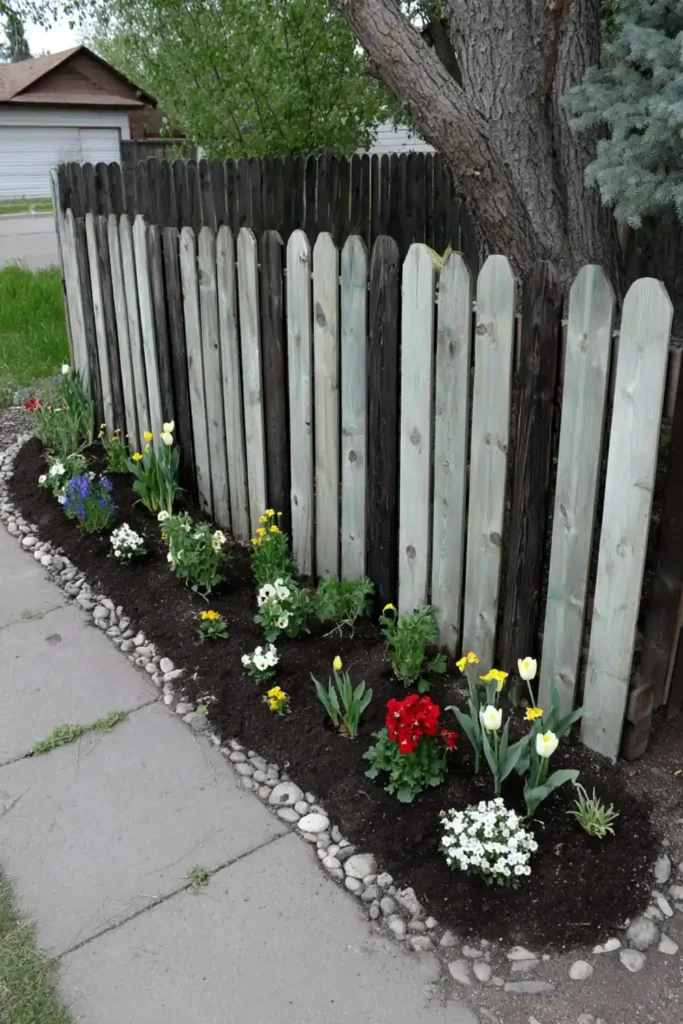
Sleek White Vinyl Privacy Fence Panels (PVC)
Vinyl fencing has become a popular option for homeowners who want seclusion without the maintenance that wood fences require. The panels are usually solid, smooth, and built from PVC, which means they don’t need painting or staining.
White vinyl panels create a bright and tidy look in a yard. The surfaces stay fairly clean with occasional washing, and the material holds up well against rain and sunlight. Because the panels come pre-built, installation often moves faster than building a wood fence from individual boards.
One practical advantage of vinyl fencing is its durability. The panels don’t rot, and they resist insect damage that sometimes affects wood fences. To keep the fence from feeling too stark, I’ve found that planting shrubs or small trees along the base helps soften the bright white surface.
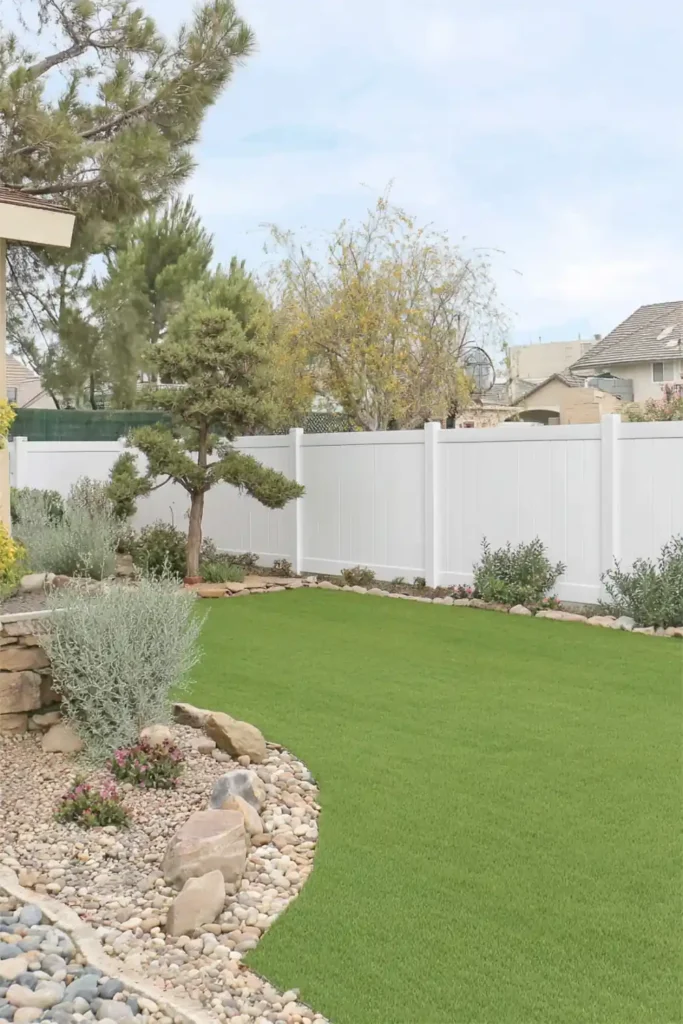
Composite Wood Privacy Fencing for Low-Maintenance Backyards
Composite fencing is another option for homeowners who like the appearance of wood but want something easier to maintain. The boards are usually made from a mix of recycled plastic and wood fibers, which creates a material that looks similar to wood but holds up better over time.
The boards are installed individually between posts, much like traditional wood fencing. Many composite fences come in natural-looking colors that imitate cedar or walnut tones. The texture often includes a subtle wood grain pattern, which helps the material blend into outdoor settings.
One thing I appreciate about composite fencing is that it doesn’t need regular sealing or staining. Occasional cleaning is usually enough to keep it looking good. If you choose this material, pairing it with natural landscaping—like shrubs, trees, or stone walkways—can help balance the more consistent appearance of the boards.
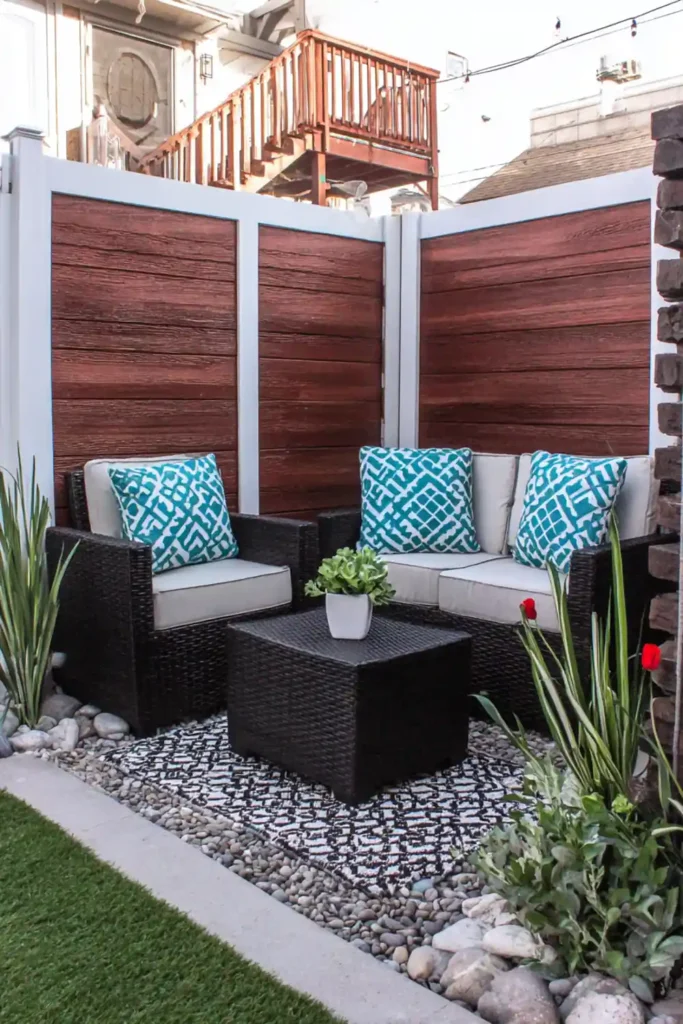
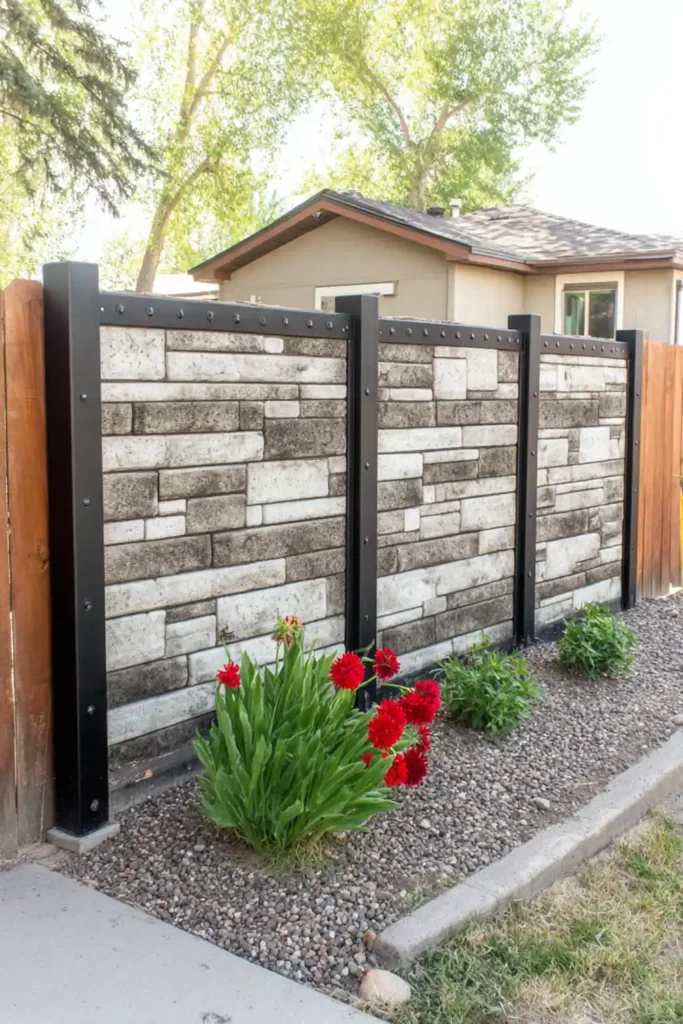
Faux Stone Modular Fence Panels with Modern Texture
Faux stone fence panels offer the look of a stone wall without the weight or construction complexity of real masonry. These panels are frequently made from molded materials like recycled rubber or lightweight composites that are textured to resemble stacked stone.
When installed between metal posts, the panels form a solid privacy wall that has a bold, modern appearance. From a distance, many people can’t tell the difference between faux stone and real stone. The textured surface also creates depth and shade, which keeps the fence from looking flat.
If you’re considering this type of fence, it works well in yards that already use stone elements, such as patios or garden paths. Coordinating the color of the panels with nearby stone features can make the fence feel better integrated with the rest of the landscape.
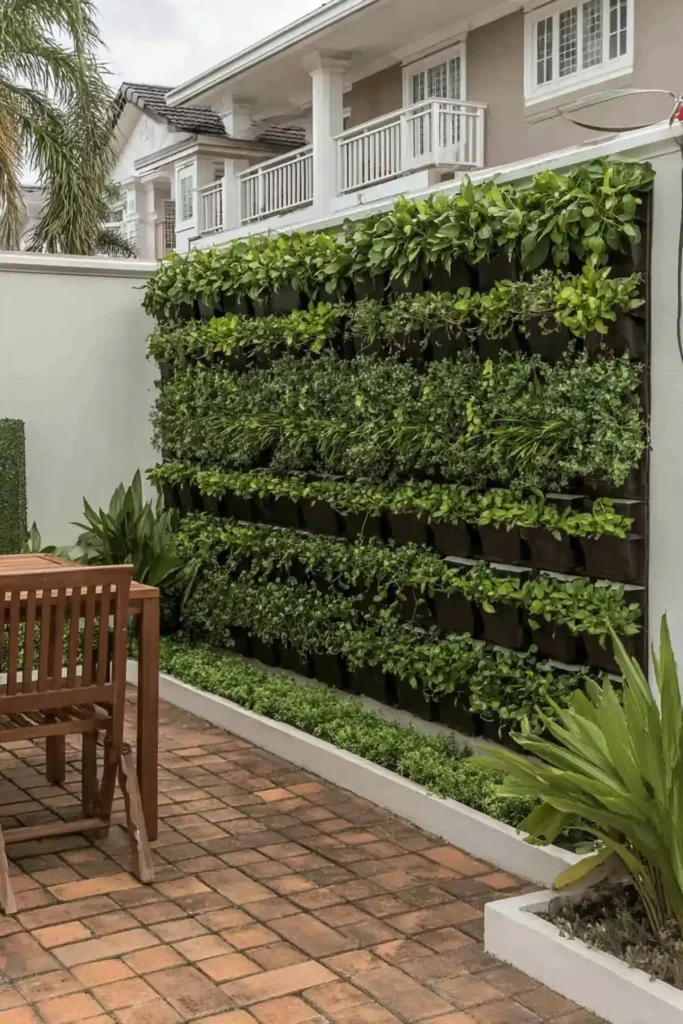
Vertical Garden Wall for a Living Privacy Fence
One privacy fence idea that always stands out to me is a vertical garden wall. Instead of building a traditional barrier, the fence itself becomes a wall of plants. It adds privacy, but it also turns a plain boundary into something alive and constantly changing through the seasons.
A vertical garden usually uses a wall structure or sturdy frame with rows of small planters or pockets attached to it. These can hold herbs, trailing plants, or dense greenery that gradually fills the surface. When the plants grow in fully, the entire wall becomes a thick layer of leaves. From a distance, it looks like a natural green background rather than a fence.
If you’re thinking about trying this, start with hardy plants that grow well in vertical planters, like ferns, ivy, or small ornamental plants. Placing the wall near a patio or seating area makes the greenery feel closer and more enveloping. With the right plant mix, the fence becomes part of the garden itself rather than just the edge of it.
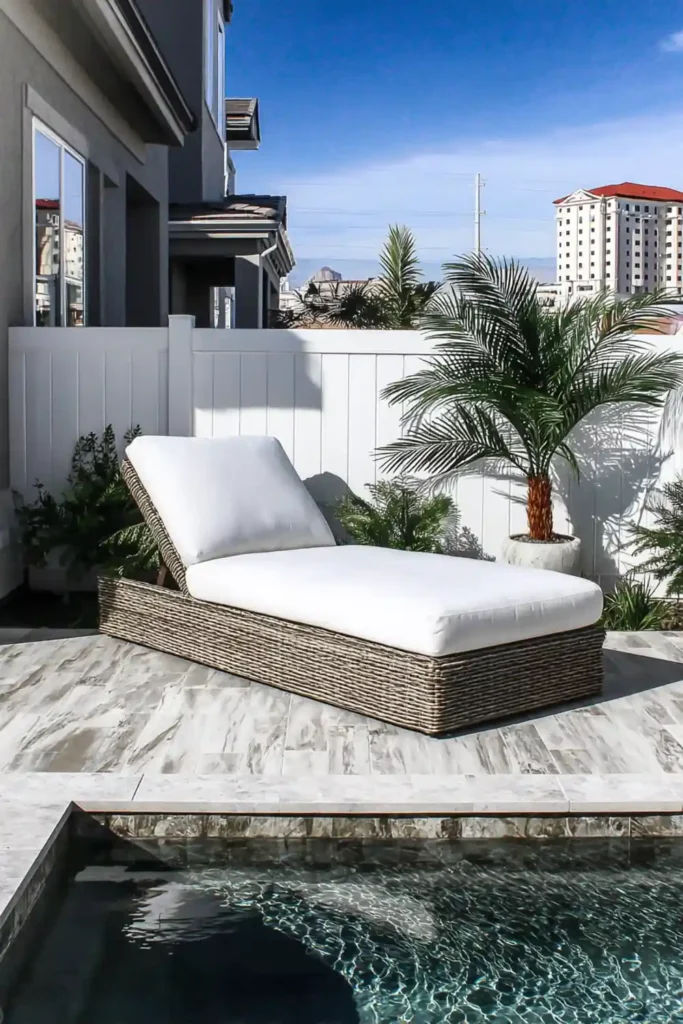
Smooth Stucco Walls for Poolside Privacy and Clean Lines
Stucco walls can create a very calm and clean look around outdoor spaces, especially near pools or modern patios. Unlike wood fences with visible boards, stucco surfaces are smooth and continuous, which gives the yard a more architectural feel.
These walls are usually built over concrete, block, or steel frames and then finished with a textured stucco coating. Many homeowners choose light neutral colors such as soft white or sand tones, which reflect sunlight and keep the space feeling bright. A simple trim line or cap along the top can add a finished feature without making the wall feel heavy.
Stucco privacy walls work particularly well when paired with minimalist landscaping. A few palm plants, small ornamental trees, or simple stone walkways nearby help soften the solid surface. Around pools, this type of fence can make the space feel more enclosed and peaceful without adding visual clutter.
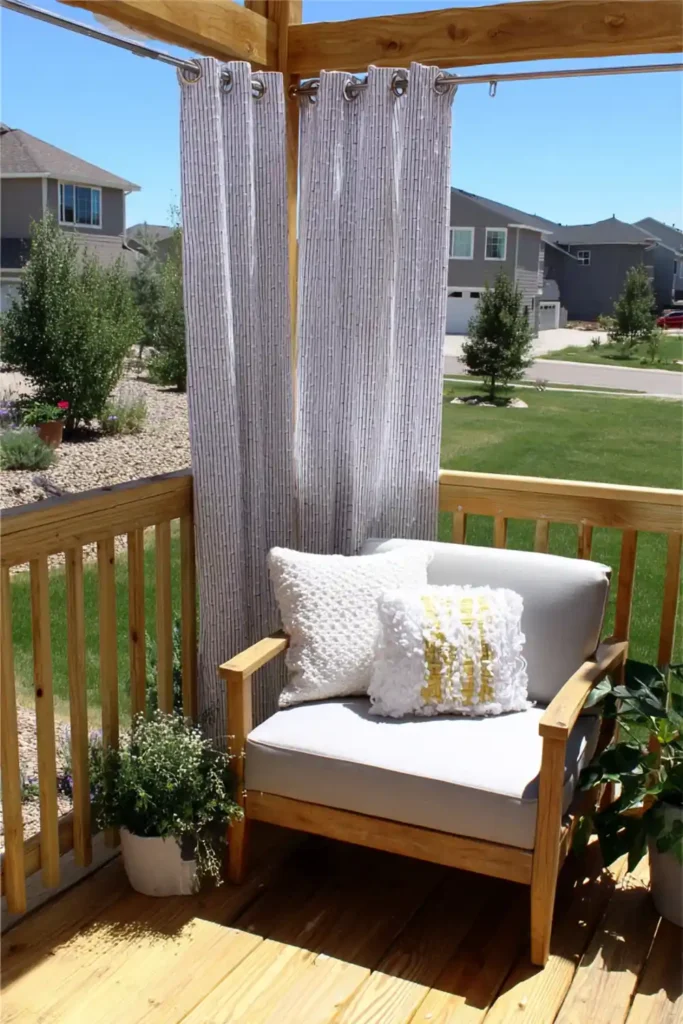
Outdoor Privacy Screens and Curtains for Decks and Balconies
Not every space needs a permanent fence. For decks, balconies, or small patios, privacy screens and outdoor curtains can provide a flexible way to create separation from nearby neighbors.
Fabric or mesh panels are often attached directly to railings using grommets, hooks, or zip ties. The material hangs vertically and blocks views while still allowing light and air to pass through. Outdoor curtains can also be mounted on rods or cables so they can be pulled open or closed depending on the situation.
One thing I’ve found helpful with this setup is choosing neutral outdoor fabrics that match the furniture or railing color. When the curtains blend with the space, they feel intentional rather than temporary. Adding a few container plants or lanterns nearby helps complete the cozy atmosphere around the seating area.
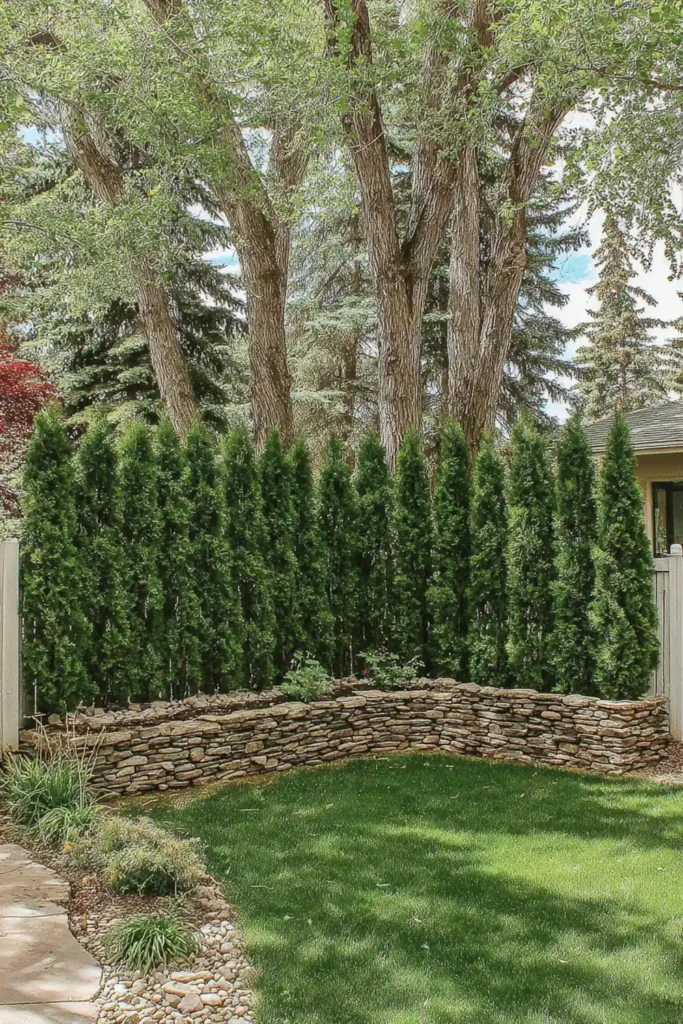
Combining Hedges with Rock Walls for Layered Yard Privacy
Sometimes the best privacy fences come from combining different materials. One approach that works especially well is pairing a low rock wall with tall hedges planted behind it. The rock provides structure, while the plants bring softness and greenery.
The wall is often built from stacked stones or smooth, rounded rocks set into concrete blocks. Above or behind the wall, dense shrubs or hedges grow tall enough to block views from neighboring properties. Together, the two layers create a fence that seems natural and well integrated with the landscape.
This multi-layered approach also contributes depth to the yard. Instead of seeing one flat fence line, you see stone textures in the foreground and greenery rising above it. Planting shrubs close enough to the wall ensures the plants eventually fill the space and create a thick natural screen.
Espalier Trees Trained Along Frames for Artistic Garden Privacy
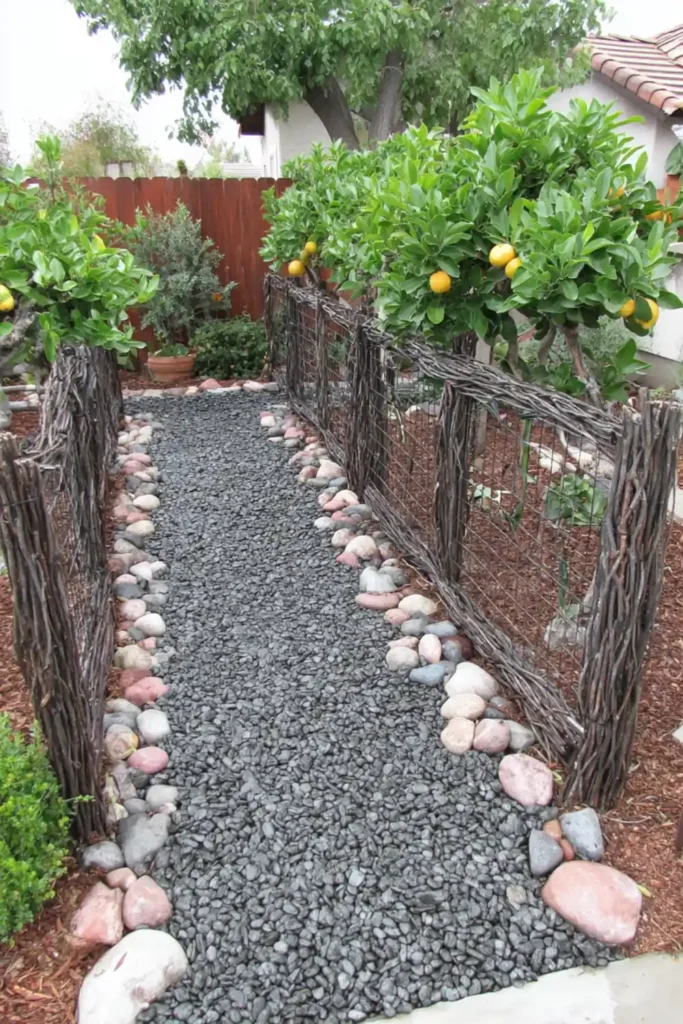
Espalier is a technique where tree branches are carefully trained to grow flat along a frame or wall. It takes patience, but the result can be both decorative and functional as a form of privacy screening.
Young trees are tied to horizontal wires or wooden frames and gradually shaped as they grow. Over time, the branches form patterns that spread sideways rather than outward. Fruit trees like apple or pear are often used for espalier, which means the fence can even produce fruit while creating privacy.
This idea works best along garden paths or narrow yard edges where space is limited. The trees create a living wall that still allows sunlight to pass through. With regular pruning and training, the structure becomes a striking feature that appears both artistic and practical in the landscape.
Creating a Backyard That Feels Private and Comfortable
Finding the right privacy fence ideas really depends on the type of space you want to create. Some homeowners prefer the warmth of wood fences, while others like the durability of stone, vinyl, or composite materials. Living fences made from plants can also bring a completely different atmosphere to a yard.
What I’ve learned from working on my own outdoor spaces is that a fence does more than mark the edge of the property. It shapes the way the yard feels. The right design can make the space calmer, more comfortable, and easier to enjoy with family or friends.
Whether you choose a natural hedge, a modern horizontal fence, or a rustic stone wall, the goal is the same: creating a yard that feels like your own peaceful corner of the outdoors. With a little careful planning and creativity, a privacy fence can become one of the most useful features in the entire landscape.
You can follow The Decor Nest on Pinterest and Facebook for new ideas, room inspiration, and styling tips shared regularly.