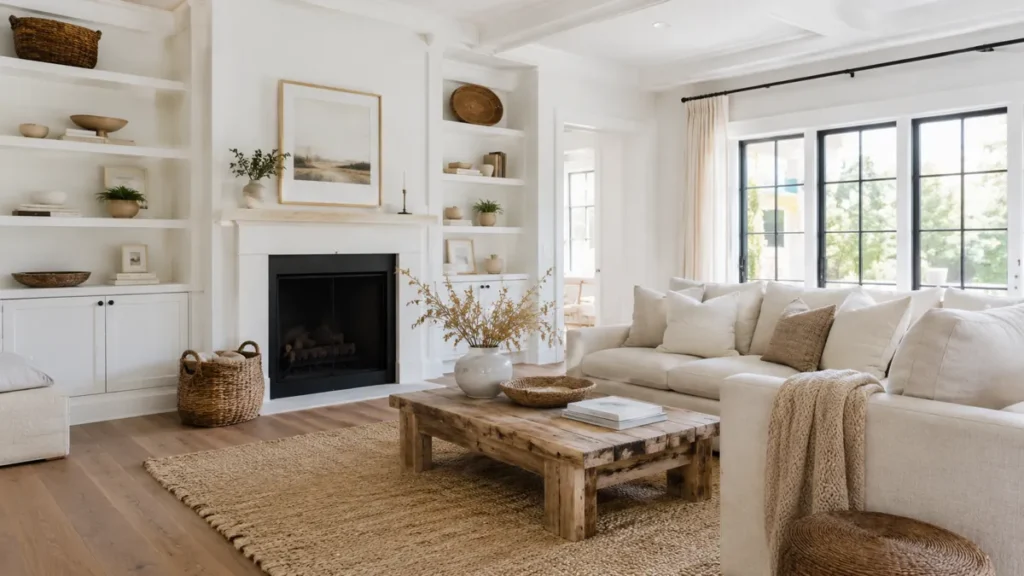

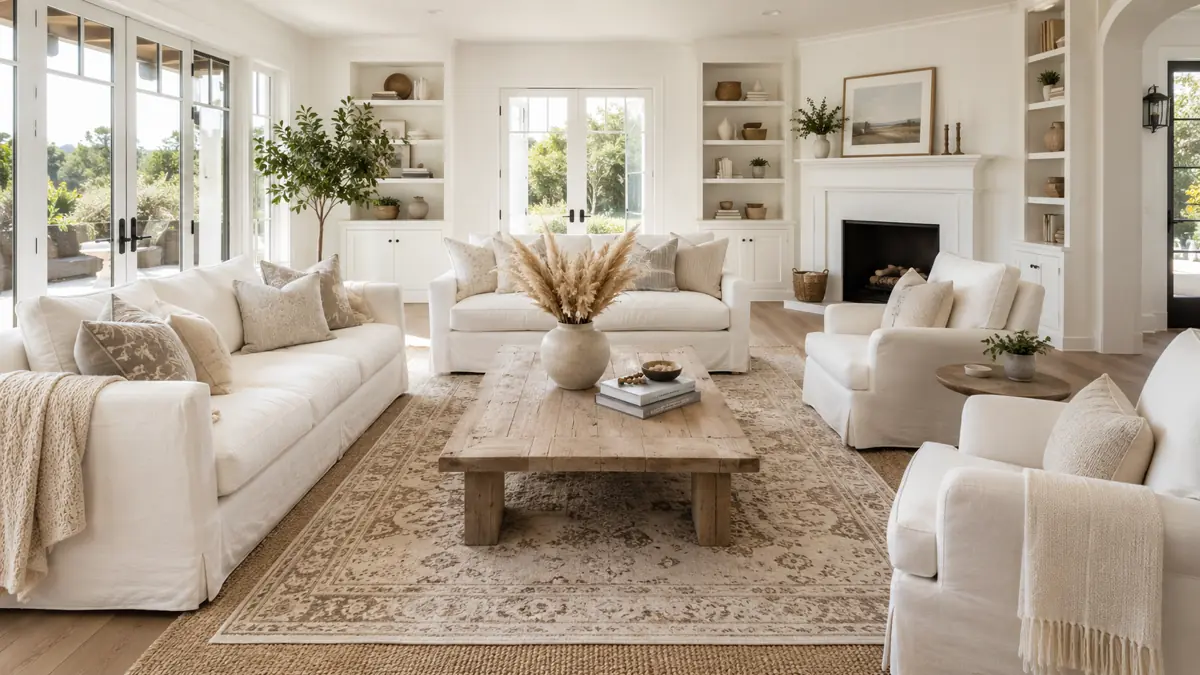
Neutral fall decor ideas are a good fit when you want your home to feel seasonal without filling every room with bright orange and red. Cream, beige, taupe, soft gray, and natural wood bring in autumn warmth while still working with the furniture and colors you already have.
The most inviting spaces usually rely on texture rather than bold color. Knitted fabrics, rustic wood, dried leaves, linen, and softly glowing candles can help a room feel noticeably cozier without demanding a complete makeover. These ideas cover simple ways to style seating areas, shelves, tables, mantels, and entryways throughout the season.
Pillow Covers with Knitted Pumpkins for Cozy Seating Areas
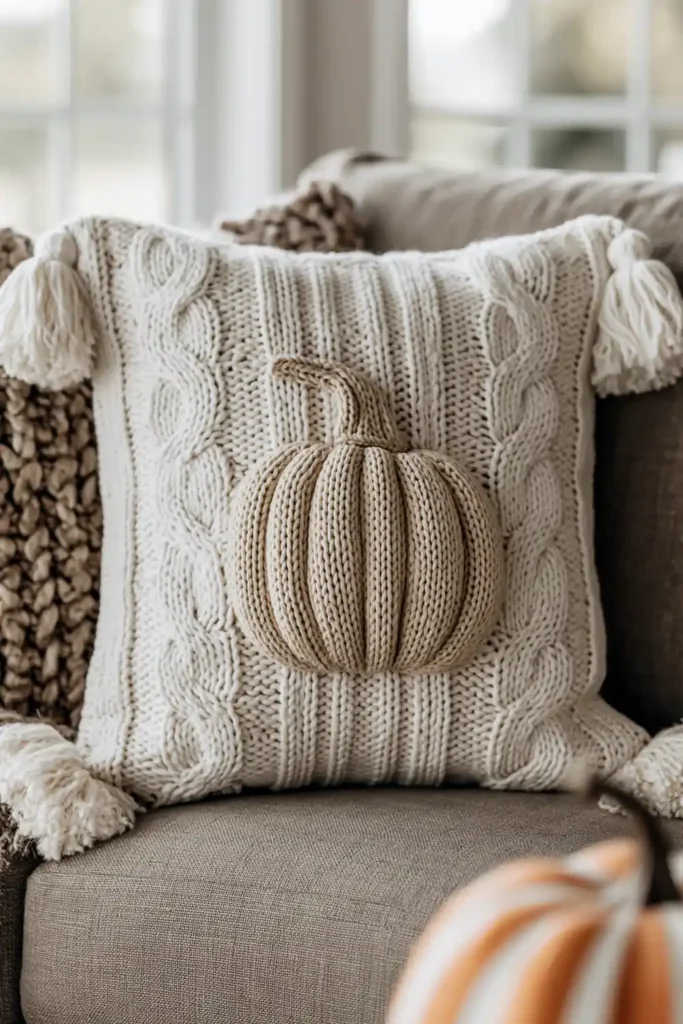
Pillow covers with knitted pumpkin designs add a clear fall feature without taking over the entire seating area. The raised stitching gives the pillows more character than a flat printed pattern, while shades such as cream, beige, and soft gray keep the look calm and easy to live with.
I would place one pumpkin pillow beside one or two plain cushions rather than covering the whole sofa with matching designs. A cream knitted pumpkin looks especially comfortable against a taupe couch, while gray or beige versions sit naturally on wooden chairs and upholstered benches. Mixing the knitted cover with linen or softly woven cushions keeps the arrangement from looking too coordinated.
Removable covers are also practical because they can be folded away once the season changes. Before buying new inserts, check whether the covers fit pillows you already own. This small switch is often enough to give a reading chair, window seat, or living room sofa a warmer autumn feel.
Neutral Pumpkins Used as Decorative Book Holders
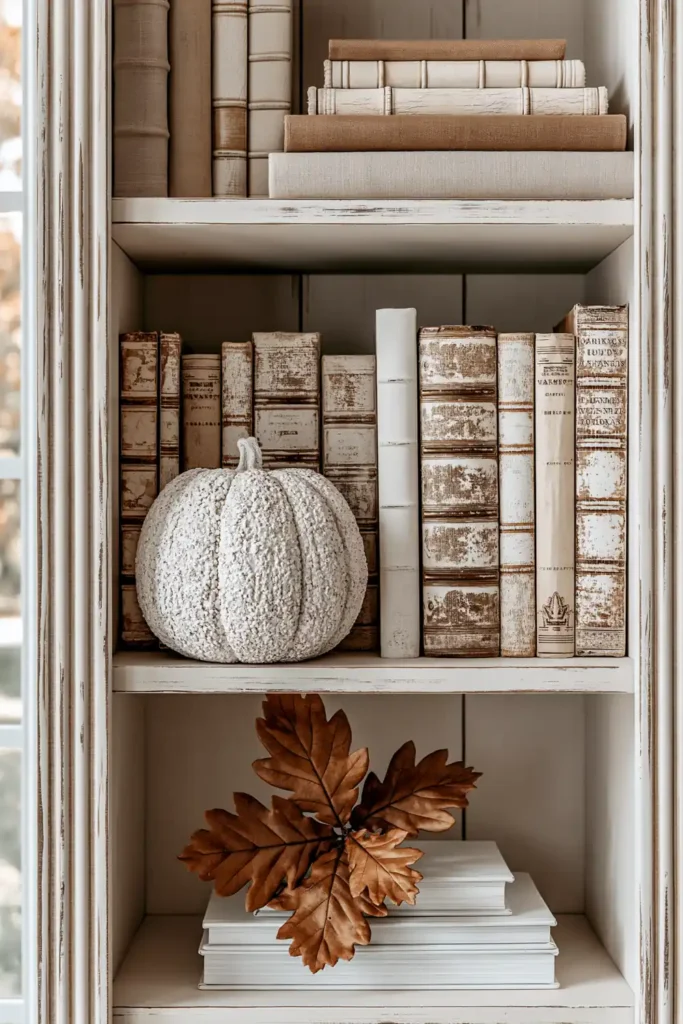
Small pumpkins can make useful decorative book holders on shelves, desks, and side tables. Ceramic, wooden, or painted pumpkins in white, cream, and light beige provide enough visual weight to frame a short row of books while bringing a subtle seasonal detail into the room.
To achieve a balanced arrangement, place two similar pumpkins on either side of three to five books. They do not need to match perfectly, but they should feel close in size so the display does not lean visually to one side. A matte ceramic pumpkin suits a tidy office shelf, while a distressed wooden version feels more relaxed in a comfortable reading nook. Real pumpkins can work too, although they are better placed on protected surfaces.
Choose books with neutral spines or turn a few decorative books around if their bright covers compete with the pumpkins. Leaving some open space around the arrangement is important. The pumpkins should look like thoughtful accents, not objects squeezed into an already crowded shelf.
Layered Neutral Pumpkin Displays for Tables and Mantels
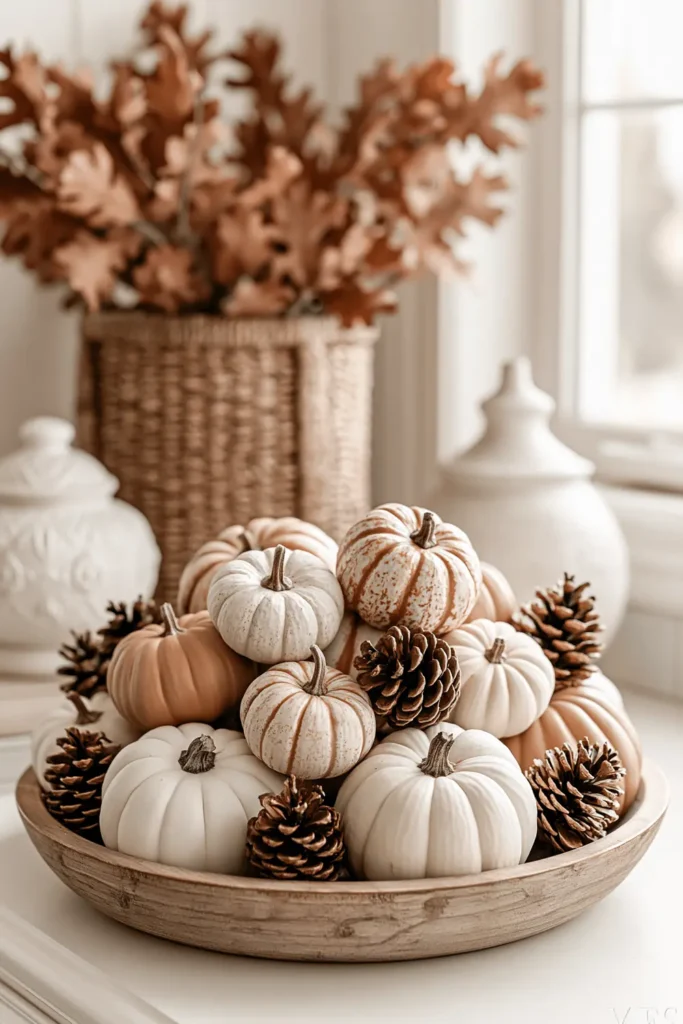
A grouped pumpkin display creates more impact than scattering individual pumpkins around the room. Using several sizes in white, cream, and beige gives the arrangement depth, while ceramic, fabric, and real pumpkins introduce enough texture to keep the neutral palette interesting.
Start with the largest pumpkin slightly off-center, then place medium and smaller pumpkins around it. On a dining table, a long arrangement works well when it stays low enough for people to see across it. A mantel display can have more height, especially when the pumpkins are layered in front of existing artwork or a mirror. Combining smooth ceramic surfaces with soft fabric pumpkins helps the group feel collected rather than purchased as one matching set.
A shallow wooden tray can hold the arrangement together and make it easier to move when the table is needed. Try leaving small gaps between the pumpkins instead of packing them tightly. That bit of breathing room allows each shape and material to remain visible.
Rustic Fall Wreaths with Wheat and Cotton Branches
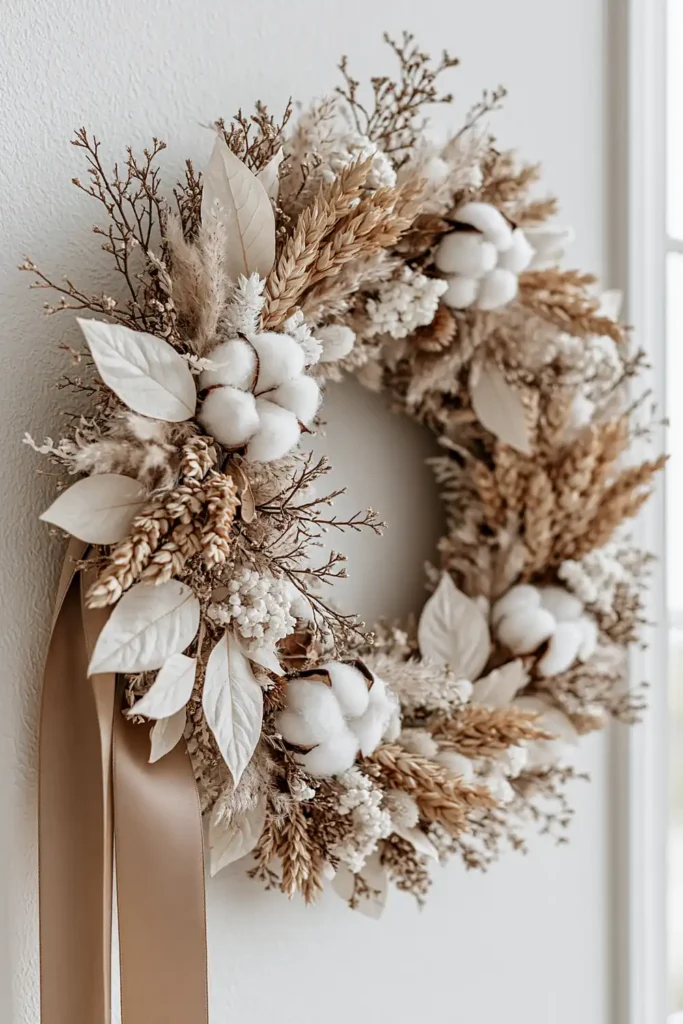
A rustic wreath made with dried wheat and cotton branches brings fall texture to a front door, fireplace mantel, or interior wall without relying on strong seasonal colors. The pale cotton, amber wheat, and earthy stems naturally suit neutral fall decor ideas and work especially well in homes with wood, linen, or woven accents.
The wreath does not need to be completely full. A slightly open design with visible branches commonly feels lighter and more natural than a dense ring. Neutral ribbon in beige, flax, or soft brown can be tied loosely at the bottom or used as a simple hanging loop. On a dark front door, the pale materials stand out clearly, while an indoor wreath looks best against a plain wall where the fine textures can be seen.
Keep dried wheat away from open flames and damp outdoor areas. For a sheltered entryway, it can last through the season. Indoors, hanging it above a mantel adds height without taking up valuable surface space.
Candles and Lanterns for a Soft Autumn Glow
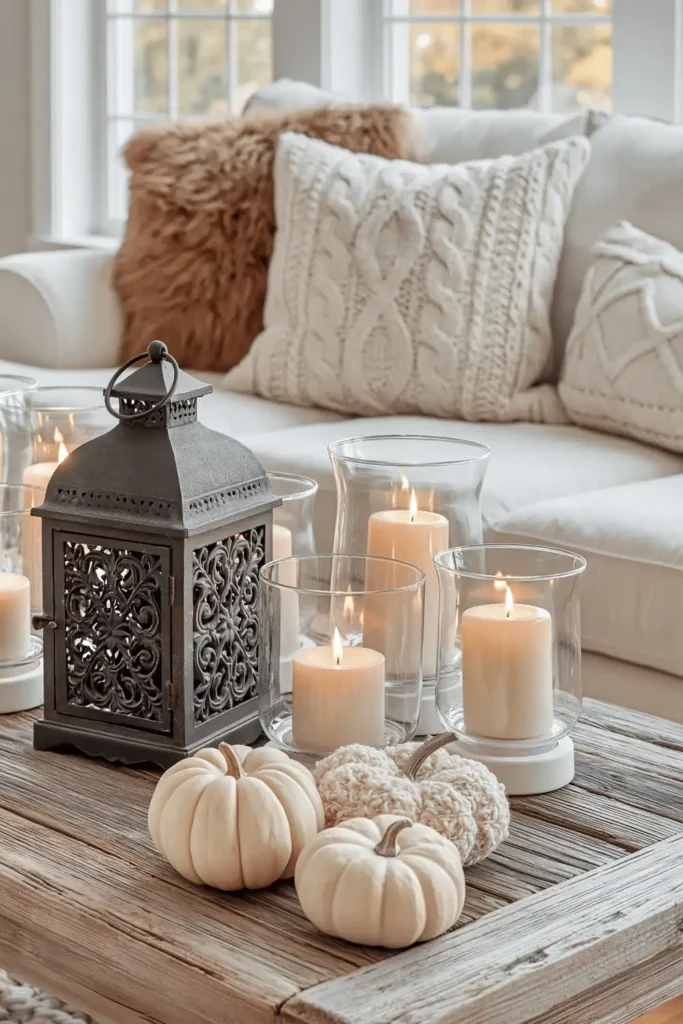
Candles and lanterns bring warmth into neutral fall decor without adding more objects in strong seasonal colors. Their soft light changes the atmosphere of a room, especially in the evening, and makes beige, cream, and light brown finishes feel richer and more inviting.
Simple lanterns with rustic metal or weathered wood frames work well on a hearth, console table, or covered porch. Inside, use cream or ivory candles so the display stays calm and coordinated. On a dining table, a pair of smaller lanterns can frame a centerpiece, while one larger lantern looks natural beside a chair or at the end of a mantel. Keeping the shapes simple prevents the arrangement from feeling overly decorative.
I like to vary the height rather than using several candles of the same size. Place one taller candle beside a shorter lantern, then leave a little open space around them. Battery-operated candles are useful in narrow shelves, busy walkways, and homes where an open flame would be impractical.
Pine Cone, Acorn, and Dried Leaf Centerpieces
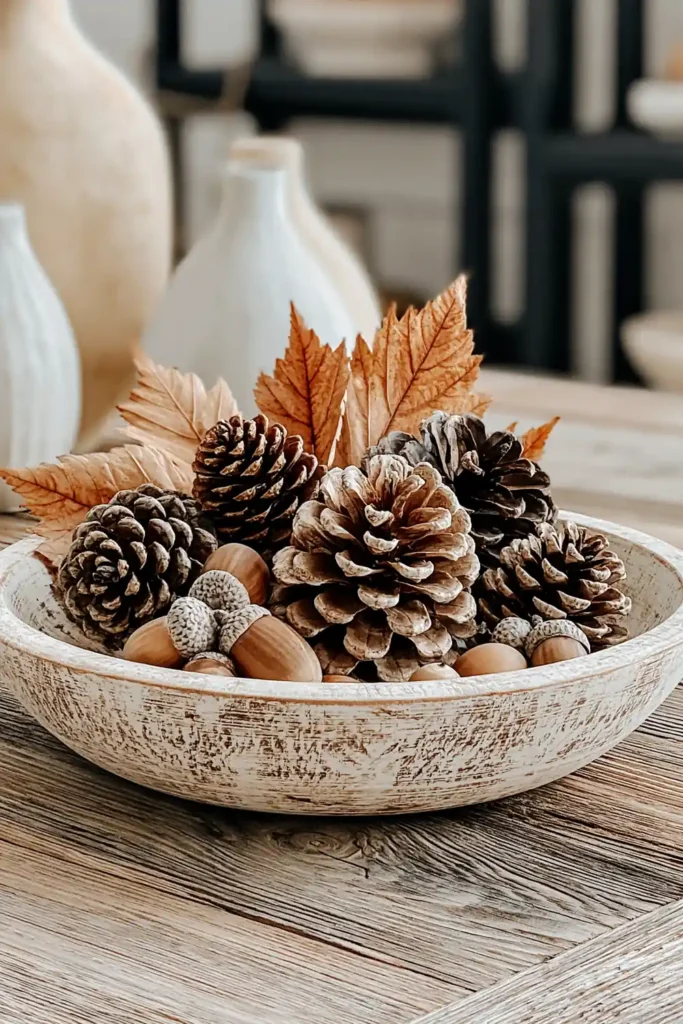
A bowl or tray filled with pinecones, acorns, and dried leaves is one of the easiest ways to bring natural fall texture indoors. The mix of rough shells, layered leaves, and woody surfaces adds interest even when the entire arrangement stays within brown, beige, and muted tan tones.
Choose a neutral container that gives the materials room to spread out. A shallow wooden tray suits a coffee table, while a ceramic bowl in cream or off-white looks tidy on a dining table or entryway console. Larger pine cones can form the base, with acorns tucked into the gaps and dried leaves placed loosely across the top. Avoid arranging everything too evenly, since a slightly relaxed layout feels more natural.
Before bringing outdoor finds inside, make sure they are clean and completely dry. You can also combine collected pieces with store-bought natural elements if you need a fuller display. Keeping the centerpiece low makes it practical for dining tables and helps the textures remain easy to see.
Textured Throw Blankets in Cream and Beige
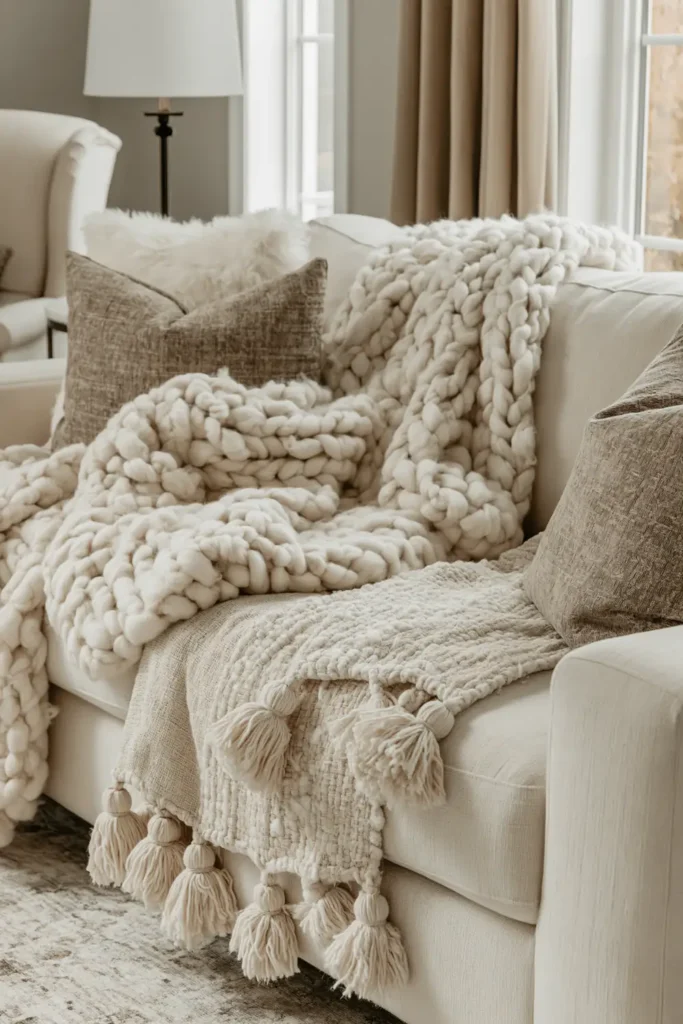
Textured throw blankets make a living room feel ready for cooler weather even when nothing else changes. Cable knit and faux fur add softness and depth, while cream and beige shades blend easily with neutral sofas, wooden chairs, and existing cushions.
A thick cable-knit throw looks relaxed when folded over the back of a couch or draped across one arm. Faux fur works better as a smaller accent because its texture is visually heavier. Try pairing one plush blanket with smoother linen or cotton upholstery so the room does not feel overloaded with soft materials. On an occasional chair, a neatly folded throw can also soften straight wooden lines and make the seat feel more welcoming.
There is no need to place a blanket on every piece of furniture. One or two well-positioned throws usually create enough seasonal warmth. Keep the most frequently used blanket within easy reach, and use a basket beside the sofa for extra throws so they remain tidy but still seem accessible.
Neutral Fall Table Settings with Linen and Wood
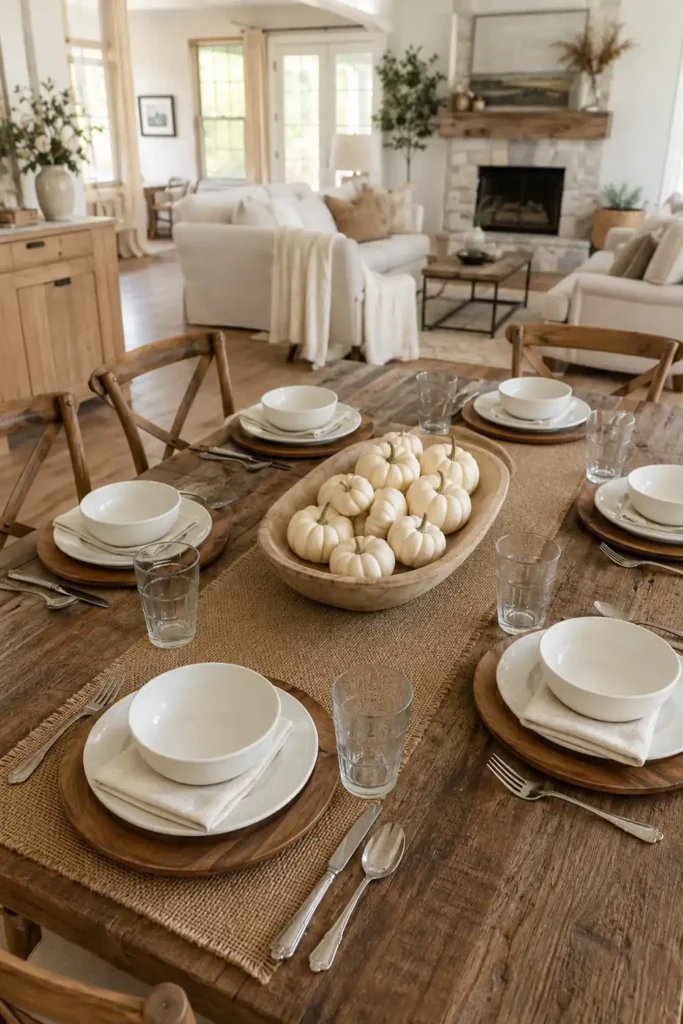
Neutral table settings create an autumn mood through materials rather than bright colors. Linen runners, simple white or off-white dishes, burlap details, timber accents, and dried flowers work together to make the table feel seasonal while still looking practical for everyday meals.
Start with a natural linen runner instead of covering the full table. This allows some of the wood surface to remain visible and keeps the setting relaxed. Layer plain dishes with woven or burlap placemats, then add small wooden elements such as napkin rings, boards, or candle holders. A modest vase of dried flowers can sit in the center without blocking conversation or taking up too much serving space.
You do not need a complete new dish set to create this look. Use the white plates you already have and change only the runner, napkins, or centerpiece. Keeping each place setting simple also makes the table easier to clear, which matters when the arrangement is meant for regular use rather than a single special occasion.
Soft Ivory, Taupe, and Gray Cushions
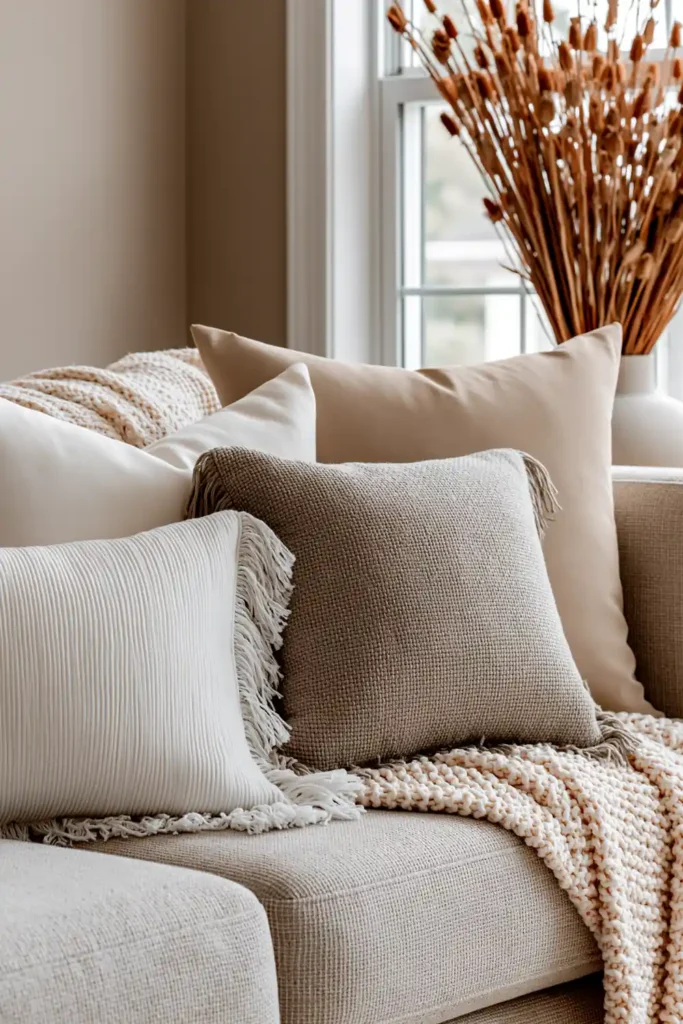
Soft cushions in ivory, taupe, and gray can cause a room to feel warmer without changing its overall color scheme. These shades work especially well in fall because they add depth while staying quiet enough to blend with most sofas, chairs, and bedding.
The most natural-looking arrangement usually mixes tones and textures rather than using identical cushions. An ivory linen cushion can sit beside a taupe velvet one, while a soft gray woven cushion adds a slightly cooler note. On a bed, place the larger cushions at the back and use one smaller textured cushion in front. On a sofa, an uneven grouping commonly feels more relaxed than an exactly symmetrical arrangement.
Try working with the cushions you already own before buying new ones. Moving a few from the bedroom to the living room can create a fresh combination at no cost. If the palette starts to look flat, add one cushion with subtle stitching, a nubby weave, or a soft fringe to add texture without adding a new color.
Tall Vases Filled with Wheat and Cotton Stalks
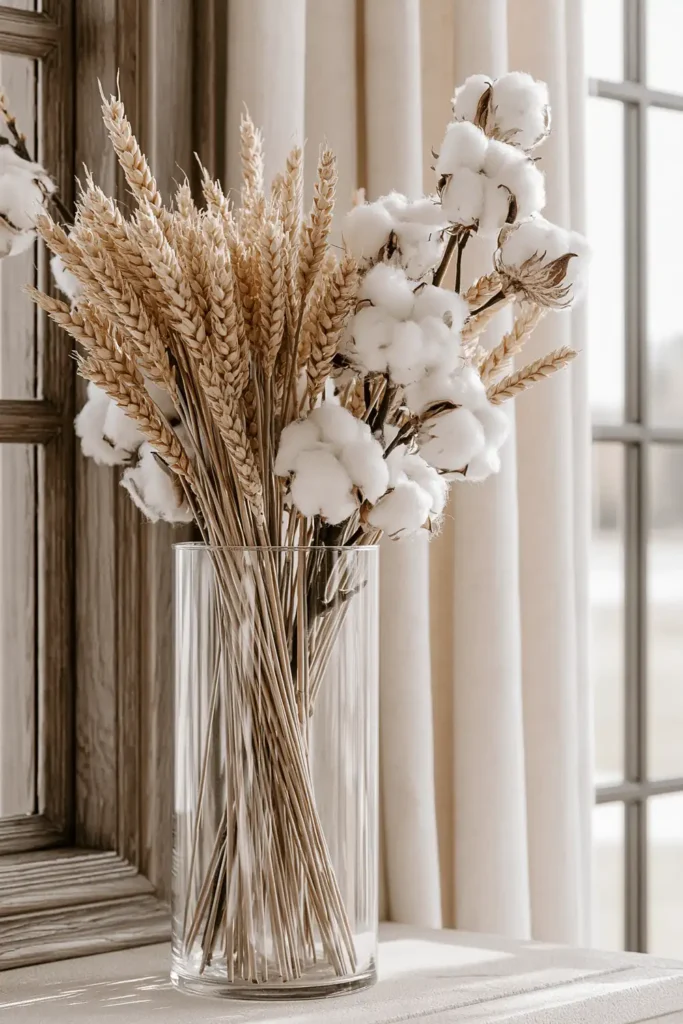
Tall vases filled with wheat and cotton stalks bring height and natural movement to an entryway or dining room. The soft white cotton and warm amber wheat create a balanced neutral arrangement that feels seasonal without being excessively decorative.
A simple ceramic or glass vase works best because it allows the stems to remain the focus. Place the taller wheat stalks toward the center and let the cotton branches spread slightly around the sides. The arrangement should feel loose rather than tightly packed. On a dining table, use a narrower vase so it does not take up too much space. In an entryway, a larger arrangement can sit comfortably on a console and help fill the vertical space beneath a mirror or artwork.
Trim the stems at different lengths before placing them in the vase. This prevents the top from forming one flat line and gives the display a more natural shape. Keep the vase away from crowded shelves so the fine details of the stalks remain visible.
Burlap Accents for Rustic Neutral Fall Decor
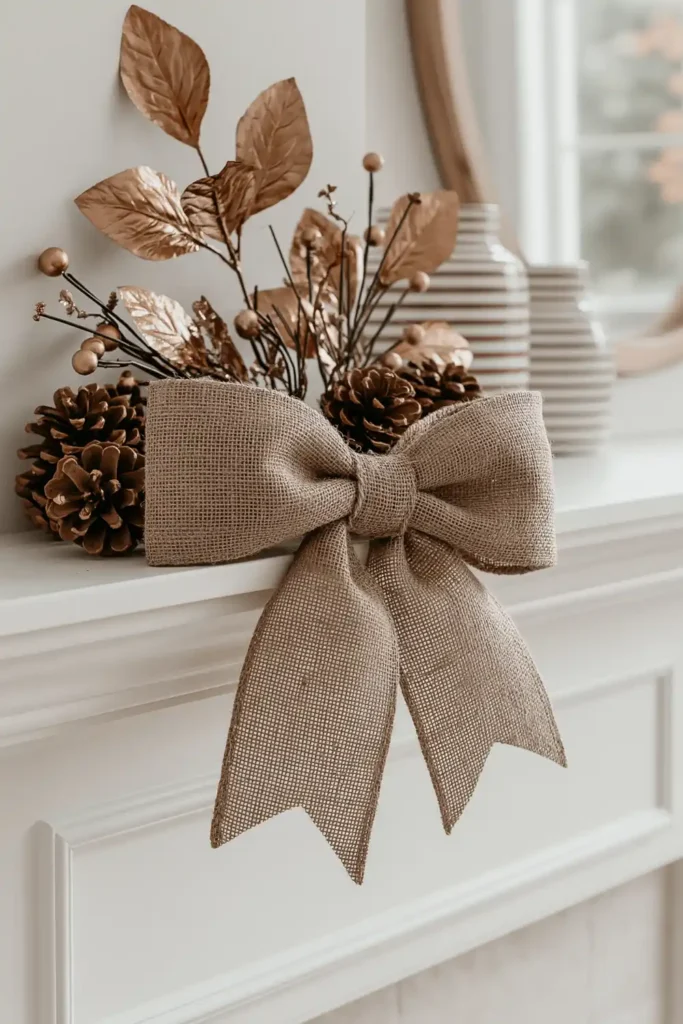
Burlap lends a rustic layer to neutral fall decor through its coarse texture and warm natural color. It works well on dining tables, wreaths, and simple decorative pieces because even a small amount creates noticeable contrast against smoother materials.
A burlap runner can soften a polished dining table while still allowing the wood to show at the edges. Smaller pieces can be used as placemats, wreath bows, or ribbons tied around plain glass vases. Because burlap already has a strong texture, it looks best beside simple materials such as white ceramics, linen napkins, or natural wood. Too many burlap elements in one area can make the room feel heavy.
Use it as an accent rather than the main material. One runner or a few narrow ribbons are usually enough. If the edges begin to fray, trim the loose threads neatly or fold the fabric under. It keeps the rustic look intentional rather than unfinished.
Natural Fiber Rugs for Warm Earthy Texture
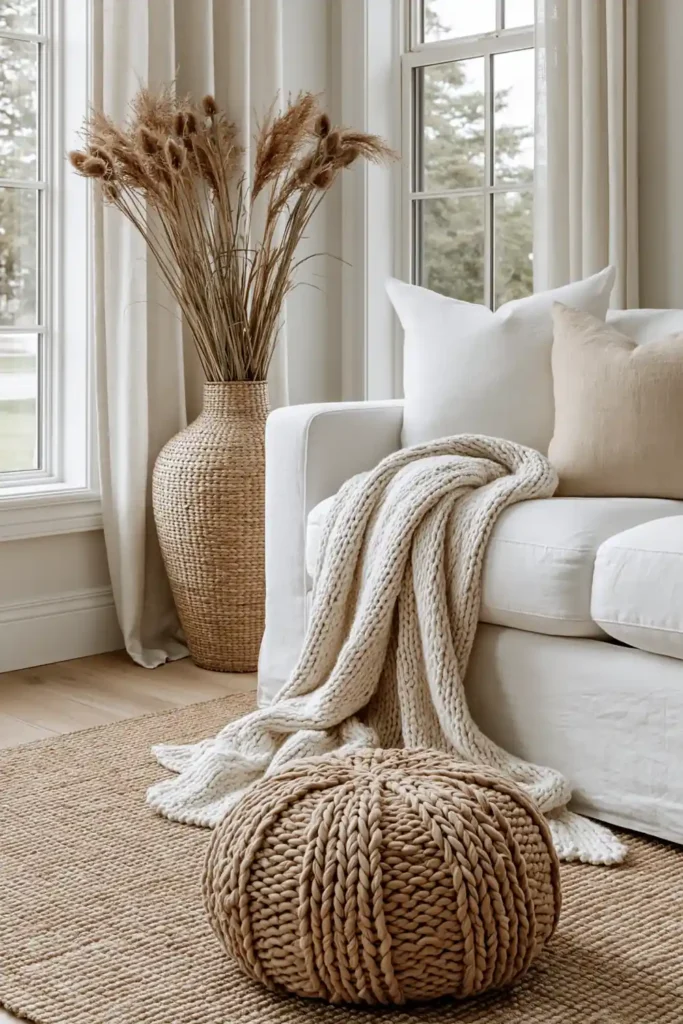
Natural fiber rugs made from jute or sisal bring earthy texture into living rooms, entryways, and dining areas. Their neutral color creates a calm base for fall decorating, while the woven surface adds warmth beneath furniture.
Under a dining table, choose a rug large enough for the chairs to remain on it when pulled out. In a living room, a jute rug can help connect the sofa, chairs, and coffee table without competing with cushions or throws. The texture works especially well with wood furniture, linen upholstery, and cream-colored decor. In an entryway, a smaller natural fiber rug brings charm while keeping the palette simple.
These rugs can feel firm underfoot, so consider layering a softer, smaller rug over the top in a seating area. Vacuum gently using a setting without a rotating brush, since aggressive cleaning can loosen the fibers. Keeping the rug dry is also important, especially in entryways where damp shoes may be common.
Neutral Felt Leaf Garlands for Mantels and Stairs
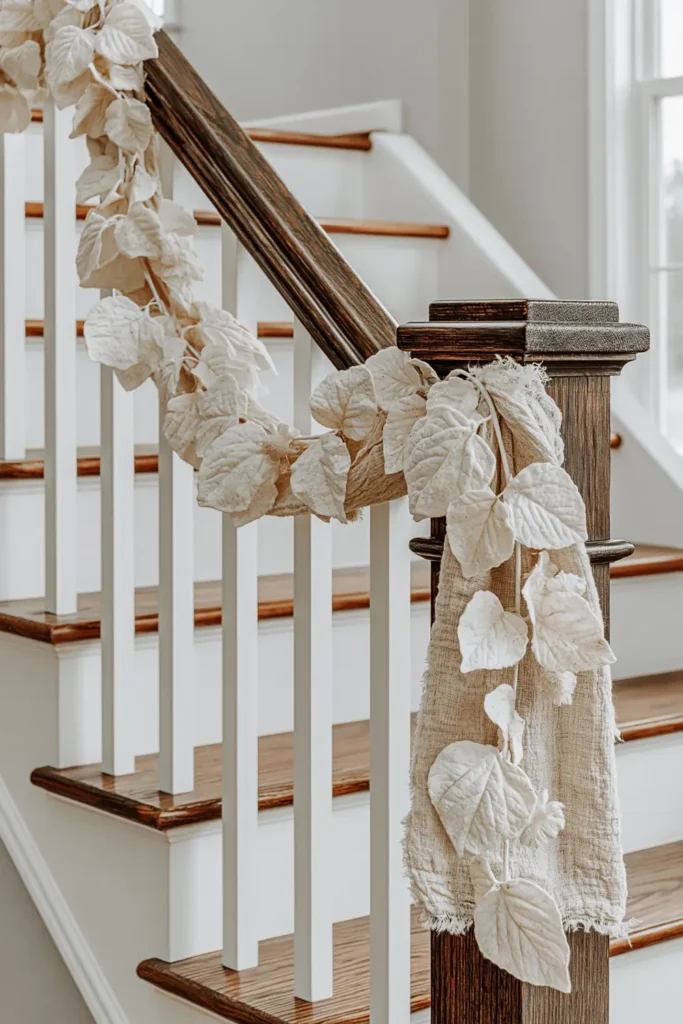
A neutral felt leaf garland adds a soft seasonal detail to mantels, shelves, and stair railings without causing the space to feel too busy. White and beige felt keep the look understated, while the repeated leaf shapes still make the fall theme easy to recognize.
On a mantel, let the garland follow a gentle curve instead of pulling it completely straight. This gives the leaves more room to hang naturally and makes the arrangement feel less formal. Along a staircase, the garland can be loosely attached to the railing so it follows the slope without bunching. Felt works especially well beside wood, simple ceramics, and cream-colored pumpkins because its matte texture softens harder surfaces.
Choose a garland with enough spacing between the leaves so each shape remains visible. If the strand is longer than the area you want to decorate, avoid folding it into a thick bundle. Let the extra length trail slightly at one end or use it on a nearby shelf for a more relaxed finish.
Wooden Trays, Bowls, and Candle Holders
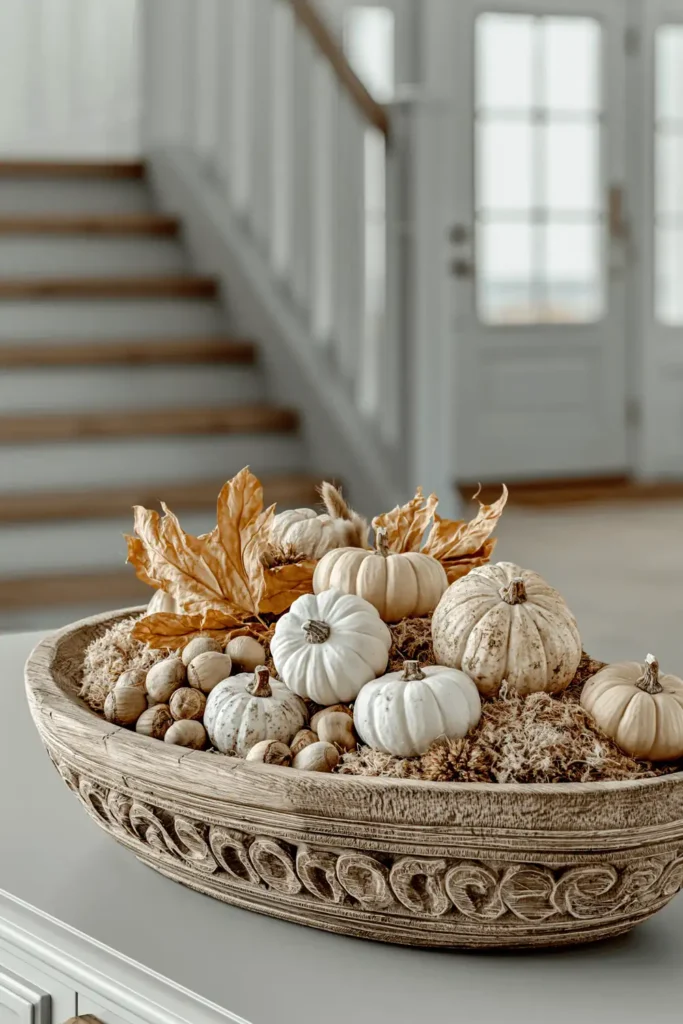
Wooden details help neutral fall decor feel warmer and more grounded. Trays, bowls, and candle holders bring in natural grain and earthy color, making them useful for balancing cream ceramics, soft fabrics, and pale seasonal decorations.
A wooden tray can organize a small group of candles, pumpkins, or dried leaves on a coffee table or dining table. Bowls work well for acorns, pinecones, or little knitted pumpkins, while simple candle holders add height without introducing another color. Mixing wood tones is fine, but keeping them within a comparable warm range helps the room feel connected. Smooth wood looks slightly cleaner, while rough or weathered finishes add a more rustic character.
Use wooden pieces to gather smaller items instead of spreading them across every surface. This makes the decor easier to move and prevents shelves or tables from feeling cluttered. A single tray with three or four carefully chosen objects often looks more intentional than several separate decorations.
Warm White Twinkle Lights for Shelves and Doorways
Warm white twinkle lights create a subtle glow that works especially well during darker fall evenings. Draped along mantels, shelves, or doorways, they add atmosphere without taking up surface space or introducing bold seasonal colors.
Choose lights with neutral or clear wiring so the strand blends into the background during the day. On a shelf, tuck part of the wire behind books or decorative objects and let the small bulbs remain visible. Across a mantel, the lights can be woven loosely around a felt garland or arranged behind pumpkins to create gentle depth. Around a doorway, keep the strand close to the frame so it looks tidy rather than loosely hanging into the walkway.
Avoid using too many separate strands in one room. One softly lit area usually creates a stronger effect than several competing displays. Battery-operated lights are useful where outlets are limited, and built-in timers make them easier to enjoy without switching them on and off each evening.
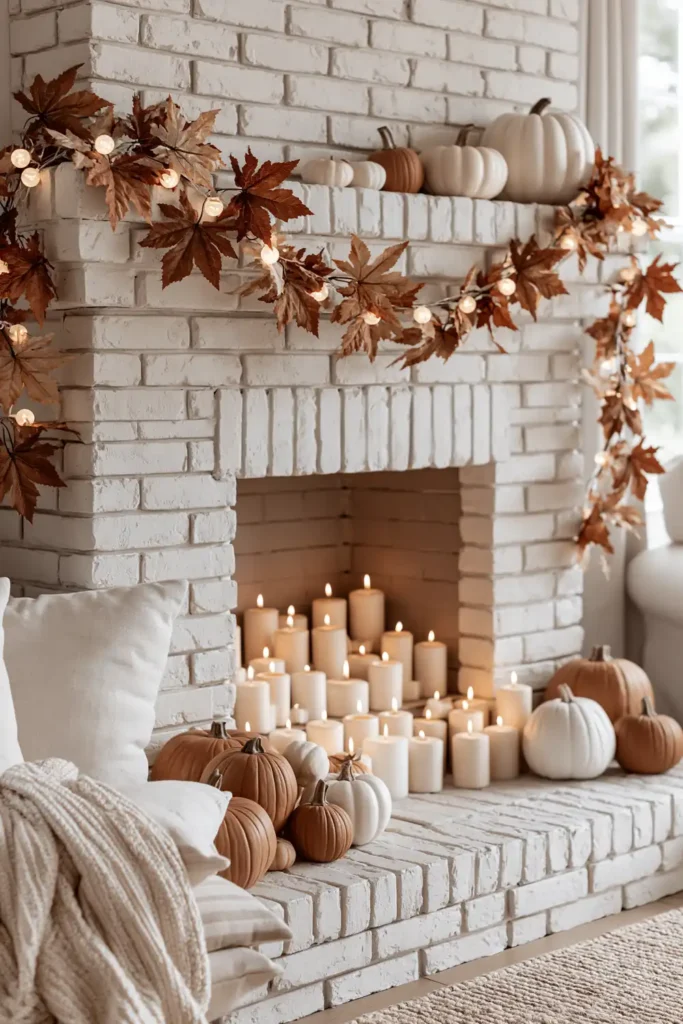
Dried Hydrangeas in Cream and Beige Tones
Dried hydrangeas bring fullness and texture to neutral fall arrangements through their layered petals and softly faded color. Cream and beige blooms work well in simple vases, wreaths, and centerpieces because they feel seasonal without looking overly themed.
A small cluster can fill a ceramic vase on a mantel, while a wider arrangement suits a dining table or entryway console. The blooms are already visually detailed, so the container should remain simple. Off-white pottery, clear glass, or a plain wooden vessel allows the texture of the flowers to stand out. For a wreath, dried hydrangeas can be grouped unevenly rather than placed at equal intervals, which gives the design a more natural shape.
Handle the flowers gently because dried petals can break easily. Keep them away from humid rooms and direct sunlight, which may lead to fading or damage. Even a few stems can make a strong display, so there is no need to overcrowd the vase.
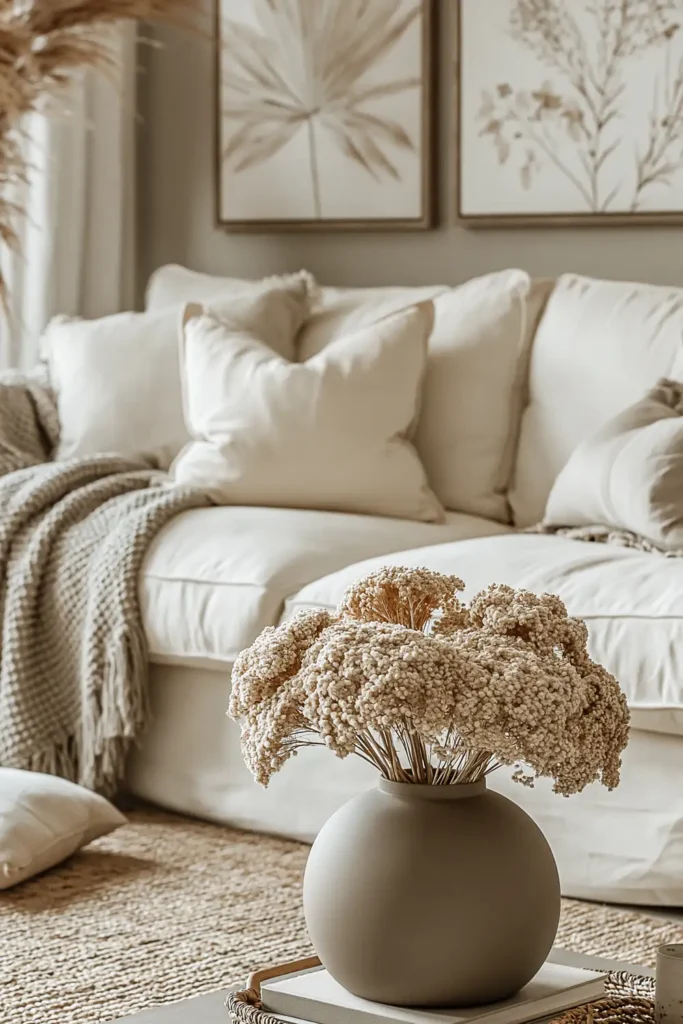
Pumpkin-Shaped Vases with Neutral Flowers
A pumpkin-shaped vase brings a recognizable fall detail into the room while still feeling softer than a bright seasonal decoration. When the vase is paired with neutral-colored flowers, it can work on a dining table, mantel, or entryway console without crowding the rest of the decor.
Choose a vase in cream, white, or a muted natural finish so the shape provides the seasonal interest. Fill it with pale dried flowers, soft beige stems, or understated blooms that keep the arrangement cohesive. A wider pumpkin-shaped vase looks balanced at the center of a table, while a smaller one fits neatly between books, candles, or framed artwork on a mantel.
Keep the arrangement simple enough that the pumpkin form remains visible. If the flowers are too full, the vase can disappear beneath them. Trimming the stems to different heights creates a loose shape and helps the flowers feel natural rather than tightly arranged.
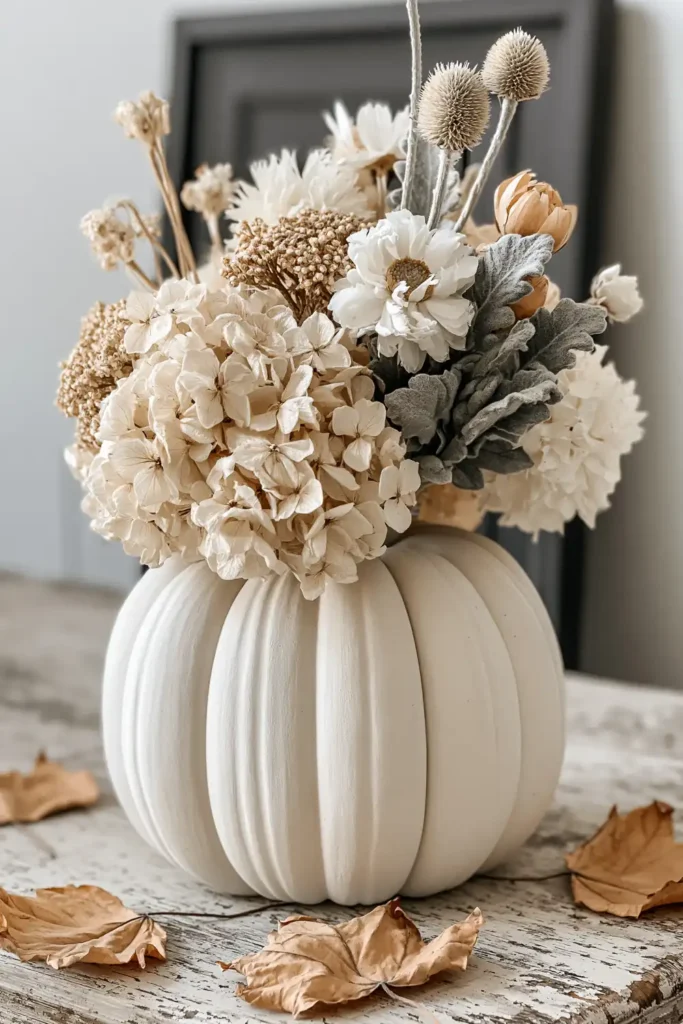
Little Knitted Pumpkins for Shelves and Decorative Bowls
Little knitted pumpkins add handmade texture to shelves, mantels, and tabletop displays. Their soft surfaces and muted shades of beige, cream, and gray make them easy to combine with wood, ceramic, and natural fall materials.
A few small pumpkins can be grouped inside a wooden or ceramic bowl, while individual pieces can fill small gaps on bookshelves. Mixing two or three sizes gives the display more depth, but keeping the colors closely related prevents it from looking scattered. They also work well beside candles, dried hydrangeas, or a short stack of books because their rounded shape softens straighter lines.
Avoid placing them on every available surface. One bowl or one small shelf arrangement is usually enough to make the texture noticeable. Since they are lightweight and easy to store, knitted pumpkins are especially practical for seasonal decorating. They can be brought out each autumn and rearranged in a different part of the home.
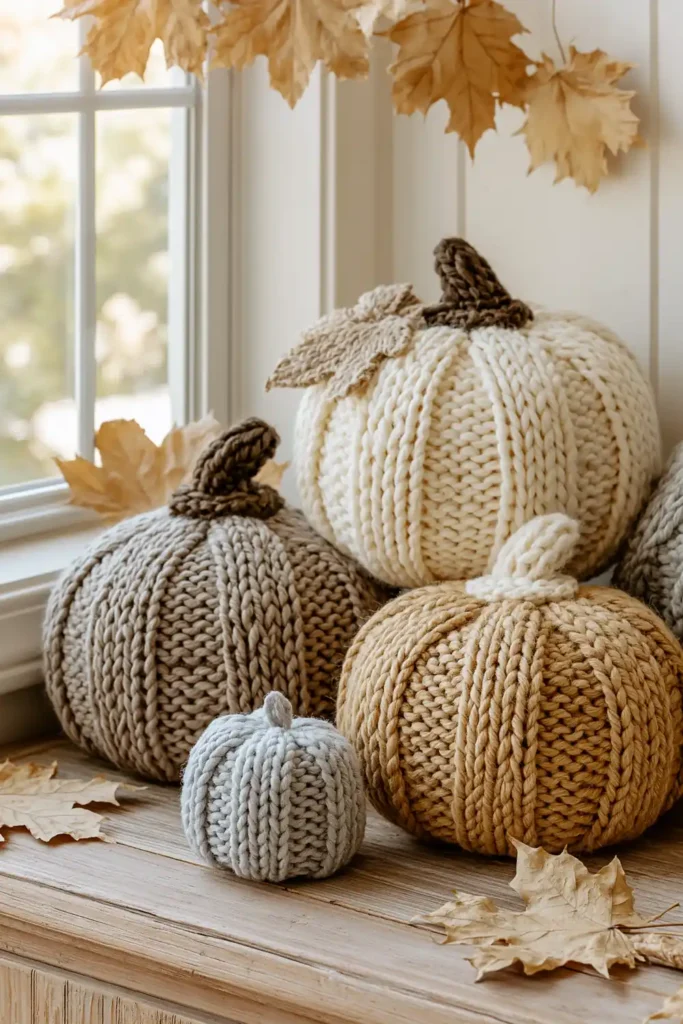
Bringing Neutral Fall Details Together
The most comfortable neutral fall spaces are usually built from small changes rather than one large display. Gentle fabrics, pale pumpkins, natural wood, dried flowers, and warm lighting create an autumn atmosphere while allowing the home to keep its familiar character.
Try starting with one area, such as the sofa, dining table, or entryway console. Add texture first, then bring in a few seasonal shapes and natural materials. There is no need for every idea to appear in the same room. Spreading a handful of thoughtful details throughout the home regularly feels calmer and more personal.
Neutral fall decor ideas leave plenty of room to experiment with what you already own. A different pillow cover, a gathered bowl of natural elements, or a softly lit mantel can be enough to make the season feel present in a simple and welcoming way.