
When I started working on my yard, one of the easiest ways I found to bring everything together was using pebbles. They’re simple, affordable, and surprisingly versatile. Whether you’re dealing with messy soil, uneven edges, or just want something cleaner around your plants, pebbles can quietly fix a lot of those problems.
What I like most about pebble landscape ideas is how practical they are. They don’t just look neat—they help with drainage, reduce weeds, and mark boundaries without needing constant upkeep. You can use them in small corners or across the whole yard, depending on what you need.
In this article, I’ll walk you through a range of ideas—from clean flower beds to dry creek layouts and walkway designs—that you can realistically try in your own outdoor space.
White Pebble Flower Beds That Keep Planting Areas Clean and Defined
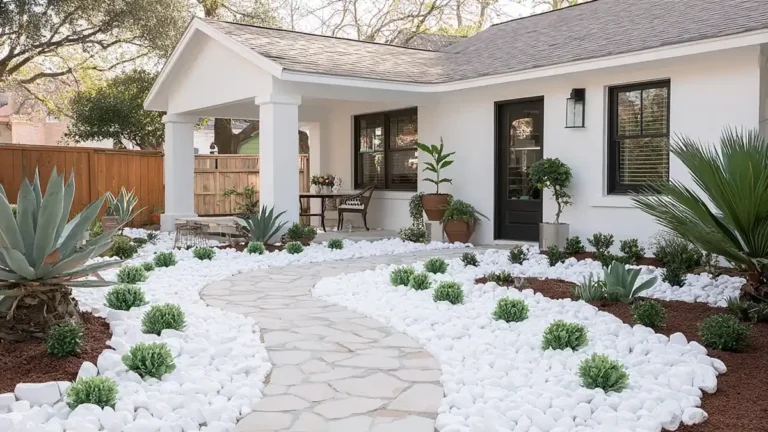
One of the simplest ways to tidy up a garden bed is by replacing exposed soil with small white pebbles. It instantly gives the space a cleaner look and makes your plants stand out more. I’ve used this around flower beds where weeds were constantly popping up, and the difference was noticeable right away.
The contrast between bright white pebbles and green foliage works really well, especially with colorful flowers. It creates a clear background that doesn’t compete with the plants. You also don’t have to worry as much about mud after watering or rain, since the pebbles keep everything contained.
If you try this, make sure to lay a weed barrier underneath before adding the pebbles. It’s a small step, but it saves a lot of maintenance later. Also, keep the layer thick enough so the soil underneath doesn’t show through over time.
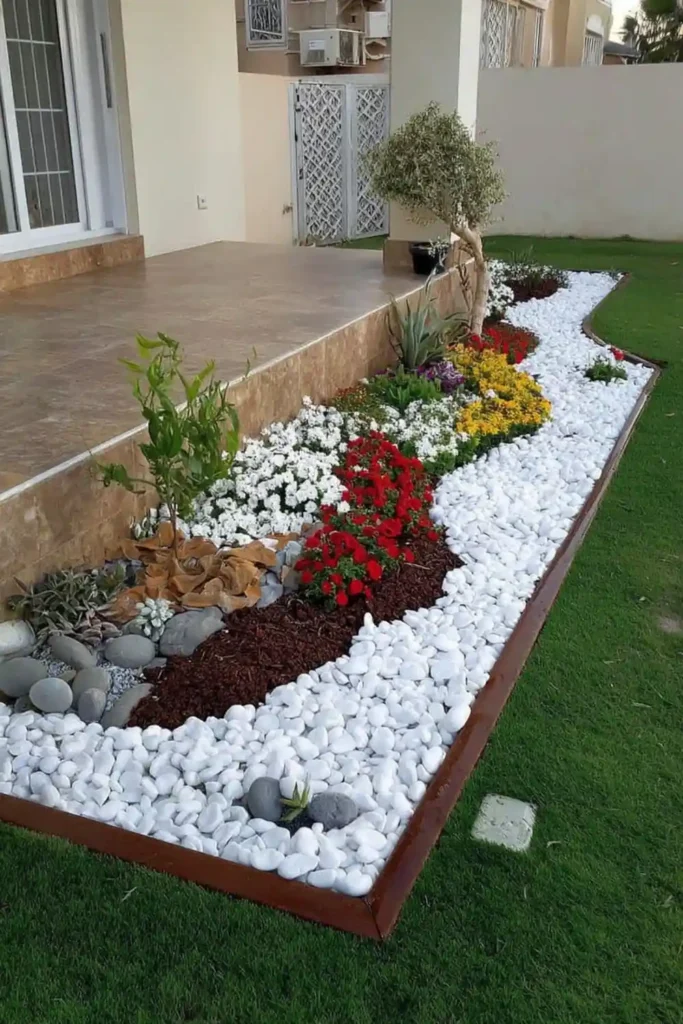
Dry Creek Designs with White Pebbles for a Natural Flow Effect
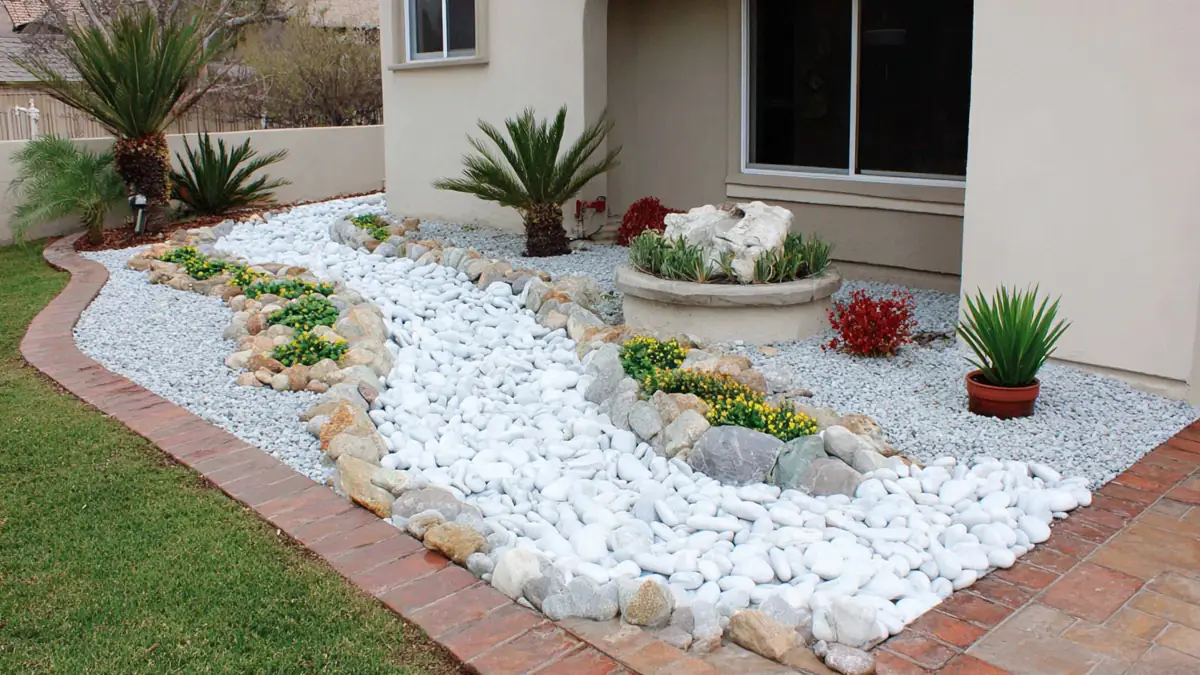
A dry creek is one of those features that looks complicated but is actually fairly manageable to create. It mimics the shape of a natural stream, using pebbles to guide the eye through the garden. I’ve seen this work especially well in larger yards where you need something to break up open space.
White pebbles are a good choice here because they highlight the curves of the “creek.” You can outline the edges with slightly darker gravel or stones to give it more definition. Even without water, it still feels like a natural element.
When laying it out, don’t make the lines too straight. A gentle, uneven curve looks more realistic. You can also slightly dip the center of the path so it actually resembles a shallow streambed. It’s a subtle detail, but it makes the whole design feel more intentional.
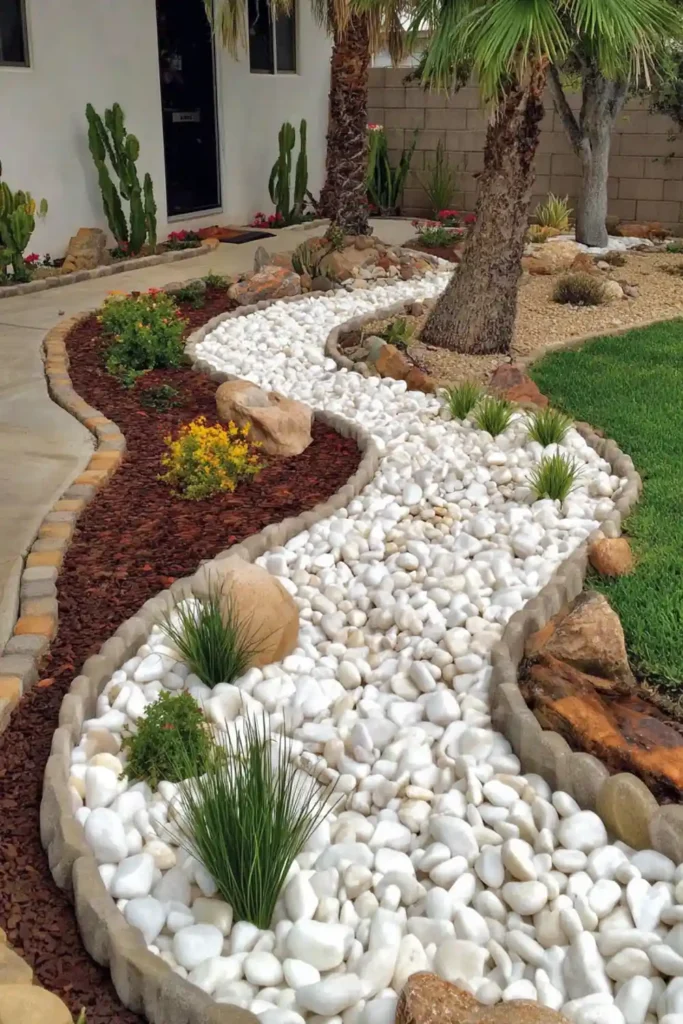
Two-Tone Pebble Streams That Add Contrast Without Plants
If you’re not planning to add plants, using two different pebble colors can create interest on its own. I’ve seen this done with light and dark stones arranged in flowing shapes, and it works surprisingly well even in minimal spaces.
The idea is to let the contrast do the work. One color forms the main stream, while the other outlines or fills the surrounding area. This prevents the design from looking flat or unfinished, even without greenery.
A useful tip here is to keep the color difference distinct but not too harsh. For example, white and grey tend to blend nicely while still being distinct. You’ll also want to use edging or a border to keep the colors from mixing over time, notably in areas with foot traffic.
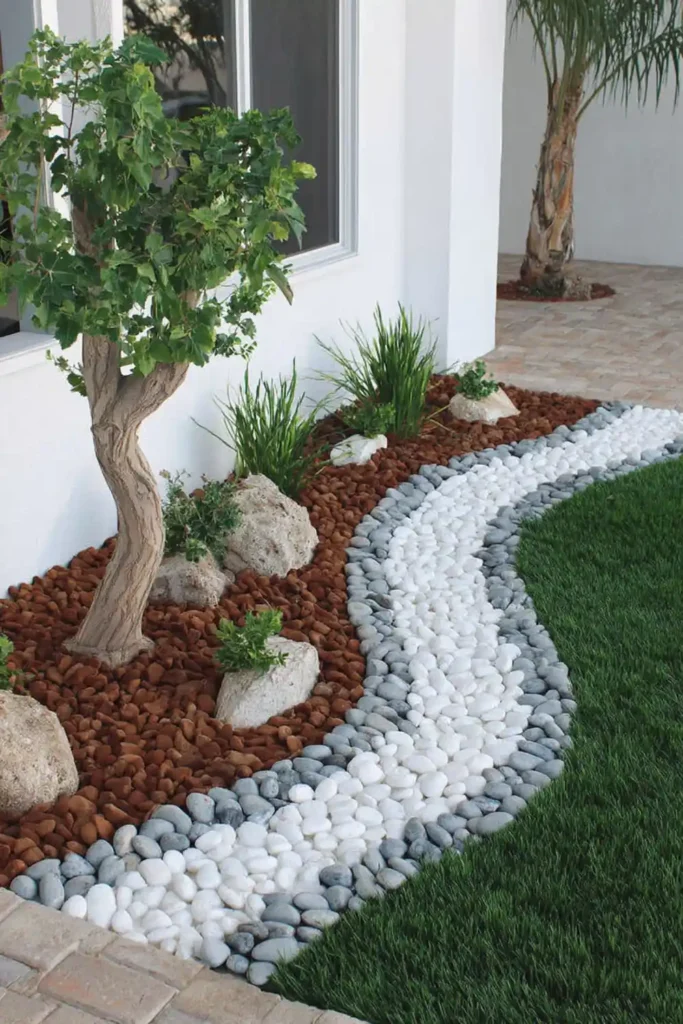
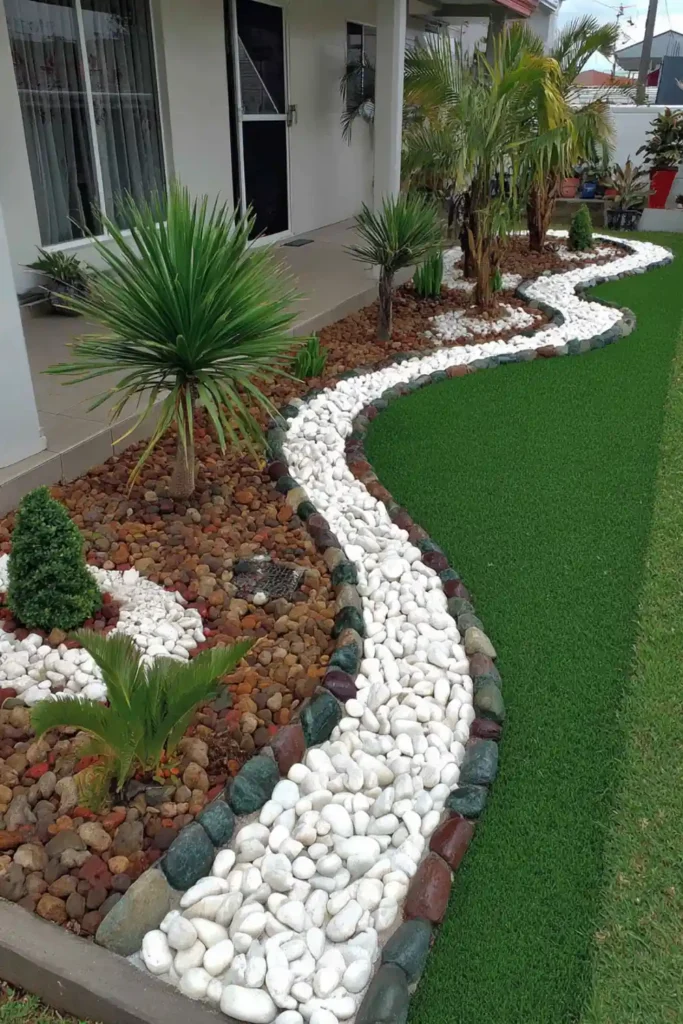
Curved Garden Edges with Small White Pebbles for Soft Borders
Straight garden edges can occasionally feel a bit too rigid, especially in a natural-looking yard. Switching to a curved edge filled with small white pebbles softens the whole layout and makes it feel more relaxed.
I’ve used this around planting beds where I wanted a cleaner transition between grass and soil. The curve helps guide the eye, and the pebbles keep the border neat without needing constant trimming or edging.
To make it work, shape the curve first using a hose or rope before digging. Once you’re happy with the flow, install edging to hold everything in place, then fill with pebbles. Keeping the curve consistent—not too sharp or random—makes a big difference in how polished the final result looks.
Pebble Beds Around Trees to Highlight Trunks and Ground Cover
Adding pebbles around the base of a tree is a simple way to give it more presence in your yard. Instead of leaving that area as bare soil or patchy grass, a defined pebble bed helps frame the tree and makes the whole space look more intentional. I’ve done this around a few trees, and it immediately made them feel like part of the design rather than just something growing there.
Using two different pebble tones works nicely here. A lighter color closer to the trunk and a darker one around the outer edge can create a subtle layered look. Pair that with low grasses or small shrubs, and the whole area starts to feel like its own little garden zone.
Just be careful not to pile pebbles directly against the trunk. Leave a small gap so the base can breathe and avoid moisture buildup. It’s a small detail, but it helps keep the tree healthy while still giving you that clean, finished look.
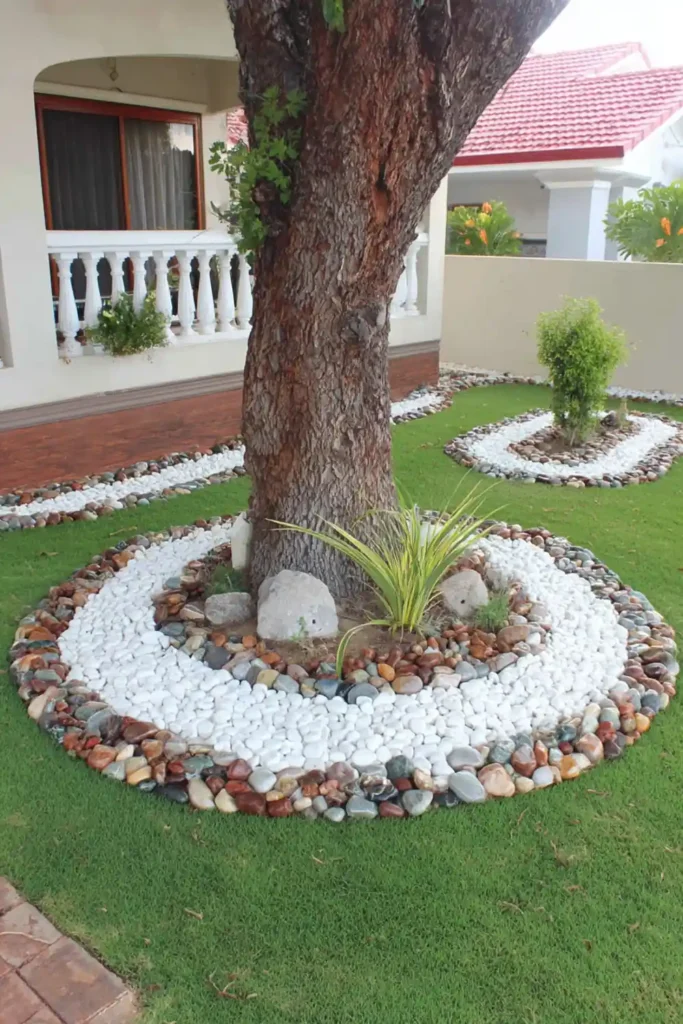
Kidney-Shaped Pebble Garden Beds Inspired by Natural Water Forms
Sometimes, the shape of a garden bed makes more impact than what’s planted inside it. A kidney-shaped layout, especially when filled with pebbles, has a soft, natural feel that reminds me of small ponds or water features. It breaks away from the usual straight lines and adds a bit of movement to the yard.
These shapes work well when you use two types of pebbles—one for the main fill and another to define the edges. The contrast helps highlight the curves without needing extra decoration. Even in a simple lawn, this kind of bed can turn into a focal point.
When laying it out, take your time adjusting the shape before committing. Walk around it and view it from different angles. Once you’re happy with the flow, secure the edges so the pebbles stay in place. A well-formed curve is what really makes this idea stand out.
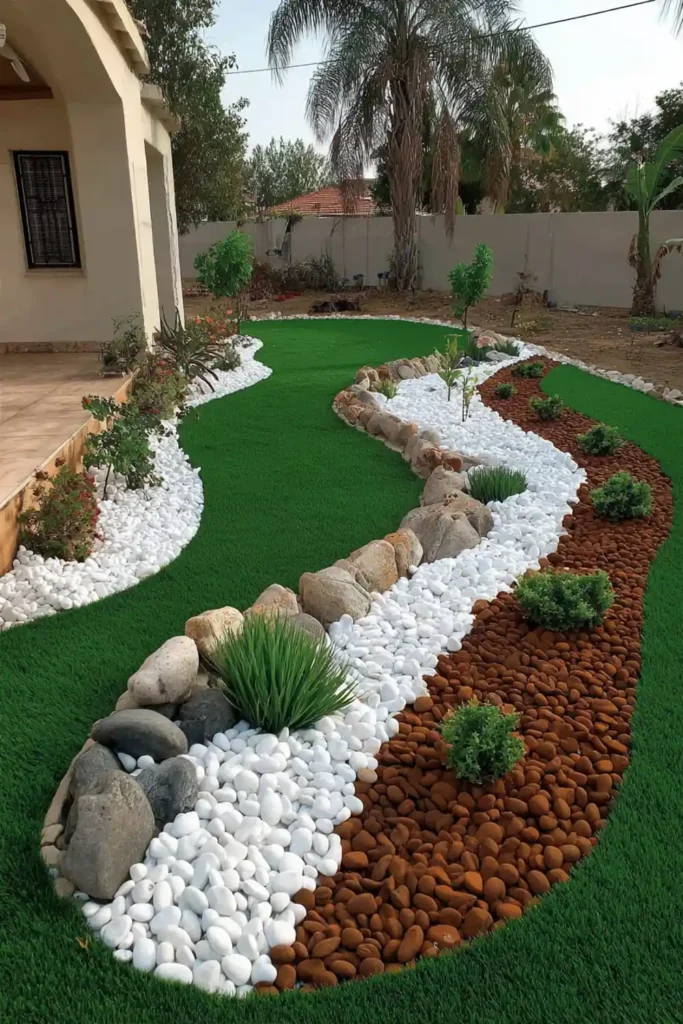
Corner Garden Spaces Filled with Pebbles to Hide Containers
Corners can be tricky. They often end up cluttered with pots, tools, or leftover items. Filling that space with pebbles and arranging your plants within it is an easy way to clean things up while still keeping it functional.
I’ve used this approach to hide mismatched containers. Once everything sits on a bed of pebbles, the attention shifts to the plants instead of the pots. It also creates a consistent base that ties different elements together, even if the containers themselves don’t match.
You can tuck taller plants toward the back and smaller ones in front to give it some depth. Adding a few larger stones or decorative pieces can help break up the surface. It’s a simple fix for an awkward space that often gets overlooked.
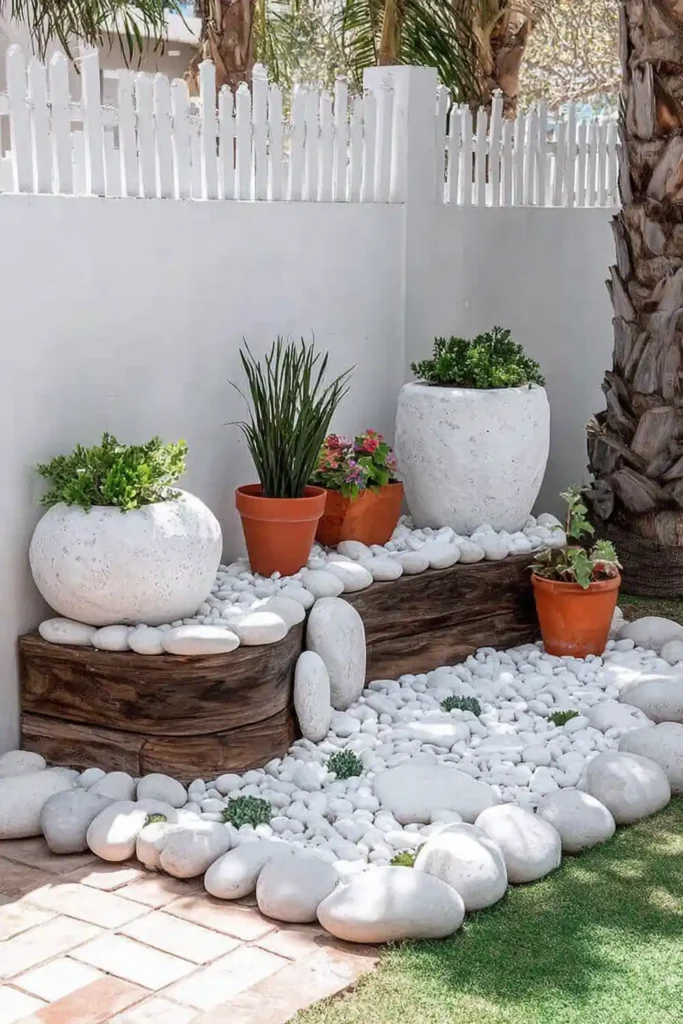
Dry River Layouts Using Pebbles and Large Stones for Depth
If you want something with slightly more structure, combining pebbles with larger stones can create a dry river effect that seems more grounded. The mix of sizes creates depth, making the layout look less flat and more like an organic element.
I’ve seen this work well along fence lines or in empty strips of land where grass doesn’t grow well. The larger stones act as anchors, while the smaller pebbles fill in the space around them. Using neutral tones like white, grey, and brown keeps the look balanced and easy to blend with the rest of the yard.
Try placing the larger stones first, spacing them out unevenly, then fill in with pebbles. This prevents the arrangement from looking too planned. A slightly irregular layout always feels more natural with this kind of design.
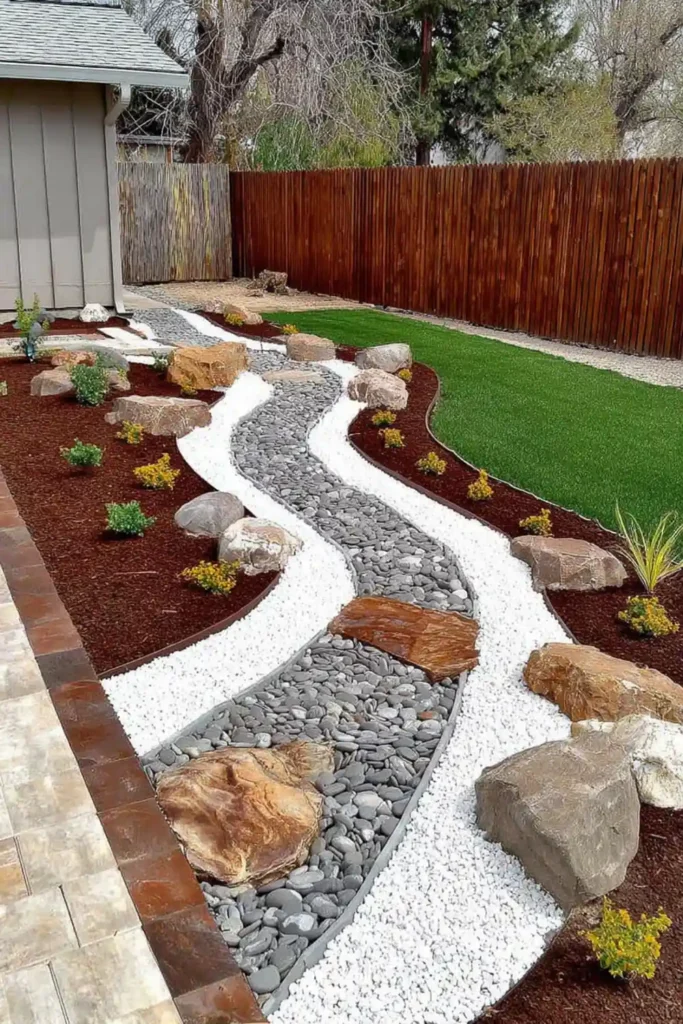
Mixed Mulch and Pebble Beds for Layered Texture
Sometimes a single material can feel a bit flat, especially in larger garden beds. Mixing mulch and pebbles is a simple way to add depth without making it complicated. I’ve used this in areas where I wanted a softer, more natural look but still needed some structure.
The contrast between dark mulch and lighter pebbles helps separate different zones within the same bed. You can use mulch around plants to keep moisture in, then add pebbles along the edges or in open sections for a cleaner finish. It creates a balance between practical gardening and a tidy appearance.
To keep everything in place, it helps to define each section with subtle edging. Even a shallow divider under the surface can prevent the materials from mixing over time. This way, the layout remains clear and doesn’t lose its shape after a few months.
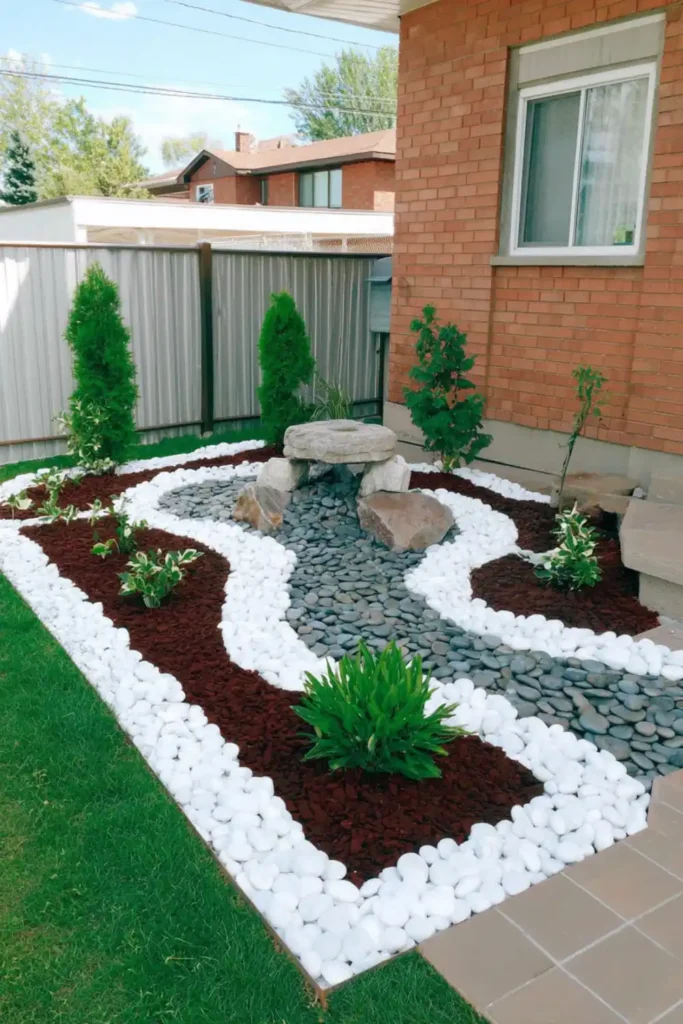
Sectioned Garden Beds Combining Pebbles, River Rocks, and Mulch
If you want a bit more variety, dividing a garden bed into sections using different materials can make a big difference. I’ve seen this done with pebbles, river rocks, and mulch arranged in separate areas, each having its own purpose.
Pebbles can fill the main open spaces, river rocks can act as accents or borders, and mulch can stay around planted areas. This approach works well when you have a larger bed that might otherwise feel empty or undefined.
The key here is to keep the layout organized. Try to avoid random placement and instead group each material into separate sections. It doesn’t have to be perfectly symmetrical, but it should feel intentional. A simple sketch before starting can help you visualize how everything will come together.
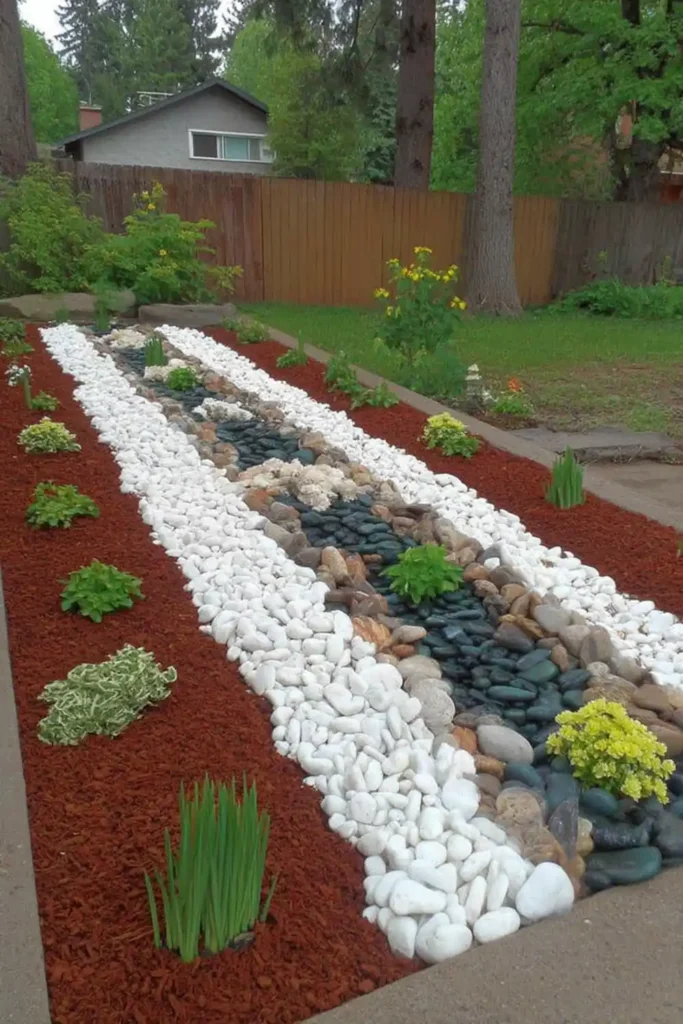
Minimal Zen Gardens with White Pebbles for a Calm Look
A Zen-style garden doesn’t need much to feel complete. White pebbles alone can create a calm, uncluttered space that’s easy to maintain. I like this idea for small areas where too many elements would feel crowded.
The simplicity is what makes it work. A smooth layer of pebbles, maybe with a few carefully placed stones, is often enough. You don’t need a lot of plants or decoration—just a clean surface and a clear layout.
If you want to add some detail, you can rake the gravel into mild patterns. It’s a small touch, but it contributes charm without making the space busy. Keeping the edges neat and the surface level helps preserve that quiet, even look over time.
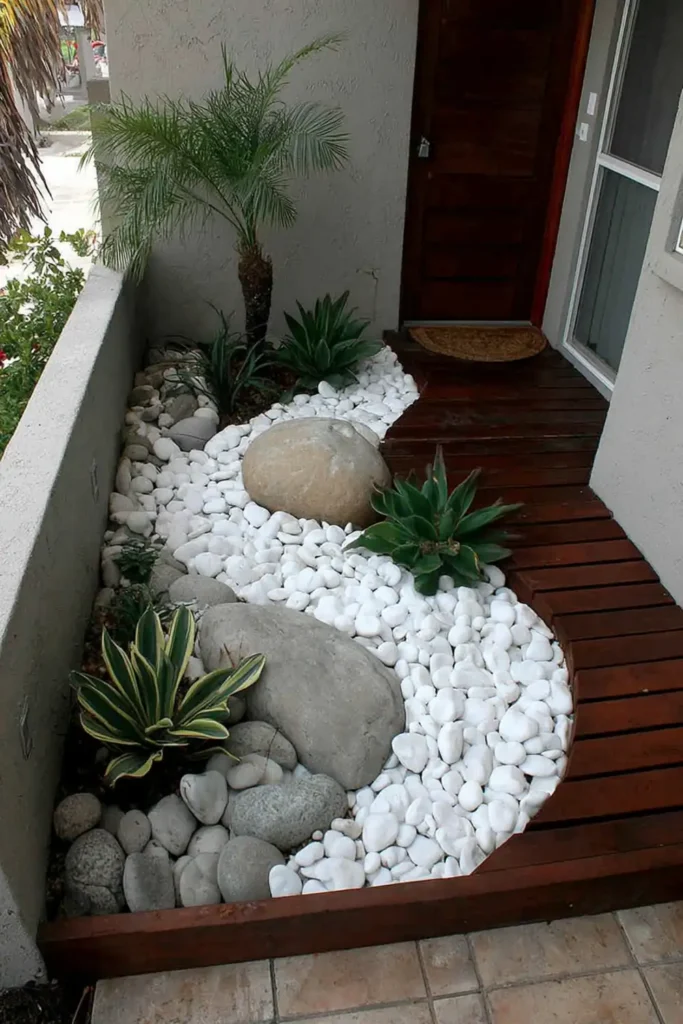
Small Front Yard Flower Gardens Enhanced with Pebble Ground Cover
Even a small front yard can feel more put-together with a bit of pebble work. Adding pebbles around flowers helps define the space and keeps everything looking neat from the street. I’ve noticed this works especially well in narrow or awkward areas near entryways.
The pebbles act as a clean base that accentuates the plants without taking attention away from them. It also makes maintenance easier since you don’t have to deal with as much exposed soil.
For a practical setup, plant your flowers first, then fill in the gaps with pebbles. This makes it easier to adjust spacing and avoid covering stems. Over time, you’ll appreciate how much easier it is to keep the area looking tidy with minimal effort.
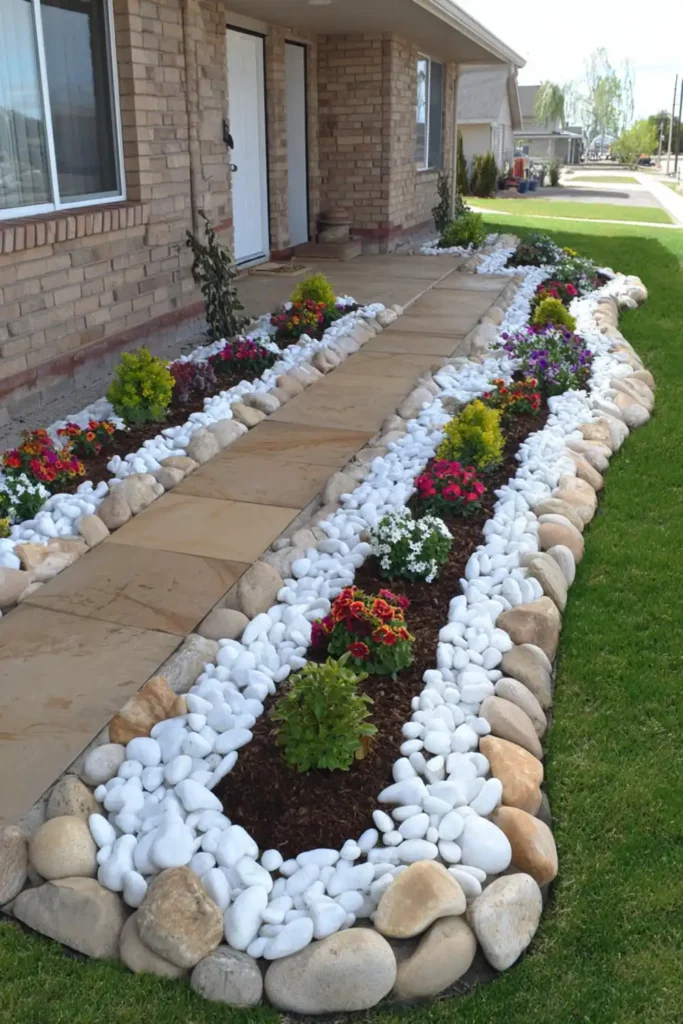
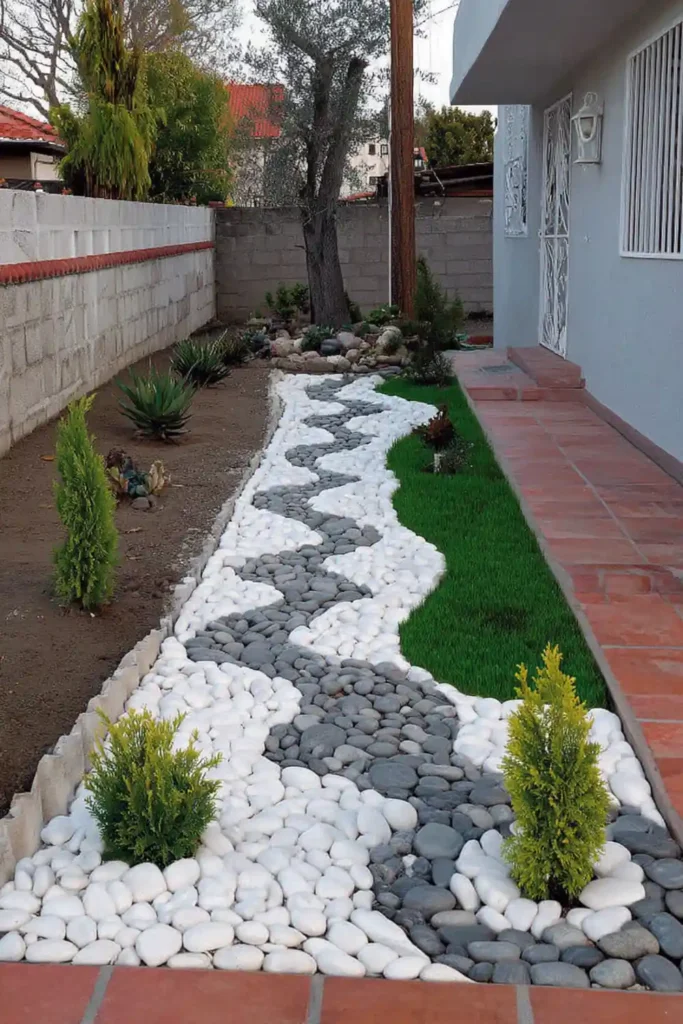
Pebble-Filled Spaces Between Walkways with Grey and White Stone Contrast
The narrow spaces between walkways often get ignored, but they can actually become one of the most interesting parts of the yard. Filling these gaps with a combination of grey and white pebbles creates a clean, structured look that ties different paths as one.
I’ve found that using two tones helps define the space without needing extra elements. Grey pebbles can act as the base, while white ones highlight certain areas or edges. This subtle contrast keeps the design from looking flat, especially when viewed from above.
To make it practical, lay down a proper base before adding the pebbles so they don’t shift underfoot. You can also add small evergreen shrubs along the edges to soften the look without overcrowding the space. It’s a simple way to turn a leftover strip into something intentional.
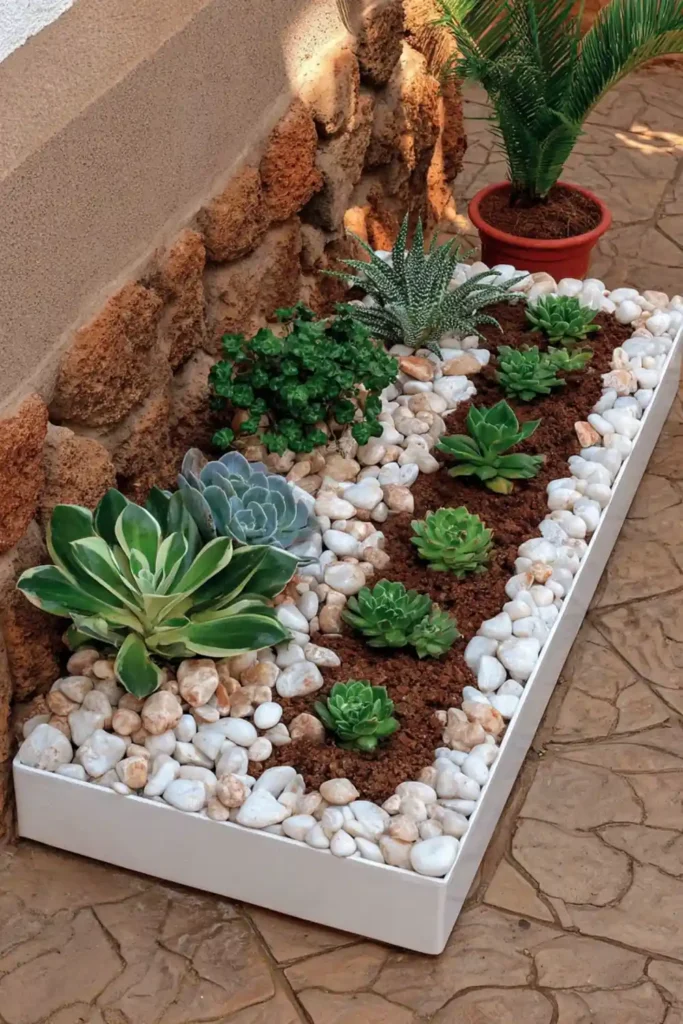
Succulent Mini Gardens with Pebbles for Compact Green Displays
If you don’t have much space to work with, a small succulent garden with pebbles can still give you that finished look. I like using this idea in pots or small ground sections where a full garden bed wouldn’t fit.
Pebbles work especially well with succulents because they keep the soil stable and reduce excess moisture on the surface. The combination of smooth stones and thick green leaves creates a clean, low-maintenance setup that doesn’t need constant attention.
You can group a few different succulent types together and fill the remaining space with small pebbles. Keeping the colors simple—like light stones with green plants—helps everything feel cohesive. It’s a great option if you want something neat without a lot of upkeep.
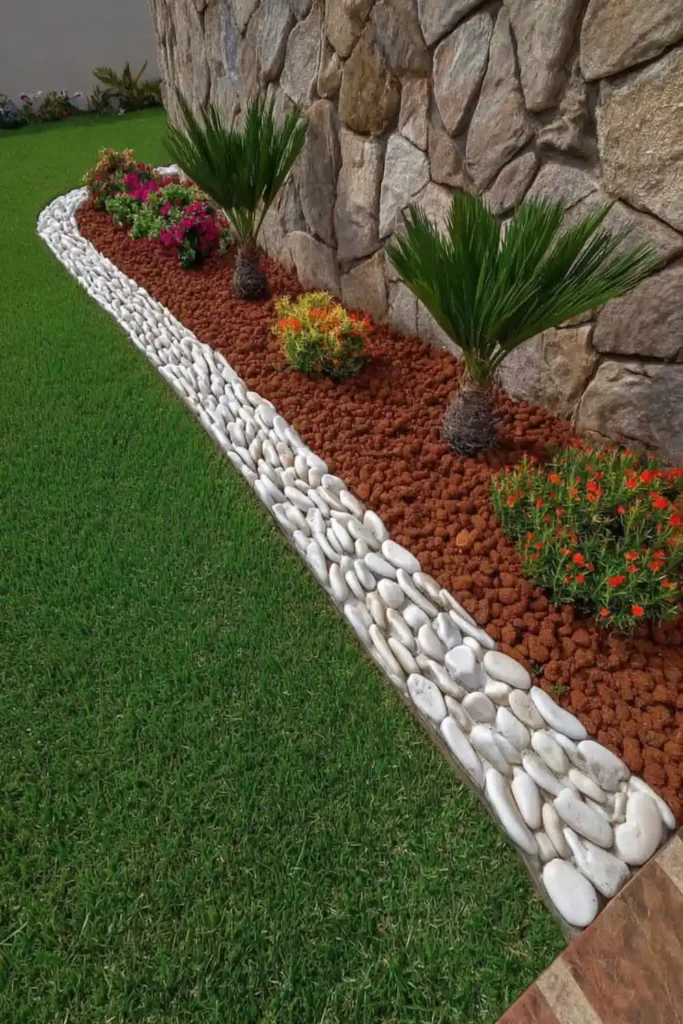
Ornamental Pebble Edging That Frames Garden Borders
Edging can make or break how a garden looks. Using pebbles as an ornamental border is one of the easiest ways to give your planting areas a clear boundary without installing heavy materials.
I’ve used this along pathways and flower beds where I wanted a softer edge than concrete or brick. The pebbles create a natural transition between different areas while still keeping things visually organized.
To get the best result, keep the width of the pebble strip consistent and use edging underneath to hold it in place. You can also mix in a few subtle color variations to add interest without making it look busy. It’s a small detail, but it helps the whole yard feel more put-together.
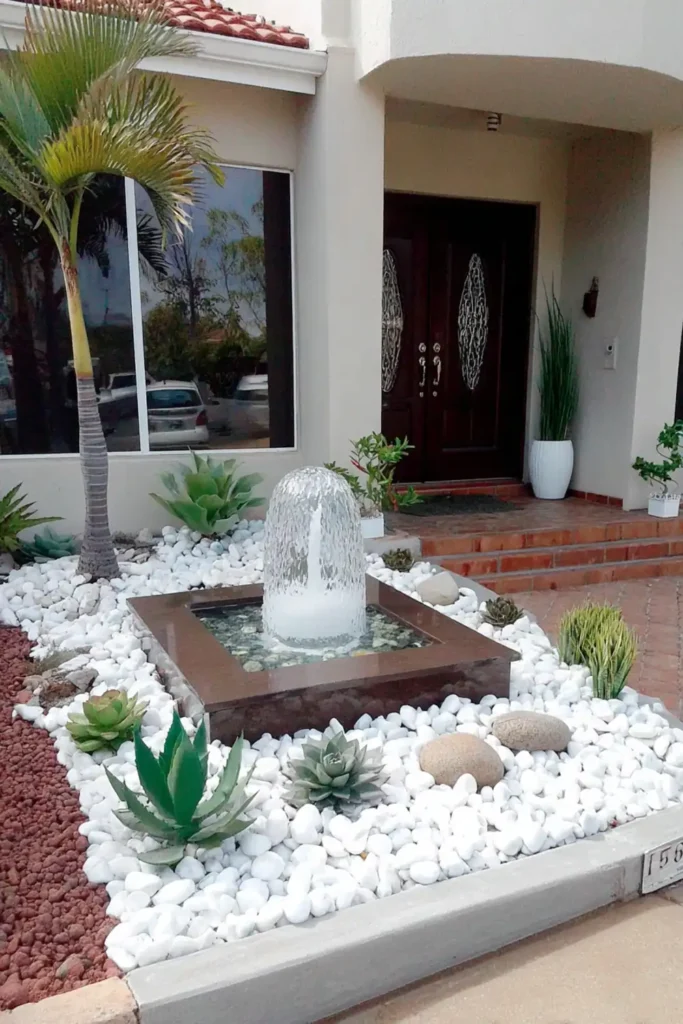
Modern Front Gardens with Small Pebbles and Simple Water Features
For a more modern look, combining small pebbles with a simple water feature can create a clean and balanced front garden. I’ve seen this done with compact fountains or minimal water elements placed within a pebble base.
The pebbles act as a neutral foundation, allowing the water feature to stand out without dominating the space. Keeping the layout simple—straight lines, limited colors—helps preserve that modern feel.
If you’re trying this at home, focus on placement first. Position the water feature where it’s visible from the entry or walkway, then build the pebble layout around it. Adding a few structured plants like bromeliads can complete the look without cluttering the design.
Flexible Garden Edging with Pebbles and Planks for Playful Layouts
If your yard feels a bit excessively structured, combining flexible edging with pebbles and wooden planks can loosen things up in a positive way. I’ve tried this in smaller lawn areas where I didn’t want everything to follow straight lines, and it gave the space a more relaxed, lived-in feel.
The flexible edging allows you to create gentle curves, while the planks can act as stepping points or small visual breaks within the pebble areas. Mixing these materials keeps the layout interesting without making it complicated.
A helpful tip is to keep the spacing between planks consistent so it still feels organized. You can surround them with pebbles and add a few low plants along the edges to soften the transitions. It’s a simple way to make a small garden feel more dynamic.
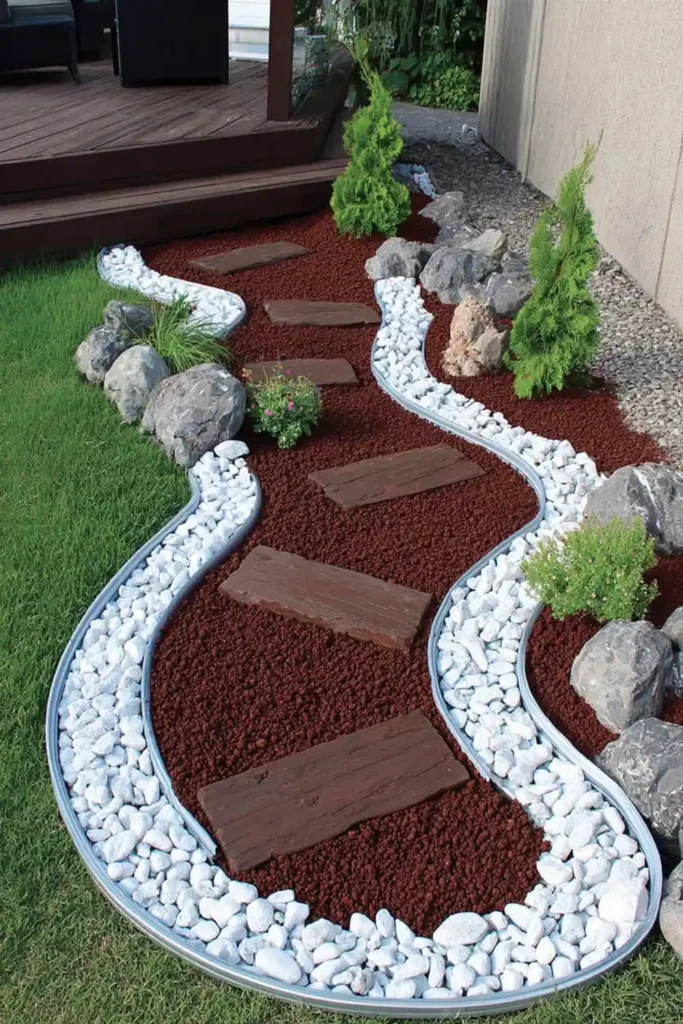
Decorative Pebble Patterns Using Mixed Materials for Visual Interest
If you want something more eye-catching, creating patterns with pebbles can really change how a space feels. I’ve seen this done using different colors of stones, along with pavers or small logs to outline shapes.
The pattern doesn’t have to be complex. Even simple lines or sections can add movement to an otherwise flat surface. It works especially well in open areas where there aren’t many plants to draw attention.
To keep it practical, map out your pattern before placing anything down. Use string or chalk to guide your layout, then fill in each section carefully. Adding a border around the design helps keep everything in place and prevents the materials from mixing over time.
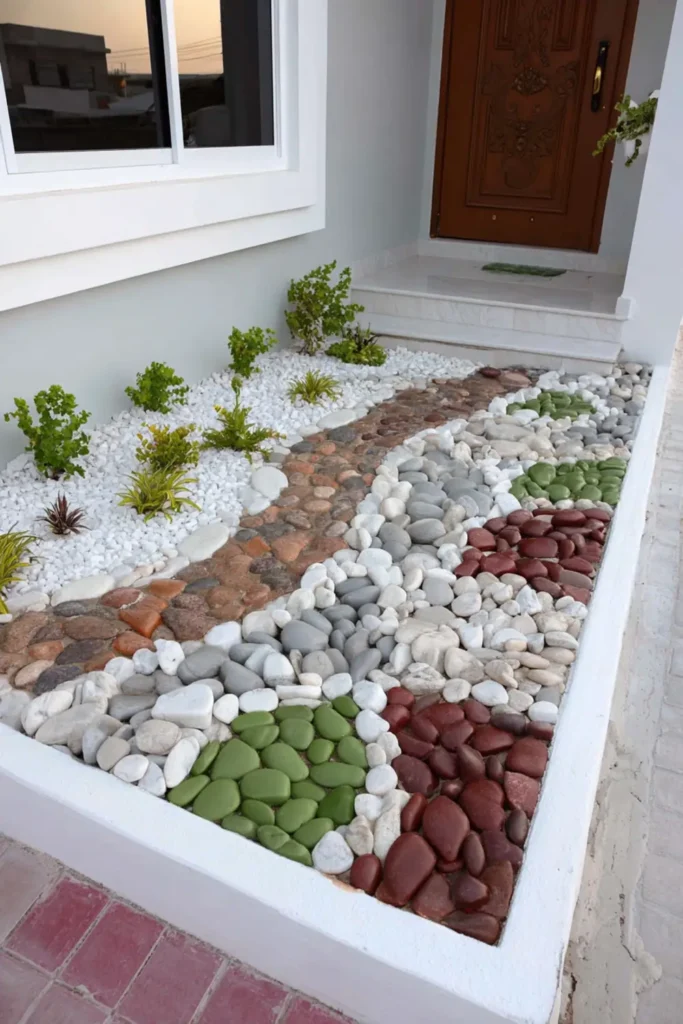
Garden Beds with Pebbles and Pavers for Structured Edges
Combining pebbles with pavers is a good way to create structure without making the garden feel too rigid. I’ve used this approach where I wanted a clear edge but didn’t want to rely entirely on hard substances like concrete.
The pavers can act as a defined border, while the pebbles fill the surrounding space. This mix gives you both stability and a softer finish. It also makes the area easier to walk around without disturbing the layout.
When setting this up, make sure the pavers are level and evenly spaced. Then fill the gaps with pebbles to tie everything together. It’s a simple method that works well in both small and larger garden beds.
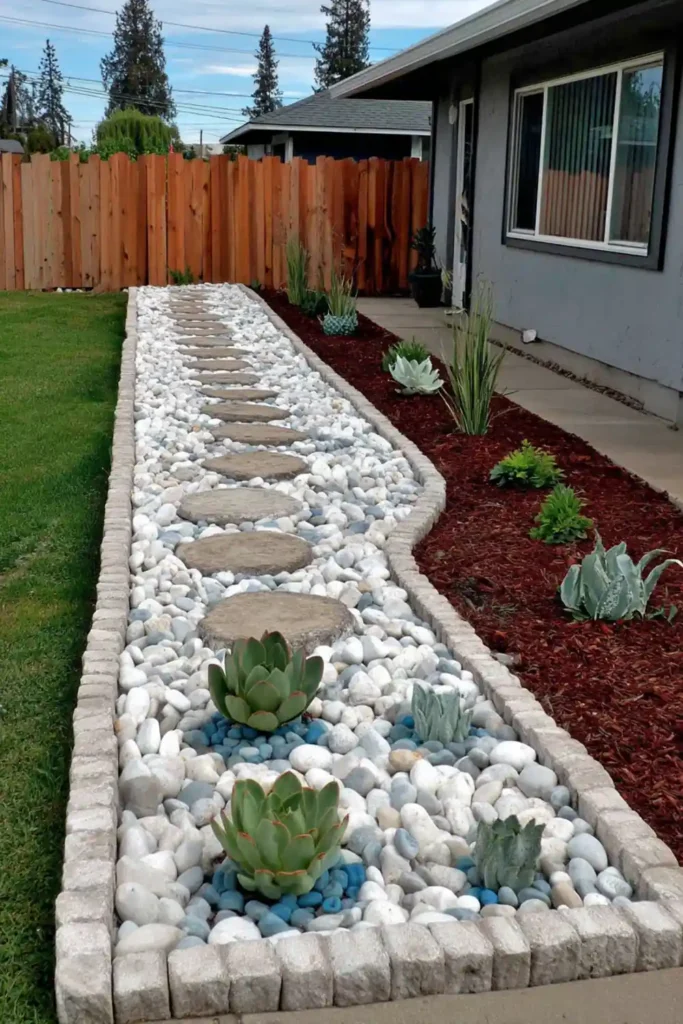
Front Porch Gardens with Mulch and Pebbles in Flowing Shapes
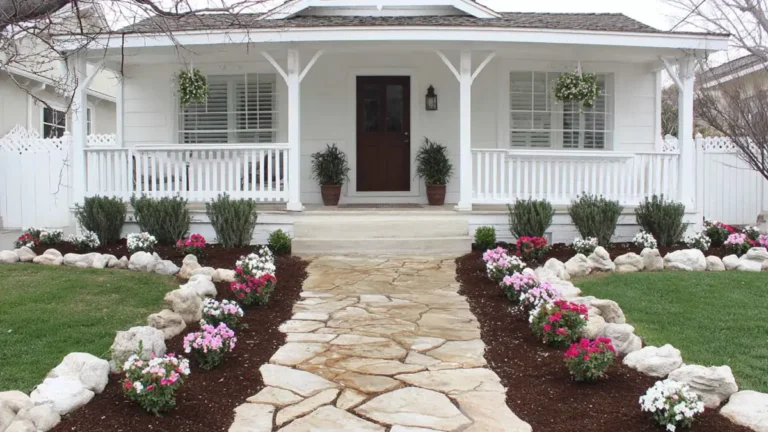
The area near your front porch is often the first thing people notice, so giving it a bit of shape can make a difference. Using a mix of mulch and pebbles inside curved, flowing lines can create a natural look that draws attention without feeling overdone.
I like this idea because it breaks away from straight borders and adds a sense of movement. The mulch keeps things practical around plants, while the pebbles highlight the curves and edges.
To make it work, sketch out the shape before you start. Keep the curves smooth and avoid sharp turns. Once the layout is set, separate the materials with subtle edging so they stay in place. It’s a simple upgrade that can make the entrance feel more welcoming.
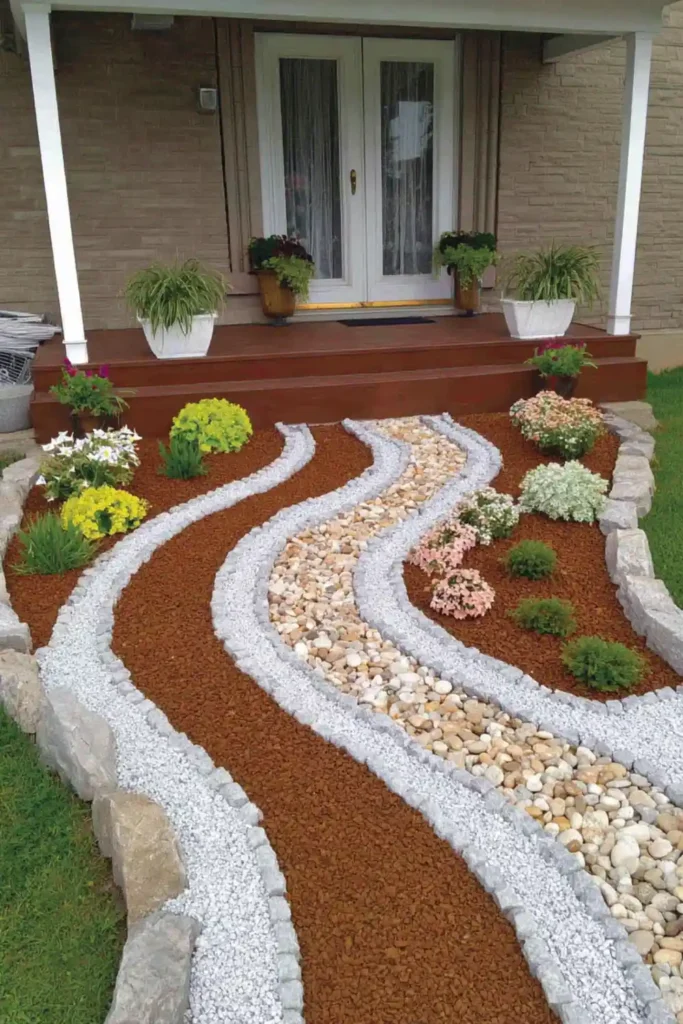
Tiered Garden Beds with Pebbles for Multi-Level Planting
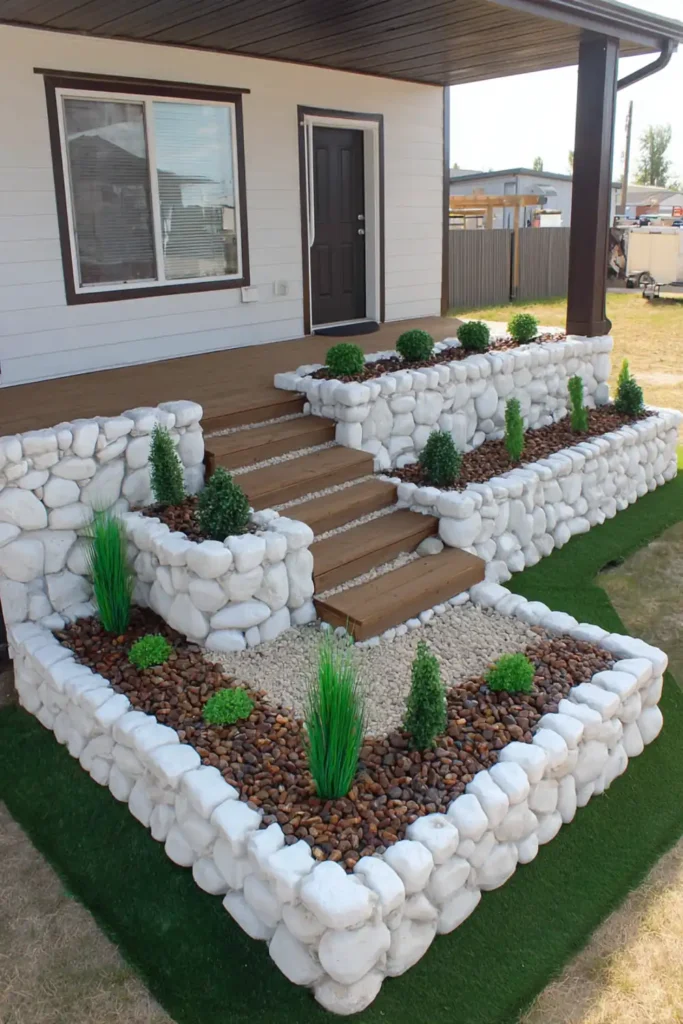
If your yard has any slope—or even if it doesn’t—tiered garden beds can add structure in a manner that feels natural. Using pebbles within each level helps separate the layers visually while keeping everything neat. I’ve found this especially useful in areas where water tends to run off or where planting space feels limited.
Each tier can hold different types of plants. For example, drought-tolerant plants and ornamental grasses work well on upper levels, while slightly larger shrubs can sit below. The pebbles act as a clean base that ties all the levels together without making the design feel heavy.
When building tiers, keep the height difference manageable so it doesn’t look too forced. Simple retaining edges or box-style planters can hold everything in place. Once the structure is set, filling with pebbles helps finish the look and reduces maintenance around the plants.
Fence Line Gardens with Pebbles and Repeated Flower Pots
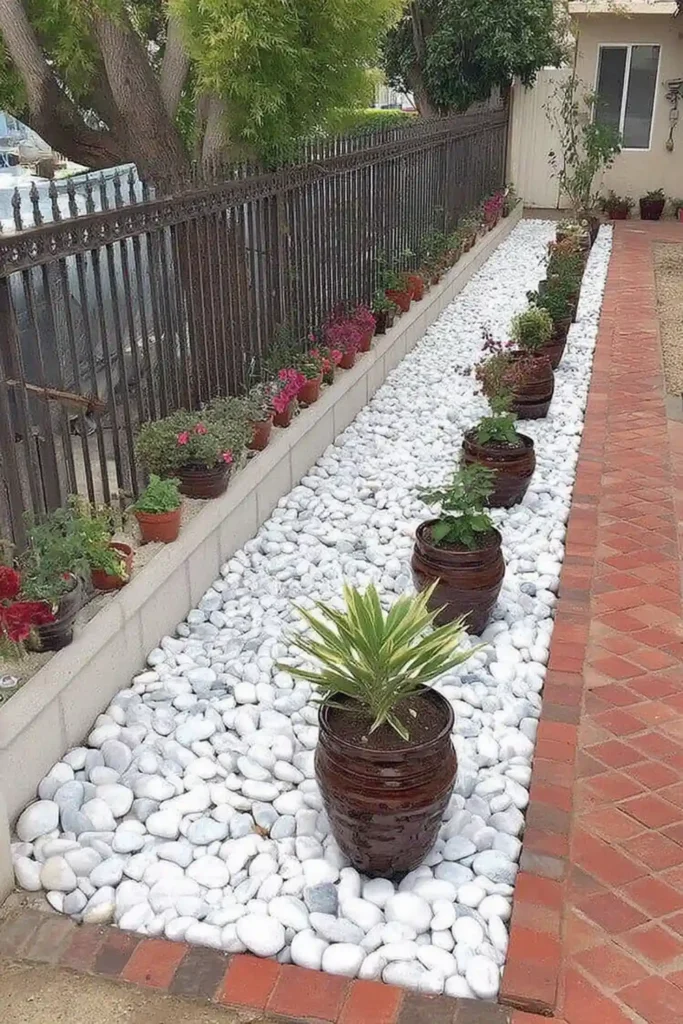
Fence lines often end up as overlooked spots, but they can actually become one of the most organized parts of your yard. Lining the base with pebbles and placing evenly spaced flower pots along it creates a clean, repeated pattern that’s easy on the eyes.
I’ve used this idea to bring some order to long, narrow areas. The pebbles create a consistent background, while the identical pots give the space rhythm. Even simple plants can look more intentional when they’re arranged this way.
To keep it looking tidy, stick with the same pot style and spacing throughout. You can place pavers underneath or between the pots to anchor them visually. It’s a simple setup that works well without needing a lot of effort.
Multi-Color Pebble Surfaces for Patterned Garden Design
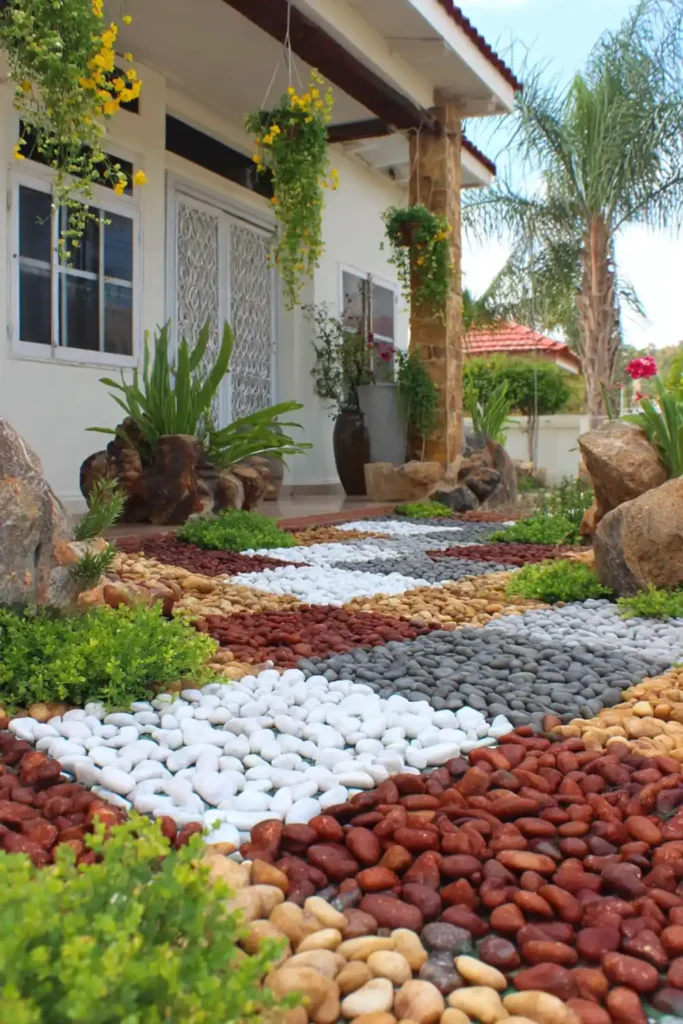
Using multiple pebble colors across a single surface can create faint patterns that make the yard feel more designed. I’ve seen this done in open areas where plants are minimal, and it really helps break up the space.
You don’t want anything complicated. Simple shapes, lines, or sections using two or three pebble colors are enough to create visual interest. The key is keeping the layout clear so it doesn’t feel random.
Before placing anything, sketch out your pattern and define the edges. This helps keep each color in its place over time. Using a base layer underneath also prevents mixing and keeps the surface level. It’s a practical way to add detail but not introduce more elements.
Simple Yard Borders with Pebbles to Define Lawn Edges
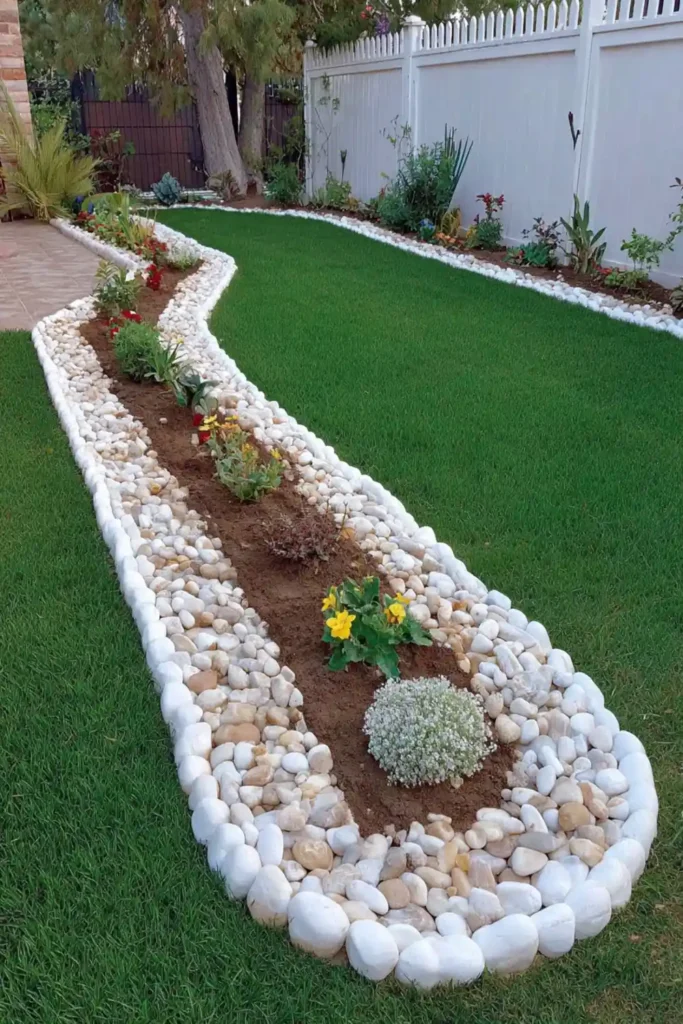
One of the easiest upgrades you can make is adding a pebble border between your lawn and other areas. It gives a clear separation without needing heavy materials or complicated installation.
I’ve used this along fence lines and garden edges where grass tends to creep into planting areas. The pebbles create a buffer zone that keeps everything in its place and makes mowing easier.
Keep the border width consistent so it looks intentional. Installing a basic edge underneath will help hold the shape and prevent the pebbles from spreading. It’s a small change, but it makes the whole yard seem more organized.
Monochrome Edge Gardens with Grey Pebbles and Stone Pavers
If you prefer a more understated look, sticking to a single color palette can work really well. Grey pebbles paired with stone pavers create a clean, modern edge that follows the lines of your home.
I’ve found this approach works best along the base of exterior walls or around patios. The repetition of grey tones keeps things calm and consistent, without drawing too much attention.
To make it look sharp, align the pavers with the structure of the house. Straight lines and even spacing are important here. Filling the gaps with pebbles softens the look while still keeping that structured feel.
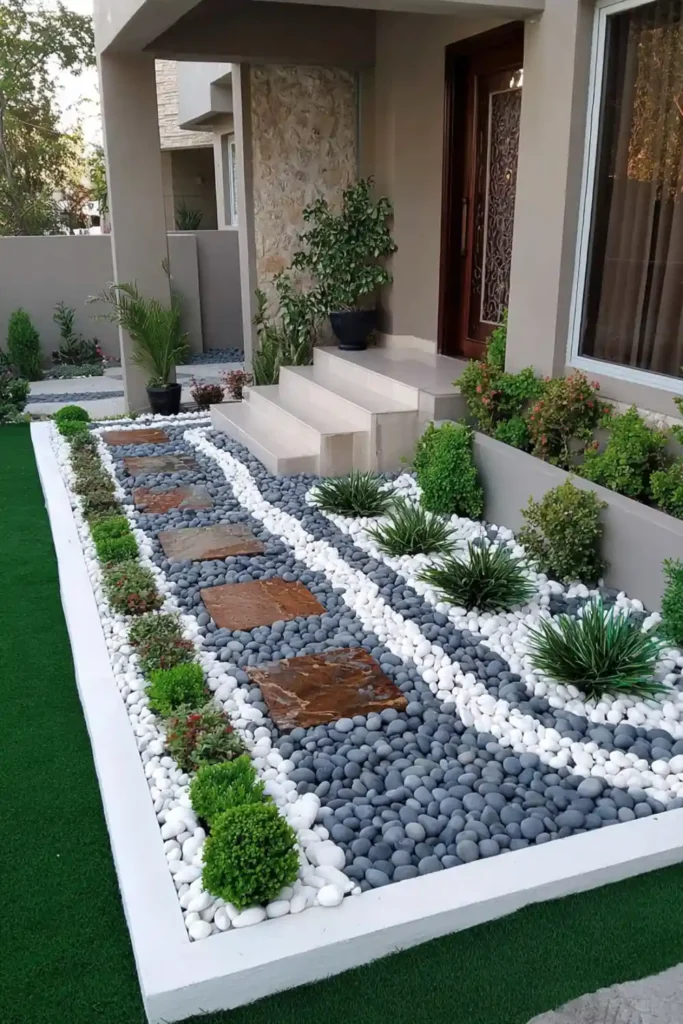
Drought-Tolerant Walkway Gardens with Pebbles and Stone Tiles
If you’re trying to reduce watering and maintenance, combining pebbles with stone tiles along walkways is a smart option. It creates a durable path while still leaving room for plants that don’t need much care.
I’ve seen this work well in sunny areas where grass struggles. The stone tiles act as stepping points, while the pebbles fill the space around them. Adding drought-tolerant plants along the edges keeps the area from feeling too bare.
Make sure the tiles are stable and level before adding pebbles. This prevents shifting and makes the walkway more comfortable to use. It’s a practical setup that holds up well over time.
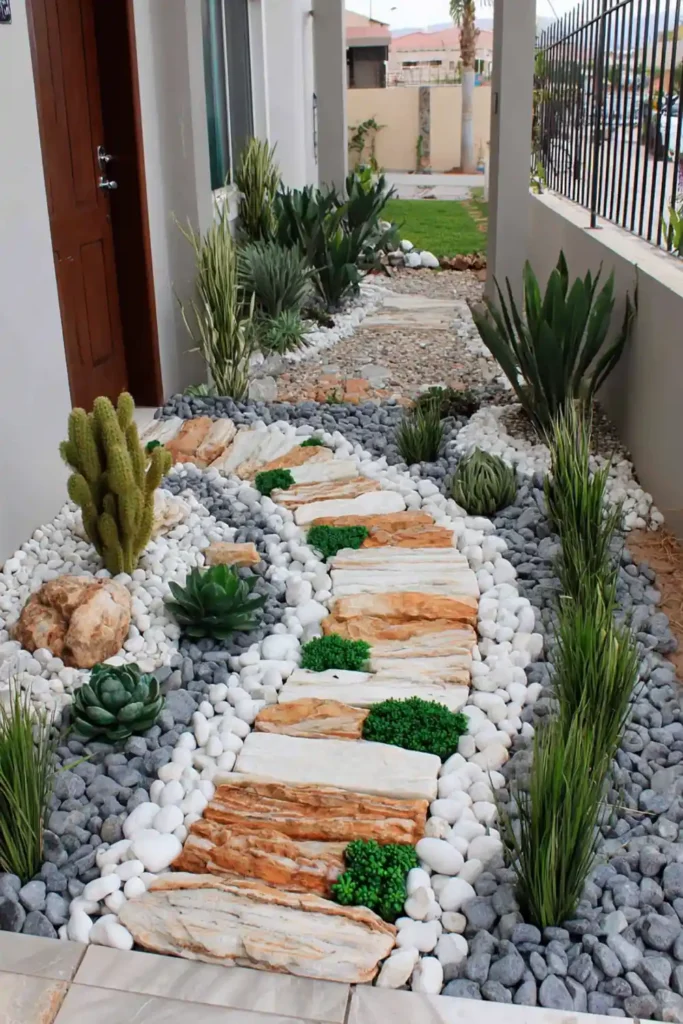
Decorative Pebble Walkways for a Clean and Low-Maintenance Pathway
Pebble walkways are one of the simplest ways to create a path without pouring concrete or installing large pavers. They have a relaxed look that fits well in both small gardens and larger yards.
I like using decorative pebbles for pathways that don’t get heavy traffic. They create a soft surface that still feels defined. You can shape the walkway to follow natural lines in the yard, which makes it feel less rigid.
To keep it functional, lay a solid base underneath and consider adding edging on both sides. It keeps the pebbles contained and prevents them from spreading into surrounding areas. With the right setup, it’s a low-maintenance path that stays looking neat.
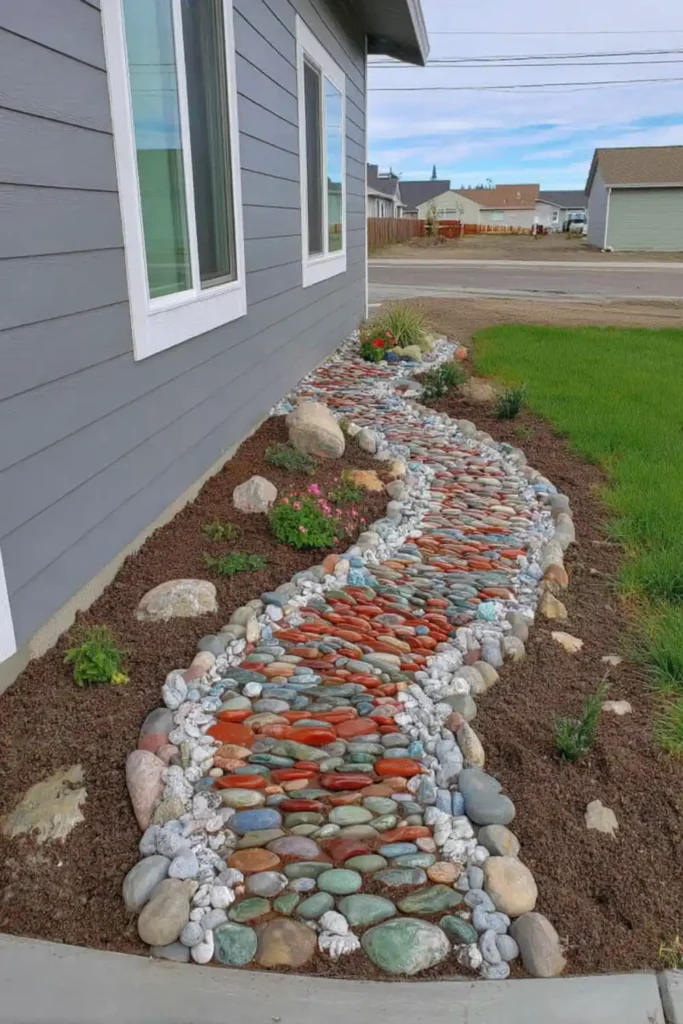
Bringing These Pebble Landscape Ideas Together
Working with pebbles has taught me that you don’t need big changes to make your yard feel more put-together. Most of these ideas can be done in small sections, and over time, they start to connect into something that seems intentional.
What matters most is choosing a few ideas that suit your space and building from there. Whether it’s a clean border, a simple walkway, or a layered garden bed, each addition helps define the space a little more.
The nice thing is that pebbles are easy to adjust. If something doesn’t feel right, you can move things around without much hassle. That flexibility makes it easier to try out and discover what works best for your own yard.
You can follow The Decor Nest on Pinterest and Facebook for new ideas, room inspiration, and styling tips shared regularly.