
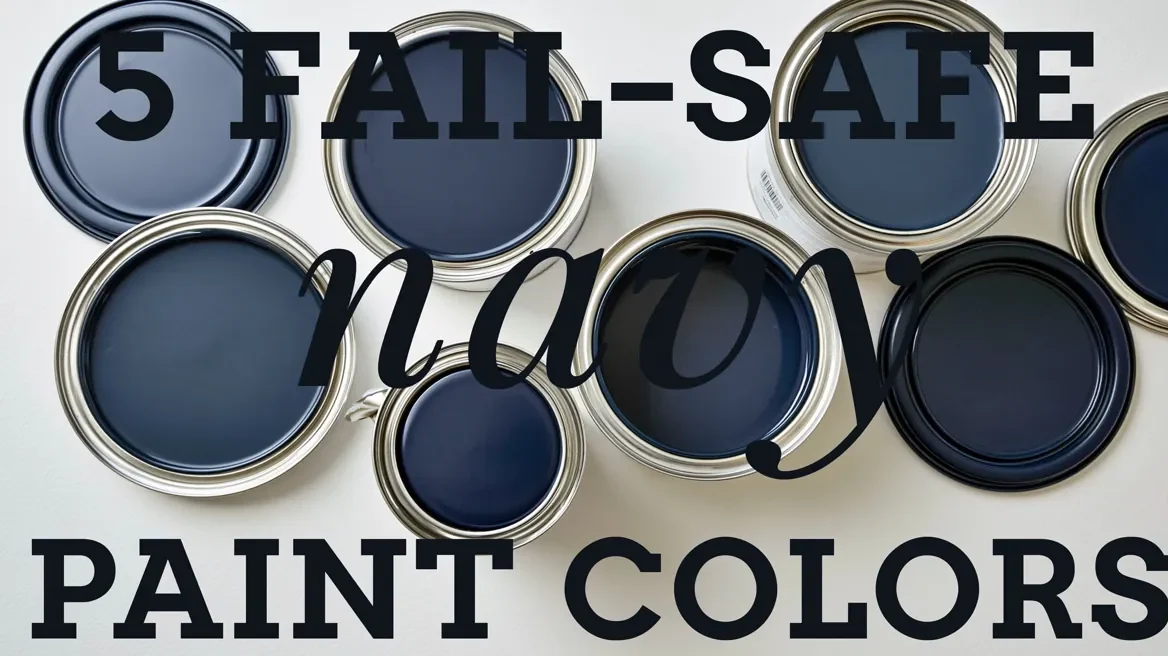
Navy blue makes a room feel anchored. It is deep enough to add mood, but it can still read clean, classic, or playful depending on its pairings.
I appreciate navy because it doesn’t require much embellishment. A painted wall, trim, or distinctive feature like a kitchen island does most of the visual work. These navy blue interior paint ideas demonstrate how the color transitions from bedrooms and kitchens to entryways, bathrooms, and book corners without feeling repetitive.
Some rooms are dramatic, while others are softer, brighter, or more traditional. The Navy provides each space with an individual perspective.
Master Bedroom Makeover with Deep Navy Walls
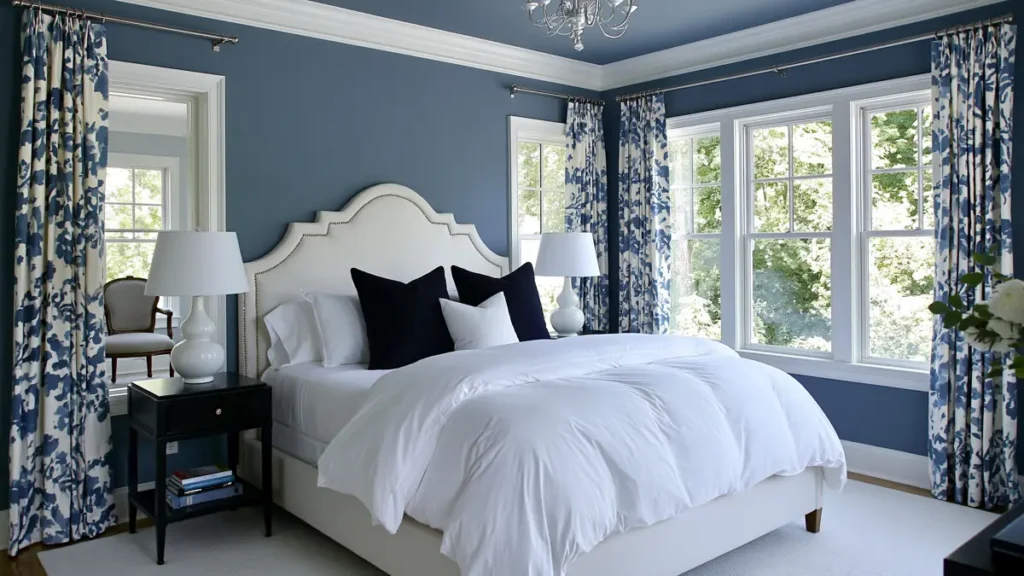
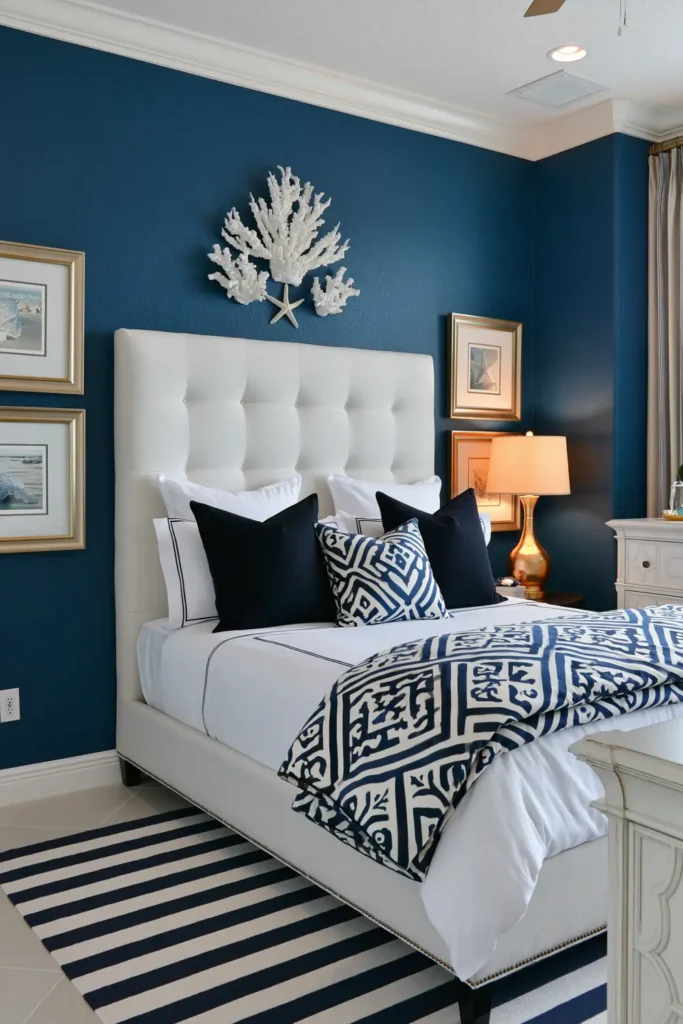
A master bedroom is an ideal spot to use navy because the color complements a calm, peaceful environment. Deep navy walls ground an upholstered bed, especially when the headboard features a soft fabric rather than a glossy finish.
Details matter in this bedroom. Simple nightstands, layered bedding, and a lumbar pillow prevent the bed from blending into dark paint. Fabric curtains soften the room, especially if navy carries into a sitting area.
To test this idea, paint swatches near the bed and observe them at various times. Navy shifts considerably with changing light, and even a simple hanging bulb alters the color, making it warmer or more shadowed at night.
Purply-Blue Paint for a Rich Bedroom Color Concept
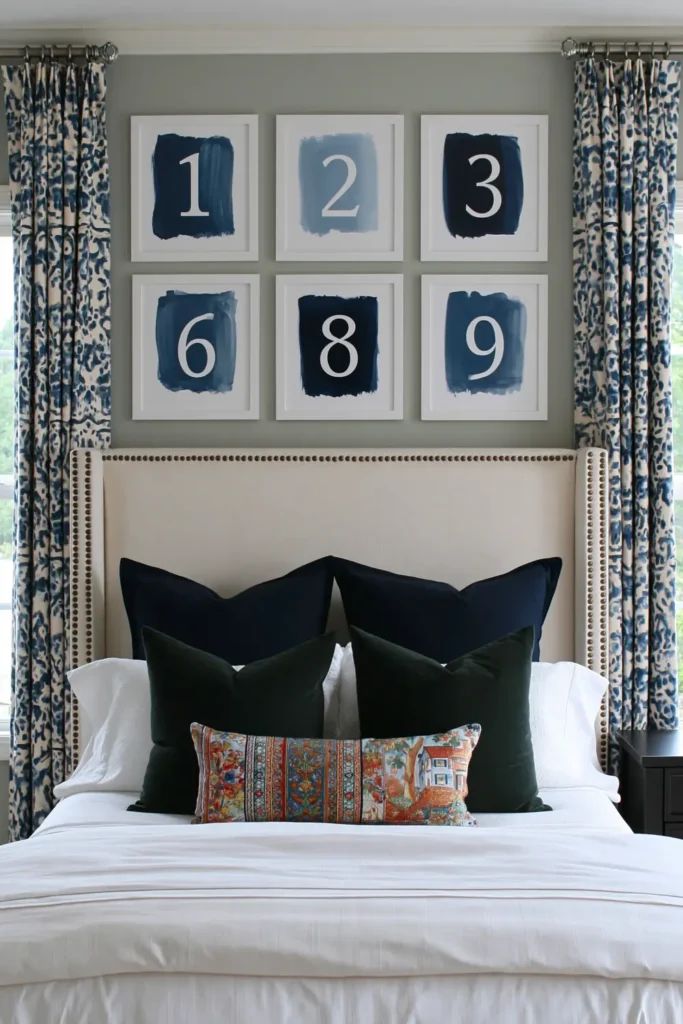
A purply-blue paint presents a slightly different atmosphere than true navy. It remains deep and suitable for bedrooms, but the purple undertone provides a richer, softer effect that seems less formal than crisp dark blue.
This shade works best when the room needs dimension without a heavy traditional impression. Because the paint carries character, surrounding decor can be minimal. Neutral bedding, pale wood, and soft fabric accents ensure the wall color remains prominent without overcrowding the room.
If hesitant about dark paint, try this shade behind the bed first. It acts like a built-in headboard, finishing the room even before extra artwork or decor.
Old Navy Kitchen Island with a Clean Classic Look
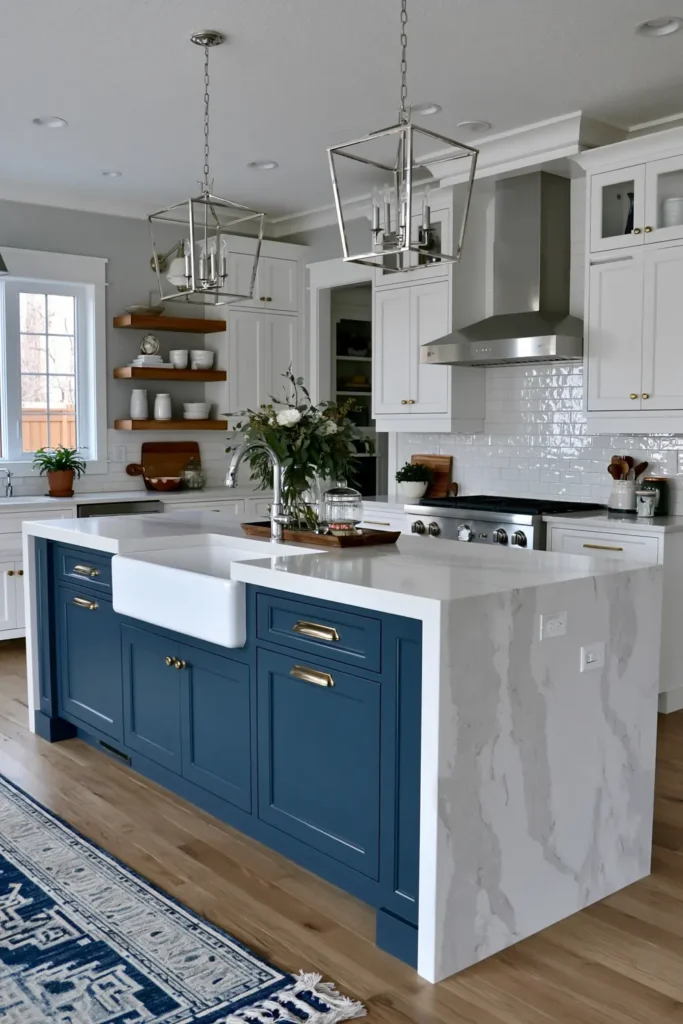
Navy paint need not cover every wall to deliver impact. A kitchen island painted in Benjamin Moore Old Navy creates a strong classic aesthetic while keeping the rest of the kitchen light and inviting.
This approach excels when the island functions as the primary gathering spot. The painted surface establishes a focal point, and the deep blue remains clean without appearing trendy. If cabinets or walls are lighter, the island stands out intentionally rather than overpowering.
Keep surrounding decor simple: clear countertops, classic hardware, and a few everyday items. Navy sets the look, especially for subtle nautical vibes without coastal decor.
Van Deusen Blue for a Softer Navy Interior
Benjamin Moore Van Deusen Blue is a smart choice for navy blue interior paint ideas that feel lighter and more approachable. It has desired depth, but the effect is softer compared to very dark blue-black paint.
This shade serves well in rooms needing color but maintaining openness. It can be applied to walls, built-ins, or a single feature, depending on your preference for blue. Its soft quality pairs efficiently with white, cream, gray, and natural textures.
If choosing between navy paints, sample Van Deusen Blue with brighter trim or lighter furniture. The contrast shows if the shade feels relaxed without making the room too dark.
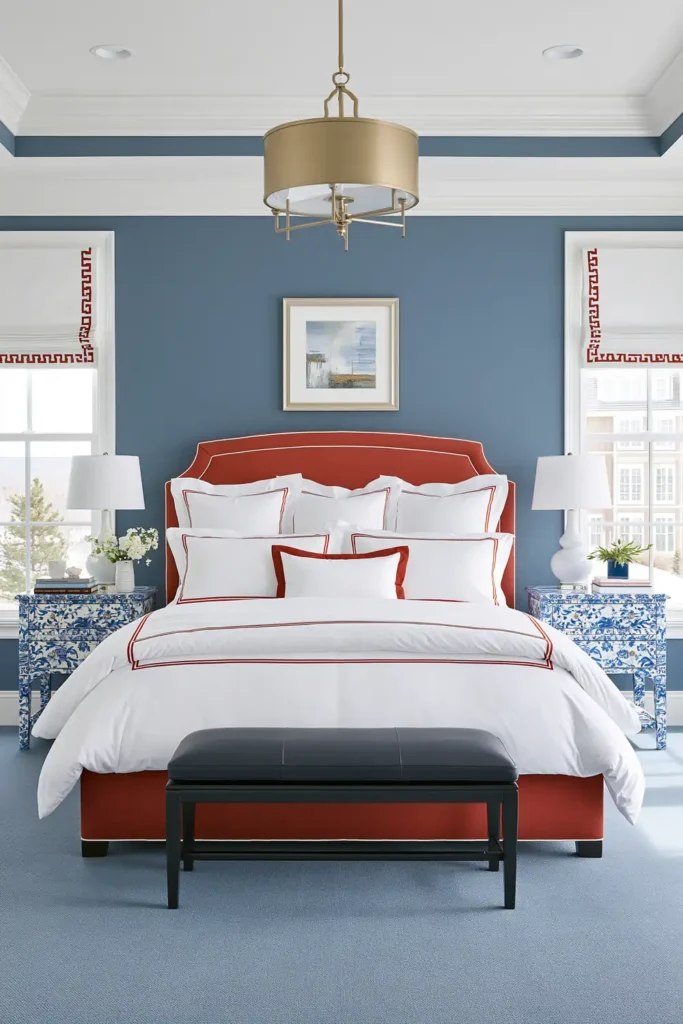
Hale Navy Guest Room with a Grayed-Out Finish
Hale Navy is an effective guest room option due to its grayed-out tone, avoiding brightness or a thematic feel. It offers depth but remains calm enough for peaceful spaces.
This navy handles simple furniture and understated bedding effortlessly. White sheets, warm wood, and beige accents pair naturally. The gray undertone imparts a mature, softer impression compared to pure blue.
Avoid decor overload in guest rooms. Let navy walls carry visual weight, with useful additions like a lamp, a folded blanket, and space for guests’ belongings. It keeps the room welcoming but not overstyled.
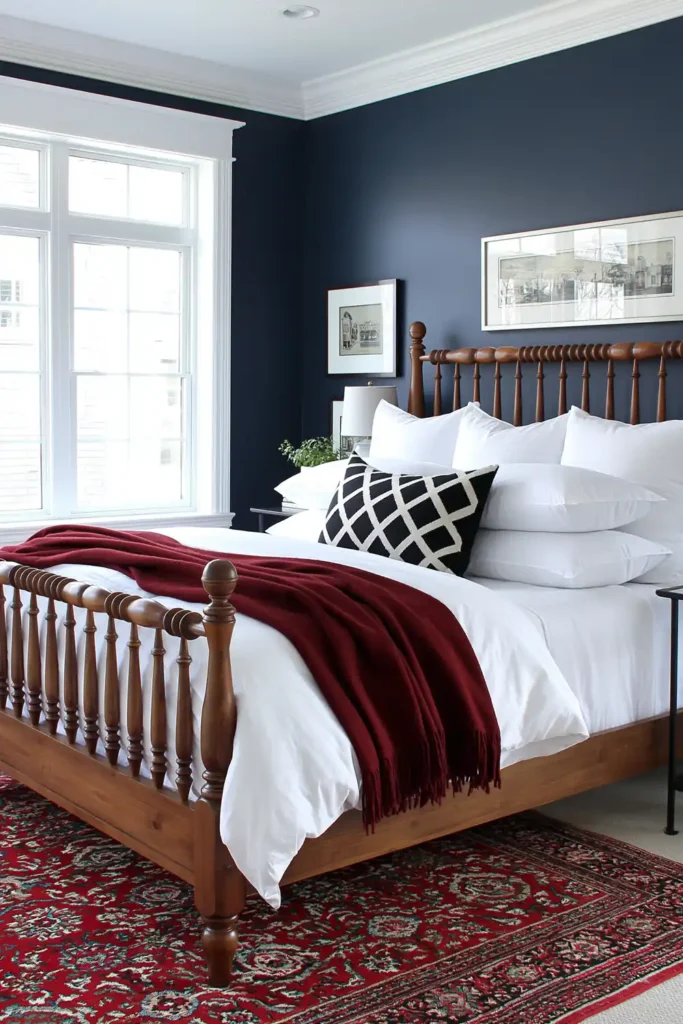
Downpour Blue Walls with a Navy and Peacock Teal Feel
Downpour Blue stands out because it sits between navy and peacock teal. Its faint teal undertone adds dimension that standard dark blue lacks, especially for colors that respond to changing light.
This shade is best within spaces where walls should feel bold but not one-dimensional. Its combination of blue and green complements warm metals, cream fabrics, wood, and darker accents. Movement in color means the room does not require complex decor.
Use this paint in small rooms, hallways, or features where color wraps around. Keep furnishings simple and let the walls produce character. Try it when regular navy feels too predictable.
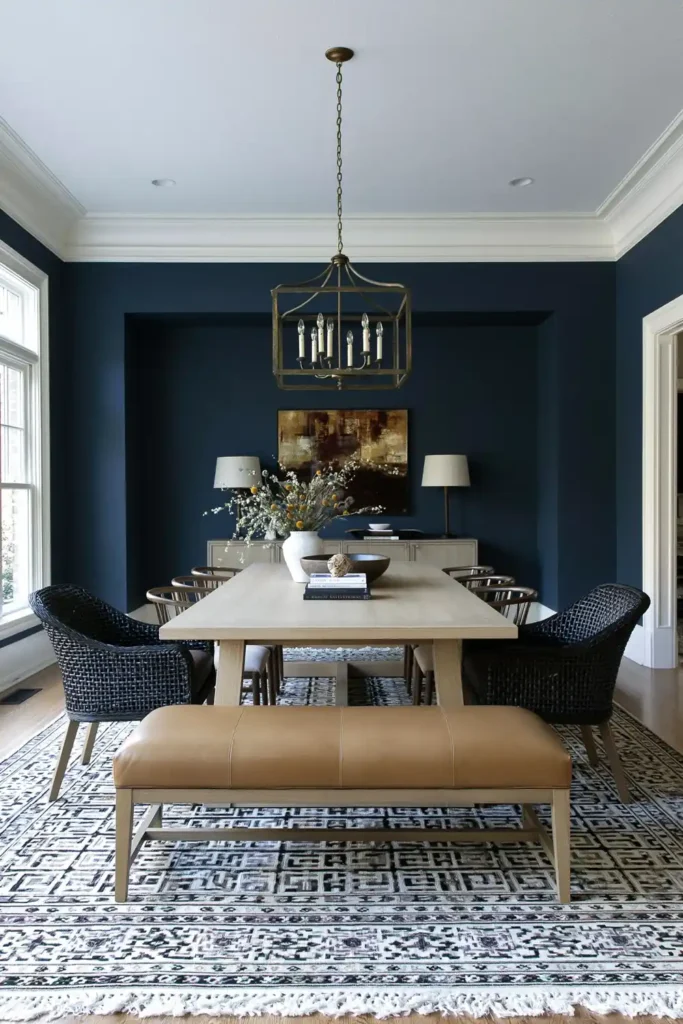
Moody Hale Navy Den with Masculine Lounge Style
A Hale Navy den takes on a moody, masculine ambiance, particularly when styled as a quiet lounge. Darkness here prioritizes comfort, privacy, and a secluded atmosphere over brightness.
The paint pairs nicely with heavy textures and dark finishes. Leather, rich wood, aged metal, and tailored furniture suit the look. Welcome the darkness for a more settled feel.
Focus on one comfy chair, a side table, and warm lighting for a home den. Restraint is key. Navy walls set the mood; a few sturdy pieces finish the room without overstyling.
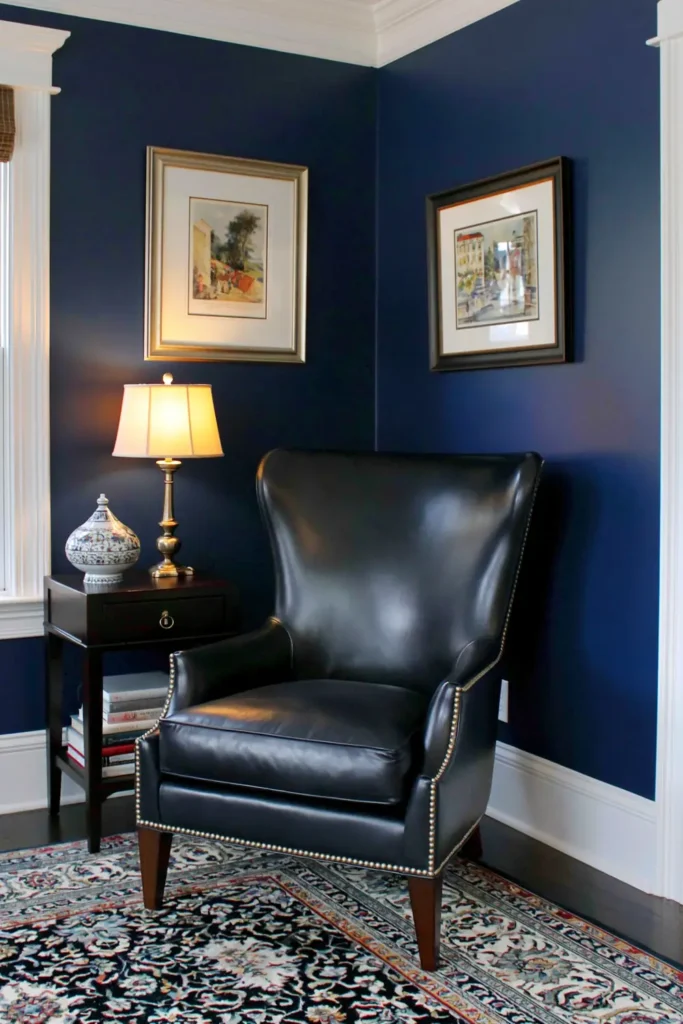
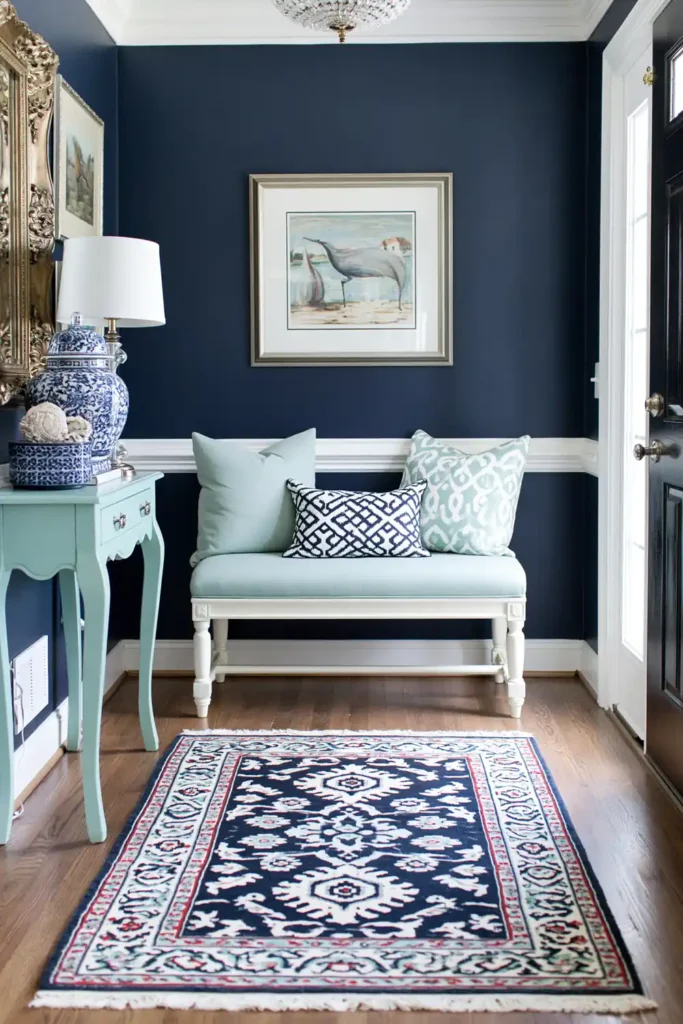
Boho Preppy Entryway with Hale Navy and Bright Turquoise
An entryway invites a bolder use of navy since it’s a transitional space. Hale Navy and bright turquoise feel fresh, preppy, and more playful than a typical neutral entry.
Contrast drives this idea. Navy provides structure, turquoise injects energy, and prevents a too-serious tone. Use this pairing in walls, accents, artwork, or a bright runner if floor space allows.
Keep the entry organized to showcase colors. A console, hooks, or bench suffice. Clutter shows quickly with strong colors, so baskets or closed storage help maintain cheerfulness.
Nautical Classic Guest Room with Hale Navy Paint
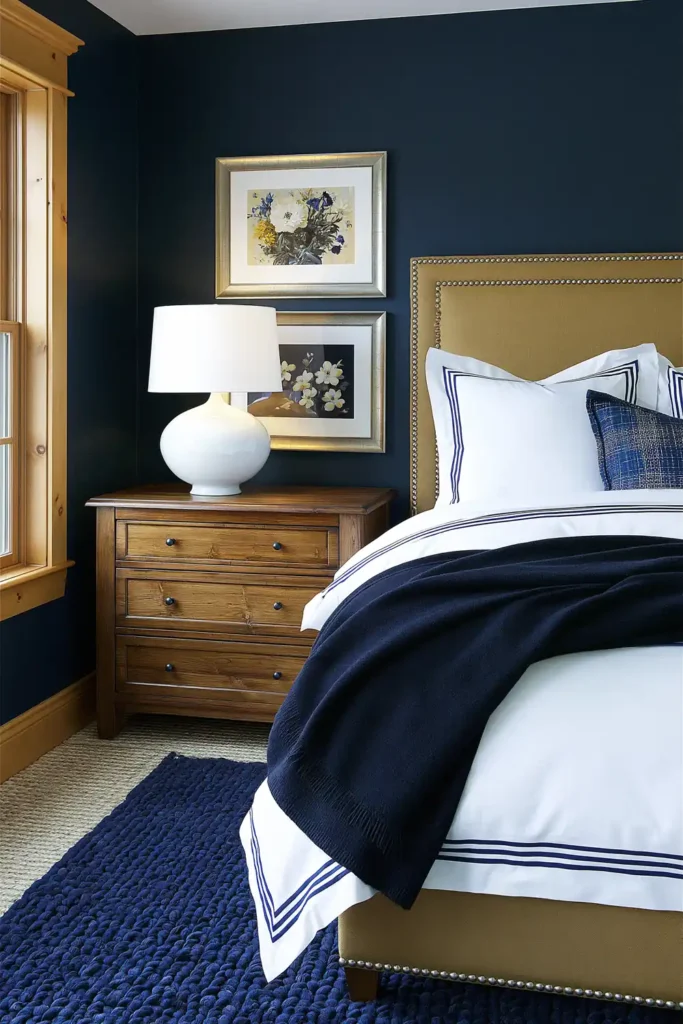
Hale Navy also suits guest rooms with a nautical, classic approach. Let the navy imply the theme, avoiding excessive motifs. Clean bedding, simple shapes, and crisp contrast outperform anchors or coastal decorations.
This guest room looks balanced with light trim, white linens, and some natural textures. Navy tailors the look; lighter details keep it fresh for guests.
Style the bed neatly, not layered: white duvet, plain blue pillow, and warm wood nightstand. The room stays classic without trying too hard.
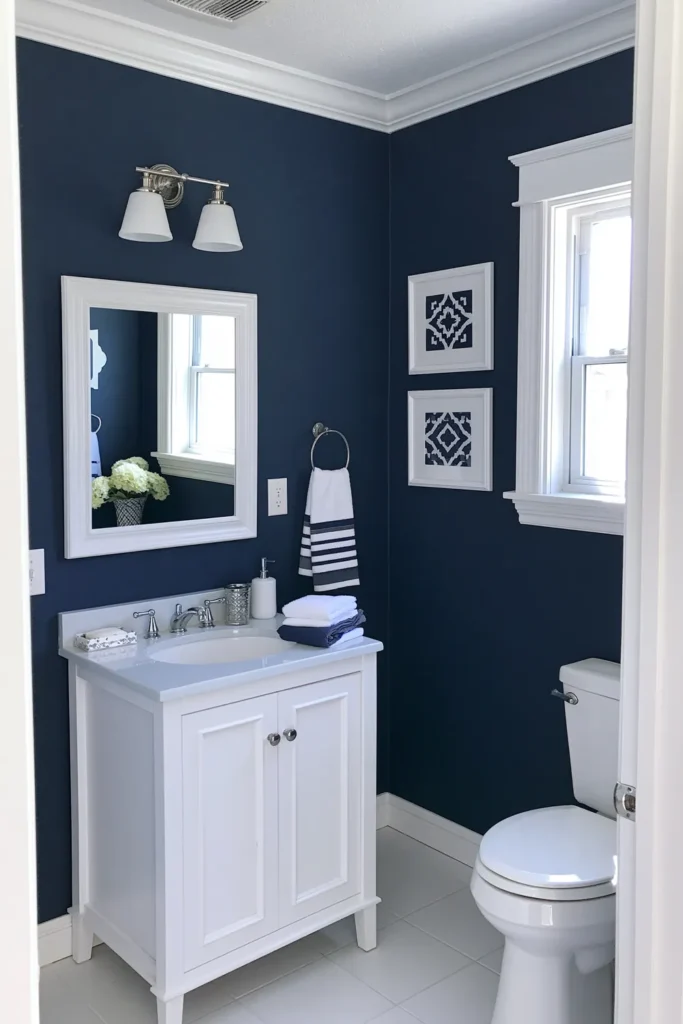
Dramatic Hale Navy Bathroom with a Velvety Finish
A bathroom can handle dramatic navy beautifully, especially with a velvety finish. Hale Navy in a compact bathroom gives walls a rich, deliberate look rather than plain darkness.
Velvety paint gives depth and reacts well to bathroom lighting. White fixtures, metal, or pale countertops pop against navy and need little extra decor.
Use strong paint with restraint in powder baths. A clean mirror, a simple towel, and one warm accent suffice. Too many accessories can crowd the room.
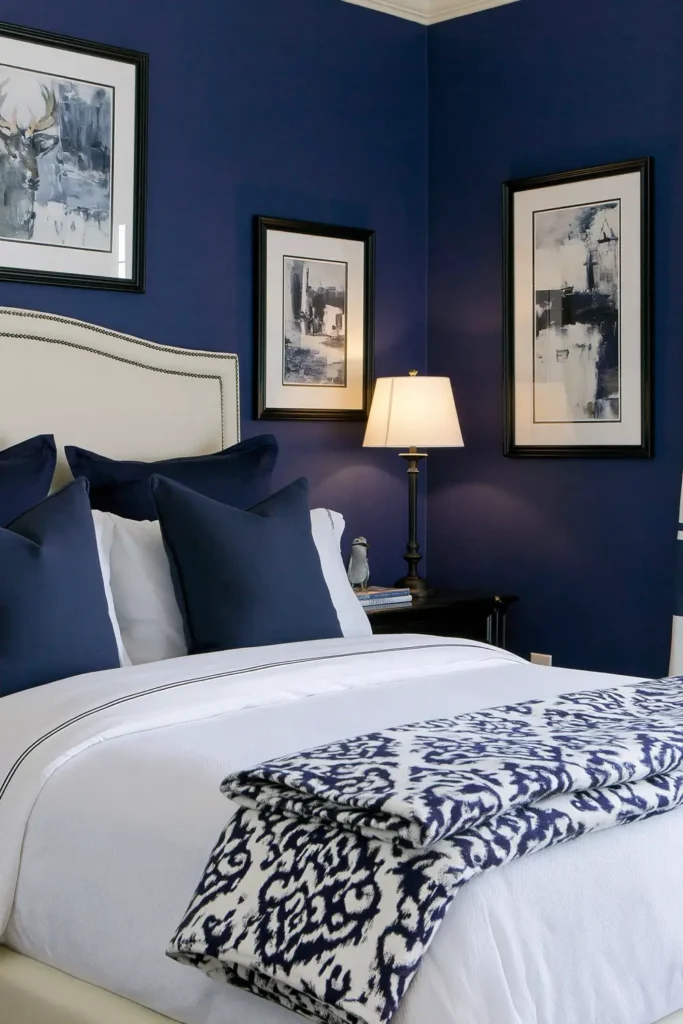
Peacock Blue Bedroom with a Mild Evening Glow
A peacock or cobalt blue bedroom differs from a flat navy room. It remains moody, but the walls glow when lit, making the space lively in the evening, especially with eggshell paint.
The slight sheen helps the light move over the walls instead of disappearing completely. This can be useful in a bedroom where you want a deep color but do not want the room to feel dull after sunset. Simple lamps or warm interior lights can bring out the blue and make the walls feel softer.
If I were using this idea, I would keep the bedding calm and let the wall color provide most of the interest. Cream, white, or dusky gray would all work well. The goal is a bedroom that feels quiet but not sleepy.
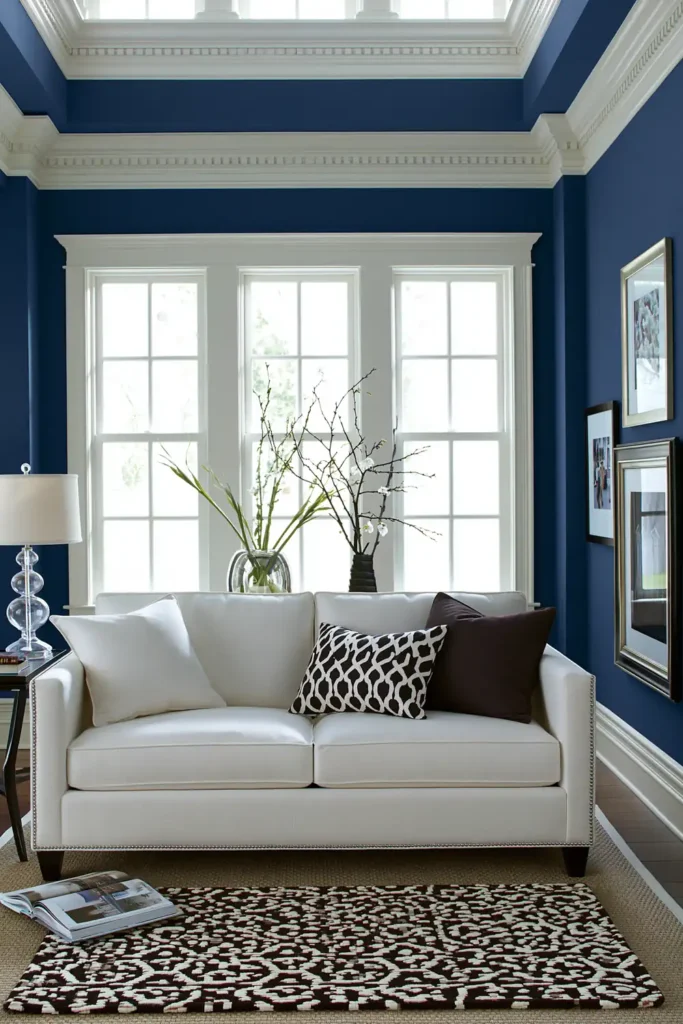
Blue Heron Living Room with Tall Ceilings and White Molding
Benjamin Moore Blue Heron can look especially thoughtful in a living room with tall ceilings and white molding. When the molding sits below the ceiling line, such as around the nine-foot mark in a ten-foot room, it creates a strong architectural break that makes the paint feel designed into the room.
Big windows help this kind of blue feel more open. Natural light can soften the darker color during the day, while the white molding keeps the walls from feeling too heavy. The contrast also draws attention to the height of the room instead of letting the walls feel like one large dark surface.
For a similar look, I would keep the window area clear and let daylight do its work. Tall rooms already have presence, so the navy paint and molding can become the main decorative feature without needing too much wall art.
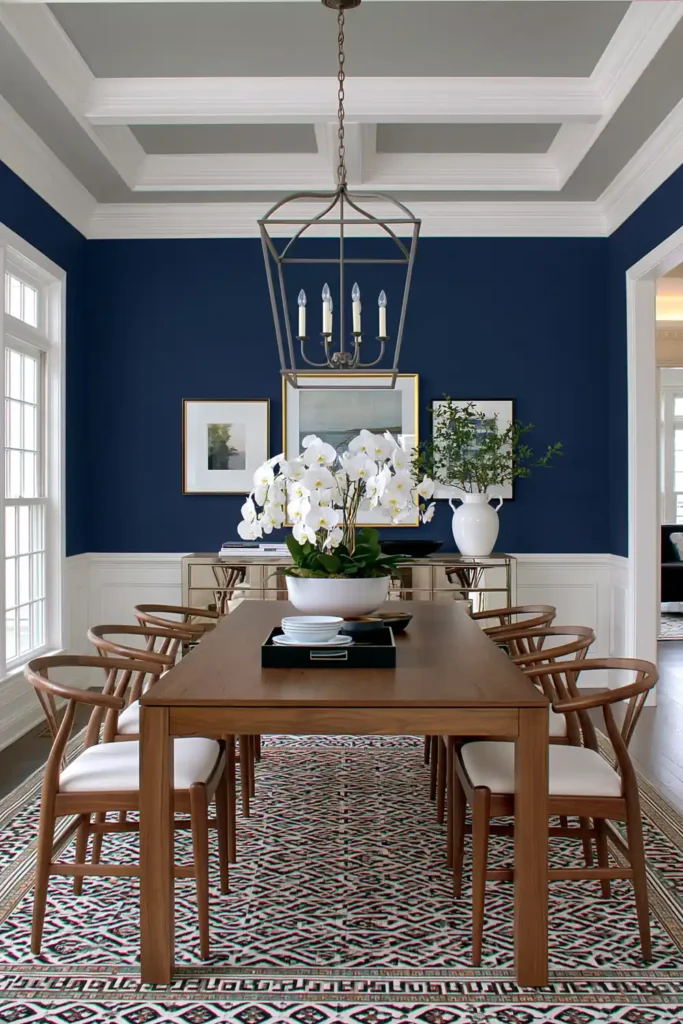
Polo Blue Dining Room with Crisp White Trim
Benjamin Moore Polo Blue can give a dining room a classic black-blue look without causing the space to feel nautical. It has enough depth to feel formal, but it can still work in a home that is simple and practical rather than overly dressed up.
The white trim is what keeps this idea sharp. Painted trim around the room gives the blue a clean edge, and that contrast can make even basic dining furniture feel more intentional. Since the color already feels strong, the room does not need a lot of decorative extras to make it feel complete.
For a dining room, I would let the walls and trim create the structure first. A simple table, comfortable chairs, and one clear focal point, like a mirror or artwork, would be plenty. This is the kind of navy that can make everyday dinners feel a little more settled without turning the room excessively formal.
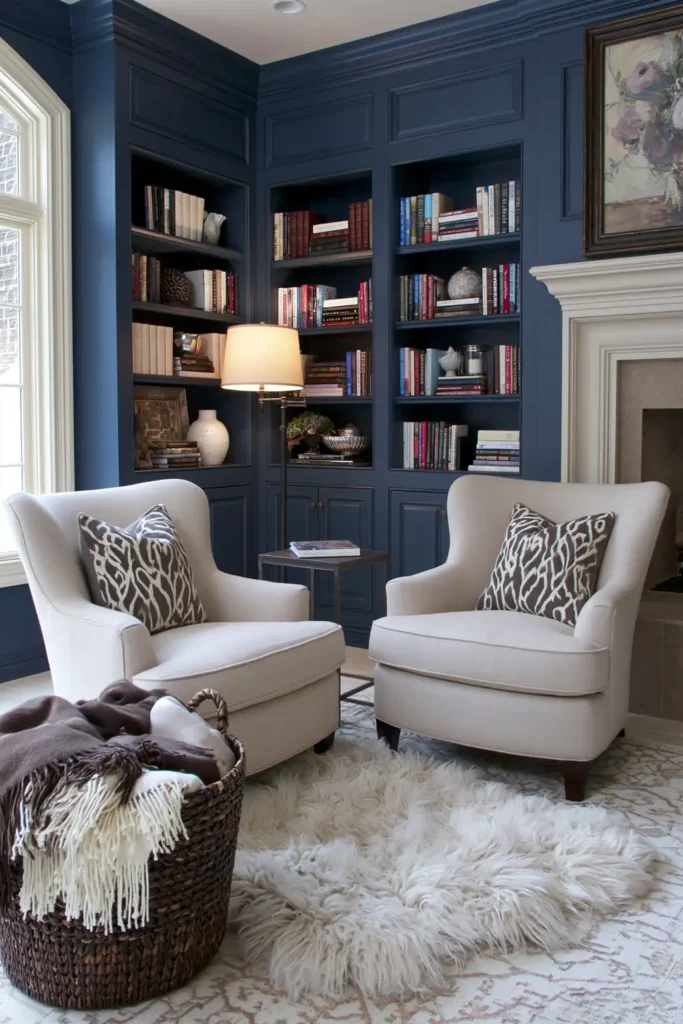
Navy Seating Alcove with Soft Chairs and Reading Lights
A small extra room or seating alcove can become a real getaway when navy is used as the backdrop. The deeper color makes the area feel tucked away, which works well for a reading corner or quiet sitting space.
This idea becomes more comfortable when it includes soft furniture and warm textures. Comfy chairs, one or two plush chaises, a sheepskin rug, and a basket for throws can make the space feel usable, not just pretty. Bookshelves and a small end table would also give the alcove a clear purpose.
Lighting matters a lot in a navy alcove. A group of small pendants or a pretty floor lamp can keep the space from feeling too dim. If there is room for a gas, gel, or faux fireplace, it would add a comfortable focal point and make the corner feel even more inviting.
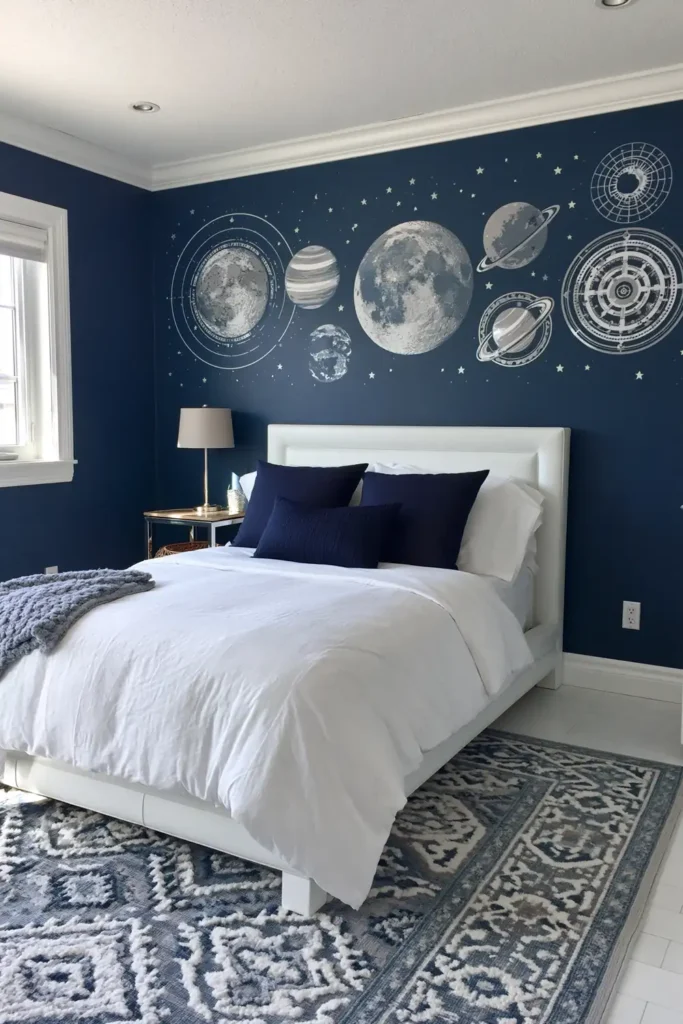
Old Navy Space-Themed Boy’s Bedroom
An Old Navy accent wall can work beautifully in a boy’s bedroom, especially when the room has a space theme. The dark blue gives the wall a night-sky feeling, which makes solar system wall stickers and phosphorescent stars feel natural rather than random.
This idea is practical because the navy does not need to cover the whole room. One accent wall can carry the theme while the other walls stay lighter. That makes the bedroom easier to update later if the child grows out of the space details.
For a simple version, I would place the accent wall behind the bed or along the most visible wall in the room. Add the large solar system stickers in a balanced layout, then use glow stars where they will be seen at night. It gives the room imagination without needing expensive furniture or a full makeover.
Hale Navy Powder Room with Creamy Wainscot and Yellow Accents
A powder room is a good place to try a strong navy because the room is small and does not need to match every other space in the house. Hale Navy paired with creamy white wainscot can feel classic, while small hits of egg yolk yellow bring in a cheerful surprise.
The wainscot helps balance the dark paint by giving the lower part of the wall a lighter, more structured finish. The navy above it gives depth, and the yellow accents keep the room from feeling too serious. This could be done through a small print, a towel, a vase, or even a painted detail.
For a powder room, I would keep the yellow controlled. A little goes a long way against the navy. The combination works best when the room seems crisp and tidy, with the wainscot, wall color, and accents each doing one clear job.
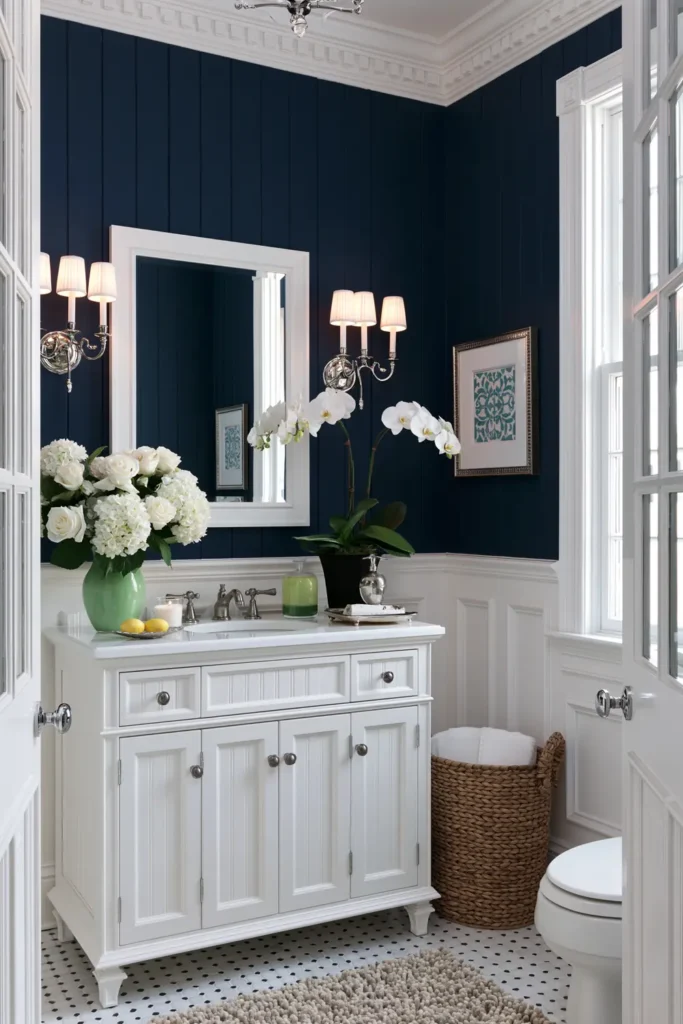
Inkwell Bedroom with Dark Navy Walls and Bright White Trim
Sherwin-Williams Inkwell is a very dark navy that can almost read as blue-black, which makes it useful when you want a bedroom with strong contrast. It has a confident look, but bright white trim keeps the room from feeling too closed in.
The painted trim is important because it gives the dark walls a clean outline. Without that contrast, a deep navy bedroom may occasionally feel heavy. With white trim, the wall color looks more deliberate, and the room can work with several styles, from simple traditional furniture to more modern bedding.
If I were using Inkwell in a bedroom, I would pay close attention to the balance between dark and light. White or light neutral bedding, a few soft textures, and simple bedside lighting would help the room feel restful instead of severe. The paint brings the mood, so the rest of the room can stay calm.
Bringing Navy Blue Paint Into Real Rooms
What I like most about these navy blue interior paint ideas is how flexible the color can be. It can make a bedroom feel quiet, give a kitchen island more presence, sharpen a dining room, or turn a small powder room into something memorable.
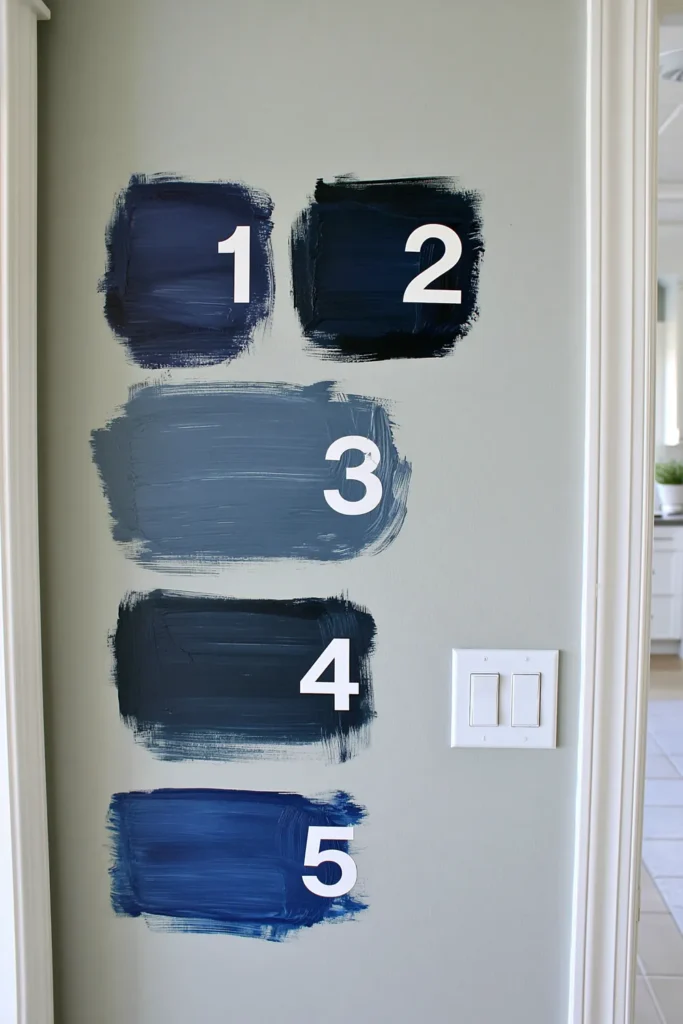
The trick is choosing the version of navy that fits the room. Some shades feel grayer and softer, while others lean peacock, cobalt, or nearly black. Once the paint is chosen, the surrounding details do not have to be complicated. Trim, lighting, bedding, wainscot, or one bright accent color can be enough to make the room feel finished.
Start with the room where navy already makes sense to you. That might be a guest room, an entryway, or even a small bathroom. A deep blue wall can feel bold at first, but with the right light and a few practical pieces around it, it often becomes one of the most comfortable colors in the house.