
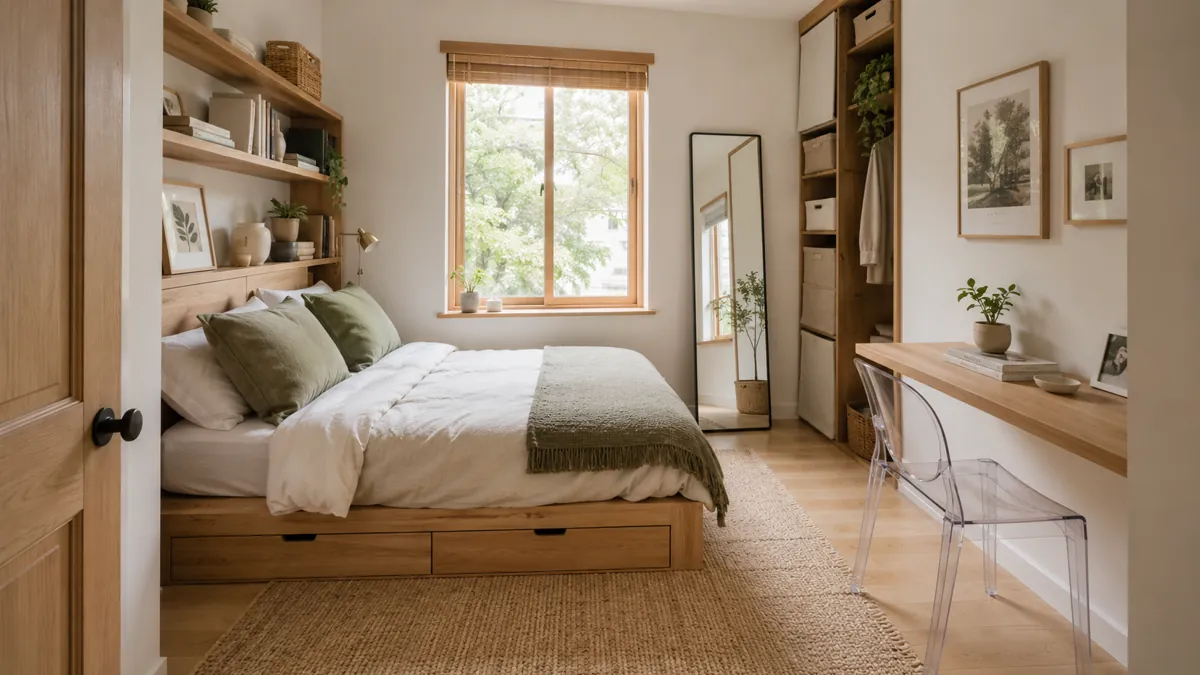
A small bedroom can feel comfortable and useful without being crowded. The key is to give each piece of furniture a clear purpose and avoid filling the room with items that take up more visual or floor space than they need.
These small bedroom decorating ideas to make the most of space concentrate on practical changes you can actually use, from building storage around the bed to choosing furniture that feels lighter in the room. Each idea is meant to help the bedroom seem more organized while still looking comfortable and intimate.
Bookcase Shelving Around the Bed for a Comfortable Library Look
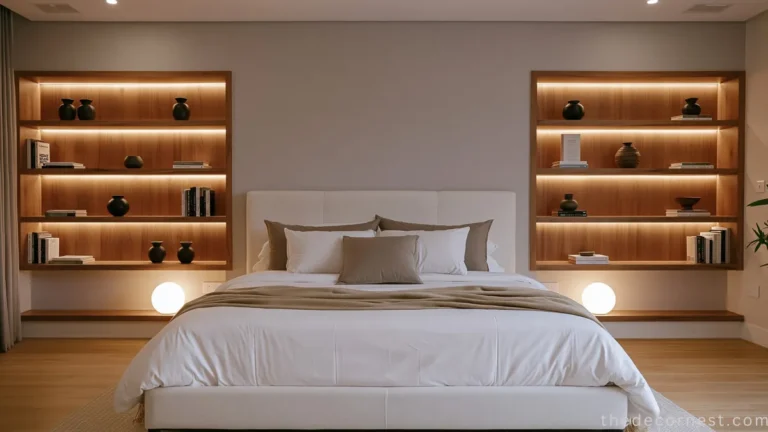
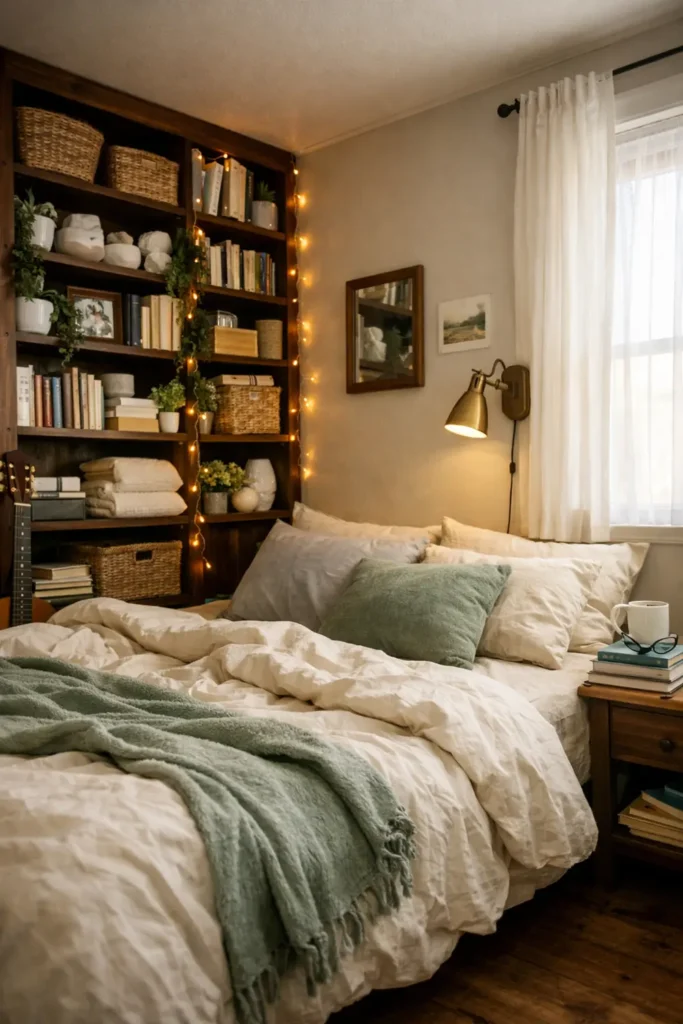
Shelving around the bed works well in a small bedroom because it uses wall space, which often goes untouched. A pair of narrow bookcases placed on either side of the bed can create the feeling of a built-in headboard, especially when they are connected with a shelf above. This arrangement keeps books, framed art, and everyday items close by without adding another piece of furniture.
Wood shelving adds warmth, while soft bedding keeps the setup from feeling too heavy. Keep the shelves balanced by mixing upright books with a few small objects, rather than packing every section completely. A tiny potted plant or simple framed print can help break up the lines of books.
For lighting, attach compact sconces to the shelving or use clip-on reading lamps. This frees the bedside area from table lamps and leaves more room for essentials. Make sure the upper shelf is high enough that the bed still feels open and comfortable.
Floating Desks and Clear Chairs for Space-Saving Work Zones
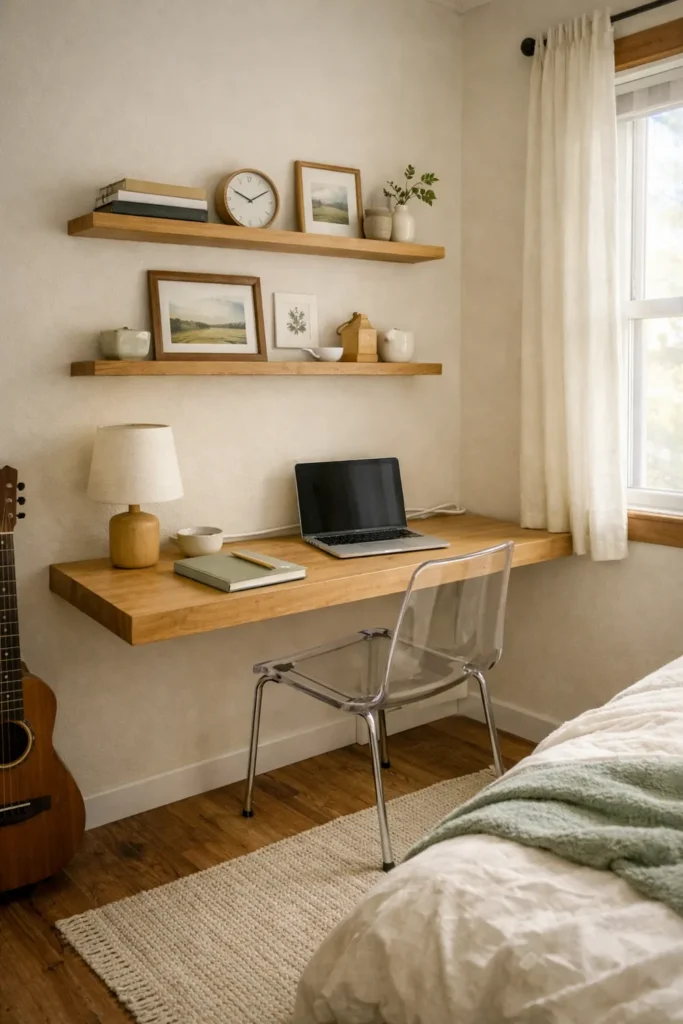
A floating desk can turn an unused wall into a practical work area without taking up much floor space. Because the desk is mounted directly to the wall, the room feels less crowded and cleaning underneath it is easier. A drop-leaf version is especially useful when the work surface is only needed occasionally.
Pairing the desk with a clear acrylic chair or a slim wireframe chair keeps the setup visually light. These chairs still provide a proper place to sit, but they do not block the view of the floor or make the corner feel boxed in. A small floating shelf above the desk can hold notebooks, a clock, or a few decorative pieces.
Choose a desk depth that fits the way you will use it. A narrow surface may be enough for a laptop and lamp, while more profound work requires more room. Keeping cables tucked against the wall also helps the area look calm rather than cluttered.
Under-Bed Cubbies and Storage Ottomans for Hidden Organization
The space beneath the bed is one of the most useful storage areas in a small bedroom. Open cubbies can hold baskets, folded clothing, shoes, or spare bedding while keeping everything easy to reach. This works especially well with a raised bed frame that leaves enough clearance for sturdy storage containers.
Baskets help soften the look of exposed cubbies and prevent small items from appearing messy. Matching baskets create a cleaner finish, while woven textures can offer warmth to a simple bedroom. Labeling the inside or underside of each basket can also make stored items easier to find.
A storage ottoman is useful when you need both seating and hidden storage. Place it at the foot of the bed only if there is enough walking space around it. In very tight rooms, under-bed cubbies are usually the better choice because they use space that already exists rather than adding another item to the floor plan.
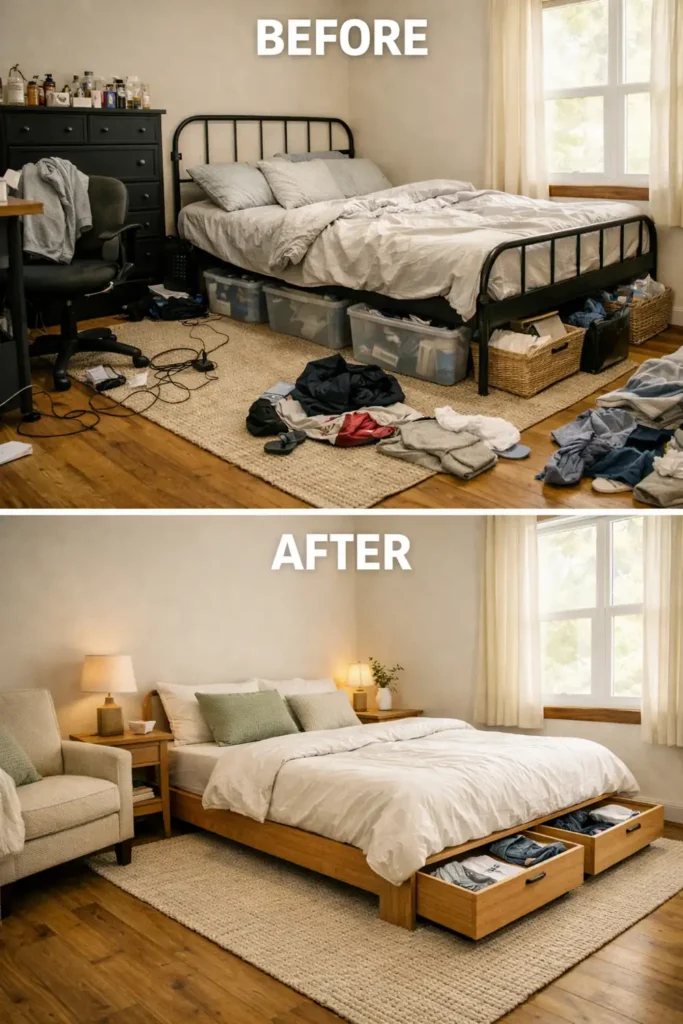
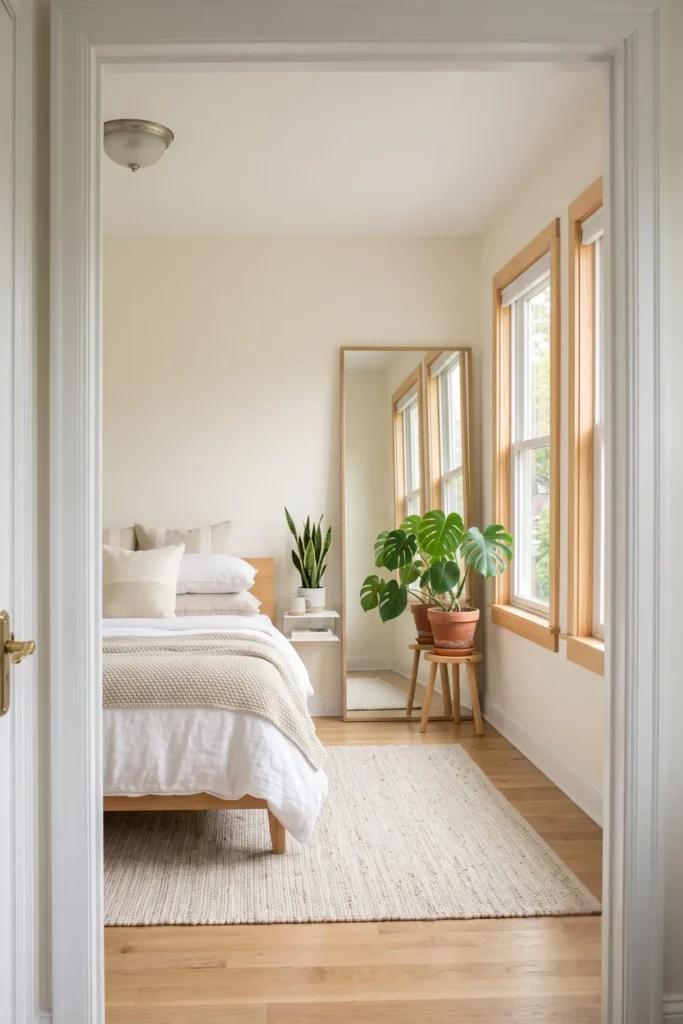
Floor-Length Mirrors That Make a Small Bedroom Feel Larger
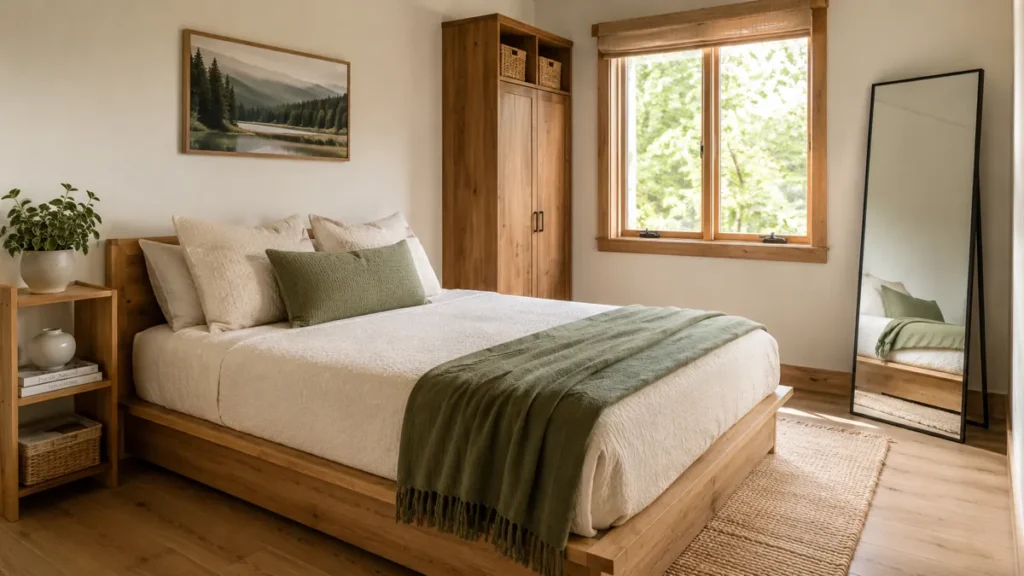
A large mirror can make a small bedroom feel brighter by reflecting light and extending the view across the room. A tall, narrow floor mirror is especially useful because it adds height without using much wall width. Position it where it can reflect a window or the lightest part of the room.
Choose a mirror with a thin frame so it does not feel bulky. Black, natural wood, or pale metal frames can work depending on the rest of the bedroom. Leaning the mirror against the wall creates a relaxed look, while mounting it provides more security in a tight space.
A tall potted plant beside the mirror can add softness and balance the hard surface of the glass. Keep the surrounding area simple so the reflection does not double the appearance of clutter. Even a few carefully placed items will look more effective than a crowded corner.
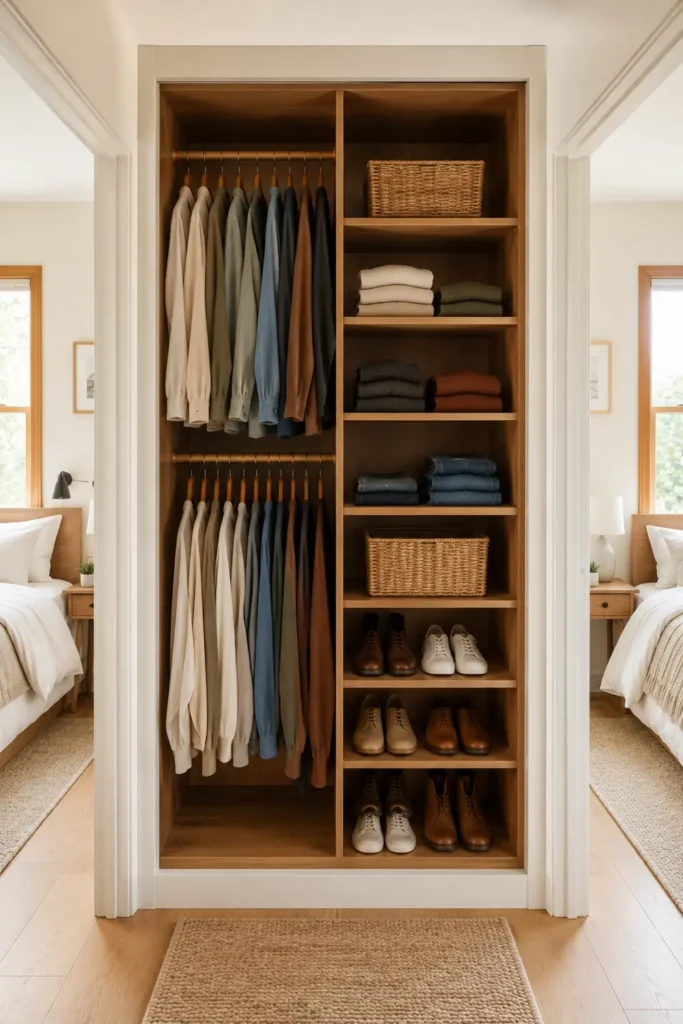
Slim Floor-to-Ceiling Wardrobes for Custom Bedroom Storage
A slim wardrobe can add useful storage without crowding a small bedroom. Floor-to-ceiling units make the most of vertical space, and their narrow shape leaves more room for walking around the bed. Open modular units can also fit into awkward corners where a standard wardrobe would be too wide.
Use the upper shelves for items you do not need every day, such as extra bedding, seasonal clothing, or travel bags. Fabric storage bins help hide smaller pieces and keep open shelving from looking untidy. Keeping the bins in similar colors gives the wardrobe a more settled, built-in appearance.
Before choosing a unit, measure the wall, ceiling height, door swing, and nearby furniture carefully. A shallow wardrobe may work better than a deep one if the walkway is tight. Leave a little open shelf space for regularly used items so the entire unit stays functional rather than becoming a wall of tightly packed storage.
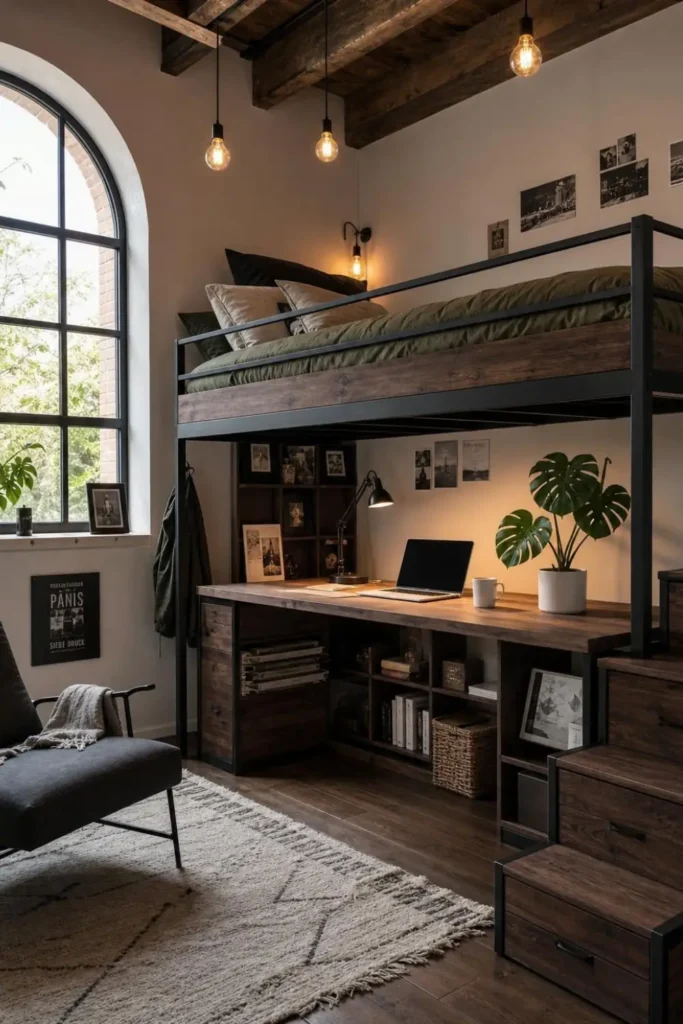
Adult Loft Beds with a Workspace or Seating Area Below
An adult loft bed can completely change how a small bedroom functions by lifting the sleeping area off the floor. The space underneath can become a compact office, a reading corner, a small sofa area, or even an open clothing zone. This arrangement works best in rooms with enough ceiling height to keep the bed comfortable.
A metal loft frame creates a lighter, more industrial look and pairs well with simple furniture below. In a room with exposed brick or large windows, the structure can feel intentional rather than temporary. Keep the area underneath focused on one purpose so it does not become crowded with unrelated furniture.
Measure the height above the mattress as carefully as the floor space below. There should be enough room to sit up safely and move around without feeling boxed in. Under the bed, choose a low-profile desk or sofa and keep the walkway clear. Good natural light will also help the lower zone feel open.
Creating a Small Bedroom That Feels Easy to Live In
The most useful small bedroom decorating ideas to make the most of space are the ones that improve both storage and daily movement. Shelving around the bed, slim wardrobes, under-bed cubbies, and lofted furniture all work because they use areas that are often overlooked.
You do not need to use every idea at once. Start with the part of the room that causes the most frustration, whether that is a lack of storage, no place to work, or furniture that feels too bulky. A few thoughtful changes can make the bedroom feel calmer, more personal, and much easier to use every day.