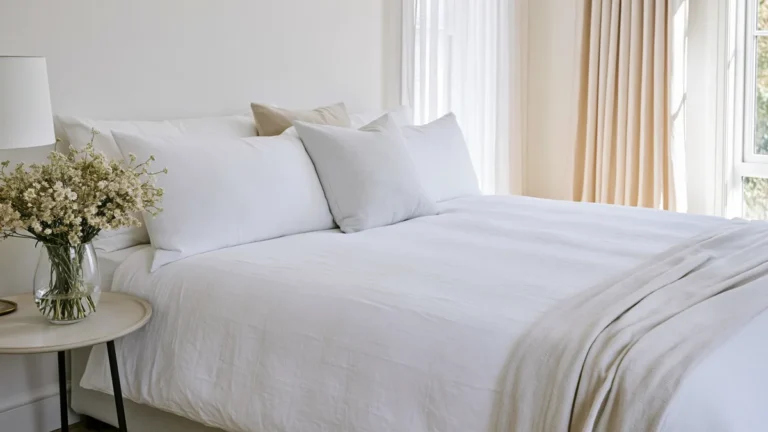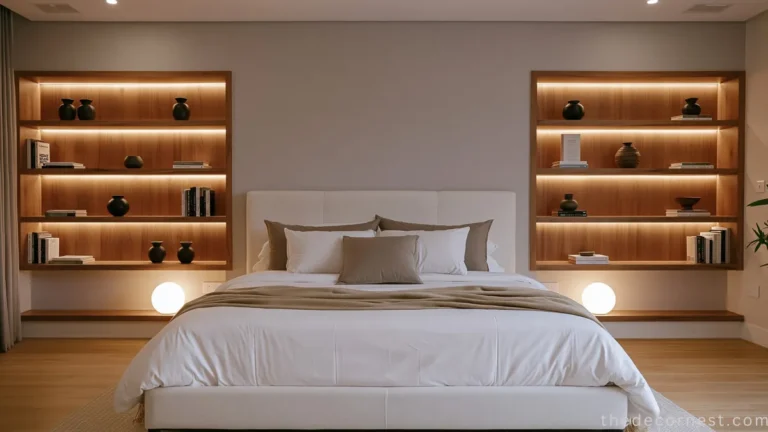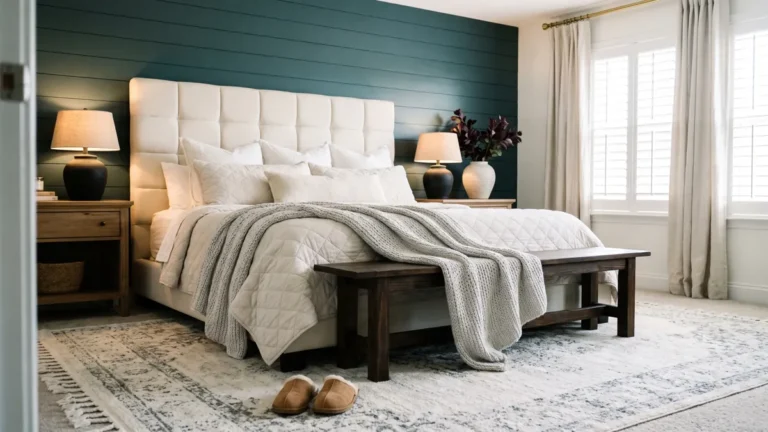

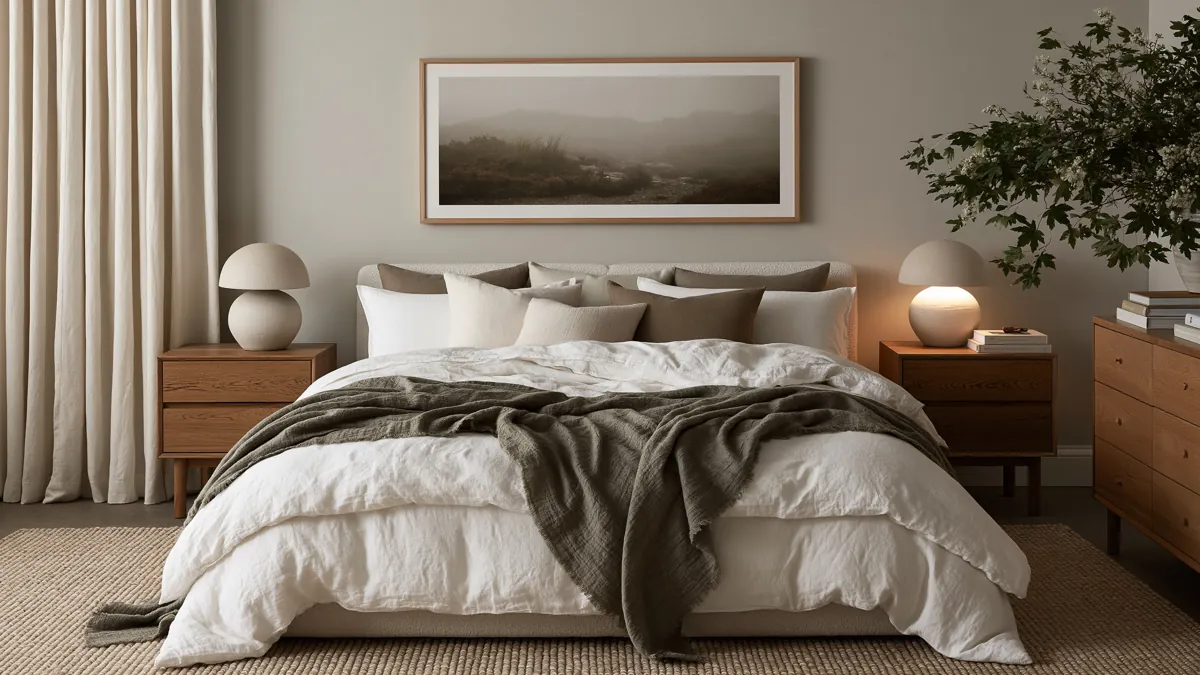
The walls in a master bedroom do more than fill empty space. They help set the mood of the room, frame the bed, and make the space feel more settled and personal.
These master bedroom wall decor ideas range from simple framed artwork to more layered arrangements, so you can choose an approach that suits your room, your budget, and the amount of visual detail you enjoy.
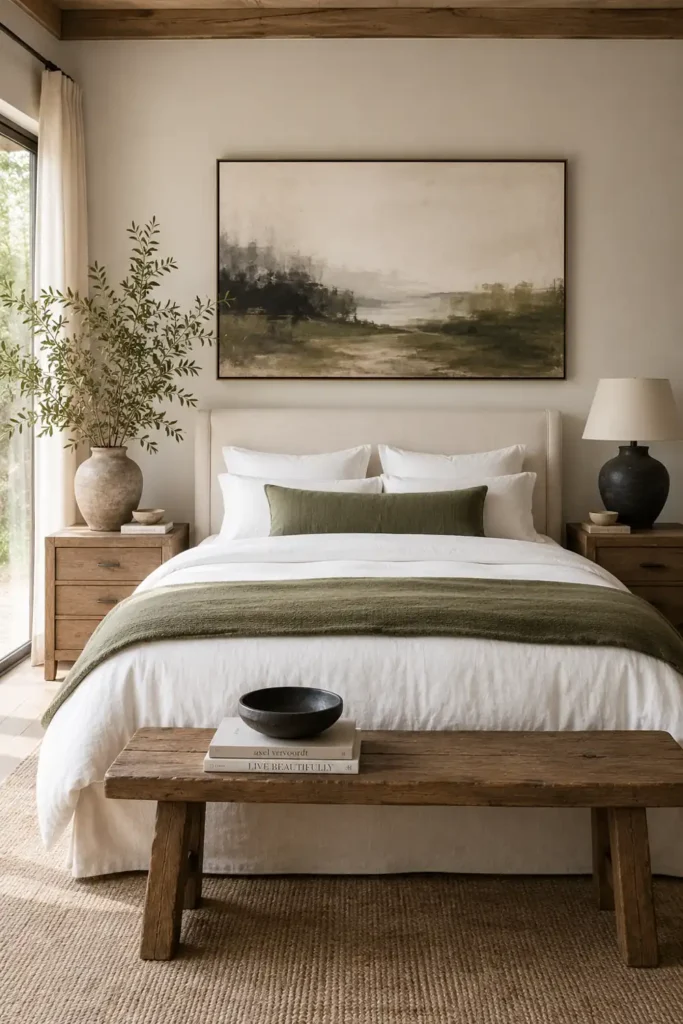
Use One Large Artwork as the Visual Anchor
One large piece of artwork can give the bedroom an immediate focal point without making the wall feel busy. It works especially well above the bed, where the size of the artwork can balance the width of the headboard and make the whole arrangement feel intentional.
Choose a print or framed print with colors that already appear in the bedding, curtains, or rug. Abstract designs add movement, while landscapes, coastal scenes, and botanical artwork bring a calmer, more natural feeling. A simple frame usually works best when the artwork itself has plenty of detail.
Before hanging it, place the artwork on the bed or mark its outline with painter’s tape. This helps you judge the scale from across the room. Leave enough space between the headboard and the frame so the artwork feels connected to the bed rather than floating too high above it. For heavier pieces, use suitable wall anchors or picture hooks that are rated for the mass of your artwork. Choose anchors that fit your wall type, such as drywall, plaster, or masonry, to help prevent damage and keep the piece secure.
Hang Two Matching Prints Above the Bed
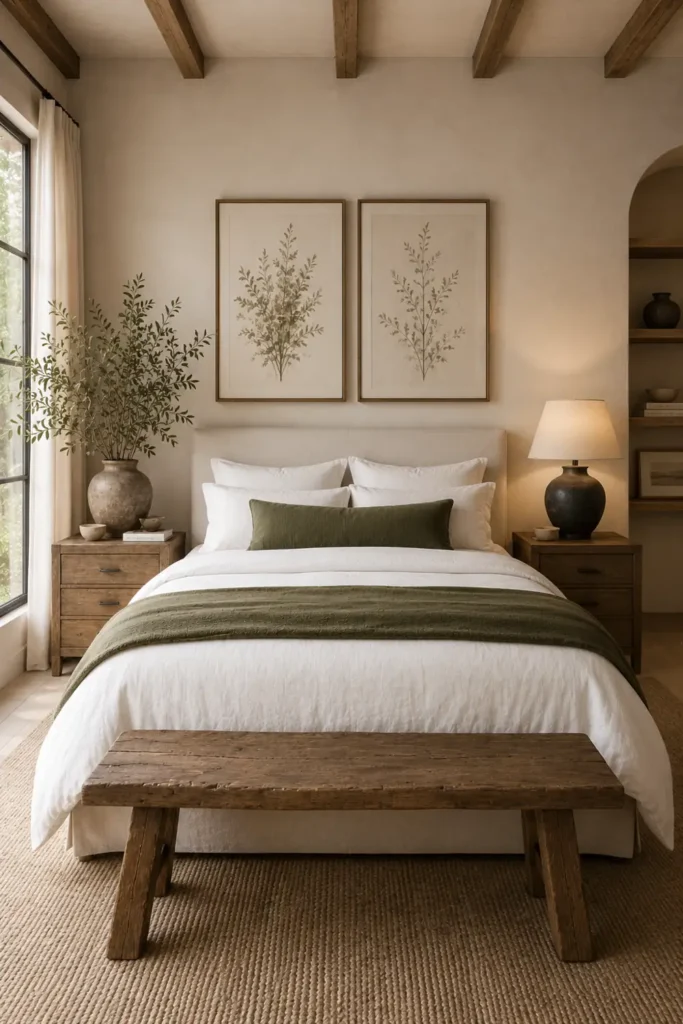
Two matching prints create symmetry, which can make a master bedroom feel calm and well-organized. This arrangement suits queen and king beds because the pair naturally spreads across the width of the headboard without requiring one oversized piece.
Use prints with related subjects, colors, and frame styles. They do not need to be identical, but they should clearly belong together. Matching black, timber, or light neutral frames helps the wall look clean, while equal spacing keeps the display from feeling uneven.
Measure the full width of both frames and the gap between them before making any holes. A small, consistent gap usually looks better connected than leaving a wide space in the middle. Hang both prints at the same height and center the pair over the bed rather than centering each frame over a pillow or nightstand.
Create a Structured Bedroom Gallery Wall
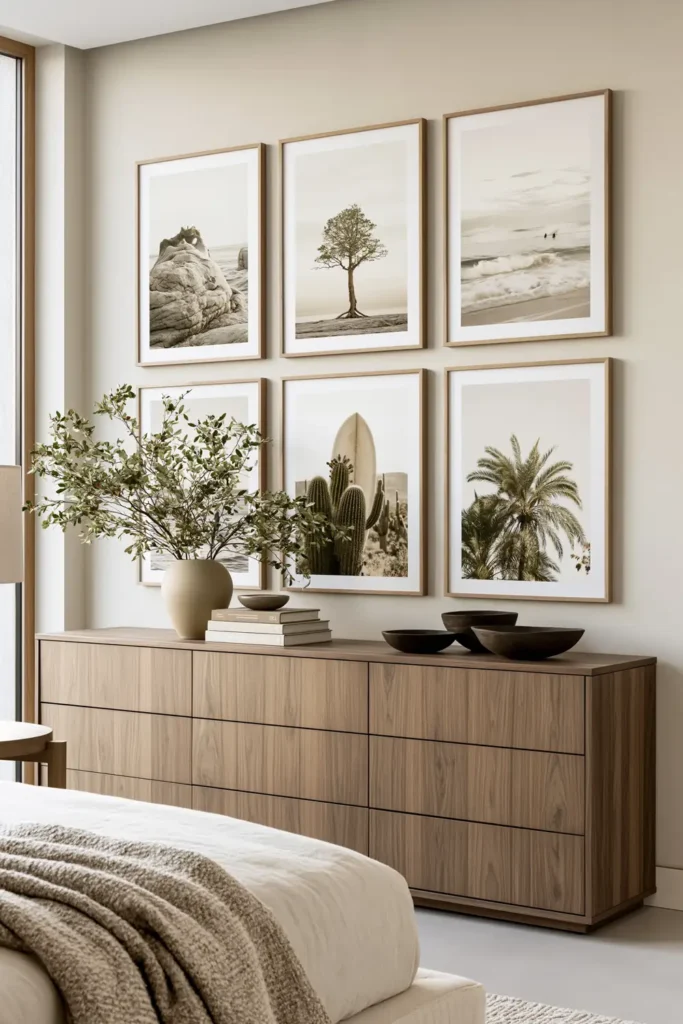
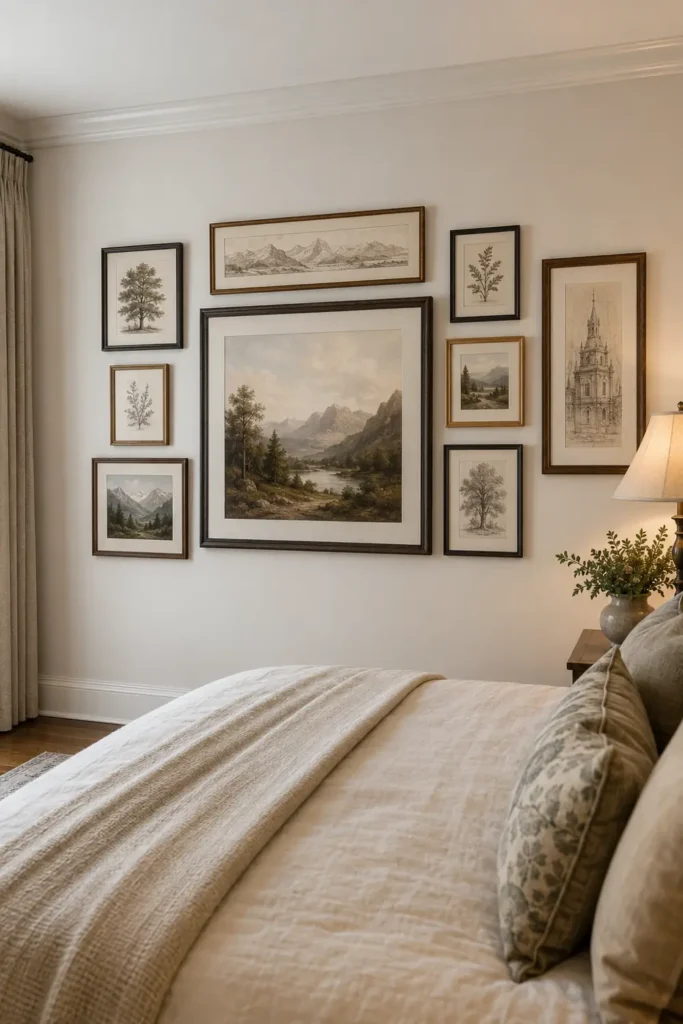
A gallery wall brings more personality into the bedroom and works particularly well above a dresser, beside a reading chair, or on a wide empty wall. Using a structured grid keeps the arrangement restful enough for a sleeping space.
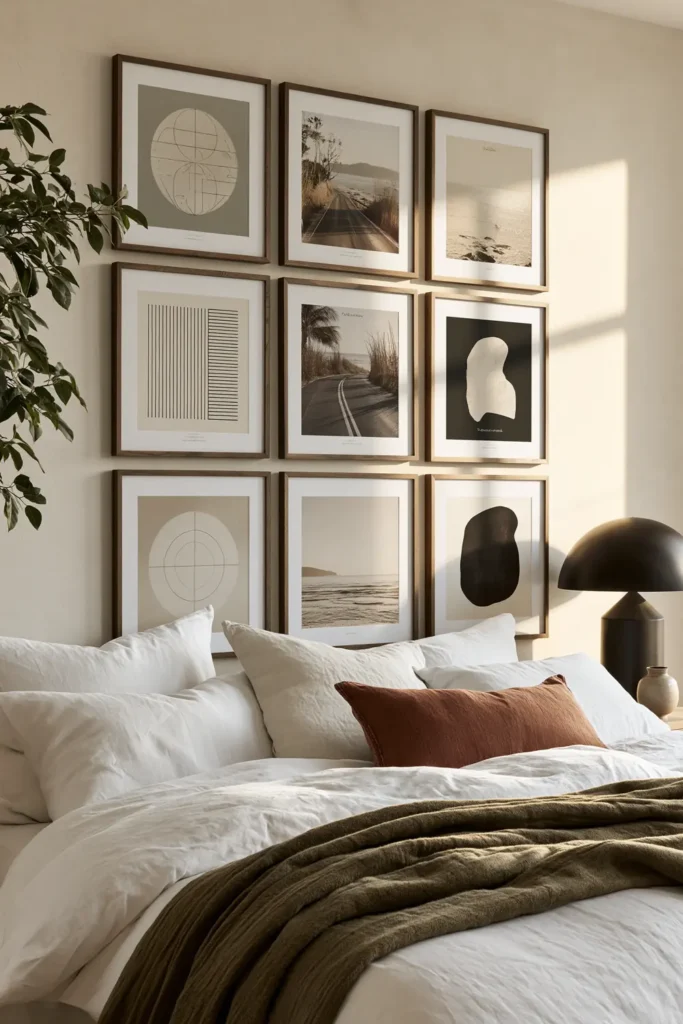
Choose artwork with a shared color palette or similar frame materials so the collection feels connected. A grid of four, six, or nine frames is easier to balance than an irregular arrangement. Photos, sketches, abstract prints, and small landscapes can all work together when the sizes and spacing remain consistent.
Lay the frames on the floor first and adjust the order until the visual weight feels even. Keep darker or more detailed pieces from gathering on one side. Once the arrangement looks balanced, make paper templates for each frame and tape them to the wall. This allows you to check the full layout before hanging anything permanently.
Style the Wall Opposite the Bed with Meaningful Artwork
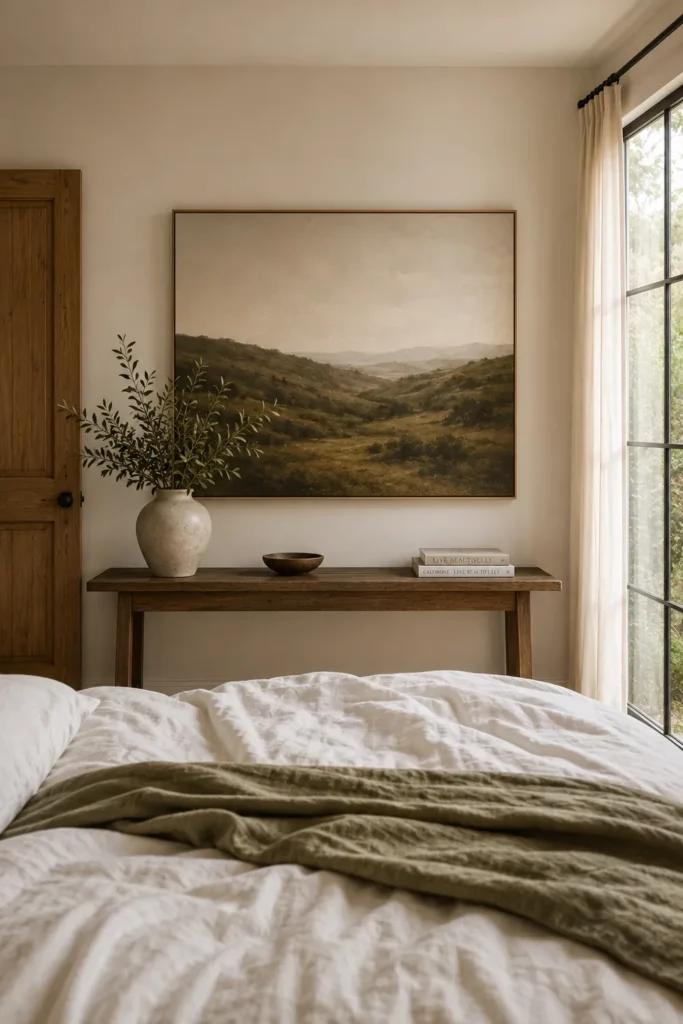
The wall opposite the bed is often the first thing you see in the morning, so it is worth treating it as more than leftover space. A carefully selected artwork can give that view a calm and personal quality.
Landscape photography, ocean scenes, soft abstracts, botanical prints, and monochromatic artwork all work well here. The best choice depends on what else sits against the wall. A single wide piece can balance a low dresser, while a taller artwork may suit a narrow section beside a doorway or mirror.
Check the artwork from the bed before deciding on its final position. Details that look subtle from close range may disappear across the room, so choose an image with a clear composition and readable shapes. Keep the surrounding surface fairly simple, using only a few objects such as a lamp, a small stack of books, or a ceramic piece, so the artwork remains easy to notice.
Add a Tall Print Above One Nightstand
A tall portrait-style print above one nightstand can add interest without making the entire wall feel heavily decorated. This works especially well when the bed is slightly off-center or when you want a more relaxed arrangement than matching artwork on both sides.
Choose a narrow piece that fits comfortably between the top of the nightstand and the ceiling. Botanical sketches, simple figure-free illustrations, soft landscapes, or abstract shapes suit this format well. A slim frame keeps the artwork from appearing bulky, while a lamp or wall sconce below it helps connect the print to the furniture.
Keep the surrounding styling restrained. A tiny potted plant, a few stacked books, or one ceramic object is usually enough. The artwork should feel like part of a vertical composition rather than a separate item floating above the nightstand. Step back and check that it balances the height of the headboard and any decor on the opposite side of the bed.
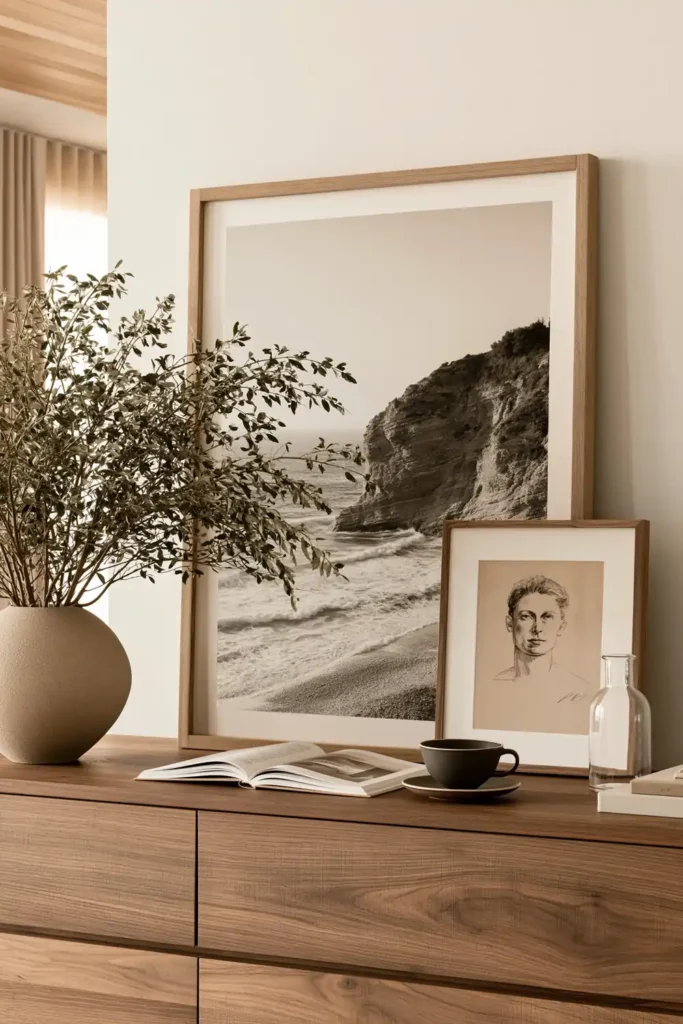
Lean Framed Artwork on a Dresser or Bedside Table
Leaning artwork is a practical option when you want mobility or prefer not to make additional holes in the wall. It creates a casual, collected look and makes it easy to change the artwork whenever the room needs a refresh.
Place a medium framed print directly on a dresser, floating shelf, or wide bedside table. The frame can rest against the wall on its own or sit behind a smaller decorative object for a layered effect. A simple print usually works best because part of the lower edge may be hidden by books, ceramics, or other accessories.
Make sure the frame is stable and positioned away from areas where it could be knocked over. On a dresser, try leaning one larger print slightly off-center and balancing it with a lamp or small stack of books. Avoid filling the entire surface. Leaving some open space helps the arrangement feel intentional rather than crowded.
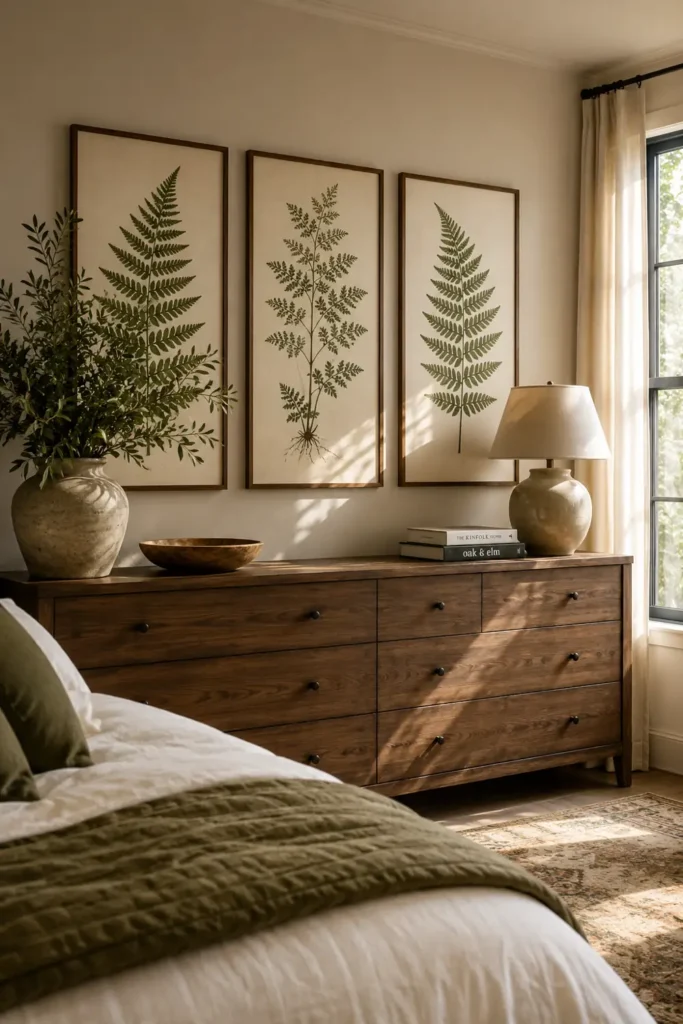
Bring Botanical Prints into a Warm, Natural Bedroom
Botanical prints are an easy way to add natural texture without relying on bright color. Ferns, leaves, native flowers, and wildflower illustrations work especially well with timber furniture, linen bedding, and woven materials such as rattan.
For a softer look, choose prints with muted green, brown, cream, or faded black tones. Vintage-style botanical drawings can give the room a collected feel, while simple leaf silhouettes suit a more minimal bedroom. Timber or light neutral frames help connect the artwork to natural furniture and textured bedding.
A pair of matching botanical prints above the bed creates symmetry, while a smaller grouping can work over a dresser or reading chair. Keep the spacing even and repeat one or two of the print colors elsewhere in the room. A green cushion, woven basket, or natural linen throw can quietly tie the wall art into the rest of the bedroom.
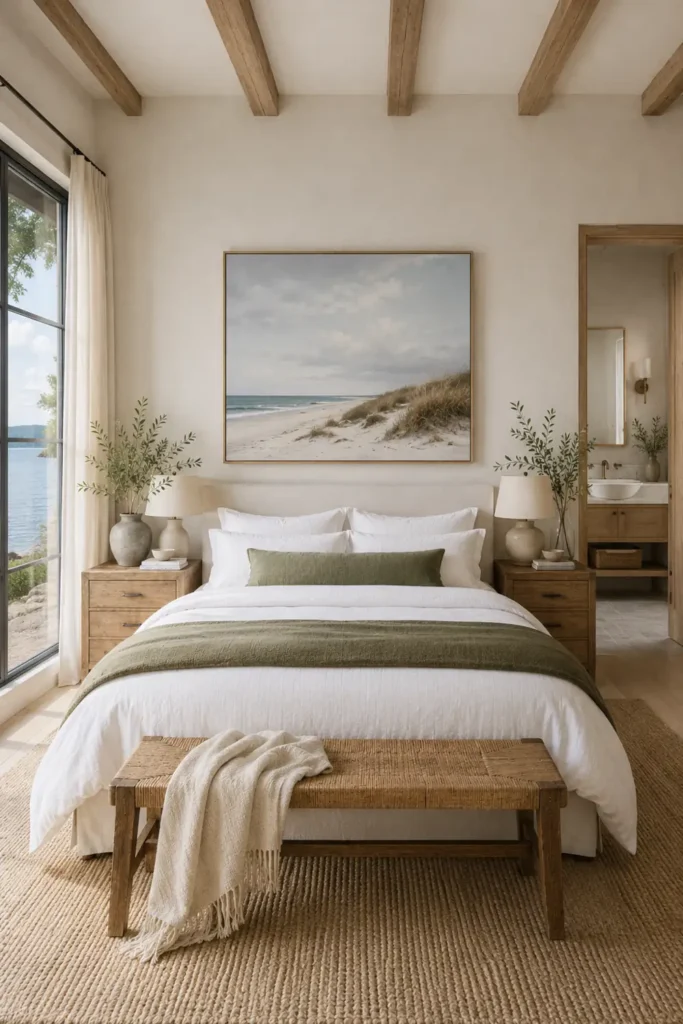
Use Coastal or Nature Photography for a Calming Look
Coastal and nature photography can make the bedroom feel quieter by introducing open landscapes and gentle colors. Images of water, foggy hills, cloudy skies, or distant shorelines work particularly well because they create dimension without adding visual clutter.
Choose photography with a restrained palette that relates to the room. Soft blue-gray images pair well with white or pale timber furniture, while earthy landscapes suit beige, taupe, and warm neutral bedding. A matte print or lightly textured paper can prevent reflections and help the image feel softer in natural daylight.
Use one wide photograph above the bed or dresser when you want the scene to read clearly from across the room. For a smaller wall, two related images can create a balanced pair. Avoid mixing too many different locations or color treatments in one display. A consistent mood will make the wall feel restful rather than like a collection of unrelated travel photos.
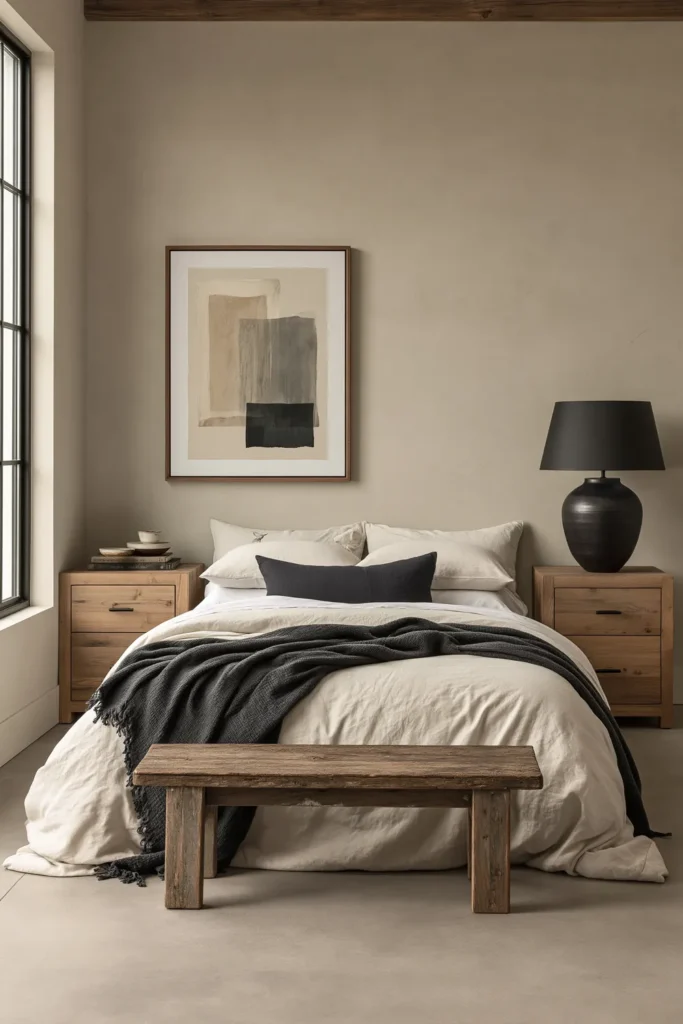
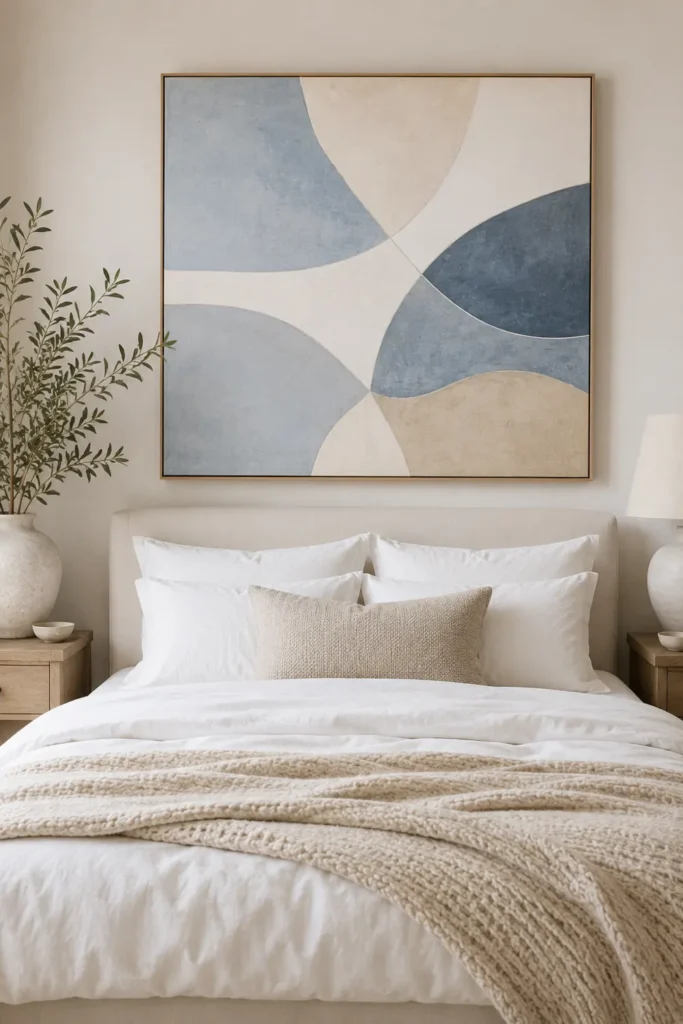
Choose Abstract Art with Soft Curves
Abstract art with gentle curves can soften the straight lines of a bed, dresser, and nightstands. It works especially well in bedrooms with layered neutral materials, where the artwork adds movement without introducing a busy subject.
Look for rounded shapes, overlapping forms, and muted tones such as cream, beige, clay, gray, or soft black. These colors sit comfortably beside linen bedding, upholstered headboards, and textured throws. A simple frame in light timber, black, or warm white holds the focus on the shapes.
One large abstract piece can sit above the bed, while a smaller print may work beside a reading chair or over a dresser. Use the artwork to repeat a tone already present in the room rather than introducing a completely new palette. This helps the wall feel connected to the bedding and furniture instead of looking like a separate decorative layer.
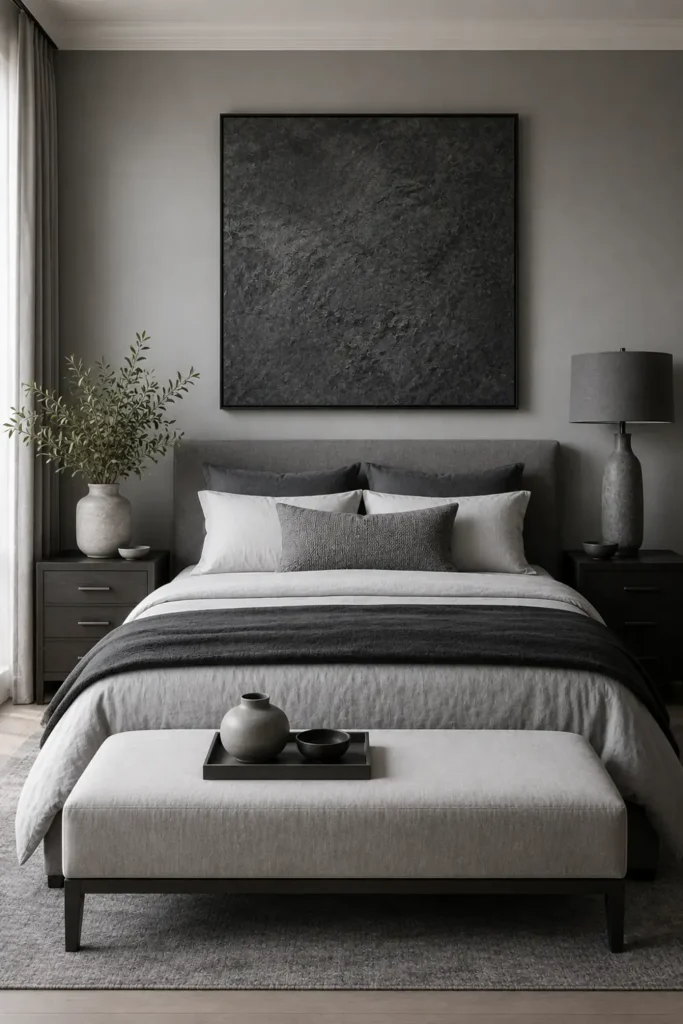
Keep Master Bedroom Wall Decor Monochromatic
A monochromatic wall display creates interest while keeping the bedroom visually quiet. Instead of relying on several strong colors, the artwork stays within related shades, such as warm beige, soft gray, black and white, or muted blue.
The display can include abstract prints, photography, or simple sketches, as long as the tones remain consistent. Frames do not have to match the artwork exactly, but they should support the same restrained look. Black frames create clear definition, while pale timber or white frames produce a softer effect.
Start with the colors already found in the bedding and choose wall decor within that range. For example, a room with cream bedding and taupe cushions could use warm gray photography and beige abstract prints. Add texture through the bedding, rug, and curtains so the room does not feel flat. The limited palette should make the space feel cohesive, not empty.
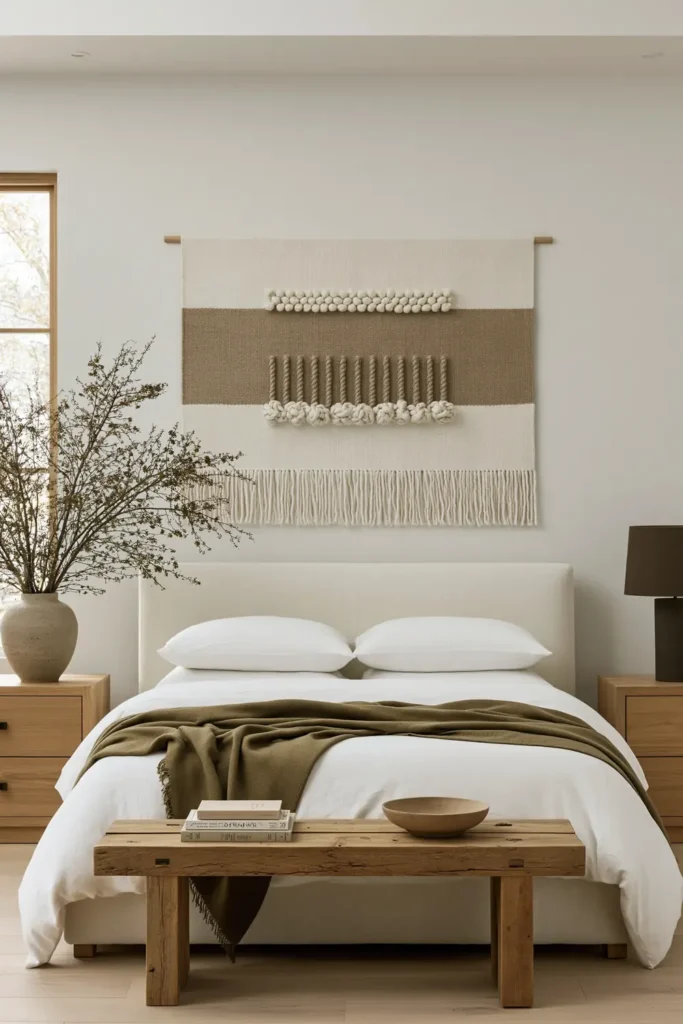
Add Texture with a Textile or Textile Wall Hanging
A textile or textile wall hanging adds softness in a way framed art cannot. Wool, felt, woven fabric, and quilted panels bring visible texture to the wall and can also make a large bedroom feel warmer and less echoing. To keep textile wall decor looking its best, gently dust it with a soft brush and use a vacuum cleaner with low suction and an upholstery attachment. This simple cleaning routine reassures many who could worry about upkeep, making textile pieces a practical and inviting choice for bedroom decor.
Choose a piece that relates to the scale of the furniture below it. A wide textile can balance a large bed, while a narrow woven hanging works well above a dresser or in an empty corner. Neutral fibers create a relaxed look, while faint patterns add detail without becoming too distracting.
Textiles can collect dust, so hang them where they are easy to reach for occasional cleaning. Keep the area around the piece fairly simple because the weave and fibers already provide plenty of visual detail. Pair it with plain bedding or lightly textured linen so the materials complement one another instead of competing for attention.
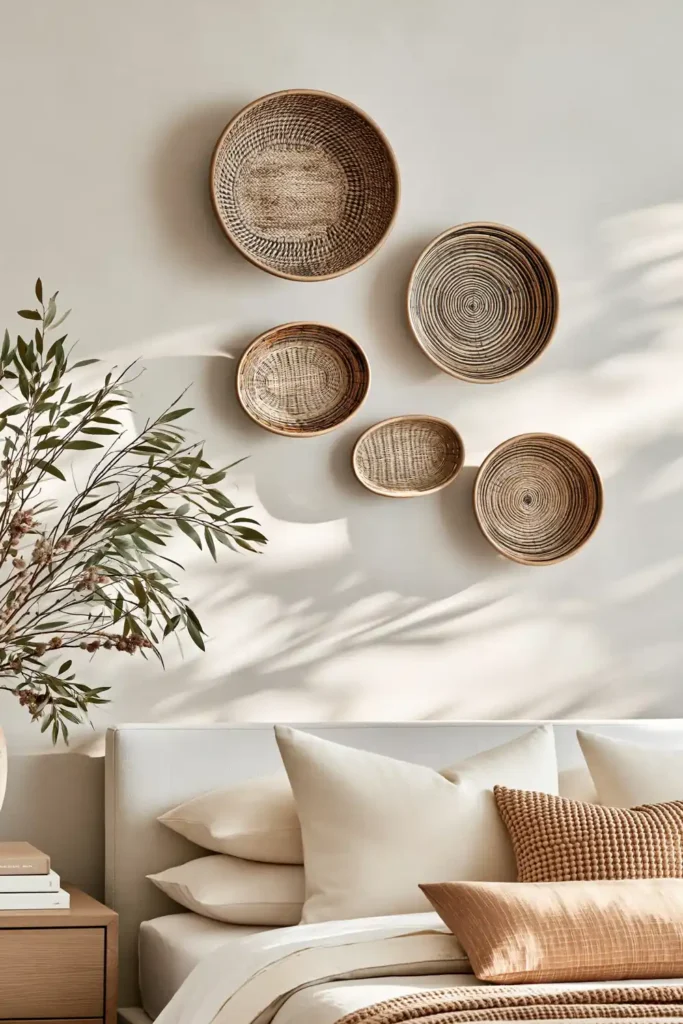
Arrange Woven Baskets or Hats as Wall Decor
Woven baskets and hats can turn an empty wall into a textured display while bringing natural materials into the bedroom. A grouping of three to five pieces usually feels more balanced than scattering many small items across the wall.
Mix different sizes, but keep the materials or colors related. Natural straw, pale rattan, and warm brown fibers work well together, while darker woven pieces can add contrast. Arrange the largest item first, then place the smaller pieces around it with uneven spacing for a relaxed look.
This kind of display suits the wall above a low dresser, beside the bed, or near a reading chair. Lay the arrangement on the floor before hanging it so you can adjust the shapes and gaps. Use secure hooks that suit the mass of each piece, and avoid placing the display where wide-brimmed hats or deep baskets might interfere with doors or walkways.
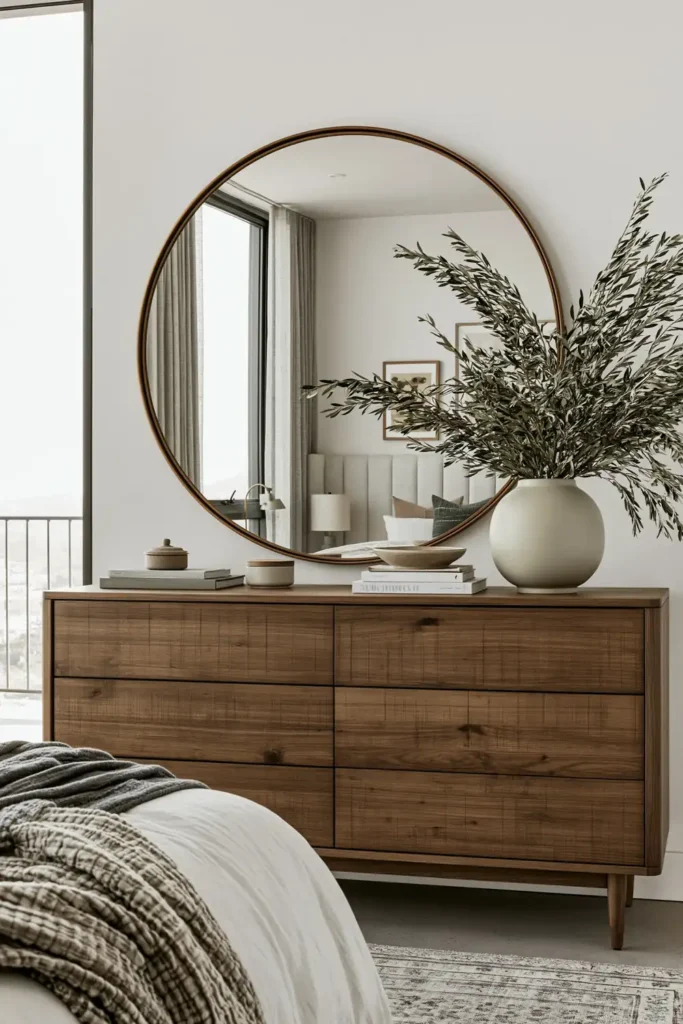
Use a Statement Mirror for Reflecting More Light
A statement mirror can decorate the wall while making the bedroom feel brighter and more open. It works particularly well above a dresser or on a wall that catches daylight from a nearby window.
Round mirrors soften the straight lines of bedroom furniture, while rectangular designs create a cleaner, more structured look. A full-length mirror can fill a narrow wall and provide a practical place to check outfits. Choose a frame that relates to the room, such as timber for a natural bedroom or slim black metal for a more contemporary setting.
Before hanging the mirror, check what it will reflect. A view of a window, artwork, or neatly made bed can add depth, while a direct reflection of clutter may make the room feel busier. Secure heavier mirrors with fittings suitable for the wall type, and place them where they will not catch harsh glare from lamps at night.
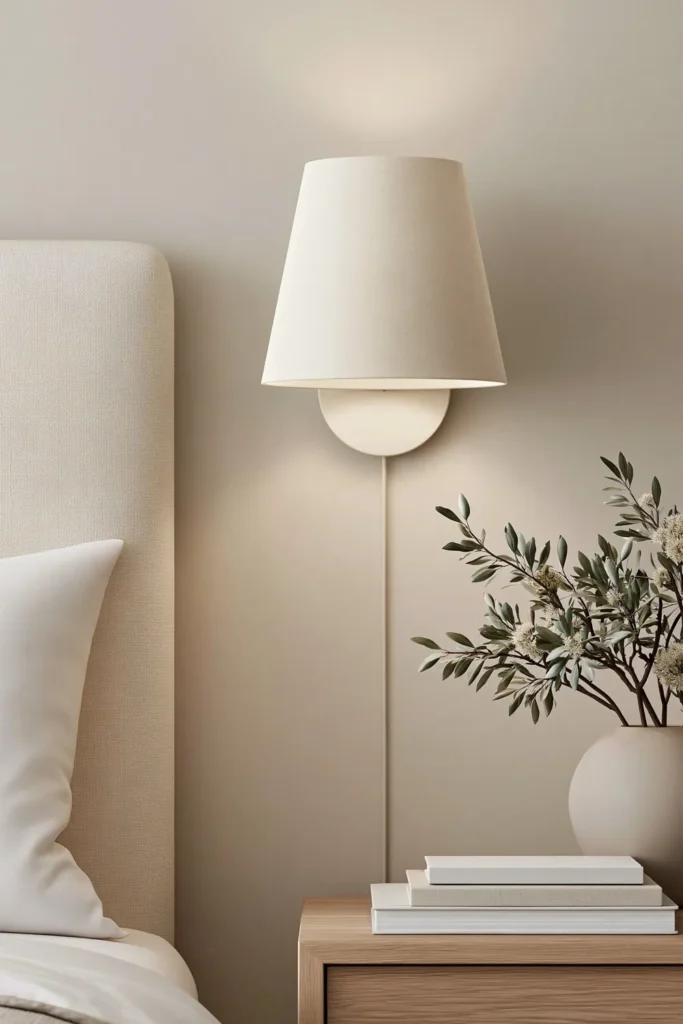
Install Wall-Mounted Sconces Beside the Bed
Wall-mounted sconces free up space on bedside tables and create a cleaner area around the bed. They also bring light closer to the wall, which can make the sleeping area feel warm and comfortable in the evening.
Hardwired sconces provide the neatest finish, but plug-in versions are useful when electrical work is not practical. Look for adjustable arms if you read in bed, or choose shaded fixtures when you prefer softer ambient light. Warm bulbs are generally more relaxing than cool white light in a bedroom.
Mount the sconces at equal heights on both sides of the bed and check that the switches are easy to reach while seated. A paintable cord cover can help plug-in cables blend into the wall. Keep the bedside tables simple with a book, basket, or small object so the sconces remain part of a tidy, balanced arrangement.
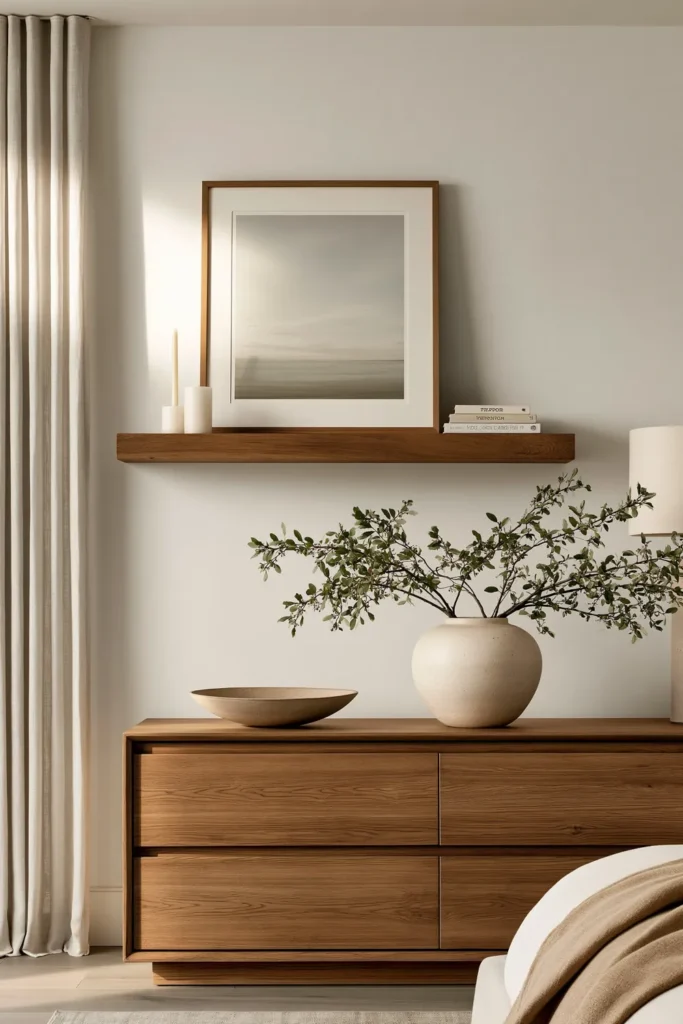
Style Floating Shelves with Art, Books, and Ceramics
Floating shelves add display space without the visual weight of a large cabinet. They are useful above a dresser or on a narrow wall where framed art alone may feel too flat.
Combine a few different objects, such as small artwork, stacked books, ceramics, candles, and greenery. Vary the heights but keep enough open space between items so the shelf does not look crowded. Leaning one framed print against the wall can create a relaxed base for smaller pieces placed in front.
Use shelves deep enough to hold the objects safely, and install them with fixings suited to the wall. In a bedroom, fewer items usually look better than a full row. Try repeating one material, such as pale timber, white ceramic, or dark metal, to connect the display. A small candle or trailing plant can add softness without taking over the arrangement.
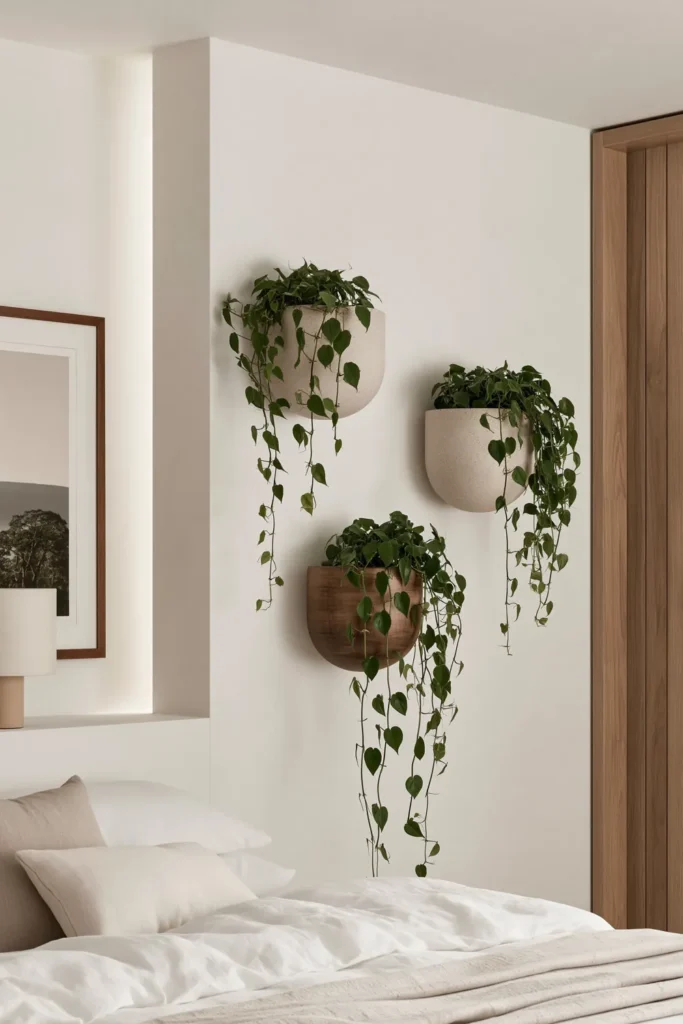
Add Wall-Mounted Planters with Trailing Greenery
Wall-mounted planters bring natural color into the bedroom while keeping bedside tables and dressers clear. Trailing plants are especially effective because their leaves add movement and soften blank wall space.
Choose simple planters that suit the furniture and bedding. White ceramic containers create a clean look, while timber or earthy finishes work well with linen, rattan, and warm neutral colors. Position the plants near natural light, but check the needs of the specific variety before deciding on the final wall.
Use secure brackets and make sure the planters can be removed easily for watering. A small group beside the bed can work with botanical prints, while one trailing plant above a dresser creates a quieter effect. Protect the wall and furniture from drips by watering carefully or using removable inner pots. For easy care, choose low-maintenance, low-light plants that are especially suited for bedrooms, such as pothos, philodendron, snake plant, or ZZ plant. These varieties thrive in typical indoor conditions and require only occasional watering. The greenery should look deliberate rather than spread across areas where it may be brushed or damaged.
Create a Painted Accent Wall Behind the Bed
A painted accent wall gives the bed a stronger visual backdrop without requiring additional furniture or artwork. It is one of the simplest master bedroom wall decor ideas to adjust over time because the color can be changed whenever the room needs a different mood.
Choose a shade that works with the bedding rather than competing with it. Deep olive, muted blue, warm clay, charcoal, and soft taupe can all create depth, while lighter colors keep the room more open. Matte or eggshell paint is usually preferable for bedrooms because they reduce unwanted glare from lighting and sunlight, helping the space maintain a soothing, calming look. These finishes also help conceal small wall imperfections better than glossy paint.
Test several samples directly on the wall and view them during the morning, afternoon, and evening. Bedroom colors can change noticeably under natural light and warm lamps. Painting only the wall behind the bed creates a clear focal point, but keeping the remaining walls neutral helps the room stay balanced.
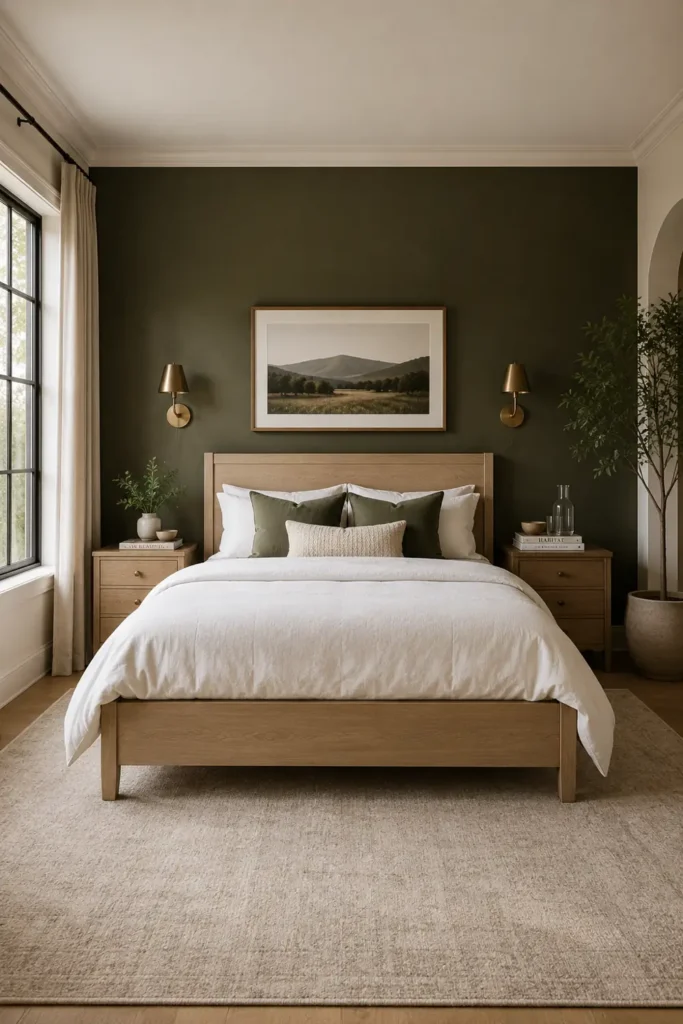
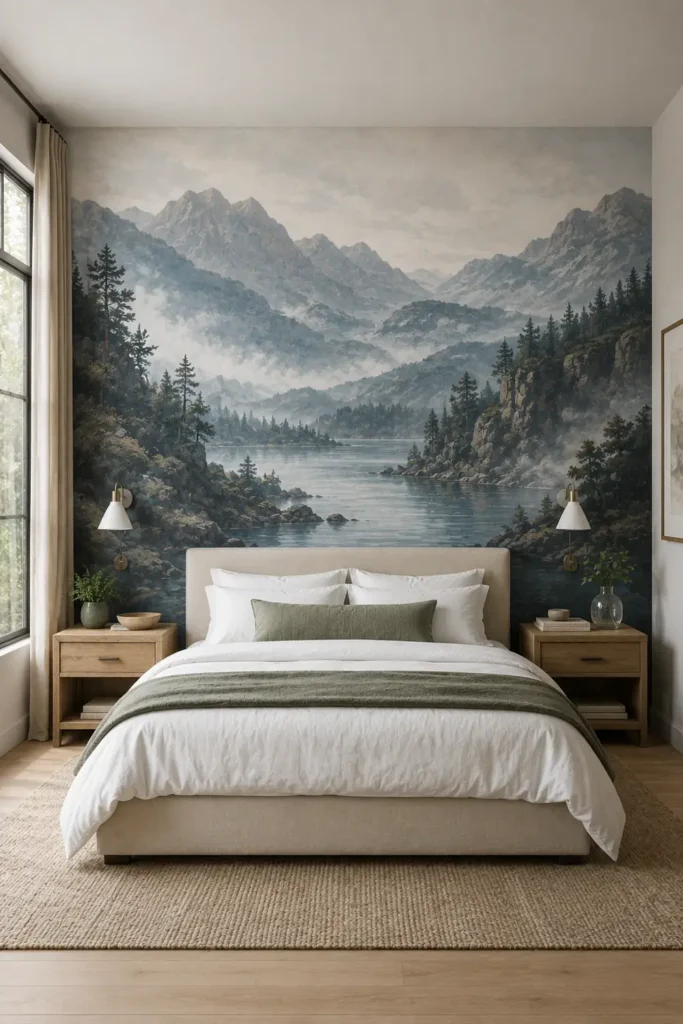
Use Mural Wallpaper as a Bedroom Focal Point
Mural wallpaper can turn the wall behind the bed into a complete visual scene. Oversized florals, cloudy skies, abstract washes, and vintage-inspired patterns work especially well because they cover the wall with one unified image rather than a repeating small print.
Choose a design with colors already present in the room. A mural with dusty green and cream can work with natural timber and linen, while soft blue or gray landscapes suit a cooler palette. Peel-and-stick options are useful when you want a less permanent update or prefer to install the mural yourself.
Measure the wall carefully, including the area behind the headboard, before ordering. Position the main part of the design where it will remain visible rather than letting the bed hide its most important details. Keep the bedding and nearby accessories simpler so the mural can remain the main feature without making the room feel crowded.
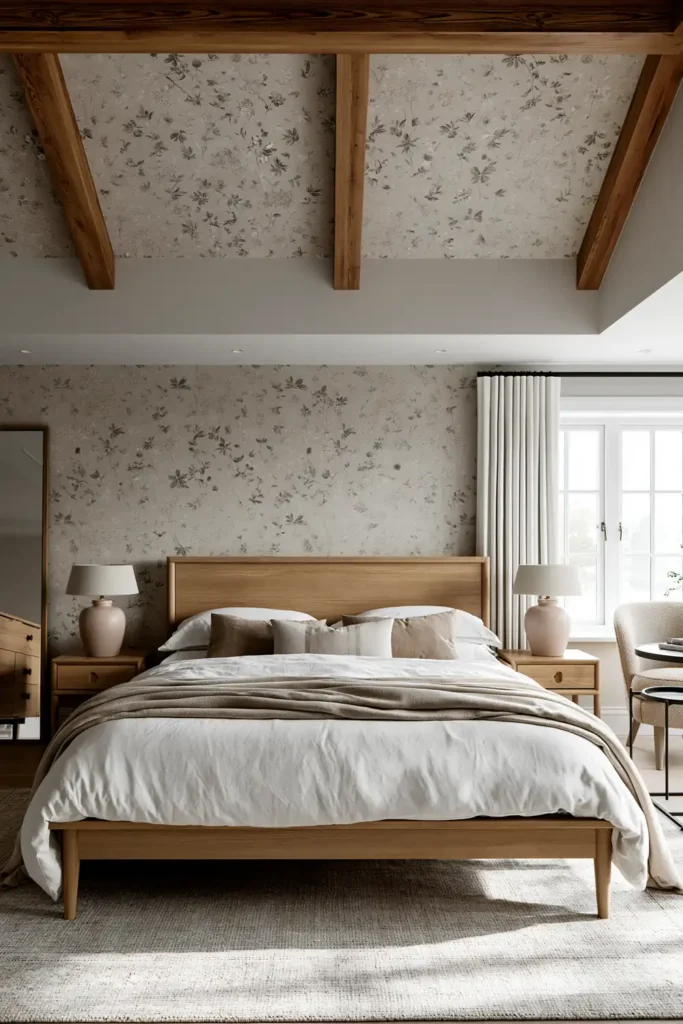
Continue Wallpaper from the Wall onto the Ceiling
Continuing wallpaper from the headboard wall onto the ceiling creates a wrapped, cocoon-like effect. This approach works best with patterns that feel soft and atmospheric, such as misty botanicals, cloudy landscapes, or subtle abstract designs.
Use the same wallpaper on both surfaces so the transition seems deliberate. A pattern with gentle movement is easier to live with than a highly detailed print, especially when it is visible while lying in bed. Keeping the remaining walls plain helps control the amount of pattern in the room.
Plan the placement before installation so the design lines up cleanly where the wall meets the ceiling. Professional installation may be worthwhile for larger murals or patterns that need exact matching. Pair the wallpaper with simple bedding and restrained lighting so the room feels enveloping rather than overly decorated.
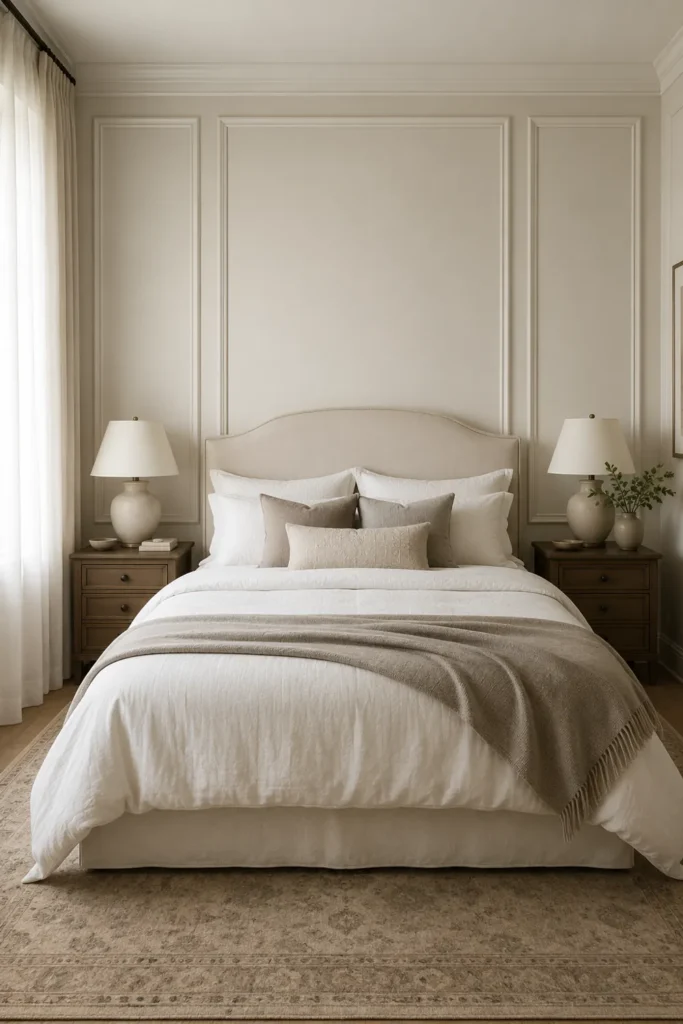
Add Picture Frame Moulding or Half-Height Wainscoting
Picture frame moulding and half-height wainscoting add architectural detail to a plain bedroom wall. They can make the space feel more finished even when the rest of the decor remains simple.
Picture frame moulding works well across the full wall behind the bed, while half-height wainscoting creates a strong horizontal line that can visually anchor the furniture. Painting the trim and wall in the same color produces a subtle effect, while using slightly different tones makes the detail more noticeable.
Plan the panel sizes around the width of the bed, nightstands, and any artwork you intend to hang. Uneven spacing can make the wall feel awkward, so mark the layout with painter’s tape before installing anything. Keep the upper wall simple with one artwork or a pair of prints so the moulding remains part of the design rather than becoming hidden behind too many objects.
Install a Timber Slat Wall Behind the Bed
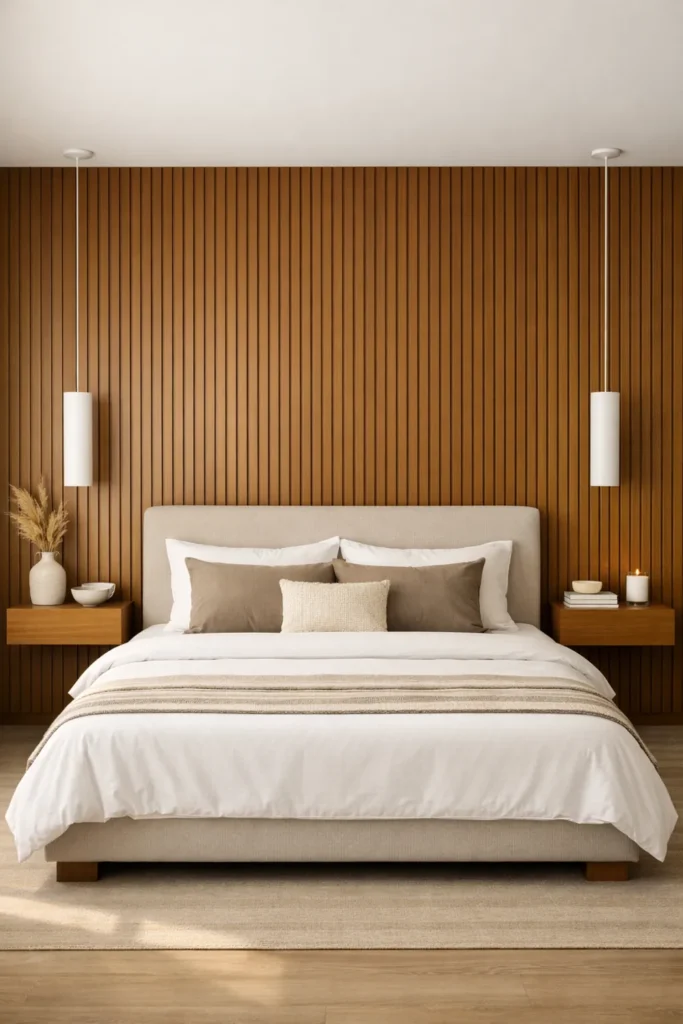
A timber slat wall adds warmth and vertical rhythm behind the bed without relying on a large amount of artwork. The repeated lines can make the ceiling appear taller while giving the sleeping area a more defined backdrop.
Natural or medium-toned timber works well with neutral bedding, black bedside tables, and linen curtains. The slats can cover the full wall or sit within a centered panel behind the bed. Keeping the spacing consistent is important because uneven gaps will be noticeable across such a large surface.
Before installation, decide whether the wall will remain completely timbered or include one simple artwork in the center. A restrained arrangement usually works best because the slats already provide strong texture. Use warm bedding and soft fabrics to balance the harder wood surface, and make sure the timber tone relates to any other wood furniture in the room.
Build a Full-Width Upholstered Headboard Wall
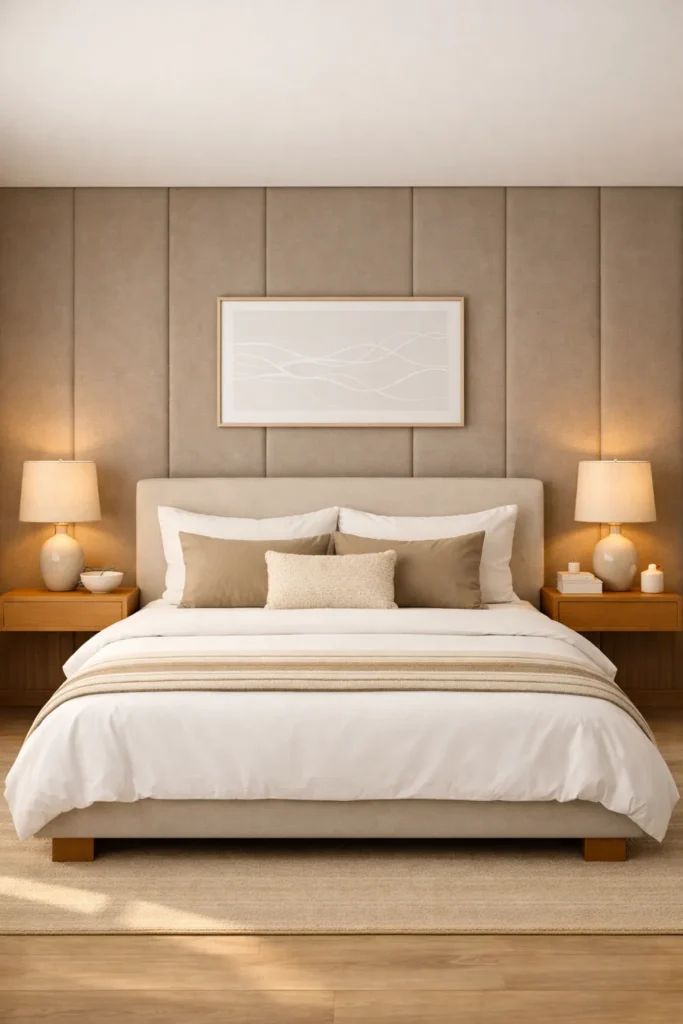
A full-width upholstered headboard wall can make the bed feel built into the room while bringing softness and comfort. It is especially useful in a large master bedroom where a standard headboard may appear too small against a wide wall.
Vertical fabric panels create height, while wider horizontal panels give the wall a lower, more relaxed profile. Choose durable upholstery in linen, boucle, or another soft neutral fabric that works with the bedding. Light padding adds dimension without making the panels look overly bulky.
Extend the upholstered section behind the nightstands for a more complete built-in effect. A simple artwork can sit above the center of the bed, but the fabric itself may provide enough detail. Keep bedside lighting and accessories minimal so the wall remains calm. Before committing, test a fabric sample in daylight and under evening lamps because texture and color can look different throughout the day.
Add Built-In Wall Niches with Warm Lighting
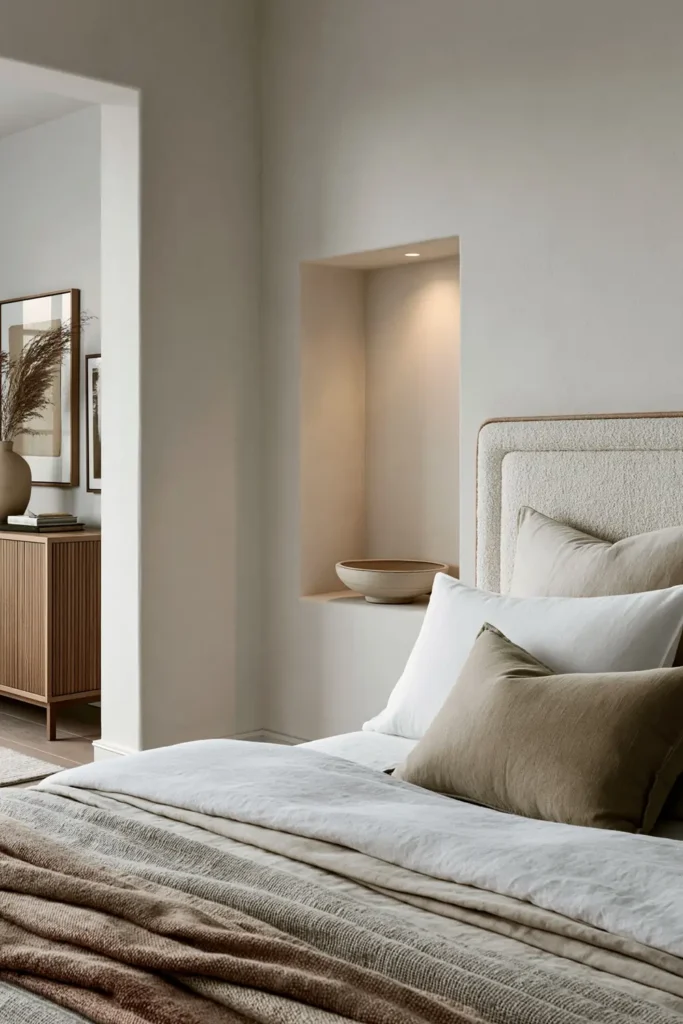
Built-in wall niches create storage and display space without adding freestanding shelves. They work particularly well around the bed, where they can hold small artwork, books, and ceramic pieces while keeping the overall wall streamlined.
Paint the niches the same color as the surrounding wall for a subtle result, or use a slightly deeper tone to create contrast. Warm LED strip lighting placed inside the recesses can highlight the objects and provide warm evening light. Keep the displays simple because each niche already acts like a frame.
Plan the niche sizes around the items you actually intend to display. One small artwork, a few books, or a single ceramic piece is often enough. Avoid filling every recess completely, as some empty space will help the wall feel balanced. Place electrical wiring and lighting controls during construction so cords and switches remain hidden.
Use a Small Neon or LED Sign Carefully
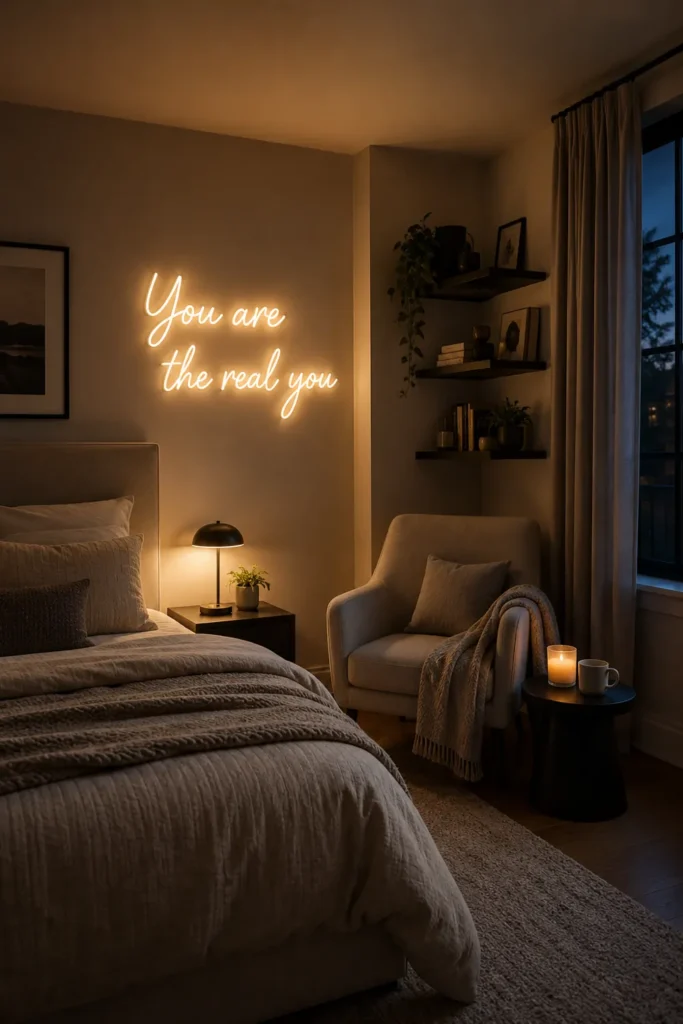
A small neon or LED sign can add a personal detail to the bedroom when it is used with restraint. Soft script or a short phrase works better than a large, brightly colored design that dominates the sleeping area.
Warm white lighting usually feels calmer than vivid blue, red, or pink light. Position the sign above a dresser, beside a reading corner, or on a smaller wall rather than directly over the bed if the glow may become distracting at night. Keep the surrounding wall simple so the sign does not compete with several other decorative elements.
Plan how the cord will be concealed before hanging the piece. A nearby outlet or paintable cord cover can create a cleaner result. When installing any sign or wall lighting, always follow basic electrical safety practices: turn off power at the source before connecting wires, use components rated for your wall and voltage, and never overload an outlet. Use a dimmer or timer if possible, especially when the sign is mainly decorative. The light should add a gentle evening accent rather than becoming the brightest source in the room.
Integrate a Smart Mirror or Art-Style Television
A smart mirror or art-style television can add useful technology without making the bedroom wall feel dominated by a screen. These pieces work best when they are treated as part of the room’s decor rather than as separate electronic equipment.
An art-style television can sit within a gallery arrangement or above a low dresser, displaying artwork when it is not in use. A smart mirror may work well near a dressing area, especially when paired with simple wall-mounted lighting. Choose slim frames and finishes that relate to the other materials in the room.
Plan the cable route before installation so wires can be concealed inside the wall, behind furniture, or within a paintable cover. Avoid surrounding the screen with too many small objects, which can make the wall feel cluttered. A few evenly spaced frames or one subtle piece of furniture below will help the technology blend into the room.
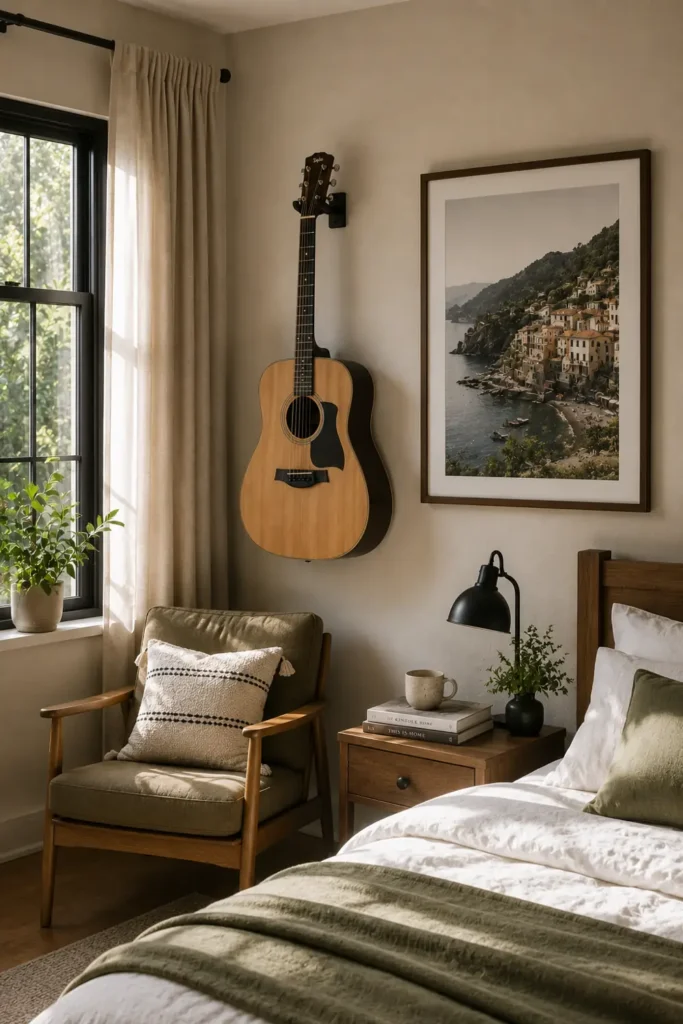
Display Musical Instruments as Personal Wall Decor
Musical instruments can become meaningful wall decor when they are displayed carefully. Guitars, ukuleles, tambourines, and violins bring shape, craftsmanship, and personal history to a bedroom wall.
Use secure wall mounts designed for the specific instrument rather than ordinary hooks. A single guitar can act as a strong focal point, while two or three smaller instruments may form a balanced arrangement. Small framed prints can be added nearby, but they should support the display rather than compete with it.
Choose a wall away from direct sunlight, heating vents, or damp areas to help protect the instruments. Leave enough space around each piece so it can be removed easily when needed. The arrangement works best when it reflects instruments that are genuinely used or valued, giving the bedroom a personal detail that seems natural rather than staged.
Arrange Record Covers in a Clean Grid
Record covers can bring color, graphic design, and personal taste to a bedroom wall. Arranging them in a clean grid keeps the collection organized and prevents the display from feeling excessively informal.
Use matching display frames or sleeves so the covers line up evenly. Select albums with related colors, strong artwork, or personal meaning. A grid of four, six, or nine covers works well above a dresser or on a wide wall in a guest room or teen bedroom.
Measure the spacing carefully and use a level to keep every row straight. The gaps between frames should stay consistent across the entire arrangement. Avoid placing the records in strong direct sunlight, which may fade the covers over time. Rotating a few albums occasionally can refresh the display without changing the layout.
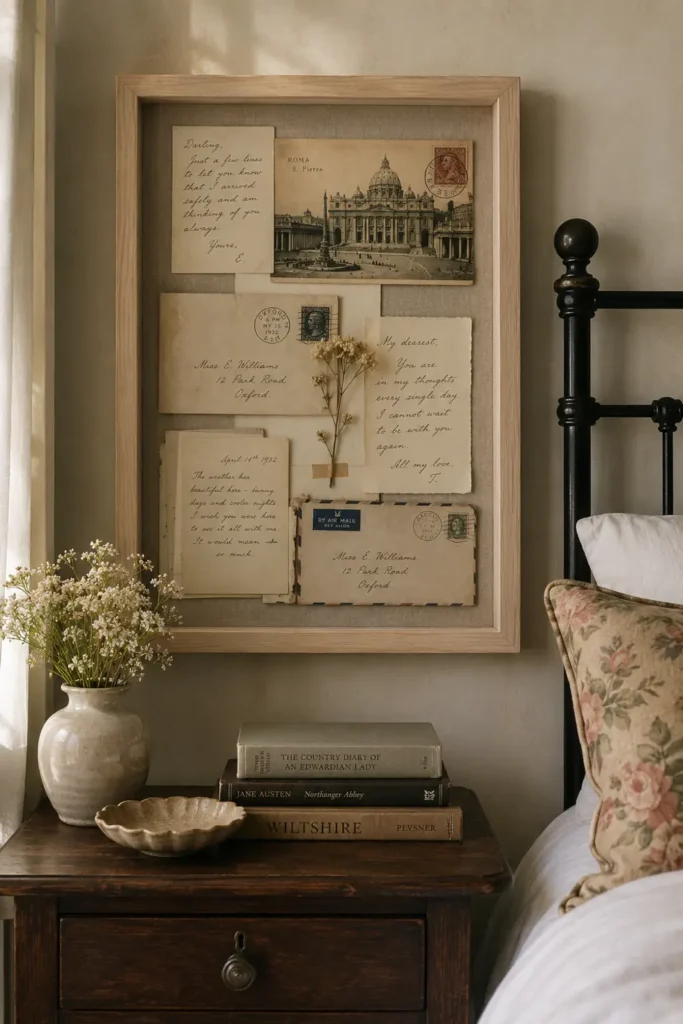
Display Personal Notes, Postcards, and Heirlooms
Personal ephemera can make the bedroom feel more connected to your own experiences. Handwritten notes, vintage postcards, travel tickets, photographs, sketches, dried flowers, and small heirlooms can all become meaningful wall decor.
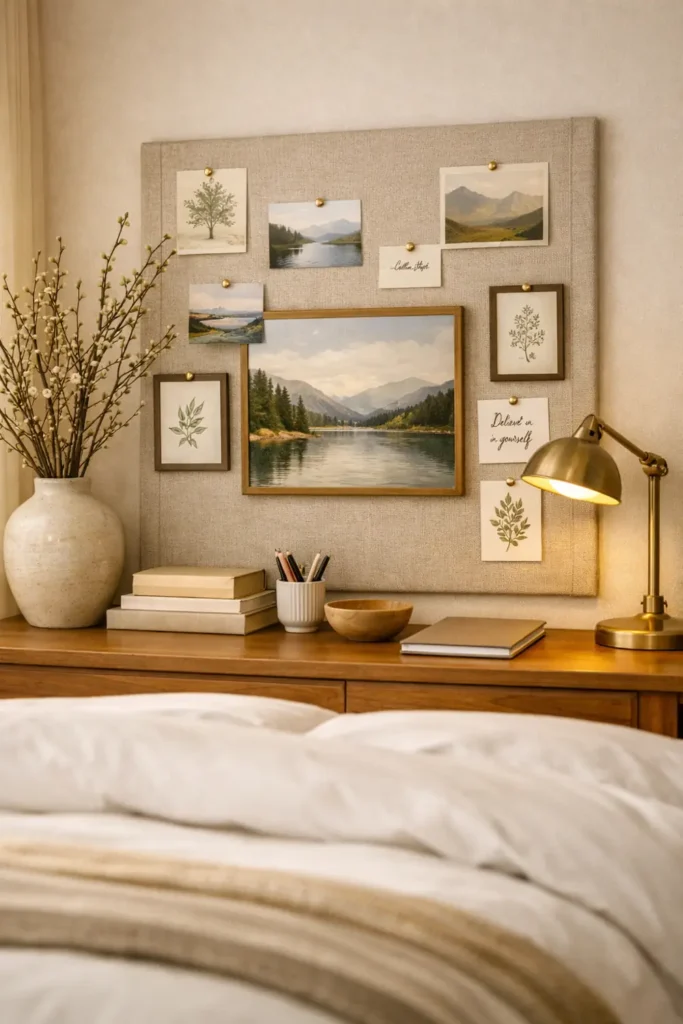
Arrange these pieces inside frames, on a fabric pinboard, or along a shallow ledge. Using one frame color or a shared background material helps varied objects feel connected. Fragile items should be protected behind glass, while thicker pieces may need shadow-box frames.
Choose only items that are comfortable to see every day rather than displaying everything at once. A small collection usually feels more thoughtful than a crowded wall. Group pieces by trip, period, color, or personal connection, and leave enough space between them so each one can be noticed. This approach creates a wall that feels individual without relying on decorative objects chosen only to match the room.
Add a Fabric Pinboard Near a Desk or Reading Corner
A fabric-covered pinboard gives you a practical place to display small photos, notes, and reminders without making the bedroom feel like an office. It works especially well near a desk, dressing table, or reading corner where the display can be both decorative and useful.
Choose a covering such as linen, boucle, cotton, or another soft neutral weave. The fabric adds texture and helps the board blend with bedding, curtains, and upholstered furniture. A simple timber or slim metal frame can give the pinboard a more finished appearance.
Keep the arrangement edited rather than covering every inch. A few photographs, handwritten notes, and small paper keepsakes will be easier to appreciate when there is open fabric around them. Use pins in one finish for a cleaner look, and rotate the display occasionally so it continues to feel current and personal.
Install a Slim Picture Ledge for Rotating Artwork
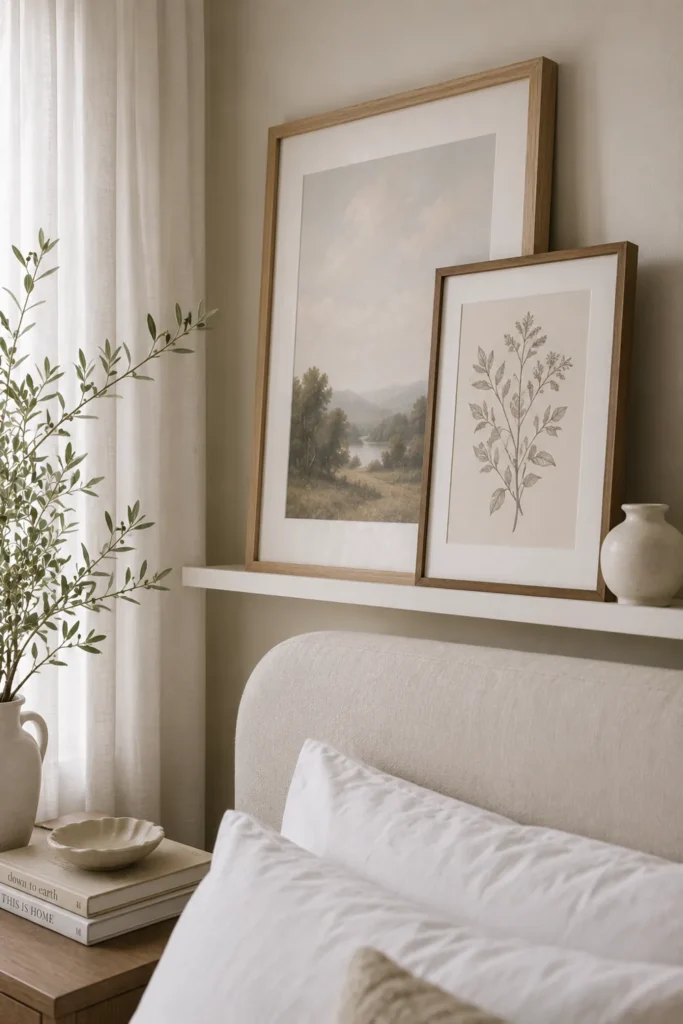
A slim picture ledge makes it easy to change the bedroom wall decor without measuring and rehanging every frame. It is a useful option when you enjoy rotating artwork, photographs, and small decorative pieces throughout the year.
Layer framed prints of different heights, placing the largest piece at the back and smaller frames in front. A ceramic object or a single plant can add shape and texture, but the ledge should not become overcrowded. Keeping the frames inside a related color palette will help the layered arrangement feel organized.
Install the ledge above a dresser or on a wall where the frames will not be bumped. Check that it is deep enough to support the artwork securely, and avoid stacking too many heavy pieces. When changing the display, keep one or two familiar items in place so the arrangement still feels connected to the rest of the room.
Making the Bedroom Walls Feel Like Your Own
The most comfortable master bedroom walls usually combine visual interest with an impression of peace. A large artwork, warm wall lighting, textured panels, or a small display of private keepsakes can each change how the room feels without requiring every wall to be decorated.
Start with the area that looks most unfinished and choose one idea that suits the furniture already in the room. You can always add another layer later, whether that means a mirror, a pair of prints, or a ledge for rotating art. Feel free to mix and match a few ideas as you go, paying attention to how each addition affects the balance of the room. Adding elements gradually helps you avoid clutter and makes it easier to create an area that feels personal and comfortable.
The goal is not to fill every empty surface. It is to create a bedroom that feels considered, restful, and personal each time you walk into it.