
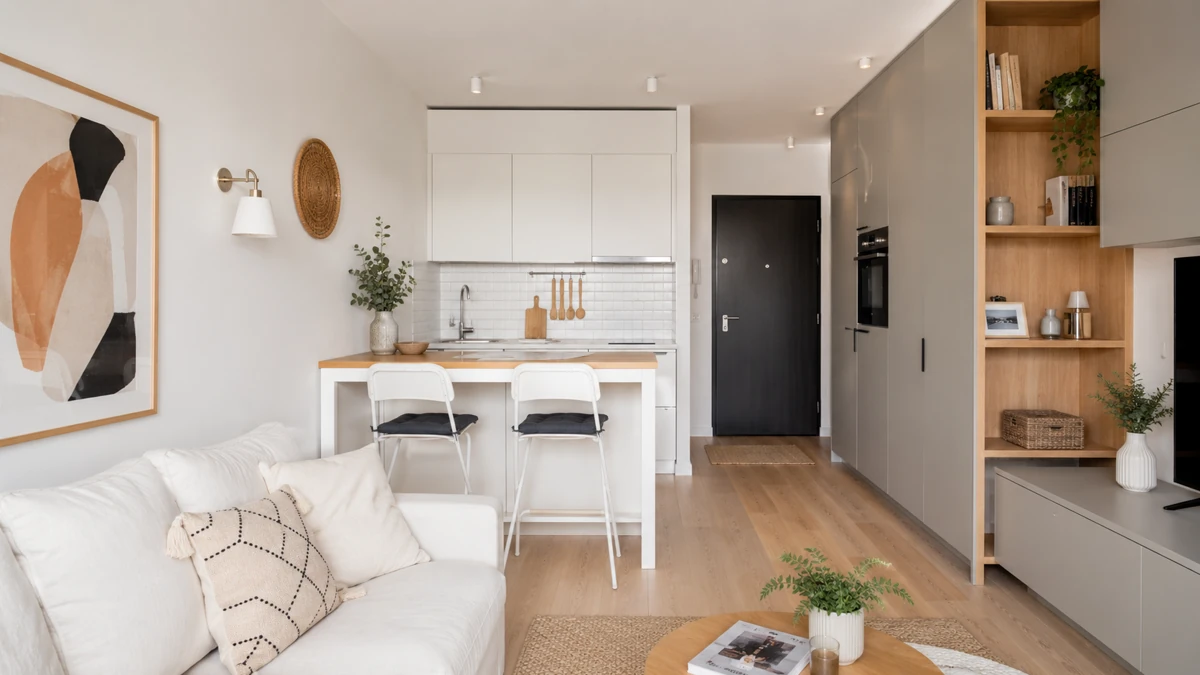
A small apartment dining area does not have to feel like an afterthought. Even when the space is tight, a few thoughtful choices can make meals feel more comfortable and make the room easier to move through every day.
What I like about apartment dining spaces is that they usually push you to be practical. You start noticing unused corners, blank walls, awkward window areas, and furniture pieces that could do more than one job.
These small dining room ideas for apartments focus on smart layouts, simple furniture choices, and decorating details that help a compact dining spot feel intentional without making the room feel crowded.
Round Dining Tables for Easier Apartment Walkways
A round dining table is one of the easiest fixes for a tight apartment dining area. Without sharp corners sticking out into the walkway, the space feels softer and easier to move around. This works especially well when the dining spot sits between the kitchen and living room, where people naturally pass through often.
A compact circular table can still seat four people, but it usually takes up less visual space than a square table. The rounded shape also makes conversation feel more relaxed because everyone faces each other more naturally. For a small room, I would keep the table base simple so the legs do not make the floor area feel busy. A pedestal base is a great option because it provides more legroom and fewer legs to navigate around, which helps keep the space open. Tables made of lightweight materials like glass, light wood, or metal can also make the room feel airier and are easier to move around if needed.
A good, useful tip is to leave enough room to pull out chairs without bumping into cabinets, walls, or nearby furniture. If four chairs feel too crowded every day, keep two at the table and tuck the extras nearby for guests.
Corner Dining Setups That Use Empty Space
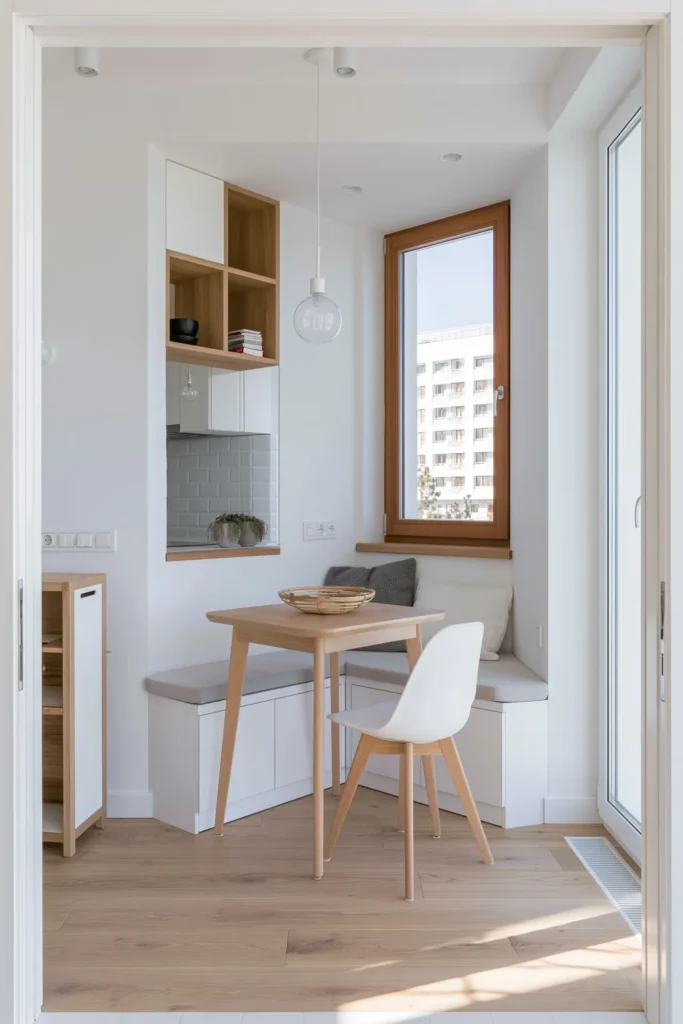
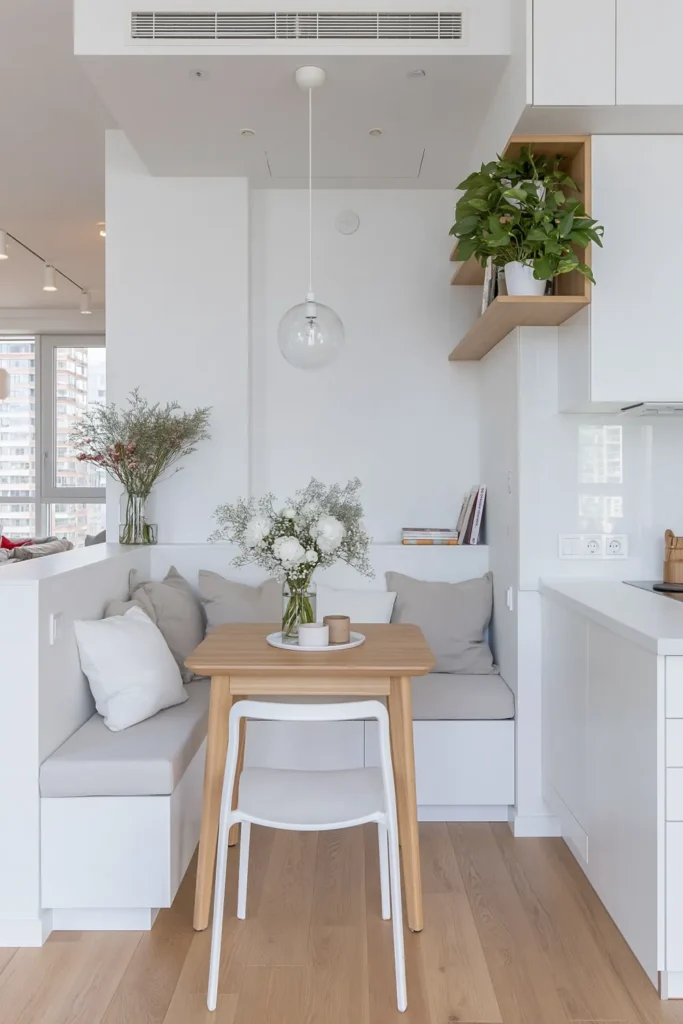
Corners often get wasted in apartments, but they can become some of the most useful dining spots. A small table placed into a corner can feel cozy instead of cramped, especially when paired with seating that follows the shape of the walls. This setup keeps the center of the room more open.
Corner benches are especially helpful because they sit tight against the wall and do not need as much pull-out space as chairs. A small hutch or buffet can also work in the same area if there is enough room, giving you a place for dishes, napkins, or everyday serving pieces. The key is keeping each piece proportionate so the corner still feels easy to use.
For a realistic apartment setup, I would use a narrow rectangular or small round table with one bench and one or two lightweight chairs. Place the bench along the longer wall or into the very corner to maximize open space and keep walkways clear, then tuck the table close to the bench so it’s easy to slide in and out without bumping into the wall. Position chairs on the opposite side or ends so guests have plenty of room without crowding the corner. This arrangement gives you flexibility without filling the whole corner with furniture.
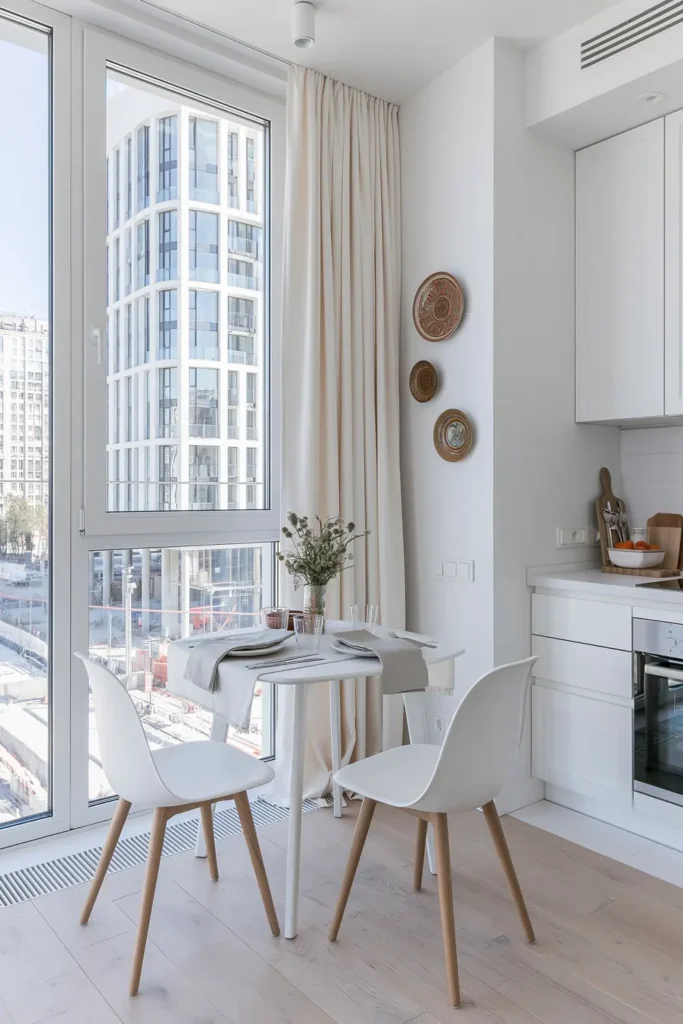
Kitchen Nooks Framed With Curtains and Table Linens
A kitchen corner can feel more like a real dining nook when it has a few simple details around it. Even a small table and chairs can feel intentional when the space is framed with curtains, a tablecloth, placemats, or decorative plates. These touches help the dining area look planned instead of squeezed in.
Curtains are especially useful because they soften the hard edges often found in apartment kitchens. A simple tablecloth can also hide a basic table and add texture without requiring new furniture. Place mats keep the setting practical for daily meals, while decorative plates can bring color to a blank wall or shelf.
One way to keep this from feeling cluttered is to choose only a few repeated colors. For example, cream curtains, a patterned tablecloth, and two or three plates in the same color family can make the nook feel pulled together without crowding the kitchen.
Double-Duty Tables for Dining and Working
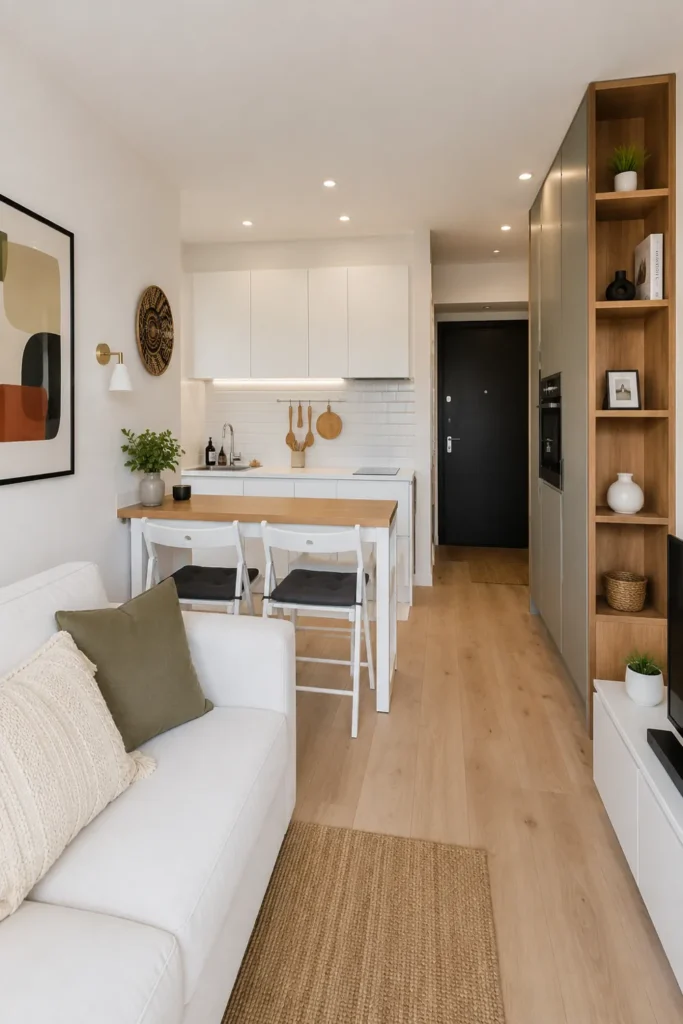
In many apartments, the dining table has to do more than hold dinner plates. It might also become a laptop spot, homework area, or place to sort mail. A double-duty table works best when it is simple, sturdy, and easy to clear at the end of the day.
This idea fits well in a kitchen or living room combo where there is not enough room for a separate desk. A small table or counter can handle both meals and work if the surrounding area stays organized. The goal is to make the table feel useful without letting it become a permanent drop zone.
A helpful habit is to keep one small tray or basket nearby for work items. When it is time to eat, the laptop, notebook, and chargers can move into the basket instead of scattering over the room. That small routine makes the dining area feel like a real dining space again. Another simple organization tip is to use stackable trays or shallow bins on a nearby shelf for things like mail, keys, or paperwork. Spend a few minutes each day doing a quick tidy-up, putting away clutter so the dining table is ready for meals or work. These small habits, done regularly, help keep the space feeling open and welcoming, even when the table serves different uses throughout the day.
Mirrors and High-Hung Decor for a More Open Dining Room
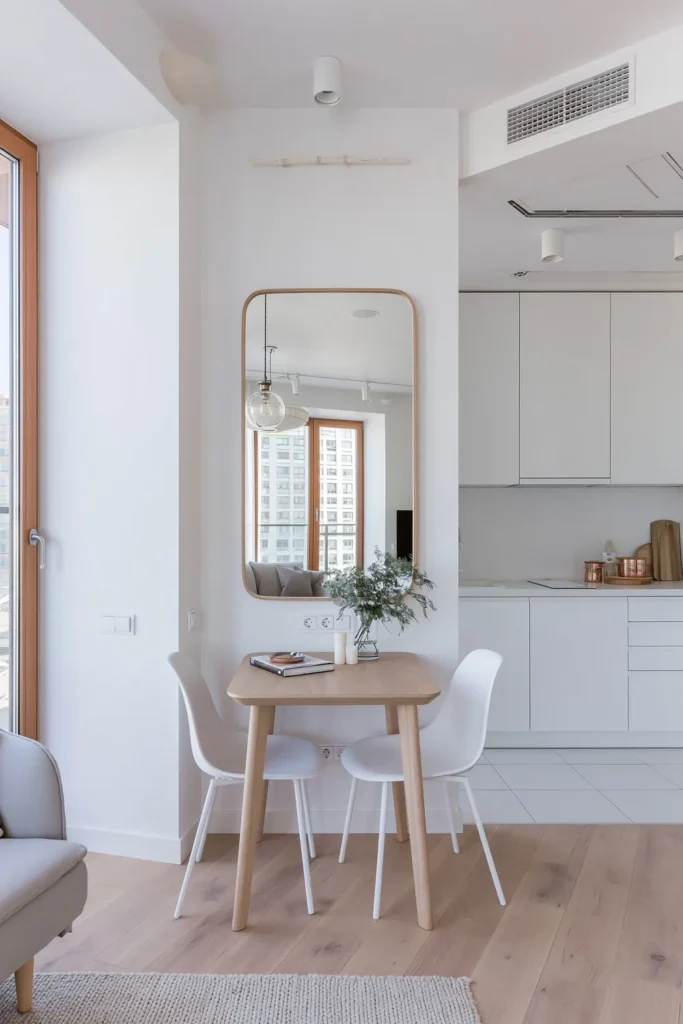
Mirrors can be very helpful in a small dining room because they bounce light around and make a tight wall feel less flat. This works especially well in apartments where the dining area does not have its own window. A mirror above a small table can make the whole corner feel brighter without adding more furniture.
Light colors on the walls and ceiling help this idea even more. Soft white, cream, pale beige, or warm gray can keep the space feeling open. Curtains or wall decor hung close to the ceiling can also draw the look upward, which makes the room feel taller than it really is.
For a simple setup, I would hang one medium or large mirror behind the dining table and keep the surrounding wall decor minimal. If you add curtains nearby, hang the rod higher than the window frame so the fabric makes the room feel more vertical and less boxed in.
Purposeful Lighting for Small Apartment Dining Areas
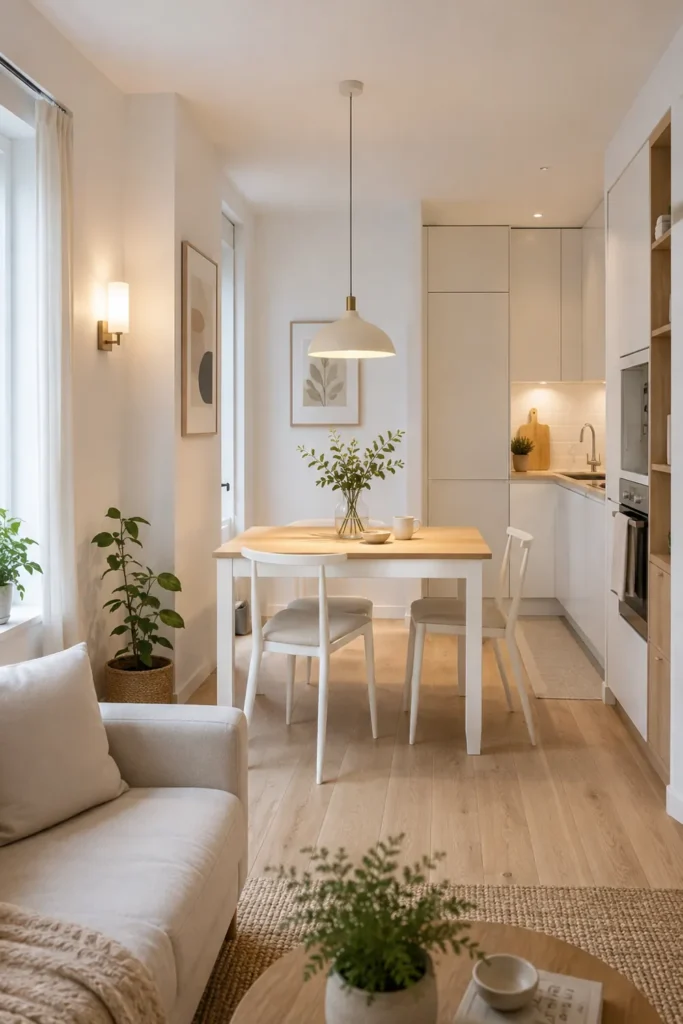
Lighting can change how a small dining area feels more than people expect. In an apartment, the dining spot might sit under a ceiling light that was not really placed with the table in mind. Choosing an appropriately sized fixture or adding accent lighting can help the area feel more like its own room.
A small pendant, slim chandelier, or wall sconce can make the table feel centered without taking up floor space. Natural light also matters, so it helps to keep nearby windows as open as possible during the day. At night, mixing one main light with a softer lamp or accent light can keep the dining area from feeling harsh.
The main thing is scale. A huge fixture can overwhelm a compact table, while a tiny one may feel disconnected. I would choose lighting that fits the table width and gives a cozy glow over meals instead of bright light that appears more like a workspace.
Rugs and Decor That Separate Living and Dining Spaces
When the dining table shares space with the living room, a few decor choices can help the two areas feel separate. An area rug under the table is one of the simplest ways to show where the dining zone begins and ends. It gives the furniture a visual boundary without needing walls.
Different decor details can also help create that separation. A tablecloth, paintings, photographs, or even a small change in flooring material can make the dining area feel distinct from the couch area. The room still stays open, but each part has its own purpose.
In a small apartment, I would keep the rug large enough that the chairs stay on it when pulled out slightly. That small detail is important because a rug that is too tiny can make the dining setup feel awkward. Choose a pattern or color that connects with the living room so the two spaces still feel related.
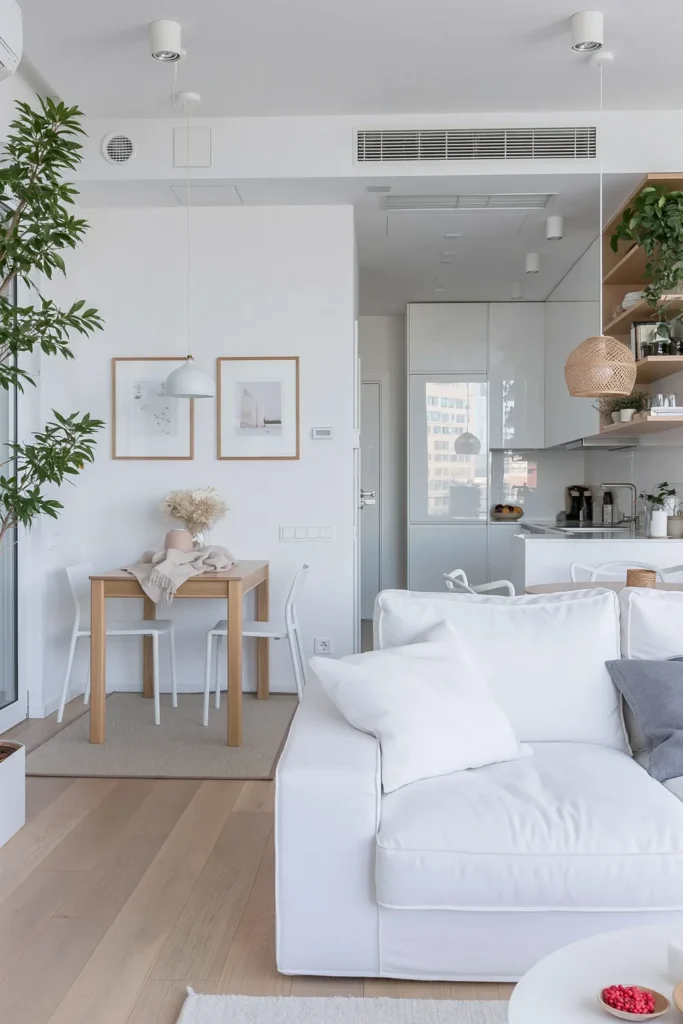
Window-Side Shelving for Dishes and Glassware
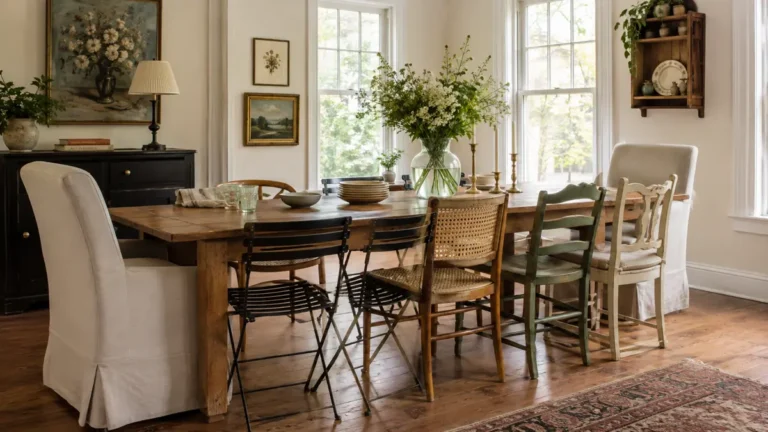
A dining space near a window can be both practical and pretty when the wall area is used well. Wall shelves are helpful because they give you storage without taking up floor space. They can hold dishes, glassware, or a few decorative pieces that make the dining area feel more finished.
Curtains or a window valance can soften the window and make the dining corner feel less bare. If the shelves are close to the table, keeping everyday items there can also make meals easier. A few glasses, small plates, or serving bowls within reach can be useful without feeling like clutter.
The trick is not to overload the shelves. In a small dining room, open shelving looks best when there is breathing room between items. I would mix practical pieces with one or two decorative accents, then keep the colors simple so the window area still feels light.
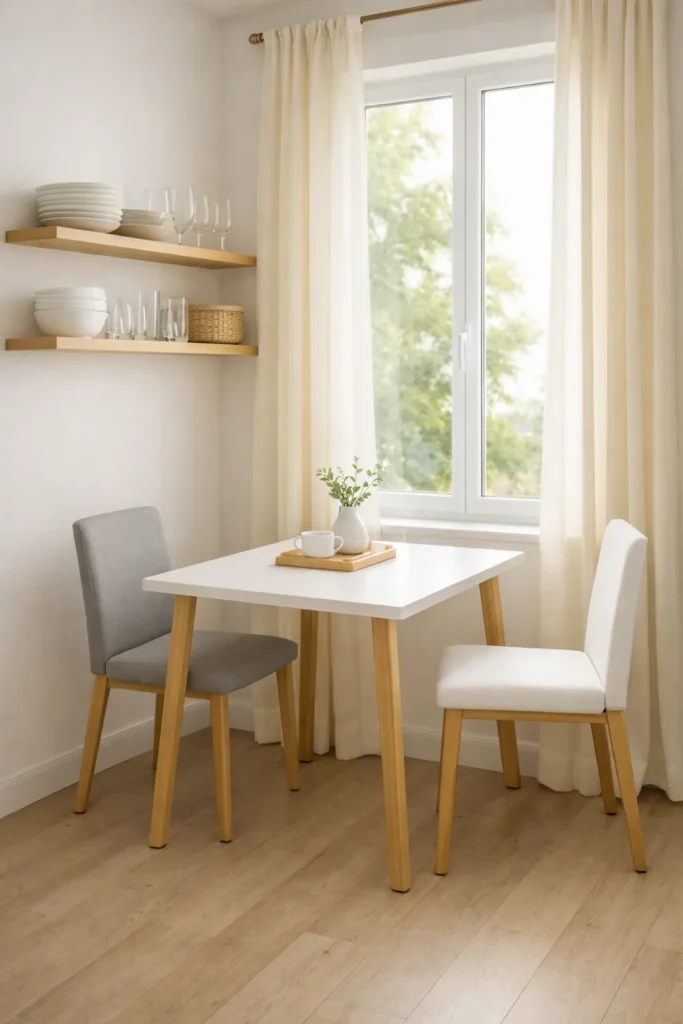
Neutral Small Dining Room Ideas for Apartments
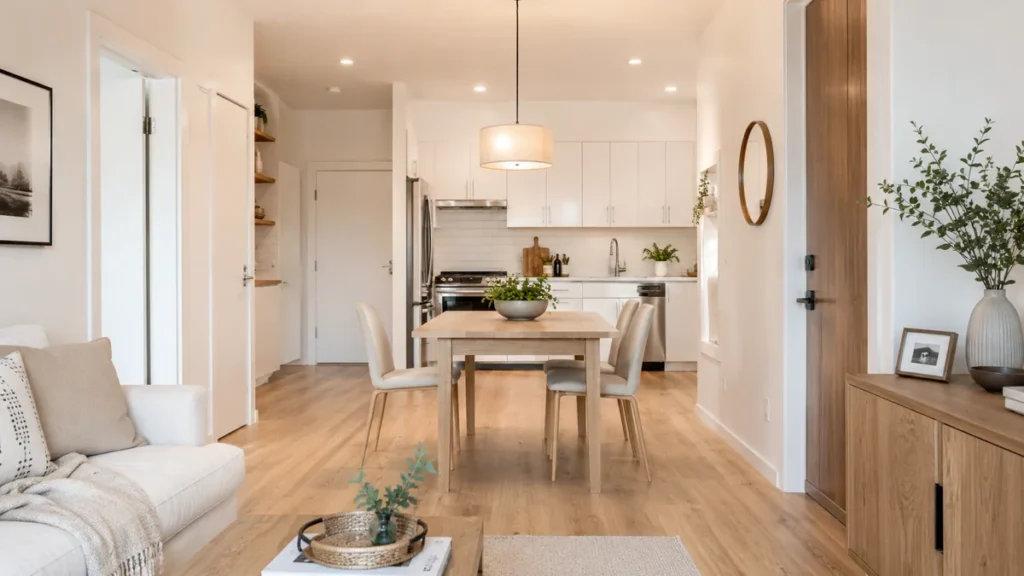
Neutral colors can make a small dining room feel calmer and less crowded. In an apartment, shades of white, cream, and beige are especially useful because they reflect light and keep the room from feeling visually heavy. This approach works well when the dining area is close to the kitchen or living room and needs to blend in smoothly.
Simple furniture with clean lines helps the neutral palette feel intentional instead of plain. A light wood table, cream chairs, or a beige wall color can create a soft background for everyday meals. The room does not need a lot of contrast to feel finished; it just needs a few textures so everything does not look flat.
A practical way to use neutrals is to layer slightly different tones. For example, a white wall, cream curtains, beige placemats, and a pale wood table can all work together while still giving the room depth.
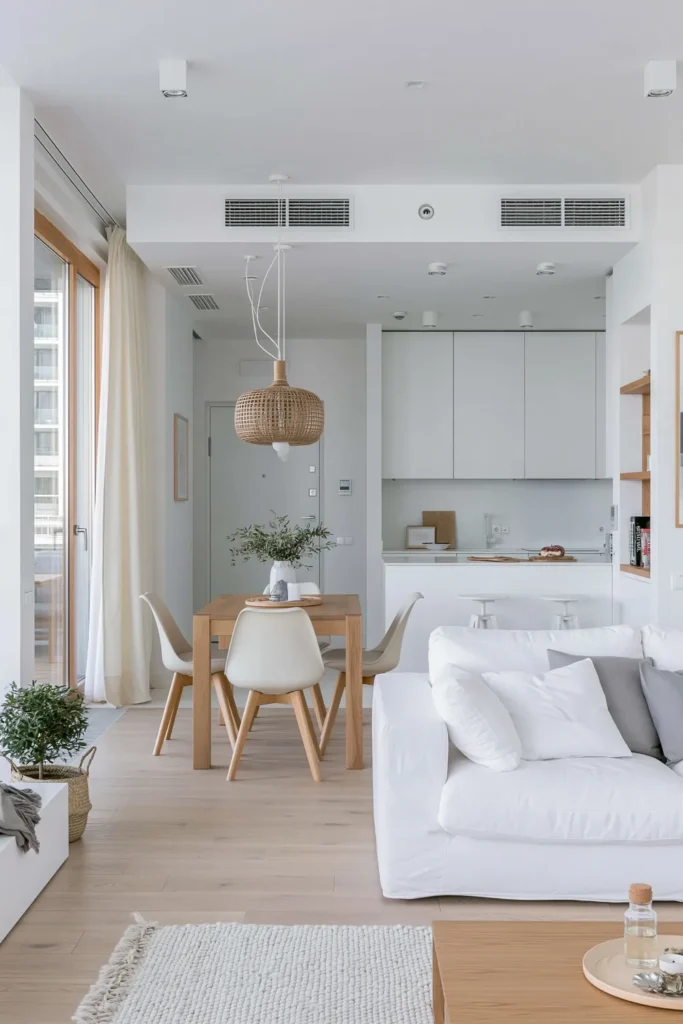
Wall-Mounted Tables for Tiny Dining Areas
A wall-mounted table can be a smart choice when there is barely enough room for a traditional dining setup. It gives you a real surface for meals without ever taking over the floor. This is especially useful in studio apartments, narrow kitchens, or small open-plan spaces in which every walkway matters.
The best part is that the table can sit flat against the wall when not in use, depending on the design. Even a simple wall-mounted surface can work for breakfast, coffee, or a quiet dinner for one or two people. It keeps the dining area compact but still gives it a clear purpose.
I would pair this idea with lightweight stools or slim chairs that can tuck underneath or move to another room. Keeping the wall above the table simple also helps. One small piece of art or a narrow shelf is enough to make the area feel finished without crowding it.
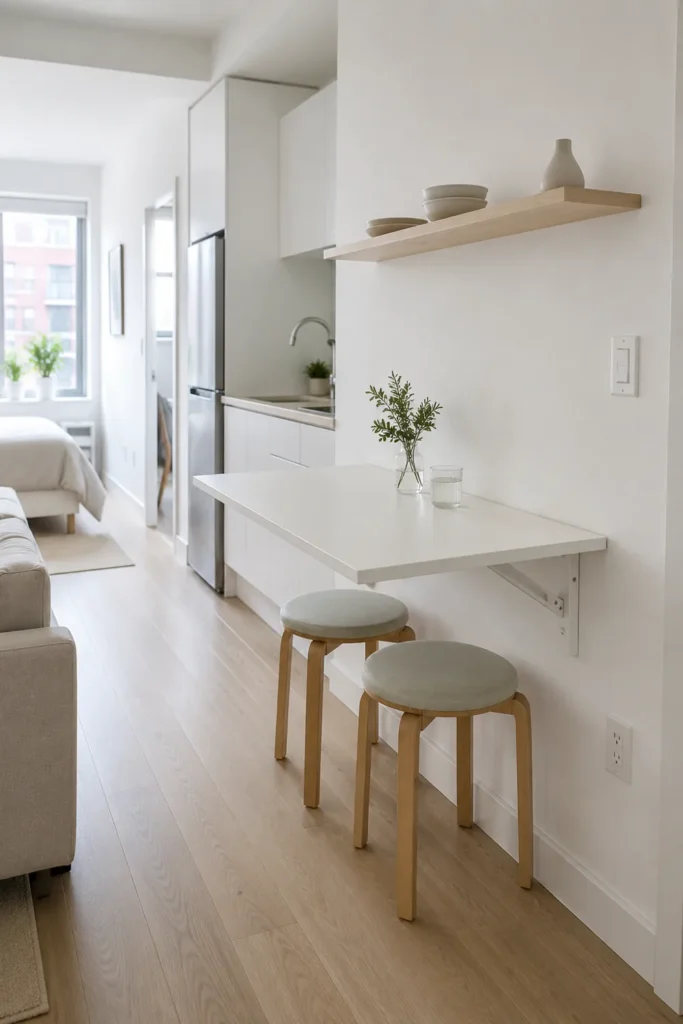
Stools Instead of Chairs for Flexible Seating
Stools can be much easier to live with than full dining chairs in a small apartment. They usually take up less space, slide under the table more easily, and can be moved around when needed. This works especially well with a small kitchen table in a multi-purpose dining area.
Because stools do not always have backs, they create a lighter look around the table. That can make the dining area feel more open, especially when it sits near cabinets, a sofa, or a walkway. Two stools are often enough for everyday use, and extra seating can be brought in only when needed.
For comfort, I would choose stools with a stable base and a seat size that appears practical for meals. Padded seats or upholstered cushions make a big difference if you expect to linger over dinner or entertain guests, while footrests can help people relax their legs during longer gatherings. If the room already has a lot of hard surfaces, a cushioned stool can soften the space. Just make sure the stools tuck neatly under the table so the floor stays clear.
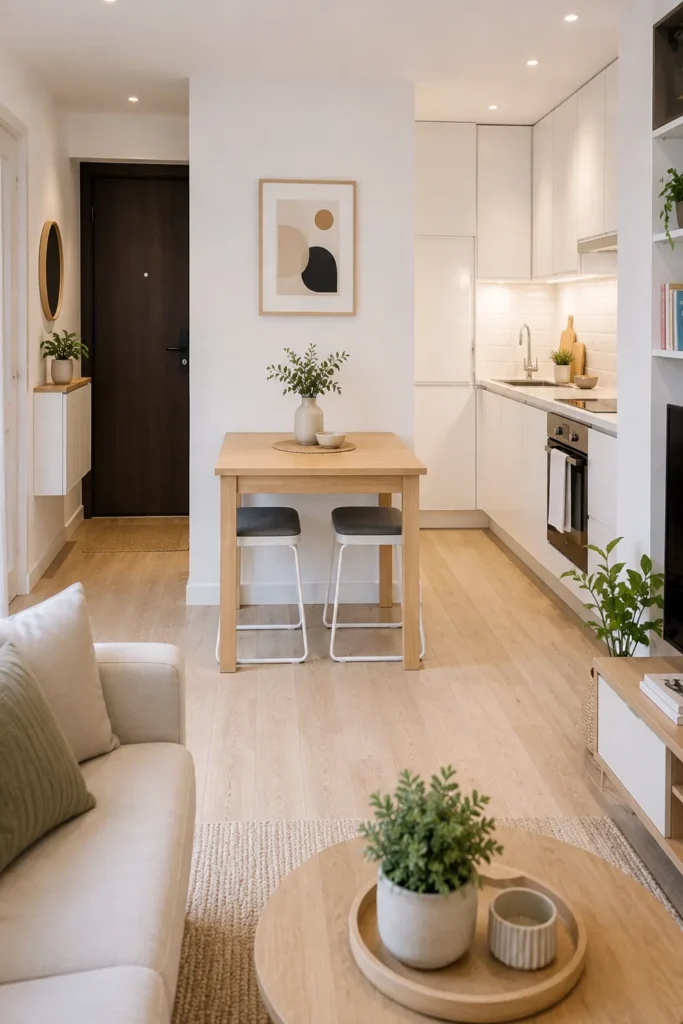
Simple Clean-Lined Furniture With Small Pops of Color
Keeping the furniture simple is often the safest choice in a small apartment dining room. Clean-lined tables and chairs make the space easier to understand visually, which helps it feel less crowded. This does not mean the room has to feel boring; it just means the larger pieces should stay calm and practical.
A subtle color scheme works well as the base, while art and accessories can bring in small pops of color. A framed print, a bright bowl, colorful napkins, or a small vase can give the dining area character without making it feel busy. These pieces are also easy to change when you want a different mood.
One approach I like is to keep the table and chairs simple, then choose one accent color to repeat two or three times. That could be blue in the wall art and placemats, or green in a vase and a small accessory. Repeating one color makes the room feel more connected.
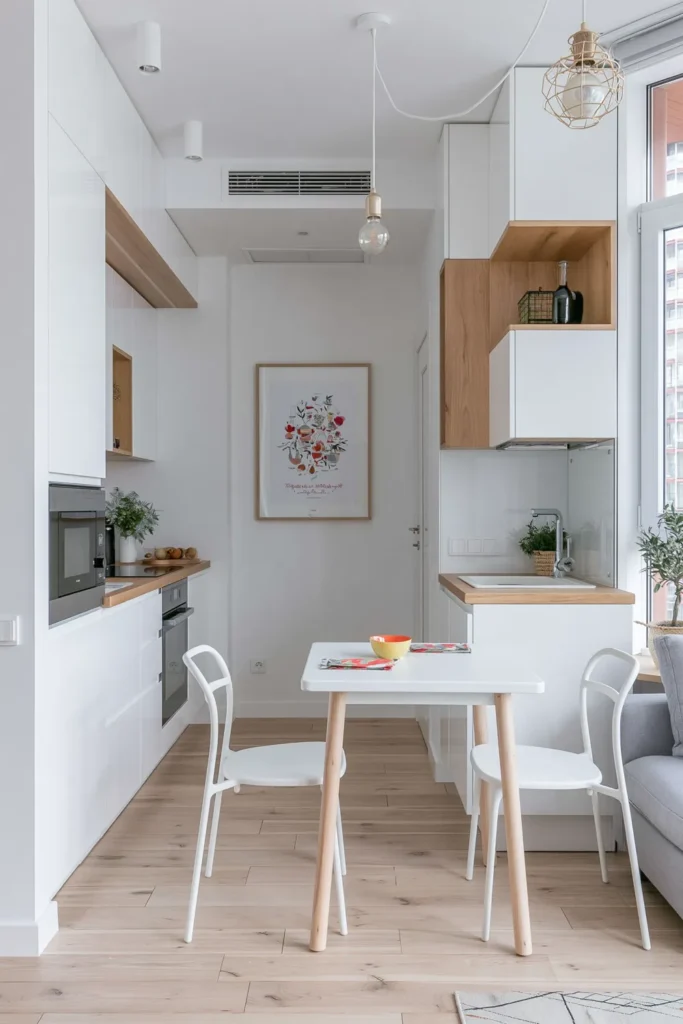
Patterned Rugs That Define a Small Dining Zone
A patterned rug can make a small dining area feel more grounded, especially when the table is floating in an open apartment layout. Without something under the furniture, the dining setup can look like it was placed wherever there was space. A rug gives it a clear boundary and makes the area feel more deliberate.
Color and pattern are useful here because they help separate the dining zone from the rest of the room. A rug with a subtle pattern can add interest without taking over the space, while a more colorful design can bring energy to a simple table and chairs. The important part is choosing a rug that fits the furniture properly.
I would avoid rugs that are too small because they can make the table look cramped. Try to choose one that allows the chairs to stay mostly on the rug when pulled out. In a small apartment, that small bit of extra rug around the table makes the whole setup feel more comfortable.
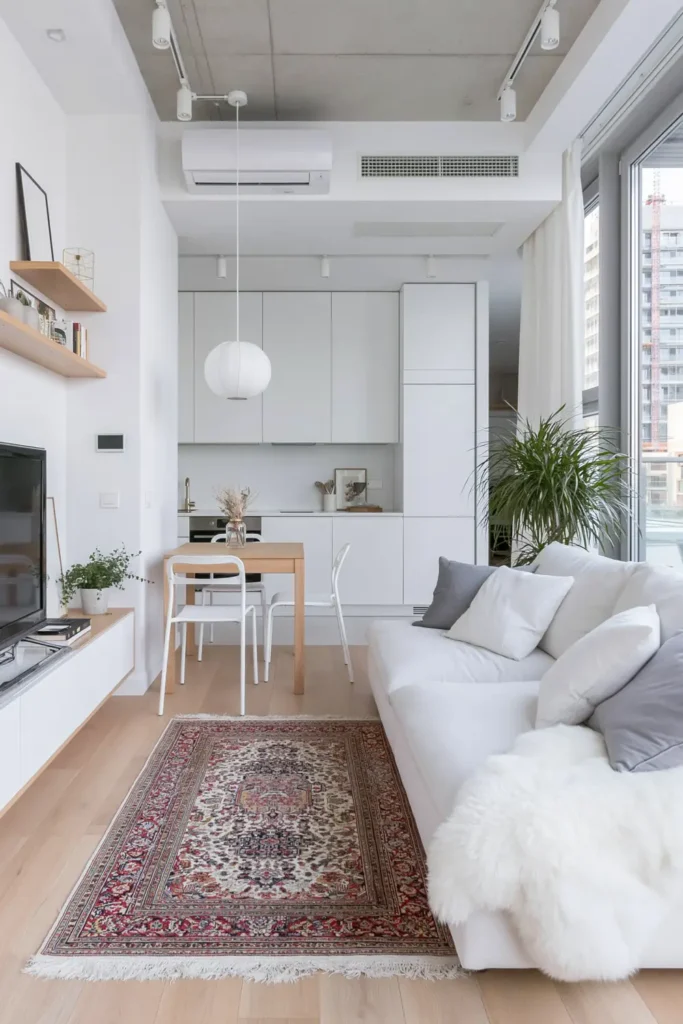
Wallpaper or Paint Treatments to Separate the Dining Area
Wall treatments can help a dining area feel separate even when there are no walls dividing the apartment. Wallpaper, a painted accent wall, or a different wall color behind the table can quietly mark the dining zone. This works well in open floor plans where the dining space shares a wall with the living room or kitchen.
Wallpaper adds texture and pattern, while paint can create a cleaner and simpler boundary. A soft color change can be enough if the apartment already has a lot going on. For a bolder look, a patterned wallpaper behind a small dining table can create a focal point without needing much extra decor.
A useful tip is to treat only the wall connected to the dining setup. Covering too many walls in a small apartment can feel heavy. One focused area behind the table gives the room structure while still keeping the layout open and easy to live with.
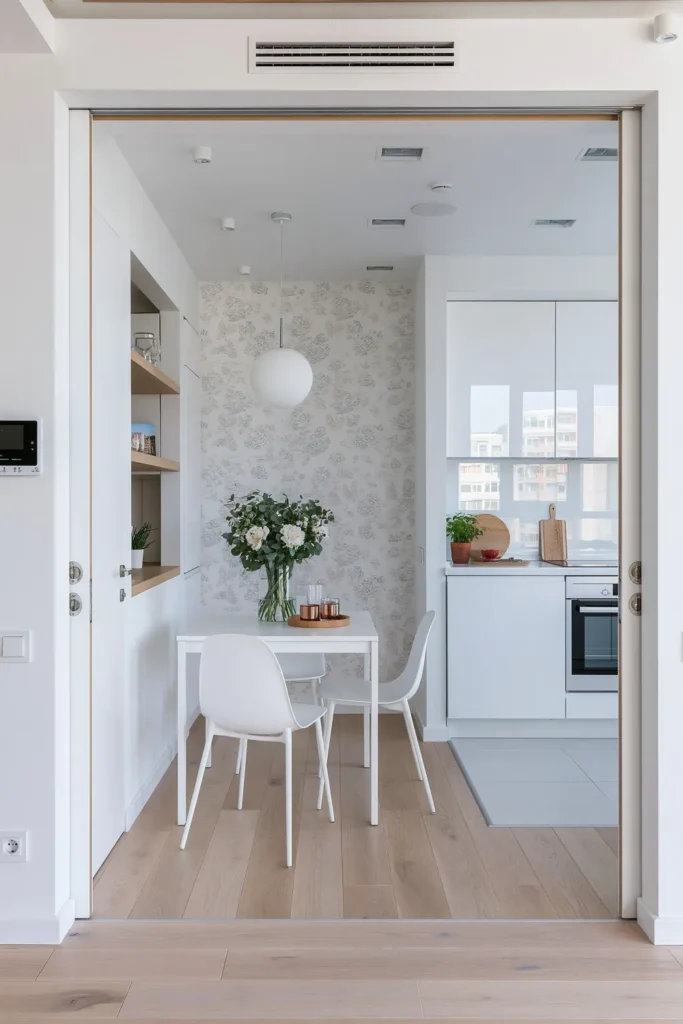
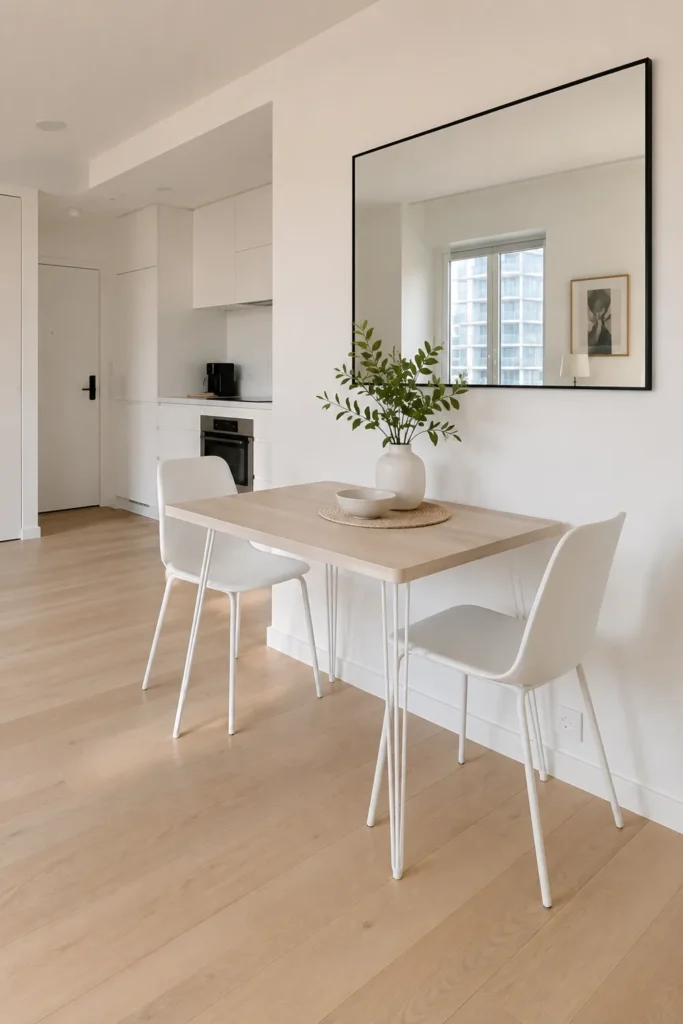
Floating-Leg Tables Paired With a Large Wall Mirror
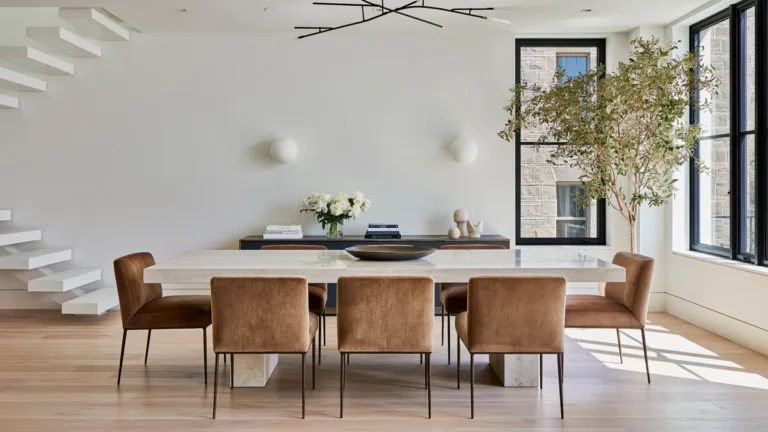
A dining table with floating-style legs can help a small room feel lighter because more of the floor is visible. When furniture blocks less of the floor, the dining area can feel less packed in. This is a small detail, but in an apartment, those visual gaps make a real difference.
Pairing the table with a large wall mirror can make the space feel even more open. The mirror bounces light and gives the dining area a sense of depth, especially when the table sits against a plain wall. Together, the lighter table shape and mirror keep the room from feeling boxed in.
I would keep the rest of the decor around this setup simple. Let the mirror do most of the visual work, and avoid crowding the wall with too many small frames. A clean table, a simple centerpiece, and a large mirror can make the dining corner feel polished without adding much.
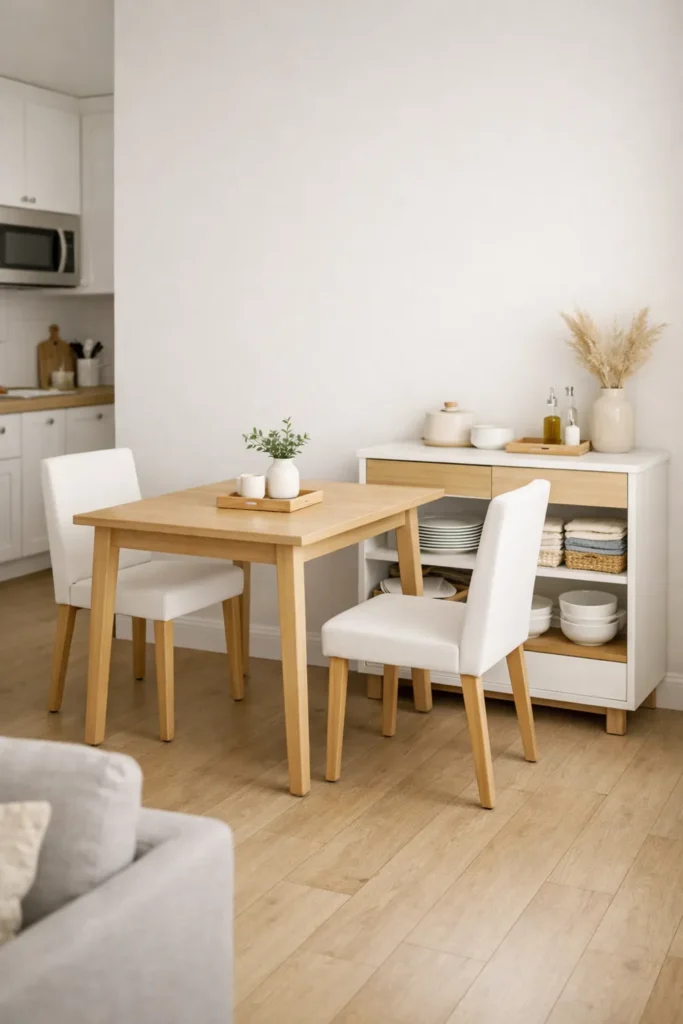
Layered Storage With Buffets, Bar Carts, and Folding Tables
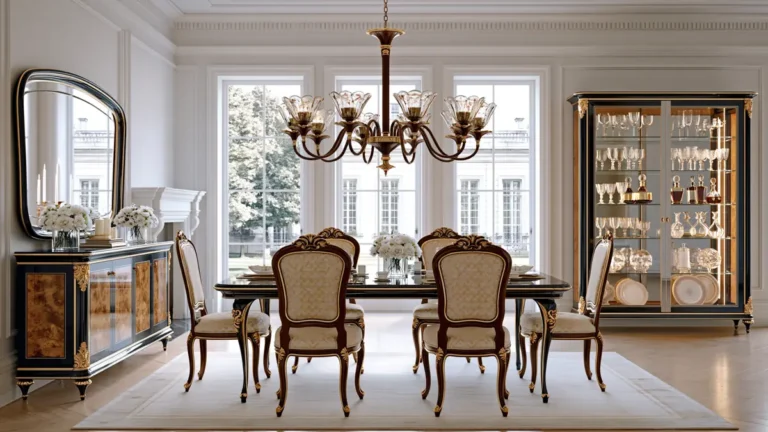
Small dining rooms often need storage, but the storage has to work carefully. A buffet, sideboard, bar cart, or folding table can add function without making the room feel like a storage area. The right piece depends on how much floor space you actually have and what you need to keep nearby.
A narrow buffet or sideboard can hold dishes, linens, or serving pieces while also giving you a surface for a lamp or tray. A bar cart is easier to move and can be useful when the dining area shares space with the living room. A folding table is helpful when you only need extra surface space occasionally.
The most effective method is to choose one layered storage piece instead of adding several small items around the room. Too many pieces can make the dining area feel crowded. One useful piece, placed against a wall or in a corner, can make the space work harder while still looking tidy.
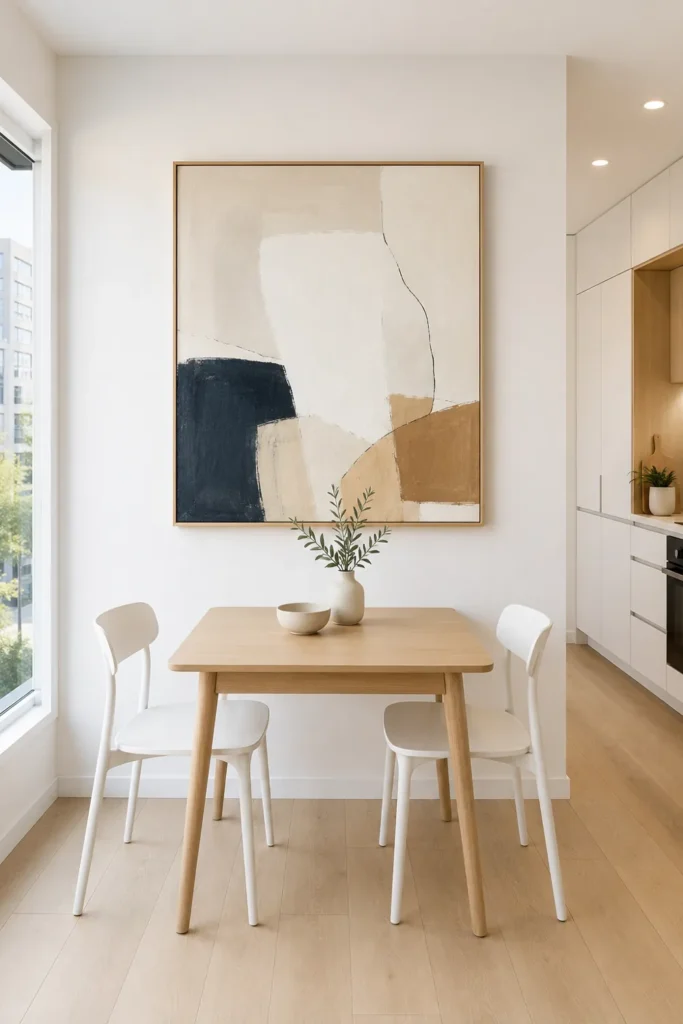
Large Wall Art for a Strong Dining Room Focal Point
Large wall art can give a small dining room a clear focal point without adding furniture. This is useful in apartments because floor space is limited, but wall space is often underused. A single large painting or photograph on a white wall can make the dining area feel more complete right away.
Vertical stripe patterns can also help when the room feels low or narrow. They draw the look upward and make the wall feel taller. If the dining table is simple, a bold piece of art can bring in color, shape, or movement without requiring extra accessories on the table.
I would choose one main piece instead of several small frames if the wall is compact. Too many small pieces can make the room feel busy. One larger artwork centered over the table creates a cleaner look and helps the dining area feel intentional, even if it is only a small corner of the apartment.
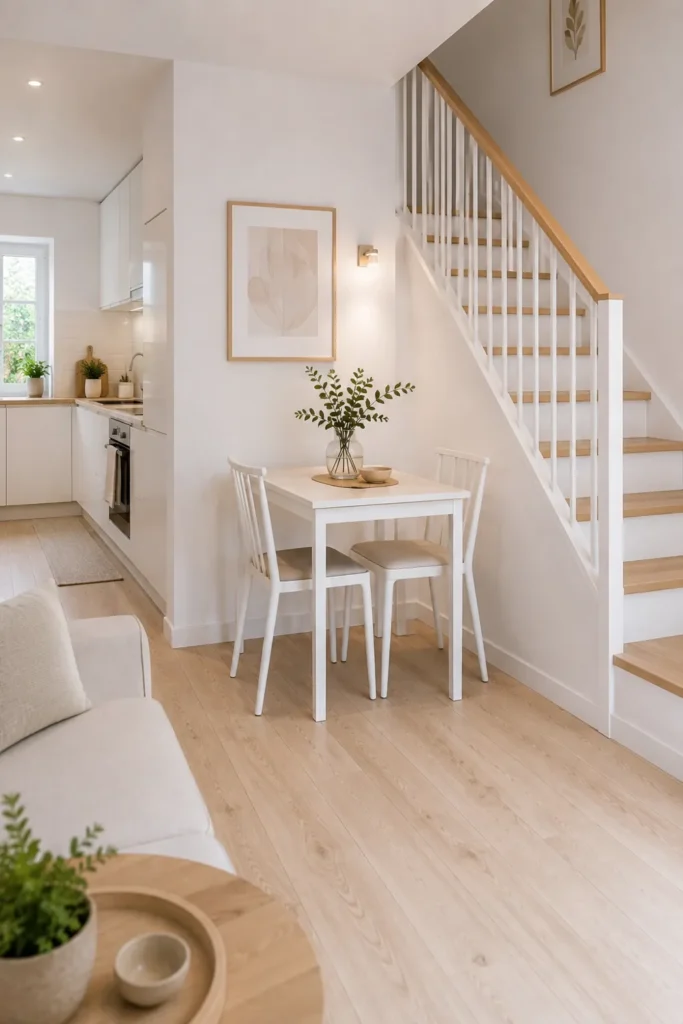
Movable Dining Tables Beside the Stairs
A dining area beside the stairs can work well when the furniture is easy to move. This type of spot is often awkward because it sits near a walkway, so a heavy or oversized table can quickly become frustrating. A lighter dining table gives the area more flexibility.
The table should feel stable enough for meals but not so bulky that it blocks movement around the stairs. Chairs should also be easy to pull in tightly when they are not being used. This setup works best when the dining area is simple and does not collect too many decorative extras.
For everyday use, I would keep only the essentials on the table, like a small bowl or a low centerpiece. If the stair area already has strong lines or railings, the dining furniture should not compete with them. A movable table keeps the space practical while still giving you a real place to eat.
L-Shaped Benches for Apartment Dining Corners
L-shaped benches are one of the most space-saving seating ideas for apartment dining corners. They follow two walls and leave more of the open side available for a table and an extra chair. This makes the dining area feel built-in, even when the apartment itself is small.
A bench also removes the need to pull out chairs on every side of the table. That can make a big difference in a kitchen corner or small dining nook. The setup works especially well with a compact table that fits close to the bench without making people feel squeezed.
To make an L-shaped bench feel comfortable, I would add simple cushions or seat pads if the bench surface is hard. Keep the fabric practical and easy to clean, especially if the dining area is used every day. A small table, one loose chair, and the bench can form a cozy setup without taking over the room.
Open-Concept Dining Areas With Light Colors and Mirrors
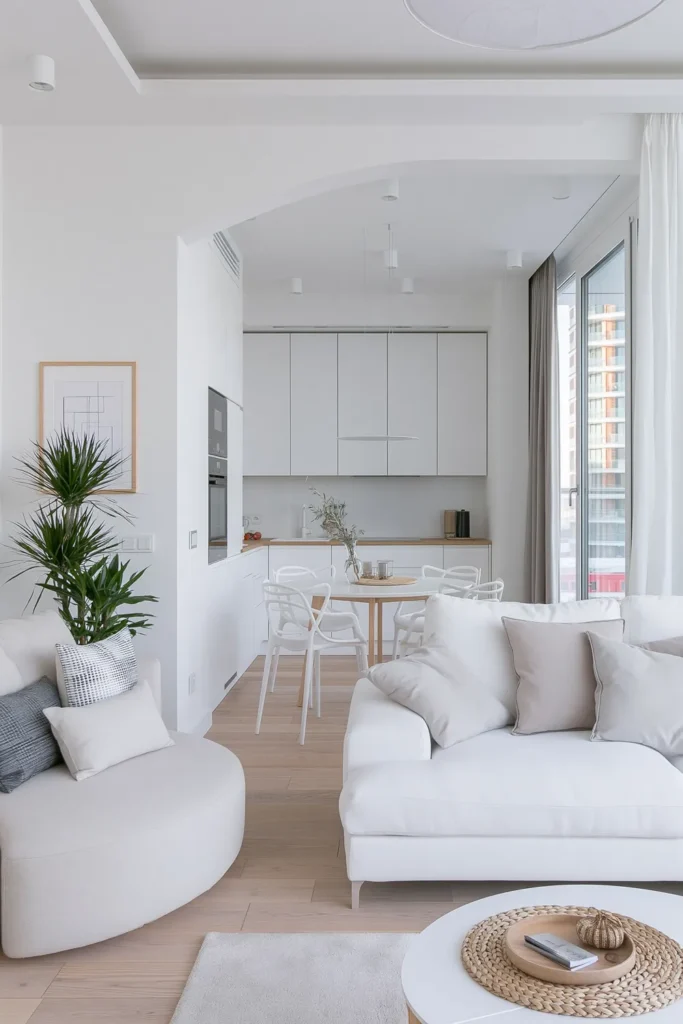
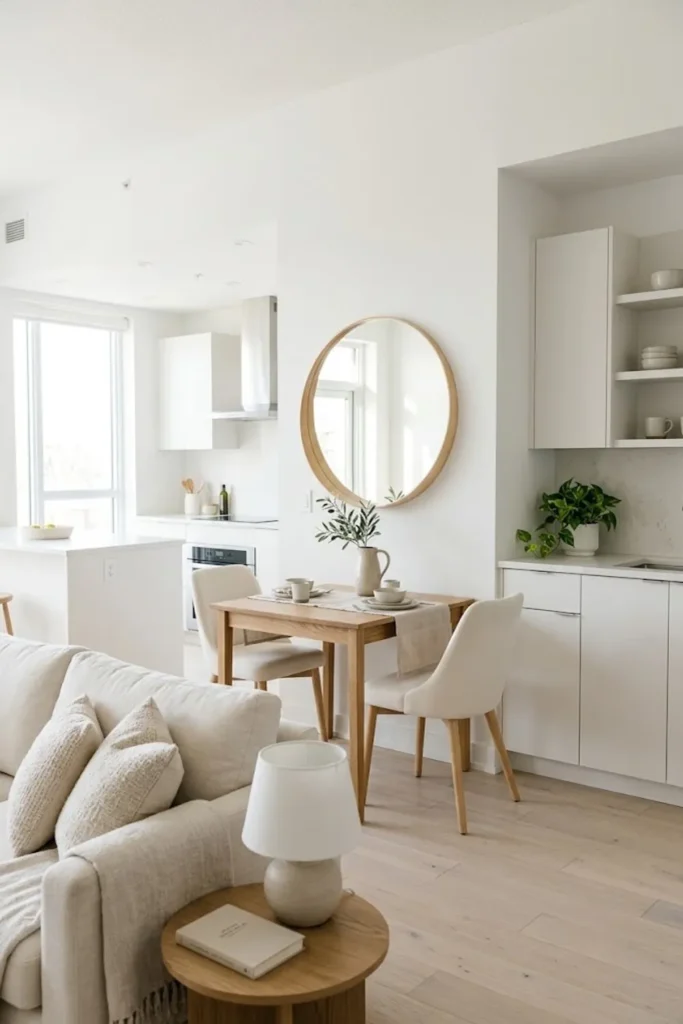
Open-concept apartment dining areas can feel easier to live with when the furniture is simple, and the colors stay light. Clean-lined pieces help the dining table blend into the larger room instead of feeling like a bulky interruption. Light colors also reflect more natural light, which helps the whole space feel calmer.
A large wall mirror can support this idea by reflecting sunlight and making the dining area feel more open. This is especially helpful when the table sits away from the window or shares a room with the sofa. The mirror adds dimension without using any floor space.
I would keep the dining setup connected to the rest of the open room through repeated colors or materials. For example, a light wood table can relate to a coffee table nearby, or cream dining chairs can connect with a pale sofa. Small repeats like that make the room feel planned rather than crowded.
Making a Small Apartment Dining Space Feel Like Home
A small dining room works best when every piece has a clear reason to be there. The table shape, seating, lighting, rug, wall decor, and storage all matter because there is less room for mistakes. When those choices support the way you actually live, even a tiny dining spot can feel comfortable.
The ideas that usually work best are the ones that solve a real problem. A round table helps with tight walkways, benches save space in corners, mirrors brighten dark walls, and rugs or wall treatments give open spaces more structure. None of these changes need to be complicated, but together they can make the dining area feel more settled.
Start with the part of your dining space that bothers you most. Maybe the chairs are always in the way, or the table feels lost in the living room. Fixing one issue at a time is often the easiest way to create a small dining area that feels useful, warm, and genuinely part of the home.
If you are not sure where to begin, try this simple action plan:
1. Assess how you use your dining area. Think about your daily routines and what you would like to improve during mealtimes or gatherings.
2. Measure your available space, including any corners or nooks you might use. Take note of the walkways and how people move around the table.
3. Focus on the changes that will make the biggest impact first, such as choosing the right table shape, moving furniture to open up space, or adding better lighting.
This approach may help you see your dining area with fresh eyes and give you the confidence to start making improvements that fit your needs.