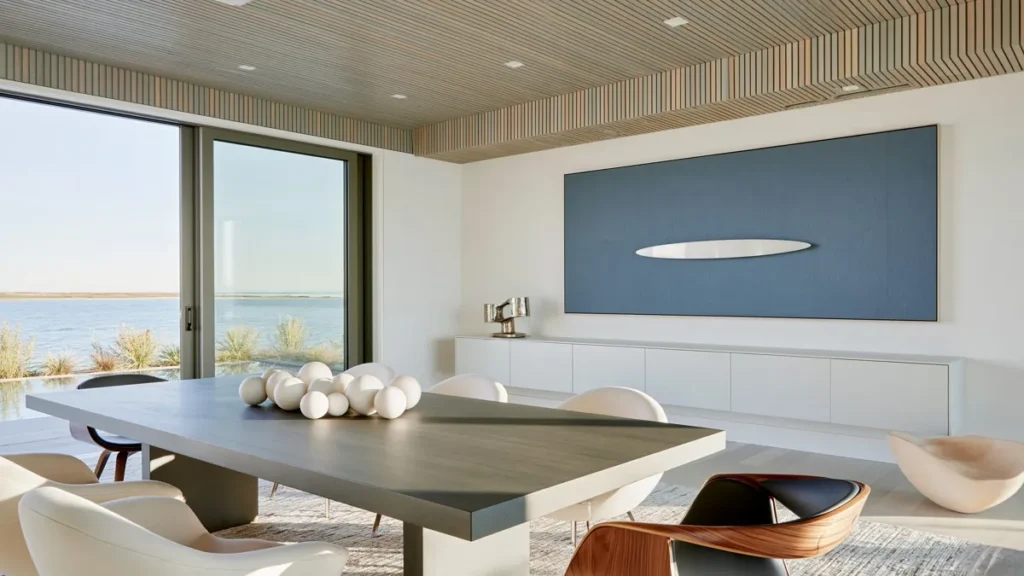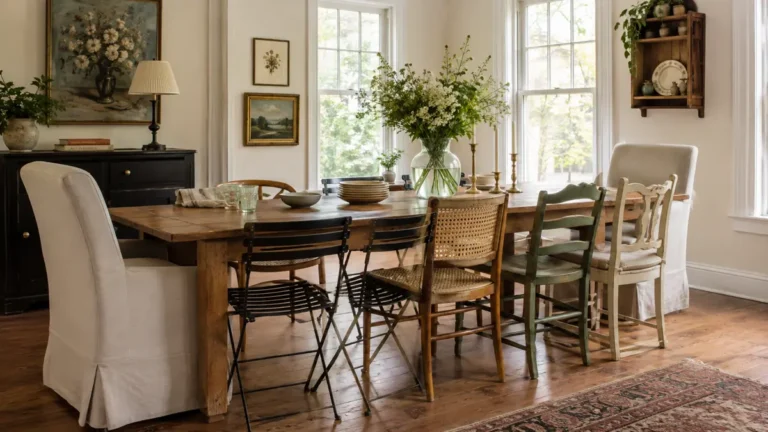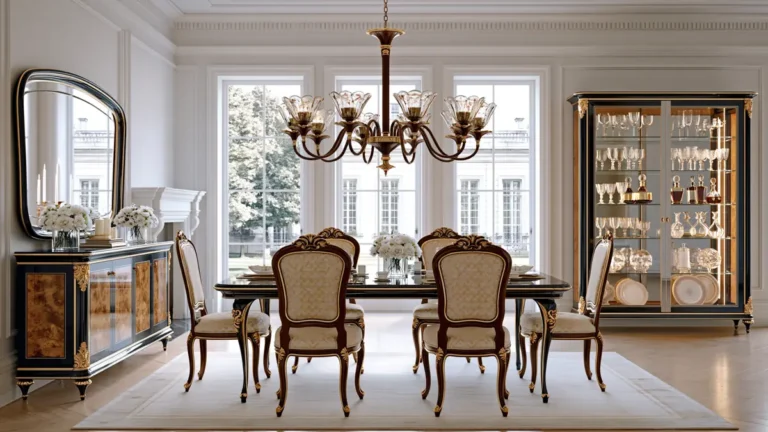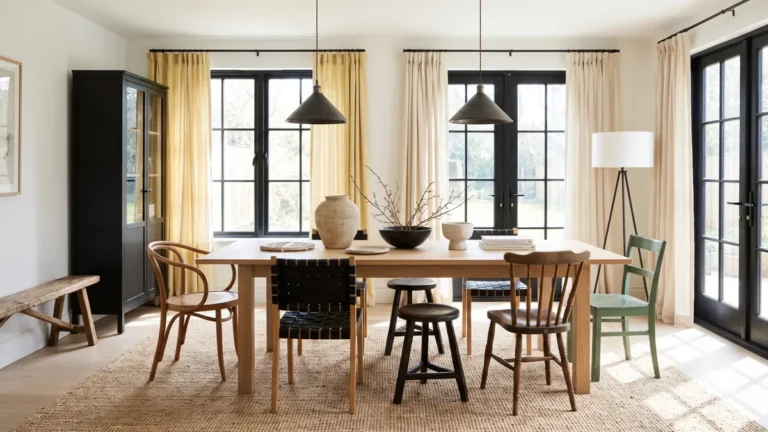

A formal dining room should feel special, but it should not feel so precious that nobody wants to use it. The most inviting spaces balance polished details with comfortable furniture, warm materials, and practical choices that make everyday meals feel just as natural as holiday dinners.
These formal dining room ideas that actually feel welcoming can help you create a space that looks refined without becoming stiff or excessively decorated.
Choose a Formal Dining Table That Appears Welcoming
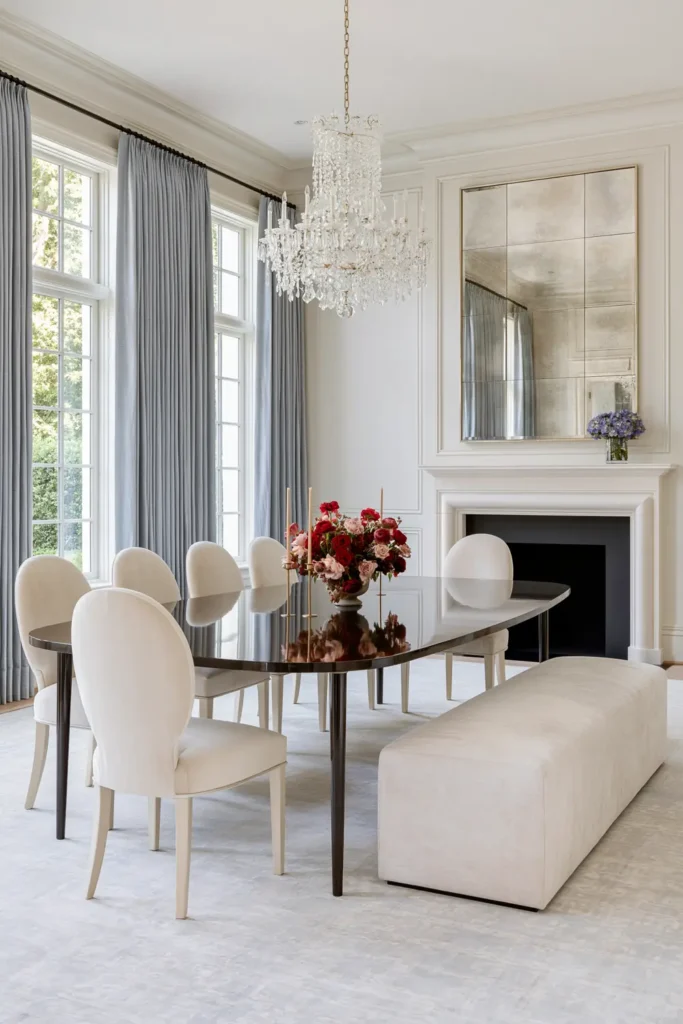
The dining table sets the mood for the entire room, so it needs to feel impressive without dominating the space. A long glass dining table can give a traditional formal room a brighter appearance because it does not visually block the floor or surrounding furniture.
For a softer layout, consider a round marble table or a round pedestal table. The curved shape makes conversation easier and helps the room feel less rigid, especially when the dining area is square or slightly compact.
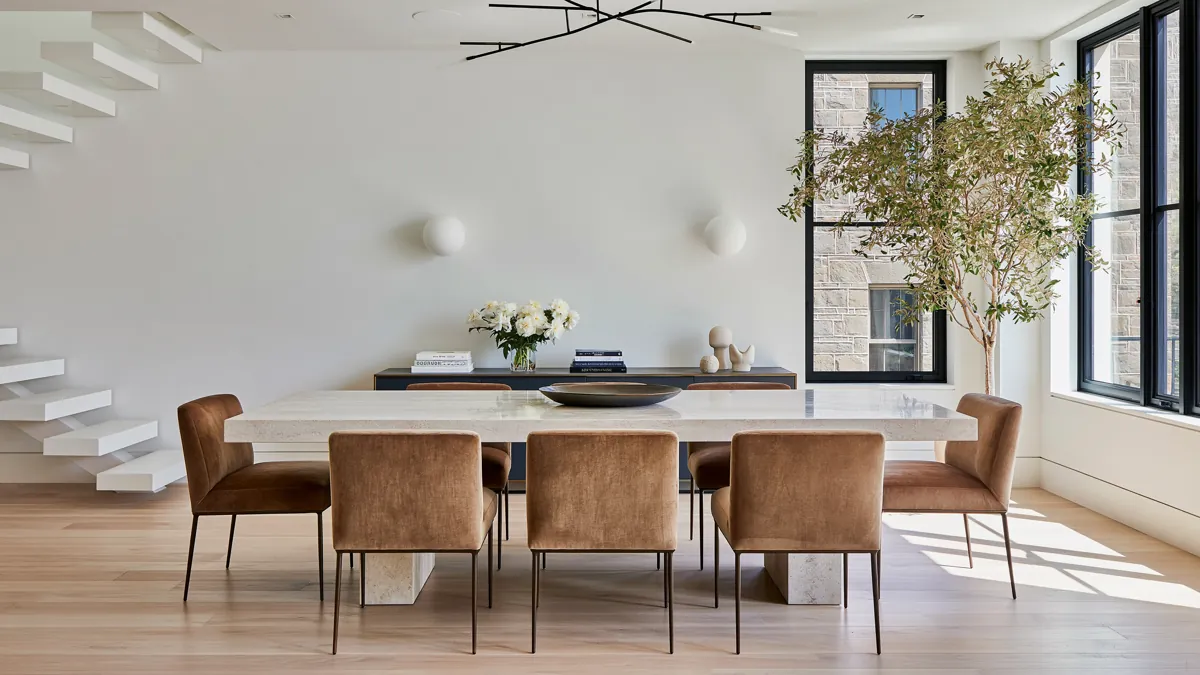
Warm wood is another safe choice when you want the room to feel grounded and comfortable. A wooden table brings natural color and texture into a formal setting, keeping polished finishes and elegant details from feeling too cold.
Before choosing the table, leave enough space around it for chairs to pull out comfortably. A beautiful table will feel far more welcoming when guests can move around it without squeezing past walls or nearby furniture.
Add Comfort with Upholstered and Cushioned Dining Chairs
Dining chairs have a major influence on how long people feel comfortable sitting at the table. Upholstered dining chairs bring softness into the room and can make formal dinners feel more relaxed.
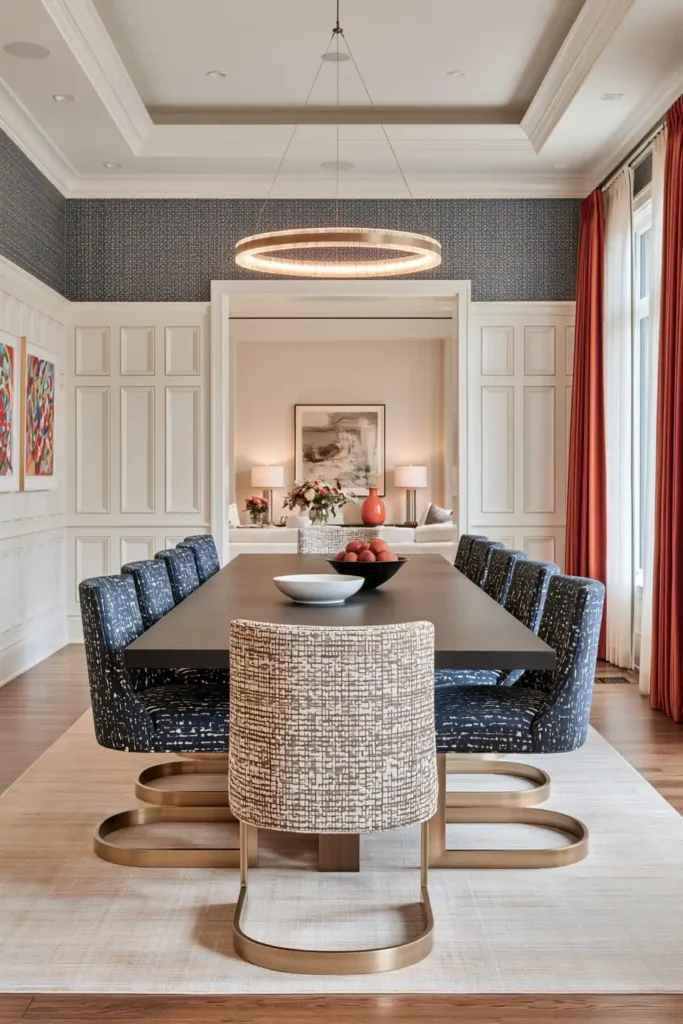
Rich fabrics work especially well in an eclectic formal dining room. They add color, texture, and a feeling of warmth without requiring a large amount of decoration elsewhere in the space.
Wooden chairs with carved legs can still feel comfortable when they include cushioned seats or upholstered backs. This combination keeps the traditional character of the furniture while making it more practical for long meals and conversations.
Small cushions can add another layer of comfort, while a neatly placed throw can soften the look of a nearby host chair. Keep these details controlled so the room still seems intentional rather than excessively casual.
Make the Room Feel Special with Statement Lighting
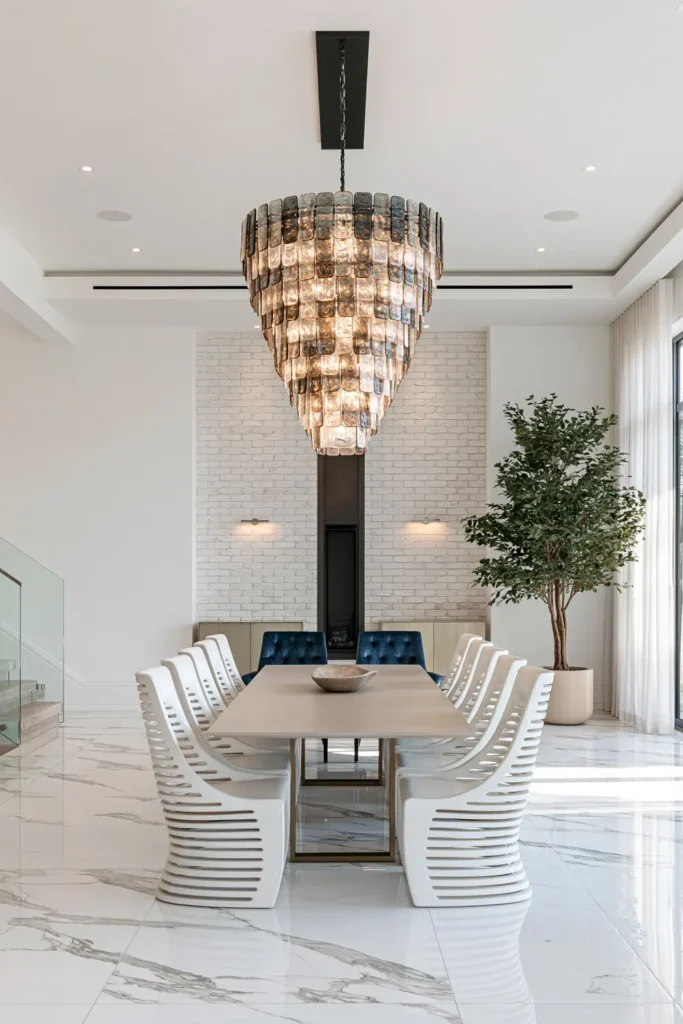
Statement lighting gives a formal dining room a clear focal point. A crystal chandelier creates a classic, glamorous look, while a modern fixture with clean lines can make the same room feel more current.
For a larger table, a sculptural fixture or triple chandelier can help fill the visual space above it. Smaller pendant lights can also work well when arranged as a balanced group rather than relying on one central fixture.
The fixture should relate to the size and shape of the table. A long table can support a wider or multi-light design, while a round table often looks more balanced beneath a single chandelier or compact sculptural fixture.
Hanging the light about 30 to 34 inches above the table can create a strong visual connection without blocking conversation across the room. Adding dimmers is also worthwhile because it allows the room to shift from bright family meals to softer evening dinners.
Add Character with Paneling, Wallpaper, and Artwork
Wall treatments can give a formal dining room character without taking up valuable floor space. Wainscoting, crown molding, and decorative paneling create architectural interest and can make the room feel finished even when the furniture is simple.
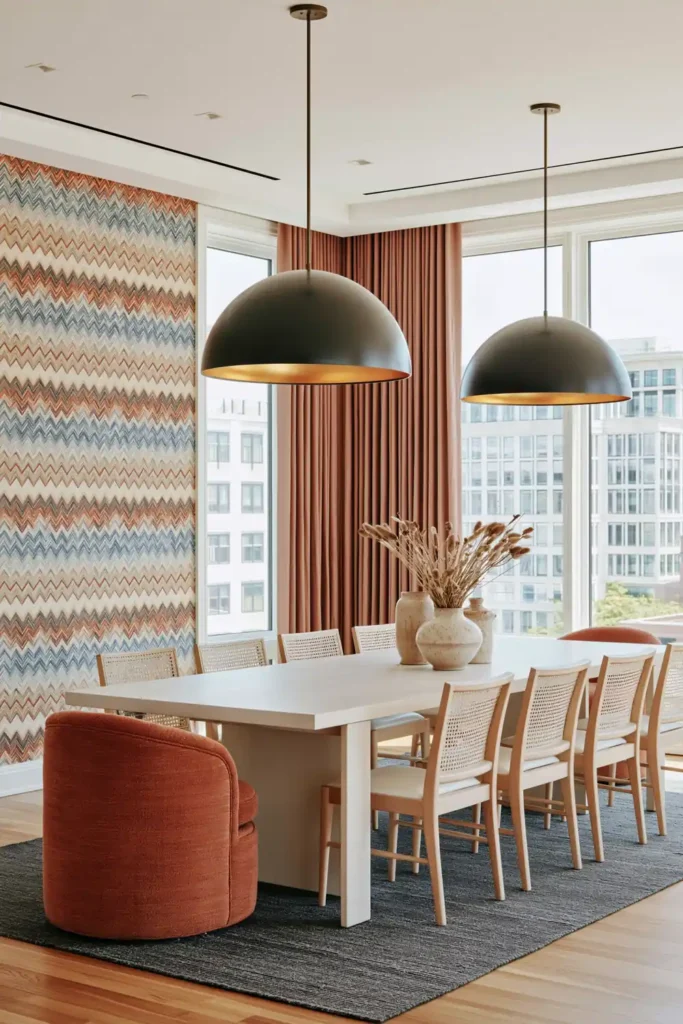
Wallpaper with a subtle pattern gives depth while keeping the atmosphere calm. Patterned or geometric wallpaper can make a stronger statement, especially when the rest of the room uses restrained colors and classic furniture.
A bold accent wall works well when you want to highlight the dining table or buffet. It can help define the room without covering every wall in a dramatic color or pattern.
Artwork offers another way to personalize the space. A hand-painted abstract piece in shades ranging from grey to charcoal can introduce movement and contrast while still fitting comfortably into a refined dining room.
Style Fine Tableware and Fresh Centerpieces
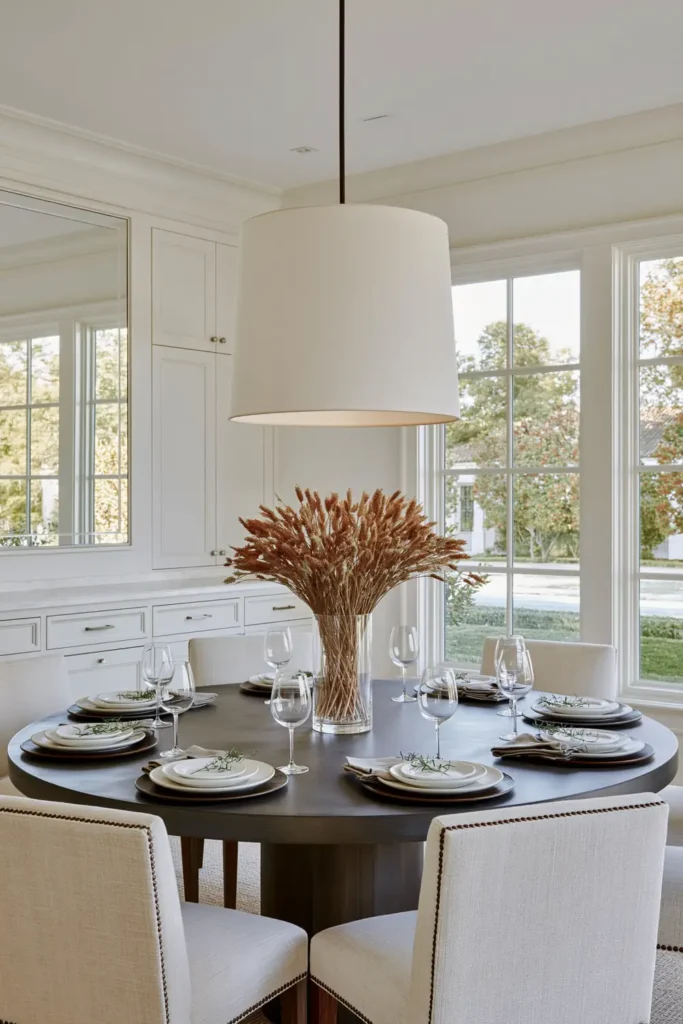
Fine tableware can make a formal dining room feel thoughtful rather than overly staged. The key is to display pieces that have meaning or practical value instead of filling the table with decorations that must be moved every time you sit down.
Fine china, polished glassware, and silverware can bring a sense of occasion to the room, especially when they are arranged with a light touch. Cherished heirlooms can also make the setting feel personal and connected to family traditions.
A fresh centerpiece keeps the table from feeling excessively formal. Flowers introduce softness and natural color, while a plain bowl of fresh fruit may create a more relaxed everyday look.
Keep the scale of the centerpiece low enough for people to see across the table. A beautiful arrangement should support conversation, not become a barrier in the middle of it.
Add Practical Storage with a Buffet or Sideboard
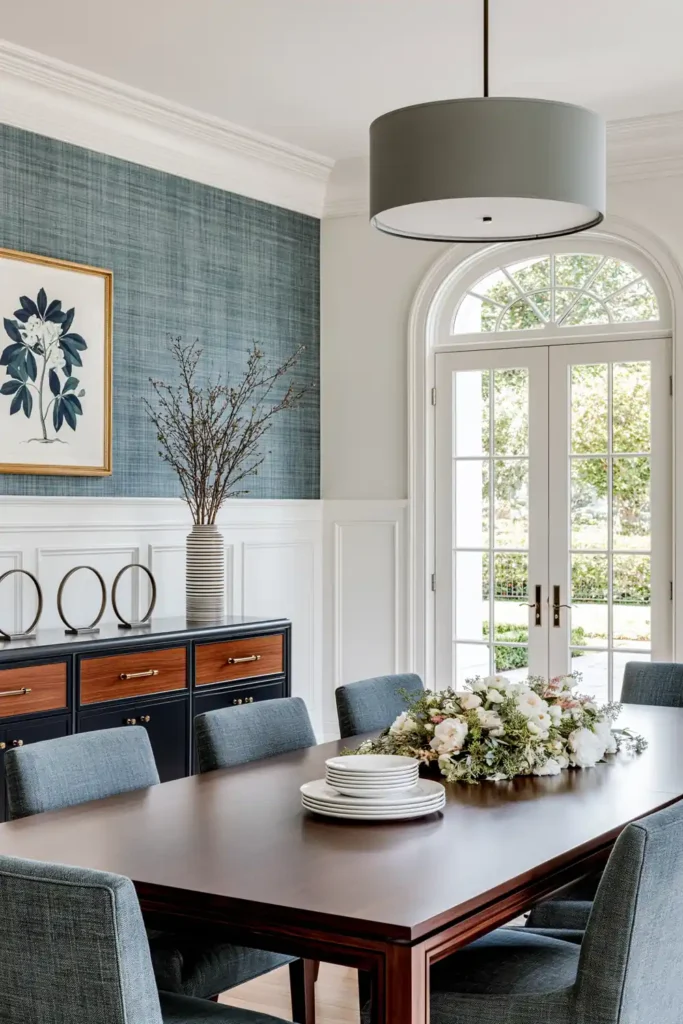
A buffet or sideboard gives the dining room useful storage while also helping the space feel complete. It creates a natural place for dinnerware, serving pieces, and items you want nearby during meals.
A traditional wooden buffet can impart warmth and visual weight, while a sleek modern sideboard offers a cleaner look. Choose a design that relates to the dining table without matching it too closely. A little contrast often makes the room feel more collected and personal.
The top of the piece can hold a few carefully chosen accents, such as vases or sculptures. Avoid covering the entire surface so there is still room to set down serving dishes when the dining room is in use.
If the storage piece includes cabinets, organize frequently used dinnerware where it is easy to reach. Keeping practical items close to the table makes formal dining feel less complicated and more suitable for everyday life.
Soften the Space with a Luxurious Low-Pile Rug
A rug can make a formal dining room feel warmer, quieter, and more comfortable. It also helps visually anchor the table and chairs, especially in a large room with hard flooring.
Persian and Oriental rugs bring pattern and traditional character, while a contemporary rug can give the space a cleaner, more updated appearance. An ivory-ground pattern is especially useful when you want softness without making the room feel dark or heavy.
A low-pile rug is usually the most sensible choice beneath a dining table. Chairs can slide more easily, and crumbs are less likely to become buried in thick fibers.
The rug should extend roughly 24 to 30 inches beyond the edge of the table. This allows the chairs to remain on the rug even when they are pulled out, creating a more comfortable and polished arrangement.
Create a Calm, Welcoming Look with Symmetry
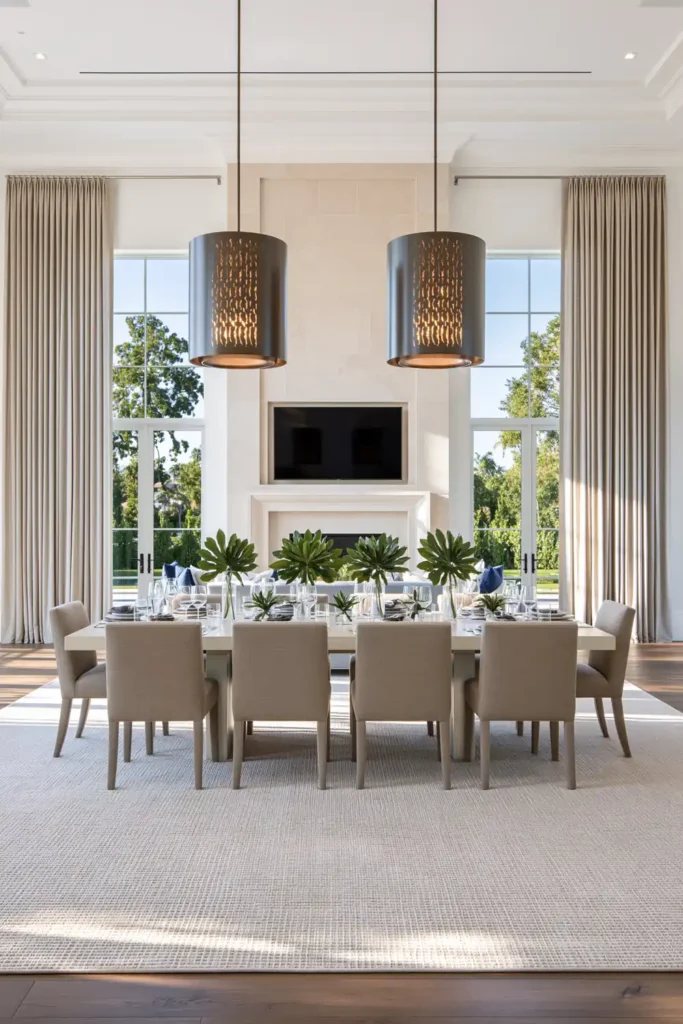
Symmetry can bring order to a formal dining room without making it feel stiff. Repeated elements help the eye move around the room calmly, which can make a decorated space feel more balanced.
A buffet provides a strong starting point. You might hang matching framed artwork above it or place identical wall sconces on either side to create a clear focal area.
The objects do not need to be elaborate. Simple frames, understated sconces, and a deliberately centered storage piece can establish balance while leaving room for texture and essence elsewhere.
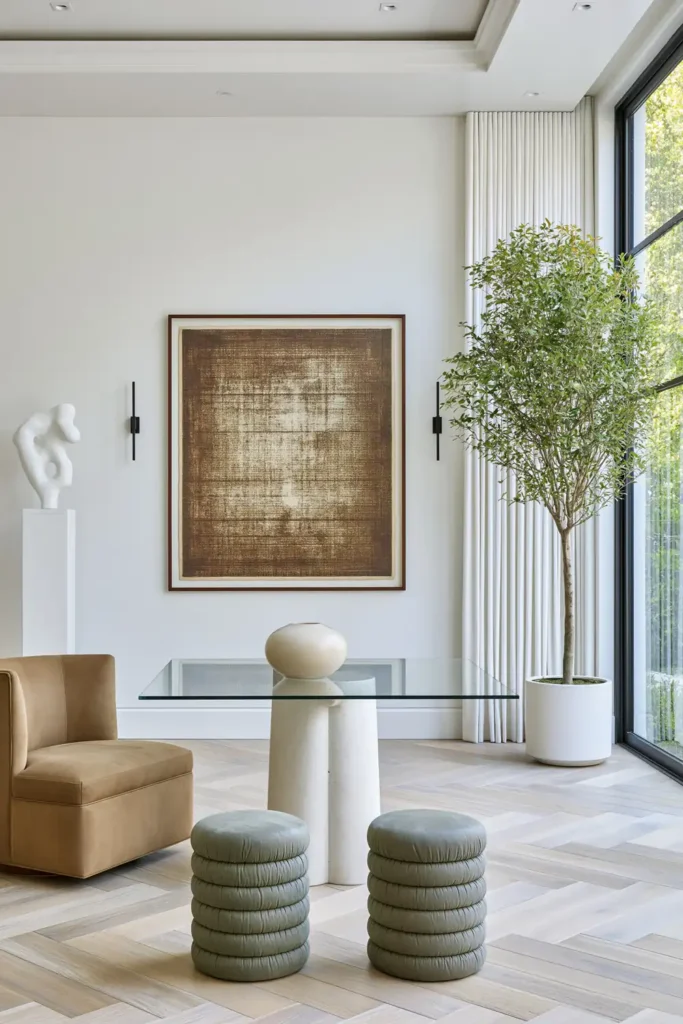
To keep the room from feeling too perfect, allow smaller details to vary. A vase, sculpture, or piece of dinnerware can add a little asymmetry while the main arrangement remains balanced.
Make the Room Feel Like Part of Your Home
The most welcoming formal dining rooms combine style with ease. A suitably chosen table, comfortable seating, considered lighting, and practical storage can make the room feel special without limiting it to rare occasions.
You do not need to use every idea at once. Start with the part of the room that currently feels least inviting, whether that is uncomfortable chairs, harsh lighting, bare walls, or a table that feels out of scale.
As you apply layers, choose materials and details that suit the way you actually live. A formal dining room becomes much more meaningful when it reflects your home, supports real gatherings, and gives people a reason to stay at the table a little longer.