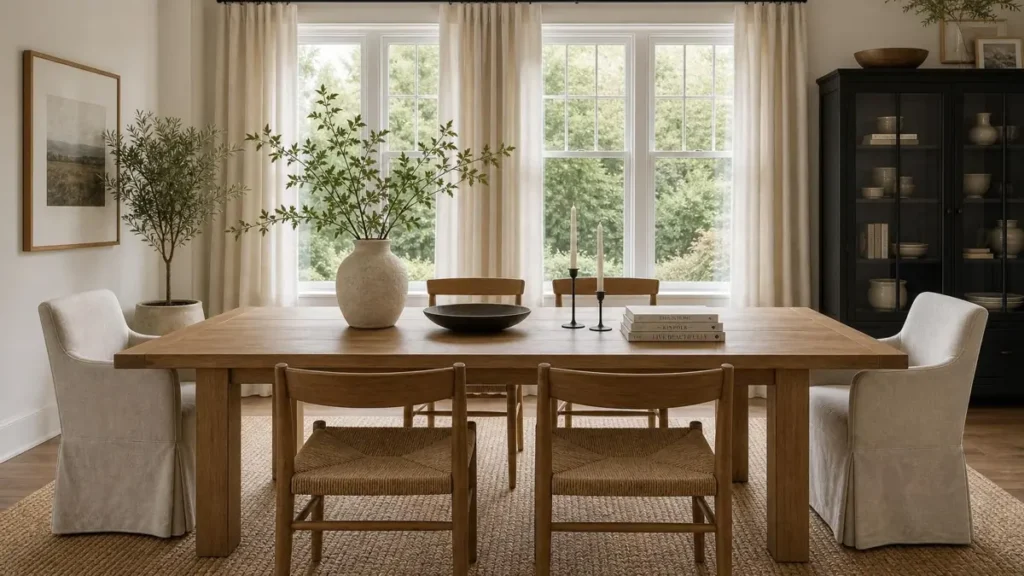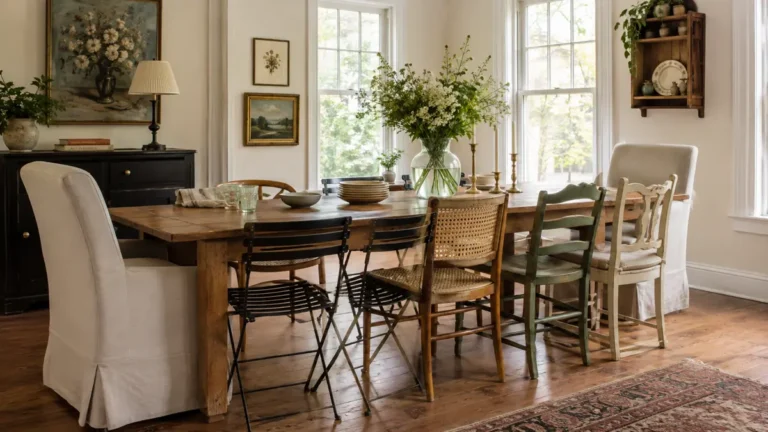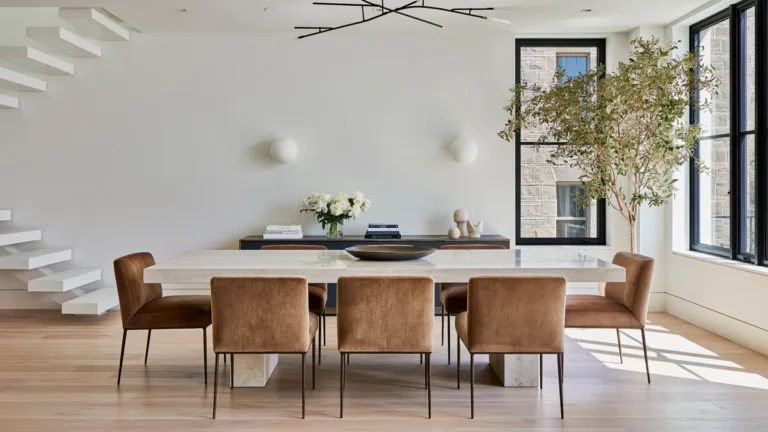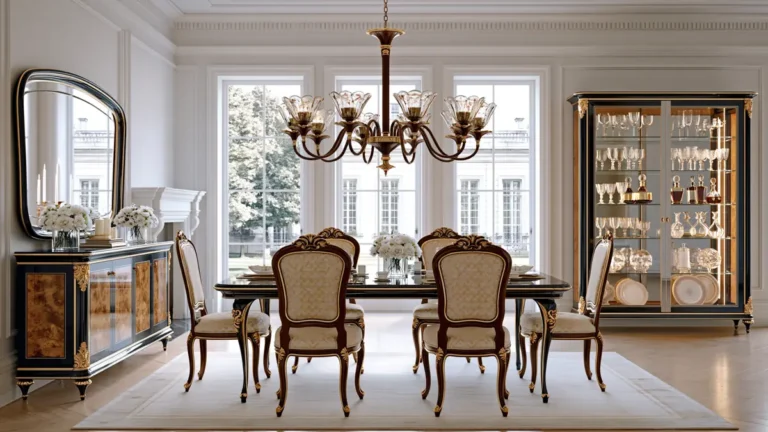

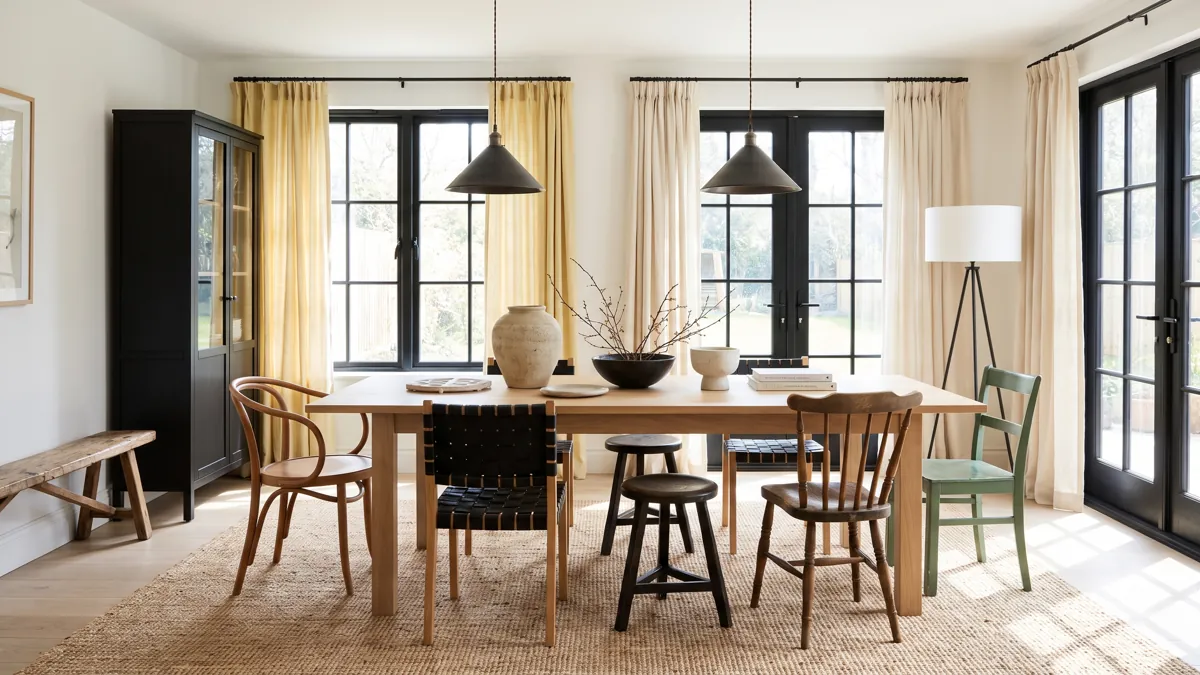
A dining table does not need to sit completely empty between meals. With a few carefully chosen pieces, it can become a relaxed center that makes the whole room feel more finished.
The most effective method is to keep the styling attractive without making the table feel crowded or difficult to clear. These ideas can be adjusted for any size or shape of dining table, whether you have a compact round table, a small square, or a long rectangular surface. Each suggestion can be scaled up or down so your table feels considered and welcoming, no matter what space you are working with. These ideas show how to style a dining table when not in use with seasonal elements, useful serving pieces, and decorative objects that still suit everyday life.
Style Your Dining Table with Seasonal Flowers and Vintage Vessels
Seasonal styling is one of the easiest ways to keep a dining table looking fresh throughout the year. Instead of changing everything, start with one large serving tray and use it as a base for a small collection of flowers, branches, and vintage vessels.
An ornate silver tray can give the arrangement a sense of structure, especially on a long or generously sized table. Place a vintage pitcher, a majolica vessel, or one of those charming paper-bag-style vases on the tray, then fill it with whatever feels appropriate for the season.
In spring, garden flowers and soft greenery can make the table feel light and welcoming. During autumn, dried stems, bare branches, and miniature pumpkins add coziness without requiring a formal centerpiece. The same vessels can stay in place while the natural elements change around them.
Try varying the height of the pieces rather than lining everything up evenly. A taller pitcher beside a lower vase creates a more natural arrangement, while the tray keeps the display from looking scattered.
Fill Bowls and Platters with Seasonal Fruit and Garden Pickings
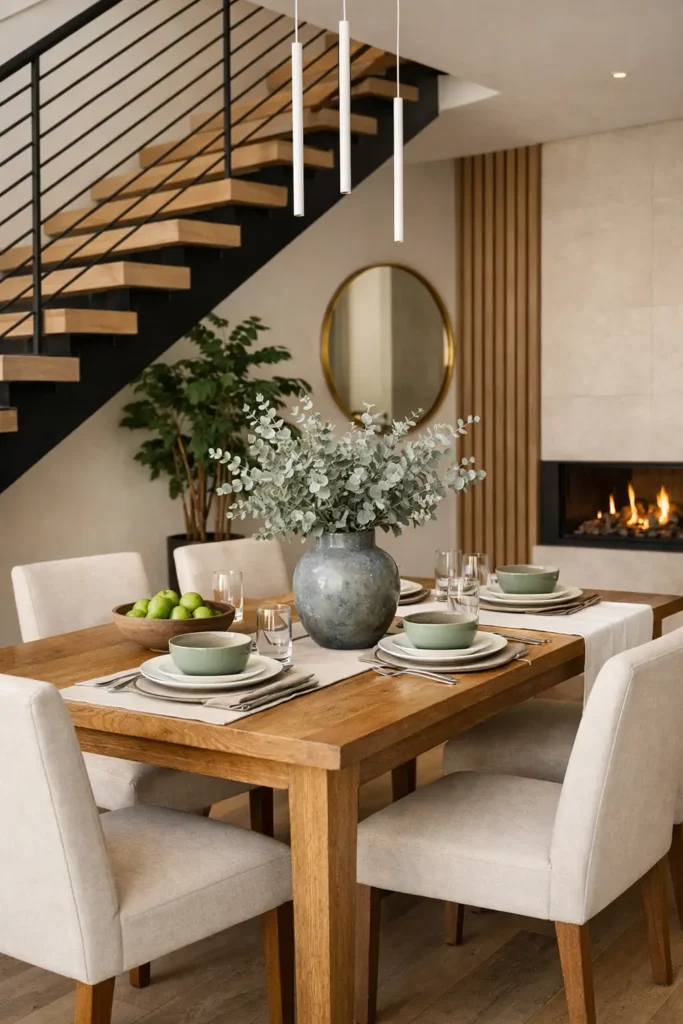
A bowl of fruit can be much more than a simple place to store produce. When arranged with intention, it becomes an easy dining table centerpiece that brings natural color into the room.
Choose a bowl, platter, or simple vase that suits the scale of your table. A wide platter filled with oranges creates a bright, generous look, while a deeper bowl of apples or pears feels more traditional and understated.
You can also combine fruit with unusual seasonal branches or garden flowers. A tall vase filled with loose branches adds height, while fruit placed nearby keeps the display grounded. This combination works especially well when you want the table to feel decorated without relying on lots of small accessories.
Keep the arrangement slightly relaxed rather than perfectly symmetrical. A few pears grouped loosely on a platter or branches leaning freely from a vase often look more inviting than a display that feels overly arranged.
Display Favorite Serveware as Everyday Dining Table Decor
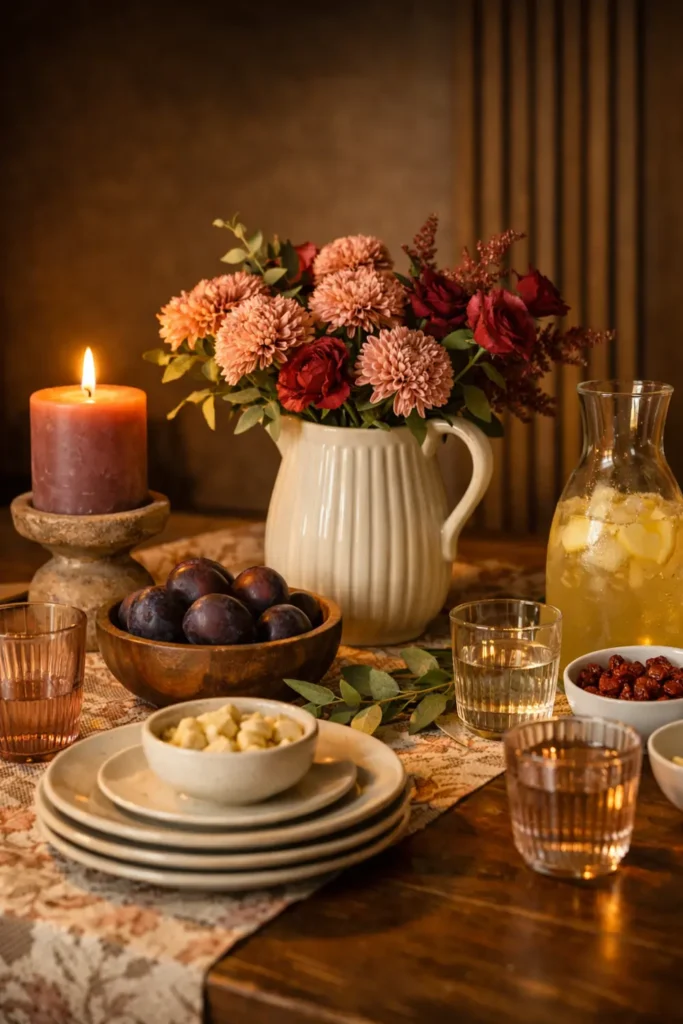
Serveware does not have to stay hidden in a cabinet until guests arrive. Favorite bowls, pitchers, platters, and dinnerware can become part of the room when they are displayed as a simple tabletop arrangement.
Start with one unique serving piece and build around it. A sculptural bowl or spherical centerpiece can sit in the middle of the table, with a small selection of coordinating pieces arranged nearby.
A complete serving set can also look striking when grouped together, especially when the shapes vary, but the finish or color feels consistent. The goal is not to set the table for a meal, but to show the pieces as decorative objects.
Avoid displaying too many items at once. Leaving open space around the arrangement helps each piece stand out and makes the table easier to use when needed. A small, thoughtful grouping usually feels more elegant than covering the entire surface.
If you have young children or pets, consider choosing unbreakable serveware, such as wooden or melamine bowls and platters, or arranging items that are sturdy and not easily tipped. Lower-profile displays can also help prevent accidents and make it easier for everyone in a busy household to use the table comfortably.
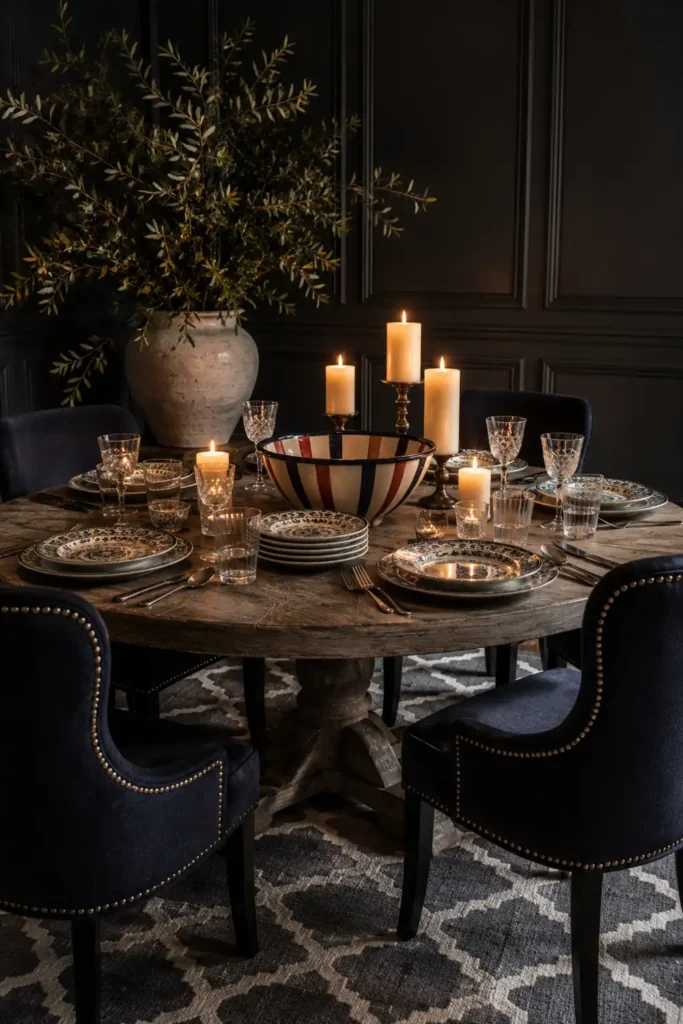
Add Just Baked Goods Under a Glass Cake Stand
Just baked items can make a dining table feel warm, lived-in, and connected to the kitchen. This works particularly well in an open-plan kitchen-diner or in a space where the dining table sits along a frequently used walkway.
Place bread, muffins, or a simple cake beneath a glass lid on a wooden cake stand. The combination of clear glass and natural wood appears practical while still adding visual interest.
A covered stand also keeps the arrangement neat. Instead of leaving food in packaging or on a plain plate, the glass dome turns it into part of the decoration while protecting it between servings.
Keep the rest of the table simple so the baked goods remain the focus. One cake stand in the center, or slightly off-center on a long table, is often enough to create an inviting everyday display.
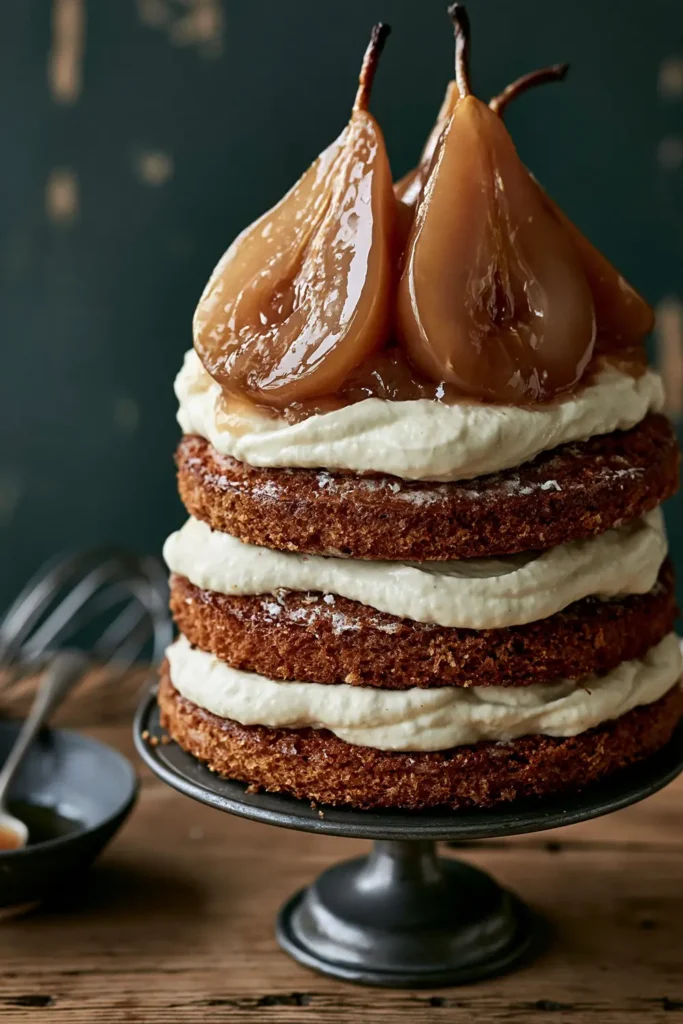
Create a Stylish Stack of Coffee Table Books
Coffee table books can work beautifully on a dining table, especially when the room already has a relaxed, collected look. Choose a small stack featuring subjects you genuinely enjoy, such as art, travel, food, or architecture.
Two or three books are usually enough. Arrange them with the largest book at the bottom, then place a smaller volume on top to create a neat, layered effect. The covers can also introduce color and pattern without requiring extra decorative objects.
For a more intentional display, position the stack slightly off-center rather than directly in the middle of the table. This retains the arrangement casual and leaves room for another low object, such as a bowl or small vase.
It also helps to rotate the top book occasionally. Changing the visible cover is a simple way to refresh the table without replacing the whole arrangement.
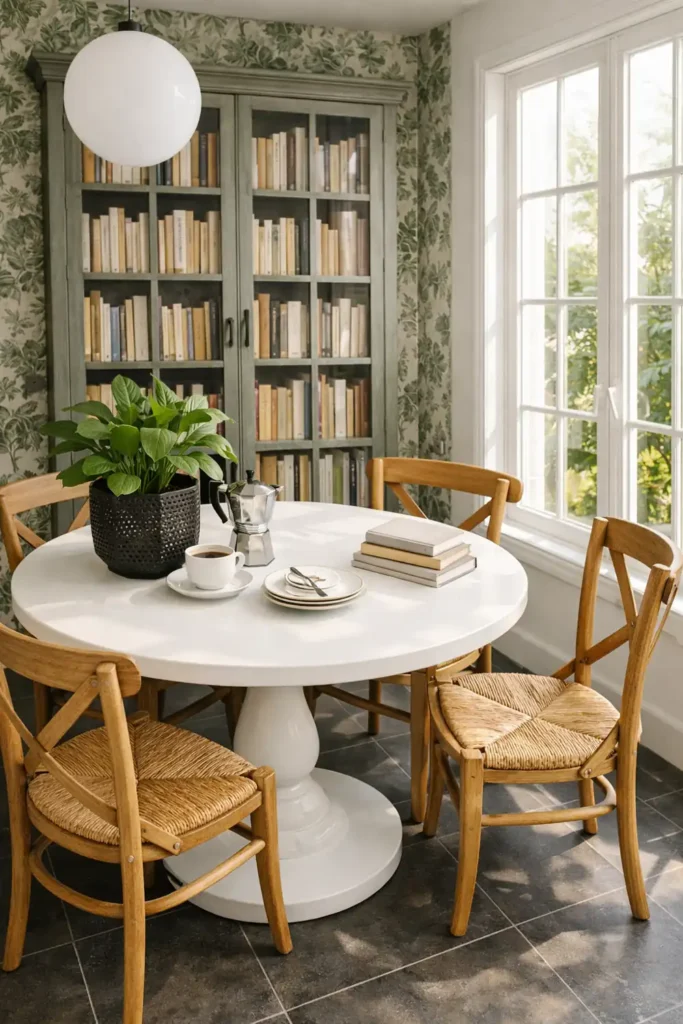
Use Sculptural Vases, Bowls, and Candlesticks for Visual Interest
Sculptural pieces are a good choice when you want the dining table to look decorated even without flowers or seasonal accents. Colored glass, metal objects, low bowls, and unusual vessels can all bring shape and character to the surface.
Start with one main object, such as an interesting pitcher, urn, or tall glass vase. Add one or two lower pieces around it, perhaps a shallow bowl, a metal box, or a long trough. The difference in height helps the arrangement feel balanced rather than flat.
Candlesticks can add another layer, even when the candles are not lit. A pair of slim candlesticks beside a rounded vase creates contrast, while a low grouping of bowls and sculptural objects works well when you want to preserve sightlines across the table.
Natural elements can soften harder materials. A few branches in a tall vase, succulents arranged in a trough, or moss plants in a low container can make metal and glass pieces feel more relaxed. Keep the grouping edited so each shape remains easy to see.
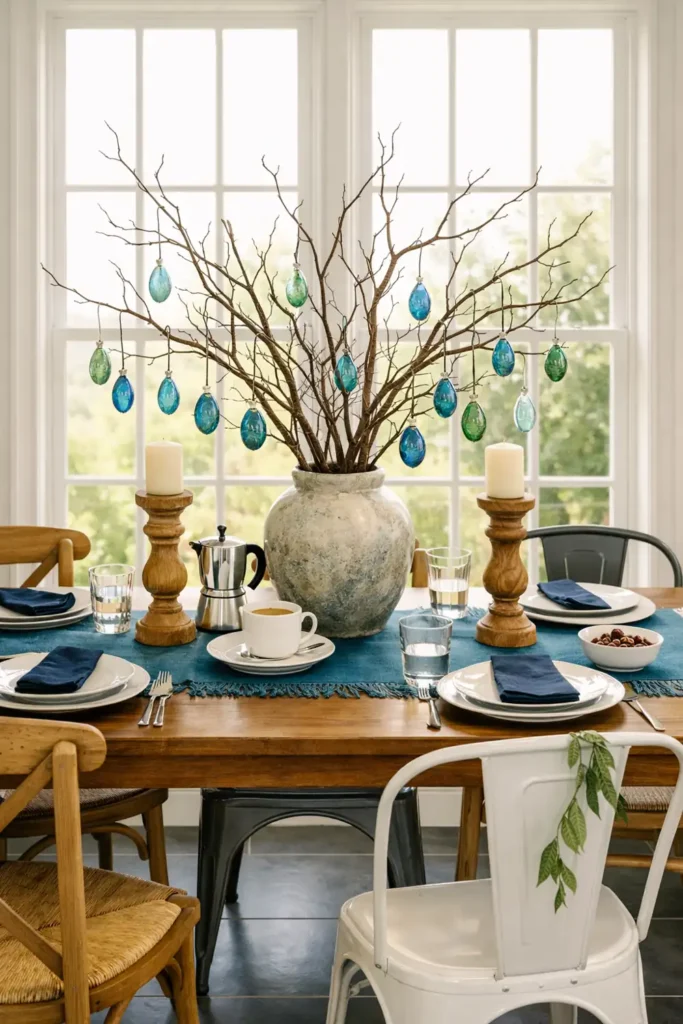
Make the Table Feel Finished, Not Overfilled
Learning how to style a dining table when not in use is mostly about choosing a few pieces that suit your home and your daily routine. The most successful arrangements feel intentional, but they are still easy to move when it is time to eat.
You might prefer seasonal flowers in vintage pitchers, a plain bowl of fruit, favorite serveware, or a small group of sculptural objects. There is no need to use every idea at once.
Begin with one arrangement that seems natural in the room, then adjust the height, spacing, and number of objects until the table looks balanced. A little open space will help the display feel calm, practical, and welcoming. Consider including personal or sentimental objects in your arrangement, such as a family heirloom, a handmade vase, or a favorite travel souvenir, to make the table exclusively yours and add a deeper sense of meaning to your decor.