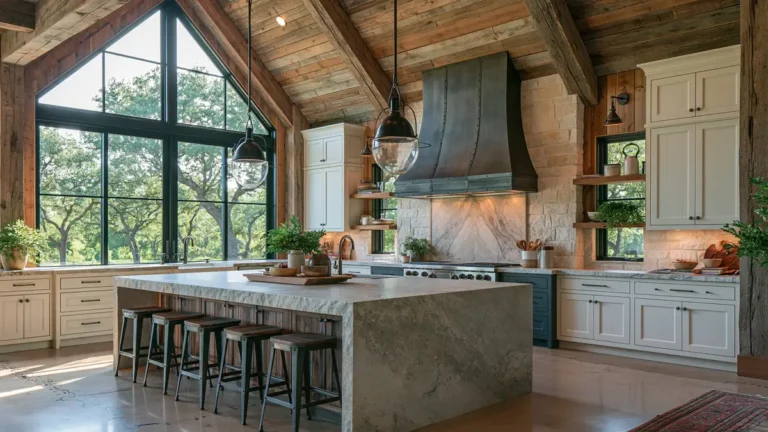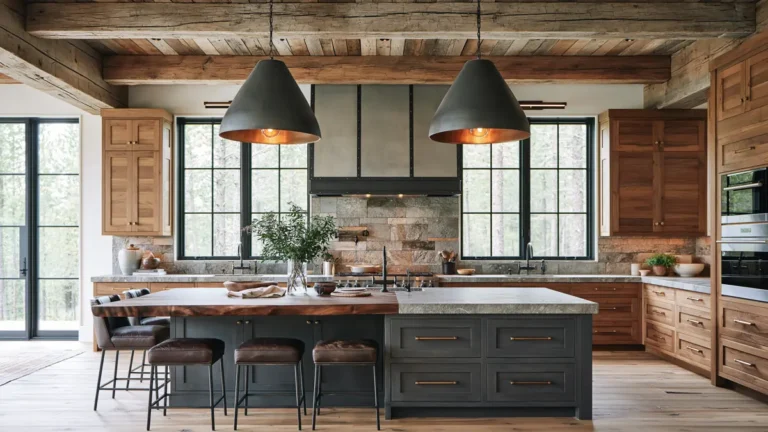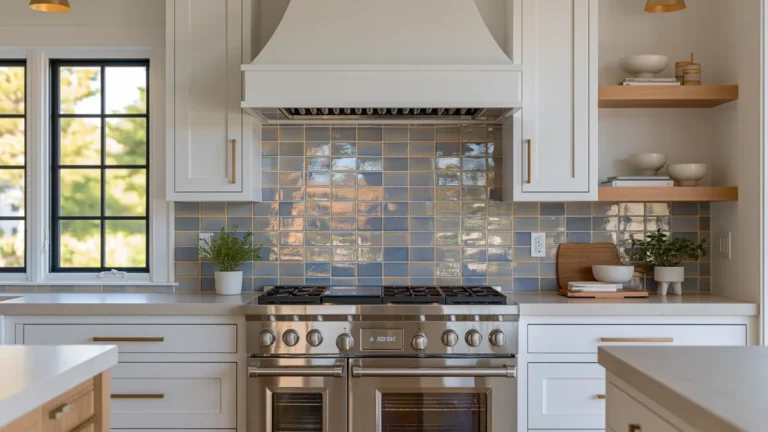

A blue and white kitchen remodel can feel fresh and classic at the same time, especially when you bring in warm wood, soft brass, and a few carefully chosen decorative details. The combination gives you plenty of contrast without making the room feel too busy. If you are not sure where to start, try updating just one element, such as adding a blue accent with a new vase or painting a small cabinet, or swapping out hardware in a rich gold or brass finish. Focusing on a single, simple change can help you make the first move with confidence.
What I like most about this look is that the blue does not have to cover every cabinet or wall. A single statement piece, crisp white cabinetry, natural wood, and layered finishes can create the whole effect while keeping the kitchen bright and welcoming.
Blue and Gold Statement Range for a Striking Focal Point
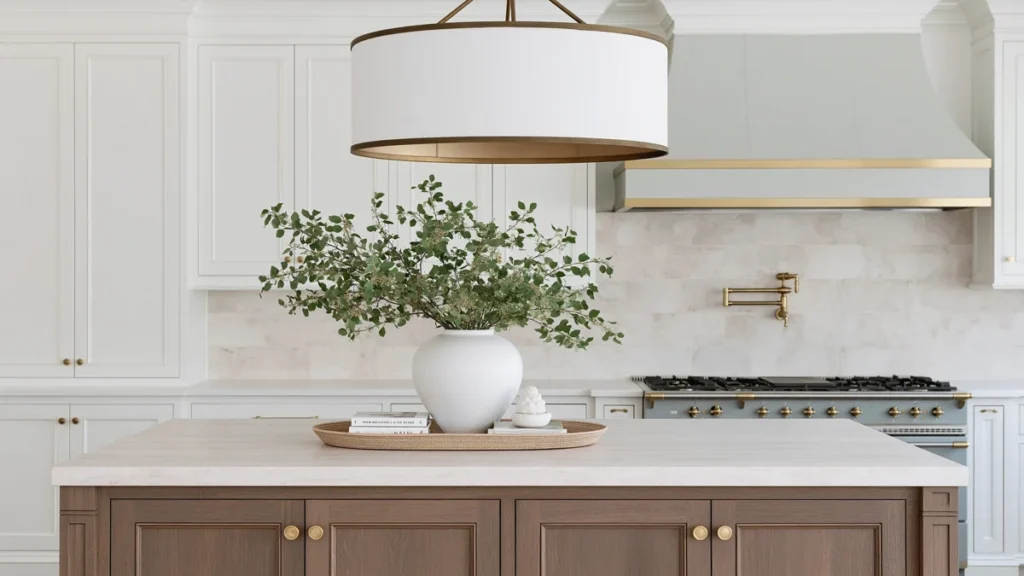
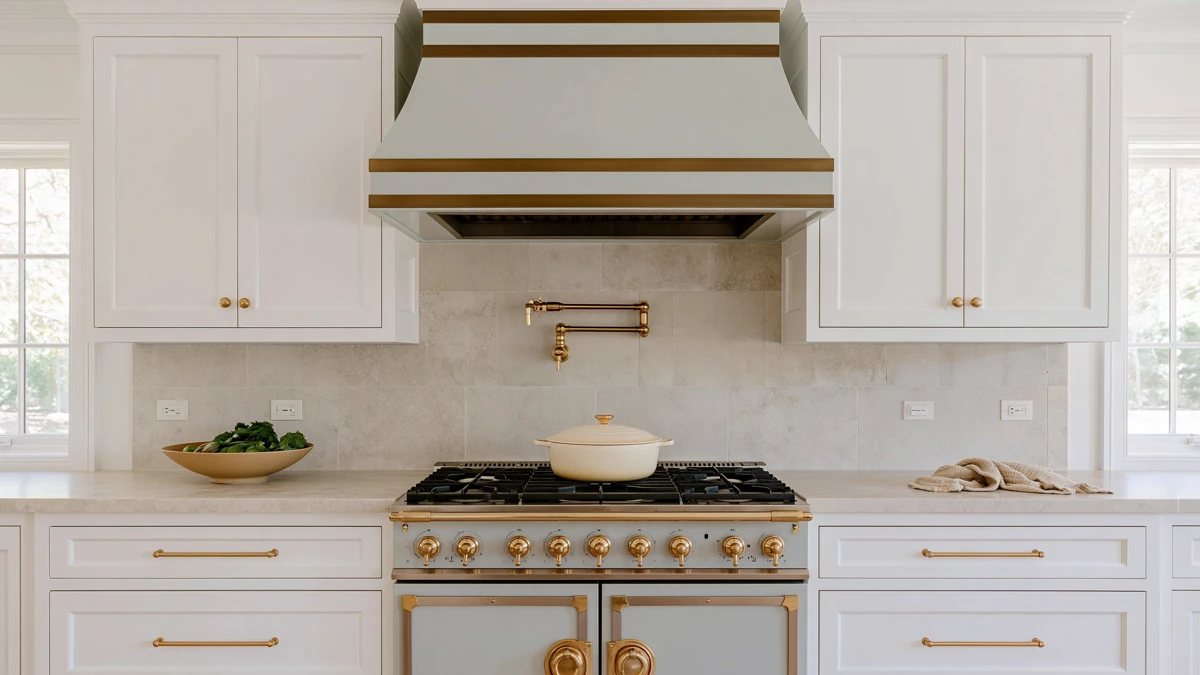
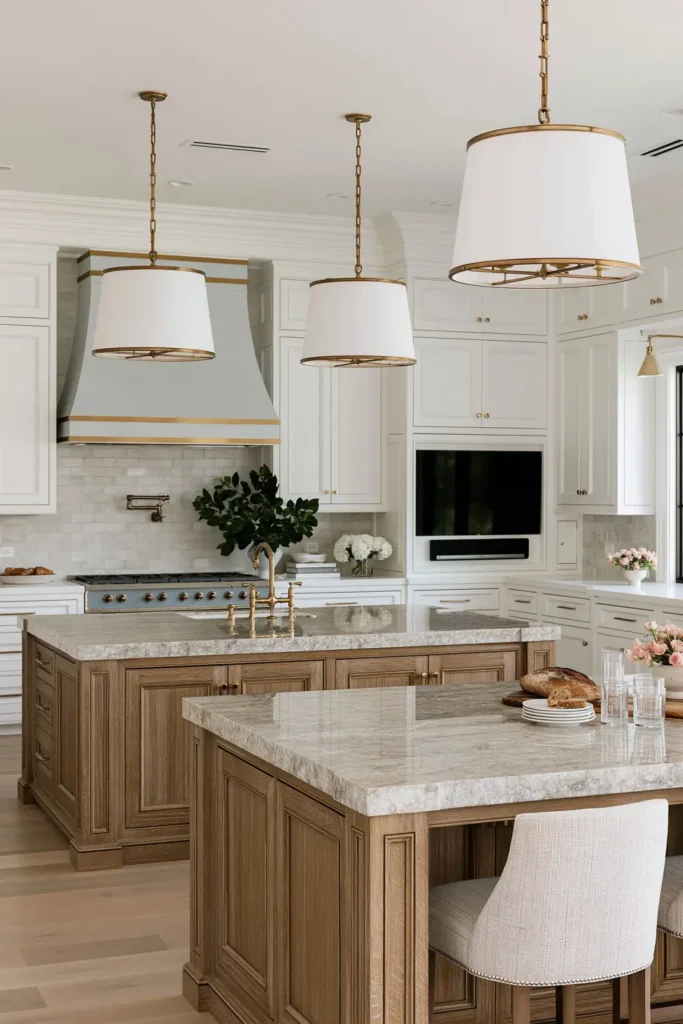
A blue-gray range can become the visual anchor of the kitchen without crowding the rest of the space. Here, the La Cornue range brings in that deeper color as the surrounding white finishes keep the room feeling light.
The gold and brass hardware adds warmth against the cooler blue-gray finish. That contrast is especially useful in a blue and white kitchen because it stops the palette from feeling too cold or stark.
A custom range hood helps complete the focal area and gives the cooking zone a more built-in, intentional appearance. When one feature carries this much visual weight, the rest of the kitchen can stay simpler and still feel finished.
This is a practical way to use blue if you love the color but do not want to commit to an entire wall of blue cabinetry. One strong focal point can do a lot of the work. You might also consider other blue statement features, such as a bold kitchen island or a striking blue backsplash, to create a similar effect. These options function especially well if your layout or individual style calls for a different kind of focal point, making it easy to introduce blue in a way that best fits your space.
Bright White Cabinetry for a Blue and White Kitchen Remodel
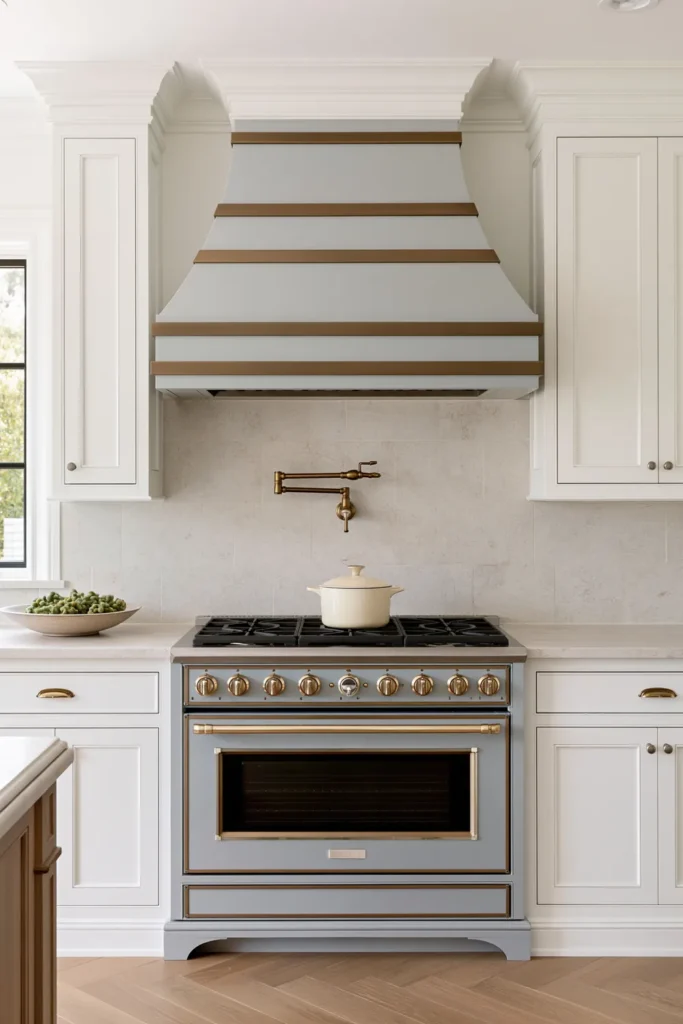
White cabinetry creates the clean background that makes blue accents stand out. Custom cabinets paired with white painted walls also help bounce light around the room, which is especially helpful in a large kitchen with several substantial features.
Keeping both the walls and cabinetry bright allows the stronger materials and colors to become the focus. Instead of competing with the blue-gray range, warm wood islands, or metallic fixtures, the white surfaces give each of those components room to breathe.
For a blue and white kitchen remodel, this balance remains important. Too many dark finishes can make the room feel heavy, while too much white can make it feel flat. Using white as the main canvas and introducing blue through selected focal pieces gives you a more layered result.
The clean cabinetry also makes it easier to update smaller accents later. Simple changes such as swapping out barstool cushions, adding a new vase, switching up tea towels, or displaying different countertop accessories can completely refresh the feel of your kitchen without needing to rethink the entire space. Even small updates, such as adding new artwork or changing out placemats, can make the room feel new with very little effort.
Dual Oak Islands for Separate Prep and Seating Zones
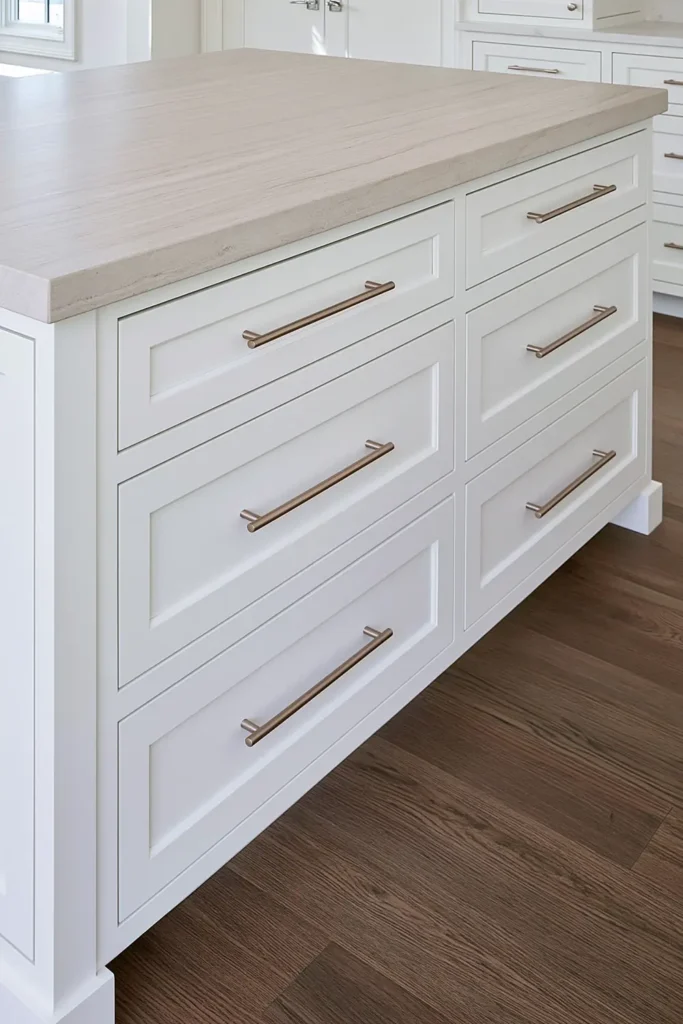
Two islands can work well when each one has a clear purpose. In this kitchen, one island is used for prep work while the second is dedicated to seating, creating separate zones without dividing the room with walls.
The white-sewn oak brings a natural wood tone into the blue and white palette. That heat helps soften the crisp cabinetry and balances the cooler blue-gray elements elsewhere in the kitchen.
The seating island accommodates eight counter stools, which makes it useful for everyday meals, homework, conversation, or having guests nearby while someone cooks. Keeping the seating function separate from the main work island also means prep space does not have to compete with place settings or stools.
A television adds another practical layer to the seating area, strengthening the idea that this part of the kitchen is meant for gathering as much as dining.
Visually, the oak islands also give the eye a break from painted surfaces. In a kitchen with a lot of white cabinetry, natural wood can keep the room from feeling overly polished or one-dimensional.
Taj Mahal Quartzite Countertops with a Full-Splash Backsplash
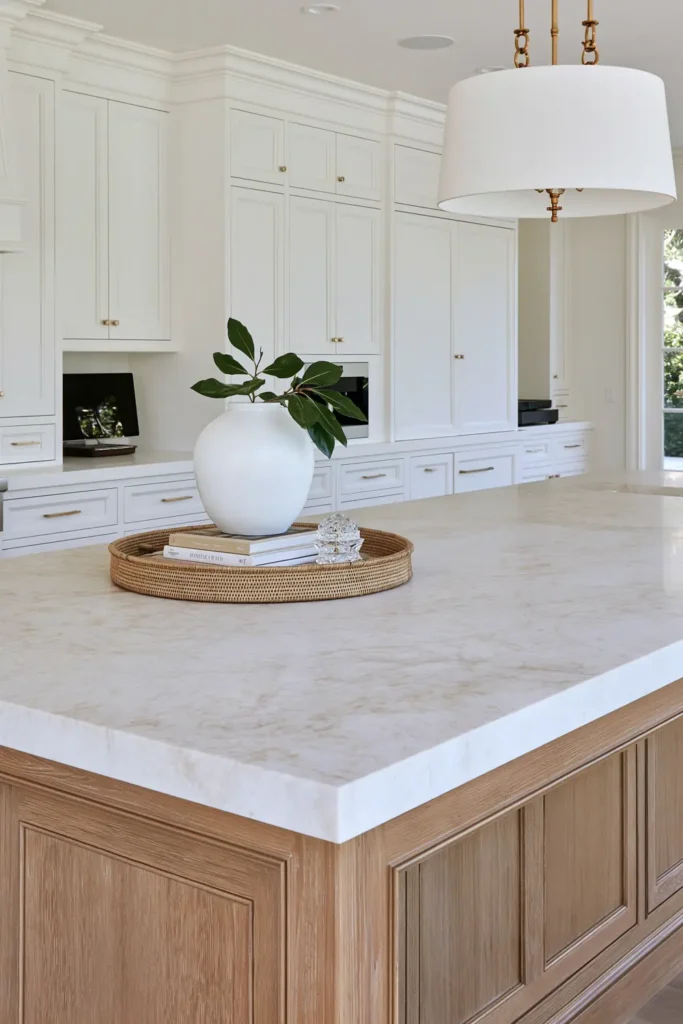
Taj Mahal quartzite provides subtle movement and natural-looking variation without distracting from the blue and white color scheme. Its softer tones work especially well alongside white cabinetry, oak, and warm metallic finishes.
Using the same quartzite on the countertops and carrying it up the wall as a full backsplash creates a more continuous look. Instead of breaking the space into several different materials, the surface flows from the counter vertically, which can make the kitchen feel calmer and more integrated.
The mitered edge gives the countertops a thicker, more substantial appearance. That detail works well in a large kitchen because it gives the stone enough visual presence to stand up to oversized islands and tailored cabinetry. For smaller kitchens, a mitered edge can still add a hint of luxury, but you may want to choose a more subtle thickness that complements your proportions without making the counters feel heavy. This procedure allows you to achieve a similar continuous stone look even in a compact space.
A full-splash application is also a good choice when you want the material itself to become part of the decor. Rather than relying on a patterned tile backsplash, the natural veining becomes the visual interest.
Brass and Gold Fixtures for Warm Metallic Contrast
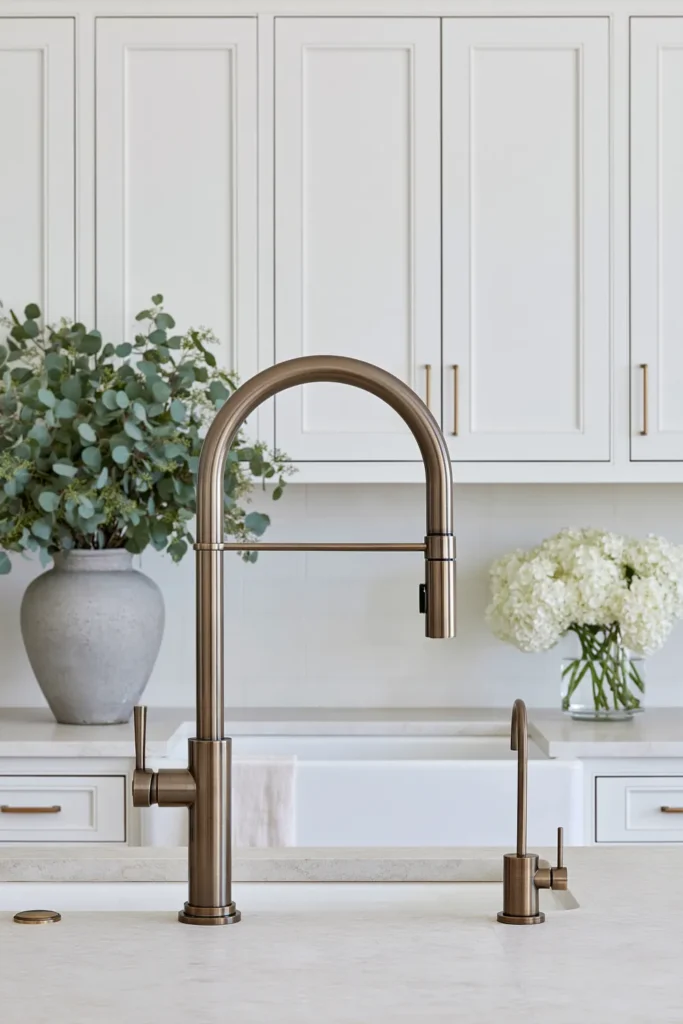
Brass and gold finishes are an easy way to warm up a blue and white kitchen without adding another major color. In this space, the Brizo touchless faucet and matching pot filler bring a polished metallic detail into the working areas of the kitchen.
That warm finish is especially effective against white cabinetry and pale stone. It adds enough contrast to catch the eye, but it still feels softer than a darker metal might.
Using the same general finish on more than one fixture also helps the kitchen feel coordinated. The faucet and pot filler relate to each other visually, which makes the metallic accents feel intentional rather than scattered.
If you are working with a cool blue-and-white palette, this kind of warm hardware can make the whole room feel more inviting while still keeping the look clean.
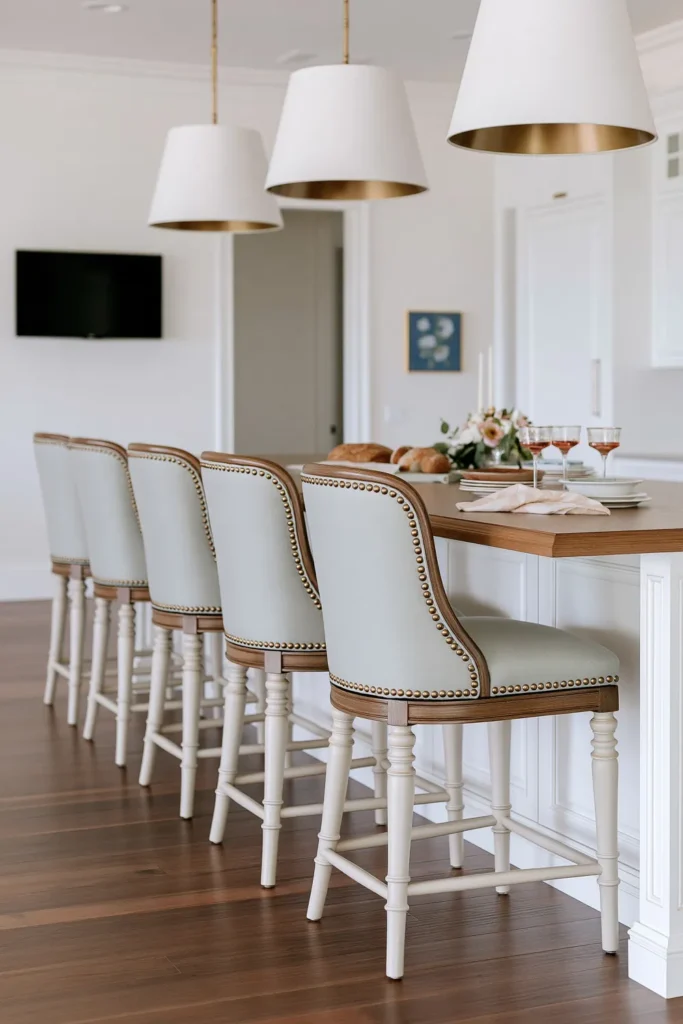
Custom Upholstered Counter Stools with Gold Details
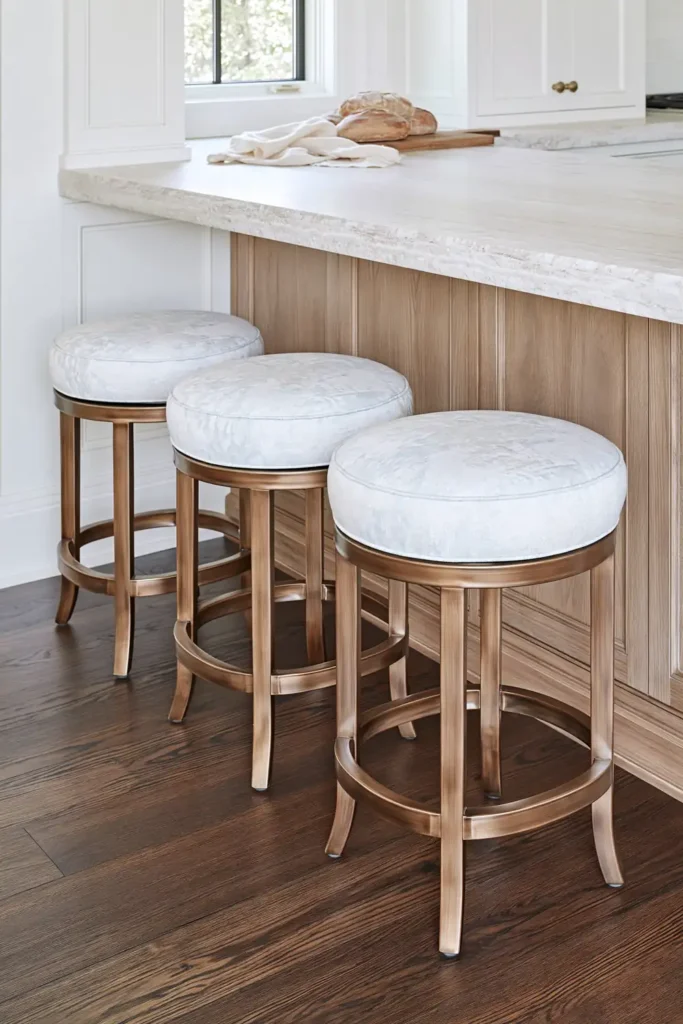
Counter stools can do more than provide seating. They are also a good place to introduce fabric, texture, and another layer of color without changing any permanent part of the kitchen.
The Hickory White stools with backs are upholstered in custom fabrics, while the West Elm backless stools add a slightly different profile. Using Sunbrella and Romo fabrics gives the seating a tailored appearance while still keeping it practical for everyday use.
Gold-finished legs and footrests connect the stools to the other metallic details in the room. That repeated finish helps tie the seating into the larger design instead of making it feel like an afterthought.
Custom recovered cushions are especially useful if you want the stools to work with a specific palette. In a blue and white kitchen remodel, fabric gives you another way to repeat blue tones or soften the contrast between wood, stone, and painted cabinetry.
Oversized Drum Pendants for Soft Kitchen Lighting
Large drum pendants can make a strong statement without looking overly decorative. The oversized Visual Comfort fixtures use fabric shades, giving the ceiling a softer look than exposed bulbs or highly detailed metal fixtures.
Because the pendants are so substantial, they help define the island area from above. In a kitchen with large islands and tall cabinetry, smaller fixtures could easily feel lost.
The fabric shades also diffuse the light, creating a gentler glow above the work and seating areas. That softer light can make a large kitchen feel more comfortable in the evening, especially when the brighter task lighting is not needed.
Their simple shape retains the focus on scale rather than ornament. That makes them a good fit for a kitchen already carrying several strong materials, including quartzite, oak, blue-gray metal, and brass.
Coastal Wood and Blue Accents for Layered Kitchen Styling
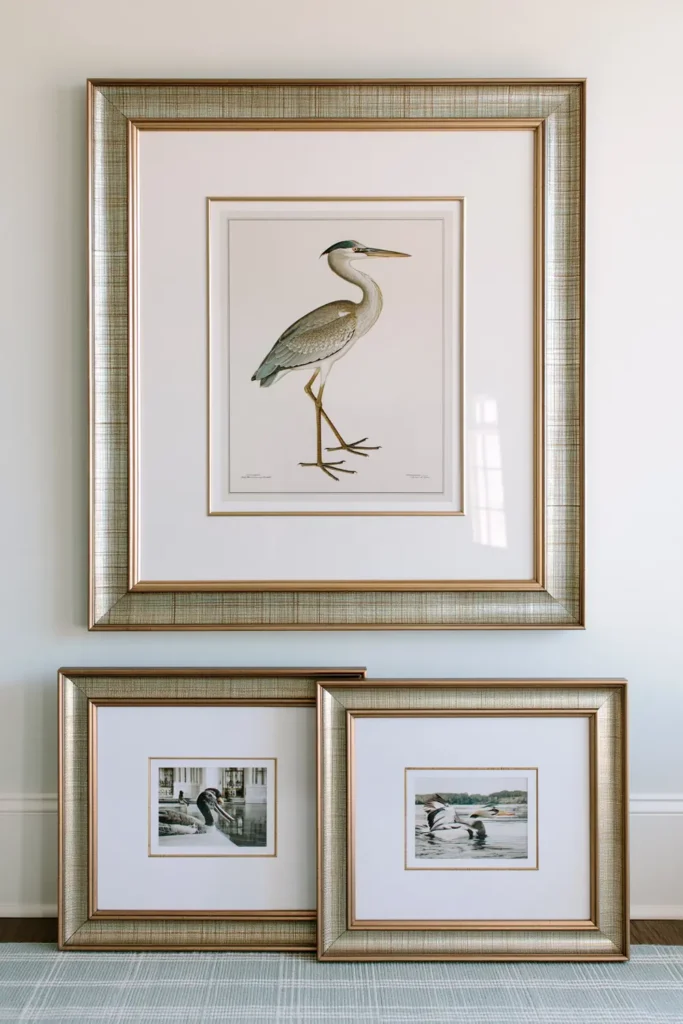
Small decorative accents are where the kitchen can start to feel more personal. Handcrafted ceramic vases, an acacia wood cutting board, a whitewashed scallop tray, and blue jute cotton picture frames add texture without competing with the larger design features.
The mix of materials matters here. Smooth ceramic, warm wood, whitewashed finishes, and woven blue fabric prevent the room from feeling too uniform.
These pieces additionally reinforce the blue and white palette in a quieter way. Instead of introducing another large blue feature, the color appears in smaller details that can be moved or changed over time.
Wood accessories are especially useful for softening a kitchen with a lot of white surfaces and stone. Even something as simple as a cutting board can bring a warmer, more relaxed feeling to the counter.
Blue Chinoiserie Florals for a Classic Finishing Touch
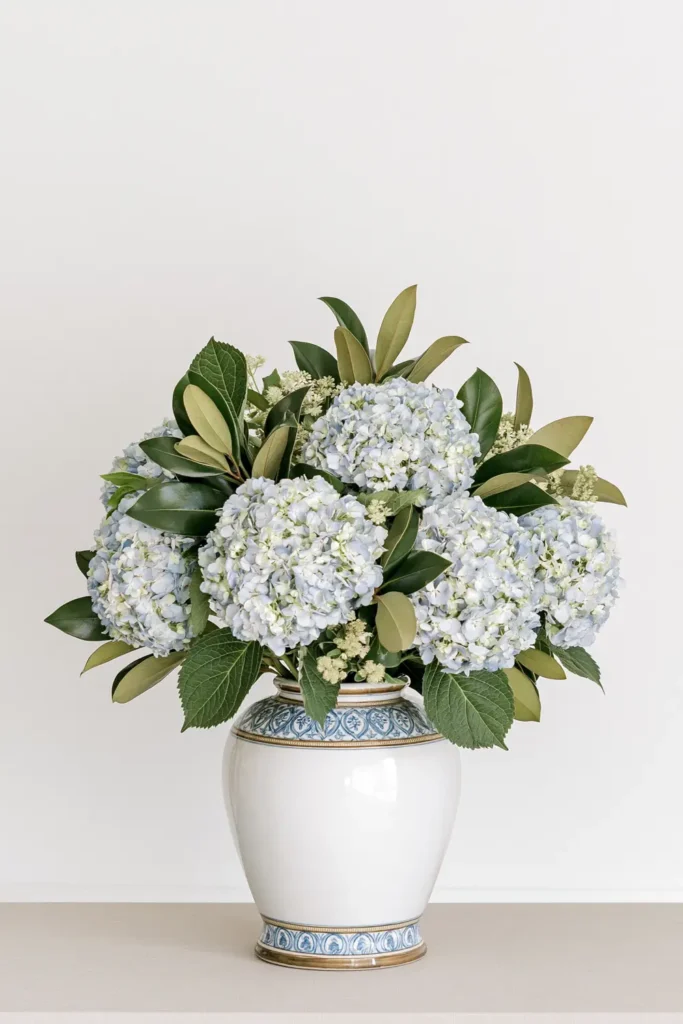
A blue Chinoiserie floral arrangement is a simple way to bring the palette together at the end. The ceramic container, hydrangeas, and blueberry branches add a decorative accent that feels connected to the rest of the kitchen without competing with the larger architectural features.
The blue-and-white container echoes the kitchen’s main color story, while the florals introduce a softer, more organic shape among all the cabinetry, stone, and metal finishes.
This kind of accent works especially well on an island or open stretch of countertop where it can be seen without getting in the way of daily tasks. It adds color and height while still keeping the surface practical.
Because the arrangement is relatively small compared with the permanent finishes, it is also easy to change with the seasons. You can retain the same blue-and-white foundation and simply adjust the floral element when you want a different mood.
Bringing the Blue and White Kitchen Remodel Together
What makes this blue and white kitchen remodel feel balanced is the way each material has a clear role. The white cabinetry keeps everything bright, the blue-gray range gives the room a focal point, and the oak islands bring in warmth and texture.
Quartzite surfaces, brass fixtures, padded stools, and oversized drum pendants add another layer without making the kitchen feel overworked. The smaller coastal accents and Chinoiserie florals then finish the space in a style that feels collected rather than overly styled.
You do not need to use every idea at once to create the same effect in your own home. Even choosing two or three elements, such as white cabinetry, one strong blue feature, and warm metallic accents, can create a similar sense of contrast and balance. For a more cost-effective update, consider painting your existing cabinets white, adding a fresh coat of blue paint to just one set of cabinets or an island, or changing out old hardware for affordable gold or brass finishes. Swapping in new light fixtures or updating barstools with new seat cushions are smaller projects that can also refresh the look of your kitchen without a full remodel.
The best place to start is with the feature you already love most, then build around it with finishes and details that make the room feel comfortable for the way you actually use it.