
You can spend a lot of money decorating your home and still feel like something isn’t quite right. Maybe the living room looks cluttered, the furniture feels too coordinated, or the whole space just doesn’t have the warm, finished look you imagined.
The surprising thing is that creating a beautiful home isn’t always about buying more expensive furniture or accessories. Sometimes, it’s the small decorating decisions that make the biggest difference.
Many of the decorating mistakes that make your home look cheap come down to proportion, balance, lighting, and how different pieces work together. A few thoughtful changes can make an ordinary room feel much more polished without demanding a complete makeover.
Here are 10 common decorating mistakes worth avoiding, along with simple ways to fix them and make your home feel more personal, comfortable, and put together. Remember, even minor changes can make a big difference in how your home feels, so you don’t have to deal with everything at once to see real progress.
1. Too Much Decor Cluttering Mantels, Shelves, and Tables
It’s easy to keep adding decorative pieces to a room, especially when you find things you genuinely love. A candle holder here, a little vase there, a few framed photos on the mantel, and before long, every available surface is filled.
The problem isn’t necessarily the decorations themselves. It’s that too many small objects competing for attention can cause a room to feel busy and disorganized, even when everything is carefully arranged.
One of the easiest ways to create a more polished look is to give your favorite pieces a little breathing room.
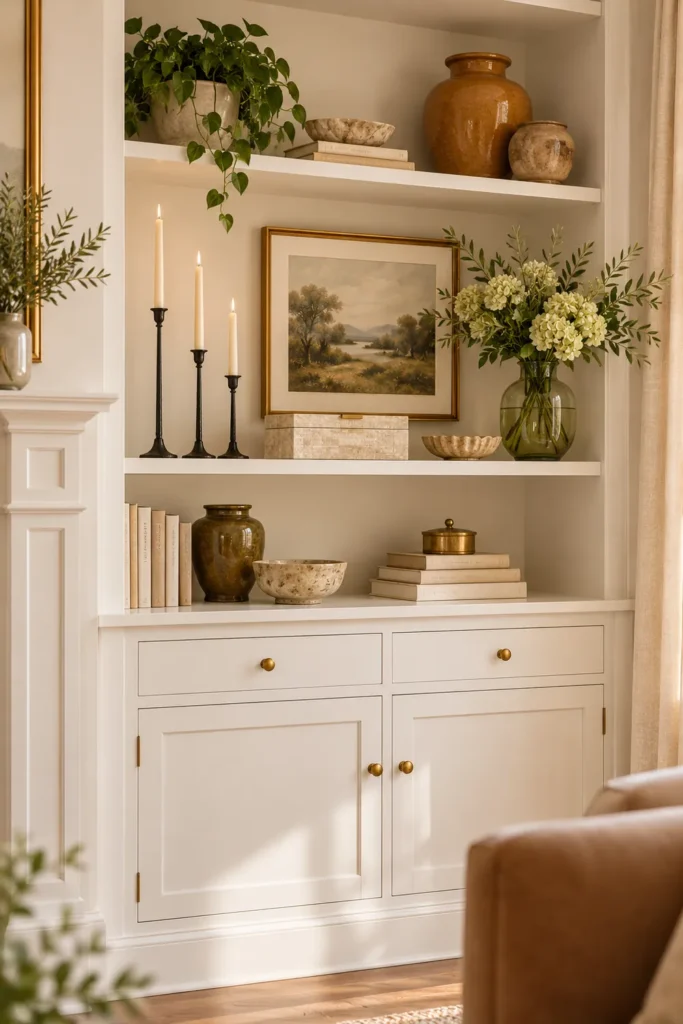
Start with your fireplace mantel, bookshelf, or console table. Remove everything, then bring back the items you love most. Instead of spreading a dozen small accessories across the surface, try grouping a few pieces with different heights and textures.
For example, a pair of iron candle holders beside a simple decorative object can feel more intentional than several unrelated accessories lined up together.
Storage can also make a huge difference. Rattan boxes are wonderful for hiding everyday clutter, as they add a warm, natural texture. On cabinets or console tables, small details like brass drawer pulls can provide character without adding more objects to the surface.
The same principle applies to sofas. Instead of piling on countless throw pillows, choose a few that are properly scaled to the furniture and complement the room’s colors.
You don’t have to embrace extreme minimalism to make your home look beautiful. The goal is simply to let your favorite pieces stand out rather than compete with everything around them.
2. Matching Furniture Sets That Make Rooms Look Generic
Buying a matching furniture set can seem like the safest decorating decision. Everything coordinates, the colors work together, and you don’t have to spend time figuring out which pieces belong in the same room.
But when every piece has the same finish, shape, and style, a room can end up looking more like a furniture showroom than a home.
A space usually feels more interesting when the furniture looks thoughtfully collected rather than purchased as one complete package.
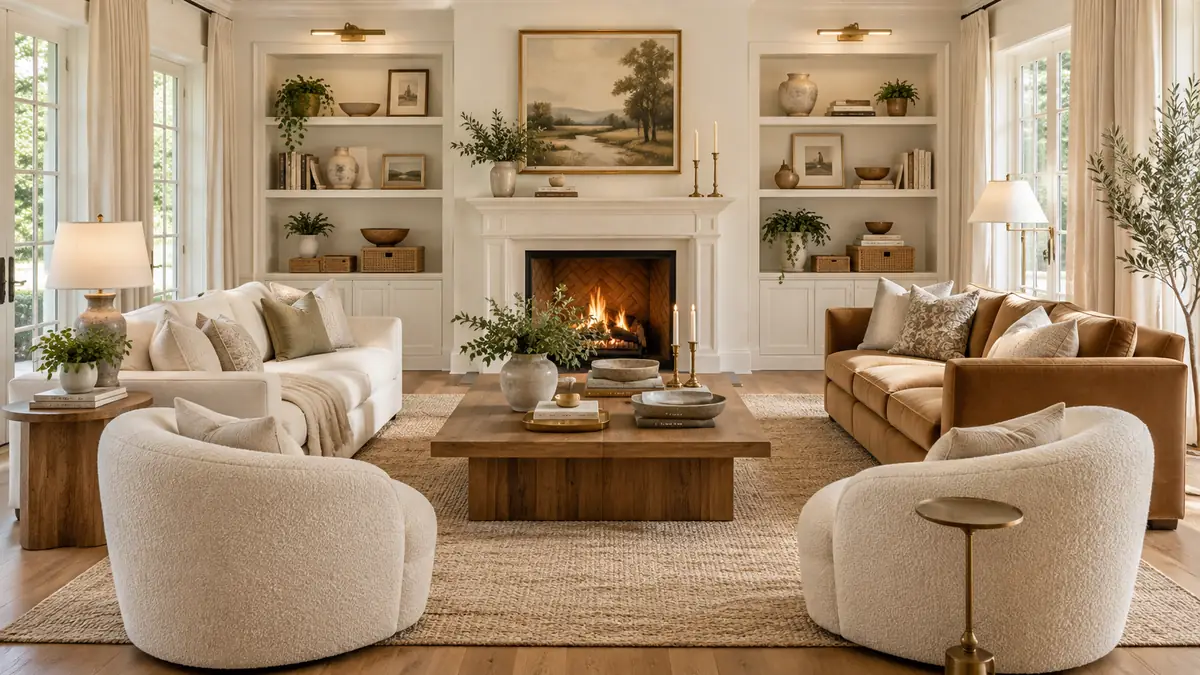
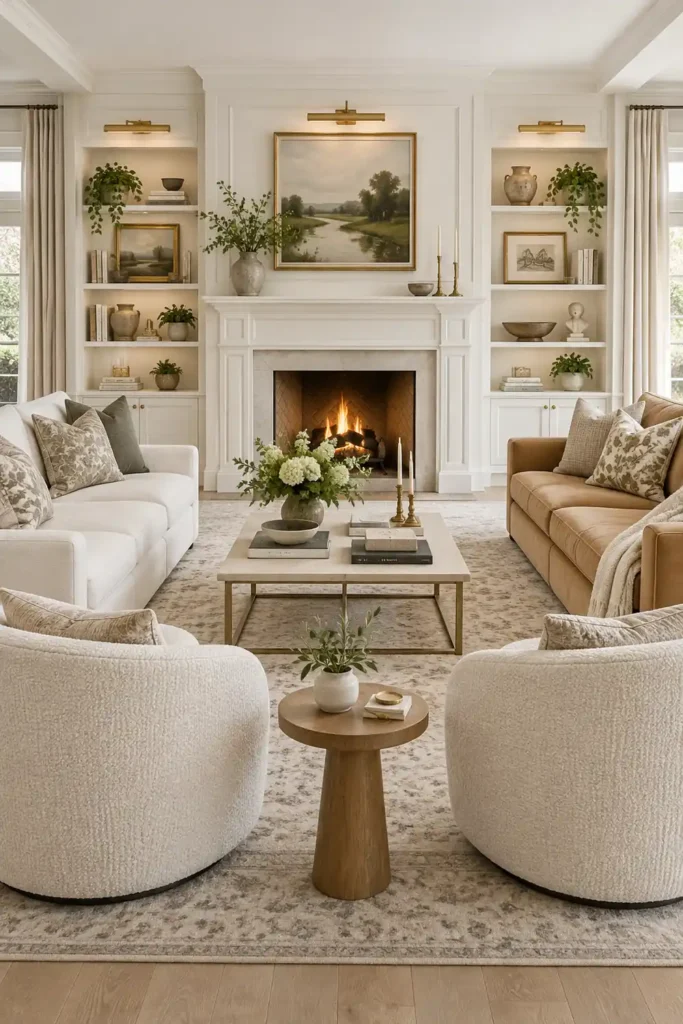
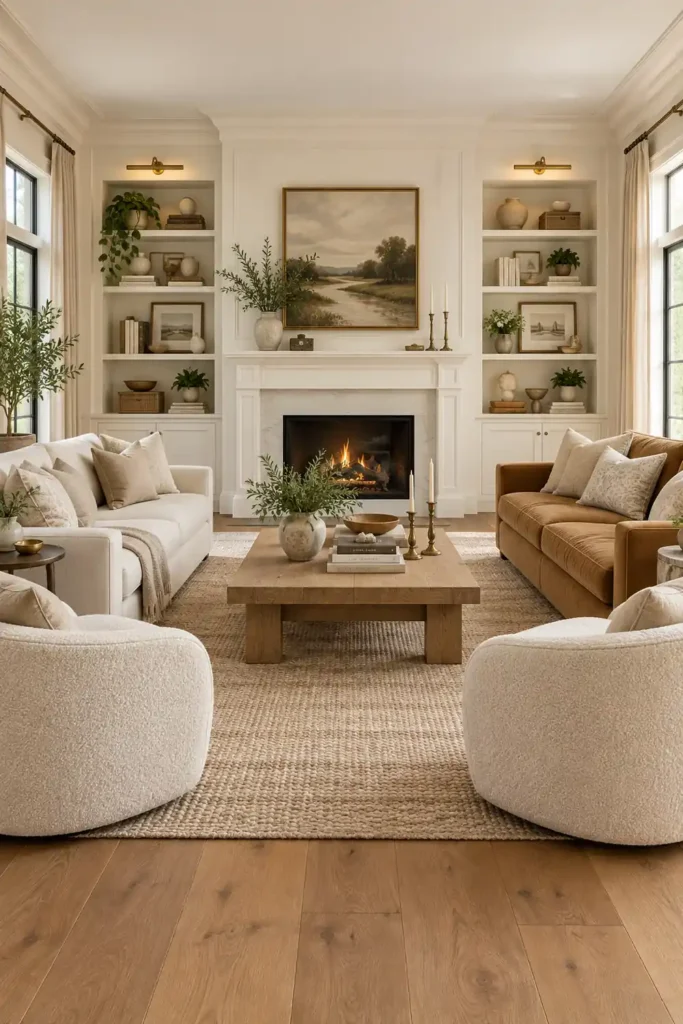
In the living room, for example, you might pair a warm camel velvet sofa with white boucle accent chairs. The contrast between the smooth velvet and textured boucle adds visual interest, while the neutral colors keep everything feeling connected.
Side tables don’t have to match, either. A wooden table beside one chair and a brass accent table near the sofa can work beautifully together. The different materials give the room a more relaxed, layered appearance.
This approach works just as well in bedrooms.
If you have a cane bed, consider pairing it with simple painted nightstands rather than automatically choosing matching wooden pieces. An upholstered bed can look lovely with contrasting black or white nightstands, especially when soft bedding, a quilt, and a knit blanket bring the arrangement together.
Even dining rooms can benefit from a little variation. A wooden dining table paired with chairs in a complementary but different finish can feel more inviting than a perfectly identical set.
The important thing is to create some connection between the pieces. Repeating a color, wood tone, or metal finish helps different furniture styles feel intentional.
You don’t need to replace an entire matching set if you already own one. Sometimes, switching out the side tables, introducing a different accent chair, or adding a textured rug is enough to make the room feel more individual. Another way to create a space which truly feels like your own is to mix in meaningful or sentimental pieces, such as a family heirloom lamp, artwork from a favorite trip, or a treasured gift. These unique touches help blend your unique story into the room and add character that a coordinated set can’t provide.
3. Overly Themed Rooms That Feel More Staged Than Stylish
Decorating around a particular style can be a wonderful way to give your home personality. Coastal bedrooms, rustic living rooms, and vintage-inspired spaces can all feel warm and beautiful when they’re carefully designed.
The trouble starts when every decorative choice follows the theme too literally.
Imagine a coastal room filled with nautical signs, seashell decorations, anchor patterns, and beach-themed accessories on nearly every surface. Instead of feeling relaxed and breezy, the room may start to resemble a themed vacation rental.
A more timeless approach is to suggest the design through materials, textures, and subtle details rather than making every object announce the theme.
For a coastal-inspired bedroom, start with soft cotton bedding, relaxed linen fabrics, and a gentle color palette. A small piece of driftwood or a simple decorative storage box can bring in a natural seaside feeling without dominating the space.
You could also introduce a little greenery to soften the room and make it feel fresh.
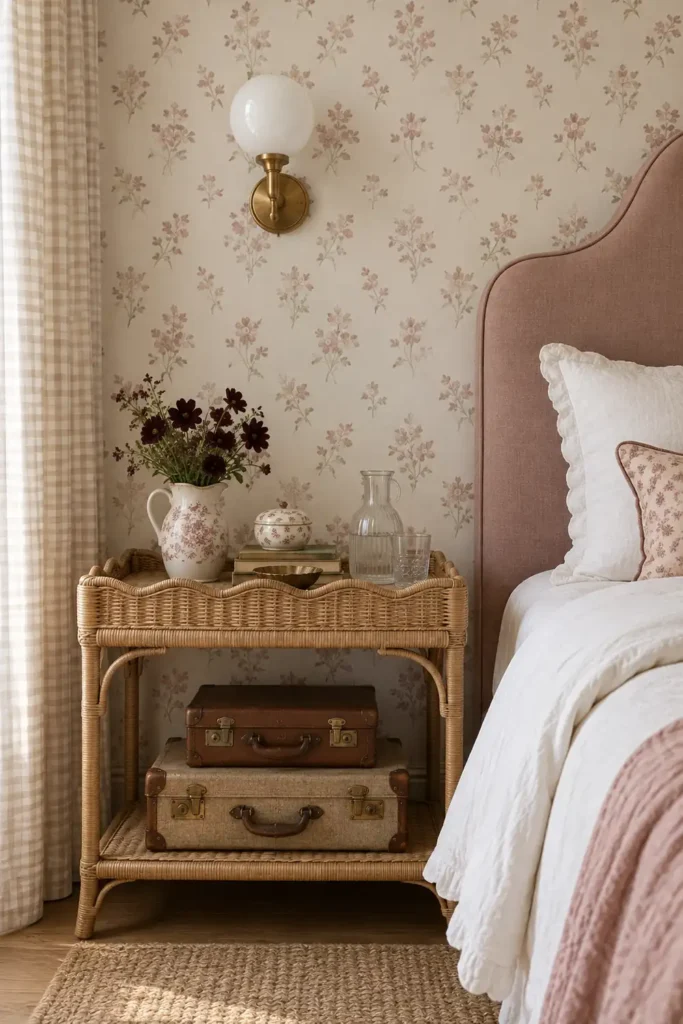
If you love vintage-inspired decorating, try incorporating one meaningful statement piece, such as a stack of vintage luggage, instead of filling the entire room with antique-looking accessories.
Wallpaper can also establish a style without requiring lots of themed decor. A subtle pattern behind the bed, paired with simple throw pillows and a classic wall sconce, creates interest while keeping the bedroom comfortable and balanced.
The trick is to focus on the atmosphere you want rather than collecting every accessory associated with that particular look.
A coastal room should feel airy and relaxed. A vintage-inspired room should feel warm and collected. Those feelings are often easier to achieve when the theme is expressed quietly.
4. Holding Onto Decorating Trends That Have Gone Out of Style
Decorating trends can be exciting, especially when a particular color, furniture shape, or material suddenly appears everywhere.
But decorating an entire room around whatever is popular at the moment can make the space feel dated once those trends lose their appeal.
That doesn’t mean you should avoid trends altogether. It’s more about choosing which elements deserve a lasting place in your home.
For larger furniture pieces and expensive finishes, it’s often worth leaning toward designs that you genuinely love and can imagine living with for years.
A classic cabinet, for example, can be refreshed with new brass drawer pulls or carefully selected knobs without needing to replace the whole piece.
Natural materials are another helpful way to keep a room feeling grounded. Oak wood floors, cane details, and woven storage boxes bring warmth and texture without depending entirely on one fashionable look.
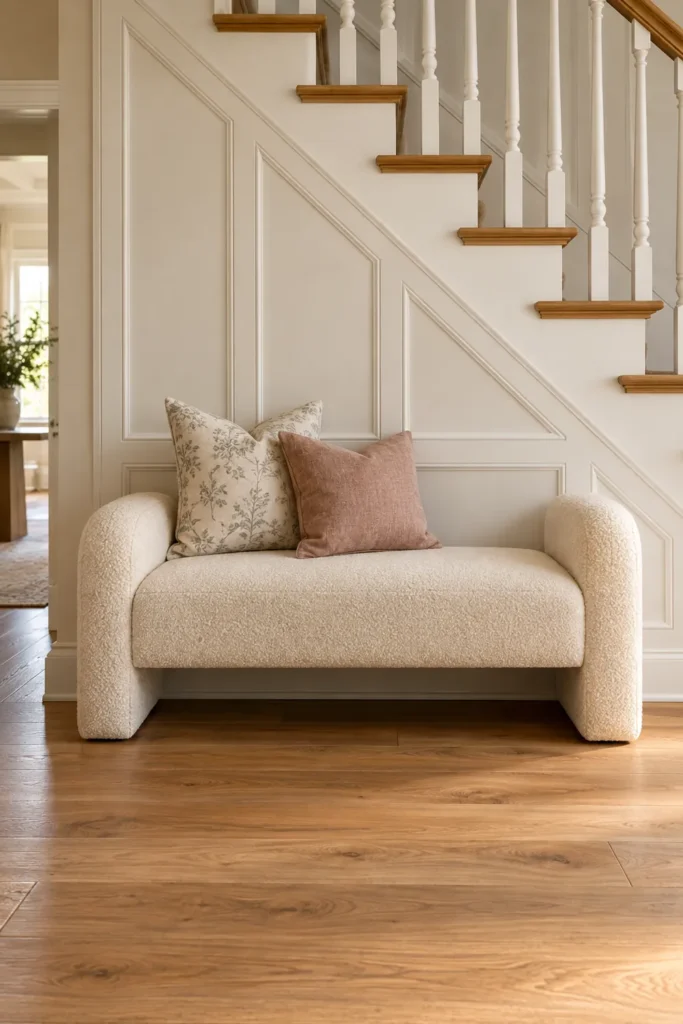
Even trendy materials can work beautifully when used with restraint. A boucle bench can add softness to a room, especially when it’s balanced with a wooden cabinet, simple drapes, and a few classic accessories.
Picture lights are another detail that can make a space feel considered. When placed above artwork or a favorite framed piece, they create a subtle focal point without requiring additional decorative clutter.
If your living room is starting to feel dated, look at the smaller elements before thinking about replacing major furniture.
Changing cabinet hardware, simplifying accessories, updating drapes, or removing pieces that no longer suit your style can make a noticeable difference.
The goal isn’t to create a home that never changes. It’s to build a comfortable foundation that allows you to experiment with new ideas without feeling the need to redecorate every time a trend comes and goes.
5. Decorating With Word Artwork Instead of Personal Photo Galleries
Word art had its moment, and you’ll still find plenty of signs featuring phrases about family, happiness, and gathering together. While there’s nothing wrong with having a meaningful quote in your home, filling your walls with decorative words can make a space feel less personal than you intended.
The problem is especially noticeable when several signs compete for attention in the same room. A large quote above the sofa, another sign in the hallway, and a few smaller phrases on bookshelves can quickly become visually overwhelming.
One of my favorite alternatives is to replace some of that word art with a carefully arranged photo gallery wall.
Framed family photographs, travel memories, and favorite personal snapshots can tell a much more interesting story about the people who live in your home.
You don’t need expensive artwork or professional photography to make this work. The frames themselves can help create a consistent look.
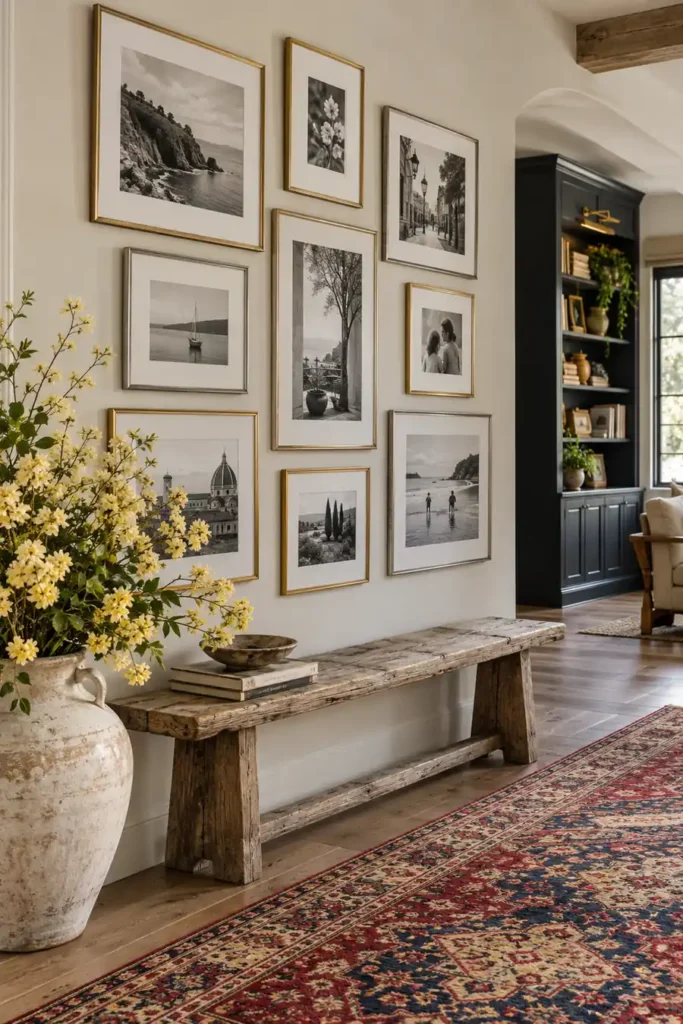
For example, a collection of black picture frames with simple white mats can make photographs in different colors and sizes feel connected. If you prefer a warmer style, wood-toned frames can create a softer, more relaxed appearance.
A hallway is an especially lovely place for a photo gallery because it gives an otherwise ordinary wall something meaningful to display.
You can also create smaller arrangements above a bedroom nightstand or incorporate a few framed photographs into a bookshelf.
Try leaving uniform spacing between the frames and arranging them on the floor before hanging anything. This allows you to experiment with the layout without making unnecessary holes in the wall.
And if you have one piece of word art that sincerely means something to you, there’s no reason to get rid of it.
The idea is simply to let your home tell your story rather than relying on generic phrases to give it personality.
6. Too Many Flooring Transitions That Break Up Your Home’s Flow
Flooring is one of those decorating details that can influence how a home feels before you even notice it.
When you walk through an open living area and see one type of flooring in the entryway, another in the hallway, and something completely different in the living room, the space can feel visually disconnected.
Even beautiful flooring materials can look awkward when there are too many sudden transitions between them.
This is particularly noticeable in open floor plans, where several areas are visible at the same time.
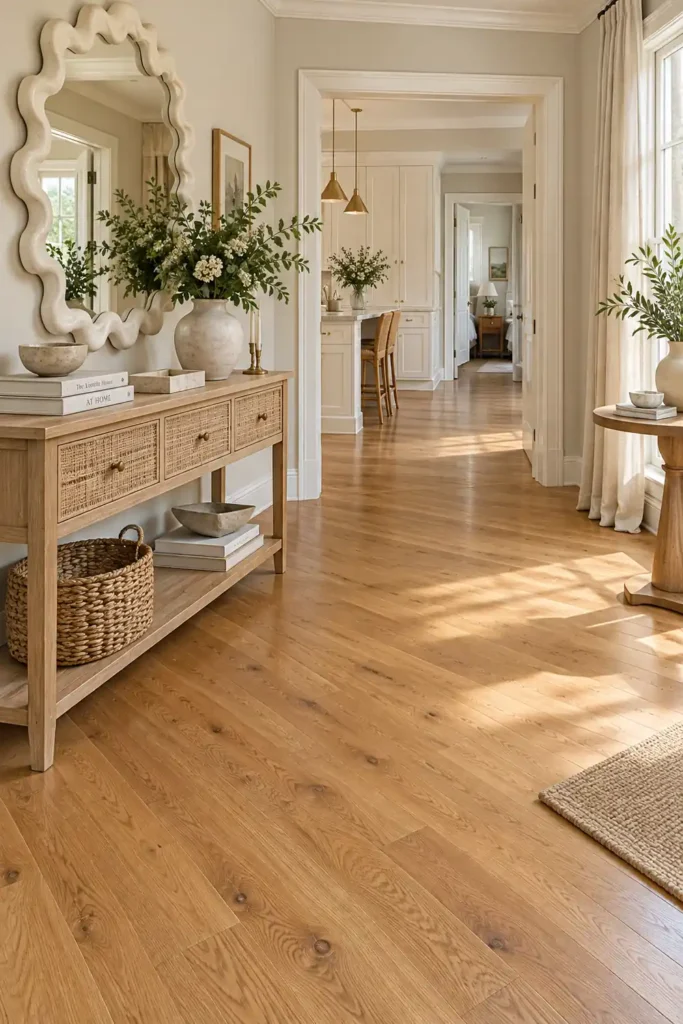
One way to create a more cohesive appearance is to use consistent flooring throughout the connected main living spaces whenever possible.
Oak wood floors, for example, can provide a warm foundation that visually connects an entryway, hallway, and living room. The continuous surface helps the rooms feel like parts of one carefully designed home.
Of course, replacing flooring isn’t always realistic, especially if you’re decorating on a budget. If you want to upgrade the look of a space for less, consider creative, low-cost options like peel-and-stick vinyl flooring or large adhesive tiles, which can be installed over existing floors and come in a variety of styles. You can also use paint to unify or soften a transition between two different types of flooring, such as painting a small threshold or border area in a subtle tone. These quick fixes empower you to refresh your home’s flow without the expense or hassle of a full renovation.
If your home already has different flooring materials, focus on making the transitions feel less abrupt.
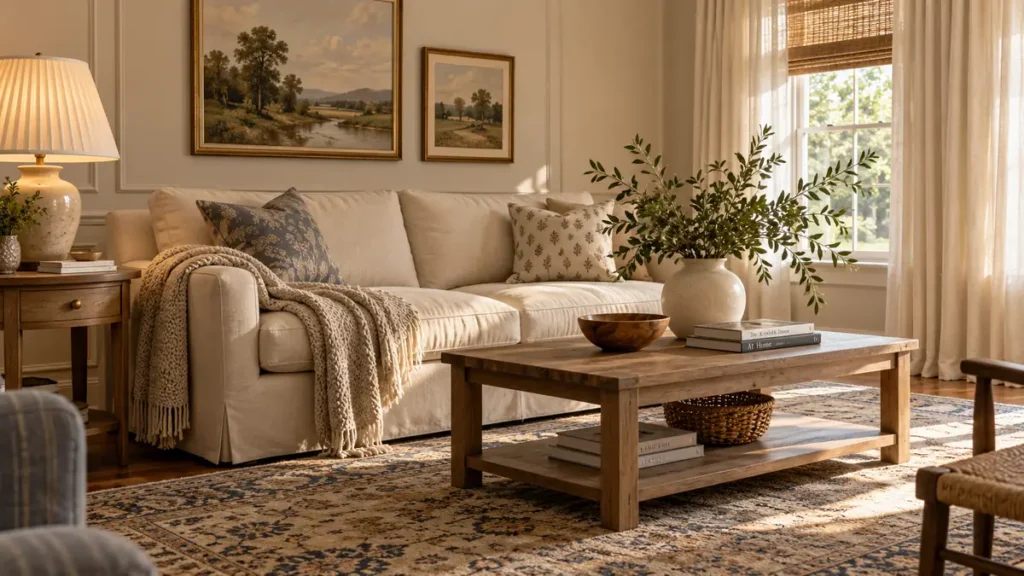
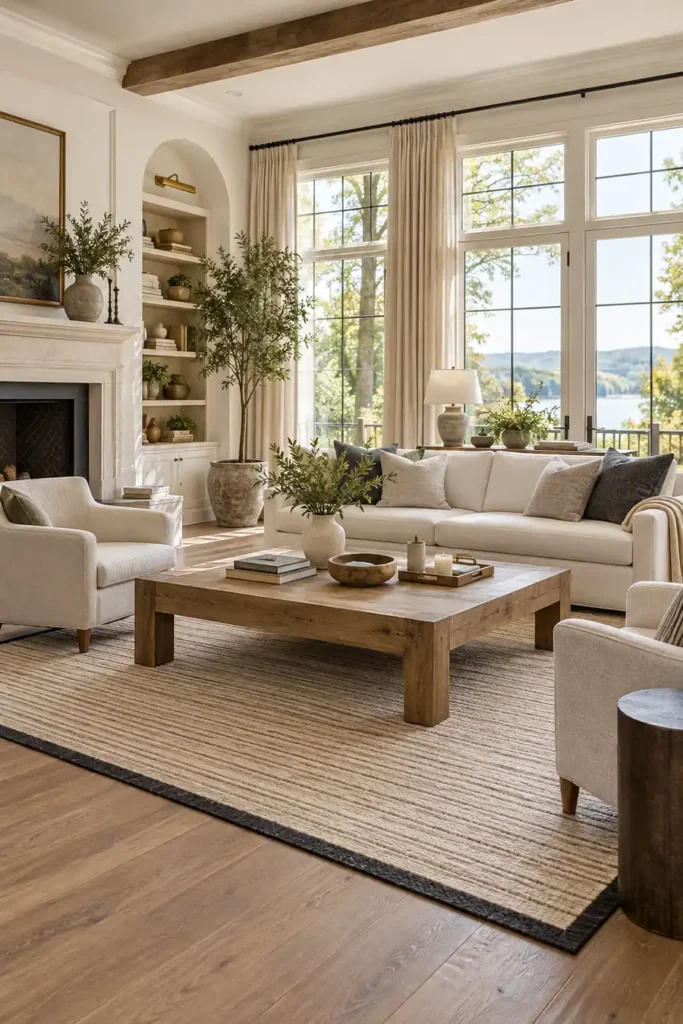
Area rugs can help define individual spaces without introducing another permanent flooring finish. In a living room, a generously sized rug can establish the seating area while allowing the surrounding floor to remain visible.
You can also create an impression of continuity through furniture and decorative finishes.
A wooden console table in the hallway, a coordinating wood tone in the living room, and comparable neutral colors throughout the space can help everything look connected.
Details such as matching drape rods, consistent window treatments, and a scalloped mirror above an entryway console can add character while continuing an overall sense of balance.
You don’t need every room to look identical. The important thing is to make the transitions feel intentional rather than accidental.
When the flooring and surrounding decor extend seamlessly from one area to another, the entire home commonly feels calmer and more spacious.
7. Area Rugs That Are Too Small for Your Furniture
A beautiful area rug can make an enormous difference in a living room, but choosing the wrong size is one of the easiest decorating mistakes to make.
You might find a gorgeous rug with the perfect colors and texture, only to realize that it looks strangely small once it’s placed beneath your furniture.
This happens when the rug sits like a little island in the middle of the room, with the sofa and chairs positioned completely outside its borders.
Instead of bringing the seating arrangement together, the rug makes each furniture piece feel disconnected.
A better approach is to choose an area rug that’s large enough to visually anchor the seating area.
Ideally, the rug should accommodate the front legs of your sofa and surrounding chairs. In a larger living room, you might prefer a rug that sits underneath all the furniture legs for an even more unified appearance.
For example, an 8-by-10-foot rug may work well in many average-sized living rooms, while a larger seating arrangement might need a 9-by-12-foot rug or something bigger. The right dimensions depend on the actual room and furniture layout.
Before buying a rug, measure your seating arrangement rather than relying only on the dimensions of the room.
You can even use painter’s tape on the floor to outline the rug size you’re considering. This makes it much easier to see whether the proportions will work.
Texture matters, too. A woven rug with a subtle pattern can offer warmth and visual interest without competing with the sofa or accent chairs.
If you already own a rug that’s too small, you may be able to use it in another area of your home where its proportions make more sense.
Choosing a properly sized rug doesn’t necessarily mean choosing a more expensive one. A simple rug in the right size can often look more polished than an elaborate design that’s too small for the furniture.
8. Outdated Window Treatments That Make Rooms Feel Unbalanced
Window treatments have a surprisingly big influence on how finished a room looks.
Heavy, awkwardly positioned drapes or curtains that stop at an unusual height can make an otherwise attractive living room feel dated. The same thing can happen when curtain rods are installed too close to the window frame, making the window appear smaller than it really is.
Fortunately, updating window treatments is one of those changes that can dramatically improve a room without replacing the furniture.
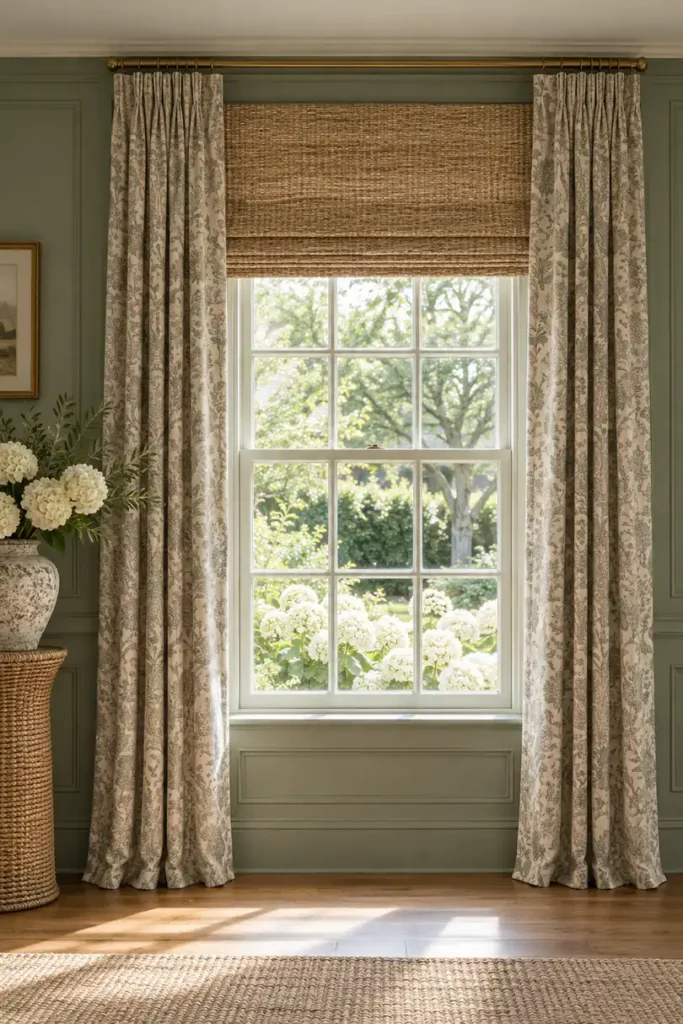
One of the simplest tricks is to hang drapes higher and wider than the window itself.
Positioning the curtain rod several inches above the frame helps draw the view upward, while extending it beyond the window edges allows the fabric to frame the opening instead of covering too much of the glass.
For a polished look, choose curtains that reach the floor or hover just above it.
Patterned drapes can be beautiful when the rest of the room has a relatively simple color palette. A soft floral or understated geometric pattern can bring personality to a neutral living room without making it feel busy.
If you prefer something more relaxed, woven Roman shades are another lovely option.
Their natural texture adds warmth, particularly in bedrooms and living spaces with wood furniture, neutral upholstery, or other organic materials.
Woven shades also look attractive on their own, so you don’t always need to add curtains.
Before choosing a new window treatment, think about how you use the room throughout the day.
A bedroom may benefit from curtains with a blackout lining, while a living room might feel more inviting with fabric that allows some natural light to pass through.
The hardware deserves attention as well. A simple drape rod that suits other metal finishes in the room can make the entire arrangement feel more considered.
You don’t need elaborate fabrics or expensive custom treatments to make windows look beautiful.
Often, choosing the right length, hanging the rod in a better position, and using materials that coordinate with your decor are enough to make the room feel noticeably more finished.
9. Skipping Wall Treatments That Provide Depth and Character
Sometimes, you can have beautiful furniture, lovely accessories, and a deliberately chosen color palette, yet the room still feels like something is missing.
Often, the walls are the reason.
Plain painted walls aren’t necessarily a decorating mistake, but when a room lacks architectural detail or texture, the overall space can feel a little flat. This is especially noticeable in bedrooms and living rooms where large stretches of empty wall surround the furniture.
One way to give a room a more finished appearance is to introduce subtle wall treatments that add dimension without dominating the space.
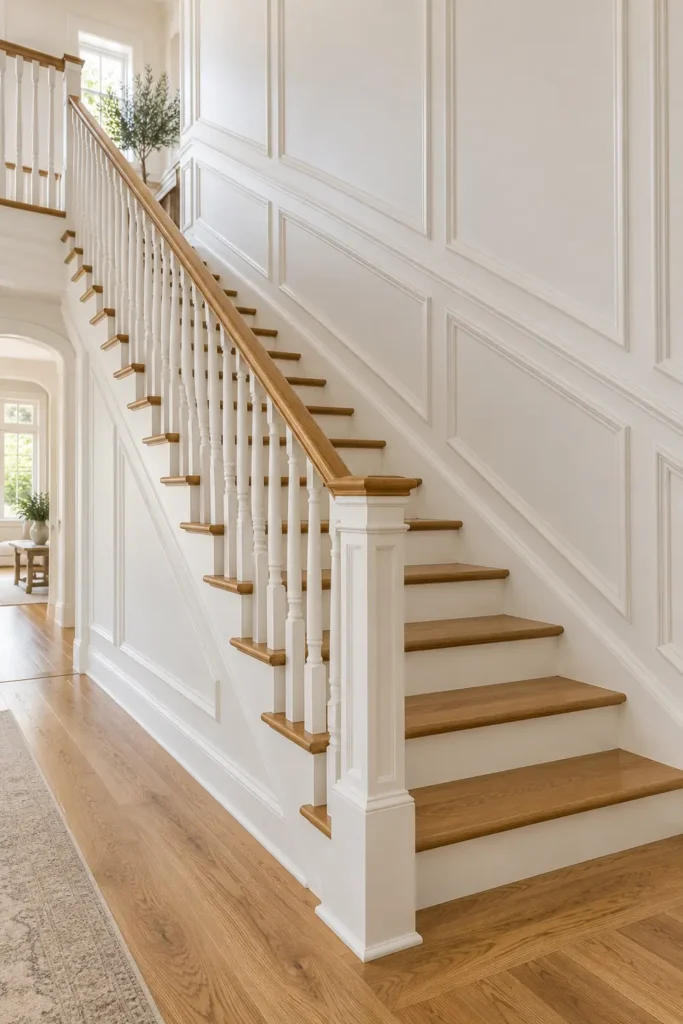
Crown molding is a classic example. It creates a gentle transition between the walls and ceiling, making even a relatively simple room feel more carefully designed.
You don’t need elaborate decorative trim to achieve a beautiful result. Simple molding painted the same color as the walls can introduce quiet architectural interest.
Millwork is another option worth considering, particularly in living rooms and bedrooms.
A series of rectangular wall molding panels behind a sofa or bed can create an elegant backdrop without requiring additional artwork or decorative accessories.
If you prefer a more relaxed look, vertical shiplap can add subtle texture and character.
Painted in a soft neutral shade, it works especially well behind an upholstered bed, where the vertical lines naturally draw attention toward the headboard.
Wallpaper can create a similar effect.
Instead of choosing a bold pattern for every wall, consider using neutral wallpaper on a single bedroom wall. Its subtle texture or design can make the space feel warmer while allowing the furniture and bedding to remain the focus.
An upholstered bed, simple nightstands, a comfortable knit blanket, and a softly glowing table lamp can look particularly inviting against a thoughtfully finished wall.
The best part is that you don’t necessarily have to renovate an entire room to introduce architectural character.
Even a small section of molding or one carefully chosen wallpapered wall can make a noticeable difference.
The key is choosing a treatment which complements your home’s existing architecture and decorating style.
You want the walls to add interest and warmth, not compete with everything else in the room.
10. Relying on Harsh Overhead Lighting Instead of Warm, Layered Light
Lighting might be one of the most overlooked decorating details, yet it has an enormous influence on how a home looks and feels.
You can have the perfect sofa, beautiful curtains, and a lovely color scheme, but if the room is lit by one harsh overhead fixture, much of that carefully chosen decor can lose its appeal.
Bright, cool-toned lighting can make a comfortable living room feel cold and uninviting. And when all the light comes from the ceiling, you may end up with uncomfortable shadows and areas that feel poorly illuminated.
The solution isn’t necessarily to purchase an expensive chandelier or replace every fixture in your home.
It’s to think about lighting in layers.
Start with the overhead lighting you already have. For living rooms and bedrooms, warm white bulbs around 2700K to 3000K often create a softer, more friendly atmosphere than cooler bulbs.
Installing dimmer switches where compatible can also make a big difference, letting you adjust the brightness depending on the time of day.
Next, introduce lighting at different heights.
A table lamp beside the sofa provides a comfortable glow for relaxing in the evening, while wall sconces can illuminate dimmer corners and add visual interest to otherwise plain walls.
In the kitchen, pendant lights above an island can create a beautiful focal point while providing useful illumination for everyday activities.
Under-cabinet lighting is another practical addition. It brightens countertops and helps eliminate shadows that overhead fixtures may not reach.
The combination of overhead fixtures, pendant lights, wall sconces, and under-cabinet lighting makes a kitchen feel more functional and thoughtfully finished.
Materials and finishes add to the overall effect.
Glass fixtures can keep a space feeling open and light, while metal details can introduce a subtle decorative accent.
Try to choose lighting fixtures that complement the other finishes in your home instead of making every fixture a completely different style.
And remember that more brilliant isn’t always better.
A living room with a softly glowing table lamp, a few well-positioned sconces, and dimmed overhead lighting can feel far more comfortable than the same space illuminated by one extremely bright ceiling fixture.
When lighting is deliberately layered, it accentuates the textures, colors, and details you’ve already incorporated into the room.
It’s one of those changes that can make your home feel noticeably more welcoming without requiring major decorating expenses.
Small Decorating Changes Can Make Your Home Feel More Beautiful
Creating a beautiful home doesn’t have to mean buying expensive furniture, replacing everything you own, or following the latest decorating trends.
Often, the clearest improvements come from reconsidering the little details that affect how a room feels.
A properly sized area rug can make furniture look more connected. Better window treatments can improve the proportions of a room. Considered lighting can make familiar spaces feel warmer, while simplifying crowded shelves gives your favorite decorations the attention they deserve.
And perhaps most importantly, a home doesn’t have to look like a designer showroom to feel stylish.
Some of the most inviting rooms combine different furniture styles, meaningful personal touches, natural textures, and pieces collected over time.
If you’ve noticed a few of these decorating mistakes in your own home, don’t feel like you need to deal with everything at once. Instead, focus on focusing on prioritizing changes by either starting with the room you use most or fixing the quickest and easiest fixes first. This approach may help you build momentum and see progress right away, making the process look much more manageable.
Start with the room you use most and choose one small change that would make it feel more comfortable or balanced.
You might be surprised how much difference a thoughtful adjustment is able to make.
After all, the goal isn’t to create a home that simply looks expensive. It’s to create one that feels beautiful, welcoming, and genuinely yours.