
A backsplash may be practical, but it can also completely shape the mood of a kitchen. The right material, pattern, or layout can make the room feel warmer, brighter, more polished, or more personal without changing every cabinet or countertop.
These kitchen backsplash ideas range from bold focal walls to subtle textured finishes, so there is plenty of room to choose something that fits your style. Whether you prefer rustic stone, elegant tile, or an uninterrupted slab look, each idea can help the kitchen feel more considered and complete.
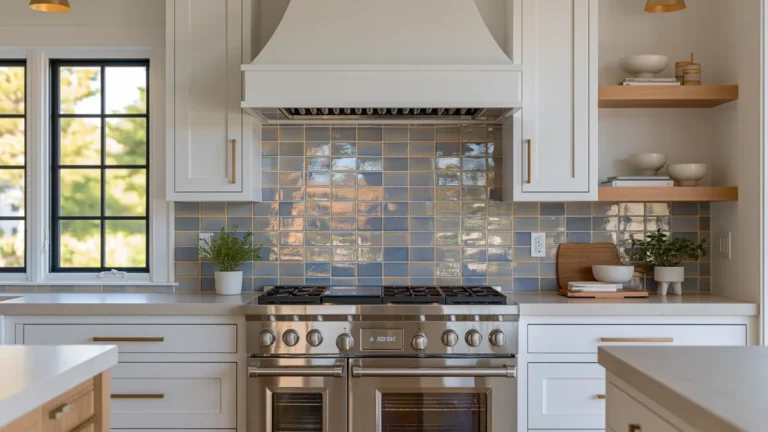
Extend the Backsplash Behind the Range Hood for a Dramatic Focal Point
One of the strongest ways to use a backsplash is to let it become the visual anchor of the kitchen. Extending tile or another finish behind the range and up around the hood draws the eye to the cooking area and gives that wall a more finished appearance.
This works especially well when the backsplash uses a contrasting color, noticeable pattern, or textured surface. The contrast helps separate the range wall from the surrounding cabinets while still keeping the layout cohesive.
You can also use the same material to visually soften or disguise the range hood. When the hood blends into the backsplash treatment, the wall feels more architectural and less like a collection of separate appliances and surfaces.
Because this area naturally attracts attention, it is a good place to use a slightly bolder choice than you might use across the rest of the kitchen. A strong focal point behind the stove can give the room character without making every wall feel busy.
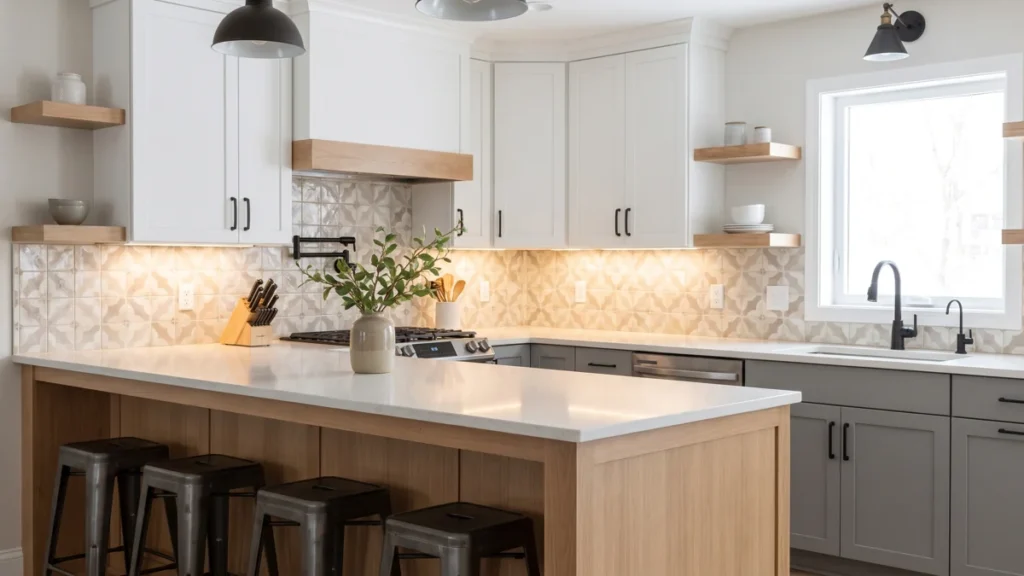
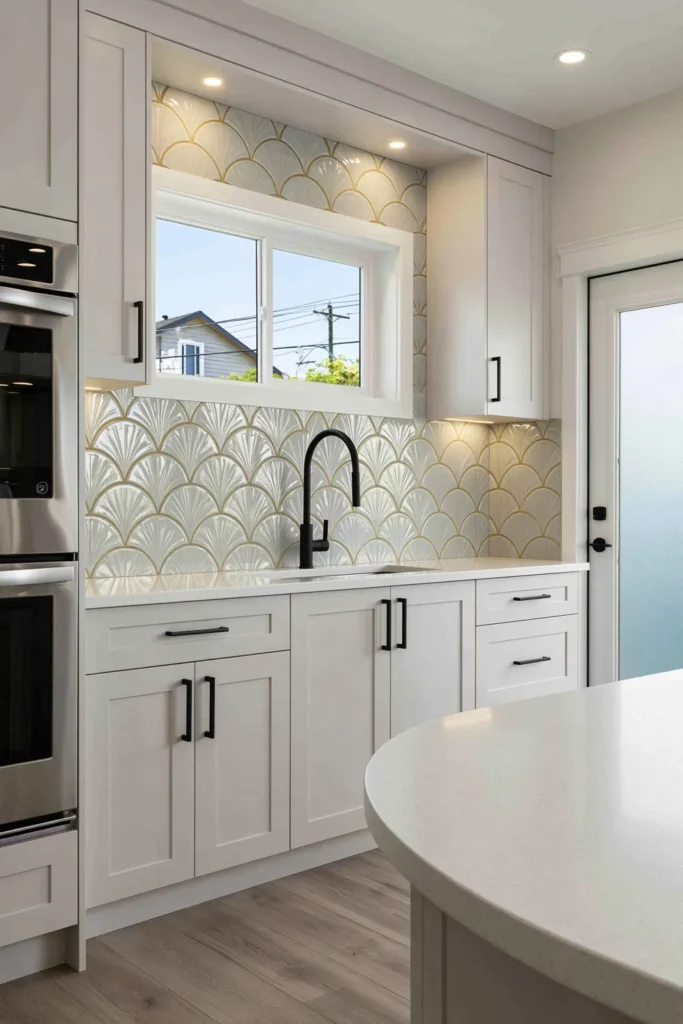
Add Glamour With Fan-Shaped Backsplash Tile
Fan-shaped tile brings movement and softness to a kitchen through its curved, overlapping form. The pattern can resemble scales or feathers, giving the backsplash a decorative quality that seems more expressive than a standard rectangular tile.
This style works particularly well when you want to introduce a little glamour without relying on heavy ornament. The repeating curves create visual interest, while the overall pattern can still feel orderly and refined.
A fan tile backsplash can suit both retro-inspired kitchens and more contemporary spaces. In a soft color, it adds quiet elegance. In a stronger shade or glossy finish, it becomes a more noticeable design feature.
Because the pattern already carries plenty of detail, the surrounding elements can remain simple. Plain countertops, streamlined cabinets, and restrained hardware allow the tile shape to stand out without making the kitchen feel overdecorated.
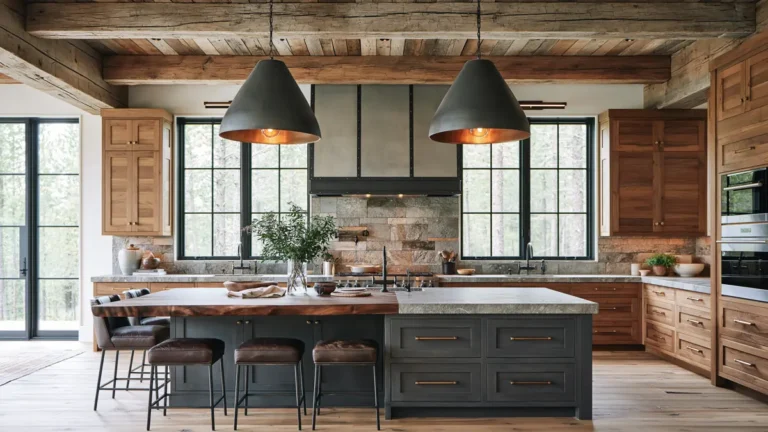
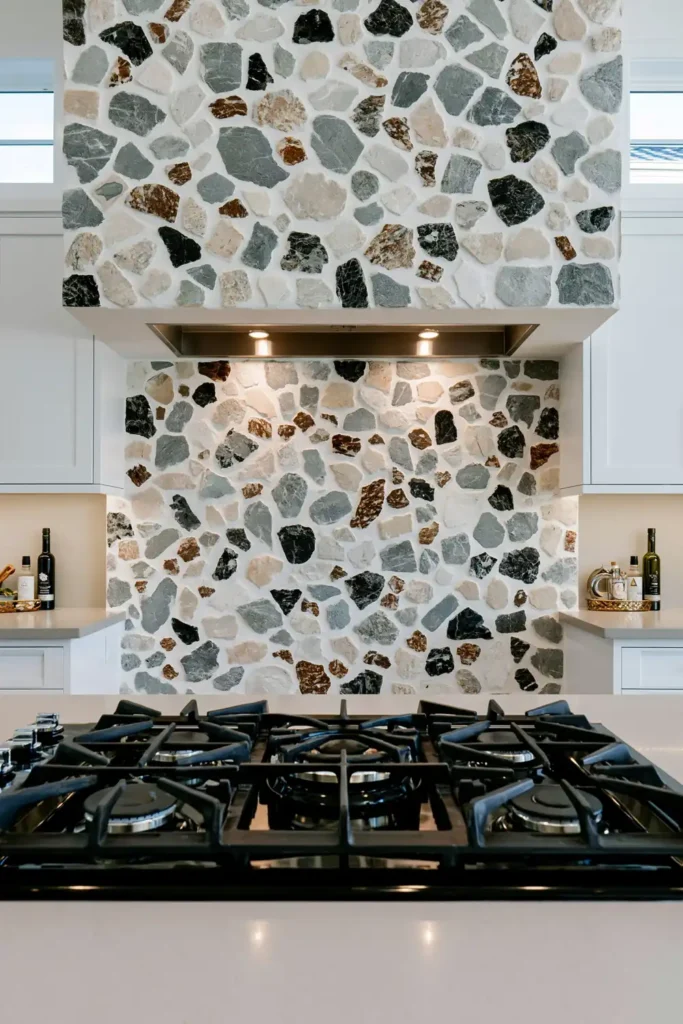
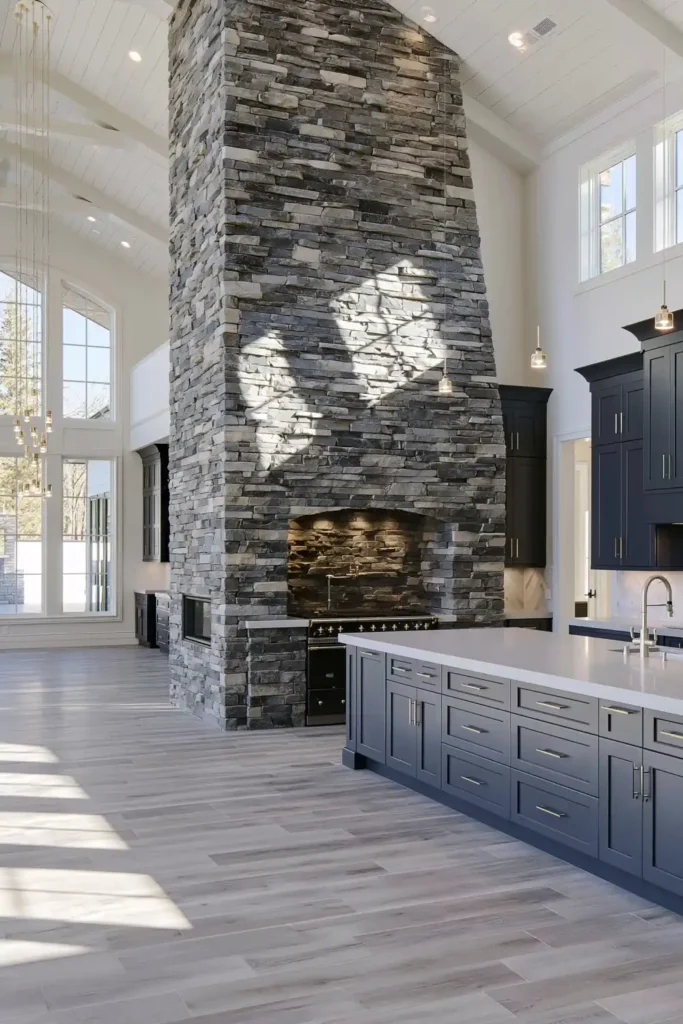
Create a Rustic Kitchen Backsplash With Floor-to-Ceiling Stone
An exposed stone wall can give a kitchen a grounded, natural character that ordinary tile cannot easily match. Extending the stone from the counter to the ceiling makes the surface feel like part of the architecture rather than a small decorative strip.
Rugged stone works especially well in kitchens that lean rustic, country, or old-world. The uneven texture and varied tones add depth, helping the room feel warmer and more established.
Manufactured stone veneer can create a similar effect when full-depth stone is not practical. It offers the look of a substantial stone wall while being easier to install in many kitchens.
Since stone has a strong visual presence, it pairs best with materials that do not compete with it. Simple cabinetry, restrained countertops, and uncomplicated metal finishes help the wall remain the main feature.
This approach is especially effective around a range wall or other large uninterrupted section of the kitchen. The more continuous the installation feels, the more convincing and dramatic the rustic effect becomes.
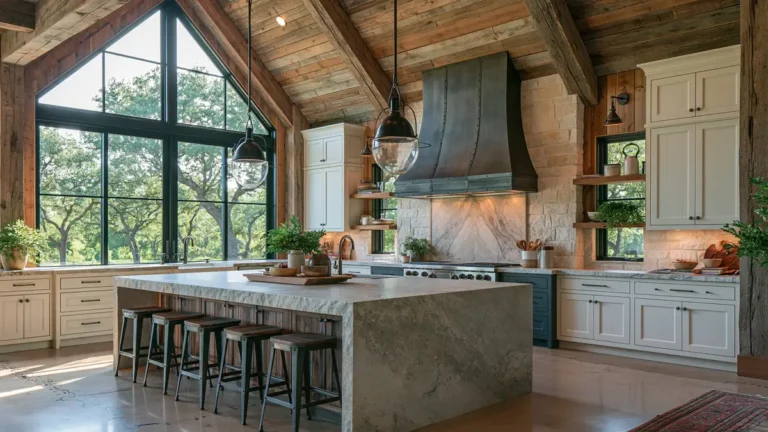
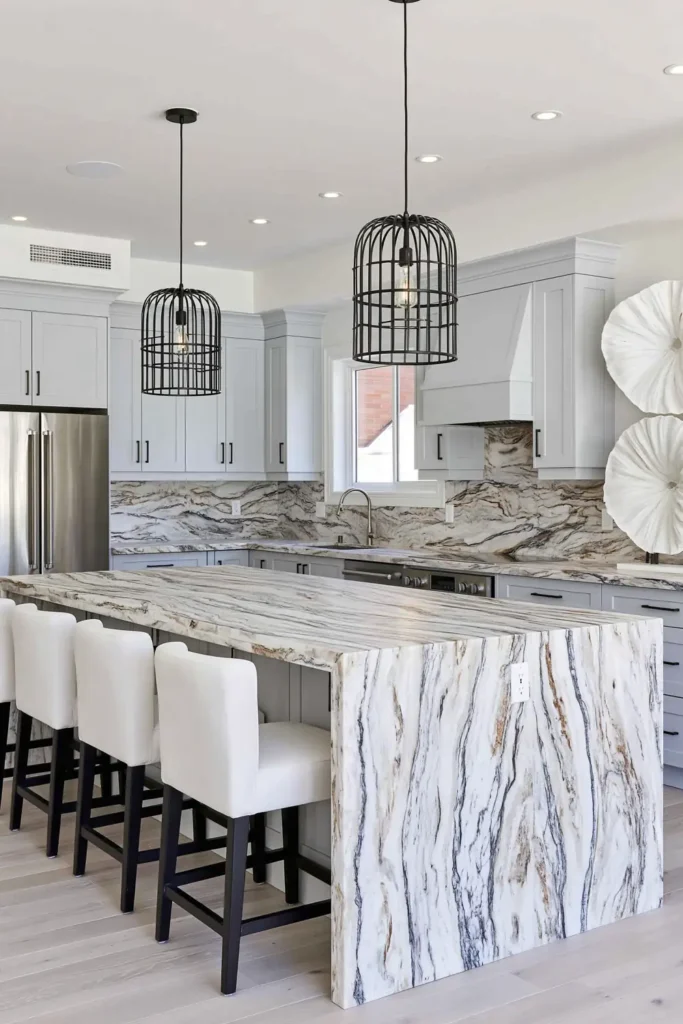
Use Matching Porcelain Slabs Across the Backsplash, Counters, and Island
Using the same slab porcelain across the backsplash, countertops, and waterfall island creates a smooth sense of continuity. Instead of breaking the kitchen into separate surfaces, the repeated material ties the entire room together.
This look feels especially elegant in modern kitchens where clean lines and visual simplicity matter. The uninterrupted surface can also make the room feel larger because there are fewer obvious changes in color, pattern, and texture.
A waterfall island strengthens the effect by carrying the slab material down the sides of the island. When the backsplash repeats that same finish, the island and perimeter counters feel connected rather than designed separately.
Porcelain slabs can also provide a more streamlined appearance than smaller tile because there are fewer grout lines. That cleaner background allows the shape of the cabinets, lighting, and island to stand out.
For the most balanced result, let the slab pattern stay consistent across the different surfaces. Careful placement helps the veining or movement move smoothly, making the kitchen feel calm, coordinated, and intentionally designed.
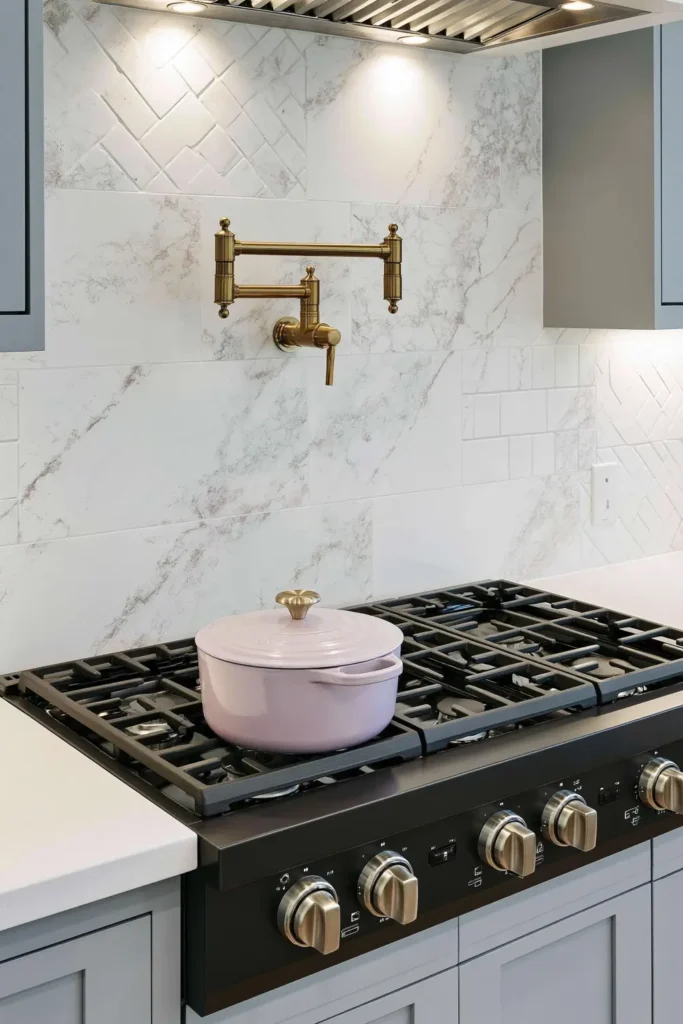
Add a Wall-Mounted Pot Filler Above the Stove
A wall-mounted pot filler adds a practical feature to the backsplash while giving the cooking area a more polished look. Positioned above the stove, it allows you to fill large pots without carrying them across the kitchen from the sink.
This feature works best when it is treated as part of the backsplash design rather than an afterthought. The finish can match the faucet, cabinet hardware, or nearby appliances so the whole cooking zone feels coordinated.
Placement matters. The pot filler should sit at a comfortable height above the burners, with enough reach to extend over the pots you use most often. It also needs to fold back neatly against the wall when not in use.
Because the fixture naturally draws attention, a simple tile or slab background can help it stand out. In a busier backsplash, choosing a clean metal finish keeps the area from feeling visually crowded.
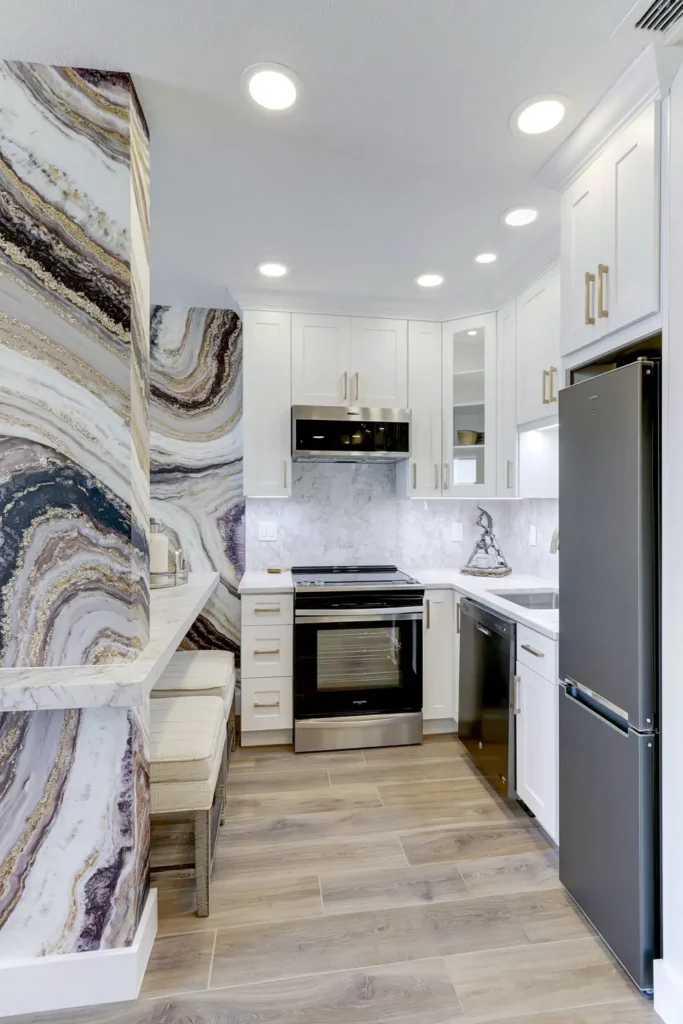
Pair Soft Backsplash Tile With Bold Wallpaper
Combining tile and wallpaper can give a kitchen more depth than relying on a single wall finish. A soft, understated tile can protect the working area near the counters, while bold wallpaper adds pattern and personality above or around it.
The contrast works best when the two materials share at least one color. This small connection helps the design feel intentional, even when the wallpaper pattern is much more dramatic than the tile.
Keep the tile relatively calm if the wallpaper is highly detailed. A subtle finish, simple shape, or muted shade gives the eye a place to rest and prevents the room from feeling overloaded.
This approach is especially useful when you want a statement wall without covering the entire kitchen in patterned tile. The wallpaper can bring energy to the room, while the backsplash stays practical and easy to maintain.
Maintain Its Timelessness With Classic Subway Tile and Contrasting Grout
Classic subway tile remains one of the most adaptable kitchen backsplash ideas because it works with so many cabinet styles and color palettes. Its simple rectangular shape creates a clean background that can feel traditional, modern, or slightly rustic depending on the finish.
Contrasting grout gives the pattern more definition. Darker grout around light tile emphasizes each rectangle and creates a stronger graphic effect, while a softer contrast keeps the look quieter.
The grout color can also help connect the backsplash to other details in the kitchen. A charcoal or gray grout may echo darker countertops, cabinet hardware, or metal accents without introducing another material.
For a sleek result, keep the layout straight and evenly spaced. The simplicity of the pattern allows the grout lines to provide the visual interest, giving the backsplash character without making it overly decorative.
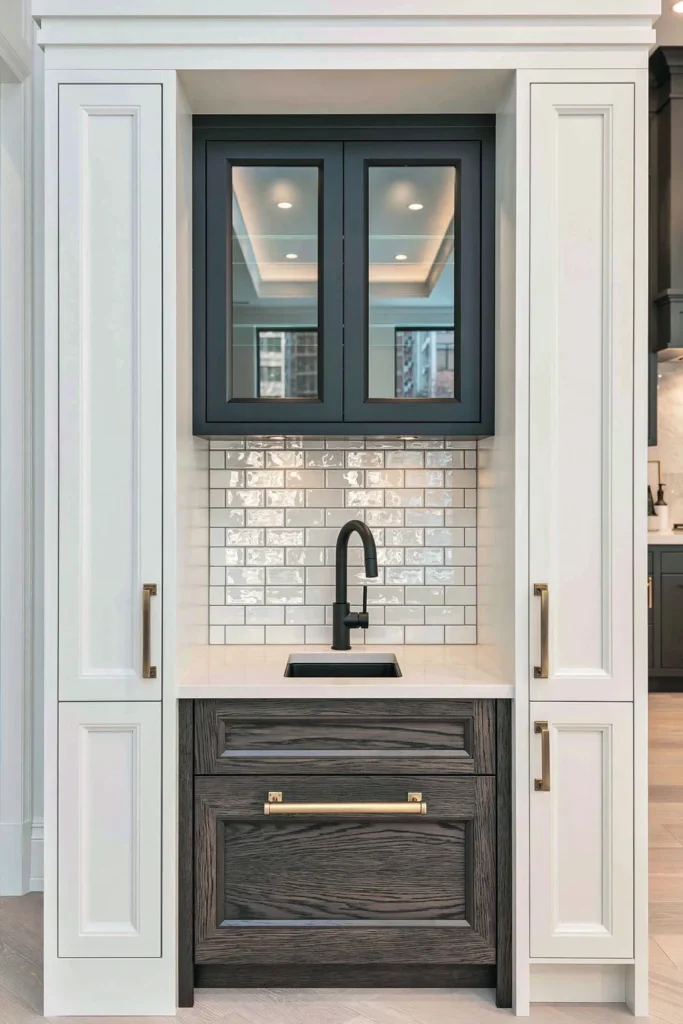
Extend Kitchen Backsplash Tile Behind Open Shelving
Continuing backsplash tile behind open shelving creates a more finished and unified wall. Instead of stopping the tile at the counter line or around the shelves, the surface becomes a complete background for both storage and display.
This treatment works particularly well when the shelves hold everyday dishes, glassware, or a few decorative objects. The tile gives those items a clear background and helps the arrangement feel intentional.
Simple floating shelves usually allow the backsplash to remain visible. Wood shelves can warm up a cool tile surface, while metal or painted shelves can create a cleaner, more streamlined look.
Keep the shelf styling restrained so the tile pattern is not hidden. Leaving some open space between objects allows both the shelving and backsplash to contribute to the design.
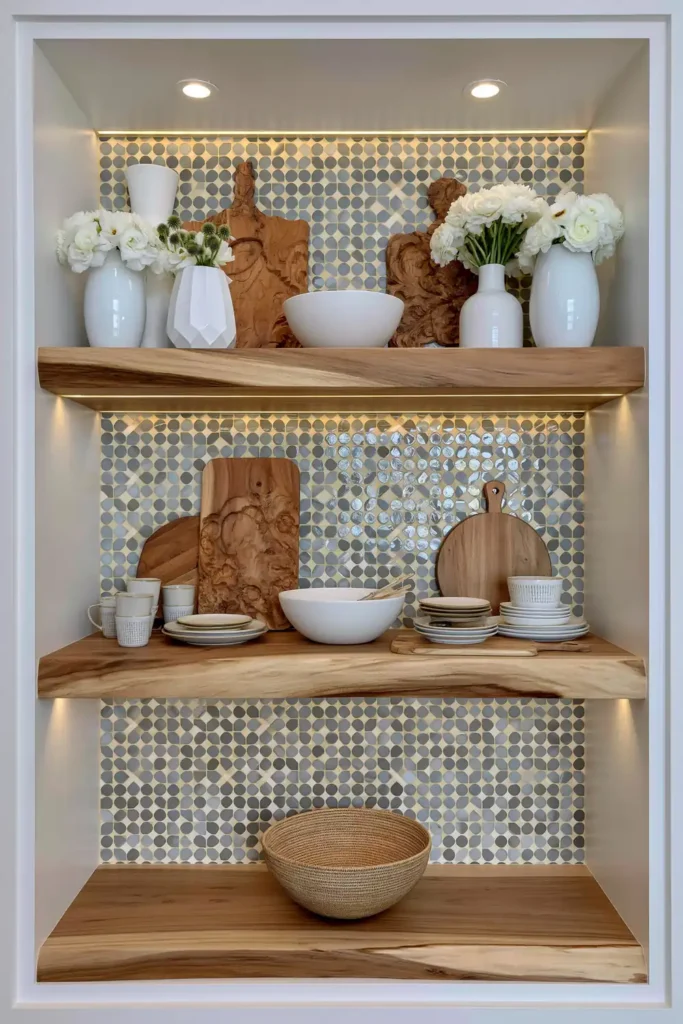
Bring Movement to the Wall With Scallop or Fish Scale Tile
Scallop, fish scale, and mermaid tiles bring a softer rhythm to the kitchen through their repeating curved shapes. Unlike straight-edged tile, this pattern creates a sense of flow that can make the backsplash feel more decorative and lively.
The effect can be subtle or bold depending on the color and finish. A pale neutral keeps the curves gentle and elegant, while a deeper or more saturated shade turns the wall into a clear focal point.
This style works especially well in a smaller backsplash area where the pattern can be appreciated without crowding the room. Behind a range or sink, it can create a defined feature zone while the rest of the kitchen stays simple.
Because the shape already adds plenty of visual interest, it helps to pair it with uncomplicated cabinets and countertops. Clean surrounding surfaces allow the curved pattern to stand out and keep the overall design balanced.
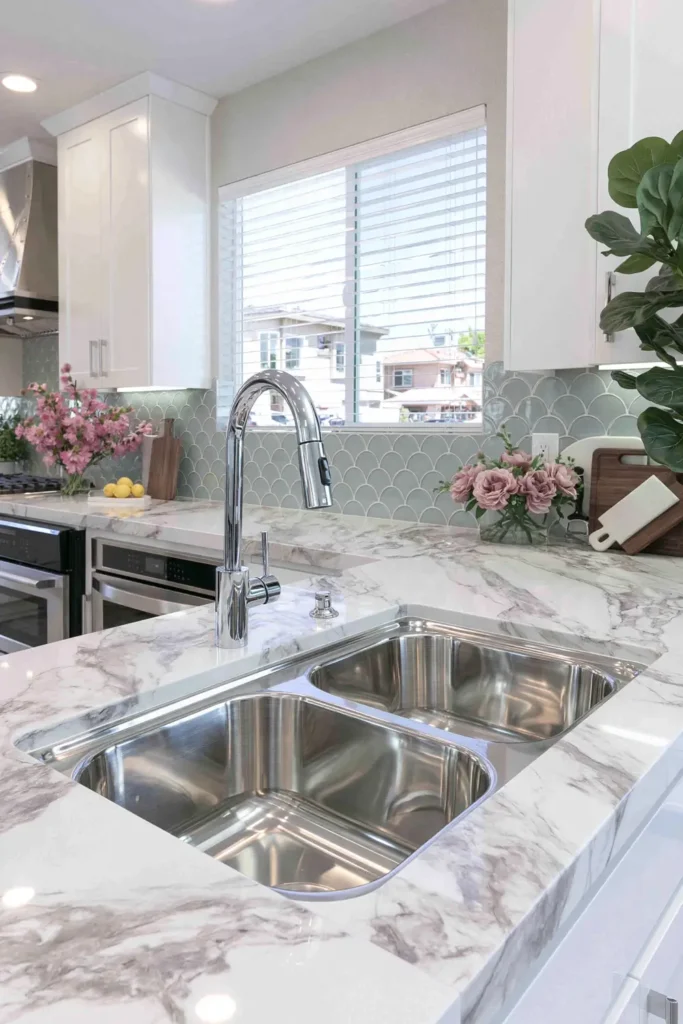
Warm Up a Modern Kitchen With an Exposed Brick Backsplash
An exposed brick backsplash brings warmth, texture, and a sense of history into a modern kitchen. Its uneven surface and natural color variation can soften sleek cabinets, polished counters, and contemporary appliances.
Brick works particularly well when you want the room to feel less perfect and more lived-in. The rough texture creates contrast against smooth finishes, making the kitchen feel layered rather than overly uniform.
A full exposed brick wall creates the strongest effect, especially when it extends from the countertop to the ceiling. If original brick is not available, brick veneer can offer a similar appearance with less depth.
The natural tones of brick pair easily with wood, black metal, stainless steel, and neutral cabinetry. Keeping the surrounding palette simple lets the wall provide most of the character.
Since brick is more porous than tile or slab materials, it may need sealing in areas exposed to grease or water. That practical step helps preserve the surface while conserving its rustic appearance.
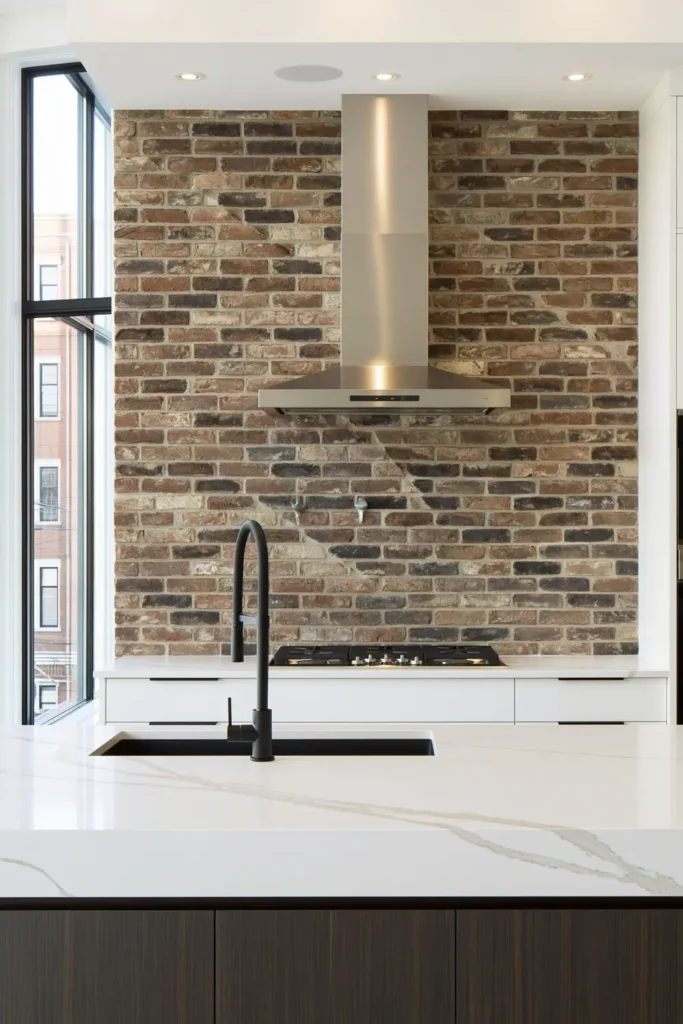
Combine a Concealed Cooktop With an Integrated Pasta Arm
A concealed cooktop creates a clean, uninterrupted surface that can make a kitchen feel more spacious and streamlined. When paired with an integrated pasta arm, the cooking area becomes highly functional without looking crowded.
This setup works well in minimalist kitchens where appliances and fixtures are designed to blend into the surrounding surfaces. The cooktop remains visually subtle, while the pasta arm provides convenient access to water close to the cooking zone.
The backsplash plays an important role in keeping the area cohesive. A simple slab or quiet tile allows the integrated features to stand out through their function rather than through heavy decoration.
Careful planning is essential because both elements need precise placement. The pasta arm should extend comfortably over the cooking area and fold back neatly, while the concealed cooktop must remain easy to use and clearly positioned.
The result is a kitchen that feels uncluttered but still supports everyday cooking. It is a strong option for homeowners who prefer hidden technology and efficient use of space.
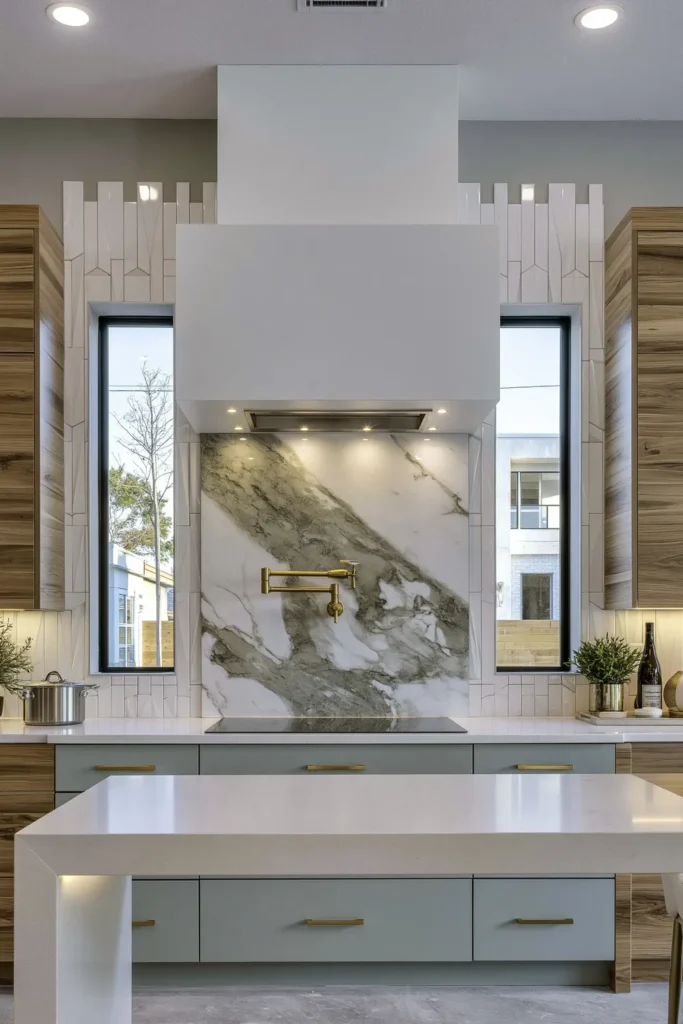
Refresh the Kitchen With Picket Hexagon Tile
Picket hexagon tile offers a fresh variation on the familiar hexagon shape. Its extended form feels more directional and modern, while still retaining the geometric balance that makes hexagon tile so versatile.
The shape can be installed vertically or horizontally depending on the effect you want. A vertical layout can make the backsplash feel taller, while a horizontal arrangement creates a wider, more flowing appearance.
This tile works in both neutral plus colorful kitchens. In white, gray, or cream, it adds quiet pattern without dominating the space. In a stronger color, the pointed edges create a sharper and more contemporary statement.
Grout choice can change the look considerably. Matching grout keeps the pattern subtle, while contrasting grout emphasizes every angle and makes the geometry more noticeable.
Because picket tile blends classic structure with a newer silhouette, it suits kitchens that mix traditional and modern details. It can update simple cabinetry while still feeling timeless enough to live with for years.
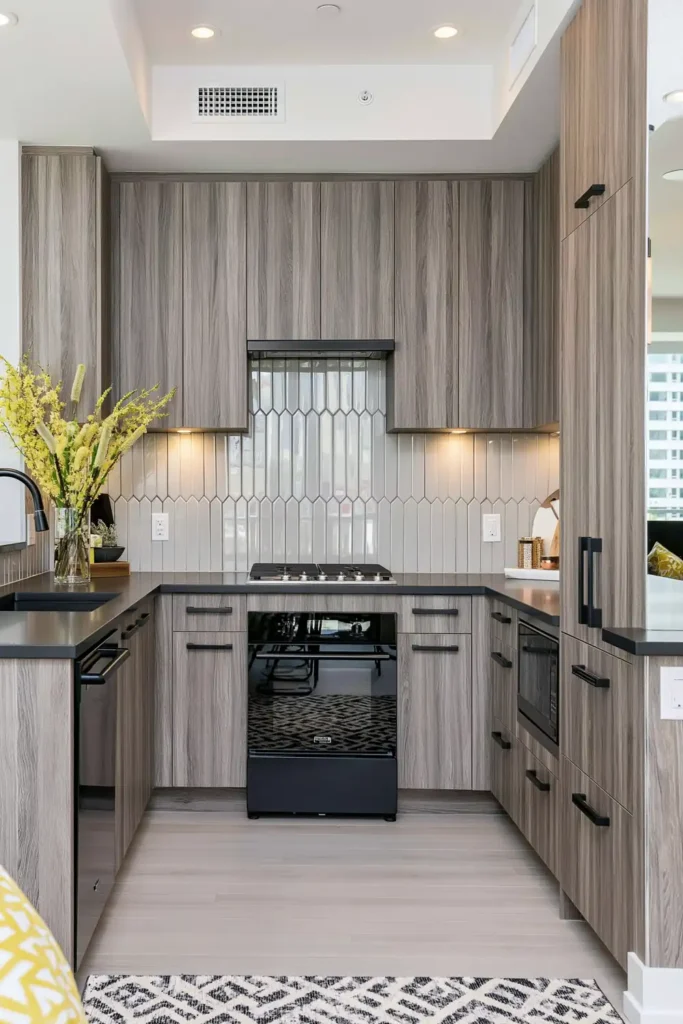
Lay Backsplash Tile in a Herringbone or Chevron Pattern
A herringbone or chevron layout can make familiar tile feel much more dynamic. Instead of running in straight rows, the pieces form a zigzag pattern that brings movement and direction to the backsplash.
Herringbone has a slightly more layered appearance because the tile ends overlap visually, while chevron creates cleaner V-shaped lines. Both patterns can add energy without requiring a bold color or unusual material.
This is a useful option when you like classic tile but want a more distinctive result. White or neutral tile in a herringbone layout can still feel calm, yet the pattern gives the wall more personality than a standard horizontal installation.
The direction of the pattern also affects how the space feels. A vertical arrangement can draw the look upward, while a wider horizontal layout can help the backsplash appear more expansive.
Since the layout is the main feature, keep grout lines consistent and surrounding finishes relatively simple. Careful installation matters here because uneven spacing is more noticeable in a geometric pattern.
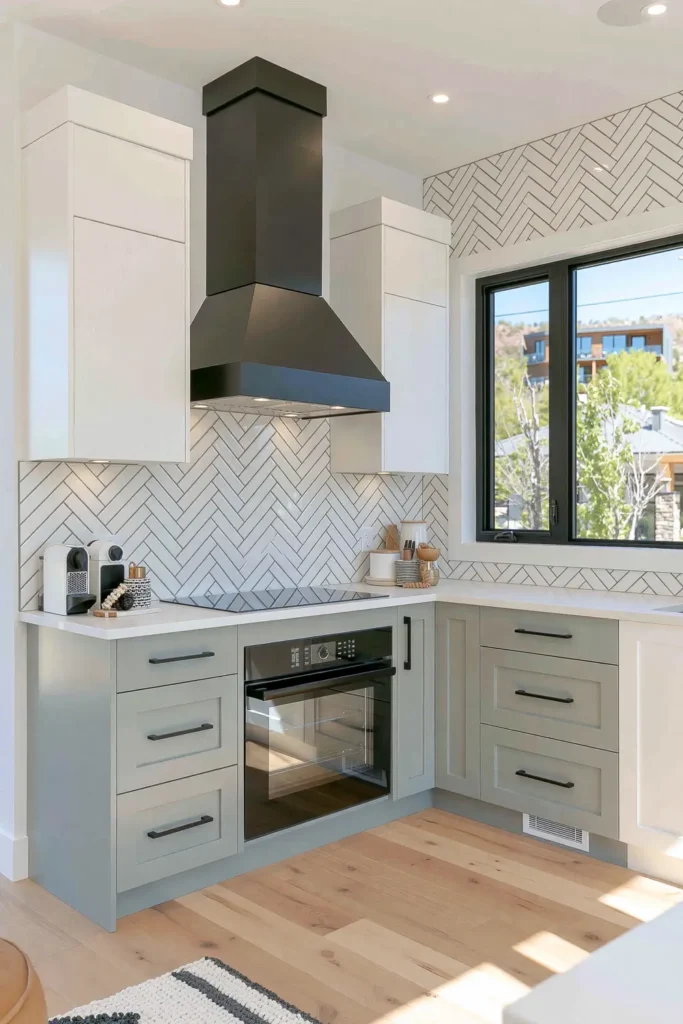
Build a Counter-to-Ceiling Black-and-White Mosaic Accent Wall
A black-and-white mosaic backsplash can turn one kitchen wall into a sophisticated focal point. Extending the pattern from the countertop to the ceiling gives it the impact of a full accent wall rather than a narrow practical surface.
The limited color palette keeps the design controlled, even when the mosaic itself is detailed. Black and white can feel graphic and modern, but the exact pattern can also bring in traditional or vintage character.
This treatment works especially well on a range wall or another area with fewer upper cabinets. The uninterrupted surface gives the mosaic enough room to be appreciated and prevents the pattern from feeling squeezed into a small space.
To keep the kitchen balanced, let nearby countertops and cabinetry remain quieter. Solid finishes and simple hardware provide visual relief while allowing the mosaic wall to hold attention.
A counter-to-ceiling installation can also make the room feel taller. The eye follows the continuous pattern upward, creating a stronger architectural effect.
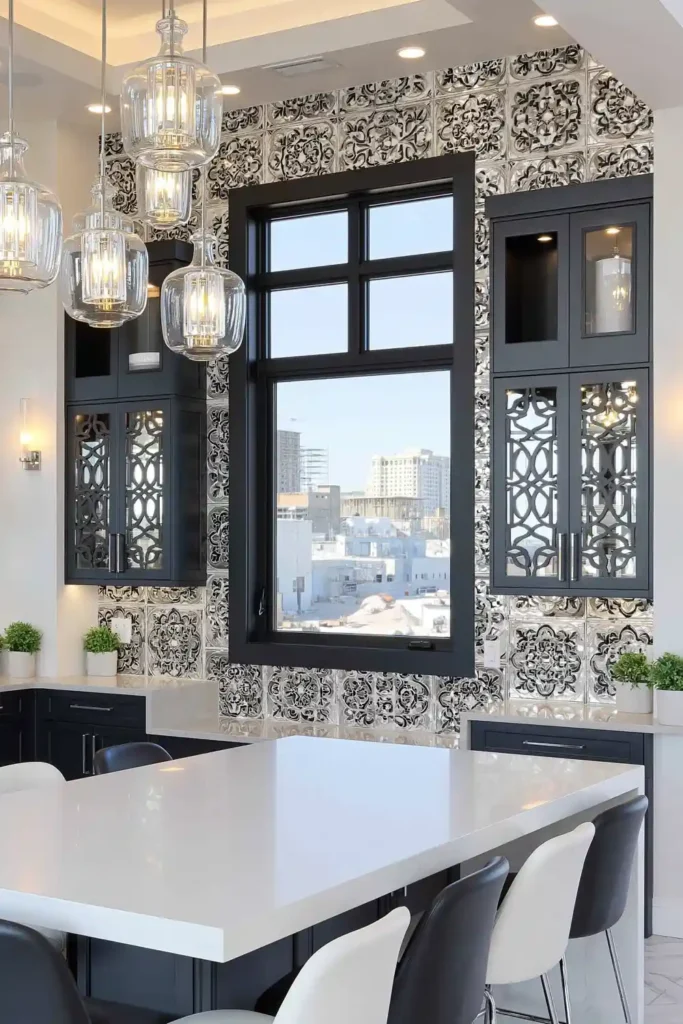
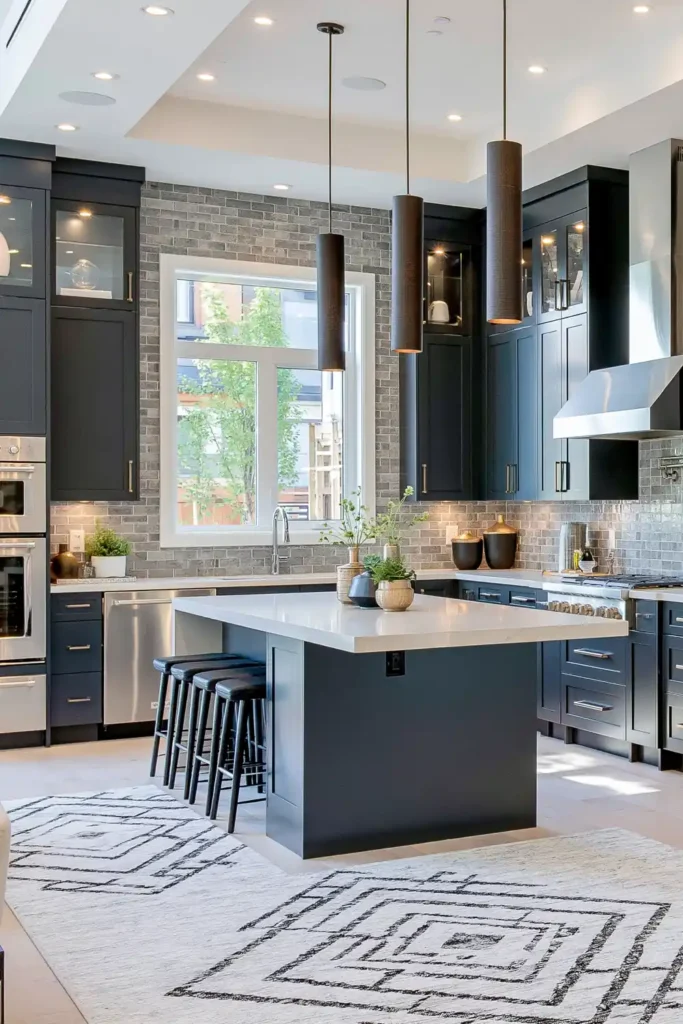
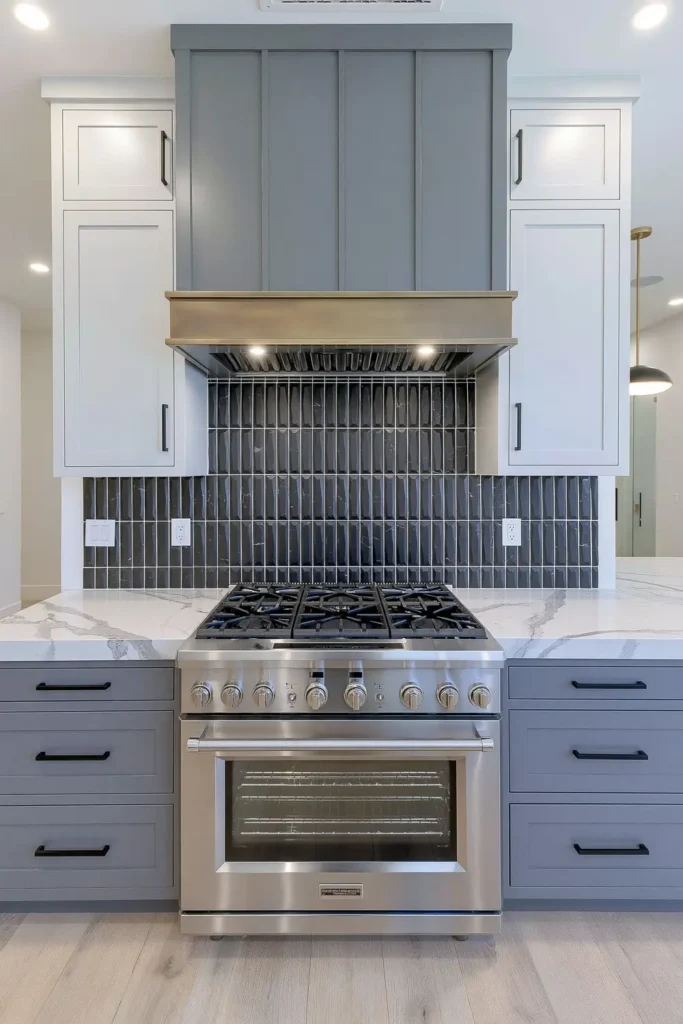
Pair Textured Gray Subway Tile With Charcoal Cabinets
Gray-toned textured subway tile creates subtle contrast when paired with charcoal cabinets. The colors stay within a similar family, but the difference in texture prevents the kitchen from feeling flat or excessively dark.
A raised, rippled, or handmade-looking surface catches light in varying ways across the wall. That variation gives the backsplash depth even when the color itself is restrained.
Chrome and black accents work naturally with this palette. Chrome can introduce a cleaner reflective note, while black details blend with the cabinetry and reinforce the darker look.
This combination is especially effective in a kitchen that aims to feel modern without becoming too stark. The familiar subway shape keeps the design approachable, while the textured finish delivers a more custom appearance.
Good lighting helps the surface show its character. Under-cabinet lights can bring out the light and dark areas in the tile, making the texture more visible throughout the day.
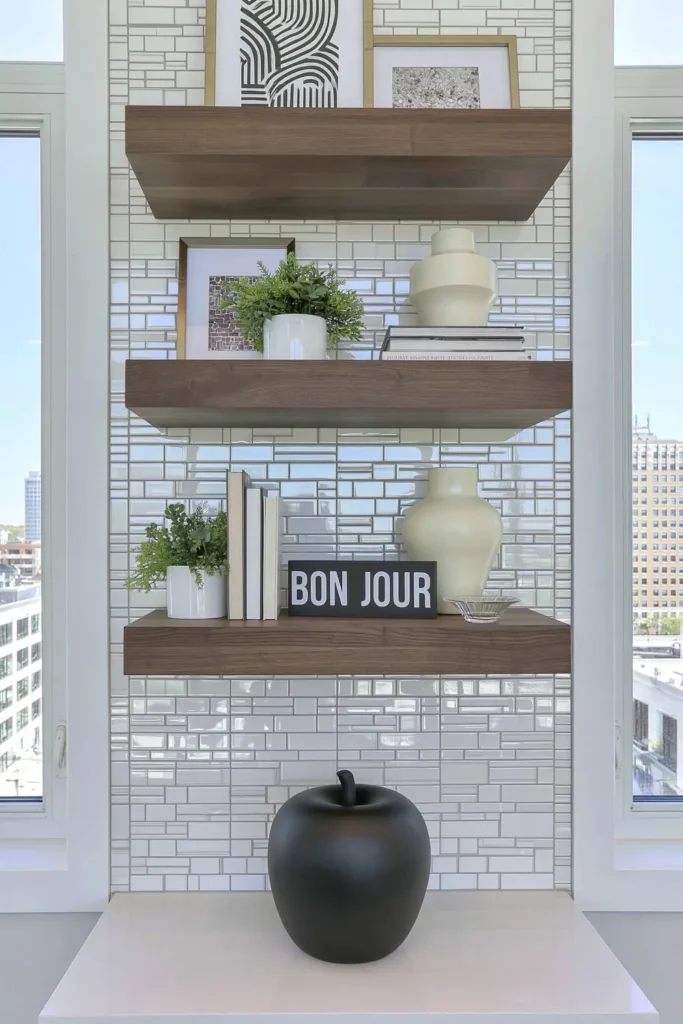
Add Floating Shelves for a More Functional Backsplash
Floating shelves can turn the backsplash area into useful storage without covering the entire wall with cabinets. They provide a place for everyday dishes, glasses, or small kitchen essentials while keeping the space feeling open.
The shelves work best when they are integrated into the backsplash design from the beginning. Tile, slab, or another wall finish can continue behind them, creating a clean background that makes the shelving feel intentional.
Wood shelves can impart warmth to stone or tile, while slim metal shelves create a more contemporary effect. The material should relate to other finishes in the room so the shelves feel connected rather than added later.
Do not overfill them. A small number of frequently used items will look more orderly and remain easier to reach. Leaving open space also allows the backsplash to remain visible.
This idea is particularly helpful in compact kitchens where storage matters but upper cabinets would feel heavy. It adds function while keeping a lighter, more spacious look.
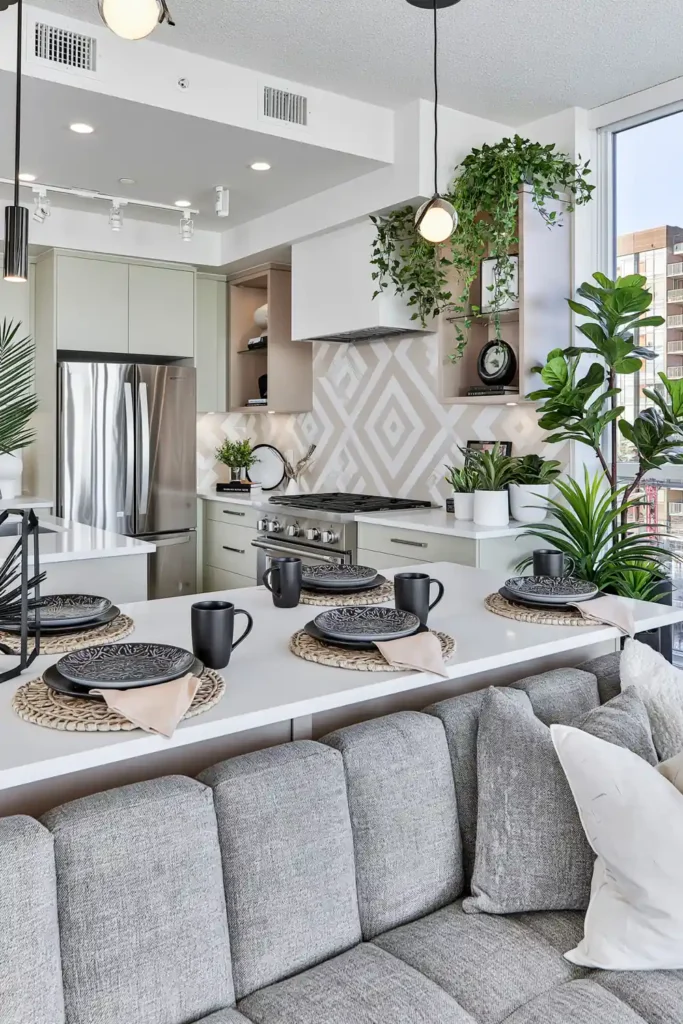
Create a Modern-Retro Look With Small Octagon Tiles
Small octagon tiles can bring a playful retro quality to the kitchen without making the room feel dated. Their compact geometric shape creates a detailed pattern that feels lively but still orderly.
This style works well when you want a backsplash with personality that does not dominate the entire room. A restrained color palette keeps the look refined, while a softer color can add a slightly feminine touch.
The tile shape pairs naturally with simple cabinetry and clean countertops. Because the pattern already includes plenty of visual detail, uncomplicated surrounding finishes help the kitchen stay balanced.
A contrasting grout can make each octagon more noticeable, whereas matching grout creates a quieter, more continuous surface. The right choice depends on whether you want the pattern to act as a focal point or a muted background.
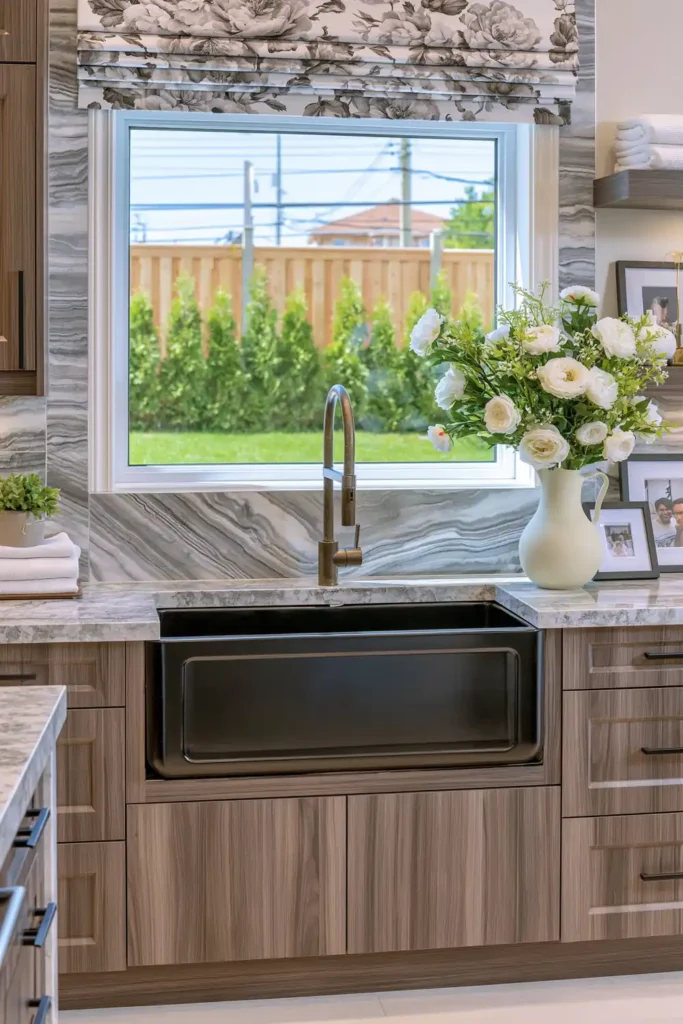
Frame a Kitchen Window With Decorative Backsplash Tile
A kitchen window can become part of the backsplash design instead of interrupting it. Extending decorative tile around the frame draws attention to the view and gives the sink wall a more complete appearance.
This idea works especially well when the window sits directly above the sink. The tile creates a practical surface around an area exposed to splashes while also turning the window into a natural focal point.
You can keep the same backsplash tile across the wall and around the opening for a continuous look. A patterned or shaped tile can make the frame more noticeable, while a simple tile holds the focus on the view outside.
Careful finishing around the edges is important. Neat cuts and clean trim help the tile follow the window shape without making the surrounding area appear busy or uneven.
The result feels particularly inviting in kitchens overlooking a garden, yard, or open landscape. The backsplash supports the view rather than competing with it.
Mix Stainless Steel and Back-Painted Glass Around the Range
Using two contrasting materials around the cooking area can create a bold and highly defined focal point. Stainless steel brings an industrial, practical quality, while back-painted glass introduces smooth color and a polished finish.
These materials can be positioned on either side of the range or used to frame the hood. Their differences in texture and reflectivity make the cooking zone stand out from the rest of the kitchen.
Stainless steel works naturally near appliances because it seems durable and easy to coordinate. Back-painted glass adds a cleaner block of color and can help soften the harder metallic surface.
For the combination to feel intentional, repeat one of the finishes elsewhere in the room. Stainless steel may connect to appliances or hardware, while the glass color can echo cabinetry, seating, or nearby decor.
Keep the material transitions crisp. Straight edges and careful alignment allow the contrast to look architectural rather than pieced together.
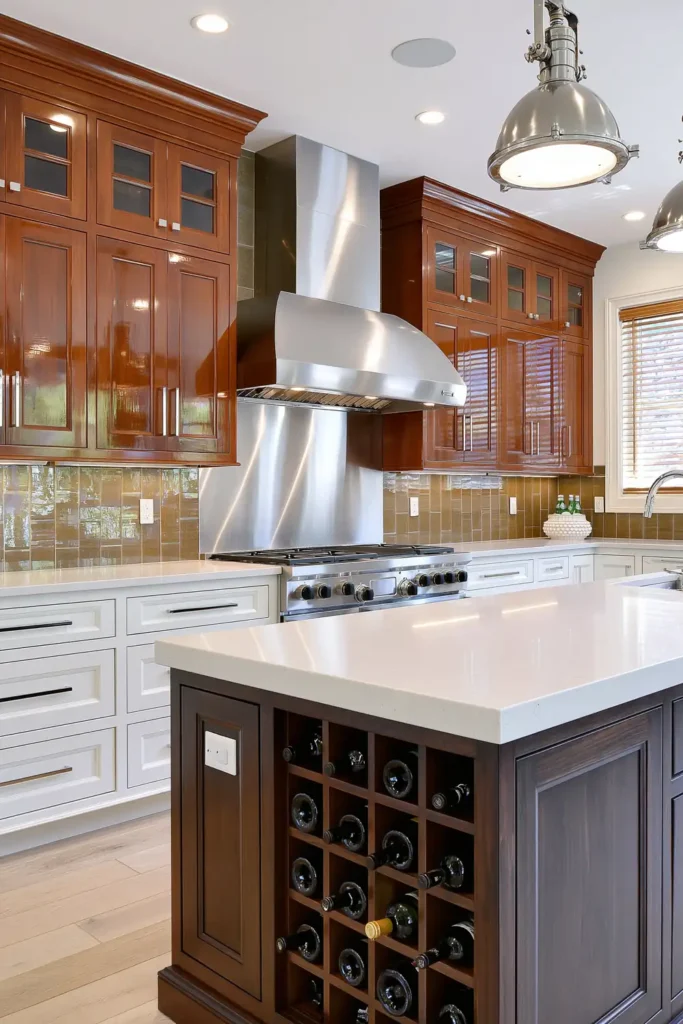
Add Playful Texture With Penny Round Tile
Penny round tile creates a lively surface through rows of small circular pieces. The repeating shape adds texture and movement while remaining versatile enough for both modern and retro kitchens.
The pattern can look subtle in a single neutral color or more decorative when several tones are mixed together. Glossy finishes reflect light and make the circles stand out, whereas matte tile creates a softer effect.
Because the tiles are small, grout becomes an important part of the design. Contrasting grout emphasizes every circle and gives the backsplash a graphic appearance. Matching grout blends the shapes into a gentler textured field.
Penny rounds work well across a full backsplash or in a smaller feature area behind the sink or range. Their scale makes them especially useful when you want detail without relying on a large, dramatic pattern.
The curved shape can also soften a kitchen packed with straight cabinet lines and rectangular appliances. That contrast gives the room a more relaxed and distinctive character.
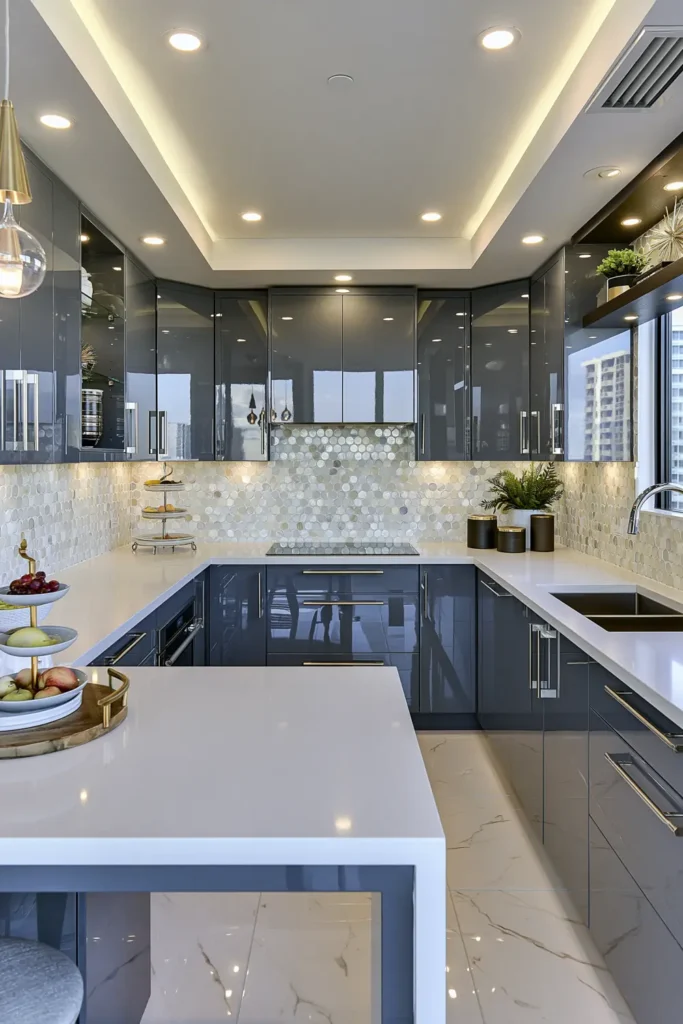
Use Elongated Hexagon Tile With Bright Color Accents
Elongated hexagon tile brings a sharper, more contemporary feel to the backsplash than a traditional honeycomb pattern. Its stretched shape creates clean movement across the wall while still keeping the familiar geometry of hexagon tile.
This style works especially well in modern kitchens that need a little more personality. Bright orange or yellow accents can break up a neutral backsplash and add heat without covering the whole wall in strong color.
The accent tiles can be scattered through the pattern or grouped in a small section to create a more deliberate focal point. Keeping the surrounding tiles neutral helps the brighter shades feel playful rather than overwhelming.
A simple countertop and streamlined cabinetry allow the shape and color to remain the main attraction. The result feels lively and modern while still being easy to coordinate with the rest of the kitchen.
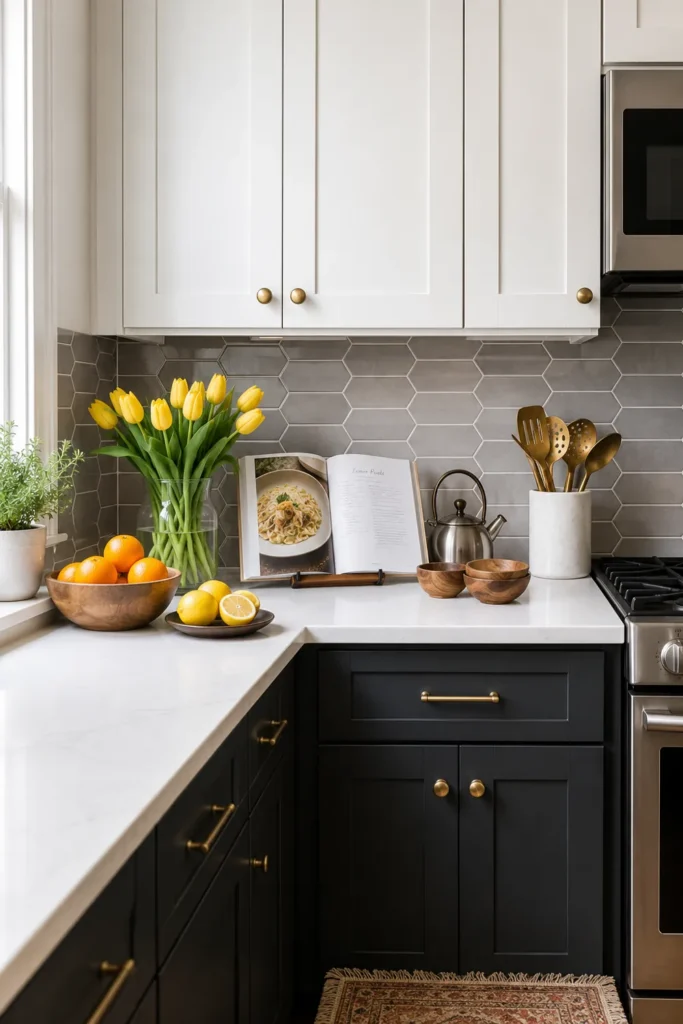
Bring Country Elegance to a Dog-Washing Station With Basketweave Tile
A basketweave tile pattern can give a dog-washing station the same thoughtful finish as the rest of the home. Its woven appearance gives depth and texture to a practical area that might otherwise feel purely functional.
The interlaced pattern suits country, traditional, and farmhouse-inspired spaces particularly well. It adds detail without relying on a bold color, making it easier to coordinate with nearby flooring, cabinetry, or utility-room finishes.
Basketweave tile is especially effective on the back wall of the washing area, where it can handle splashes while creating a clear decorative feature. Extending it across the lower walls can also help define the station as its own zone.
Because the pattern already contains plenty of movement, simple surrounding materials work best. Plain trim, restrained fixtures, and a neutral base allow the woven design to stand out without making the area feel busy.
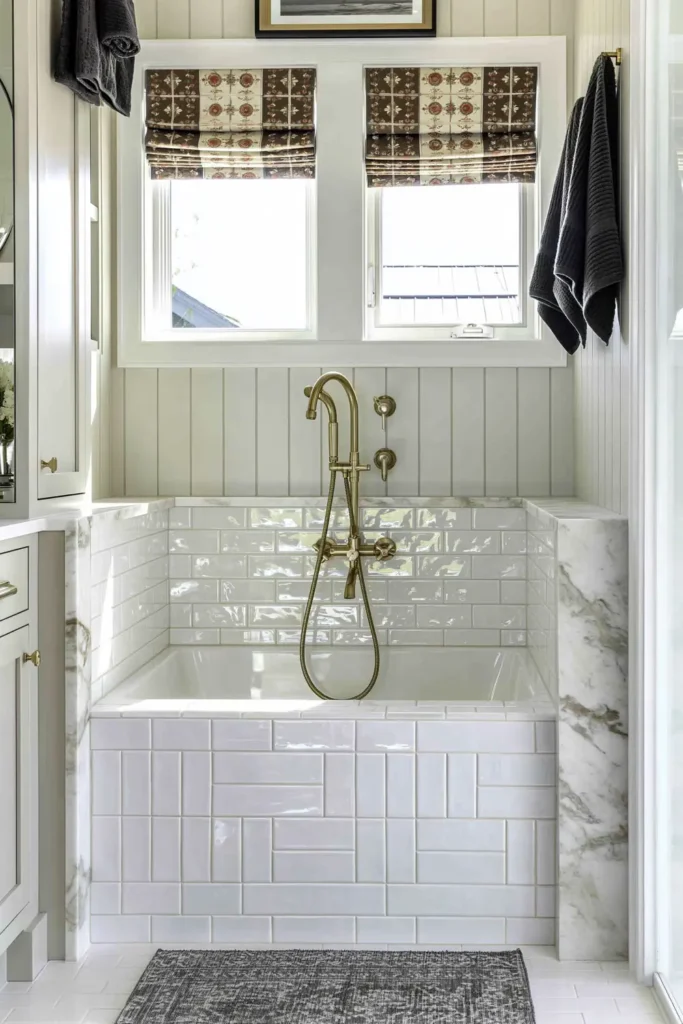
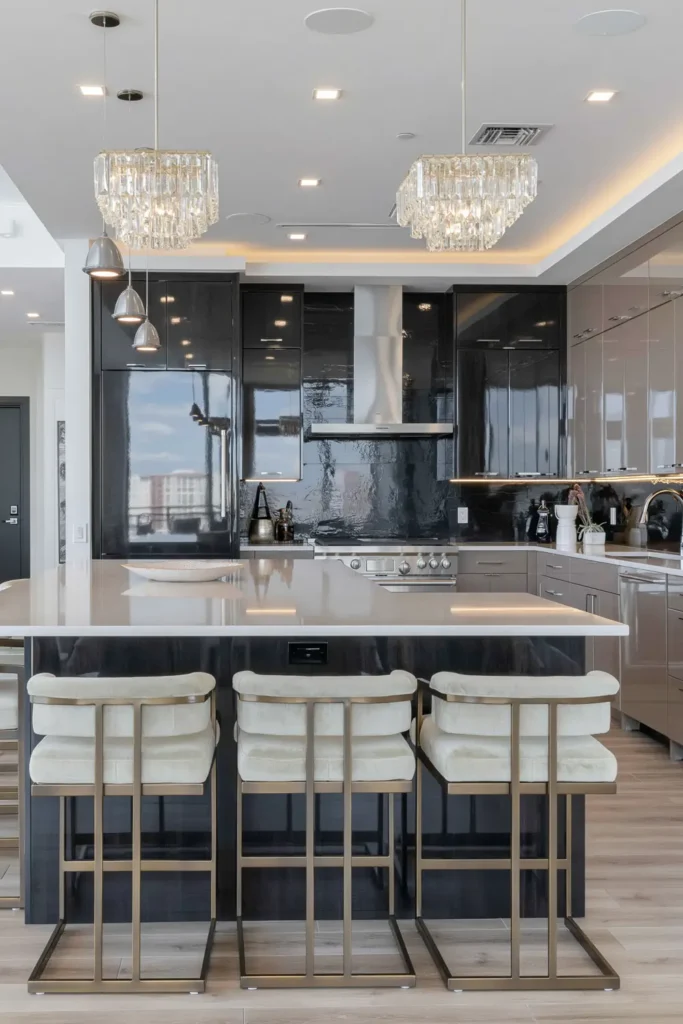
Create Bold Contrast With a Black Kitchen Backsplash
A black backsplash can give the kitchen a strong, elegant focal point, especially when paired with lighter cabinets or countertops. The contrast makes the wall feel intentional and gives the room a more defined modern character.
This look can work with tile, slab, or another smooth surface. Glossy finishes reflect more light and feel polished, whereas matte black creates a softer, more understated effect.
In a smaller kitchen, good lighting is important so the dark surface does not make the room feel closed in. Under-cabinet lighting can brighten the work area and reveal subtle texture in the backsplash.
Black also coordinates naturally with stainless steel, warm wood, white stone, and metallic hardware. Keeping the surrounding palette simple helps the backsplash feel timeless rather than overly dramatic.
Add Architectural Depth With Raised 3D-Patterned Tile
Raised 3D-patterned tile gives a backsplash a sculptural quality that changes as the light moves across it. The uneven surface creates highlights and shade, making the wall feel more architectural than a flat tile installation.
This type of backsplash works best where the texture can remain visible. A clear stretch of wall behind a sink, range, or open counter area allows the pattern to become a true design feature.
Colored 3D tile can make the effect even stronger, but the shape often provides enough interest on its own. A neutral shade keeps the look sophisticated while still showing the relief of the surface.
Lighting has a major influence on the final result. Natural side light or under-cabinet lighting can emphasize the raised forms and make the pattern appear different throughout the day.
Since the backsplash already has a strong visual presence, the surrounding cabinets and counters should stay relatively simple. That balance lets the texture become the focal point without making the kitchen feel crowded.
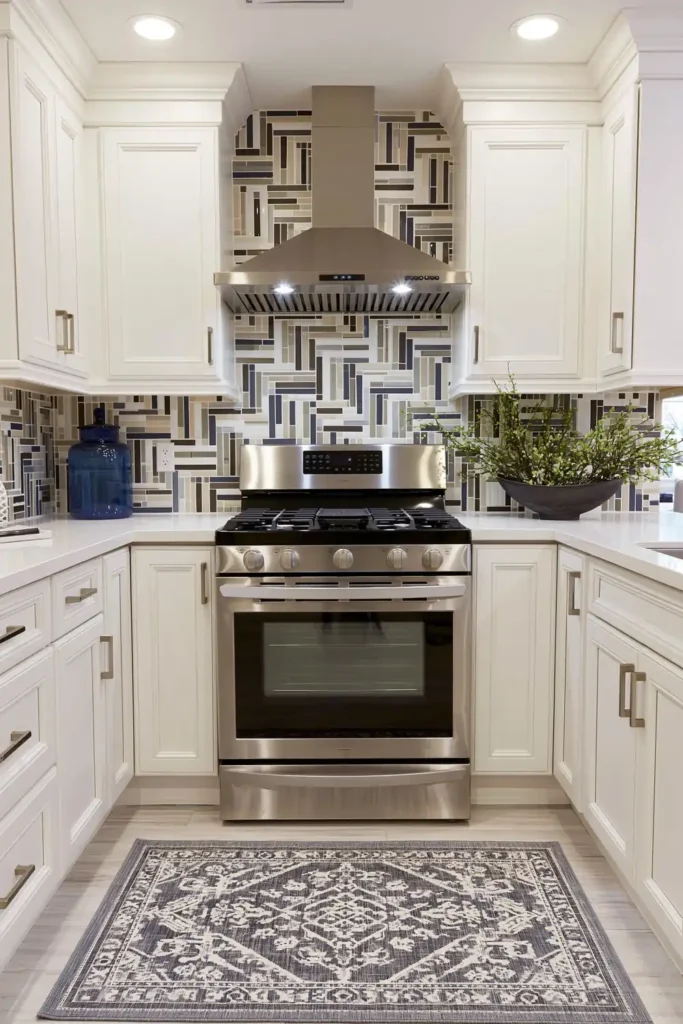
Introduce Subtle Color With Small Multicolored Rectangular Tile
Small rectangular tiles in a mix of colors can bring gentle variation to a kitchen backsplash without creating an overly busy look. Their compact shape adds texture, while the blended shades give the wall more depth than a single-color tile.
This approach works especially well when the colors stay within a coordinated palette. Light grays, creams, warm browns, muted blues, or other related tones can create a layered surface that still feels calm and easy to live with.
The narrow rectangular format gives the backsplash a fine, detailed pattern. Depending on the layout, the tiles can feel neat and contemporary or slightly handcrafted and relaxed.
Matching grout helps the different shades flow together, while contrasting grout outlines each piece and makes the pattern more noticeable. For a subtle result, choose a grout color that sits close to the lightest or most common tile shade.
Because the backsplash already includes several colors, keep the surrounding countertops and cabinets relatively simple. This allows the tile to add interest while preserving a balanced, cohesive kitchen.
Choosing the Right Backsplash for Your Kitchen
The best backsplash is not always the boldest one. It is the option that fits naturally with your cabinets, countertops, lighting, and the way you use the kitchen every day.
Start by deciding whether you want the backsplash to function as a focal point or provide a quiet background. A dramatic mosaic, black surface, exposed brick wall, or raised 3D tile can lead the design, while subway tile, soft multicolored rectangles, or an uninterrupted porcelain slab can support the room more subtly.
It also helps to think about the amount of pattern already present. If your countertops have strong veining or your cabinets carry a deep color, a simpler backsplash may create better balance. In a restrained kitchen, shaped tile, contrasting grout, or a counter-to-ceiling installation can add the character the room needs.
Choose the idea that suits your space rather than following a trend simply because it looks attractive elsewhere. When the material, scale, and placement feel right for your kitchen, the backsplash can make the whole room feel more complete.