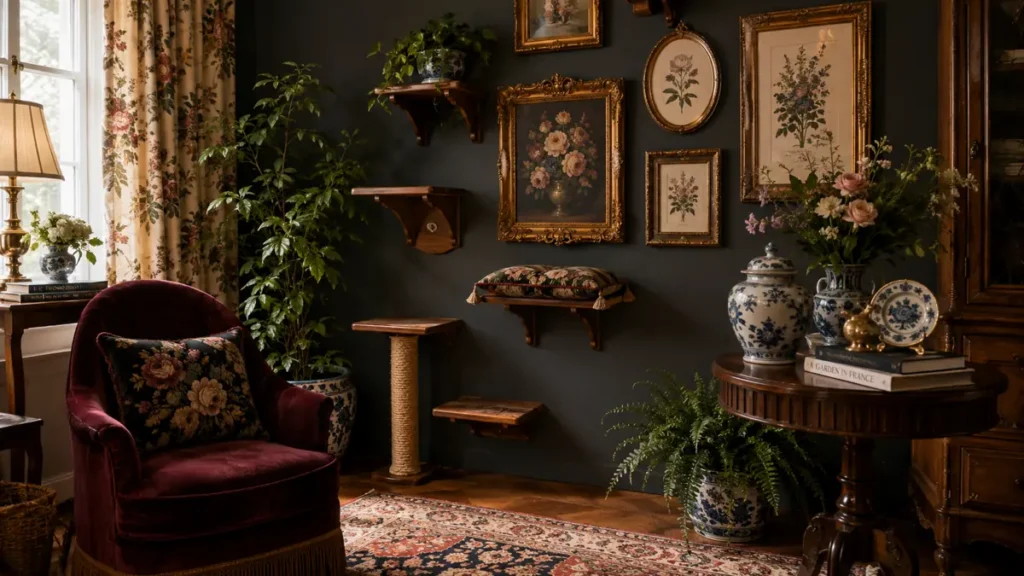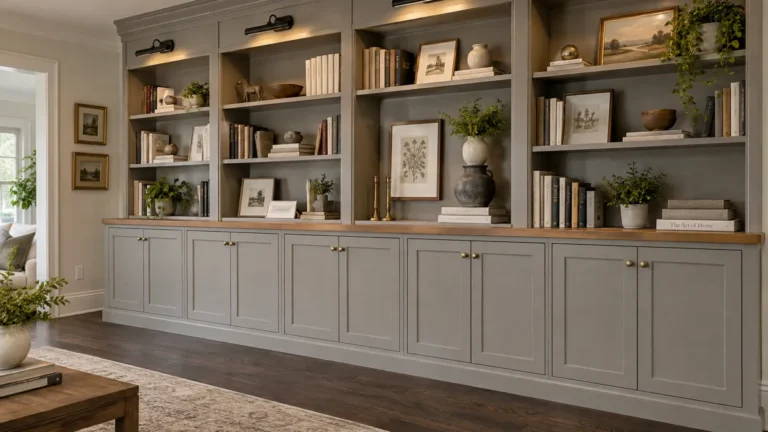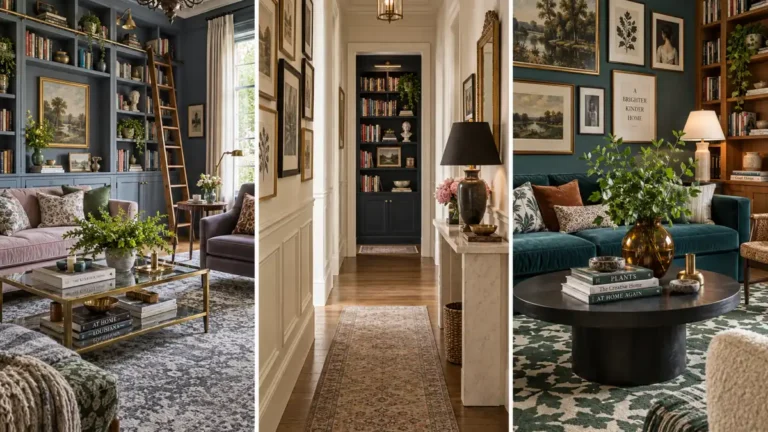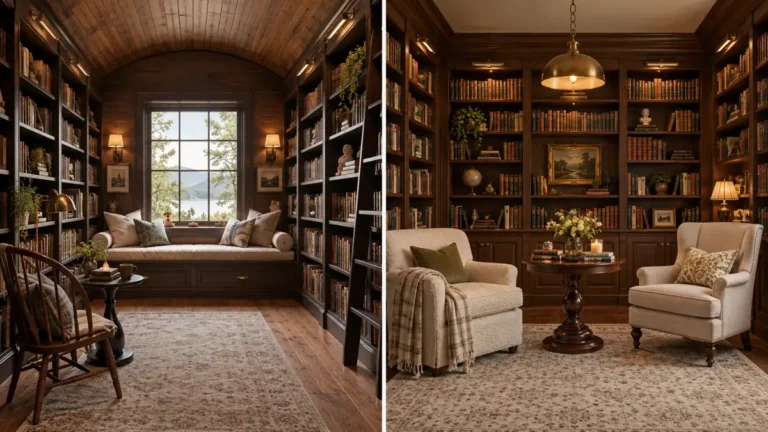

I’ve always liked the idea of pet furniture that feels like it belongs in the room instead of sitting there like an afterthought. Cat shelves, towers, hammocks, and beds can be practical, but they can also carry a lot of personality when you treat them like part of the decor.
These artistic cat shelves decor ideas lean into vintage patterns, soft fabrics, ornate details, and collected pieces. Think needlepoint, chinoiserie, carved wood, velvet, gingham, rattan, mirrors, and old-fashioned floral prints.
The nice thing about this style is that it doesn’t need to feel too polished. A little mix of antique texture, cozy fabric, and useful cat-friendly design can make the whole space feel more personal.
Needlepoint Cushion Cat Tree With Vintage Floral Patterns
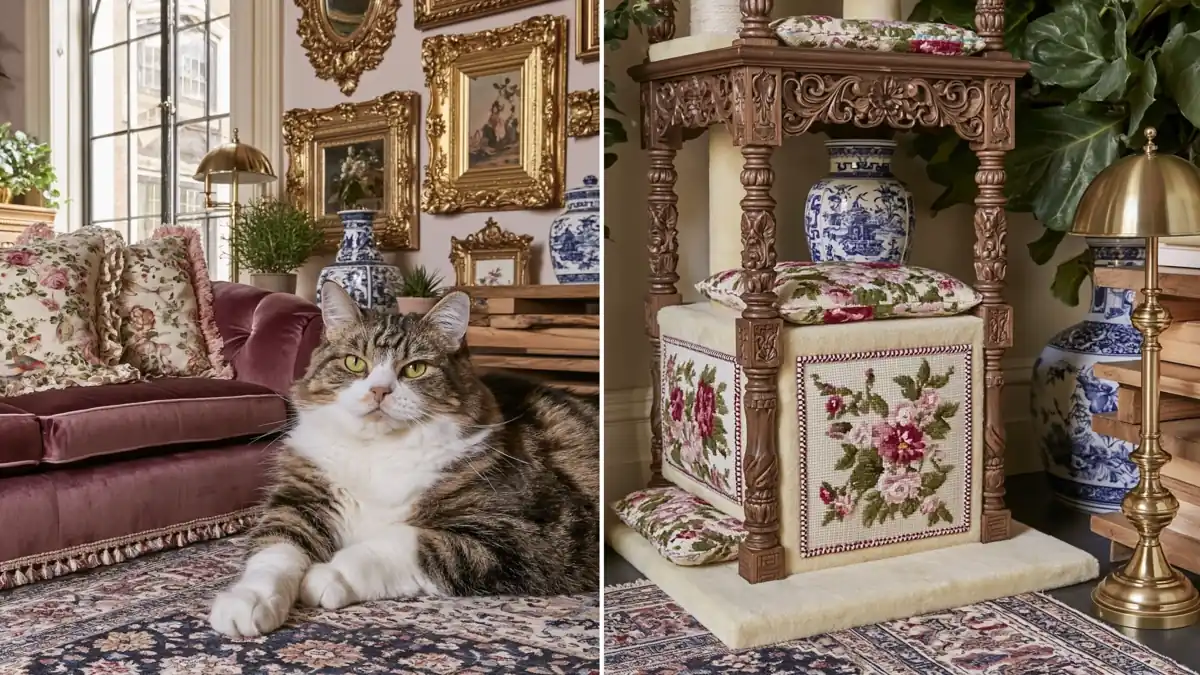
A needlepoint cushion cat tree works well when you want the cat furniture to feel softer and more collected. Instead of plain beige platforms, the perches can be covered with vintage-style floral cushions that look closer to something you would find on an old armchair or footstool. Roses, peonies, and botanical patterns give the cat tree a more decorative look without taking away its purpose.
This idea fits especially well in a living room with a velvet sofa or other rich fabrics. Jewel tones like deep green, burgundy, navy, and plum can make the cushions feel warm and intentional. The needlepoint texture also adds a handmade quality, which helps the cat tree blend with vintage decor rather than looking like a store-bought pet item.
For a practical setup, attach the cushions securely with heavy-duty velcro so they can be removed for cleaning. I’d keep the main frame simple and let the floral fabric do the work.
Chinoiserie Blue and White Porcelain Print Cat Condo
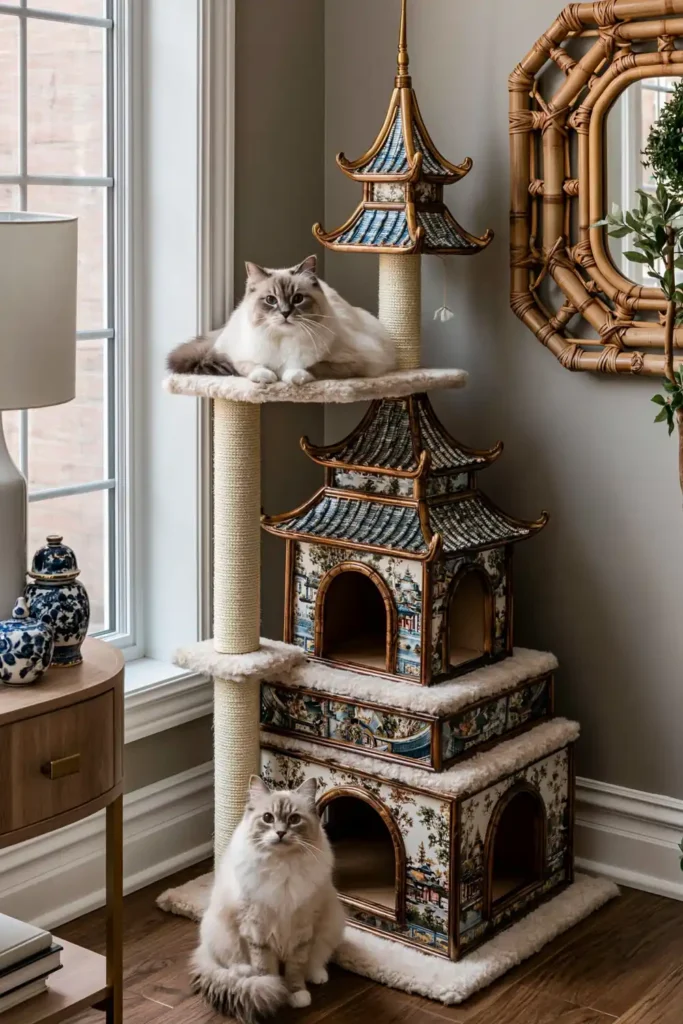
A blue and white chinoiserie cat condo can look surprisingly elegant when it is placed near other classic pieces. The key is using porcelain-inspired patterns with pagodas, cherry blossoms, birds, or soft landscape details. These prints make the cat condo feel connected to traditional decor instead of standing apart from it.
Peel-and-stick wallpaper is a useful way to get this look without rebuilding the entire condo. You can cover the outer panels with a blue and white print, then balance it with bamboo trim or nearby natural textures. Placing it close to a console table with ginger jars makes the whole corner feel styled rather than accidental.
I’d keep the surrounding decor fairly calm so the pattern has space to stand out. A white wall, a wood console, and a few blue accents nearby can make the cat condo feel like part of a thoughtful room arrangement.
Cat Tower Wrapped in Vintage Wallpaper
Wrapping a cat tower in vintage wallpaper is one of those ideas that turns a basic pet piece into a real statement. Large-scale damask, toile scenes, chinoiserie birds, or William Morris-style botanical prints can make the tower feel decorative from every angle. This works best when the cat tower sits in a highly visible area instead of being tucked away.
The wallpaper pattern matters a lot here. A bold damask can feel formal, while botanical prints bring in a softer Arts and Crafts feeling. Toile gives the piece a French country look, especially when the print has small scenic details. A clear water-based polyurethane coat can help protect the surface while keeping the pattern visible.
For balance, I’d avoid adding too many other busy patterns right beside it. Let the wrapped tower be the main decorative feature, then repeat one color from the wallpaper elsewhere in the room through a cushion, vase, or throw.
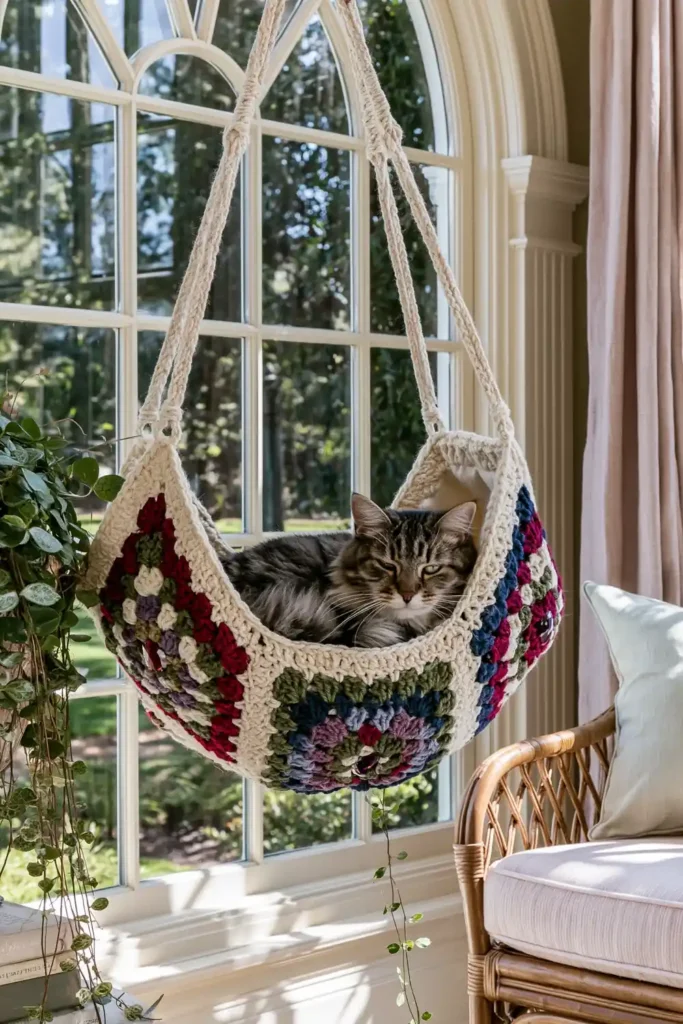
Crocheted Granny Square Cat Hammock in Jewel Tones
A crocheted granny square cat hammock brings a cozy, handmade feeling to a doorway, wooden frame, or existing cat tree. The granny square pattern has a nostalgic charm, and when it is done in jewel tones, it feels more grown-up than playful. Emerald, ruby, sapphire, and amethyst shades can give the hammock warmth and depth.
This idea works nicely when the rest of the room already has vintage textiles, layered throws, or colorful accents. The crochet texture adds softness, while the hammock shape keeps it useful for a cat that likes to lounge slightly above the floor. A simple wooden frame can help the fabric stand out without making the piece feel too busy.
For a practical version, I’d make sure the yarn is tightly worked and the hammock is securely attached at each corner. The decorative part must still feel sturdy enough for daily use, especially if it becomes a favorite resting place.
Petit Point Embroidered Cat Tree Perches for a Library
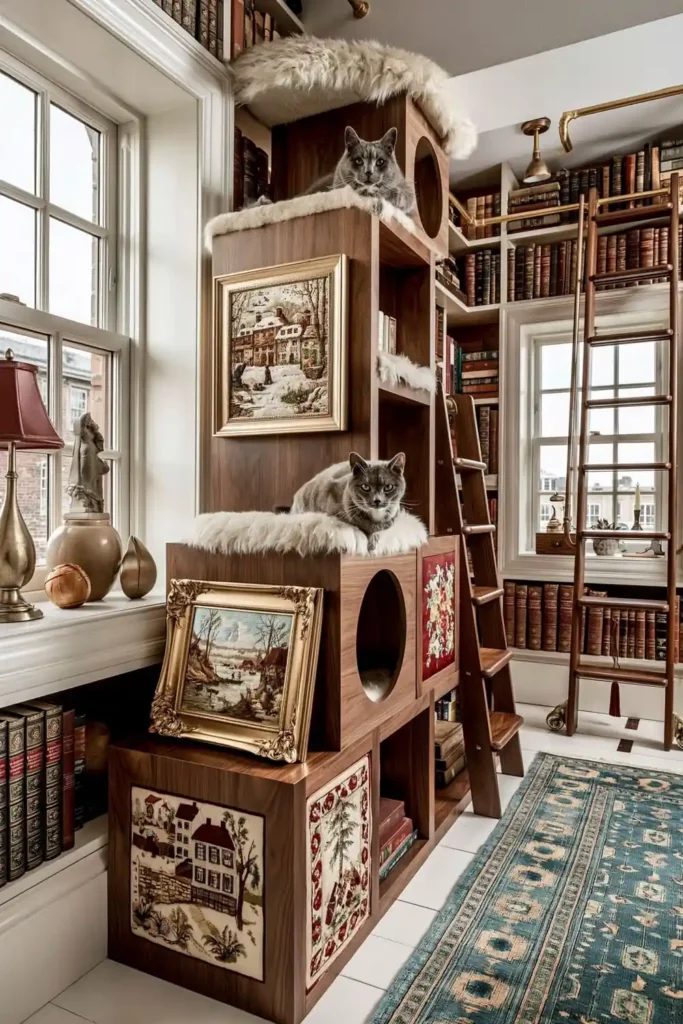
Petit point embroidered perches are a lovely fit for a library because they already have that quiet, old-world feeling. The small stitched details can look similar to antique chair seats or piano benches, especially when the patterns include tiny florals, scenic motifs, or delicate borders. It gives the cat tree the feeling of a collected furniture piece rather than a separate pet structure.
A walnut frame would perfectly suit this idea because the darker wood gives the embroidery some weight. Brass details can add a small traditional touch, while clear acrylic supports can keep the structure from feeling too heavy. The mix of wood, embroidery and subtle shine makes the piece feel layered without being cluttered.
For a realistic setup, I’d place this near bookshelves or beside a reading chair. Keeping the surrounding colors deep and calm helps the embroidered perches feel intentional, almost like they belong with the rest of the room’s old furniture.
Victorian Carved Wood Cat Tower With Ornate Details
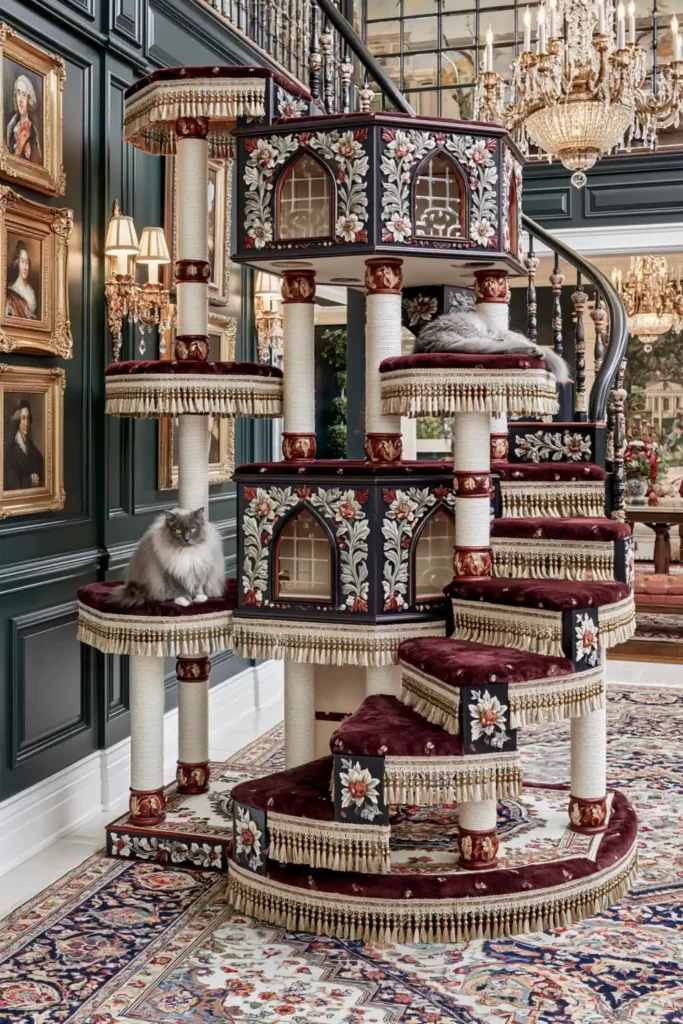
A Victorian carved wood cat tower works best when it embraces detail rather than trying to disappear. Turned legs, rosettes, acanthus leaves, scrollwork and corner brackets can make the structure feel more like a small antique display stand. In a traditional room, these details blend naturally. In a modern room, they can become an interesting contrast.
Dark walnut stain gives this kind of cat tower a formal parlor feeling, while black paint makes it moodier and a little more dramatic. Velvet cushions soften the carved wood, and touches of gold leaf can highlight the raised details without making the whole piece feel too shiny. Fringe trim can also work if the room already has other traditional fabrics.
I’d use this idea in a corner where the shape can be seen clearly. The carving is the main feature, so it helps to keep nearby furniture fairly simple and let the tower act like a decorative accent piece.
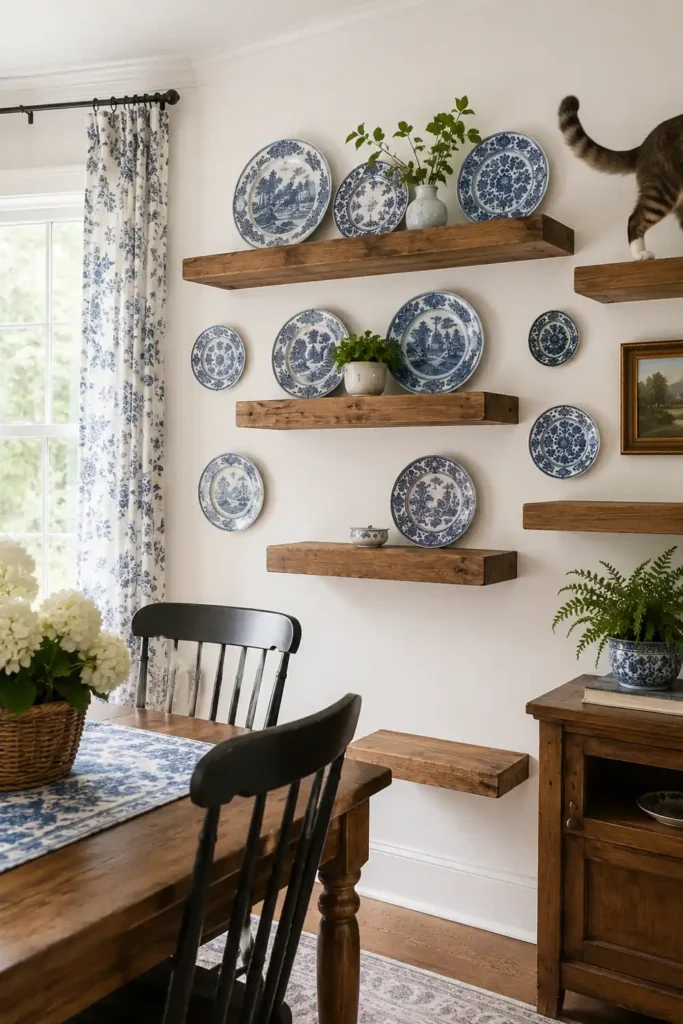
Artistic Cat Shelves Decor Ideas With Vintage Plate Displays
Cat shelves mixed with a vintage plate display can turn a plain wall into a focal point. Picture sturdy wall shelves arranged among mismatched floral plates, blue and white transferware, pink rose patterns, and green ivy designs. The shelves still give a cat places to climb and rest, but the plates help the whole wall look like a collected display.
This idea works best when the shelves and plates are planned together instead of being added randomly. Picture ledges or plate display shelves can frame the cat pathway, while wood cat shelves can be painted or stained to suit the room. The ceramic plates bring color and pattern, and the cat shelves add structure and movement across the wall.
For safety, I’d keep plates securely mounted and place them outside the main jumping path. The goal is to create a charming gallery wall that looks decorative but still gives the cat enough clear space to move comfortably.
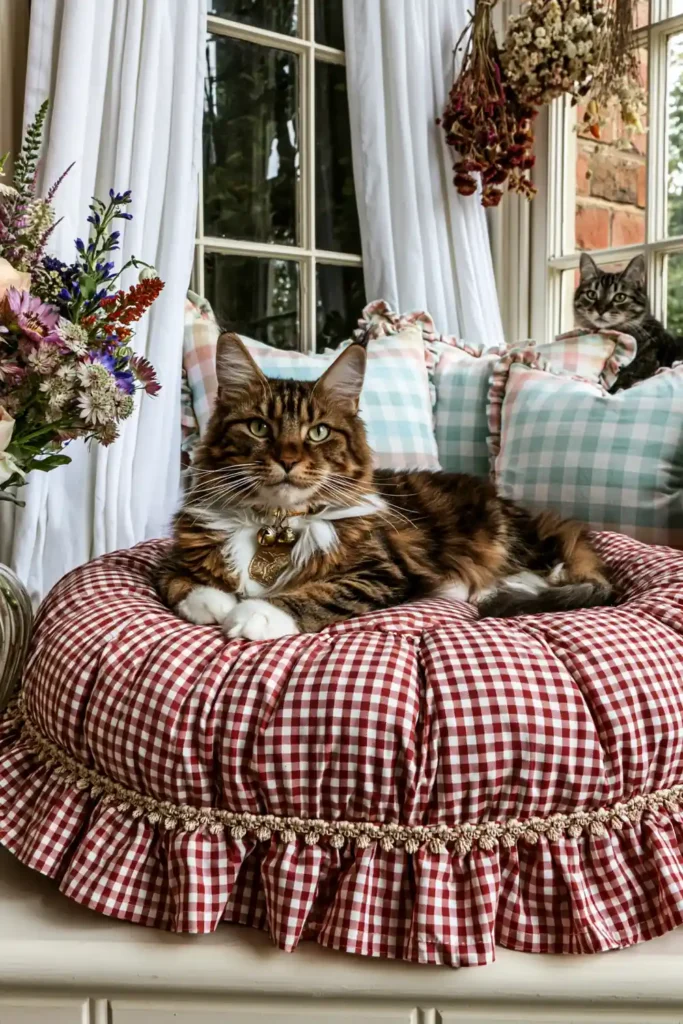
Gingham Check Cat Bed in Cottage Core Pastels
A gingham check cat bed has a softer cottage-style charm that works well in a window seat, bookshelf or comfortable nook. Pastel checks feel cheerful without being too loud, especially in shades like pale blue, soft pink, butter yellow or sage. Lace trim and small ruffles can make the bed feel more like a small cushion from an old country bedroom.
This idea pairs nicely with vintage chairs, painted shelves, and dried flowers in a simple vase. The gingham fabric brings pattern, while lace adds a delicate edge. If the cat bed is placed in a bookshelf, it can feel tucked into the room rather than sitting on the floor as a separate item.
For everyday use, I’d choose washable fabric and keep the ruffles modest so they do not get messy too quickly. A small pastel bed in a sunny spot can be decorative, but it should still be easy to clean and comfortable enough for daily naps.
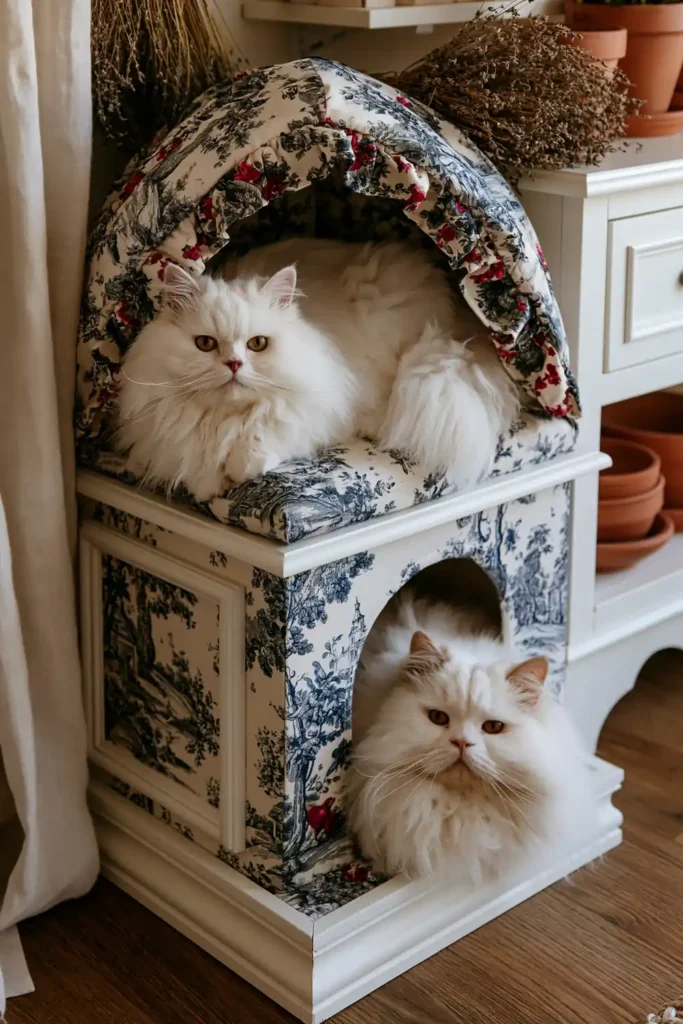
Toile de Jouy Cat Tower With French Country Style
A Toile de Jouy cat tower has a quiet French country feeling because the pattern already tells a small story. Shepherds, trees, countryside scenes, and soft vintage vignettes can make the tower feel more like a fabric-covered furniture piece. The single-color print on a cream or white background keeps it detailed without becoming too heavy.
This idea works especially well in a room with a distressed white cabinet, a woven market basket, or lavender placed in a pitcher. Those details support the toile pattern without competing with it. The cat tower itself can stay simple in shape, because the fabric is what gives it character.
For a practical approach, I’d use toile only on the cushions or main visible panels, then keep scratch-friendly areas in a plainer material. That way, the piece still looks decorative from across the room but remains useful for climbing, resting, and daily cat habits.
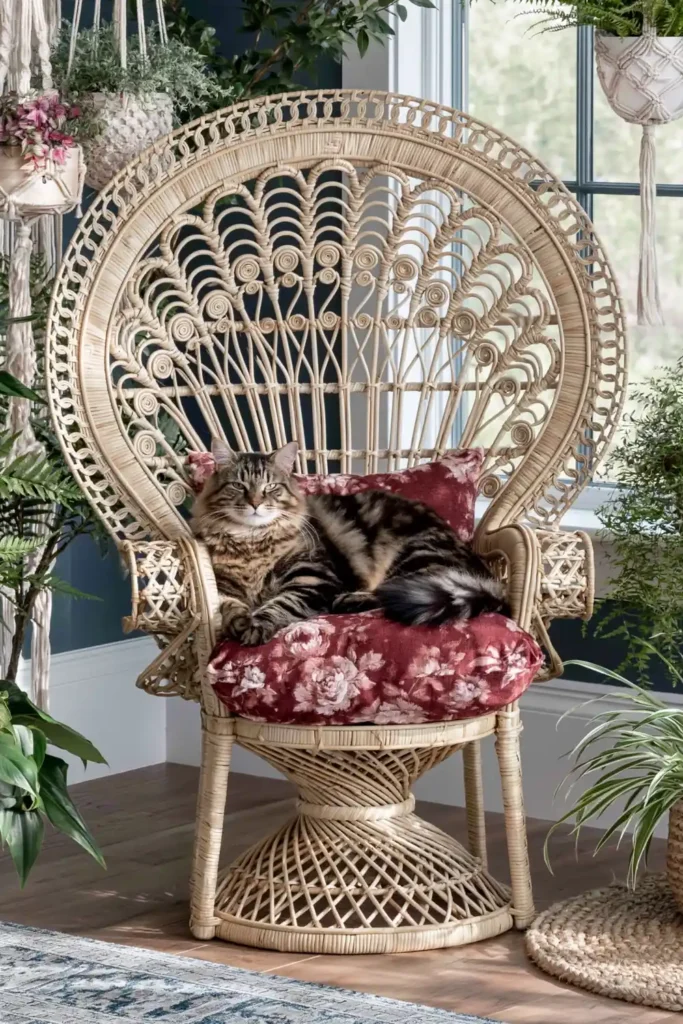
Rattan Peacock Chair Converted Into a Cat Throne
A rattan peacock chair already has the kind of shape that makes a corner feel special. When converted into a cat throne, the huge fan-shaped back becomes the main decorative feature, while the seat can be softened with a thick velvet cushion. Natural rattan gives the piece a relaxed vintage look, but white or black spray paint can shift it toward a brighter cottage style or a moodier statement.
This idea works nicely with potted plants or a fiddle leaf fig nearby, because the rattan shape feels tropical and collected. Fairy lights wrapped around the peacock fan can add a warm evening glow, especially if the chair sits in a quiet corner of the room.
I’d keep the cushion thick enough for comfort but not so tall that it hides the rattan detail. The chair should still read as a peacock chair first, with the cat bed worked naturally into the seat.
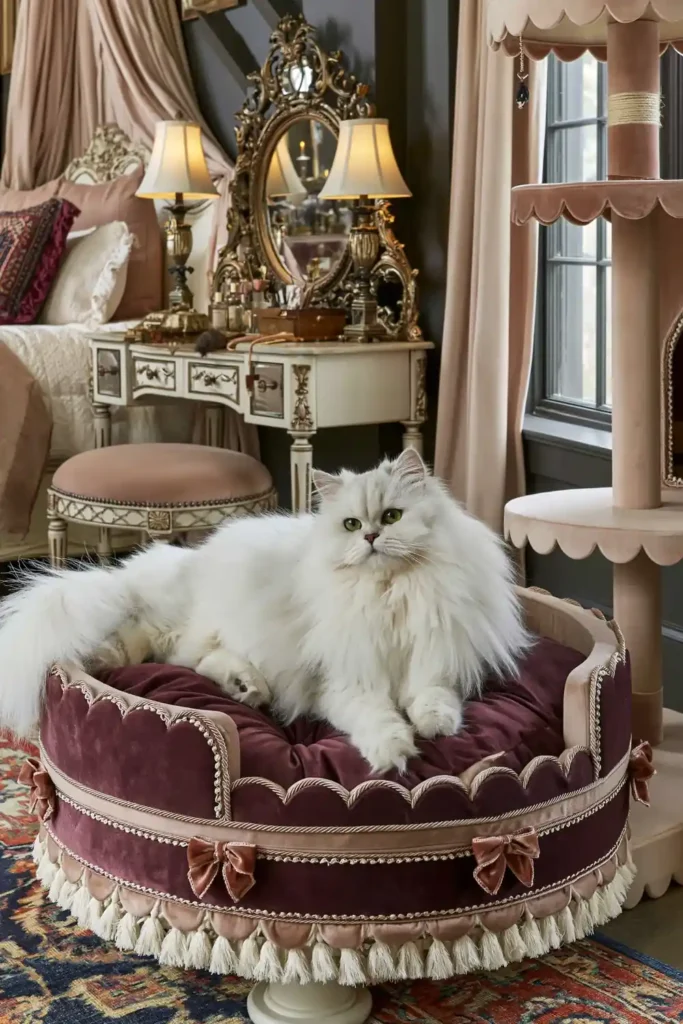
Cat Tree With Scalloped Edges and Floral Trim
Scalloped edges can make a cat tree feel softer and more personalized, especially in a bedroom or dressing room. Instead of straight platforms, each level can have a curved edge that feels more like vintage furniture or decorative fabric trim. Blush pink velvet, floral ribbon and jewel-toned accents can make the whole piece feel gentle, but still detailed.
The materials do a lot of the work here. Velvet gives the platforms a soft surface, cotton keeps some areas practical, and faux leather can add durability on edges that get more wear. Floral ribbon trim can be added along the platform borders so the cat tree has a finished look from the side.
In a balanced design, I would avoid covering every inch in trim. A scalloped edge on the main perches and a neat ribbon border can suffice. The result feels decorative, without becoming too delicate for real use.
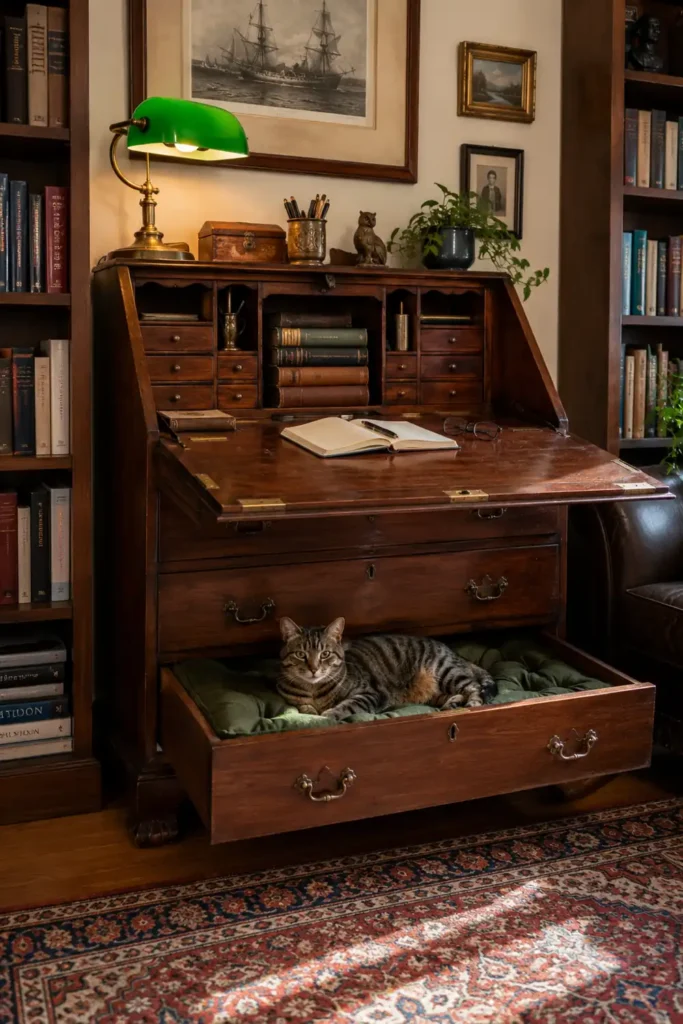
Vintage Secretary Desk With a Hidden Cat Cubby
A vintage secretary desk with a hidden cat cubby is a clever option when you want pet furniture to disappear into regular furniture. The fold-down writing surface, small drawers, and upper compartments already make the desk useful in a home office, entryway, or living room. By turning the lower cabinet area into a plush cubby, the piece can serve both the room and the cat.
Walnut wood gives this idea a classic look, and a velvet cushion inside the cubby makes it feel cozy. Plants displayed on top of the desk can soften the height and help the piece feel styled rather than purely functional. The desk still keeps its vintage character while quietly adding a resting place.
For comfort, I’d make sure the cubby entrance is easy to access and well ventilated. A removable cushion inside would also make cleaning simpler without changing the outside look of the desk.
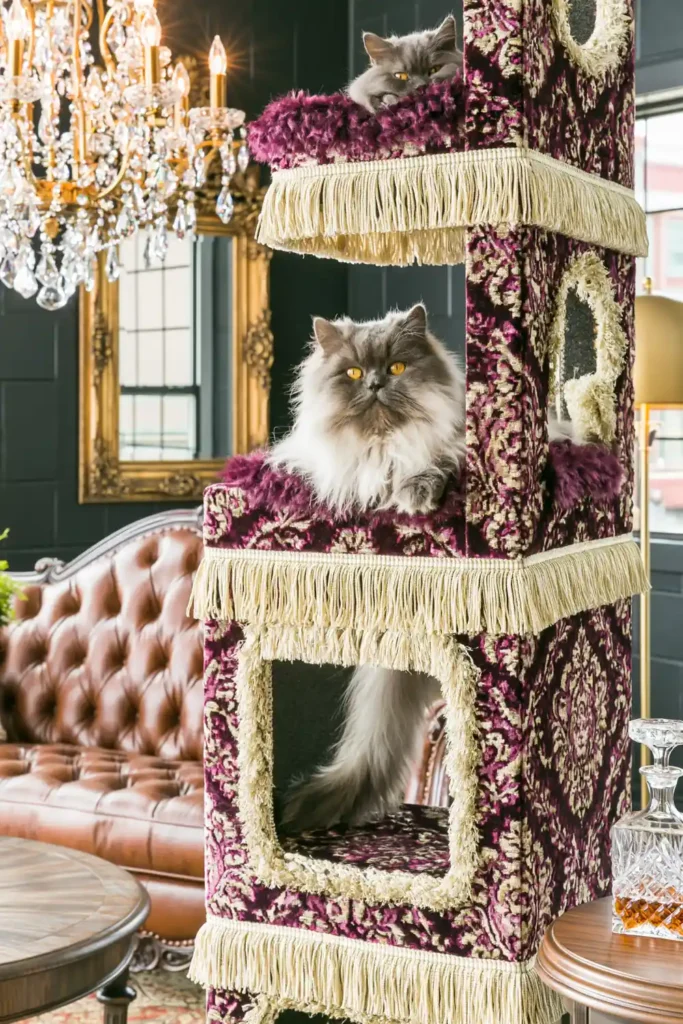
Damask Velvet Cat Tower With Fringe and Tassels
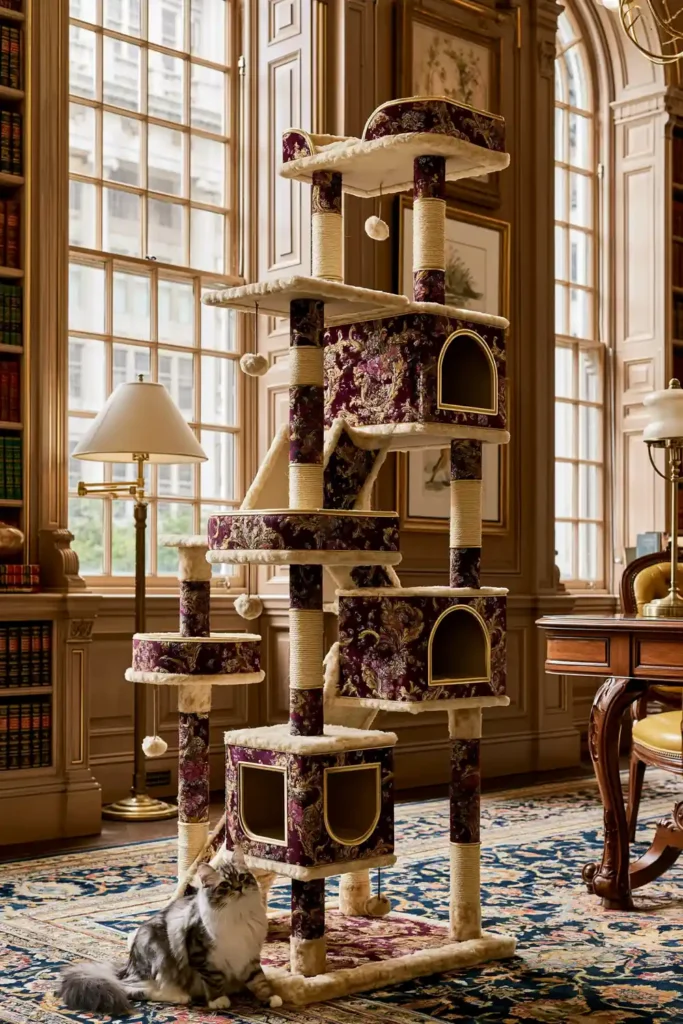
A damask velvet cat tower can feel right at home in a formal living room. The combination of deep velvet, ornate floral patterns, and scrollwork gives the piece more presence than a plain cat tower. It works especially well when the room already has rich fabrics, traditional furniture, or darker wood tones.
The cushions are the main opportunity for detail. Deep saturated velvet can cover the resting areas, while damask fabric adds pattern without needing bright colors. Sisal rope can still be used on scratching posts, but wrapping the edges with velvet ribbon helps it feel more finished. Gold or silver bullion fringe and small tassels can give the tower a decorative edge.
I’d use fringe carefully so it looks intentional instead of fussy. A little trim under the main perch or around one cushion can be enough. The goal is to make the cat tower feel like it belongs beside formal seating, not like it is competing with it.
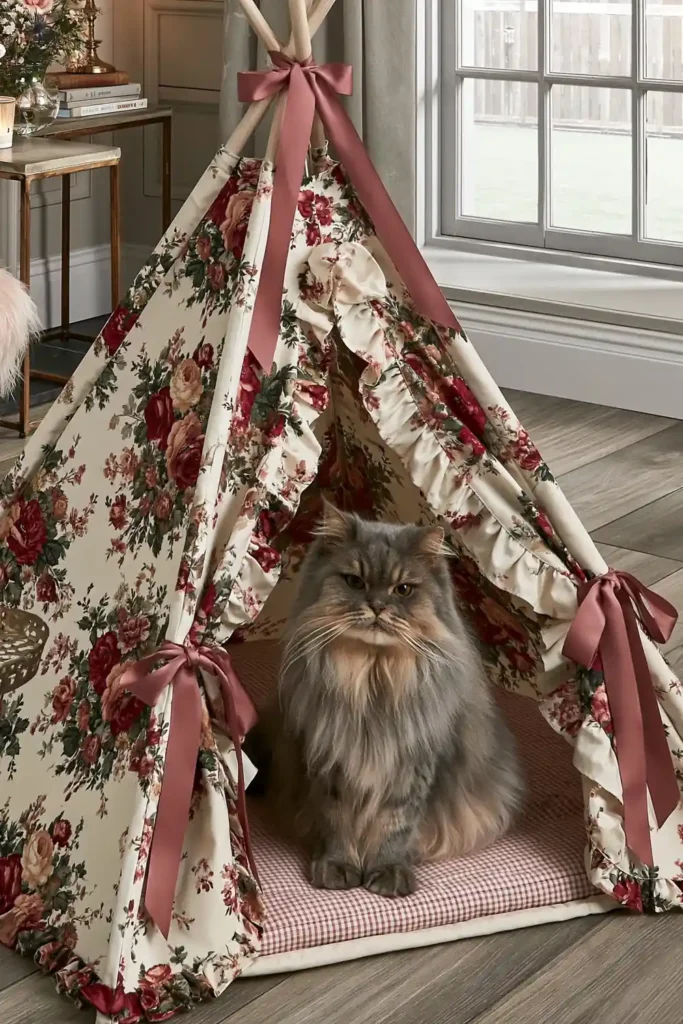
Laura Ashley Style Floral Cat Teepee
A floral cat teepee has a sweet, relaxed look that fits beautifully near a bedroom window, in a sunroom, or beside a reading nook. Small ditsy florals, cabbage roses, and delicate vine patterns give the teepee that soft vintage bedroom feeling. A cream or pastel background keeps the fabric light, especially when natural light falls across it.
The simple wooden dowel frame keeps the shape casual, while the fabric panels create a warm little hideaway. Lace trim and a ruffled pillow can add complexity without making the teepee feel overdone. Potted plants nearby help the corner feel fresh, especially if the teepee is close to a bright window.
For a practical version, I’d keep the fabric removable so it can be washed. The teepee should feel charming, but it also needs to handle real cat use. A washable pillow and sturdy frame make the idea much easier to live with.
Artistic Cat Shelves Decor Ideas With Vintage Mirror Backing
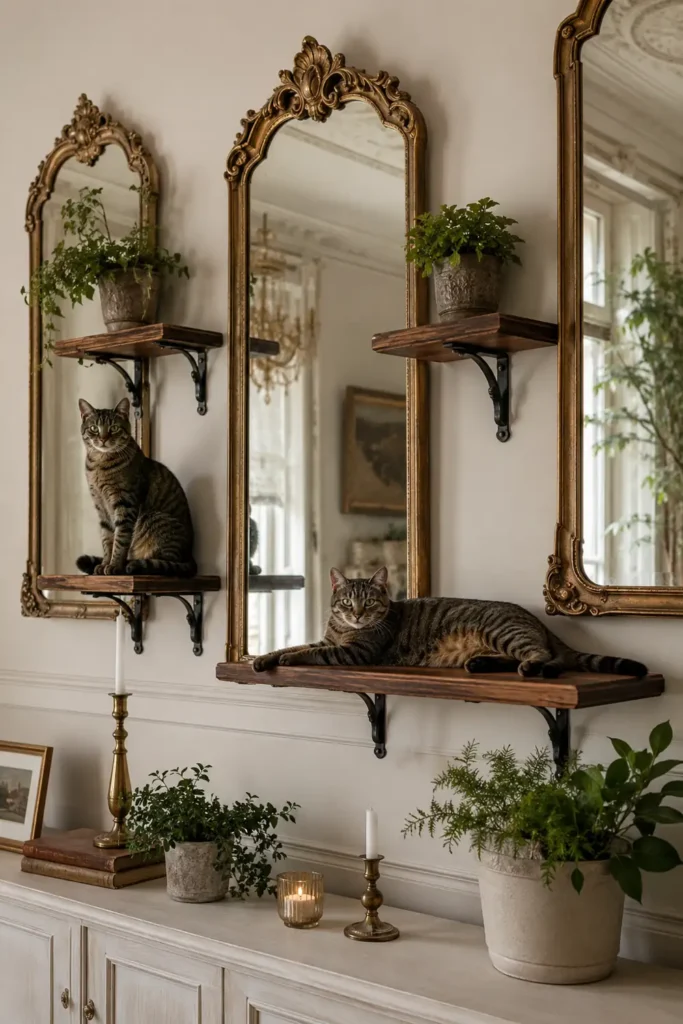
Vintage mirrors can make cat shelves feel much more decorative, especially on a feature wall in a living room or bedroom. Mismatched ornate mirrors in oval, rectangular, or scalloped shapes create a collected backdrop, while the cat shelves move across the wall like part of the display. This is one of those artistic cat shelf decor ideas that can make a room feel brighter as well as more interesting.
Glass mirrors bounce natural light around the room, which helps the shelves feel lighter on the wall. Brass or gold-toned brackets can connect the shelves to the warm metallic frames of the mirrors. The mix of reflection, curved mirror shapes, and simple shelf lines keeps the wall from feeling flat.
For safety, I’d use secure mirror mounting and keep the shelves wide enough for comfortable movement. The mirrors should sit behind or around the pathway, not in places where jumping could knock anything loose.
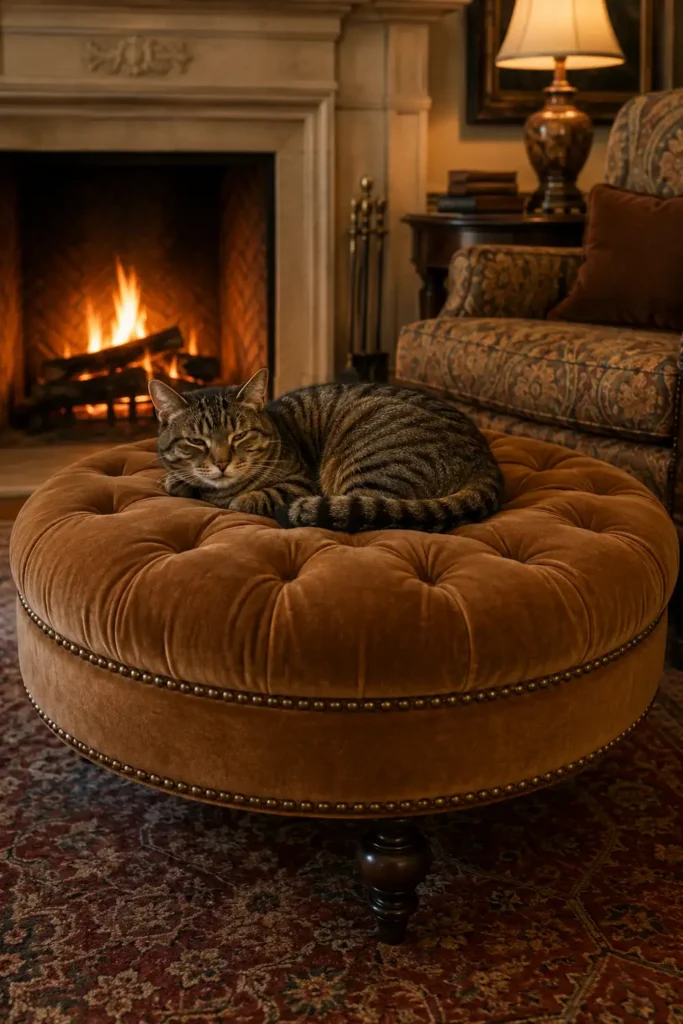
Tufted Velvet Ottoman Cat Bed With Nailhead Trim
A tufted velvet ottoman cat bed is a good choice when you want something that looks like furniture first. It can sit in front of a fireplace, at the foot of a bed, or next to a reading chair without feeling out of place. Deep button tufting gives the surface a classic upholstered look, while the soft velvet makes it comfortable for lounging.
Rich jewel tones work especially well here. Emerald, sapphire, burgundy, or deep plum velvet can make the ottoman feel decorative and cozy. Nailhead trim in brass, pewter, or copper adds a tailored edge and helps define the shape. The details are simple, but together they make the cat bed feel more grown-up than a standard cushion.
I’d keep the height low enough for easy access and choose a fabric that can handle regular brushing or vacuuming. A cat bed can still look polished, but it should not be so precious that you worry about using it every day.
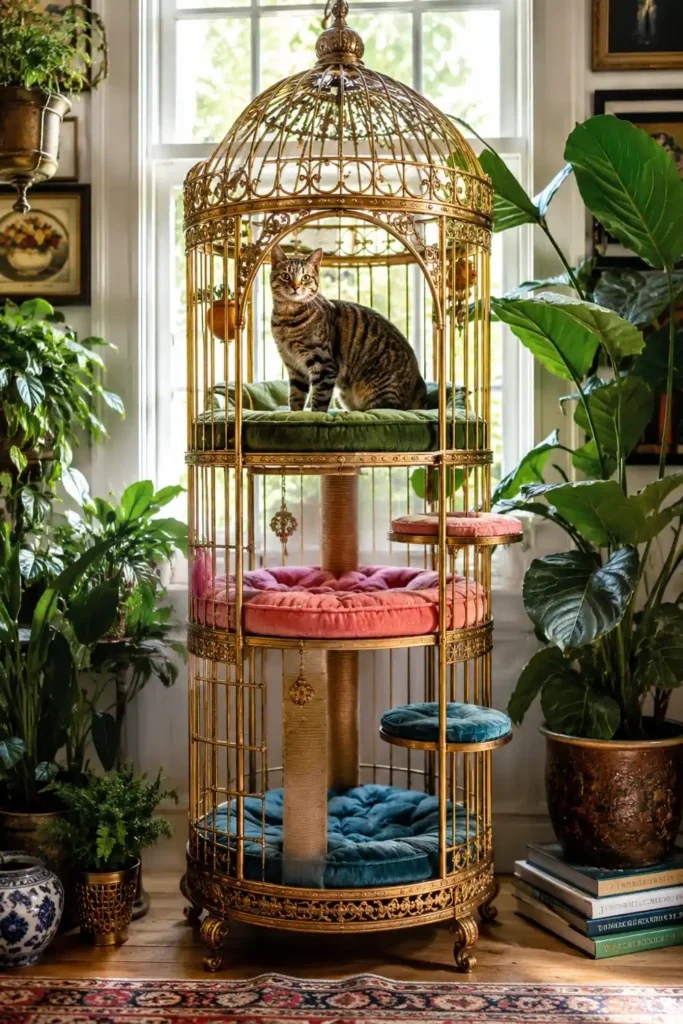
Vintage Birdcage Cat Tree With Ornate Metalwork
A vintage bird cage cat tree has a playful kind of grace. The dome shape, metalwork and raised perches make it feel decorative before you even notice that it is made for a cat. Gold, bronze or wrought iron finishes can all work, depending on whether the room is bright and antique or darker and moodier.
A soft cushion inside softens the metal structure, while small perches or a hanging bed can make the piece more useful. Plants placed around the base help the bird cage shape feel less isolated, especially in a corner. A small vintage book stack nearby can also make the whole scene appear collected rather than staged.
For comfort, I’d make sure the openings are generous, and the surfaces are easy to reach. The ornate shape should feel charming, but it still needs to function as a safe resting and climbing spot.
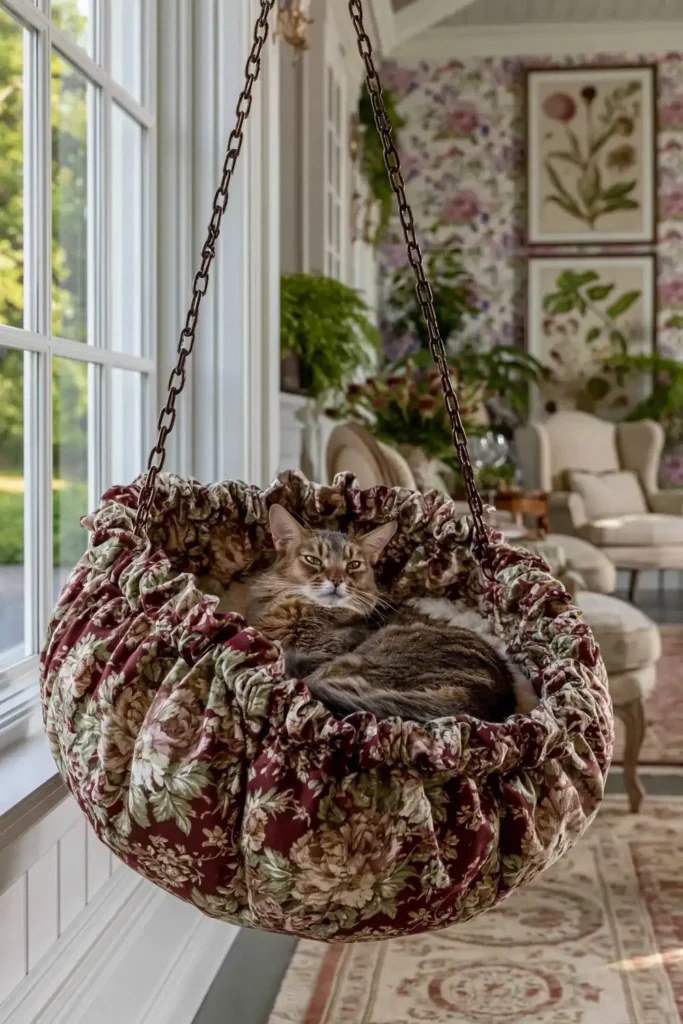
Chintz Fabric Cat Hammock With Ruffle Details
A chintz fabric cat hammock brings a soft, romantic look to a frame or cat tree. Glazed cotton with big cabbage roses, peonies, or mixed garden florals gives the hammock a classic vintage feel. The slight sheen of chintz can make the fabric look a little more polished than ordinary cotton.
Ruffle details are what make this idea stand out. Generous cascading ruffles along the sides can soften the hammock frame and give it a more decorative shape. Rope and grommets keep the hammock attached securely, while the floral fabric becomes the main visual feature.
For daily use, I’d choose sturdy fabric and make sure the ruffles sit mostly along the edges, away from the main sleeping area. That keeps the hammock comfortable without letting the details get in the way. It is a sweet option for anyone who likes floral decor but still wants the piece to feel useful.
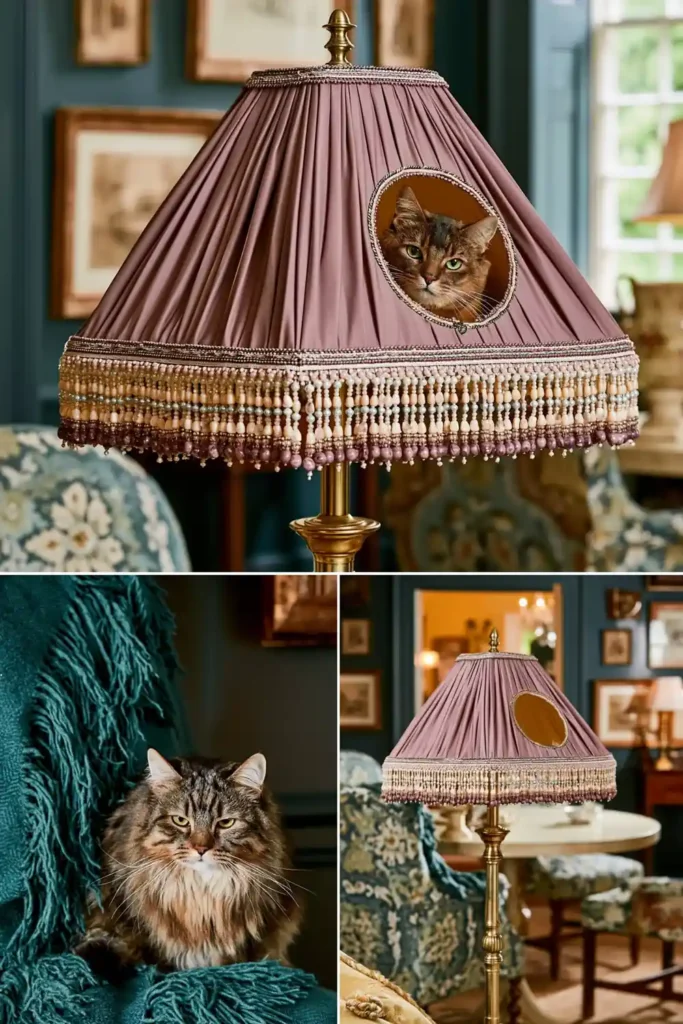
Vintage Lampshade Cat Cave on a Cat Tower
A vintage lampshade cat cave is a creative way to reuse decorative fabric shades. The bell shape already feels cozy, and when it is placed on a cat tree platform, it becomes a small, covered resting spot. Floral, damask, or toile patterns can make the shade feel connected to vintage decor.
The details on old lampshades are often what give this idea charm. Beaded edges, decorative trim, appliqués, and small tassels can make the cat cave feel ornate without needing much else. The wire frame gives structure, while the fabric shade creates a soft little enclosure.
I’d make sure the shade is stable on the platform and that any loose trim is secured well. The opening should be wide enough for easy entry, and the inside should have a simple cushion. It is one of those ideas that feels unusual, but in the right room, it can look surprisingly natural.
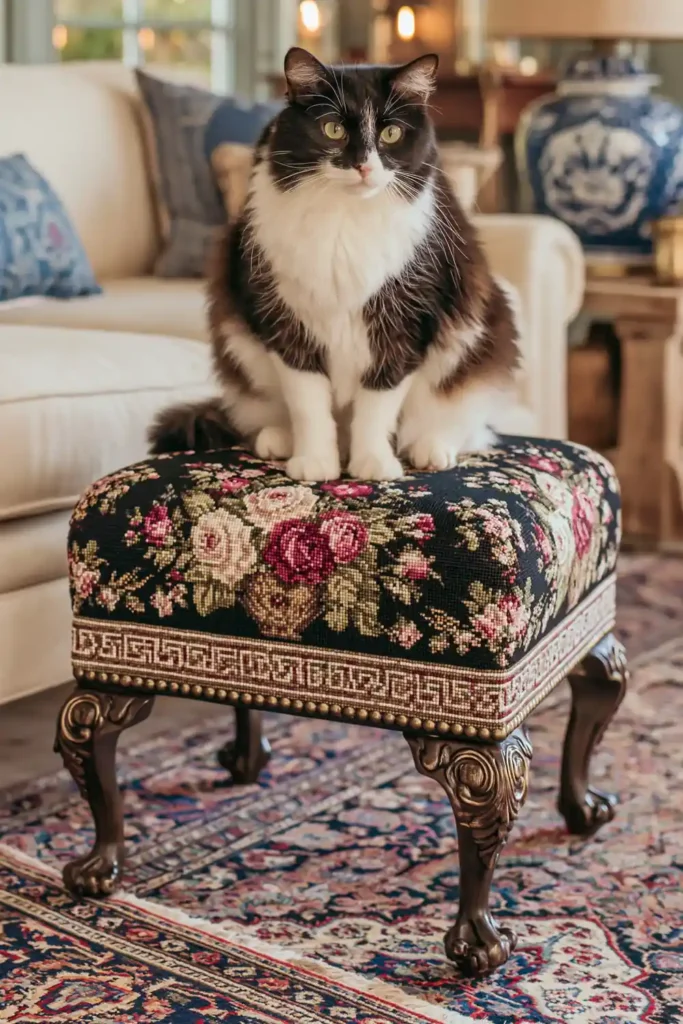
Needlepoint Footstool Turned Elevated Cat Bed
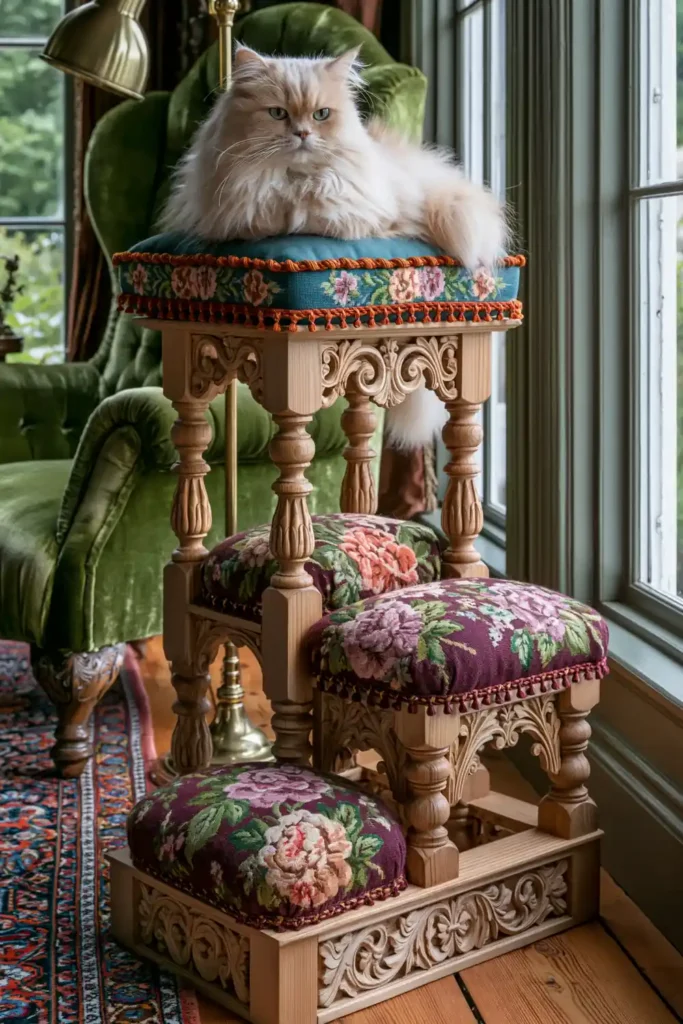
A needlepoint footstool can make a beautiful elevated cat bed, especially next to a sofa, at the foot of a bed, or in a reading nook. The classic turned wood legs give it height, while the needlepoint top adds pattern and texture. Florals, petit point details, or bargello designs can all make the piece feel like a small antique find.
Because the footstool already looks like furniture, it blends easily into a room. Wood gives it structure, and the stitched fabric makes the top feel warm and decorative. A clear acrylic or glass layer can help protect delicate needlepoint while still letting the pattern show through.
For comfort, I’d add a thin, removable cushion if the surface feels too firm. Keeping the shape compact makes it easy to place beside existing furniture. It gives the cat a raised spot to rest without adding a bulky new piece to the room.
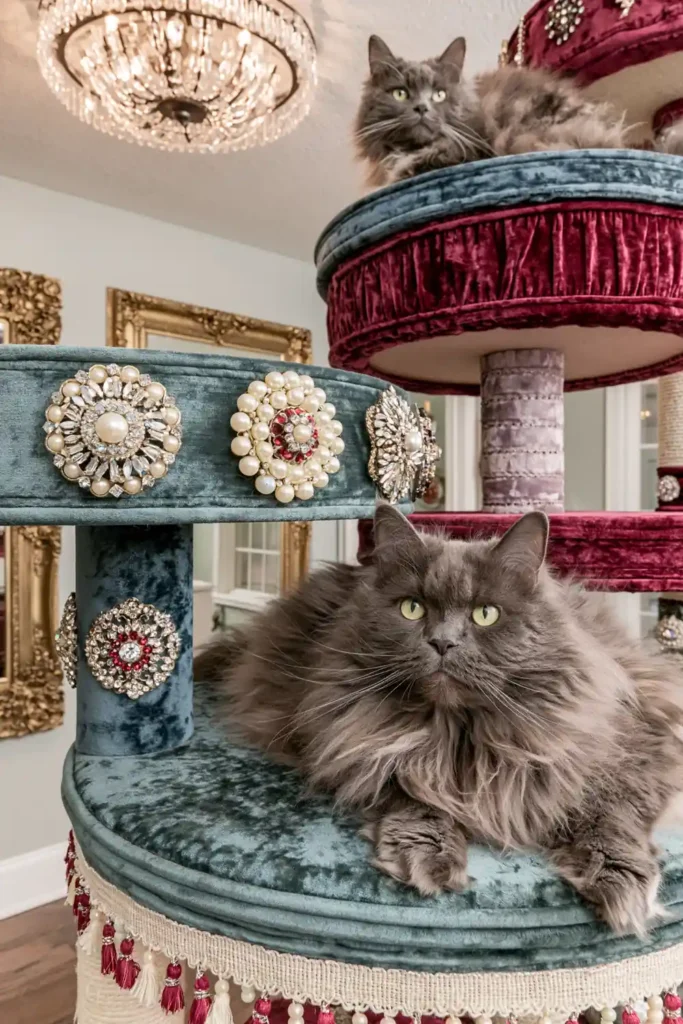
Cat Tree With Vintage Brooch Embellishments
A cat tree with vintage brooch embellishments can feel charming when the details are handled carefully. The idea is not to cover the whole piece in sparkle, but to use small jewelry-like accents in places where they catch the light. Rhinestone brooches from the 40s or 50s can make velvet cushions and ribbon trim feel more special.
This works best on a cat tree that already has soft fabric, especially velvet in a deep or muted color. The brooches can be placed on ribbon bands, decorative corners, or non-sleeping areas where they add shine without getting in the way. The contrast between plush fabric and small reflective stones gives the piece a vintage dressing-room feeling.
For safety, I’d keep every brooch firmly attached and away from areas where a cat might chew or scratch. Used sparingly, the embellishments can make the cat tree feel decorative while still keeping the main surfaces comfortable and practical.
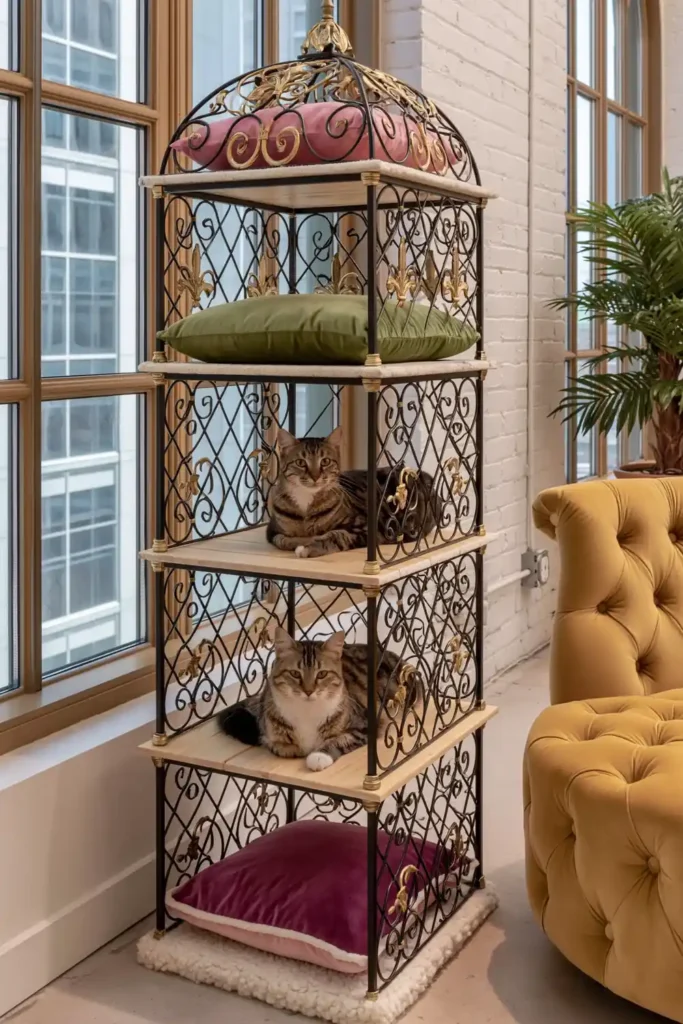
Cat Wall Shelves With Vintage Birdcage Lattice Work
Cat wall shelves with vintage birdcage lattice work can give a wall the feeling of a small Victorian conservatory. Metal garden lattice panels or vintage birdcage pieces can sit behind the shelves, adding pattern and structure without taking up floor space. Painted ivory, sage green, or charcoal, the metalwork can feel either soft and garden-like or more dramatic.
Climbing roses and ivy are what make this idea feel connected to a conservatory style. The greenery can frame the shelves and soften the metal lines, while the shelves themselves create the practical climbing route. It is a good option for a room where the wall needs more character, but you still want the cat shelves to serve a real purpose.
For daily use, I’d keep the greenery safely positioned around the shelves rather than across the main landing spots. The shelves should remain clear, sturdy, and easy to clean.
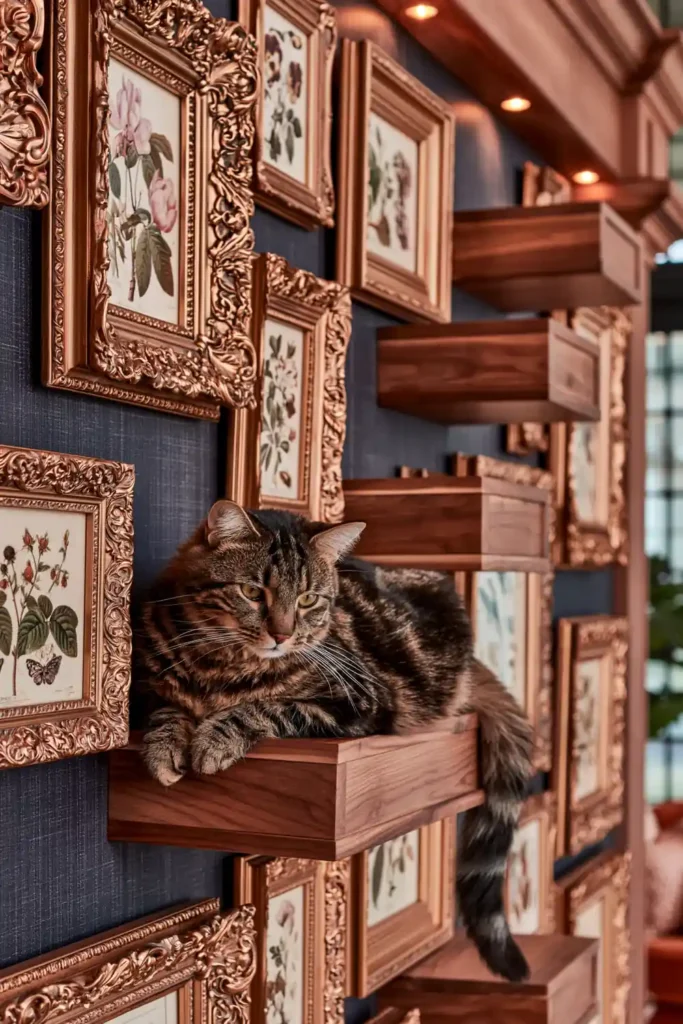
Gallery Wall Cat Shelves With Ornate Gold Frames
A gallery wall with cat shelves and ornate gold frames is a smart way to make climbing shelves look intentional. Instead of placing plain shelves on an empty wall, you can arrange them among mismatched vintage frames in different sizes and shapes. The result feels more like a decorative gallery wall, with the shelves becoming part of the composition.
Wood shelving works well here because it can be painted or stained to match the frames or wall color. Ornate gold frames bring warmth and detail, especially when they are mixed rather than perfectly matched. The shelves can run through the arrangement as a subtle pathway, giving the cat places to climb while keeping the wall visually interesting.
For balance, I’d plan the layout on the floor first before hanging anything. Leave enough space around each shelf for comfortable movement, and use the frames to fill the wall without blocking the cat’s route.
Making Cat Furniture Feel Like Part of the Room
The best part of these ideas is that they treat cat furniture as something worth designing, not hiding. Vintage fabrics, carved wood, mirrors, plates, rattan, embroidery, and ornate frames can all help practical pet pieces feel connected to the rest of the home.
You do not need to use every detail at once. A single floral cushion, a blue and white print, a scalloped shelf edge, or a few gold frames can be enough to make a cat area feel more thoughtful. Starting small also makes it easier to see what your cat actually uses.
When cat furniture matches the mood of the room, it becomes easier to enjoy it every day. It can still be sturdy, washable and realistic for daily life while bringing the kind of character that makes a home feel personal.