
A beautiful yard does not always need a large budget. Some of the most inviting outdoor spaces come from simple materials, clever reuse, and small ideas that add texture, colour, or purpose to an otherwise plain area.
These budget-friendly outdoor landscaping ideas center on practical projects you can build gradually, from vertical planters and rustic borders to paths, lighting, and relaxed seating. Each one can help make a garden feel more thoughtful without requiring a full renovation.
Living Picture Frames for a Budget-Friendly Outdoor Wall Display
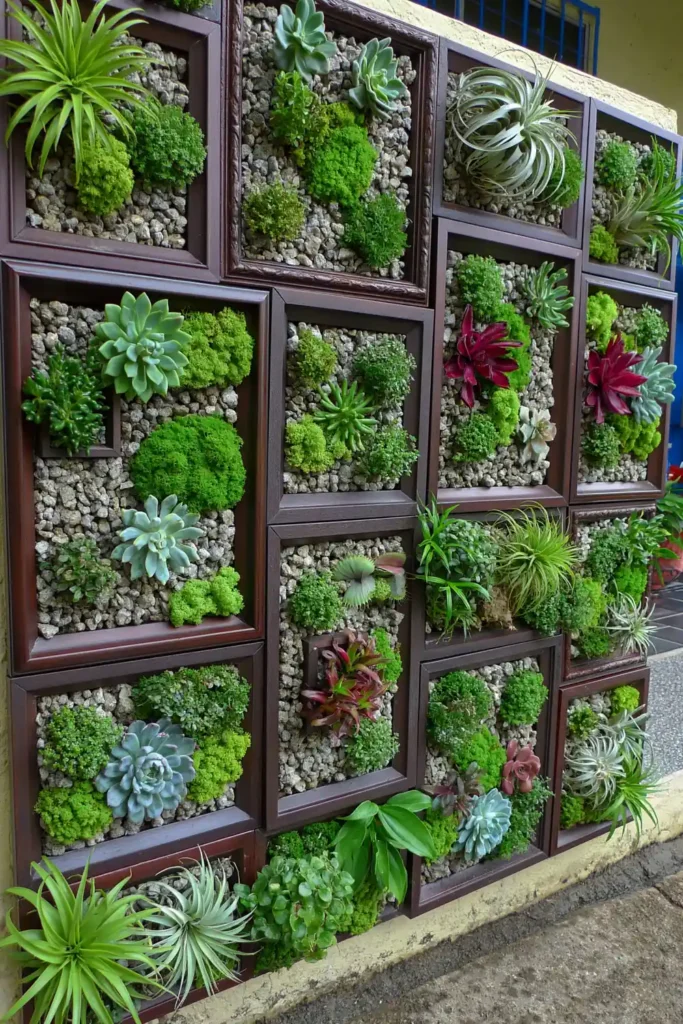
Living picture frames are a clever way to bring greenery onto a blank outdoor wall without taking up ground space. They work especially well on patios, balconies, or small gardens where every bit of floor area matters. The framed arrangement gives plants a more intentional look than ordinary pots, almost like outdoor artwork.
Deep picture frames can be filled with a backing layer and gravel, then planted with succulents, air plants, or other small varieties that do not need much soil. Hanging several frames in a simple grid makes the display feel neat and balanced, while the mix of plant shapes keeps it from looking flat.
For a budget-friendly version, use second-hand frames with enough depth to hold the planting material. Keep the arrangement close to eye level so it is easy to enjoy and simple to maintain. Choosing plants with similar watering needs will make the whole display much easier to care for.
Shoe Organiser Planters for Small-Space Vertical Growing
A hanging shoe organiser can become a surprisingly useful planter when garden space is limited. The pockets naturally create separate planting sections, making it easy to grow several herbs, flowers, or strawberries in one compact spot. It is especially helpful along fences or walls that would otherwise stay unused.
Lining each pocket with a small plastic bag helps hold soil while allowing you to organize plants by height or care needs. Herbs can sit together in one row, flowers in another, and trailing plants near the bottom where they can spill gently over the edges. Since these planters are vertical, good sunlight exposure matters more than usual.
This idea works well for renters or anyone who wants a low-cost project that can be changed later. Hang the organiser securely, add drainage carefully, and keep lighter plants in the upper pockets so the whole piece does not become too heavy once watered.
Wooden Pallet Planters for Tiered Flower and Herb Displays
Old wooden pallets are useful for much more than storage. When sanded, sealed, and fixed upright, a pallet can become a simple vertical planter with built-in levels for displaying herbs or flowers. The shape already provides structure, so the finished piece seems tidy without needing a lot of extra materials.
Each level can hold small plant containers, giving you room to mix greenery with colour. A row of herbs near the middle is practical for easy picking, while brighter flowers on the upper and lower shelves can make the whole display feel fuller. The weathered wood also brings warmth and texture into the garden.
Before planting, make sure the pallet is stable and properly treated for outdoor use. Placing it against a fence or wall gives it support and makes the area feel more finished. It is one of those budget-friendly outdoor landscaping ideas that looks especially good once the plants begin to soften the wood with natural growth.
Rustic Log Borders for Natural Flower Bed Edging
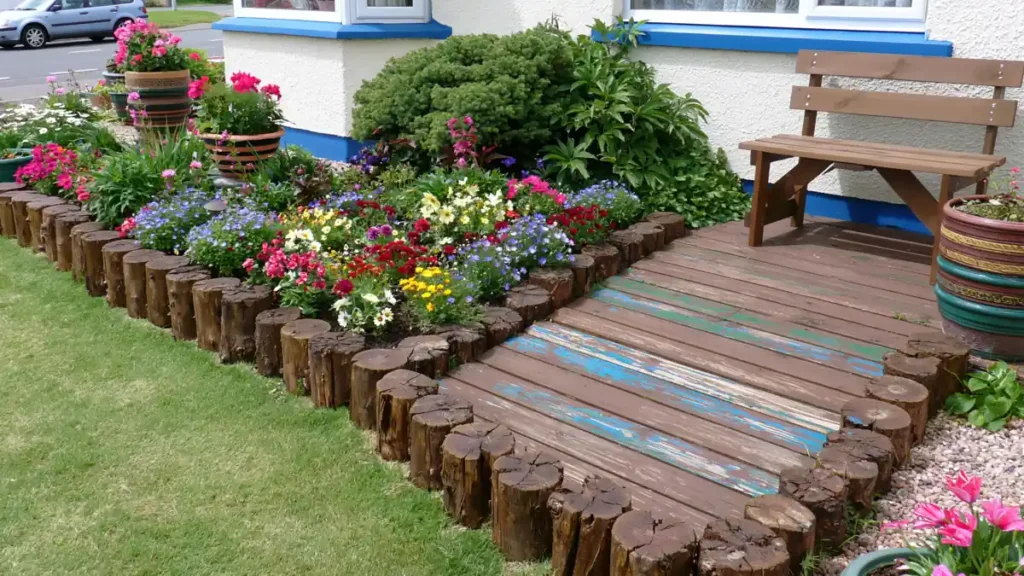
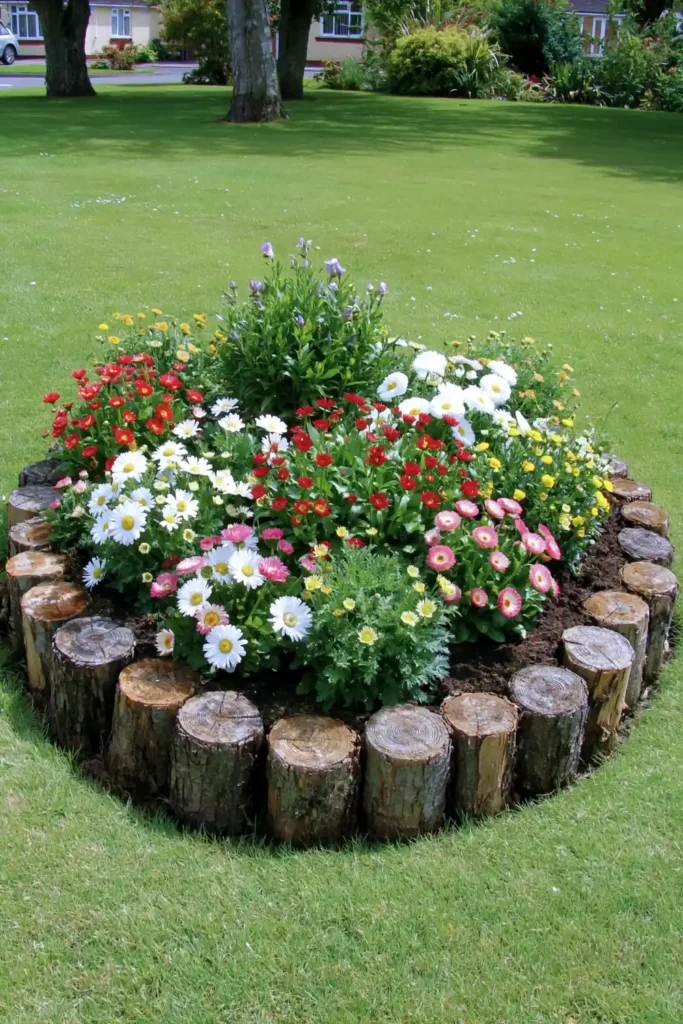
Log borders are a simple way to define flower beds while keeping the garden feeling relaxed and natural. Instead of using store-bought edging, old logs can be arranged along the bed line to create a rustic boundary that blends easily with flowers, mulch, and adjacent greenery.
Using logs at slightly different heights adds a more organic look than a perfectly even border. The coarse bark, uneven ends, and natural colour help the bed feel connected to the rest of the yard rather than separated from it. This kind of edging works particularly well with cottage-style planting or beds filled with mixed blooms.
Choose logs that are sturdy enough to stay in place, then nestle them partly into the soil so they look settled rather than simply laid on top. Even a short run of log edging can make a flower bed appear more deliberate and cared for without needing expensive stone or metal materials.
DIY Stone Fire Pits for Cozy Garden Gatherings
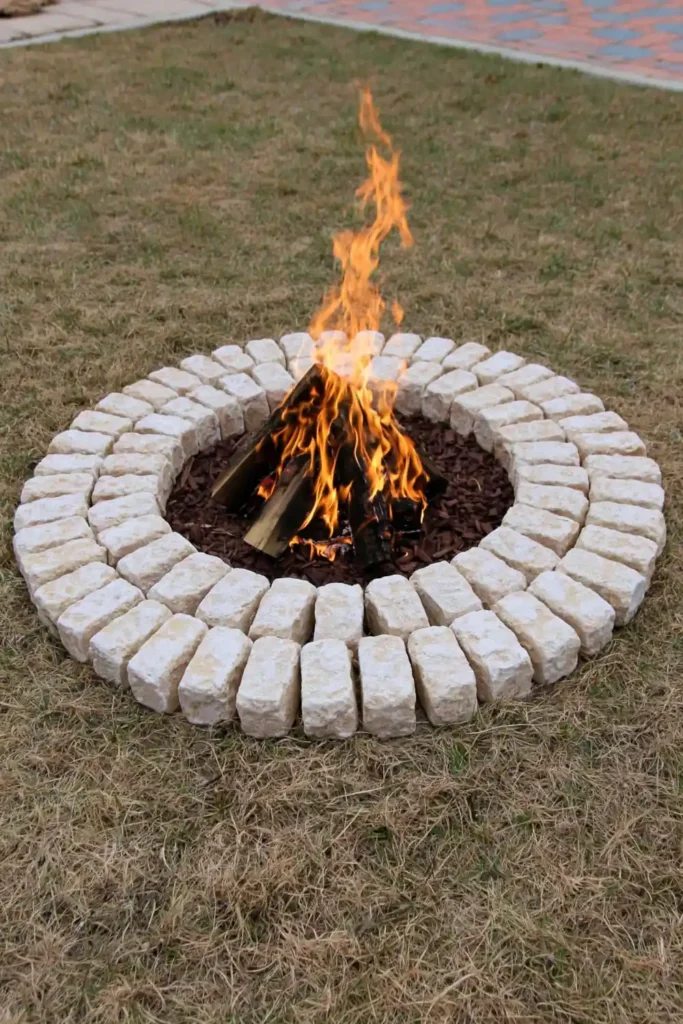
A small stone fire pit can give a garden a clear gathering point, even when the rest of the yard is very simple. The circular shape naturally draws seating around it, and the pleasant glow makes the space feel useful after sunset instead of only during the day.
Stones stacked in a ring create a solid, grounded look that fits easily into outdoor surroundings. A fireproof base is important underneath, while mortar can help hold the structure stable over time. Because the materials are natural and neutral, the fire pit can sit comfortably beside grass, gravel, or planting beds without looking out of place.
Keep the size practical for the area you have. A compact fire pit with a few movable chairs around it regularly feels more inviting than an oversized design squeezed into a small yard. It is a good project for making the garden feel more lived-in without adding lots of decoration.
Outdoor Dart Board Setups for Backyard Entertainment
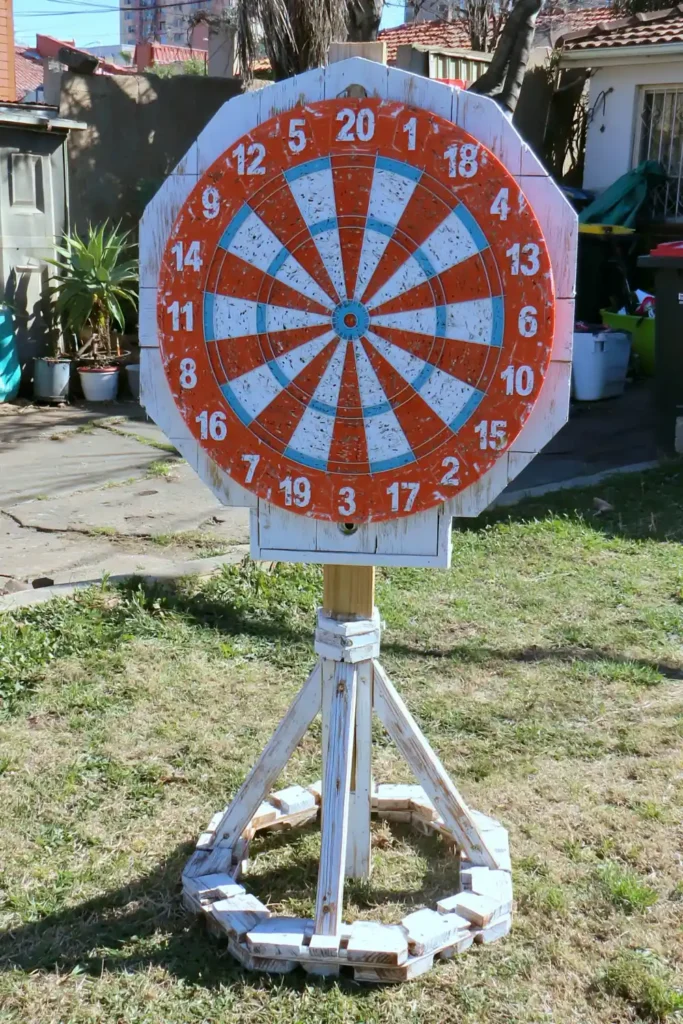
An outdoor dart board is a simple way to make a backyard feel more interactive. It gives family and guests something to do without needing a large patio, expensive equipment, or a full games area. Even a calm corner can become more useful with one considered addition.
A weather-resistant dart board mounted on a durable stand or outdoor wall works best when paired with a protective backing. That backing helps define the game area visually while also protecting the surface behind it. Since the board itself becomes a focal point, the setup can look neat and intentional rather than temporary.
Choose a spot with enough clear room in front for safe play and keep the surrounding area uncluttered. If the board is freestanding, place it where it will not interrupt garden paths or seating zones. This is one of the more playful budget-friendly outdoor landscaping ideas, especially for yards that are meant to be enjoyed with others.
Vertical Gardening on Fences and Walls
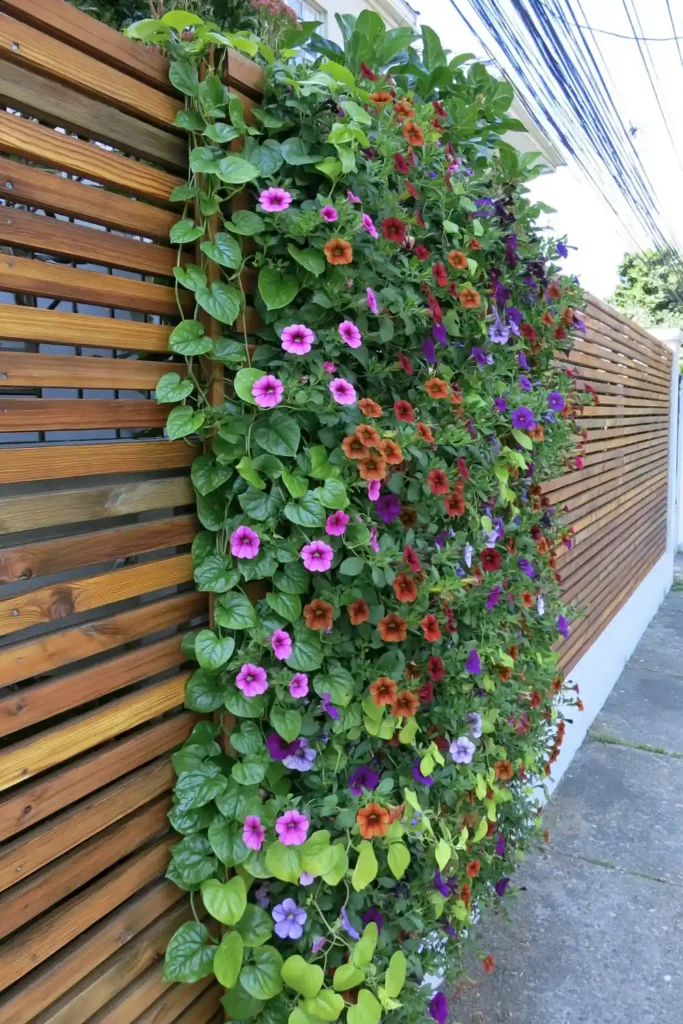
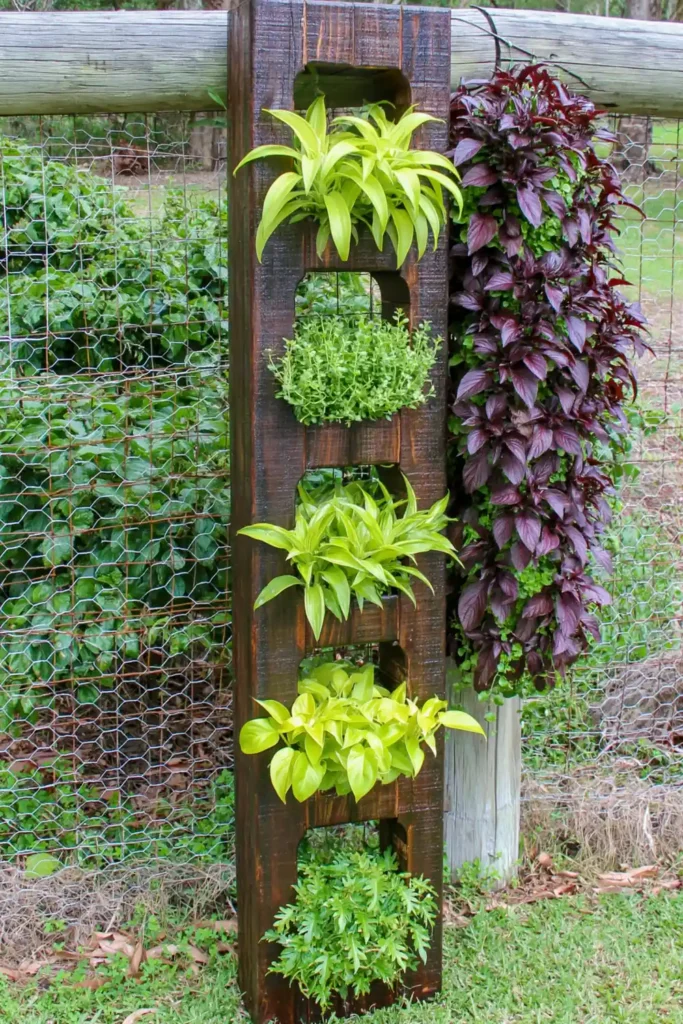
Vertical gardening is useful when the yard is small, narrow, or already full at ground level. Instead of adding more pots across the patio, lightweight planters can be attached to fences or walls to bring greenery upward and make plain surfaces feel more alive.
Cascading flowers and herbs work especially well because they soften hard edges as they grow. A mix of upright and trailing plants creates better movement than rows of identical greenery, and the added height can make the garden feel fuller without using extra floor space. It is also a practical way to keep useful herbs close by.
Start with one section rather than covering an entire wall at once. A compact arrangement is easier to water, easier to maintain, and often looks more polished. Once the plants settle in, you can expand the display gradually if the wall still feels bare.
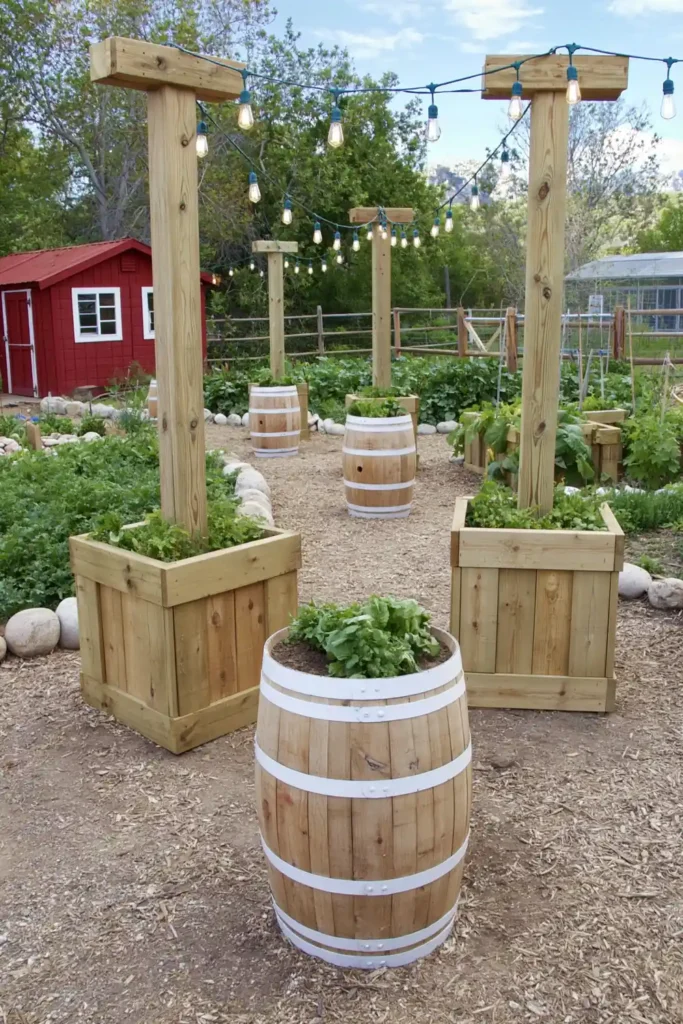
Barrel Planters with String Lights for Evening Ambience
Repurposed barrels can do more than hold plants. When used as sturdy bases for garden posts, they can support string lights and help shape an outdoor seating area at the same time. The result appears practical during the day and especially inviting once the lights come on.
The barrel forms give weight to the posts, while Edison-style string lights add a warm overhead glow. This works well over a patio, beside a gravel area, or around an informal dining setup where permanent lighting would be difficult or costly to install. The mix of wood, metal, and soft light gives the garden a relaxed, friendly atmosphere.
Place the barrels where they naturally frame the area rather than blocking movement. If they are also used as planters, keep the planting low enough that it does not compete with the lights above. It is a simple way to make evenings outdoors feel more intentional without changing the whole landscape.
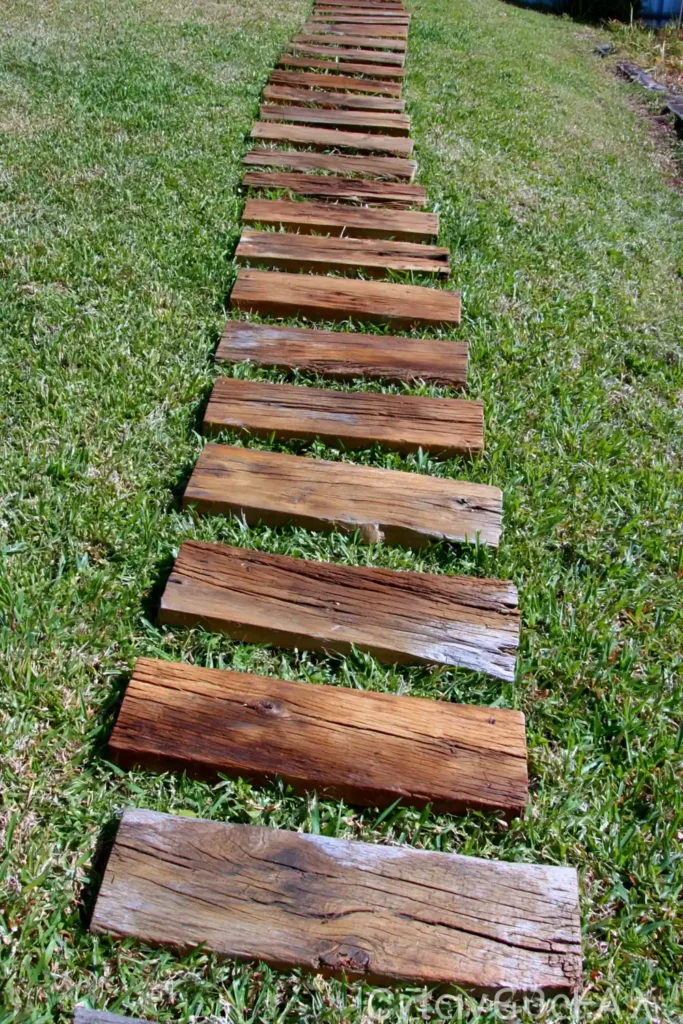
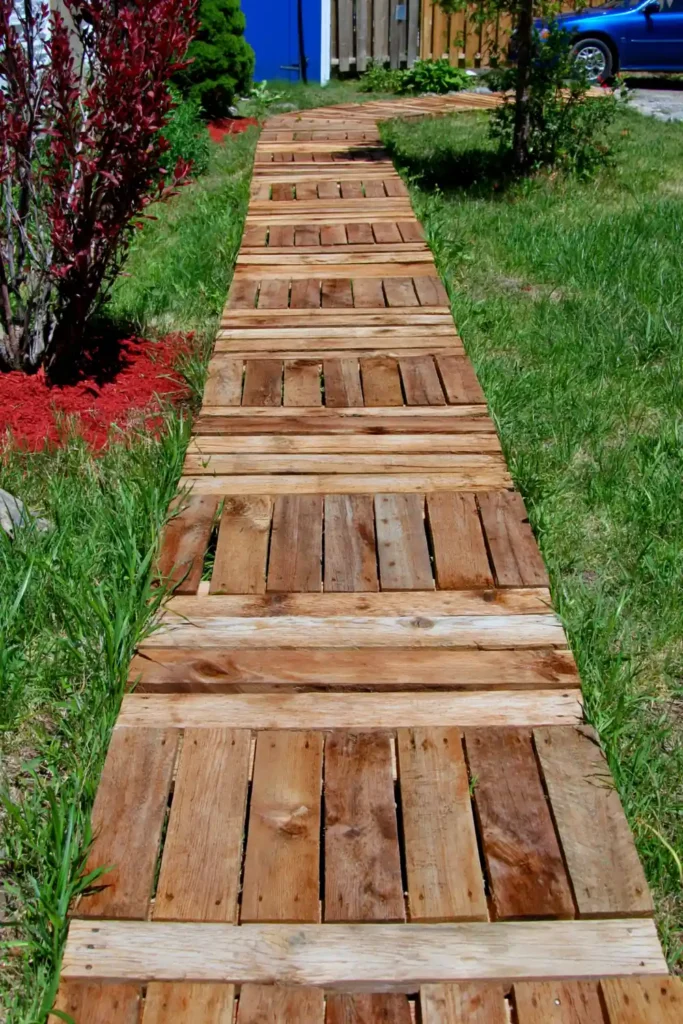
Reclaimed Wooden Paths with Natural Stone Details
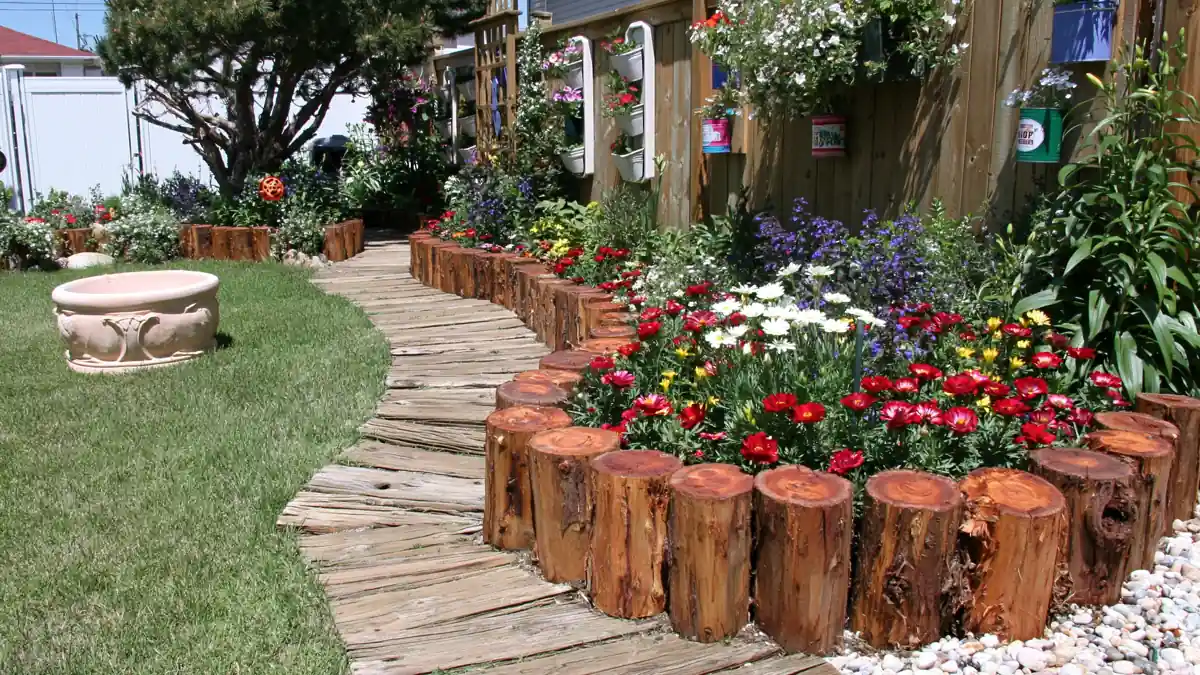
A reclaimed wooden path can make a garden feel more connected by guiding the eye from one area to another. It is especially useful in yards where people naturally walk across the grass and leave worn patches behind. Adding a clear route makes the space look more planned while keeping the materials simple.
Sealed wood pieces laid between stones create a warm, natural contrast. The wood brings texture and softness, while the stones help fill gaps and keep the path from feeling too rigid. This mix suits relaxed gardens well because it looks handmade rather than excessively formal.
Use wood that has been properly treated for outdoor conditions so it lasts longer in damp weather. Keeping the path gently curved can feel more natural than a straight line, especially if it passes flower beds or planting areas. Even a short path can make a small garden feel more complete.
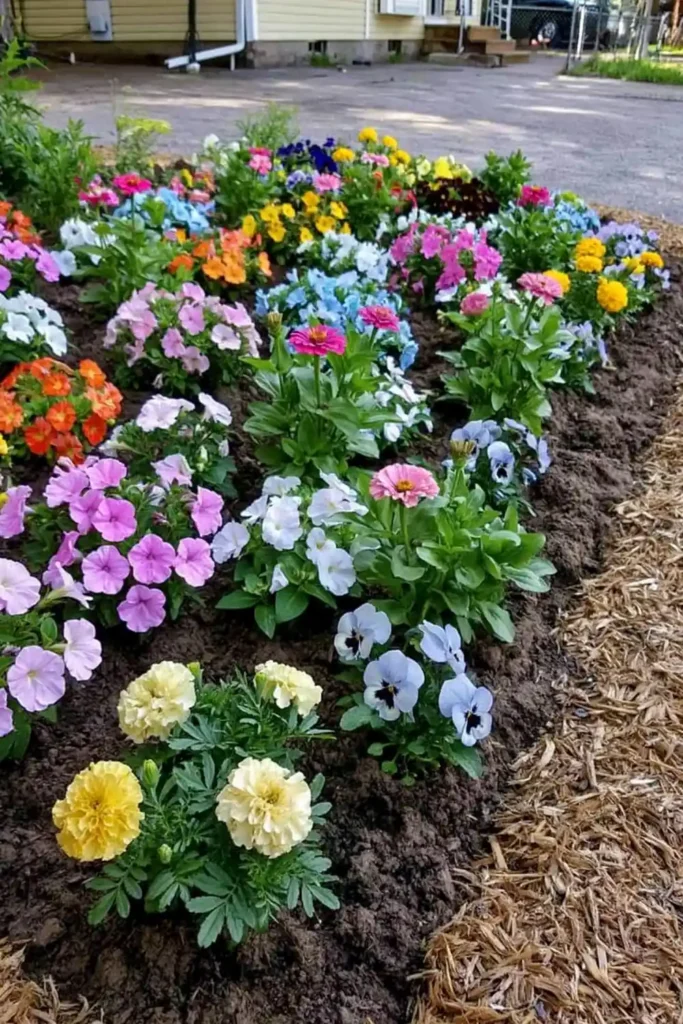
Colourful Flower Beds Filled with Easy Blooms
A flower bed full of colour is one of the easiest ways to make a yard feel cheerful without spending heavily on large features. Plants such as marigolds, petunias, impatiens, zinnias, and pansies can bring plenty of variety through their different shapes and shades.
The key is to arrange the flowers so the bed looks full rather than scattered. Collecting similar colours together gives a stronger impact, while enriched soil and mulch help the plants look healthier and reduce the unfinished appearance of bare ground. Sunlight needs should guide the placement so each variety has a fair chance to thrive.
For a more natural-looking bed, repeat a few colours instead of using every bloom randomly. A simple pattern of warm yellows, pinks, and purples can look lively without becoming messy. This is one of the most accessible, budget-friendly outdoor landscaping ideas because even a modest planting area can change the mood of the whole garden.
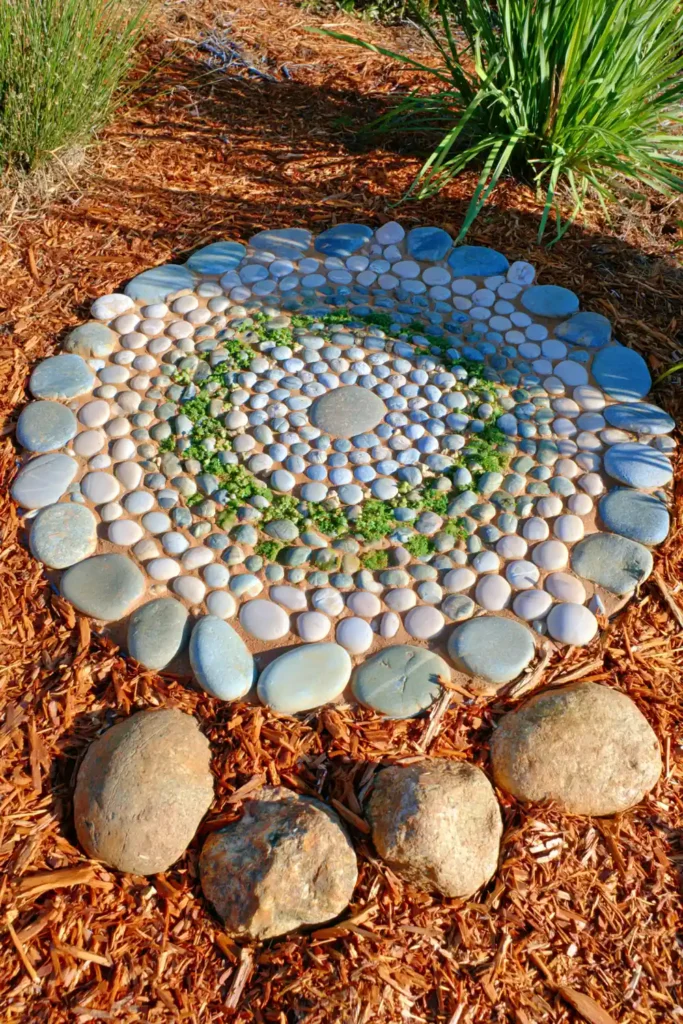
Pebble Mosaic Stepping Stones for Decorative Garden Paths
Pebble mosaic stepping stones add detail to a pathway in a way that appears personal and handmade. Instead of relying on plain concrete slabs, small stones can be arranged into designs that turn a practical garden route into something decorative.
The contrast between smooth pebbles and wet concrete gives each stone a textured surface with a crafted look. Circular swirls, simple borders, or repeated shapes can make the path feel connected from one step to the next. Because pebbles often come in naturally varied tones, the finished stones can blend easily with soil, gravel, and planting beds.
Keep the pattern simple if you are making several stones, since repeated designs usually look stronger than one complicated piece followed by plain ones. Place them at a comfortable walking distance between each step and test the spacing before the concrete fully sets. The result is useful, low-cost, and full of small visual interest.
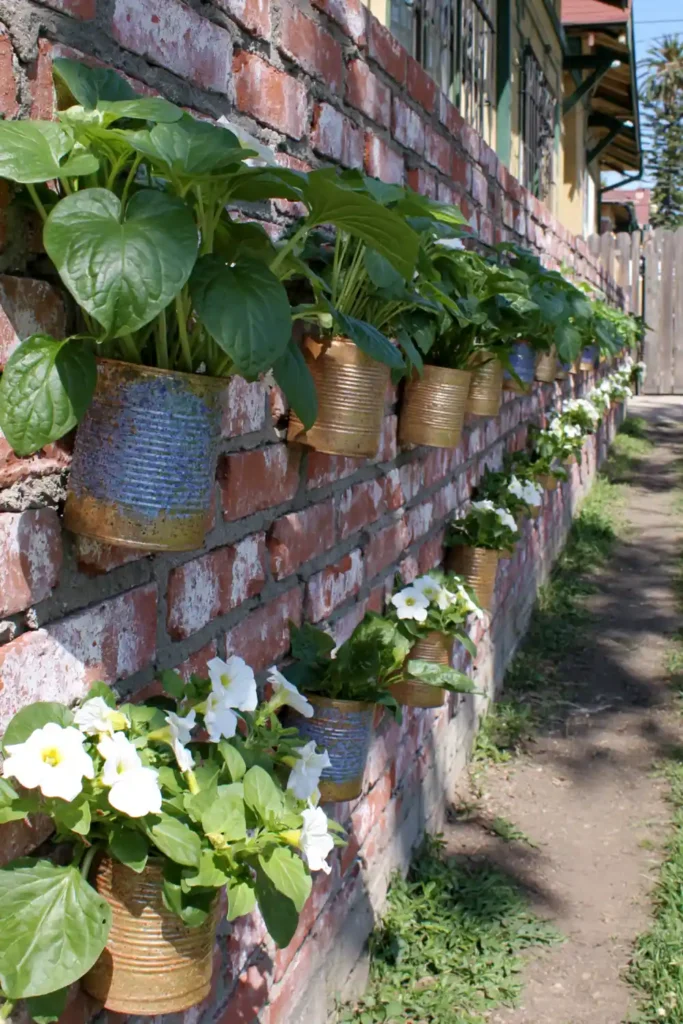
Recycled Tin Can Planters for Cost-Effective Outdoor Landscaping Ideas
Recycled tin cans are an easy way to add small pockets of planting around a garden without buying matching pots. Once cleaned, drilled for drainage, and painted, they can hold herbs, flowers, or compact greenery as they add a fun touch to fences, shelves, or outdoor tables.
Their small size makes them flexible. A row of cans in one colour can look tidy and coordinated, while mixed colours create a more cheerful, informal effect. Because the cans are lightweight, they work especially well where heavier planters would be inconvenient, such as narrow ledges or hanging displays.
Use outdoor-friendly paint and make sure each can has enough drainage holes before planting. Grouping several together usually looks better than placing them one by one across the yard. It is a practical example of how budget-friendly outdoor landscaping ideas can come from materials that might otherwise be thrown away.
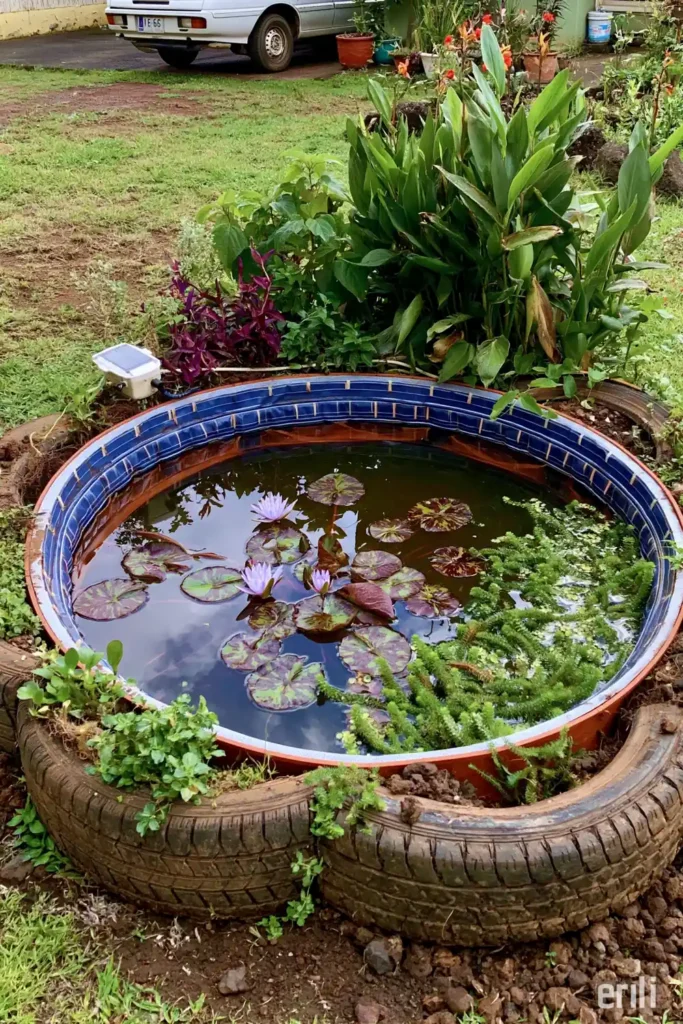
Tyre Ponds for a Creative Backyard Water Feature
A tyre pond is a creative way to bring water into the garden using materials that might otherwise be discarded. It can work especially well in a corner where you want a small focal point but do not have room or budget for a large built-in pond.
Old tyres can be stacked and lined with waterproof material to form the pond shape, while a solar-powered pump adds gentle movement to the water. Aquatic plants such as water lilies and hornwort help soften the edges and make the feature feel more natural within the garden. The rounded tyre form gives the pond a defined shape without needing complex construction.
Choose a level spot and make sure the lining is secure before filling it. Surrounding the base with planting or mulch can help the tyres blend in more comfortably. Even a modest water feature can add a calmer feeling to the yard and give the eye somewhere to rest.
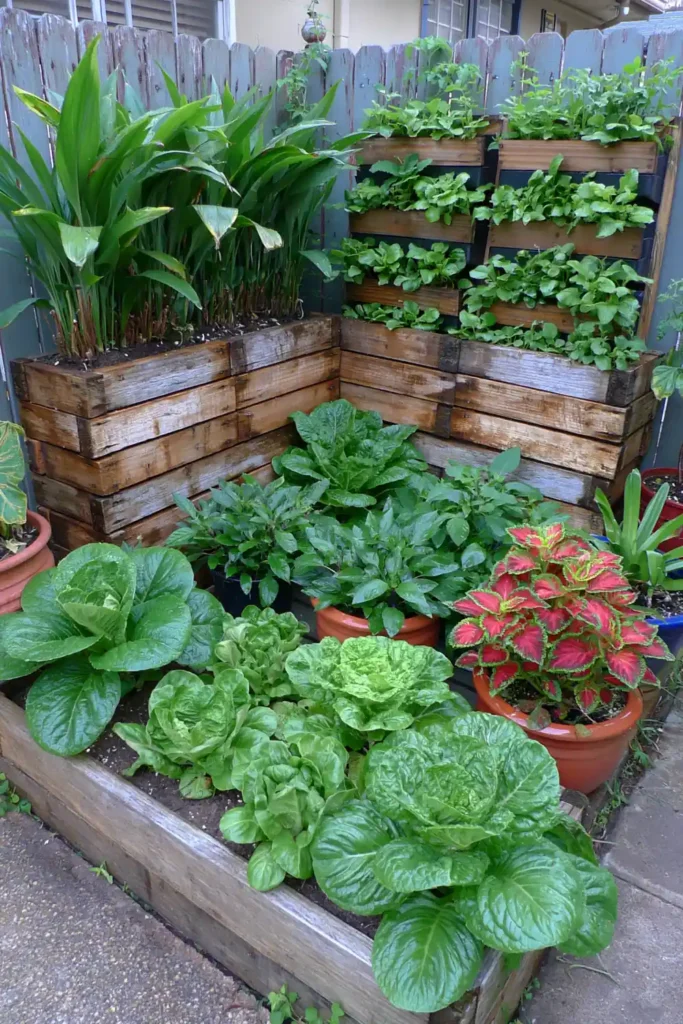
Corner Planters for Making Use of Small Garden Spaces
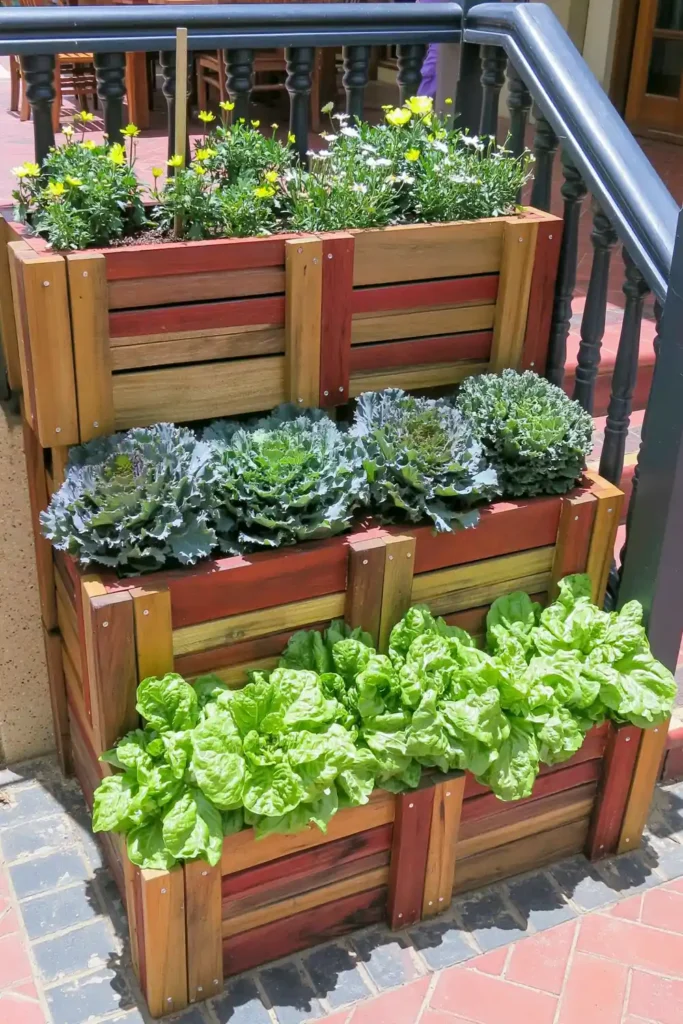
Corners are often overlooked in gardens, especially when they are narrow or awkwardly shaped. A well-planned corner planter can turn that unused area into a layered display and help the whole outdoor space feel more complete.
Raised beds or vertical planters fit neatly into these tucked-away spots. Taller plants placed toward the back create height, while shorter plants in front keep the arrangement visible and balanced. This layout makes the most of sunlight while escaping the cramped look that can happen when plants are placed without a clear order.
Before planting, notice how much sun the corner receives during the day so you can choose suitable varieties. Keeping the tallest plants against the wall or fence prevents them from shading everything else too heavily. It is a practical option for anyone working with a small garden and wanting every part of it to earn its place.
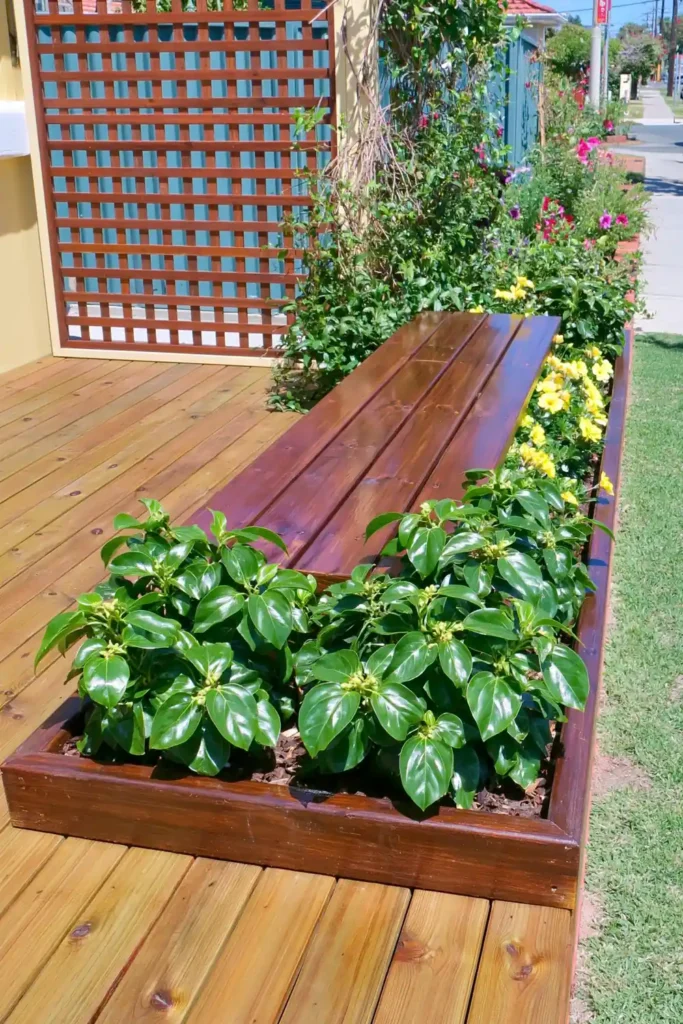
Crate Planter Benches with Built-In Greenery
A crate planter bench combines two useful garden features in one piece: a place to sit and a place to grow plants. That makes it especially helpful in smaller outdoor spaces in which every item needs to do more than one job.
A deep repurposed crate can be filled with soil and greenery, then adapted into a bench-style structure that keeps planting close to the seating area. The mix of wood and leaves gives the piece a relaxed look, while the built-in planting helps it feel connected to the garden rather than like separate furniture placed outdoors.
Choose plants that will not spill too aggressively into the sitting area, especially if the bench is used often. Low greenery or compact flowers usually work better than tall, unruly growth. Positioning the bench near a path, patio, or quiet edge of the yard can create a simple little resting spot without requiring extra planters nearby.
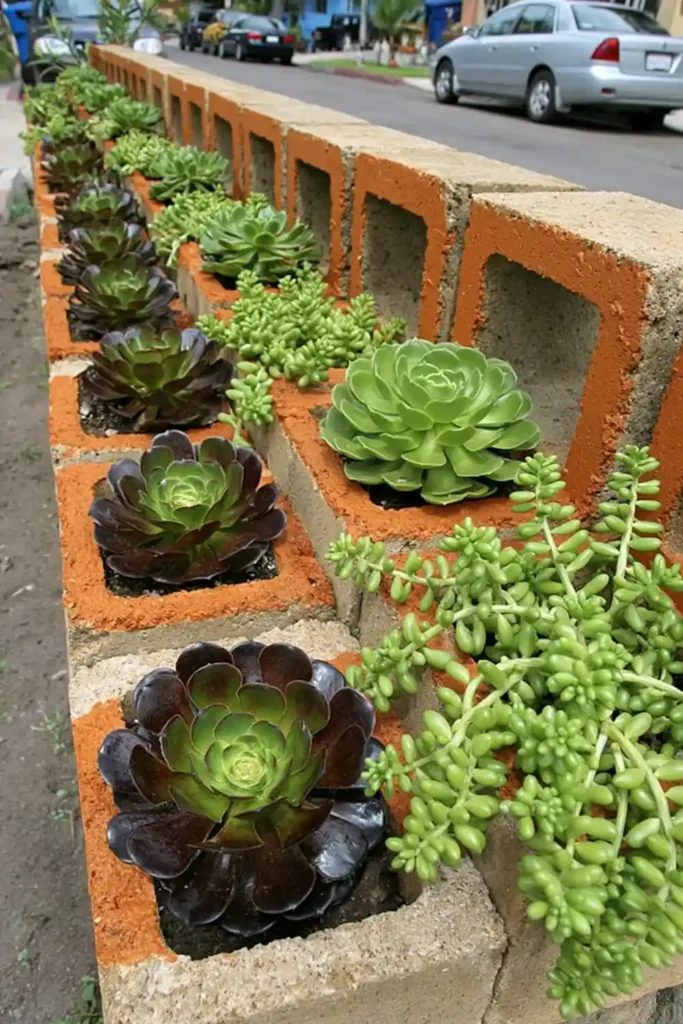
Painted Cinder Block Displays for Bright Garden Colour
Painted cinder blocks are a budget-friendly way to add both structure and colour to a garden. Their hollow centers can hold flowers, and when arranged together, they create a display that seems more playful than a standard row of pots.
Outdoor-friendly paint turns the rough blocks into a more vibrant backdrop for planting. You can stack them into a low rack or stagger them to create visual movement, then fill the openings with flowers so the greenery breaks up the solid shapes. The contrast between the geometric blocks and soft blooms gives the display a cheerful, handmade quality.
Use a small group of coordinating colours rather than every shade at once if you want the arrangement to feel more settled. Make sure the blocks are placed on stable ground before planting them. This idea works well along fences, patios, or bare garden edges that need a little more personality.
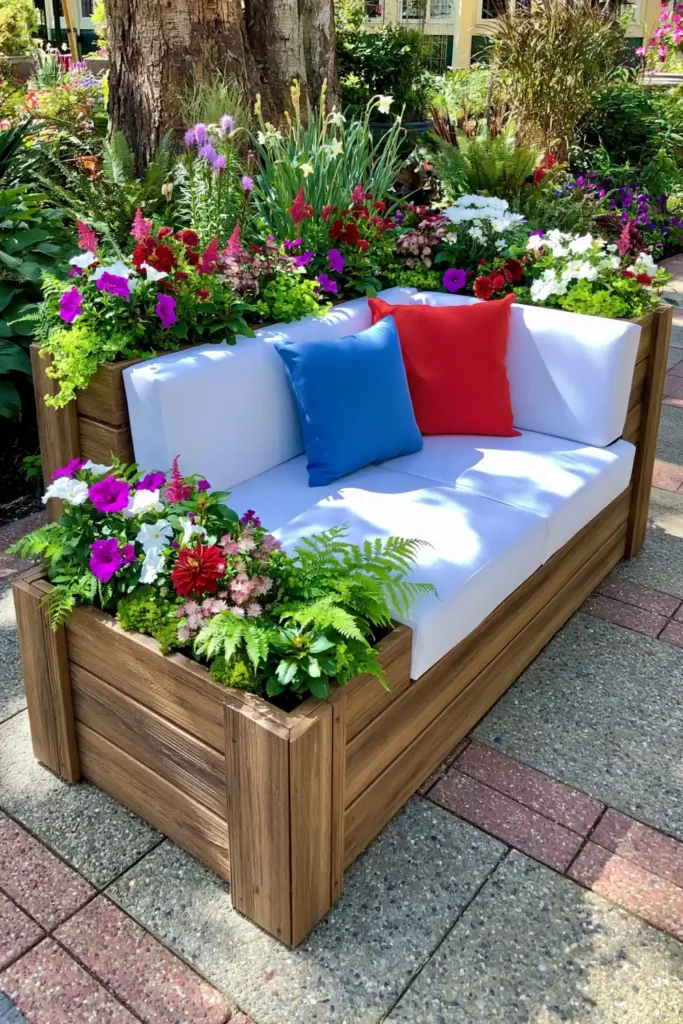
Patio Daybeds with Integrated Planting Spaces
A patio daybed can make an outdoor area feel more comfortable and useful, especially when you want a place to stretch out rather than just sit upright. Adding built-in planting spaces helps the furniture feel connected to the garden instead of looking like it was simply placed there.
Weather-resistant wood gives the daybed a sturdy base, while blooms, ferns, and greenery around the edges soften its shape. The plants bring colour and texture close to the seating area, which makes the patio feel fuller without needing lots of separate pots. This kind of piece works best when the surrounding space is kept fairly open so the daybed remains easy to use.
Choose plants that will not grow too large or shed heavily onto the cushions. Placing the daybed along a wall or at the edge of the patio can help define a quiet lounging spot while leaving the center of the area clear for movement.
Simple Floating Decks Made from Repurposed Wood
A simple floating deck can produce a more finished outdoor zone without the cost or commitment of a full built-in patio. It gives chairs, a small table, or evening seating a level surface and helps separate a relaxing area from the rest of the garden.
Repurposed planks or sturdy crates can be used to build the structure, provided they are levelled carefully and treated with deck sealant for outdoor use. The low profile keeps the deck feeling casual, while the wood adds warmth against grass, gravel, or surrounding planting. Even a modest platform can make a yard feel better organized.
Before building, spend time choosing the right location. A spot that already feels naturally pleasant, such as near planting beds or under light shade, will make the deck more useful once finished. Keep the scale proportionate to the garden so it seems like part of the space rather than an oversized addition.
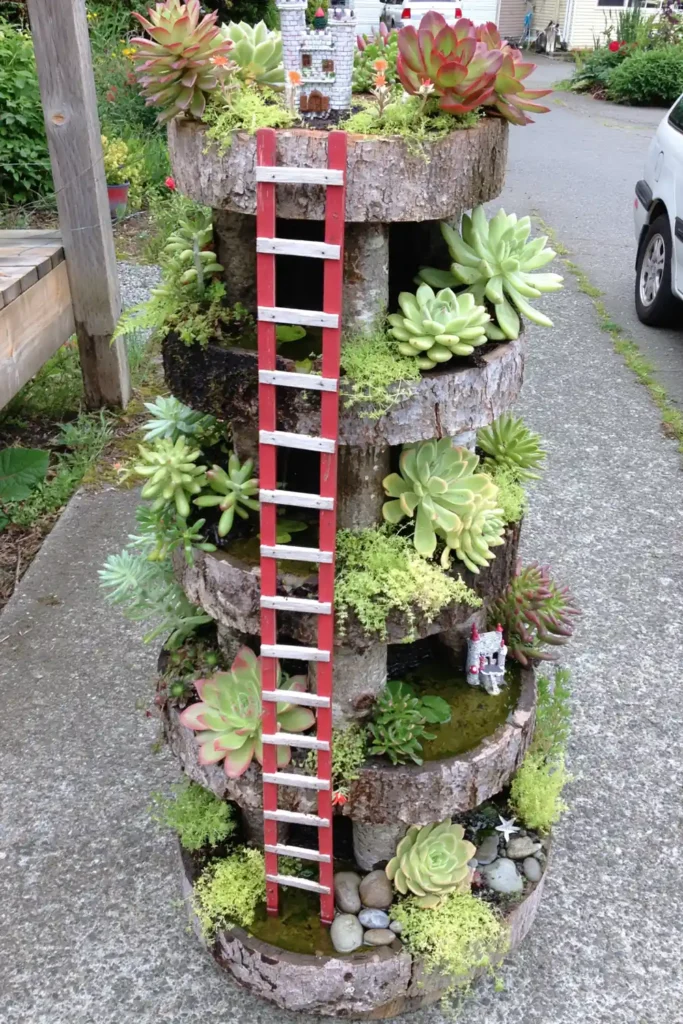
Whimsical Flower Towers with Miniature Garden Details
A flower tower can create a playful focal point in the garden, especially when you enjoy small decorative details. Instead of relying only on colour, this idea uses height and tiny scene-setting elements to create something that catches attention up close.
Succulents work well because their varied forms suit layered planting, and miniature props such as ladders, ponds, or castles can turn the display into a fairy tale-inspired feature. The vertical shape helps the arrangement stand out from ordinary flower beds, while the small accessories give it a more personal, imaginative feel.
To keep the tower from looking cluttered, choose only a few miniature pieces and let the plants remain the main focus. Place it where people can see the details easily, such as near a path, patio, or seating area. It is a lighthearted option for adding attraction without needing a large planting space.
Ladder Planters for Layered Outdoor Plant Displays
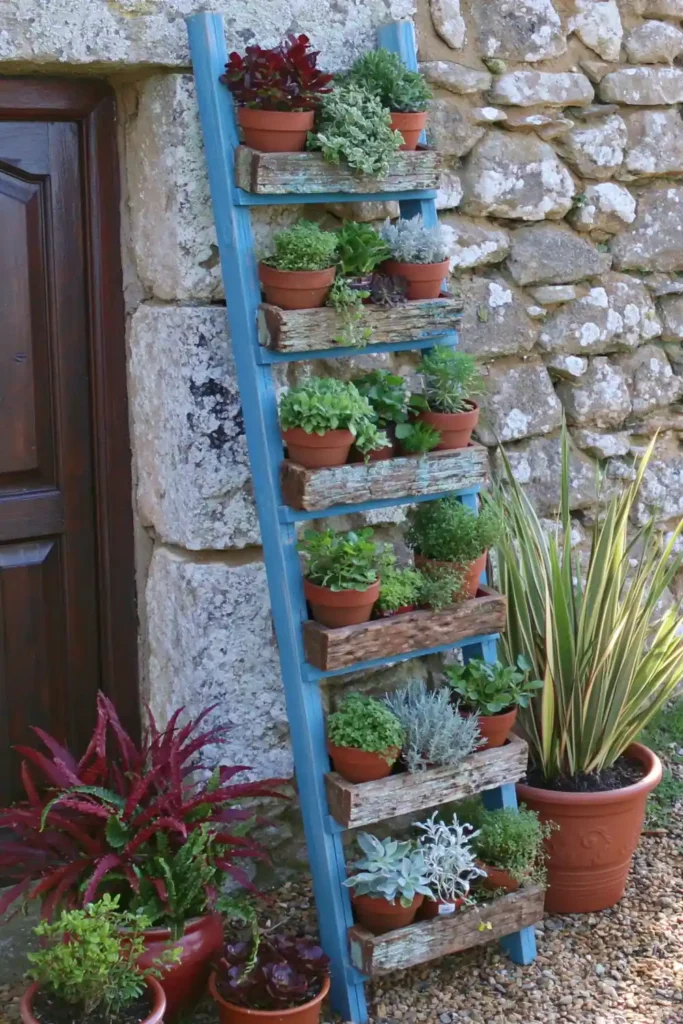
An old ladder can become a useful tiered planter with very little alteration. The rungs naturally create levels, making it easy to display several plants in a small footprint by adding height to a flat corner of the garden.
Once securely anchored, the ladder can hold succulents and other plants on different steps. Smaller pots near the top keep the arrangement light, while fuller plants lower down help ground the display visually. The aged wood brings texture, and the layered setup makes it easier to show off plants with different shapes and growth habits.
Place the ladder against a fence or wall where it has support and where each plant still receives enough light. Repeating pot colours or materials can help the display feel more pulled together, especially if the plants themselves are varied. It is a simple way to add vertical interest using something you may already have at home.
Bringing These Outdoor Ideas Together
The nicest gardens often feel personal rather than expensive. A reclaimed path, a painted planter, a small fire pit, or a wall of herbs can each add something useful while also making the yard feel more cared for and more enjoyable to spend time in.
You do not need to tackle every idea at once. Start with the part of the garden that bothers you most, choose one project that fits your space and budget, and let the rest grow from there. Small changes made thoughtfully can give an outdoor area a lot more character over time.