
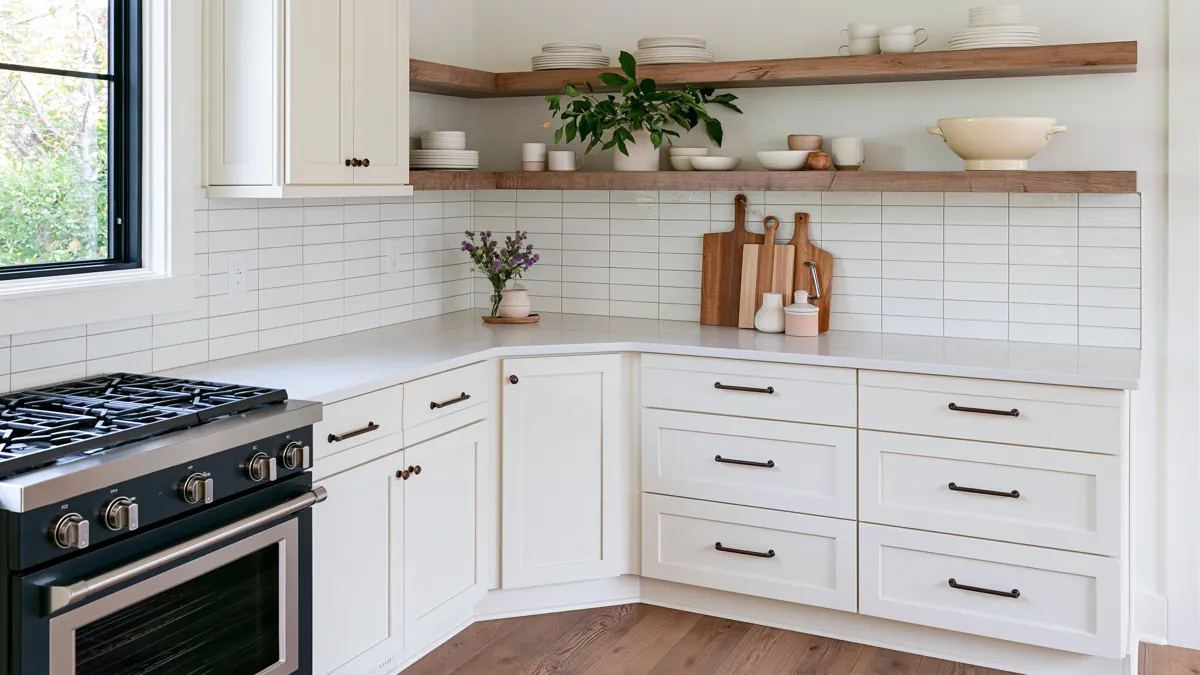
Kitchen corners can be surprisingly tricky. They offer plenty of potential storage, but deep shelves, awkward angles, and hard-to-reach spaces can quickly turn a useful cabinet into a place where things disappear.
These kitchen corner cabinet ideas approach the problem in different ways, from simple rotating shelves to pull-out systems and even a full corner pantry. The right choice depends on how much space you have, what you need to store, and how easily you want to reach everyday items. A quick way to start is by measuring your available corner space and making a short list of the items you use most often—this helps you match the right solution to your daily needs.
Lazy Susan Shelves for Easy Corner Cabinet Access
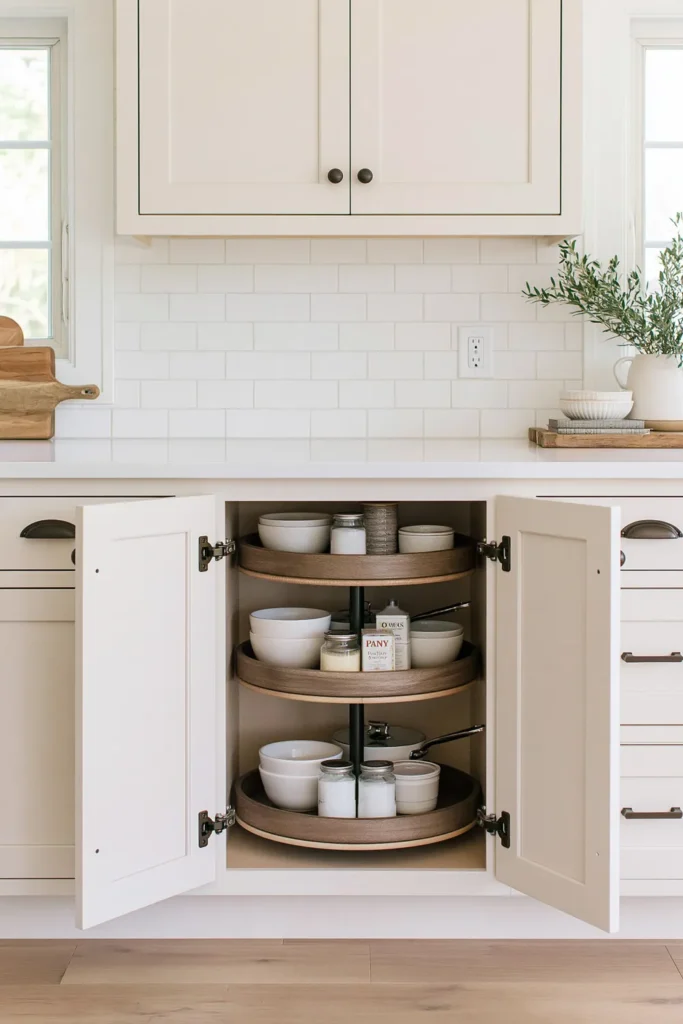
A Lazy Susan is one of the most familiar ways to make a corner cabinet easier to use. Instead of reaching into the back of a deep cabinet, you rotate the shelves and bring stored items toward the opening.
This setup can be especially practical when you want to keep several cabinet items together without stacking everything in front of one another. Because the shelves spin, items stored farther back do not become completely hidden.
The biggest advantage is accessibility. A corner cabinet can hold a surprising amount, but that storage is only helpful when you can actually reach what is inside. Rotating shelves make the depth of the cabinet much more manageable.
If you already have a corner cabinet that feels difficult to organize, this is one of the most straightforward kitchen corner cabinet ideas to consider. Many Lazy Susan kits are designed for easy retrofitting into existing cabinets and can often be installed with basic tools, rendering them a manageable DIY project for most homeowners. However, if your cabinet has unusual dimensions or you prefer a custom fit, you may want to consider professional installation.
Stationary Shelves for Deep Corner Cabinet Storage
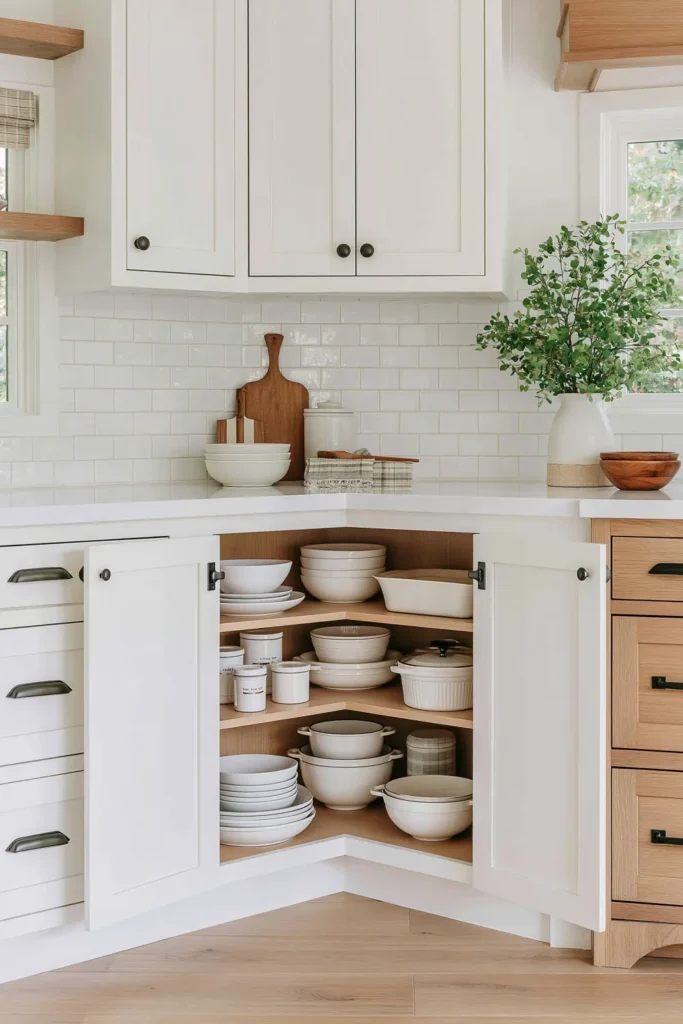
Fixed shelves take a simpler approach. Instead of adding moving hardware, the corner cabinet keeps deep stationary shelves that use the available space as it is.
This works well when you want uncomplicated storage and do not mind reaching farther into the cabinet. The shelves can hold stored kitchen items while taking advantage of the full depth of the corner.
Because nothing slides or rotates, the cabinet stays visually simple. The important part is deciding what belongs toward the front and what can sit farther back.
Items you use regularly are easier to manage near the cabinet opening, while less frequently used pieces can occupy the deeper areas. That small organizational choice can make fixed corner shelves feel much more practical in everyday use.
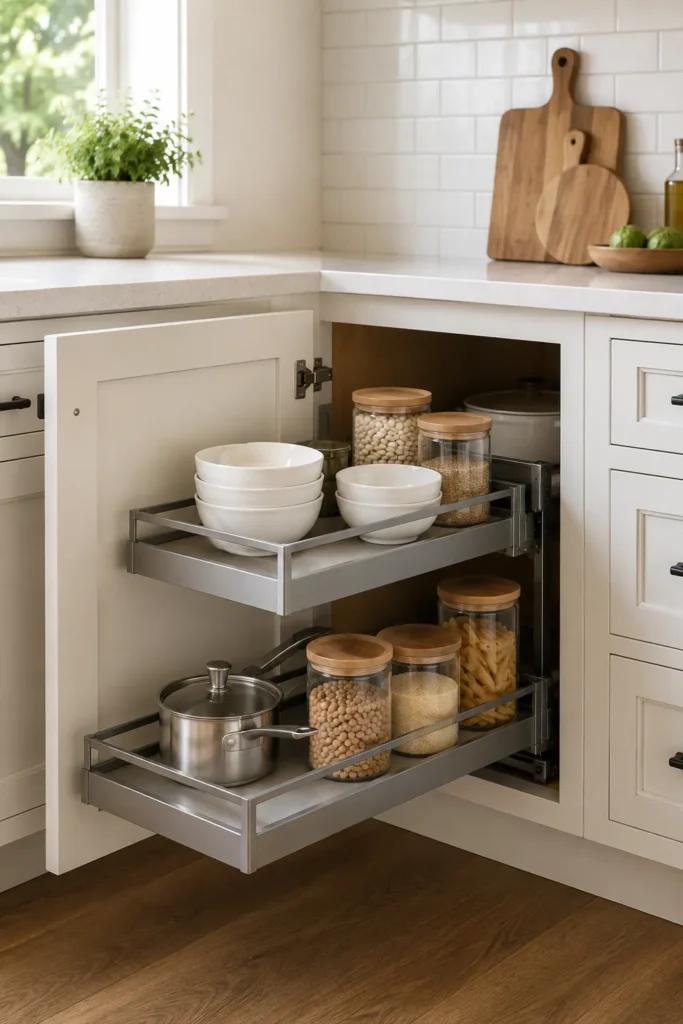
Blind Corner Pull-Out Shelving for Hidden Storage
Blind corner cabinets can hide a large amount of space behind a narrow opening. Pull-out shelving helps solve that problem by bringing the stored contents outward instead of making you reach deep into the corner.
The shelving mechanism sits inside the lower corner cabinet and moves outward when opened. That gives you better access to an area that would otherwise be difficult to see and use.
This approach is especially useful when you like the storage capacity of a deep corner cabinet but want something more accessible than stationary shelving.
It also keeps the storage concealed behind cabinet doors. From the outside, the kitchen can maintain a clean cabinet layout, while the inside provides a more functional way to reach the concealed corner.
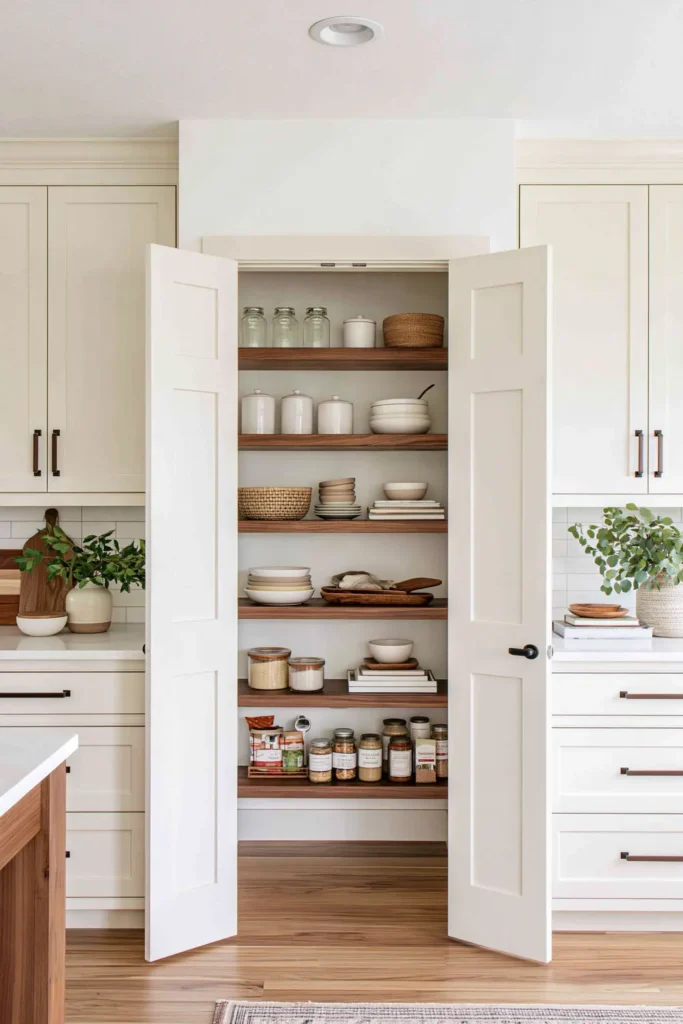
Full Corner Walk-In Pantry for Maximum Kitchen Storage
A full corner walk-in pantry takes a very different approach to the corner. Instead of filling the area with separate upper and lower cabinets, the corner becomes a dedicated pantry.
This can make the corner feel more intentional, especially when storage is a major priority. Rather than working around deep cabinet interiors, you gain a larger space where pantry items can be kept together.
The idea works best when the kitchen layout has enough room to give the corner over to a walk-in storage area. As a general guideline, most walk-in pantries need at least 4 feet by 4 feet of open floor space in the corner to be comfortable and functional, though slightly smaller sizes can work for compact kitchens. Measuring out this area in your kitchen can help you quickly decide whether a full walk-in pantry is a realistic option for your space. It is a bigger commitment than adding shelves or drawers, but it also changes how the corner functions.
For homeowners who need substantial kitchen storage, turning the entire corner into a pantry can be one of the most useful ways to make that space work harder.
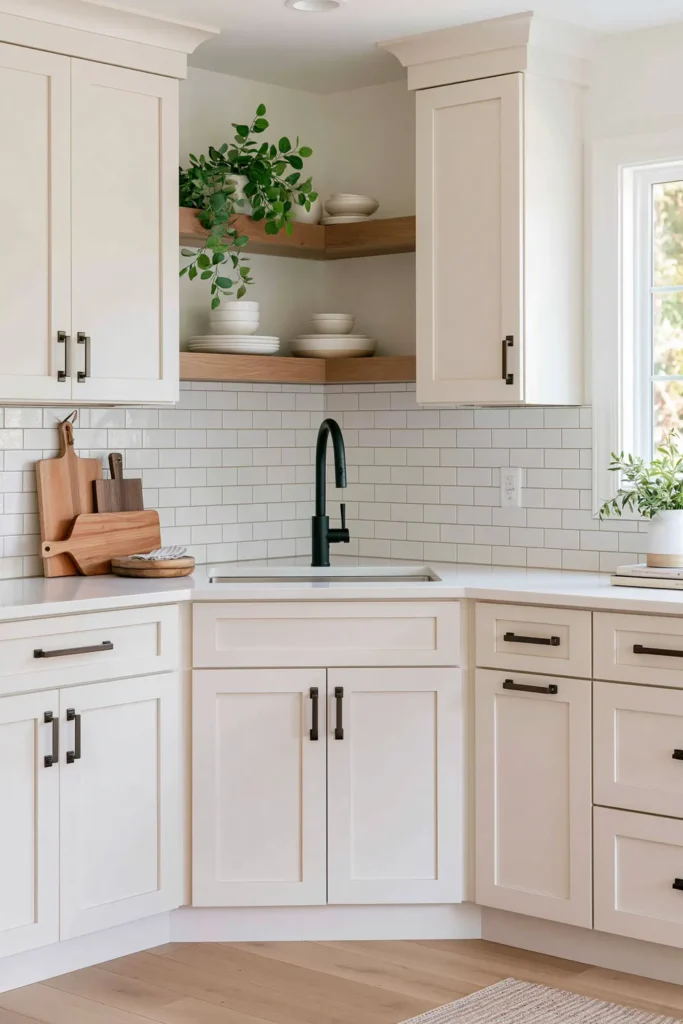
Diagonal Corner Cabinet with an Integrated Sink
Placing a sink in a diagonal corner cabinet can turn an awkward part of the kitchen into a practical work area. Instead of leaving the corner difficult to reach, the cabinet is angled so the sink faces outward into the room.
This arrangement gives the corner a clear purpose while keeping the surrounding cabinetry connected. It can be especially useful in a kitchen where the sink needs to fit into the existing cabinet run without taking over a long section of countertop.
The diagonal shape also changes how you stand at the sink. Rather than working directly against one wall, you face into the corner at an angle, which can make the layout feel more open depending on the surrounding space.
Among kitchen corner cabinet ideas, this one is less about adding storage and more about making the corner part of the kitchen’s everyday workflow.
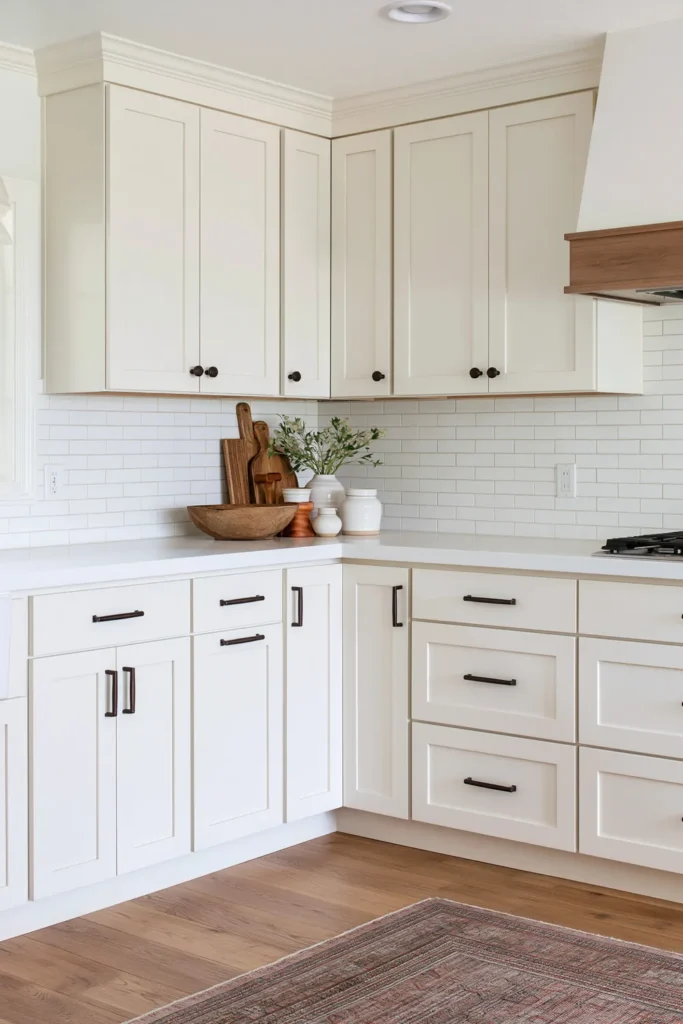
90-Degree Cabinets That Eliminate Awkward Corner Space
Not every kitchen corner has to become storage. One option is to place cabinets at a 90-degree angle and simply eliminate the difficult corner space altogether.
This creates a straightforward cabinet layout without special rotating shelves, pull-out hardware, or unusual interior shapes. The tradeoff is that the unused area in the corner is intentionally left inaccessible.
That can sound wasteful at first, but it may make sense when simplicity matters more than squeezing storage from every inch. Instead of dealing with a cabinet that is difficult to reach, the surrounding cabinets can remain easier to use.
This approach is especially worth considering if you already have enough kitchen storage and would rather focus on a clean, uncomplicated cabinet arrangement.
Corner Drawer Cabinets for Organized Kitchen Storage
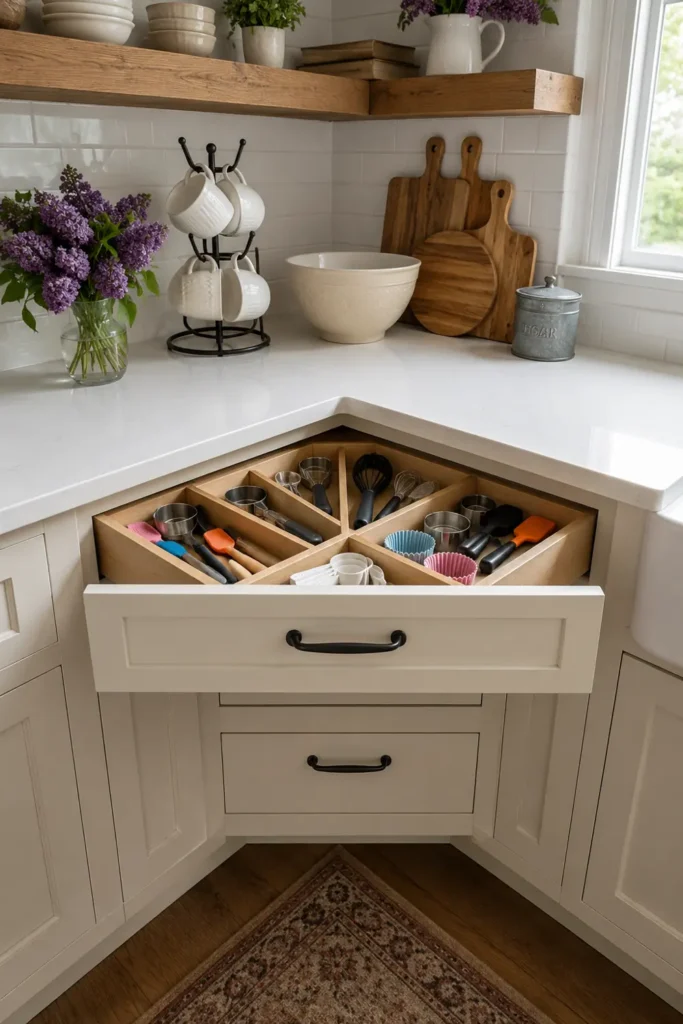
Corner drawers provide a more structured alternative to a traditional deep cabinet. In this setup, white shaker cabinetry is fitted with three custom-built drawers designed specifically for the corner.
The shallow top drawer can keep baking and cooking utensils organized, while the two deeper drawers provide room for bulkier items. Pots and pans, serving platters, food-storage containers, kids’ dishes, and water bottles can all be separated instead of being stacked together in one deep cabinet.
Organizing bins inside the drawers can help keep smaller pieces from shifting around. When choosing cabinet hardware, opt for styles and finishes that coordinate with your existing kitchen decor for a more unified appearance. For example, solid brass cabinet pulls can add a warm detail against white shaker fronts while keeping the drawers easy to open. This solution helps homeowners better visualize how new corner drawers can fit perfectly into their own space.
What makes this idea especially practical is visibility. Pulling out a drawer lets you see its contents from above, so you are less likely to lose items at the back of a dark corner cabinet.
Floating Corner Shelves for Dishes and Seasonal Decor
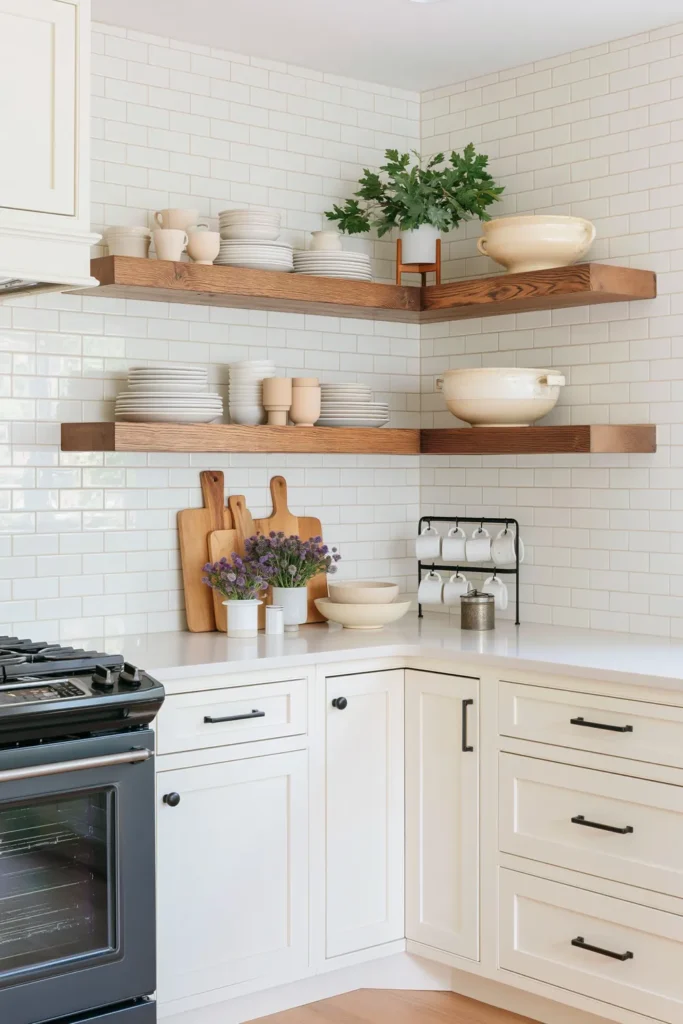
If you would rather keep the corner open, floating shelves can turn it into visible storage instead of hiding it behind cabinet doors.
Upper corner shelves can hold everyday dishes while still leaving everything within easy reach. Because the shelves remain open, they can also become part of the kitchen’s decor rather than functioning only as storage.
Seasonal pieces can be worked into the display as well. Pictures, a mirror, or a mirror dressed with a wreath can change the look of the corner for fall or winter without requiring a major update.
This option has a lighter visual feel than a full upper corner cabinet. It can be a useful choice when you want the corner to feel open while still giving dishes and decorative pieces a dedicated place.
Choosing the Corner Solution That Fits Your Kitchen
The best corner setup depends on what you actually need from that part of your kitchen. A Lazy Susan or pull-out system can make hidden storage easier to reach, whereas fixed shelves keep things simple. Corner drawers create more organized compartments, and a full pantry can turn the area into a much larger storage zone.
Other solutions approach the corner differently. A diagonal sink makes it part of the work area, 90-degree cabinets remove the awkward space entirely, and floating shelves keep the corner open and decorative.
You do not have to choose the most complicated option for it to be useful. Start by measuring your kitchen corner and making a simple list of the items you want to store in that space. Thinking about what you use most often, how frequently you need to reach it, and how much room your kitchen can comfortably give to the corner is a great first step. This helps match your storage needs with the right option. The best solution is the one that makes everyday use feel easier while fitting naturally into the rest of your kitchen.