
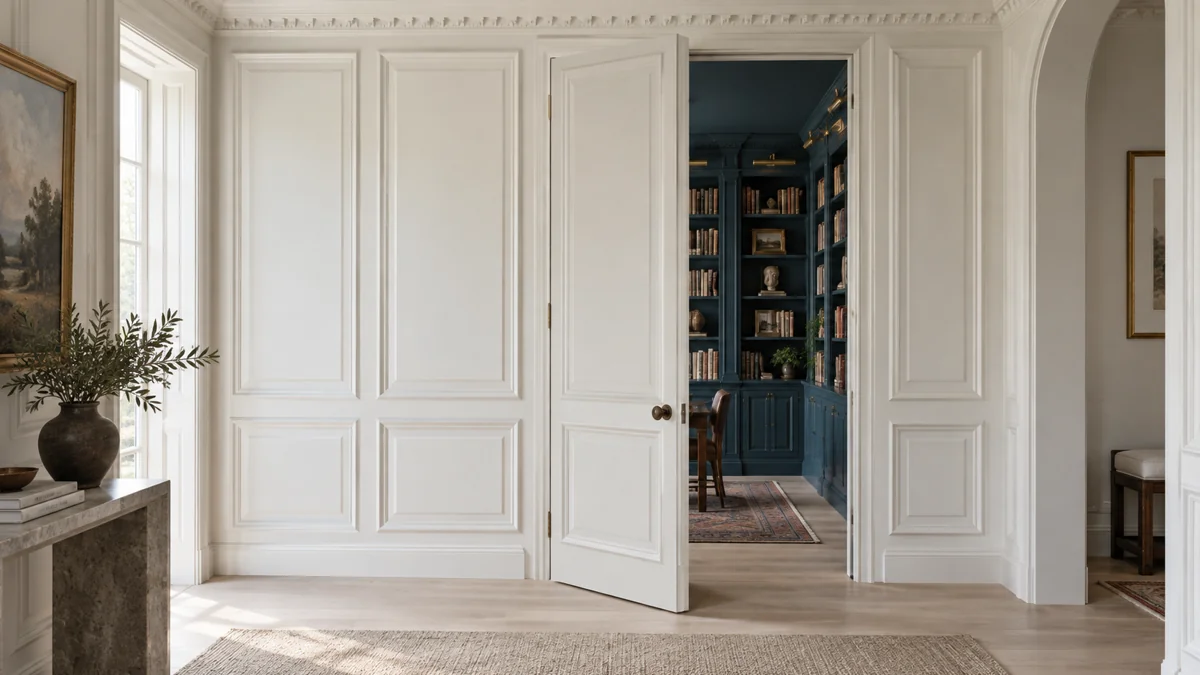
Secret doors have a way of making a home feel more thoughtful, especially when they disappear into the surrounding architecture instead of announcing themselves. Some are hidden behind bookcases, while others blend into wall paneling, wallpaper, or custom cabinetry so naturally that you might walk past them without noticing. Beyond generating a sense of interest, secret doors can also be surprisingly practical—concealing pantries, home offices, playrooms, or even extra storage spaces within the everyday flow of your home.
These secret door ideas show just how many directions you can take the concept. Whether your home leans minimalist, traditional, colorful, or richly layered, the best hidden doors feel like a natural part of the room rather than a novelty added afterward.
Minimalist Flush Secret Door for an Unbroken Hallway
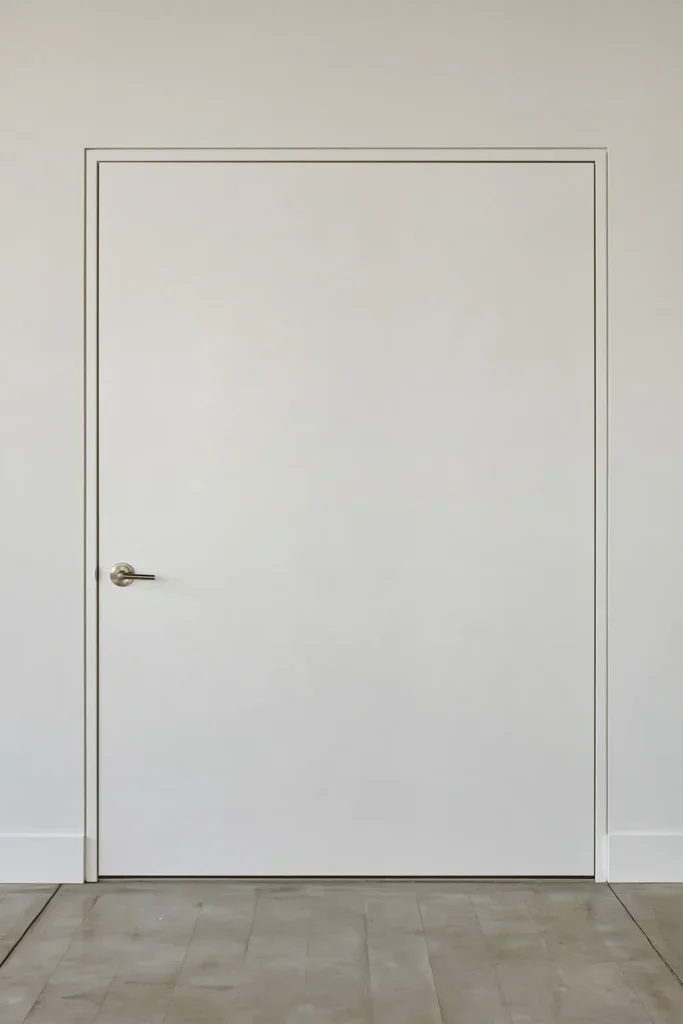
A flush jib door can be one of the cleanest ways to hide an entrance in a modern hallway. When the door sits perfectly level with a smooth white plaster wall and has no visible casing, the entire surface reads as one continuous architectural plane.
The concealed hinges are especially important here because bulky hardware would immediately reveal where the door begins. A flush frame system—meaning one that allows the door and wall to sit completely level with no visible casing—keeps the outline subtle and lets the wall remain the main visual feature. For example, some brands offer specialized frames designed to achieve this flawless effect.
I also like that this approach does not require decorative camouflage. There are no shelves, wallpaper patterns, or elaborate moldings doing the hiding. Instead, the simplicity of the wall itself creates the effect.
A smooth metal handle can remain visible without ruining the look. In fact, against an otherwise uninterrupted white surface, the small piece of hardware gives the door just enough definition to feel intentional.
Bright ambient daylight works particularly well with this kind of design because it accentuates the smooth plaster finish and crisp edges. If you want a secret door that feels quiet and contemporary rather than theatrical, this is one of the strongest approaches.
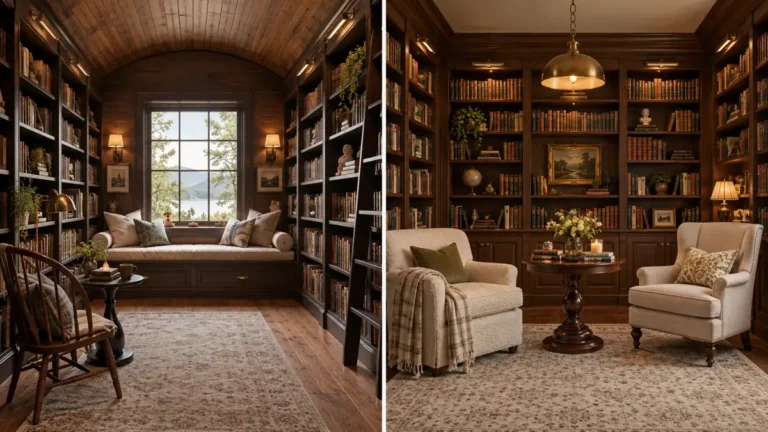
Stained-Wood Library Bookcase Secret Door
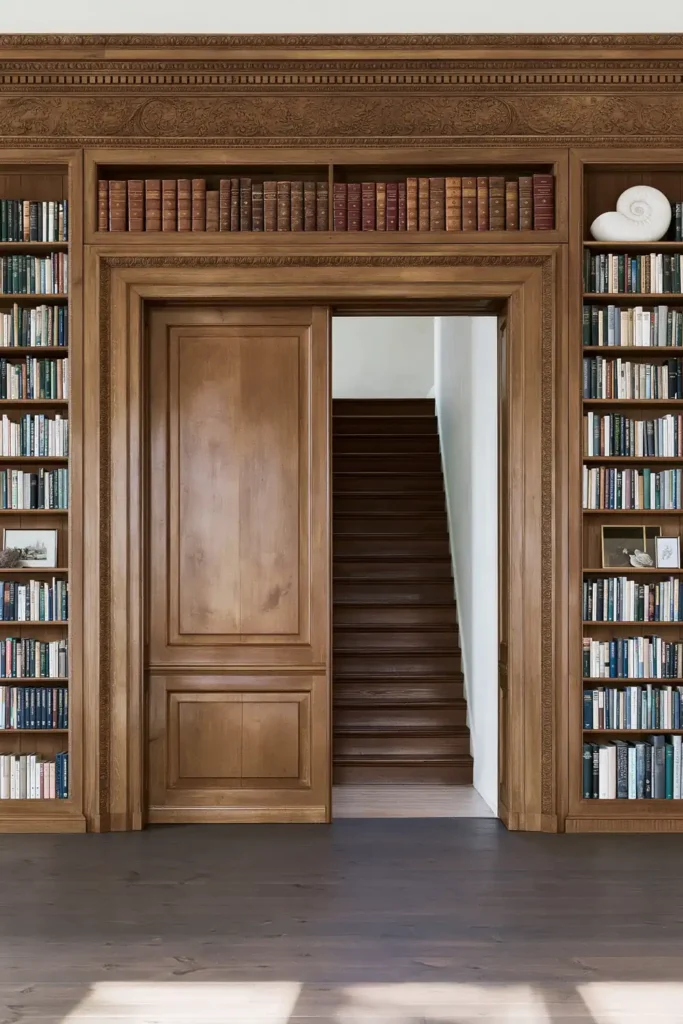
A bookcase door feels especially convincing in a library because it already belongs fittingly within the room. Here, the hidden entrance is built into rich, warm-toned stained hardwood shelving surrounded by books, making it difficult to distinguish from the rest of the cabinetry at first glance.
The wood itself does much of the visual work. Deep staining gives the shelving a substantial, traditional character, while the varied colors and textures of leather and paper book spines help break up any lines that might otherwise reveal the moving section.
Integrated shelf lighting adds another useful layer. Warm light washing across the books creates depth as well as shadows, which makes the bookcase feel like a permanent built-in rather than a disguised doorway.
Small decorative objects also help the shelving look naturally styled. A white spiral seashell and framed artwork among the book collections keep the composition from feeling too uniform or engineered.
The nearby wooden staircase strengthens the old-library atmosphere. Together, the stained shelves, warm lighting, collected objects, and stair detail create the kind of secret bookcase door that feels believable because every part of it belongs to the same room.
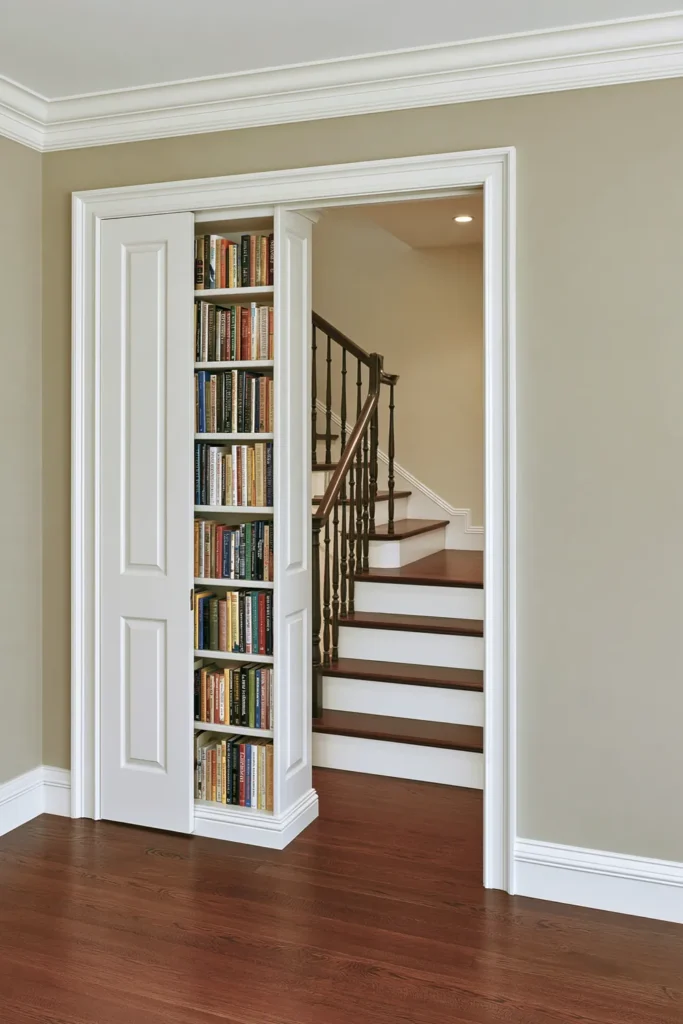
White Murphy Bookcase Door Beside a Staircase
A white Murphy-style bookcase door is a lighter alternative to the traditional dark library version. Positioned near a staircase, it can make an ordinary landing or hallway into a more useful architectural feature while still concealing an opening.
Painting the bookcase white helps it connect with classic baseboards and surrounding trim. Instead of becoming a heavy focal point, the shelving feels integrated into the architecture.
The multi-colored books provide enough contrast to make the bookcase visually interesting without making the hidden-door mechanism obvious. Since the shelving itself swings open, the books become part of the disguise rather than separate decoration.
Dark-stained oak flooring creates a strong foundation underneath the lighter cabinetry. I like this contrast because it gives the space warmth while allowing the white door to remain crisp and bright.
This idea works particularly well when you want a secret door without creating a dark or formal library atmosphere. The combination of white-painted wood, colorful books, natural light, and a nearby staircase gives the design a practical, approachable character.
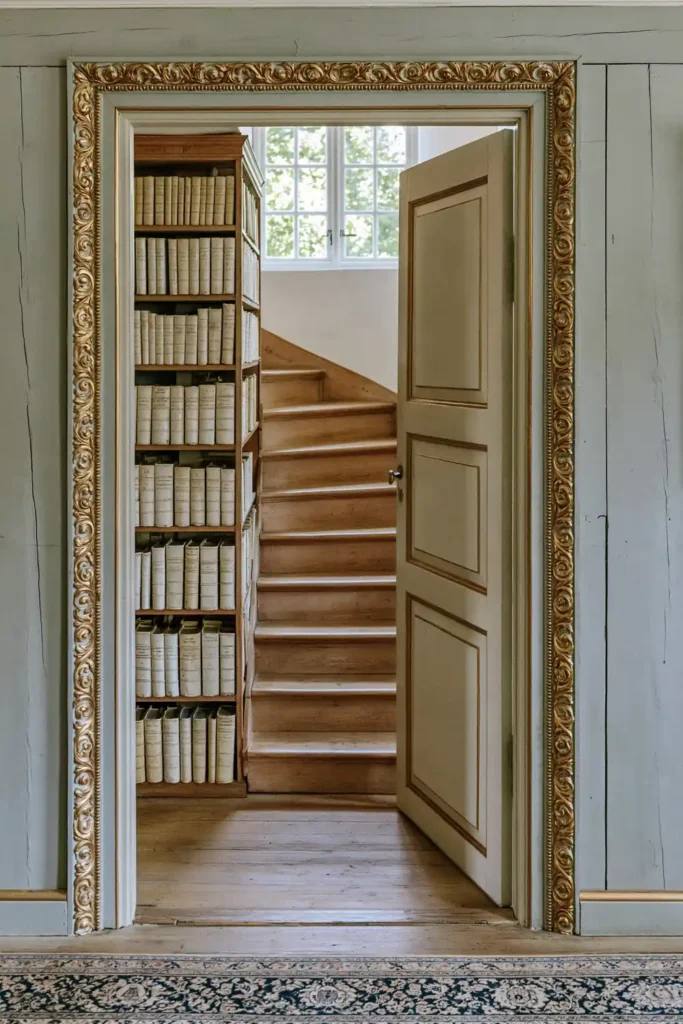
Antique Gilded Bookcase Door With Spiral Stairs
For a much more dramatic interpretation, an antique bookcase door can almost disappear within layers of historical architectural detail. Curved wooden bookshelves, decorative moldings, gilded borders, and aged books create so much visual richness that the hidden opening becomes only one part of the overall composition.
The carved antique wood gives the shelving depth and texture, while gold-leaf details emphasize the classical character of the space. Instead of trying to minimize decoration, this type of secret door uses ornament as camouflage.
Rows of aged and leather-bound books help reinforce the illusion of a permanent library wall. Their worn paper, varied bindings, and irregular textures soften the geometry of the shelves and make the concealed section less noticeable.
A spiral staircase adds a further layer of architectural interest, especially when the distressed wooden steps share the same aged character as the surrounding shelving. The result appears less like a modern hidden-door installation and more like something that has always belonged in the building.
Soft daylight entering through a large pane window keeps all those dark woods and gilded details from feeling too heavy. The natural light catches the carved surfaces and gold accents, bringing out the craftsmanship without losing the room’s old-world atmosphere.
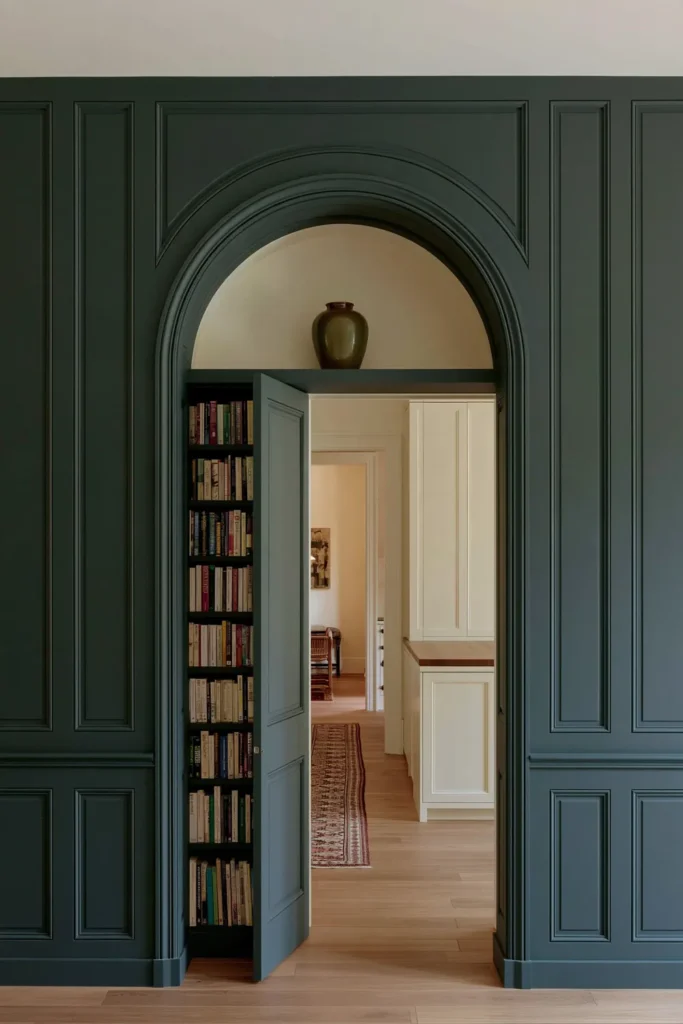
Teal Arched Bookcase Door for a Colorful Hidden Entry
A hidden door does not always need to disappear completely. Sometimes the strongest approach is to make it look like a beautiful built-in feature, as with this arched teal bookcase door.
The saturated teal paint gives the shelving plenty of personality, while the arched shape makes the whole piece feel architectural rather than simply functional. Because the door follows the same form and finish as the surrounding built-in, it can still conceal an opening without looking out of place.
The recessed niche at the top creates depth, and a simple brown ceramic vase gives the shelves a quiet decorative feature without overcrowding them. Keeping the styling restrained helps the shape and color of the bookcase remain the focus.
Hardwood flooring brings warmth beneath the painted cabinetry, while light pouring in from adjoining rooms gives the doorway extra dimension. This kind of secret door idea works especially well when you want the hidden feature to feel intentional and decorative rather than completely invisible.
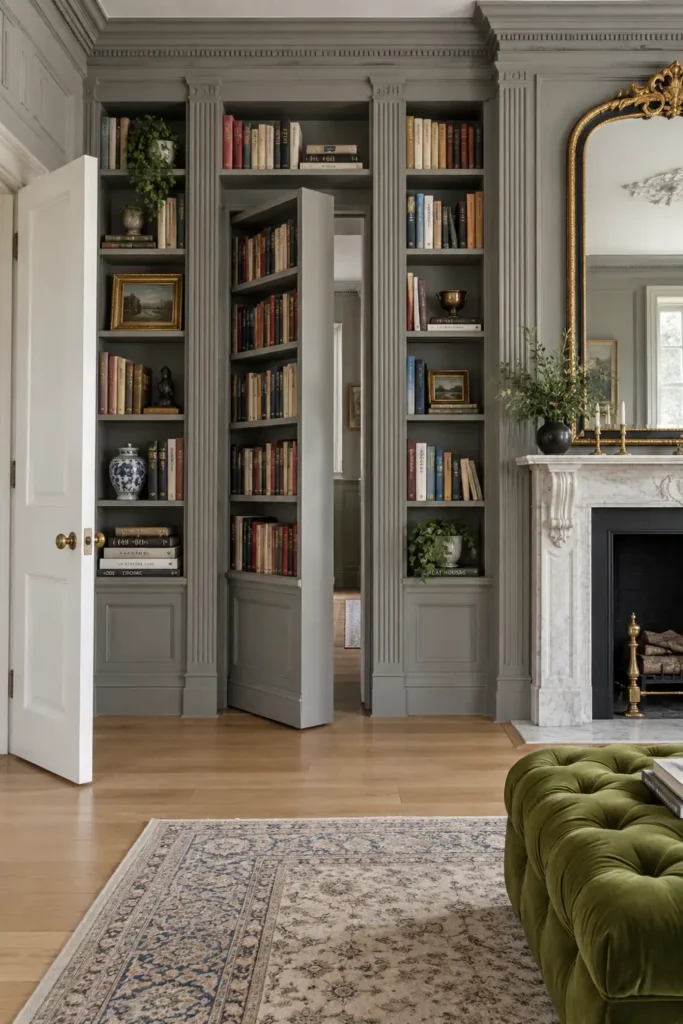
Grey Paneled Bookcase Jib Door Beside a Marble Fireplace
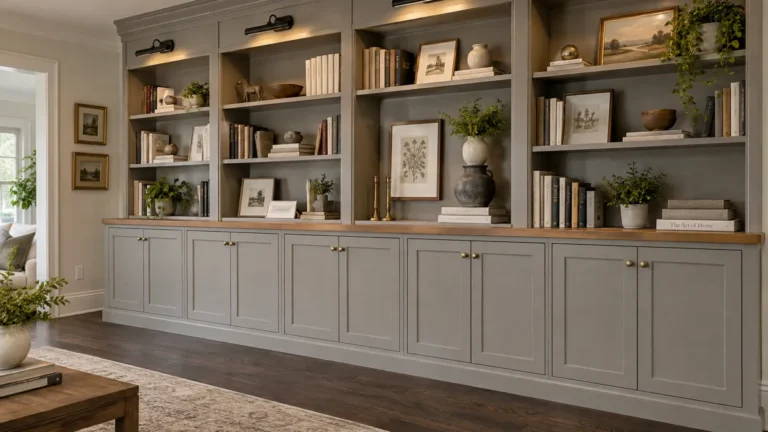
Built-in shelving can make a secret door feel remarkably natural in a living room, particularly when it is part of a larger wall of cabinetry. Here, grey-painted bookcases create a calm backdrop around a traditional white marble fireplace.
The jib door blends into the paneled shelving, allowing the moving section to read as part of the cabinetry. A brass cabinet knob provides a functional detail while still fitting the traditional character of the room.
The fireplace adds another strong architectural focal point, which helps draw attention away from the hidden opening. Above it, a large gold-gilt mirror brings warmth and contrast against the cooler grey woodwork.
Books fill the shelves with color and texture, while a green tufted ottoman and patterned area rug add softness to the room. These layered details make the space feel lived-in, which also helps the secret door disappear more convincingly.
Soft daylight keeps the grey cabinetry from feeling too heavy and accentuates the carved marble and metallic finishes. For a formal living room or library, this approach shows how a hidden door can become part of a polished, traditional interior.
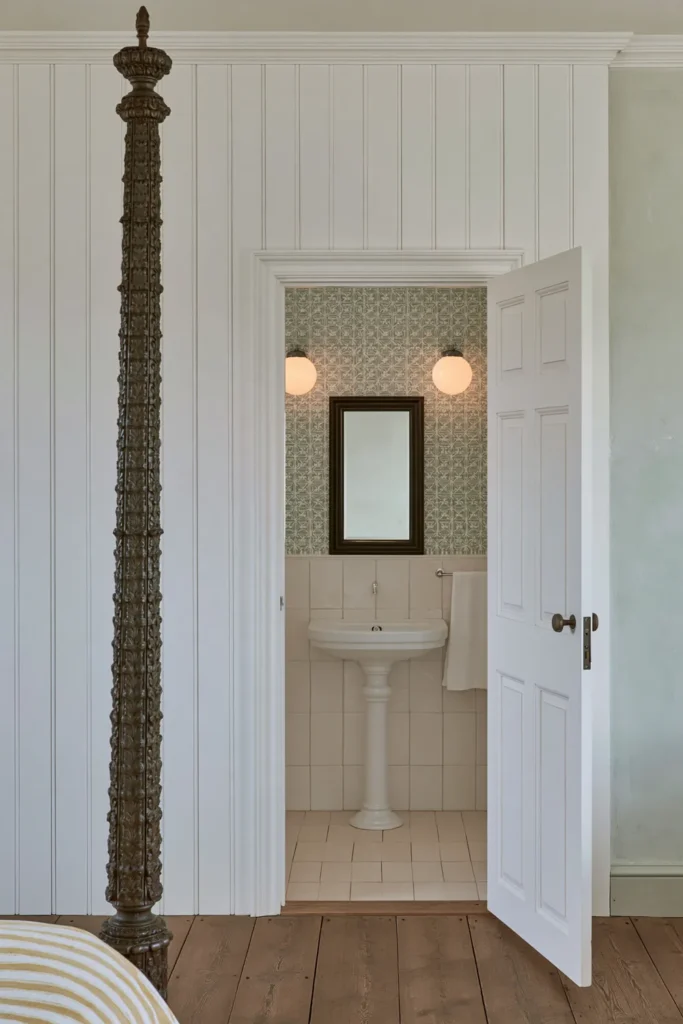
Wainscoting-Disguised Secret Door Between Bedroom and Bathroom
Wall paneling is one of the most effective ways to conceal a door because the repeated molding naturally breaks up the surface. In this bedroom-to-bathroom transition, white wainscoting continues across the doorway so the opening blends into the surrounding wall.
The paneled treatment feels especially appropriate beside a traditional four-poster bed with dark turned mahogany posts. The contrast between the dark wood furniture and crisp white wall paneling gives the bedroom a classic, even look.
A brass doorknob provides a small clue that the paneled section opens, but it still fits naturally with the traditional materials. Once the door is open, the adjoining bathroom displays a different layer of pattern through sage green and white wallpaper.
A white ceramic pedestal sink keeps the bathroom light and traditional, while hanging white towels and warm wall sconces add familiar, useful details. The change in wallpaper also creates a pleasant visual reveal when the hidden door is opened.
This is a useful secret door idea when two connected rooms already share traditional architectural details. Instead of adding an obvious new door frame, carrying the wainscoting across the opening can make the transition feel much more integrated.
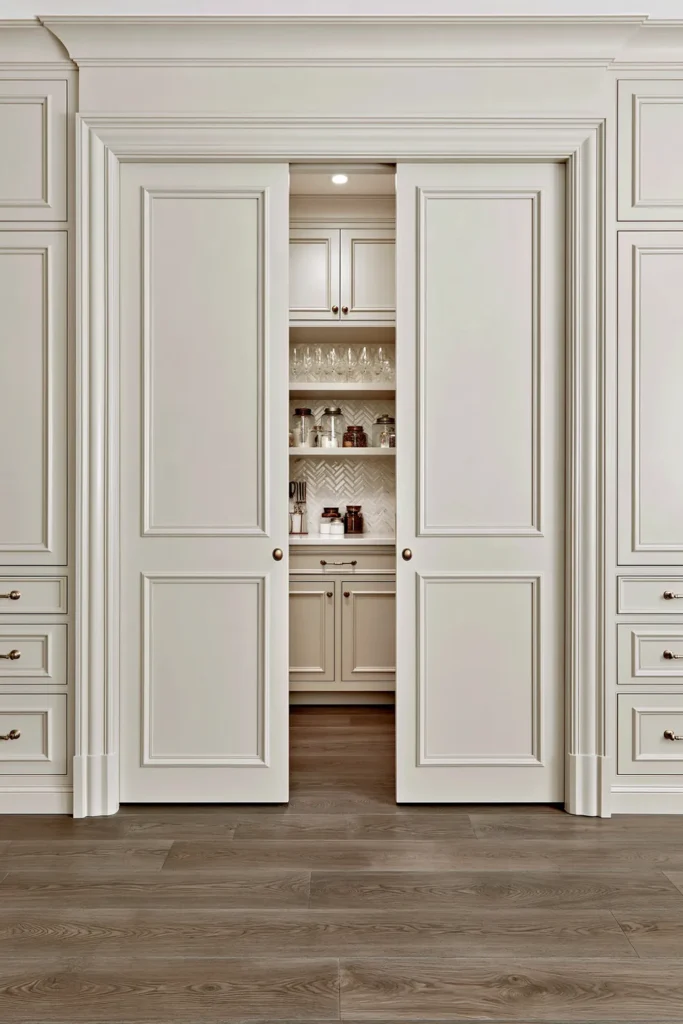
Double-Door Cabinet Entry Concealing a Kitchen Pantry
Kitchen cabinetry offers an ideal place to hide a pantry entrance because tall cabinet doors already look completely natural in the room. A double-door design can conceal a surprisingly generous opening while continuing the appearance of a continuous cabinet wall.
Cream-painted wood keeps this version bright and classic. Long brass bar handles match the surrounding cabinetry, making the doors look like ordinary full-height storage rather than a passageway.
The pantry beyond preserves the practical feel with built-in shelving for glassware, ceramic canisters, and white display bowls. Recessed ceiling fixtures provide focused light inside, so the hidden space is still functional rather than simply decorative.
Outside the pantry, a herringbone tile backsplash and hardwood flooring add texture without competing with the cabinetry. Under-cabinet lighting gives the kitchen another warm layer of illumination and helps the cream finish feel inviting.
This approach is especially effective when you prefer secret door ideas that solve an everyday storage problem. The entrance stays visually tidy when closed, yet it can open directly into organized pantry shelving whenever you need it.
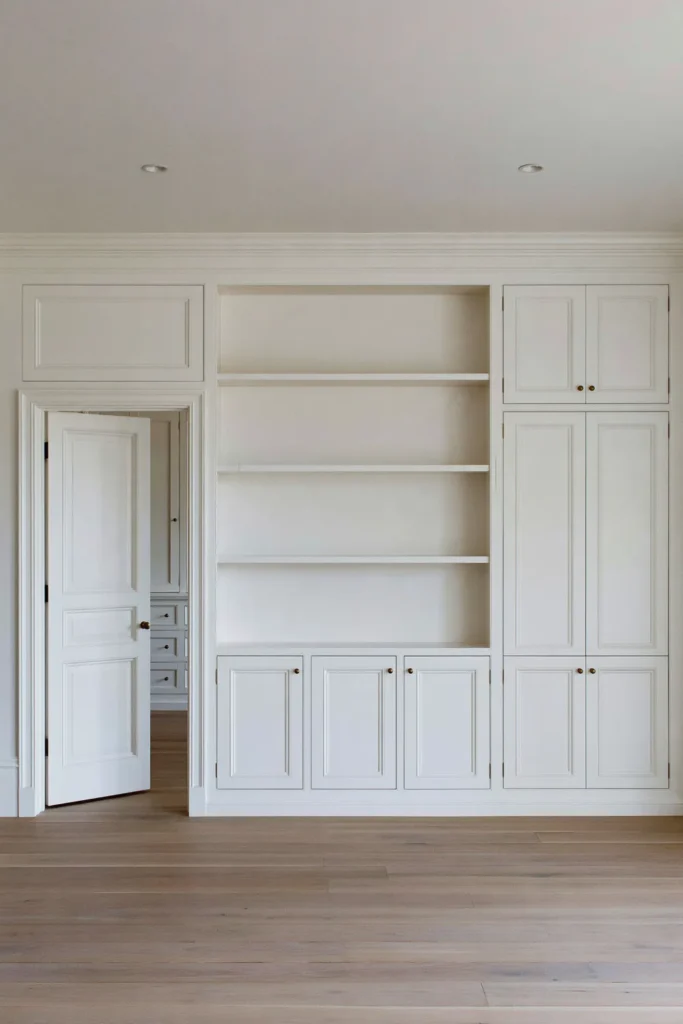
Integrated Wainscoting Cabinet Door With Brass Latches
A wall of white wainscoting can do more than add traditional detail. When the paneling continues across cabinetry and a concealed opening, it can turn an entire wall into one continuous architectural feature.
In this design, painted white wood keeps the space bright, while the repeated panel shapes help disguise where the door begins and ends. Brass latches introduce a warm metallic accent without drawing too much attention to the hidden section.
Open shelving filled with books makes the wall feel functional instead of purely decorative. That is useful in a living room or den, where built-ins should look like they belong to the room even before anyone realizes that part of the wall opens.
Deep crown molding along the top gives the cabinetry a more finished, substantial appearance. Light oak floorboards soften the crisp white millwork and bring a natural warmth to the space.
Bright daylight and recessed spot lighting keep the details easy to see without making the concealed door obvious. It is a good example of how secret storage or passageways can be integrated into traditional millwork without interrupting the room’s overall rhythm.
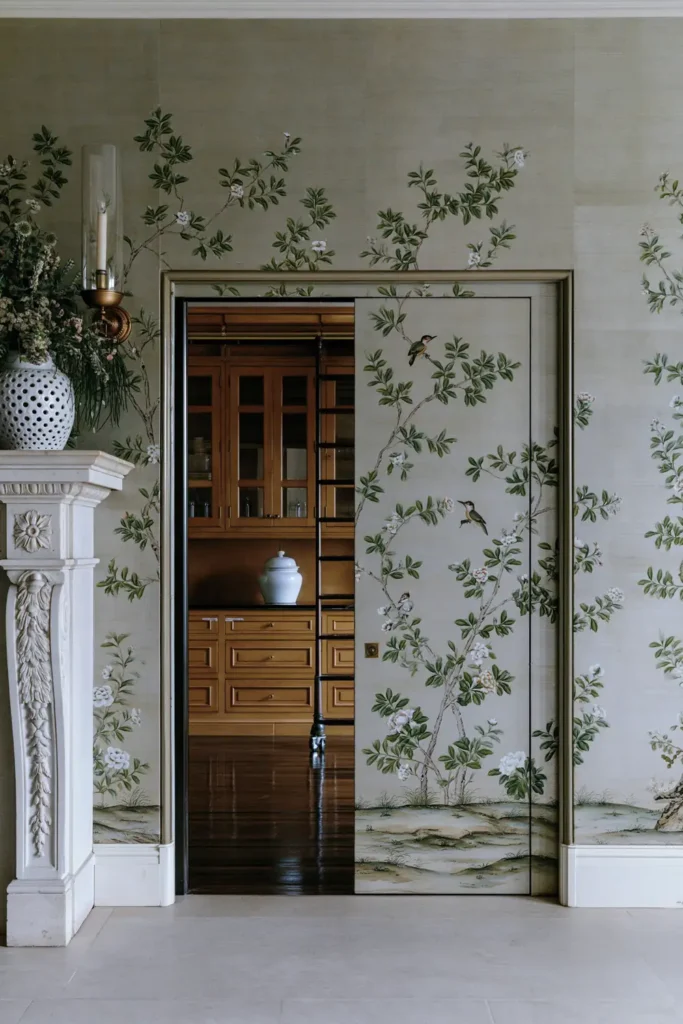
Botanical Wallpapered Jib Door Beside a Fireplace
Wallpaper can be surprisingly effective at hiding a door, especially when a detailed pattern continues uninterrupted across the moving panel.
Here, an ochre botanical design covers the wall and jib door beside a white carved fireplace mantel. The hand-painted flower and bird motifs create enough visual movement to make the door seams far less noticeable.
The white fireplace provides a strong contrast against the warmer wallpaper, giving the room an obvious focal point away from the concealed entrance. A decorative white ceramic bowl on the mantel keeps that area simple while still adding dimension.
An antique brass wall sconce with a candle-like form introduces another traditional detail. Its warm glow works nicely with the ochre tones and complements the light coming from the pantry cabinetry beyond the hidden door.
When the door opens, the transition to warm wood pantry cabinets creates an interesting reveal. Closed, however, the wallpaper allows the entrance to blend into the decorated wall rather than appearing as a conventional doorway.
This approach works best when the pattern can continue cleanly across the door surface. Careful alignment matters because the more continuous the botanical design appears, the more convincing the disguise becomes.
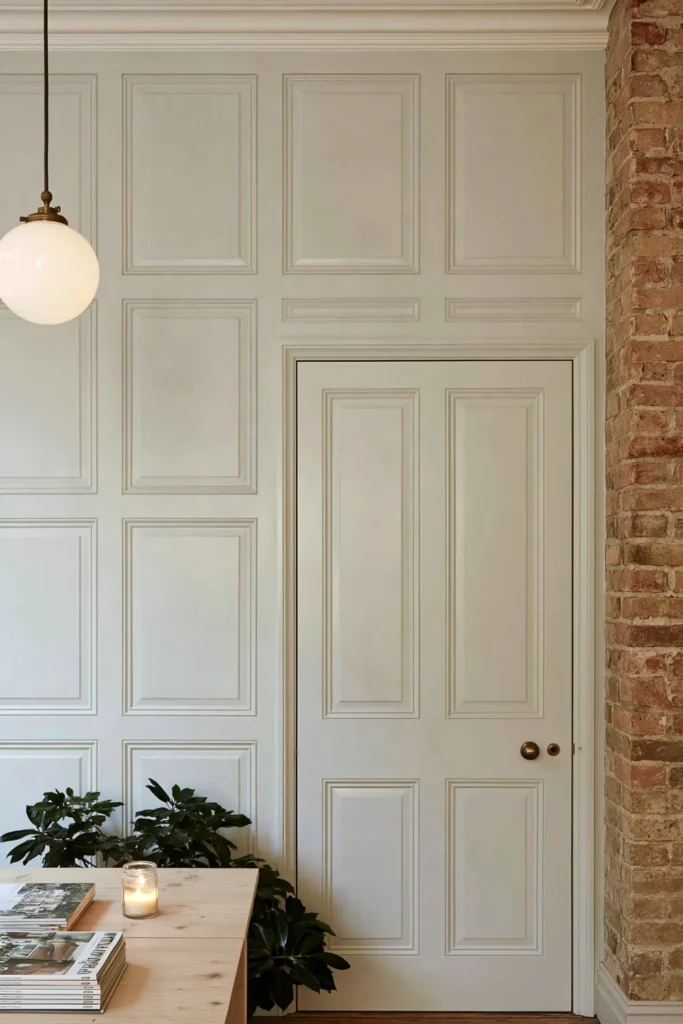
Applied-Molding Jib Door Against an Exposed Brick Wall
A concealed door can also work in a space where polished architectural detailing meets rougher materials. This version combines white applied molding with exposed brick, creating a contrast that appears both traditional and slightly industrial.
The door itself blends into painted white wall panels with classic wainscoting-style molding. Rather than relying on shelving or cabinetry, the repeating rectangular trim provides the visual camouflage.
A brass doorknob gives away the function of the panel if you look closely, but its pleasant finish suits the surrounding materials. Against the white paint, it reads more like a decorative detail than a major interruption.
Nearby, an exposed brick wall adds texture and keeps the room from feeling excessively formal. A light-stained wood counter desk introduces another natural surface, while catalogs and a small glass jar candle give the area a practical, occupied character.
An industrial brass pendant with an exposed bulb reinforces the mix of old and utilitarian details. A leafy green houseplant adds a softer natural element against the brick and painted wood.
This is a useful reminder that secret door ideas do not need perfectly matching surfaces throughout the whole room. The concealed door only needs to belong convincingly to the wall it occupies, while contrasting finishes elsewhere can make the space feel more layered.
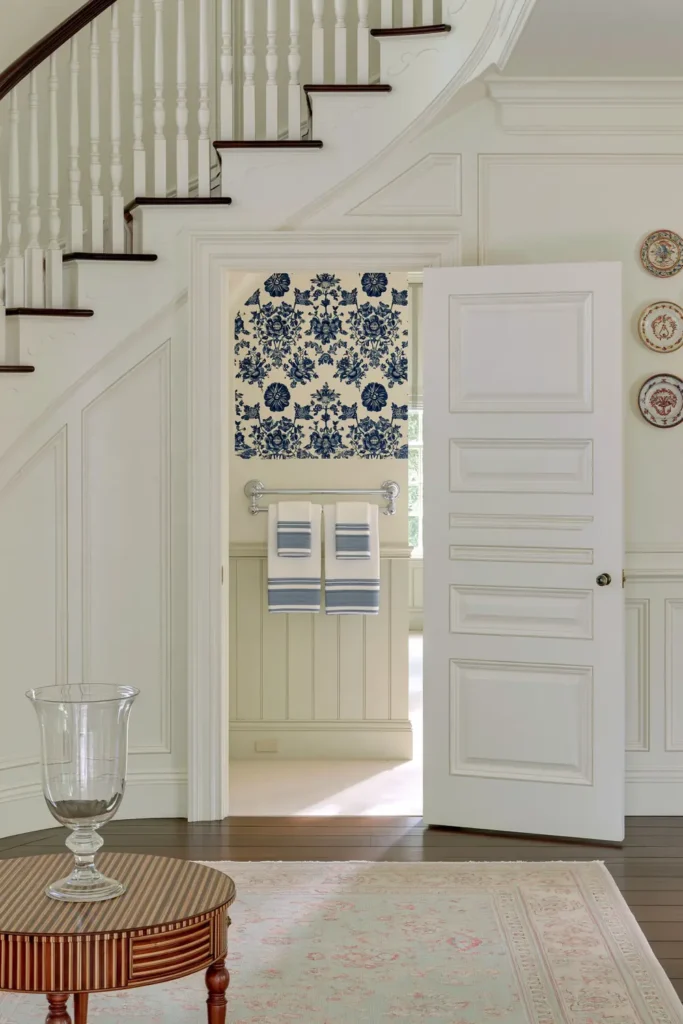
Curved Under-Stairs Secret Door to a Powder Room
The area beneath a staircase often has an unusual shape, which makes it a particularly interesting place for a hidden powder room entrance.
In this design, curved white wainscoting follows the architecture beneath the stairs. Because the door continues the same panel treatment, the opening becomes part of the sweeping wall instead of interrupting it with a standard rectangular frame.
Dark hardwood flooring creates strong contrast below the white millwork. A round table with striped wood veneer echoes the curved form of the wall and gives the hallway a useful decorative focal point.
A large glass and brass pedestal chalice on the table adds height and catches the light, while three decorative plates displayed on the wall bring additional detail without crowding the narrow area.
Behind the concealed entrance, the powder room has its own personality. Blue-and-white damask-style wallpaper surrounds a white pedestal sink, with coordinating towels adding another touch of color.
Bright bathroom lighting makes the secret room feel welcoming when the door opens, while softer natural light keeps the hallway restrained. It is a clever way to turn an awkward under-stairs area into something practical without sacrificing the clean architectural flow of the passage.
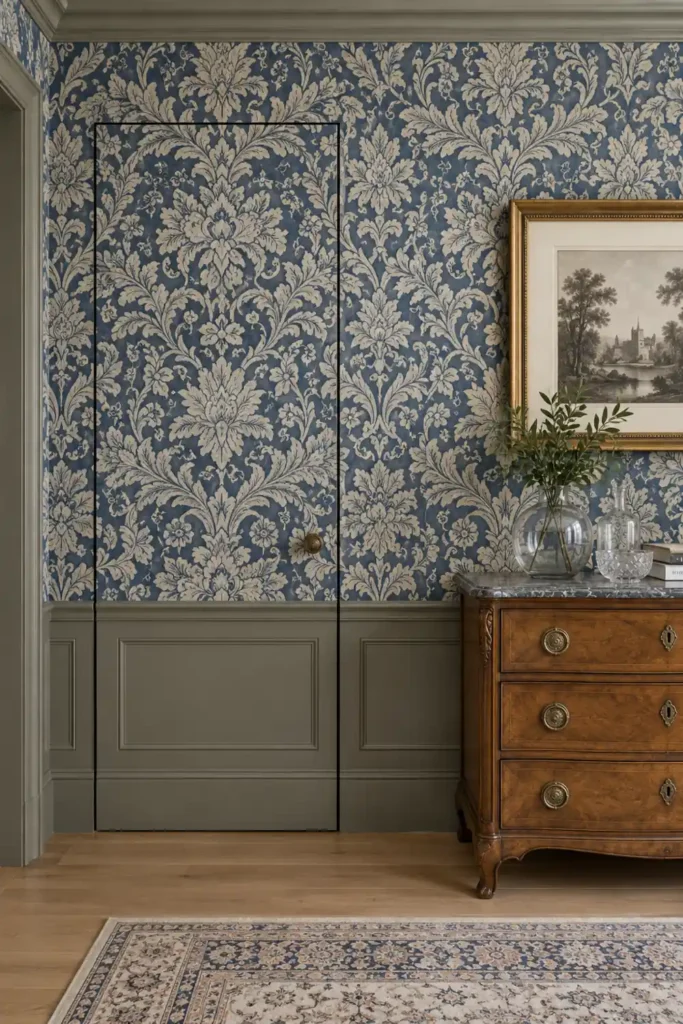
Blue Damask Wallpapered Jib Door for a Traditional Parlor
Wallpaper can hide a door beautifully when the pattern continues across the panel without an obvious break. In this parlor-style setting, blue and white damask wallpaper turns the wall into a decorative surface while helping the jib door blend into its surroundings.
The pattern gives the room a formal, traditional character, especially alongside olive-green painted wainscoting. That combination of blue, white, and muted green feels layered without becoming overly busy.
A dark wood commode with a white marble top adds weight beneath the patterned wall. Glass decanters arranged on top bring a little shine and keep the furniture from feeling too heavy.
Above it, a large classical portrait in a gold-gilt frame creates a strong focal point. That artwork naturally draws attention away from the hidden doorway, which helps the concealment feel even more convincing.
Natural window light keeps the wallpaper and darker furniture balanced. For a traditional dining room or parlor, this approach shows how a secret door can disappear into a richly decorated wall without requiring built-in shelving.
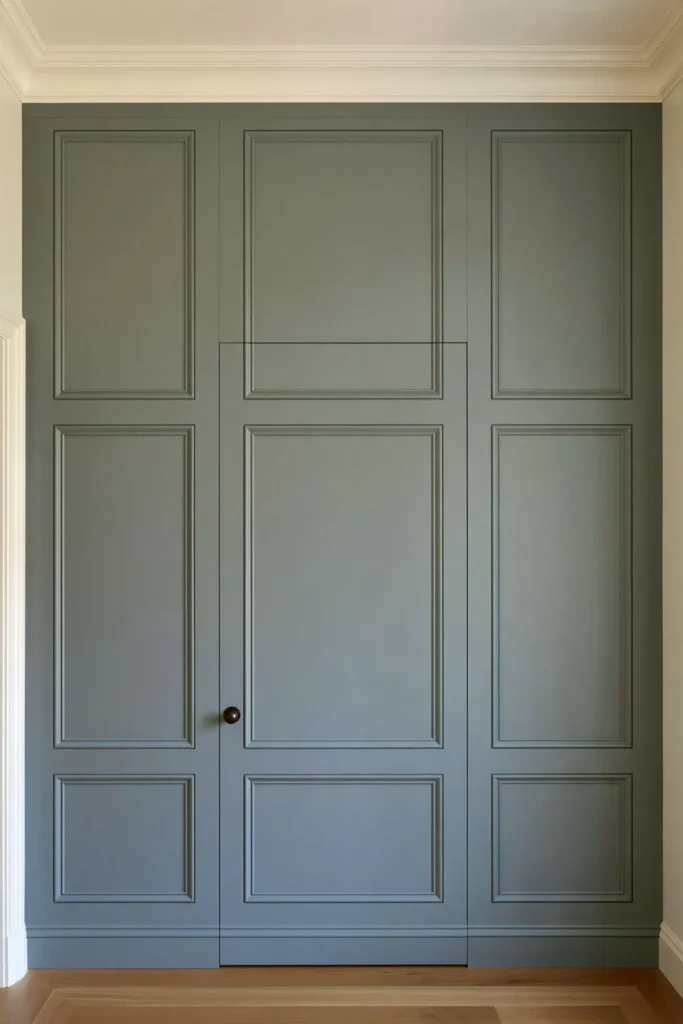
Light Blue Wainscoted Jib Door With a Black Knob
Sometimes a concealed door works best when the design is kept very simple. Light blue painted wainscoting gives this hallway or sitting-room wall enough detail to disguise the door while still feeling calm and uncluttered.
The applied molding continues across the door face, so the vertical and horizontal panel lines become part of the disguise. When those moldings align properly with the surrounding wall, the doorway can read as another section of decorative paneling.
A round black metal knob creates a crisp contrast against the light blue finish. It does reveal that the panel has a function, but the dark hardware also feels deliberate and graphic rather than intrusive.
Hardwood flooring adds warmth beneath the cooler wall color, keeping the space from feeling excessively formal or cold. Soft daylight further accentuates the gentle blue hue and the shallow shadows created by the molding.
This is one of the more approachable secret door ideas if you like traditional millwork but do not want an elaborate hidden mechanism to dominate the room. The effect comes mainly from proportion, alignment, and consistent paint rather than layers of decoration.
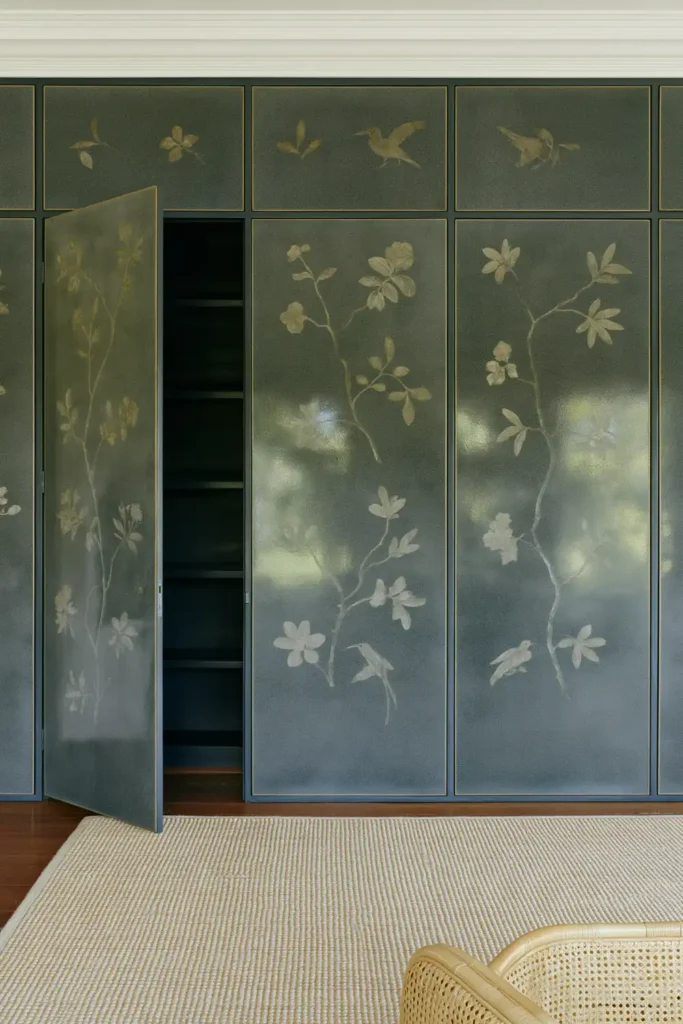
Dark Botanical Secret Door for a Contemporary Dressing Room
A hidden door can feel just as convincing in a contemporary interior when the wall finish itself becomes the camouflage. Here, dark grey textured wallpaper covers the door and surrounding surface, creating a moody backdrop with a refined botanical pattern.
Silver and white branches and tree-like illustrations stretch across the dark wall. Because the decorative motif continues over the doorway, the pattern helps soften the outline of the concealed panel.
Thin metal trim keeps the edges clean and modern. Instead of traditional molding or visible cabinetry, the design relies on the contrast between the dark surface and delicate botanical graphics.
A light wood chair or bench with a woven cane seat delivers a natural counterpoint to the darker wall. The pale wood and woven texture prevent the space from feeling too severe.
A natural-fiber sisal rug adds another tactile layer underfoot and connects visually with the cane. Focused overhead spot lighting creates highlights across the wallpaper and makes the botanical design stand out against the grey background.
For a bedroom or dressing room, this approach gives the secret door a quieter, more contemporary personality. It feels integrated through pattern and material rather than through traditional architectural trim.
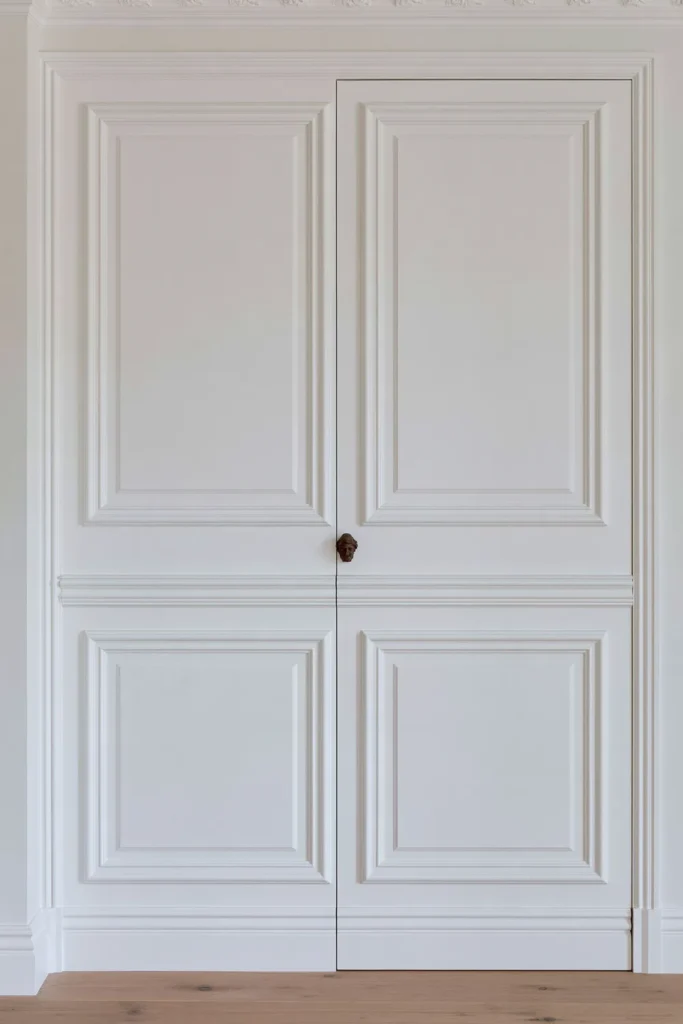
Deep-Paneled Classic Jib Door for a Traditional Hallway
Deep raised paneling can make a concealed doorway feel almost indistinguishable from the rest of a traditional hallway wall. The more substantial the molding, the easier it is for the seams of a jib door to disappear among the architectural lines.
Painted white wood gives this version a crisp, timeless look. The raised panels create enough shadow and depth to prevent the wall from feeling flat, while classic crown molding continues the traditional detailing overhead.
A small egg-shaped bronze doorknob adds warmth against the white surface. Its aged metallic finish feels appropriate with the classic millwork and avoids the sharper appearance of modern hardware.
Dark wood flooring creates strong contrast beneath the light walls and gives the hallway a richer foundation. Soft diffused daylight brings out the depth of the moldings without producing harsh shadows.
This kind of door works especially well when the surrounding hallway already has substantial architectural trim. By repeating the same proportions, panel depth, and paint finish across the opening, the secret door becomes part of the room’s original-looking framework rather than an obvious addition.
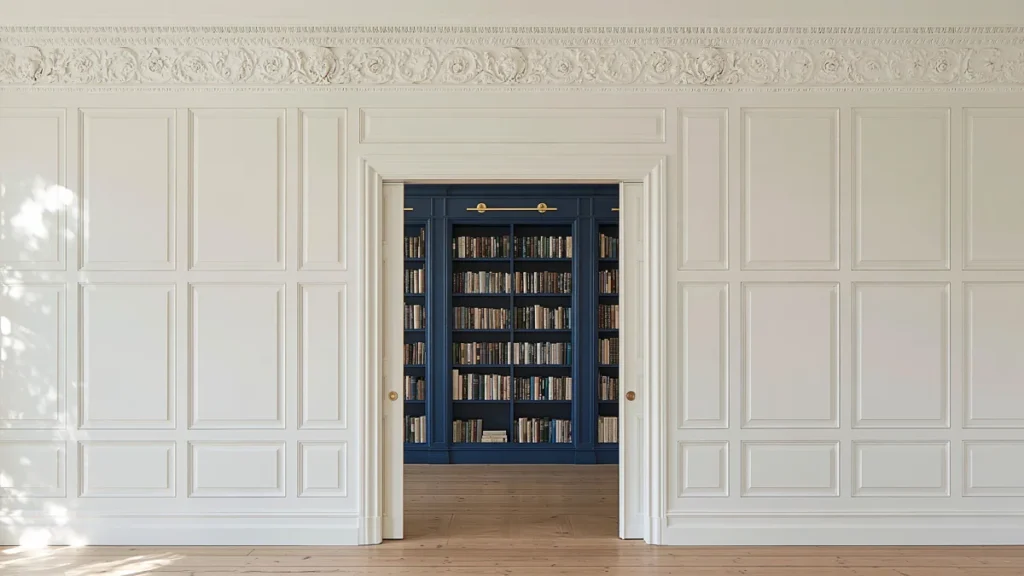
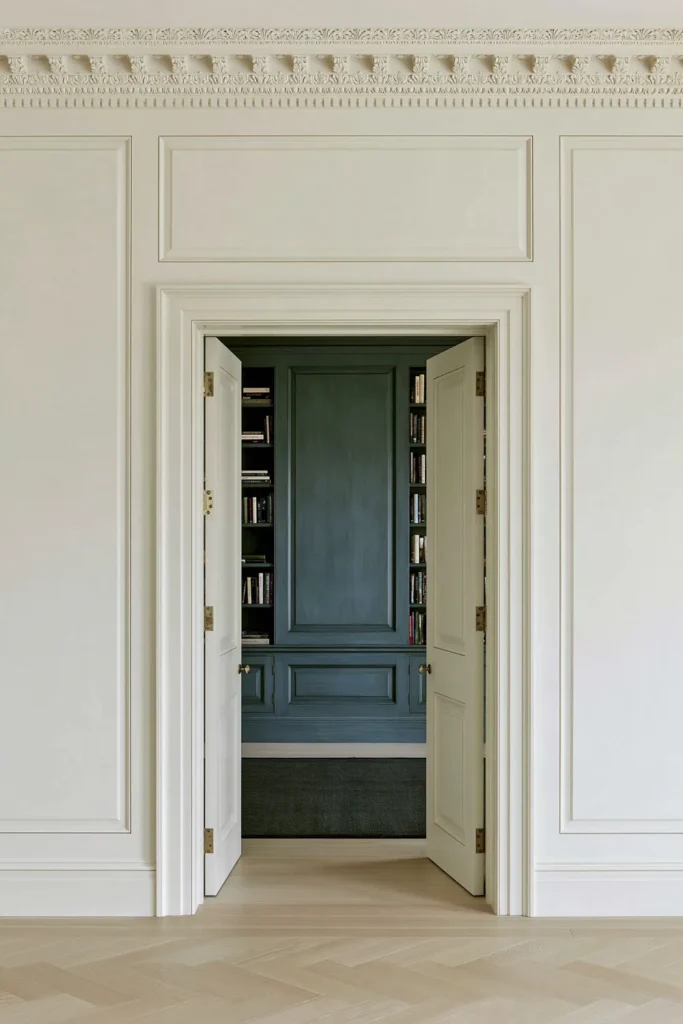
White Wainscoted Hallway Door Opening to a Peacock Blue Library
A white paneled hallway can make a hidden doorway feel exceptionally subtle, especially when the wall treatment continues cleanly across the opening. In this design, applied moldings and painted wood panels allow the jib door to blend into the hallway architecture rather than standing out as a conventional entrance.
What makes the idea especially interesting is the contrast waiting on the other side. When the door opens, saturated peacock blue built-in bookshelves create a much bolder visual experience.
That change in color gives the hidden entrance a sense of discovery without making the hallway itself feel dramatic. The white paneling remains calm and traditional, while the library beyond introduces depth, personality, and a stronger focal point.
Light pine floorboards keep both spaces connected even though their wall colors are very different. Ornate crown moldings also support maintaining a shared architectural language between the hallway and library.
Bright daylight makes the white woodwork feel fresh while allowing glimpses of the blue shelving to stand out through the opening. If you like secret doors that create a genuine reveal, this combination of a restrained hallway and richly colored library works particularly well.
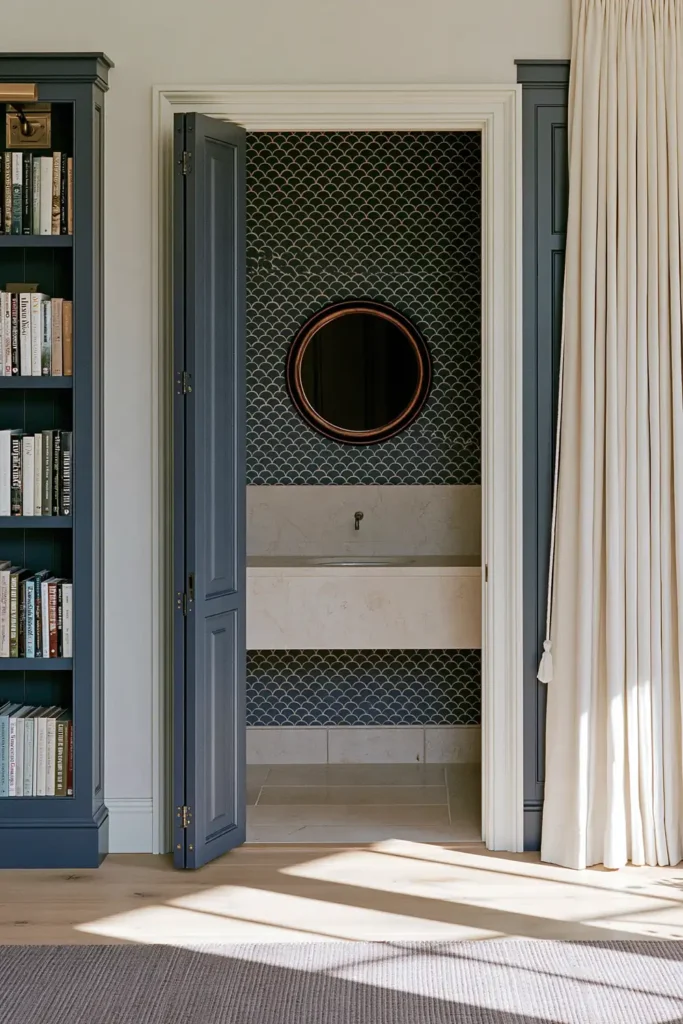
Peacock Blue Murphy Bookcase Door Concealing a Powder Room
A Murphy bookcase door becomes even more striking when it is painted in a saturated color. Here, peacock blue shelving conceals the entrance to a powder room while remaining part of a dramatic library wall.
The bookcase is filled with books and finished with matching blue crown moldings, helping the moving section blend into the surrounding cabinetry. Brass library lights mounted above the shelves add warmth and reinforce the feeling that this is simply a permanent built-in bookcase.
Once the door opens, the materials shift noticeably. A white marble sink vanity brightens the powder room, while dark geometric tile creates contrast beneath it.
Brass hardware carries through the warmer metallic details from the library. A round gold-framed mirror continues that connection, while a soft linen drape brings a lighter texture into the smaller room.
The transition seems carefully considered because the hidden space is visually different without feeling unrelated. The intense blue cabinetry provides the drama on the outside, while marble, tile, brass, and fabric create a more layered interior beyond the bookcase.
For homeowners who love the classic hidden-library-door idea but want something more distinctive than natural wood, a strong painted finish can make the feature feel much more personal.
Choosing a Secret Door That Fits Your Home
The most convincing secret doors are usually the ones that already make sense with the architecture around them. A modern hallway may suit a flush plaster door, while a traditional room can hide an opening beautifully within wainscoting, wallpaper, or detailed millwork.
If you are thinking about adding a secret door, start by looking closely at your own living spaces. Walk through your home and notice where an entrance can blend most naturally, such as inside a wall of cabinetry, along a paneled hallway, or behind a bookcase. Consider what function the hidden door will serve—whether it is for storage, privacy, or simply adding a bit of interest.
It is also worth meeting with a designer or contractor early in the process. They can help you determine if your chosen spot is structurally feasible, recommend the right hardware, and make sure the finished feature integrates smoothly with your existing architecture. Taking these first steps can save time and help you attain a seamless look.
Bookcase doors are ideal when storage is already part of the room, and concealed pantry entrances can make kitchen cabinetry feel cleaner and more continuous. In smaller or awkward spaces, even an under-stairs wall can become an opportunity for a hidden powder room.
You do not have to make the door completely invisible for the idea to work. Sometimes a contrasting knob, a rich paint color, or an arched bookcase actually makes the feature more interesting while still keeping its purpose unexpected.
The best place to start is with the surfaces you already have. Look at your paneling, cabinetry, shelving, and wall finishes, then choose the type of hidden door that can become part of that existing design instead of competing with it.
If you are ready to start planning, use this simple checklist:
– Measure your available space for a new door or opening.
– Identify your home’s architectural style and main finishes.
– Decide what function your secret door will serve—storage, access, or simply adding interest.
– Consider how the door will fit in with your daily routines.
– Take note of lighting, hardware, and any special needs for your chosen location.
This quick review will help you move easily from inspiration to an actual plan.