
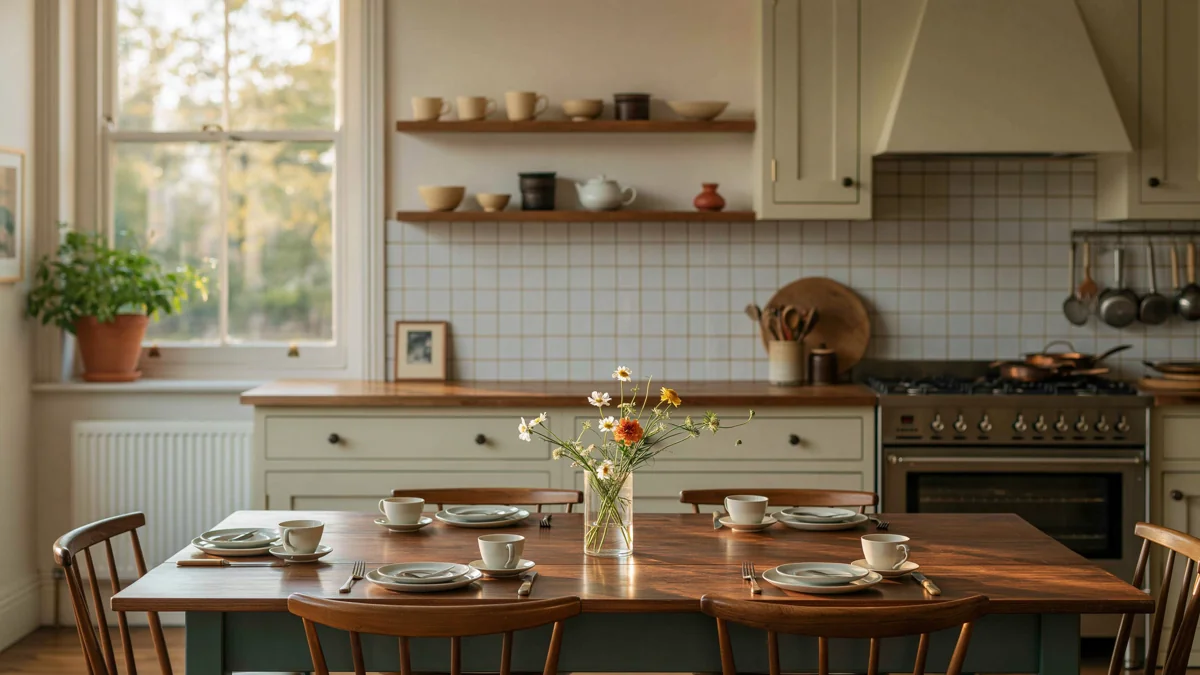
A comfortable kitchen is not only about how it looks. It is about how the room feels when you walk in, make your morning coffee, or sit down at the island at the end of the day.
Learning how to create a warm kitchen that feels like home often comes down to thoughtful layers rather than a complete renovation. Warm lighting, natural materials, soft color, and personal details can make even a practical kitchen feel more welcoming.
These ideas are designed to help you create a kitchen that feels comfortable, lived-in, and easy to enjoy every day.
Use Soft, Warm Ambient Lighting for a Comfortable Glow
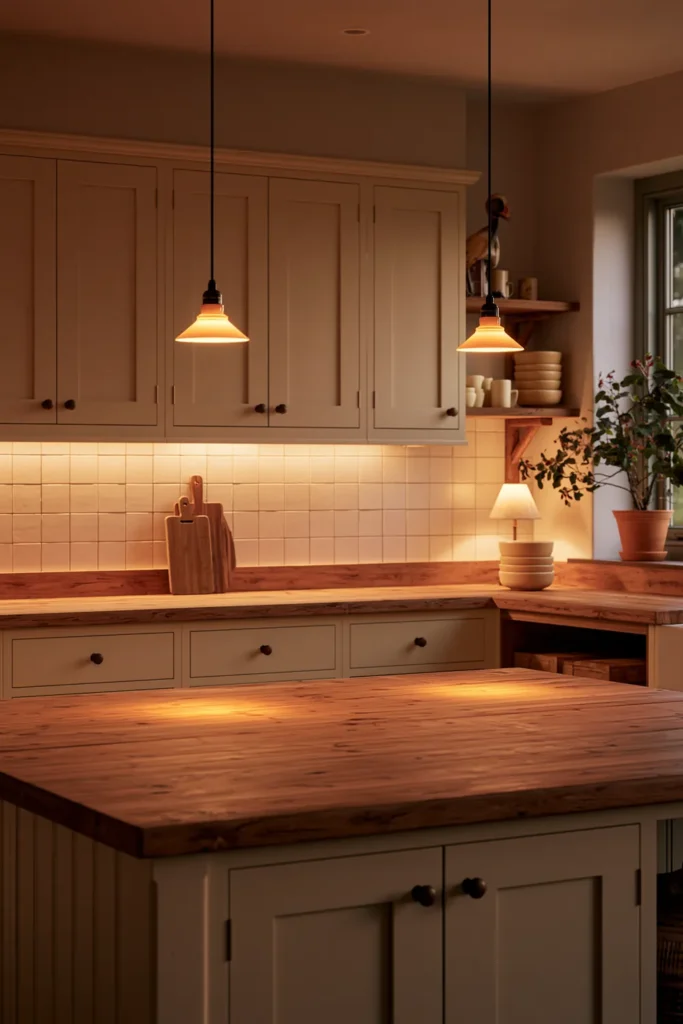
Lighting has a huge effect on whether a kitchen feels welcoming or excessively bright and clinical. Instead of relying only on strong ceiling lights, add softer sources of light throughout the room.
Warm pendant lights above an island can create a gentle focal point, while under-cabinet lighting contributes depth to countertops and work areas. Small lamps placed on an open shelf or unused corner of the counter can also give the kitchen a softer evening atmosphere.
Choose warm-toned bulbs rather than cool white light. The warmer glow works especially well with wood, cream cabinets, stone surfaces, and earthy colors.
A dimmer switch is another practical addition. It allows you to use brighter light while cooking and lower the brightness when the kitchen turns into a place to relax or gather.
Style Open Shelving with Everyday Dishes and Decorative Pieces
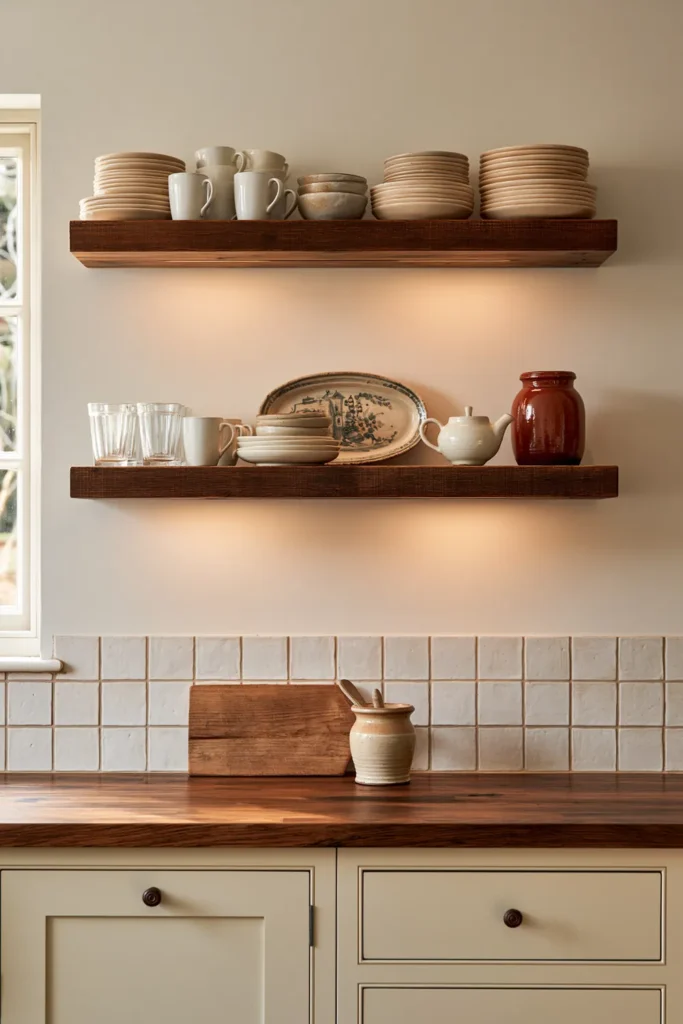
Open shelving can make a kitchen feel more relaxed and personal, especially when it holds items you actually use.
Wood shelves with a matte or natural finish add warmth to the room. Instead of filling them with purely decorative objects, arrange stacks of everyday plates, bowls, mugs, and glassware alongside a few meaningful pieces.
The most inviting shelves usually look collected rather than perfectly styled. A hand-painted platter, a small ceramic pitcher, or a well-used wooden cutting board can add character without making the display feel staged.
Keep the arrangement simple enough that the shelves remain practical. Leaving a little breathing room between groups of objects helps the display feel calm rather than cluttered.
Soft ambient lighting nearby will highlight the shelves and give the displayed pieces more depth in the evening.
Add Warmth with Butcher Block or Honed Stone Countertops
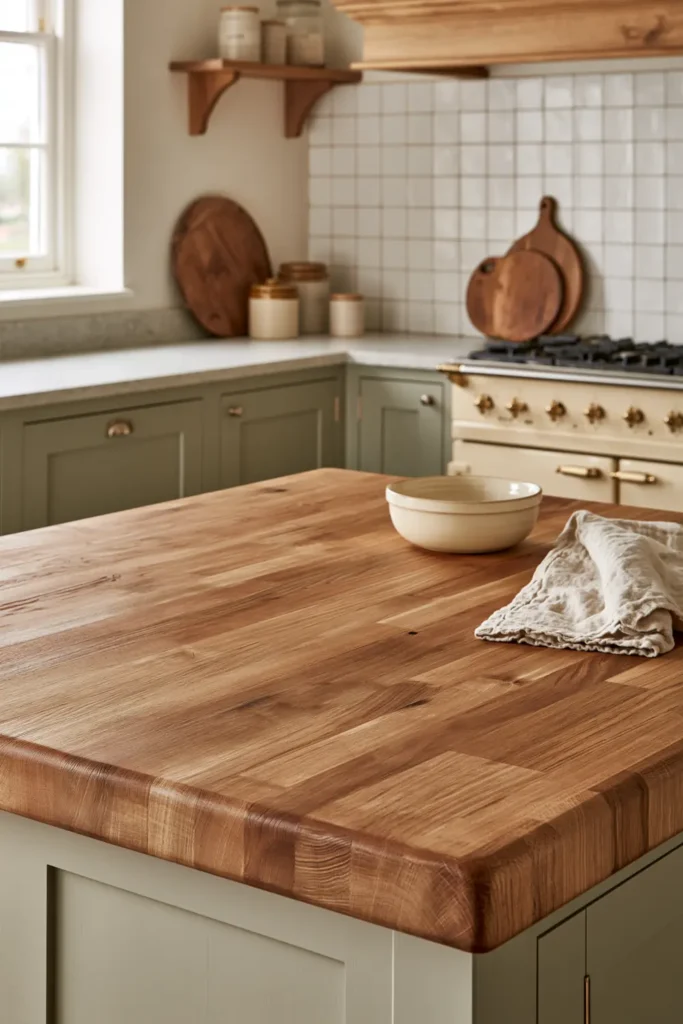
Countertop materials play an important role in how a kitchen feels. Highly polished surfaces can look sleek, but softer finishes often create a warmer and more comfortable atmosphere.
Butcher block brings visible wood grain and natural texture into the kitchen. It works especially well on an island, where the surface becomes a warm focal point in the center of the room.
Honed stone offers a different kind of softness. Its low-sheen finish feels more natural and relaxed than glossy stone, while still providing a durable work surface.
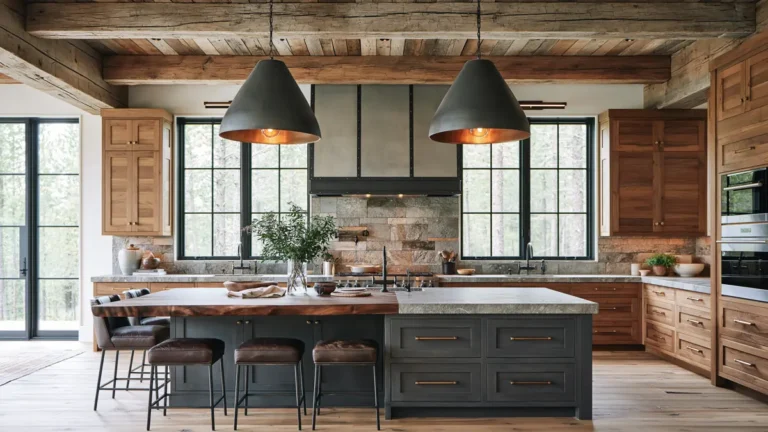
You can also combine the two materials. A butcher block island paired with honed stone perimeter counters creates gentle contrast and keeps the room from feeling too uniform.
Allow the natural variation in the materials to show. Small differences in grain, texture, and hue are part of what makes these surfaces feel warm and lived-in.
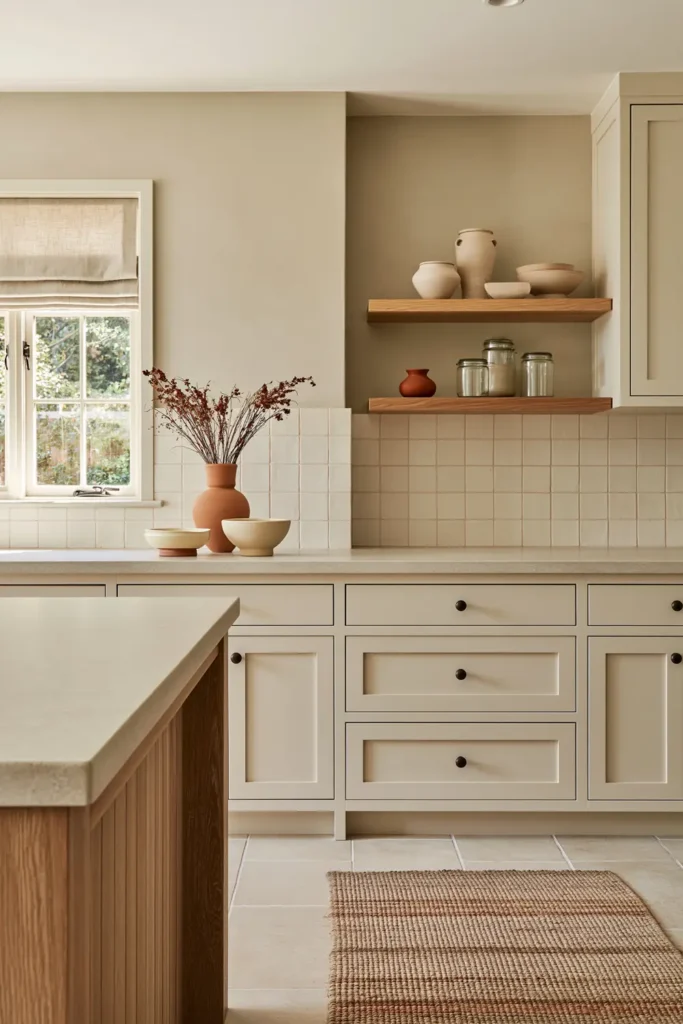
Create a Warm Kitchen with Warm Neutrals and Earth Tones
A warm color palette can make a kitchen feel more settled and inviting without making the room feel dark.
Creamy beige, soft taupe, and muted terracotta work well on cabinets, walls, and kitchen islands. These colors reflect light gently and pair naturally with wood, stone, and aged metal finishes.
You do not need to use the same shade everywhere. Layering several related tones often creates more depth. For example, creamy cabinets can sit beside taupe walls and a terracotta accent on a vase, rug, or seasonal kitchen decoration.
Warm neutrals also make it easier to change smaller accents throughout the year. In cooler months, you might add deeper brown or rust details. In spring and summer, soft greens and light natural textures can freshen the same foundation.
The goal is not to create a perfectly matched room. A warm kitchen usually feels more natural when the colors are connected but not identical.
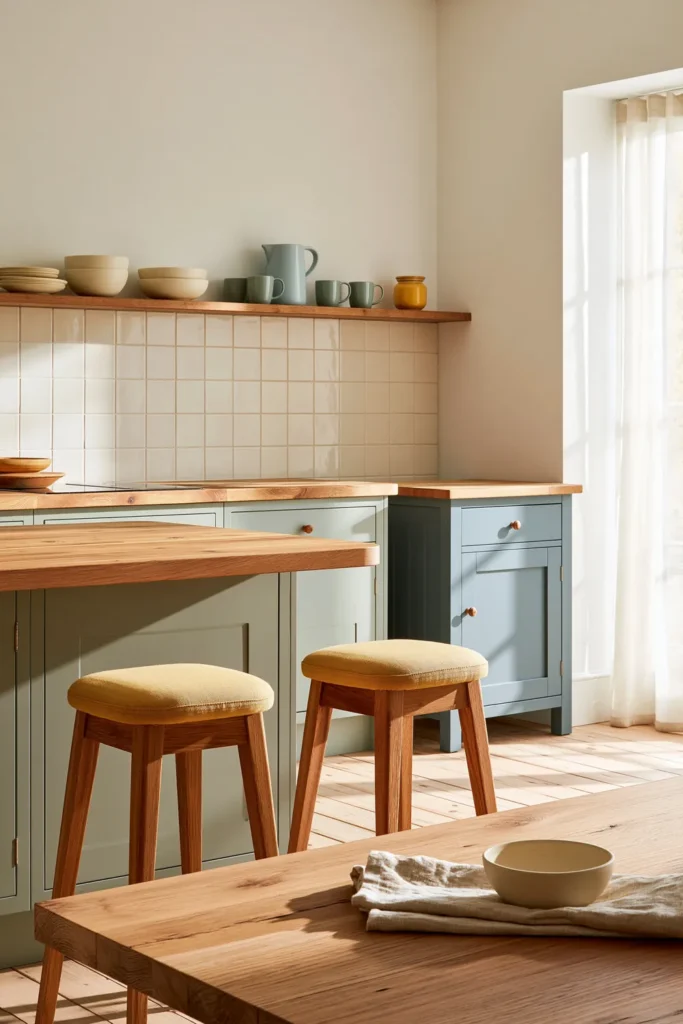
Bring in Sage Green, Dusty Blue, and Buttery Yellow Pastels
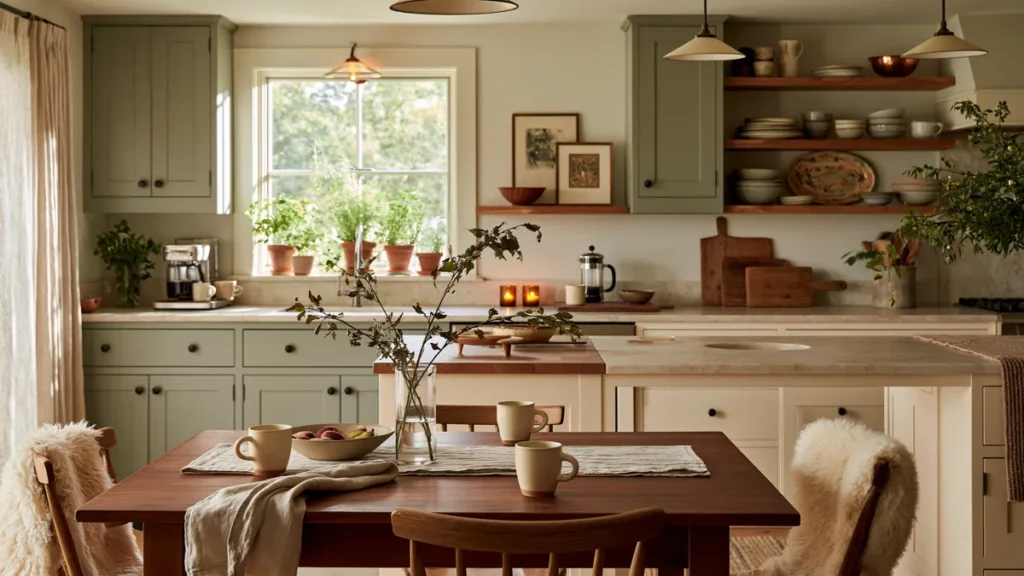
Soft pastels can make a kitchen feel calm without taking away its warmth. Sage green, dusty blue, and light buttery yellow all bring gentle color into the room while still working comfortably with natural wood and warm neutrals.
These shades are especially effective on cabinetry, seating, or a small kitchen island. A muted sage cabinet color can feel grounded and natural, while dusty blue adds a quiet, collected look. Buttery yellow works well when you want the room to feel brighter and more cheerful.
You can also introduce these colors through smaller details. Pastel mugs, ceramic bowls, cushions, or countertop accessories can soften the room without committing to a complete repaint.
Natural wood helps keep pastel colors from feeling too sweet or delicate. The visible grain adds contrast and gives the palette a more relaxed, lived-in character.
Sunrise light makes these shades look especially soft, so they are a good choice for kitchens with windows that receive gentle natural light early in the day.
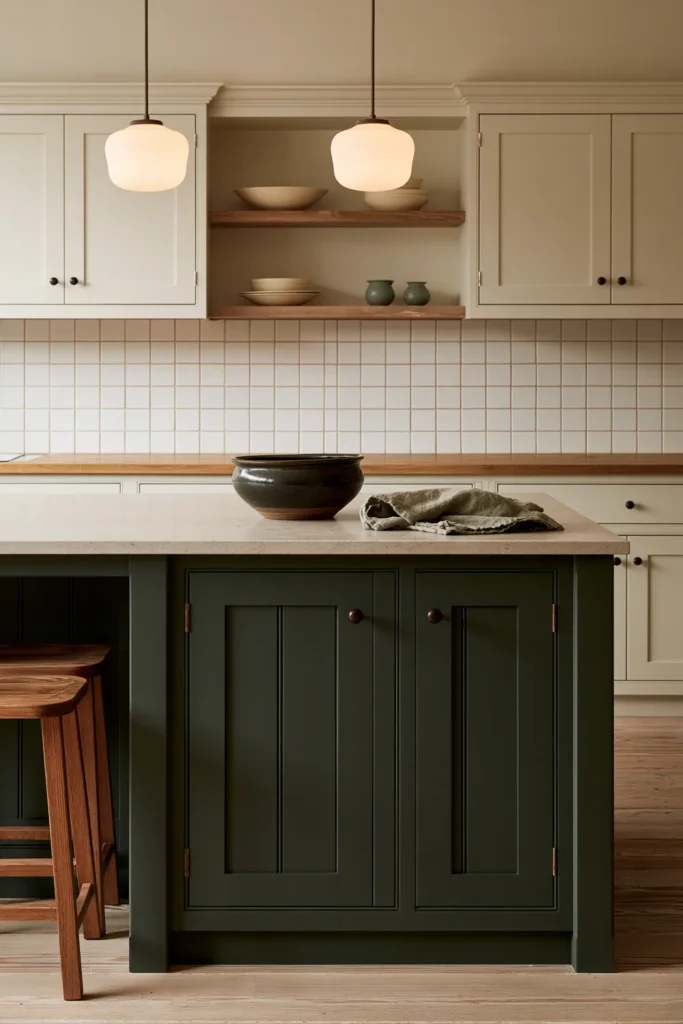
Make a Statement with a Dark Greenish-Grey Kitchen Island
A dark greenish-grey island can give a light kitchen a strong focal point while still feeling warm and timeless.
This kind of color works particularly well with white or cream cabinets because it creates contrast without the sharpness of black. The green undertone gives the island an earthy quality, while the grey keeps it restrained and easy to live with.
Painted wood allows the island to feel substantial, especially when paired with a stone countertop. Soft pendant lights above it can bring out the depth of the color and prevent the darker finish from making the center of the room feel heavy.
You can repeat the island color in a few small accents, such as ceramics, tea towels, or seasonal decor. These details help connect the island to the rest of the kitchen without making the palette feel overly coordinated.
The island should remain the main statement. Keeping the surrounding cabinetry and walls lighter allows the darker tone to stand out naturally.
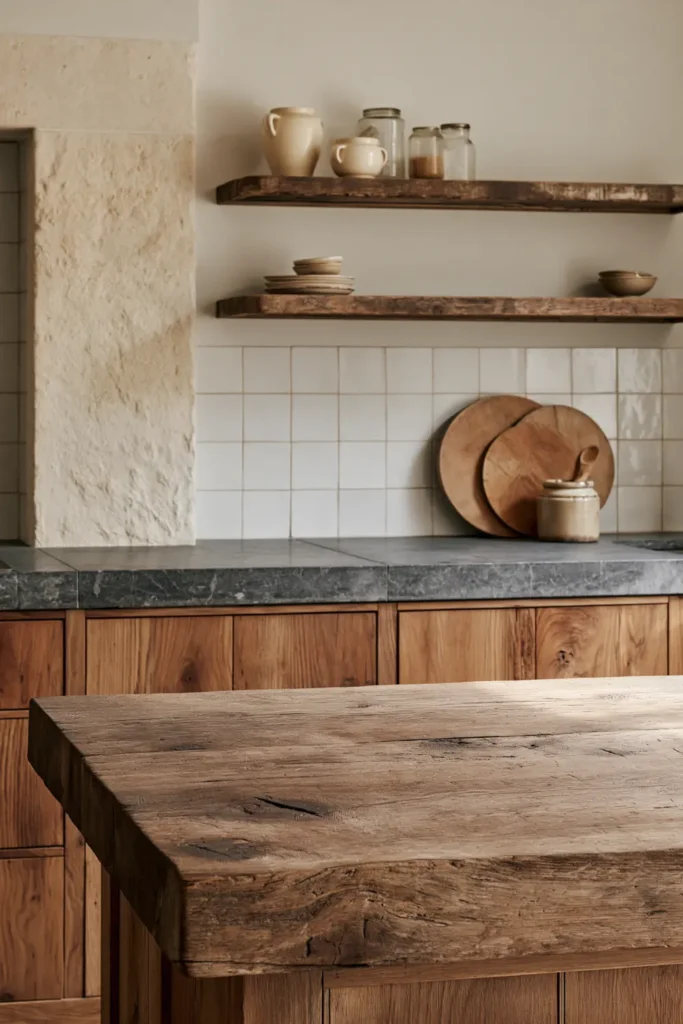
Layer Raw Wood with Chill Stone for Natural Contrast
Combining raw wood with chill stone is a simple way to create a kitchen that appears both grounded and balanced.
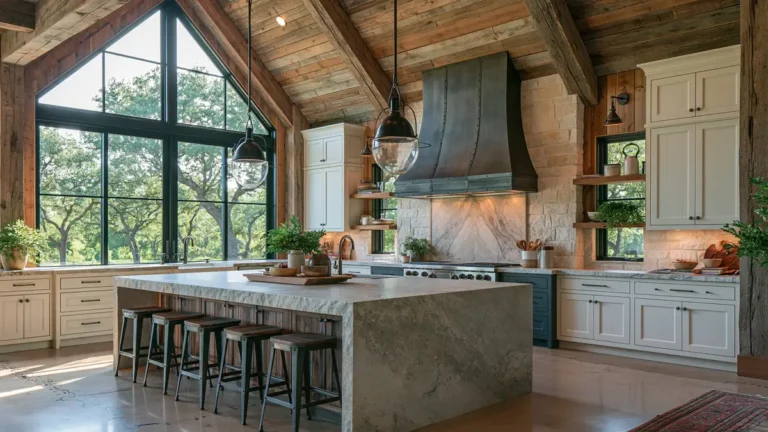
Warm wood cabinetry, aged shelves, or a butcher block island bring visible grain and softness into the room. Cool granite countertops add contrast through their smoother surface and quieter color.
The difference between the two materials keeps the kitchen from feeling flat. Rough or used wood brings character, while stone gives the space a sense of structure and durability.
You do not need every wood finish to match. Slight variations between cabinetry, shelving, and a worktop can make the kitchen feel more collected over time. The secret is to keep the undertones related so the materials still look comfortable together.
Soft ambient light will highlight both surfaces differently. It brings out the texture in the wood while giving honed or rough stone a gentle, natural depth.
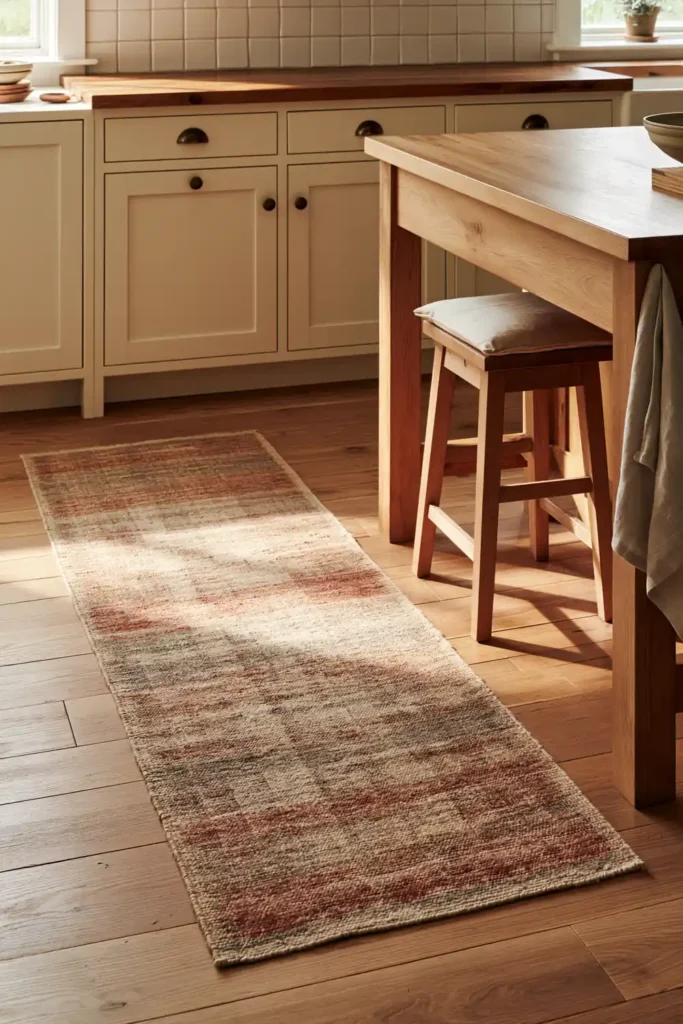
Soften the Floor with a Low-Pile Wool Rug or Island Runner
A rug can make a kitchen feel noticeably warmer, especially in a room with stone, tile, or wood flooring.
A low-pile wool runner works well beside a kitchen island or along the main work area because it adds softness without creating too much bulk underfoot. Wool also has a natural texture that suits warm, relaxed interiors.
Choose a design that feels calm enough to live with every day. Subtle pattern, faded color, or a simple woven texture can add interest without competing with the cabinetry and countertops.
The rug should fit the layout rather than float awkwardly in the middle of the floor. A runner placed along the length of an island helps define the work zone and makes the space feel more finished.
Soft fabrics such as linen nearby can help repeat the cozy feeling. A linen towel, upholstered stool, or simple fabric shade creates a gentle connection between the floor covering and the rest of the room.
Filter Natural Light Through Soft Linen Window Treatments
Kitchen windows can bring in beautiful natural light, but bare glass may sometimes make the room feel too sharp or exposed. Light-diffusing window treatments soften that brightness while keeping the space airy.
Linen shades or simple fabric panels work especially well because they allow daylight to pass through gently. The result is a softer glow across cabinets, counters, and dining areas rather than strong bands of direct light.
Choose warm white, oatmeal, or pale beige fabric for an understated look. These shades blend easily with wood, stone, and warm neutral colors without becoming a strong visual feature.
Keep the treatment practical for the window’s location. A tailored shade is often easier to manage near a sink or worktop, while longer panels may suit a breakfast area with more open wall space.
The fabric does not need to be perfectly smooth. A little natural texture helps the kitchen feel relaxed and comfortable.
Make Kitchen Seating Cozier with Sheepskin Throws
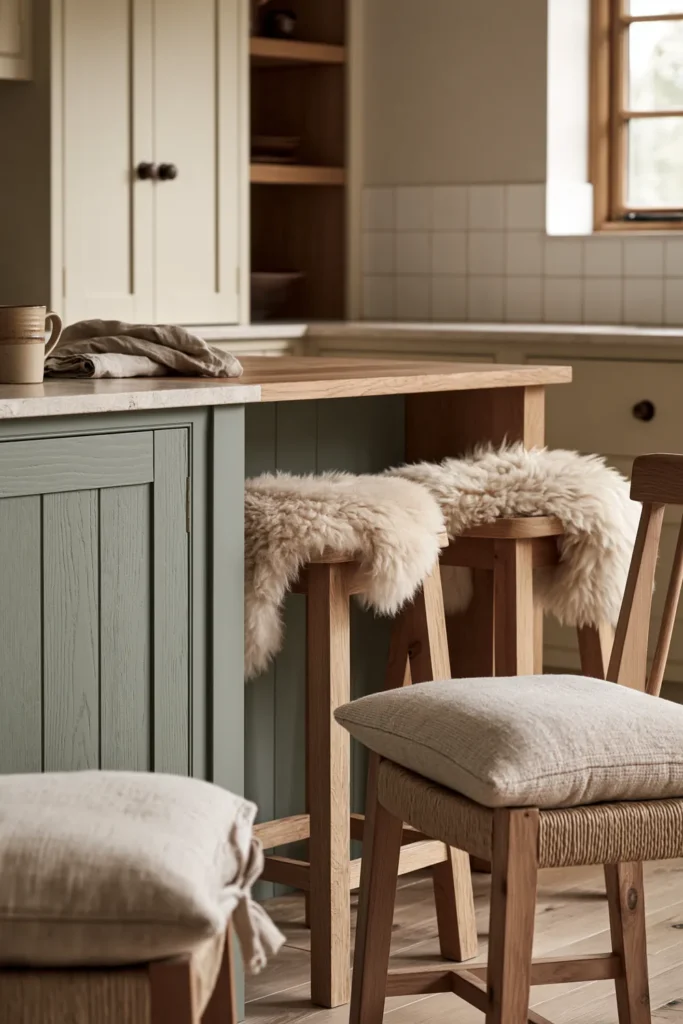
Kitchen seating can feel much more inviting with the addition of a soft layer.
Drape sheepskin throws over wooden counter stools or dining chairs to soften hard surfaces and add warmth. Their natural texture creates an immediate contrast against wood, leather, or painted finishes.
Upholstered cushions are another practical option, especially for chairs that are used for long meals, homework, or morning coffee. Choose fabrics that feel comfortable but can still handle everyday kitchen use.
You do not need to cover every seat. Adding sheepskin to one or two stools can produce a cozy, informal look without making the arrangement feel too styled.
Neutral cream, soft grey, or warm tan tones are easy to work into most kitchens. They also connect naturally with wool rugs, linen textiles, and wood grain elsewhere in the room.
Turn the Kitchen Island into a Welcoming Social Hub
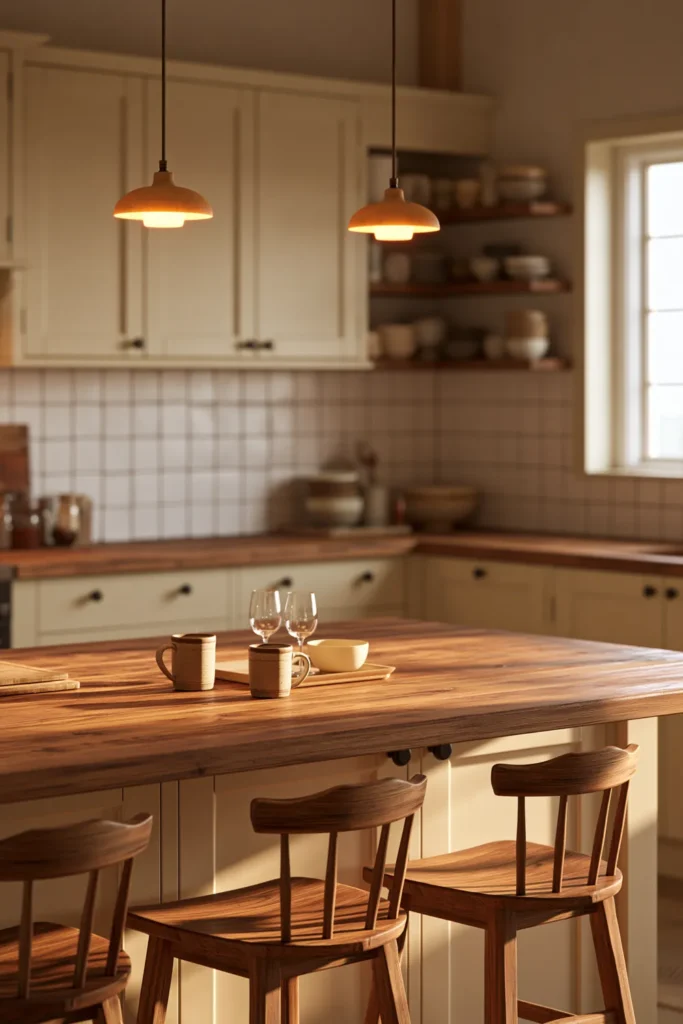
A kitchen island can be more than a preparation surface. With enough space for seating, it can become the place where people naturally gather throughout the day.
Leave a comfortable overhang for stools so sitting at the island feels easy rather than cramped. The seating should have enough room between each stool for coffee mugs, plates, or wine glasses without making the counter feel crowded.
Warm pendant lights help define the island as a gathering place. They create a more intimate atmosphere than general ceiling lighting and make the center of the kitchen feel inviting in the evening.
Keep a small section of the island clear so it remains useful. A simple tray with mugs or a bowl may add warmth while still leaving space for meals, conversation, or everyday tasks.
Choose stools that are comfortable enough for more than a quick seat. A helpful back, upholstered cushion, or well-shaped wooden seat can make the island feel like a place to stay rather than simply pass through.
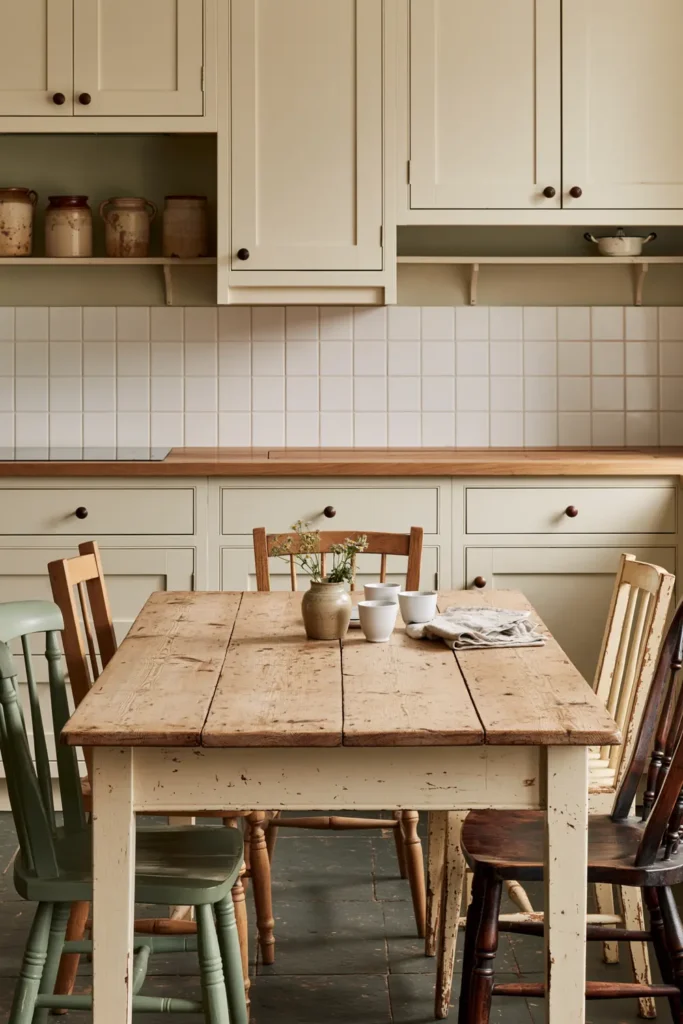
Add Character with Vintage Tables and Assorted Chairs
Vintage furniture can give a kitchen the sense that it has developed naturally over time.
An aged wooden table brings warmth through its visible grain, softened edges, and small signs of age. These details make the room feel more personal than furniture with a perfectly uniform finish.
Uneven chairs can add the same collected quality. They do not need to be completely different, but slight variations in shape, wood tone, or paint color can form a relaxed and welcoming dining area.
To keep the arrangement from feeling random, look for one shared element. The chairs might all have similar proportions, related wood tones, or seat cushions in the same fabric.
Retro kitchen decor can support the look in small amounts. An aged clock, old ceramic container, or simple enamel piece can add history without turning the room into a themed display.
Vintage pieces work best when they are still practical. A table should feel sturdy, and chairs should be comfortable enough for everyday use.
Display Family Heirlooms, Ceramics, and Framed Art
A kitchen feels more like home when it includes objects with a story behind them.
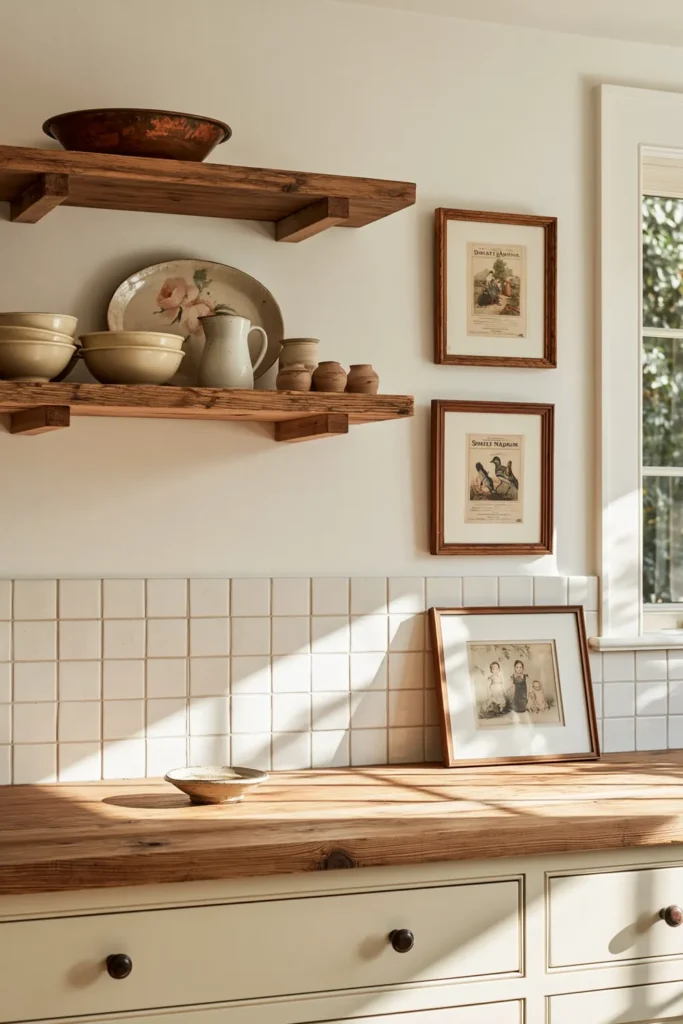
Family heirlooms such as a copper bowl, hand-painted platter, or old serving piece can bring warmth and memory into the room. Displaying them on open shelves or a clear section of countertop gives them a functional place without making the kitchen feel excessively formal.
Framed art and vintage prints can also soften a kitchen, especially on a wall that would otherwise feel empty. Small wood frames, botanical prints, or artwork with warm tones work well because they bring character without competing with the rest of the room.
Try to keep the display connected to the kitchen’s materials and colors. Copper, clay, wood, and painted ceramics all fit naturally with warm cabinetry, stone surfaces, and open shelving.
The most meaningful pieces do not need to be perfect. A little wear, fading, or variation often makes them seem more personal and lived-in.
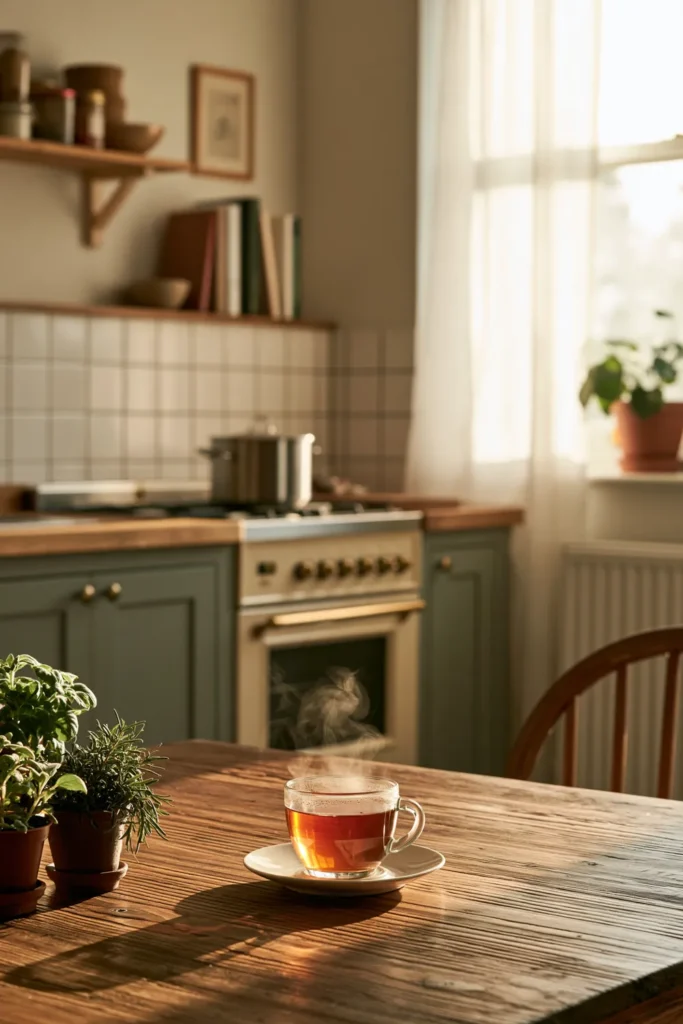
Create a Dedicated Coffee and Tea Station
A small beverage station can make everyday routines seem more organized and enjoyable.
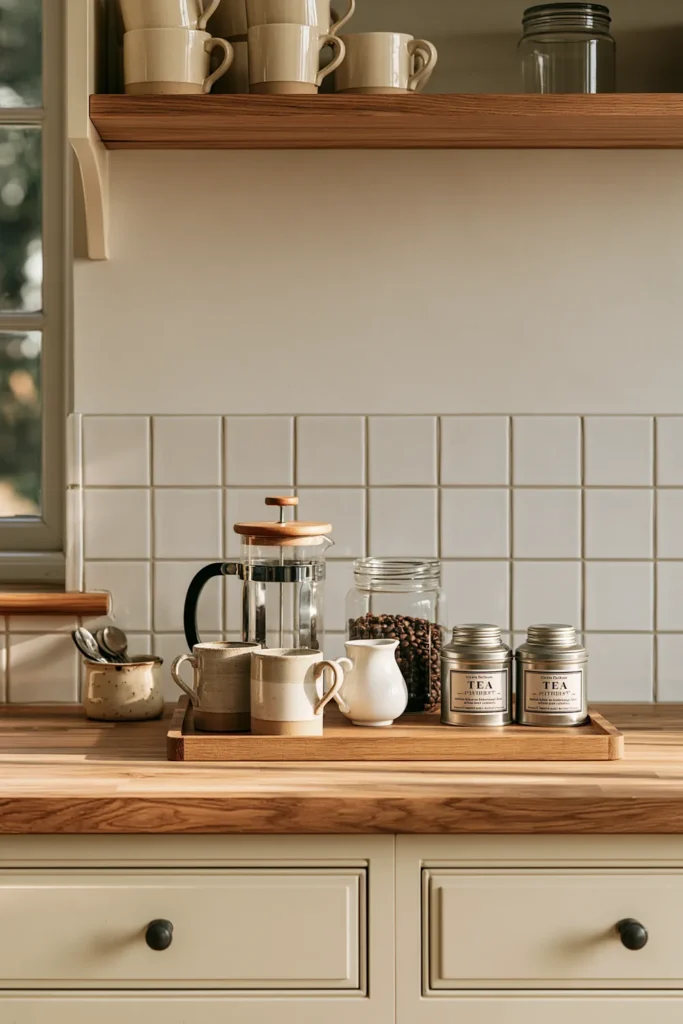
Set aside a section of counter or a narrow table for your most-used coffee and tea supplies. A French press, favorite mugs, tea tins, and a few glass or ceramic containers are often enough to create a useful setup.
Group the items together so the station seems intentional rather than scattered. A simple tray can help define the area, while small bins or jars can keep filters, spoons, and other accessories easy to reach.
Choose materials that suit the rest of the kitchen. Tin containers bring a slightly vintage feeling, while clear glass and white porcelain create a lighter, calmer look.
Warm morning light can make this corner feel especially inviting. If possible, place the station near a window or beneath warm task lighting so it feels pleasant to use at the beginning of the day.
Grow Fresh Herbs on a Sunny Kitchen Windowsill
Fresh herbs bring color, fragrance, and a natural sense of life into the kitchen.
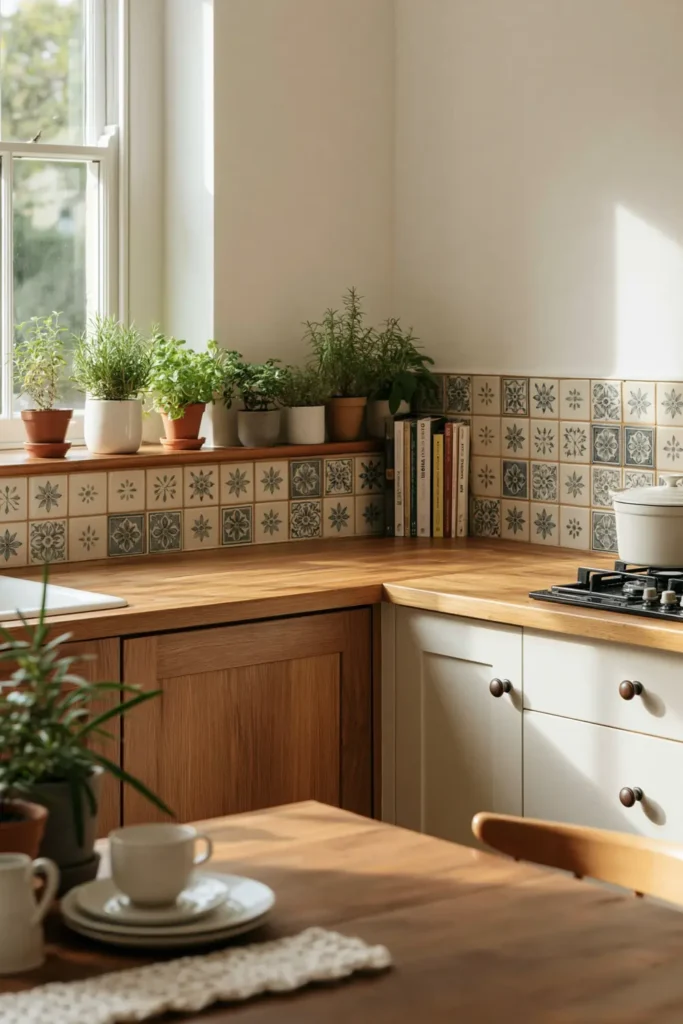
A sunny windowsill is an ideal place for small pots of basil, mint, or other herbs you use regularly. Terracotta pots add warmth and pair beautifully with green foliage, wood shelves, and earthy kitchen colors.
Keep the arrangement simple so the plants have room to grow. A row of two or three pots often looks more relaxed than a crowded display.
Herbs can also be placed on an open shelf close to the window if the sill is too narrow. The important thing is to give them enough natural light and keep them close enough to use while cooking.
The mix of organic soil, terracotta, and fresh greenery adds texture that manufactured decor cannot quite replace. It helps the kitchen feel active, cared for, and connected to everyday life.
Introduce Seasonal Warmth with Candles and Dried Botanicals
Small seasonal details can change the mood of a kitchen without requiring a full decorating update.
Beeswax candles bring a soft, subtle glow and a natural texture to countertops or open shelves. Their warm color works especially well with wood, pottery, and subdued earth tones.
Dried botanicals add another layer of seasonal character. A few stems in a ceramic or glass vase can create a gentle focal point without taking up much space.
Keep these items away from busy cooking areas so they remain safe and practical. A calm corner of the counter, a shelf, or the center of a kitchen table usually works well.
The goal is to add atmosphere rather than fill every surface. One candle and a small arrangement of dried stems can be enough to make the kitchen feel warmer and more connected to the season.
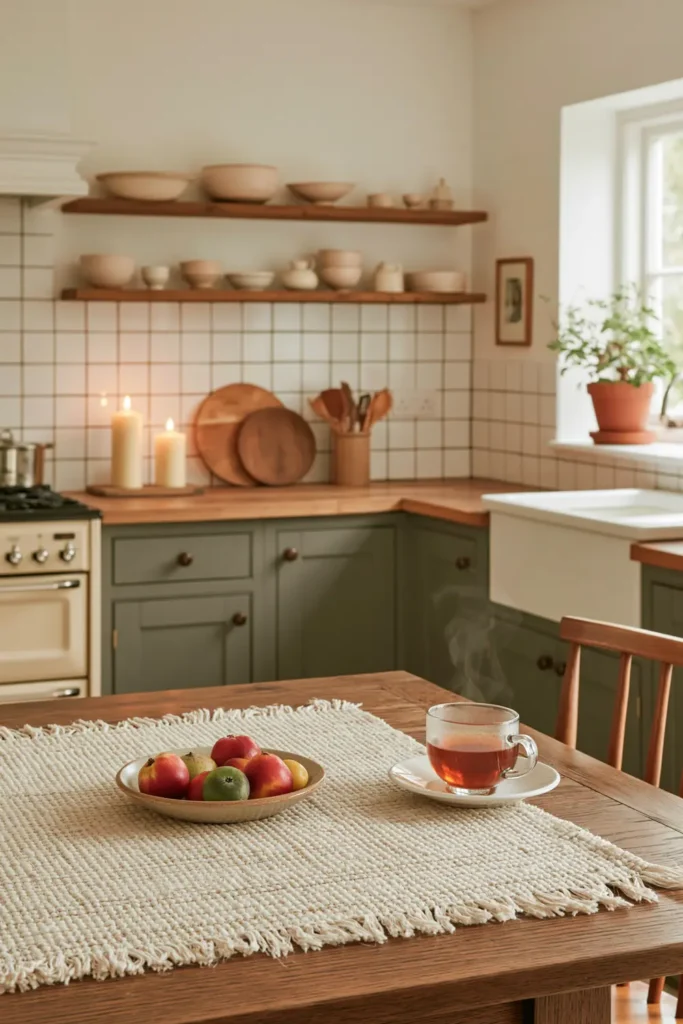
Keep Countertops Simple with Natural Focal Points
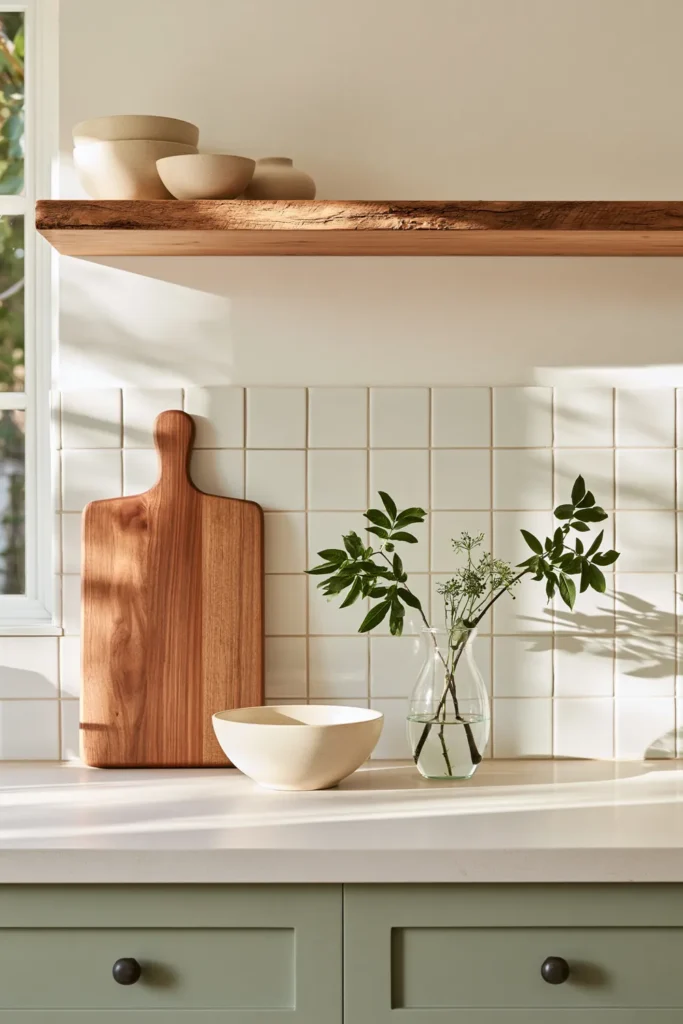
Clear countertops can make a kitchen feel calmer, but completely empty surfaces may also feel a little cold. The balance comes from keeping only a few useful or natural pieces on display.
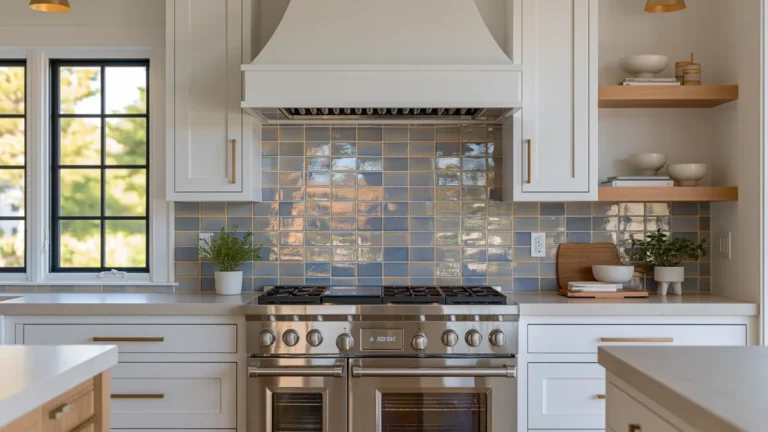
A wooden cutting board resting against the backsplash adds coziness without taking up much working space. Its grain and texture also create a softer contrast beside stone, tile, or painted cabinetry.
A ceramic or glass vase can provide a simple focal point. Fill it with fresh flowers, leafy stems, or a small amount of greenery to bring life into the room.
Try grouping two or three items together rather than spreading small objects across the entire counter. A cutting board, vase, and everyday bowl can create a finished arrangement while leaving plenty of space for cooking.
Pick pieces that suit how you actually use the kitchen. A beautiful item feels more at home when it is practical, easy to move, and simple to maintain.
Add a Charming Surprise with a Patterned Hidden Pantry
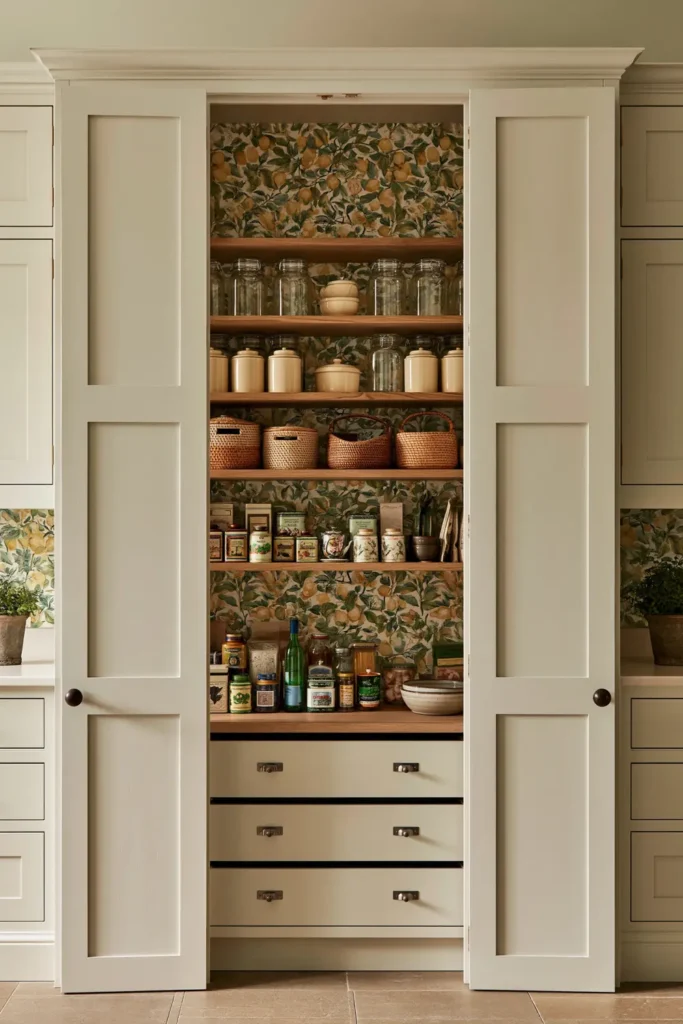
A hidden pantry provides an opportunity to use pattern in a method that feels fun without burdening the kitchen.
Lemon-patterned wallpaper inside a pantry, cabinet, or storage closet can add a bright surprise when the door opens. Because the pattern is contained, it brings personality into the room while allowing the main kitchen to remain calm and cohesive.
This idea works especially well behind pull-out drawers, custom inserts, or neatly arranged shelves. The wallpaper becomes a backdrop for jars, baskets, and pantry staples rather than the main feature of the entire kitchen.
Wood shelving and metal hardware help balance the pattern and keep the space practical. A simple organization system allows the fun background to stand out without making the pantry look busy.
Choose a pattern that connects with at least one color already used in the kitchen. This small link will make the hidden detail feel intentional rather than separate from the rest of the room.
Make Your Kitchen Feel Like Home
The coziest kitchens are rarely created through one dramatic change. They usually come together through layers of warm light, natural materials, soft color, comfortable seating, and objects that carry personal meaning.
Start with the idea that would make the biggest difference in your own space. That might mean replacing cool bulbs with warmer lighting, adding a wool runner beside the island, or creating a small coffee station for your morning routine.
From there, let the room develop gradually. A family platter on an open shelf, fresh herbs on the windowsill, or a few dried stems on the counter can make the kitchen feel more personal without requiring a major renovation.
The best way to create a comfortable kitchen that feels like home is to choose details that support the way you live. When the room is comfortable, useful, and filled with things you genuinely enjoy, warmth comes naturally.