
Finding enough storage at home can feel like a constant challenge, especially when you don’t want every room filled with plain cabinets and plastic bins. The good news is that keeping things organized doesn’t have to mean sacrificing the look of your space. From woven baskets and floating shelves to vintage trunks and built-in window seats, there are plenty of storage solutions that also serve as beautiful home decor. In this guide, you’ll discover a variety of ideas that work in every room and help you keep clutter under control with style.
Some of my favorite storage ideas that double as home decor are surprisingly simple. A beautiful woven basket can hide everyday clutter, an old wooden trunk can become a charming coffee table, and a window seat can give you extra storage without taking away from the room’s cozy atmosphere.
Whether you’re working with a small living room, a busy kitchen, or a bedroom that needs a little more breathing room, these ideas can help you make better use of the space you already have. Feel free to adapt each suggestion to fit your own room size, layout, or personal taste. Every home is different, so you can mix and match these ideas to suit what works best for your unique space.
Woven Baskets on Open Shelves for Stylish Living Room Storage
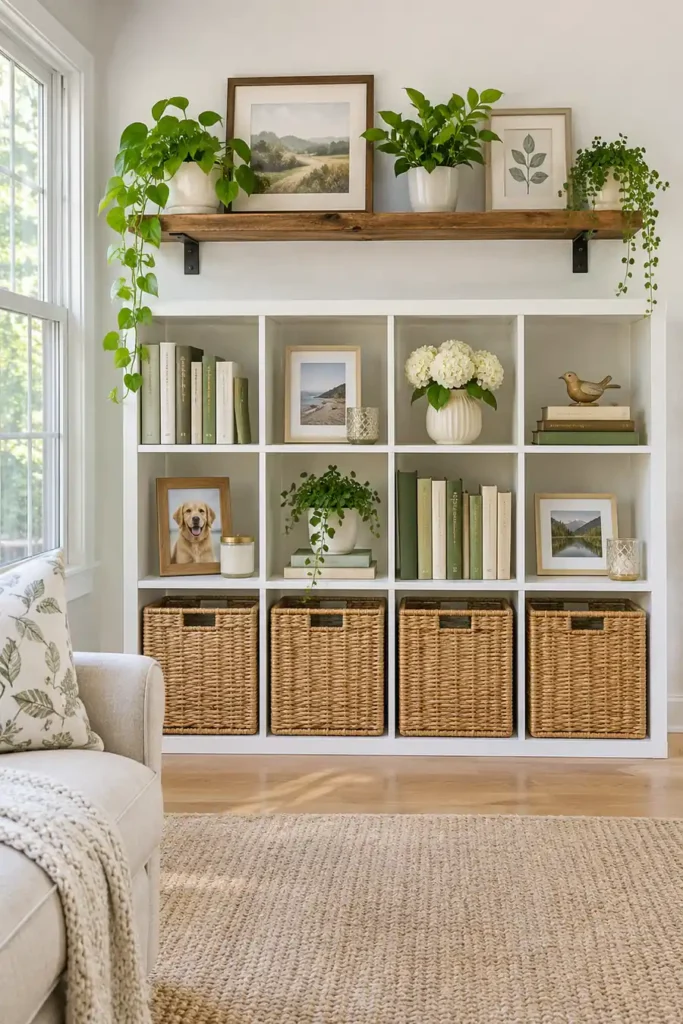
Open shelving looks beautiful when it’s styled thoughtfully, but it can quickly become cluttered when everything is left on display. Woven baskets are one of the easiest ways to solve that problem while bringing warmth and texture to your living room.
I particularly like natural seagrass or rattan baskets on wooden shelves. Their earthy colors soften the straight lines of the shelving unit and make the entire arrangement feel more relaxed. They’re also practical for storing remote controls, small electronics, magazines, or other everyday items you don’t necessarily want everyone to see.
Try placing two or three matching baskets on the lower shelves, where you can reach them easily. Use the upper shelves for framed family photos, a few favorite books, tiny potted plants, and decorative candles.
You don’t have to fill every shelf. Leaving some open space between objects makes the display feel intentional rather than crowded.
If your shelves are dark wood, lighter woven baskets can create a lovely contrast. On white shelving, warmer honey-colored baskets add just enough natural texture to keep the room from feeling too plain.
The result is storage that works hard behind the scenes while still looking like part of your living room decor.
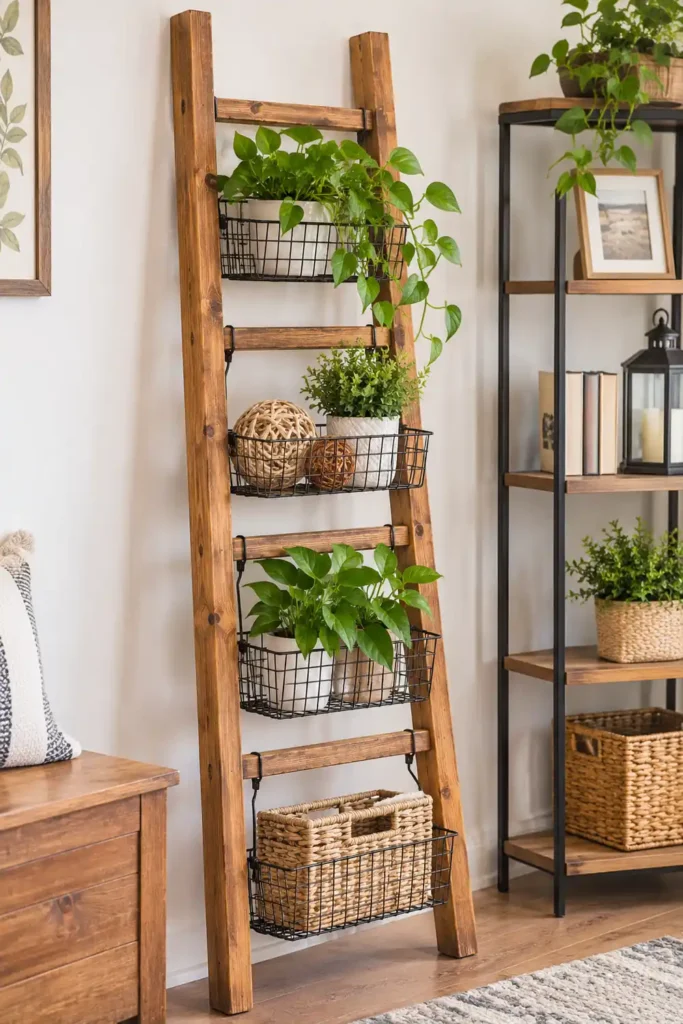
Reclaimed Wooden Ladder Shelves with Decorative Storage Baskets
An old wooden ladder can become a surprisingly attractive storage feature, especially if you enjoy rustic or farmhouse-inspired decor.
Instead of using a traditional bookshelf, a reclaimed ladder shelving unit gives you several levels for organizing everyday belongings while creating an interesting vertical display.
The combination of weathered wood, woven baskets, and metal wire containers contributes charm without making the room feel overly decorated.
I like the idea of keeping larger baskets near the bottom for children’s toys, extra blankets, or frequently used items. Smaller containers can sit higher up, holding things you need less often.
For the decorative side, try adding a tiny potted plant, a few books, or a simple ceramic accent between the baskets. A trailing plant can look especially pretty on an upper shelf, where its leaves have room to hang naturally.
One thing worth remembering is that ladder shelves are usually narrower at the top. Keep heavier items on the lower levels to make the arrangement more stable, and secure the unit to the wall when necessary, particularly in homes with children.
A reclaimed ladder shelf works beautifully in an unused living room corner, giving you useful storage without the visual weight of a large cabinet.
Antique Storage Trunks Repurposed as Coffee Tables
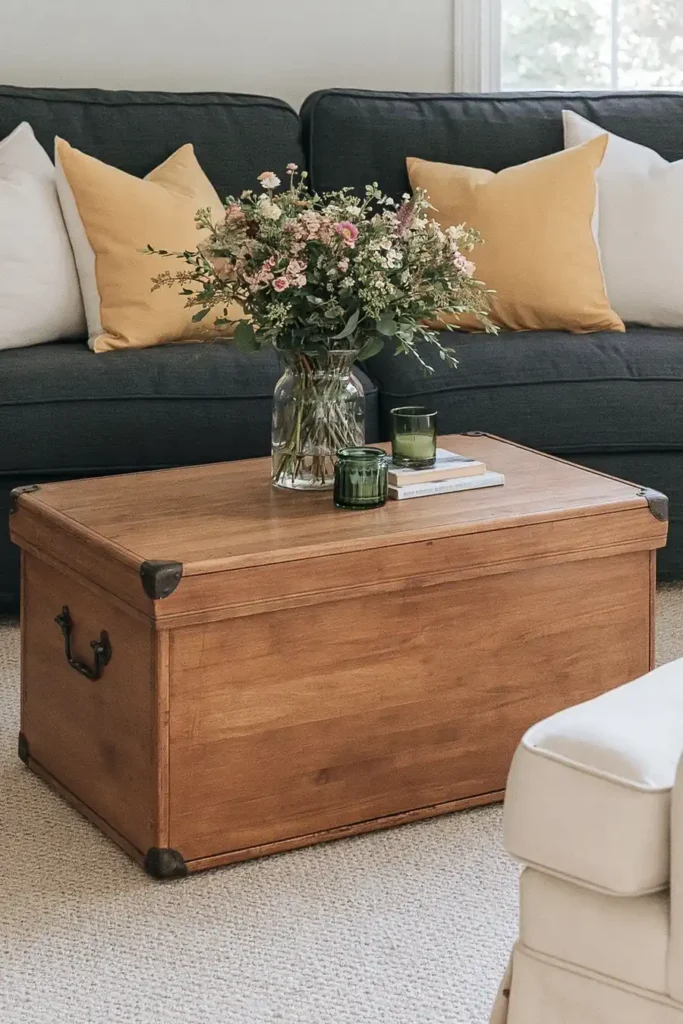
There’s something special about furniture that has a little history behind it. An antique wooden trunk can bring that feeling into your living room while providing a generous amount of hidden storage.
Instead of buying a standard coffee table, consider using a vintage trunk with aged wood, worn edges, and old metal hardware. Those details give it character that newer furniture sometimes lacks.
The best part is that the space inside can hold things you don’t need every day. Extra throw blankets, seasonal cushion covers, and even a small collection of books can be tucked away without requiring another storage cabinet.
To make the trunk feel like a proper coffee table, keep the styling fairly simple. A small stack of books or a decorative tray can add interest without covering the beautiful surface.
If the trunk has a rough or uneven top, a sturdy tray can also provide a more practical place to set drinks.
Pay attention to the trunk’s height, too. Ideally, it should sit close to the height of your sofa cushions so reaching for a book or cup feels comfortable.
It’s also worth checking that the lid opens smoothly and that the hinges are secure. A lid support may make accessing stored items safer and easier.
I especially love this idea in living rooms with neutral sofas, warm wooden furniture, and soft textured throws. The trunk becomes a natural focal point while quietly keeping clutter under control.
Built-In Window Seats with Hidden Drawers and Basket Storage
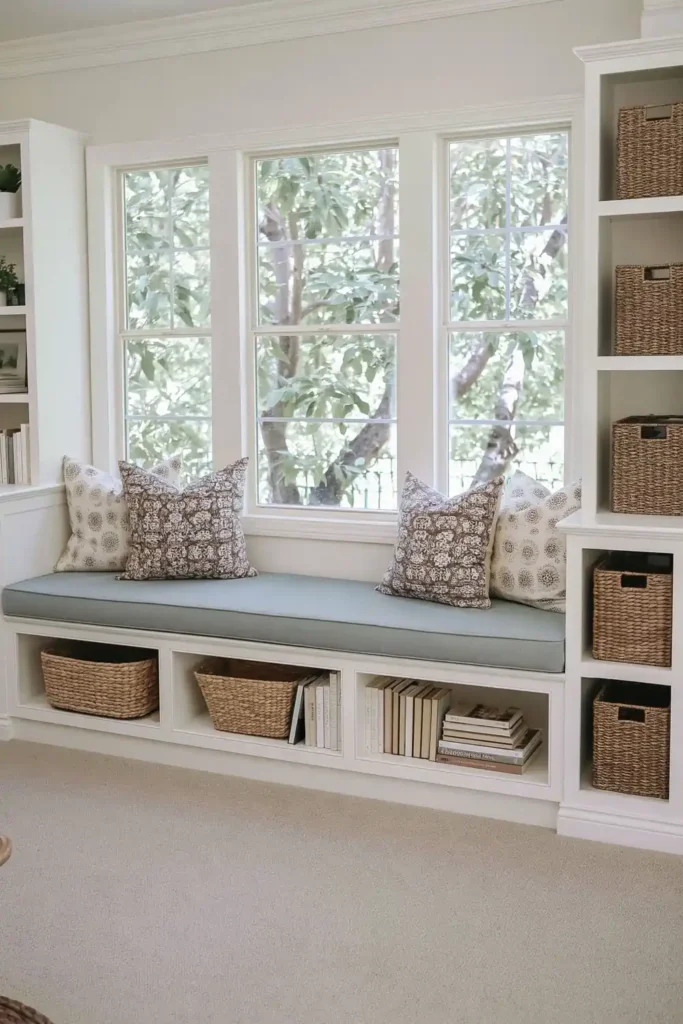
A window seat is one of those home features that can make an ordinary corner feel like a favorite place to relax. Add storage underneath, and it becomes even more useful.
A built-in wooden seat beneath a window can provide comfortable seating while making use of space that could otherwise remain empty.
For the storage, you have two lovely options. Drawers built into the bench create a clean, streamlined appearance, while open cubbies filled with woven baskets give the space a softer, more casual look.
I prefer baskets when the room already has natural materials, such as wooden floors or simple linen curtains. They introduce a little texture without distracting from the view outside.
The compartments can hold children’s toys, spare blankets, books, or other everyday items that tend to collect around the living room.
On top of the bench, a thick upholstered cushion makes the seat more inviting. A couple of soft pillows can provide extra comfort without dominating the space.
If the window receives plenty of sunlight, choose upholstery fabric that can tolerate regular sun exposure. Removable cushion covers are also helpful because they make cleaning much easier.
Keep the area around the window relatively uncluttered so natural light can fill the room and the seat remains easy to use.
What I like most about a built-in window seat is how naturally it blends storage into the architecture of a home. Instead of looking like another piece of furniture added to solve a clutter problem, it feels like it was always meant to be there.
Floating Box Shelves for Books, Plants, and Decorative Displays
Blank walls can be surprisingly useful when you’re looking for extra storage. Floating box shelves turn that unused vertical space as a beautiful display without taking up any floor space.
Unlike regular floating shelves, box shelves have a framed shape that makes even simple everyday objects feel more carefully arranged. They’re especially attractive when you combine different sizes or arrange them in an interesting pattern.
Wooden box shelves are a lovely choice for living rooms because they add warmth while creating little spaces for books, decorative bottles, candles, and tiny potted plants.
You can also repurpose old dresser drawers into mounted shelves. It’s a creative way to give worn furniture a second life, particularly if you enjoy decorating with vintage pieces.
I like mixing practical storage with a few decorative touches. One box might hold a short stack of books, another could display a small plant, and a third might contain a simple glass bottle or candle.
Try not to fill every box completely. Leaving some empty space helps each arrangement stand out and prevents the wall from feeling too busy.
For one cohesive appearance, choose shelves with similar wood tones or finishes. If you’re working with repurposed drawers, painting them the same color can bring the entire arrangement together.
Make sure each shelf is securely attached to the wall with hardware suitable for its weight and the items you plan to display.
Floating box shelves work particularly well above a sofa, beside a reading chair, or on a narrow wall where a traditional bookcase would feel too bulky.
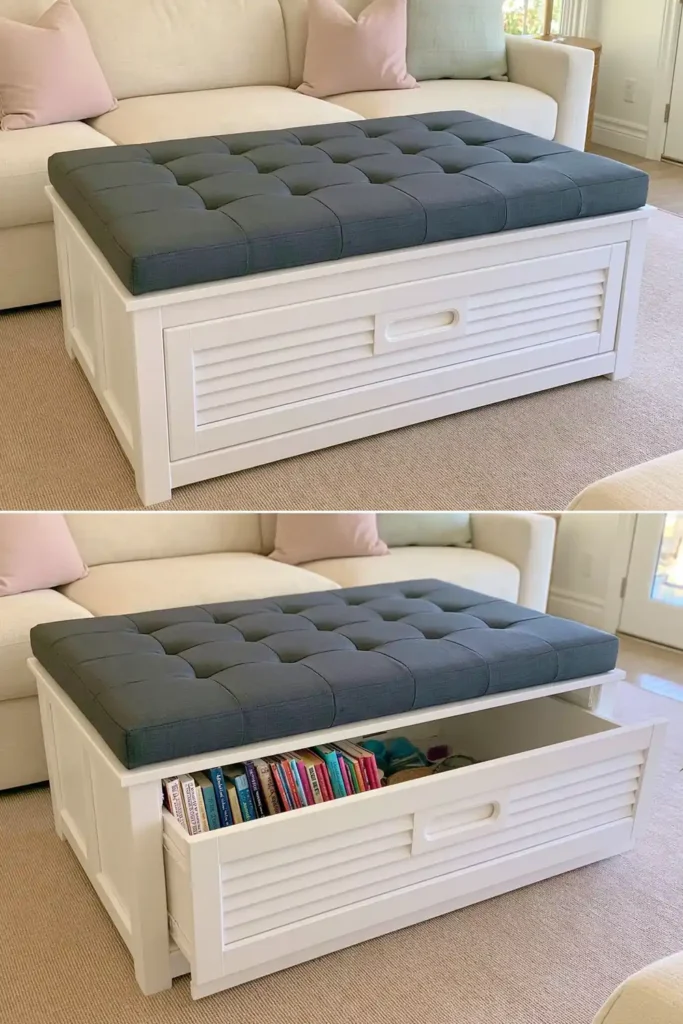
Upholstered Storage Ottomans That Double as Seating
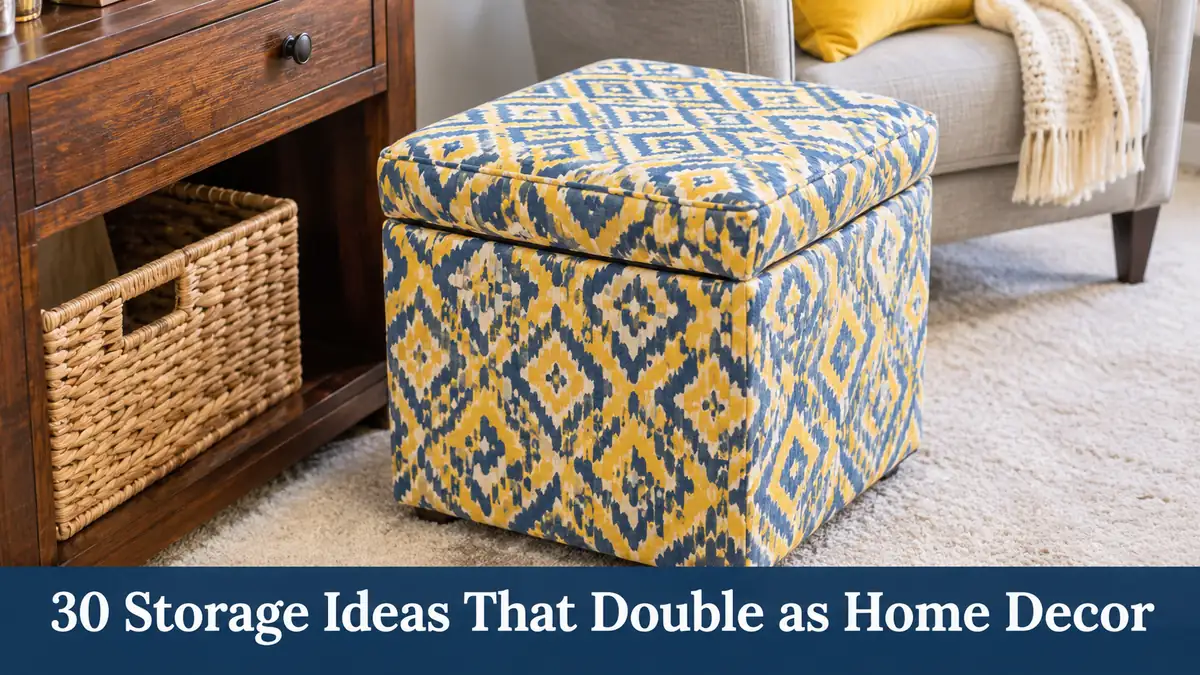
A storage ottoman is one of those practical furniture pieces that can quietly solve several problems at once. It gives you a comfortable place to rest your feet, provides occasional extra seating, and hides everyday clutter inside.
I especially like upholstered ottomans in living rooms because their soft fabric helps balance the harder surfaces of coffee tables, shelving units, and other wooden furniture.
A generously cushioned ottoman can look beautiful in front of a sofa, particularly when its upholstery complements the room’s existing colors.
Inside, you can store extra throw blankets, small pillows, children’s toys, or other items that you want nearby without leaving them scattered around the room.
If your living room is small, consider using a storage ottoman instead of a traditional coffee table. A sturdy decorative tray on top can provide a flat surface for a cup of coffee, books, or a small vase while keeping the overall arrangement cozy and appealing.
For family spaces, durable upholstery is worth choosing. Textured fabrics can be forgiving when it comes to everyday wear, while removable or easy-clean covers make maintenance simpler.
Pay attention to the lid mechanism as well. A hinged lid with a safety stay can be more convenient than a completely removable top, especially when you open the ottoman frequently.
The shape can make a difference, too. A rectangular ottoman fits neatly in front of many sofas, while a round design can soften a room filled with straight lines.
The beauty of this idea is that your storage doesn’t look like storage at all. It simply feels like another comfortable, well-chosen piece of living room furniture.
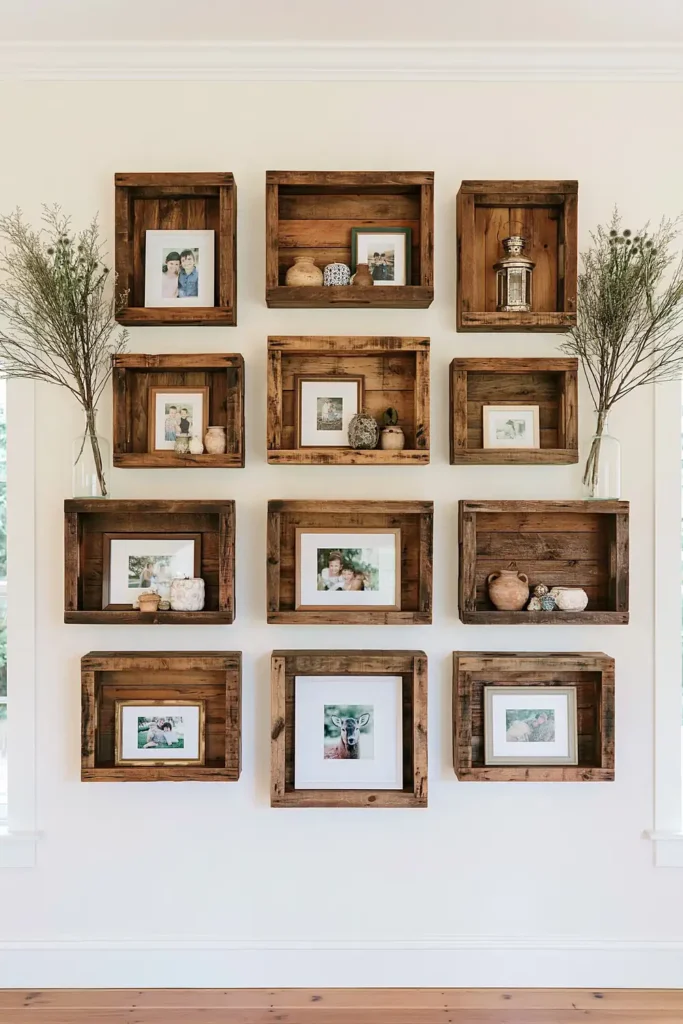
Rustic Wooden Crates Repurposed as Farmhouse Wall Shelves
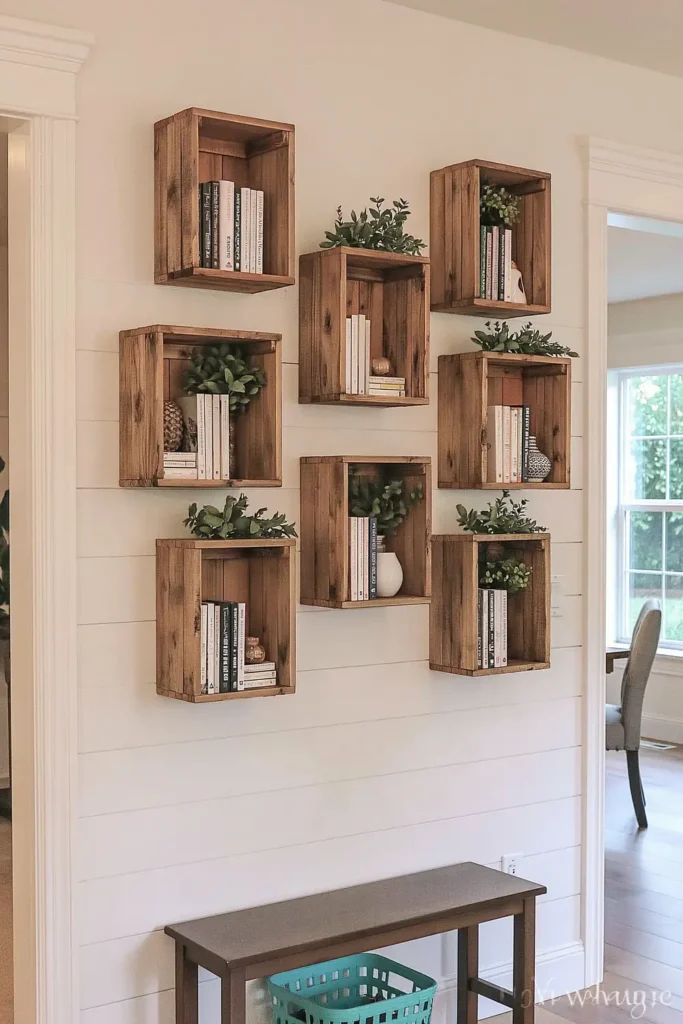
Wooden crates have a simple, country charm that works beautifully in farmhouse-inspired interiors. With a little creativity, they can become wall shelves that supply both practical storage and an interesting decorative feature.
I love the inherent imperfections of reclaimed wood. Visible grain, slightly weathered edges, and variations in color make each crate feel unique.
You can mount several crates on a living room wall to create an arrangement of open compartments. Some can sit horizontally, while others can be positioned vertically to add variety.
The inside of each crate becomes a place to display books, framed photographs, small decorative objects, or a potted plant.
For a more relaxed look, avoid arranging everything too perfectly. A mix of upright books, a small framed picture, and a leafy plant can make the shelves feel collected over time rather than carefully staged.
If this original wood looks too rough for your space, lightly sanding the surface can soften its appearance while preserving the rustic character. You could also paint the crates white or another muted color to complement your existing furniture.
One detail I find particularly useful is varying the amount of space between crates. This prevents the wall arrangement from looking like a rigid grid and gives each shelf a little breathing room.
Because wooden crates weren’t originally designed to be wall-mounted, it’s important to inspect their construction and use appropriate anchors and fixings. Heavier objects should only be displayed when the crates and mounting hardware can safely support them.
A grouping of rustic crate shelves can convert an otherwise empty wall into a useful storage display with plenty of farmhouse personality.
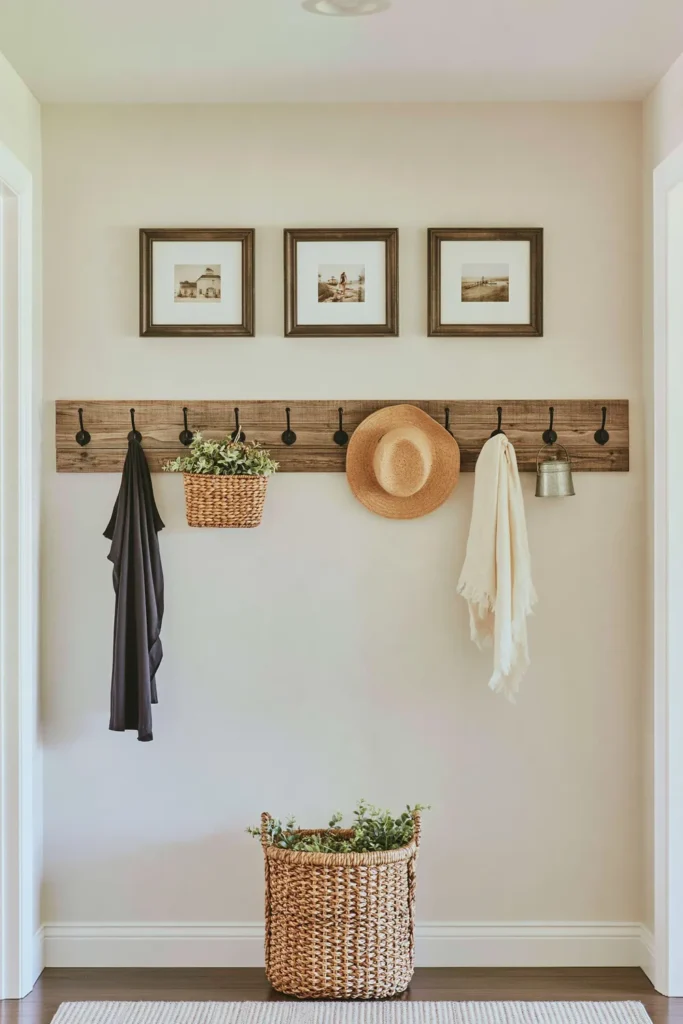
Decorative Wall Hooks for Displaying Bags, Hats, and Accessories
Not every storage solution needs shelves, drawers, or baskets. Sometimes a few carefully selected wall hooks are enough to organize everyday belongings while making the wall itself more interesting.
Decorative hooks prove especially helpful in entryways, where bags, hats, scarves, and coats often end up piled on chairs or left near the door.
Instead of hiding these items away, you can arrange them as part of the room’s decor.
Vintage metal hooks have a lovely character, especially when paired with a wooden mounting board. Simple wooden pegs offer a softer, more understated look that works well in modern or Scandinavian-inspired spaces.
I like the idea of installing a short row of hooks above a narrow entryway bench or beside a console table. It creates a practical place to hang the things you reach for most often.
You can also use decorative hooks in a bedroom or dressing area to organize necklaces, lightweight handbags, and scarves.
If you have a collection of attractive woven bags or colorful accessories, displaying a few of them can add texture and spirit to the wall.
The key is leaving enough distance between hooks so everything hangs comfortably without overlapping too much. This makes items easier to grab and keeps the arrangement looking tidy.
For a little extra visual interest, a wall-hanging plant can accentuate the natural textures of fabric bags, scarves, and wooden hooks.
Be mindful of weight when installing hooks, particularly if you plan to hang heavy coats or filled handbags. Secure them into suitable wall fixings rather than relying on decorative adhesive alone.
It’s a wonderfully simple way to turn everyday necessities into a display that appears personal, useful, and welcoming.
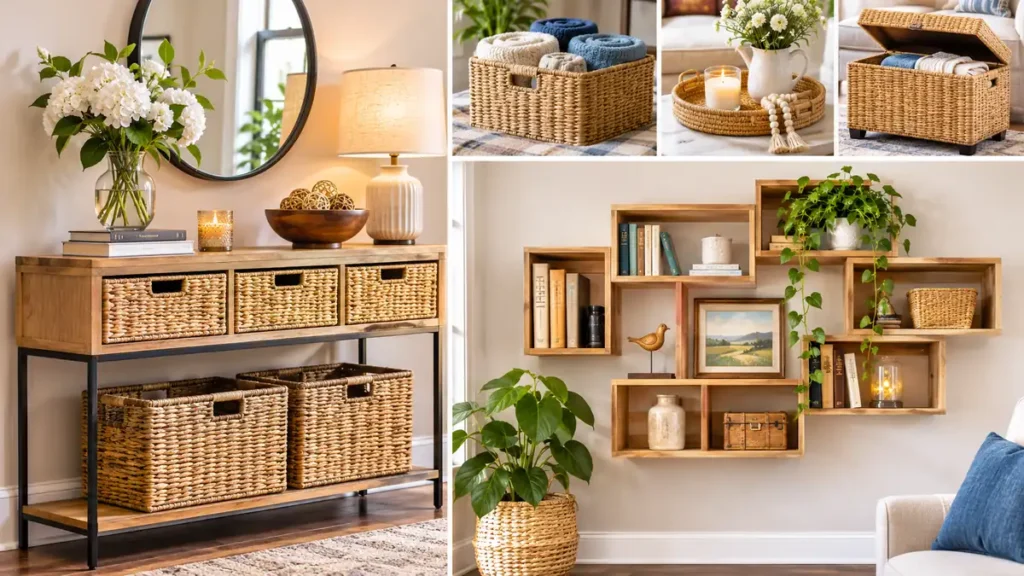
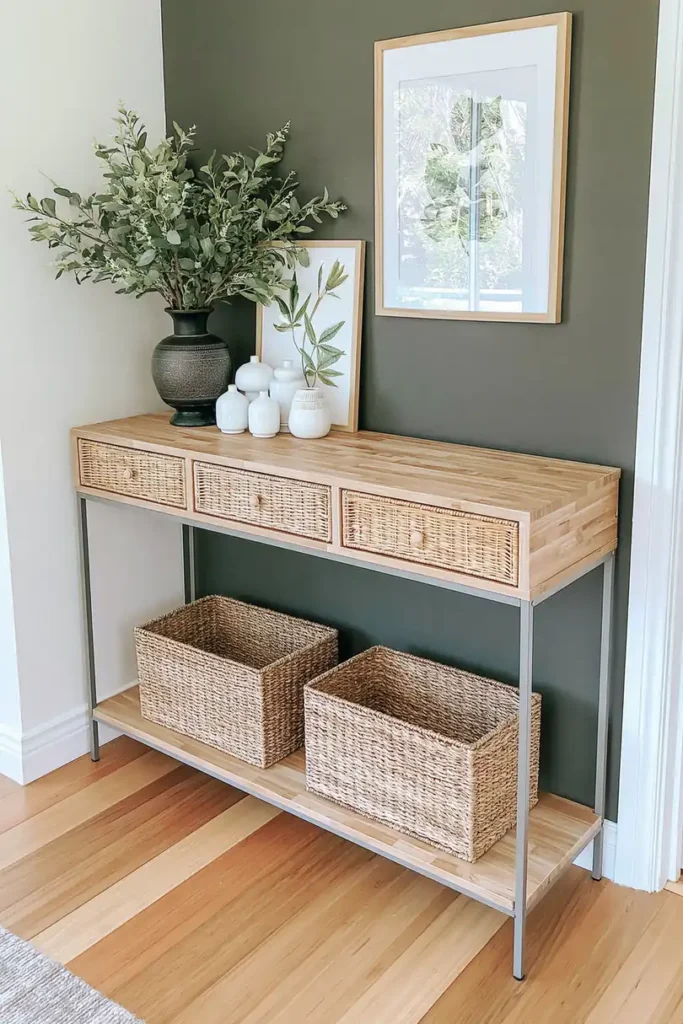
Entryway Console Tables with Woven Storage Baskets
An entryway console table can do much more than provide a place to drop your keys. When paired with woven storage baskets, it becomes a practical organizing station that also makes your home feel welcoming from the moment you walk through the door.
I particularly like wooden console tables with open space underneath. They create the perfect opportunity to add two or three natural fiber baskets without making the entryway feel crowded.
Larger baskets can hold shoes, reusable shopping bags, or everyday accessories. Smaller ones work well for gloves, scarves, and other items that tend to get misplaced when you’re heading out.
For an even look, choose baskets that fit comfortably beneath the table rather than squeezing them tightly into the space. Leaving a little room around each basket makes the arrangement feel lighter and keeps everything easy to reach.
The tabletop is where you can bring in decorative touches. A small dish for keys, a vase of fresh flowers, and a simple decorative object can make the console feel thoughtfully styled.
If you enjoy decorating with greenery, a potted plant can soften the straight lines of the furniture and accent the natural texture of the baskets.
Try to keep the decorative arrangement fairly simple, especially if your entryway is narrow. You’ll still want enough clear surface space for the things you use every day.
A console table with baskets is one of those storage ideas that double as home decor without requiring major changes. It gives everyday clutter a proper home while bringing warmth and personality to an often-overlooked area.
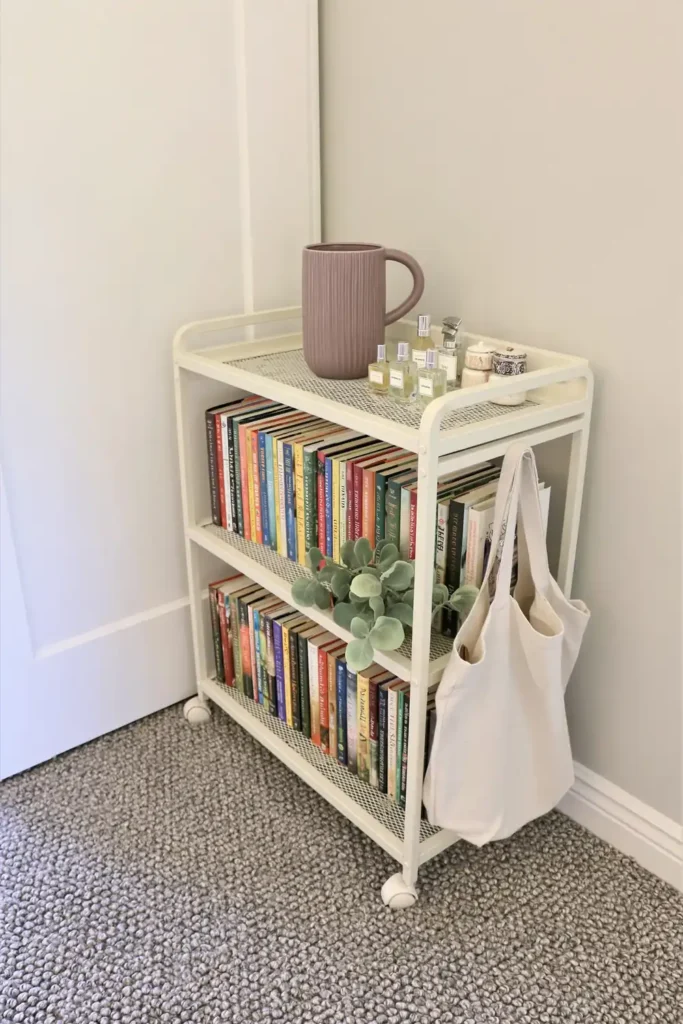
Rolling Utility Carts Styled with Books, Accessories, and Plants
A rolling utility cart might seem like something that belongs in a craft room or laundry area, but it can be surprisingly attractive in a living room when styled thoughtfully.
The beauty of a multi-tiered cart is its flexibility. You can move it wherever extra storage is needed, making it especially useful in smaller homes where furniture frequently serves more than one purpose.
I like painted metal carts because their slim frames feel visually light. A white or muted-colored cart can blend into the room, while a darker finish creates a little contrast against lighter walls.
Use the lower tier for heavier items such as books or storage containers. The middle shelf can hold accessories, notebooks, or other everyday essentials.
On the top tier, try placing a tiny potted plant beside a few neatly arranged objects. This helps the cart look like part of your decor rather than simply another place to keep supplies.
A rolling cart can also make a useful station beside a reading chair. Fill it with your current books, a water tumbler, and a few small accessories so everything stays close at hand.
If you have an unused corner, the cart is able to transform it into a functional little storage area without requiring permanent shelving.
Keep the contents grouped according to purpose instead of filling every tier with unrelated objects. A little empty space makes the arrangement easier on the eyes and helps you find what you need.
For stability, put heavier belongings on the bottom and lock the wheels whenever the cart is meant to stay in one position.
It’s a simple solution for adding extra organization while keeping your living space flexible and comfortable.
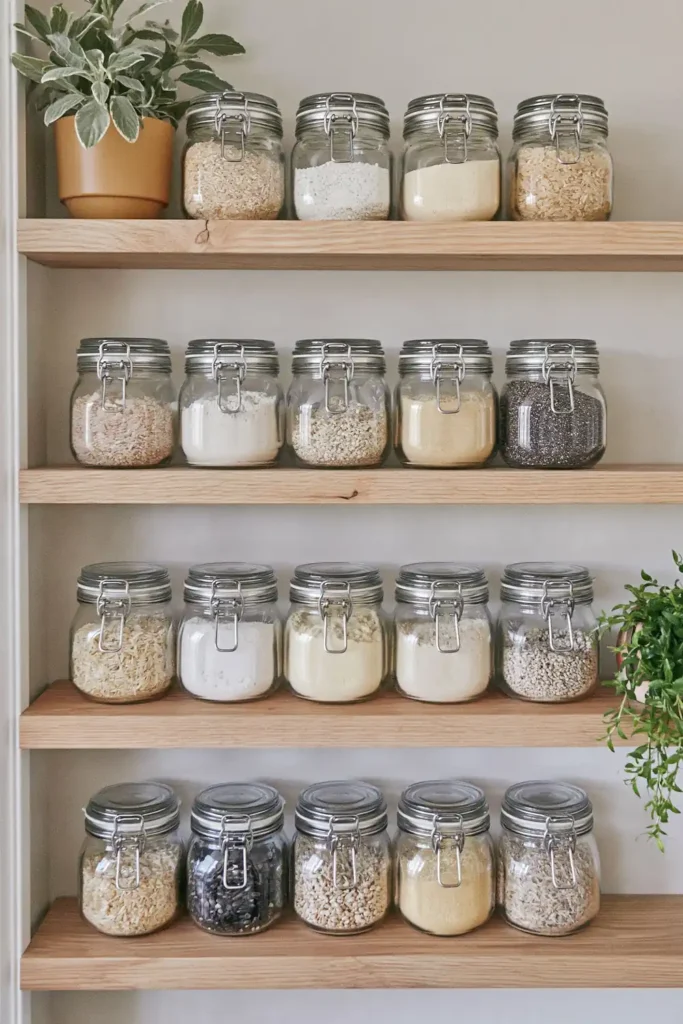
Floating Kitchen Shelves with Matching Glass Pantry Jars
Kitchen storage doesn’t always have to be hidden behind cabinet doors. Sometimes everyday ingredients can become part of the decor, especially when they’re arranged in matching glass jars on open wooden shelves.
I love how clear glass containers bring a sense of order to a kitchen. Instead of looking at a collection of colorful packaging, you see the natural textures and shades of the ingredients themselves.
Flour, rice, pasta, oats, and other dry pantry staples can look beautiful when stored in clear jars of different heights but similar shapes.
Wooden floating shelves provide a lovely contrast to the smooth glass, adding heat that keeps the arrangement from feeling too plain.
If you want a more coordinated display, use matching lids and small labels. Simple labels make ingredients easier to identify while keeping the shelves looking neat.
Arrange taller jars toward the back and shorter ones near the front so everything remains visible and accessible. Avoid stacking containers unless they’re specifically designed for it.
A tiny potted herb or compact indoor plant can add a fresh green accent among the jars. The mix of natural wood, clear glass, and greenery feels especially inviting in a bright kitchen.
One practical detail worth considering is shelf placement. Keep frequently used ingredients within comfortable reach, and avoid positioning jars directly above a hot stove or somewhere exposed to excessive steam.
Choose food-safe containers with secure lids to protect dry ingredients from moisture and pests.
With just a few well-organized jars, a simple kitchen wall can become a decorative display that makes everyday cooking feel a little more enjoyable.
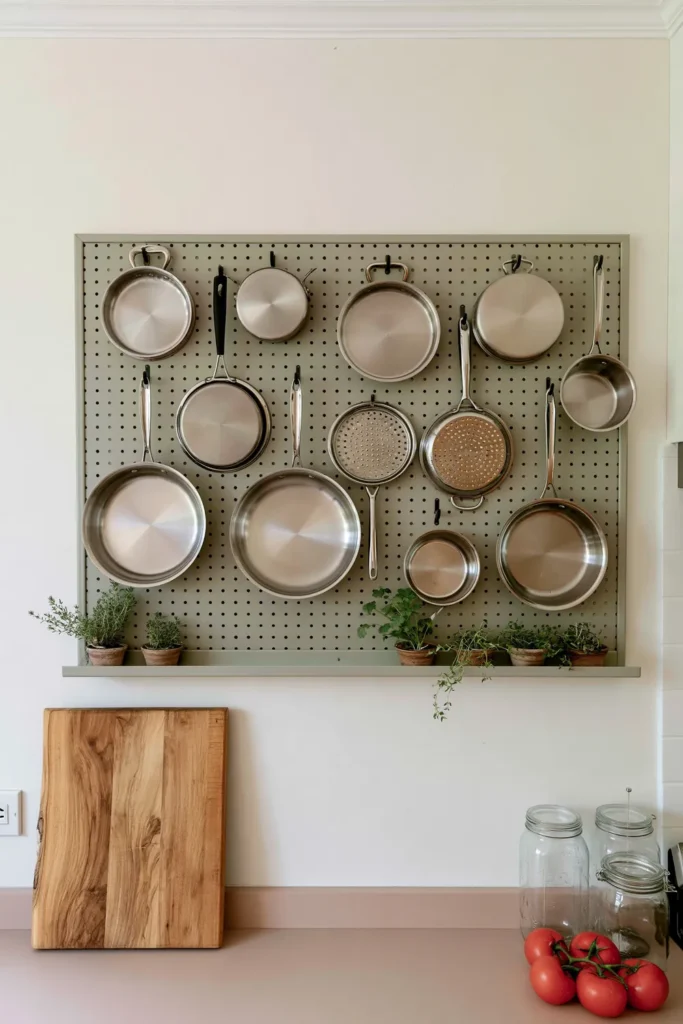
Kitchen Pegboard Walls for Displaying Pots, Pans, and Utensils
When kitchen cabinets start feeling overcrowded, an empty wall can offer more storage than you might expect. A pegboard turns that unused space into an organized display for cookware and cooking tools.
Unlike fixed hooks or traditional shelving, a pegboard gives you the freedom to change the arrangement whenever your needs change.
You can hang frequently used pots and pans on sturdy hooks, arrange cooking utensils in neat groups, and leave open spaces for tools you might add later.
I particularly like pegboards in kitchens with simple cabinetry because the hanging cookware adds texture and visual interest to an otherwise plain wall.
A painted wooden pegboard can create a softer, more traditional appearance, while a metal version works beautifully in kitchens with modern or industrial details.
To achieve a balanced arrangement, keep larger pots and pans toward the lower or central part of the board. Smaller utensils can hang around them, creating a display that’s practical without looking too crowded.
Collecting similar items together also makes cooking easier. Wooden spoons, metal ladles, and other tools are much simpler to find when each has a designated place.
If your cookware has attractive finishes, such as stainless steel or dark metal, the pieces themselves become decorative accents.
Just make sure the pegboard is securely mounted using hardware suitable for the wall and the combined weight of your cookware. Leave enough clearance between hanging items so they don’t knock against one another every time you reach for something.
Keep the display within easy reach of your cooking area, but away from places where hanging items could interfere with burners or create a safety hazard.
A kitchen pegboard is a practical way to free up cabinet space while turning everyday cookware into a distinctive wall feature.
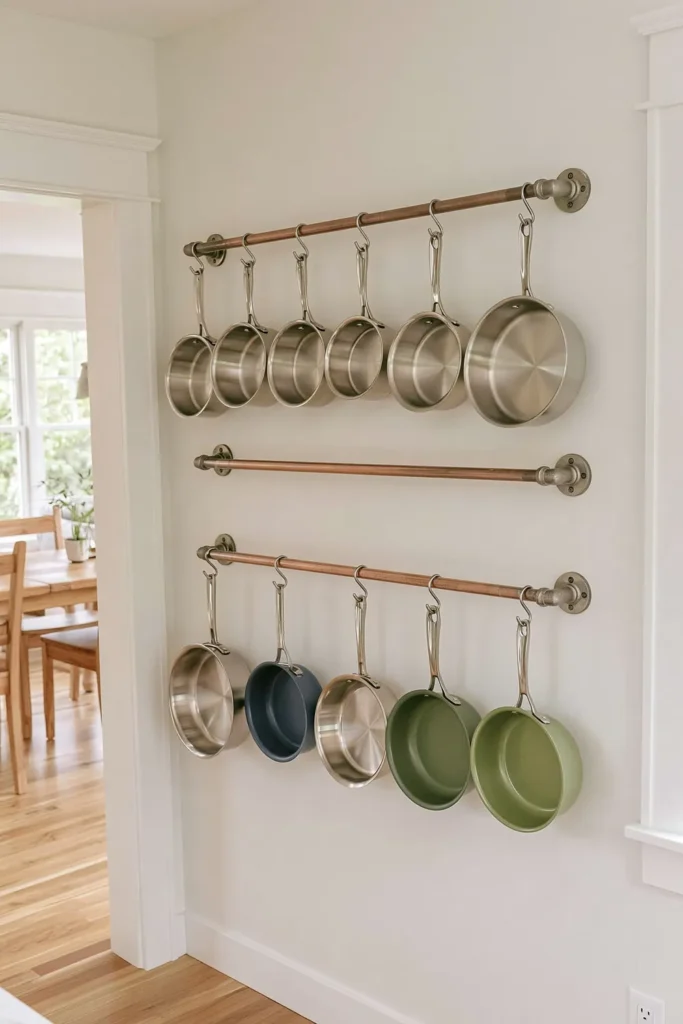
Wall-Mounted Metal Rails for Hanging Cookware and Kitchen Towels
A simple metal rail can make a surprisingly big difference in a kitchen, especially when you’re short on drawer or cabinet space.
Instead of keeping your most-used pots, pans, and cooking accessories tucked away, a wall-mounted rail allows you to organize them where they’re easy to reach. It also creates a decorative display that gives the kitchen a more lived-in, welcoming feel.
I particularly like the look of dark metal rails against a light-colored wall. The contrast makes the hanging cookware stand out, while stainless steel rails can create a cleaner, more understated appearance.
You can install a rail along an empty section of kitchen wall and use sturdy hooks to hang smaller pans, cooking utensils, or folded kitchen towels.
If you have several pieces of matching cookware, arranging them together creates a more cohesive display. Mixing too many different shapes and finishes can make the wall look busier than you intended.
A small hanging plant can soften the metal surfaces and introduce a little natural texture. Just make sure it has enough room to grow without getting in the way of your cooking tools.
One practical trick is to keep the items you use most frequently toward the center of the rail. Less-used pieces can hang near the ends, where they’re still accessible but don’t interrupt your everyday routine.
Before installation, check that the rail, hooks, and wall fixings can support the load of your cookware. Avoid placing hanging towels or other flammable materials too close to the stove.
This idea works particularly well in compact kitchens, where keeping cookware visible can free valuable cabinet space without making the room feel overcrowded.
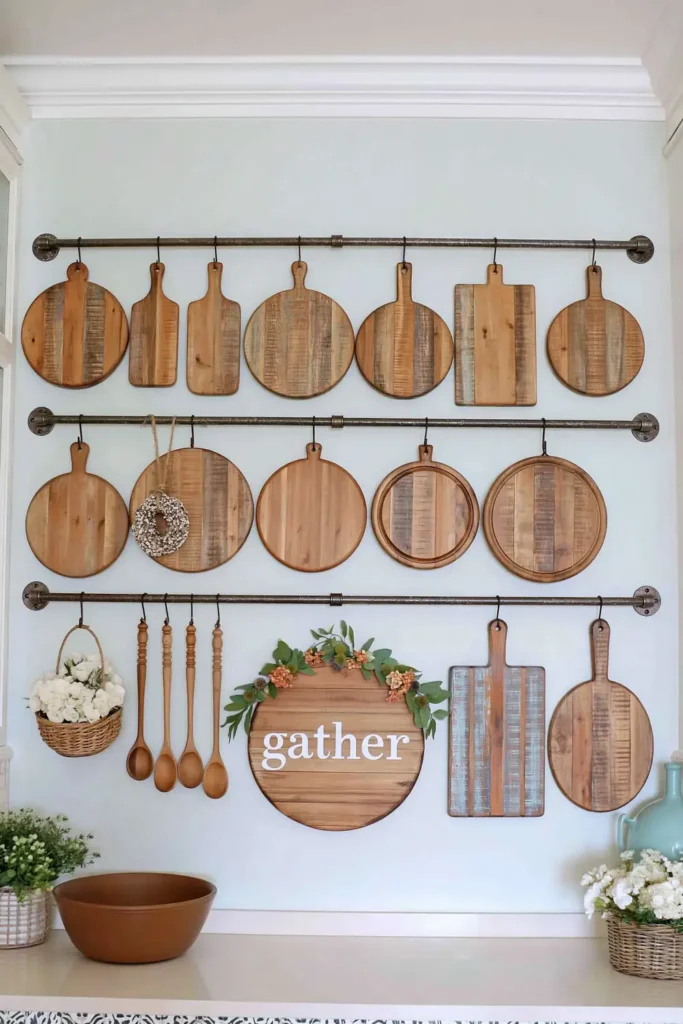
Wooden Cutting Board Wall Displays with Seasonal Greenery
Wooden cutting boards are everyday kitchen essentials, but their natural grain and warm colors can also make them beautiful decorative pieces.
Instead of hiding every cutting board inside a cabinet, consider displaying a small collection on a kitchen wall or in an unused corner.
I love the look of several wooden boards in different shapes and sizes arranged together. A large rectangular board can serve as the main piece, while smaller round or paddle-shaped boards add variety.
The different wood tones create natural texture without needing much additional decoration.
A simple wall rack with hooks can keep the boards organized and easy to remove when needed. If you’re using decorative boards that rarely touch food, you can also layer them against the wall on a narrow shelf.
For a seasonal touch, try adding a little greenery around the display. A small hanging arrangement can soften the wooden shapes, while subtle autumn accents can bring extra warmth during the cooler months.
The key is keeping the arrangement simple enough that the cutting boards remain the main feature.
If you use the boards regularly for food preparation, make sure they’re completely clean and dry before hanging them. Leave enough space for air to circulate so moisture doesn’t become trapped against the wall.
It’s also worth choosing boards with sturdy handles or hanging holes, rather than trying to balance heavy pieces on small decorative hooks.
A cutting board display is a lovely way to bring natural wood into the kitchen while keeping useful items within easy reach.
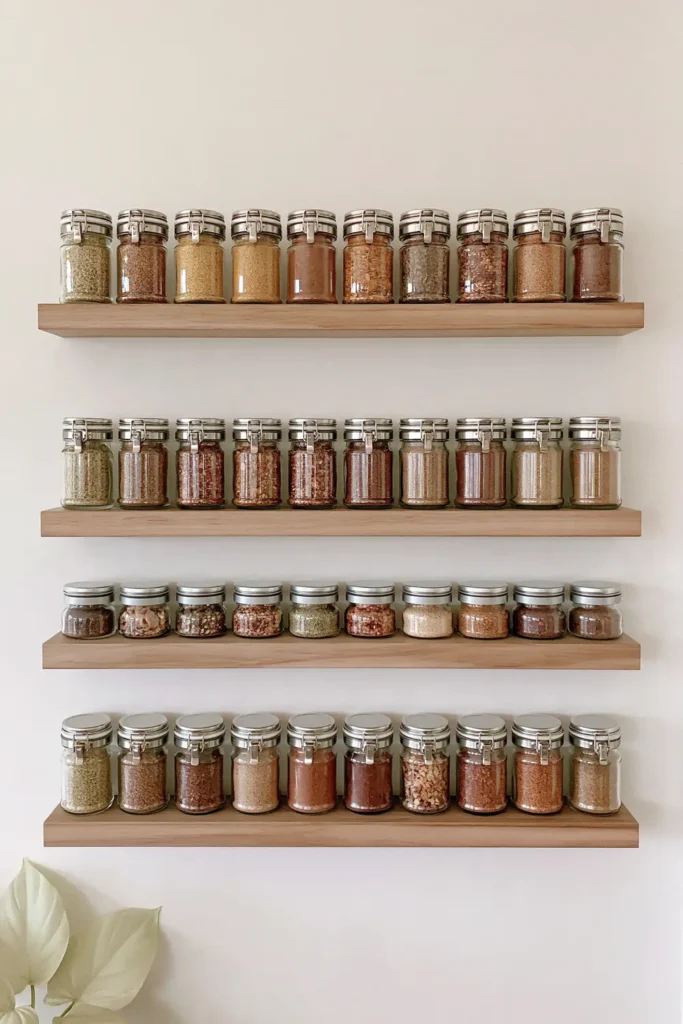
Wall-Mounted Spice Racks with Colorful Glass Jars
Spices are some of the smallest items in the kitchen, yet they have a habit of taking over drawers and cabinets. A wall-mounted spice rack can bring them together in one organized place as it adds a beautiful touch of color to the room.
Clear glass jars are especially attractive because they allow the natural colors of the spices to become part of the display.
Warm cinnamon, golden turmeric, red paprika, and dried green herbs create a lovely combination of earthy shades that can make even a simple kitchen wall more interesting.
I like using matching jars because they give the arrangement a calm, coordinated appearance. Small labels on the front or lids help you identify each ingredient quickly.
A narrow wooden shelf works beautifully for this idea, especially when paired with natural wood countertops or other warm finishes. Metal racks can offer a sleeker look if your kitchen has more modern details.
Arrange the jars in a way that makes sense for how you cook. Everyday seasonings should be easy to reach, while less-used spices can sit on higher shelves.
You can also add a tiny potted culinary herb beside the rack if there’s enough space and suitable natural light. The fresh greenery creates a nice contrast with the glass containers.
For practical storage, keep the rack away from direct heat, sunlight, and steam. Spices generally retain their flavor and color better when protected from these conditions.
Make sure the shelves are deep enough to hold the jars securely, particularly if the rack is mounted near a busy preparation area.
A neatly arranged spice rack turns an ordinary collection of ingredients into a colorful kitchen feature while making everyday cooking much more convenient.
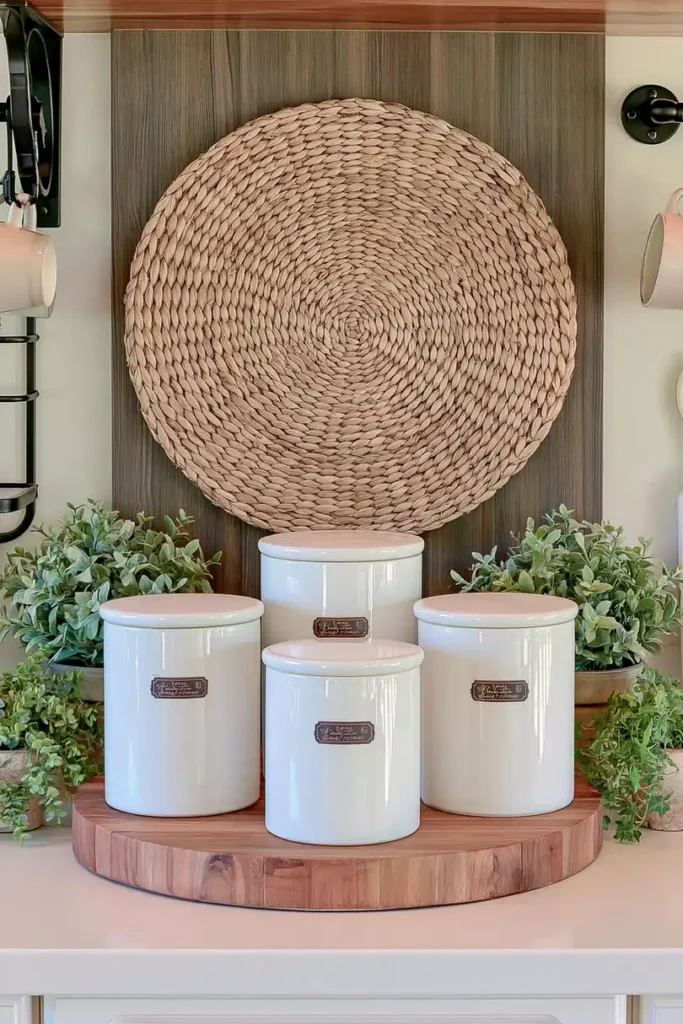
Decorative Kitchen Canisters Arranged on Wooden Risers
Kitchen countertops may become cluttered quickly when coffee, sugar, flour, and other everyday ingredients are stored in separate containers.
One way to make these essentials look more intentional is to group decorative canisters on small wooden risers or tiered stands.
I particularly like ceramic canisters because their smooth surfaces contrast nicely with natural wood. Clear glass containers can work just as well, especially if you enjoy seeing the contents inside.
Start with two or three canisters in complementary sizes. Keeping the colors and finishes similar creates a coordinated look without making the arrangement feel excessively formal.
A wooden riser adds height and gives the containers a designated place on the countertop. This simple change can make the area seem more organized, even when the same everyday items remain visible.
For a coffee station, you might arrange canisters for coffee and sugar alongside a smaller container for tea or other supplies.
If you’re using a tiered stand, keep heavier canisters on the lower level and lighter accessories above. This makes the arrangement more stable and easier to use.
A small countertop plant can add a fresh touch without taking away from the practical purpose of the display.
Be careful not to overcrowd the riser with too many decorative objects. The goal is to keep frequently used ingredients accessible while giving them a more attractive presentation.
Choose food-safe canisters with suitable lids, particularly for ingredients that need protection from moisture.
This is one of my favorite ways to make an everyday kitchen corner feel more thoughtfully decorated without including unnecessary items on the countertop.
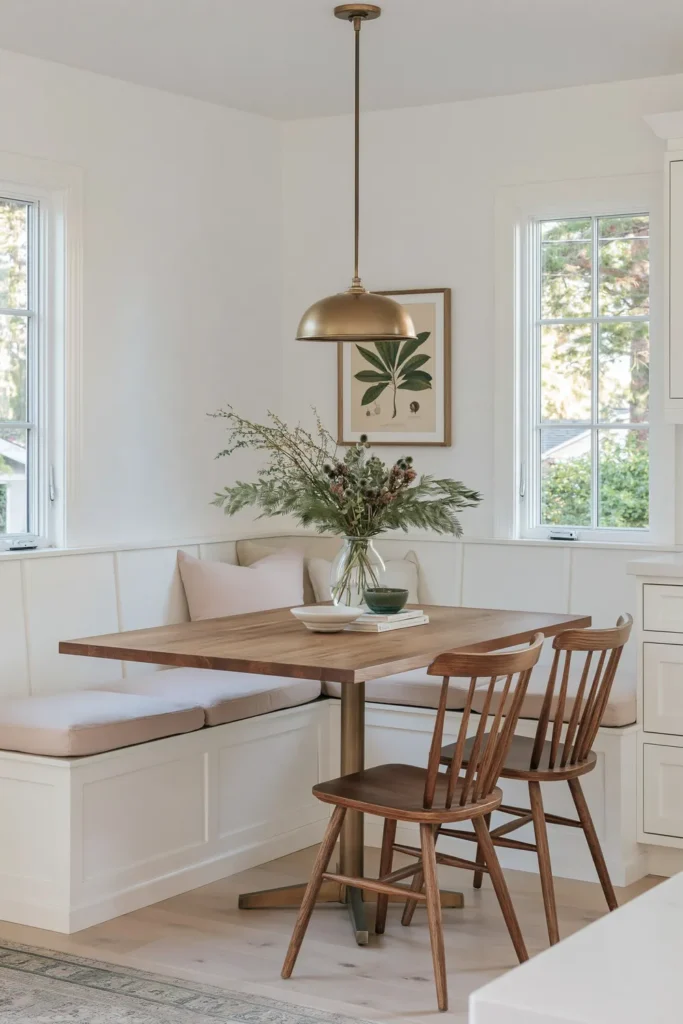
Farmhouse Dining Benches with Built-In Storage
A dining bench can be much more than an extra place to sit. When it includes built-in storage, it becomes a practical furniture piece that helps keep your dining area organized while imparting a warm, welcoming touch.
I especially like wooden storage benches in farmhouse-style dining rooms and breakfast nooks. Their simple construction and natural materials work beautifully with wooden tables, woven placemats, and comfortable fabric cushions.
A bench with a lift-up seat can provide hidden space for table linens, seasonal decorations, or items you don’t need every day. Some designs also have drawers underneath, making it easier to reach stored belongings without moving the seat cushions.
If your dining area is small, placing a storage bench against the wall can help you make better use of the available floor space.
To make the bench feel inviting, add a comfortable seat cushion and a few colorful throw pillows. You can choose fabrics that complement your existing dining chairs or introduce a subtle pattern to make the arrangement more interesting.
I prefer keeping the pillows fairly simple, so they don’t take up too much seating space. A couple of soft cushions are usually enough to make the bench feel cozy.
For an integrated farmhouse look, pair the bench with a sturdy wooden dining table and natural woven accessories.
Warm pendant lighting or soft ambient dining lights can make the seating area feel even more comfortable during evening meals.
If you choose a lift-up storage bench, look for a lid with a reliable support mechanism so it stays open safely when you’re accessing the contents.
It’s a lovely way to combine comfortable seating, extra storage, and relaxed farmhouse character in one useful piece of furniture.
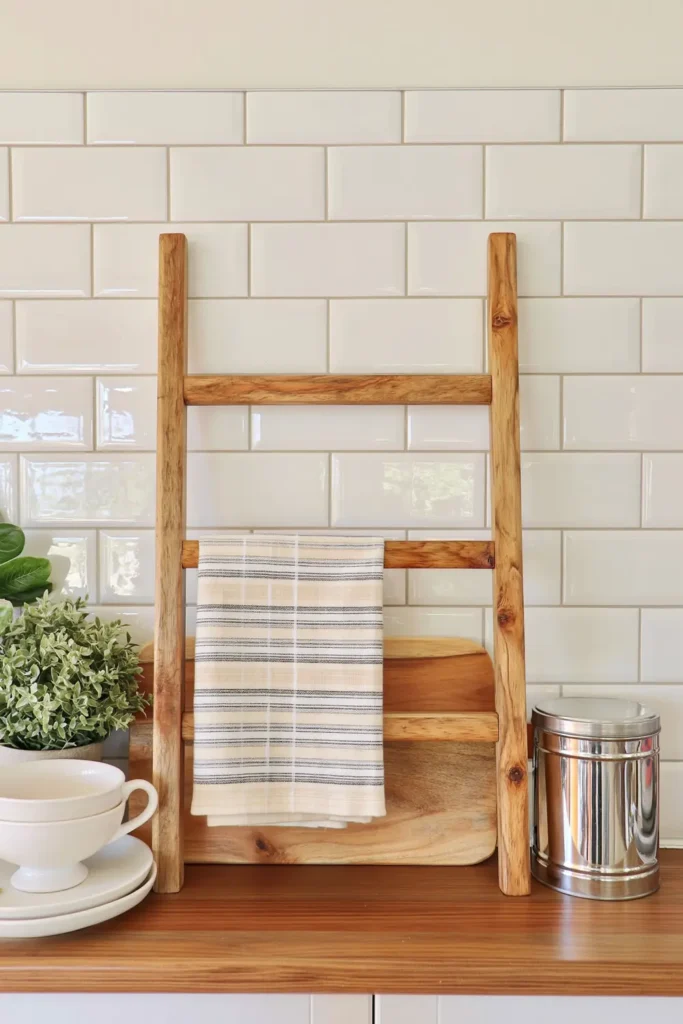
Mini Vintage Wooden Ladders for Displaying Kitchen Tea Towels
Sometimes the smallest decorating details can make a kitchen feel more personal. A miniature wooden ladder resting on the countertop is a charming way to display tea towels while keeping them neatly organized.
I particularly like vintage-style ladders with weathered wood and slightly distressed finishes. Their rustic texture adds warmth to kitchen counters, especially when surrounded by simple ceramic dishes or natural wooden accessories.
Unlike a full-size ladder shelf, this smaller version works as a countertop display. Its narrow rungs provide convenient places to drape lightweight tea towels lacking needing extra hooks or wall space.
Choose two or three towels in colors that complement your kitchen. Neutral linen or cotton towels create a soft, understated look, while subtle checks or stripes can add a little farmhouse personality.
Fold each towel lengthwise before hanging it over a rung. This keeps the arrangement tidy and allows the natural wood of the ladder to remain visible.
I like placing a miniature ladder near a coffee station or along an unused section of countertop, where it can add decoration without interfering with food preparation.
If your kitchen has open wooden shelves, the ladder can also help repeat those natural wood tones throughout the room.
Make sure the ladder has a stable base and doesn’t sit somewhere it could easily be knocked over. Keep it away from stovetop heat and open flames.
For towels you use regularly, allow them to dry completely rather than leaving moist fabric folded over the rungs.
This is a particularly sweet idea for farmhouse and cottage-inspired kitchens, where small vintage objects can make the space feel more collected and welcoming.
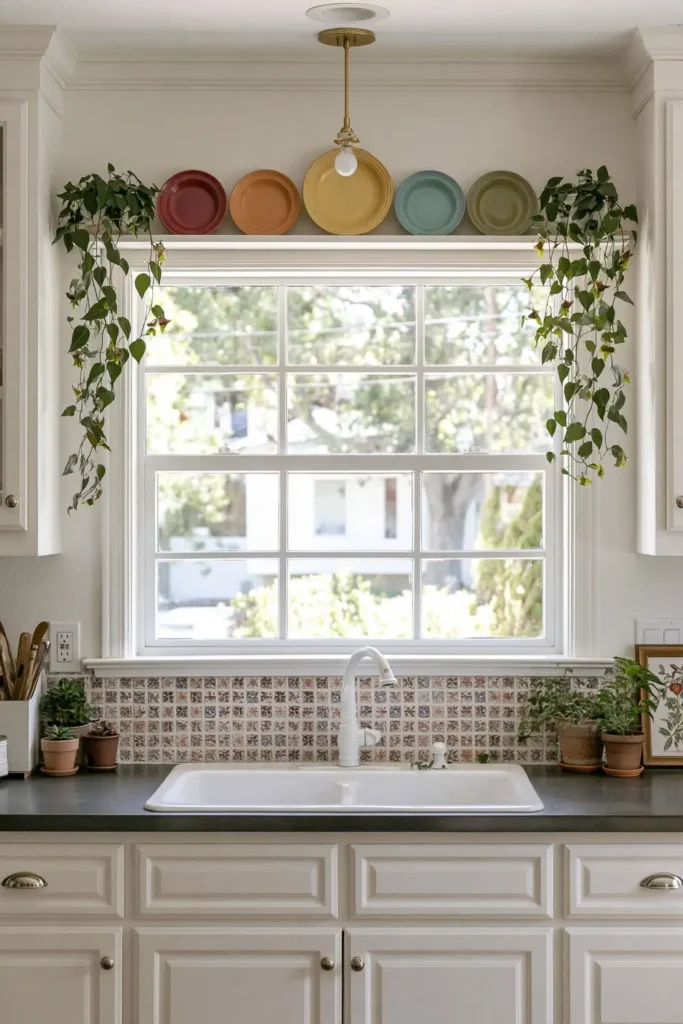
Over-the-Sink Shelves for Fresh Herbs and Colorful Dishes
The wall above a kitchen sink often has more potential than we realize. A carefully placed shelf can turn that unused space into a practical display for everyday dishes, glassware, and small herb planters.
I love this idea in kitchens with a window above the sink because natural sunlight can make the entire arrangement feel fresh and inviting.
A simple wooden shelf adds warmth, while a slim metal shelf can create a brighter look in a more modern kitchen.
For the display, try combining a few colorful ceramic plates or bowls with clear drinking glasses. The different materials add interest without making the shelf feel overly decorated.
Small herb planters can bring a beautiful hint of greenery to the space. Basil, parsley, or other culinary herbs can work well when the window provides suitable growing conditions.
Keeping herbs close to the sink also makes watering convenient, although you’ll want to make sure the pots drain properly and don’t leave standing water on wooden surfaces.
One detail worth considering is how much space you have between the sink and the shelf. It should sit high enough that you can wash dishes comfortably without bumping into it.
If you’re displaying frequently used dishes, arrange them so they’re easy to reach. Heavier ceramic items should be placed on a sturdy, properly mounted shelf rather than balanced near the edge.
Try not to pack the entire shelf with objects. A small collection of dishes, a few glasses, and one or two herb pots may create a more relaxed display than a crowded arrangement.
The result is a practical kitchen feature that keeps useful items accessible while bringing color, texture, and natural greenery into an everyday workspace.
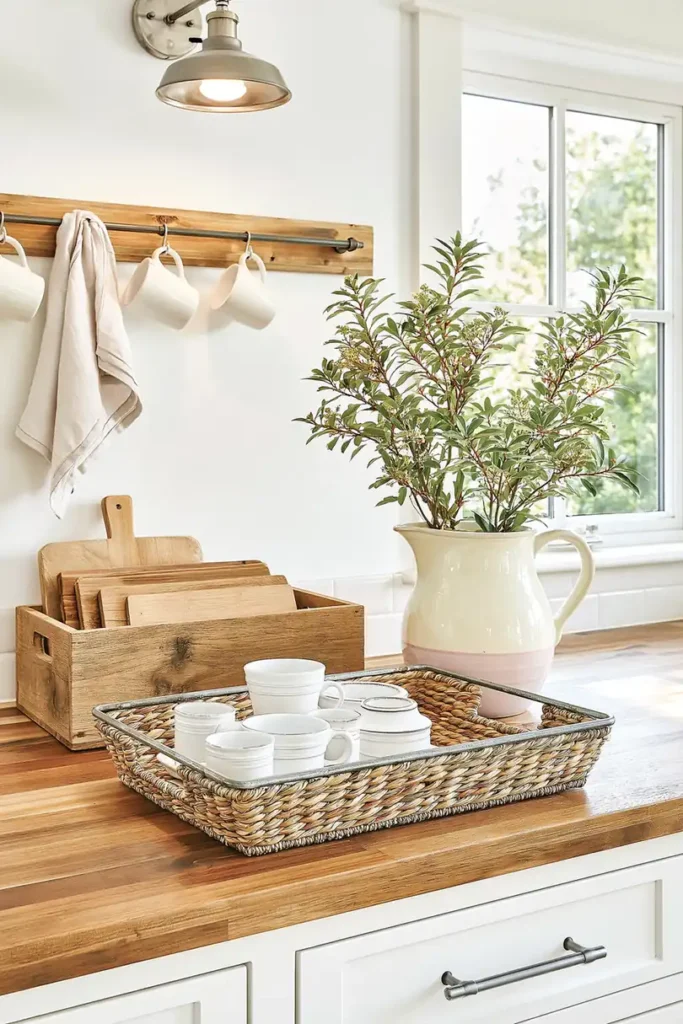
Decorative Countertop Trays for Organizing Everyday Kitchen Essentials
A decorative tray is one of the simplest ways to make a busy kitchen countertop look more organized.
Instead of allowing small everyday items to spread across the surface, a tray gives them a designated place and makes the arrangement feel intentional.
I especially like wooden trays because they bring warmth to kitchens with stone, laminate, or painted countertops. Metal trays can create a different look, particularly in kitchens with current fixtures and hardware.
The beauty of this idea is that you can style the tray around the things you actually use.
For a tea or coffee corner, place a couple of ceramic cups beside a small container for sugar or other supplies. A simple glass jar or decorative canister can complete the arrangement.
In another part of the kitchen, a tray might hold condiment containers, a small cutting board, and a compact vase of fresh flowers.
I like adding one natural element, such as a tiny herb plant or a few flowers, to keep the display from feeling purely functional.
Try grouping objects with different heights. A taller vase beside shorter ceramic containers creates a more interesting arrangement without requiring lots of decoration.
However, it’s important to leave enough empty space on the tray so everything remains easy to lift and use.
If your countertop is small, choose a compact rectangular tray that fits neatly against the backsplash. This holds the center of the counter clear for food preparation.
A tray with raised edges can also help contain small items and make it easier to move the entire arrangement when you need extra workspace.
For anything that regularly comes into contact with food or moisture, choose materials that are easy to wipe clean.
It’s a small decorating change, but it can make the kitchen feel noticeably calmer while keeping your most-used essentials right where you need them.
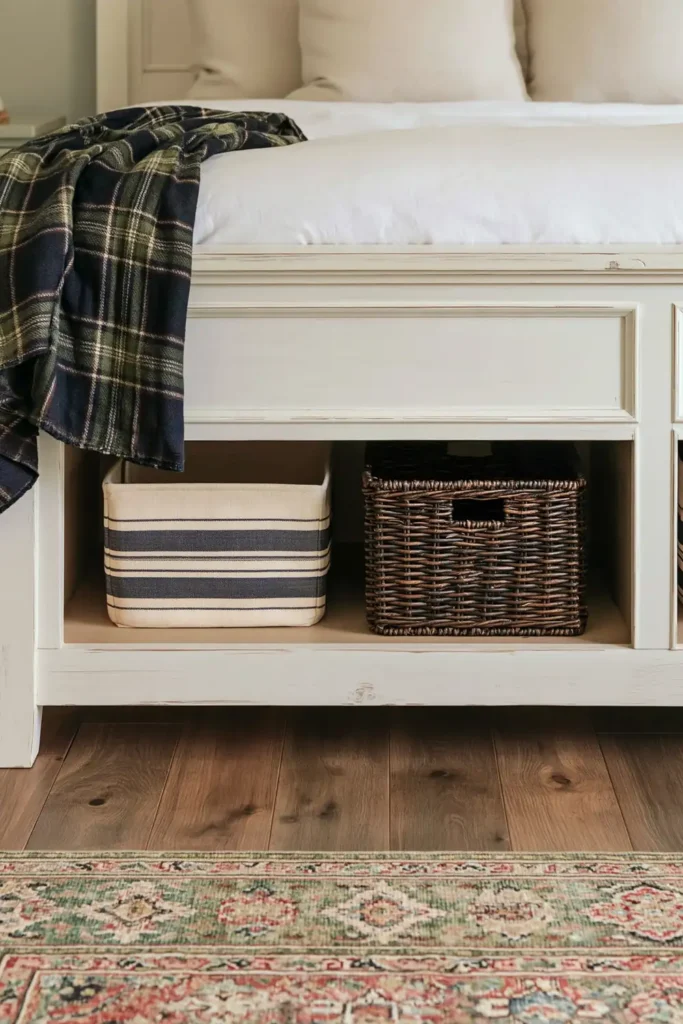
Woven Underbed Storage Baskets for Blankets and Seasonal Clothing
The space underneath your bed is easy to overlook, but it can supply valuable storage without adding another piece of furniture to the bedroom.
I particularly like low-profile woven baskets because they make use of that empty space as adding a soft, natural texture to the room. Unlike plastic storage containers, woven baskets can look beautiful even when part of them remains visible beneath the bed frame.
Natural seagrass or rattan baskets work especially well in bedrooms with wooden furniture, neutral bedding, and cozy fabric accents.
You can use them to organize extra blankets, seasonal clothing, spare pillowcases, or shoes that you don’t need every day.
For a coordinated appearance, choose baskets in similar colors and shapes. Rectangular designs usually make better use of the available space and slide more neatly beneath the bed.
Before buying anything, measure the clearance underneath your bed, including any support rails that might get in the way. Leave enough room above each basket so you can pull it out without rubbing against the bed frame. Also, consider how durable different basket materials are if you plan to access them often. Baskets made from tightly woven rattan or bamboo generally hold up best to frequent use and keep their shape over time, while softer materials like seagrass can wear down more quickly with regular sliding.
I prefer baskets with handles because they’re much easier to retrieve, especially when they’re tucked farther underneath.
For clothing and linens, consider using fabric liners or protective storage bags inside the baskets. This helps keep stored fabrics cleaner and prevents delicate materials from catching on rough woven fibers.
It’s also worth leaving a little space around the baskets so air can circulate beneath the bed.
When chosen carefully, these baskets become a natural extension of your bedroom decor rather than storage containers you’re trying to hide.
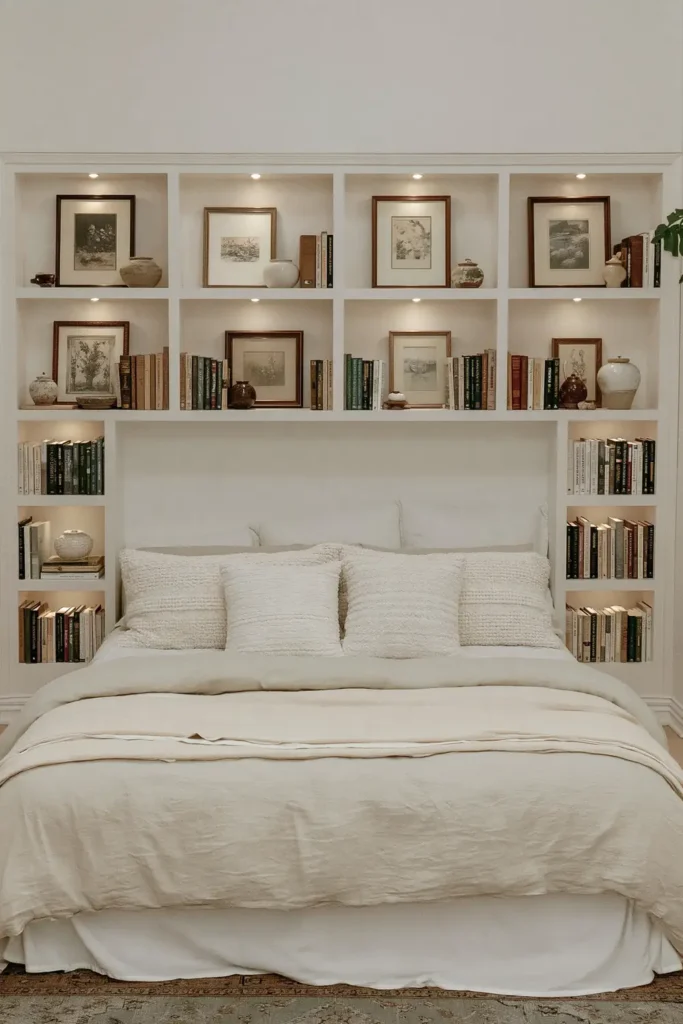
Wooden Storage Headboards with Built-In Shelves and Accent Illumination
A headboard can do much more than frame your bed. With integrated shelving, it can become a useful storage feature that keeps your nighttime essentials organized without requiring additional furniture.
I especially like wooden headboards with open compartments because they create a warm, structured look behind the bed.
The shelves can hold favorite books, a small clock, reading glasses, or a few decorative objects. Having these items within reach makes the bedroom more convenient while keeping bedside surfaces clear.
If your bedroom is narrow, a storage headboard can be particularly useful. It allows you to take advantage of the wall behind the bed instead of adding wider nightstands on either side.
Natural wood finishes form a cozy atmosphere, while painted wooden headboards can blend beautifully with the wall for a more understated appearance.
I like keeping the arrangement simple. A small collection of books on one shelf and a decorative ceramic object on another can make the headboard feel styled without becoming overcrowded.
Integrated accent lighting is another lovely feature. Small built-in reading lights can provide directed illumination while lessening the need for separate bedside lamps.
Choose warm lighting if you want the bedroom to feel relaxed and comfortable in the evening.
Pay attention to shelf placement, especially in compartments directly above your pillows. Avoid keeping heavy or fragile objects where they could fall onto the bed.
The headboard should also be properly secured, with any electrical lighting installed according to the manufacturer’s instructions. If you have children or pets at home, take extra precautions to prevent accidents: anchor the headboard firmly to the wall to avoid tipping, choose designs with rounded corners or soft edges to reduce injury risk, and keep any exposed wires or electrical components out of reach. Ensuring these safety details are in place can help your storage headboard remain both practical and family-friendly.
A carefully designed storage headboard can make the entire sleeping area seem tidier while supplying architectural interest to an otherwise simple bedroom.
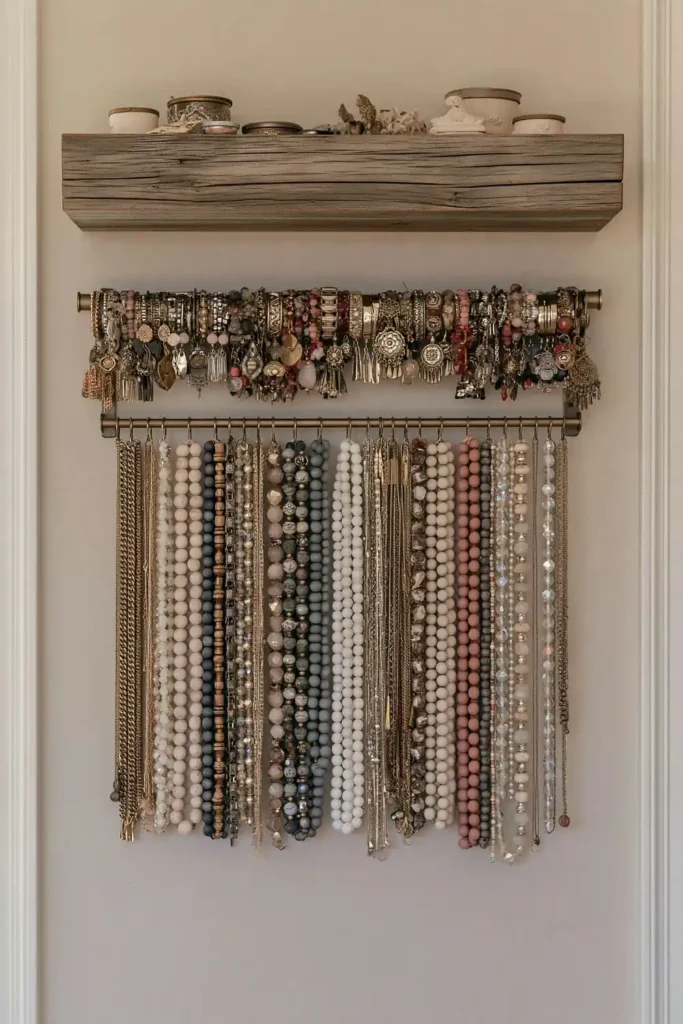
Framed Wall-Mounted Jewelry Organizers That Double as Decor
Jewelry can quickly become tangled or misplaced when everything is stored together in a drawer. A framed wall-mounted organizer gives each piece its own place while turning your collection into an attractive decorative display.
I love this idea because necklaces, bracelets, and earrings already have interesting shapes, textures, and finishes. Displaying them against a simple background allows those details to become part of the bedroom decor.
A wooden frame can create a warm, rustic appearance, while a slim metal frame works beautifully in a more modern bedroom.
Inside the frame, small hooks or rails can hold necklaces and bracelets. An appropriate jewelry mesh or display panel can provide space for earrings.
Try arranging longer necklaces along the lower portion of the frame so they have enough room to hang without tangling.
Smaller pieces can sit higher up, creating a balanced arrangement that feels organized rather than crowded.
I particularly like placing a framed jewelry organizer beside a dresser or near a closet, where accessories are easy to reach while getting ready.
If you have several metallic finishes in your jewelry collection, a neutral frame can help them look cohesive. Natural wood, white, or a muted painted finish can provide a simple backdrop.
For a more decorative appearance, choose a frame that coordinates with other framed pictures or wall accents already in the room.
Make sure the hooks are smooth enough to avoid damaging delicate chains, and avoid displaying valuable or light-sensitive pieces in direct sunlight.
Secure the organizer firmly to the wall, especially if it holds heavier necklaces or bracelets.
It’s a practical way to keep your accessories visible and untangled while bringing a personal touch to an otherwise empty bedroom wall.
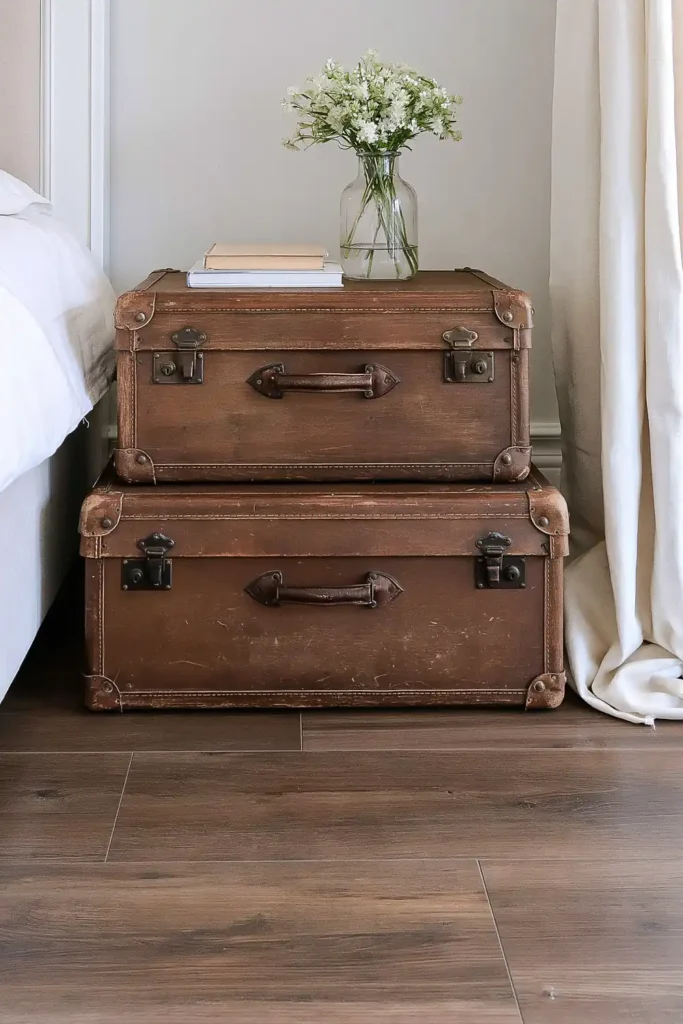
Stacked Vintage Suitcases Repurposed as Bedroom Nightstands
Vintage suitcases have a character that’s difficult to recreate with ordinary bedroom furniture. Their aged leather surfaces, metal clasps, and worn edges can add a sense of history while providing useful hidden storage.
One of my favorite ways to display them is to stack two or three suitcases beside the bed, creating a nightstand with an unusual, collected look.
The suitcases don’t have to match perfectly. In fact, slightly different shades of brown leather or variations in the metal hardware can make the arrangement feel more interesting.
For stability, place the largest and heaviest suitcase at the bottom, followed by smaller pieces above it.
You can use the interiors to store spare linens, seasonal accessories, or personal belongings that you don’t need to access frequently.
If you prefer a simpler arrangement, a single sturdy vintage suitcase can also be mounted on suitable furniture legs to create a compact bedside table.
On top, a small reading lamp and a few bedside essentials are usually enough. I like leaving some of the aged surface visible because the suitcase itself is already a decorative feature.
Before using an old suitcase for storage, clean the interior carefully and look for musty odors, damaged linings, or loose hardware. An air-permeable fabric liner can help protect stored belongings.
It’s also important to make sure the stacked suitcases are stable and won’t shift when bumped. Secure any added furniture legs properly, and avoid placing heavy or easily broken items on an uneven top.
This idea works particularly well in bedrooms with vintage furniture, warm wood tones, and soft neutral bedding.
Rather than buying another conventional nightstand, you’re giving an old object a new purpose while introducing something genuinely distinctive to your bedroom.
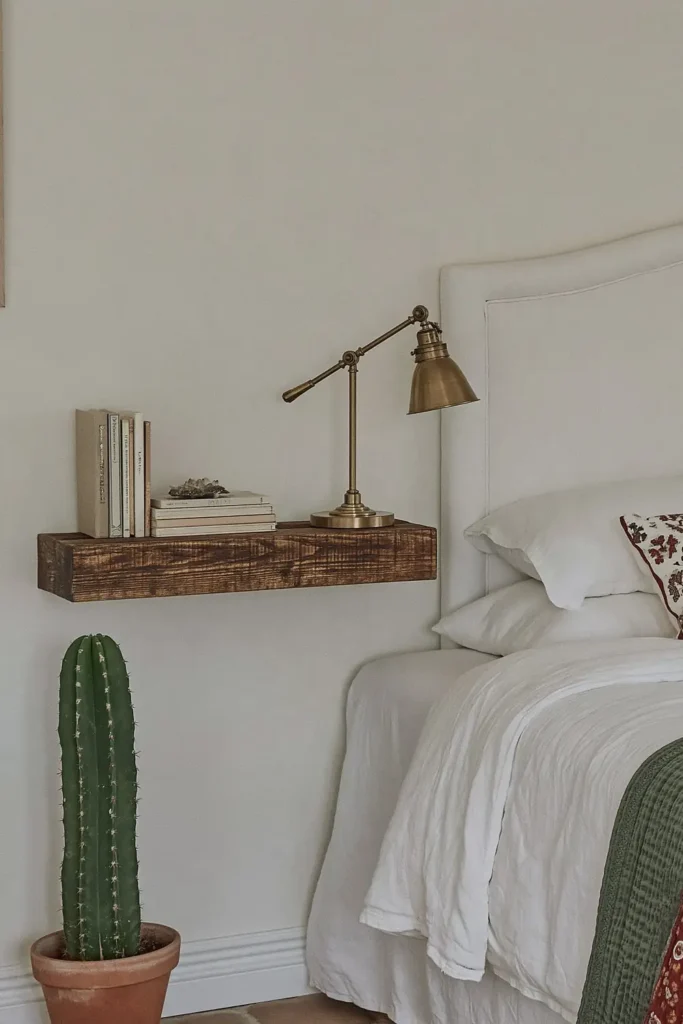
Floating Wooden Nightstands for Minimalist Bedside Storage
When a bedroom feels short on space, a traditional nightstand can sometimes make the area beside the bed feel crowded. A floating wooden nightstand offers a simpler alternative, keeping your everyday essentials close without taking up valuable floor space.
I especially like the clean appearance of a small wooden shelf mounted beside the bed. Its organic finish adds warmth, while the open space underneath makes the room feel lighter and less cluttered.
A floating nightstand works beautifully in bedrooms with minimalist furniture, neutral bedding, and simple wall decor.
You don’t need a large surface beside the bed. A small clock, your current book, and a few nighttime essentials are often enough.
If you prefer to keep personal items hidden, look for a floating design with a shallow drawer or small storage compartment. This provides a place for charging cables, reading glasses, or other belongings without covering the tabletop.
The mounting height is important. Try positioning the nightstand close to the height of your mattress so you can comfortably reach it while sitting or lying in bed.
I like choosing a wood finish that suits the bed frame or headboard. Pairing the tones loosely can make the furniture feel connected without requiring everything to look identical.
Because floating nightstands rely entirely on wall support, make sure they’re installed with suitable fixings and that the wall can safely carry the intended weight.
Avoid placing overly heavy objects on a small floating shelf, especially when the manufacturer specifies a limited load capacity.
This is a wonderful option for compact bedrooms because it offers useful bedside storage while keeping the overall arrangement simple, comfortable, and visually open.
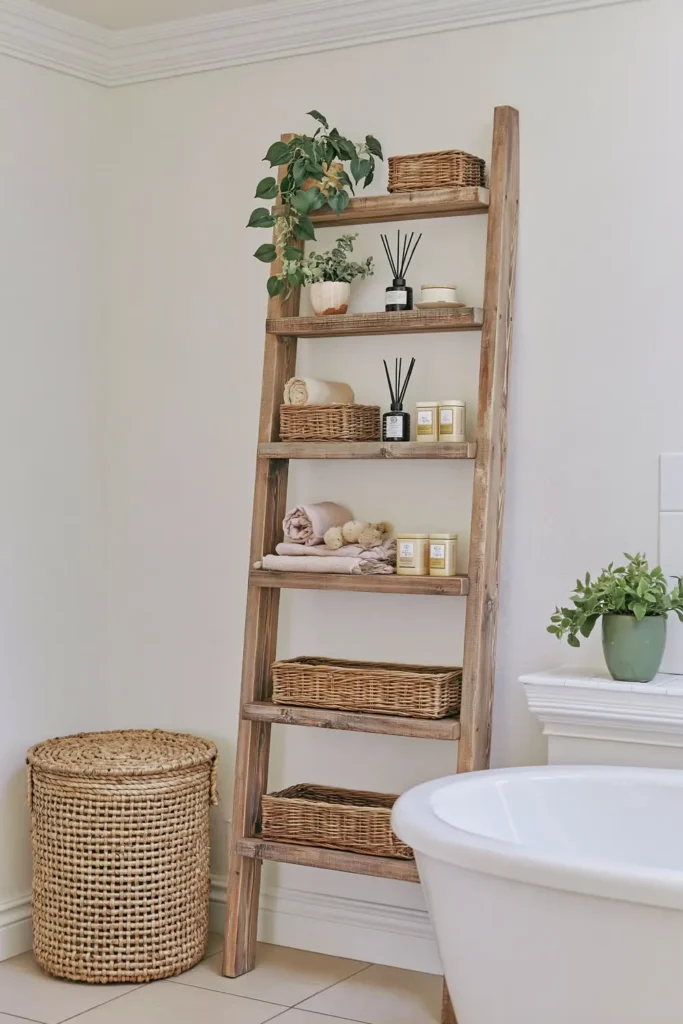
Leaning Wooden Ladder Shelves for Towels, Toiletries, and Plants
Bathrooms frequently need extra storage, but adding another closed cabinet can make a compact area feel even tighter. A leaning wooden ladder shelf delivers a more open alternative that keeps everyday essentials organized while bringing warmth and texture.
I particularly like painted wooden ladder shelves in bathrooms with light-colored walls and simple fixtures. The angled shape creates visual interest without feeling as bulky as a traditional shelving unit.
The wider lower shelves are useful for storing folded towels or woven baskets filled with toiletries. Higher shelves can hold smaller containers, decorative candles, or a compact potted plant.
Try rolling a few soft cotton towels and placing them together in a basket. This makes them easy to reach while creating the relaxed appearance you might associate with a comfortable guest bathroom.
If you have open shelves, group toiletries in matching containers rather than leaving several different packages on display.
A small plant can soften the arrangement, particularly when paired with natural woven baskets and wooden surfaces. Choose a variety suited to the bathroom’s available light and humidity.
I prefer keeping the decorative pieces limited so the ladder stays practical. A single candle or small plant alongside neatly organized towels can be enough.
For safety, choose a ladder shelving unit designed for storage rather than using an ordinary climbing ladder. Secure it according to the manufacturer’s instructions, particularly if it could slip or tip.
Bathrooms can also be humid, so painted or sealed wood that’s suitable for damp environments will generally be easier to maintain.
A ladder shelf is a lovely way to bring natural materials into the bathroom while turning a small unused corner into useful storage.
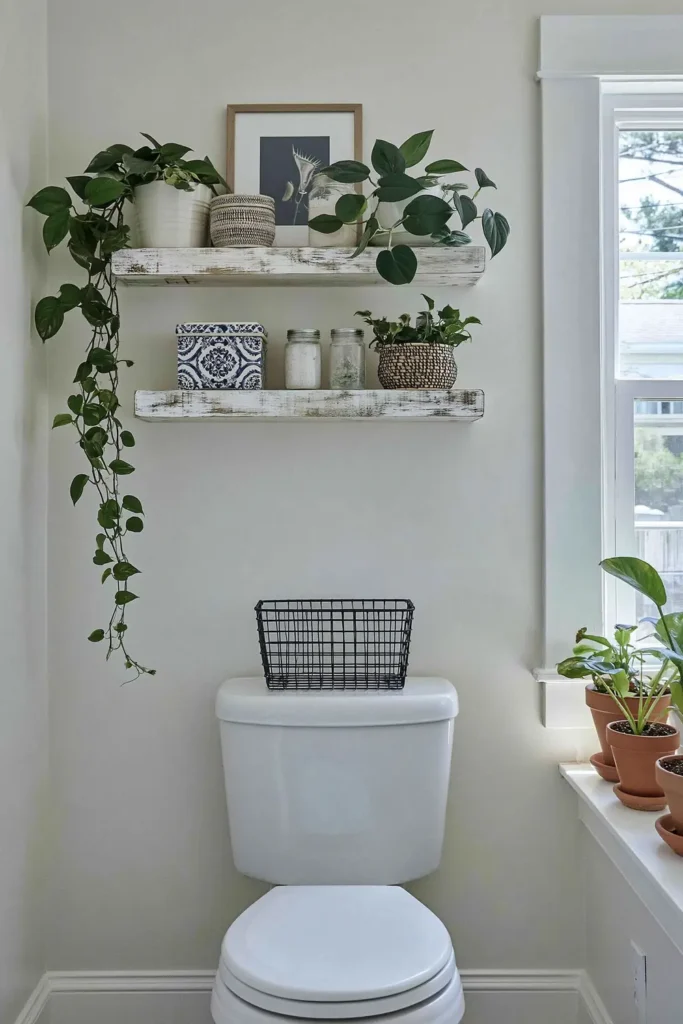
Over-the-Toilet Shelving Units with Decorative Bathroom Storage
The wall above the toilet is one of the most overlooked storage areas in a bathroom. When space is limited, a shelving unit positioned here can supply valuable room for towels, toiletries, and everyday supplies without using additional floor space.
I like simple wooden shelves because they bring warmth to bathrooms that often contain plenty of tile, ceramic, and glass.
A freestanding over-the-toilet rack can work well when you don’t want to install several individual shelves, while floating shelves create a cleaner, more streamlined appearance.
For an even display, start with the practical items you use most often. Folded hand towels can sit together on one shelf, while toiletries and smaller supplies can be organized inside decorative containers.
Clear glass jars work nicely for items such as cotton pads, while woven baskets can hide less attractive packaging.
I also like adding a little potted plant to one shelf if the bathroom receives enough natural or artificial growing light. Its greenery helps soften the shelving arrangement and makes the area feel less utilitarian.
Try to leave a little open space between objects. Overfilled shelves can make a compact bathroom feel busier rather than more organized.
Shelf depth is another important consideration. Choose shelves that provide enough storage without projecting too far over the toilet or making the area uncomfortable to use.
Keep heavier objects on lower, securely mounted shelves, and avoid balancing fragile containers where they could easily fall.
If you’re using a freestanding rack, make sure it is stabilized or anchored as recommended by the manufacturer.
With a thoughtful arrangement, the space above the toilet can become a decorative storage feature that makes the entire bathroom seem more orderly.
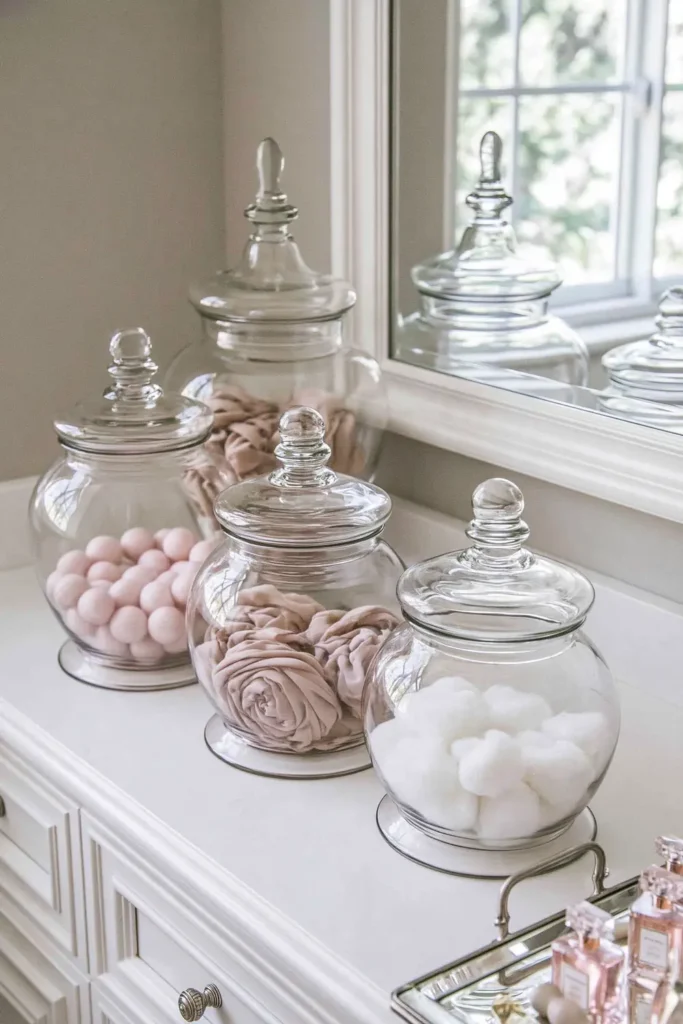
Clear Glass Apothecary Jars for Stylish Bathroom Countertop Storage
Small bathroom essentials have a way of making even a clean vanity look cluttered. Clear glass apothecary jars offer a simple solution by keeping these items together while supplying an elegant decorative touch.
I particularly like apothecary jars because their rounded shapes and glass lids make ordinary bathroom supplies feel more thoughtfully presented.
You can fill them with cotton balls, cotton swabs, wrapped soaps, or bath salts, depending on what you use regularly.
A group of two or three jars in different heights can look beautiful on a bathroom vanity or open shelf.
For a coordinated arrangement, choose jars with similar shapes or matching glass finishes. The varied heights will create enough visual interest without needing lots of extra decoration.
I like placing the tallest jar toward the back and keeping the smaller containers in front. This makes everything easy to see and reach.
If your vanity is narrow, a small tray can help keep the jars together and prevent them from dispersing across the countertop.
The transparent glass allows you to see when supplies are running low, which is especially convenient for frequently used items.
One practical detail is keeping moisture out of the containers. Choose jars with suitable lids, and make sure items such as cotton swabs and bath salts remain dry.
Glass can also become slippery on wet countertops, so place the jars on a stable surface away from the edge of the sink. In bathrooms used by young children, shatter-resistant alternatives may be more appropriate.
Apothecary jars are a lovely example of how simple organization can become part of the decor, making the bathroom feel tidy without hiding every useful item inside a drawer.
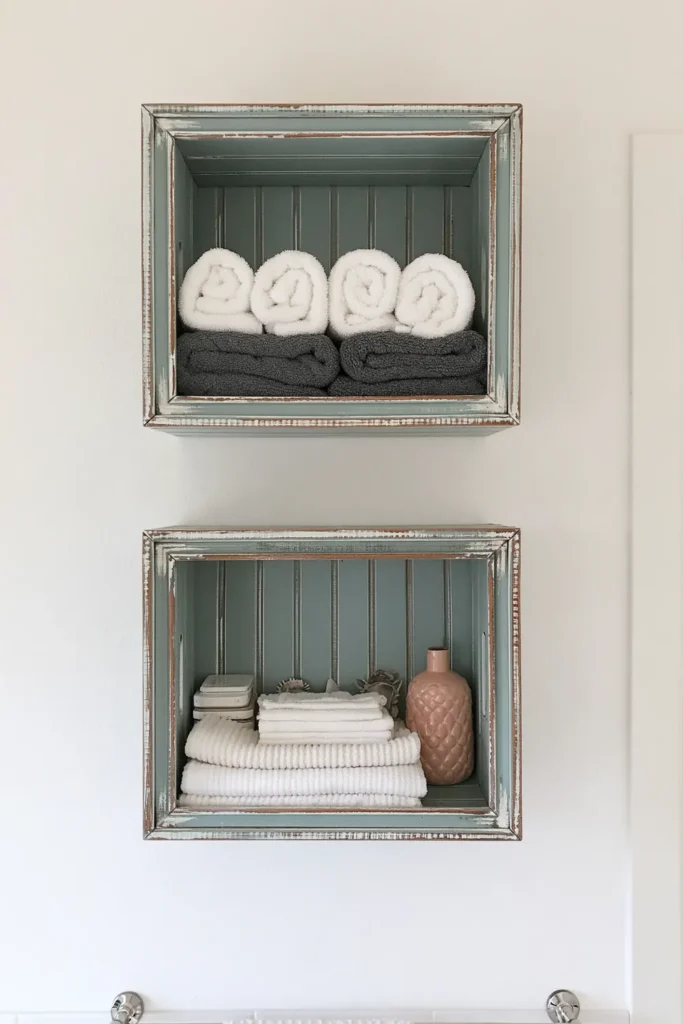
Rustic Wooden Crates for Organizing Bathroom Towels and Supplies
Wooden crates aren’t just useful in living rooms or farmhouse kitchens. They can also bring warmth and practical storage to a bathroom, especially when you’re trying to organize extra towels and supplies without adding another bulky cabinet.
I particularly like rustic wooden crates because their natural grain and slightly weathered surfaces provide a lovely contrast to smooth bathroom tiles and ceramic fixtures.
You can place a few crates beneath an open bathroom vanity or arrange them on a sturdy shelf. In a larger bathroom, stacked crates can create a simple storage feature in an unused corner.
For a neat appearance, try rolling your extra bath towels and placing them inside the crates with the rolled edges facing outward. This makes the towels easy to grab while creating a soft, textured display.
Smaller crates can hold washcloths, spare toiletries, or bathroom supplies that you want to keep within reach.
If your bathroom has a farmhouse or rustic decorating style, leaving the wood in a natural finish can look beautiful. In a lighter bathroom, whitewashed or softly painted crates can produce a more subtle appearance.
I like combining the rough texture of the wood with neatly folded white or neutral-colored towels. The contrast feels relaxed and welcoming without requiring many additional decorations.
Because bathrooms are exposed to moisture, choose crates that are clean, smooth, and properly sealed for humid conditions. Make sure towels are completely dry before storing them to prevent musty odors.
If you’re stacking crates, secure them so they can’t slide or tip over. Wall-mounted crates also need appropriate fixings, particularly if they’ll hold heavier supplies.
A few carefully arranged wooden crates can make an ordinary bathroom storage area feel more personal while keeping your essentials neatly organized and easy to find.
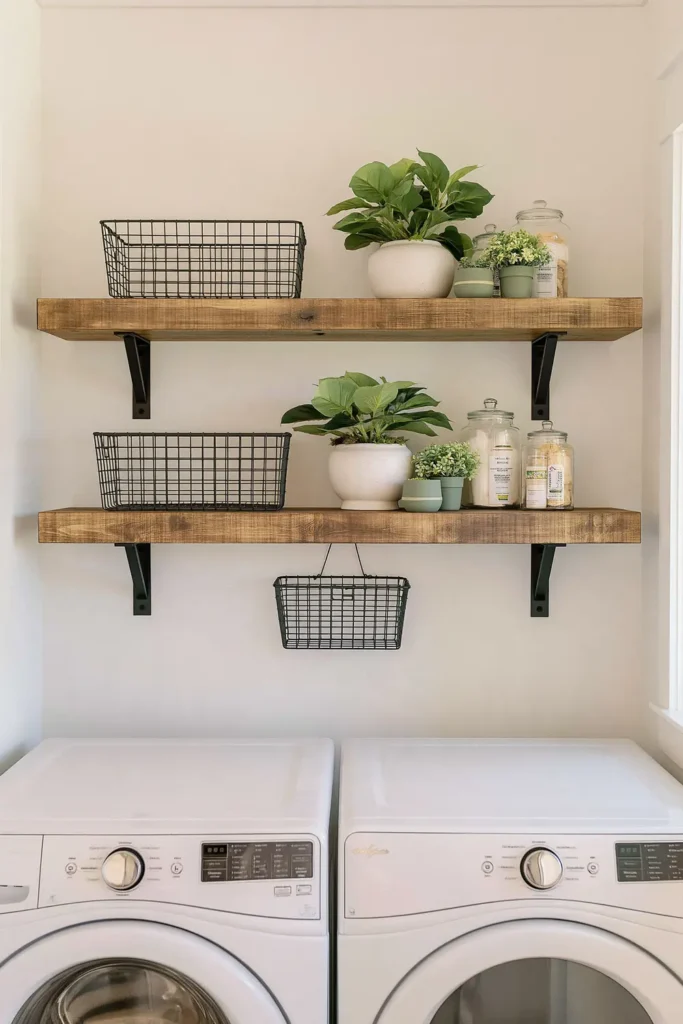
Metal Wire Storage Baskets for Organized Laundry Room Shelves
Laundry rooms need to be practical, but that doesn’t mean they have to look purely functional. Metal wire baskets can help keep everyday laundry supplies organized while giving open shelves a cleaner, more coordinated appearance.
I particularly like wire baskets because their open construction makes it easy to see what’s inside. They’re also useful for grouping smaller items that might otherwise spread across the laundry counter.
You can use larger baskets for folded towels, clean washcloths, or laundry that requires sorting. Smaller baskets can hold cleaning cloths and other frequently used supplies.
On open shelves, try arranging baskets of similar sizes side by side. Their matching shapes create a sense of order even when the contents are different.
Black wire baskets can add a little contrast against white shelving, while lighter metal finishes provide a softer appearance in a neutral laundry room.
I like placing folded fabrics inside the baskets because the soft textures help balance the harder metal surfaces.
If you need to organize detergent bottles and other cleaning products, keep them upright in a suitable container that can catch small spills. Always retain their original labels and follow the storage directions on the packaging.
Wire baskets can also be useful on a sorting counter, where you can assign smaller laundry items their own designated places.
Before choosing baskets, measure your shelves carefully. Leave enough space above each basket so you can pull it out comfortably without knocking into the shelf above.
Look for baskets with smooth edges or protective coatings, especially if you’ll be storing delicate fabrics that could snag against exposed metal.
For heavier items, place the baskets on lower shelves where they’re easier to lift safely.
With a few well-chosen wire baskets, even a basic laundry room can seem more organized, practical, and pleasant to use.
Make Everyday Storage Part of Your Home’s Style
The best storage solutions don’t always need to be hidden behind cabinet doors. Sometimes a woven basket, a vintage trunk, or a simple wall shelf can keep your belongings organized while making your home feel warmer and more inviting.
What I love about these storage ideas that double as home decor is that they work with the furniture and spaces you already have. You don’t need to replace everything or completely redesign a room to make it more functional.
If you want to take action this week, try picking just one storage idea from the list that inspires you. Choose a space in your home where clutter collects the most and start there. For example, you might add woven baskets to your living room shelves, hang a few decorative hooks by the door, or organize your kitchen essentials on a tray. Small steps make a noticeable difference, and focusing on one area at a time helps prevent overwhelm.
Pay attention to materials, colors, and finishes so the new storage feels connected to the rest of your decor. Celebrate each improvement as you go, and enjoy how even a simple change can make your home feel more organized and welcoming.
A home doesn’t have to be perfectly organized to feel beautiful. When everyday belongings have a convenient place to go, it’s much easier to enjoy the rooms you’ve worked hard to make your own.
And often, the simplest storage changes are the ones that make the biggest difference.