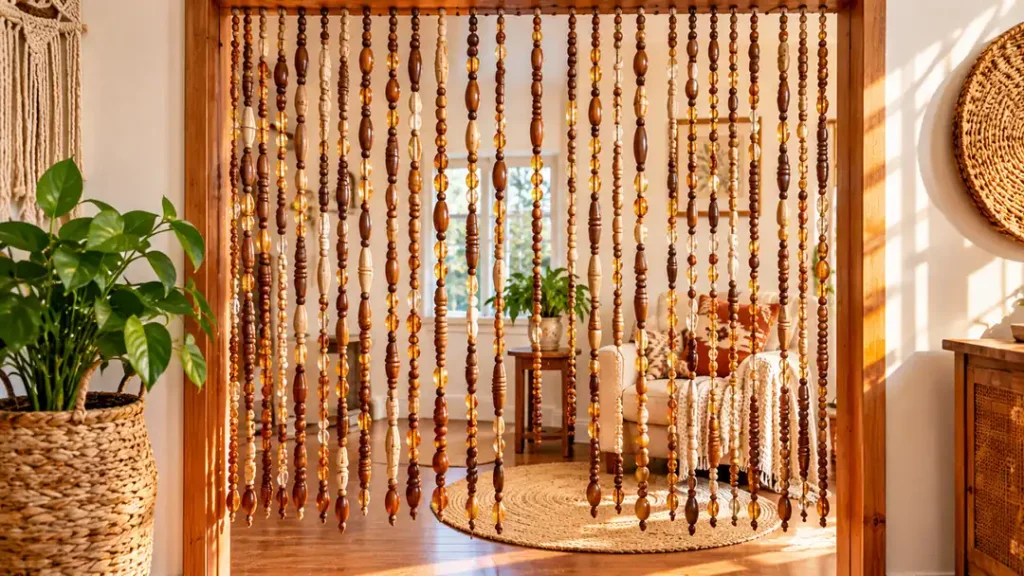

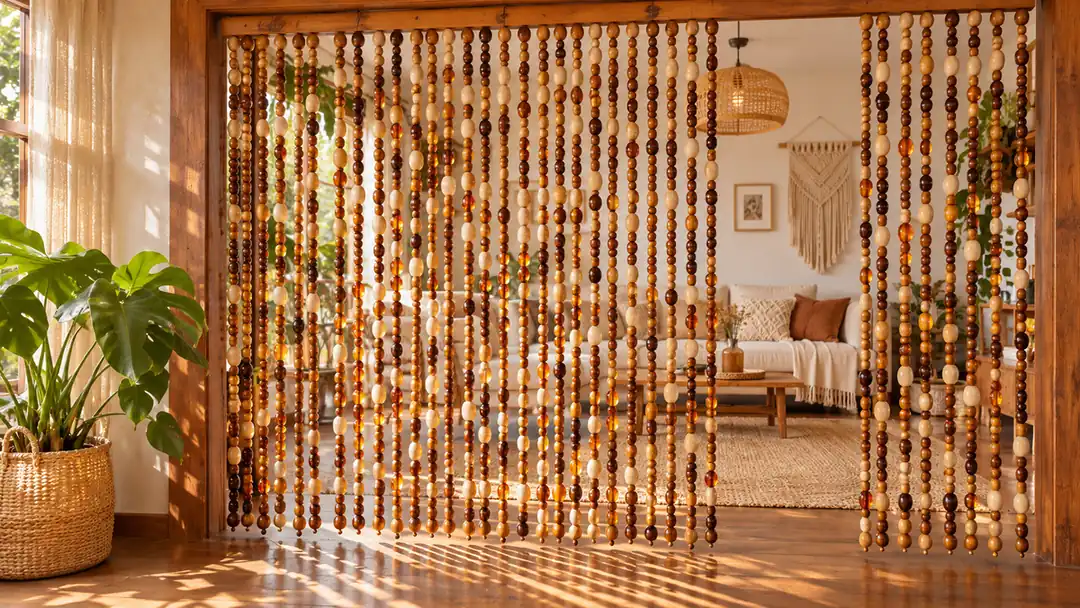
Sometimes, the smallest decorating changes make a room feel completely different. A simple beaded curtain can make an ordinary doorway into a charming feature, add texture to a bedroom, or create a little separation between spaces without blocking the light.
What I love about DIY beaded curtain ideas is how much freedom they give you. You can work with natural wooden beads, colorful patterns, or fine glass strands depending on your home’s style. And in contrast to traditional doors or heavy curtains, beads bring movement and a sense of personality to a space while keeping it feeling open.
Whether you’re decorating a small apartment, refreshing a bedroom, or looking for a creative weekend project, these ideas offer plenty of inspiration for making beaded curtains work in your home.
DIY Beaded Curtain Ideas for Doorway Dividers
A doorway is one of the easiest places to introduce a beaded curtain. Instead of leaving an opening completely bare, hanging strands of beads can create a decorative transition between two rooms while still maintaining that lovely sense of openness.
I especially like this idea between a kitchen and dining area, where a solid door might make both spaces feel smaller. The beads provide a subtle visual boundary without interrupting the natural light or making everyday movement difficult.
For a practical DIY installation, start by measuring the doorway’s width and height. You can find beads, wooden dowels, and curtain rods at most craft stores, larger home improvement centers, or through online retailers that offer a wide variety of styles and materials. Attach your bead strands to a sturdy dowel or curtain rod positioned securely above the opening. Keep the strands evenly spaced so they hang naturally without creating an overly dense barrier.
The bead material can change the entire look. Natural wood adds warmth, while glass or acrylic beads create a lighter, more reflective finish.
One detail worth considering is the length. Ideally, the strands should stop slightly above the floor so they don’t drag, collect dust, or get caught underfoot. If the doorway gets a lot of traffic, leave enough space between the strands for comfortable movement.
The finished result is a doorway that feels intentionally decorated rather than simply left open.

Beaded Curtains as a Stylish Closet Door Replacement
Closet doors can take up valuable space in a small bedroom, especially when they swing outward into an already crowded area. Replacing them with a beaded curtain is a creative way to make the closet easier to access while also adding an interesting decorative detail.
This works particularly well for built-in wardrobes, shallow closets, or small storage alcoves.
The biggest advantage is that you don’t need clearance for a swinging door. You can simply move the beads aside when reaching for clothes or other stored items.
For a neat appearance, mount the curtain rod inside the upper closet frame. This leaves the installation looking integrated with the opening instead of appearing like an extra accessory attached to the wall.
I’d choose lightweight beads for this project, especially if the closet is opened frequently. Wooden or acrylic beads are generally easier to move aside than heavier glass strands.
You can also control how much of the closet remains visible by adjusting the spacing between strands. Closely spaced beads create a fuller decorative screen, while wider spacing keeps the arrangement airy.
It’s worth remembering that beaded curtains don’t completely conceal clutter. Simple storage boxes or neatly arranged shelves behind the strands will help the entire setup look more intentional.
For bedrooms with limited floor space, this is one of those small changes that can make daily routines feel a little easier.

Dreamy Beaded Canopies for Four-Poster Beds
A four-poster bed already creates a beautiful architectural feature in a bedroom, but adding strands of beads can make it feel even more special.
Rather than using traditional fabric drapes, a beaded canopy introduces delicate lines, subtle movement, and decorative texture around the sleeping area. It’s an especially lovely approach for bedrooms with a relaxed bohemian or romantic style.
One option is to hang the bead strands from the upper rails of a four-poster bed, allowing them to fall gently along the sides. This creates the impression of a canopy without enclosing the bed in heavy fabric.
Another approach is to suspend the strands from a circular ceiling-mounted frame, arranging them so they drape around the bed in a soft, flowing shape.
I prefer a lighter arrangement for this idea. Too many dense strands can make the bed feel visually crowded, while a few carefully positioned sections maintain an open and peaceful atmosphere.
Clear, pearlescent, or softly colored beads work beautifully with warm bedroom lighting. As light reaches their surfaces, the strands can add a subtle shimmer without making the room feel overly decorative.
Pay special attention to secure mounting. Always check the weight limits of your beaded curtain and make sure to use sturdy anchors or brackets that can support the load, especially when installing on a ceiling. A ceiling installation needs appropriate hardware for its weight, while a bed-frame installation should avoid loose strands near pillows, bedding, or sleeping areas.
Keep the beads away from lamps, ceiling fans, and anything they could become tangled around.
The goal is to create a gentle decorative frame around the bed, giving the bedroom a dreamy appearance while keeping the space comfortable and practical.

Ceiling-Hung Beaded Curtains for Studio Room Dividers
Living in a studio apartment often means finding creative ways to separate different activities within one open space.
A beaded curtain offers an interesting alternative to solid partitions because it defines an area without completely closing it off. You can visually separate a sleeping corner from the living area while allowing daylight to move through the room.
For this project, a ceiling-mounted curtain track or securely installed rod can support a wider arrangement of bead strands.
Position the curtain where you naturally want the division to occur, such as along the edge of a bed or between a sitting area and a sleeping space.
One of the most important decisions is how dense the curtain should be. A closely spaced arrangement creates a stronger visual boundary, while an open pattern maintains more connection between the two areas.
In a compact studio, I’d lean toward lighter colors and materials. Pale wooden beads, transparent acrylic, or clear glass-style strands can make the division feel less imposing.
You can also coordinate the bead colors with the furniture on both sides of the curtain. For example, warm wooden beads can connect natural-toned bedroom furniture with a neutral living room arrangement.
Before installing anything, think about how you move through the apartment. The curtain shouldn’t interfere with the main walking route or make it awkward to reach frequently used furniture.
Beaded curtains are decorative rather than soundproof, so they won’t provide the privacy of a solid wall. But when the goal is to establish distinct zones whilst preserving an open atmosphere, they can be a charming solution.
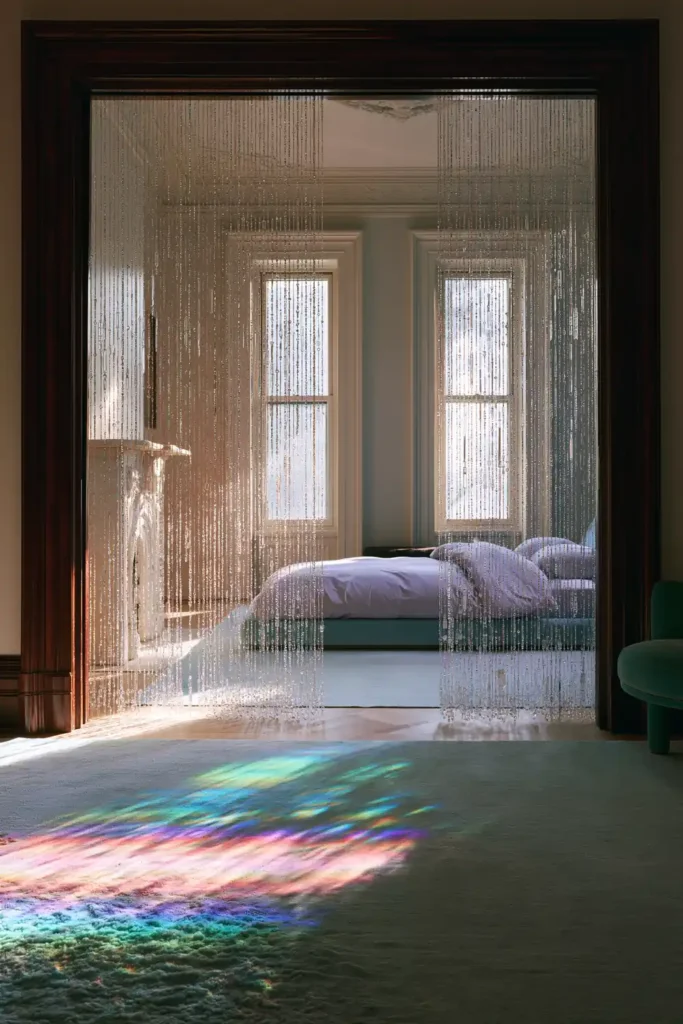
Sun-Catching Beaded Curtains for Windows
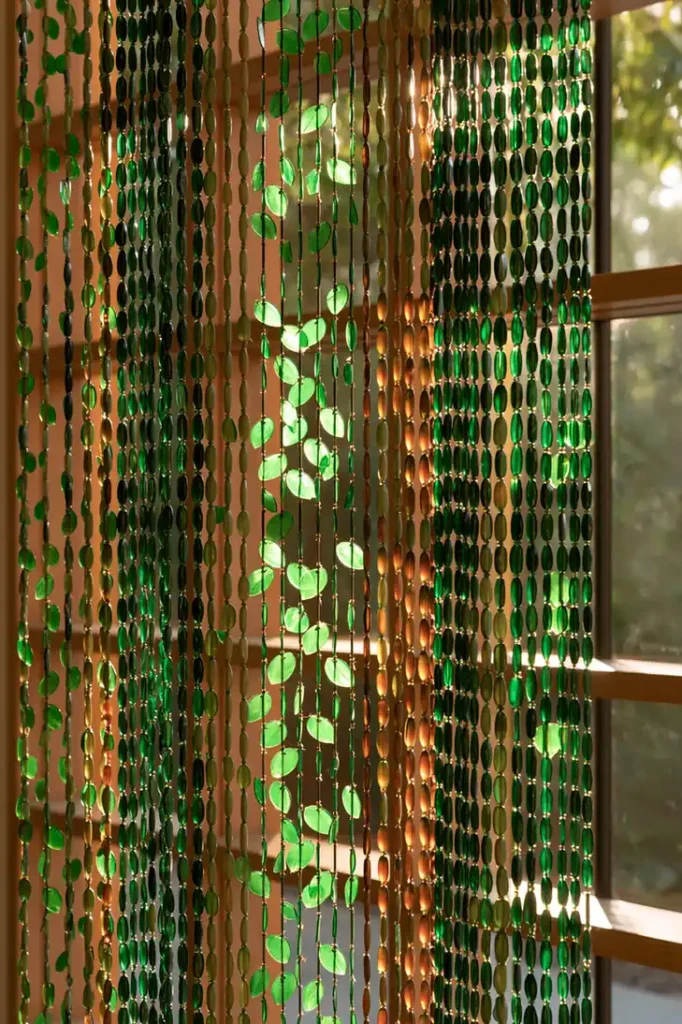
Windows are usually dressed with fabric curtains or blinds, but a beaded curtain can create a completely different effect. Instead of covering the window with a solid layer, delicate bead strands allow sunlight to pass through while imparting texture and gentle reflections.
I particularly like this idea for windows that don’t need much privacy, such as those overlooking a private garden or courtyard. The beads become part of the decoration rather than simply something used to cover the glass.
Clear acrylic or glass beads are especially effective because they catch sunlight and create small reflections across nearby walls and floors. When the light changes throughout the day, the appearance of the curtain changes with it.
For a DIY version, measure the width of your window and attach individual bead strands to a curtain rod mounted above the frame. You can keep the strands evenly spaced for a clean appearance or alternate their lengths to create a more decorative arrangement.
Try to keep the design relatively lightweight. Large, heavy beads can make a small window feel crowded, while smaller transparent beads preserve that lovely open quality.
One thing to remember is that beaded curtains don’t provide the same privacy, insulation, or light control as traditional window treatments. If those features matter, consider layering your beaded curtain over a more functional window covering.
For example, pairing beaded curtains with roller shades, cellular or honeycomb blinds, or simple fabric Roman shades can give you the versatility to block light or create privacy when needed, while keeping the decorative effect when the functional blind is open. Light-filtering roller shades work especially well because they maintain a clean look behind the beads and are easy to lift or lower as needed. Choose neutral or matching colors for the underlying blind so it blends seamlessly with the beads and doesn’t compete for attention.
The result can be especially pretty in a bright living room, where the sunlight becomes part of the decoration and brings a little sparkle into an otherwise ordinary window.
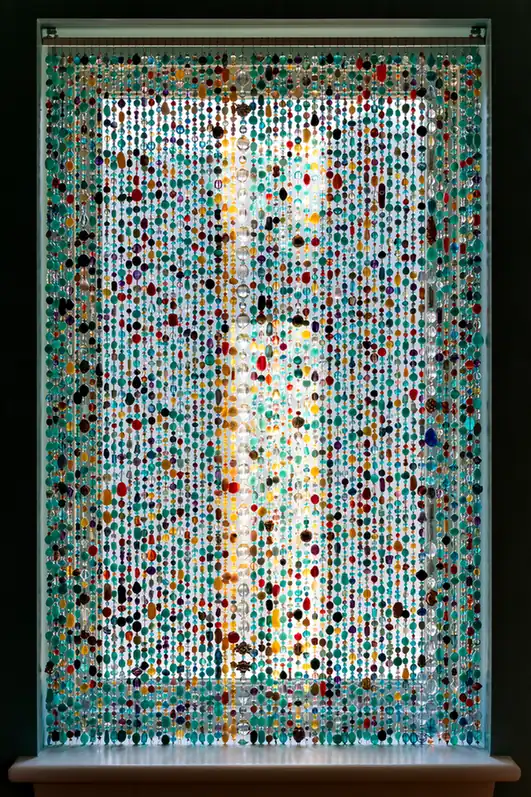
Hanging Beaded Curtains for Hallway Archways
An interior archway already has a distinctive shape, so it doesn’t need much decoration to stand out. A hanging beaded curtain can emphasize the opening while giving the hallway a softer, more welcoming appearance.
This idea works particularly well in homes with rounded archways connecting an entry hall to a living room or dining area.
Rather than covering the architecture, the goal is to frame it. Bead strands suspended from a rod inside the upper portion of the opening can create an interesting contrast between the solid curved wall and the delicate vertical lines.
For a subtle appearance, I’d choose beads in colors that complement the surrounding walls. Natural wood works nicely with warm white or cream paint, while darker beads can bring definition to a pale hallway.
You can also experiment with the strand lengths. A uniform curtain creates a tidy appearance, but slightly shorter strands toward the center can make the opening feel more accessible while keeping the decorative effect.
Make sure the installation doesn’t interfere with the walking space. Since hallways often get frequent use, lightweight beads and secure mounting are important.
If the archway is particularly narrow, you may find that a few decorative strands are enough. There’s no need to fill the entire opening if doing so makes the passage uncomfortable.
I love how this kind of detail can give a hallway personality without requiring additional furniture or wall decorations.
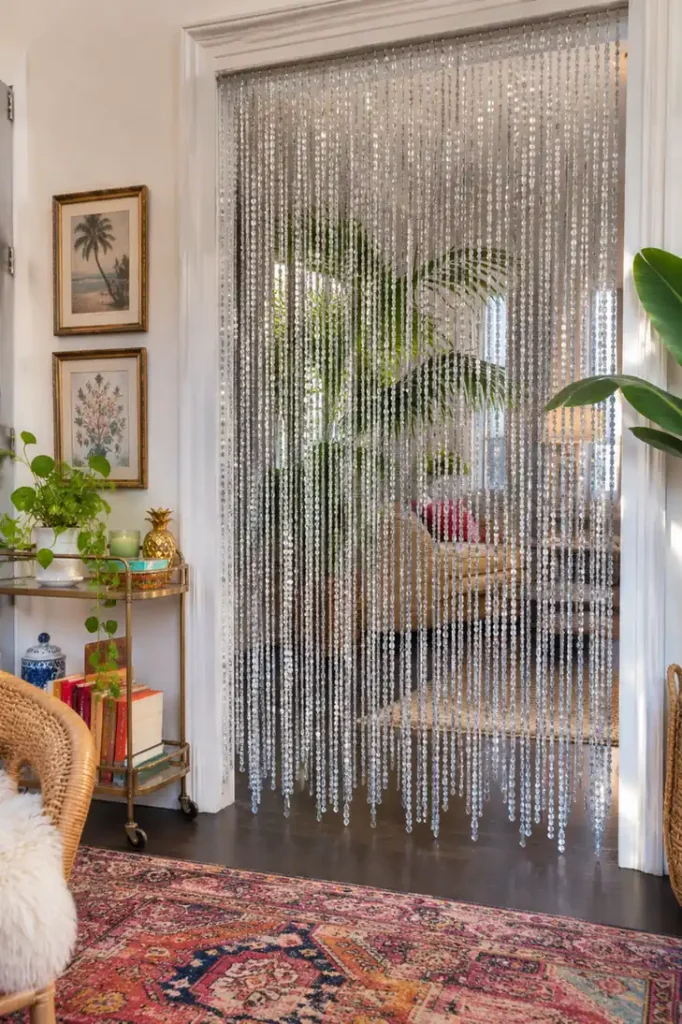
Natural Wood Beaded Curtains for Scandi-Boho Interiors
Natural wood beads are one of my favorite materials for creating a beaded curtain that feels warm without looking overly busy.
Their soft color and visible grain make them a lovely fit for Scandi-Boho interiors, where simple shapes, natural materials, and relaxed textures work together.
Unlike brightly colored or highly reflective beads, unfinished wooden beads bring a quieter decorative quality. They add interest through their shape and texture rather than through strong colors.
For a DIY project, you can string round wooden beads onto sturdy cord, leaving small gaps between them to create an airy arrangement. Mixing a few different bead sizes adds subtle variation while preserving a cohesive look.
I prefer keeping the wood in its unaltered finish for this style. The pale beige and honey tones blend easily with cream walls, light furniture, and other natural materials.
A wooden beaded curtain can look especially attractive in a living room doorway or an open transition between spaces. The vertical strands create a gentle decorative boundary without making the room feel closed off.
If you’re using unfinished beads, check each one for rough edges before threading. Light sanding can help smooth the surfaces so the beads don’t catch the cord or snag on nearby fabrics. For extra color or to match your room’s palette, consider painting the beads with acrylic craft paint before assembling the curtain.
Sealing the beads with a clear topcoat afterward helps protect the color and prevents dust and moisture from damaging the finish, making your beaded curtain both more creative and durable.
You can also choose a neutral-colored cord that blends with the wood, keeping the finished curtain looking simple and carefully made.
The beauty of this approach is its restraint. The beads don’t need an elaborate pattern or bold finish to make an impact. Their natural texture does most of the work.

Sparkling Crystal and Iridescent Beaded Curtains
If you prefer a more glamorous decorating style, crystal and iridescent beads can make a simple hanging curtain into a striking feature.
These materials interact beautifully with light, producing reflections and flashes of color as the strands move. They’re particularly suited to bedrooms or Hollywood Regency-inspired interiors where reflective surfaces already play a role in the decoration.
The easiest way to create this look is to combine transparent beads with a few larger faceted pieces. The smaller beads provide continuity along each strand, while the larger ones catch more light and add visual interest.
You don’t necessarily need genuine crystal. Iridescent acrylic beads can offer a similar decorative sparkle while keeping the curtain lighter and frequently more affordable.
For a bedroom, consider placing the curtain across an open doorway or another decorative opening where it can catch soft ambient lighting.
I would avoid packing the strands too closely together. A little space between them allows individual beads to stand out and prevents the whole arrangement from looking too heavy.
You can also keep the color palette restrained. Clear, silver-toned, or subtly iridescent beads already provide plenty of visual detail, especially when paired with reflective finishes elsewhere in the room.
If you’re working with glass or crystal, use strong cord and properly rated mounting hardware. Check that the beads are securely fastened, particularly on longer strands that may move frequently.
What makes this idea special is the way the curtain changes with the lighting. In daylight, it can feel delicate and airy, while warm evening light brings out a softer, more dramatic shimmer.
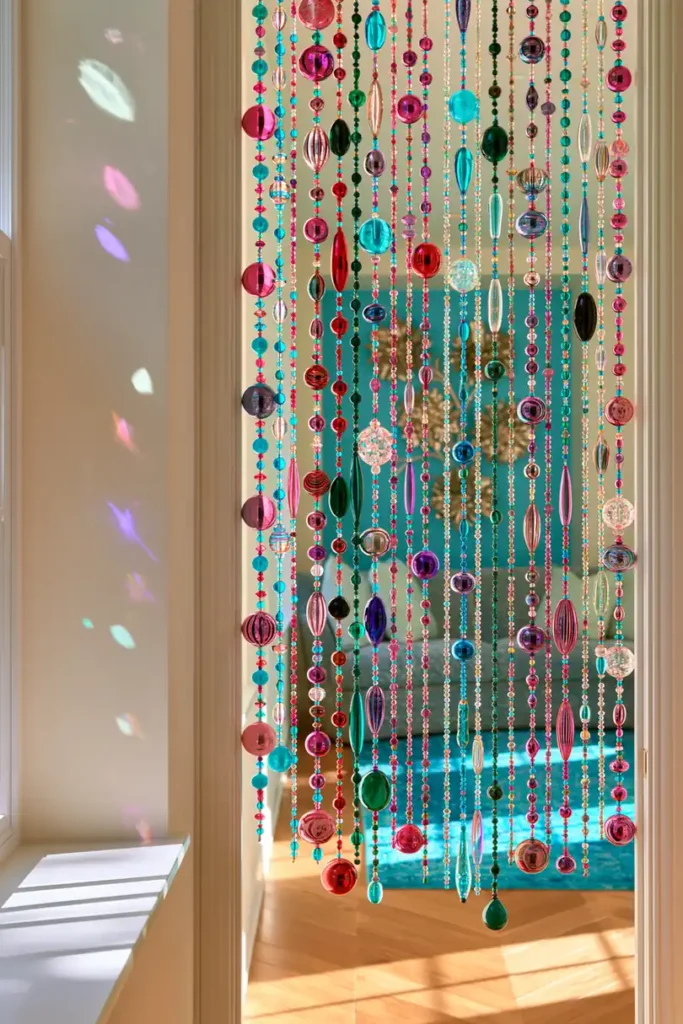
Coastal Beaded Curtains Made with Bamboo or Capiz Shells
If you love decorating with natural materials, a hanging curtain made from bamboo or capiz shells can bring a relaxed coastal feeling into your home.
In contrast to traditional round beads, these materials introduce different shapes and textures. Bamboo pieces create a more structured, earthy appearance, while flat capiz shells add delicate movement and a soft, pearly finish.
I especially like this idea for a coastal bedroom, a tropical-inspired living space, or a cottage-style interior with light colors and natural textures.
For a bamboo curtain, you can thread short bamboo sections vertically onto strong cord, arranging them in evenly spaced strands. The natural variations in the bamboo help the finished piece feel interesting without needing additional colors or decorations.
Capiz shells offer a slightly different look. Their thin, translucent surfaces allow some light to pass through, making them particularly attractive near a bright doorway or window.
You can string the shells vertically, leaving small spaces between each piece so they can move gently without overlapping too much.
If you’re using real shells, handle them carefully because thin pieces can crack or chip. Pre-drilled shells are easier to work with and help reduce the risk of damage during assembly.
For a consistent look, I’d keep the supporting rod and hanging cords simple. Natural wood, cotton cord, and neutral finishes complement both bamboo and shell materials.
This kind of curtain works best when the surrounding room already has a relaxed atmosphere. You don’t need to introduce lots of additional coastal decorations. The curtain itself can provide enough natural texture to make the space feel welcoming.
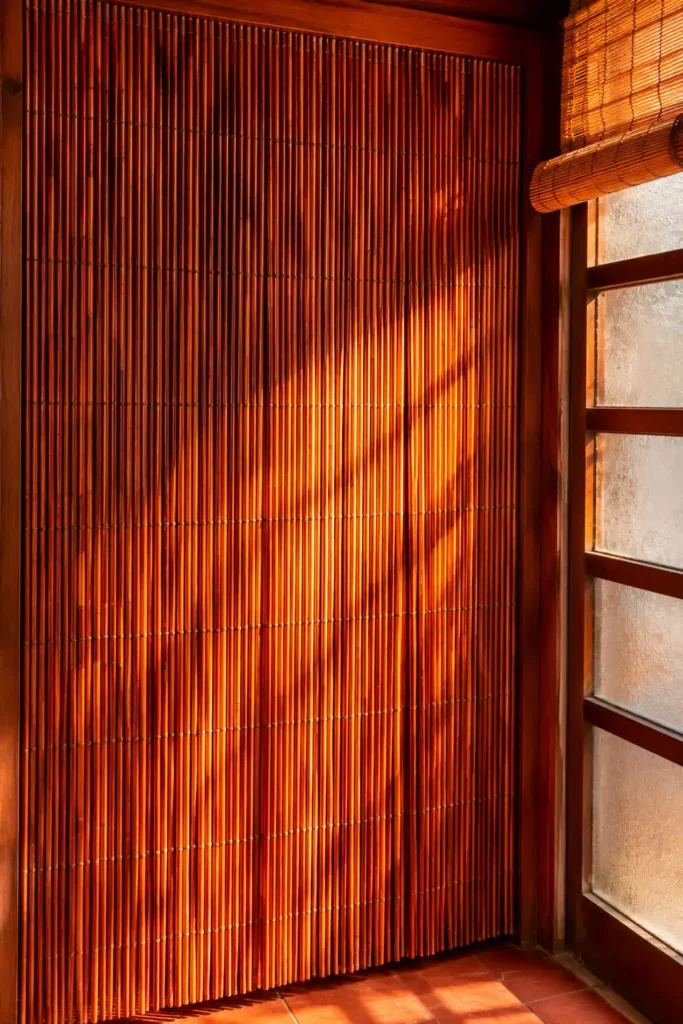
Colorful Retro Beaded Curtains with Geometric Patterns
Some beaded curtains are meant to blend quietly into a room. Others deserve to be the center of attention.
A colorful retro design is perfect when you want to introduce a whimsical element inspired by the bold interiors of the 1960s and 1970s.
Think bright orange, lime green, fuchsia, and repeating geometric shapes. Instead of using random colorful beads, arranging them into a deliberate pattern gives the curtain a much stronger visual identity.
For a DIY version, start by sketching your design on graph paper. Each vertical line can represent one strand, while individual squares can help you plan the placement of different bead colors.
This makes it easier to create repeating diamonds, zigzags, or other geometric patterns without losing track of the design as you thread the beads.
I’d recommend choosing two or three dominant colors rather than using every bright shade available. A limited palette can still look wonderfully bold while keeping the finished curtain visually organized.
Large acrylic or wooden beads are practical choices for this project because they’re available in many colors and are generally easy to thread.
A retro beaded curtain can look especially fun in a doorway connecting a colorful living room to another space. It can also become an unexpected decorative feature in an otherwise simple room.
If the surrounding furniture already has strong colors or patterns, consider giving the curtain a little breathing room. Plain walls and uncluttered nearby surfaces will help its geometric design stand out.
The finished piece introduces color, movement, and a feeling of nostalgia into the home without requiring a permanent decorating change.
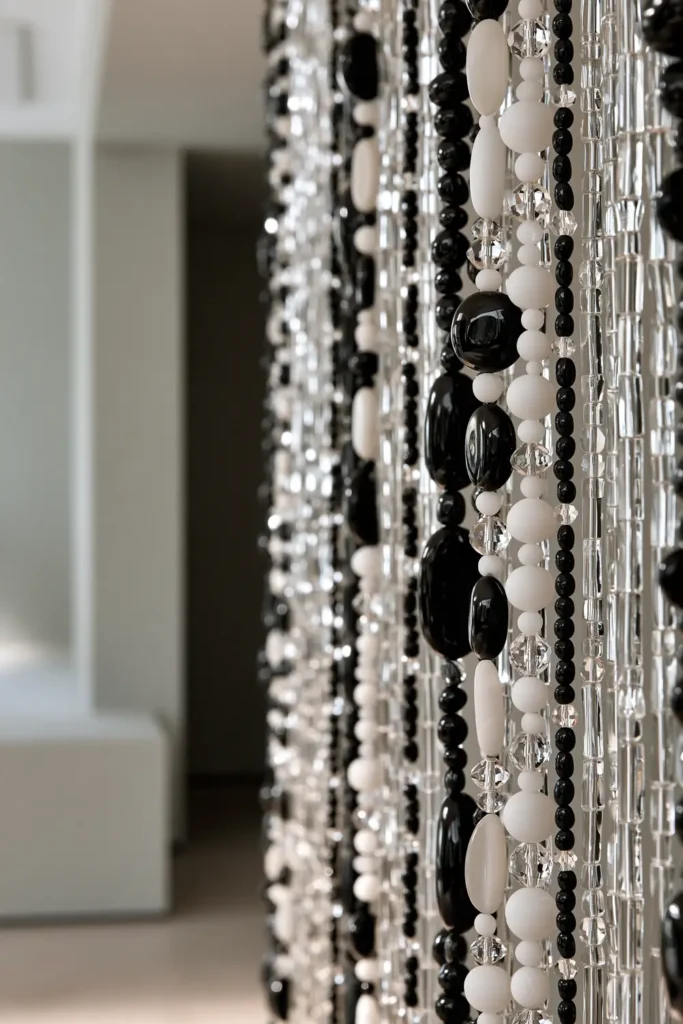
Minimalist Monochrome Beaded Curtains
Beaded curtains don’t always have to feel bohemian or vintage. With the right materials and a restrained color palette, they can fit surprisingly well into a modern minimalist interior.
The key is simplicity.
Instead of combining multiple colors and bead shapes, choose one consistent finish. Opaque white beads create a soft, understated appearance, black beads add a sharper graphic effect, and clear glass-style beads keep the arrangement visually light.
I particularly like using a monochrome beaded curtain in a clean doorway where its vertical lines can become part of the room’s overall design.
For a DIY project, select beads with a consistent shape and size. Thread them onto matching cords, maintaining even spacing across every strand.
This repetition creates a tidy appearance that seems intentional rather than overly decorative.
A straight curtain rod or simple mounting rail usually works best. Avoid ornate hardware that could distract from the clean lines of the beads.
If you’re decorating a smaller room, white or clear beads can assist in maintaining an open appearance. Black beads, on the other hand, can create an interesting contrast against a light wall, particularly when the rest of the room has minimal decoration.
One practical detail is keeping the strand lengths uniform. Uneven ends can make a minimalist design look unfinished, so take time to measure before securing the final knots.
Although the arrangement is simple, the movement of the beads prevents it from feeling completely static.
It’s a nice example of how a decorative feature can add texture without introducing unnecessary visual clutter.
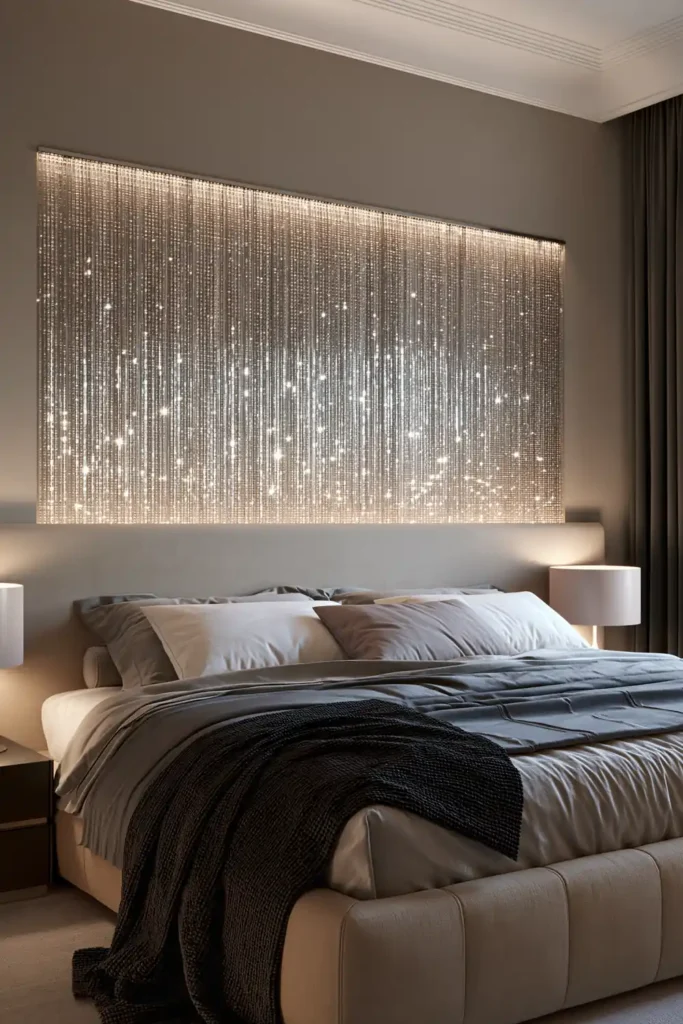
Beaded Curtain Backdrops Behind Bedroom Headboards
The wall behind a bed is often the natural focal point of a bedroom. While paint, wallpaper, and framed artwork are popular ways to decorate this area, a wall-mounted beaded curtain offers something a little different.
Hanging bead strands behind the headboard introduces texture and gentle vertical lines, creating a decorative backdrop without covering the entire wall with a solid material.
This idea works particularly well when you want to make the bed feel more prominent but don’t want to introduce an oversized piece of artwork.
Start by measuring the width of your headboard. A curtain rod positioned above it can support bead strands that extend across the same width or slightly beyond on each side.
To achieve a balanced appearance, I’d keep the curtain centered behind the bed.
You can choose beads based on the atmosphere you want to create. Natural wooden beads bring warmth and an organic feeling, while transparent or reflective beads add a softer shimmer when they catch the bedroom lighting.
The length of the strands is important. Ideally, they should fall behind the headboard rather than hang loosely over pillows or bedding.
If your headboard is tall, you may only need a shorter curtain to create enough decorative interest above it.
I also like the idea of leaving a little wall visible between the strands. This prevents the arrangement from appearing too dense and allows the wall color to become part of the design.
Since the curtain is being used as wall decoration rather than a functional divider, there’s no need for the strands to move freely. Securing the arrangement neatly can help avoid tangling.
Keep all strands firmly attached and positioned away from the sleeping area, especially where loose cords or beads could present a hazard.
The result is a bedroom feature that feels textured and personal, giving the headboard a more finished appearance without making the room feel crowded.
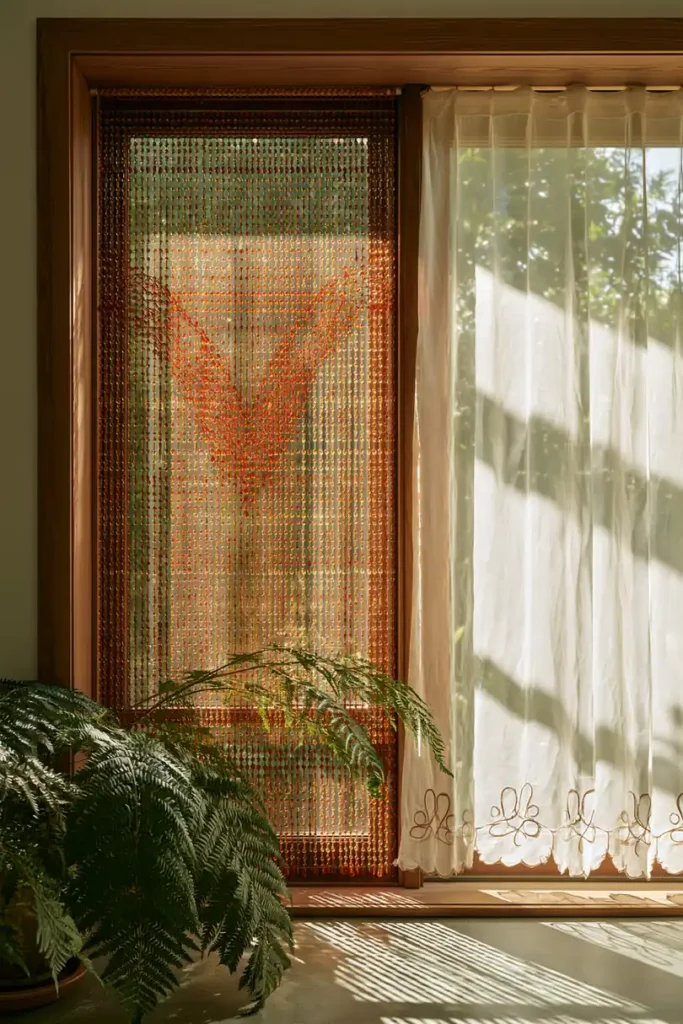
Layered Beaded Curtains with Soft Sheer Fabric
Sometimes a beaded curtain looks even more beautiful when it’s paired with a soft fabric backdrop. Layering beads on sheer linen or gauze creates a lovely balance between delicate texture and flowing material.
I particularly like this idea for doorways or windows where you want something more decorative than a simple beaded curtain but don’t want the heaviness of traditional drapes.
The sheer fabric provides a gentle background, while the beads introduce movement and detail. When daylight passes through both layers, the fabric softens the light, and the beads can catch small highlights, creating a calm and pleasant atmosphere.
For a DIY installation, you can use a double curtain rod. Hang the sheer fabric on the rod closest to the wall or window, then position the beaded strands on the outer rod.
This allows the two layers to hang independently without becoming tangled whenever you move the fabric.
I’d choose lightweight beads for this arrangement. Clear acrylic, small wooden beads, or subtle pearl-like finishes work nicely because they don’t overpower the softness of the fabric.
The fabric color also has an effect. Warm white, cream, or natural linen tones provide a neutral background that helps the bead strands stand out.
You can experiment with different lengths, too. Letting the sheer fabric extend slightly below the beads creates a soft layered effect, while keeping both at a similar length gives the arrangement a more consistent appearance.
If you’re using this idea on a window, remember that sheer fabric offers only limited privacy, particularly at night when interior lights are on.
What I enjoy most about this combination is how it brings together two very different textures. The fabric feels relaxed and soft, while the beads add structure and decorative interest.
It’s a simple way to make an ordinary opening feel thoughtfully styled.
Asymmetrical Beaded Curtain Panels Above Bar Counters
Not every beaded curtain needs to stretch from the ceiling to the floor. Shorter panels can be just as interesting, especially when they’re installed over a bar counter or a partial wall opening.
An asymmetrical arrangement gives the curtain a more artistic appearance because the strands don’t all end at the same height.
This works particularly well in a home with a small bar area or a pass-through opening between the kitchen and dining space.
Instead of filling the entire opening, you can suspend a narrow section of beads from a rod located along the upper edge. The strands might begin longer on one side and gradually become shorter toward the other, creating a diagonal or stepped design.
For a DIY version, plan the lengths before threading your beads. I recommend sketching the shape you want to achieve, then measuring each strand separately.
This helps create a deliberate pattern rather than an arrangement that simply looks uneven.
Wooden or acrylic beads are practical choices because they’re available in a variety of sizes and finishes. You could use neutral beads for a subtle feature or introduce a stronger color if the bar area needs a little personality.
One thing I’d pay close attention to is clearance above the counter.
The beads should hang high enough that they don’t interfere with serving drinks, placing dishes, or using the surface comfortably. Keep them well away from cooking equipment, open flames, and other heat sources.
If the opening is already visually busy, a smaller panel may look better than a wide one.
The finished curtain becomes a decorative accent rather than a full room divider, making it a nice option for anyone who enjoys the look of beaded curtains but wants to use them in a less traditional way.
Beaded Curtains for Covering Open Storage Shelves
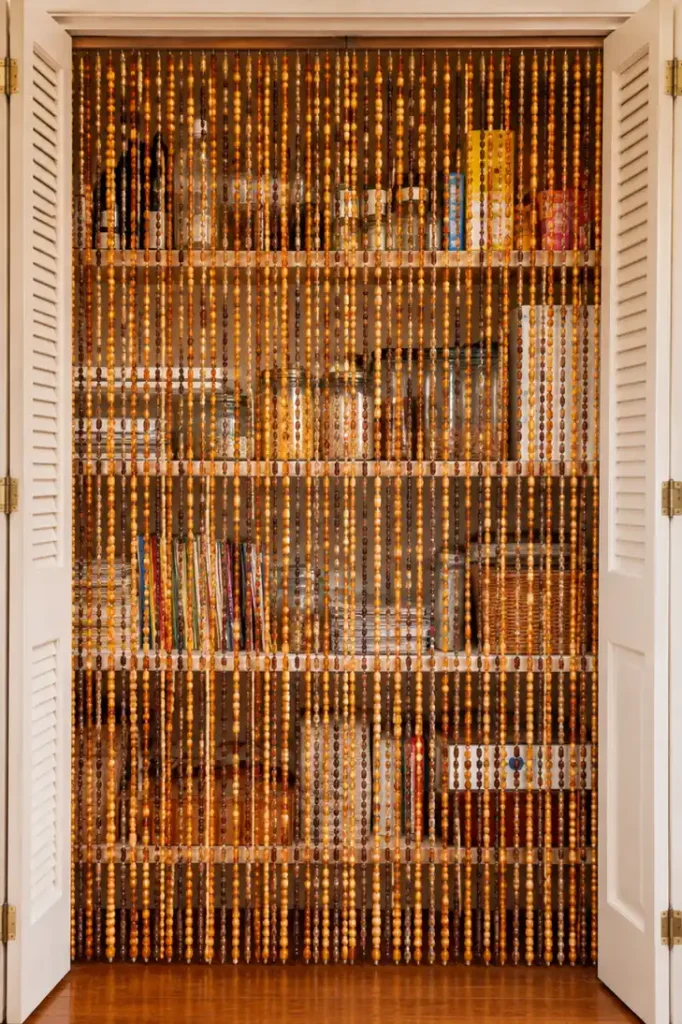
Open shelves are practical, but they don’t always look as tidy as we’d like. In a home office or utility corner, everyday supplies can quickly make a storage area feel visually cluttered.
A beaded curtain can soften the appearance of open shelving while keeping everything easy to reach.
Although beads won’t hide the contents as completely as a solid fabric panel, they create a decorative screen that draws some attention away from the items behind them.
I particularly like this idea for a recessed shelving area or a simple bookcase that doesn’t have doors.
For a DIY installation, measure the width of the shelving unit and attach a lightweight rod or mounting rail along the top.
The strands can hang in front of the shelves, extending far enough to cover the storage area without dragging on the floor.
If you want more visual coverage, position the strands relatively close together. Larger beads can make the curtain appear fuller, although it’s important not to add unnecessary weight to a lightweight shelving unit.
Natural wooden beads are a good option for an office with warm furniture, while simple white or black beads can suit a more modern workspace.
Because the curtain will be moved whenever you reach for something, choose sturdy cord and secure the ends of every strand carefully. To help prevent the strands from tangling, space them evenly and think about using slightly heavier or weighted beads at the bottom of each strand so they hang straight. This will keep your beaded curtain looking neat, even with frequent use.
I’d also keep frequently used items near the front of the shelves so you don’t have to push through the entire curtain each time you need something.
For storage that needs complete concealment, a fabric curtain or cabinet door will work better. But if the goal is to make open shelves feel more decorative while keeping them accessible, beads offer an interesting alternative.
It’s a small project that can help an ordinary storage corner feel like a more intentional part of the room.
DIY Painted Wood Beaded Curtains with Custom Patterns
One of the most enjoyable things about making your own beaded curtain is being able to choose every color and detail.
Painting wooden beads gives you the freedom to create a design that coordinates with your home rather than relying on whatever colors are available in ready-made curtains.
You can keep things simple with two complementary shades or create a more detailed pattern using several colors.
For this project, start with unfinished wooden beads. Make sure their surfaces are smooth and free of dust before applying paint.
Acrylic craft paint is a sensible choice for adding color. Depending on the wood and the finish you want, you may need more than one thin coat to achieve even coverage.
I find it easier to paint the beads before threading them. You can place them on small skewers or another suitable holder while painting, which helps keep the surface neat and allows them to dry without sticking together.
Once the beads are completely dry, arrange them by color before beginning to string them.
This is where you can be creative with patterns.
Alternating colors creates a straightforward striped effect, while arranging beads in repeating sequences across several strands can produce diamonds or other geometric shapes.
If you prefer something more understated, try painting only some of the beads and leaving the rest in their natural wood finish.
The combination of painted and unfinished wood adds variation without making the curtain feel too colorful.
Choose a sturdy cord that passes comfortably through the bead holes, and secure each strand with reliable knots or appropriate end fasteners.
Before hanging the completed curtain, lay the strands next to one another to check that the pattern lines up the way you intended.
A small amount of planning can make a big difference to the finished result.
What makes this idea especially rewarding is that no two handmade curtains need to look alike. You can create something playful for a colorful room or an understated design that blends beautifully with neutral furniture.
It’s also an easy project to modify over time. If you change your room’s color scheme, you can make new strands or repaint suitable wooden beads instead of replacing the entire curtain.

Bringing Your Beaded Curtain Ideas Together
The nicest thing about DIY beaded curtain ideas is that they can be as simple or as decorative as you want them to be.
A few natural wooden strands can bring warmth to a doorway, while crystal beads can add a little sparkle to a bedroom. You might prefer a colorful retro pattern, a soft layered window treatment, or a handmade design painted in colors that feel right for your home.
Before choosing a project, think about what you want the curtain to do. Is it mainly decorative, or will you move through it every day? Do you want to create a visual boundary, soften an opening, or introduce more texture?
Those useful details will help you decide on the right bead material, strand spacing, and installation method.
You also don’t need to start with a large project. A small doorway or decorative panel is a good place to experiment with colors and patterns before making something more elaborate.
Take your time choosing the materials, make sure everything is securely installed, and keep loose beads and cords away from young children and pets. Beads, especially small ones, can present a choking hazard if swallowed, so always supervise kids and pets around beaded curtains. Check that mounting hardware is firmly attached to prevent the curtain from falling, and routinely inspect your installation for any loose or worn parts.
In the end, a handmade beaded curtain is more than a decorative accessory. It’s an opportunity to add something personal to your home, using simple materials to create a detail that feels entirely your own.