
A DIY Billy Bookcase Corner Built-In can turn an awkward wall or unused corner into a library that seems deliberate, useful, and personal. This simple project requires choosing Billy bookcases, planning your corner or wall layout, assembling and securing the units, customizing with trim and paint, and finally styling with your books and collected objects.
Here are the basic project steps:
1. Measure your space to determine the best configuration for the bookcases.
2. Plan your corner or wall layout, accounting for any obstacles like outlets or baseboards.
3. Assemble the Billy bookcases according to instructions.
4. Secure the units to the wall for stability and safety.
5. Add trim for a clean, built-in appearance and paint if you wish to match your room.
6. Style the shelves with your books, meaningful objects, and storage items.
By following a handful of simple steps, you can create a custom built-in effect even if you are new to DIY. What I like most about this approach is that it does not have to look overly polished or posed. The shelves can hold real books, meaningful objects, family pieces, and everyday storage while still giving the room a finished built-in look.
The ideas below show how simple white bookcases, narrow shelving units, trim, and thoughtful styling can work together to create a wraparound library that feels collected over time.
Floor-to-Ceiling Wraparound Shelves for a DIY Billy Bookcase Corner Built-In
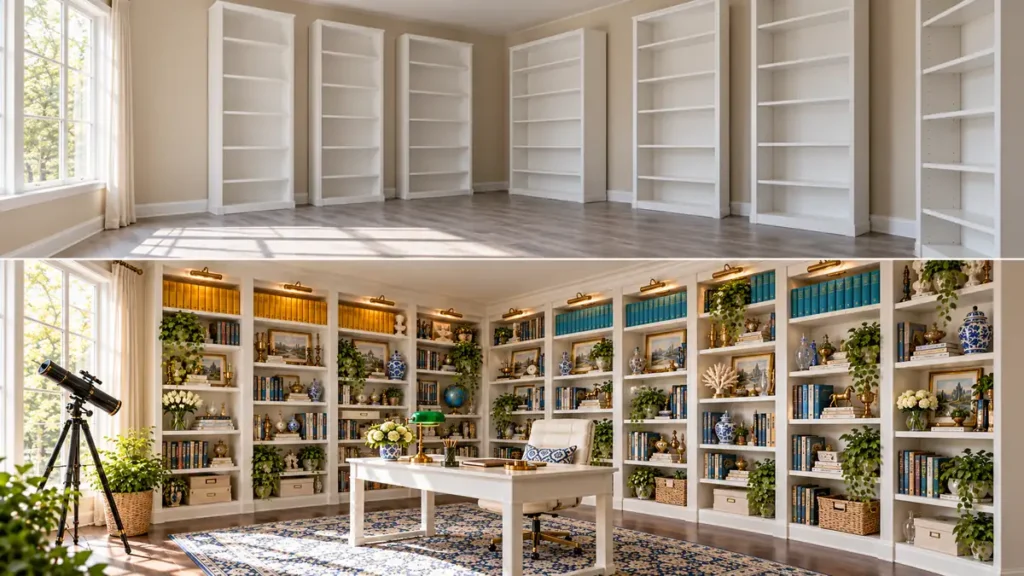
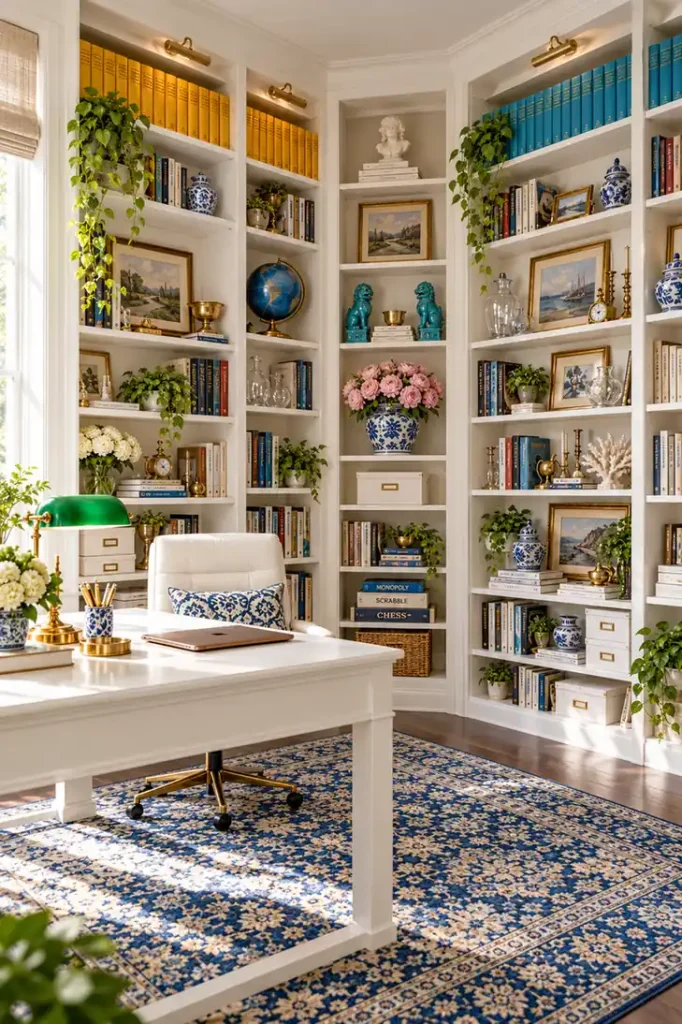
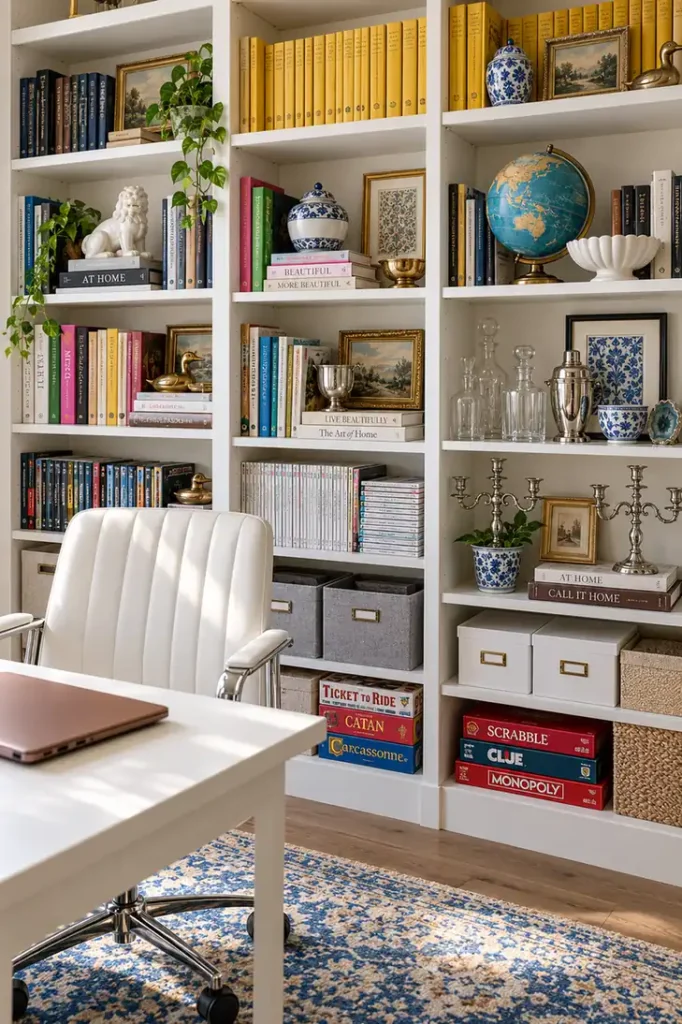
One of the strongest ways to make Billy bookcases feel permanent is to carry the shelving all the way around the room and up toward the ceiling. White bookcases paired with narrow units and height extensions create the impression of a continuous built-in library rather than a row of separate furniture pieces.
The floor-to-ceiling layout also gives you much more room to work with. Upper shelves can hold books and decorative pieces that are not used every day, while the easier-to-reach shelves can stay practical.
Continuous white trim helps connect the separate bookcases visually. Once the gaps and transitions are covered, the shelving reads as one larger architectural feature.
The room does not need to feel entirely white or formal, either. Wood-look flooring and a patterned area rug add warmth beneath the shelving, while books, framed artwork, storage boxes, decorative vessels, and small pieces of greenery keep the walls from feeling flat.
Natural window light works especially well with this kind of setup because it softens the large amount of white shelving and lets the individual objects stand out.
Angled Billy Bookcase Corner for an Unbroken Built-In Look
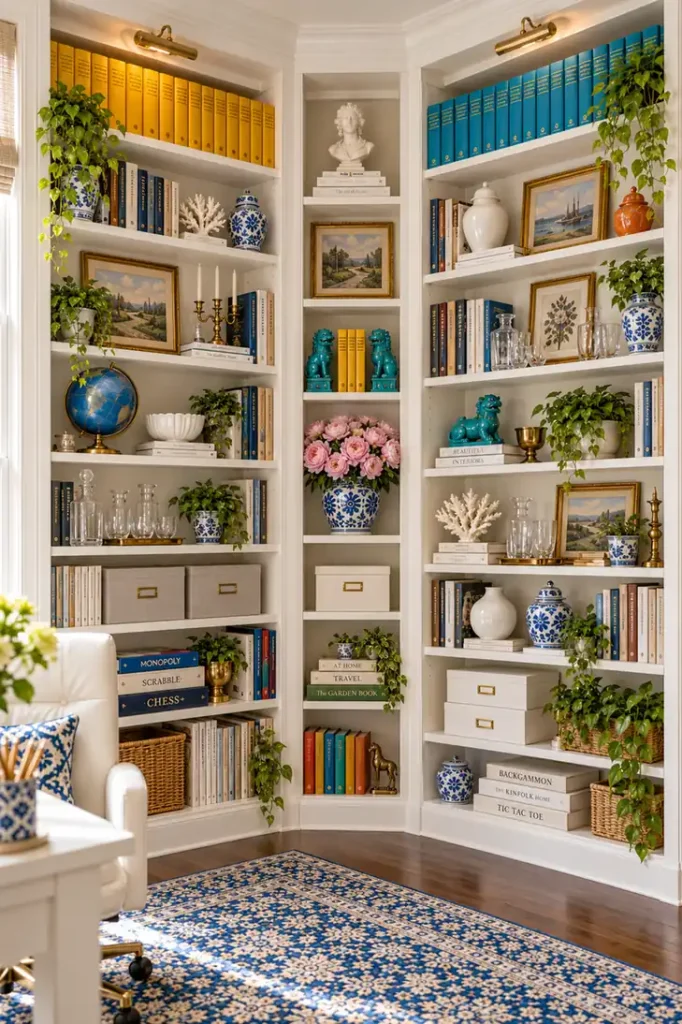
Corners can be one of the hardest parts of a wraparound bookshelf project. Instead of forcing two full bookcases to meet awkwardly, a narrow Billy bookcase can be positioned diagonally between the two shelving walls.
That angled placement turns the corner into a feature rather than something you have to hide. It also creates a smoother visual transition between the bookcases on each wall.
A concealed support structure behind the narrow unit helps hold the bookcase in the correct position, while continuous white trim can cover the surrounding gaps. Before you start this step, gather the basic tools and materials you’ll need: a drill, screws, a level, a saw, and a solid piece of wood such as a 2×2 or 2×4 for the support brace. One simple way to create this support is to screw the wood diagonally into the corner walls at the desired angle, then slide the narrow bookcase against it for stability. This backing brace makes sure the bookcase stays put and does not shift over time. From the front, the corner then appears much more intentional and built-in.
This type of corner shelf is also a good place for decorative pieces that deserve a little breathing room. Books can still fill much of the shelving, but blue-and-white ceramics, framed pieces, and sculptural objects can break up the rows.
A pink floral arrangement nearby introduces color without competing with the library itself. Against white shelving and neutral trim, even a small amount of color becomes noticeable.
Narrow Display Tower Between Billy Bookcases
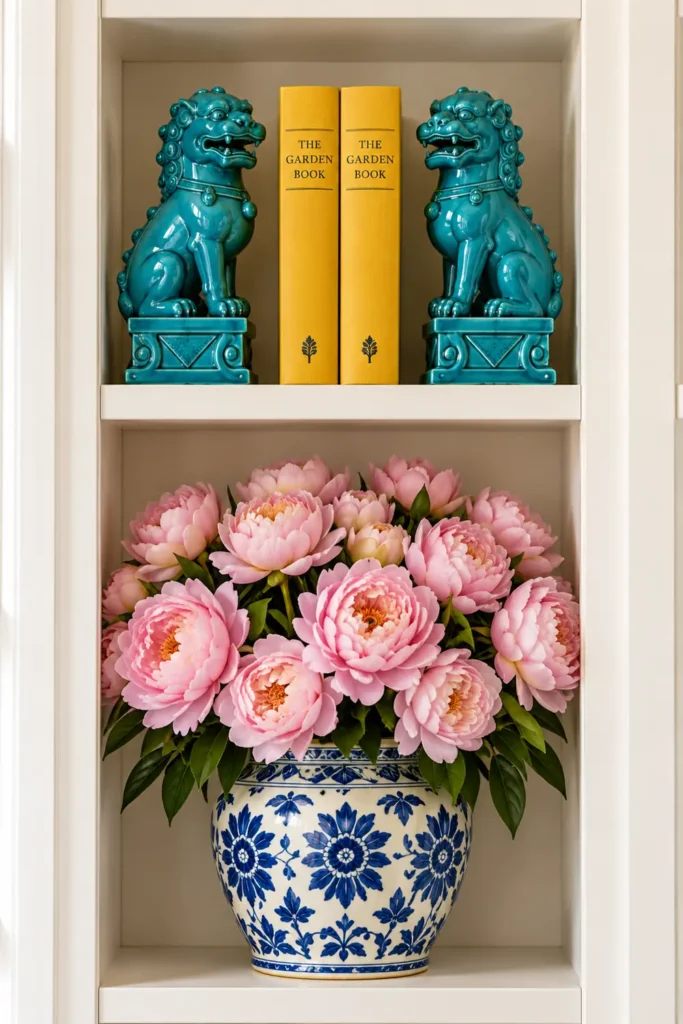
A narrow shelving tower can be useful when a standard-width bookcase will not fit neatly between two larger units. Instead of treating the small gap as wasted space, it can become a dedicated display niche.
A slim white shelving tower integrated into the surrounding built-ins keeps the overall look consistent. Smooth white trim around the unit helps it blend into the larger library wall rather than looking like an unrelated piece squeezed between bookcases.
Because the shelves are narrow, they naturally work well for smaller decorative objects. Ceramic sculptures, framed keepsakes, turquoise figurines, books, and a simple white storage box can all fit comfortably without making the display feel overloaded.
This kind of section also gives you an opportunity to introduce a stronger decorative focal point nearby. A large pink flower arrangement in a blue-and-white porcelain vessel can connect visually with smaller blue and turquoise accents on the shelves.
The result is a useful little transition between larger bookcases while still adding personality to the room.
Central White Desk Surrounded by Built-In Library Shelves
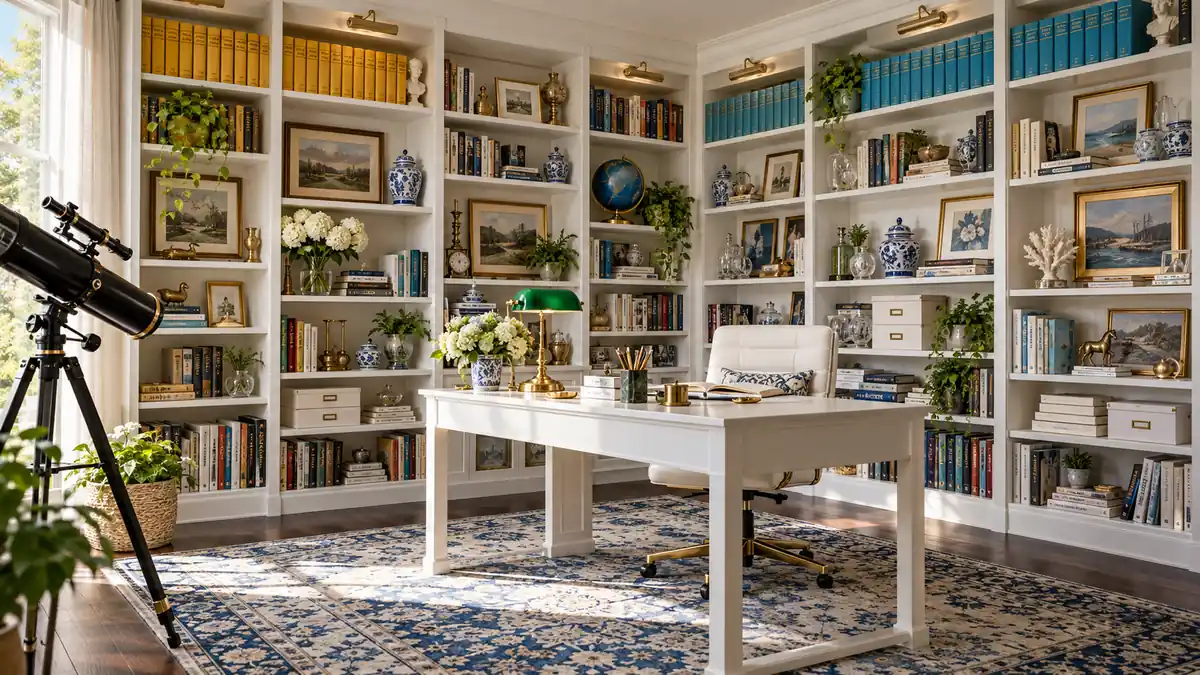
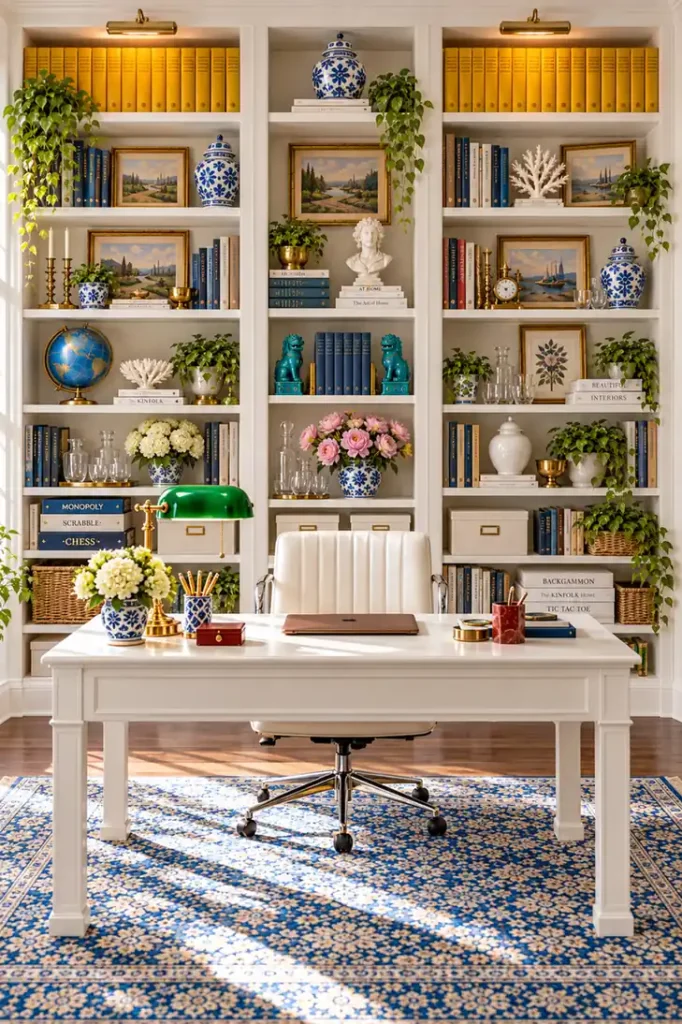
A wraparound library becomes even more practical when the center of the room is used as a workspace. A simple white rectangular desk can sit comfortably within the shelving without distracting from the bookcases around it.
Keeping the desk white helps it relate to the built-ins, while a white upholstered swivel chair continues the light, consistent look. The metal chair base delivers a subtle change in material without introducing a completely different style.
A green banker-style desk lamp gives the workspace a traditional library detail and adds a focused layer of light. Along with a laptop, it gives the desk a clear everyday purpose instead of making the center of the room feel purely decorative.
A blue patterned rug beneath the desk can help define the work area by adding softness over wood-look flooring. It also introduces pattern into a room dominated by straight shelving lines.
Surrounding the desk with books and collected objects makes the workspace feel connected to the rest of the library. Small greenery tucked into the shelves adds another organic element without taking up valuable desk space.
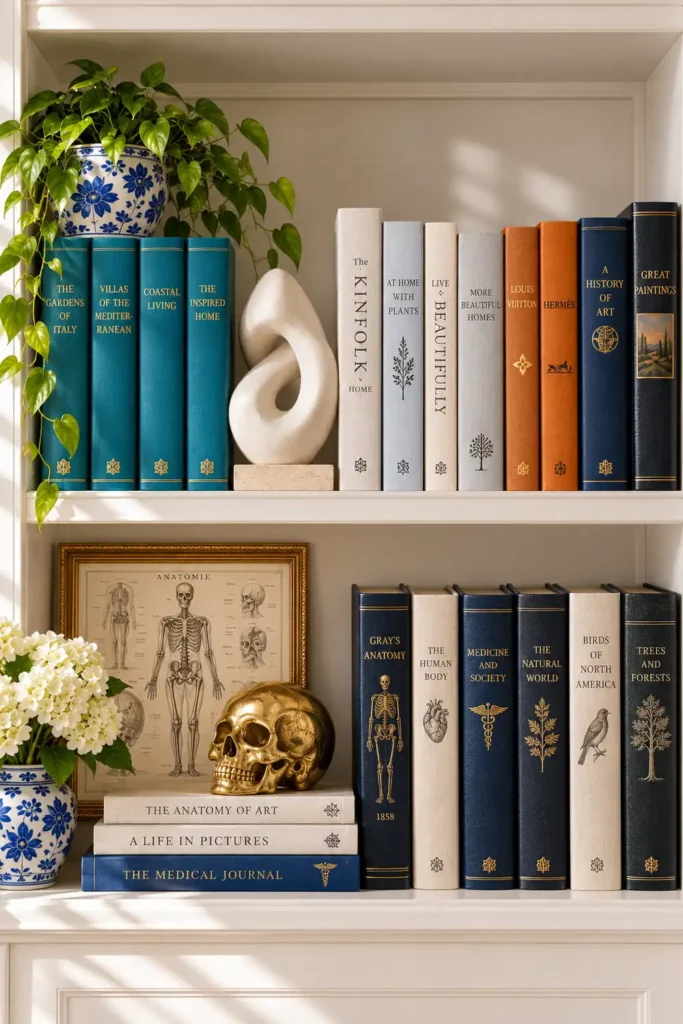
Subject-Organized Books for a Practical Home Library
A beautiful home library still needs to be easy to use. Instead of arranging every book by spine color, organizing books by subject can make the shelves feel more natural and much more practical for everyday reading.
Related books can stay together in upright rows, while a few horizontal stacks help break up long stretches of vertical spines. Matching book series can also be grouped together so they feel intentional without making the shelves look overly styled.
This approach works especially well in tall white built-in bookcases because the varied book covers bring plenty of color and texture on their own. The shelves can look full and collected while still having a clear system behind them. For a more custom look, Billy bookcases can also be painted or finished in a color that suits your space. Use a good-quality primer followed by a durable paint such as acrylic or chalk paint designed for furniture to ensure a lasting finish. This extra step lets you personalize the library even further, whether you want bold color, moody dark shelves, or a finish that blends seamlessly with your room.
I also like that subject-based organization allows the library to change naturally. New books can be added where they belong rather than forcing you to rearrange an entire color scheme every time something new comes home.
Layered Collected Objects Styled Between Books
Books do not have to fill every inch of a DIY Billy Bookcase Corner Built-In. Leaving selected spaces for collected objects can make the shelves seem more personal and give the eye somewhere to rest.
Framed artwork, a globe, candlesticks, glass vessels, ceramic figures, decorative stone, boxes, and small keepsakes can be layered among the books. The mix of materials creates interest without requiring every shelf to follow the same arrangement.
A useful way to keep this style from feeling cluttered is to let each object have a little visible space around it. A framed print might sit behind a smaller ceramic piece, while a decorative box can support another object or sit beside a short stack of books.
Small floral and greenery accents can soften the harder shapes of frames, glass, and metal. Against simple white shelving, these collected pieces become much more noticeable and give the library the feeling of having developed gradually over time.
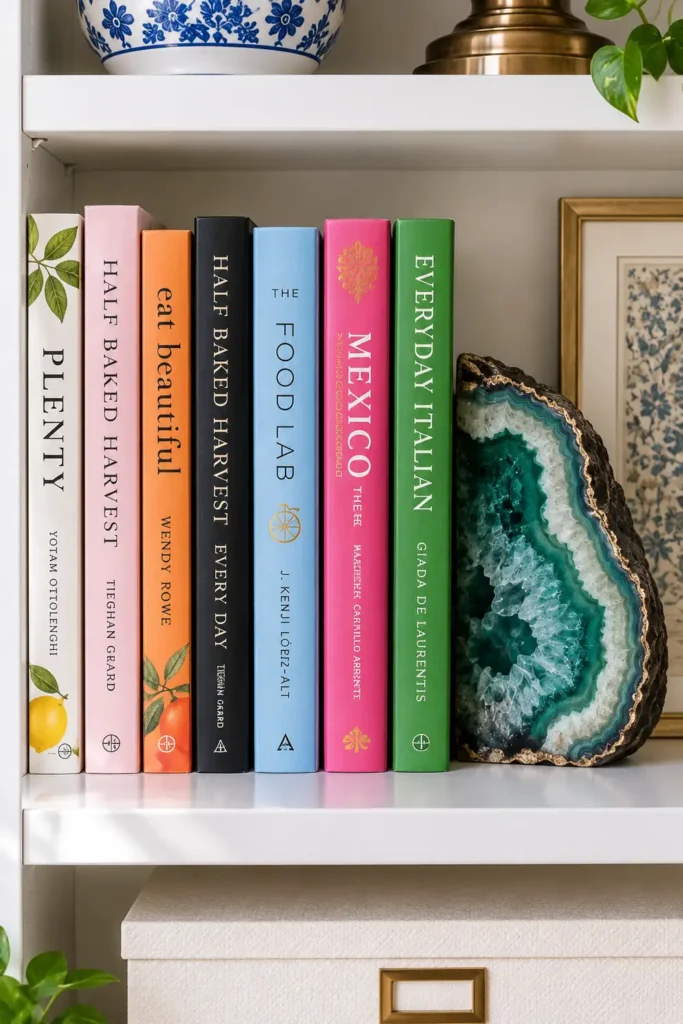
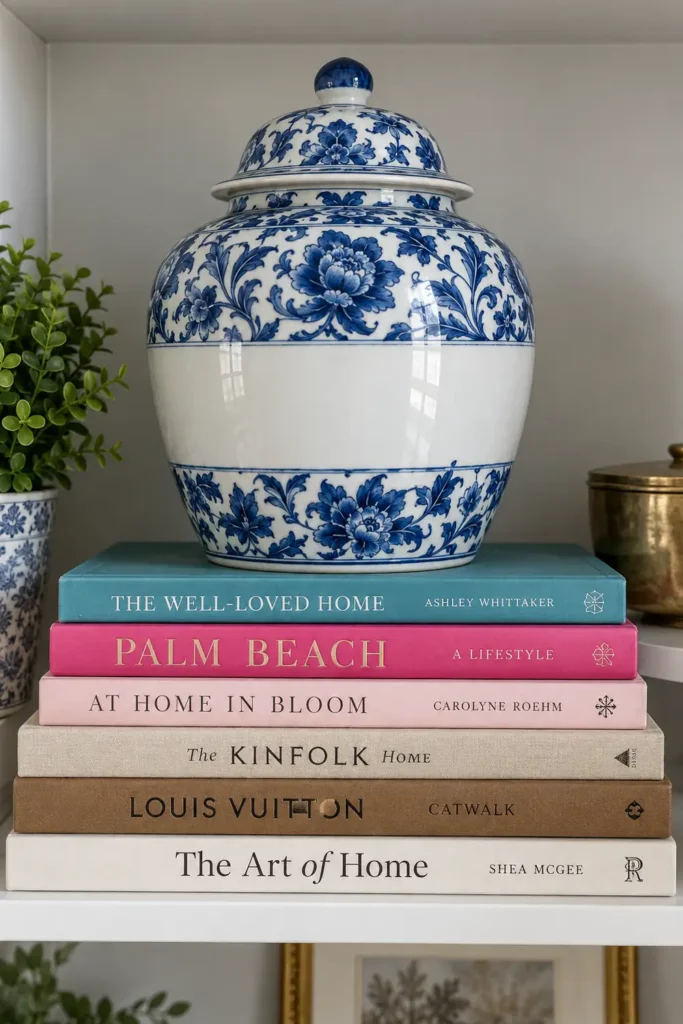
Blue-and-White Porcelain Accents on Open Shelves
Blue-and-white porcelain is especially effective against white shelving because the contrast is noticeable without feeling heavy. A porcelain jar, patterned candleholder, framed blue-and-white artwork, and other coordinated pieces can turn a small section of shelving into a distinct display.
The key is keeping the accents connected without making every object identical. Different shapes and patterns can still feel cohesive when they share the same blue-and-white palette.
Pink peony-style flowers add a softer color next to the porcelain, while small white floral stems keep the display connected to the shelving around it. The combination feels decorative but still works naturally among books and personal objects.
This kind of focused display is useful when you want certain shelves to stand out from the larger library. Rather than spreading the porcelain pieces across the entire room, grouping several together creates a stronger visual moment.
Metallic and Glass Vignettes for Reflective Shelf Styling
Metallic and glass objects bring a different texture to a wall of books. Silver-tone candelabras, brass or gold accents, trophies, decanters, glassware, and other reflective pieces catch natural ambient light and keep darker book-filled shelves from feeling too visually dense.
These materials work best when they are mixed rather than repeated in identical rows. A glass vessel beside stacked books, a metallic decorative object near framed art, or a candelabra occupying a little more open shelf space can create an easy collected look.
Clear glass is particularly useful because it adds shape and shine without introducing another strong color. Metallic pieces provide warmer or cooler highlights depending on their finish, while ceramic and paper objects keep the display grounded.
A few minimal floral accents can soften the reflective surfaces, but the glass and metal should remain the focus of these shelves. The result is a layered vignette that changes subtly as daylight moves across the room.
Personal Art and Memory Pieces Mixed Into the Bookcases
A built-in library feels much more personal when the shelves include more than books and decorative objects. Framed artwork, photographs, keepsakes, decorative boxes, and sentimental pieces can make the room feel connected to the people who actually live there.
These items work best when they are mixed naturally into the shelving instead of isolated in one dedicated display. A framed print can sit beside a row of books, while a small keepsake or decorative stone can fill a shorter section of shelf nearby.
Vintage-style imagery can add another layer of character, especially when combined with objects collected over time. Different frame styles and object shapes can still work together because the white shelving provides a consistent background.
Occasional floral accents can soften these displays and keep the shelves from feeling too static. The goal is not to make every shelf perfectly coordinated, but to create a library where meaningful pieces feel like part of the room.
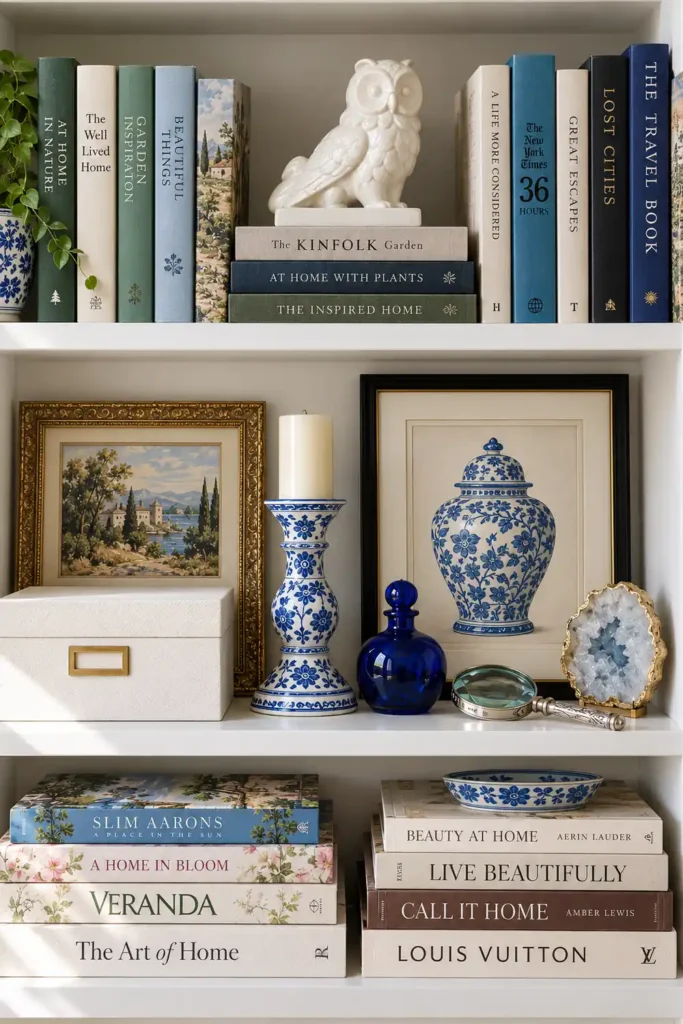
Kid-Friendly Lower Shelves for Books, Games, and Supplies
The lower sections of a built-in bookcase are useful for items that children need to reach on their own. Children’s books, board games, magazines, storage boxes, stickers, and marker supplies can all be kept at an accessible height. For added safety, always secure tall bookcases to the wall using furniture anchors or anti-tip straps, especially in family spaces or homes with children. This extra step helps avoid tipping accidents and makes the library safe for everyone to use.
Using the lower shelves this way makes practical sense in a family library. Adult books and more delicate decorative pieces can stay higher up, while everyday children’s items remain close to the floor.
White storage boxes can help contain smaller supplies and reduce visual clutter. They also blend into the surrounding white shelving, so the lower section can stay functional without feeling disconnected from the rest of the room.
Keeping books and games visible also makes it easier to see what is available. Instead of hiding everything behind closed storage, the shelves can remain useful for both display and daily family life.
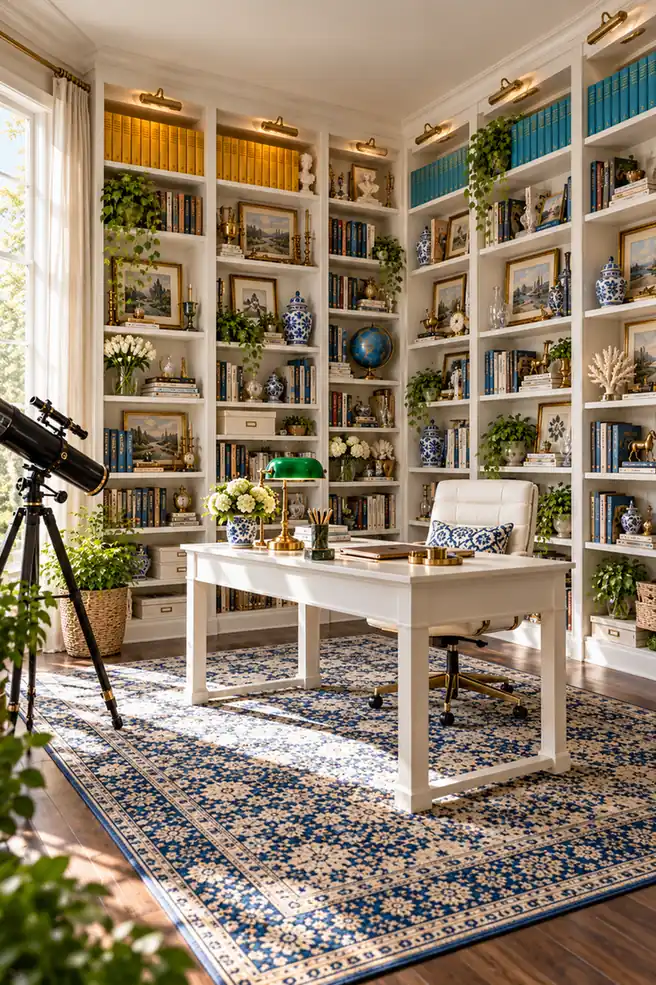
Colorful Children’s Book and Toy Niche
A narrow lower shelf can become a cheerful children’s area without changing the overall style of the library. Brightly colored books and a rainbow stacking toy add a concentrated burst of color on the white shelving.
Because the display is kept within a small niche, the brighter colors feel intentional rather than overwhelming. The surrounding white bookcases continue to provide a calm backdrop.
This is also a practical way to give younger children a section of the library that feels clearly accessible to them. Colorful book covers are easy to spot, and the toy can remain visible instead of being packed away in a box.
The result is a small, playful detail that fits comfortably inside a larger DIY Billy Bookcase Corner Built-In while keeping the overall room cohesive.
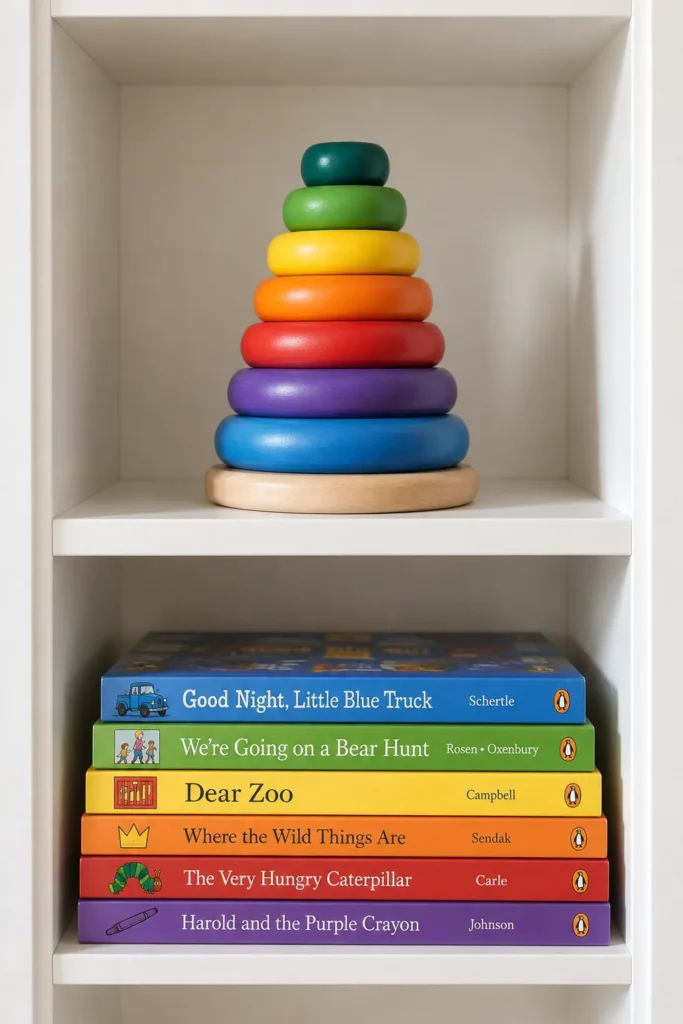
Coordinated Book Series Across the Upper Shelves
Upper shelves are an ideal place for matching book collections that are attractive enough to become part of the room’s visual design. Coordinated vintage-style series with repeated yellow or blue spines can create a strong rhythm across the top of floor-to-ceiling bookcases.
Grouping each series together makes the collection easier to recognize while creating long stretches of repeated color. Against white shelving, the consistent book spines stand out distinctly without requiring additional decorative objects.
These upper shelves are also well suited to books that are not reached for every day. Keeping less frequently used collections higher up leaves more accessible shelves available for everyday reading and storage.
When height extensions carry the bookcases close to the ceiling, these coordinated rows help visually finish the top of the built-in. They make full use of the vertical space and reinforce the feeling of a complete home library.
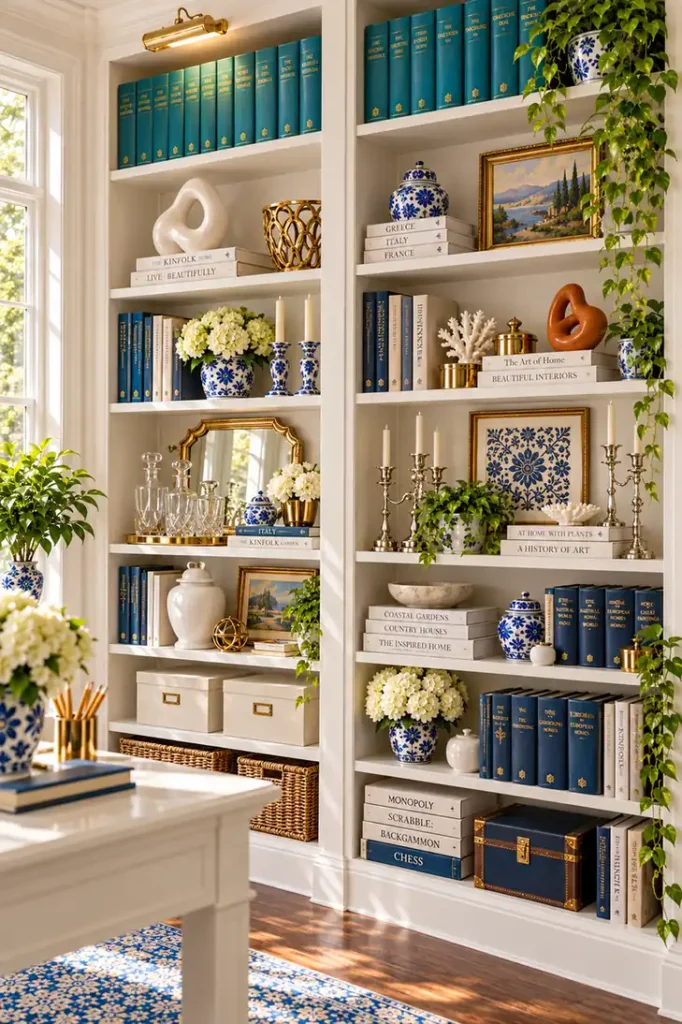
Bringing the Whole Library Together
A DIY Billy Bookcase Corner Built-In works best when it balances structure with personality. One thing to keep in mind during installation is that most walls, baseboards, and ceilings are not perfectly even or level. Before assembling your bookcases, look for irregularities and use shims behind the units to help everything sit straight.
If baseboards are in the way, you can notch the bottoms of the bookcases or remove a small section of baseboard so the units fit flush to the wall. For taller installations, uneven ceilings may be addressed by adjusting your crown molding or trim to close small gaps at the top. Taking a little time to handle these common issues will help your shelving look truly built-in and customized to your space. The continuous white shelving and trim create the framework, but the room becomes much more inviting once books, ceramics, artwork, family pieces, practical storage, and children’s items begin filling the shelves.
You do not need every section to match perfectly. In fact, the combination of subject-organized books, collected objects, decorative displays, and everyday items is what gives the library its character.
Start with the parts that matter most in your own home. That might mean solving an awkward corner, creating a workspace in the middle of the room, giving children shelves they can reach, or finally making space for books and objects you have collected over the years.
As long as the shelving feels connected and the items on it reflect how you actually use the room, the finished library can feel both built in and genuinely lived in.