
Finding extra room for the kids to play can feel impossible when every corner of your home already has a purpose. But sometimes, the best opportunity isn’t hiding in another room. It’s right above your head.
This small space loft playroom makeover shows how an unused area above a two-story entryway can become a bright, colorful place for kids to play, read, and explore. With a wooden loft platform, practical toy storage, cheerful accessories, and even a compact home office, the space can fulfill several functions without feeling crowded.
What I love about this transformation is that it makes use of space that could otherwise go unnoticed. Here are seven ideas that help turn a small elevated loft into a functional, family-friendly retreat.
DIY Elevated Foyer Loft for Extra Playroom Space
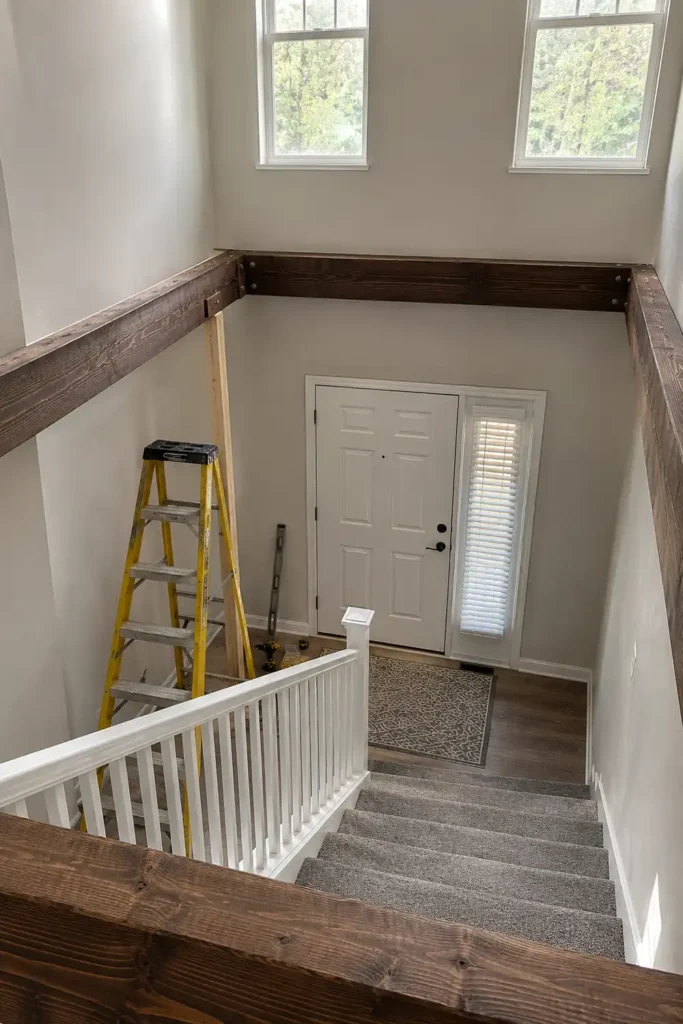
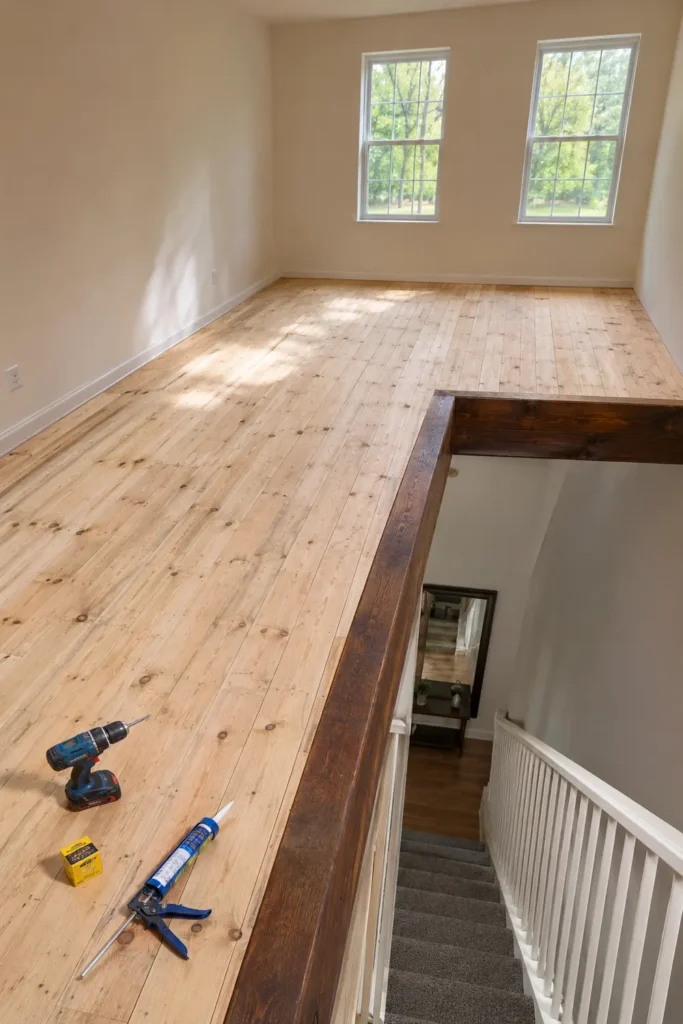
An open two-story foyer can feel impressive, but all that unused space above the entryway might offer an opportunity to create another functional area. Building an elevated wooden loft platform is a clever way to add usable floor space without changing the home’s existing footprint.
The dark-stained timber framing gives the structure a solid, defined appearance, while the lighter natural wood plank flooring keeps the upper level feeling warm and inviting. This contrast also helps the loft look like an intentional part of the house rather than an awkward addition.
One detail worth thinking about is how much natural light reaches the new space. Upper windows can make a compact loft feel brighter, while a recessed ceiling light provides extra illumination when daylight fades.
Because this type of makeover entails creating an elevated floor above an existing entryway, structural planning is especially important. A qualified professional should assess the framing, load capacity, access, and required safety barriers before construction begins.
When planning an elevated loft, it’s important to consider common safety standards such as minimum railing height (often around 36 to 42 inches), baluster spacing (typically less than 4 inches apart), and guaranteeing the structure meets proper load capacity for children and adults. Local building codes may also require secure guardrails, safe stair or ladder access, and the use of children-safe materials.
Be sure to review current guidelines or consult with an expert to ensure your new play space is safe and up to code.
Once the structure is properly designed, the result can be a surprisingly useful area for playtime, quiet activities, and everyday family needs.
White Wooden Loft Railing for an Open and Airy Look
Safety is a major consideration in an elevated playroom, but the railing may also add to the overall design.
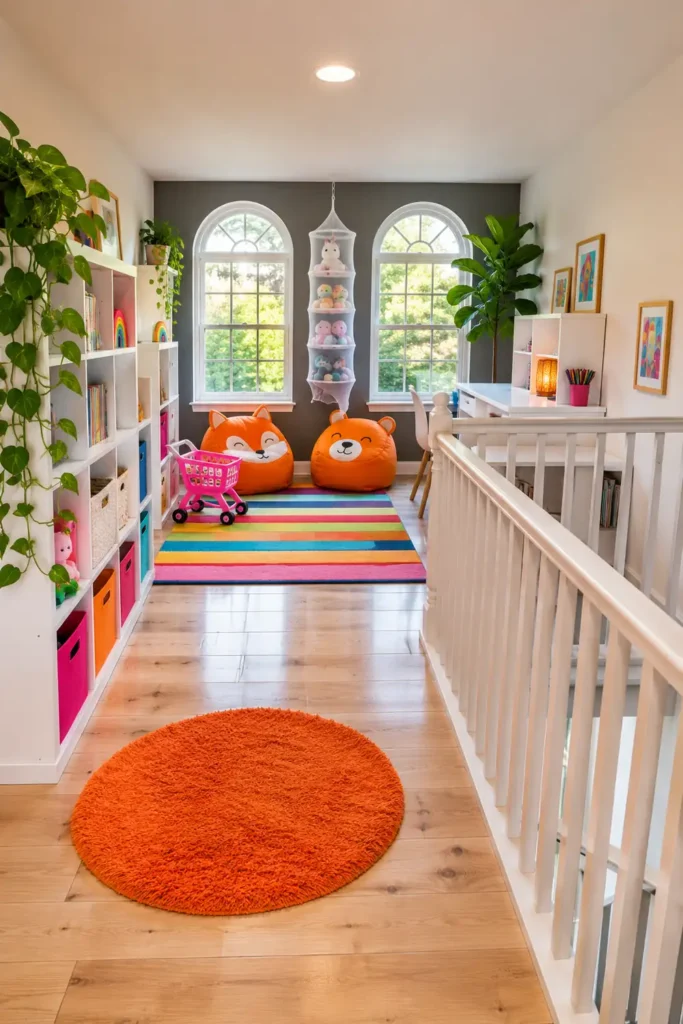
A continuous white wooden railing with vertical balusters and square newel posts creates a clean, traditional finish around the open stairwell. The white paint helps the railing blend with lighter walls, making the loft feel less visually enclosed.
I especially like how this style of railing defines the edge of the playroom without making it feel completely separated from the rest of the home. Natural window light can pass through the open spaces between the balusters, assisting in maintaining a bright atmosphere.
Keeping the railing design simple also allows the colorful playroom accessories to become the main decorative feature. There is no need for elaborate woodwork when straight posts and evenly spaced balusters already create a neat, finished appearance.
For a children’s loft, the railing must meet applicable building safety requirements, including appropriate height, opening sizes, and secure installation. These safety guidelines are especially important for younger children, typically ages 2 to 7, who may be more likely to climb or lean on the railing. For toddlers and young children, ensure that all gaps are small enough to prevent falls and that the railing is difficult to climb.
As children grow and become more independent, frequently reevaluate the space for new risks and adjust safety features such as furniture arrangement, barrier heights, or storage placement as needed. Furniture or climbable storage should always stay away from the open edge, regardless of your children’s ages.
A carefully designed white railing can make the loft feel connected to the house while providing the protection an elevated family space needs.
Colorful Children’s Loft Playroom With Cozy Floor Cushions
A small loft doesn’t need oversized furniture to become an exciting playroom. A small loft doesn’t need oversized furniture to become an exciting playroom. Sometimes, a vibrant rug, a few soft cushions, and favorite toys are enough to make the space feel special.
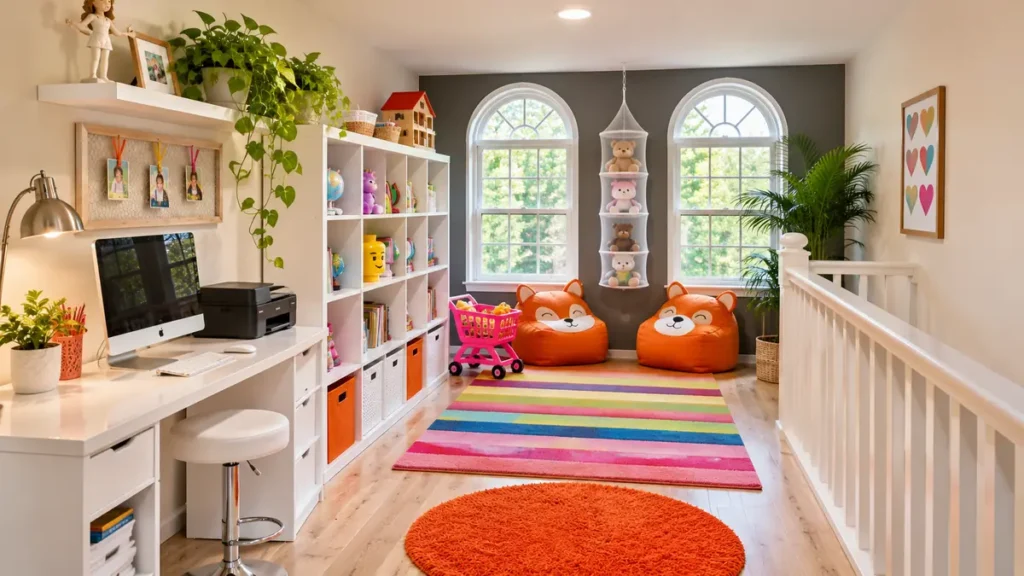
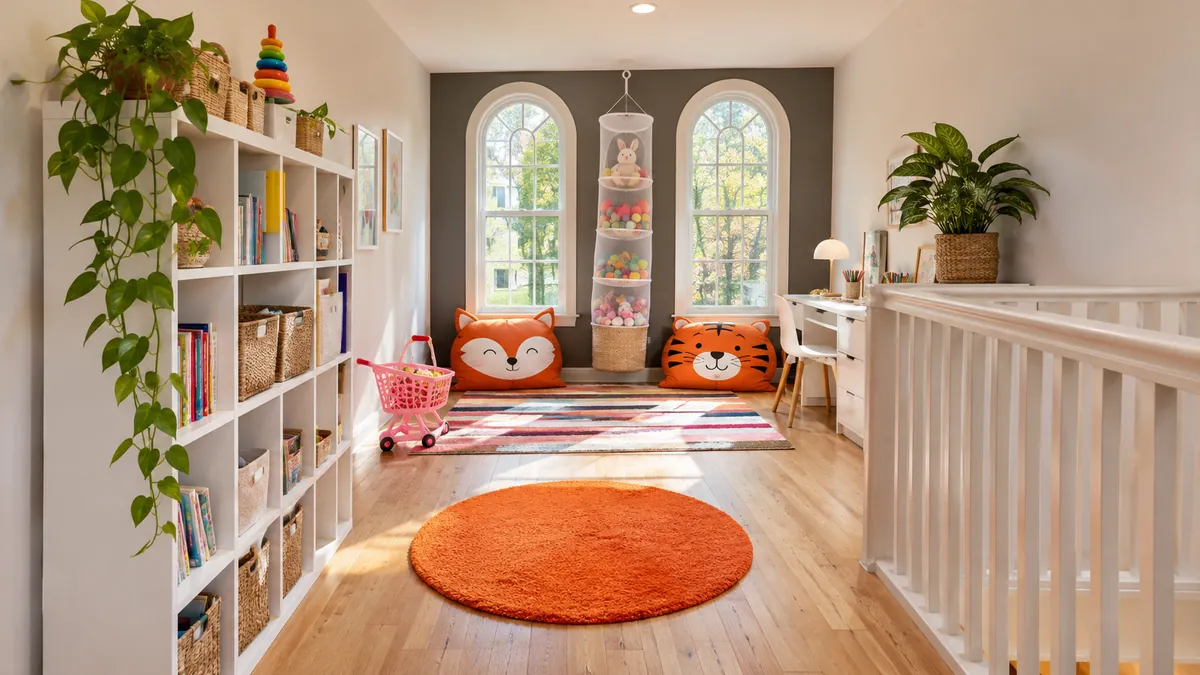
A multicolored striped rug brings cheerful color to the natural wood flooring while creating a comfortable spot for sitting and playing. An orange animal-face floor cushion adds a fun element, and a round orange rug helps bring the colorful accessories together.
The pink toy shopping cart and small ride-on toy give the room a fun, imaginative character without requiring a complicated furniture arrangement.
One of the nicest features of this loft is the pair of arched windows. They introduce plenty of daylight and give the play area an open, cheerful feeling. Keeping tall furniture away from these windows helps preserve that brightness.
I would keep the main floor area as open as possible so the kids have room to spread out their toys. Soft cushions can provide comfortable seating without taking up the permanent space that a sofa or large chair would need.
Choose rugs with suitable non-slip backing, and make sure toys and play equipment are appropriate for the children’s ages and the available space. Ride-on toys are best kept away from stairs and loft edges.
The combination of colorful textiles, natural wood, and simple toys creates a cheerful playroom that feels welcoming without becoming overwhelming.
Compact Loft Home Office With a White Desk Setup
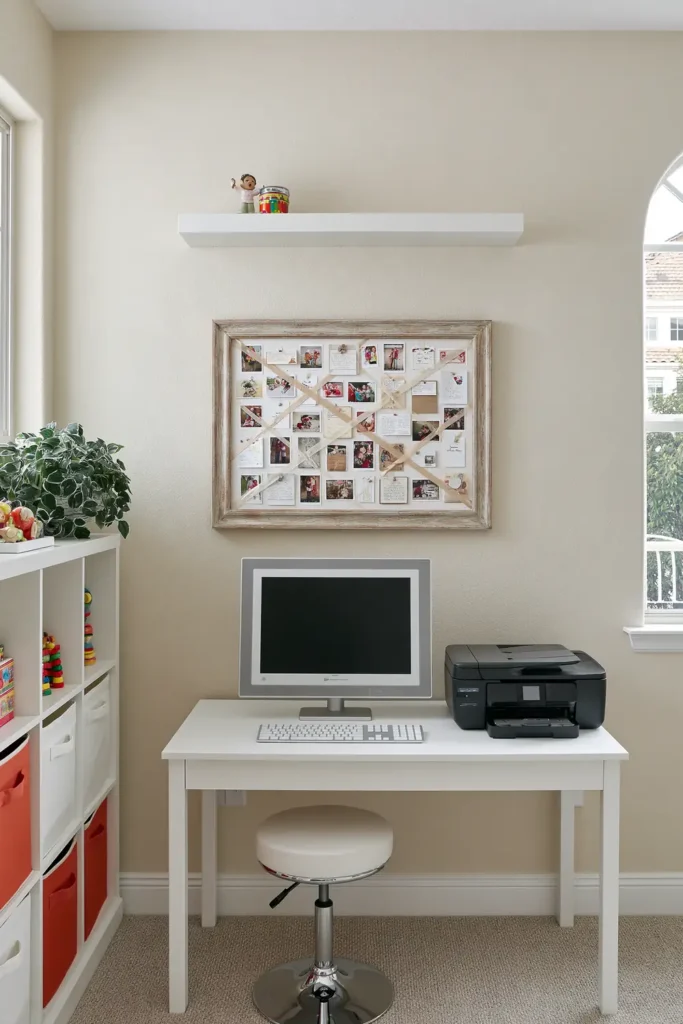
Sharing a small loft between a children’s playroom and a home office might seem challenging, but a compact desk setup can make both activities possible. When combining a workspace with a kids’ area, it’s essential to take a few extra steps to keep office supplies and electronics safe. Use locking drawers or closed storage boxes for pens, scissors, paper clips, and other small items that could pose a risk to young children. Secure all cords with cable covers or cord management boxes to avoid tangling or unplugging, and place power strips and outlets out of reach whenever possible.
Position computers, printers, and other electronics at the back of the desk or on higher shelves, making sure nothing can be pulled down. These practical measures help reassure parents that the workspace can exist alongside a play area while keeping safety as a top priority.
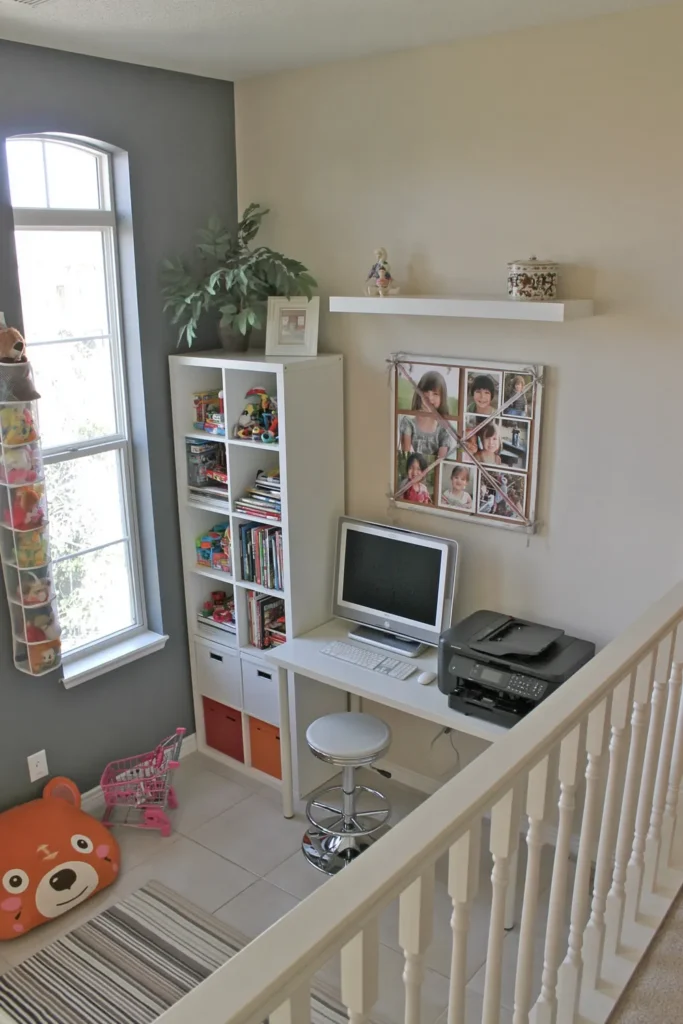
A simple white desk creates a dedicated workspace without adding too much visual weight. Paired with a white adjustable stool featuring a metal base, it keeps the arrangement light and practical.
The desktop computer, keyboard, and printer can be grouped together so the work area is kept organized. White storage compartments provide a useful place for office essentials, helping prevent paperwork and supplies from spreading into the children’s play area.
Positioning the desk near a window makes good use of natural daylight, which can be especially helpful when working in a compact space. A nearby potted green plant adds a fresh touch and softens the appearance of the electronic equipment.
What makes this arrangement practical is the separation of activities. The children can have their colorful play area while the desk provides a defined spot for computer work, planning, or other household tasks.
Cable management is particularly important in a shared playroom. Secure cords, keep electrical devices beyond younger children’s reach, and make sure the workspace doesn’t block access or circulation.
With a little organization, a small corner can become a useful home office while leaving most of the loft available for play.
White Cube Storage and Bookshelves for Organized Toys
One of the biggest challenges in a small playroom is finding enough storage without filling the entire space with furniture. That’s where white cube shelving and a narrow bookcase can make a real difference.
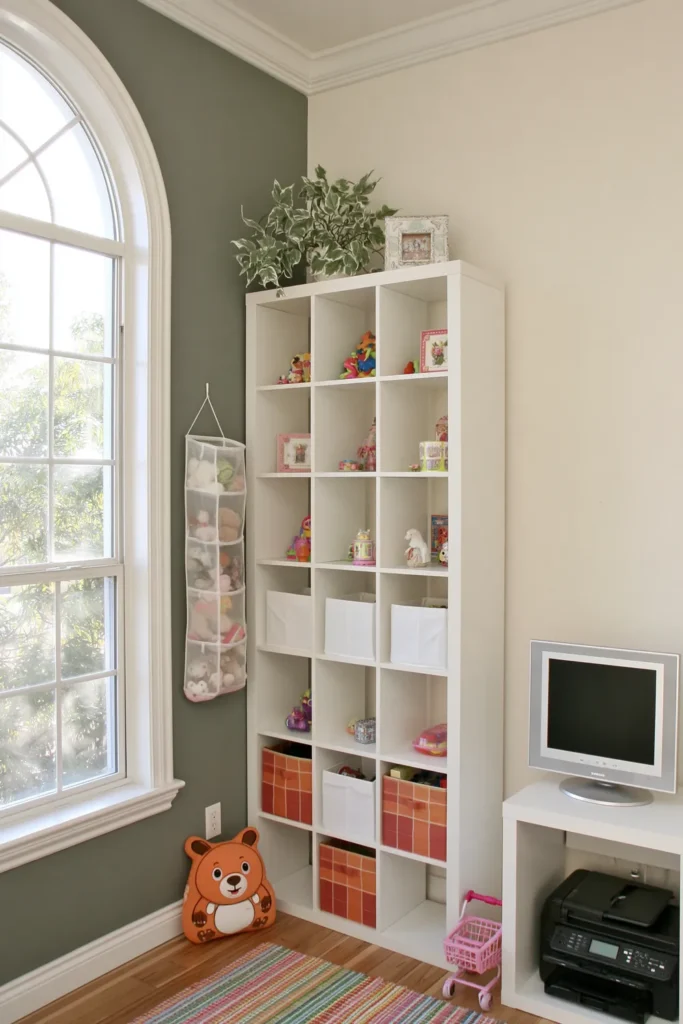
A white cube storage unit provides separate compartments for toys, games, and everyday playroom essentials. Bright fabric storage bins, including orange and white options, add a cheerful touch while keeping smaller items out of sight.
I like this approach because children can have a designated place for their belongings without the room feeling overly organized or formal. Open compartments also make it easier to see where frequently used toys belong.
A tall, narrow white bookcase works nicely beside the cube storage unit. It gives children’s books their own space without requiring a wide piece of furniture. Arranging favorite books within easy reach can encourage kids to pick up a story whenever they want a quieter activity.
The white shelving also balances the brighter colors throughout the playroom. Against natural wood flooring, it creates a fresh, simple look that doesn’t compete with the striped rug, orange cushions, or colorful toys.
A small green potted plant on top of the storage unit can add a natural accent. For a playroom used by younger children, choose a child-safe plant and make sure it cannot be pulled down.
Since this is an elevated loft, securing the shelving to suitable structural supports is especially important. Attaching lighter cube storage or bookcases to the wall is a safe and simple DIY task for most homeowners, as long as you use appropriate wall anchors and follow the instructions provided with the furniture.
However, if the shelving is heavy, unusually large, or will be attached to load-bearing parts of the loft, it’s best to consult a professional to ensure it is safely installed. Keep heavier items in lower compartments, and avoid positioning climbable furniture near the railing or windows.
The goal isn’t to hide every toy. It’s to give everything a practical home so the playroom can stay comfortable and enjoyable between activities.
Hanging Toy Organizer Beside Arched Loft Windows
When floor space is limited, using vertical storage can help keep a playroom organized without adding more furniture.
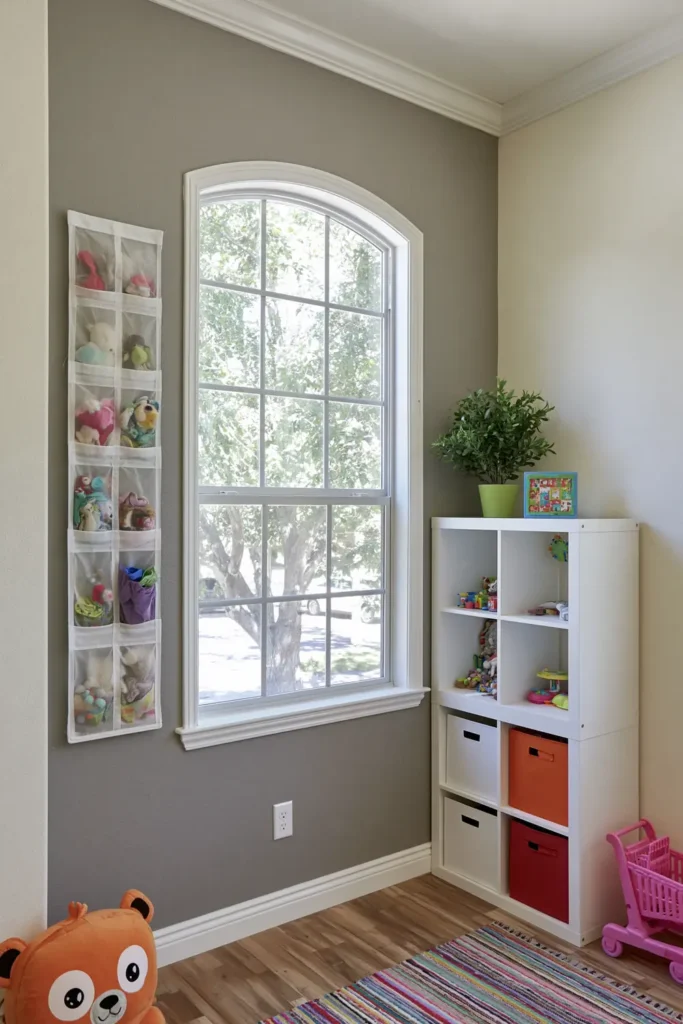
A hanging multi-pocket toy organizer is a simple solution for lightweight stuffed animals and small play accessories. The soft white mesh fabric keeps the organizer looking airy, while the individual pockets make it easy to separate different toys.
What makes this idea especially useful is how little space it occupies. Instead of adding another basket or shelving unit to the floor, the toys can be stored vertically in an otherwise unused area.
The white translucent mesh also works beautifully with the bright atmosphere created by the arched loft windows. Its lightweight appearance doesn’t visually overwhelm the room, even when the pockets are filled with colorful stuffed animals.
For everyday use, I would organize the pockets by toy type or size. Favorite stuffed animals can go in the easiest-to-reach compartments, while accessories used less often can occupy the higher pockets.
It’s also worth choosing a sturdy mounting location that doesn’t interfere with opening the windows or accessing the playroom. The organizer should be securely attached, kept away from window-covering cords, and positioned so children cannot pull it down or use it for climbing.
A hanging organizer won’t replace larger toy storage, but it can make an excellent companion to the white cube shelving.
Together, these storage ideas help keep the natural wood floor clear, giving the loft more usable space for playing and relaxing.
Personalized Wall Shelf With Family Photos and Keepsakes
A children’s playroom feels more welcoming when it includes a few personal details. Rather than covering every wall with decorations, a simple floating shelf and family photo display can give the space a meaningful finishing touch.
A white floating wall shelf provides a clean surface for small decorative accessories. A little figurine and a decorative bucket can bring personality to the room without making the arrangement feel cluttered.
Nearby, a mounted photo display board with crisscross ribbons offers a creative way to showcase family photographs, colorful cards, and favorite keepsakes.
I particularly like this kind of display in a multifunctional loft because it connects the children’s play area with the home office corner. The space appears less like a separate room designed for only one activity and more like a comfortable part of everyday family life.
The colorful photographs and cards introduce visual interest, while the white shelf and frame help everything feel coordinated with the nearby desk and storage furniture.
Another advantage is how easily the display can change. Children’s drawings, new photographs, and special cards can be swapped in without redecorating the entire wall.
A nearby leafy potted plant can soften the arrangement and suit the natural wood flooring. Just make sure the plant and smaller decorative objects are safely positioned, especially when younger children use the loft.
Keep the shelf securely mounted and avoid displaying fragile or heavy objects above places where children regularly sit or play.
These small personal touches may make the loft feel finished while still leaving plenty of room for the practical furniture and colorful play accessories.
Making the Most of Your Small Loft Playroom
What I find most inspiring about this small space loft playroom makeover is how several simple choices work together to create a room with more than one purpose.
The elevated wooden platform transforms unused space above the foyer into a functional part of the home. White railings and furniture keep everything feeling light, while colorful rugs, soft cushions, and playful toys give the kids a cheerful place to enjoy.
Smart storage makes a difference, too. Cube shelves, a narrow bookcase, and a hanging toy organizer help keep belongings manageable without taking away valuable floor space.
And with a compact desk and a few personal decorations, the loft becomes a space the whole family can appreciate.
If you’re pondering a similar transformation, start by making certain the structure, access, and safety features are suitable for a children’s playroom. For lofts—especially those intended for kids—safe and reliable access is essential. Sturdy, wide stairs with secure handrails on both sides are generally the safest option for young children.
If a ladder is the sole feasible choice, choose one with flat rungs and handholds, and add a locking safety gate at the top to prevent unsupervised access. Consider installing safety gates at the base and top of any stairway or ladder. All access routes should be slip-resistant, well lit, and checked regularly for loose treads or hardware. Then think about how your family would actually use the space each day.
You don’t need to fill every corner or purchase lots of new furniture. A few thoughtful choices, comfortable textures, and functional storage options can turn even a compact loft into a bright, inviting retreat that grows with your family’s needs.